
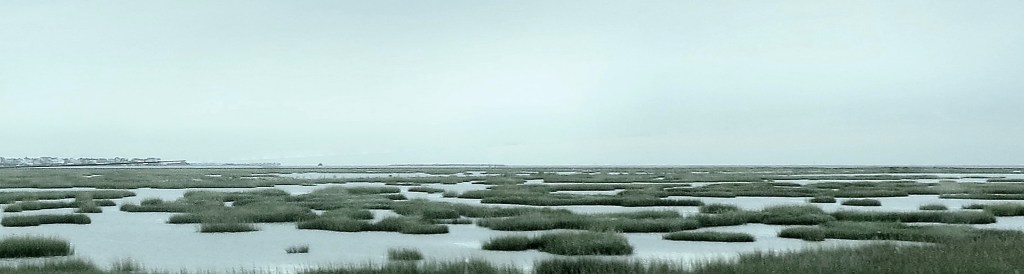
The southern and eastern littorals of America are expansively wet. They are not the pounded beaches of the Pacific with their crisp lines and sharp edges. They seem to be the endless slowlife incursions and excursions of swamps, rivulets, estuaries, inlets, lagoons — and after days of driving across and down the Mississippi delta on top of 30-50 metres of alluvium (which is why you might like to grow cotton not to mention corn and soybeans there), we had come to bayou country.
A bayou is ‘a slow-moving, sluggish stream, river, creek, or marshy backwater found primarily in flat, low-lying regions of the Southern United States’. It’s a local term which has spread across the country but no further really, derived from the Choctaw word bayuk meaning just what has been described.
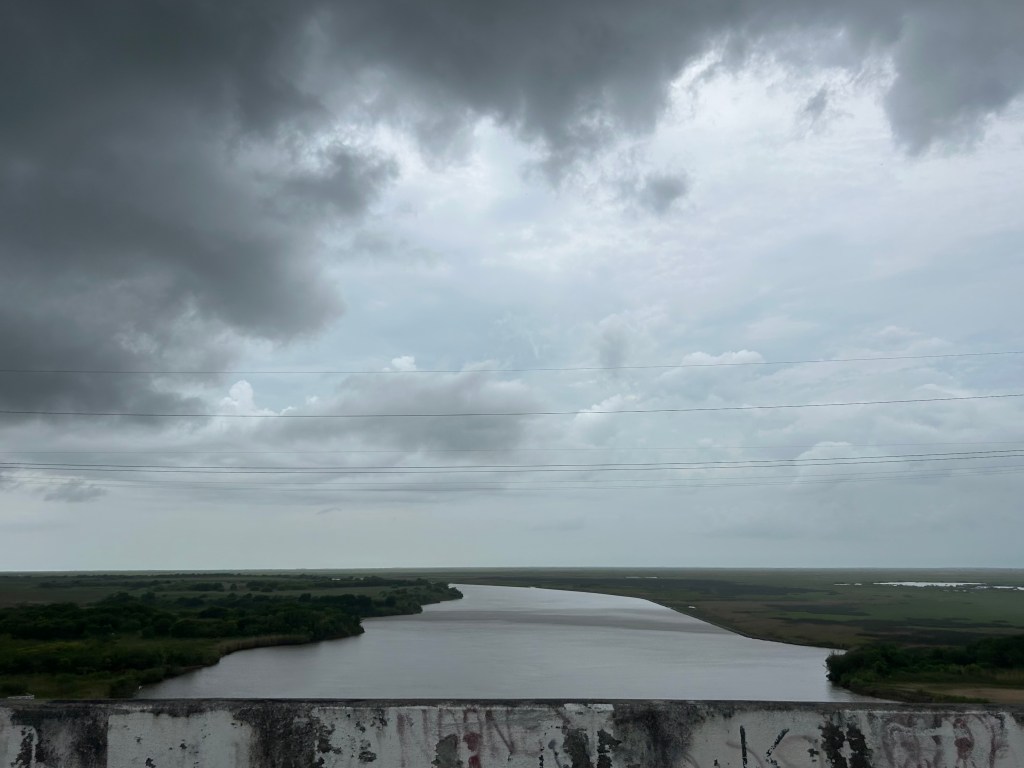
This is Mud Bayou, one of the many that criss cross thousands of square kilometres draining wetlands that look just like this. (You may wonder why both Roy Orbison and Linda Ronstadt left their babies behind on Blue Bayou. You’d think they might have found somewhere more inviting. But they are going back some day, come what may.)
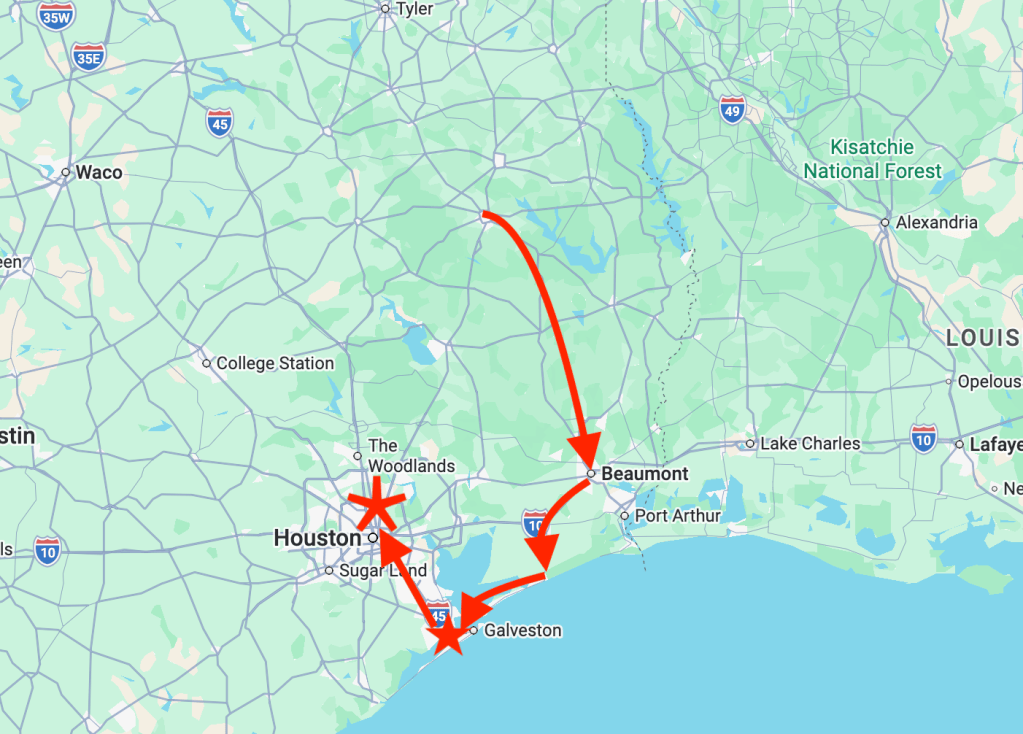
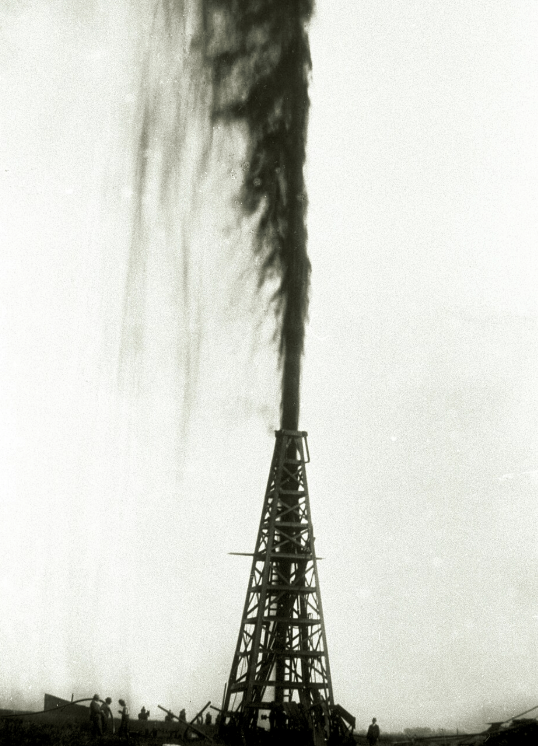
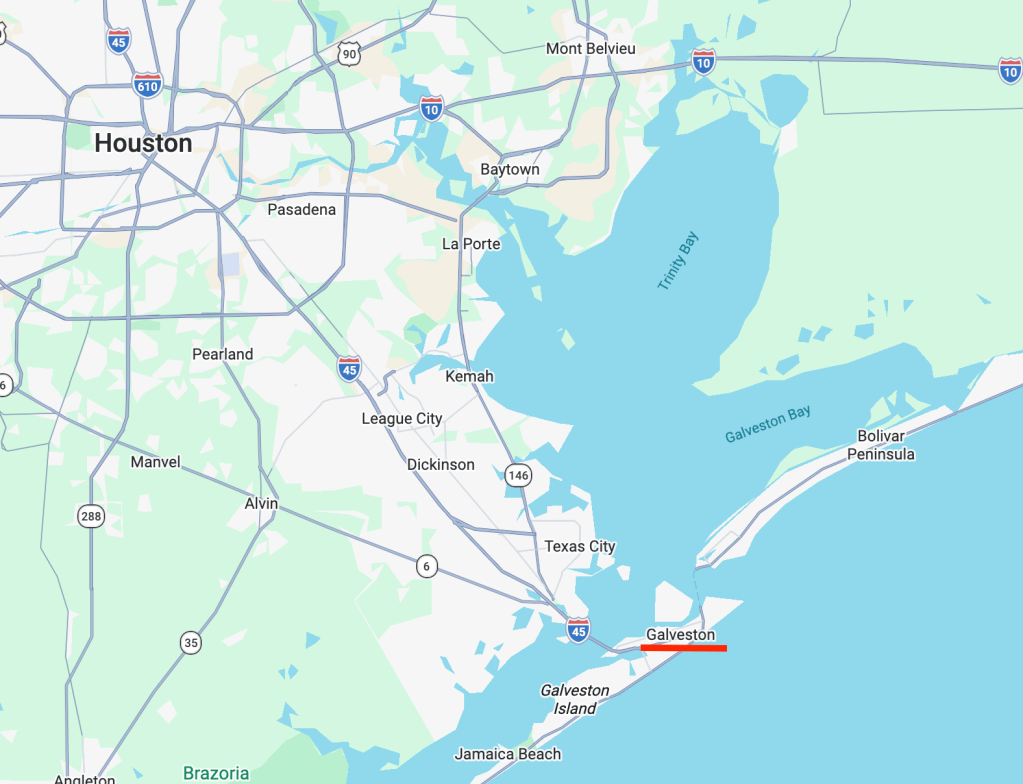
We had driven through Beaumont, nicely visible on the map above, where oil drilling as a commercial enterprise occurred in Texas for the first time. The actual moment that says YES is captured at right: The Lucas Gusher at Spindletop. 18 March 1901. Perhaps Love at first gush. The first well had been drilled near Nacogdoches forty years earlier.
There are bigger deposits of oil in West Texas, but this is where it all began.
The European discovery of oil in Texas dates back to 1543 when Spanish explorer Luis de Moscoso Alvarado saw a slick floating on the surface of Galveston Bay. For centuries earlier Native Americans knew it as something seeping out of the ground in certain places and used it for medicinal purposes.
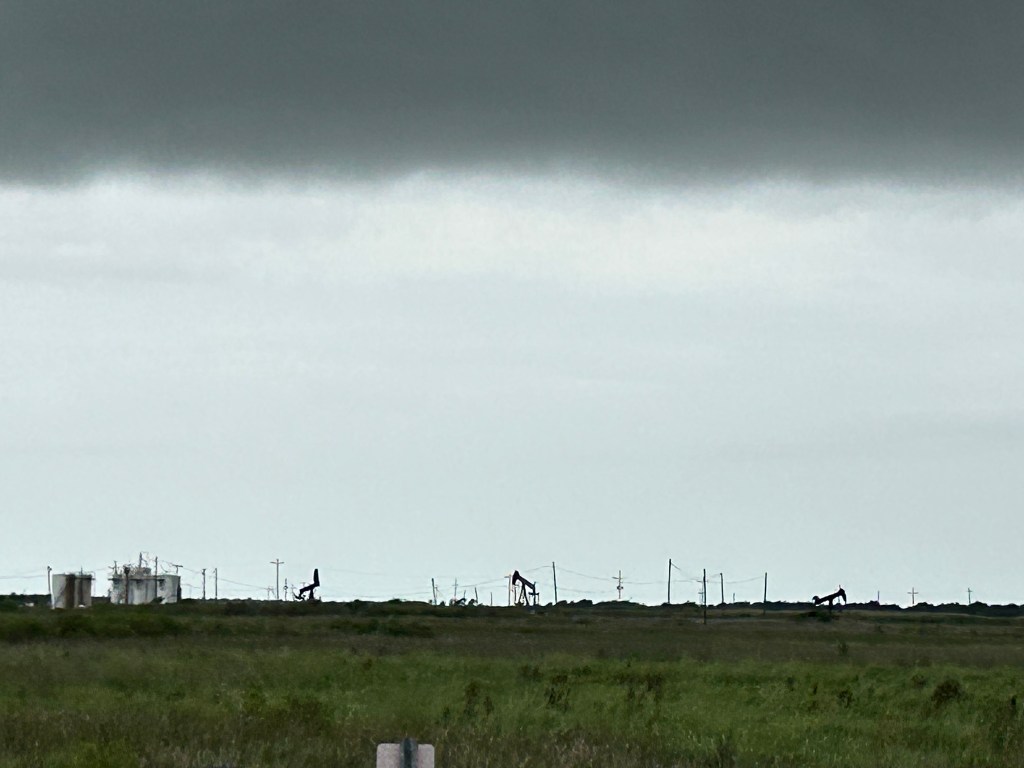
This could be understood as a story of oil and water mixing.
Most of Texas was for hundreds of millions of years underwater. The monster field, the Permian Basin, is on the other side of Texas. Here we are on top of Eagle Ford Shale where layers of sediment have, over 200-300 million years, compressed biota living in massive coral reefs running roughly parallel to the present coastline. This area has become more commercially valuable through the use of horizontal drilling along strata in the sedimentary rock and fracking, hydraulic fracturing, pumping water at high pressure into rock seams causing them to fracture and release captured oil and gas deposits. These two technologies are described by Environment Texas (a tough gig you would have to assume) as ‘polluting the environment to a degree and in a manner which is unprecedented’. Texas currently produces about 5.8 million barrels of oil per day. In 2024 a new record was set when 2 billion barrels were produced for the first time ever, prospectively releasing 320 million tonnes of greenhouse gas emissions.
Just a couple of decades into the 20th century oil had turned Texas from a rural backwater into something quite different. Houston changed from a trading post at the confluence of the Buffalo and White Oak Bayous into a gigantic industrial — and financial — complex with the largest concentration of refineries and petrochemical plants in the world, at the same time ballooning into the fourth largest city in the US. We will return to Houston and some of its luminaries not to mention its art and architecture, but it is worth remembering what an infant contemporary Texas is in world history.
* * * * * * *
Back in the car. Quick. Still a fair way to go. We hit the beach at High Island which is nothing if not ironic. How high would High Island be? Might be two metres. Might be. Unsure. But almost certainly not much more. If we’ve been in the Lowlands we are now in the Very Lowlands.
For 40 kms we will drive along the Bolivar Peninsula in something approximating gun barrel straight with the Caribbean on one side and Galveston Bay on the other. First looking one way (backwards to the storm which had been chasing us and caught us in short order in a staggering deluge. This is a version of the tropics.) …
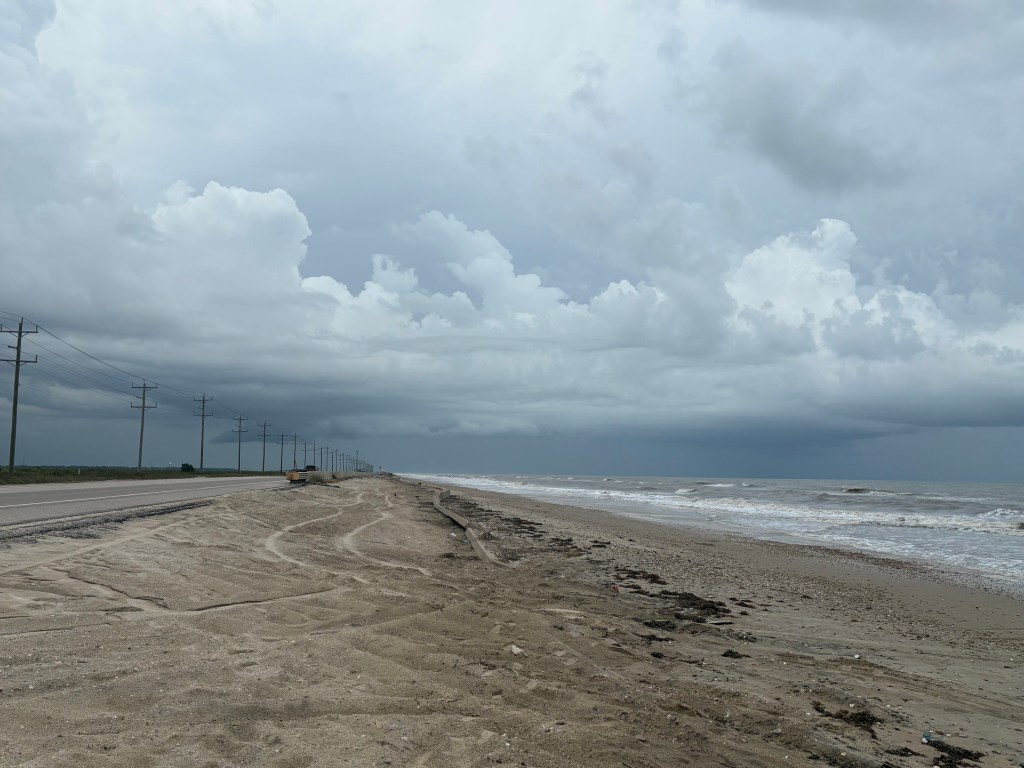
and then the other, our direction of travel.
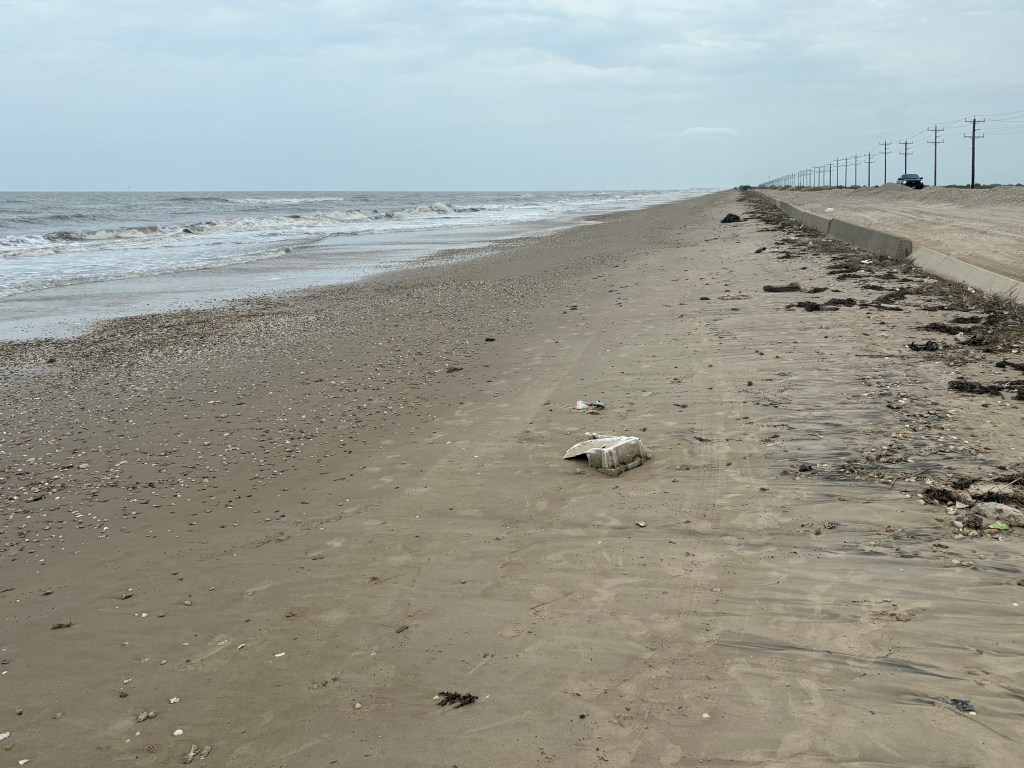
And the weird houses start to appear.
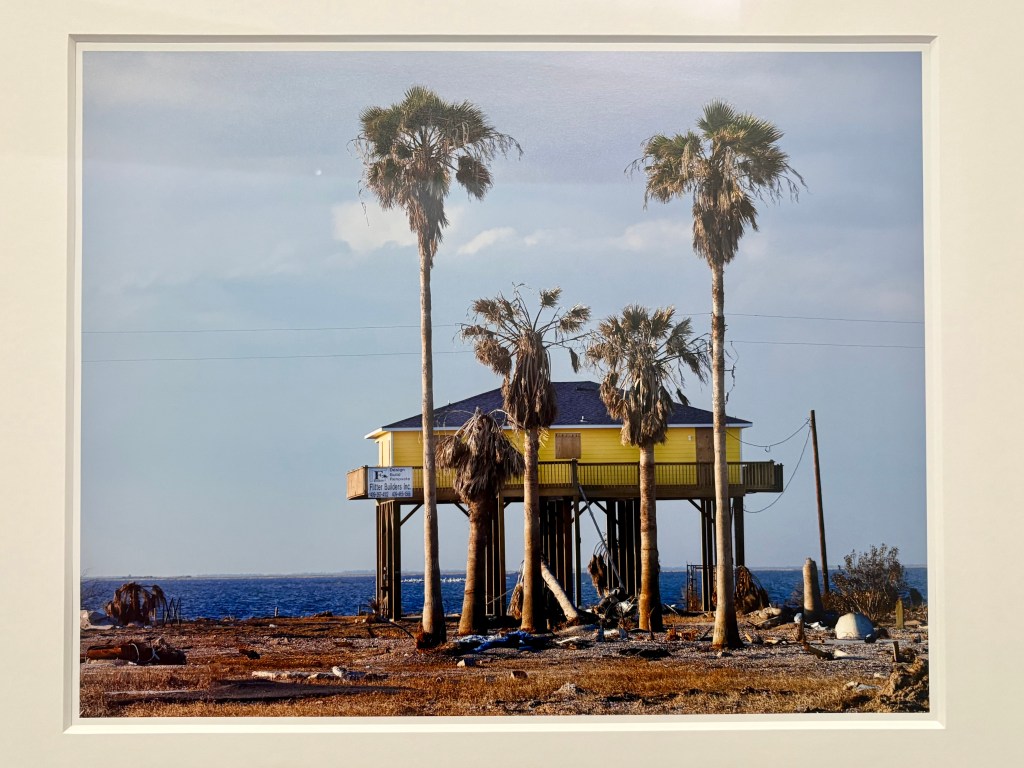
This is not my photo. It is one we found in the Houston Gallery. But it could be. The first house we saw was just like this. Five metres in the air with no discernible way of getting in. The sea had been through here recently and cleaned everything up.
The narrowest point of the Peninsula is at Gilchrist and I would say it is about 200-250m wide there. I would also say that the sea would cover the land there regularly if not quite tidally. And I can assert confidently that there are a lot of houses built just at this point, maybe because of the thrill of living dangerously. Here are some of them.
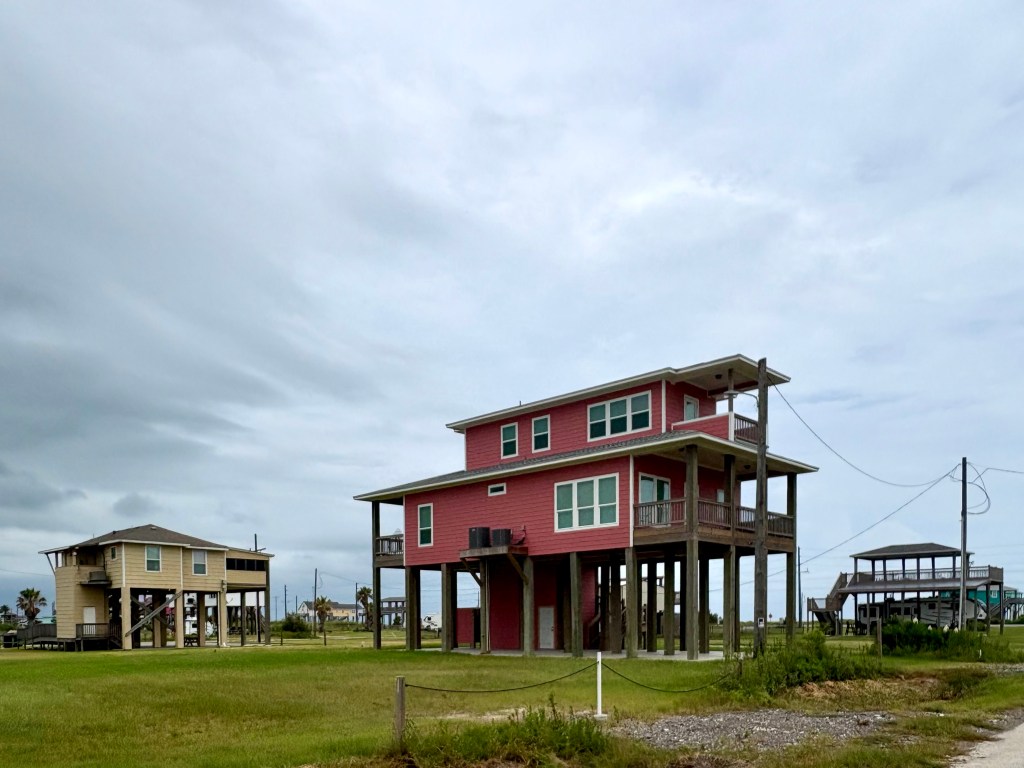
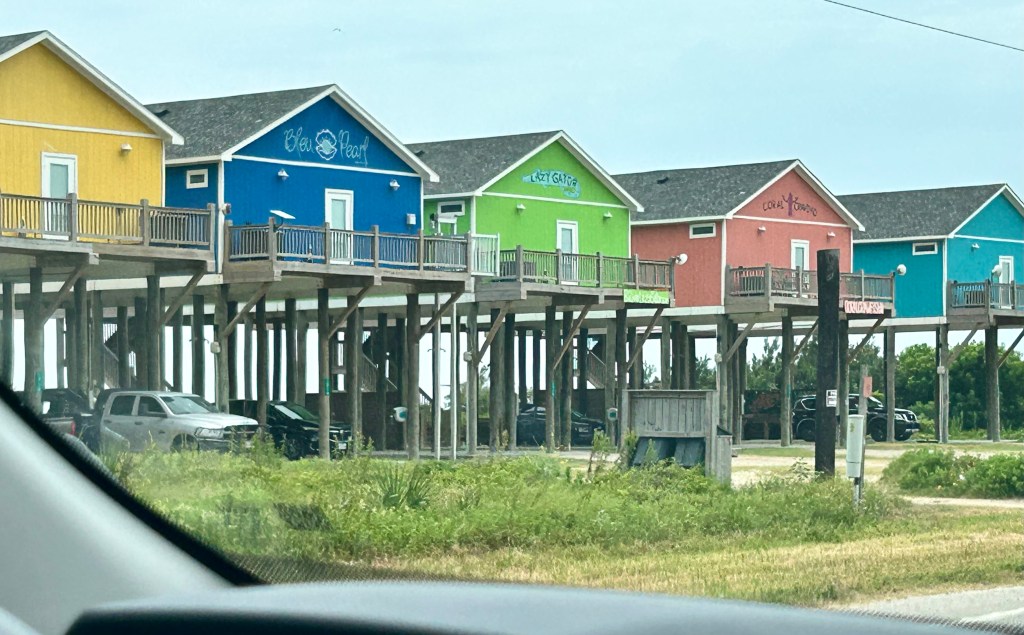
It’s a great drive just for its oddity.
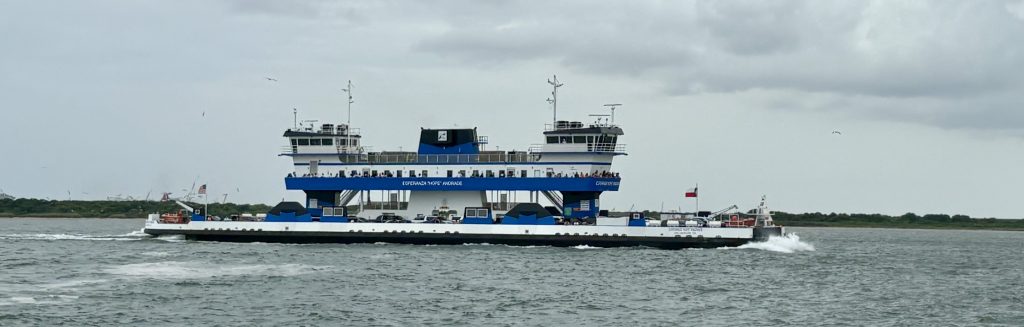
As we get closer to Port Bolivar it becomes more heavily settled and more seaside resort-ish with the occasional hotel, but it’s still all up in the air. Our destination is the Port Bolivar Ferry. From my journal: ‘Regular. Free. Efficient. Straight on, straight off. Dolphins. Birds. Cruise ships. Terrific.’ Below is a ferry pic taken from the one we were on.
* * * * * * *
BIG INTRO: MAKE SURE YOU LISTEN. ITS CHARMS HAVE NOT FADED.
[Stop it smartly after ‘Galveston’ or it will go on for ages. Best I could do. Apologies.]
Jimmy Webb wrote that song, ranked Number 8 on Country Music Television’s 100 Greatest Ever Country Songs. You may not have heard it nearly 60 years ago when it was released with Glen Campbell singing, but I did.
Its meaning, which I didn’t dwell on as a youth, is contested. Glen sings it with warm longing for a girl whose dark eyes he can still see glowing. ‘She was 21 when I left Galveston’. But in the second verse which incorporates the ‘sea waves crashing’ matter which brought us to Galveston, Campbell or, more likely, his handlers changed the lines ‘I’d go home if they would let me/ Put down this gun/ And go to Galveston‘ to ‘While I watch the cannons flashing/ I clean my gun/ And dream of Galveston‘. No one could argue against that being a variant. Webb has said, the song is ‘about a guy who’s caught up in something he doesn’t understand [60 years ago? the Viet Nam War] and would rather be somewhere else’. Galveston? Why not!
Galveston was Galvez’s Town originally. This is the Gulf of America Mexico we’re looking at. It is now is a city of about 50,000 sitting on two islands, Galveston and Pelican, and historically has functioned as a significant port.
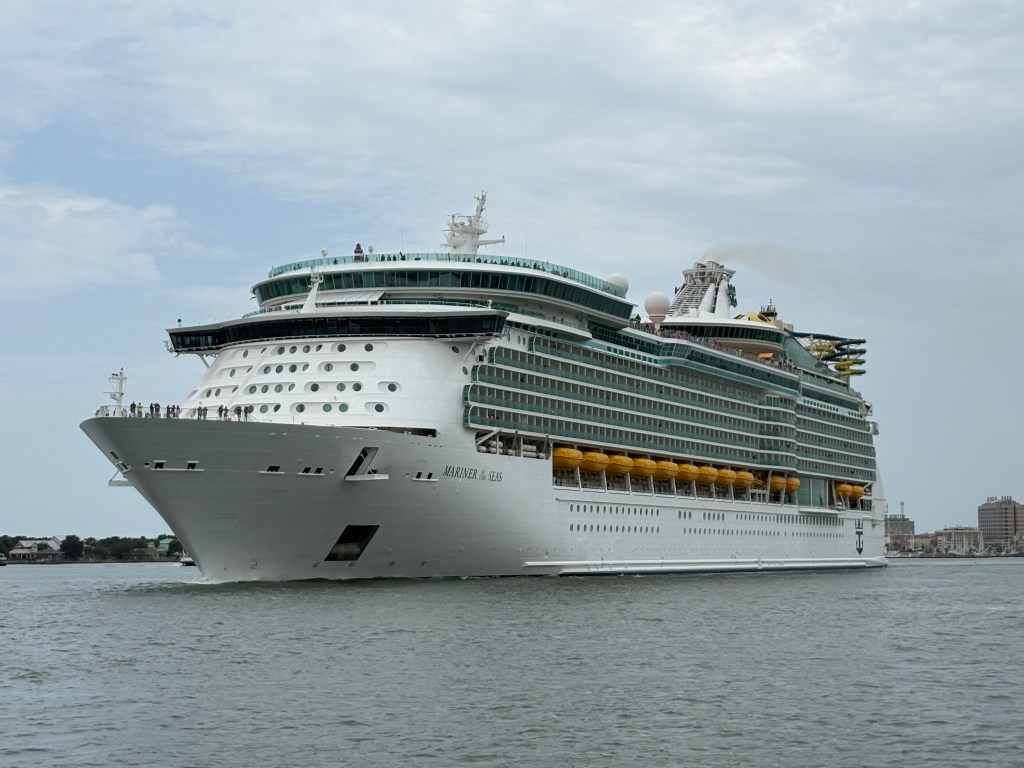
The shallow beaches all along the Gulf have a long, gentle rake out to sea. But because water flushes out the Bay through the eastern inlet a deep water channel is maintained which has been able to accommodate cotton ships, oil tankers and behemoth cruise ships like the one at right. A channel has now been dredged up the bay to Buffalo Bayou which allows big ships to dock close to the heart of Houston.
But prior to 1900 the ships didn’t need to go to Houston because there wasn’t much there. As noted above, Texas wasn’t making money out of oil. Cotton and beef certainly, some sugar, but no hint of the tsunami of liquid gold which was to come. It was also running hamstrung. When Texas joined the Union in 1845, Article VII, Section 30 of the agreement explicitly decreed: ‘No corporate body shall hereafter be created, renewed, or extended, with banking or discounting privileges.‘ It also criminalized the printing of private paper notes intended to circulate as money. So for the purposes of banking, finance and money exchange Galveston was not actually in Texas. It was where you’d go to do business. And it was where you’d make, and spend, money. And it was by some distance the biggest city in, or as it billed itself, out of Texas.
However not the most elevated.
Prior to 1900 the highest point on either island was seven (yes, 7; see what I mean about ‘High’ Island?) feet above sea level. The sea waves don’t crash there much, they more or less stumble onto shore; but when they do, they really do.
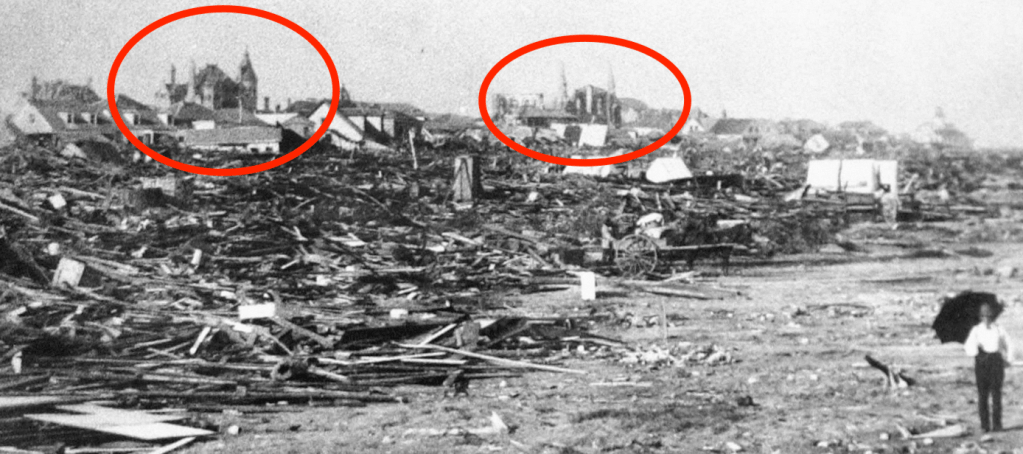
In 1900 one of the biggest of the many hurricanes which develop in the Atlantic surged through the Gulf and completely submerged both islands. Somewhere between 6,000 and 10,000 people died, the greatest loss of life ever from a natural disaster in the US. Hundreds were buried at sea. For some time bodies washed back inopportunely onto the beach. And, of course, far more were left homeless. Almost 1000 sheltered in the Sealy Mansion and the Bishop’s Palace (then Gresham House, see below) which stood their ground. These two buildings just happen to be the largest ones standing in this contemporary photo. Their surrounds look to be far more than seven feet above sea level. This photo was apparently taken from a deep washout left after the storm. The extraordinary amount of detritus is a typical result of even much smaller storms.
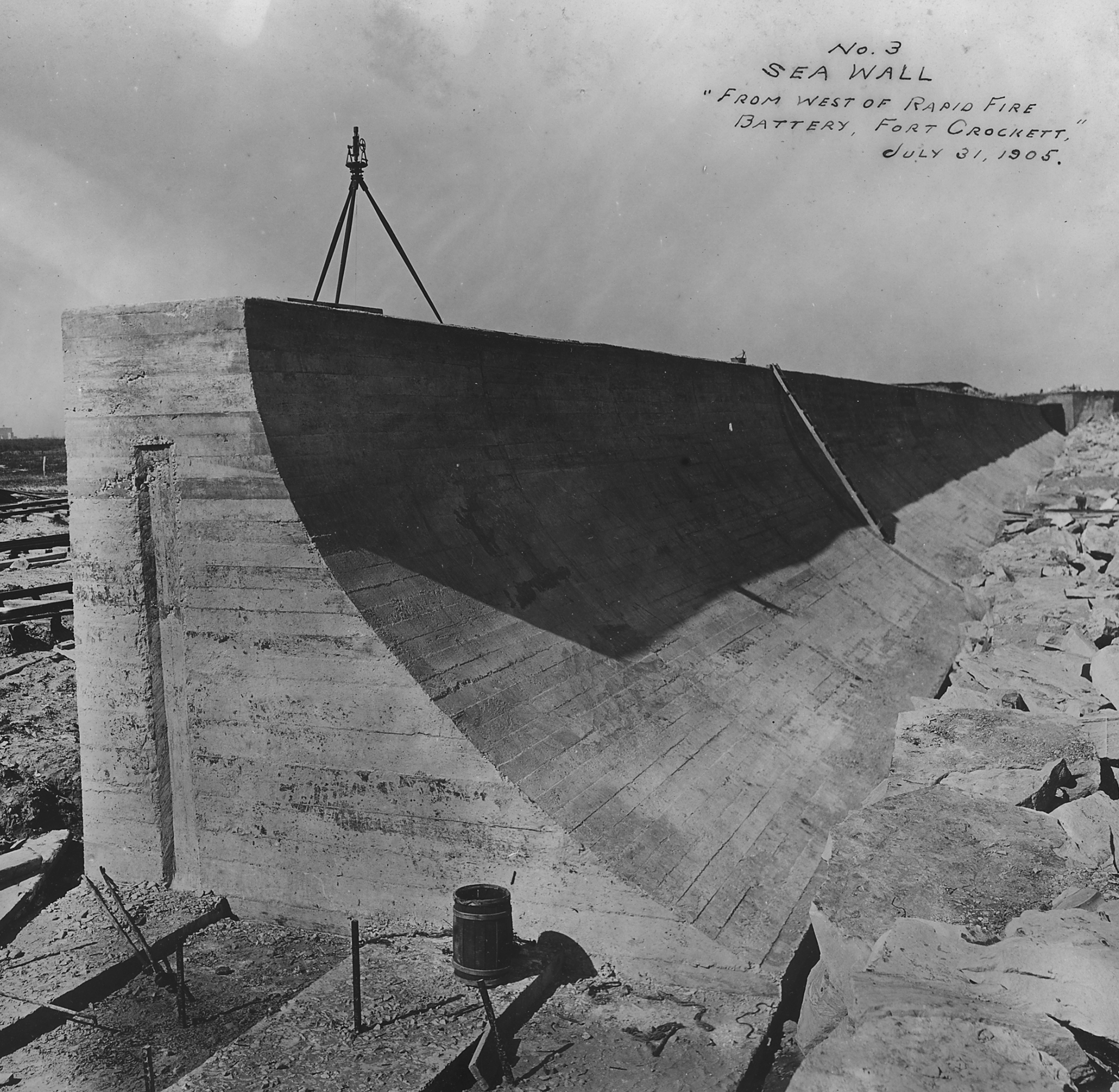
Offering an idea about the resources available to and from those who still wanted to live in Galveston, the recovery effort included building a 17-foot high sea wall for 10 miles along the beachfront, an enormous undertaking.
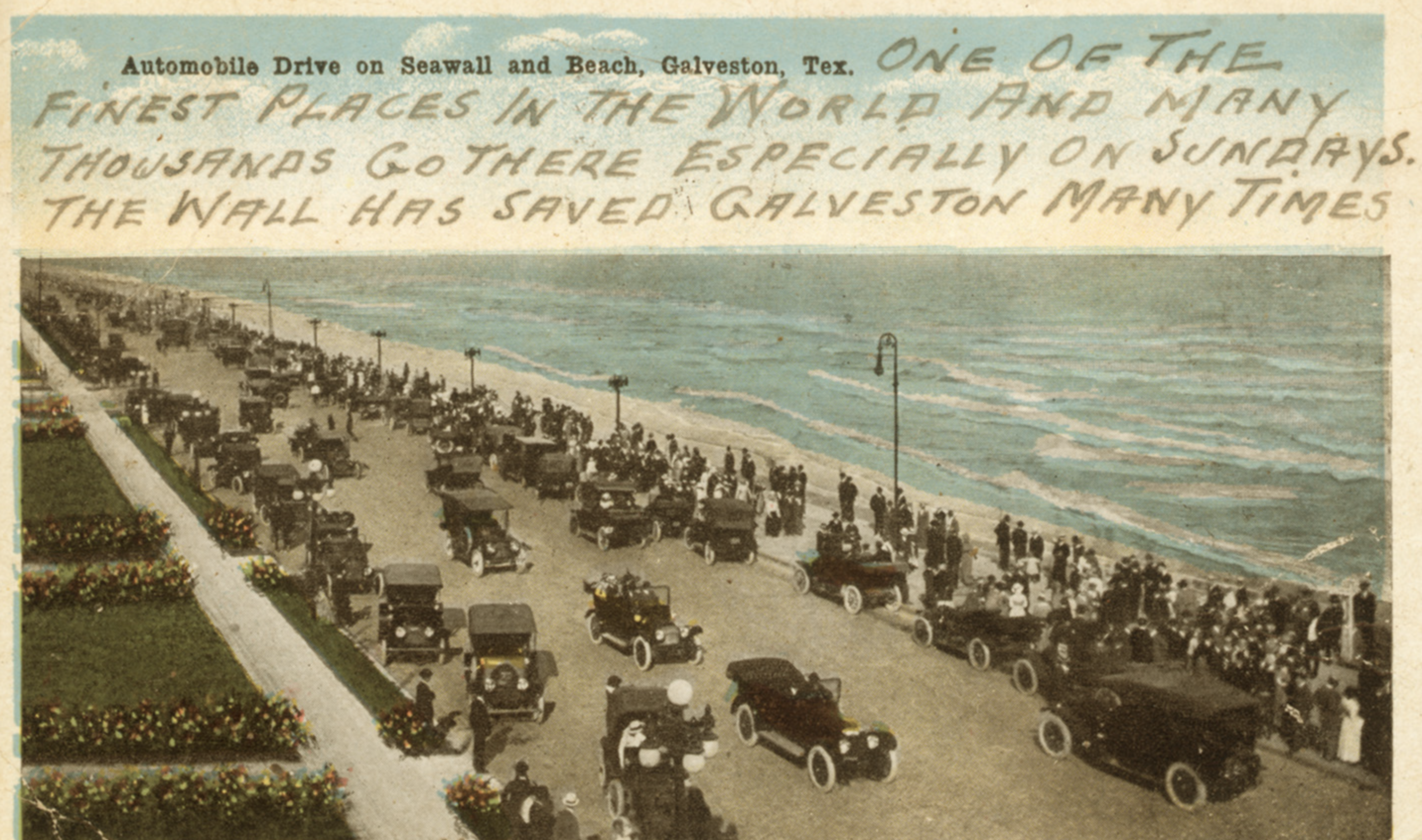
But not as much as elevating the entire town: 14 million cubic yards of sand were pumped onto the main island raising the ‘ground level’ by an average of 12 feet (c. 3.7m), that is to say considerably higher than the ceiling of the room you are sitting in. Houses remaining after the hurricane were ‘lifted’ onto new ground levels in more feats of engineering.
Another giant storm hit the town in 1915. The seawall provided some protection but considerable damage was sustained again.
These two disasters were quite enough to change Galveston from the ‘Wall St of the South’ to something more humble. ‘In less than a single generation Galveston went from being Texas’s most populous (and most important) city to being a tragic footnote to a century of frontier violence, urban lawlessness and civic greed.’ That’s what the Wikipedia authors think. This was compounded by the international economic collapse of the ’20 and ’30s. Galveston seems to have turned into one of those rootin’, tootin’, shootin’ hyper-masculine towns that this part of the world seems to specialise in.
So what is it now? What’s left of these disparate histories even after Hurricane Ike made a mess of things again in 2008?
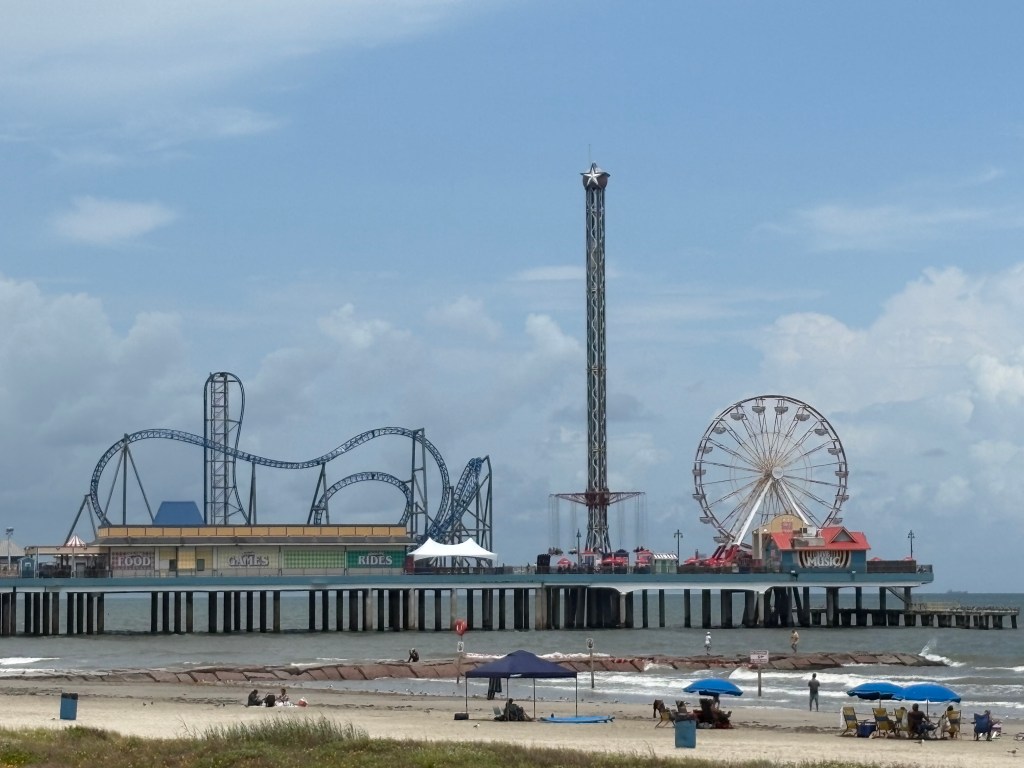
It is still a seaside resort, especially for Houstonians who are an hour’s drive away. There is a ‘Pleasure Pier’ which the info bureau would like you to imagine like this.
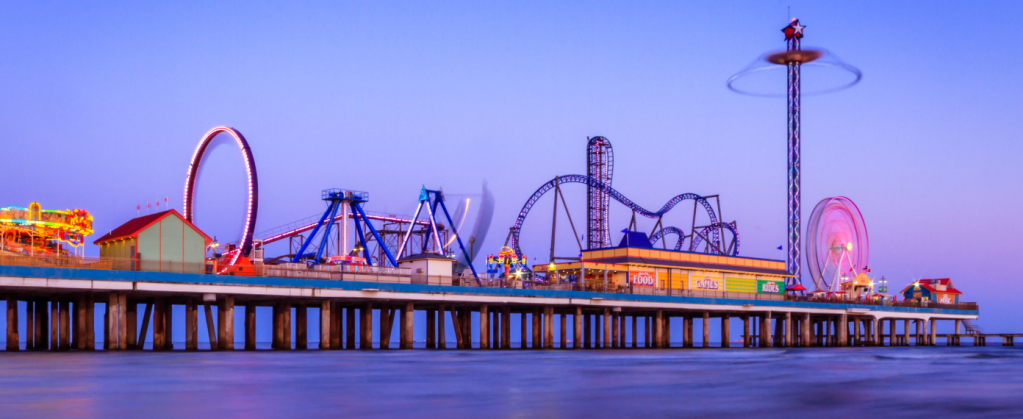
But when we were there looked a bit more like this. Note the giant rollers crashing on the shore. Myrna is swimming down there somewhere. She describes the water as tepid.
The remnants of the bank/ insurance company/ power brokerage etc. are still evident in several ways.
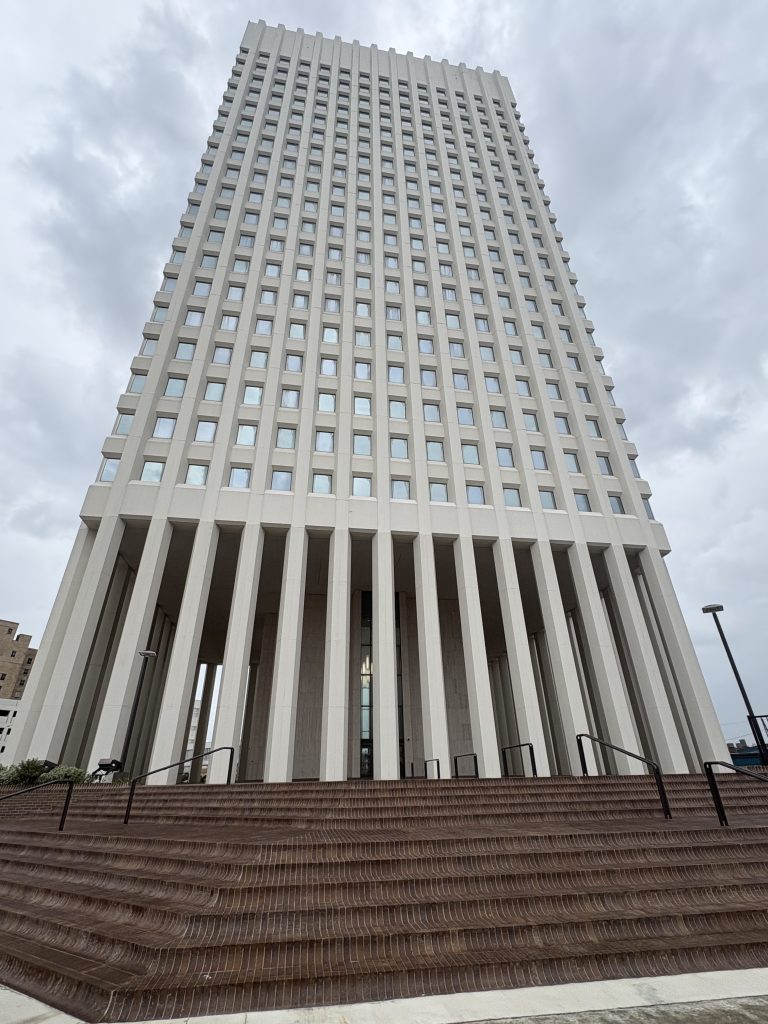
This is One Moody Plaza also known as the American National Insurance Company Building.
One Moody Plaza, built in 1972 (and doesn’t it look like 1972), was the tallest building in Galveston for 38 years until Moody Enterprises built two towers of condominiums 3m taller. It is a gesture of great confidence, but I’m not sure if the stilts are an architectural meme reflective of the beach houses or preparation for the next great flood. Incidental fact: In 2017 395 migratory birds died in one night after crashing into the building during a lightning storm. An agreement was made with the Edith L. Moore Nature Sanctuary to turn off building lights at night during the migration season. (Did I say we were in America? I’m sure I did.)
At right is the house where William Lewis Moody and family lived.
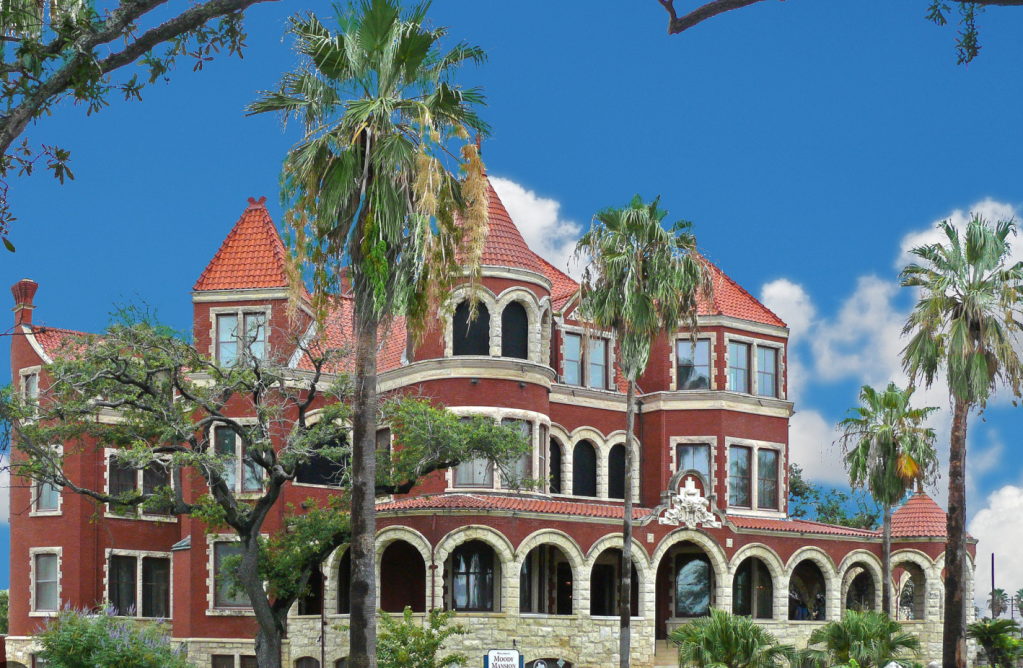
A lawyer, his interests included banking (his own, the National City), insurance, cotton, hotels, media and charitable trusts. As a consequence of the last, today we can work our way through The Moody Gardens, The Moody Arts Centre, The Moody Theme Park, the Moody Sports and Entertainment Centre, The Moody Medical Library and Heart Research Centre. Some of them are in Moody Avenue, others in Moody Plaza which dominates downtown … and that’s just in Galveston. Try Austin.
[To see what can happen to money and moneyed families you might want to turn here to read ‘ The Sleaziest Man in Texas: Shearn Moody Jnr.‘ And, I don’t know, but that might be a hotly contested title.]
And if the name is not Moody, it’s Sealy.
George Sealy served as treasurer of Gulf, Colorado and Santa Fe Railway. After it went bankrupt, he bought the company at foreclosure, 🤔, and reorganized it, developing new towns (including one called Sealy) along the existing routes it served as well as supervising the establishment of new ones. (I did say America didn’t I? I love all this.)
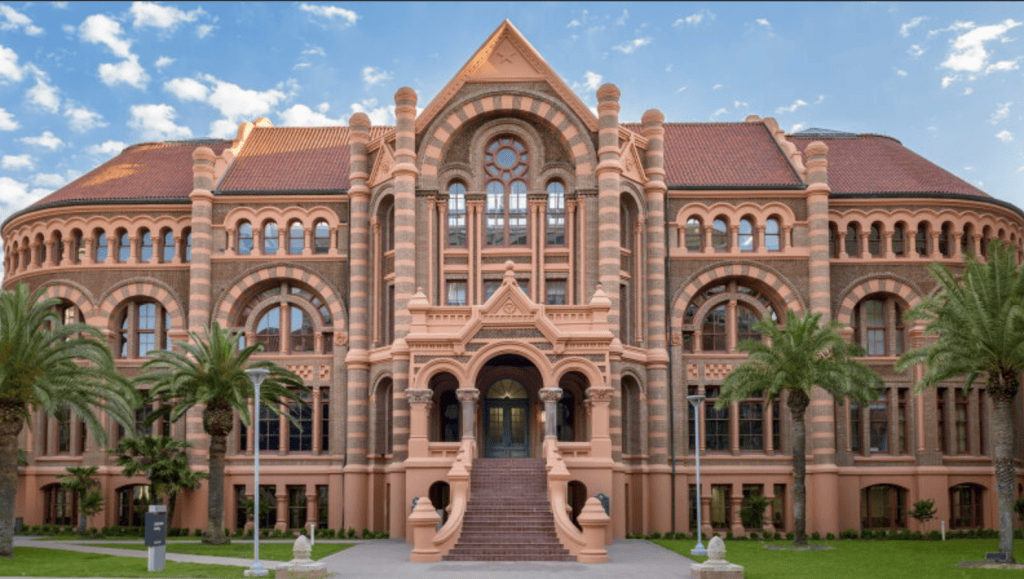
‘Old Red’, a Sealy erection, is now part of Texas University’s Medical School at Galveston which covers about one-eighth of the urban end of the bigger island as well as a portion of the smaller one. It has a faculty of 782 full-time staff and a current enrolment of 932 which suggests you’d probably get a pretty good go. ‘Old Red’ is adjacent to the John Sealy Hospital which is quite close to the Jenny Sealy Hospital which is not so far from the Rebecca Sealy Hospital. And you could get there via Sealy Avenue but you’d probably be detained by looking at the houses.
The modest Sealy house is set into a full block running between Sealy Avenue and Broadway, itself well-equipped with grand houses.
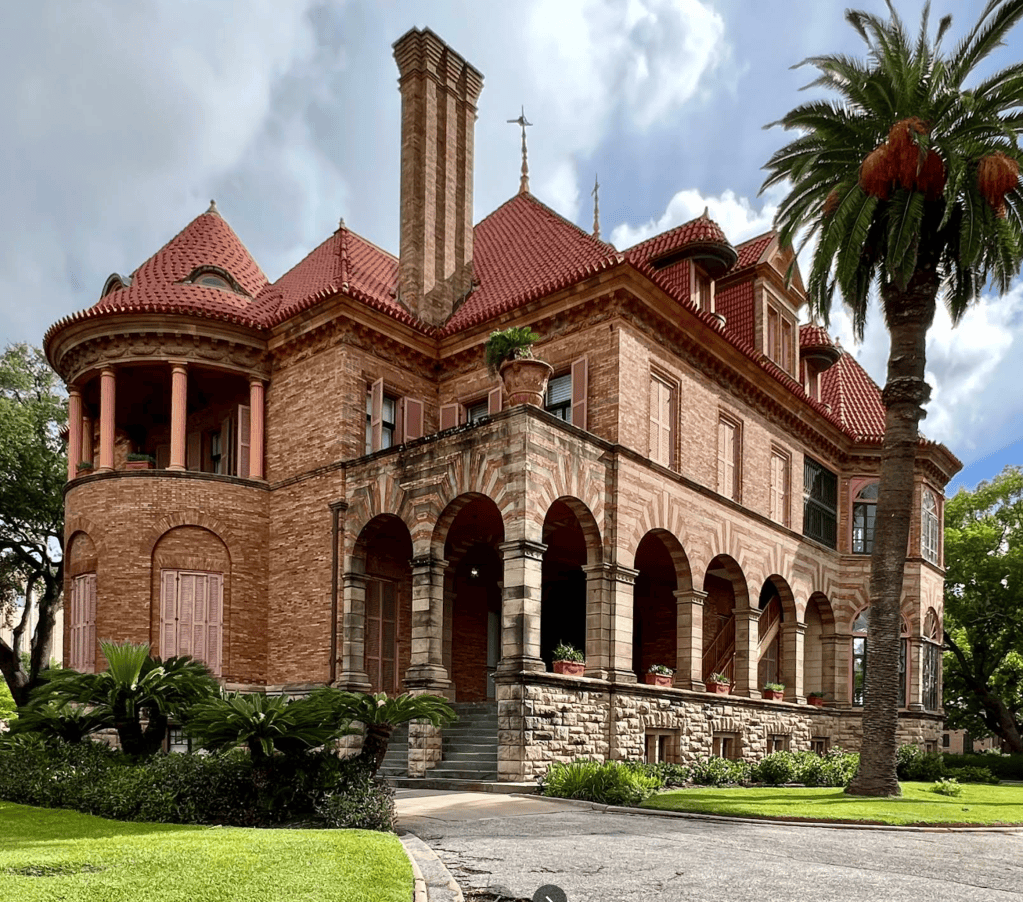
It’s on the National Heritage Register. So is this one at 1627 Sealy.
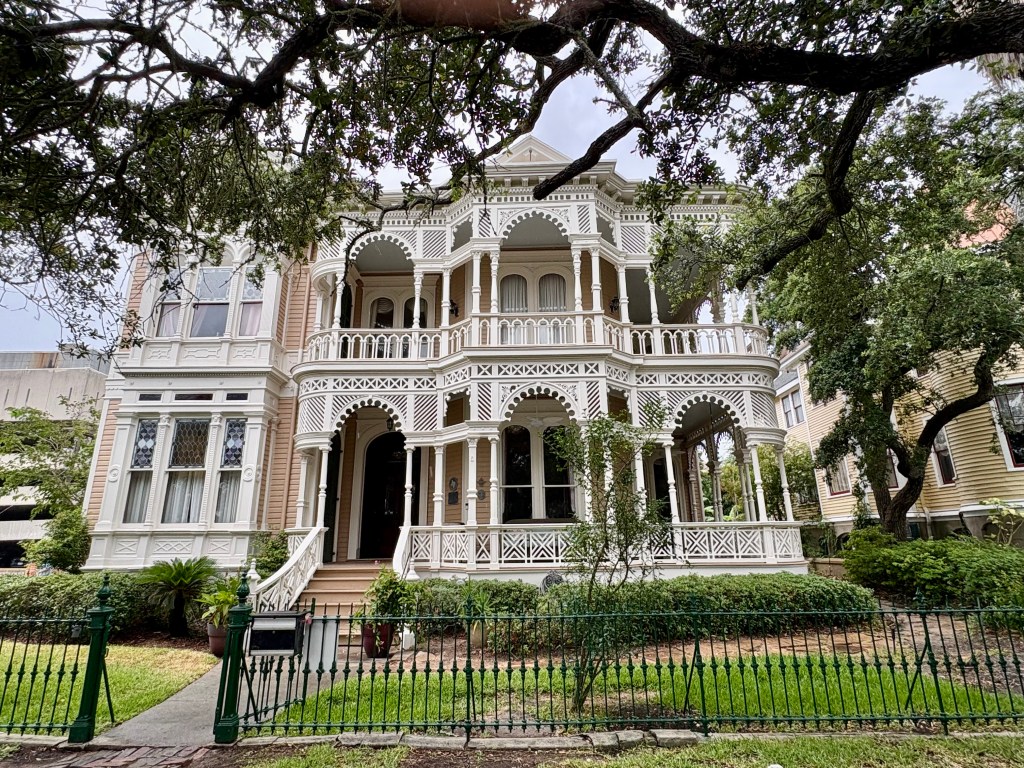
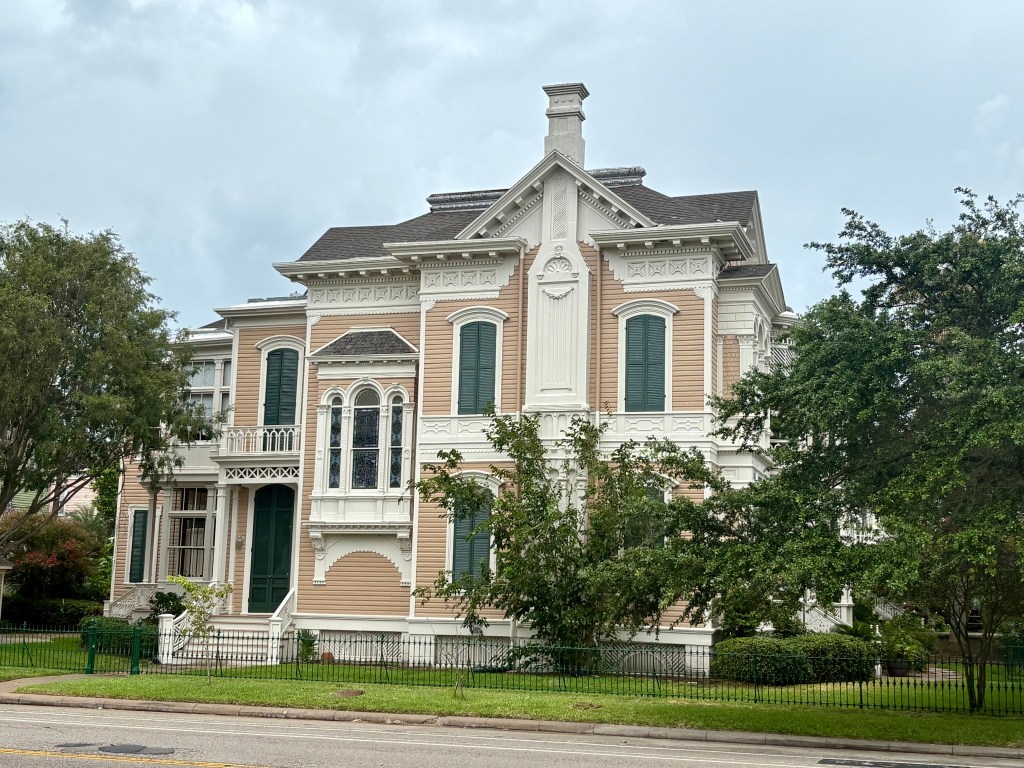
Below is one a block or two away, a thoroughly deserving winner of the Yard of the Month Award. I think the tall bush/ low tree at left is an oleander which seems to have been native to almost anywhere but the Americas. After the great storms had washed away most things above grass level, the citizens of Galveston decided to plant oleanders which thrive in this climate, and they really are everywhere here. I have read that there are 140 cultivars of oleander growing in Galveston. The palms have been imported.
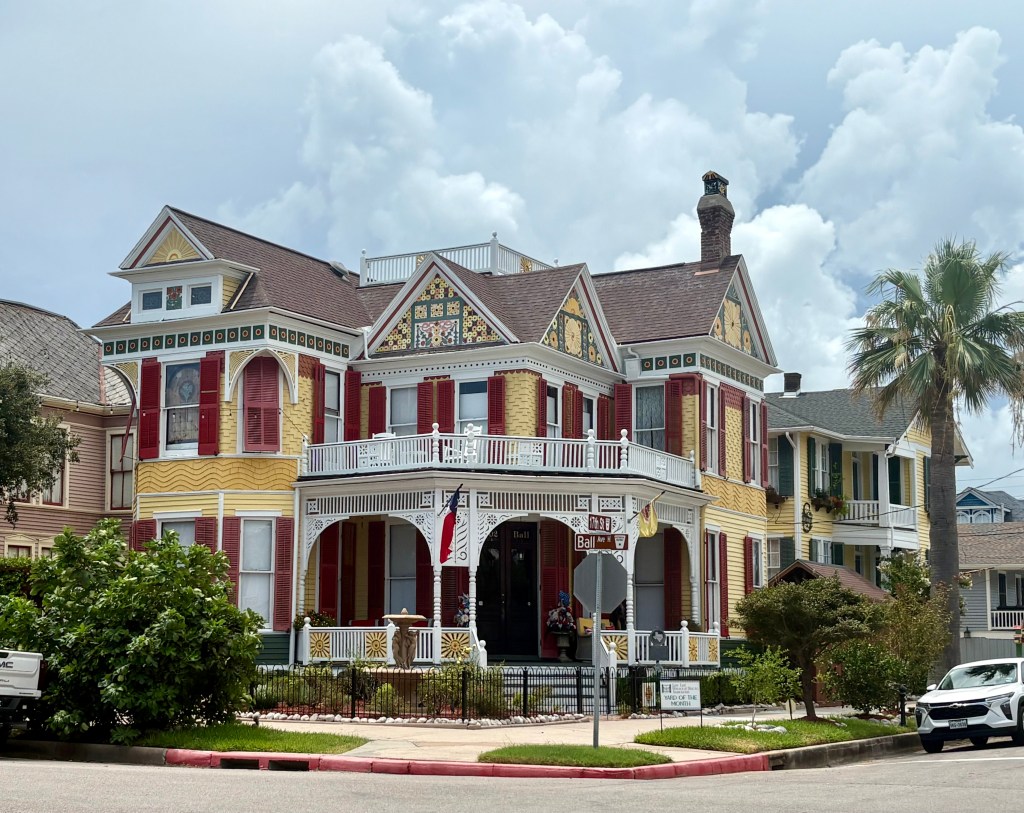
Below is our Air BnB. Well … a rather cramped room out the back was anyway. In the past it might have been enjoyed by one of the maids. But breakfast was served in the very gracious dining room.
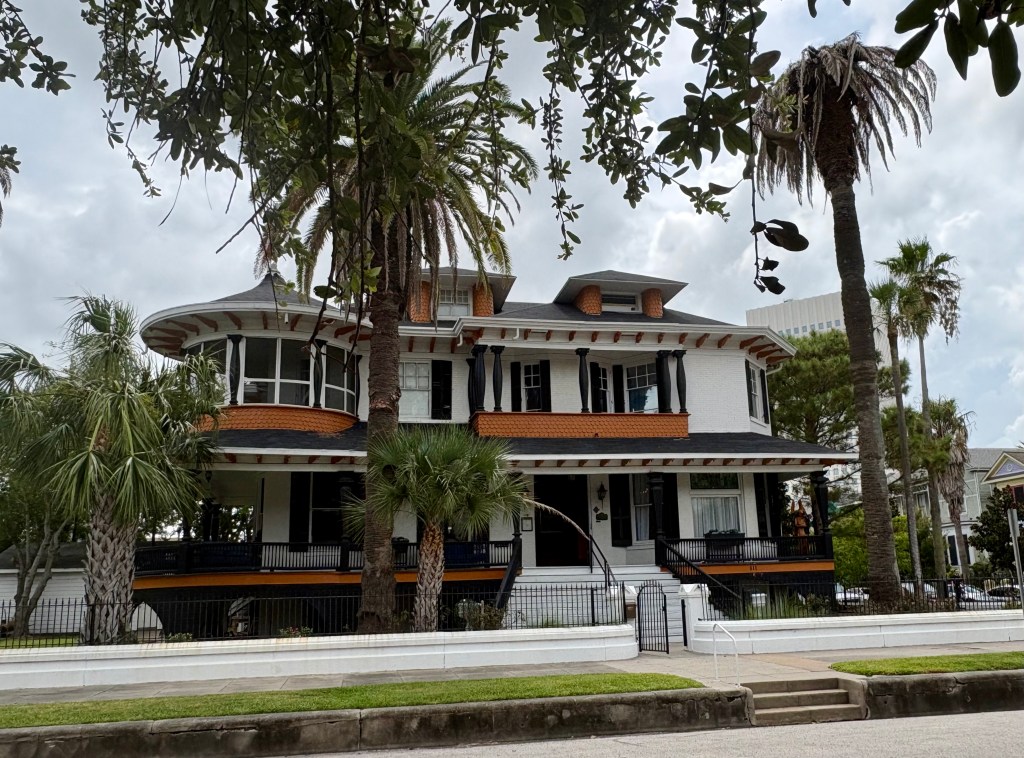
Over the road … and on the other corner.
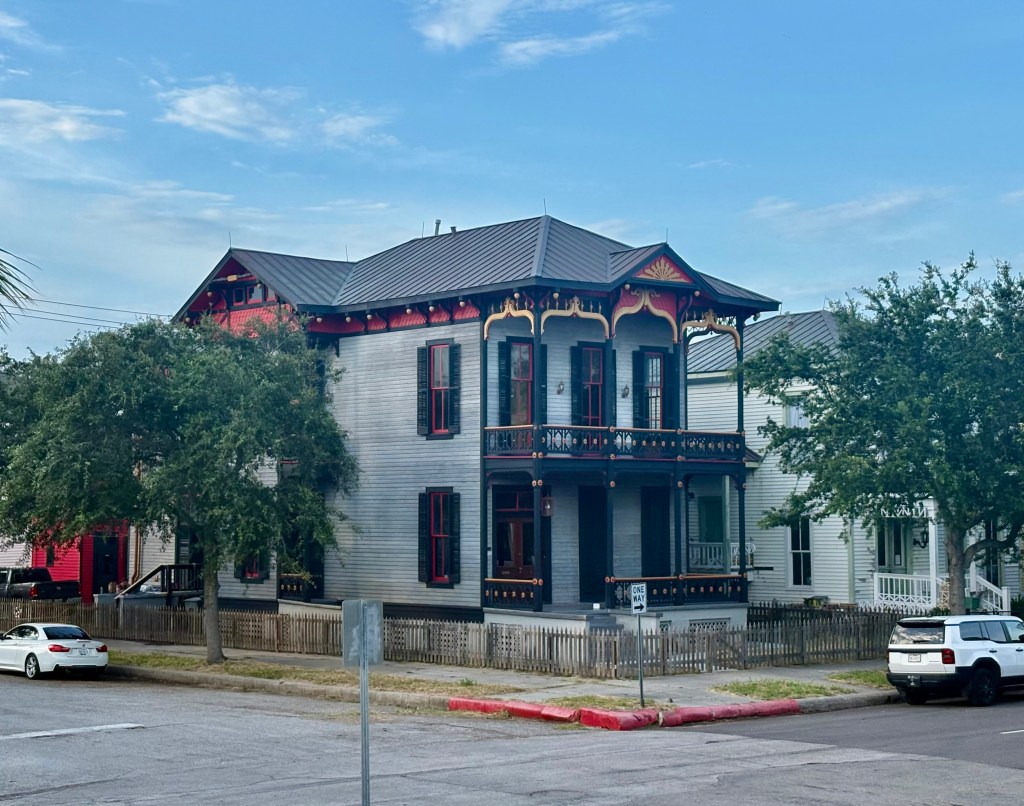
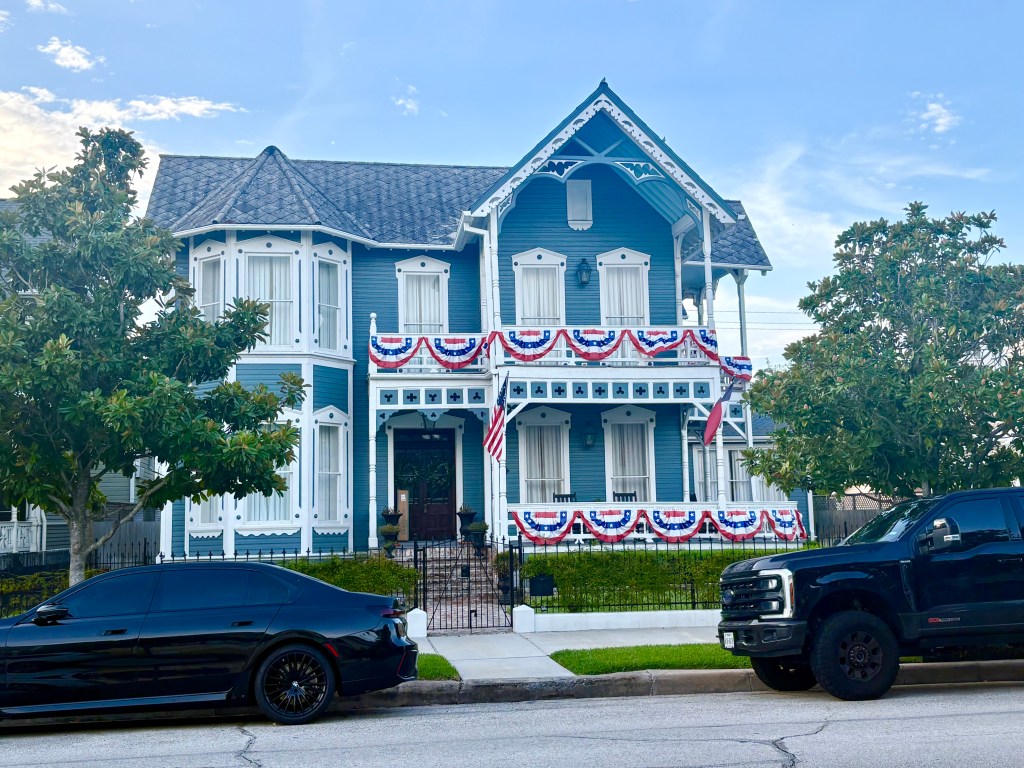
This area is called East End. But there is a certain amount of flare down the other end as well.
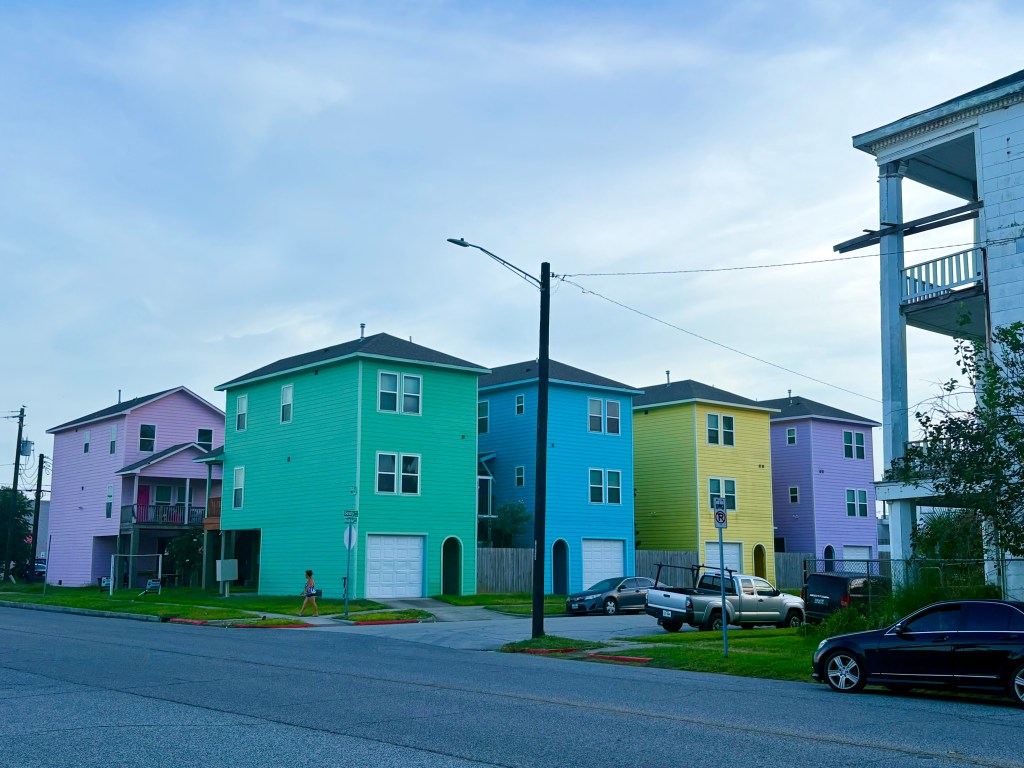
Among this profusion of interesting houses the dominant one may be Bishop’s Palace.
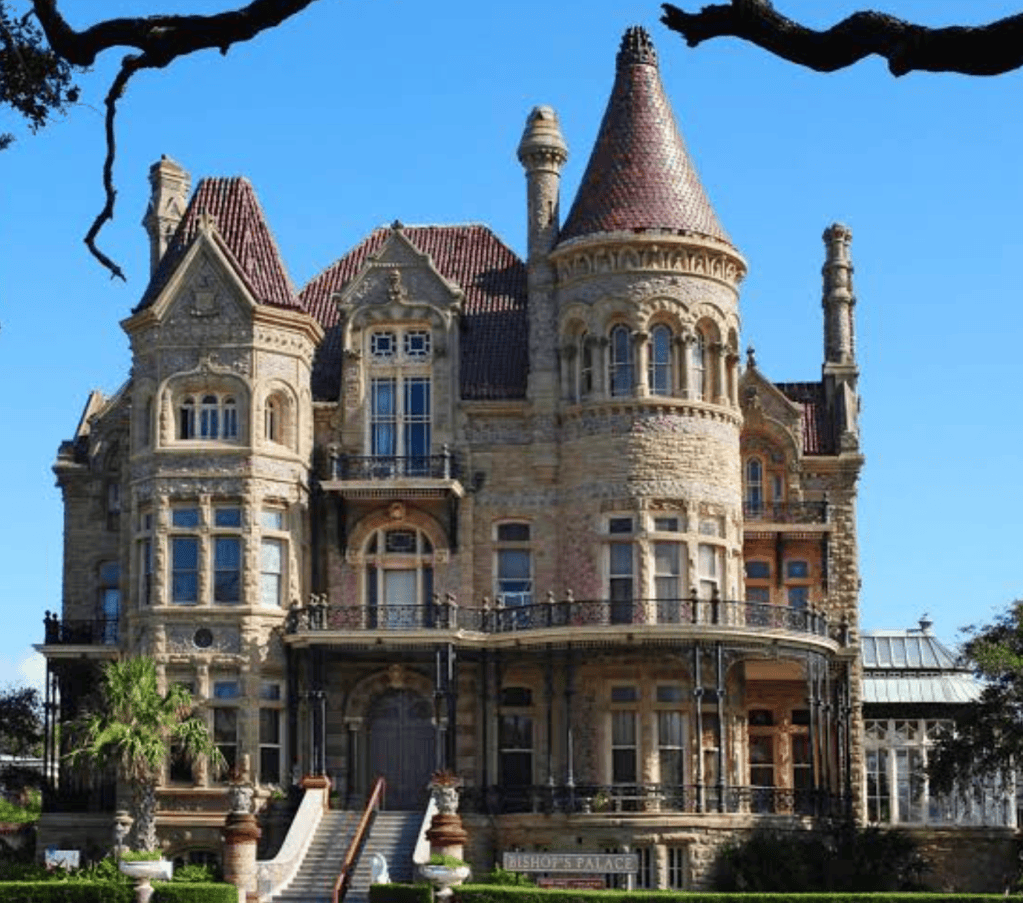
It was built for Walter Gresham, a lawyer who also had interests in railroads, and who with his wife Josephine had nine children. It was begun in 1886 and completed in 1893. For most of that time it had 75 men working on it. All the imported stone was hand cut on site. Cost of construction is estimated at $250,000, allowing for inflation, today $8.9 million. This is not my photo because while we were there the tiles on the roof were being replaced and the house was surrounded with scaffolding. The pinnacles of the four towers, each with differing medieval or Renaissance details, were presenting some difficulties.
Photos suggest the interior is just as remarkable.
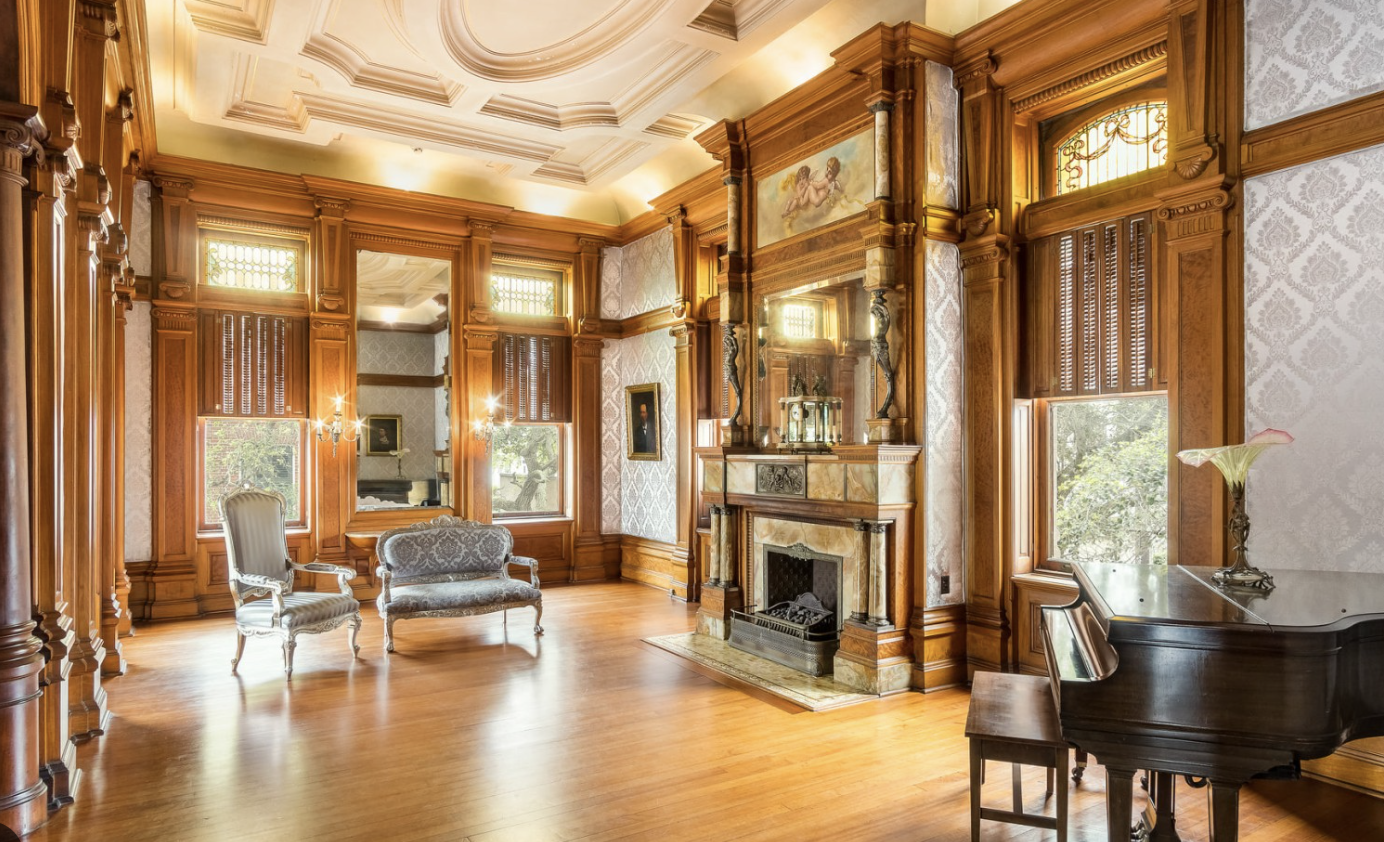
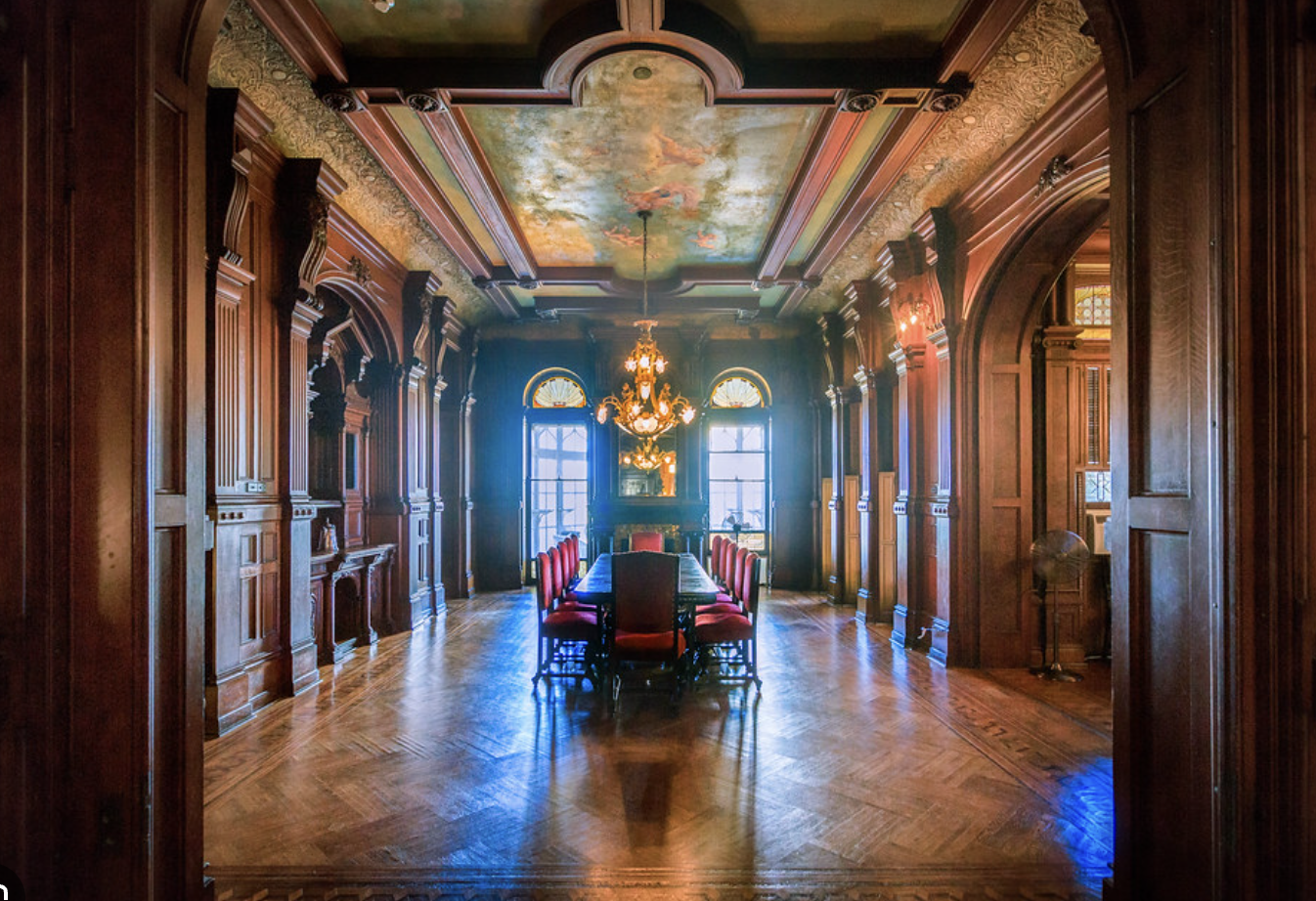
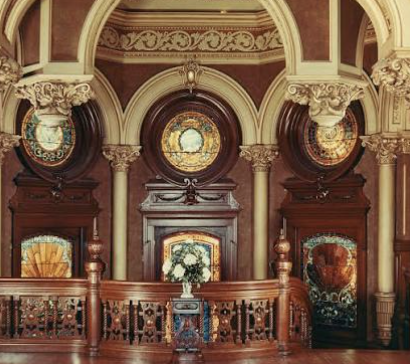
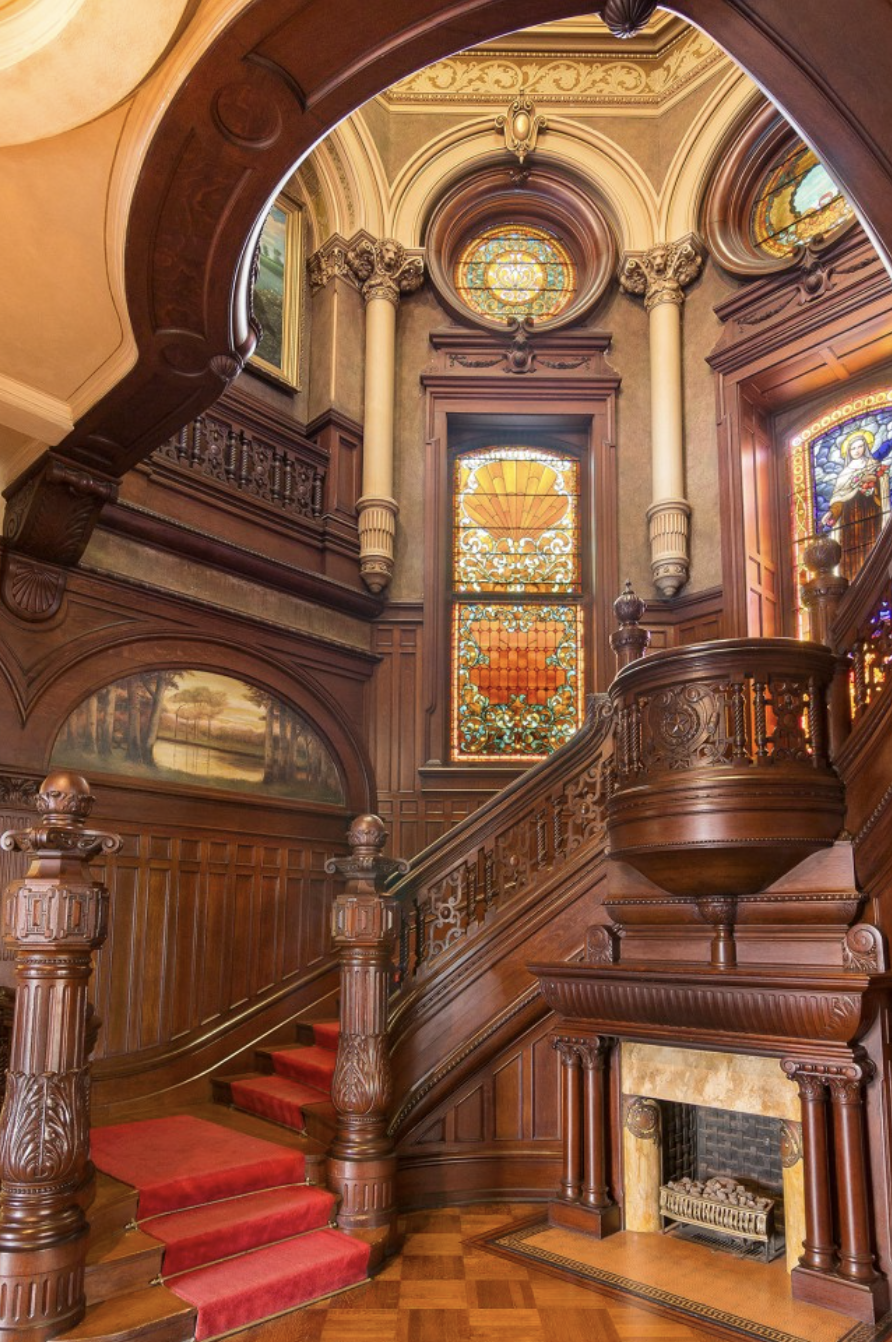
The Archdiocese of Galveston purchased the property from Gresham in 1923 and used it as its headquarters for four decades, after which it was opened up for tours. In 2013, the Galveston Historical Foundation acquired the property for $3 million, of which the Moody Foundation (who else) paid two-thirds.
There are 84 Galveston properties listed on the US National Register of Historic Places even though one of those is a boat and two are submarines.
A visit there is considerably more than sea waves crashing, although if you want the top-rated Indian restaurant you might find yourself eating here at the back of a service station.
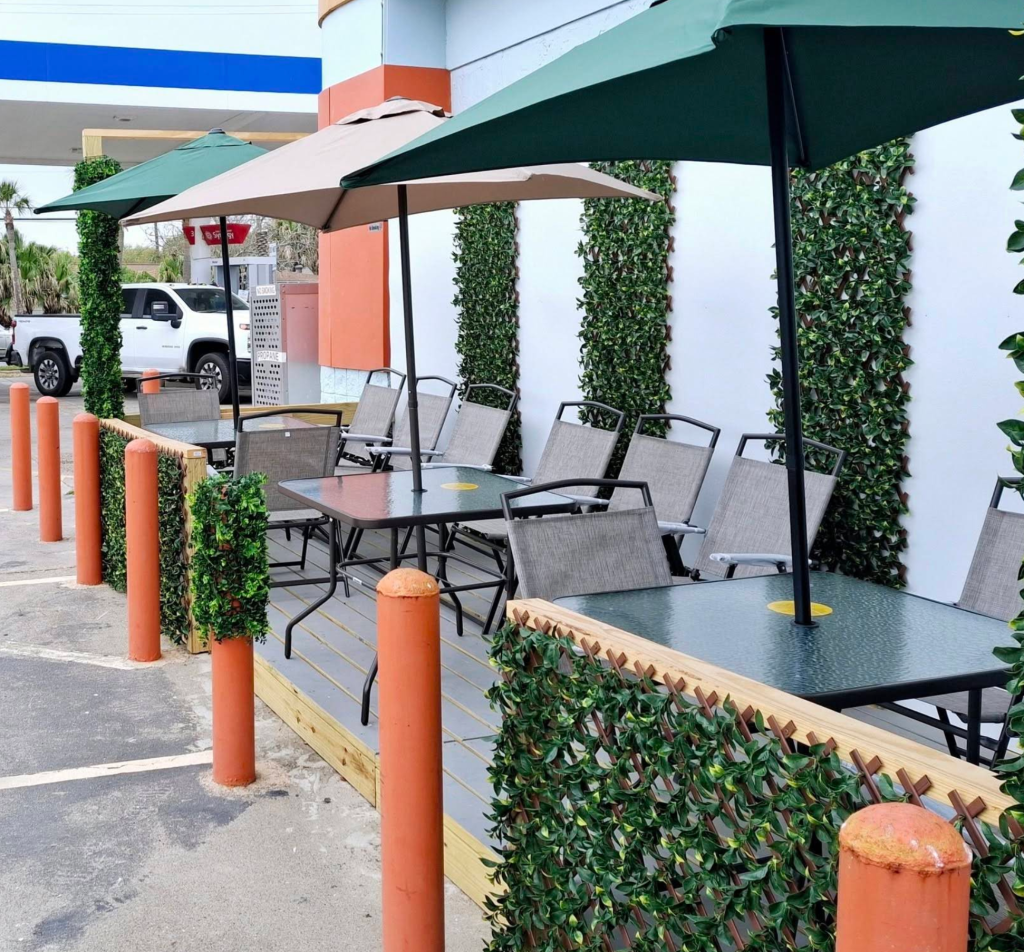
We’ve dallied. Fun, of course, but there is so much more.
* * * * * * *
I had planned to drive from Galveston to Houston (HYOO-stn rather than HOO-stn) the long way, veering left at Hitchcock after the four km bridge onto the mainland to go through the bayou country and the wildlife reserve. But there were roadworks which had sealed the exits and narrowed the six lanes to a regular intake of breath, and then that storm below hit. It provided rain that comfortably defeated the best efforts of the windscreen wipers, and some cars including the one in which we were driving even slowed down.
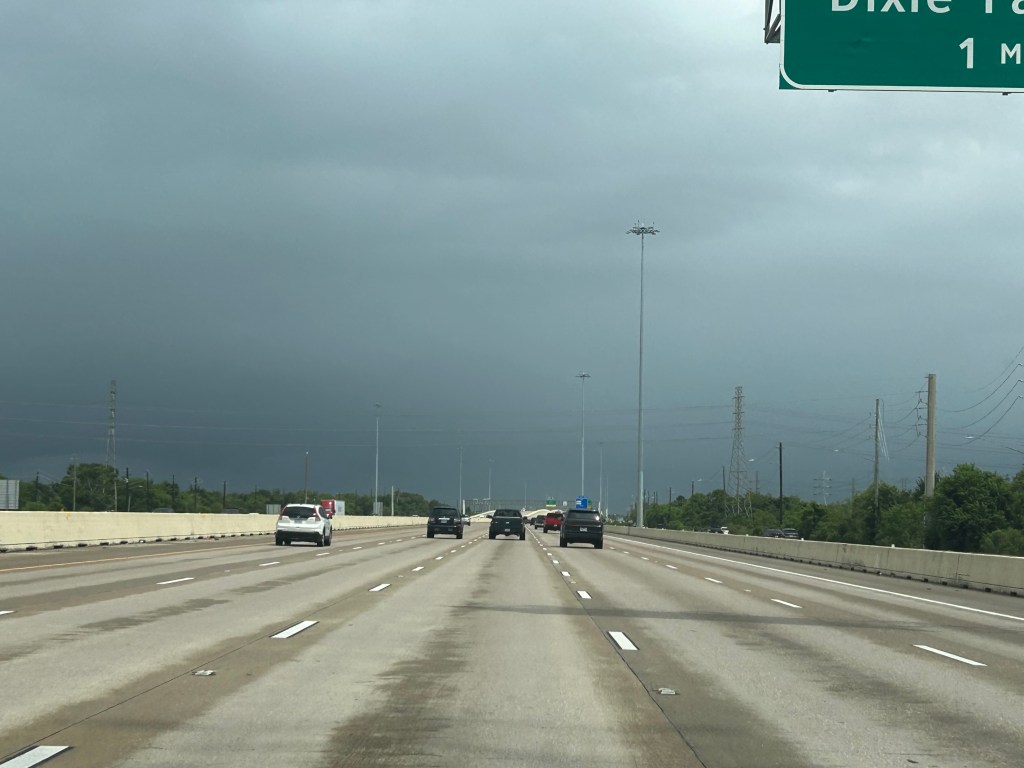
Driving in Houston, a city of cars with only the most basic of gestures at public transport, is not the best fun in the world certainly until you get inside the beltways which circumnavigate its sprawl.
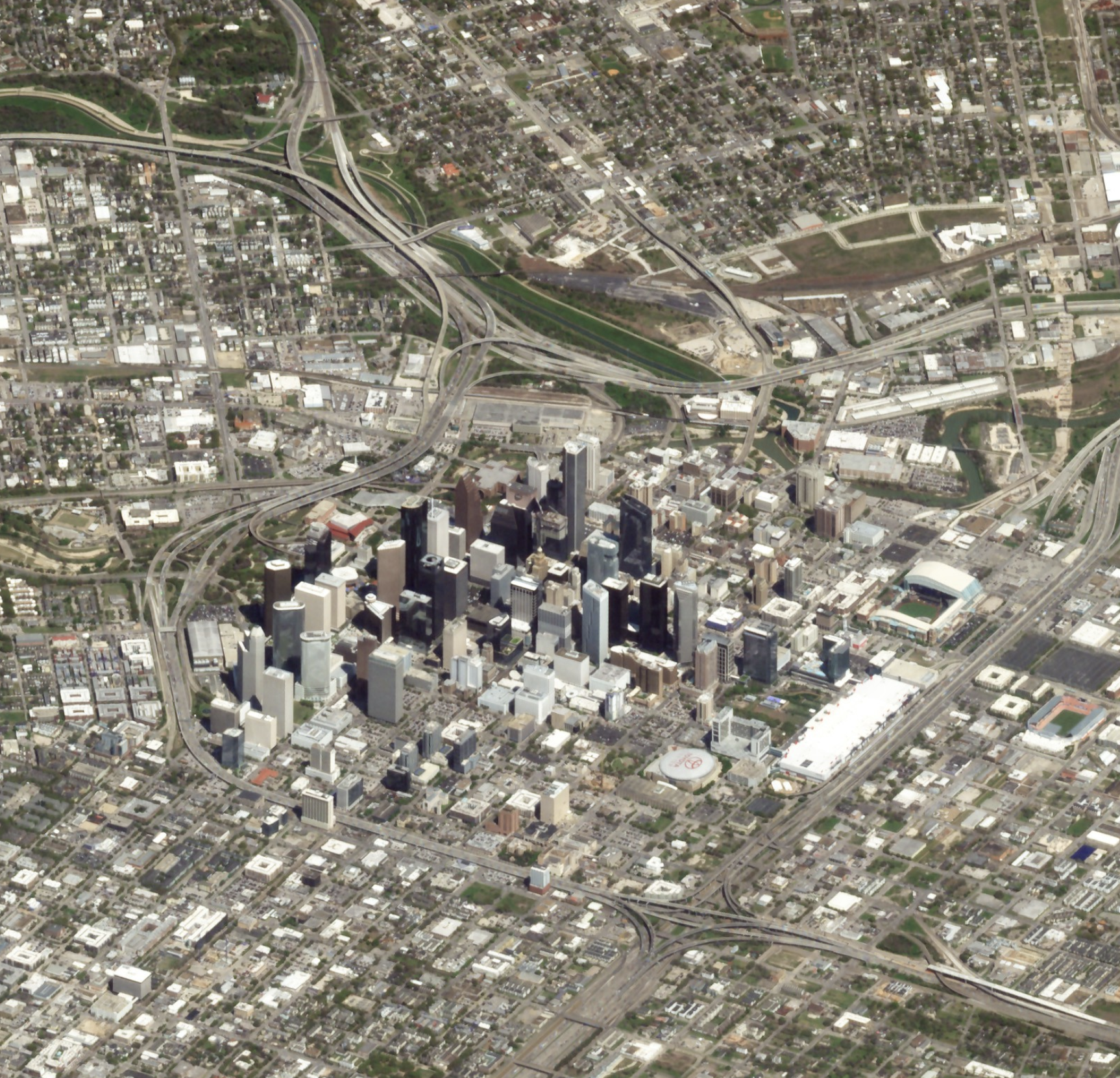
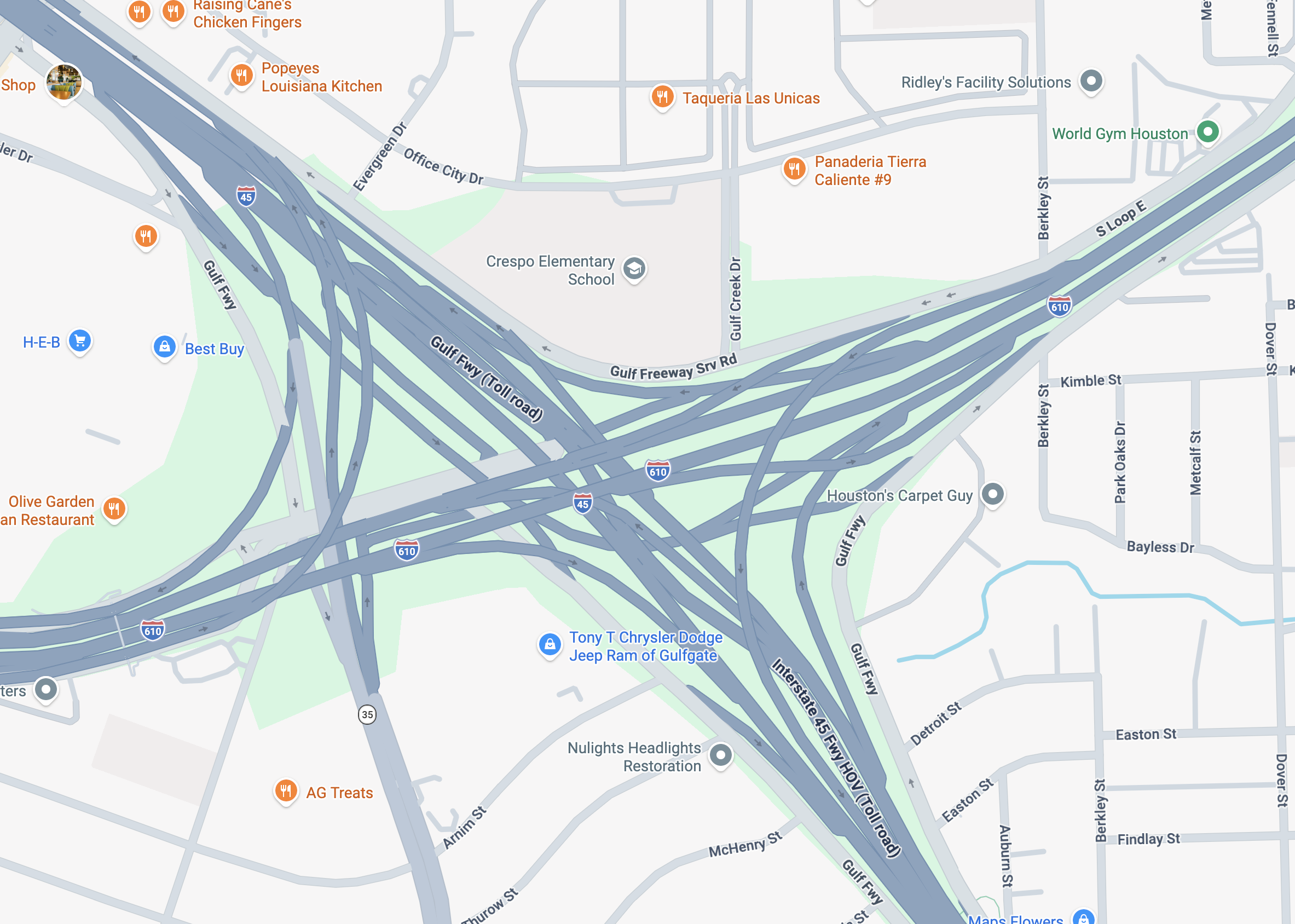
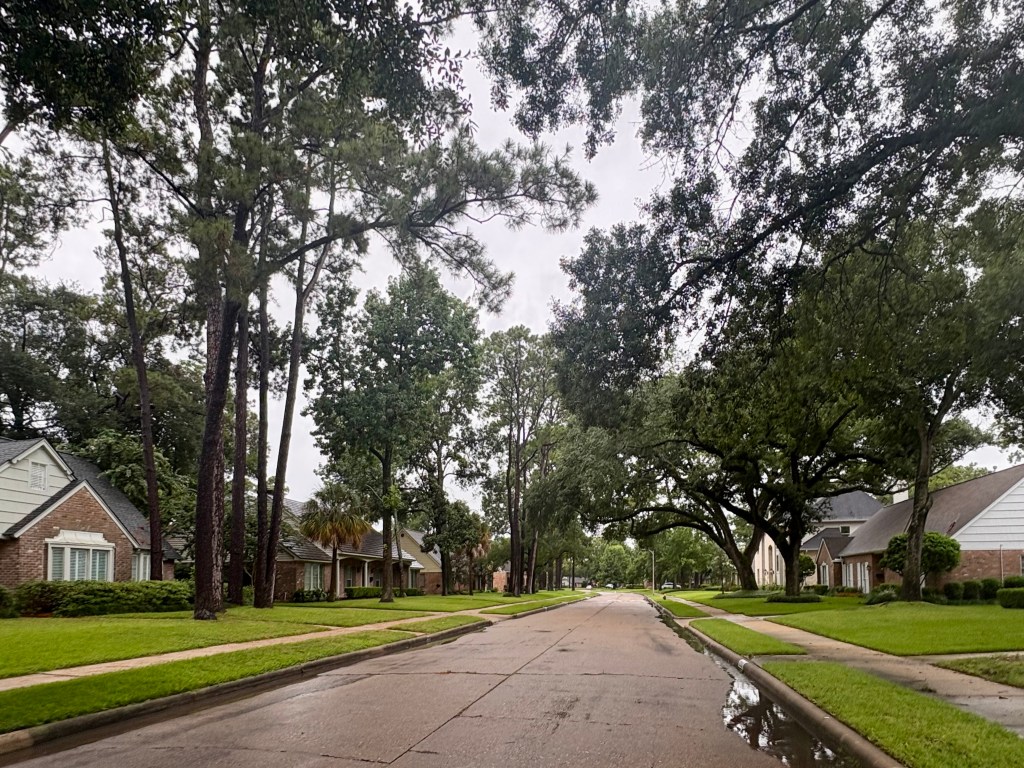
We navigated the intersection above right successfully and, searching with high purpose for a shopping mall, found the suburbs, and not just ‘the suburbs’ but River Oaks where well-heeled Houstonians live. What can I say? It looked like the movies with a 35mph speed limit and gracious sweeping curves.
But our ultimate destination was in the Museum District, just south of Midtown which has a problematic reputation for crime. Not for that reason, but we loved it.
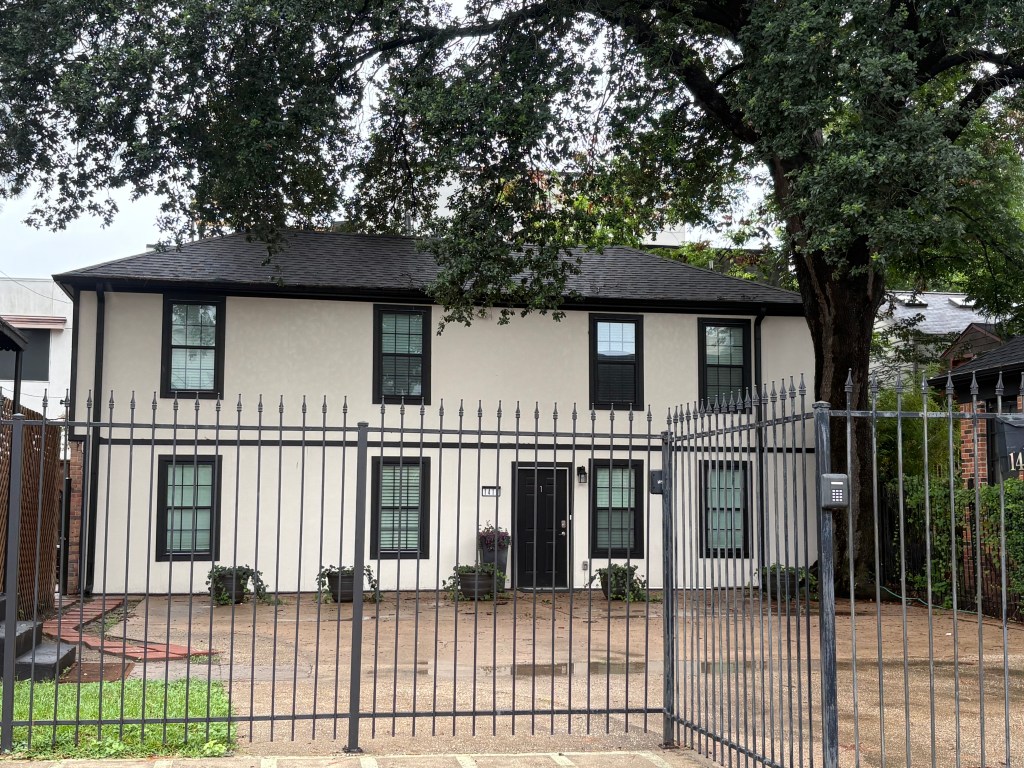
It provided the best accommodation we had while we were away which might have coloured our very favourable impressions of Houston. The top floor, all ours. Two bedrooms with very comfortable beds, a big living room with an excellent kitchen which all looked like it had just been renovated and may have been because it had a new stove which on arrival wasn’t wired in properly. This was an issue because we wanted a cup of tea — this is a customary issue in America because they don’t understand tea, or coffee either really. We had a visit from one of our hosts, a most genial and obliging Black woman, to let us know the electrician was on his way. I had figured out a way to get water hot and we were sitting there having a cup of tea and a biscuit, probably about 4.30 in the afternoon, the correct time for a cultural ritual. And she thought that that was the funniest thing she’d seen for a long time. Genuinely weird foreigners, joke figures in a situation that she’d only seen in the movies, had arrived at 1428 Blodgett St.
There was also an excellent television set which allowed premium viewing of the World Cup semi-finals, and a weeping room for mulling over England’s indescribable second half performance.
If Houston was a country it would be the 27th wealthiest in the world. It is home to the Space Centre — which we didn’t visit because it would have been too much of a hassle. It’s a long drive out of town, like going back to Galveston — and the Texas Medical Centre which employs around 126,000 people and which registers 10 million plus ‘patient encounters’ annually in its 21 hospitals and many other specialist centres. The complex is big enough to have its own annual gross domestic product which last year was just more than US$25 billion. The Port which stretches for 50 kilometres along the coast of Galveston Bay handles more cargo than any other in the US. In that cluster of downtown buildings in the pic above are the head offices of Chevron, ExxonMobil, Phillips, Hewlett Packard, Sysco, Occidental Petroleum, ConocoPhillips, Halliburton and NRG Energy. It’s wealthy, and because it’s wealthy it’s got a lot of stuff.
Thirty years ago Enron was one of those companies. By 1992, less than 10 years after it was founded, it was the largest seller of natural gas in North America. It grew most ambitiously via diversification: gas pipelines, electricity plants, paper plants, water plants, and broadband services in various parts of the world as well as the US. Most importantly, Enron gained additional revenue by trading contracts for the same array of products and services it was involved in. This process was described by those who knew and those who didn’t as a ‘black box’. These were among the reasons Enron was rated the most innovative large company in America in Fortune magazine’s 2001 survey of Most Admired Companies.
The trajectory of the company provides one of the great stories about money and humankind. It is also a Houston story insofar as it is representative of what might happen in places where there is just too much money.
Bethany McLean, the Fortune reporter who chased the company and its questionable practices down, writes in her book The Smartest Men in the Room:
The tale of Enron is a story of human weakness, of hubris and greed and rampant self-delusion; of ambition run amok; of a grand experiment in the deregulated world; of a business model that didn’t work; and of smart people who believed their next gamble would cover their last disaster—and who could never admit they were wrong.
Does this ring a bell at all at this moment of time?
Enron began life as an energy supply company. It was a major lobbyist for the deregulation of the energy market and it made a lot of money out of forcing power distribution companies to buy at spot market prices. Worse, much worse, Enron manipulated California’s deregulated wholesale electricity supply during 2000-2001 by manufactuing fake shortages and real blackouts by, for example, the unnecessary closure (‘for maintenance’) of generation plants it owned. During this period the wholesale price of electricity went up by more than 800%. Meanwhile the retail price was capped by legislation. Enron is estimated to have made $200 million out of this little adventure. One reason it got away with this was the company’s political coverage provided, for example, by very close ties with the Bush family, Houston residents, in fact River Oaks residents.
But its main modus vivendi and ostensible growth came from a range of exotic accounting practices. For example, for one contract, Enron and Blockbuster Video signed a 20-year agreement in late 1998 to introduce on-demand entertainment to various U.S. cities within a year. After several pilot projects, Enron claimed estimated profits of more than $110 million from the deal, even though analysts questioned the technical viability and market demand for the service. The enterprise failed almost immediately and the two parties withdrew from the contract in March 1999. However, even though the deal resulted in a loss, by adopting something called ‘mark and market’ accounting, Enron continued to write the $110 million into its books as annual profit.
That’s a very bald example. Usually they were far more unintelligible. As McLean writes:
Say you have a dog, but you need to create a duck on the financial statements. Fortunately, there are specific accounting rules for what constitutes a duck: yellow feet, white covering, orange beak. So you take the dog and paint its feet yellow and its fur white and you paste an orange plastic beak on its nose, and then you say to your accountants, ‘This is a duck! Don’t you agree that it’s a duck?’ And the accountants say, ‘Yes, according to the rules, this is a duck.’ Everybody knows that it’s a dog, not a duck, but that doesn’t matter, because you’ve met the rules for calling it a duck.
The accountants in this case were Arthur Andersen and Co who, as a consequence of their blind complicity, generated in part by the enormous consultancy fees they were earning from Enron, went out of business after creating truck loads of shreddings of their history of dealings with Enron and the nature of its finances. They were consequently charged with obstruction of justice in the process of going very bad to the point of closure. The Big Five was reduced to the Big Four.
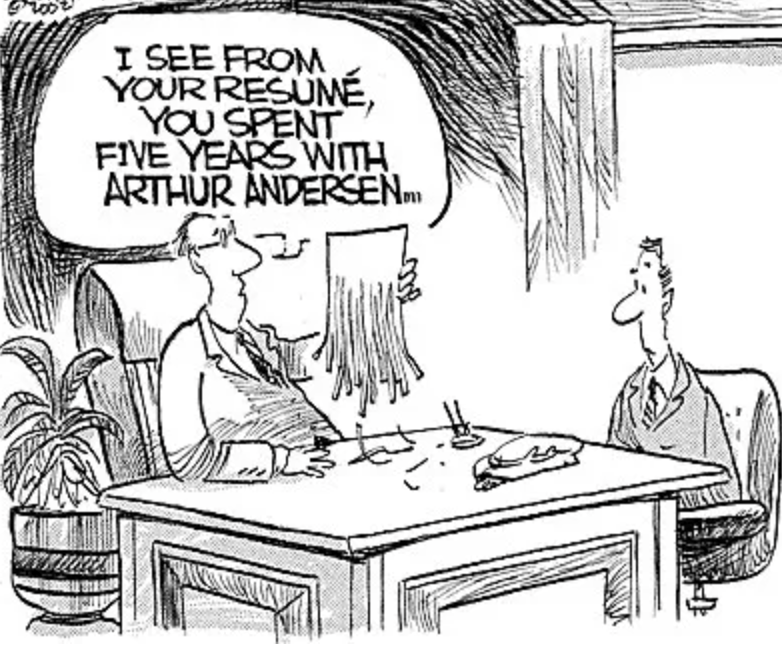
Between 1996 and 2000, Enron’s revenues increased by more than 750%, rising from $13.3 billion in 1996 to $100.7 billion in 2000. Too good be true? ‘This expansion of 65% per year was extraordinary in any industry, including the energy industry, which typically considered growth of 2–3% per year to be respectable.’ Yes, but they kept at it. For just the first nine months of 2001, Enron reported $138.7 billion in revenues, placing the company as sixth largest in the Fortune Global 500. The share price had gone from around $18 to a peak of US$90.75 in early 2000. But by the end of November 2001 the price had collapsed to less than $1 bottoming out at $0.26. (This was after after the company’s 20,000 employees had been advised to buy shares as their retirement funds.) Following intervention by the Securities and Exchange Commission, the relevant regulatory body, another statement of accounts was issued which showed that earnings from 1997 to 2000 had declined by $591 million, and debt during the same period had increased by $658 million, a $1.2 billion turnaround in the facts. A merger attempt by Enron went sour and when the company went to the cupboard it was pretty close to bare. It had no alternative but to declare bankruptcy, the biggest bankruptcy to that time in American history. The period from the share price peaking to it guttering was less than a year.
Of the bad guys, following his trial the Company President and co-founder Kenneth Lay, son of a Baptist minister, died before he could be sentenced. Andrew Fastow, the Chief Financial Officer, ‘a screamer, who negotiated by intimidation and tirade’ and seems to have made up the most egregious of the schemes, pleaded guilty to the charges against him and in return for rolling over and testifying against his fellow workers over received a sentence of ten years. He is now a public speaker and a ‘consultant advising corporate management, boards of directors, attorneys, and hedge funds on identifying critical risks in finance, accounting, compensation, and corporate culture’. His wife Lea, who had worked with him also spent 15 months incarcerated. Jeffery Skilling, the CEO who fled the company when he saw what was coming, served 12 years in gaol but still has several hundred million dollars derived partly from the shares his wife sold two days prior to the public announcement of the possibility of the company collapse. They all still live in Houston. As do many of the Enron workers whose financial circumstances were crippled by the company’s collapse.
Houston is wealthy, and because it’s wealthy it’s got a lot of stuff. But there can be happier consequences from this.
Houston is one of the three United States cities with permanent, professional, resident companies in all major performing arts disciplines: the Houston Grand Opera, the Houston Ballet, the Houston Symphony Orchestra, and The Alley Theatre and Theatre Under the Stars, all of which have fancy reputations.
We were living in the Museum Quarter and were within reasonable walking distance of the African-American Museum, the Museum of Natural Science, the Holocaust Museum, the Museum of Crafts, the Children’s Museum (the Zoo was also close at hand), the Contemporary Arts Museum Houston, the Station Museum of Contemporary Art, and the Museum of Fine Arts. It wasn’t much further to the remarkable Menil Collection, the Rothko Chapel, the Byzantine Fresco Chapel Museum and the Moody Center for the Arts. (Those guys again! Just how much money did they have?!)
In 1914 none of those existed. Houston’s population at the time was about 100,000, but it had no museums, no parks and no professional theatre, music, or ballet groups. This is another reminder of the youthfulness of contemporary Texas and Houston in particular. So someone born in Houston in 1882 and dying there in 1975 would have seen remarkable change.
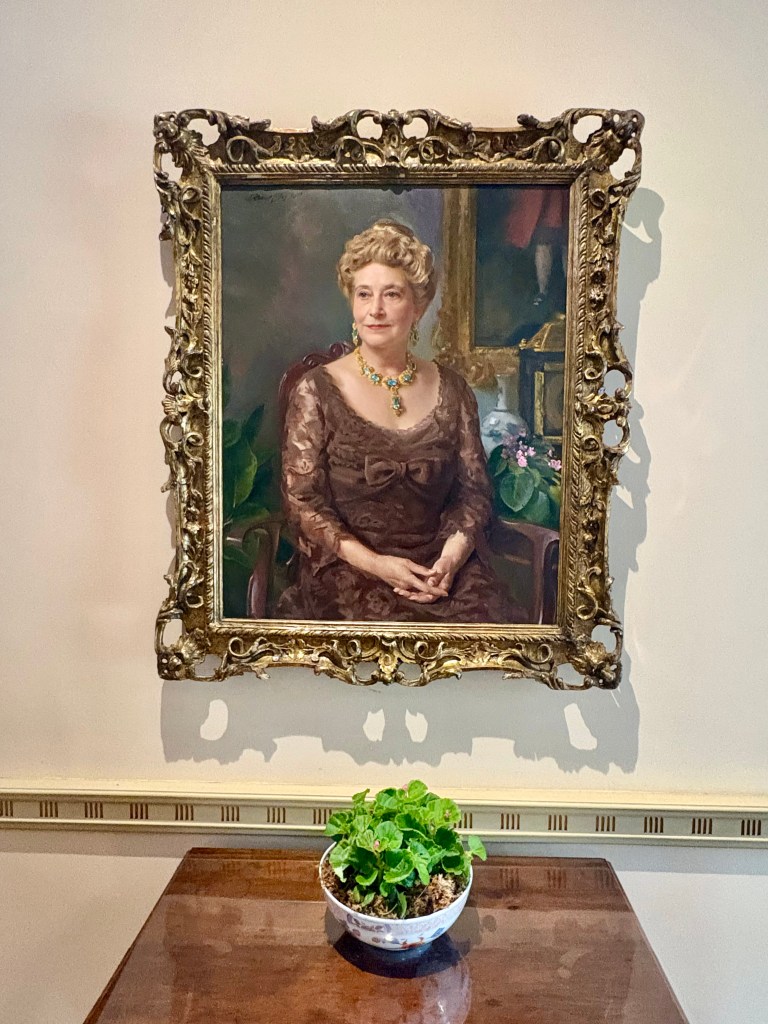
One woman, known for a good deal of her life as the ‘First Lady of Texas’, fits that bill. Even more so given that she made such an important contribution to the growth and enrichment of Houston’s cultural and social, in the broadest sense, life. Even more so, given that her name was Ima Hogg, something she had to manage for most of her life. It wasn’t till she was in her 50s that she started referring to herself as Imogene, a name nowhere to be found on her birth certificate.
What nong would saddle their child with such a handicap? ‘Big Jim’ Hogg, Governor of Texas from 1891-95, that’s who.
She never married but did have a companion/ maid, Gertrude Vaughn, who was with her for 56 years.
David Warren, a biographer, describes her as ‘small [5’2″] and dainty and feminine—and smart and sharp and knowledgeable—all rolled into one’.
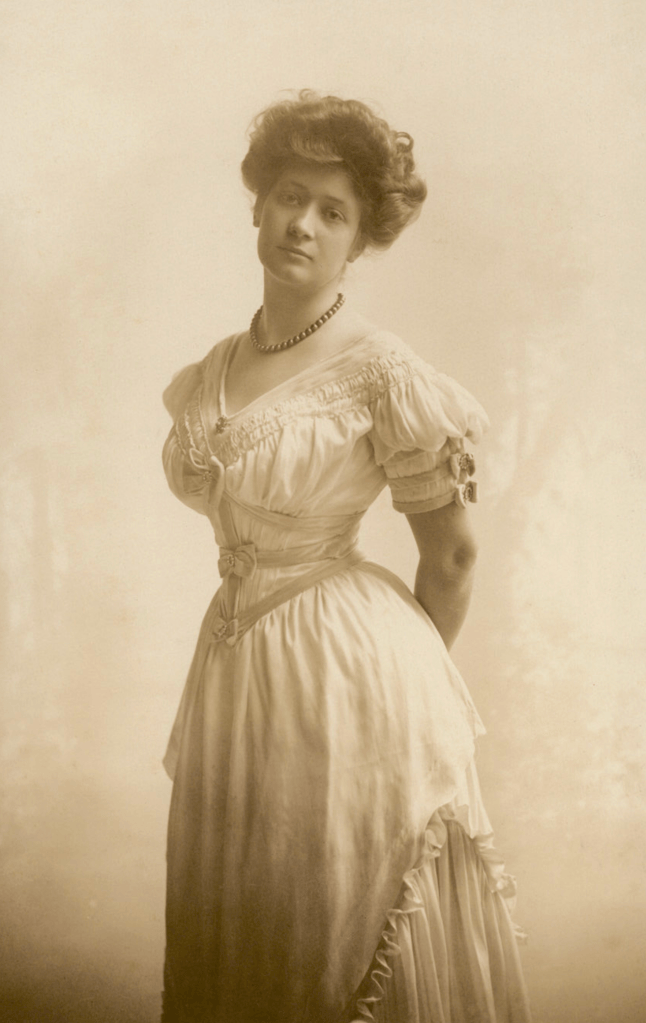
She and her three brothers became enormously wealthy when oil was struck on their cotton plantation in 1918 yielding an income which today would be equivalent to $4.2 million a month. (Her parents had died years previously. Her father had stipulated in his will that they should maintain possession of the plantation. Her brothers had spent a good deal of time looking for ways to circumvent this.) And this is where she and two of her brothers lived.
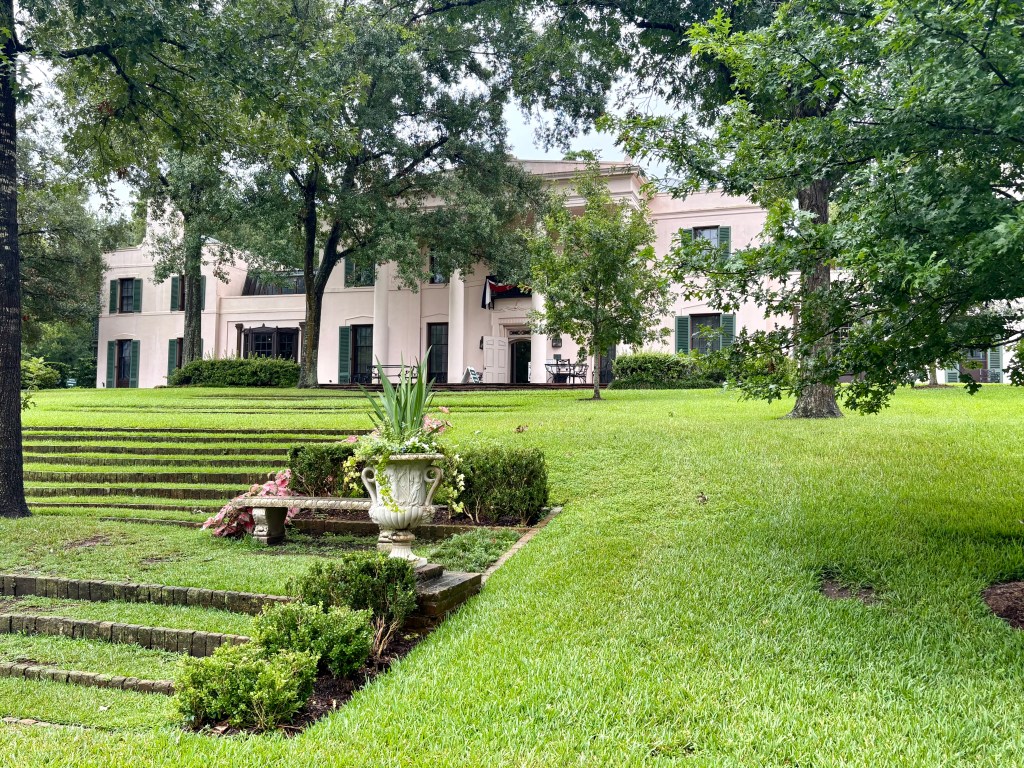
It is now the ‘Bayou Bend Collection and (14 acres of) Gardens’, and an annexe of the Houston Museum of Fine Arts, gifted to the city by Ms Hogg in 1957. It consists of ‘approximately 4,700 objects that reflect historic and stylistic periods from 1620 to 1870 installed in some of its 28 rooms’ which have their own decorative vibe.
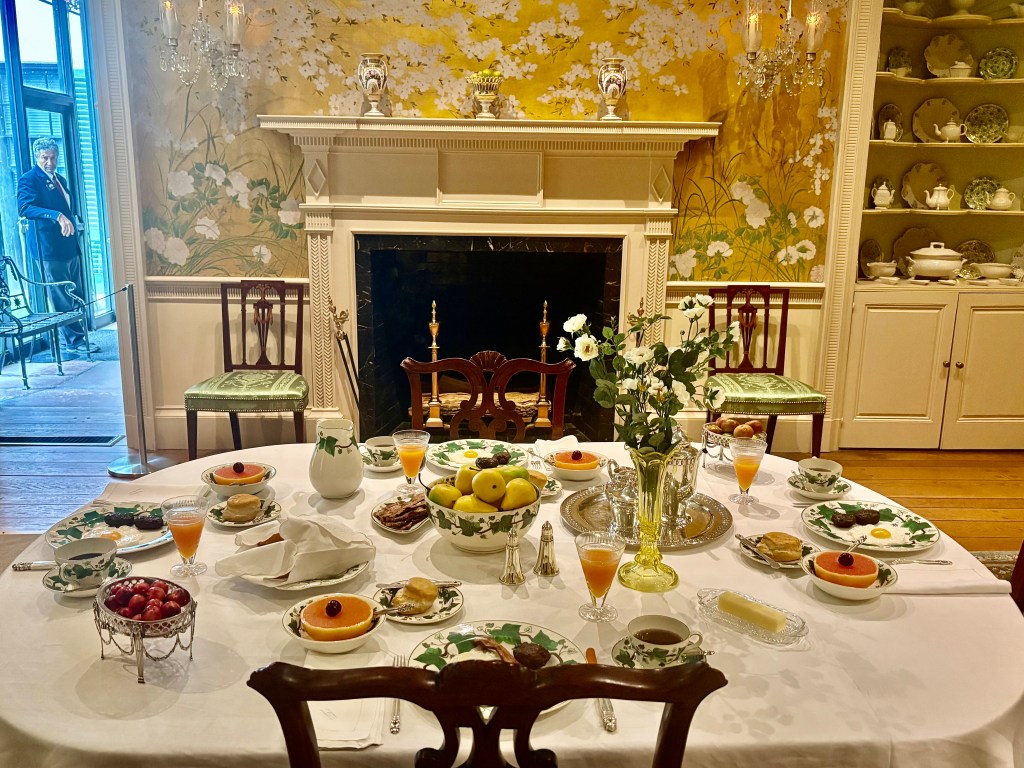
The breakfast room with a plastic version of exactly what was eaten there at the first breakfast served and eaten at Bayou Bend, a photo partly notable for the inclusion of the bored insensible security man guarding the rear door which is very rarely used. Note also the gilded wallpaper. The chandelier of some considerable consequence is just out of the photo.
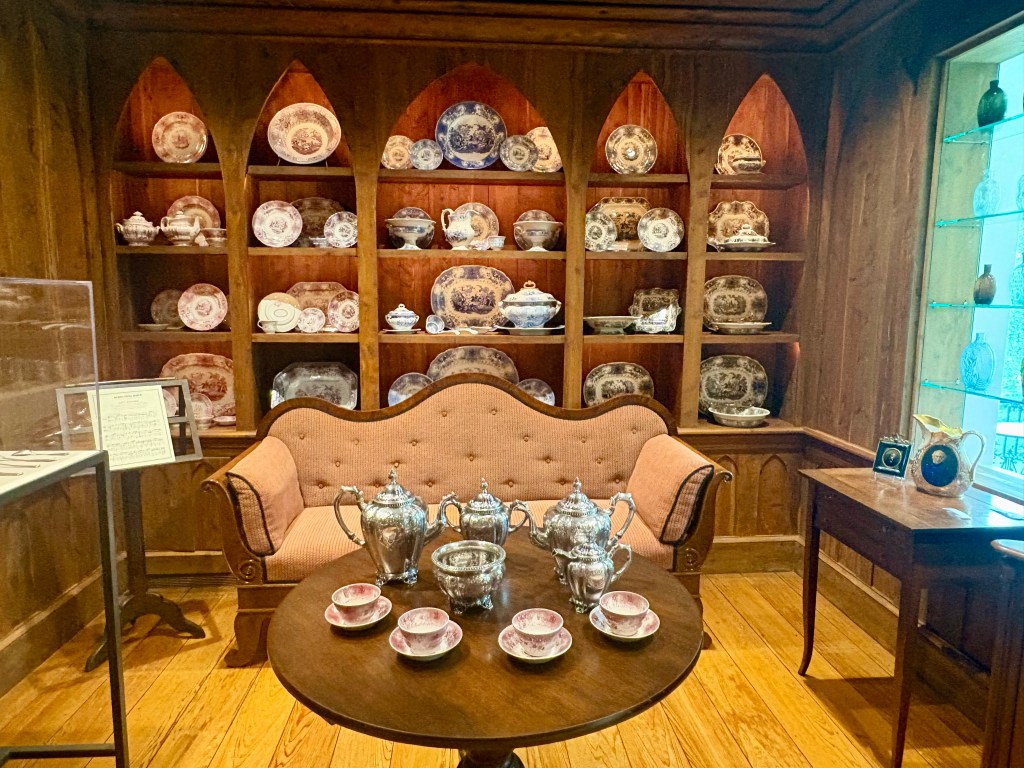
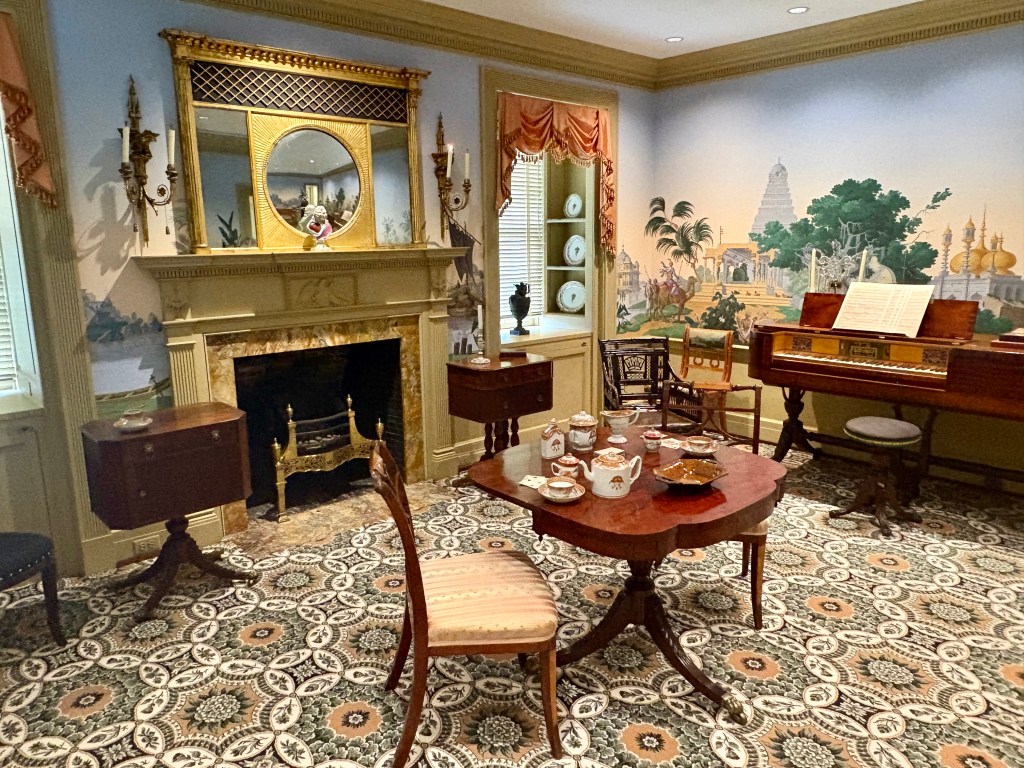
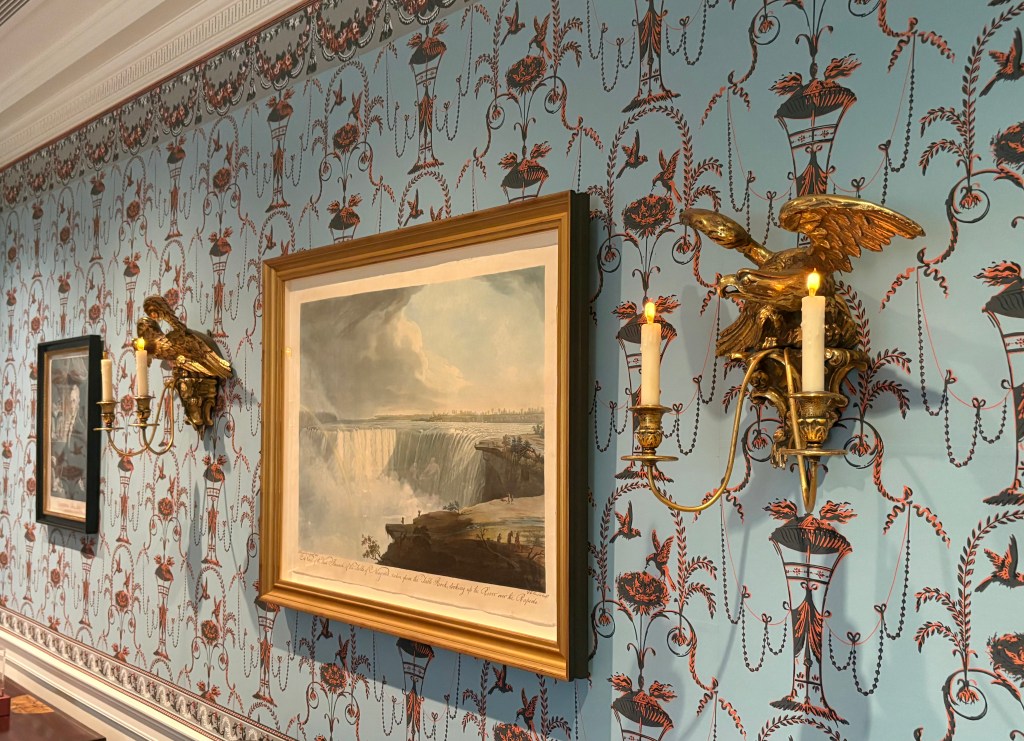
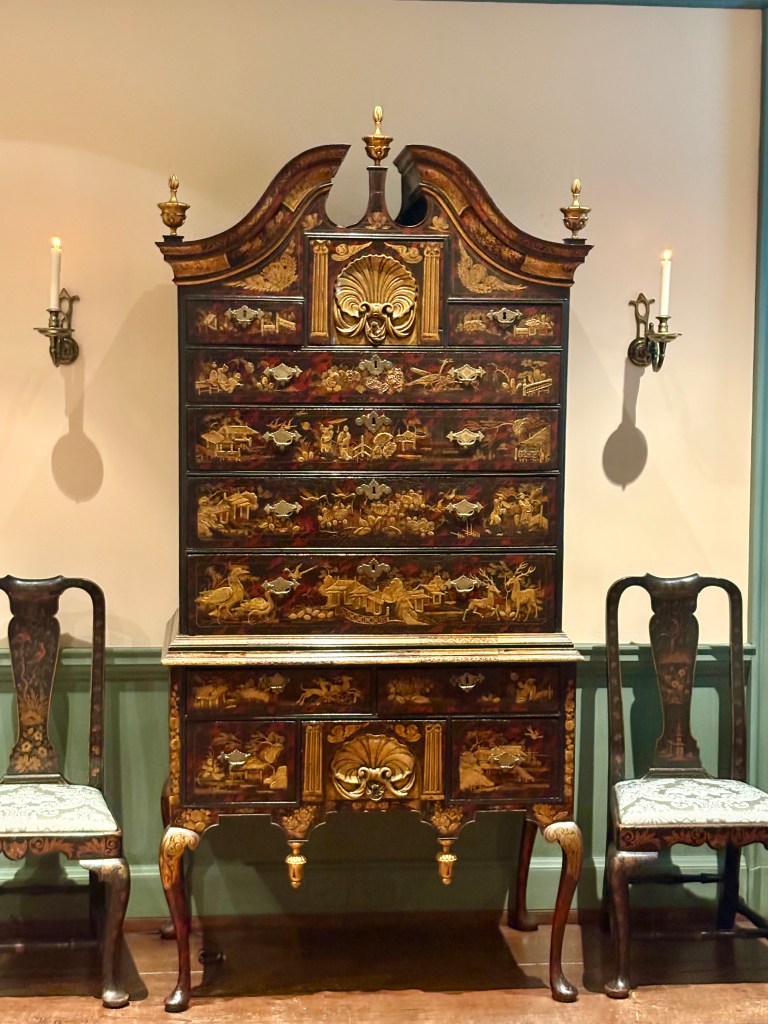
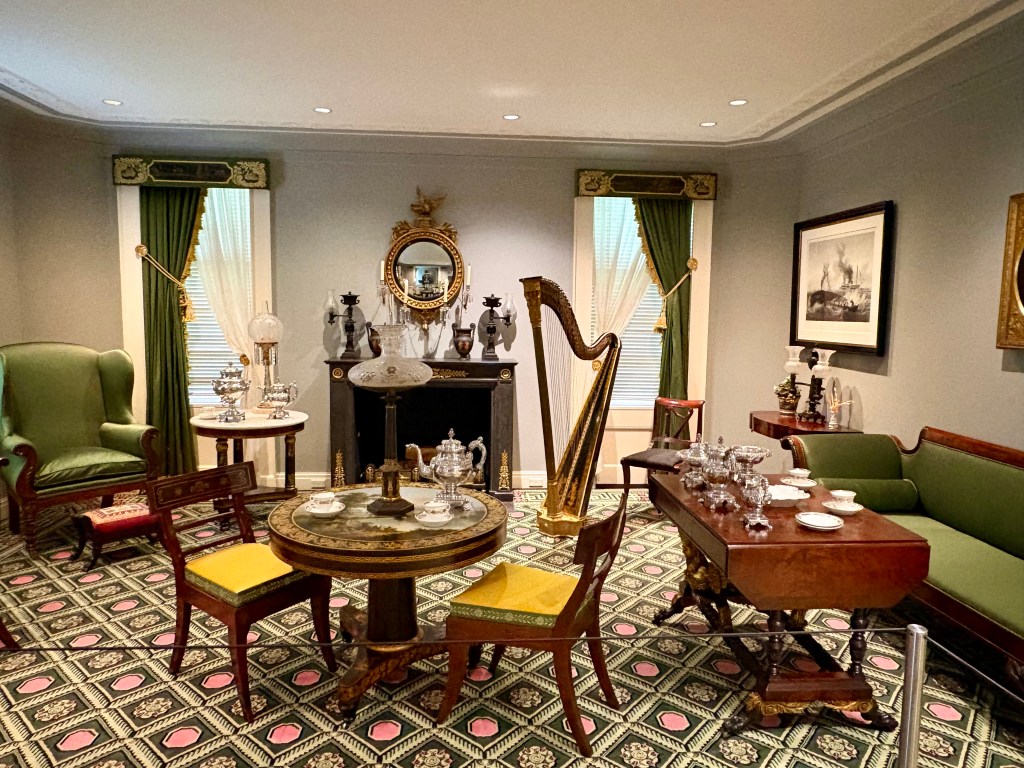
It is quite something.
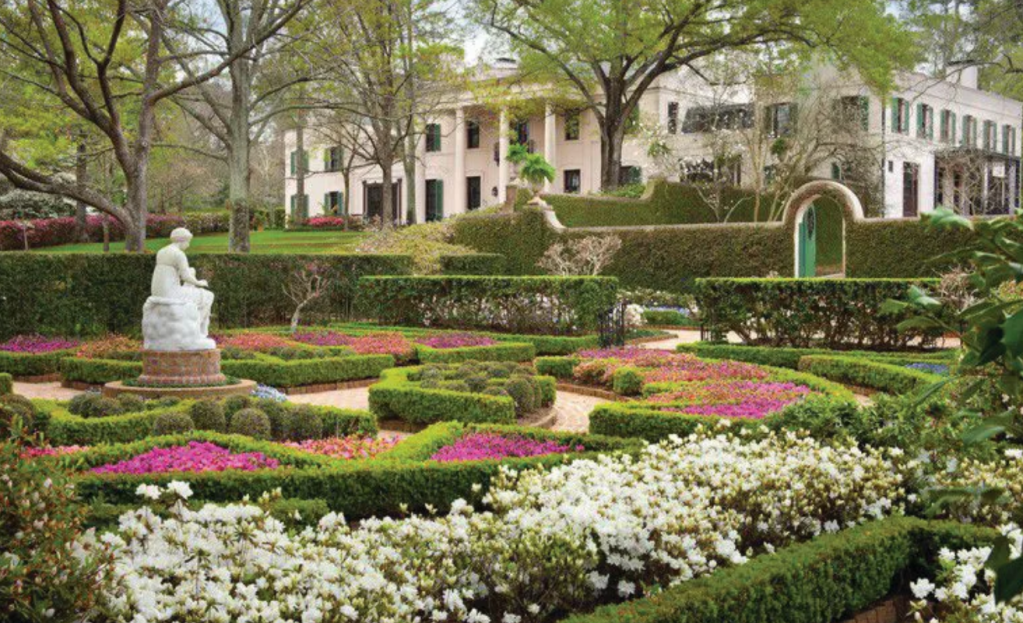
And then there’s the gardens. The house was completed in 1928 when the area was nothing but ‘dense thicket’, virgin bush we might say. The gardens were created at Ms Hogg’s instruction with only one tree removed. (Footnote: River Oaks through which the Buffalo Bayou meanders was purchased and developed by the Hogg family. It was then wild country on the edge of town. You could almost but not quite now call Forest Oaks an inner suburb. This has all happened at an astonishing rate.)
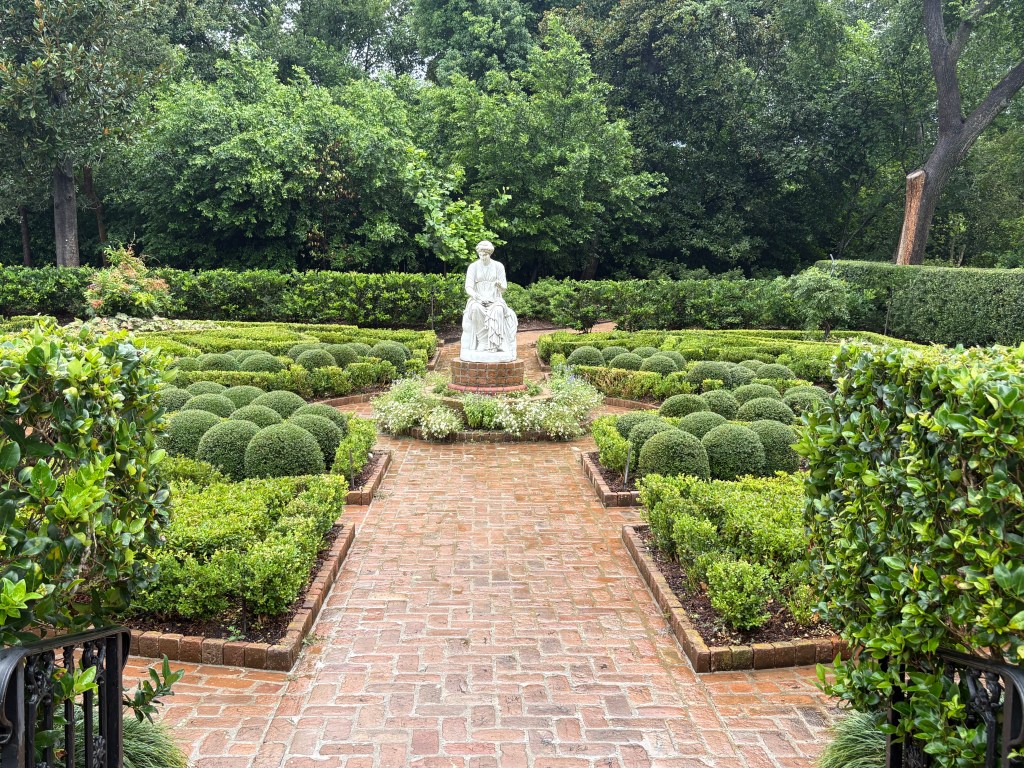
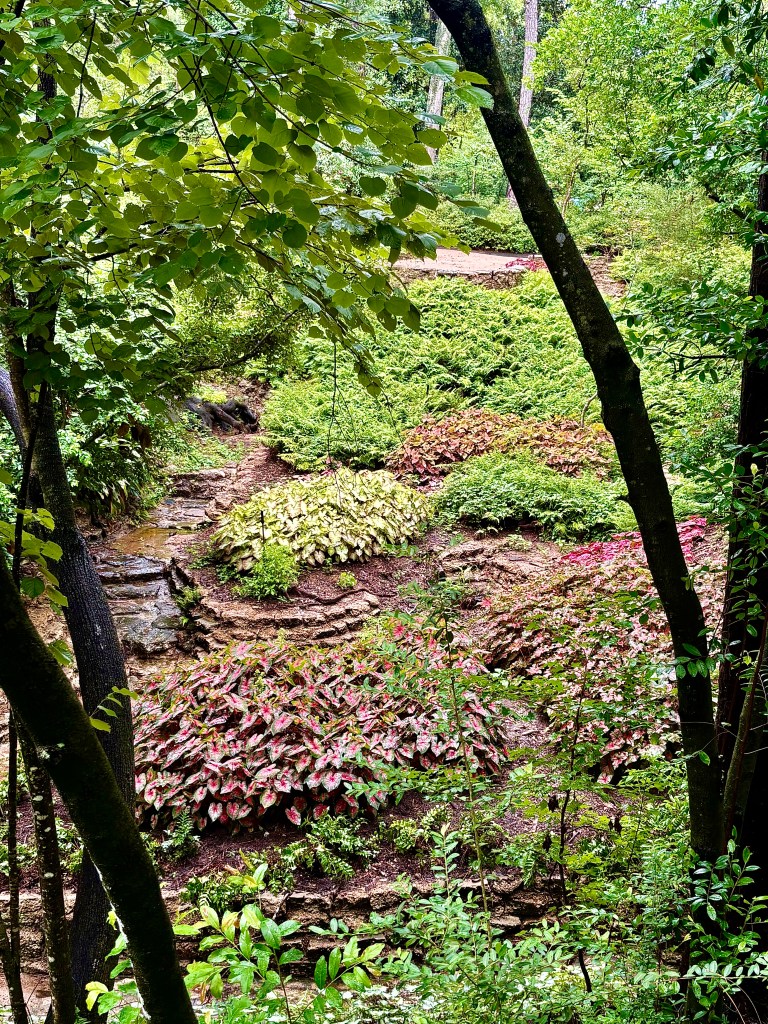
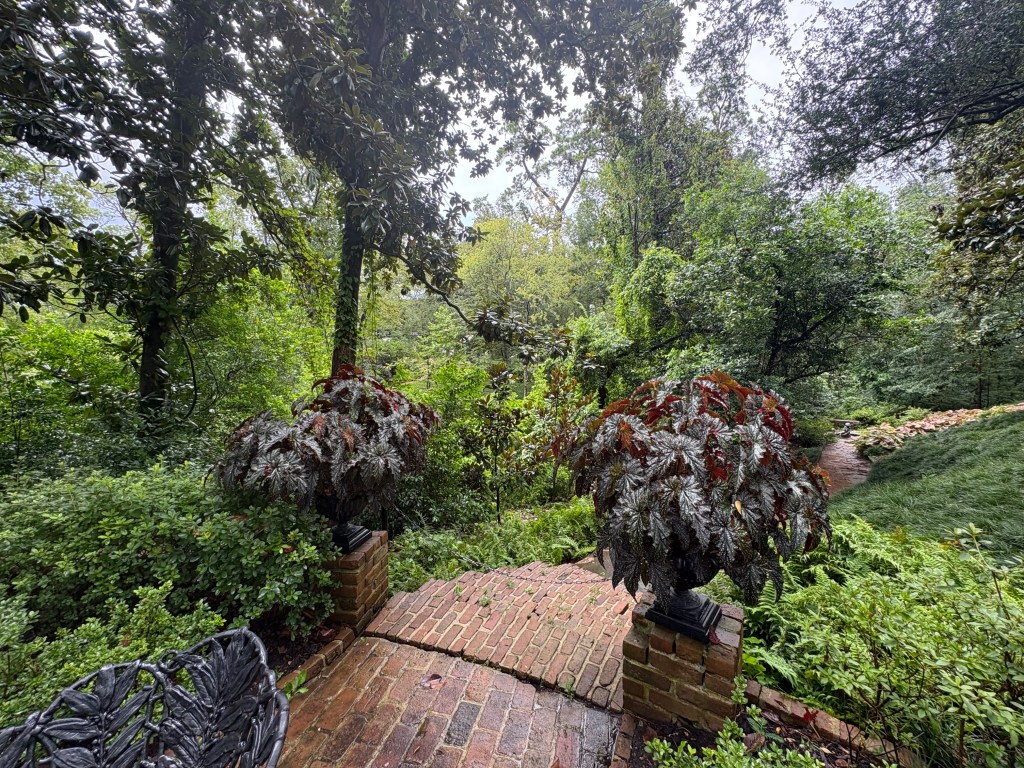
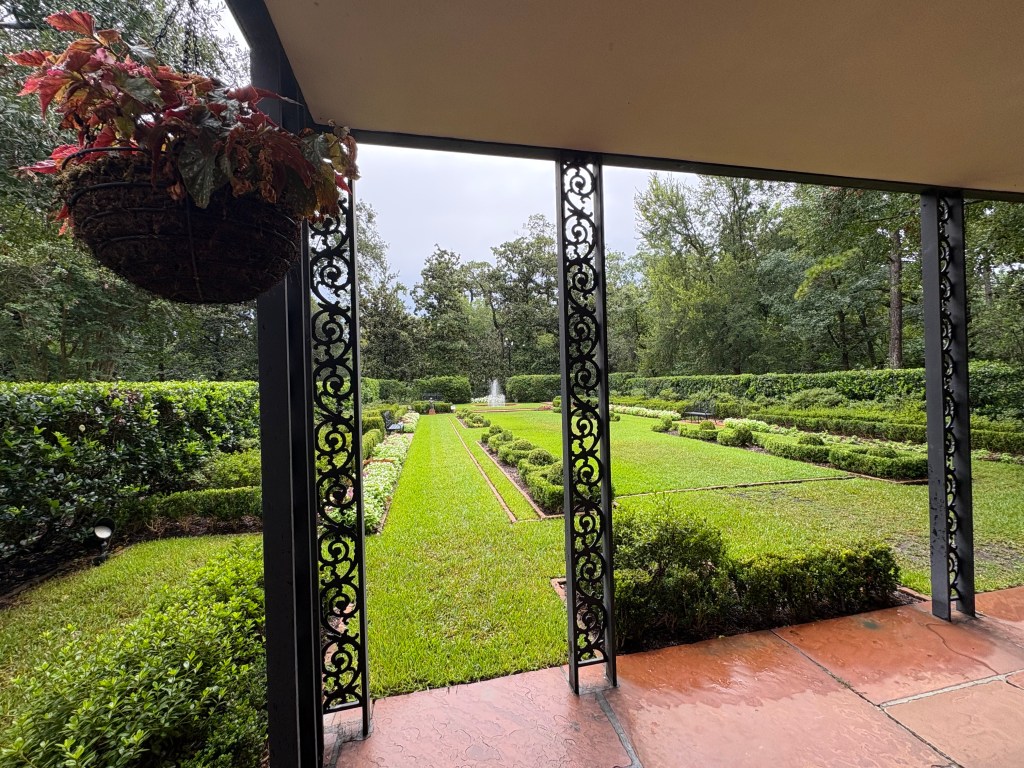
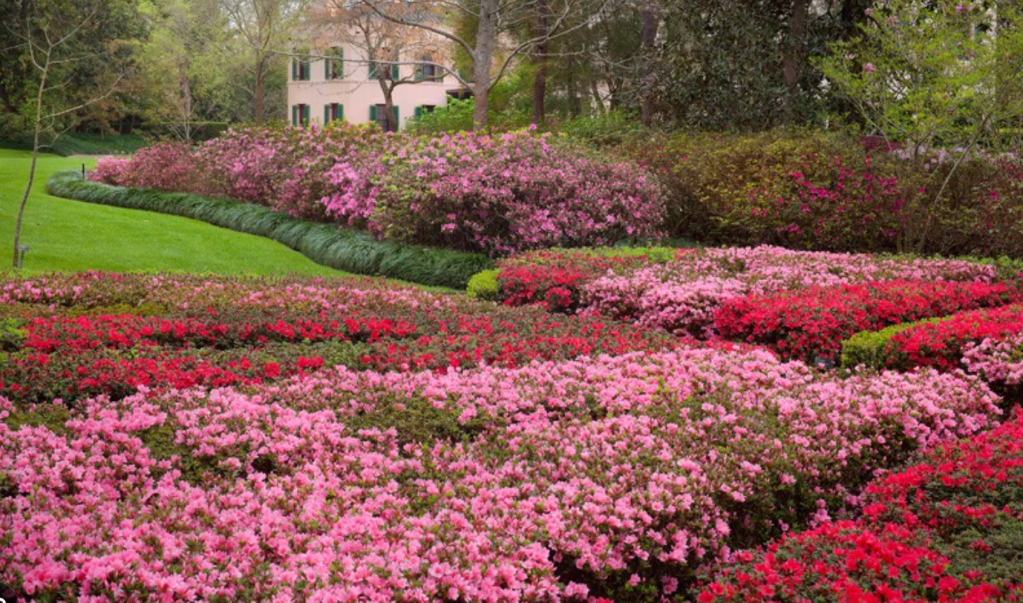
The gardens are famous for many things but their massive banks of azaleas in alternating colours are near the top. I would love to have seen them in bloom.
According to one biographer, ‘the Hoggs did not believe that the oil money was rightfully theirs, as it had come from the land and not hard work, and they were determined to use it for the good of Texas’. Might be true, might not, but there is plenty of evidence that Ms Hogg gave it her best shot.
She founded the Houston Symphony Orchestra and was Secretary of its Board for ten years. She had a particular interest in helping the disabled especially people with mental health issues. When her brother Will died young she created the Hogg Foundation for Mental Health from his legacy still administered by the University of Texas. In 1929, she founded and funded the Houston Child Guidance Center, which provided counselling for children with mental health problems and their families. She got herself elected onto the Houston School Board where her particular issues were removal of pay discrimination on race or gender grounds and more widespread art education especially for Black students. And on and on and on.
Even if she still had quite a bit left over — and she certainly would have — that’s another way to live with money. (Enron boys? Elon? Zuck? Dario? Beeze? and er Don? Listening?)
• • • • • • • • •
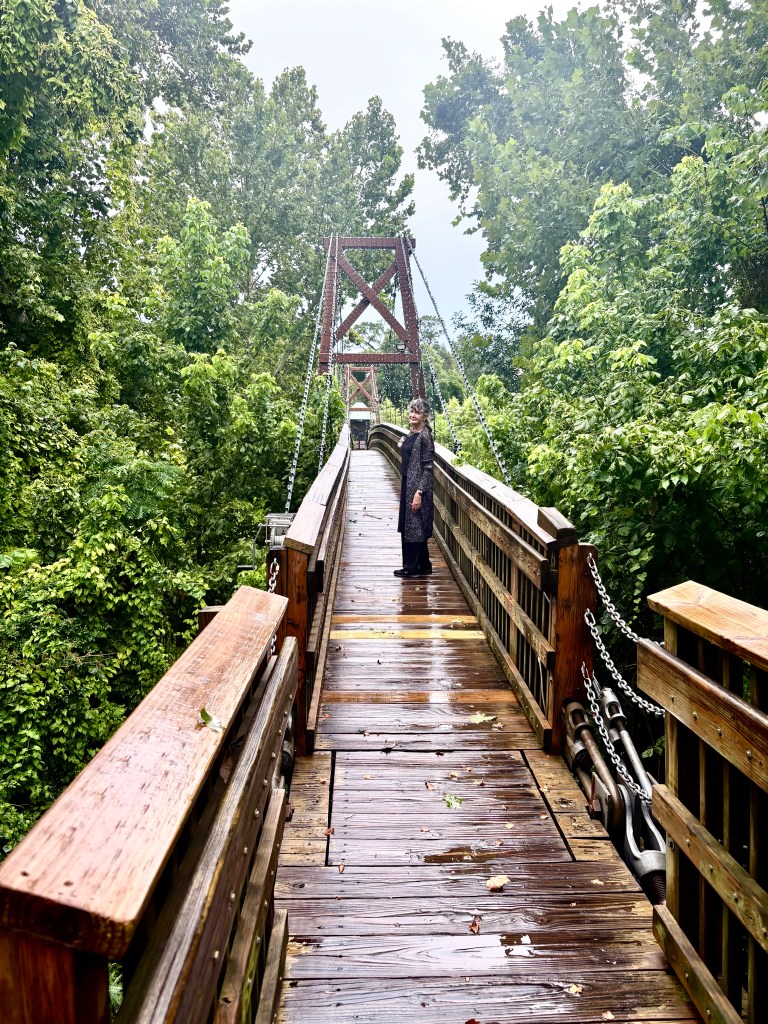
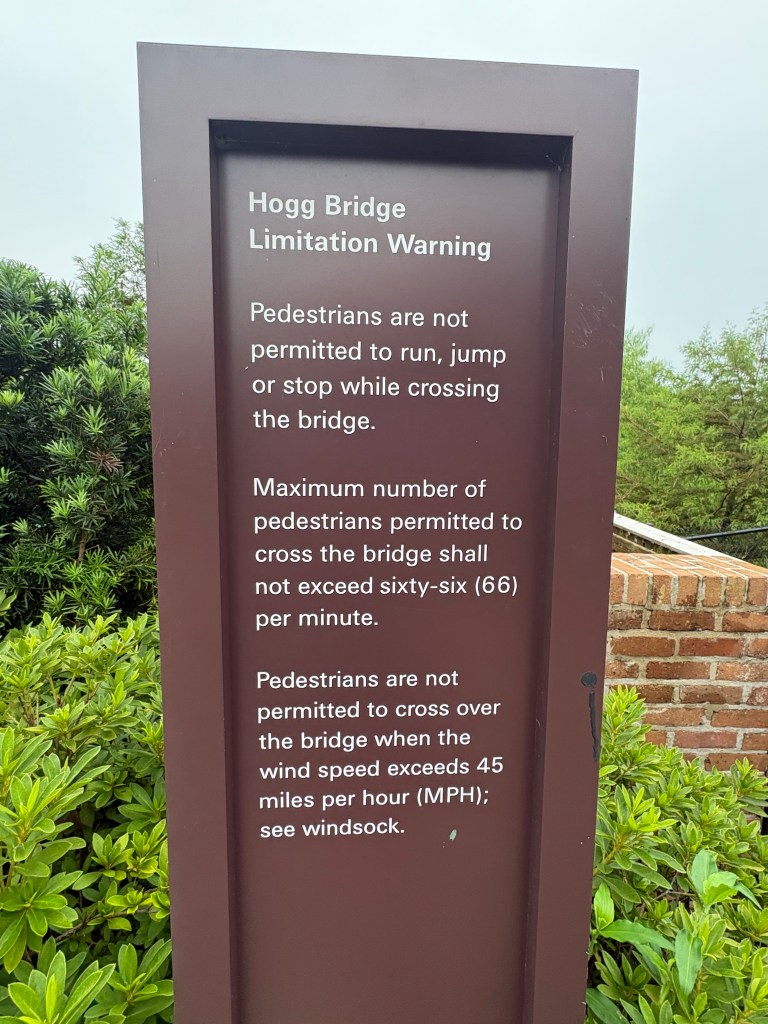
We were the Hogg Mansion’s only visitors this day. The docents were fighting over us until we managed to give them the slip. They wanted us to keep talking so they could listen to our accents. And this bridge above is how you get to the Hogg Mansion. The only way if you’re a visitor. Up and over the bayou so the River Oaks neighbours won’t be disturbed.
America … so footloose in some regards; so incredibly stitched up in others. We made it over but I did have to chastise Myrna for stopping. I think she also may have done a little jump when she thought I wasn’t watching.
• • • • • • • • •
We went Downtown — to the movies … with three other people in the cinema. In the midst of all this award-winning architecture we were struck by its emptiness. A number of lights on, especially in the gaol, but no one home. Deserted streets, if we’re talking about pedestrians, empty bars and cafes. It could easily be different other times, but I’m not so sure. All those corporate types WFH.
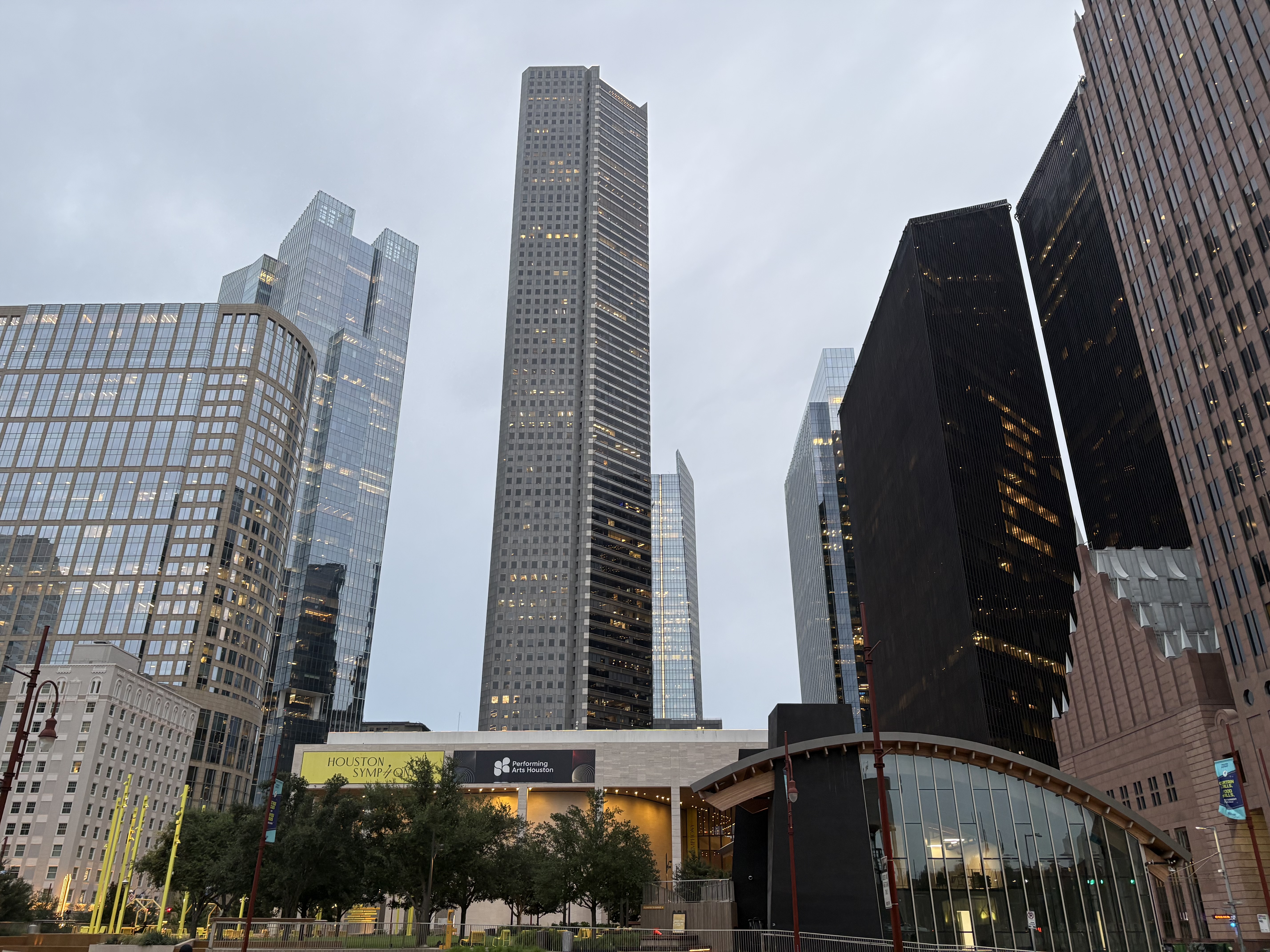
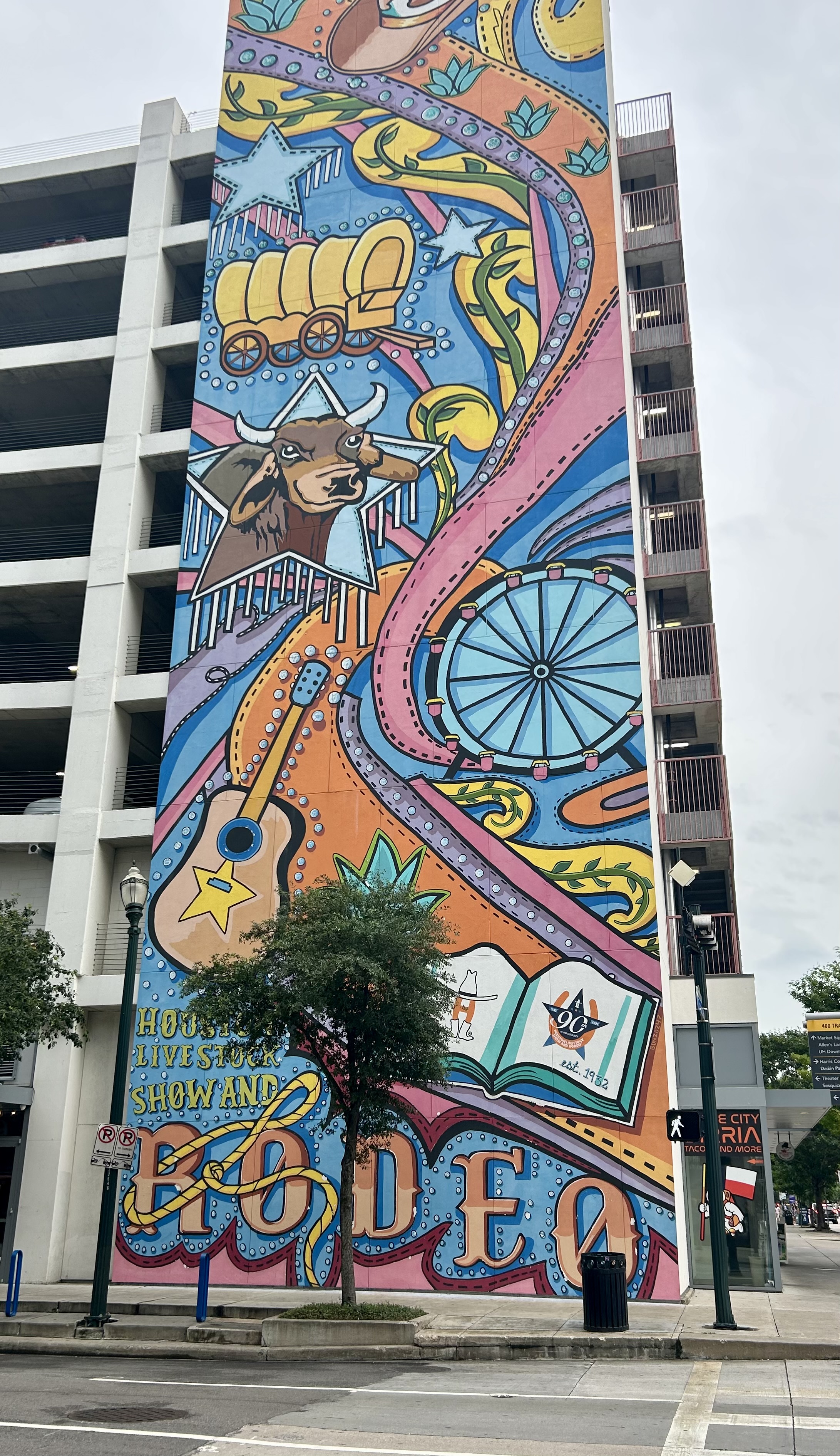
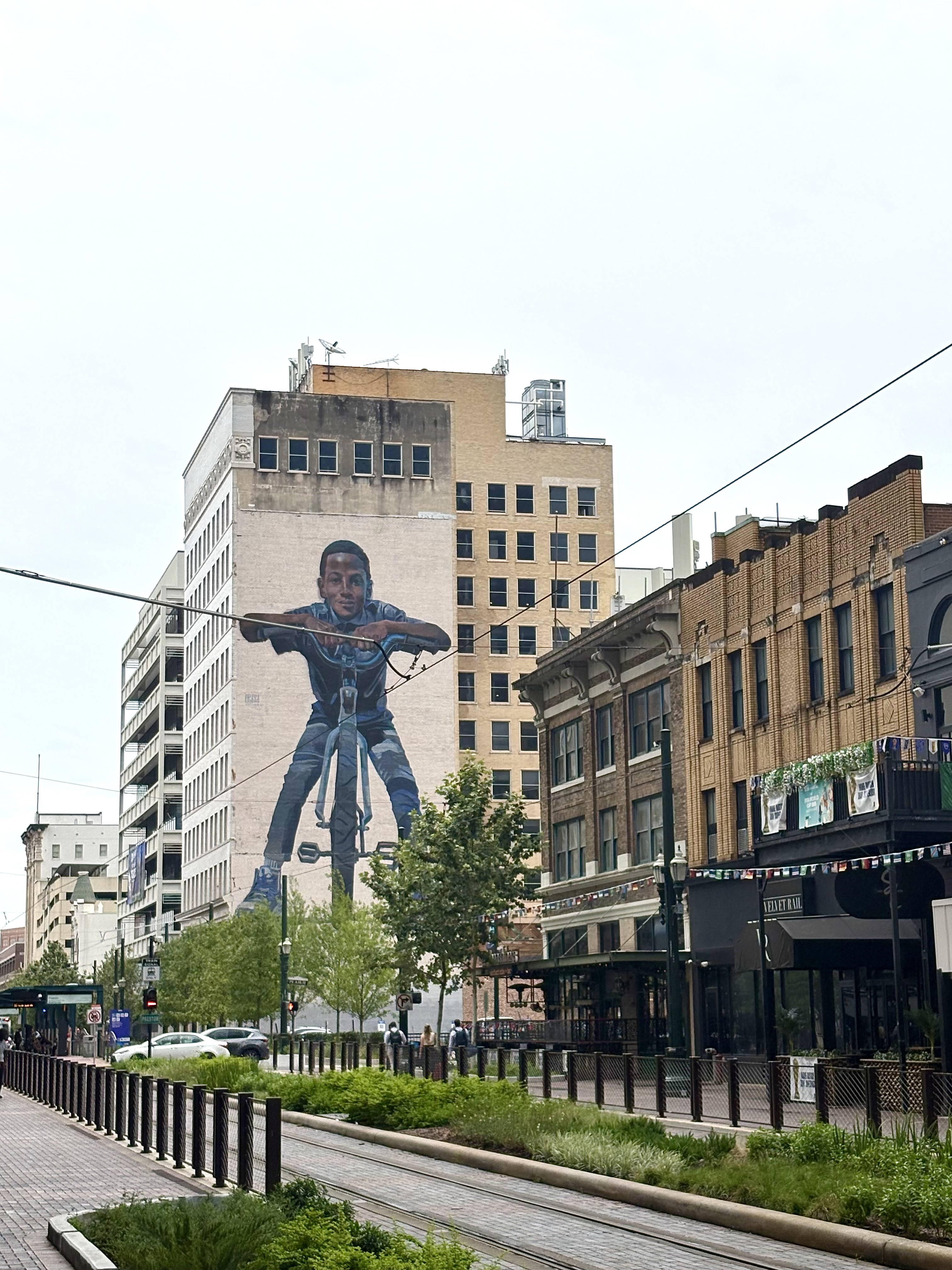
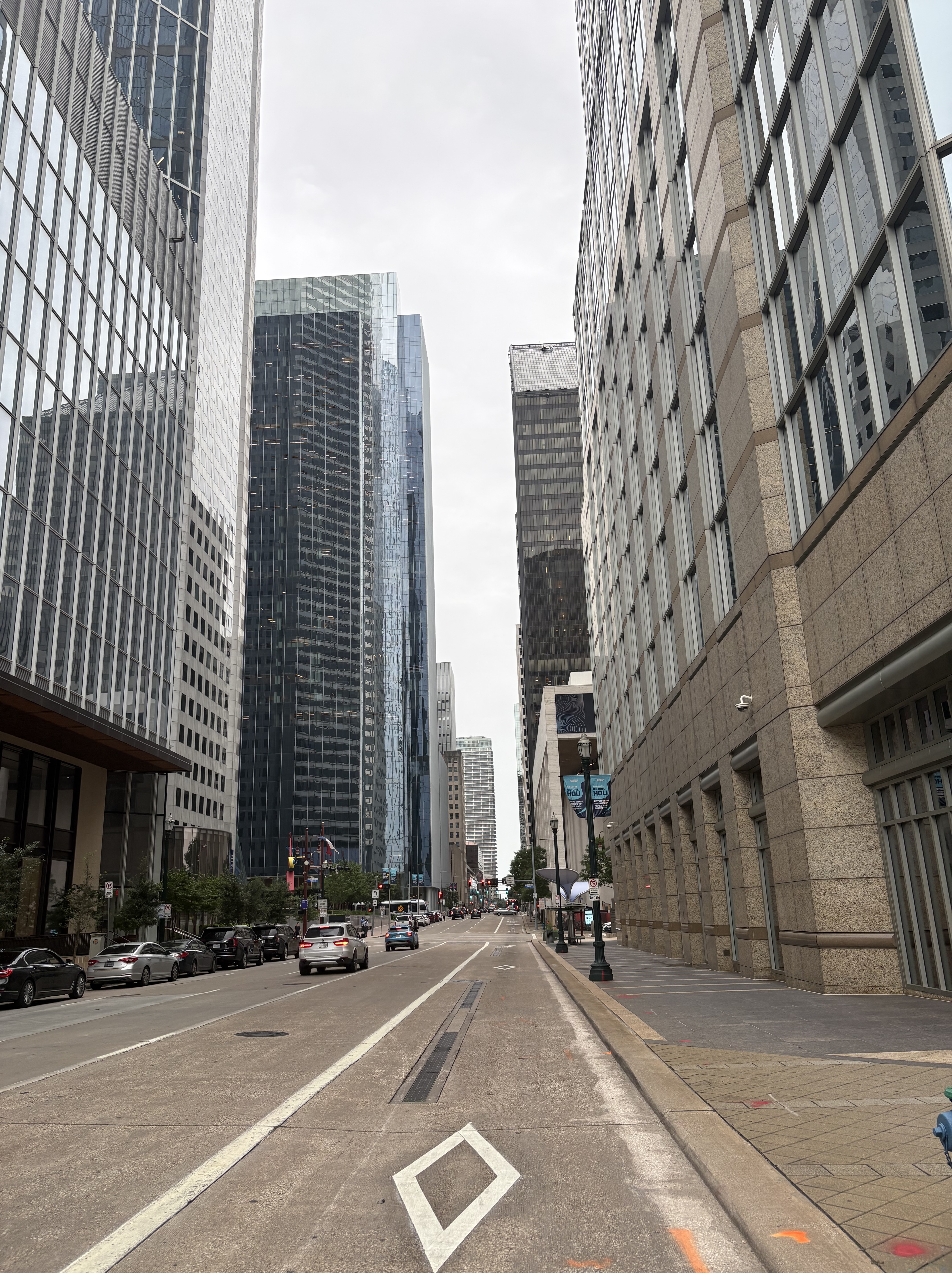
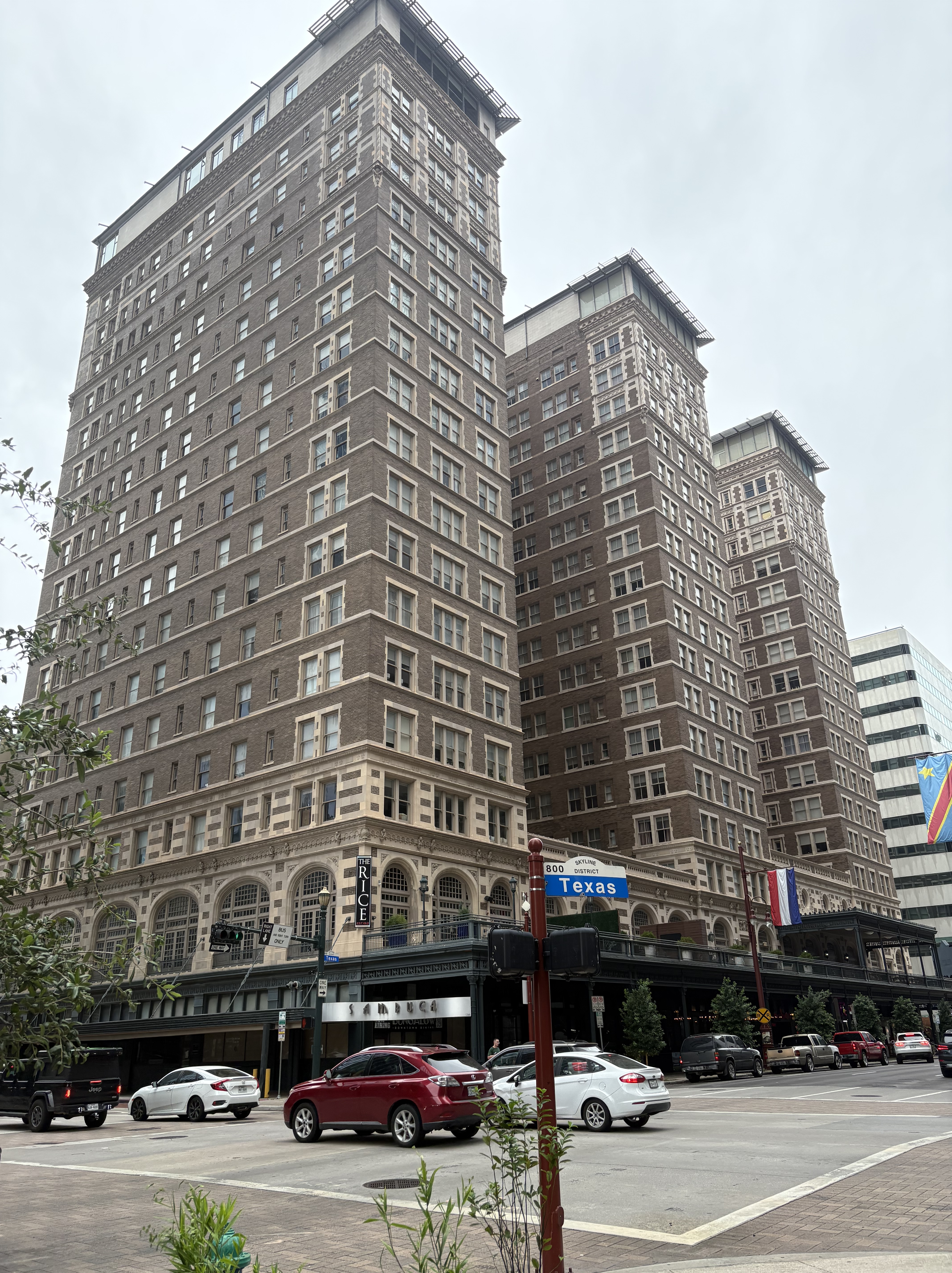
But that wasn’t where we were living. We were here, in Black town, and it was great.
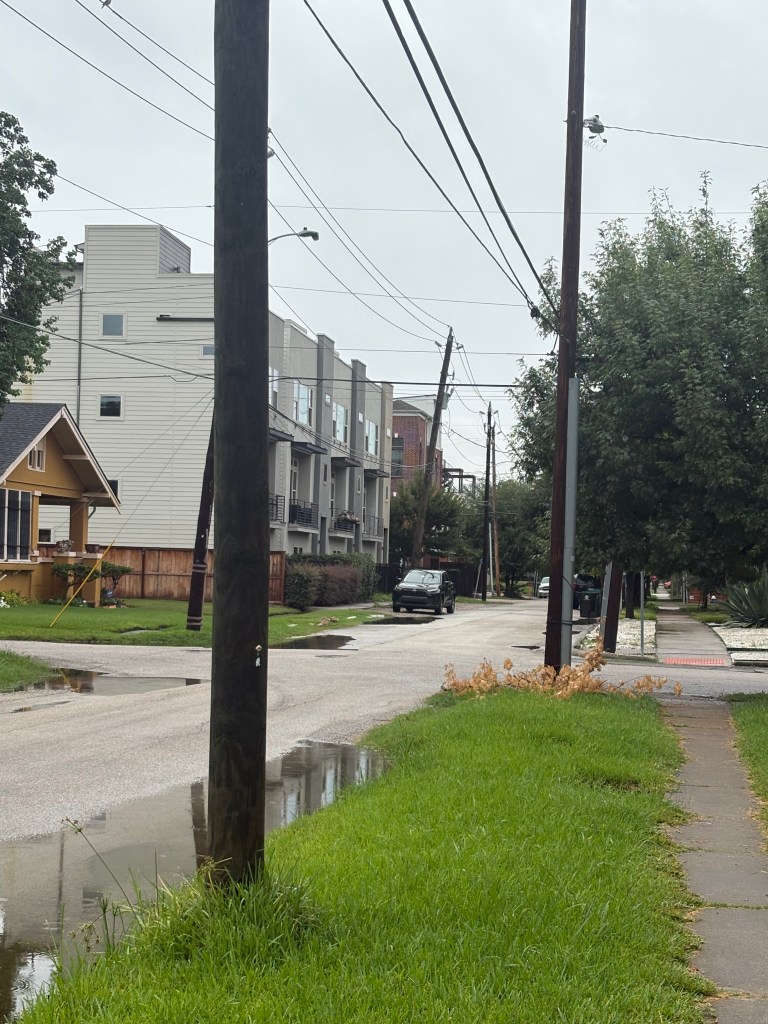
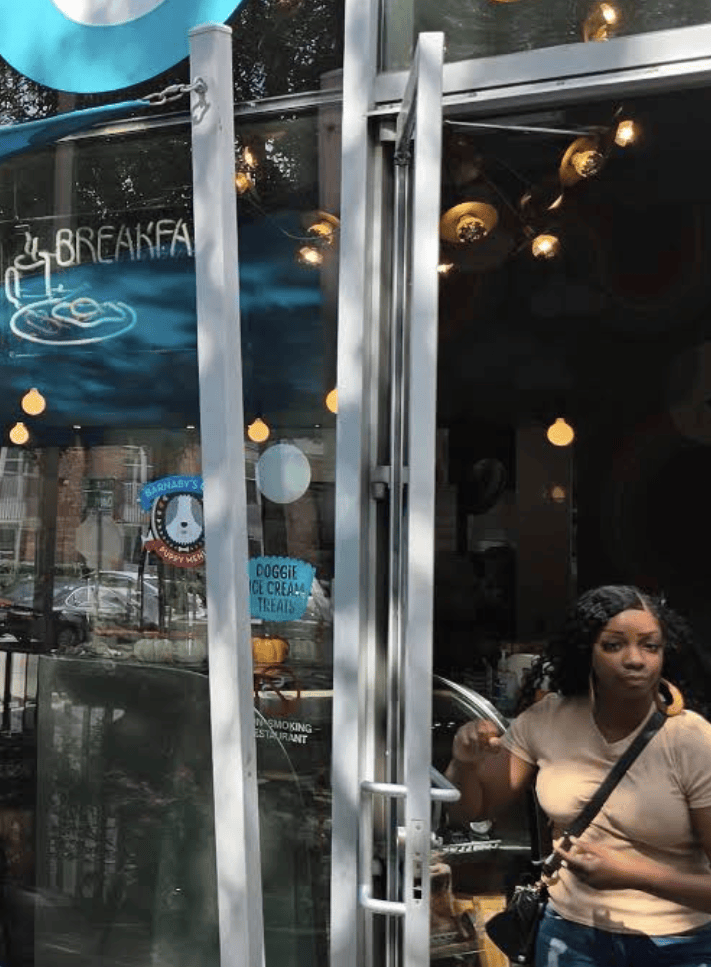
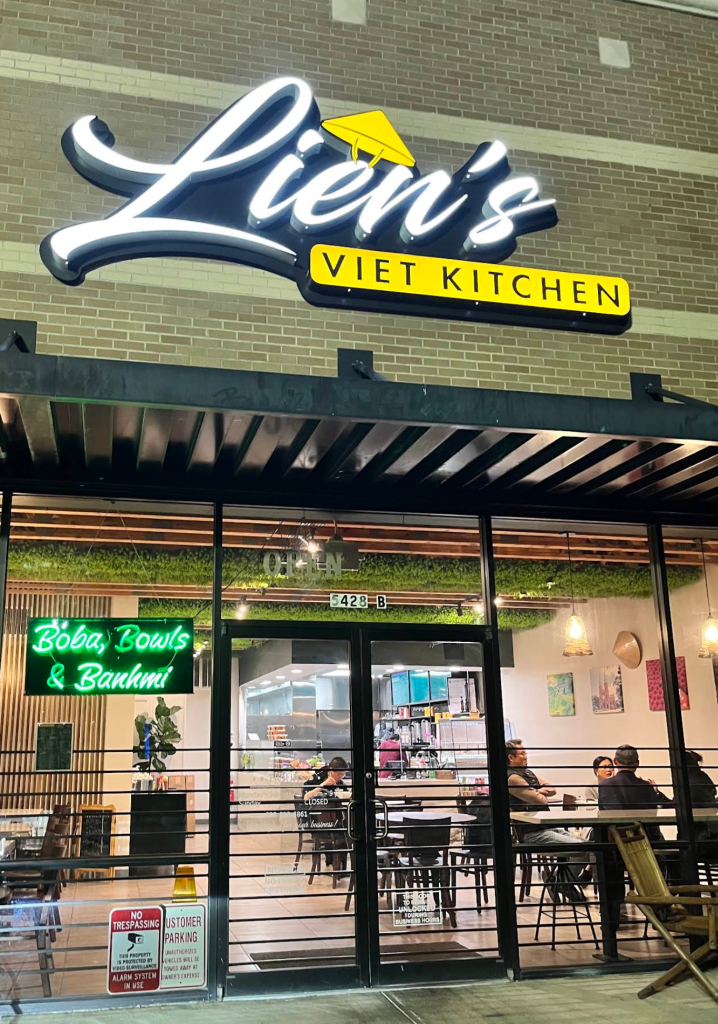
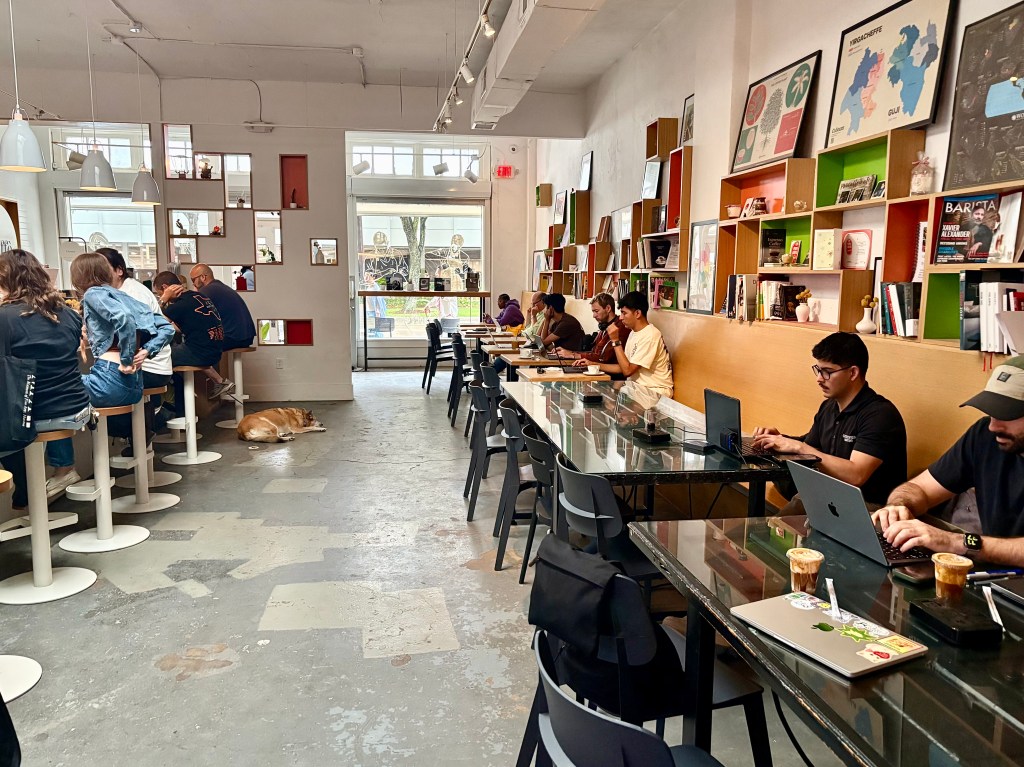
And for goodness sake, we found a very good coffee shop. Ten minutes drive, but perfectly accessible. ‘Un Caffe’ in the Midtown shops. Had a bit of trouble getting served because we didn’t have our laptops with us.
We found some collections of fabulous art, so much fabulous art. Glorious, fabulous art in remarkable collections. But that will have to be for another blog. This one has gone on quite long enough.
• • • • • • • • •
It IS a story of oil and water. There are plenty of reasons why you’d like to live in Houston as long as you have a car and the price of er hem … gas is within your grip. But you may have noticed the water lying round in quite a few of these photos. That’s an issue.
AI, is it safe to visit Houston at the moment (2.39pm 23/10/26)?
Widespread flooding is forcing residents to leave their homes under mandatory evacuation orders. Freeways are closed, grocery stores and gas stations are shut down, and power outages affect communication and cell phone charging in multiple areas. Local authorities are releasing dam water as rain continues, worsening high-water hazards.
And, not so incredibly these days, that is word-for-word true from a posted municipal HIGH ALERT warning. Right now. As I type.
Downtown is mostly about 15 metres above sea level, and the highest point anywhere in Houston is about 45m asl. About one-third of it is built on former marsh and swamp land. Four major bayous pass through it. And, as sub-surface water is pumped out for domestic and other uses, it’s sinking. Not fast, not everywhere, but steadily in major areas. And, the soil, clay silt and cemented sands eroded from the Rockys, doesn’t drain well. And, it is home to formidable storms. Ergo, inevitably, lots of floods.
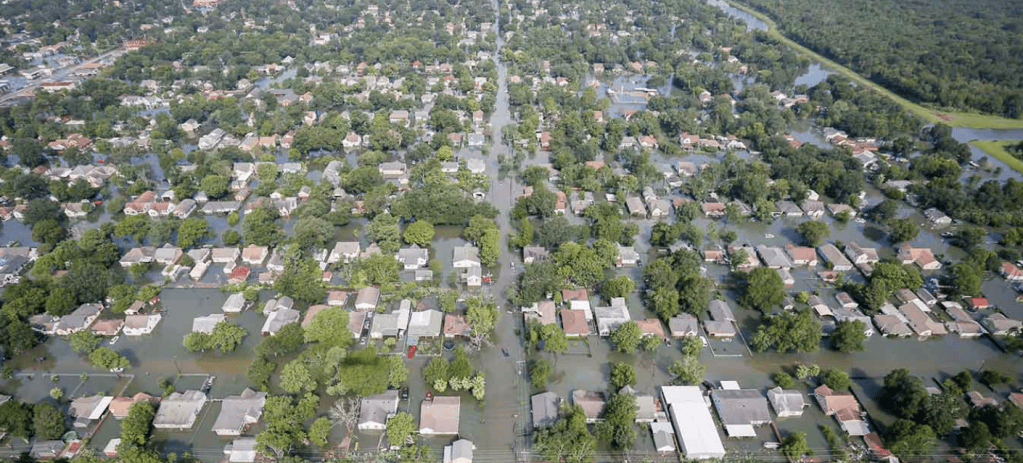
In May 2015, seven people died after 12 inches of rain fell in 10 hours during what is known as the Memorial Day Flood. Eight people died in April 2016 during a storm that dropped 17 inches of rain. In late August 2017, Hurricane Harvey stalled over southeastern Texas, causing severe flooding in the Houston area, with some areas receiving over 50 inches (1.3 m!) of rain. It exceeded 50 inches in several localised areas, breaking national records. The damage for the Houston area was estimated in round figures at $125 billion; 107 people died this time.
As one expert points out, while noting that no infrastructure anywhere could accommodate 1.3 metres of rain in a day or so, the problem is not so much keeping the water out as letting it escape, and Houston is not well set up for this.
And it’s very humid … very hot in summer … has unusually high concentrations of CO2 in the air … smoggy … more cars and roads than you can imagine … power grid strains and outages … because of the floods impossible insurance costs … unregulated development …
Yeah. But it was terrific. I’d go back today. Well … not today. Seems like there’s a bit going on today. But, you know, sometime.
• • • • • • • • •
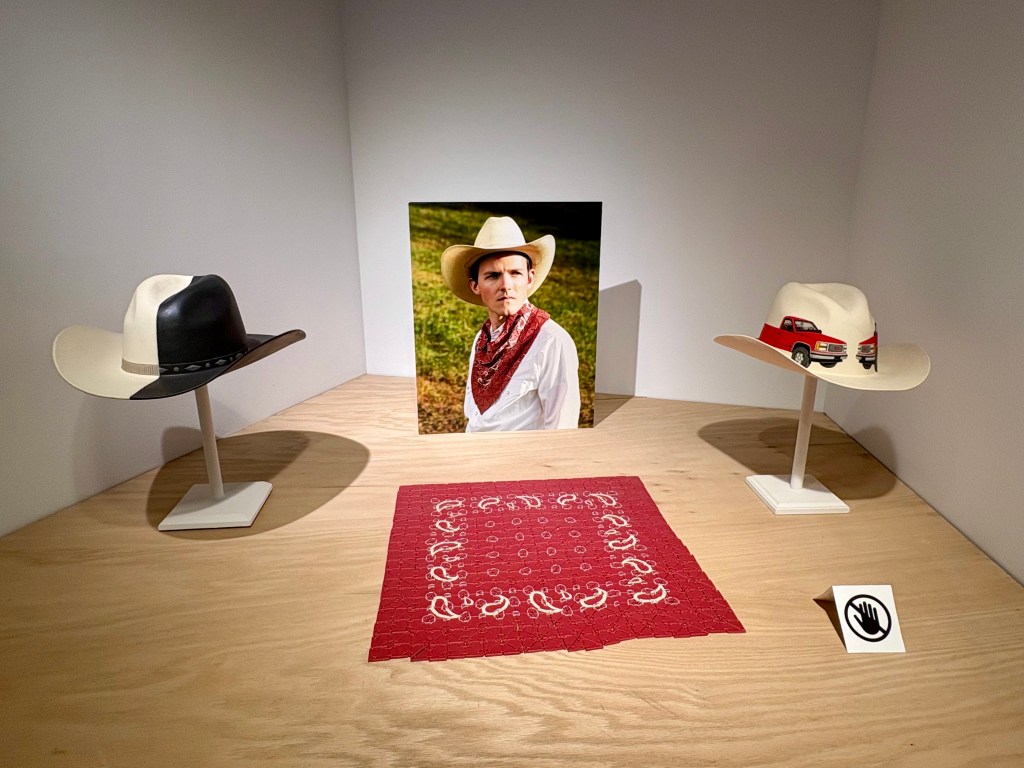
Shae Bishop’s Fragile Masculinity found in the Houston Museum of Crafts. The stetsons — White Hat/ Black Hat and Pickup Lines, are made out of porcelain, and the bandana — worn in the photograph — from ceramic tiles. And this caption is in lilac.
• • • • • • • • •
And that’s it. We’re on our way home. There were some issues about the drive to the airport, but we managed. Like a visit to Aldi. The whole lot. Good. Different. (Nah …better than good.)
America?
George Sanders in the New Yorker. ‘Who are all these Trump supporters?‘ (2016)
‘In the face of specificity, my interviewees began trying, really trying, to think of what would be fairest and most humane for this real person we had imaginatively conjured up. It wasn’t that we suddenly agreed, but the tone changed. We popped briefly out of zinger mode and began to have some faith in one another, a shared confidence that if we talked long enough, respectfully enough, a solution could be found that might satisfy our respective best notions of who we were. …
‘So, yes, there are bigots in the Trump movement, and wackos, and dummies, and sometimes I had to remind myself that the important constituency is the persuadable middle segment of his supporters, who are not finding in Trump a suitable vessel for their hate but are misunderstanding him or overestimating him, and moving in his direction out of a misplaced form of hope. …
‘Sometimes it seemed that they were, like me, just slightly spoiled Americans, imbued with unreasonable boomer expectations for autonomy, glory, and ascension, and that their grievances were more theoretical than actual, more media-induced than experience-related. …
‘The tragedy of the Trump movement is that one set of struggling people has been pitted against other groups of struggling people by someone who has known little struggle, at least in the material sense, and hence seems to have little empathy for anyone struggling, and even to consider struggling a symptom of weakness. “I will never let you down,” he has told his supporters, again and again, but he will, and in fact already has, by indulging the fearful, xenophobic, Other-averse parts of their psychology and reinforcing the notion that their sense of being left behind has no source in themselves. …
‘The night was sad. The center failed to hold. Did I blame the rioting kids? I did. Did I blame Trump? I did. This, Mr. Trump, I thought, is why we practice civility. This is why, before we say exactly what is on our minds, we run it past ourselves, to see if it makes sense, is true, is fair, has a flavor of kindness, and won’t hurt someone or make someone’s difficult life more difficult. Because there are, among us, in every political camp, limited, angry, violent, and/or damaged people, waiting for any excuse to throw off the tethers of restraint and get after it. After which it falls to the rest of us, right and left, to clean up the mess.’

