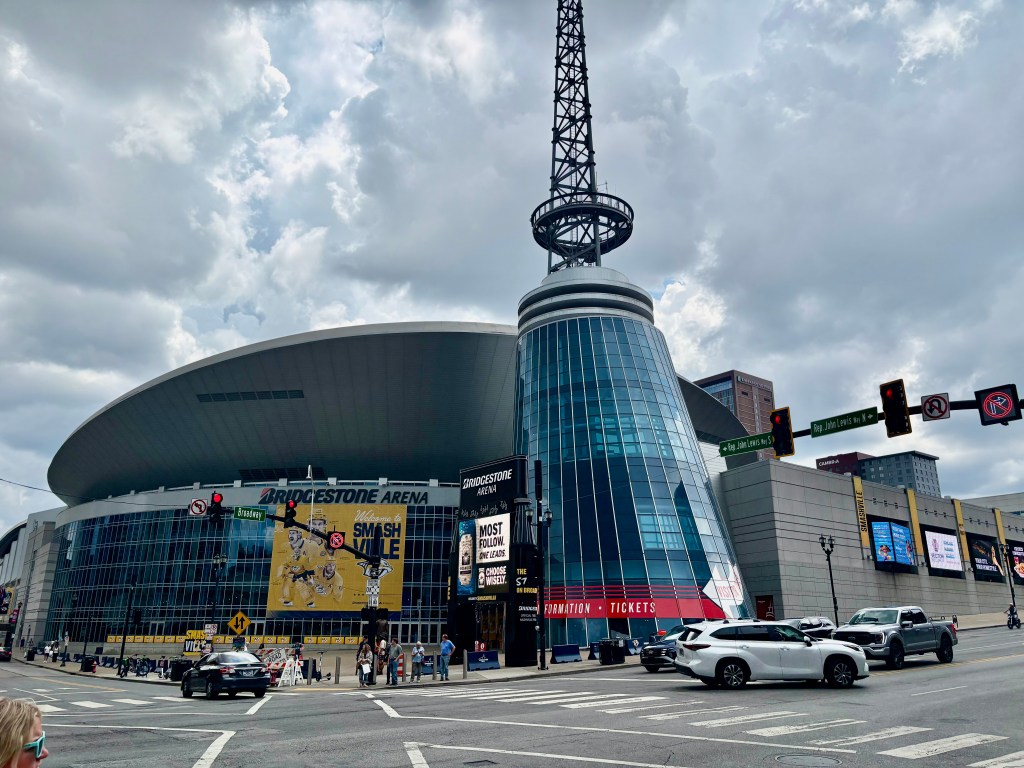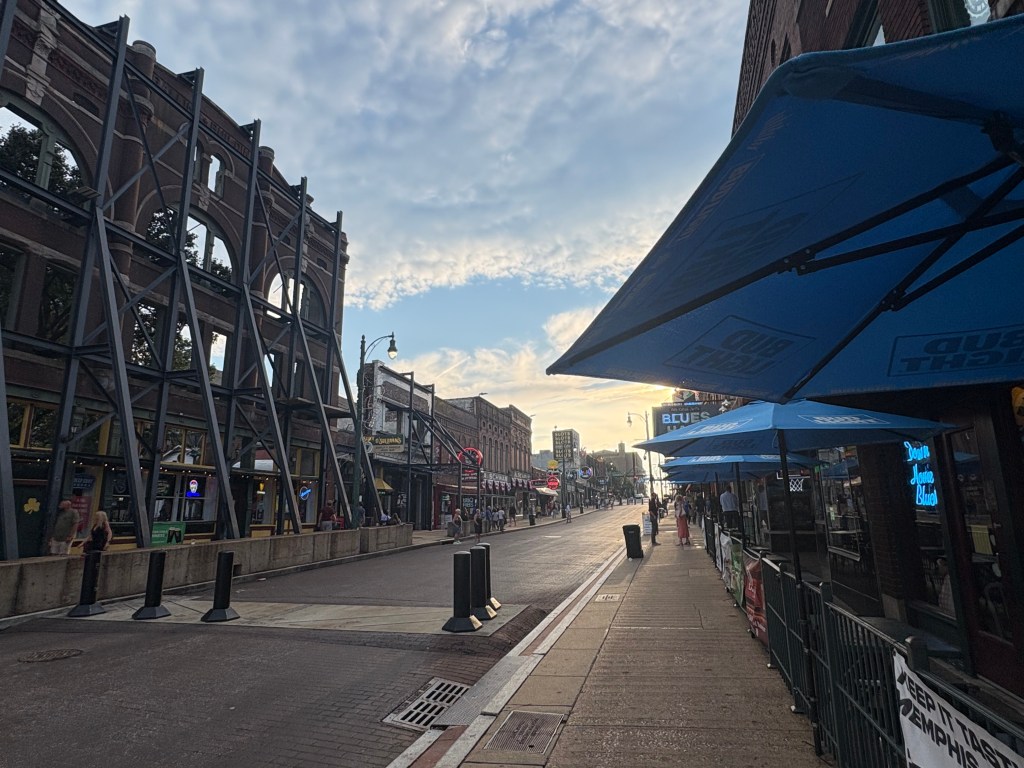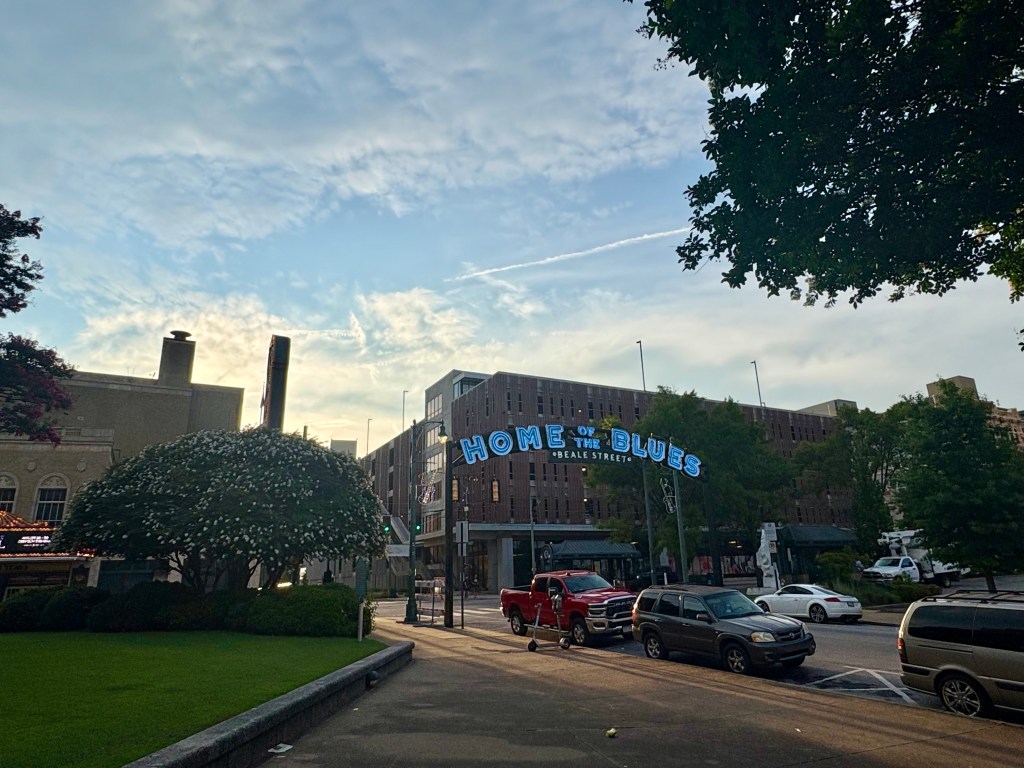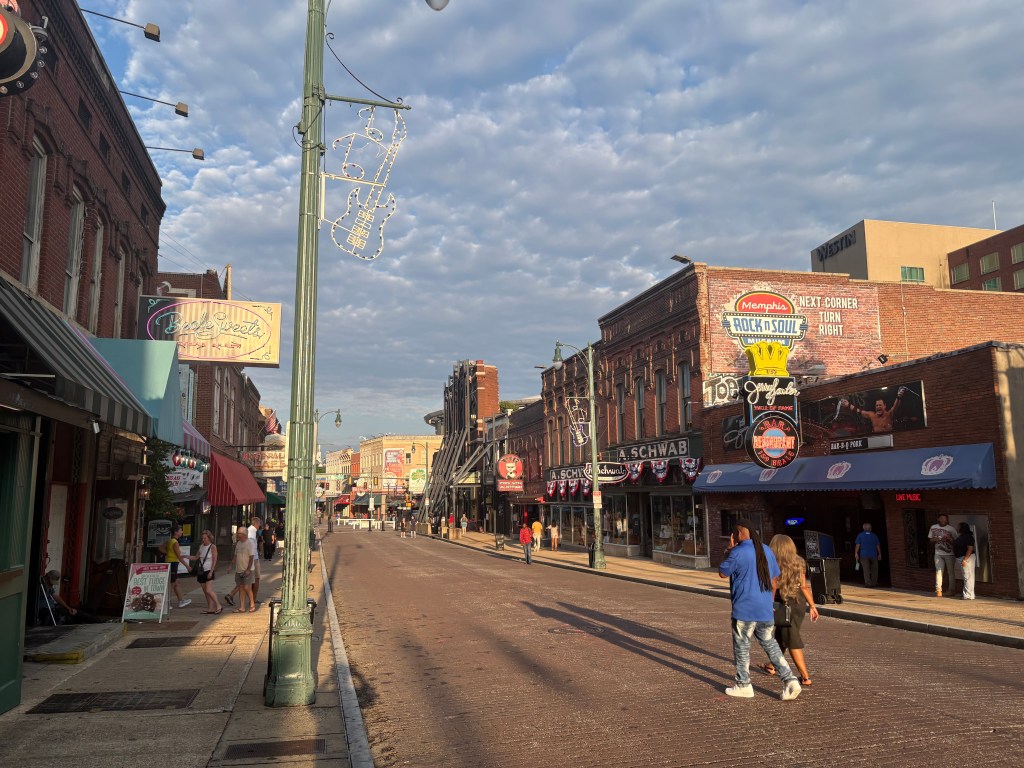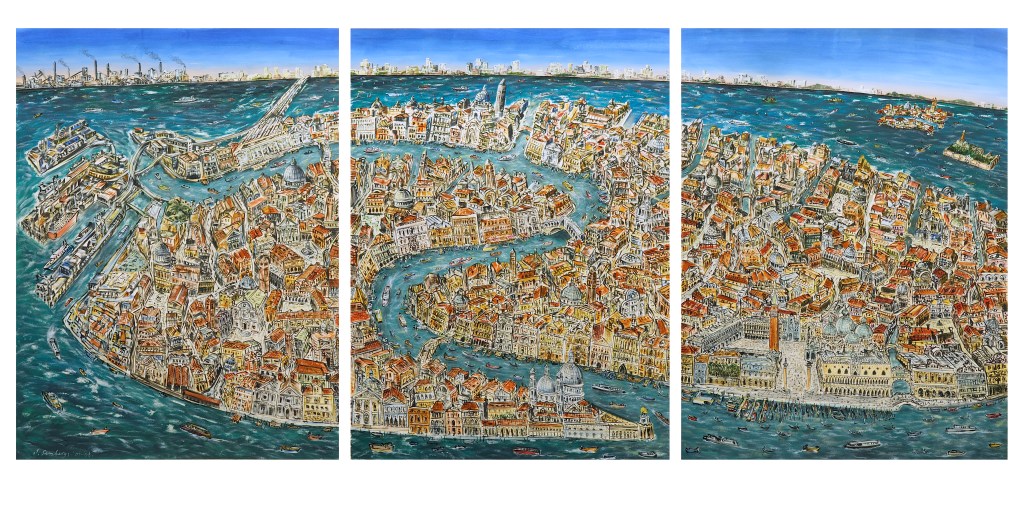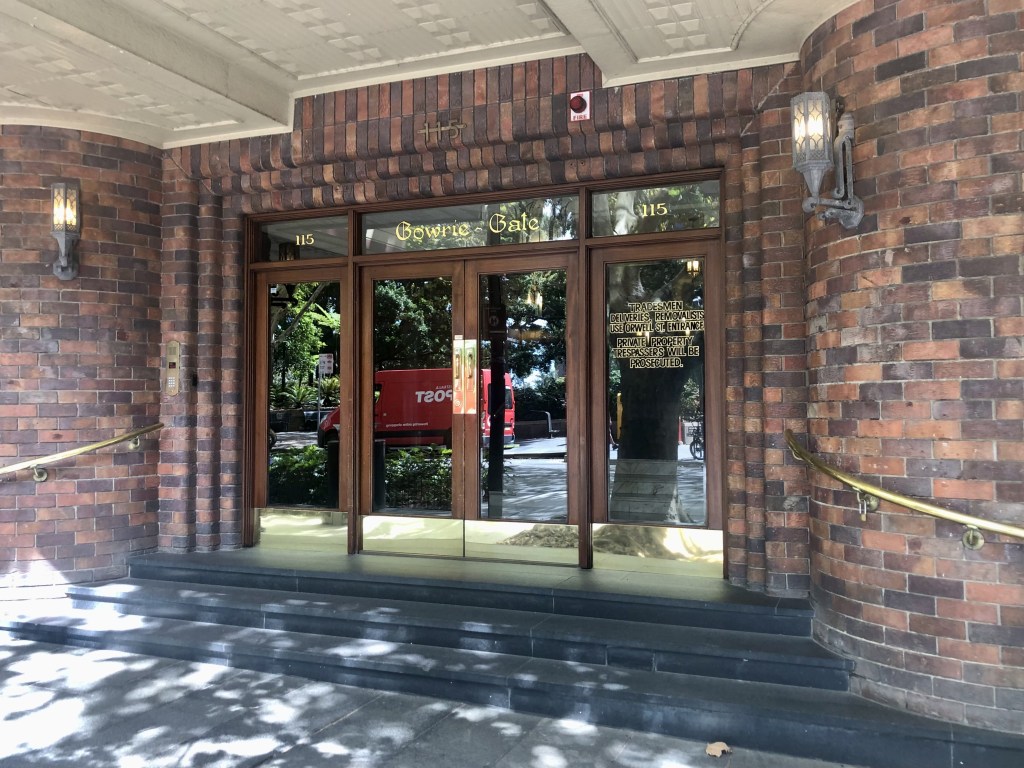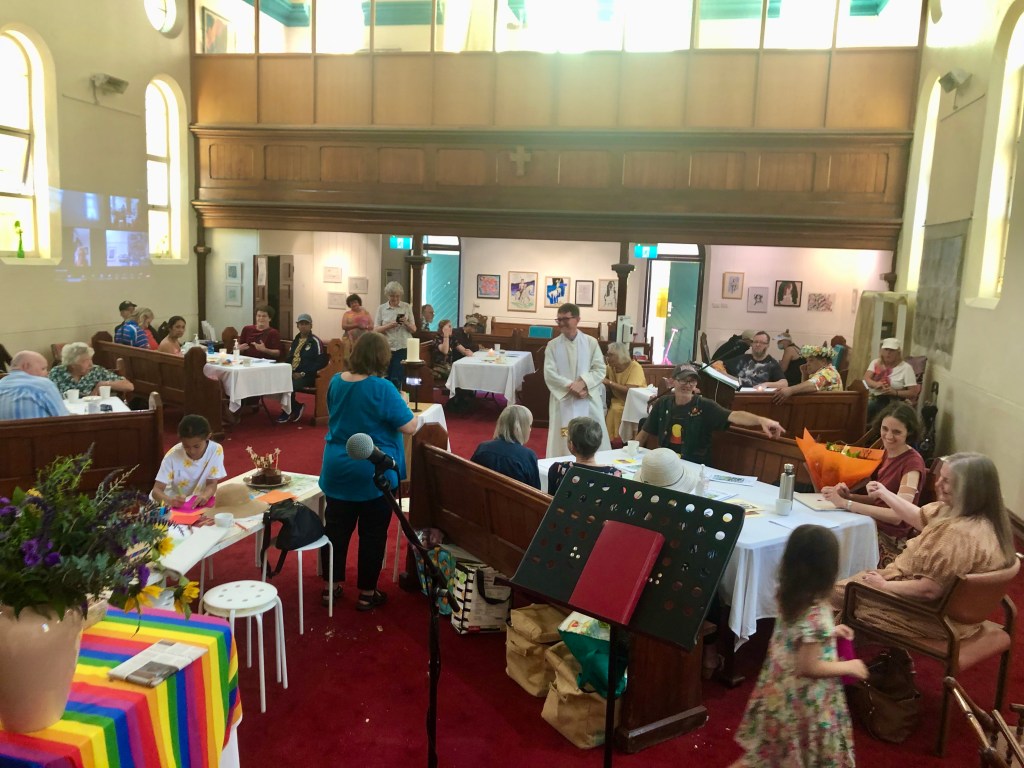
Maurie my treasured barber of profound Italian descent who I think has never been to Italy, is going next week to Rome, Florence, Venice and Lake Como. Mid-August. Could be hell. But his elder daughter’s boyfriend wants to propose marriage at the Colosseum. Can’t say fairer than that can you? Could be anything. We checked the location of their accommodation in Venice: 100m from the Rialto on a line running directly south to the Piazza San Marco. And this is squarely in the middle of the train tracks. The heart of San Marco. Could be murder. And I’ll hear. I’ll be told. (‘Daaaavey … why diddun you tell me? We cooden even get out the front door. Too many people. And when we did the food was shit. Starbucks! I go half way round thu world to go to Starbucks! Cost me a FORTUNE.’)
[An addition 2/8 provided by Helen Beresford, one of her husband Jan Senbergs’ wonderful paintings, and yes, it’s all there: Venice. Marvellous! Thank you Helen.]
Alan loves a map. This is for you Al. We were staying just above the ‘e’ in Cannaregio. The dotted line is the route of the hordes. Maurie is staying just below the second arrowhead.
About 30 million tourists come to Venice each year. Since I moaned albeit quite cheerfully about the number of tourists there in 2010 that number has multiplied 2.5 times. The resident population has declined from 178,000 in 1950 to just under 50,000 in 2023. There are reasons for this and they are all fairly grim, a consequence of anticipating and feeding the desires of the itinerant hordes in the service of profit. And we were there distributing our own version of largesse and making our own contributions to its decline.
So, what’s our story then? The end of the walk was not very far due north from Venice on a major train route. We were flying from Venice to Lisbon. There’s that. Stick with it. But also Venice is violently addictive. It seems that there are things there you simply must see. And the vibe. All those canals. So I confess, only a bit repentant: we’re part of the gang. Suited up.
There is something preposterous about Venice, something that makes you chuckle if not laugh out loud. A city built on piles from the Croatian forests rammed into 120 islets in a shallow lagoon. A city whose main thoroughfare is lined with palaces but which has an appalling problem managing waste. A city whose cultural foundations are deeply serious overrun by haymakers and partying boaties with blasting boom boxes. A city whose identity is built on religion but whose daily life could scarcely be more secular. When I wrote about it in 2010 I called it Disneyland on Water. Maybe that’s why we go. Of course it is.
My list wouldn’t have been everybody’s but in a day we seemed to fit that and most of the rest in as well. Didn’t cross the Rialto. But look:
We’re just about to get into that gondola and go across to the other side 50 metres away for some ostentatiously large sum of money. [I’ve just checked and I need to qualify that. Two euros each which Michael had in his pocket possibly for just such an occasion.] But what are you going to do? Swim? No. Join in. Be part of the flood of humanity who for some opaque reason wants to ride in a gondola.
And the other side included:
Yes we’re at the Piazza and San Marco. Saw the Doge’s Palace. Did it all. Sat down for a drink, and this time I am correct because it is written down in front of me: media alla spina, smallish glass of draft beer, €23, or if you like AUD 37.88 per favore. A cup of coffee €15 (AUD 24.70). We didn’t choose to participate in that way here or anywhere else. An hour or two later we were eating a delicious meal in Cannaregio which was only plausibly expensive having had a very pleasant and substantial beer at a bar on the northern littoral for €8 a pop. (Looks like not that many people. Far fewer than August of course — this is in mid-June — but people were sheltering out of the sun. It was VERY hot.)
I had proposed a plan.
Stay somewhere nice a bit out of the way that’s not too far from the transport you want to use, in and out. Cannaregio? Great. Very comfortable accommodation, two bedrooms, huge kitchen off to the right — we could have a cup of tea!— AND a laundry! Hoorah.
Michael threatened to read all the books during the two nights we were there. A very impressive selection: classical and canonical supplemented by a few racey choices of the airport newstand genre.
The second element of the plan was to go against the traffic and get on the ‘wrong’ side of the Grand Canal into San Croce and Dorsodouro as soon as possible. There are still as many canals and bridges as you could wish for, elegant buildings, long views and excellent ‘normal’ places for food and drink. In 2010 as we did this, I thought, ‘Suddenly, perhaps obviously, as we strolled we found ourselves in a different city, one where people seemed to live.’
It wasn’t quite the same in 2026, but it wasn’t too far off it. We were sitting having our morning coffee and breakfast watching this happen. Quiet, mild and his camera is further away than arm’s length from the subject.
We were on our way to fulfil the third part of the plan, visits to the Accademia and Peggy Guggenheim’s Gallery. I had timed tickets for the latter and the former was on our way.
The Accademia has a great collection of medieval and renaissance art, primarily northern Italian with a focus on the rich vein that is Venetian. (Venice, of course, has been an imperial capital: boats, shipping, trade, a navy, 139 churches, 88 still operating, patronage, plenty of opportunity for religious art.) It is a good place to see stuff by Veronese (featuring strongly this time), Tintoretto, Titian, Canaletto (landscapes of the city), Bellini and Tiepolo (up there on the roof and in high corners looking down at you) among many others. And it has a reputation for being lightly populated. It is on the wrong side of the Canal I guess.
Some group photos:
There are a couple not looking at you … but not many.
and a large hatfull of religious mysteries not all of which are necessarily biblical. There’s this one for example.
Early Tintoretto (1555-ish?) Saint Mark saves the slave from torture or The Miracle of The Slave. ‘The miraculous apparition of The Evangelist swoops into the scene causing the instruments of torture to break, nullifying the punishment that the Provencal Lord (seated top right) wants to inflict on his slave, guilty of having travelled to Venice to venerate the remains of Saint Mark.’
There’s an issue here. Saint Mark coming to save someone who has just been to see the remains of Saint Mark? Arid nitpicking.
However, despite the weapon-grade radiance emanating from his head, Saint Mark may not be in time. The slave has already got a stick in his eye and another one looking like it’s on its way down, an axe similarly poised. The handle of the sledgehammer might be broken but what has it already been up to? Plus the hangers-on seem more interested in arranging themselves in a tableau than effective intervention. From Tintoretto’s tabloid period. But he knew his audience. This is one of a set of four big ones focused on Saint Mark, Venice’s patron saint.
This is another of the four.
I do not know what the ghostly figures fleeing off left are up to. (It’s likely that the painting is unfinished.) But this is his Saint Mark’s Body Brought to Venice, The Abduction of the Body of Saint Mark or Translation of the Body of Saint Mark, referring to the transfer of Saint Mark’s relics from Alexandria to Venice. And here is an explanatory expansion:
Saint Mark spent most of his life in Alexandria, Egypt. His body was brought to Venice eight centuries after his death in AD 68. Venice’s ruling class wanted St. Mark as the patron saint for their economic status, so they arranged to smuggle his body from Egypt. While stealing the body, the thieves Buono da Malamocco and Rustico da Torcello hid the body under pork and vegetables. Once they arrived in Venice on January 31, 828, Mark’s body was kept in Doge Giustiniano’s palace. When the doge died, his widow was ordered to build the Basilica di San Marco to house Mark. Fear that Saint Mark’s body would be stolen again continued after the death of the Doge. According to a French monk, Mark’s body was safely stored in “one of the great pillars”. However, when the chapel of Basilica di San Marco was rebuilt in 1063, Saint Mark’s body could not be found. Thirty years after this, it was said that Saint Mark’s body re-appeared, with his arm appearing from an old pillar. After re-appearing, Saint Mark’s body was finally put in a sculptured coffin below the high altar in the chapel.
‘The thieves Buono da Malamocco and Rustico da Torcello hid the body under pork and vegetables.’ The arm … my gracious. That would have been a moment. And the camel? What of the camel? Another panel in life’s rich tapestry I guess. Venetian history. Love all this. So much to be known isn’t there? And some of it at least is there waiting for you in the Accademia.
I have written at some length about Peggy Guggenheim and her Venetian gallery elsewhere. A most absorbing figure. Out there. Full frontal. And her daughter who had the misfortune to be named Pegeen, and whose artwork while pushed hard never toppled over into credibility. And that’s what I thought on this visit: the mountain, mighty mountains and vast expanses, of work on which really good art is built. The collection was slightly musty, and perhaps more about Peggy and her many mates than art per se.
This Miro is the work of a young man. If you knew his later work you could see some of the foundations here.
A Mondrian below. I can’t remember whether it was a window or a painting. It’s whichever you think it’s not. [It’s a painting.] And lovely, but he went on from here.
And I don’t know who did this or its name. (It’s got ‘Le genie de l’espace’ written on it. The space genius? The genius of space? Andre? Yolande? An interpretation please.) But it was striking. I contributed the reflection.
That night I looked at my phone and we had walked 12.8 kilometres not a step of which I regretted.
There’s this.
And there’s also this.
Magic. Some of that will have rubbed off on Maurie and his family. I have no doubt of that. None. It’s Venice.
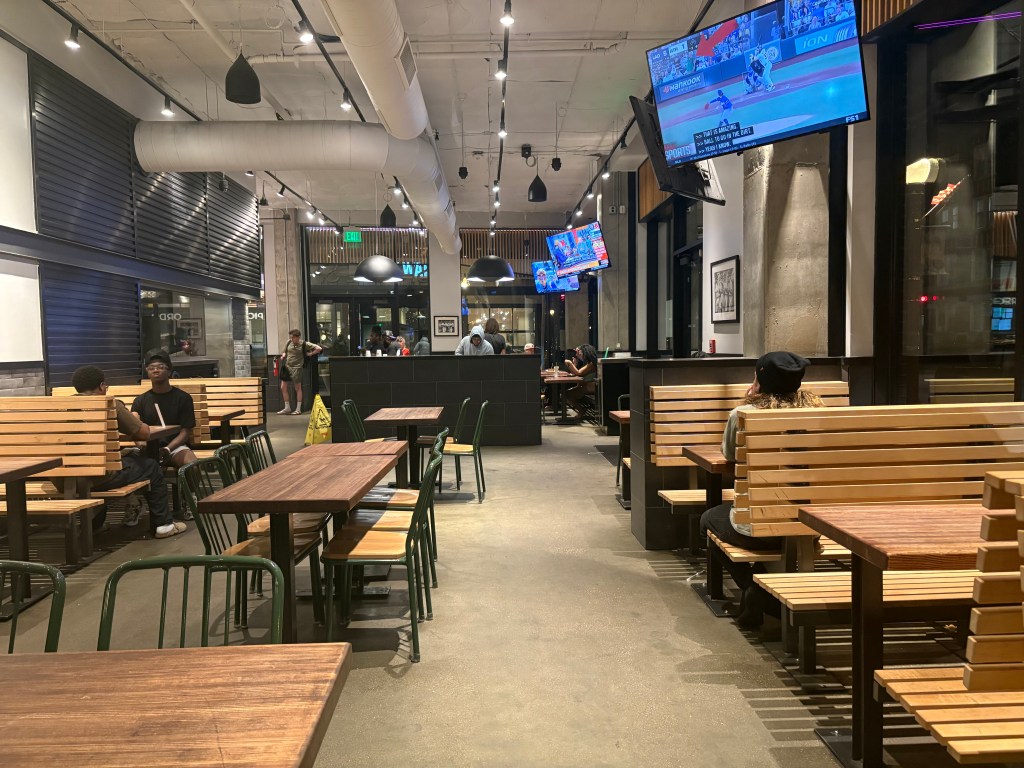
How was the trip? Good. Great. Anything terrible happen? No. Myrna had some emergency dental care but it worked out okay. Highlight? That’s a perfectly sensible question but impossible to answer. Here for example is one of mine.
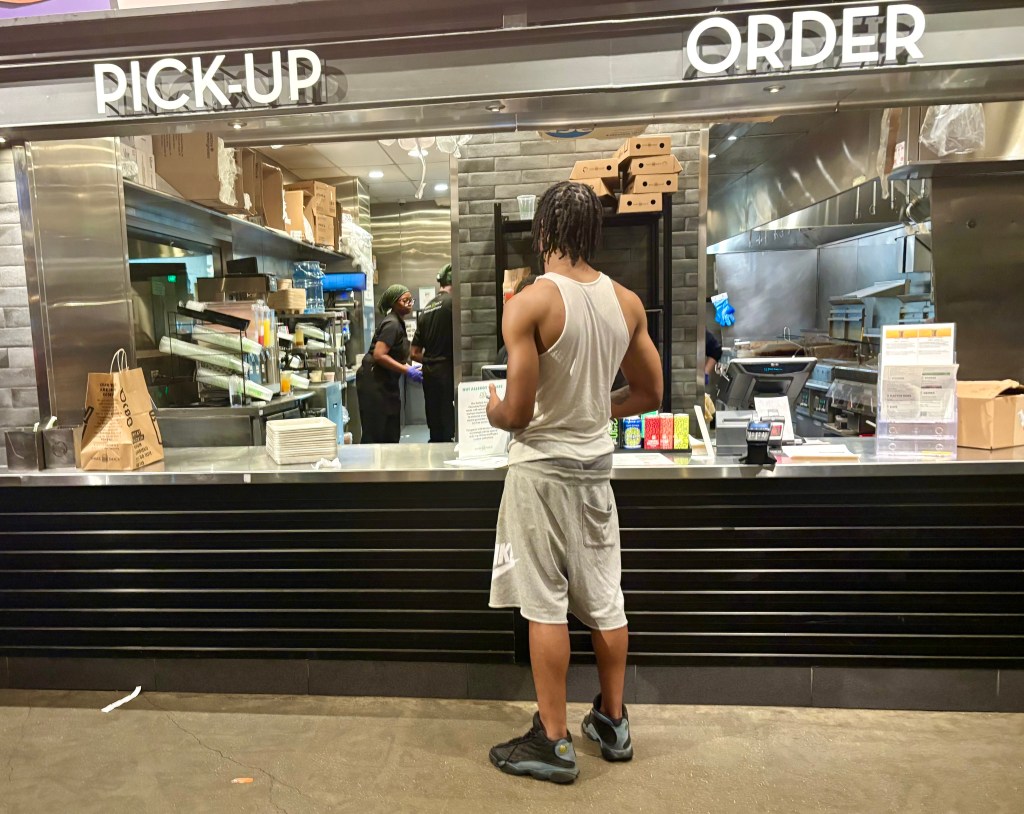
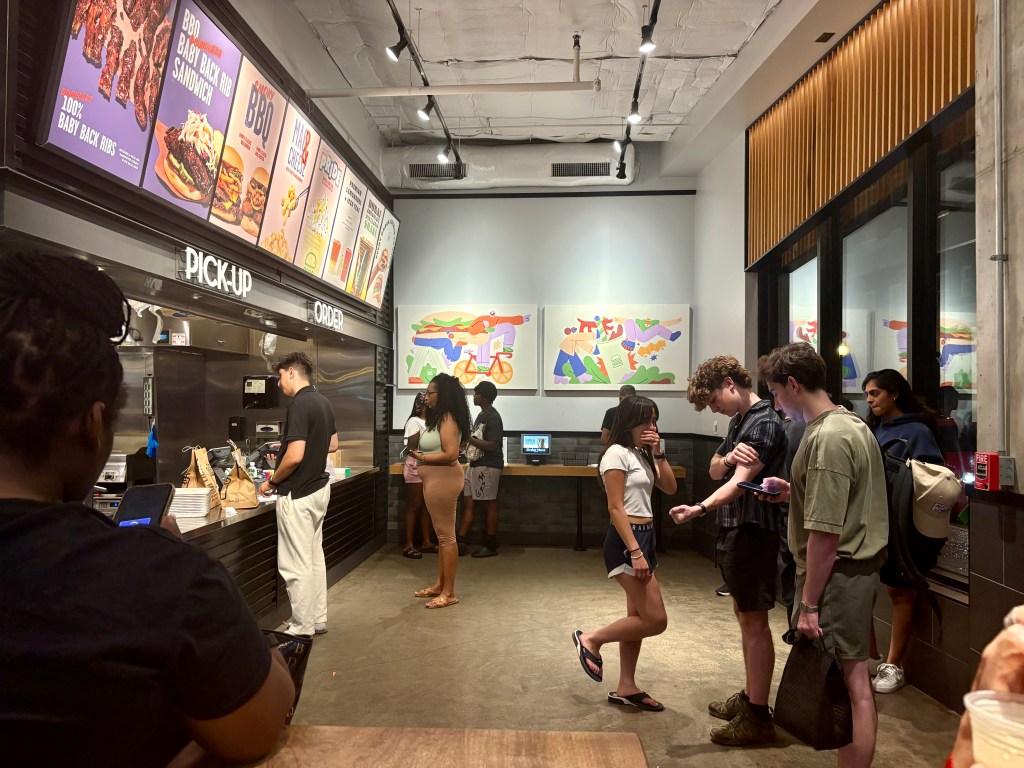
The ShakeShack in North Euclid Avenue, St Louis, 10.45pm July 2. We wanted something sweet to eat. Drink actually. North Euclid Avenue was nearby, pretty downtown. There was some light doof doof music, but it was quiet-ish and people were minding their own business. The baseball is on the telly. The commentary goes: ‘That is amazing.’ ‘Ball to go into the dirt.’ ‘Yeah. I know.’ A flare-up was rumbling gently behind the counter. Some orders had been mixed up. The room had a certain flavour which was exactly as it should have been. Tasty. Rich. And something we are unlikely to replicate. I wasn’t there. I was watching. Immersed.
What sort of an answer is that? I had several dozen experiences like that. All I can say is that this series of blogs is one answer to the question.
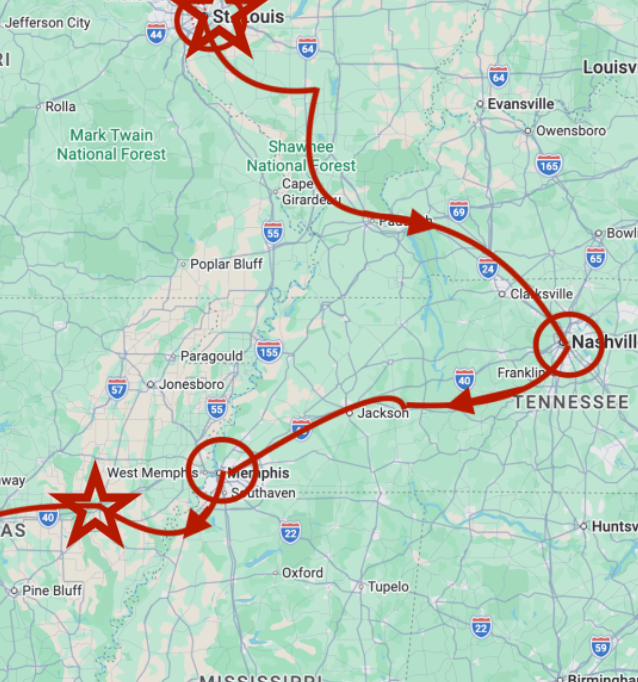
We went to a lot of places and did a lot of things. We slept in Singapore, Zurich, Innsbruck, five places in the Dolomites in northern Italy, Venice, Lisbon, Madrid, Montreal, Albany, the Hudson Valley, Washington, St Louis, Nashville, Memphis, Hot Springs, Nacogdoches, Galveston and Houston.
This blog, however, is an attempt to pick off some things which caught our attention that mightn’t need a larger context.
************
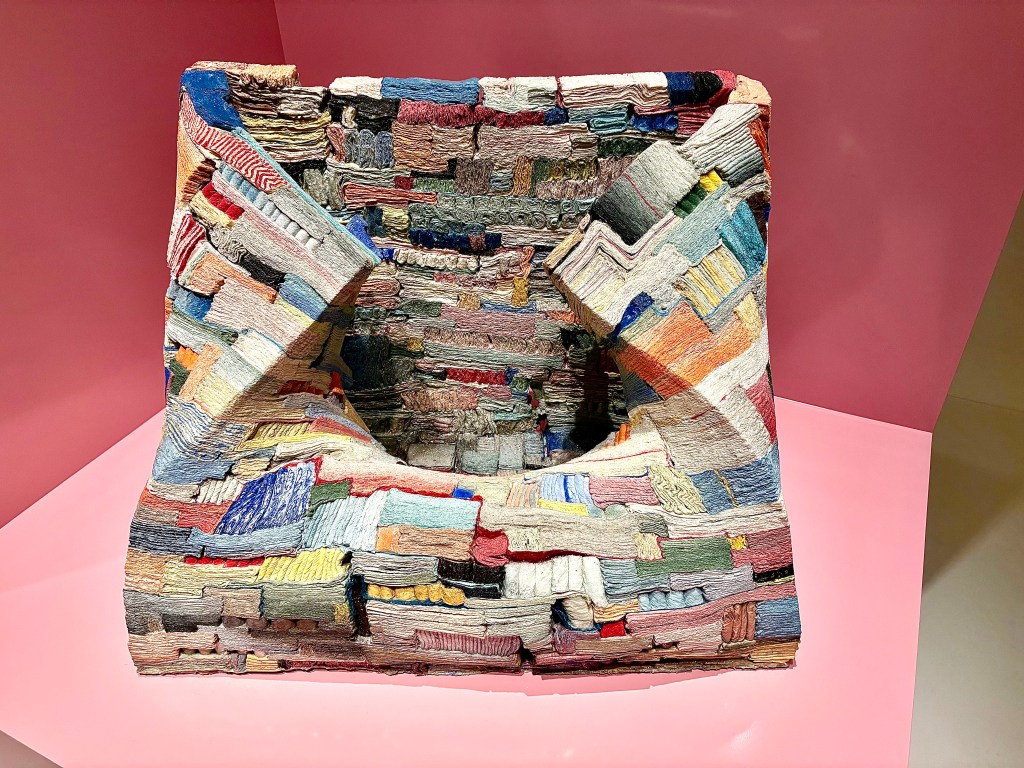
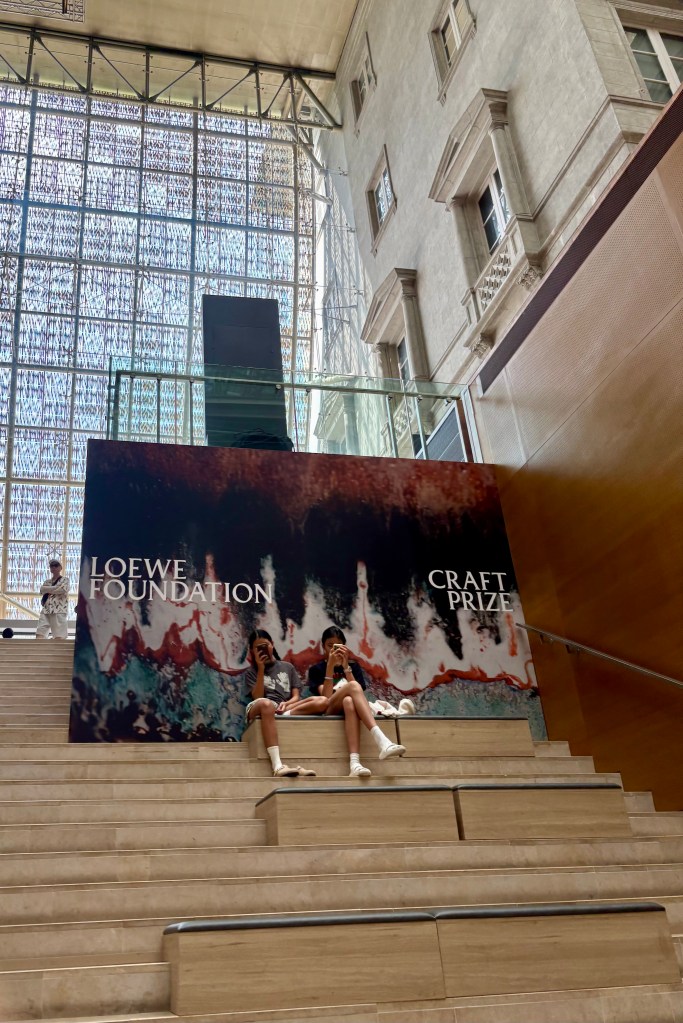
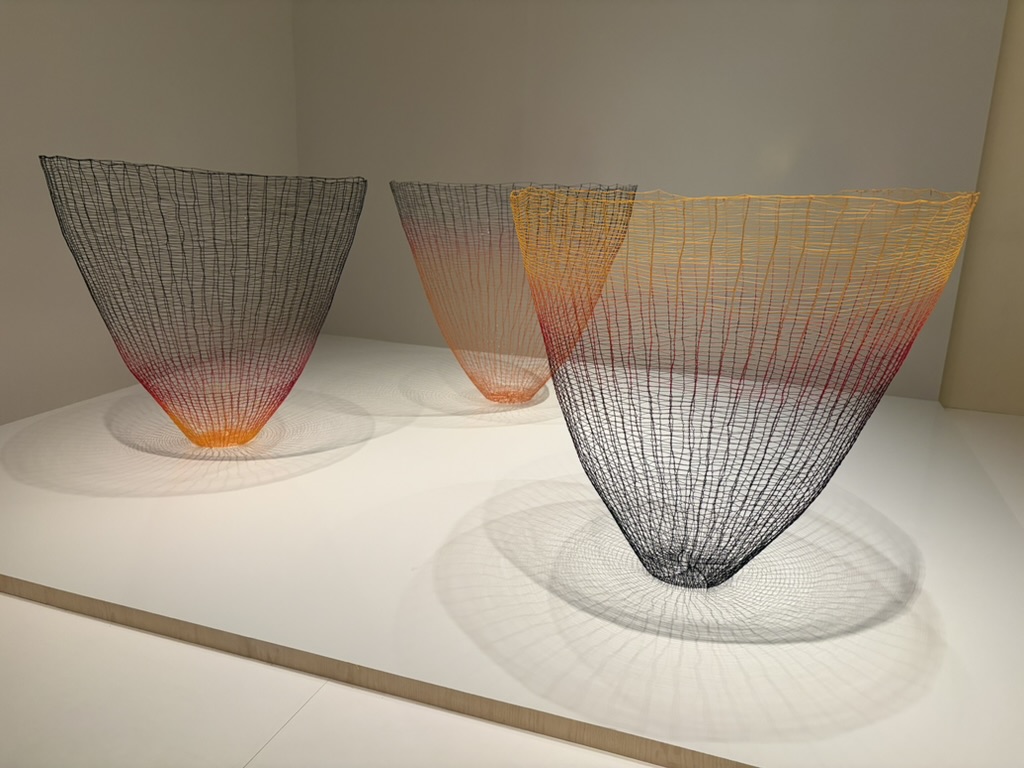
We found the finalists of the Loewe Foundation Craft Prize in Singapore’s National Gallery, a load of treats. The winner is above. Jongjin Park’s ‘Strata of Illusion’. About 80cms across, it consists of swatches of paper soaked in porcelain, glazed and then fired. Extraordinary. I had other favourites. Below is Norwegian Gjertrud Hals ‘Scala’ made out of knitted linen and resin.
Not everyone was interested.
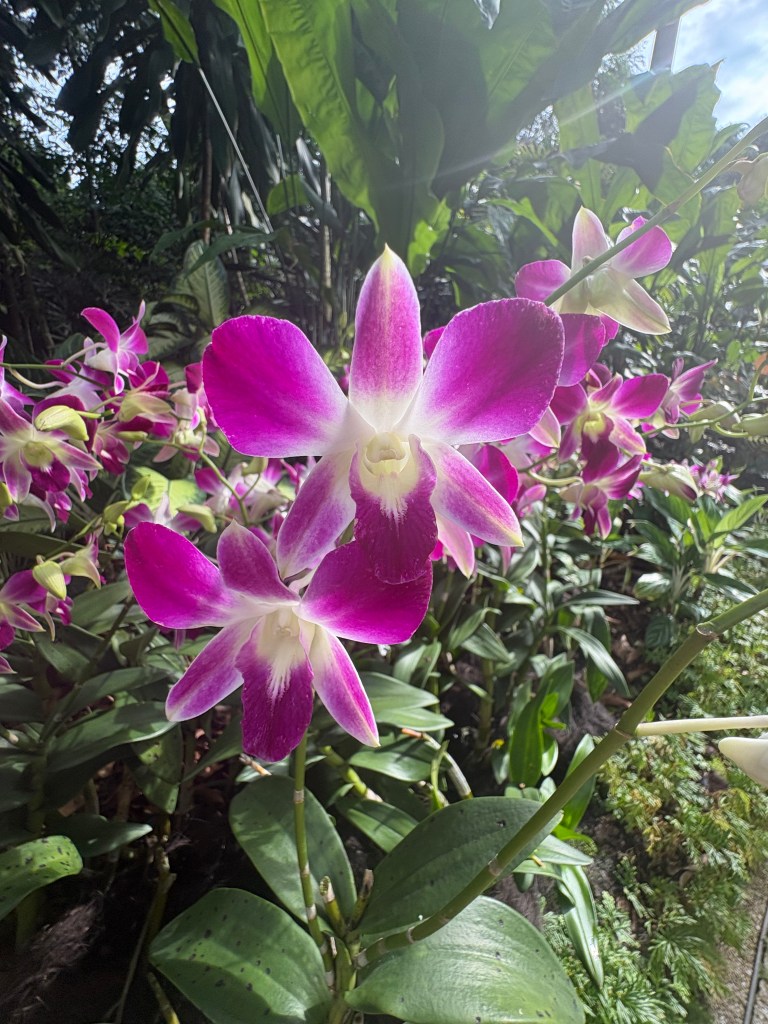
And in Singapore there is always the orchid garden.
************
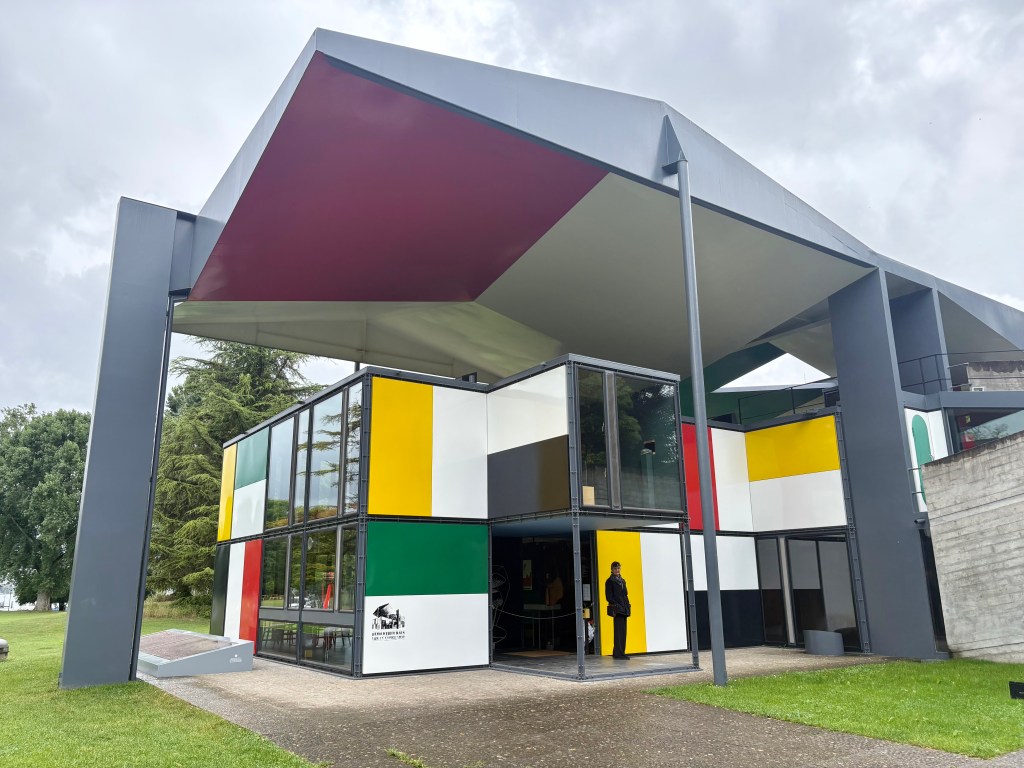
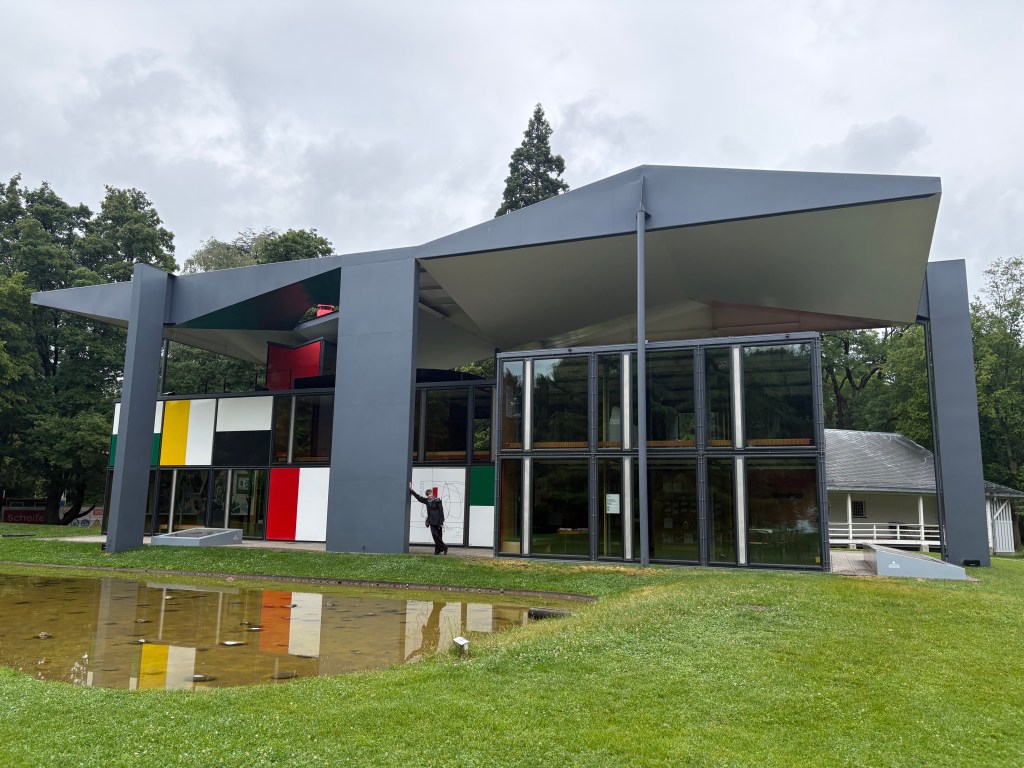
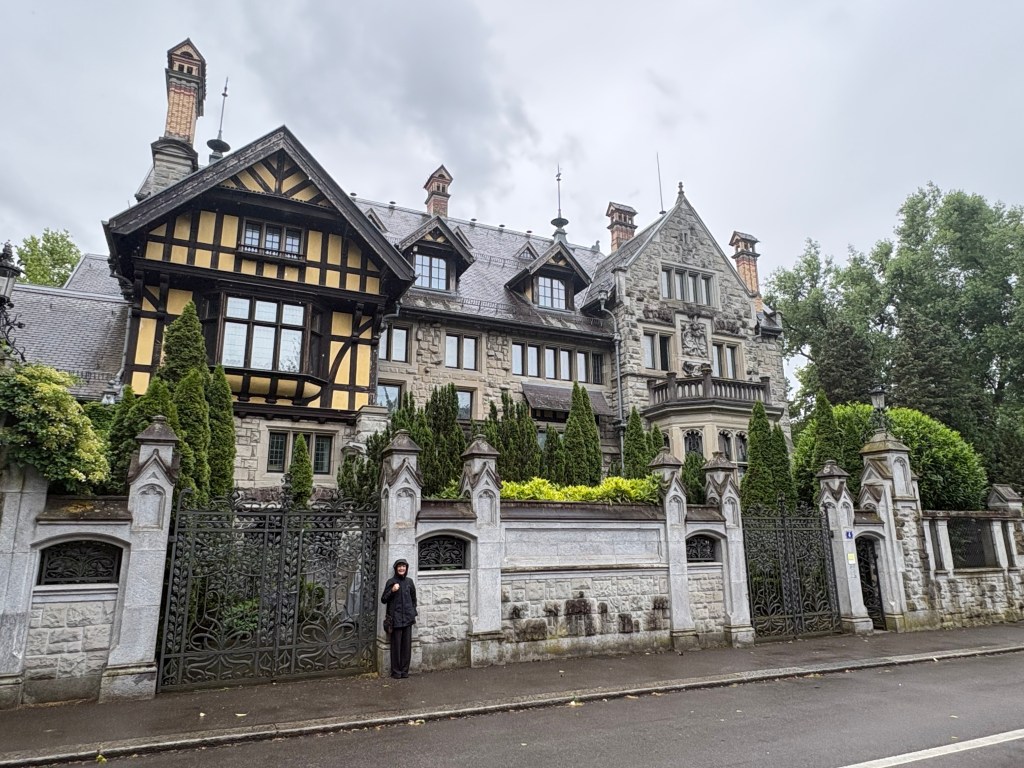
In Zurich’s southern suburbs nestled in the between the brawny strongholds (its neighbour below) which border the Zurichsee is Le Corbusier’s Pavillon. The ‘detached’ roof covers a deck reached via the very generous staircase contained in the grey blockwork. Now a museum commemorating the architect’s work, it still contains many elements of a domestic house. It would be very exposed to live in — no shutters, blinds or curtains — but it is such a deft creation.
************
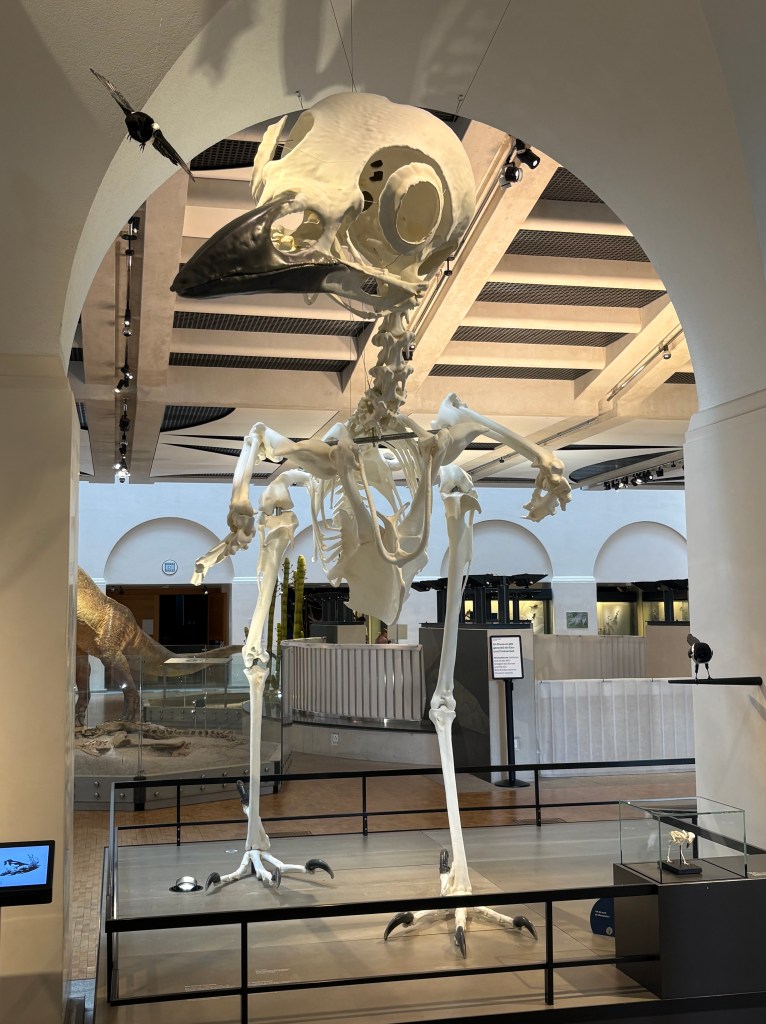
And Zurich again. An exhibit in the Natural History Museum giving new meaning to the idea ‘Big Bird’. And yes, genuine fossils.
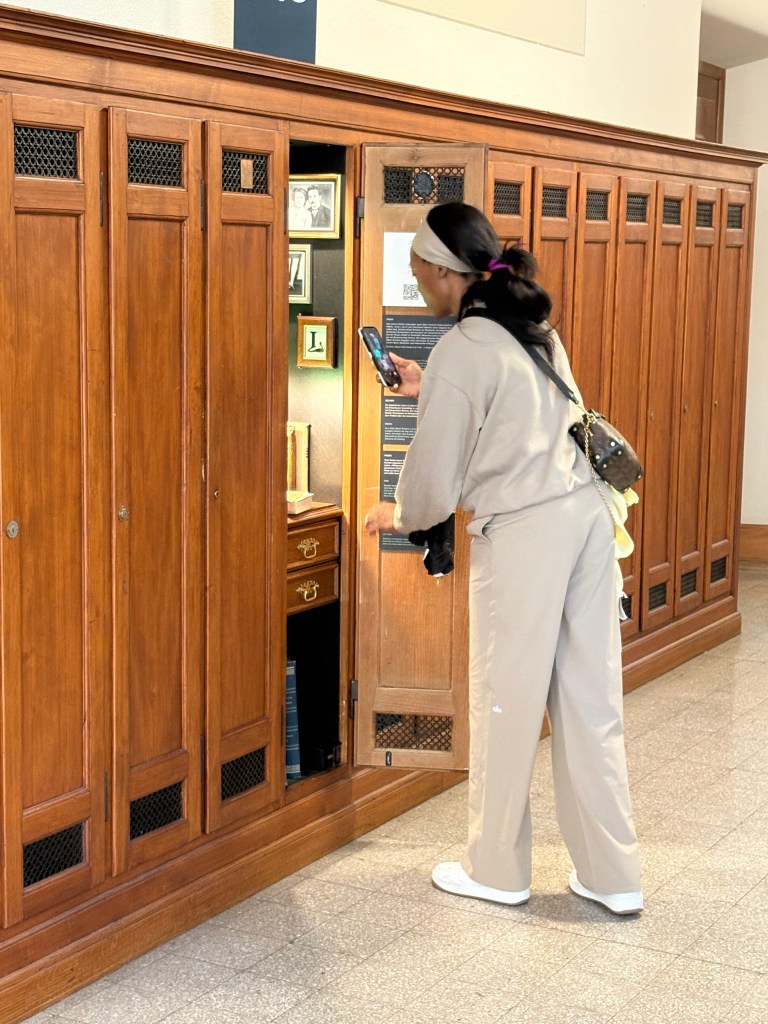
I should also note that not far from here we encountered and opened Albert Einstein’s locker (F40) at the University of Zurich. I have a video of Myrna doing so and examining its contents but I couldn’t load it. Pictured is one of a long queue of people who were interested in doing so as well. And that’s it: a few photos, some books, a hand written letter. I think, really, you had to imagine yourself in the presence of greatness. Just as interesting was the monster careers festival going on below, and the very Swiss smells coming from the canteen.
************
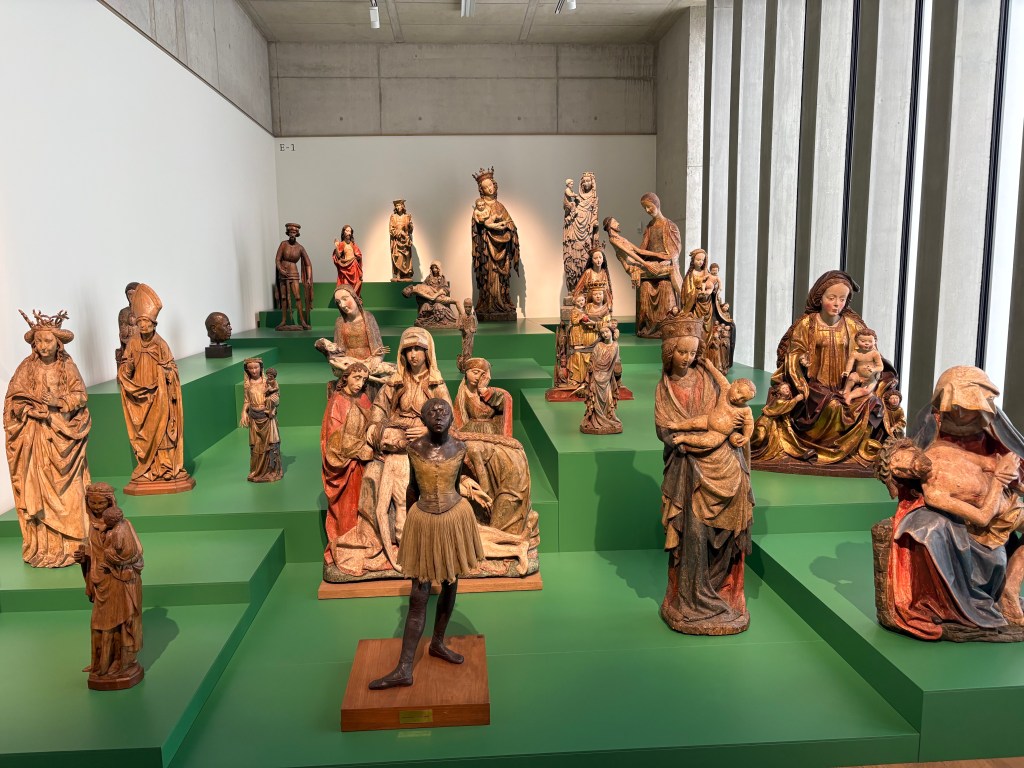
Zurich did us proud. Strolling through the Kunsthaus’s collection on permanent loan from Emil Bührle and … suddenly, suddenly, there’s this mass assemblage of medieval religious imagery surrounding one of Degas’s Little Dancers. Normally each of these might have 15 or 20 square metres to themselves, but this is a packed house with millions of dollars worth of art just staring at you: so intimate, so at hand, so attainable, so overpowering. Almost a church congregation with most of the congregants named Mary. Very daring curating.
************
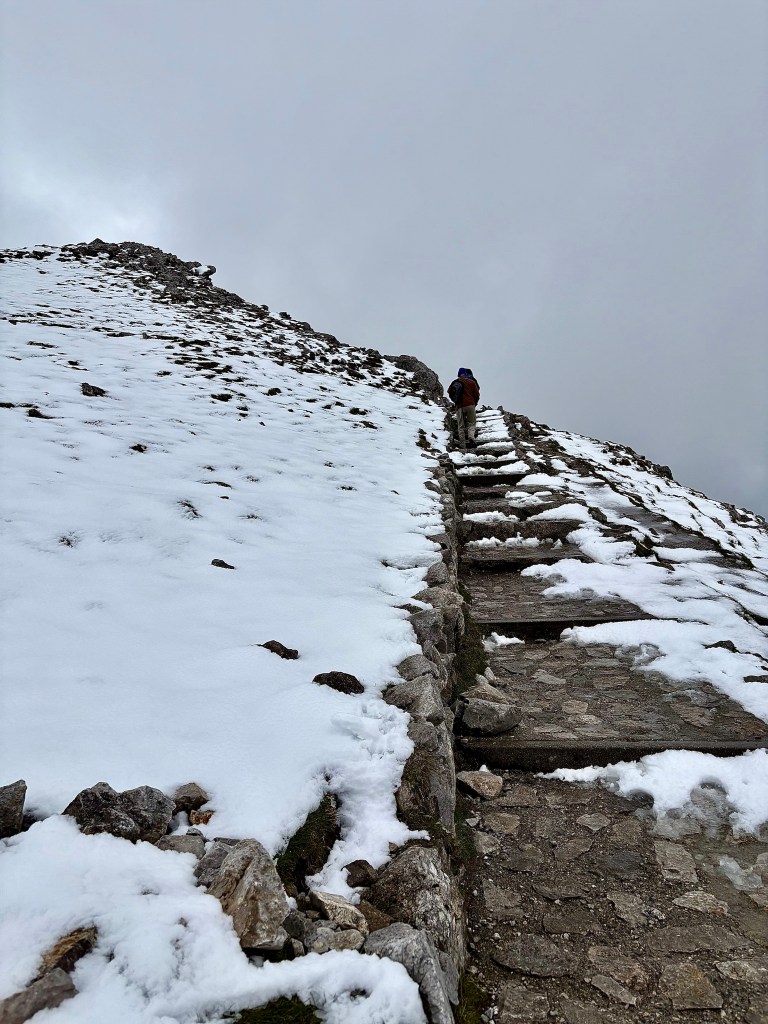
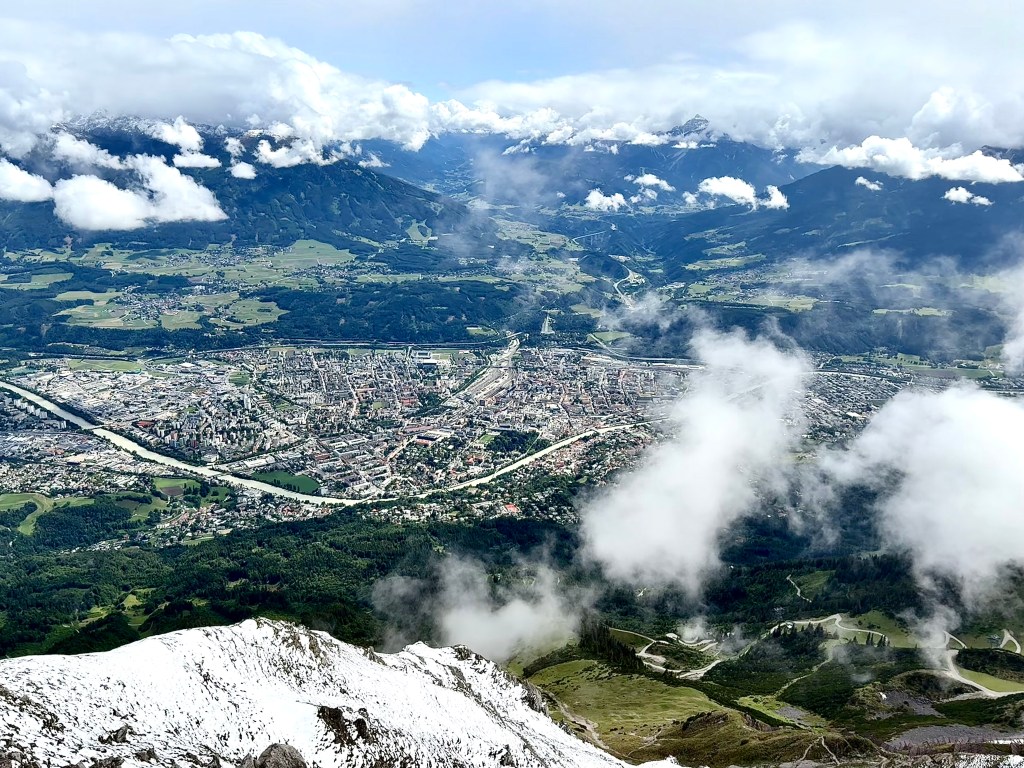
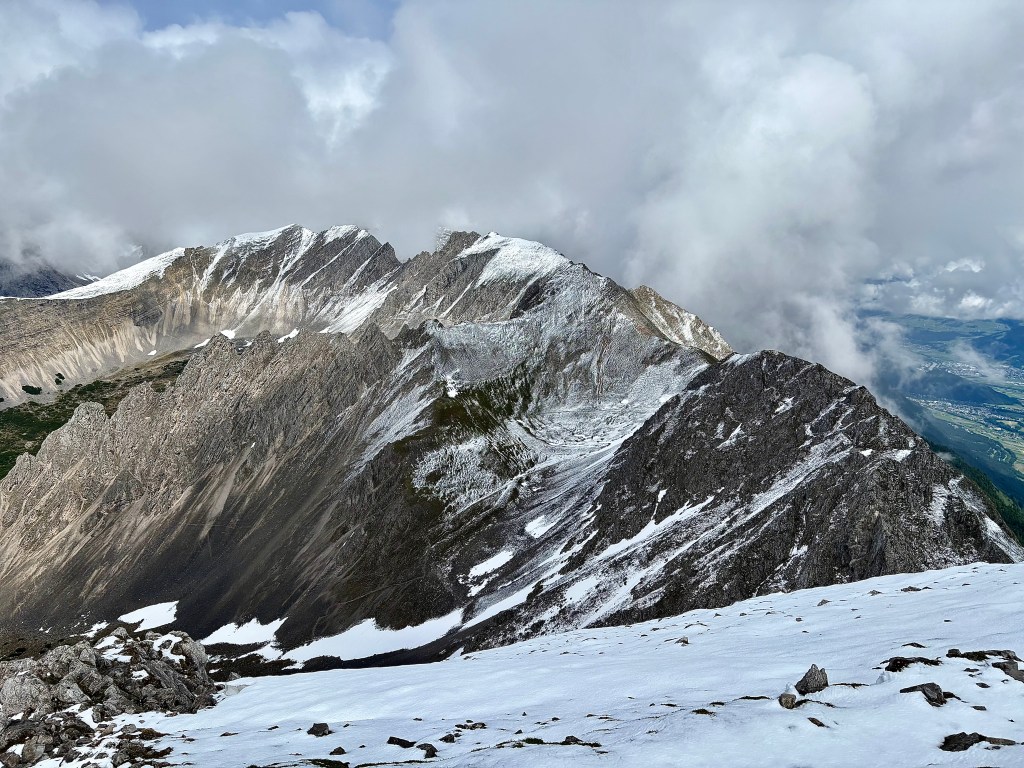
The final ascent of the Lhotse Face. Nah not really. The hike up to the top of Nordkette overlooking Innsbruck. 2256m, (and, for Michael, 7401 feet). On this day it rained hard in the morning, it snowed lightly when we reached the top and it was sunny and clear when we got back to town.
This is what Innsbruck and environs looked like from the top.
And in the other direction.
************
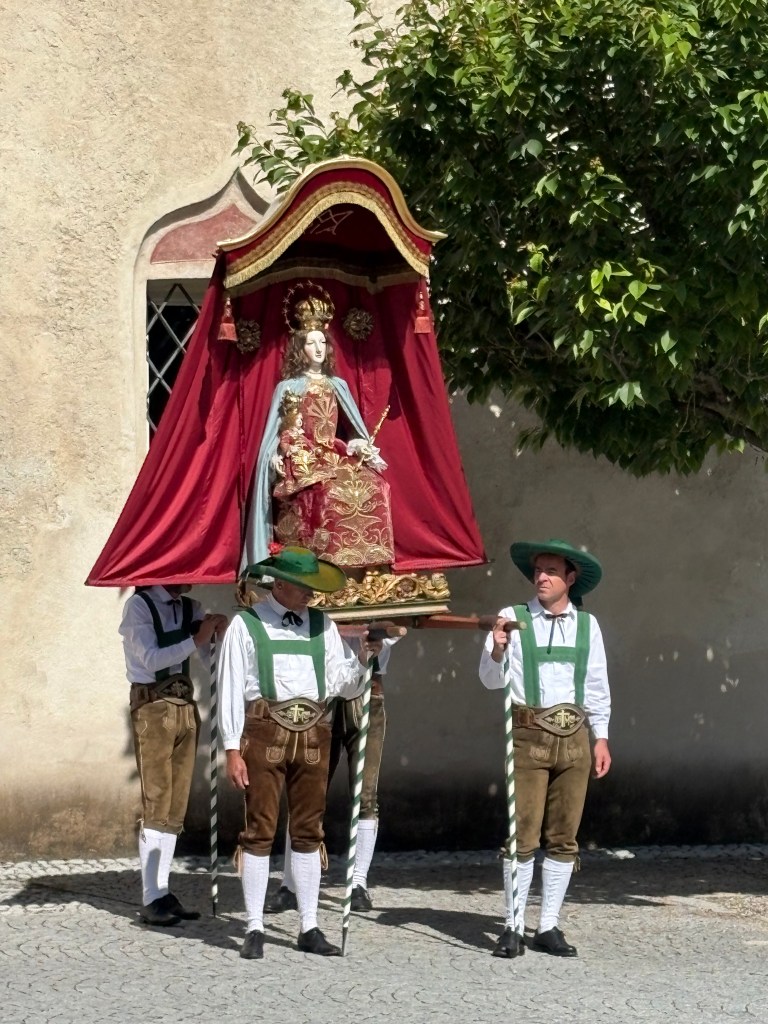
Our walk, the Chestnut Way, has been a pilgrimage beginning at the Abbey of Novacella just out of Bressanone/ Brixen (where both Italian and German were spoken, but far more German than Italian) and finishing at the cathedral of Bolzano/ Bozen (where there was a dramatic switch to Italian in both language and culture). We began on a Sunday morning and footled around with buses that never came before getting a taxi to the convent. We had a look around and then suddenly found ourselves in the middle of a major religious event. This icon and its purveyors led a substantial procession with all sorts of other bits and pieces not to mention a choir which sang sweetly and with fervour.
************
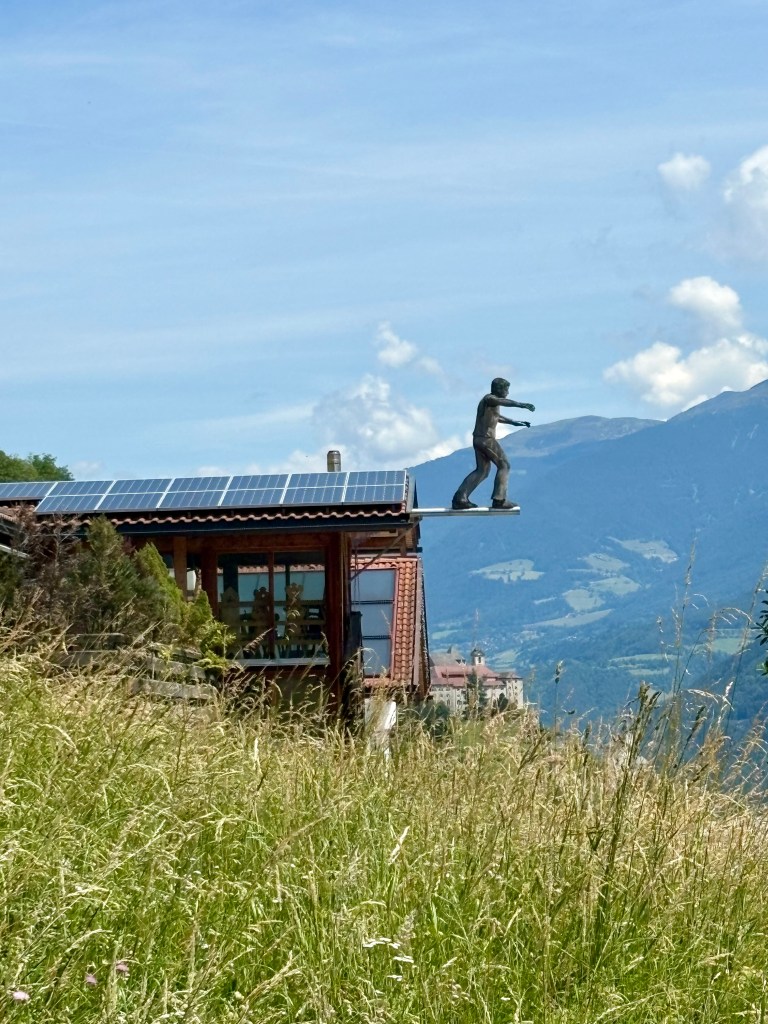
At Varna and Vilandro on the walk. You wouldn’t necessarily see this if you stayed home.
************
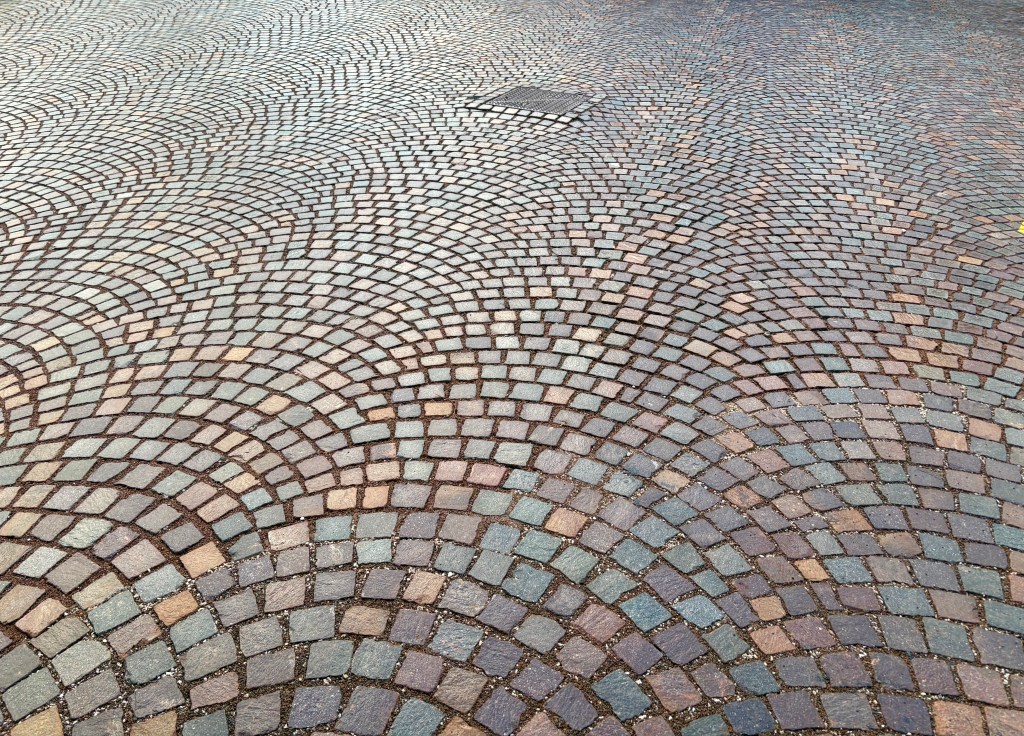
Road paving cobbles. Anyone who has been to Europe will have seen them. But I love them. A particularly nice patch outside our hotel at Collalbo/ Klobenstein.
************
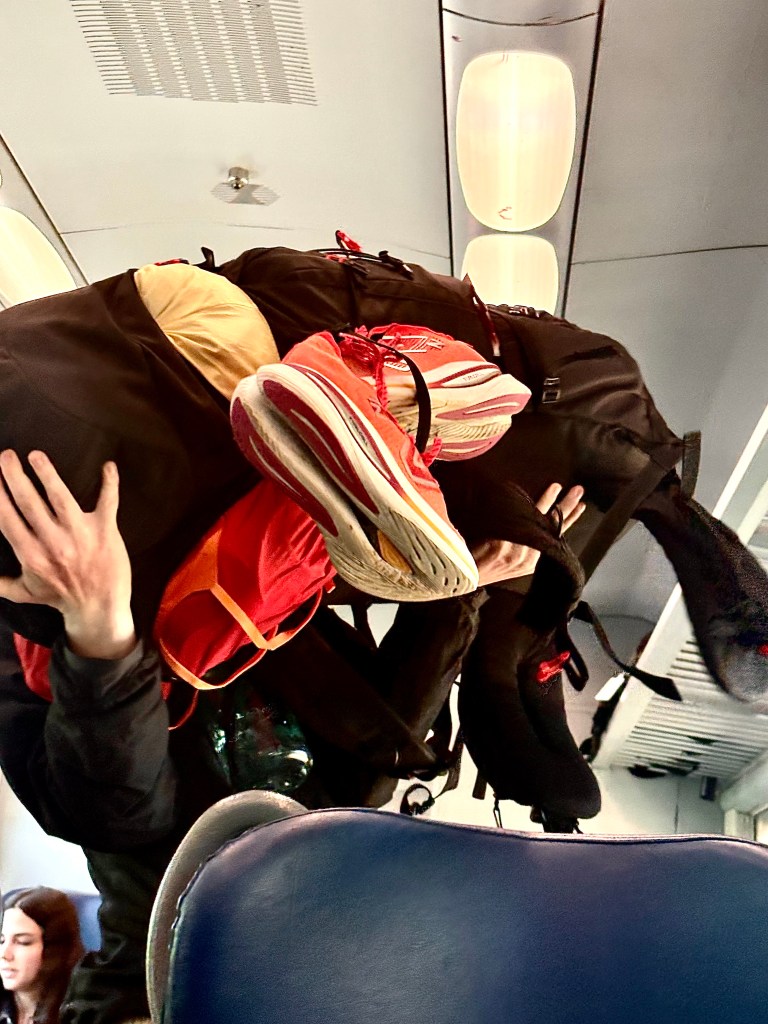
For travellers everywhere: the Young Man with the Enormous Pack with Stuff Hanging Off It navigating past your head getting off the train at Venice.
************
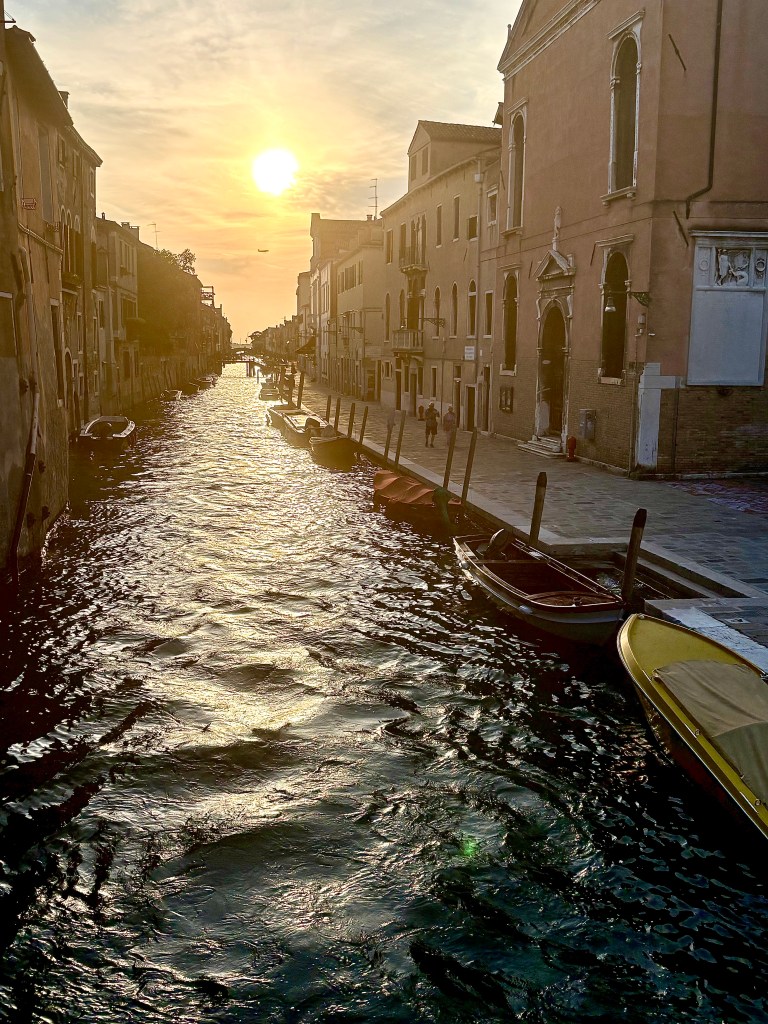
Where else could it possibly be? A boat had just gone past, but also note the plane below the sun, and the green reflection in the water. Sometimes photos just do their own work for you.
But also …
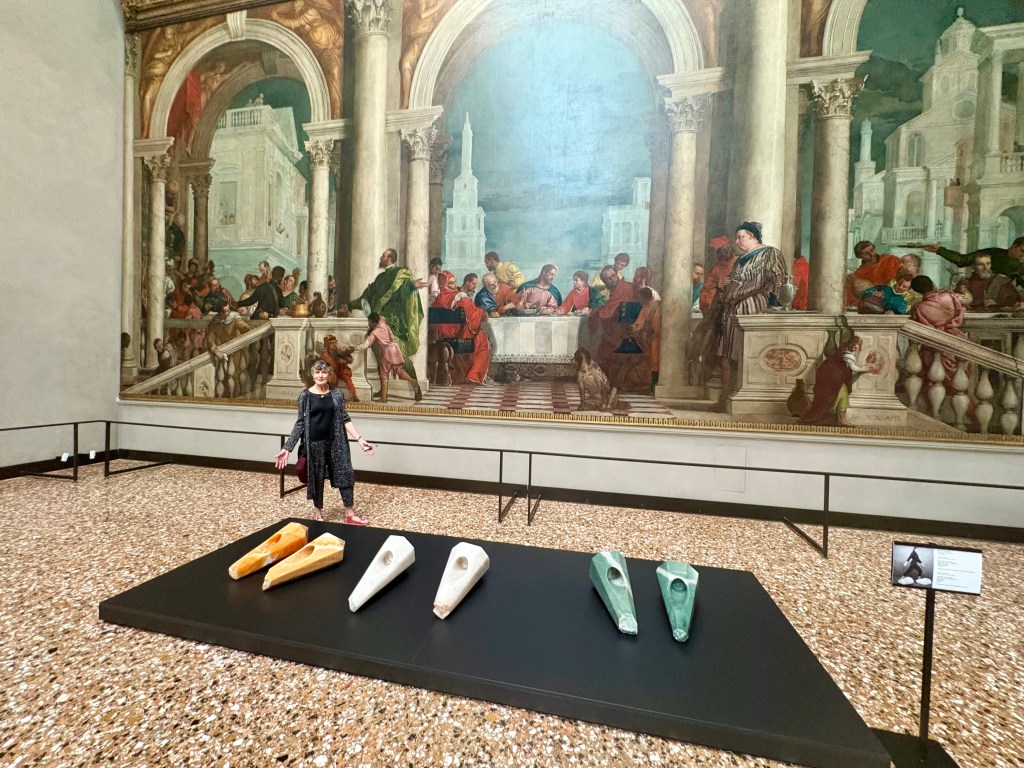
Veronese’s version of the Last Supper at Venice’s Accademia. Huge. Wonderful. Foregrounded by Marina Abramovic’s stone slippers which of course everyone wants to try on, but you’re not allowed. ☹️
************
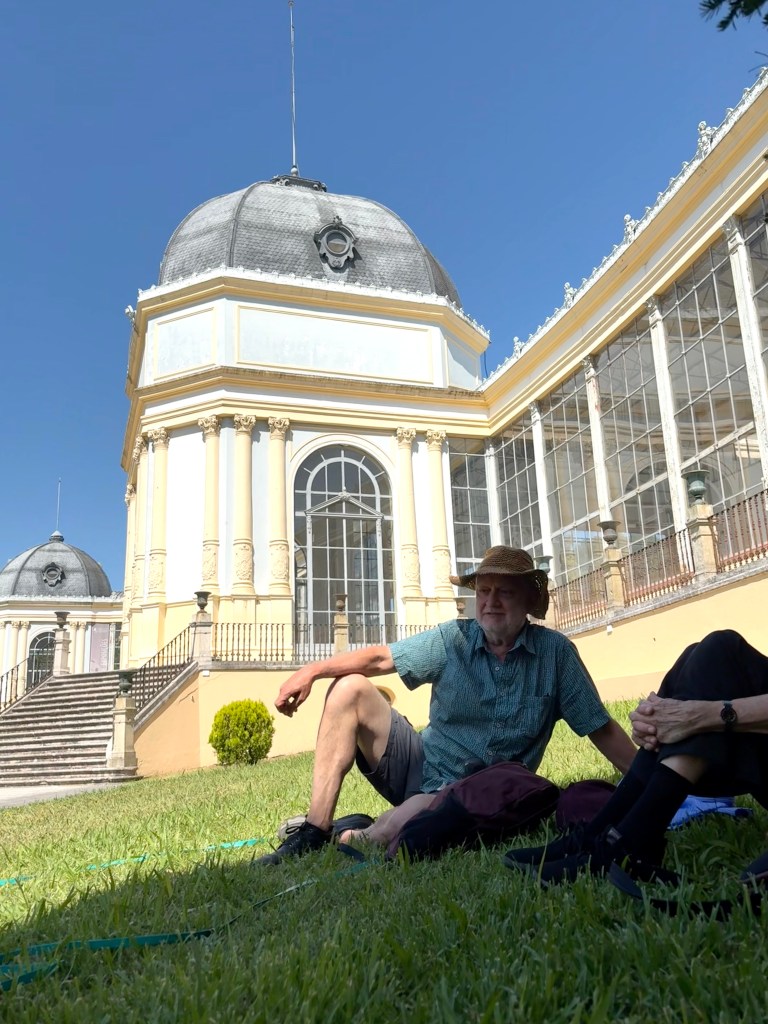
Lisbon’s own Crystal Palace, the Pavilhão de Exposições (Exhibition Pavilion) up in the hills on its outskirts. Built in 1884, it’s on one of Moti’s major routes and is one of Geoff’s favourite places in his current home town.
************
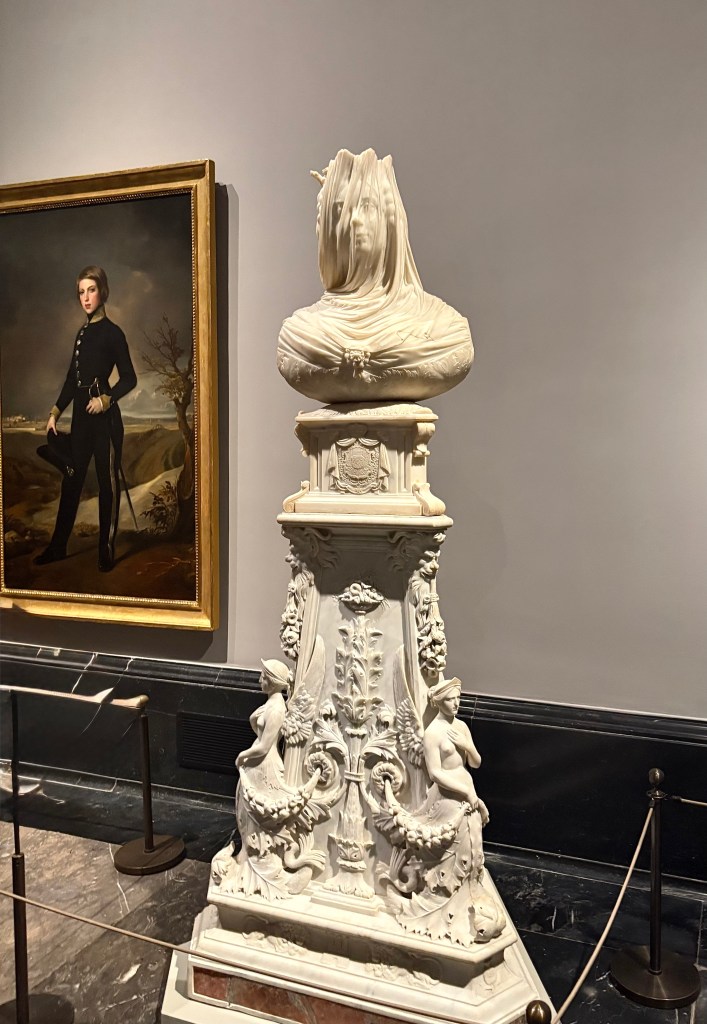
Isabel II, veiled. Camillo Torreggiani, 1855. The Prado in Madrid. ‘The queen’s face is veiled, a device recalling the veiled images of Faith, Virtue and Religion.’ Of course. But in marble! Marble! And completely convincing. The pedestal is also his work.
************
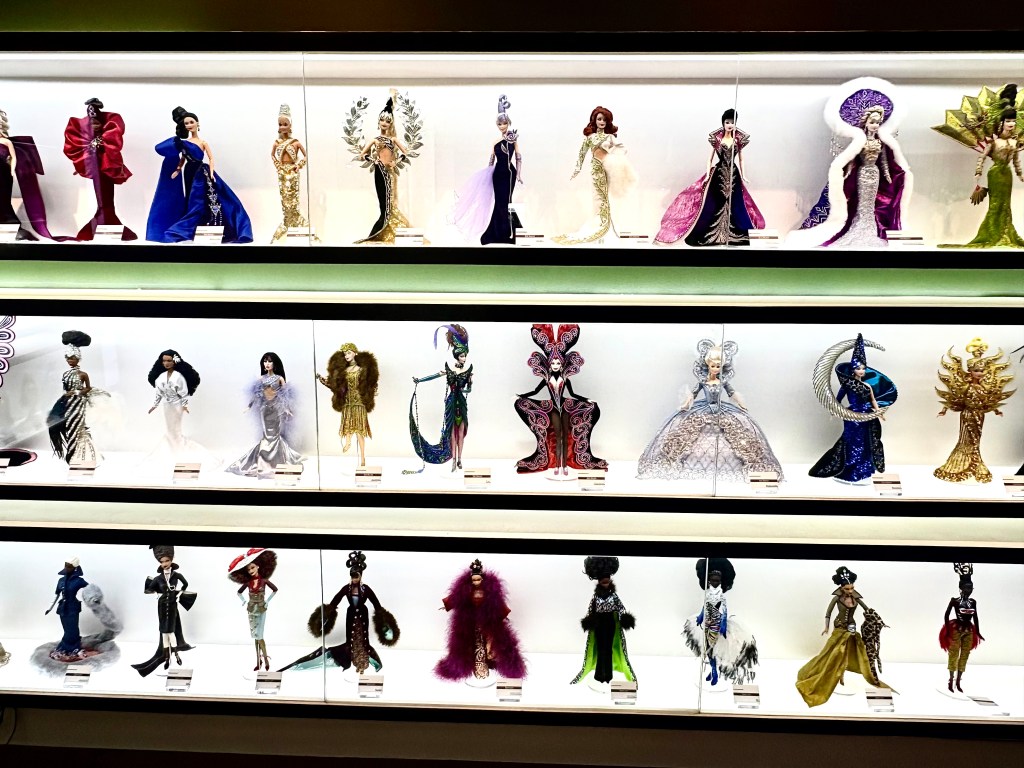
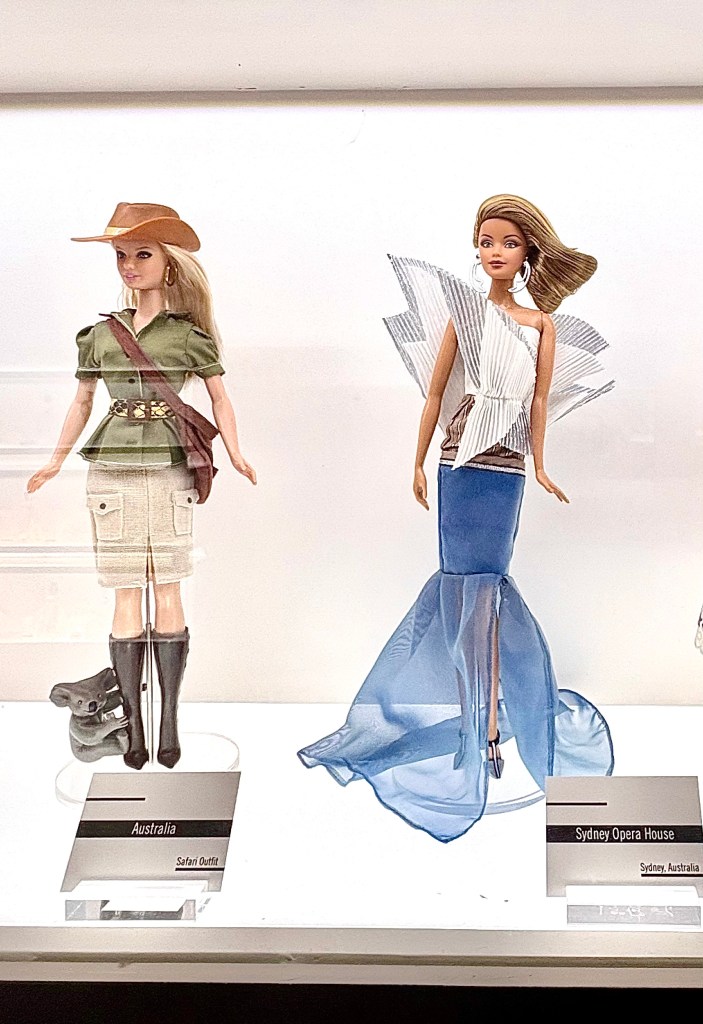
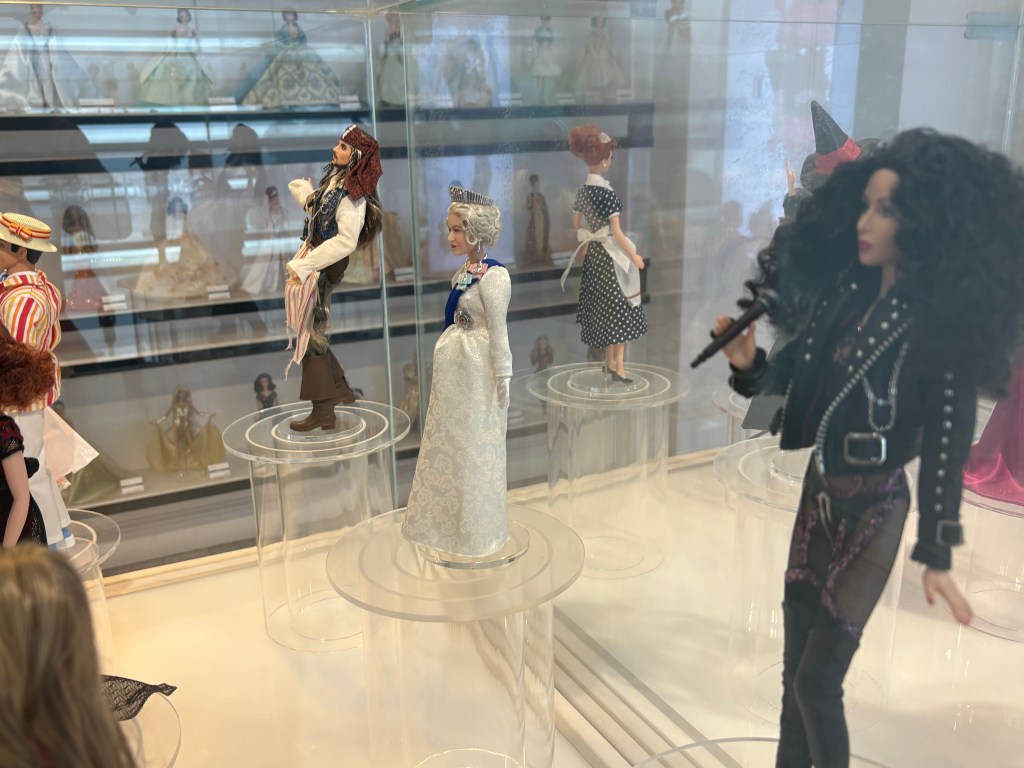
The Montreal Barbie Expo. More than 1000 Barbies duded up in a wide variety of ways. All countries of the world represented, including Australia Barbie and Sydney Opera House Barbie. Below, that’s the late Queen between the (‘Turn back Time’) Cher and (‘Pirates of the Caribbean’) Johnny Depp Barbies and just behind the Dick Van Dyke in Mary Poppins Barbie. Unmissable. A delight.
************
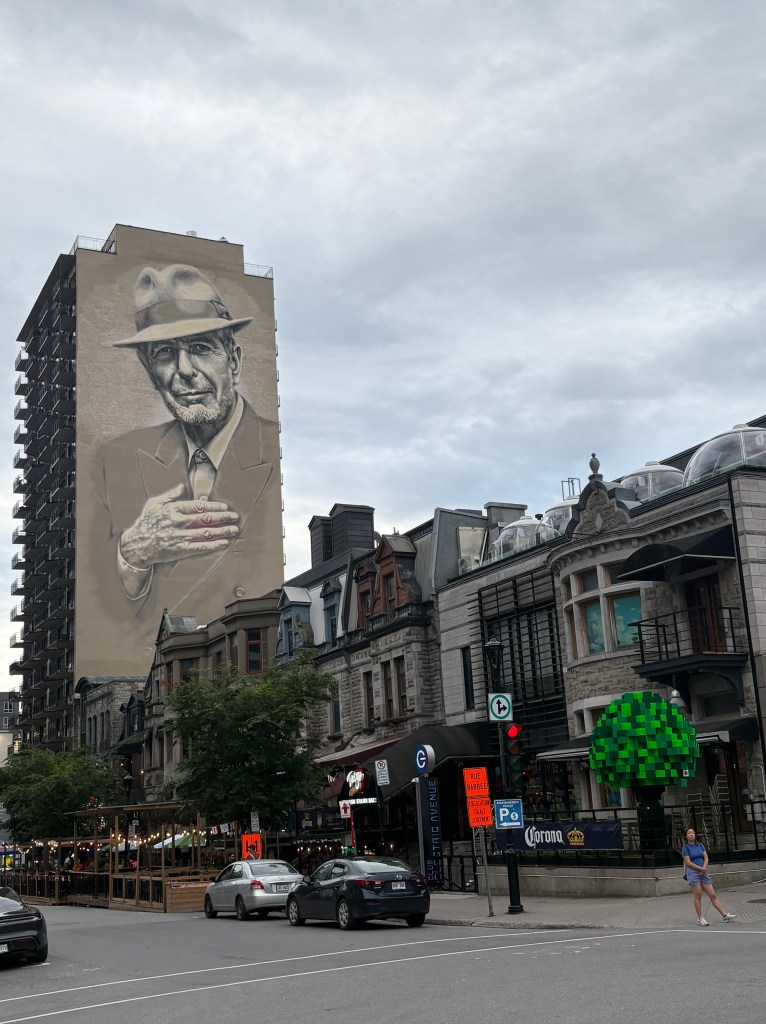
Home town hero. Montreal’s groovy section. It’s a Lego tree on the corner. Ate well at a Lebanese place called Omnivore just behind me.
************
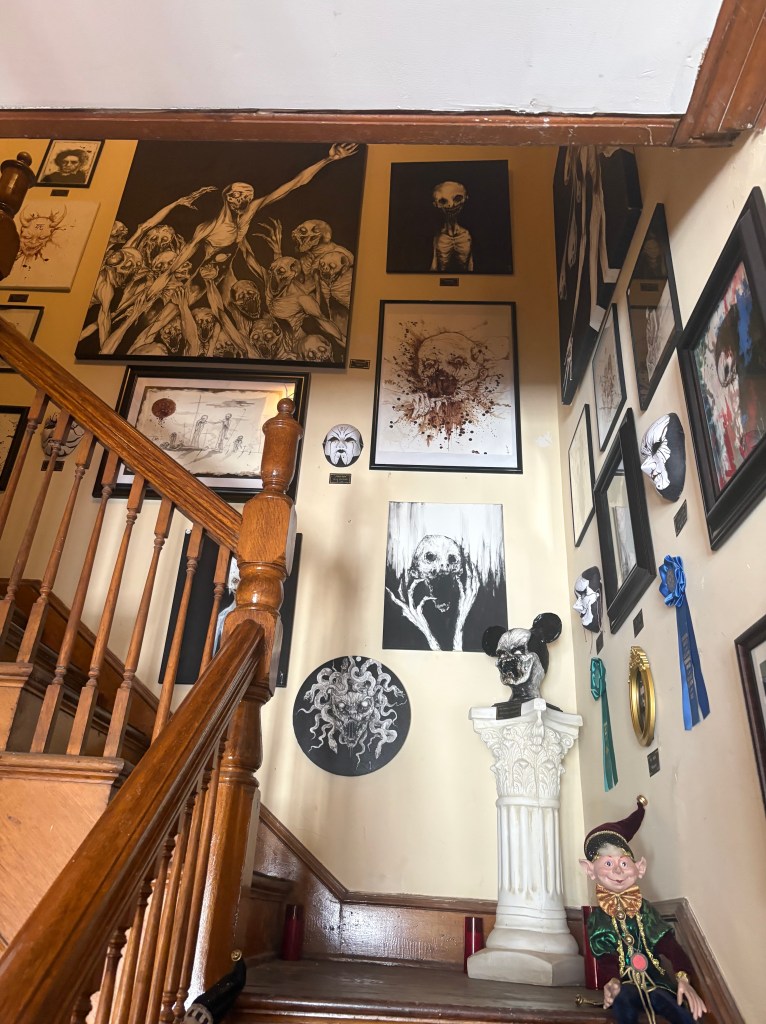
The staircase up to our very comfortable and well out-fitted AirBnB in Albany (NY State). The home of an artist.
************
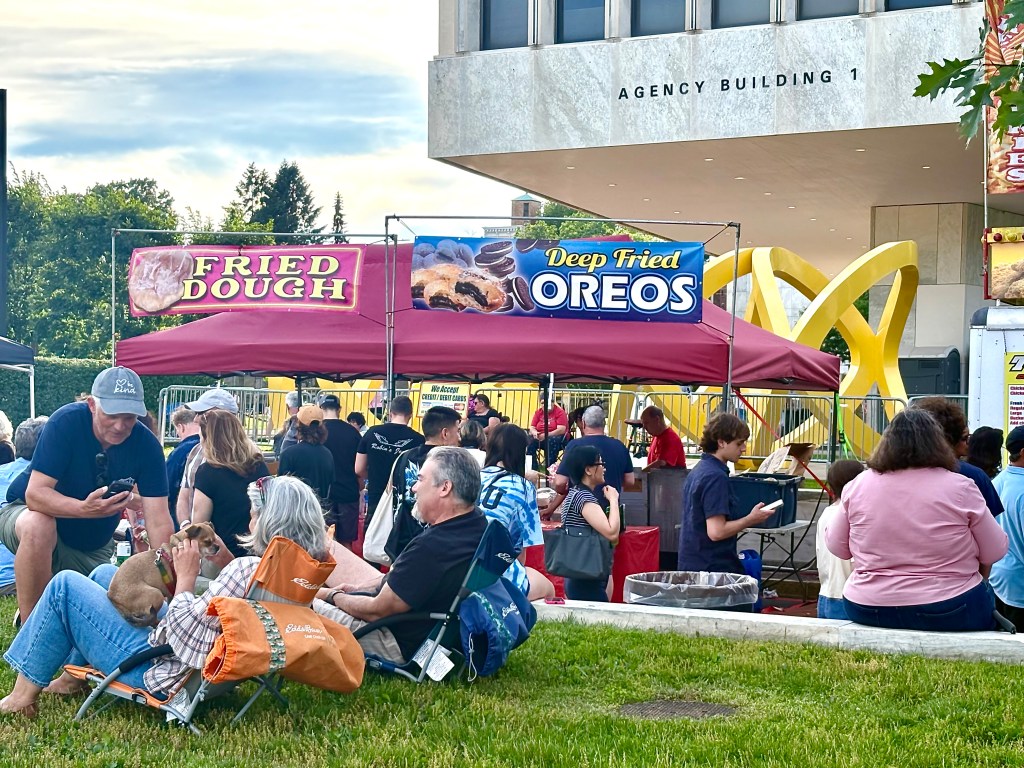
Food vans at a free outdoor concert in Albany. A version of Kansas playing if you’re old enough to remember, and you might well not be.
************
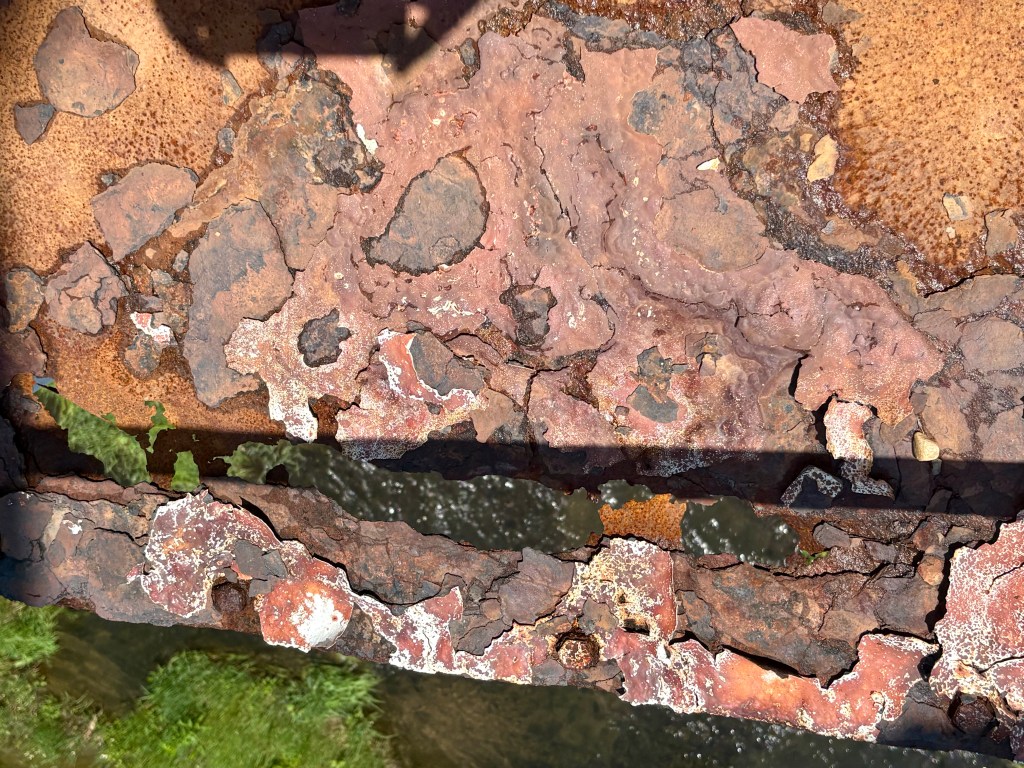
One of the two main steel members of the bridge over the Stuyvesant Falls just out of Kinderhook NY. Exquisite isn’t it, but you mightn’t want to drive your car over it, continuing my interest and concern about the bridges of the US of A.
************
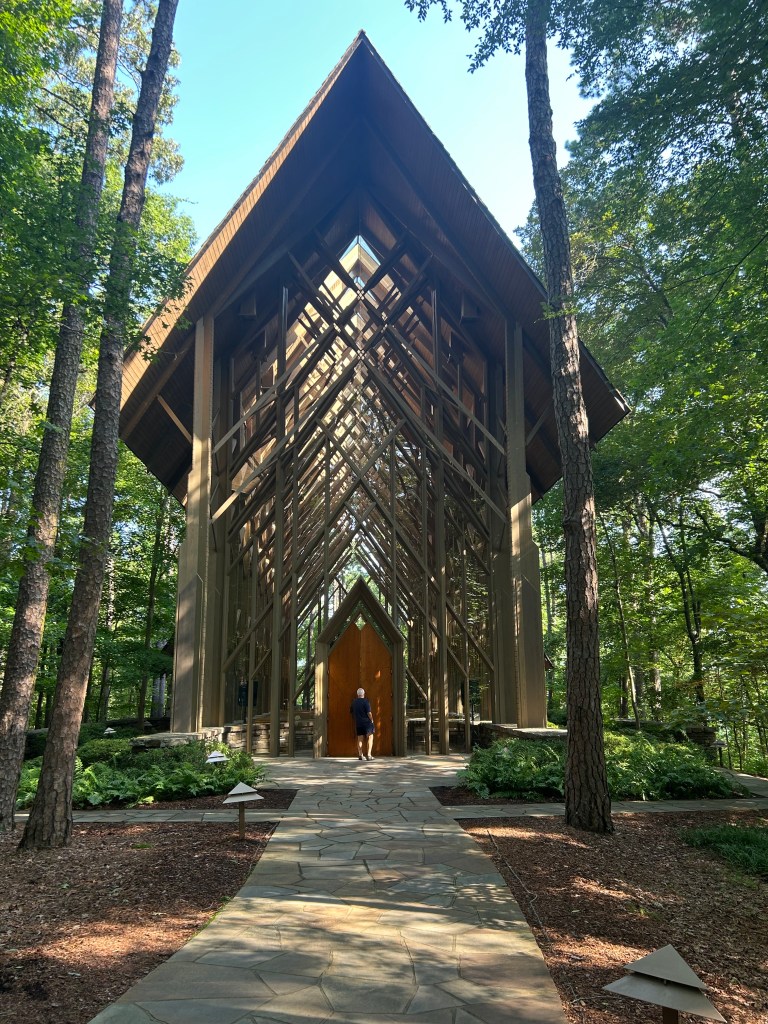
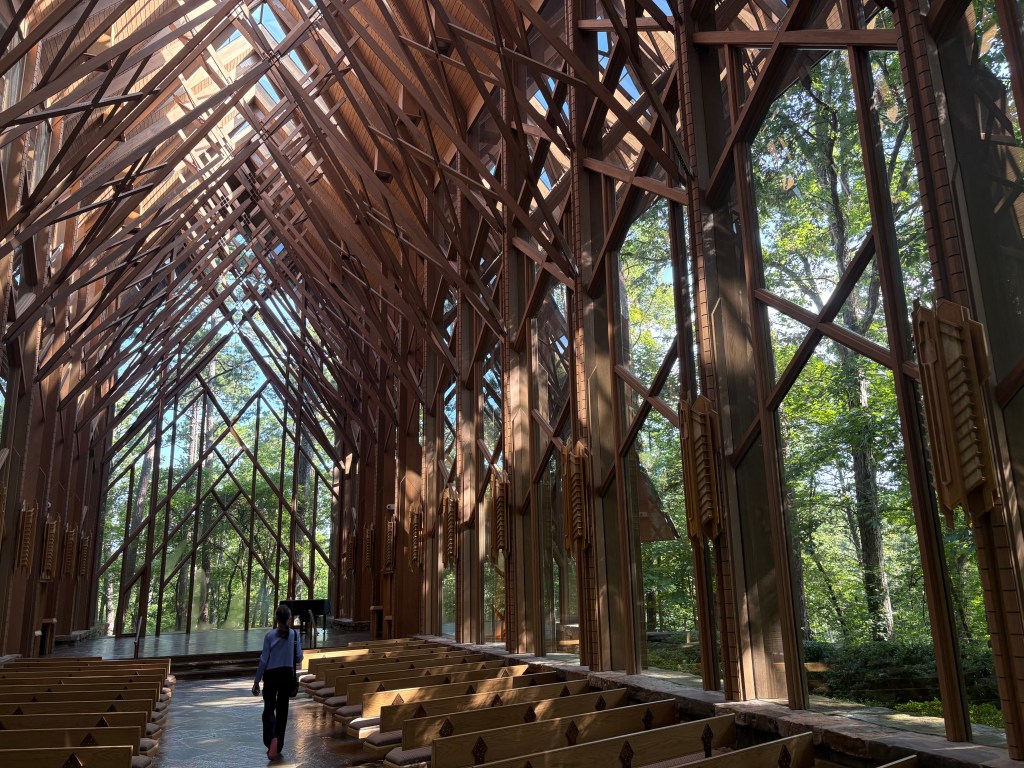
The Anthony Chapel in the Garvan Woodland Gardens just out of Hot Springs Arkansas. The walls and roof are clad in glass. It’s just there about 15 miles out of town. Mainly used for weddings I believe.
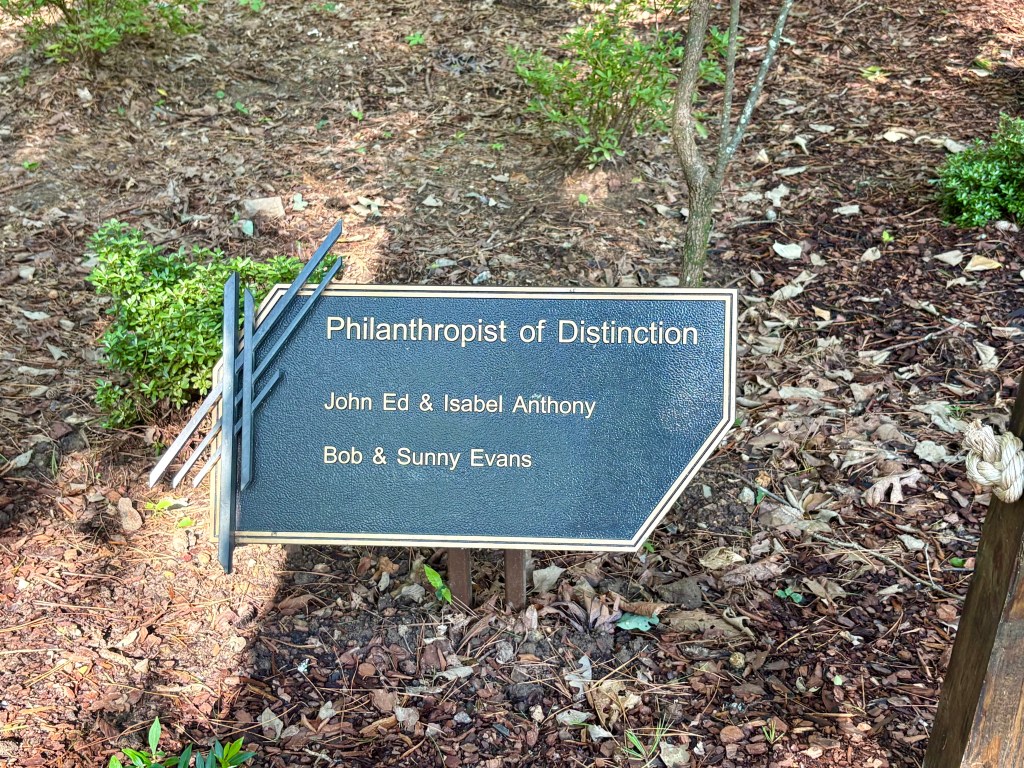
And this happens in America for this reason.
There were five other plaques with perhaps 200 names on them. Carefully graded, this one was top wozza as at least some people in NZ say.
************
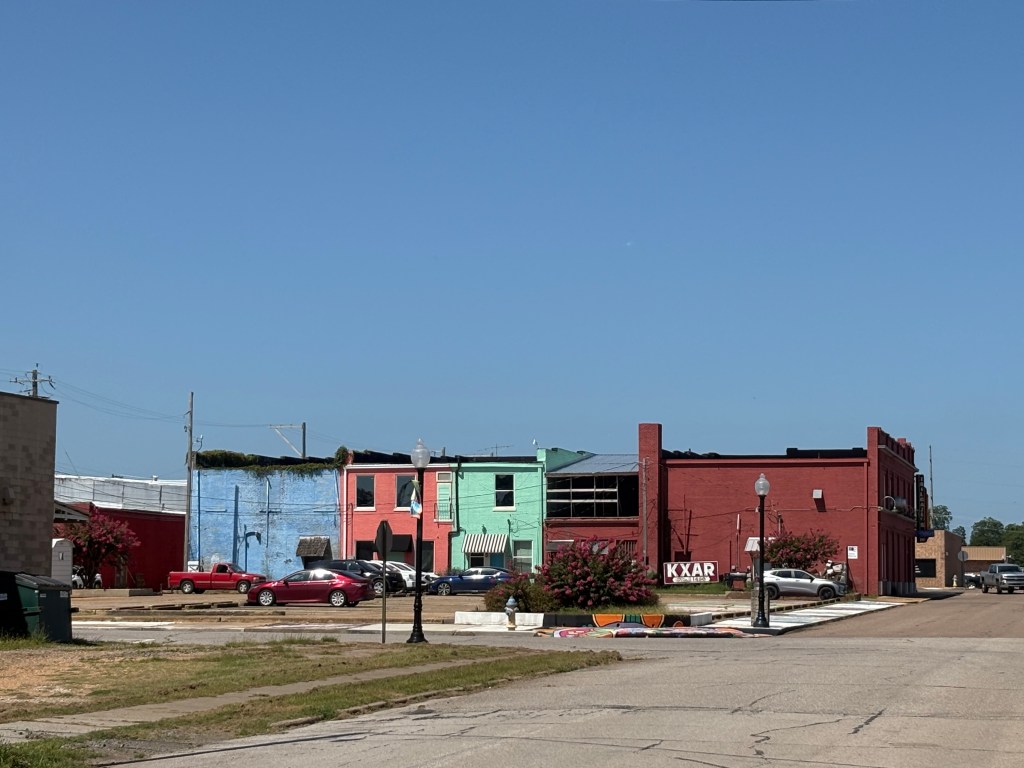
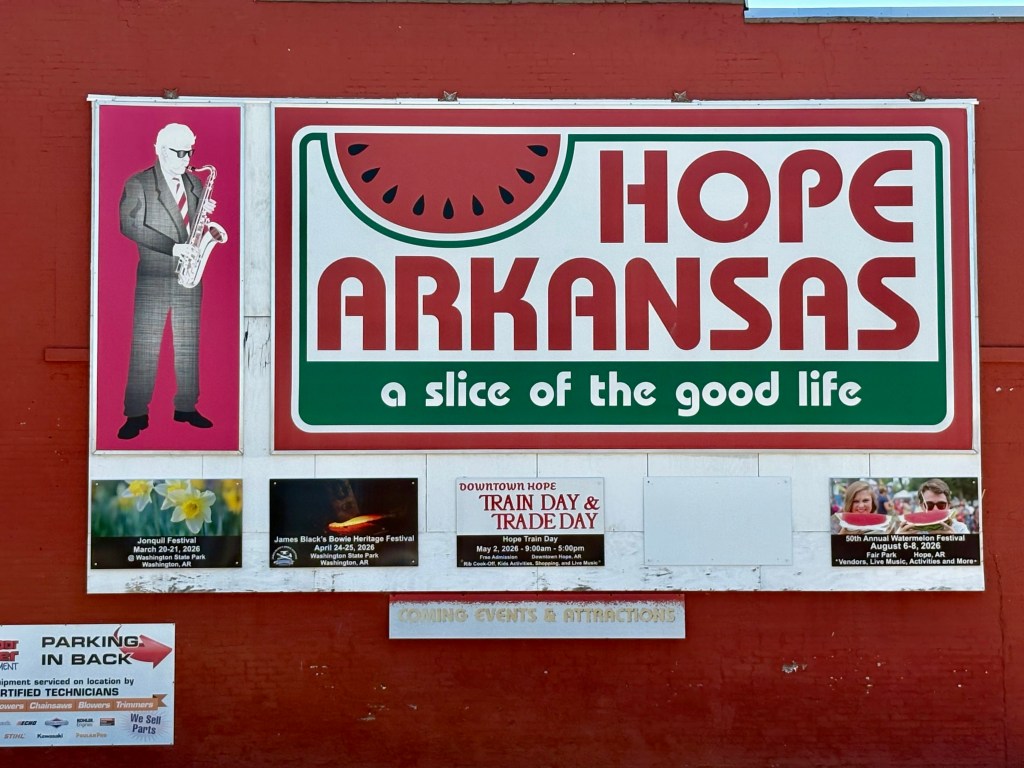
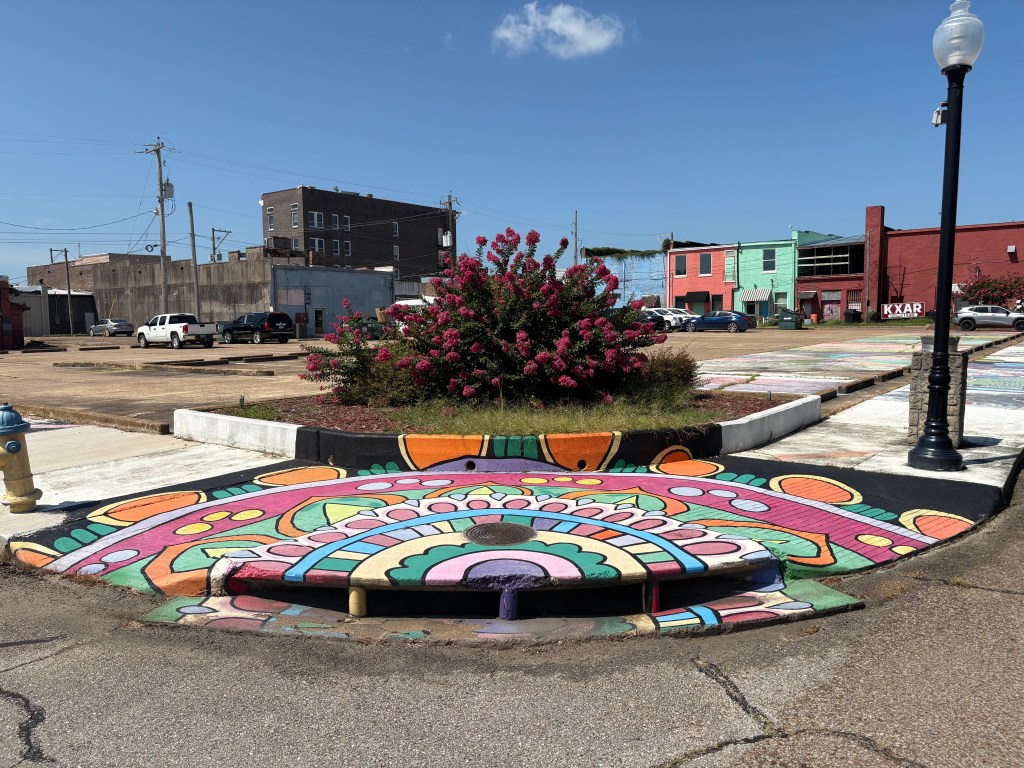
You’re unlikely to go to Hope Arkansas so this is for you. Bill Clinton was born and spent his childhood with his grandparents in Hot Springs after his father left and while his mother re-trained as a nurse. But how useful is it to be able to say The Man from Hope! He spent his teenage years here and there wouldn’t have been much doing I can tell you. BUT it does have this little footpath paint job framing one of the endless crepe myrtles, endless, so many crepe myrtles, so many different colours, endless, that we saw.
************
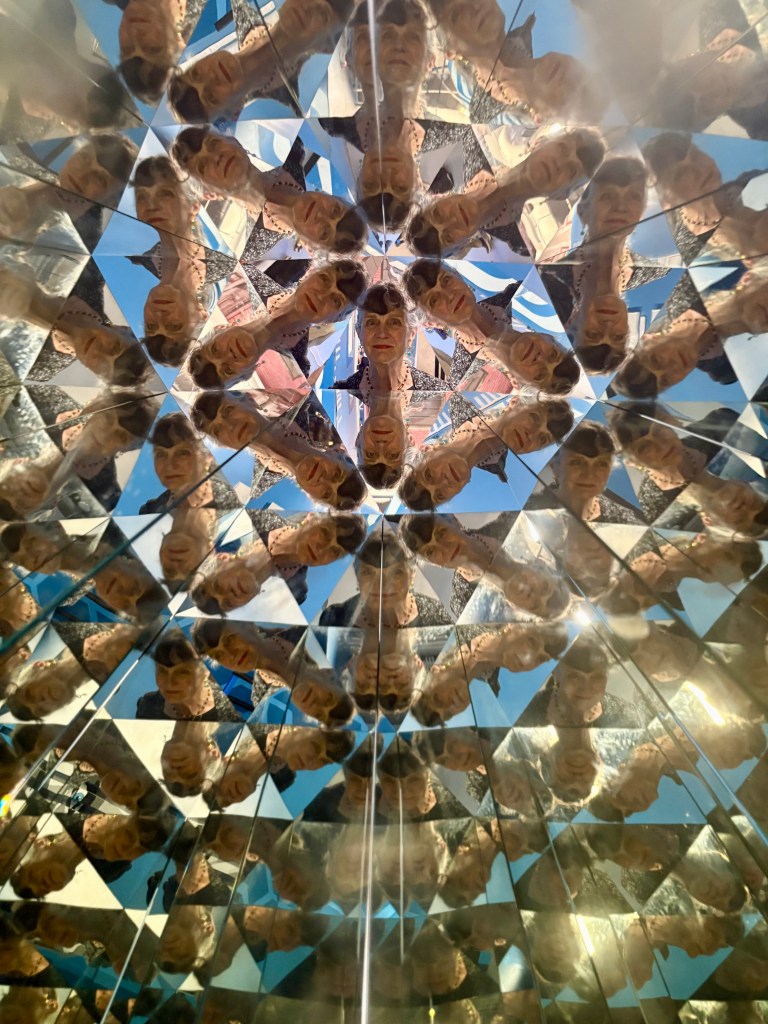
If you’ve taught Year 11 Psychology or been brought up on the ‘Children’s Book of Wonders’ Houston’s Museum of Illusions will not have much for you. In fact when so much else is on offer — and for free, the Menil collection is five minutes drive away — I’d recommend against. Fairly firmly. But we went. You wanted spectacles? Spectacle.
************
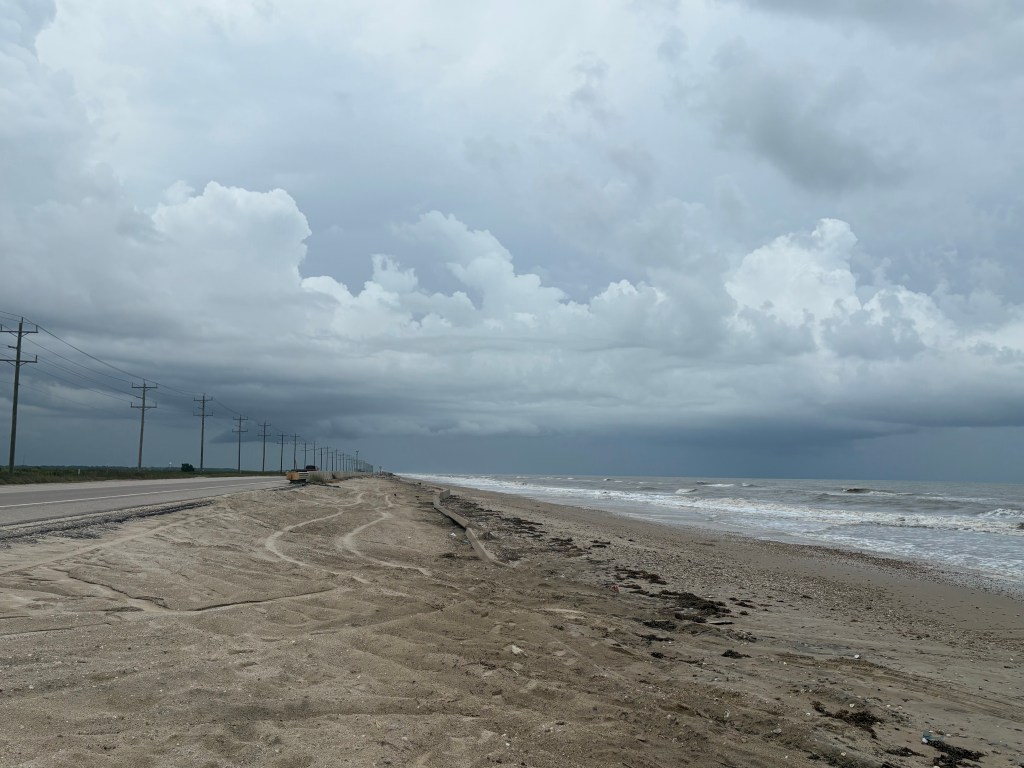
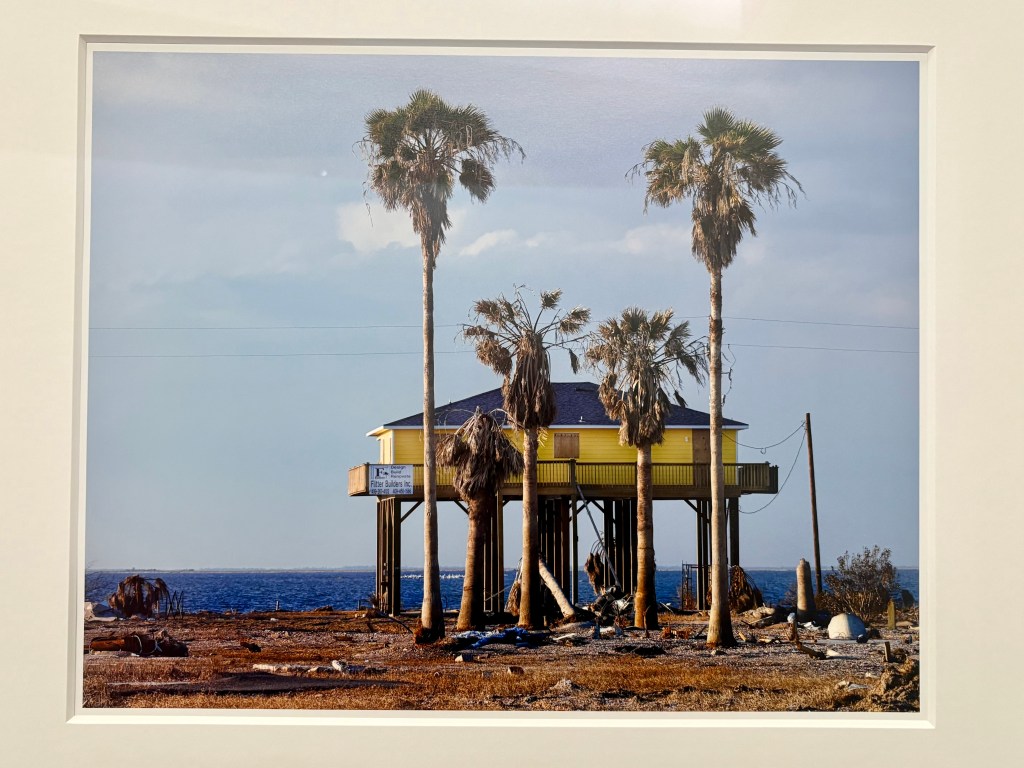
An amazing drive along the Bolivar Peninsular, 40 kilometres Gilchrist to Port Bolivar, with Galveston Bay on one side and the Caribbean, visible here, on the other. It might be 200m wide at some points and then suddenly you come across the houses on stilts, 16 feet to the floor by edict. The first one we saw had no visible means of access. Everything below the floor had washed away. Like the ‘sea wall’ here. And that was a phenomenal storm. I have never experienced rain like the rain in Texas.
This is actually a photo of a photo from the Houston Contemporary Art Gallery, but that’s what we saw.
************
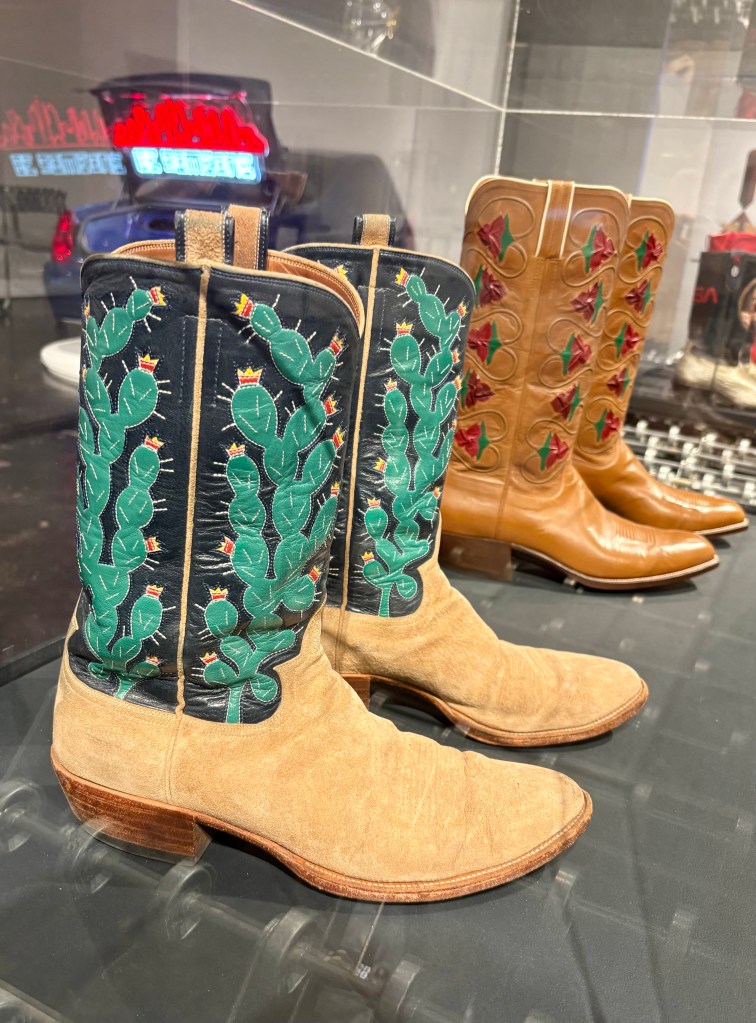
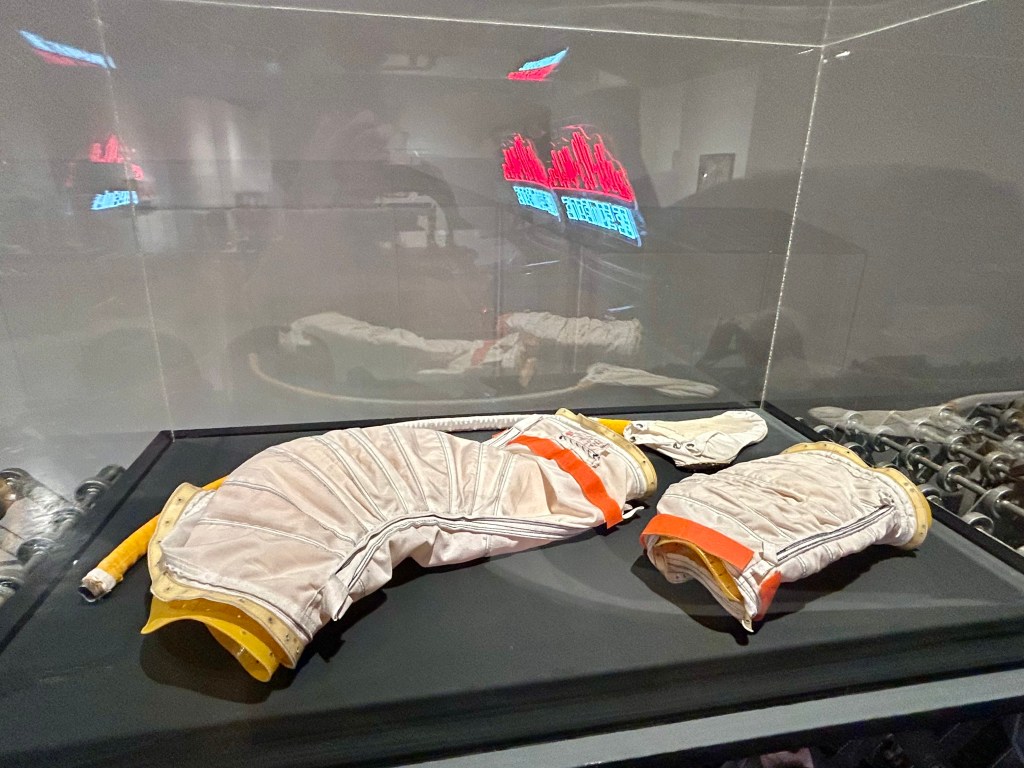
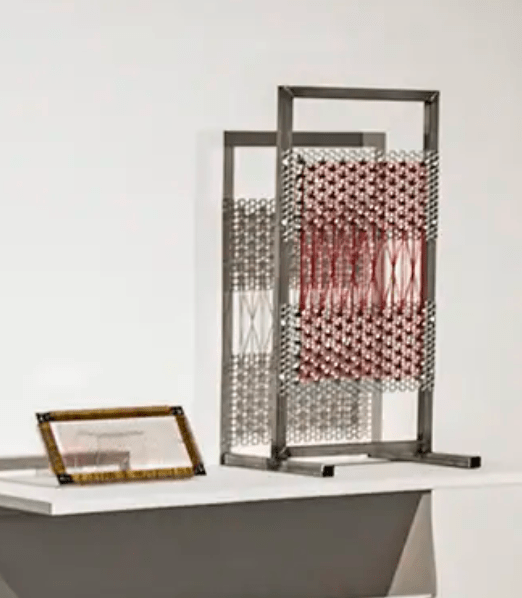
Two bits of an astronaut’s suit, sleeve and knee. They were in the Houston Craft Museum and they were there because they didn’t pop out of a box; they were hand made. They were next to some wire circuitry that had been hand woven (poor photo of amazing objects at right) and the cowboy boots with kangaroo skin uppers below were nearby.
************
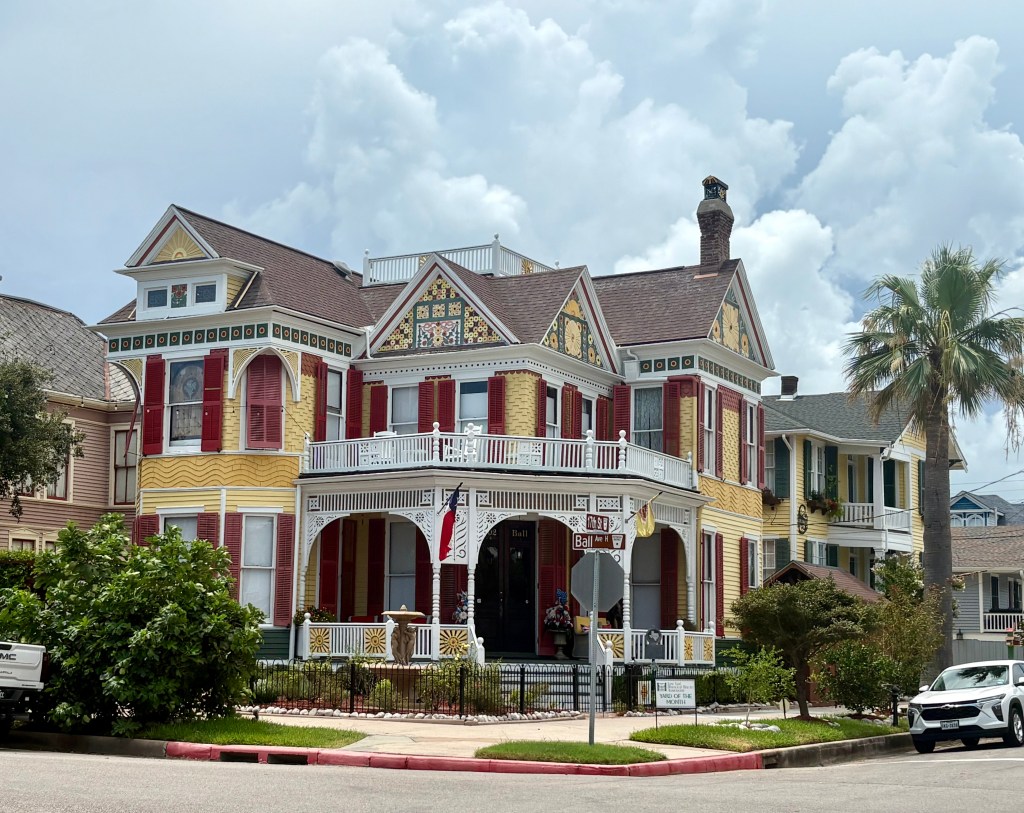
Glorious Galveston, cnr Ball and 17th, and thoroughly deserved winner of Yard of the Month award. This was a gorgeous house among several hundred others. There will be a separate blog about Galveston. Although the ‘sea waves crashing’ have some significance, it’s not just all about them.
************
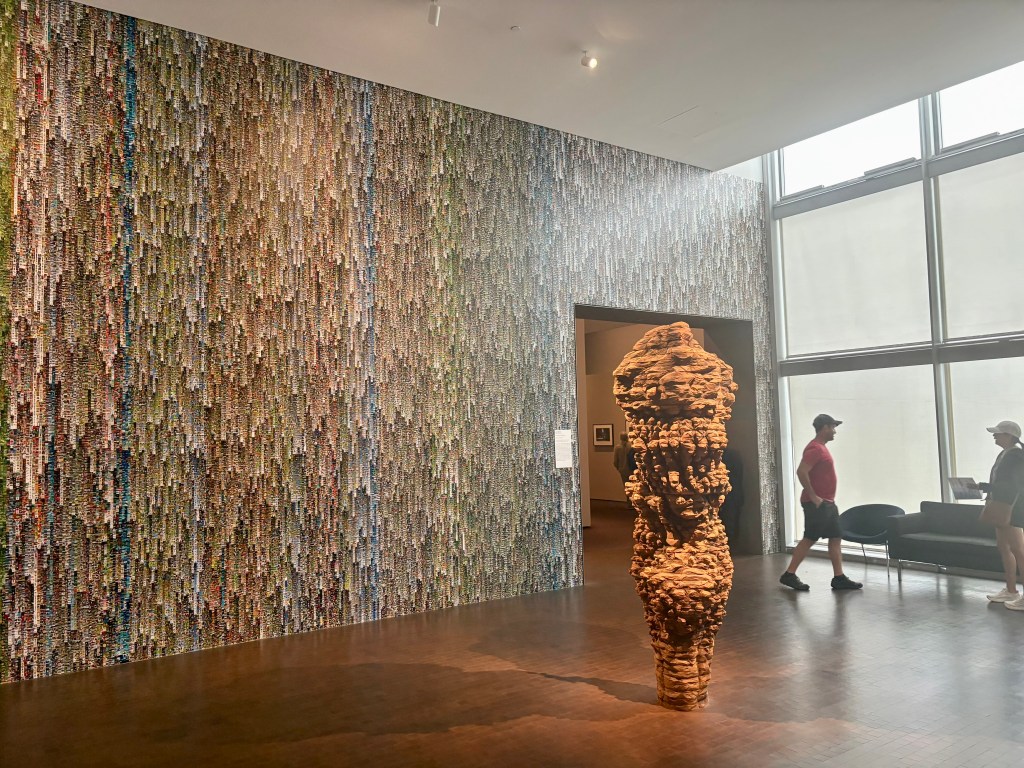
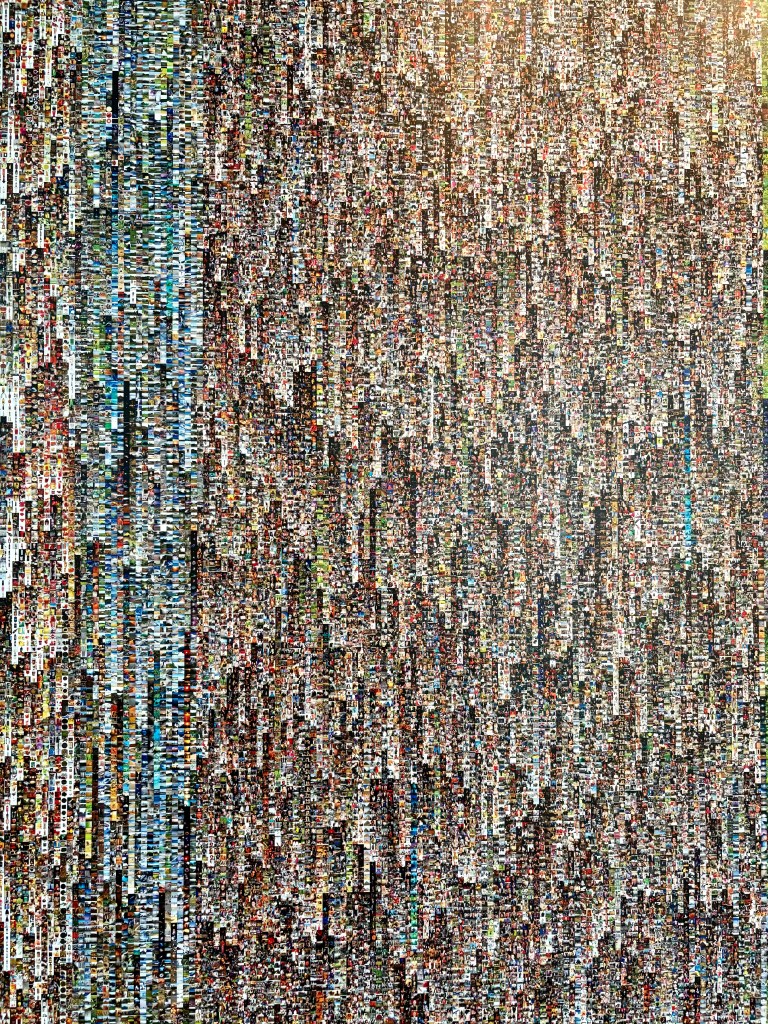
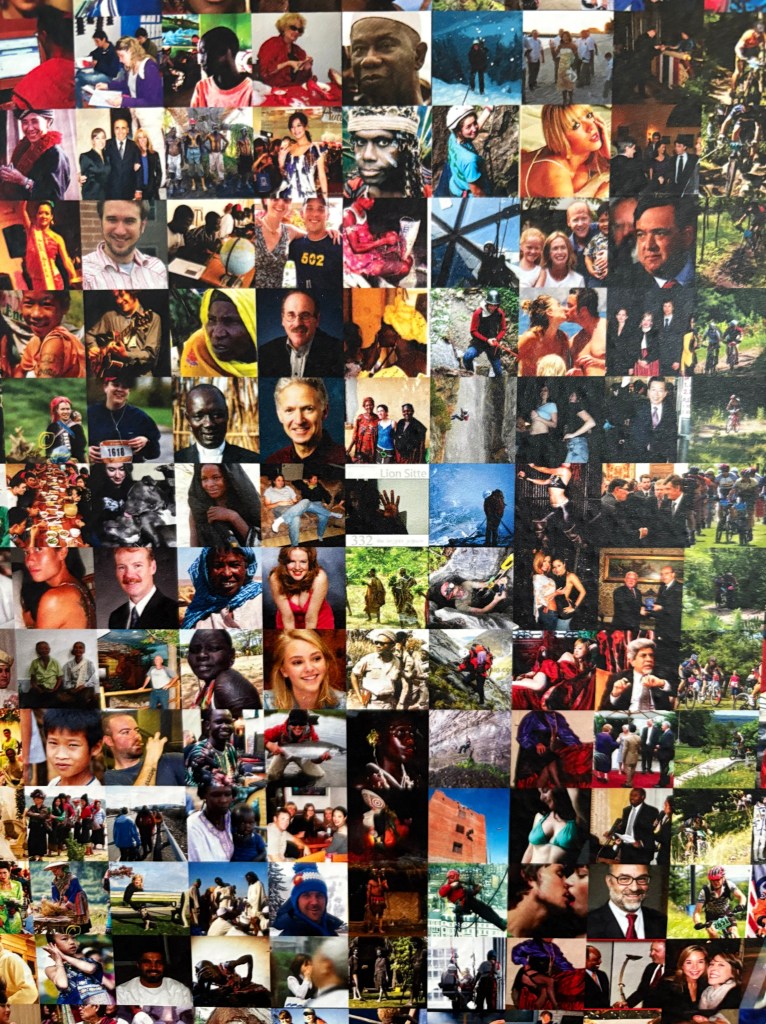
And finally in this wunderkammer something I thought might be appropriate.
Look again.
Okay. Once more.
Jason Salavon, American, born 1970
Little Infinity. 2020
Site specific wall paper. Museum commission funded by the Caroline Wiess Law Accessions Endowment Fund, 2020.141
Using software he designed, Jason Salavon, has pulled nearly a quarter million images from the ImageNet dataset, a picture collection used by researchers and corporations to train artificial intelligence systems. By sampling each of the datasets 20,000 categories and arranging those images from darkest to lightest in each category, Salavon suggests the flood of imagery that inundates our daily lives.
[Museum, of Fine Arts , Houston]
************
There’ll be a lot more because there was a lot more.
He’ll laugh. Technically a pretty disgusting photo, but pink eye and all it’s caught something. Swervyn Mervyn, the Bishop of Dubbo. Magician. Showman. All Star. Champion.
Among these hundreds, Australia has one contribution. And it is this.
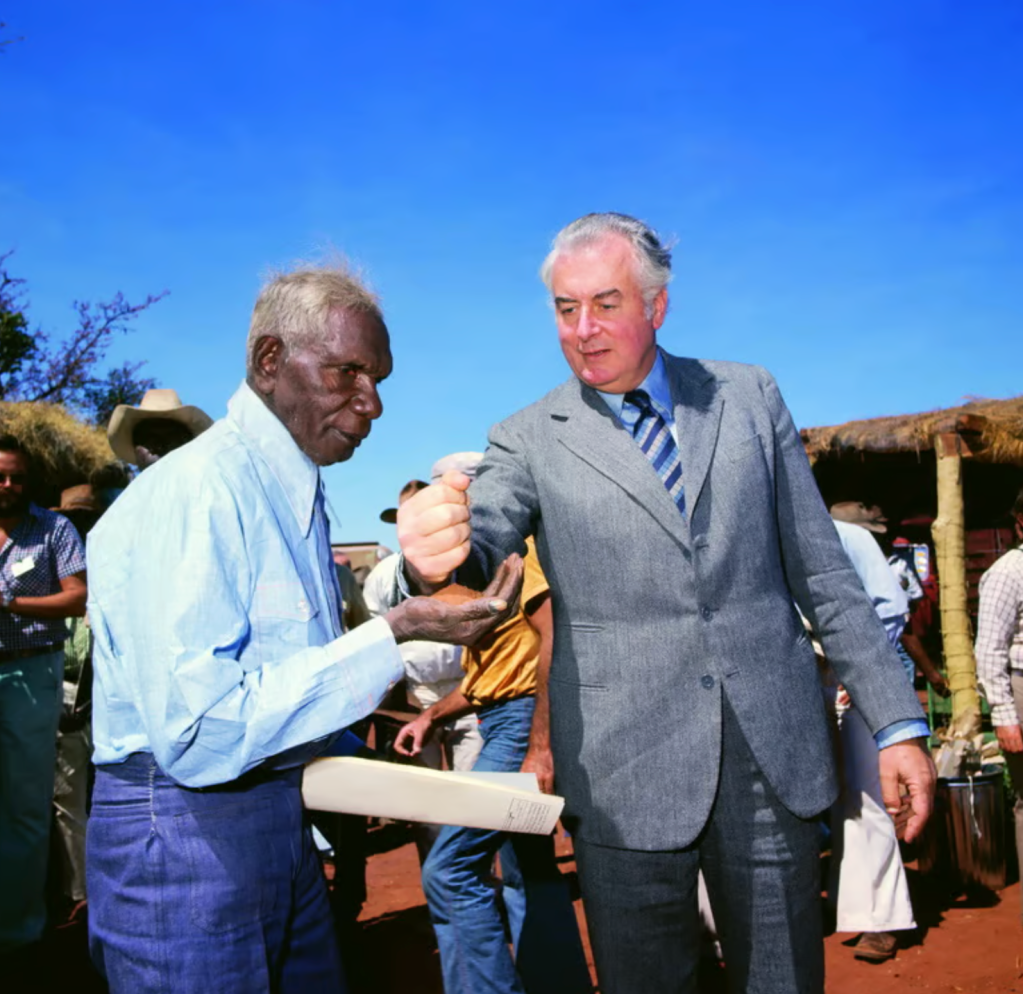
Merv had been manning the Dept of Aboriginal Affairs’ stand at Brisbane’s Ekka (Agricultural show) when he got a call because something big might be taking place at Wattie Creek. In Mt Isa while the plane was refuelling he happened on Keith Barlow, another photographer mate working at the time for the Australian Women’s Weekly. Barlow and his journalist colleague Kay Keavney became intrigued by this adventure of Merv’s and decided to tag along. Merv would have been hazy about what was happening as well as a bit excited. Eyelids batting up and down, huge grin that might turn into a grimace, sucking his teeth: what’s he doing? you’d think. What’s he up to? It’s not every day you go to Wattie Creek, not for any reason — it’s a bit out of the way, in the desert, about 550 kms south of Darwin — but, you know, could be promising. Could be anything. At least I’ll see what the bugger’s up to.
Whitlam’s government had negotiated the return of a portion of Gurindji land in the form of a pastoral lease — not a big deal in the scheme of things, but the beginning of something much more consequential. 16 August 1975 was nominated as the ceremonial handover. The speeches were made under a shelter constructed from tree boughs and canvas. It’s there in the background.
Gough said, inter alia: ‘I want to give you back formally, in Aboriginal and Australian law, ownership of this land of your fathers. And I put into your hand this piece of the earth itself as a sign that we restore them to you and your children forever’, and strained some of that very red desert sand from his hand into Vincent Lingiari’s.
This is a sliver of Vincent’s reply, translated from the Gurindji, and worth recording not least for its remarkable generosity of spirit. ‘We want to live in a better way together, Aboriginal and White men, let us not fight over anything. Let’s be mates.‘
This was all happening under the shade of the lean-to, hopeless for a photo. All shade, no definition … you wouldn’t even see the sand. ‘Mervyn said he looked at Barlow and they both grimaced.’ Merv to Whitlam — nothing should stand in the way of a good pic — ‘Mr Whitlam would you mind if we do this picture again outside in the sunshine?’ That’s Merv. When it comes to business, all business. He lowers his voice, and his chin, when he gets to this point in the story, and does his Whitlam. ‘Certainly Mervyn.’ Barlow held the other photographers off taking his turn only after Merv had finished. ‘I crouched low to include a good portion of sky. … I imagined using it on the cover of a magazine. I wanted to leave room for a masthead, National Geographic or Life or whatever.’
I’ve heard this story many times but I’m thieving here from The Book, and its author Tim Dobbyn notes that there were at least four other photographers there that day. They got the pic too, or versions of it; but, Tim says, they didn’t get the sky. Have another look. How important is that sky. And the dominance of the two figures in what would have been a helter-skelter scene with all sorts of things going on. The little cone of sand is in Vincent’s hand. Merv did get the picture. History was made.
But not for more than a decade, and it nearly didn’t happen. Read the book (pp. 104-105) and discover the role that Paul Kelly and Kev Carmody played in its re-discovery and how from little things big things can grow.
• • • • • • • • •
That’s not his best pic. There are others. The book says more than 50,000.
This is one of his favourites.
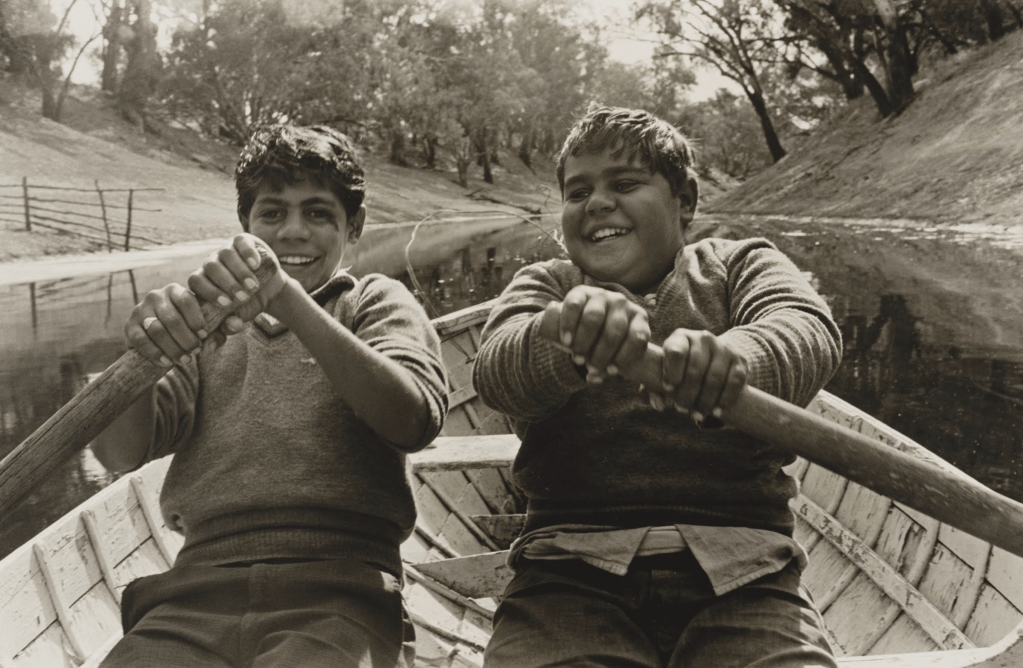
Cousins, Ralph and Jim. Brewarrina. 1966. Two lads skiving off from school rowing down the Barwon near Gundawera Station. The joy of life. (Where’s the photographer? Yes of course, in the boat too. You forgot that didn’t you.)
• • • • • • • • •
On an appallingly hot day I flew to Sydney from the Sunshine Coast to attend the book’s launch. I did feel I needed to be there. Because of the heat and the excitement of seeing friends I hadn’t seen for a long time it was a slightly out-of-body experience. I’m not sure the book shop staff managing the occasion did it justice: too sweaty, too rushed, too keen to get home, insufficiently respectful to what I think is a great work.
Another one in Canberra followed, then Melbourne. By Melbourne the 80 year-old maestro was a bit puffed and in his absence I was invited to add just a little colour and movement to the event. What follows is something like I said.
• • • • • • • • •
I am David McRae and I have a bit part in this book. Merv and I spent eight months on a project wandering around Australia together and became fast friends.
We are surrounded here [the Avenue Bookstore in Elsternwick] by thousands of books, perhaps tens of thousands. I want to give you three reasons why this particular book is unique among them. Not a bit unique, or possibly unique or unique on Thursdays. ‘Unique’ as per the Oxford Standard Dictionary definition. One of a kind. Out on its own. Exceptional.
The first reason is that it contains 74 photographs. 18 of them are of Merv. He’d like that. He’s always been a handsome boy with a wicked glint in his eye. 8 others provide complementary context and illustrate just how assiduous Tim has been in the preparation of the book.
And 48 of them have been taken by Mervyn George Bishop. I note here incidentally that only one is of Gough Whitlam and Vince Lingiari.
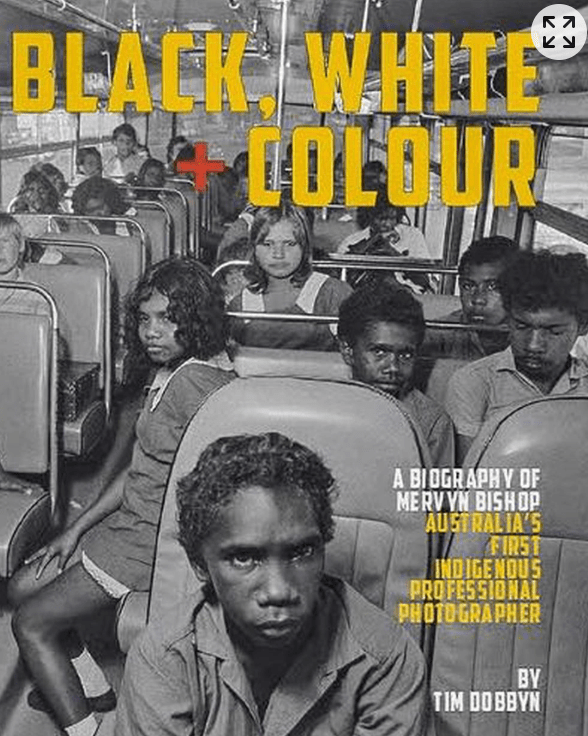
Merv is not a good photographer; he is a great photographer. Technically he is hugely proficient. But his great photos, and there is one on the book’s cover, are as good as anyone’s. And I do mean anyone’s. Very seriously, he is properly in a list with Annie Leibovitz, Steve McCurry, Dorothea Lange, Ansel Adams, et al. It is a lovely irony that his photo of Cecil Beaton is included in the book.
Why are they so good? Partly because he takes so many. He’s got a lot to pick from. You and I breathe: Merv takes photos. And has done since he was 12. His camera is an extension of his arm. Curating his archive would be, and has been, the work of the world.
But he’s also got what we have to call an ‘eye’. Famously he asked Gough and Vince to repeat the sand pouring moving them outdoors so the picture could be at its absolute best. He composes his pics as naturally as his son dances and his daughter smiles. It’s just there. Innate.
And tellingly, he has had access to places and contexts that very few other people have. It is possible that Merv has been to more of Australia than anyone else ever. I’m thinking here of the requirements of his work for the Dept of Aboriginal Affairs, an unsurpassed record of Black Australia at a particular point in time (which he would say was an opportunity not sufficiently exploited). And then the later work for various purposes of which the Burnt Bridge photos in the book are indelible examples.
48 Mervyn Bishops. A tiny slice of his output, … but what a slice.
[You can if you wish CLICK HERE to take you to a discussion generated by thinking about what makes a photo great.]
The second reason. This is a book about a great artist by someone who is not only also a very fine artist but a lifetime close friend of the great artist. This never happens. You can be a friend, or you can be a biographer, but simply from circumstance never both. It just doesn’t happen. Biographers can be sympathetic or insightful but they are never friends. (The only other possible case I can think of is Best Minds by Jonathan Rosen, another fine book as it happens, in which the friend ends up as a psychotic killer. This is not the case here.)
Read the first chapter, which is something of a masterpiece: two friends on a knockabout adventure wandering round the western plains of New South Wales. Merv’s making his jokes and cackling at his own great humour. But nonetheless he makes sure they visit Fred Hollows’ grave in Bourke. There’ll be a day’s itinerary but Merv will decide that he wants to go and see something that he might or might not remember and ends up doing an ironic little shake-a-leg dance clanging two rail spikes together before heading off to a Bowlo for the night’s tucker and a beer, saying gday to everyone but probably knowing half of the assembled throng, them or their ‘lations.
Only a friend could get Merv so right, and, far more pertinently, only a very good friend would have permission to get Merv so right. Because Merv is a big dag. And of course, the book leaps into life as a result. So honestly correct, so fair dinkum. We are reminded that this great photographer is also a human being, an incredibly interesting and likable human being, who has nonetheless ridden some rough roads.
But such a capable pair this writer and this photographer.
The book is meticulously researched. Some would say perhaps over-researched. Via its preparation I discovered that something I had always believed to be true — the product of our work together had won an international prize — was fiction. Almost certainly over-researched in some regards.
But it is also written with the ease and precision that only a lifetime in journalism can generate. It is such an easy read. So detailed, so smooth. As a fellow writer I can also say, and such a shitload of work.
That’s two reasons. They may have been obvious. There is a third that might be less so.
It is a book about Black Australia that you never read.
Not Alexis Wright, not Tyson Yunkaporta, not Melissa Lucashenko. And certainly not Bruce Pascoe. No dizzying cosmology, no complex moiety patterns, no tjukurrpa — something different, can I say again — unique. This is a book embedded in a Black Australia that doesn’t have a literature.
The last census told us that just under one million Australians identify as Indigenous. Quite a lot. What do we know about that million?
Here are a few things. Some are eminent and well known. Some, maybe five percent, are wealthy and live very much like other wealthy Australians.
About 15 percent live in remote Australia, about half of those living in very remote communities. This is the location of The Gap that never closes and, while they live there, this is likely to remain the case.
But that leaves 80 percent. And that’s where this book is located.
The 80 percent. They live in Australian towns and cities. If you follow the Newell Highway from Echuca through to Brisbane, you’ll pass somewhere near the homes of a couple of hundred thousand blackfellas. Throw in Rocky, Bundaberg, Townsville, Cairns and Perth and there’ll be a lot more.
These are people with jobs, families who send their kids to school in uniforms, who shop at the supermarket, who have footy teams they barrack for, who enjoy a barbecue, and pavlova and French cakes, who might be ambitious or relaxed, whose lives go up and down a bit like everyone else’s.
But there is more. There’s always more. And when you read the book you will understand that there is more.
Some things perhaps you might expect, but there are others that will almost definitely surprise you. You might jump a bit at the challenge to some of the stereotypes of your settled thinking, and be reminded of the complexity of the elements from which our lives are constructed. You might also think about the warp and weft of culture, in plural form, the magic of its assembly and the extraordinary variety of its products.
Case in point: Mervyn Bishop. Living in Oatley, almost but not quite in ‘The Shire’, home of Scott Morrison and his ilk. Happy family. Suburban, maybe a bit Uptown, a bit Flash Blak. Asked in his job interview for the DAA if he knew any Aboriginal people.
On the other hand, First Aboriginal This First Aboriginal That. Blah blah blah. Somehow it is never not a question.
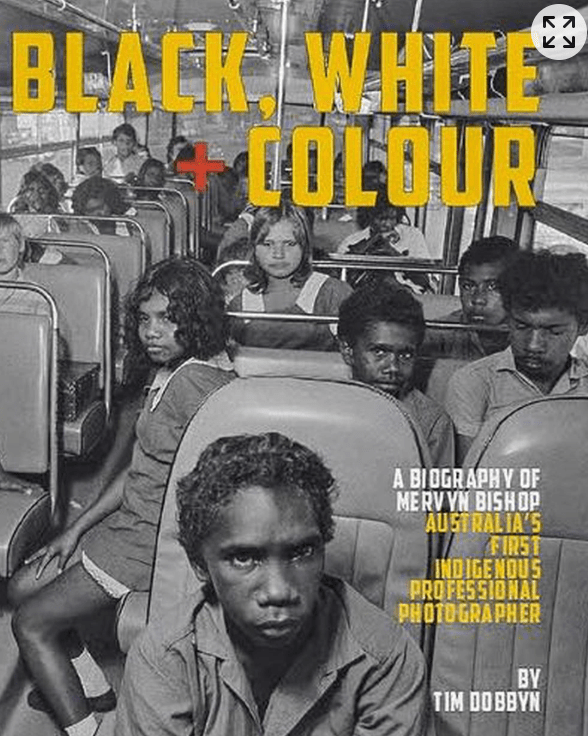
And that’s the third thing that makes this book unique. It’s not called Black, White and Colour for nothing.
[You can if you wish CLICK HERE to take you to some further thoughts about cultural construction.]
I think in accord with his wishes, I would say that Merv’s not a great Aboriginal photographer. He’s just a great photographer. And what’s he like? Like no one so much as Mervyn George Bishop, and what an interesting person!
And great work Tim to have rendered all this with such care, thought and skill.
I’ve missed Christmas, but BUY THE BOOK. [That’s a live link. You can go straight there.] Tell others about it.
Now phones have cameras in them — and what a good idea that was — I’ll say 18 million great photos are taken everyday. Yeah. Let me check … yes. Correct. Eighteen million. We don’t see them all; and we don’t all take them either.
But then there are the truly towering ones. What makes them so truly good, so truly towering?
What does AI say? ‘There is no single “greatest” photo, as the assessment is subjective and depends on criteria such as emotional impact, historical significance, or technical innovation. Several photographs are widely considered the most famous or influential images of all time. Different sources and experts highlight various photos as significant for their powerful imagery and lasting impact on the world.’ And a number of these are listed including: Earthrise by William Anders, Raising the Flag on Iwo Jima by Joe Rosenthal, The Terror of War (‘Napalm Girl‘) by Nick Út, (Click here to see them with discussion.)Afghan Girl by Steve McCurry, and Tank Man by Geoff Widener. (See below.)
But after stewing about it — prompted by Tim Dobbyn’s book about my friend Merv Bishop and reviewing some of Merv’s pics as well as other people’s — I think that you probably can define certain photographs as ‘great’.
So here are five ideas why some photographs might be greater than others. They are illustrated with what might now seem to be somewhat old-fashioned examples, ones from an earlier life when my father in a gesture of prodigious and completely uncharacteristic prodigality subscribed to Life. But I think they stand up.
The quality of the reproductions here is inferior. I apologise. And of course several of these features might be found in the same photo.
• • • • • • • • • •
They may be particularly eventful or dramatic.
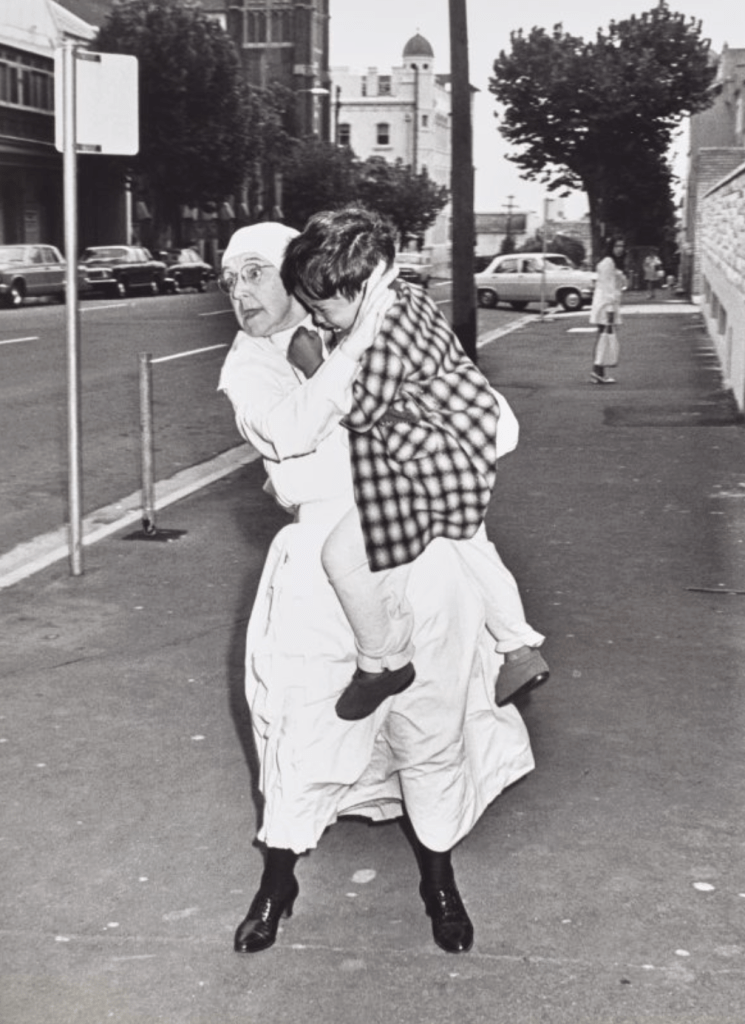
Life and death dash, 1971: Mervyn Bishop
This photo has a special place in Merv’s heart. It won the News Photo of the Year in 1971 and helped to establish his profile as a photographer of note. Everything is right about it. The expression on the nun’s face sets the tenor, but you have the kids’ distress, the turning girl and even down to where the nun’s (very shiny) shoes have toed the line. Merv likes to say, correctly, that the kid in the nun’s arms is now an ear, nose and throat specialist.
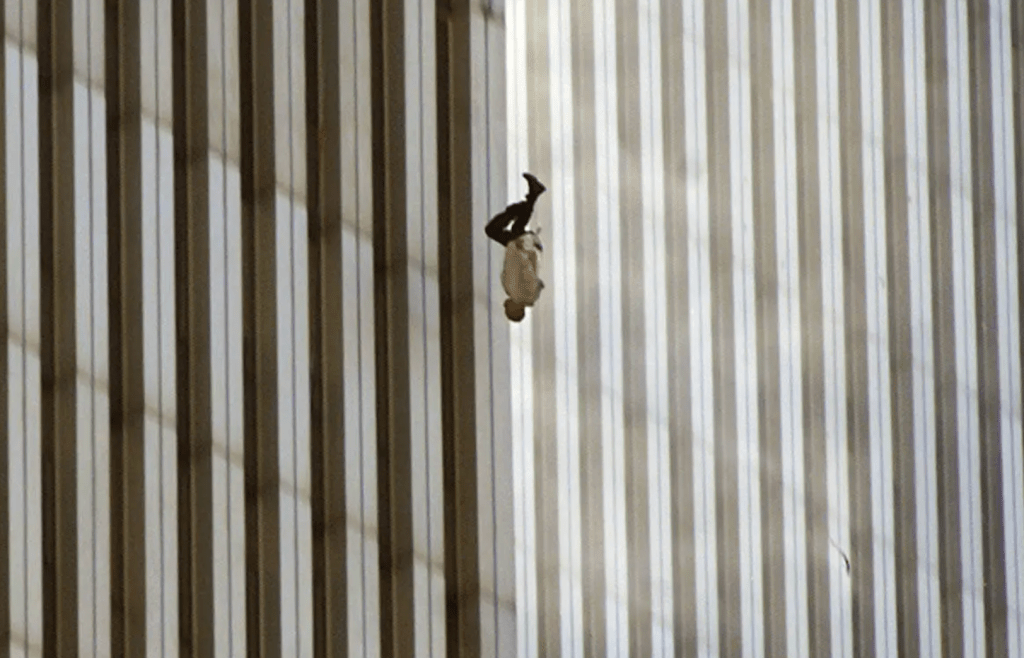
Falling Man, 2001: Richard Drew
World Trade Centre, 11th of September, 2001. It is estimated that around 200 people jumped or fell to their deaths during this tragedy. There are difficult protocols about photos like this, and there was a big fuss when it was published (consequently increasing its renown). In this frozen (but seemingly so relaxed) and highly artificial moment it has a mesmerising quality.
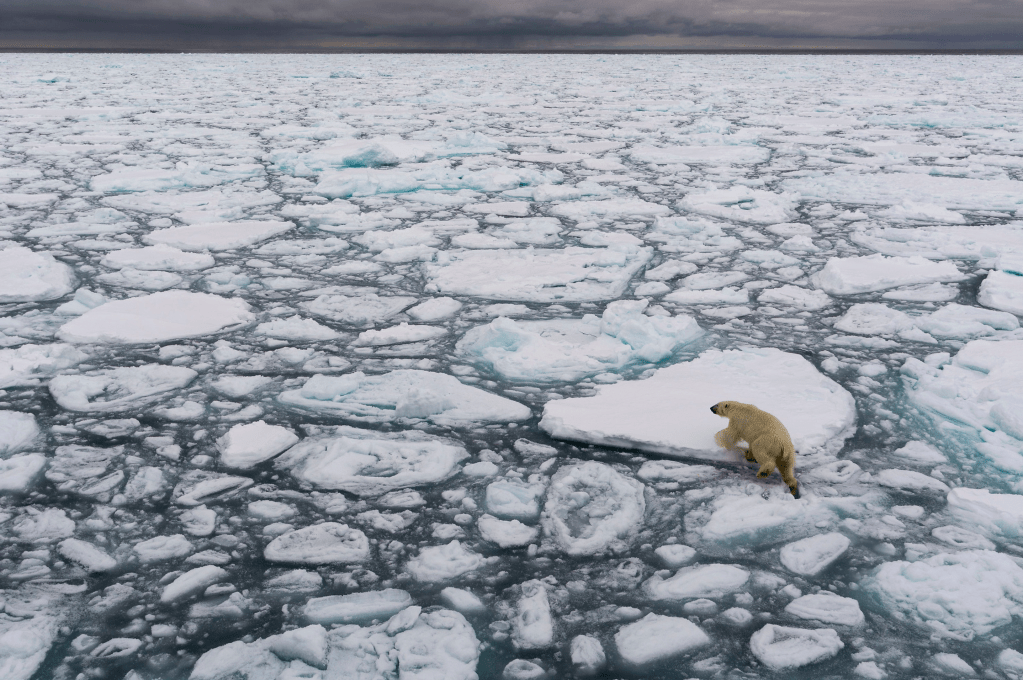
Climate change, 2018: Sergio Pitamitz
We assume the bear must reach the ever-so-distant land for safety. That might be true or it might not. But it is almost impossible not to assume so. The intimation/ metaphor becomes reality. For me, heart wrenching.
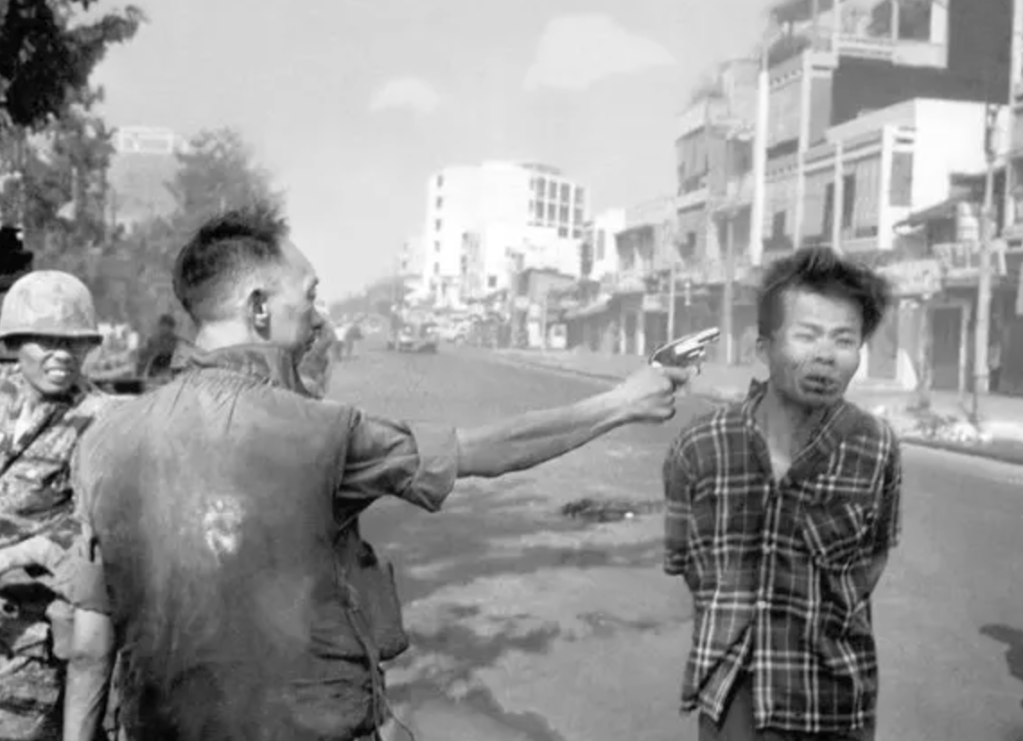
Saigon Execution, 1968: Eddie Adams
Nguyen Ngoc Loan, the national police chief of South Vietnam, executes the Viet Cong fighter, Nguyen Van Lem. Another of these photos like ‘Napalm Girl’ which swayed American public opinion towards the conclusion of the Viet Nam war. Nguyen 1 obviously a war criminal. Nguyen 2 obviously harshly dealt with. In fact, Nguyen 1 appears to have been a very highly thought of war commander renowned for his fair dealing. Nguyen 2 was the leader of a Viet Cong Unit which had killed 47 people earlier that morning.
Does adding information like that bring anything to the experience of looking at a photo? Does it change our fundamental reaction to the image? Should it? Is it meaning or just something like visual impact that we are responding to? (There is no such thing as ‘just’ visual impact of course. Everything we see is processed by neural networks that have processed so much else. But you know what I mean; maybe immediate rather than reflective responses.)
That question matters particularly with photography because unlike other art forms we are supposed to be looking at reality, something that really happened, something that can be confirmed by a photographic image. (There is some additional discussion of this questionRIGHT HERE.)
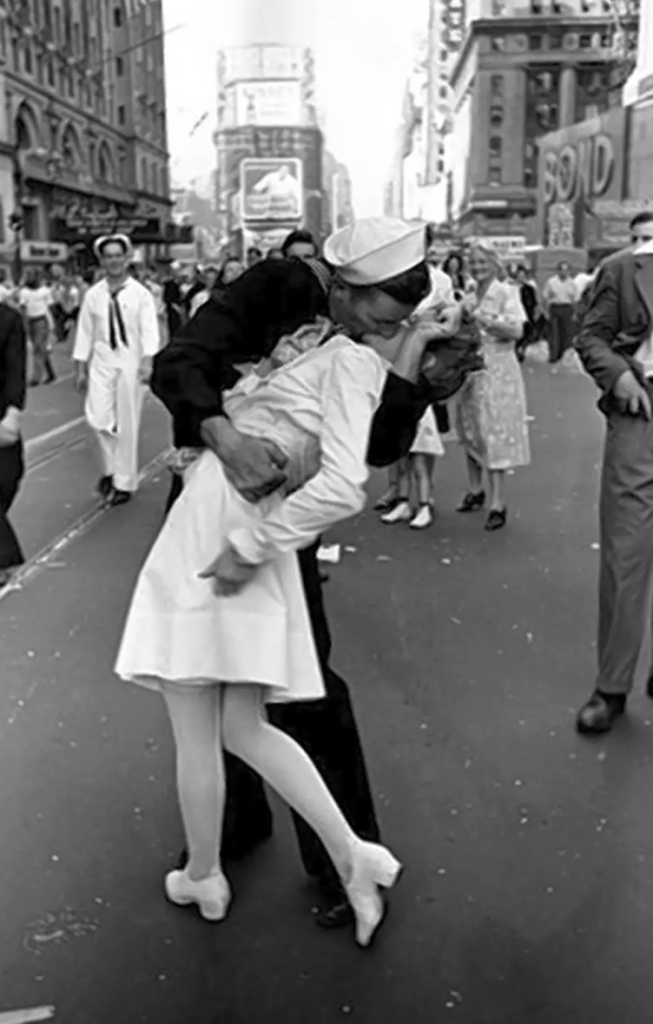
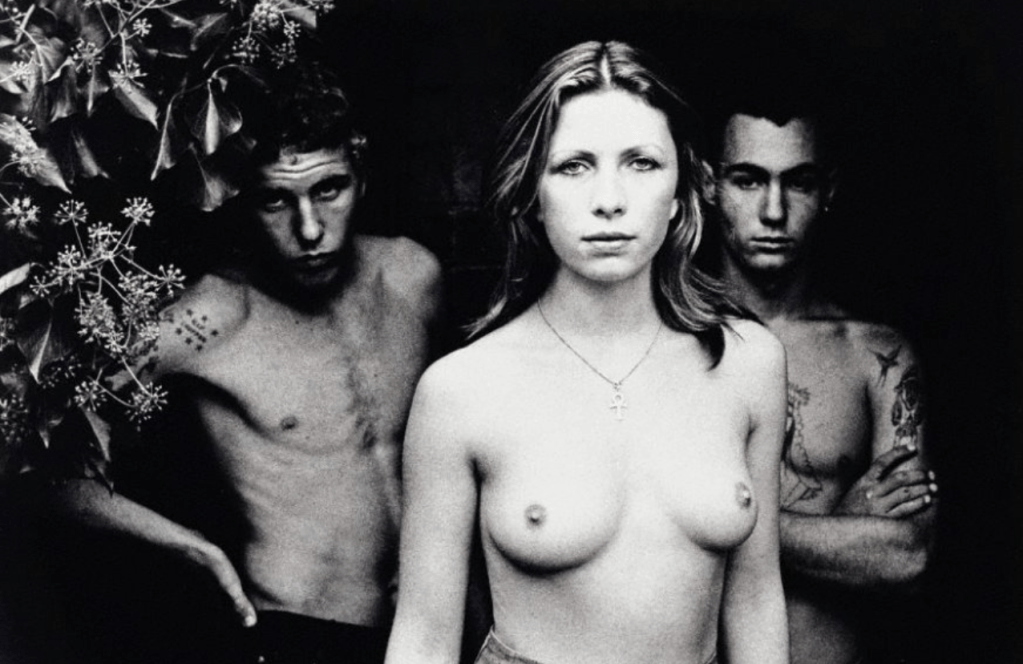
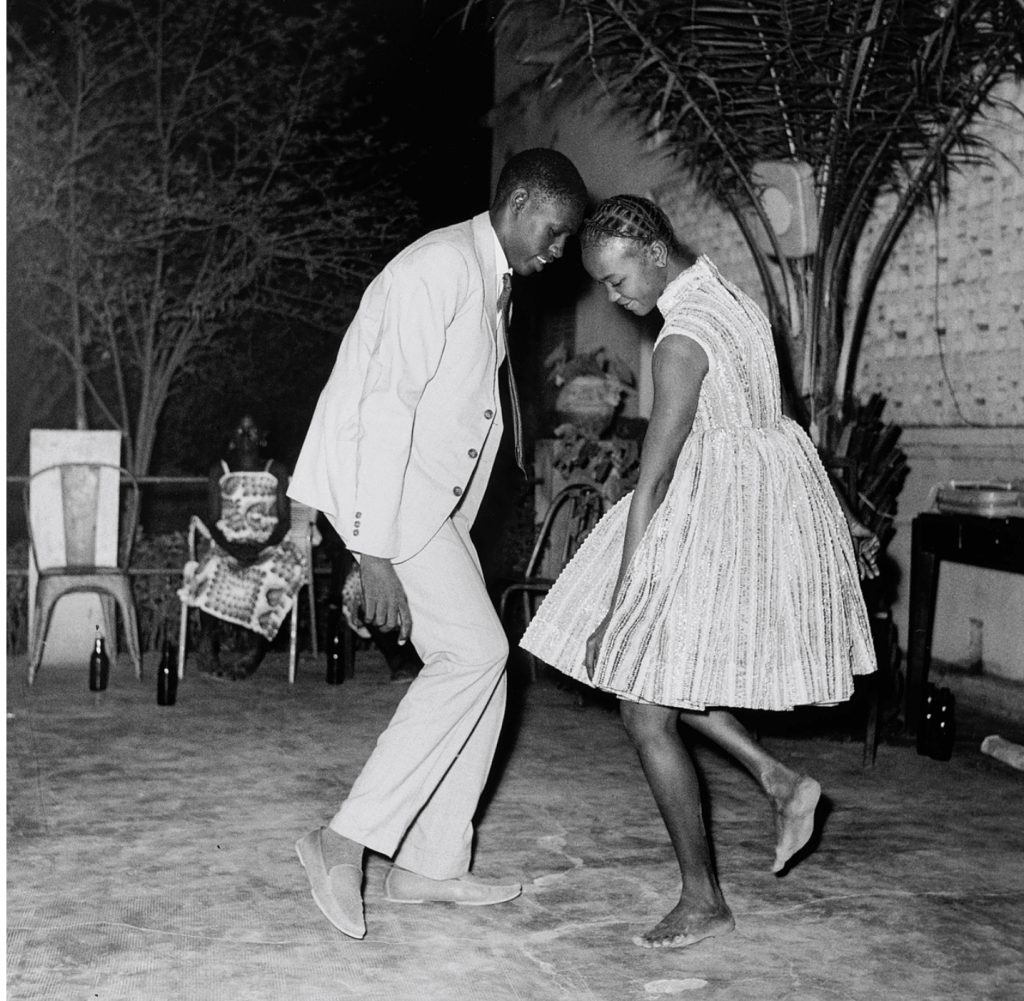
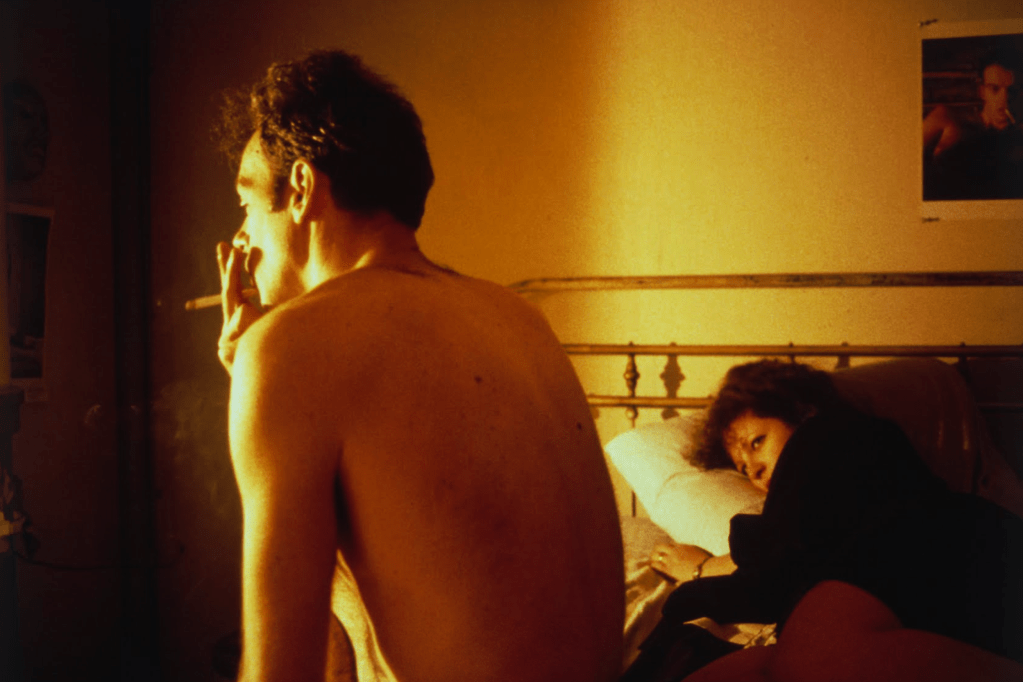
They may be particularly romantic or erotic.
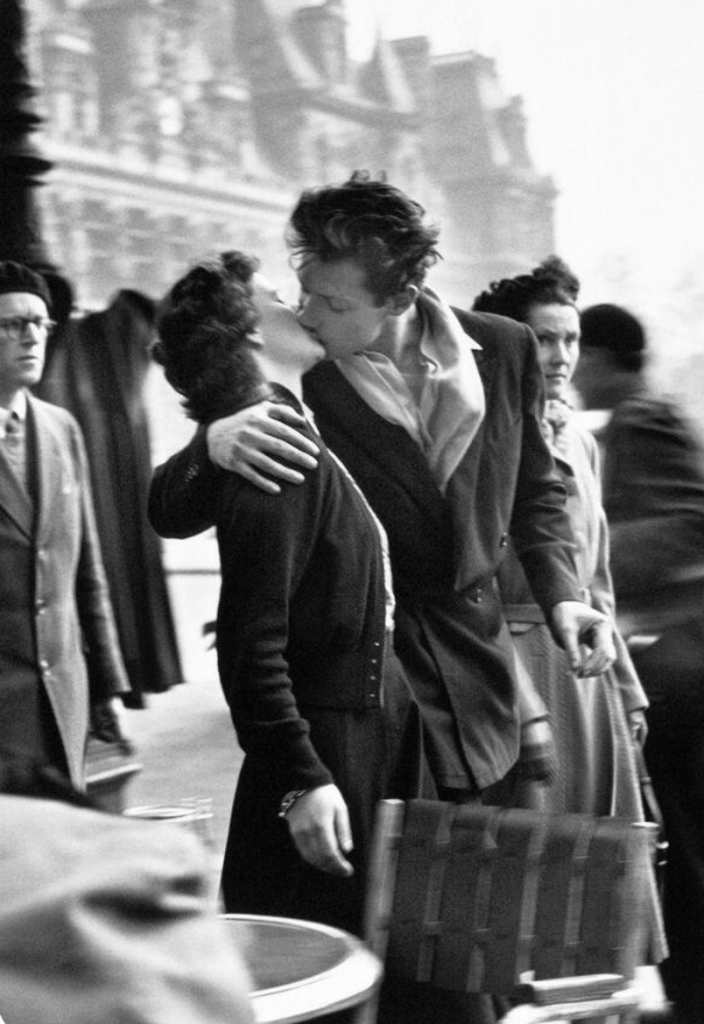
Le baiser de l’Hotel de Ville, 1950: Robert Doisneau
V-J Day in Times Square, 1945: Alfred Eisenstadt
Which one? I have chosen Doisneau’s because although the men in both pics are so terribly masterful, the French chap has a bit more style — the scarf, the gesture of the left hand, the waist tuck of the double-breasted suit. The sailor appears to be on his way to eating the woman — to him unknown — to celebrate the war’s end. But in both cases we understand that there is a passion which we can only celebrate.
Vale St, 1975: Carol Jerrems
An Australian photographer, and an Australian photograph (and can I suggest so much of its time as well as place (St Kilda)). Fearless despite her naked torso. Fearless. There is a flash, no more, of menace in the chaps behind her, (they’re Sharpies!), but she is in charge. Her breasts are those of a young woman; her eyes so much older. All challenge. Not so much romance, but the right degree of complexity to be erotic.
Nuit de Noel, 1962 (in Mali): Malick Sidibé
Probably not a photo you’ve seen before. It is here partly because it is African but also because of the truth of whatever it is between the couple, and the delicious modesty of its expression. Something which is so desirable and human. Unalloyed. Nothing as loud as joyous, and it mightn’t endure. But at this moment … transcendent.
Nan and Brian in bed, 1983: Nan Goldin
And maybe its antithesis. That point in a relationship. What’s going through his head? Does he want to be out with the boys? Is she going to have her heart broken? We can’t see the guy’s face but we know the state of play. A stage, an essential part of romance. We know this. We can relate.
They may record something spectacular or unusual.
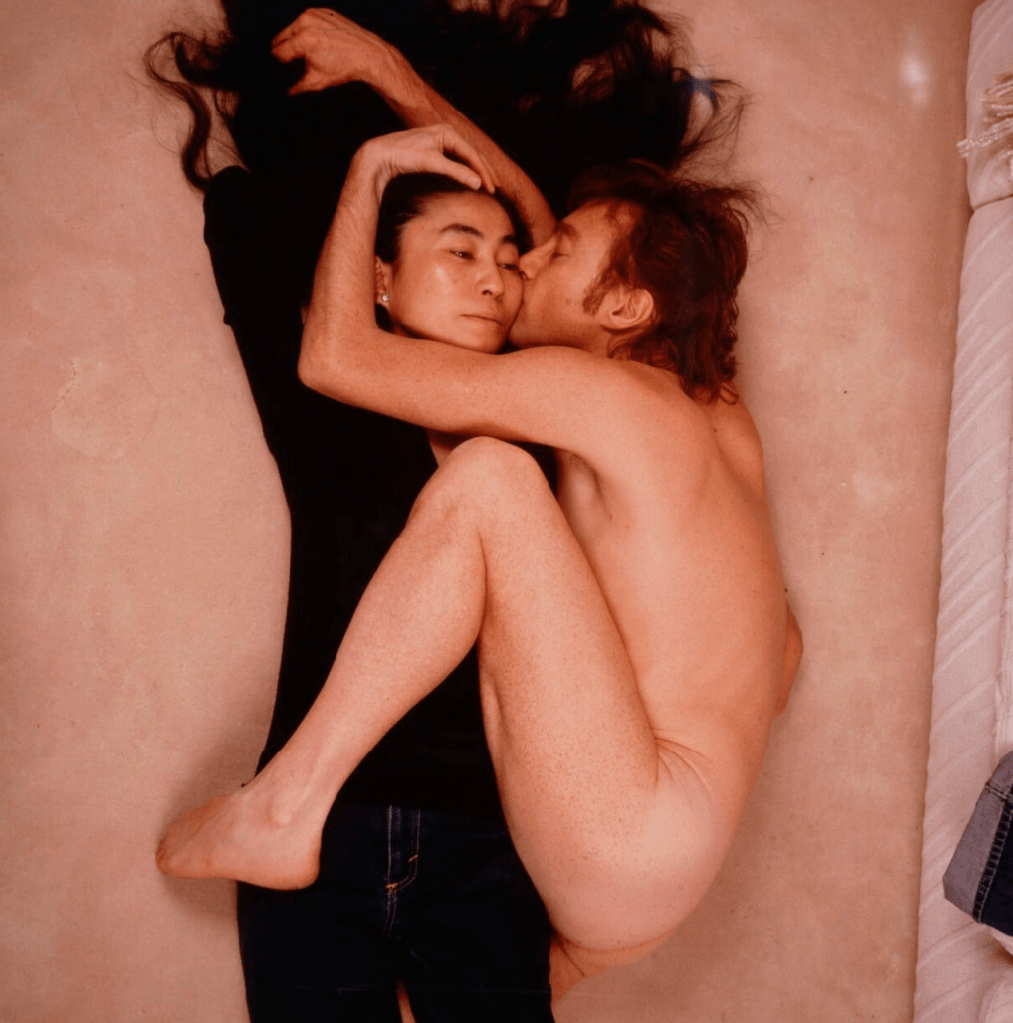
Yoko Ono; John Lennon, 1980: Fran Lebowitz
Neither romance nor eroticism in this photo, but it is very hard to say that it’s not of interest. Some growth — naked growth, naked MALE growth — has attached itself to an impassive human object with glorious hair. It doesn’t hurt that the two subjects are quite well known. Whoever decided, it was a striking idea.
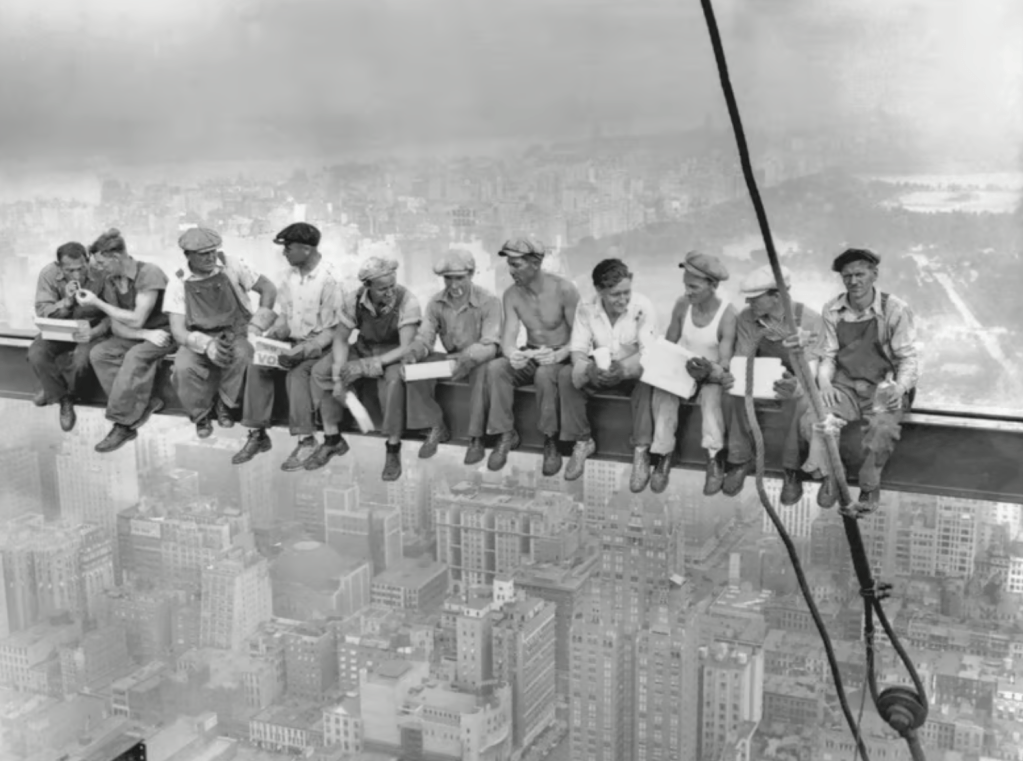
Lunch atop a skyscraper, 1932: Charles Ebbets
Yeah. Seen it. A million times. One bloke is lighting another’s cigarette off the one he’s smoking. Those white things are their lunch boxes. Is this what they do every day or just when a photographer is round? Who cares? 860 feet above the ground and they’re having their lunch, Central Park a misty blur below and behind them.
There might be stuff on Tick Tock that prompts as much or more vertigo. But this is the original, and I defy you to run your eyes along their shoes without just a little intake of breath. Plus they’re at work. This is what they do for a living. Plus plus you don’t get faces like that on Tick Tock.
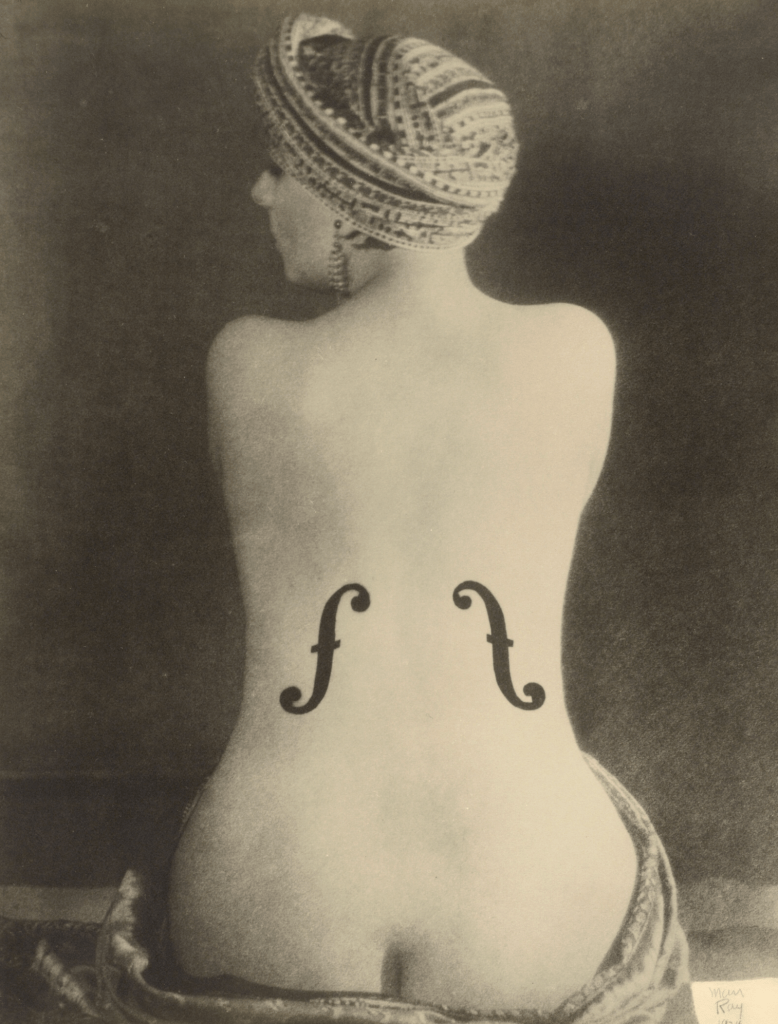
Le Violon d’Ingres, 1924: Man Ray
We’re moving into hazardous territory here, but I’m convinced. An unadorned set up: a model, palpable, soft, no hard edges, like one of Ingres’ baigneuses, painted with f-holes. And because it’s Man Ray, it will be just for the fun of it. There’s no special meaning to be made here. Don’t make up a story about models and lovers, search for antecedents, or muse about the possibility of ‘le violin d’Ingres‘ meaning ‘hobbyist’. It’s Dada. It’s impact, not meaning — BANG. LAUGH. It’S An ODdITy, and you haven’t seen it before. Just enjoy it. (And this is a screenshot of the most expensive original print of a photo ever sold: $US12.4m, Christie’s New York, 14 May 2022. Someone must appreciate the joke.)
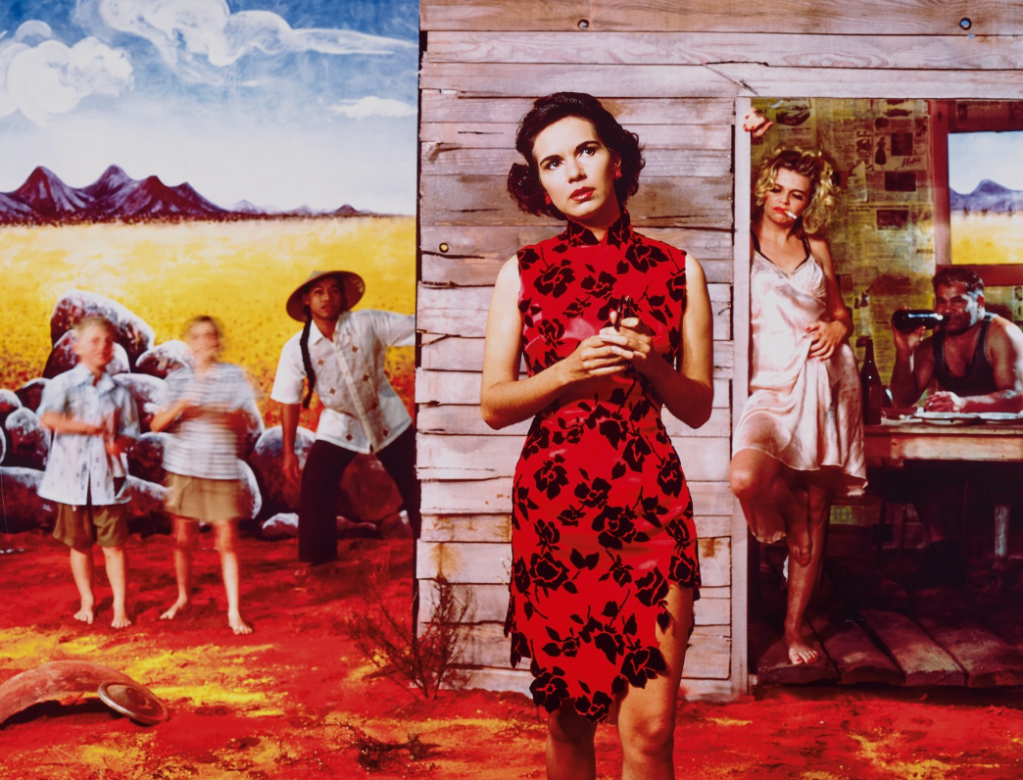
Something More #1,1989: Tracey Moffatt
The transition is complete. It is a set-up. Comprehensively. Unashamedly. Tracey, innocent in her cheong sam, leaving a collection of challenging detail to perhaps make her way in the world.
So, can you call it a photo? Well … it is a photo, even if photography here, as is true far more widely, has become a hybrid art. Two considerations. It’s Australian, and Tracey was a friend and colleague of Merv’s at Sydney’s Boomalli Aboriginal Artists Co-operative as well as being the curator of his first significant show InDreams. Unusual? Sure. Spectacular? Unquestionably.
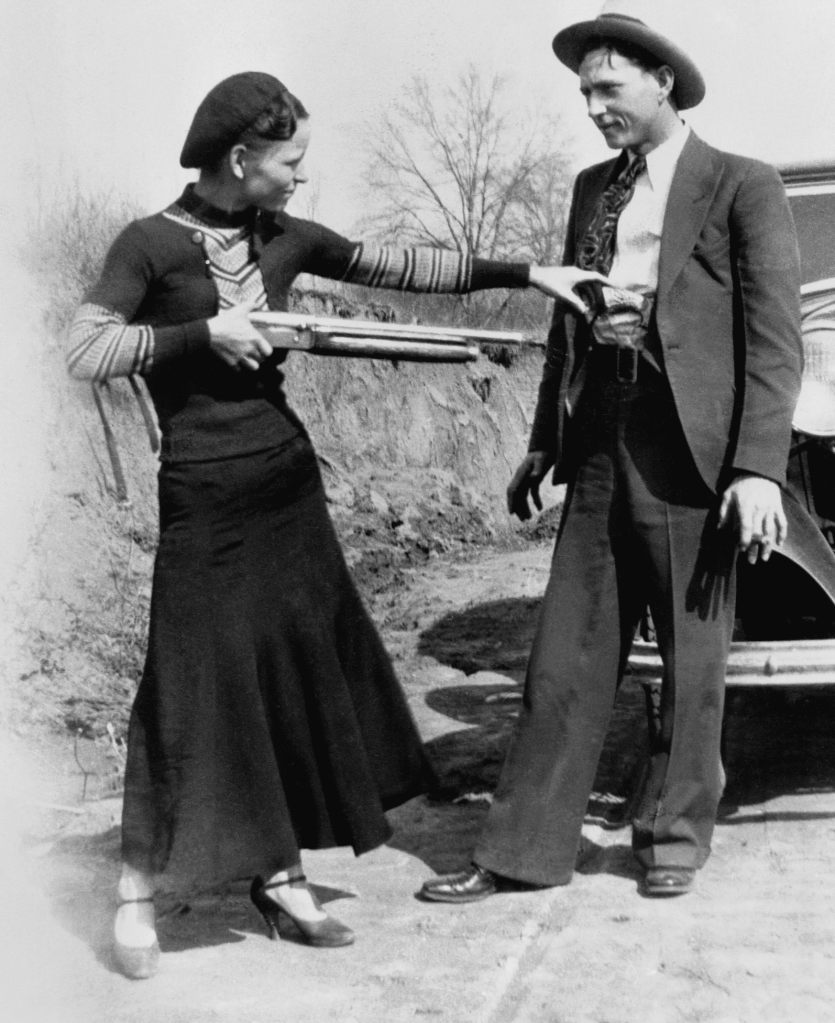
Bonnie and Clyde, 1930: W. D. Jones
Extraordinary. It really is Bonnie Parker and Clyde Barrow. Mucking round with a pump action shotgun. (W. D. Jones was a member of the gang, at the time 16 years old.) They had a camera, liked to take photos and did so. In fact they kept a record, however incomplete, of their exploits. It was a modern thing to do. The photo is sort of sweet — Clyde’s goofy expression and, despite the tension in his fingers, his you-would-have-to-say relaxed stance. But there it is. Bonnie and Clyde. Maybe you should expect that; I didn’t. I’m saying, strikingly unusual.
There might be something particular about their aesthetic or the way they have been composed.
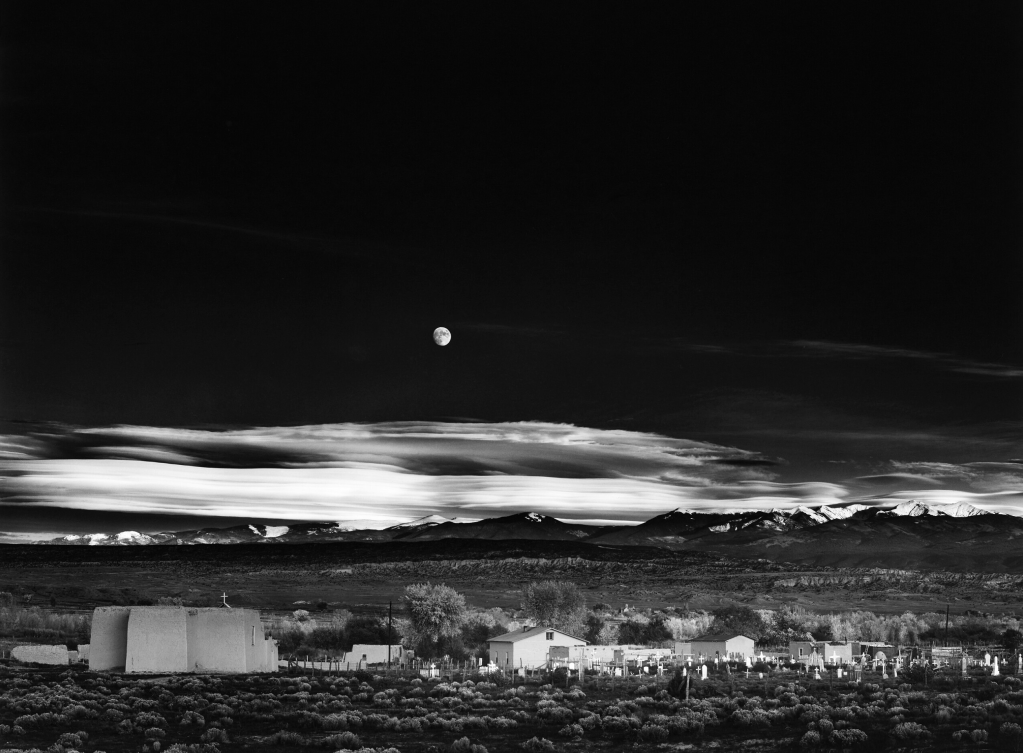
Moonrise, Hernandez, New Mexico, 1941: Ansel Adams
You might note the very limited number of photos in this collection without people as their focus, and yet landscape photography is a capacious field with many distinguished operators. Perhaps not many as good as Ansel Adams. Just how does he get those very sharp whites and velvet blacks? A master in the darkroom obviously, but this photo has interest wherever you look.
In one of those inspired choices which make art, the moon is almost centred with that great black void above. The flow of cloud intersects the picture while contrasting dramatically with the detail of the crosses in the cemetery and the ever-so-crisp lines of the buildings.
I am inclined to reach for adjectives like ‘classical’, but how would that help? Who knows how aesthetics works? ‘I know what I like’, might really have some pull after all. But would everyone agree that it is something special? I think so.
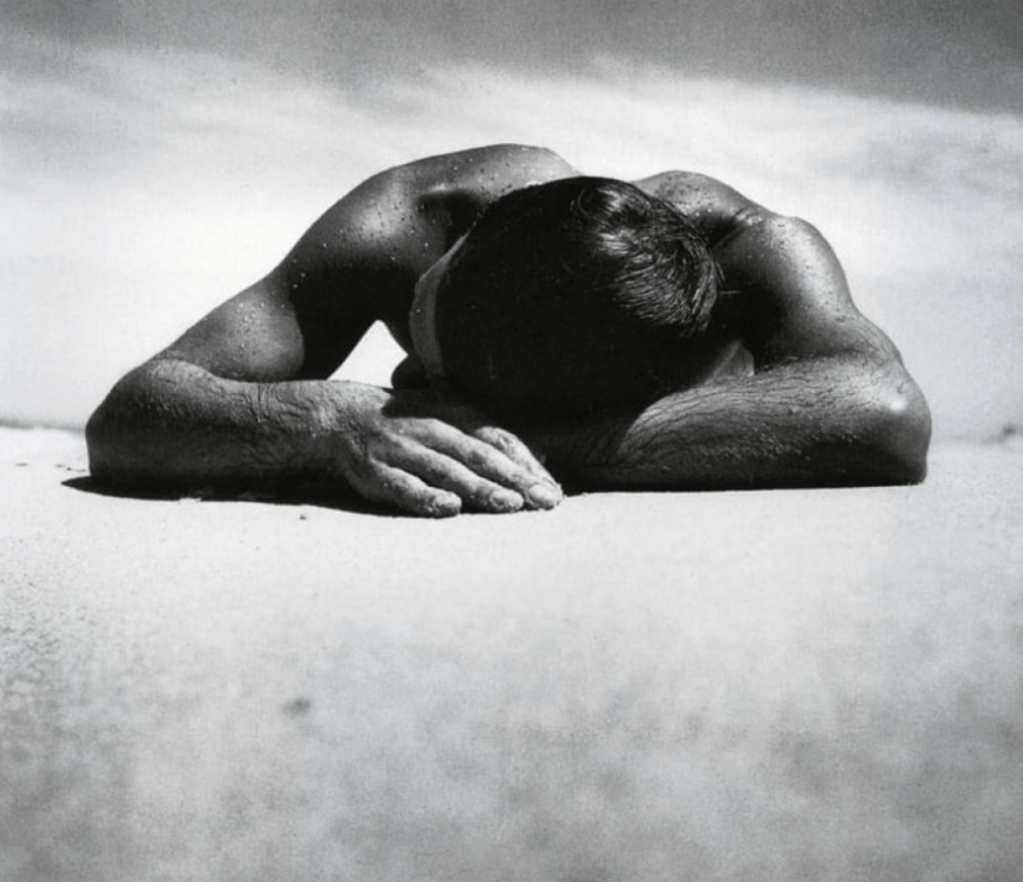
The Sunbaker, 1937: Max Dupain
Australian, indelibly. You know the experience, you’ve felt the sun after the cold of the surf, you’ve had sand in your togs. It’s cultural. Of course it is. But that’s not all that makes it a great photo. It’s not a person (no legs, no body, not even a face); it’s a shape, and I think it’s the line up the arms and across the back that is so satisfying. This is complementary with the contrast of the dark shape and both grounds, fore and back, and the fact that the shape is the only thing in focus. Everything else (including the horizon line) is fuzz. Courageous choices which paid off big time.
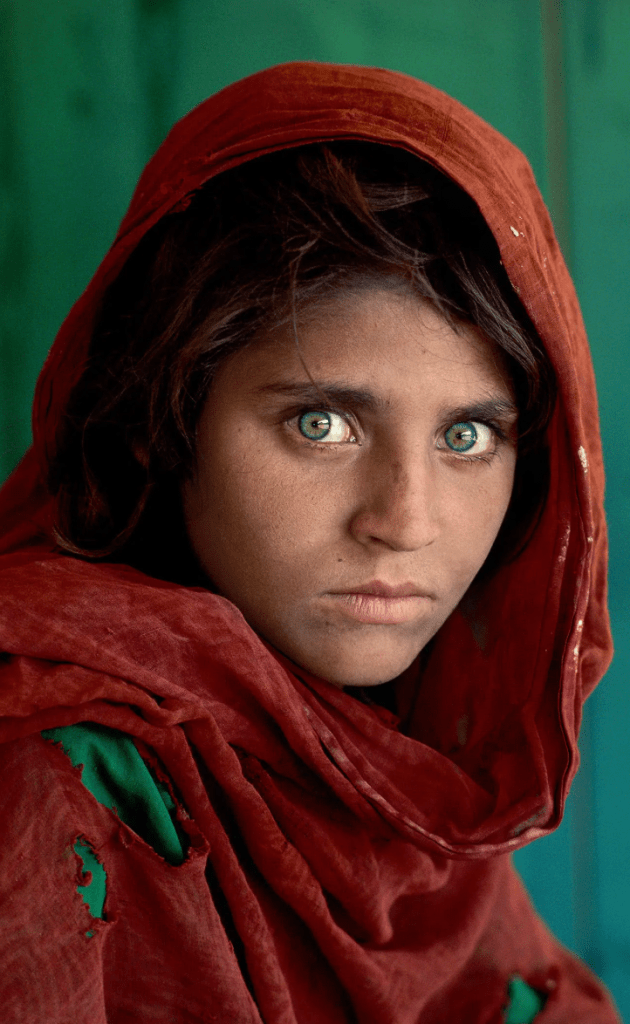
Afghan Girl, 1984: Steve McCurry
Pashtun girl really, but that is splitting hairs. Her name is Sharbat Gula, and she has eyes which are hyper-alert. Just a girl, but we must believe those eyes have already seen far far more than they should have. And they are rivetting, rivetting enough to make us forget the extraordinary colour match of eye, background, undergarment, and the complimentary framing of the face by the rust-red material which echoes some of the strands of her hair and the innermost parts of her irises. What a photo!
They may be strikingly familiar or have become iconic.
I might be cheating here. Another chicken-egg issue. Are they great photos because they are famous, or are they famous for one of the reasons above? And if so, why have we got a separate proposition here?
Let’s say they have the power to be great through familiarity. We construct them to be great and, when we think about it at all, designate them as such.
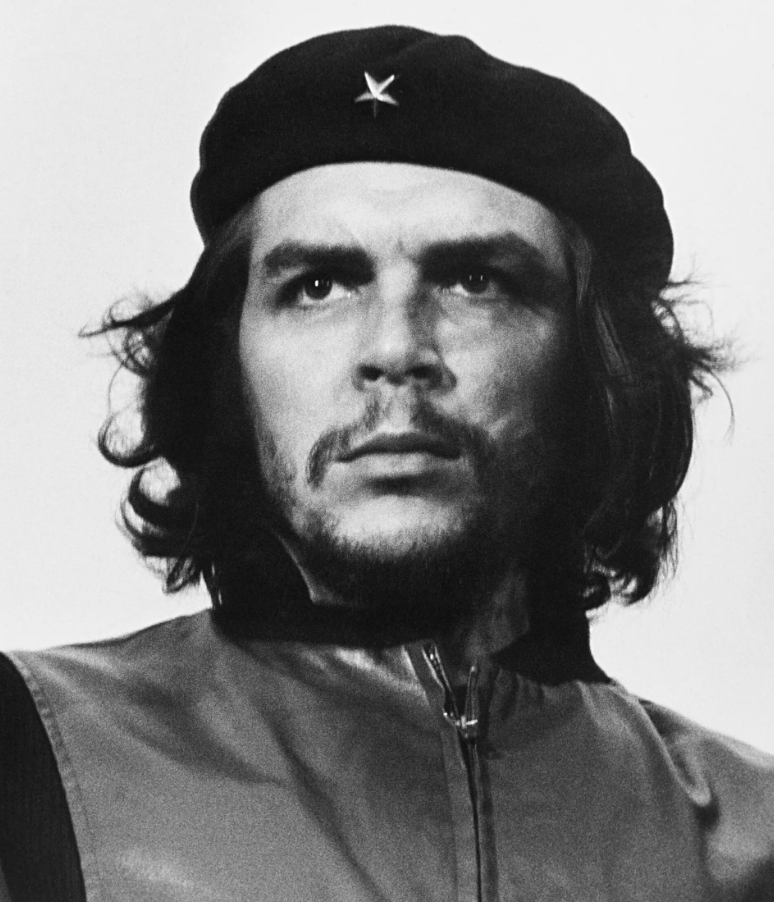
Guerillo Heroica, 1960: Alberto Korda
You might have had a T-shirt or a poster with this on it. If not you might need to explain the reason. Che, the heroic guerilla with international resonance very likely influenced by this photo. Composed, steely and puissant without even trying to be. Fortitude, depth, a leader.
What are we reading to understand this? Good eyebrows of course, and eyes set deeply enough to give us shadows which emphasise the darkness of his eyes and their twinkling pinpricks of light, shadows which also give us the highlight on the right hand side of his face. Film star good looks? Yes, but so much more as well.
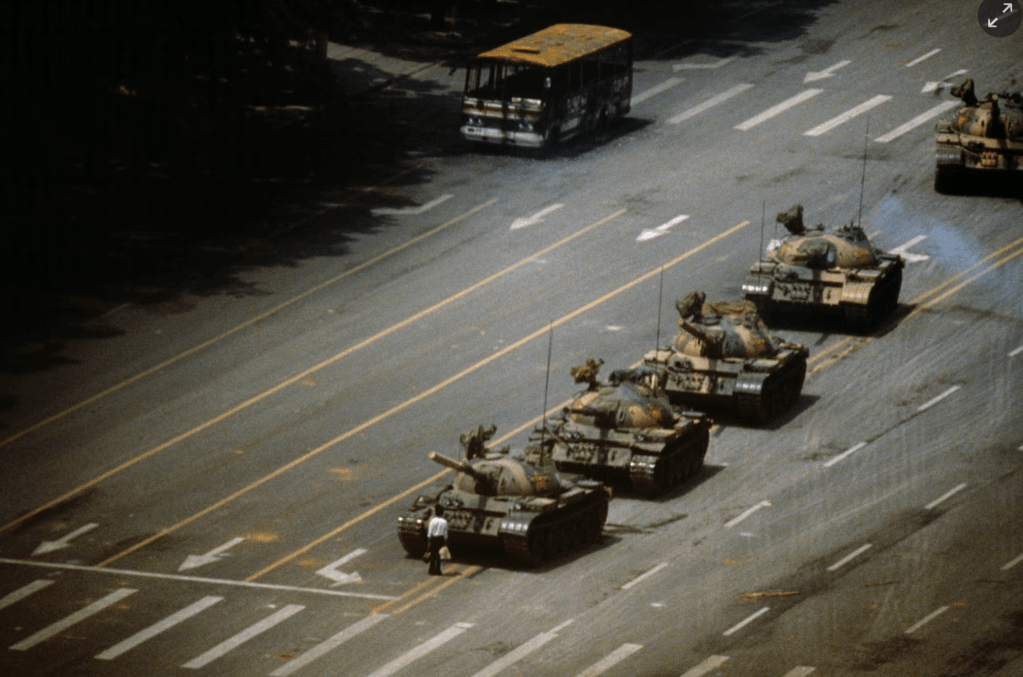
Tank Man, 1989: Stewart Franklin
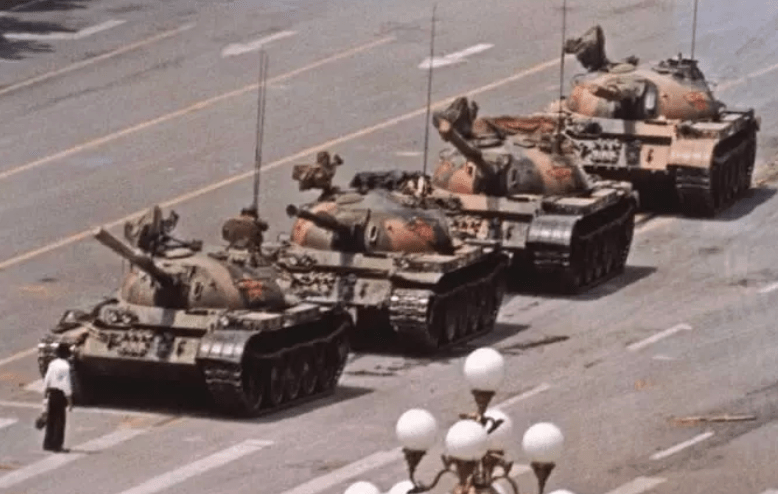
Tank man, 1989: Geoff Widener
Tienanmen Square, Beijing. Packed with students protesting anti-democratic acts by the government. Cleared at the order of Deng Xiaoping. Scores of tanks, not evident in these photos, poured into the Square smashing through barricades. At this point, one man with two shopping bags stands in front of the first tank of a column and as the tank manoeuvres to go round him shuffles back and forth to continue standing in front of it. The tank stops, the column stops; man versus machine, a civilian versus an army. A big subject for a huge story.
Four photographers got this photo. Franklin’s was the first, Widener’s the most widely used. The others were Terril Jones, and Arthur Tsang Hin Wah. Australian ABC correspondents Max Uechtritz and Peter Cave were the (only) journalists reporting live from the balcony with Willie Phua shooting the accompanying video.
There is a theory that the whole thing was a set-up to make the Chinese government look better. A clean white shirt was not what the protestors were wearing. It took place right in front of the hotel where it was known that foreign journalists were staying. The soldiers respond quite passively to his actions and don’t hurt him. He is not arrested after leaving the scene. His identity remains unknown. Your call. Still a great pic.
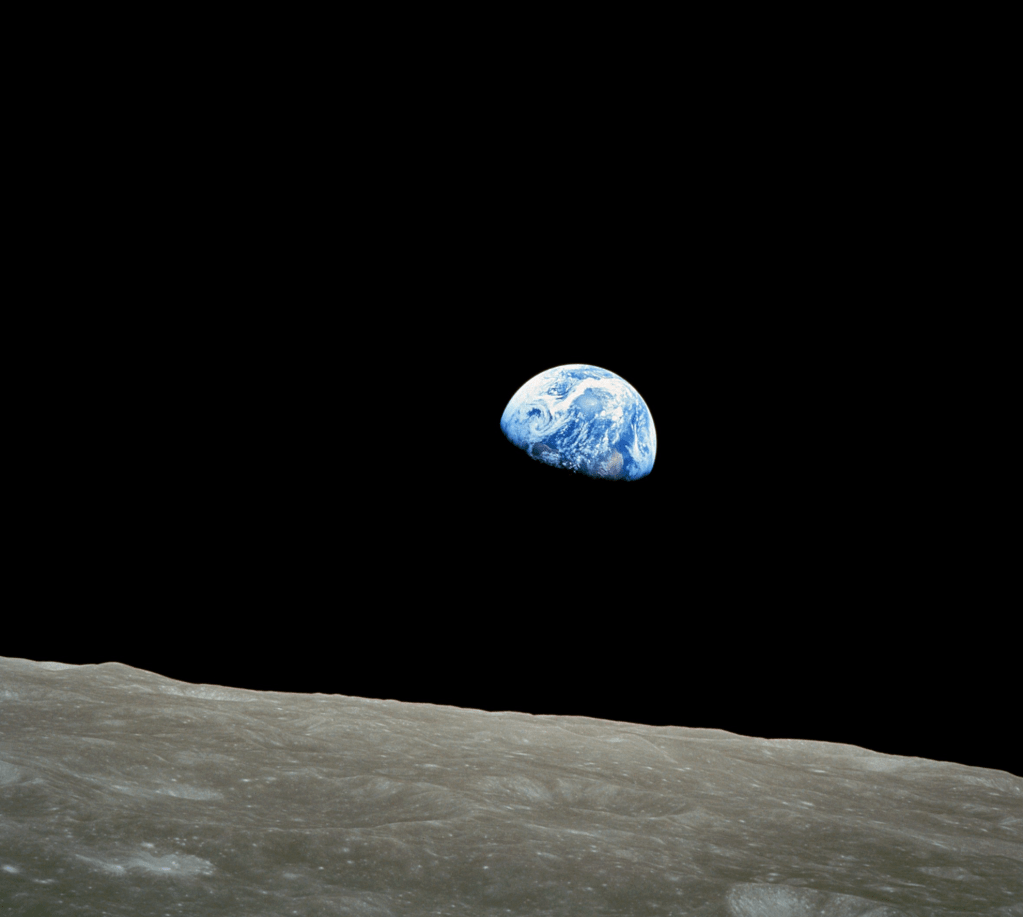
Earthrise, 1968: William Anders
One from a collection taken by astronaut William Anders on the Apollo 8 expedition, the first crewed spacecraft to leave Earth’s gravity, orbit the Moon, and return safely. It was generated after a cute little back-and-forth between Anders and Jim Borman, the flight commander who is sometimes credited with taking the photo.
Anders says: ‘Oh my God! Look at that picture over there! There’s the Earth coming up. Wow, that’s pretty. Borman: Hey, don’t take that, it’s not scheduled. (joking) Anders: (laughs) You got a color film, Jim? Hand me that roll of color quick, would you.
And this is one of the results (which include the ‘half-Earth’ just breaching the horizon). Claimed to be the most reproduced photo ever, it featured on a commonly-used US stamp. It has also been described as ‘the most influential environmental photograph ever taken’.
It is eventful, dramatic, records something spectacular and unusual, has its own exquisite aesthetic, and might even be considered romantic. Great photo.
The subtitle of Black, White + Colour is ‘A Biography of Mervyn Bishop Australia’s First Indigenous Professional Photographer’. And of course that’s true, important and commercially sensible to bill the book that way. But its contents provide a more complex if still wonderfully coherent account of what it is to be Merv and the contexts and events which have helped shape him. In my related blog I’ve referred to this as ‘the warp and weft of culture, in plural form, the magic of its assembly and the extraordinary variety of its products.’
I’m particularly interested in this because it has provided a lesson I have had to learn myself, many times and sometimes to my cost.
Naturally you must read the book for a proper account of Merv’s world. (Off you go and buy it. HERE.) Treat this as a taster with a slight twist of emphasis.
• • • • • • • •
HOME
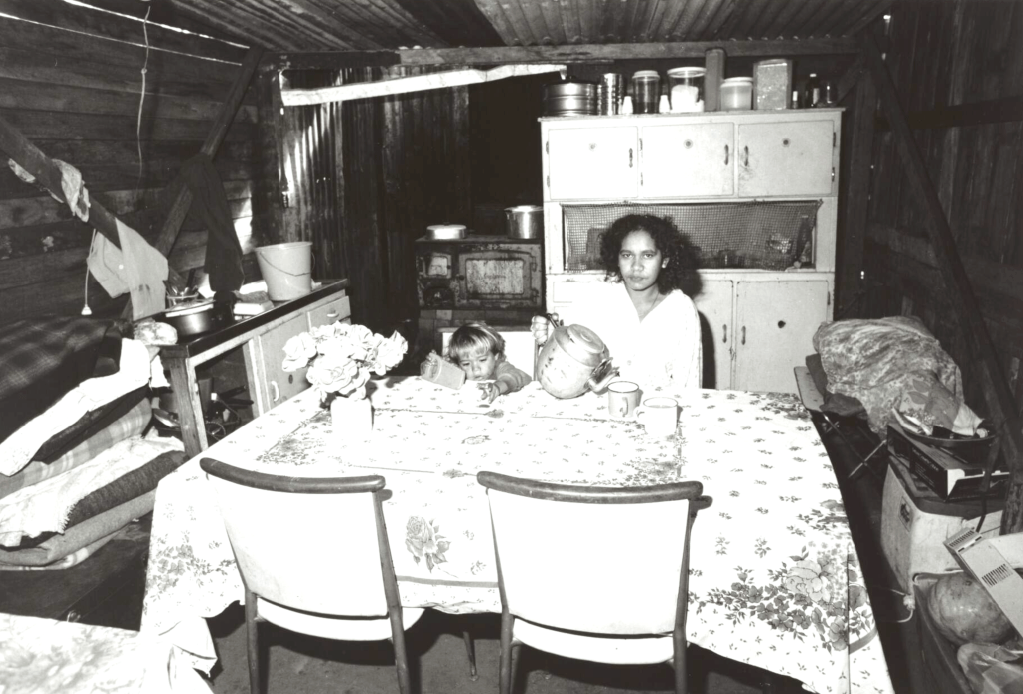
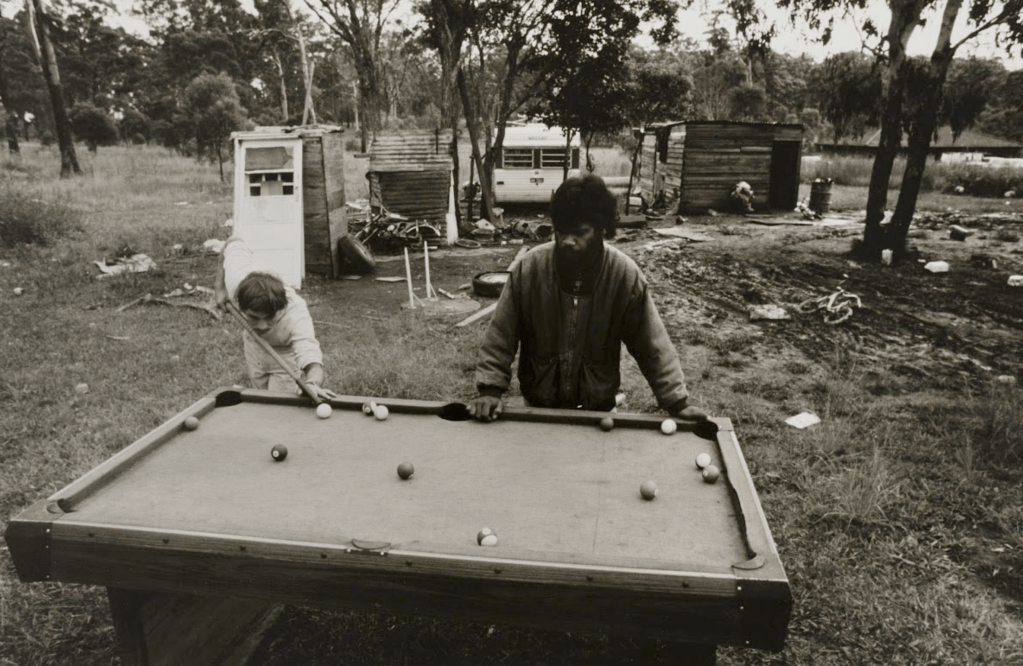
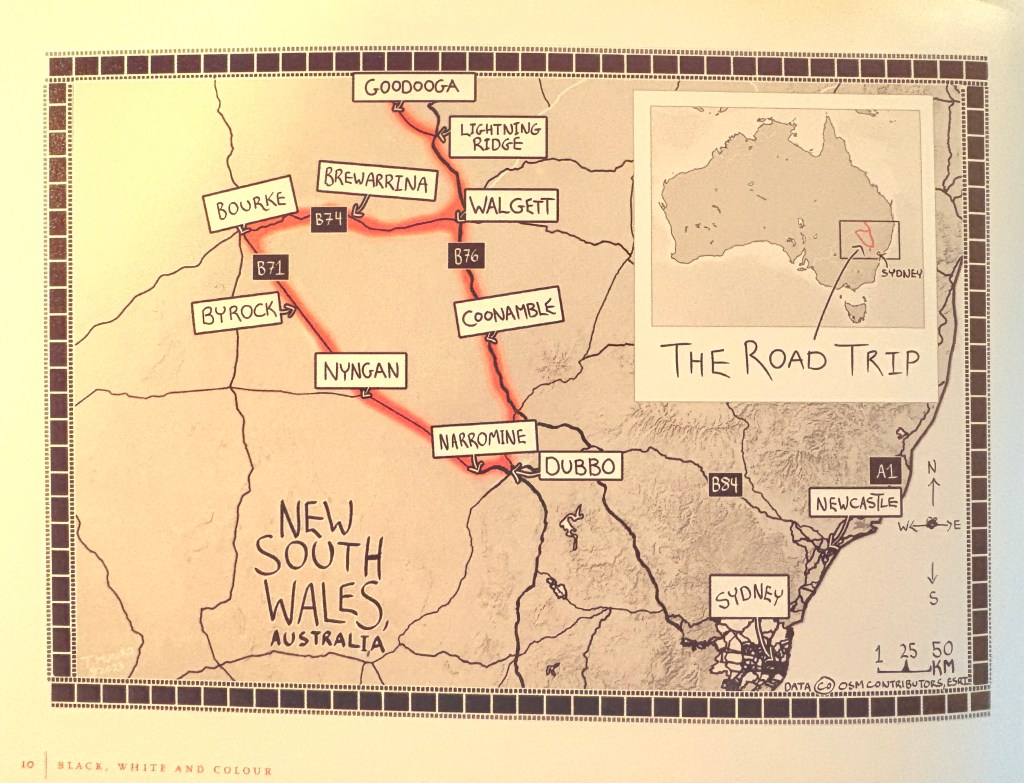
This is the map from the book which describes the road trip Tim and Merv took together to help prepare it, revisiting old stamping grounds and relations, the sites of some of his photographs, RSL and Bowling Clubs — landmarks of north-western NSW, a very special, interesting and not much visited part of Australia. The grey nomads pull in at Goodooga’s springs and might buy an opal or two at The Ridge, but they’ll whip past the steel shutters of Walgett and not spend too much time at Bourke. Byrock’s population is 50. Maybe. It used to be the case that one of them would be a teacher.
This is remote country, and the distances between settled points can seem vast, in fact it might seem that no one lives here, but that would be quite wrong.
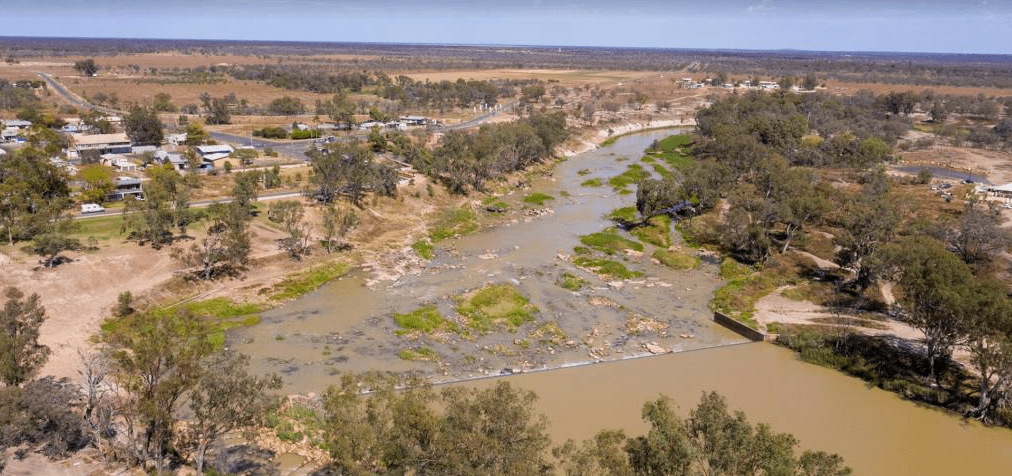
Merv was born in Brewarrina (known to anyone who knows it as ‘Bre’, pron. ‘bree’). The Barwon, which when joined with the Culgoa becomes the Darling, teeters along between Walgett and Bourke in great whorls now often barely damp. Bre is half way. Above Walgett the cotton farmers have stripped out the rivers’ flow. When they were left wild this stretch of the Darling was home to an important paddle steamer trade. At Bourke you can still visit the wharf where the steamers used to tie up, now usually 10-15 metres above water level. TheWandering Jew was one of the last to operate. It caught fire at Bre in 1914 and sank.
150 years ago Bre became a hub for that commerce. It had a bank, a courthouse, two hotels, two stores, a regional administrative office, a school. Today it has a population of about 800, from some points of view 30 fairly sparsely settled blocks in the middle of nowhere, but big enough for a swimming pool and a Catholic primary school as well as a government one. Leo Schofield was born here in 1935. His father was one of the publicans.
And it has its fish traps, Bhiamie’s Ngunnhu, Bhiamie being the creator figure of this region’s mythos.
Most of the straight-line barrier in the photo is a comparatively modern contribution. The rest could be 40,000 years old which would make these traps one of the oldest human constructions in the world. That’s the claim. But there is no doubt that the river and its traps — already a fluid junction of several First Nations groups: the Ngemba Weilwan, the Murrawarri and the Yuwaalaraay — would have been major drawcards for festivities, food gathering and other forms of socialising for the dozens of clans spread through what today we think of as northern NSW. A mix of peoples.
In 1886 the Aborigines Protection Association established a mission near Bre on a reserve of 5,000 acres 10 miles east of the town and on the opposite bank of the Barwon. The very first mission in New South Wales, it kept operating until 1966. If you want to know a bit about what it was like [in 1954] you can read Dr. Ruth Latukefu’s recollections here.
Bre Mission kids, sometime between 1932 and 1937: the Reverend Canon A. Leyland Bird
The mission was established initially to deal with/ accommodate/ respond to the number of Aboriginal people camping round Bre and their ‘intemperate behaviour’. It soon became marshalling yards for the problems (and non-problems; just sent, or taken) drawn from an area ranging from Tibooburra, 10 hours drive west from Bre today, to Cobar and Lightning Ridge, half the distance in different directions. The mission was — not my term but a Royal Commission’s — ‘an enforced concentration of Aboriginal people’, a concentration camp. And in that camp were ‘Aboriginal’ people, or ‘Indigenous’ people, or ‘First Nations’ people. But whatever you want to call them, it is a bit like saying ‘European’. They had different languages, different cultures and lore, and different Countries none of which were at Bre. They didn’t always get on. Why would they? A mix of peoples.
Bre was also home to some of the powerhouses of the Aboriginal world. Essie Coffey might be the best known, but Steve Gordon and Tombo Waters lived there as well. Big names, strong leaders of renown. Part of the mix of peoples.
One of my own Bre stories is a memory of giving a talk to the staff at the school where at the time Michael Chamberlain, post-Azaria, was teaching. If he lifted his head once from his newspaper during the time I was speaking I didn’t notice, suggesting that as well as unwonted celebrity he was a man of keen judgment. Part of the mix. Places may be small but they are not without characters.
• • • • • • • • •
Mervyn’s father Minty was the lovechild of a travelling [Punjabi] merchant, Baroo Fazldeen, and Mervyn’s grandmother, Suzannah McCauley Bishop. Suzannah’s mother is listed as Aboriginal in her marriage certificate to Robert Bishop of Melton Mowbray, England. Her father is identified as a labourer named John McCauley, likely an Irishman according to family DNA results. On Mervyn’s maternal side there is a similar pattern of Aboriginal women and White men. (p. 24)
Such ancestries are not uncommon in parts of Australia, especially where there were disproportionate numbers of White men and White women.
• • • • • • • • •
Merv’s mother, a woman who wore a hat when she went out, had a camera, a Brownie Box which Merv started using at 11. He bought a camera of his own when he was 12.
‘We were uptown Blacks’, Merv says. ‘We knew we were kind of special but we didn’t chuck it around saying “We’ve got this” or “We’ve got that”. We would have got a slap.’ But, nonetheless, ‘I think we [Merv and his sister Cynthia] missed a lot of the stuff the other kids copped, racism stuff in town.’ (p. 40, 41)
SCHOOL
Mervyn did well at school in Brewarrina despite a full plate of other interests. ‘Margo Collins and I used to run neck-and-neck for the top of the class,’ said Mervyn. ‘If I came first, I’d get five pounds from dad and if she came first she’d get five pounds from her stepdad. They used to bet on us.’ (p. 51)
But when Merv was a student there Bre Central topped-out at Year 9. After that for Aboriginal boys the trades were an unpredictable possibility, for girls domestic service might have been feasible. For smarties and if you got a leg up, a bank or an office job might be available.
Both Merv’s mother and father were ambitious for him. But it was the interest of the vicar of the local Anglican church where Merv was an altar boy which might have been decisive. At the age of 14 he was sent off to the Holy Trinity Boys Hostel in Dubbo so he could attend the local public high school. Bits of money were put together from various sources — including the efforts of the Dobbyn family — to find the £60 per term boarding fee plus the other costs associated with going to school. He had two mates there from Bre, but of the 60 boarders he was the only Aboriginal kid.
At 14. Late morning on your own catching the steam train from Bre to Byrock. With some patience that would hook you up with the daily diesel from Bourke to Dubbo where you’d arrive in the early evening, home a day away … already an adventure and you hadn’t even started.
And Dubbo: Queen of the Western Plains, with a river and a zoo. Population in June 2021: 43,516, of whom an unusually high 86 per cent (including Glenn McGrath, various famous rugby league players and Dave Mason and the rest of The Reels) had been born in Australia.
Dubbo is on Wiradjuri Country, and at the census 16 per cent of the town’s population described themselves as Aboriginal. In summer that proportion rises as folk come down from the river towns further north to get out of the heat. This is not always to everyone’s taste including that of the local Aboriginal population.
The first two public buildings erected in Dubbo were the police station and the gaol. The Old Gaol remains a major tourist attraction, ‘an appealing oasis in the midst of the Dubbo CBD’ to quote the brochure. Eight men were hanged in its courtyard: a Dane, two Chinese, three Irishmen and two Aboriginal people. A mixture. ‘Rolf Boldrewood’ (in fact Thomas Alexander Browne) wrote Robbery Under Arms while he was Clerk of Courts there.
When I was a regular visitor you could get excellent coffee at Scotty’s in the main drag. It may now be Ha Noi Corner. The Hog’s Breath Cafe where I mistakenly ate once, and I think once only, closed in 2021. It’s the same sort of muddle of cultural influences, borrowings and exchanges that can surprise you in a middle-sized rural centre.
• • • • • • • • •
Merv ‘went into some sort of meltdown’ in his Leaving (11th and final year) exams and failed four of his six subjects missing out on the prospect of a job with the ABC. He went home to Bre.
WORK
He got a break.
Early the year after he left school he was offered a job at the ABC in Sydney, “a general dogsbody” sort of job. Not quite out of the blue, but a pleasant surprise nonetheless. Three months later, bored, he applied for a job as a photographer at the Sydney Morning Herald and got it. Subsequently he had some formal training in a part-time course at the Sydney Tech. Tim Dobbyn, the author, quotes Harry Millen who originated, devised and taught the course as saying, ‘It was most strange to have an Aboriginal in the class.‘ As might be assumed, his work took him to all sorts of places including to the social pages. On page 76 of the book there is evidence that Merv has been snapping at a cocktail party in Rose Bay. The women in the pic look like they may also be thinking, ‘It is most strange to have an Aboriginal in our lounge room.’
Merv had been a prefect. He wouldn’t have cared. He would have giggled about it later as he produced a delightfully embroidered recount.
A colleague at the Herald: “None of us ever thought of him as Aboriginal . … there was a real camaraderie there.” (p.77) This somewhat ambiguous quote is paired with a ho ho story that turns up everywhere in Blackfellaland. In the darkroom — “Hey Bishop, are you there? Are you there Merv Bishop? Smile so we can see you.” Dominance is sometimes spectacularly unaware. And dumb. And wet.
Like run-ins with the police on the basis that he was the Blackfella in a group who were otherwise White; or the continued occasional refusal of service in a bar. And it could turn around. I don’t know that he could count the number of times he has been called a ‘coconut’ or similar. (‘Coconut’? Black on the outside, White on the inside.)
Eight years after beginning at the Herald he took ‘Life and Death Dash’ (see below) the photo which won him the Press Photographer of the Year Award. Mervyn was a C-Grade [pay grade] photographer when he took the award-winning photo and would be a C-Grade photographer when he left three years later in 1974. … Even absent the contest win, it seems incredible that Mervyn would not progress to at least a B-Grade level by 1974. “There was a glass ceiling for Aboriginal photographer Mervyn Bishop at the Herald,” Merv said. (p. 87) Later Tracey Moffatt asked him why he didn’t stack on a turn. “I had to maintain a sense of propriety in the hope that maybe other Aboriginal people would be able to gain employment there as well.” (p. 89) I had entered the assimilated world of the White institution. There were very few Aboriginal people in any profession and hardly any that I could share my experience with in Sydney. My Aboriginality was in different places, but there was no place for it at the Herald. (p. 188)
He left, and applied for a job as a liaison officer with the newly established federal Department of Aboriginal Affairs. The interviewers were concerned about whether he could relate sufficiently to Aboriginal people living on reserves and in impoverished communities. “Have you had much to do with Aboriginals? Mervyn recalls being asked. (p. 91) Eventually he was employed as a low-paid clerical assistant to take photographs.
During these years he had married Elizabeth Johnston whose mother believed her English ancestry could be traced back to the days of the Magna Carta. She asked Merv one day how much money it would take for him to walk away.
ART
The thing is, Mervyn was never in the art world, he was a photojournalist. (Tess Allas, art curator and champion of his successful nomination for the Red Ochre Award for a lifetime achievement in the arts by an Indigenous person. p. 150)
The ’80s for Merv were a period of mooching round between different jobs, a number of which were tenuously associated with education. He began hanging round Tranby College, ‘a space [in Glebe, very inner Sydney] for Mob to gather, share stories, and gain further skills and knowledge through community programs, events and accredited training’. He needed the use of a darkroom for a project he was working on, and of course he would start chatting because that’s what he does. Merv is a world-class chatter. He and Andrew Dewdney, an English academic who was working at Tranby at the time and who had become a mate, were putting up an exhibition of student work in a shopping centre. One of the panels included a print of the Whitlam/ Lingiari photo. Merv said, ‘That’s my photo,’ He wasn’t upset about it being used. It was more pride. (p. 120)
Dewdney … argues that the Tranby experience enabled Mervyn to look back on his archive and reassess his own work and heritage. ‘He could look at that collection not merely as Joe Photographer but as an Aboriginal photographer.’ (p. 130)‘[Tranby’, Dewdney says] ‘was where he was challenged around his cultural heritage and Aboriginality.’ (p.119)
His first major show was ‘In Dreams’ in 1991 at Sydney’s Australian Centre for Photography. Tracey Moffatt was asked to curate it. ‘I thought I have only seen this one great image of his. But [when she started digging through all the material at Merv’s home at Oatley] I found this treasure trove of images.‘ (p. 131)
The show opened the day his wife died. Tim [Bishop, Merv’s son] said the ACP was packed that night and if you hadn’t known his mother had died that afternoon you wouldn’t have caught on. ‘I truly think that some people have a calling, and one of Dad’s cards that he plays so well is that of a showman … to this day I don’t know how he was able to do it. ‘ (p.133)
‘In Dreams’ toured 17 Australian venues and went to England. ‘So much of becoming known as a photographer has to do with being established within the history of photography. This means getting your work seen in an exhibition, and, more importantly, being published as well written about.’ Sandy Edwards reviewing the exhibition in Filmnews. (p. 135)
There were some more landmarks along the way, including some international recognition and a solo exhibition at the AGNSW. But two others stand out vividly.
The first was in concert with the NSW State Records office. Susan Charlton, its Creative Producer, recognised this image as one which was also held by the Records Office during one of the more exotic turns of events in Merv’s life: his story, illustrated, at the Sydney Opera House with him narrating. William Yang, Chinese-Australian artist, with his hand on the wheel.
This is Merv’s maternal grandparents plus flowergirls on their wedding day at Angledool in 1925, colourised and with birds inserted.
The Records office had 1000 images which had been collected over the years from the Aboriginal Welfare Board which they wanted to develop into an exhibition.
This was the mission: ‘Though the policies of successive governments aimed to dismantle their culture, Aboriginal people have always found ways to reunite with family and community and to create contemporary links to their culture. Today the Board’s written records and photographs are valuable for the leads and clues they may provide to help in this process, creating a new purpose and place for the photographs within contemporary Aboriginal life.
‘Decades after the photographs were taken, they still produce mixed emotions for Indigenous viewers — from the delight of seeing rare evidence of community and culture to the sad reminder of loss and separation. Because of these sensitivities, the entire exhibition process involved the consent, advice and support of many strands of the Indigenous community, including the NSW Department of Aboriginal Affairs for guidance and protocols; an advisory group for ongoing input and support; and the approval and contribution of individuals and communities represented in the Board’s photos.’ (From the catalogue which can, and should, be viewed HERE.)
But the real stroke of genius was to have Merv along not just to take photos at this extremely popular and important activity (over two years visiting 17 regional centres), but to just be himself, greeting, introducing, facilitating. What a VERY good idea.
The second was a commission to take portraits of 22 of Sydney’s Aboriginal Elders for the Australian Museum. ‘I always think: Do a picture that they would like as much as me.‘ (The Bishop Theory of Art, p. 176) And this proved to be the case. Here they are: huge, but warm, relaxed, comfortable, feeling at their best, representatives of a living vibrant culture.
‘In this startling image, composition, contrast, and Aboriginal social commentary combine. It is a classic example of photojournalism that has since transgressed its original context and come to insinuate the impact of religious missions within Aboriginal Australia and, in particular, on the Stolen Generations.’ AGNSW art note
Merv: ‘There was only one Blackfella there that day and he was behind the camera.’
THE BARRICADES
‘Mervyn didn’t charge the barricades,’ [Hetti Perkins, a distinguished art gallerist says.] ‘Instead he went under or around them to get where he needed to be.’ (p. 200)
Mervyn’s story is … a caution against easy assumptions at a time when race and racism occupy large swathes of public discourse. He cut his own path, defying at times the expectations of both White and Aboriginal people. Mervyn is often celebrated as a chronicler of Indigenous Australians but sees his body of work as much broader. He resists drawing too large a message from his life and his images, yet he inescapably stands as an Australian treasure. (Tim Dobbyn, the author, p. 9)
‘We desire to have a city that will be the Gotham of Australia … [and] in a few years will rival London in size, Athens in art and Paris in beauty.’ King O’Malley in 1904, an American masquerading as Canadian so he could be a member of the Australian parliament, taking on the job, as Minister for Home Affairs, of designing and developing a capital for Australia.
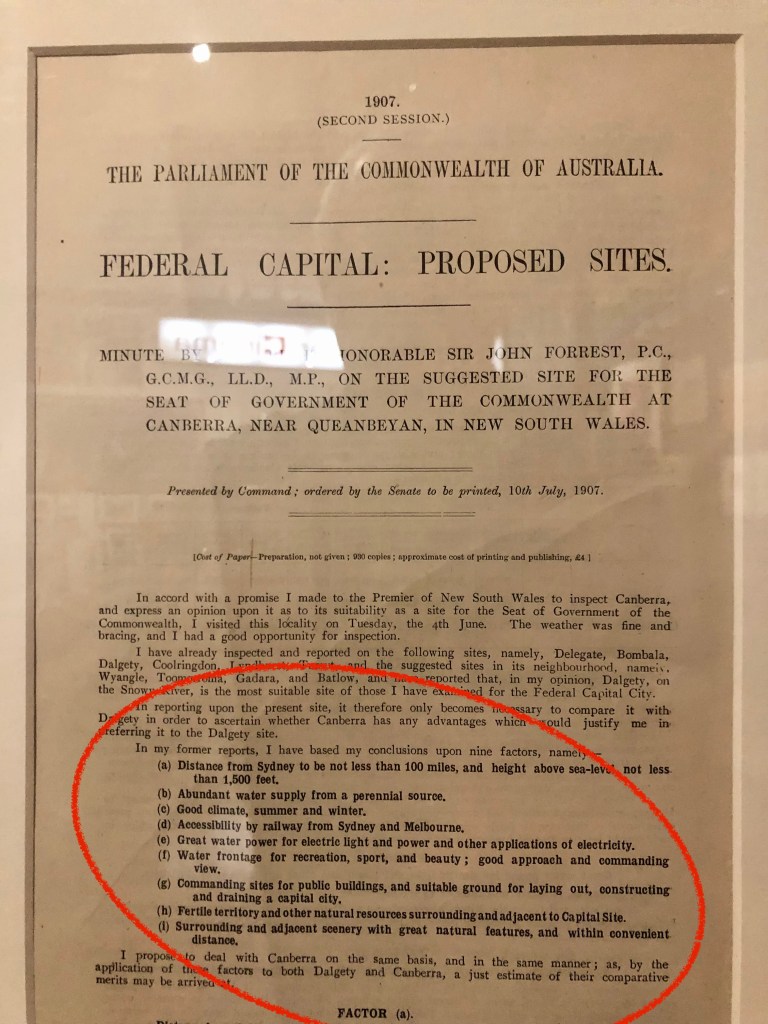
1907: The minute containing Sir John Forrest’s report to parliament on a site for the national capital.
Dalgety, about 150km south of the ACT, got the initial nod for the site of the new capital but the NSW government wouldn’t cede the land. Too hard and expensive to build a rail connection certainly, but also too far from Sydney. Canberra was second choice from eight options.
The word ‘Canberra’ may be a corruption of Ngambri, the name of one of the four Indigenous tribal groups living there prior to the disruption and assumption of their lands. Or it may mean (in Ngambri) ‘space between a woman’s breasts’, the breasts in this instance now called Mt Ainslie and Black Mountain.
Alternative names proposed at the time included: Austral, Aurora, Captain Cook, Caucus City, Cookaburra (😬), Dampier, Eden, Eucalypta, Flinders, Home, Hopetoun, Kangaremu, Myola, Meladneyperbane, New Era, Olympus, Paradise, Shakespeare (🤔), Sydmelperadbrisho, The National City, Union City, Unison, Wattleton and Wheatwoolgold. Probably lucky some of those didn’t get up.
1927, the opening of Parliament House by the Duke of York.
Not the Duke of York, but almost certainly with more claim to the land.
Imagine. It would have been a very strange life. Government from a paddock. Note the comparative absence of trees.
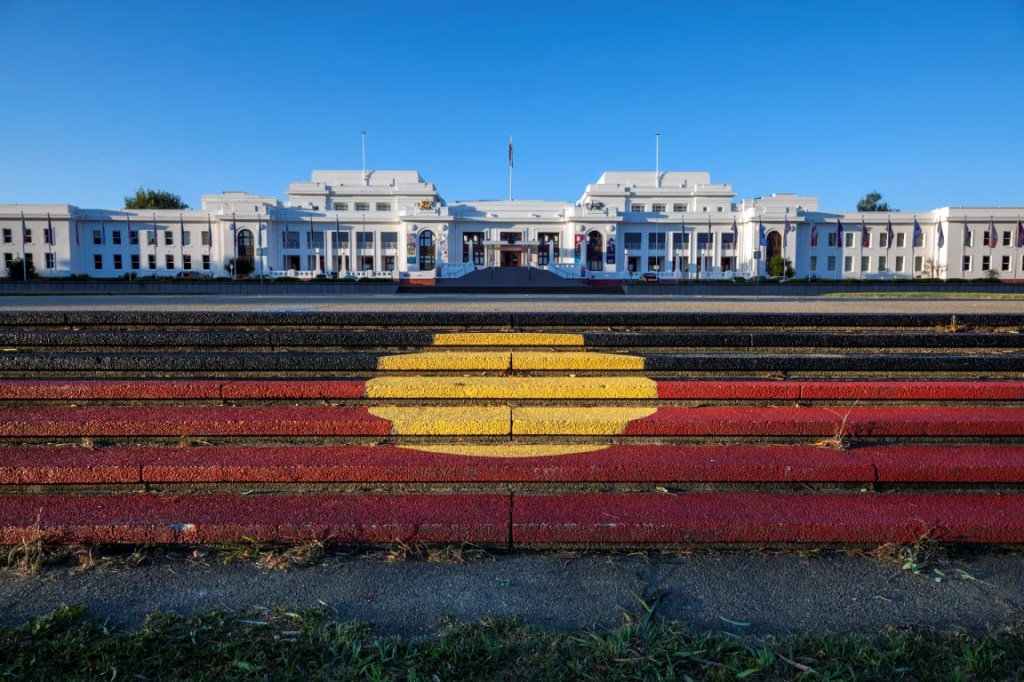
Building of the new ‘old’ parliament house commenced in August 1923 and was completed, after what must have been a constant series of construction and other challenges, early in 1927. It was not designed by the Griffins, Walter Burley and Marion Mahony, but it could have been. Very Chicago School: clerestories, very strong horizontals, interesting sight lines, furniture matching walls matching floors matching fixtures matching ceilings. Passionately symmetrical, built round the two houses — Reps and Senate. Snug, I thought. A building very easy to warm to if not to heat.
The old King’s Hall with King George V standing guard.
The view via this transect through the House of Reps frames the War Memorial (invisible here) perfectly.
John Smith Murdoch, Australia’s first Commonwealth Government architect, did design it in what was called the ‘stripped classical’ style. Good job, but it was only ever intended to be temporary. It does seems like a lot of work and effort for a temporary building.
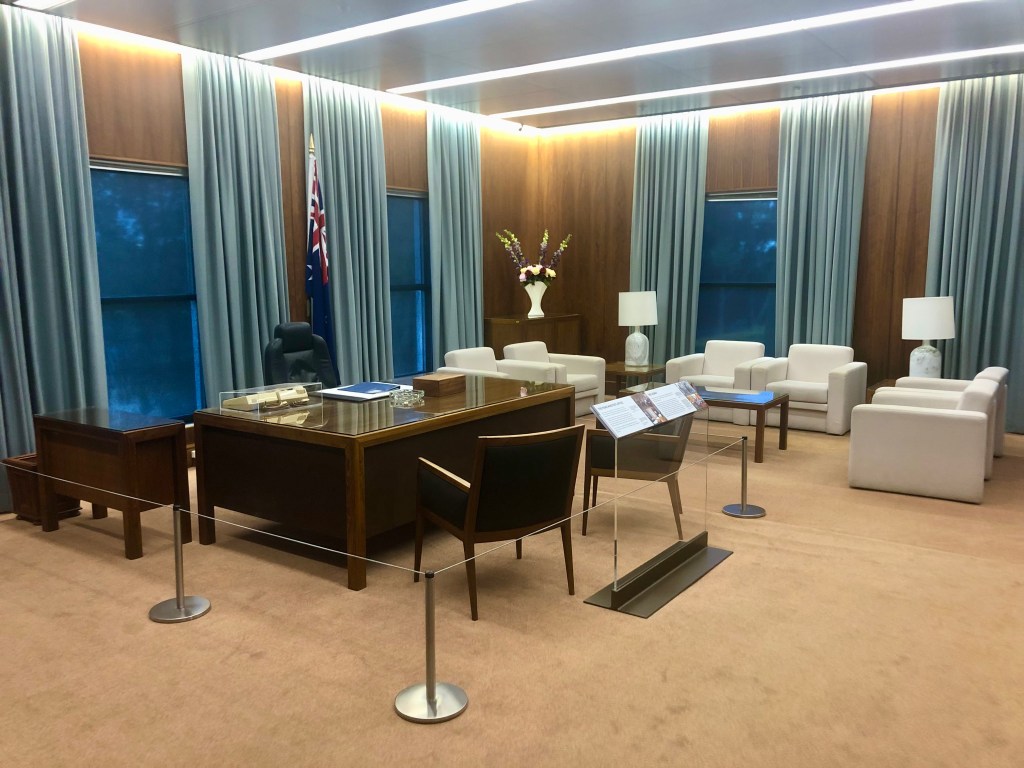
The Prime Minister’s Office, to my eye perfectly fit for purpose. Bob Hawke’s voice is heard.
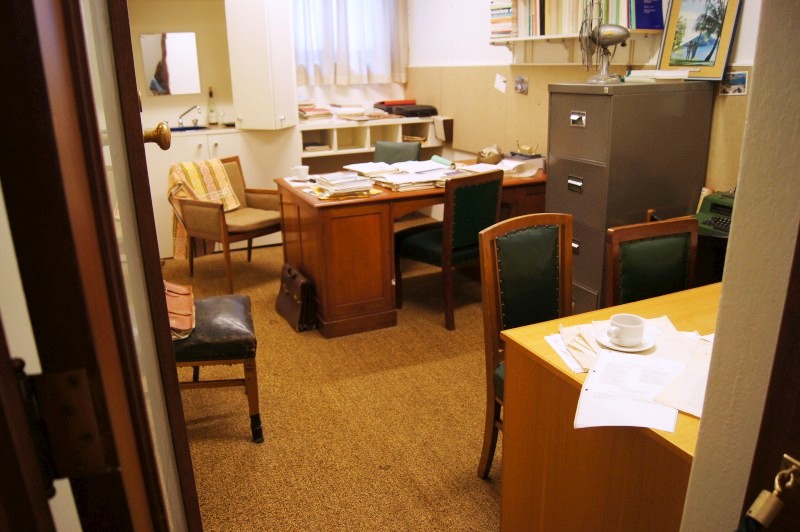
The Prime Minister may have had ample space but a run-of-the-mill MP and three aides would work in an office smaller than this, about 4m x 2.5m. Shall we say limited confidentiality which, who knows, may have been a good idea. New Parliament House where more than 5000 people work on sitting days has nearly eight times the floor space of the old one.
Labor gets a surprisingly good go in the displays, away, that is, from the John Howard Library. And, yes, that is The Australian Constitution being kicked downstairs.
Always was …
• • • • • • • •
‘You won’t find a whole settled essentially stable community that is so smug, so bourgeois, so comfortable, so well-educated. I mean this may be fucking paradise. I’m not saying it is. But it’s as good as it gets.’ (Jack Waterford, staple of the Canberra Times, legend. And I know just what he means. It has occurred to me every time we go there. All those facilities. All that cycling and jogging.)
It can be quiet downtown.
Although there will usually be a jogger to add to the vibe.
It will also be socially aware, generously so.
With plenty of thoughtful instruction.
• • • • • • • •
In his very good book about Canberra, Paul Daley suggests ‘the role of a [national] capital is to host its legislature and judiciary, its memory (the National Library of Australia; the national archives, the galleries), its conscience (the Aboriginal Embassy and the National Museum of Australia with its vast collection of Indigenous remains and relics) and tell the story of disastrous events that almost derailed a fledgling federation (the Australian War Memorial).’
In a recent visit we made the most of these, especially its memory.
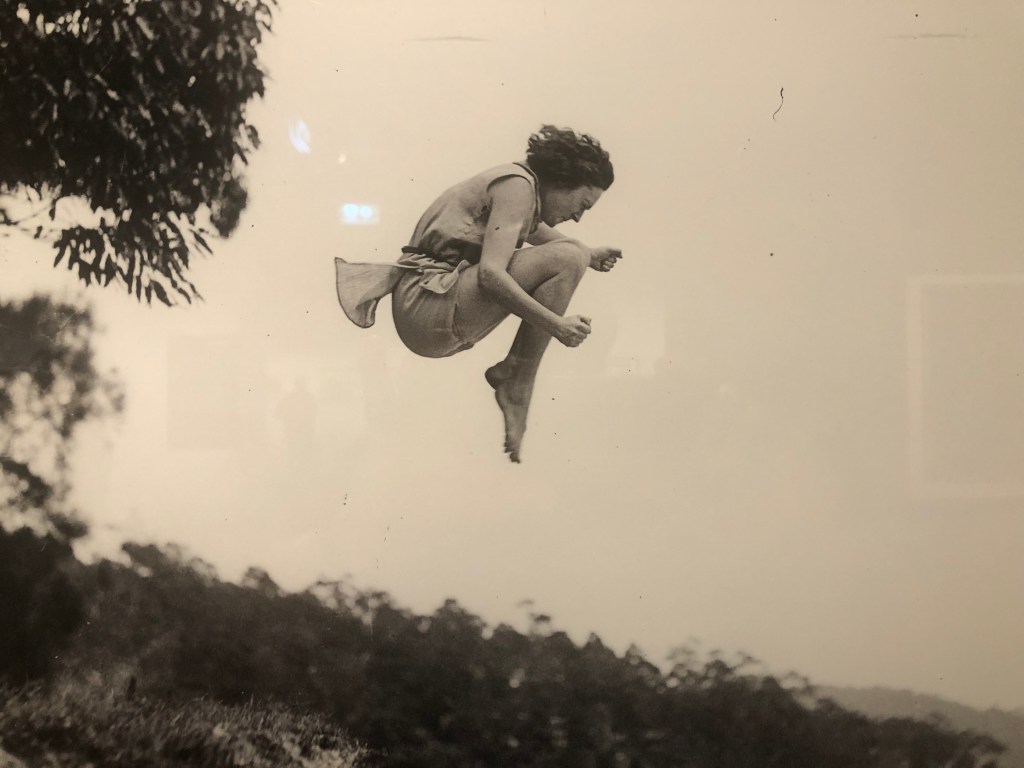
One of the reasons for our visit was to have a look at ‘Fit to Print’, the exhibition in the National Library curated by Mike Bowers of press photos printed from glass-plate negatives (one chance only). A very generous selection and display from the 18,000 or so held by the Library in its Fairfax Collection. All round 1930: another time, another life.
Moments caught at a performance by Inge Stange’s dance gymnastics students, Sydney 1933. ‘This type of physical education is better adapted than almost any other for inspiring inner cheerfulness and new courage to face life in these uncertain times.’
William Lygon, 7th Earl of Beauchamp and, for a time, Governor-General of NSW, with some chaps at Bondi. ‘I doubt’, he observed, ‘whether anywhere in the world are finer specimens of manhood than in Sydney. The life-savers at the bathing beaches are wonderful.’ Using certain information about his activities which could only be described as salacious, his enemies were able to move him on. Smith’s Weekly noted that when his wife divorced him at the time ‘it came as little surprise’. But, bless him really. He’s having such a good time.
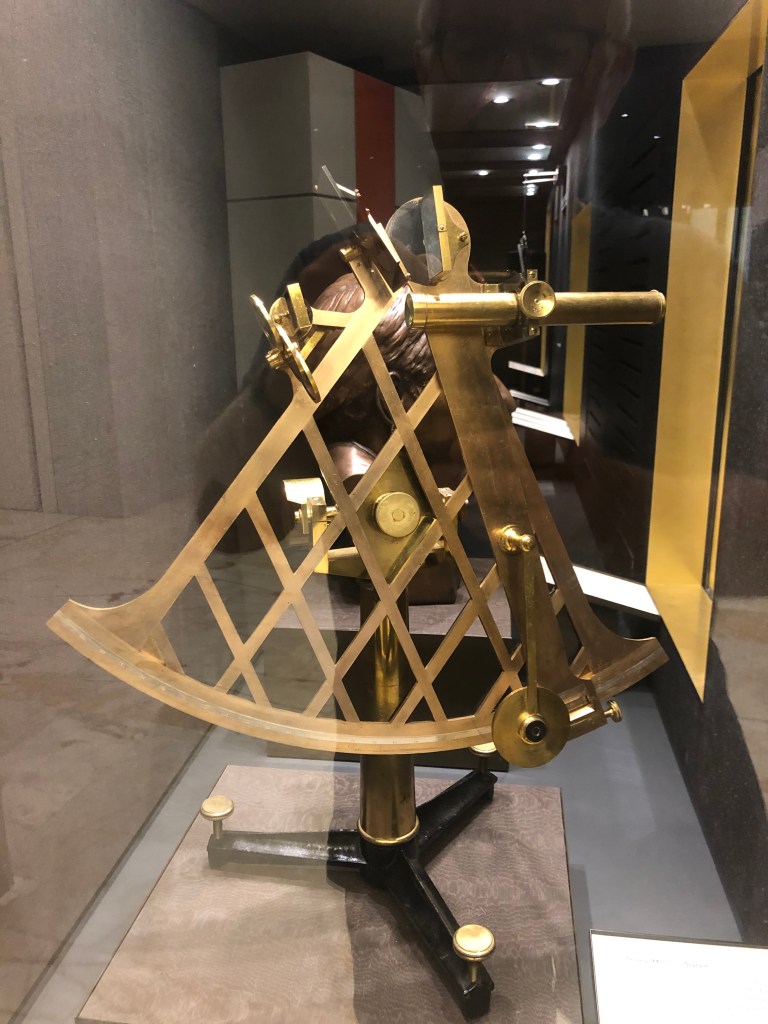
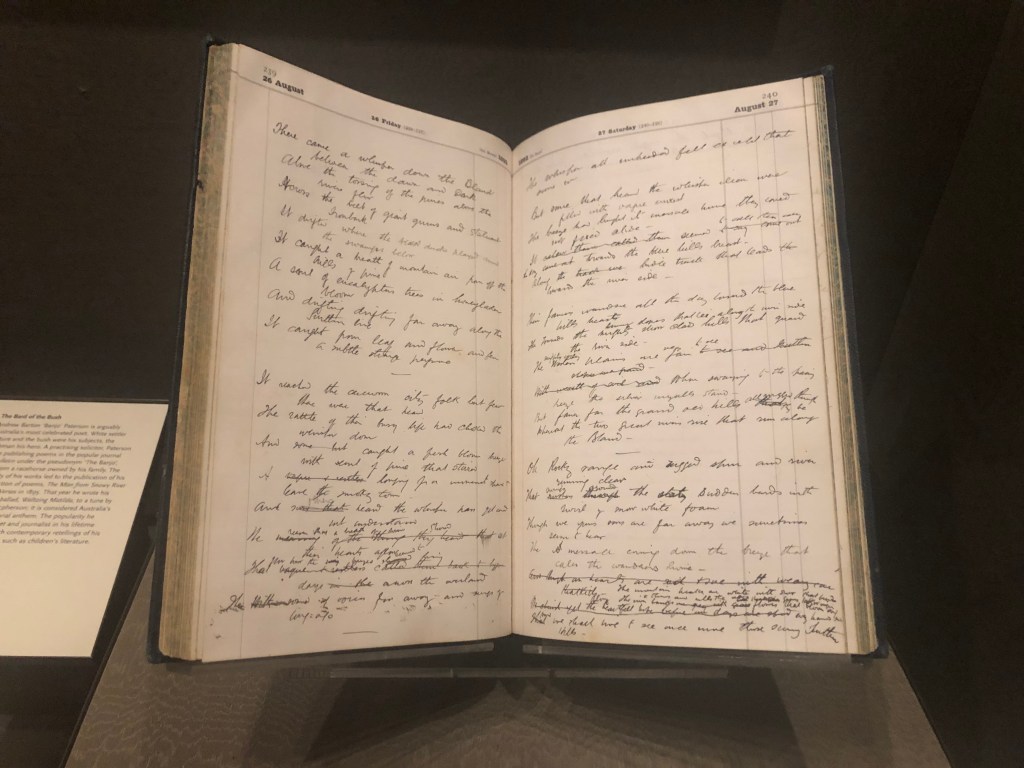
The National Library also had its customary display of ‘treasures’. I liked these two among others:
At left, Major Mitchell’s sextant; and above, Banjo Paterson’s ‘Diary used as a notebook’ open at a draft of ‘The Wind’s Message’. Not his finest work, but ‘The Man from Snowy River’ is just over the page.
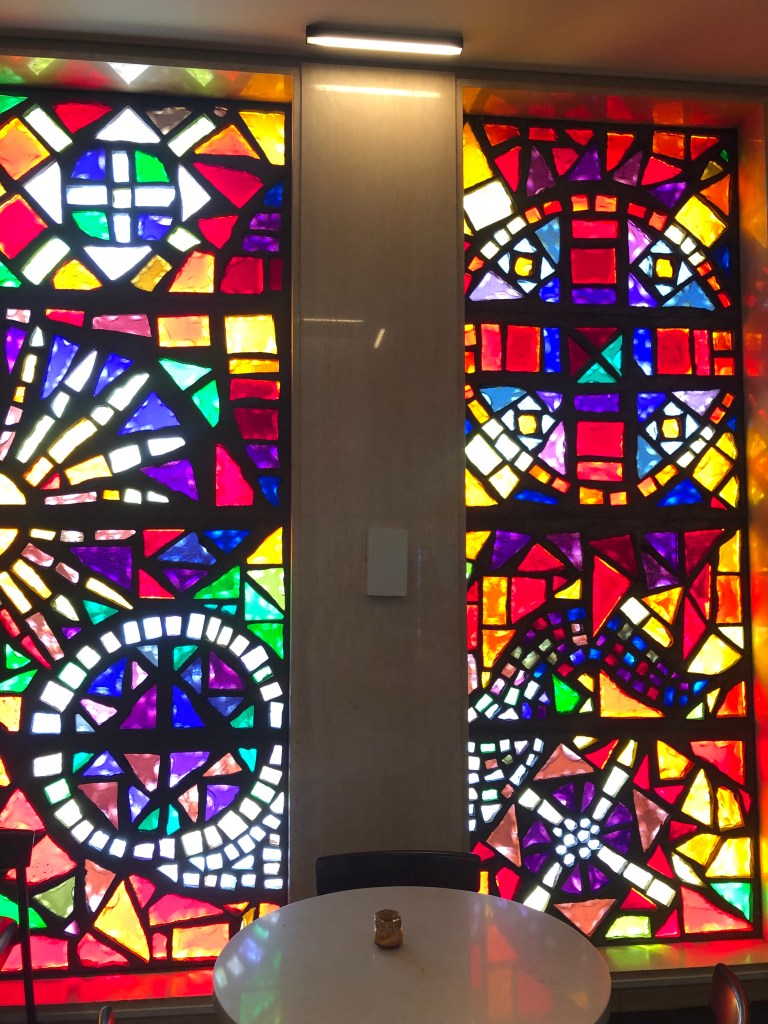
And … you can look at Leonard French’s glorious windows while you’re having your coffee.
National Library: 9.7/10. At least.
And then there was the Gallery. You must go to the Gallery, but it was looking and feeling a bit Brutalist, just a tiny bit stuck around 1980, those enormous rooms bullying their contents which examined closely seemed like they might be second choice. The new Gaugin, the new Monet, the new Munch: not my favourites anyway, but the sort of thing you might mention when you are talking about examples of the absolute range of an artist’s work including when they had a go at something that didn’t quite work.
Best thing downstairs by a mile —
What a very great painting that is. And what a cultural landmark. It was time.
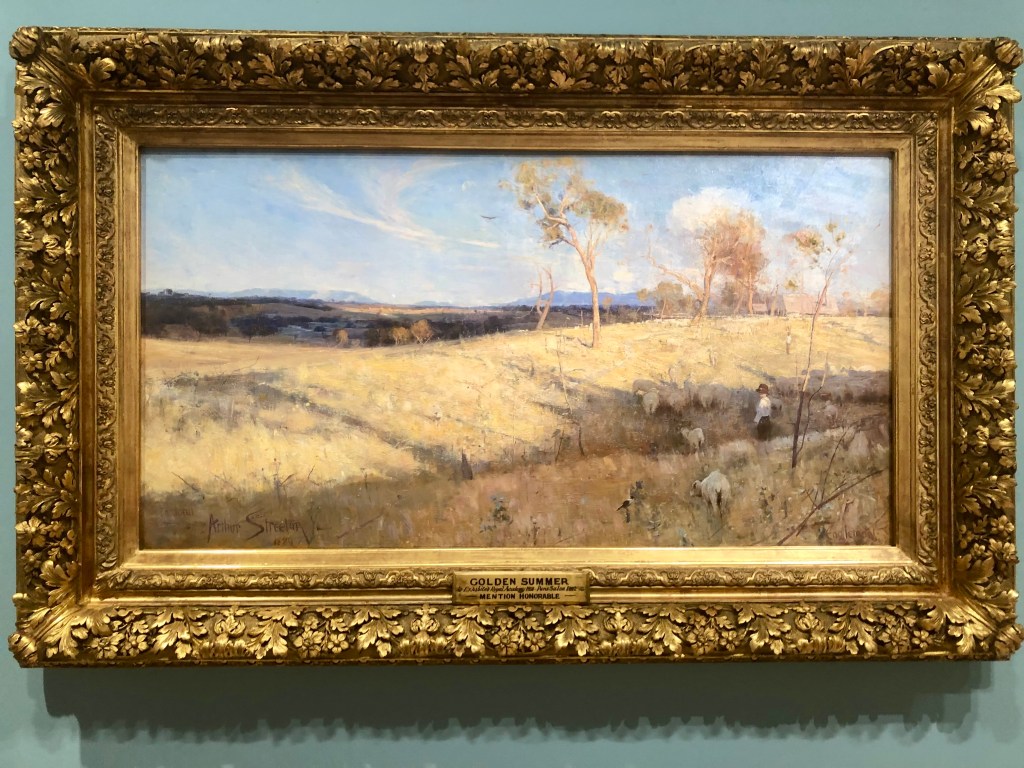
Upstairs was ‘Golden Summer, Eaglemont’ in its very fancy frame. A Mention Honorable at the Paris Salon of 1892 is noted. I’m confirming golden and not just because it’s the Dandenongs in the background. This was the title piece (called ‘Golden Summers’ at the time for some reason) for the best exhibition of Australian Impressionists ever mounted, NGV 1985. I remember it indelibly.
Also upstairs was this, ‘Bush walkers’ by Freda Robertshaw painted in 1944.
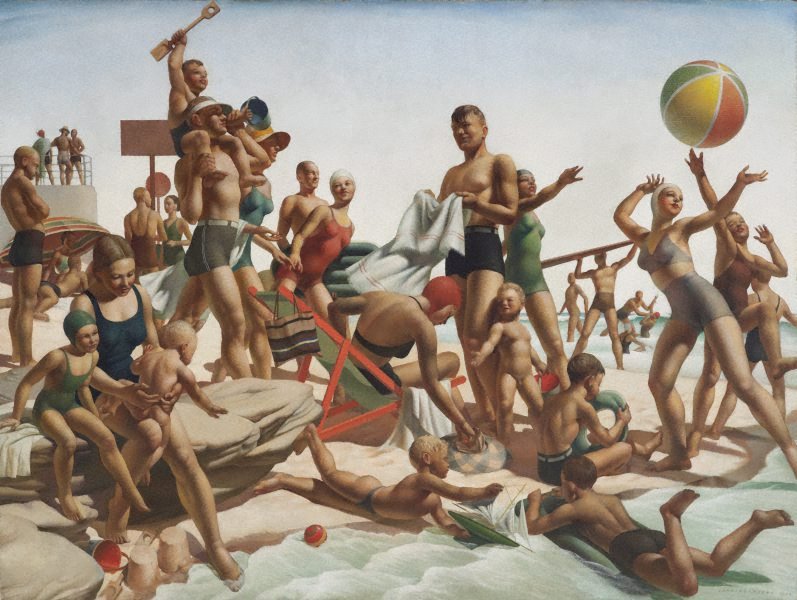
Intriguing. So carefully painted, and so formidably un-bushwalkerly. The figures, frozen from inception to completion, would not have been capable of walking anywhere let alone in the bush. Could they be aliens perhaps? Which is not to deny the considerable interest of the painting. I’d be happy to look at it carefully …hmmm, four times a week. Evidently the same genre as Charles Meere’s iconic ‘Australian Beach Pattern’ (which can be found in the Gallery of NSW) from just a bit earlier. Similarly carefully painted. Statuary, with a sea made of actual glass. That ball, suspended forever. (You might note the hint of domestic violence in the deep background. Us Aussies! Always up for a laugh.)
Just incidentally it is on record that Englishman Meere really didn’t like the beach, and he may have painted himself into the picture as the chap at left looking at least thoughtful (perplexed?) if not entirely discomfited.
Also on display was an exhibition of contemporary ukiyo-e, Japanese woodblock prints, the best known example of which is Hokusai’s ‘The Great Wave off Kanagawa‘. In his Hawaii Snorkel Series Japanese-American Masami Teraoka offers his own take on the slightly libidinous shunga tradition. His ‘View from Here to Eternity’ is below. The placement of the woman’s head provides a challenge.
There was also this glorious ‘Lotus Table’ by A&A Design, 1200mm in diameter and made out of ‘custom-dyed rye straw’.
The Drill Hall gallery had a very large exhibition of conceptual art which we think we are unable to explain except that some conventional thinking is involved as well as aesthetic appreciation. I liked it but not as much as a series in the same place by Simon Gende, an artist from PNG. (When did you last see paintings exhibited by an artist from PNG?) Even more exotic was that the theme of the series was the attack on the World Trade Centre and subsequent events stalking, capturing, killing and burying Osama Bin Laden.
This is ‘Twin Towers’. The legend in always so attractive Pidgin at the bottom says ‘Tupela balusbumpin Twin Tower long America USA‘. ‘(‘Two planes [balloons/ birds/fellas] crashing into the Twin Towers which belong to/in America USA.’)
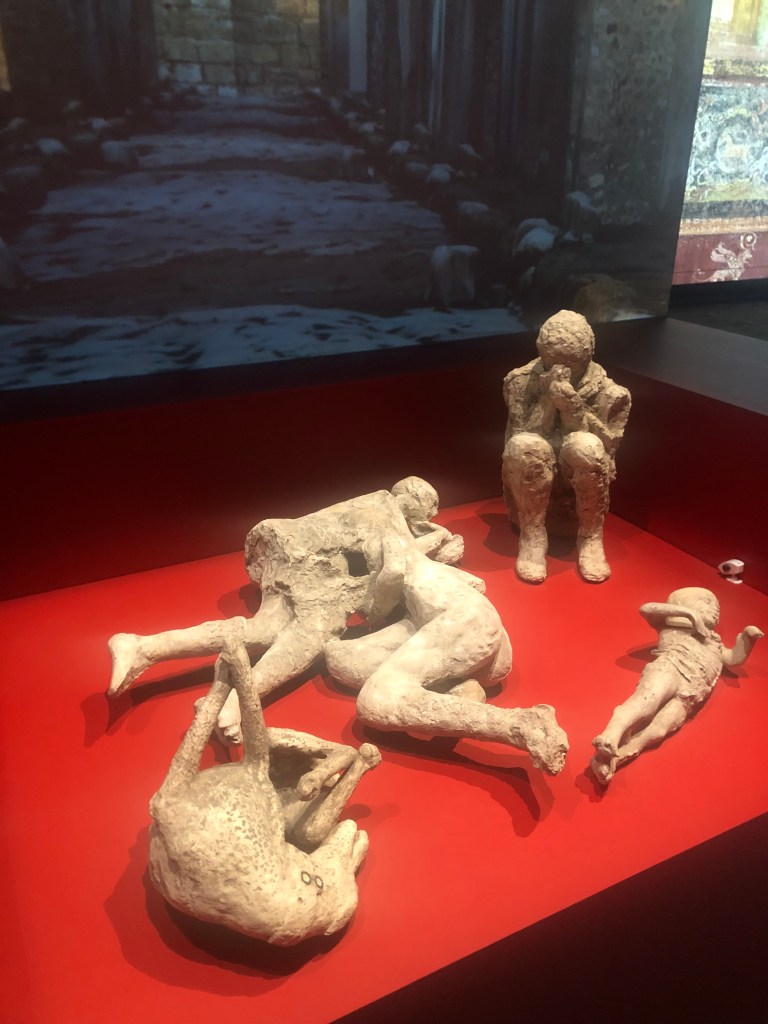
In the museum, one-third closed for a new exhibition when we were there, we found the last day of Pompeii, so to speak, a good deal made out of not very much but with its moments …
and a pink van plus Holden. Good. And someone taking a somewhat decontextualised selfie.
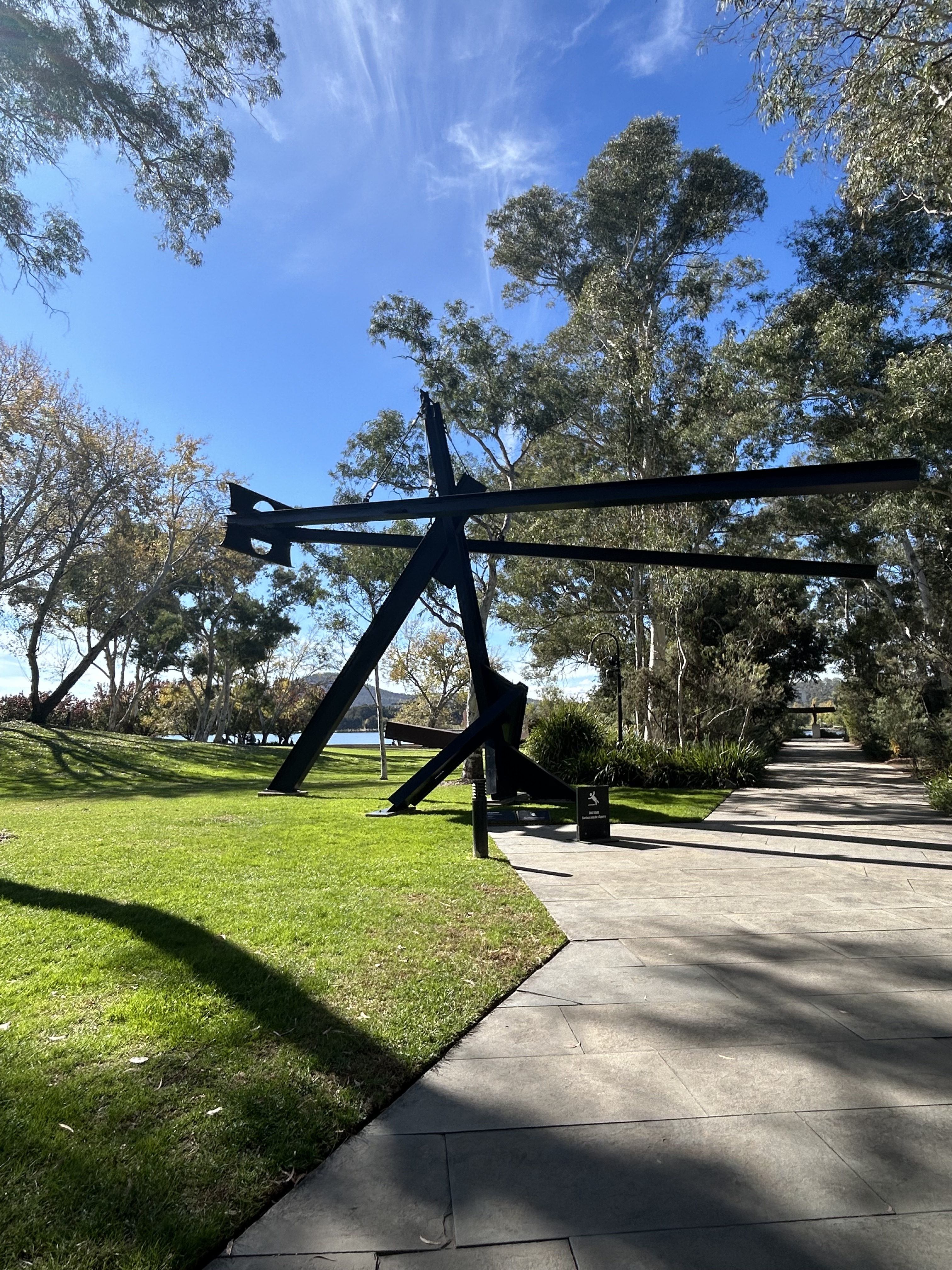
It is a city — now, so very much not in 1927, and not really till the 1970s — of public art … (You can tap on these pics to see them better.)
and edifice. Hard to move without bumping into, or at least experiencing, an edifice.
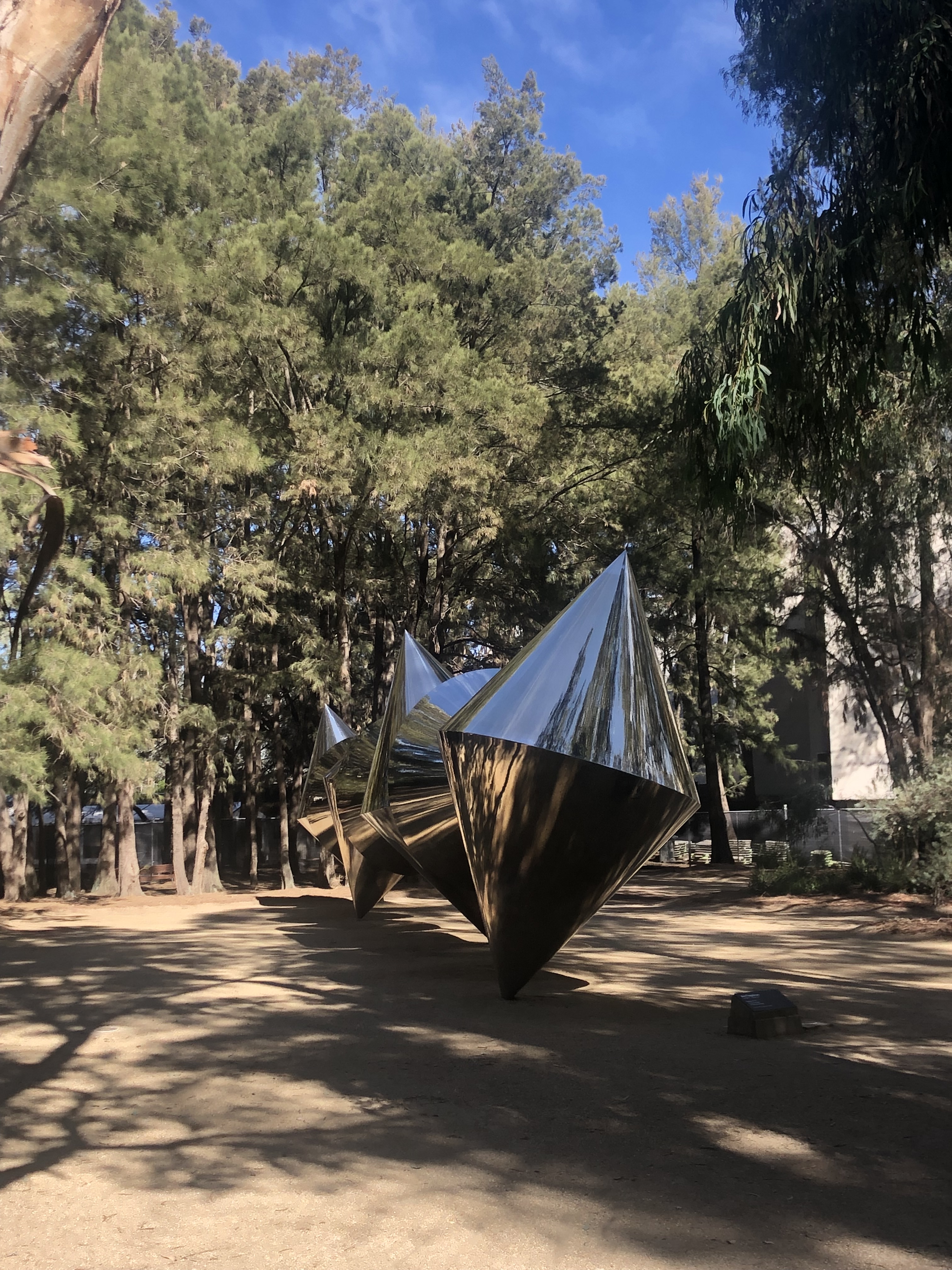
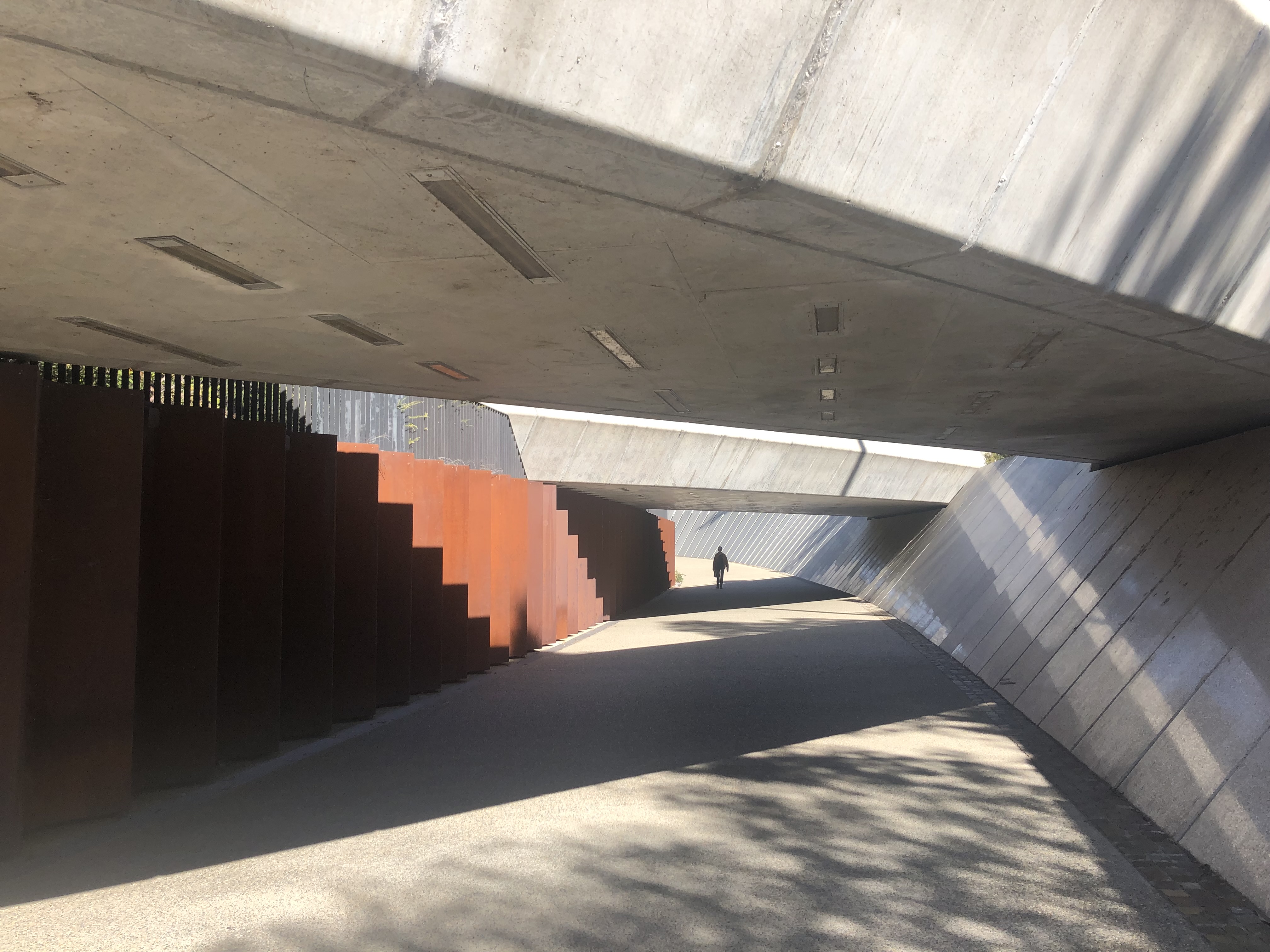
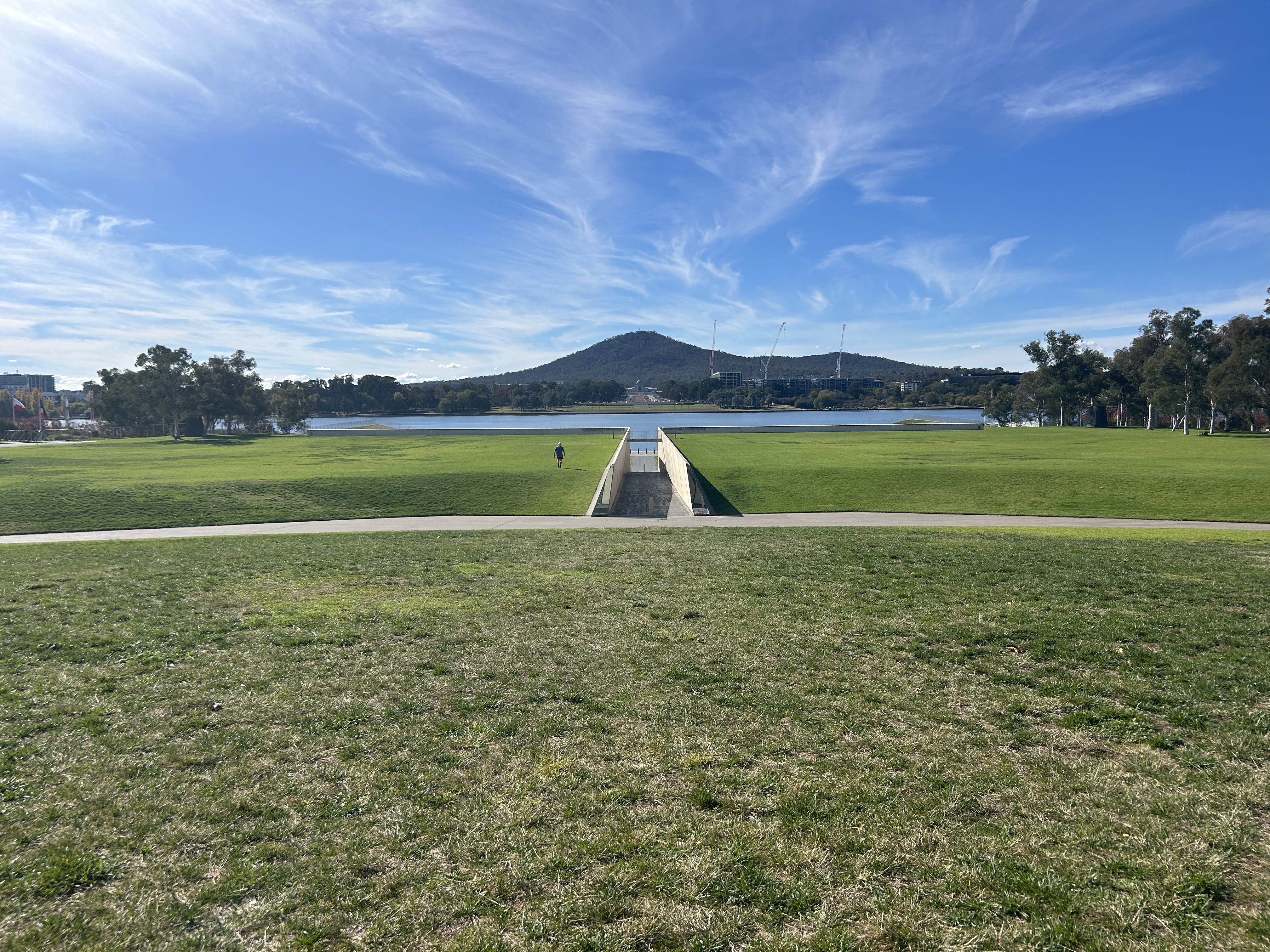
The Gallery (bottom left), the High Court building (‘Gar’s Mahal’) overwhelming two galahs as it does its users, the massively over-engineered Bowen Place pedestrian underpass, and the mysterious ‘Commonwealth Place’, the outcome of a competition, from front and back, itself just in front of John Dunmore Lang Place. John Dunmore Lang, a Scotsman, a Republican and an Australian patriot who didn’t live to see Federation. I don’t know what he’d make of Canberra today. His Place is largely a blank of struggling lawn.
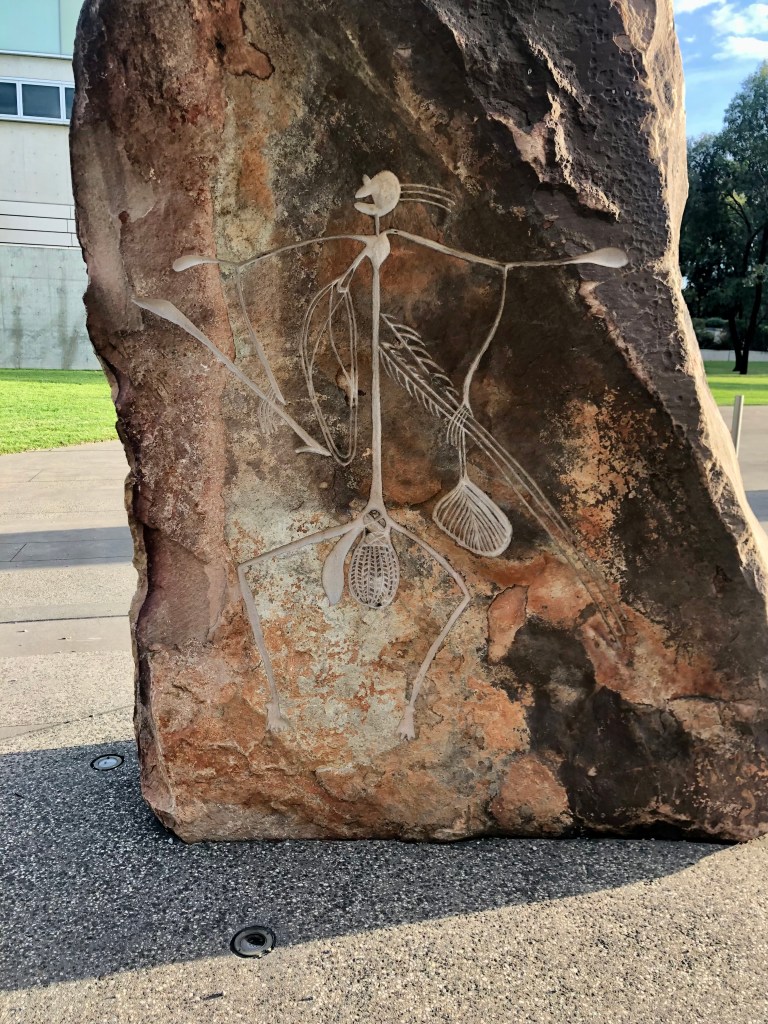
But just along from here is Reconciliation Place which does have a range of features including these standing stones each of which incorporates some First Nations art.
As appropriate the art is representative of different traditions and cultures, quite easily recognisable like the one on the left. But I have never seenGwion Gwion (at right) with all their complexities anywhere other than the Kimberley. Perhaps a courageous decision.
And trees. Trees trees trees. Hundreds of thousands of them. One of the great arboreal projects of Australia. What a wonderful thing. Especially thinking back to the bare paddocks of 100 years ago. It was autumn of course and there was ample evidence of the extent of alien deciduous planting …
and the absorption with monocultures, a version of town planning aesthetic concerns dominating the truths of ecology, but at least they’re trees.
A bit of the National Arboretum from its main pavilion.
Perhaps the most signal image from our trip was this: round 9pm, Lonsdale St as downtown as you get, temperature minus 4, queuing up at the Messina gelato bar for ice cream. You might imagine otherwise, but you don’t miss out on a thing in Canberra.
Yes. ‘Sunday’. Ken Done. Dominant in its gold frame at the public threshold of the Art Gallery of New South Wales.
The attached note says: ‘Sunday was painted from a beach house on the Wyargine Point in Sydney Harbour that Ken Done calls “The Cabin” nestled into the landscape of Rosherville Reserve and overlooking picturesque Chinaman’s Beach. … While Sunday was painted from and inspired by this setting, Done says it’s not a direct representation. It “reflects a feeling that shows the joy of being in this space. The pattern of the clouds, the boats, the people on the beach … it is a feast. And if colour is a language, then the language for Sunday is joy.”‘
It would have been unthinkable not so long ago. Ken Done? Not to be taken seriously. A bit awful really. Hopelessly commercial. For tea towels, place mats, cheap scarves, possibly swimwear; and for people who don’t know anything about art.
But, frankly,how absolutely correct that placement is: Sydney as it would like to see itself and sometimes is. Gorgeous.
The Harbour was covered with scales of sun glitter, the bridge exhibited itself like a formidable flexed (and symmetrical) bicep, the Opera House was perched on Bennelong’s Point like a ruffled cockie. And then in the evening there was the breeze, an erotic whisper, the fag end of the Southerly Buster massaging your sensibilities and because it is summer leaving dainty beads of humid sweat.
Melbourne to live, but Sydney for a visit.
We’d come as the final leg of the Tour de Siblings to celebrate my 75th birthday — we’re all getting on — and this was to see 90 year-old Dorothy. I thought we would stay at Kings Cross. I hadn’t been there for a while and the station is handy. It was also just a walk to her church in Waterloo where we would meet.
I had some uncertainties about the accommodation I’d booked and paid for. It had been very hard, impossible actually, to get in touch with the property owners to find out, for example, how we would get in. So I was disappointed rather than flabbergasted to arrive at a laundrette with no obvious place to sleep or make a cup of tea. I had two ideas in my pocket. The first provided a room but with no view and we needed some offset for our distress. The second — the Hotel Indigo, warmly recommended — had everything we needed including wide perspectives through our windows over Woolloomooloo to the city.
The Cross has tidied up and gentrified since I last looked, especially the Potts Point end (which was always pretty schmick).
In the 1930s buildings of this sort
were replaced by buildings of this sort
with entrances like this.
Art Noveau Deco run wild. [There now Graham. Okay now?] And after nearly a century they’d still be good those apartments.
Just for the memories.
The Gazebo, the ‘Gazza’, once a hotel and for a long time my Sydney accommodation of choice, now apartments and a distinctive building visible from many points of the skyline.
I knew this was the El Alamein Fountain but thought it was located in Anzac Square. I now discover that acre of paving and concrete is the Lambert Peninsula National Park and think that to be a bit weird.
The walk from the Cross to South Sydney Uniting ambles its way through the tree-lined streets of Darlinghurst and Redfern full of blunt but picturesque Georgian cottages tight to the footpath. Every 100 or 150 metres there are hole-in-the-wall places with a dozen boxes or stools on the footpath where people eat pain au chocolat and drink coffee. Runners pad past in their leisure wear; torsos often naked for the men, nearly so for the women. Buff bodies everywhere. Gay couples (in the week before Mardi Gras) lean in to each other, sublimely indifferent to public interest. These streets are theirs.
There are cities in the world that would kill for areas like this. There are other cities which would kill them off promptly and decisively.
Dorothy is 90, a sweetheart and a bit of a dag. As well as that she is the Reverend Dorothy McRae-McMahon, resolute pioneer of the place of women in the church, the author of a dozen popular books of liturgy, and a warrior — without necessarily meaning to be so, it came to her as naturally as breathing — for the rights of the downtrodden.
She has a gift for saying and writing things that people can connect with, especially those living with trouble, helping to ease their pain. God has spoken to her mysteriously but directly. Her certainty of that is complete. You can make of that what you will but in her line of work it is practical.
For many years she was the minister at Pitt St Uniting in the heart of the city. But now she is a parishioner at South Sydney, a most remarkable church on the southern fringe of its inner suburbs. The church property is 100m from Redfern Park where the Rabbitohs used to play, and more saliently where Paul Keating gave the Redfern Address, still a vivid reminder of what all Australians should know, remember and take to heart: “It was we who did the dispossessing. We took the traditional lands and smashed the traditional way of life. We brought the diseases and the alcohol.”
The church’s congregation is unusually diverse: in terms of sex and gender; in terms of affluence; in terms of cultural and ethnic background; in terms of education; in terms of health and wellbeing; in terms of drug of choice (which might be Ceremonial Grade matcha). Dogs, kids, people in off the street looking for some shelter just absorbed into the mass which I remember on my visits as being striking for its relaxed intimacy. Stuff going on all over the place, but still having a purposeful shape, capped off with a shared feed.
That’s a church service. But a year ago. Various parts of the church building are being renovated because the Sydney sandstone of its decorative front has turned out to be porous and flakey. The service I went to most recently was held in a community centre a short way down the road. But just the same sort of thing. Everyone publicly welcomed by name, the minister providing the homily but not a lot else. There were a dozen ways to contribute and perhaps 20 people did, reading lessons, providing notices, or mentioning people and their situation to be remembered in thoughts and prayers.
One reason I wanted to use this photo is because Andrew Collis is in it. It is shared magic, but he’s the magician. Slight, quiet, but both deft and definite, he is such an admirable presence. There is not the slightest sense of disorder, nor is there anything about these services that is dumbed down. A lot of the ideas discussed are chewy and testing.
The text for that Sunday’s thinking out loud — like everything else, so carefully prepared — was Luke 4: 14-30, a curly one made more so by the reality of its rendering.
Jesus goes home to Nazareth and at the synagogue reads from Isaiah: “The Spirit of the Lord is upon me, because he has anointed me to bring good news to the poor. He has sent me to proclaim release to the captives and recovery of sight to the blind, to set free those who are oppressed.” He rolls up the scroll and sits down. You can see it. This is direct reportage. Then he says, ‘It’s me. You heard it here first. I’m the one.’ After the ‘That’s Joseph’s lad though isn’t it? I thought he was a carpenter’ moment, “All spoke well of him and were amazed at the gracious words that came from his mouth.”
There follows a bit of to and fro where Jesus seems to be demanding to be a prophet but without honour in his own country. The history of prophecy, he suggests, is that people like Elijah and Elisha largely ignored local issues and did their best work elsewhere. But “when they heard this, all in the synagogue were filled with rage.They got up, drove him out of the town, and led him to the brow of the hill on which their town was built, so that they might hurl him off the cliff.” A sharp turn, about which you’d like more detail for full comprehension. However, and what might or might not be the moral of the story: “But he passed through the midst of them and went on his way.”
It’s a story with its share of puzzles, but this day it seemed to be about courage in the midst of adversity, about adhering to your principles, about being honest and open regardless of the consequences. And that would all fit.
Andrew has been there for 10 years and I imagine the fact that there is a garden and chooks in a chook pen at the back of the church might be at least indirectly down to him. I grow in confidence when I look at the list of the church’s working groups: Arts, Mirrung Garden, Hospitality, Ministry Development, Property and Finance, Safe Church, and the ‘South Sydney Herald’ a monthly with a circulation of 10,000. How do these things grow out of such apparently sparse resources? Andrew has been there for 10 years, but for only a few weeks longer. I hope another hero emerges.
This might be the modern church everywhere. I don’t know. I’m not an adherent. I don’t as a rule go to church. But this is the ultimate Anti-Trumpism, alive and well. However modestly, ‘Great’ in actuality rather than as a word on a red cap. This is lived and productive and sustaining diversity, equity and inclusion — the much maligned DEI — and proof that it can happen at least somewhere and be beneficial for all concerned.
• • • • • •
Finally the gallery seems to have been tarted up. There’s better stuff in the new building; there has been some re-hanging among the Victorians for the first time in living memory; the Asian section has been re-imagined. My arts correspondent tells me there is a new director. This turns out to be only prospectively true. July. So it wasn’t that. Just time for a bit of house-keeping, and the revelation again of the superior quality of the AGNSW’s Indigenous collection.
A fine way to finish. Ginger Reilly at his best: Nyamiyukanji, the river country with gnak gnak, Ginger’s Jukurrpa, in the foreground.
A collection of pics that didn’t really go anywhere else of things I’d like to rememberfrom Japan in 2024.
Atmospheric. At an izakaya (small neighbourhood pub that serves food and beer) under the main northern rail line flyover near Tokyo Central Station. It’s hot and the end of a long day. We are eating edamame (‘A great source of plant-based protein, fibre, healthy fats, vitamins, and minerals. It is also low in calories’) and salad and, like the gentlemen nearby, drinking excellent Japanese beer.
Our bedroom at the Sonic Apartment Hotel in Dazaifu. Plenty of bed, not much room. I am standing in the shower.
Where salarymen have their smokes in central Tokyo, but you need a phone as well.
Korakuen (‘Lake Paradise’) of Okayama, one of the four ‘Great Gardens of Japan’. Michael and Myrna thought it was pretty good. I was disappointed. I wanted more variety and inventiveness in the layout. But what do I know?
A motorbike shop over the road from our hotel in Nagasaki. There was something about the busy-ness of the illuminated highlights and also the way the T-shirt rises so ghostfully out of the machines.
The trams and tram stops of Nagasaki. Trams several decades old with very peculiar driving control mechanisms which produce a great deal of jerking, but otherwise just so functional. And cheap to ride. Panels at each tram stop include a stylish floral decoration.
Nagasaki again. Looking closely behind Myrna you can see the tori which became one-legged after the atomic explosion. But to the right arrayed along the hedge behind the seat and protected by bollards is all the rest of it. A fine act of remembrance.
This is some of what sits under the red heart on your iPhone. Often not terribly reliable. If you want to know exactly where and how far you’ve walked you need another version of a GPS. Or a GPS. Either will soak up a large amount of power. The red heart doesn’t. Usually you don’t even notice what it’s up to. And as for being accurate I’m sure it didn’t know what time I went to bed and may have interpreted being carried around as being awake. It doesn’t seem to have registered how my walking asymmetry was going — it would have to have been much worse than that as I staggered along. On the other hand, I’m not sure how it registers ‘Flights climbed’ but 237 both seems about right, and seems like a lot. That benchmark edifice, the Empire State Building has 102 floors and the tallest building in the world Burj Khalifa in Dubai only has 163. There is some suggestion that a ‘floor’ equals 3m. which would make sense. So we might have climbed 711 m. How much is that? The Empire State is 381m high. Burj Khalif is 828m, but only 585m can be occupied. This was the last day on the Kumano Kodo and my sense of things is that all that’s missing is the additional descent of 237 floors.
The walls and power poles of Kyoto. So good looking and such an expansive policy. I hope he got in.
Tokyo’s National Art Centre. A photo of a photo from an art society’s massive biannual exhibition. Stairs, pain, effort, teamwork, artificially added difficulty, a religious icon. Can you get more Japanese than that?
Shibuya. Rich Tokyo. He is not part of the display. He has simply walked in for a photo. The heads are wagging backwards and forwards, up and down. I think the eyes opened and shut as well. It is a sunglasses shop.
Takeshita Street, Harajuku, a suburb of Tokyo. Somewhere everyone should visit to be reminded how much variety there is in the world. (See also The Substrate.) Thrilled to have her photo taken. This was just over the street from the Micropig Cafe. I have video of this which I can’t load here which would show small pigs running over people sitting on the floor of a room. In this instance these people include our granddaughters along with another customer who appears to have three pigs climbing on her one of which might be being kissed. Otters were also an option.
One of the reasons we went to Japan was because Simon, our son-in-law, wanted to see Mt Fuji again. Fuji-san, one of Japanese Buddhism’s three sacred mountains, peak 3776m above sea level 600m higher than any other Japanese mountain, World Heritage Site, social and cultural icon, Japan’s national visual branding. And very often hidden by cloud. And that’s pretty much how it was for the three days Simon and family spent at Kawaguchi. It might have peeped out once.
It’s our last night in Japan and I’m cleaning my teeth in our hotel bathroom. Peer out the window … and look it might be Tanzawa but, right direction right size, I’m calling it Fuji.
The writing on the shop window at left says: EAT IN TAKE OUT ATELIER PORCEL ARTS LUNCH COFFEE SMOOTHIE BEER KUSHIAGE [grilled food on skewers] PASTA. That surprises me. It is somewhere near Kumamoto which in turn is somewhere near the middle of Kyushu which in turn is Japan’s fourth island, the one off the end heading towards Korea and China. The one which seems to consist mostly of volcanoes in various states of tumescence. The one more obviously tropical, more wetter, more typhoony. It’s a long way from Tokyo, closer to Seoul actually, and quite far enough from Kyoto. And they would be some of the reasons you see fewer European tourists there than in other parts of Japan.
They might have reason to visit Fukuoka, the largest city on the island, with its gracious boulevards and general air of self-sufficiency. They might have come to last year’s world swimming championships which were held there when Australia won twice as many gold medals as the US (if not more medals overall, but that’s not how we count ’em. No way. 😐).
I haven’t been everywhere in Japan, but I’ve been to enough of it to know that out of town is different to in town. You get something quite different. Five years ago I developed a big Kyushu travel plan in that expectation. I even made an at-the-time invisible friend on Yakushima as we went back and forth negotiating our stay. And now I expect to see Kentaro in Melbourne quite soon. That scheme became disrupted by what Representative Marjorie Taylor Greene refers to as the coronavirus hoax. This time we made an effort to complete some of that plan.
What we wanted to do was built around three substantial day walks, none of which we did. It was too hot. Over 35 every day, nearly 40 in Dazaifu. Look at these people in the yard of Kumamoto Castle:
a couple of defiant nongs out in the sun, the others huddled in the shade of the giant gingko, under shelters, umbrellas or basking in the vapour sprays. So we drove around in air-conditioned comfort having a jolly time, seeing things we wouldn’t have otherwise. I’d do all this again any time.
We flew from Tokyo to Nagasaki where we spent four nights in a really good hotel with a very large air-conditioned room, a first-rate breakfast and most congenial staff. This may have coloured my roseate view of Nagasaki. Don’t know. Then we got the train back to Fukuoka (had to return our car to the pick-up point), found Michael and went for a drive.
The Toyota Sentia Hybrid 7-seater convertible van: highest praise. If they sold them in Australia I’d give purchase strong consideration. Drove 900kms in great comfort using one tank and $4 worth of petrol. The $4 worth was to procure a receipt to indicate we had bought petrol. Might have been necessary, might not. But it’s Japan … always better to be on the safe side.
Kumamoto
We were really only going to Kumamoto so we could get to Mount Aso early the next morning.
But I knew that it had an impressive castle which had been substantially restored and when our plans changed, they included going to have a look and to ascend to the top storey which provided an excellent view of the city and its surrounds.
We left thinking you might find many other things of interest in Kumamoto.
And then Mount Aso …
Mount Aso is the largest active volcano in Japan and among the largest in the world. It last erupted in 2021. That is to say, recently. Its upper reaches are dotted with masonry beehives for the protection of visitors should it be required. It has a very large caldera, the outer ring of what was there once and which has now collapsed, about 30 kms from one irregular side to the other. This is visible on the map further above. The elegant little cone to the left is to be found inside that ring.
Aso’s peak area is dramatically bare of vegetation, but there are several preparatory areas for leisure activity. We drove past a massive aggregation of cars on our way up and wondered why on earth they were there. It was a golf clubhouse. Look at the courses carved into its flanks. It is otherwise a national park. There was a well-patronised lookout, and then there was the comfortable party area with restaurants, cafes and horse rides (off to the right below).
From the small off white spot in the middle of the photo above of the whole mountain complex it is possible, on payment of ¥500, to drive to another even smaller off-white spot to its left and, on occasion, to walk and climb Aso’s five peaks. Visitors to the upper reaches are rewarded with views of the bubbling sulphuric stew in the active crater.
They are also subject to a barrage of warnings both visual and aural in various languages which are especially for people with asthma, bronchitis or heart problems.
We were walking around the rim on the track closest to the crater when the warnings increased in intensity and were accompanied by arm-waving. It always does to obey warnings in Japan even if you don’t feel they’re warranted. Obedience is the priority. Several things happened at once. The air did seem to thicken up a bit. Then we started coughing. It was one of those things you don’t think will really happen. Nah … that’s just what they say, etc. But there WAS too much sulphur in the air and, after putting up the windows of the car rather sharpishly, we drove away.
Having driven across the caldera, we are looking across its paddyfields to the rugged hills on the other side.
We were off to spend the night at Ukiha. It was a great drive, first through another national park and then along a series of river valleys. This (below) was an onsen establishment clinging to its hill next to some woven concrete holding that hill together. So much of Japan is beautiful but not much of it is untouched.
Ukiha
Why? Who goes to Ukiha? No one. This is one of those finger-on-a-map (to jump off to climb Hiko-san the next day; didn’t happen) and-then-find-suitable-accommodation moments. And in this, despite booking the wrong date, we were unaccountably successful.
Brand new hotel, so very stylish in the middle of not very much, so much room to park the car (hoorah, always an issue in Japan), no food, but beer, a wide variety of chips and lollies and containers of formidably excellent grapes in the vending machine, several very nice places to sit and drink the beer, and wonderful staff one of whom was very excited to practice his English.
While they mightn’t have had food, they had excellent recommendations about where to eat. At their suggestion we searched for and found a fairly well hidden eatery (pictured below the two pleasant sitting places at the Ukiha Fairfield) and had what Myrna thought was the best meal of the trip. Severe Momma, dutiful daughter serving, husband cooking in a rather grotty kitchen. But oishi, delicious. And then for breakfast you could visit the farmer’s market which operated next door. You couldn’t identify much, only marvel. We did buy some nashis. I can’t remember what else.
It was round then I discovered we had been staying in an establishment, a Marriott hotel, owned by members of the Church of the Latter Day Saints. ‘Marriott International is the largest hotel company in the world by the number of available rooms. It has 36 brands with 8,785 properties containing 1,597,382 rooms in 141 countries.’ Its headquarters are now in Bethesda, Maryland but when it was founded by J. Willard Marriott they were of course in Salt Lake City. That’s what you can find out when you travel.
And you can also visit Ukiha’s Inari Shrine: you can climb 300 steps through 91 (and no, I have no idea why) torii to the entrance or, as we did, you can drive up. (There is another much more famous and heavily visited version of this near Kyoto.)
Inari (also applied to a type of sushi) means ‘rice harvest’ symbolising the idea of good fortune, blessings, something for which we should be grateful. It is a modest shrine but the hillside is covered not just with orchards — this is one of the fruit capitals of Japan — but also with what I imagined initially to be grave markers. They’re not. They’re posts with snatches of poetry written on them. ‘Looking out across the valley I think I see the distant spring blossom of Tsukushi (a suburb of Fukuoka an hour’s drive away).’ ‘Wearing a robe I was enveloped by the scent of my mother.’ ‘I fear the velvet night no more.’ ‘The full moon shines with brilliant light.’ That’s not something we have necessarily.
We determined that we would like to see the sea. There were murmurs about having a swim as it was still spectacularly hot. We found a road east along the Yamakuni River which provided satisfying spectacle around every corner.
We found its mouth but no, not swimmable. Both banks of the river were built environments as they had been for 40-50 kilometres. But here there were sets of steps like tiered seating every 30 or 40m as far as the eye could see. What for? We also tried to imagine what could be behind the giant fences but couldn’t. It turned out to be a marina (with a complex of football grounds on the other shore). But again, why? Mysteries.
We had ended up at another shrine, Hachiman Kohyo, which has been in its present location since 535 CE. The mouth of a decent-sized river, … that could be enough to incite a shrine. And there it was. Insofar as it is famous — not very far, it is well out of the way — it is for its lion dogs.
It was this sort of neck of the woods really: another Japan. Just as interesting. (The words on the front of the Isuzu in for repair say: ‘earth-friendly environmentally-friendly people-friendly’.)
It was near enough to 3 in the afternoon and we hadn’t had anything to eat since our rather desultory breakfast (bananas and grapes I just discover). I thought I would provide a solution by finding the nearest coffee shop. It would be bound to have food as well. So we headed off to Umi-san (coffee and cheesecake) in the very very back blocks of Yoshitomi, imagining iced coffee with a great dollop of softu crema or something equally interesting in it. We’d drink that while consuming extra large slices of cheesecake.
We found Umi-san under a tarpaulin attached to a shed. He was so overwhelmed by a visit from Australians he was rendered close to immobile. He wanted conversation. Wanted to know where we’d been and why. All via Google which I was, I’ll say, too faint with hunger to operate effectively. He had no cheesecake but he could make us some coffee. But first he had to spend quite some time finding and lighting a mosquito coil. Very thoughtful of course, but we were starving.
It took him just on half an hour to make the coffee which appeared, actually very good coffee, with two ice cubes in it and nothing resembling dairy. Quite correct really, but the doctor hadn’t ordered that and was pretty disappointed. I drank what I deemed to be respectable amount, a respectful amount, of what we’d been provided with and we fled to a Lawson to find something with plenty of calories.
The Lawson. Along with the 7/11 and the Family Mart, staples of the Japanese consumer economy. But the Lawson … so very reliable.
Mojiko
We were on our way to Mojiko to stay at this hotel. The Premier. I had read, I think, that it was on an interesting site stuck out into the Hanmon Straits which separate Kyushu and Honshu and that it was nested in among an unusual collection of art deco or ‘Retro’ architecture as you will find it referred to. That turned out to be true.
On our way to find some dinner I discovered these gals arranging themselves for a low-action selfie. They have found a boat named ‘Moji’, and they have managed to include the very ostentatious ‘Observation Room’ towering over the old Customs House. To the right you might just be able to make out clusters of lights and what might be marquees and canvas shelters. That’s what they were. We ate outside from a restaurant in the Customs House after strolling through what seemed like a dog fair with all things dog: prams, pushers, capes, hats, bells, bones, shark skin, dried meat, glow collars, anything you can imagine really, with several hundred perhaps a thousand dogs being catered for.
You may note their mmm dunno … dresses? their personal fan and the preparedness of the one at the back to have his or her photo taken.
There were beautiful buildings to contemplate.The former headquarters of the Mitsui OSK shipping company.
Breakfast suggested that there would be a story to be told about the hotel. It wasn’t overly expensive, mid-range I guess, but it was a place to take your family for a weekend away or a special occasion if you were a well-heeled member of the Japanese haut-ish bourgeoisie (congregations of whom are not always on display in Japan). And I think the highlight, the very special thing, about the Premier might have been its buffet breakfast. You could get simply anything, and if it wasn’t there they’d make it for you. I watched prodigious feats of eating, almost to the point of applause, especially by the younger members of the absolutely packed house.
But our schedule said Dazaifu, so Dazaifu it was.
Dazaifu
What’s a photo for Dazaifu? There could be so many.
The timber decoration of the Starbucks in the Baba Sando Line: this is so noteworthy it appears on guides as a tourist attraction. To its right the bustling throng is pushing their way forward for icy poles. They might have been plum-flavoured. The shrine that the customers were on their way to or from is surrounded by sacred plum trees. This was just a window in a wall near monster Japanese sweets cafes which were nearly empty. The owners had something going on.
Digressing momentarily, they were making equally popular plum cakes just a little further along the street via a sort of conveyor belt process. It would have been so incredibly hot where she was standing.
Continuing clockwise with the photos, the interior of Motsu Nabe, the restaurant in the bottom of our accommodation. Great food which could have been better if we’d worked out how to cook it properly (at the table) and decide when the cabbage went in. And then Myrna’s new Issey Miyake top on the shrine’s footbridge. An excellent colour match.
Could have been any of those; they all have stories attached. But I think this is the one.
Its existence saved us on several occasions. It is the interior of the Dazaifu Roll, an idea the specifics of which we never tested. More importantly a) it was air-conditioned, and b) unlike many of the other establishments in Baba Sando Line it was never crowded out, and c) it advertised and served excellent iced coffee.
The Baba Sando Line (just a street name really) is the major entrance way to the Tenmangu Shrine, a shrine of great importance, size and activity. The photo above is not mine because if it was it would have hundreds of people milling around in it searching for shade. The temperatures reached their apogee at Dazaifu, their zenith, their pinnacle, their peak, their apex. The energy bounce off that pavement was blinding.
Returning to the Dazaifu Roll, outside its door is the actual entry to the avenue of approach. But instead of dragons or lions or torii at the entrance to this holy collection of souvenir and lolly shops there is a takeaway yakisoba noodle joint on one side and the Dazaifu Roll on the other.
Dazaifu could today be considered an outer suburb of Fukuoka about 20 kms from the centre of the city. I thought staying there would be convenient for its Historical Trail, a half-day walk that sounded interesting. Because of the walk I knew that Dazaifu had been the seat of imperial power and the centre of politics and culture in Kyushu from the late 7th to 12th centuries — quite removed from Fukuoka — and that there had been a major complex of government buildings there, now in fairly modest ruins tended beyond any hint of authenticity. And I did know that it had an important shrine.
Dazaifu’s Tenmangu Shrine was founded in the 10th century. It is dedicated to Michizane Sugawara, a late 9th century politician and scholar who rose to pre-eminence at court. However, he chose the wrong faction in a dispute — probably the good guys — and was shamed and then banished from Kyoto 800 kilometres away from where we were. The ox pulling his cart brought him here … then, perhaps understandably, refused to move any further. Shortly after Kyoto was struck by a series of deadly storms and floods attributed to Michizane’s powers and there was a fairly hasty revision of his status. By imperial order he was renamed as ‘Tenjin’ or ‘Tenman’ and worshipped as the Shinto god of literature and learning. A shrine was subsequently built here, the head shrine of 12,000 Tenmangu shrines across Japan.
Almost guaranteeing popularity, one of Tenjin’s areas of oversight is success in exams. People here are lining up to rub the nose of a statue of Goshingyu, the ‘wisdom ox’ who decided to camp here, and to say their prayers possibly turning a C into a B+. In the foreground is one of the sacred ume (plum) trees, Tenjin’s favourite fruit.
The ancestor of one of these trees, mid-ground right in the photo, is believed to have flown here from Kyoto such was the power of the master and his poetry. The other feature of this photo is the rather dramatic thicket of vegetation growing on the roof of this temple building. It has its own story.
‘In 2027, the shrine will hold the 1125th anniversary of the Grand Ceremony of Dazaifu Tenmangu. This commemorates the death of Sugawara Michinzane, a scholar and government official who is now enshrined as the deity Tenjin.’ (Not sanctification note but deification; that’s different and worth thinking about.) ‘The main sanctuary of the shrine is undergoing extensive repairs, the first for 127 years.’ A ‘temporary residence for Tenjin’ has been built to last for three years while the work is completed. ‘It is crowned with a “floating forest” teeming with diverse plant life that transforms with the changing seasons.’ That’s the ‘floating forest’ you’re looking at.
Staying with trees, which we were that day, sacred and otherwise, here is a cedar old enough to have its own devotees.
Another reason to visit Dazaifu is the Kyushu National Museum, the terminus of the Historical Walk. Its remarkable waveform is built into the hill above the Shrine. It was full of treasures one of which was a brass mirror, something I’d never seen before. To the right rises Sonic Apartments, a satisfyingly exotic place to briefly call home.
A couple of hours separates these photos from our window. In that time it had rained, the temperature had dropped a few degrees and the cost per hour at the car park had fallen ¥100 (1 AUD) an hour.
Fukuoka
We took the car back, a small matter, and then walked 12 kms around Fukuoka, a larger one. The art gallery was closed so we walked around Ohori Lake and watched these cormorants with their throats flapping and click-clacking as they tried to manage the heat.
• • • • • • • •
This is a digital rendering of a photo of a postcard of an oil painting. So you couldn’t say you were seeing it at its best. But you still might infer that it is a very attractive piece of work. The artist is Hiroshi Ikushima but as far as I know it doesn’t have a name.
What could it be? What’s going on here? She is preoccupied well beyond her modelling. Her hands suggest it is not a vacant, even an innocent, pensiveness. I think, perhaps, that odd combination of uncertainty and guarded determination of a woman in conditional love. But the symmetry of her features and her unquestionable beauty take the edge off that anxiety. Or do they? I’m not sure.
It was in use as the poster for an exhibition of art at the Fukuoka Asian Art Museum, an exhibition which was devoted not so much to Asian Art as examples of stunning achievements in realism.
You could grate the peel coming off the lemon below.
However as we got further into the exhibition things took a turn: the young women had fewer clothes and the men looked creepier.
That was characteristic of our experience at the Fukuoka Asian Art Museum. Closed at 6.00, we arrived at 5.15 and were encouraged to buy unusually expensive tickets to two exhibitions discovering at 5.28 the second one had packed up and shut the doors. Turned around, and so had the first one.
One reason why we arrived so late was that we stopped to have some sustenance. The Tomoyasu Cafe and Burgers provided genuinely outstanding thickshakes. But it was the other customers a few tables over who caught my eye. A couple, perhaps mid/late 20s. She was wearing a kimono and was perfectly made up. Perfectly. Like a very high end ad. Sometimes this sort of costume is complemented by one or more stray wisps of hair. Not in this instance. She was also strikingly beautiful. Startlingly. Like something off a film set. In my journal I’ve described him as roughcast, and I think that would be appropriate. A tradie who has washed up after work but not much more: jeans, slippers, T-shirt. They’re on a date but I’m not quite sure what type. It is 4.30pm … and it is taking place at the Tomoyasu Cafe and Burgers. She’s having a parfait. He’s having a burger. She’s doing most of the talking, bright but not familiar. She takes selfies that are hyper-organised, using a (clean) spoon, for example, as a prop. She could be very young but she has a throaty gurgle for a laugh which suggests that, regardless of her age, she probably isn’t. I couldn’t possibly take a photo. It may have a been a commercial transaction we were watching. At 4.30pm … in the Tomoyasu Cafe and Burgers.
• • • • • • • •
Fukuoka is known for its yatai (lit. ‘shop stand’), street food served from pop-up boxes, suddenly there and later suddenly not. We were a bit early to encounter the full schmeer, but we dutifully sat here and ate yakitori and oden, a mystery dish that we were assured was vegetarian. (Footnote: ‘boiled eggs, daikon or konjac, and processed fishcakes stewed in a light, soy-flavored dashi broth.’) Drank beer, memorably good on a hot night. It was all good. We were having An Experience.
We’d been summoned by a very lively tout who spoke bits of at least Russian and Chinese as well as English and knew enough about Australia to make a joke about Melbourne and coffee. When we left he said, ‘Copacetic?’ And I said, somewhat bemused and in the nicest possible way, ‘Yes. Most certainly.’ Copacetic! Extraordinary.
If copacetic brings anything to mind it might be well-built American sophomores in the 1920s or 30s, men never women, wearing large lettered jumpers exchanging agreement about the very positive nature of something. Anything. Jay Gatsby might have said it when Scott Fitzgerald wasn’t listening. It may occur, expressed hopefully, in Tender is the Night from the mouth of one of the more troubled characters. It is not something you hear every day, now or then. Neither William Faulkner nor Ernest Hemingway would have had anything to do with it.
Merriam-Webster describes it ‘as probably better known for competing theories of its origin than any other word of everyday use in American English.’ It appears in a 1919 novel about the young Abraham Lincoln. It might be like a term from Acadian French from Louisiana, coupe-sètique, which is of course only a breath (or a pee) away from meaning ‘septic tank’. African-American tap dancer Bill “Bojangles” Robinson (1877-1949) used it in radio broadcasts during the 1930s and claimed it as his own.
Copacetic. He said it. A hot night on the banks of the Naka River. Unprompted. And he was right. Copacetic.
• • • • • • • •
Just as it was sliding into its dock before taking us to Okayama.
In the woodcut above it is the Dutch flag flying over Dejima (‘exit island’), an artificial island barely attached to the city of Nagasaki which on completion in 1634 was about 120m long and 75m wide. That elegant curve was shaped by its junction with the Nakashima River at its outlet into Nagasaki Bay, a traditional landing place for ships. At the right hand end it has a sea gate. It is connected to the mainland by a modest bridge that had a guardhouse at each end.
Two years earlier the Tokugawa Shogunate required 25 local merchants to build the island as part of a project to curtail the spread of Christianity and what was seen as the predations of Portuguese merchants (and missionaries) while still enabling a trickle of bilateral trade. After some muscular diplomacy and an undertaking that there would be no dabbling in any sort of religion, the Dutch East India Company was chosen to be the responsible partner.
As well as the major staples of trade, Japan was introduced to beer, coffee, chocolate, sundials and astrolabes, tar-based paint to caulk ships, badminton, photography and many new foods including cabbage and tomatoes through the sea gate of Dejima.
For just over 200 years at any one time only about 40 people lived on the island, 15-20 of them Dutch half a world away from home, supervised by around 50 Japanese officials some of whom lived on the island which was also visited by cooks, carpenters, interpreters and other essential workers.
There were no Dutchwomen there. Yūjo (‘women of pleasure’) were included among the essential workers.
Kawahara Keiga documented life at Dejima in the early 19th century in hundreds of paintings of which this is one.
The Dutch officers could, and did, eat right here most nights.
Once a year only they left the island to go to Edo (Tokyo) to pay tribute to the Emperor, of the material as well as ceremonial kind. To glam these annual events up the Dutch sometimes included exotic animals: an elephant, a cassowary, a leopard, and on one occasion a camel.
Dutch East India trading ships would visit — on average, it did vary — just twice a year in May and June, the season of favourable winds. During the years Napoleon controlled the Netherlands no ships came. For Hendrik Doeff, the Chief Factor during this period who ended up living on Dejima for 17 years, this must have been an existential puzzle. (From his log: ‘Nobody who is not here in person can imagine our state of mind. Separated from all community, attached to a place which is never visited let alone passed by ships, not knowing, not hearing, not there, in the whole other world going on outside.’)
Dejima is now embedded in city buildings and surrounded by office blocks and shops with a strip of restaurants calling themselves ‘Dejima Wharf’ between the island and the bay. 18m was carved off the inner curve in 1888 as part of a diversion of the River. Today, from one angle, it looks like this.
From another, like this.
And this, I think, is my favourite photo from our trip. Taken by Myrna. It is a shadow as well as a figure against one of the Dejima warehouses. And I don’t know where the blue flash came from, but there it is.
• • • • • • • •
Dejima is a fertile place to start talking about Nagasaki, a city full of important stories and a great place to visit. Known largely in the west as one of the sites for exploding an atomic bomb, it is so very much more.
The city streams, long and narrow, down the valley of the Urakami river. Its population today is about 430,000, not big for a Japanese city. It was about 240,000 in 1945 when the bomb was dropped. It has a substantial and sheltered deep water harbour with industry at various scale lining its western banks. (Massive ship yards with a giant gantry on the left.)
It has always been a place where things were made: Japan’s first porcelain and glass, metal filigree and silverware, textiles and lacquerware as well as steel, machinery and armaments. This is one consequence of its location: the obvious first port of call for contact with China (silk, ceramics and lacquerware), Korea (glass) and later for European traders (the filigree and other products associated with precious metals).
You would have to assume it has always been cosmopolitan. It is a city at the edge. Edge cities … oddities like the sale aisles at Aldi — surprising enough to throw you just slightly off balance, but comfortably embedded in their own context. Nagasaki has distinctive flavours and shapes very much of its own. Customarily, there are regular attempts to rope such cities back into the mainstream. That adds to their character.
It also has an unusual religious history.
The Jesuit priest St Francis Xavier was the first Christian missionary to arrive in Japan (in 1549), first at Kagoshima in the south of Kyushu but then, more productively from his point of view, at Nagasaki and Hirardo in its north. He had matched tenets of Christianity up with aspects of Buddhism and persuasively evangelised in these terms. Hundreds converted to this version of religion quite quickly, expanding into thousands over several decades (possibly to 300,000 by the end of the 16th century; most of the inhabitants of Nagasaki for example). One of these converts was the daimyo (magnate, overlord) Omura Sumitada who in 1580 vested control of the Nagasaki prefecture in perpetuity to the Society of Jesus. Remarkably the Jesuits had their own substantial administrative region in Japan. Just think about that.
This didn’t last long. Toyotomi Hideoshi, the ‘Great Unifier’, placed the Nagasaki region under his direct control in 1587 and ordered the expulsion of all Catholic priests. He had the example of the Philippines to consider. It was not paranoid to assume that Augustinian and Franciscan friars had paved the way for the colonisation of those islands by the Spanish. In 1596 a Spanish ship, the San Felipe, had foundered on the coast of Shikoku. Those on board, including Catholic missionaries, rather foolishly suggested that they were the precursors of a much larger Spanish presence.
Within a fortnight Toyotomi stepped up the urgency and stringency of his suppression of Christianity beginning with the arrest, public humiliation, torture and crucifixion of the ‘Twenty-six Saints of Japan’: six Franciscan missionaries (four Spanish, one Mexican, one Portuguese), three Japanese Jesuits and 17 Japanese members of the Franciscan community, including three young boys who served as altar boys, one aged 12. This process included an 800km forced march which ended at Nishizaka Hill above the heart of Nagasaki, a destination chosen pour encourager les autres, of whom there were many at that time.
A 17th century Japanese rendering of what occurred.
There were many other subsequent examples of Japanese martyrdom as the authorities sought to enforce the nation-wide ban on the practice of Christianity. But the Twenty-Six Martyrs, the first, beatified by the Church in 1627 and canonised in 1862, caught the wave and are widely memorialised to the extent of being the subject of their own Museum. There is no challenge in finding renderings of the event.
Shūsaku Endō’s prize-winning and brilliant book Silence provides a fictional account of this period and in particular the practice of having to stomp on fumi-e, images of Jesus or Mary, as part of a process of renunciation of Christ and Christianity. (Martin Scorsese made a film of the book starring Adam Driver and Liam Neeson.)
Read the book to find out what happens, but nearly the last word is given to an official who speaks to Rodrigues, the priest: “Father, it was not by us that you were defeated, but by this mudswamp, Japan.’
• • • • • • • •
This story could head off in a number of directions because the themes of politics, religion and commerce in this context are so intertwined. But the basic underlying issue is deeply familiar: how do you get what you want from an innovation/ new situation without all the bits you don’t want as well? (See eg social media, or the internet in general.) There were major benefits to be gained from contact with Europeans, not least the prospect of making a lot of money. But what were they bringing with them? Among other things, an untidy mess of alien mysticism and creeping insubordination.
In 1571 the port of Nagasaki was officially opened to world trade, at the time a limited concept. Among the first ships arriving was a Portuguese vessel which left behind cases of syphilis and other previously unfamiliar health disorders. And yet it also brought the first velvet the Nagasakians had ever seen, along with a host of unfamiliar spices from Indonesia. It offered silk and unknown types of woven cotton from China, and its traders provided good prices for Japanese silver, copper, ceramics and camphor. What do you do?
By the first few years of the 17th century the rulers of Japan had decided. They instituted Sakoku (‘chained country’), a series of directives that enforced self-isolation from foreign powers. From the Edict as it evolved in 1636:
‘No Japanese ship … nor any native of Japan, shall presume to go out of the country; whoever acts contrary to this, shall die, and the ship with the crew and goods aboard shall be sequestered until further orders. All persons who return from abroad shall be put to death. Whoever discovers a Christian priest shall have a reward of 400 to 500 sheets of silver and for every Christian in proportion. All Namban (Portuguese and Spanish) who propagate the doctrine of the Catholics, or bear this scandalous name, shall be imprisoned in the Onra, [the common jail of the town]. The whole race of the Portuguese with their mothers, nurses and whatever belongs to them, shall be banished to Macao. Whoever presumes to bring a letter from abroad, or to return after he hath been banished, shall die with his family; also whoever presumes to intercede for him, shall be put to death.’
Strong.
Foreign powers were entirely banned from any diplomatic and trade relations, with the exception of the Chinese … and the Dutch at Dejima. This situation didn’t change until the mid-1800s, when Japan was forcibly ‘reopened’ by naval emissaries of the United States.
Japan might have been closed, but the door was still open just a crack at Nagasaki. This is one of the things that makes the city special.
It had then and has now, unusually for Japan, a Chinatown at Shinchi (its current entrance at left). For most of its life this was a high-walled enclave which seems to have been treated more strictly than the European compound.
Among the Dutchmen on Dejima there was always a trained doctor. Engelbert Kaempfer and Carl Thunberg were two of these in the early years, skilled, professional … and endlessly curious. Both wrote books about aspects of Japan on their return from Dejima which clearly indicated that they had made the most of the crack in the doorway. It is hard to imagine that even in Japan the strictness of the observation of the rules of interaction would not have waxed and waned, particularly when there was perceived benefit.
In time Japanese and especially the well-to-do were coming from long distances to be treated by Dejima’s Dutch doctors. By 1823 when Philipp von Siebold arrived there must have been some relaxation of the rules because, after curing the illness of an influential local military officer, he was invited to set up a practice off-site and a year later he had developed a school for more than 50 students studying western medicine.
It was also Von Siebold who introduced the first piano to the nation of Yamaha and Suzuki. What a man he must have been. He is pictured below with a telescope, (‘Dutchman watching an incoming ship’, another Kawahara), along with two Japanese women one with the flame-haired child he fathered at Dejima.
This daughter, Ine (pictured somewhat older at left, but still with reddish hair), became the first trained female medical officer in Japan eventually becoming physician to the Empress. A son from his Dutch family introduced the study and practice of archeology to Japan.
Von Siebold wrote a six-volume treatise on a vast range of subjects related to Japan. Some of his collection of 12,000 Japanese plant species remains at Leiden University in Holland. He also began a huge collection of ethnographic material which provides the foundation for collections in several major museums including the British Museum.
Along with all his gifts and interests Von Siebold seems to have been arrogant and pushy with a tendency to misjudge his own indispensability. He had his own set of rules. He illegally smuggled the seeds of tea plants which became the foundation of the Indonesian tea industry to Batavia (Jakarta). Later he pressed the court astronomer for maps of Japan and Korea, also an illegal act. By chance, court officials discovered them in his possession. He was accused of high treason, was subject to house arrest and then expelled from the country. This is how his initial contact with Japan ended. This was 1825. He had done so much in that time.
The Japanese were also absorbed with the possibilities of western technology and military science. Along with medical knowledge, these fields became known as rangaku, ‘Dutch studies’ or ‘learning’ and became the foundation for a series of academies which grew up in Nagasaki over this period. Dutch had already become an influential lingua franca of the immediate region. Over time, more than 15,000 books were imported from the Netherlands and translated into Japanese for the practical value of their contents.
Despite criticism from Japanese traditionalists, Nagasaki flourished for decades as an important seat of learning. By 1853 when Matthew Perry brought his gunboats into Edo (Tokyo) Bay, as well as Siebold’s medical school, Nagasaki had a naval academy, western-style steam ship building yards, an academy of sciences with interests in physics, chemistry and optics, and the beginnings of steam engine manufacture among many other adventures into western ideas and technologies. Nagasaki was one of the heartlands of the explosion of activity which took place during the Meiji Restoration when Japan re-opened to the world, and ready for it in ways the rest of the country wasn’t.
• • • • • • • •
On display at Dejima. It might be construed as a commentary on gender relations during the Edo period; the tag says something about balloon fighting. But I think it is 玉突の場 (‘Ball striking table’). The game of billiards was introduced to Japan via Dejima in 1746. Intercultural exchange can be a strange and wonderful thing.
• • • • • • • •
Along with a relaxation of the rules regarding contact with foreigners came a relaxation of the laws relating to religious practice. Some Christians jumped the gun. When Nagasaki’s Oura Catholic cathedral was newly consecrated in 1865 a group of several hundred Kakure Kirishitan (‘hidden Christians’) appeared, largely peasants from the upper reaches of the Urakami valley. For their imprudence they were deported to various distant parts of the country. But in 1873 when all restriction was lifted more than 30,000 people claiming to be Christian emerged — after more than 200 years in the wilderness. Their various doctrines were not immediately recognisable to the priests of Nagasaki (French at the time) who declared them Mukashi Kirishitan, ‘ancient Christians’ and not part of or welcome in the orthodoxy. But Oura cathedral is still very much there.
And it’s still there at the end of one of those tourist avenues where you can buy your fill of soft serve, biscuits, souvenirs, Castella cakes (a remnant of Portugal) and on and on.
And that really is my point. There are vestiges of this rich history everywhere.
Some of the treasures we found in this imposing building, the Nagasaki Museum of History and Culture which we pretty much had to ourselves, apart from the customary rash of attendants. Look at it. Enormous! And very good.
In the background and to the left of the pic below is where the 26 Martyrs met their end. But it is buried from this perspective behind one of the several giant pachinko parlours, office blocks, electronics shops just there, a major tram stop, a construction site and I am standing on the terrace of Amu Plaza a giant shopping centre attached to the very stylish Nagasaki Rail Station.
We got control of the city’s four tram lines fairly early in the piece and used them extensively to get around. But to get out of the valleys in which they run you need to walk. This is one of the things we found,
… the ‘One-legged Torii’, a reminder that there is another story at Nagasaki. There is the matter of the bomb.