
Sounds a bit thin and reedy doesn’t it. It was less so on the evening. Darin and Brooke Aldridge singing ‘God Bless America.’ While Darin and Brooke were singing we were surrounded by people joining in singing a number standing up with their hands on their hearts. (Just before we move on, you might like to check mid-left. There’s an interpreter signing the song, as she did all night, for 10 or 15 people. Just for them; not much obvious value on a radio show. It’s worth remembering that that too is America.)
We’re at Nashville’s Grand Ole Opry on July 4, the 250th anniversary of the Continental Congress formally approving the Declaration of Independence, separating the 13 north American colonies from Great Britain. I thought that might be a good place to be. The Grand Ole Opry, a live radio show, was also celebrating its own centenary. Special program? Special guests? As it turned out, not really.
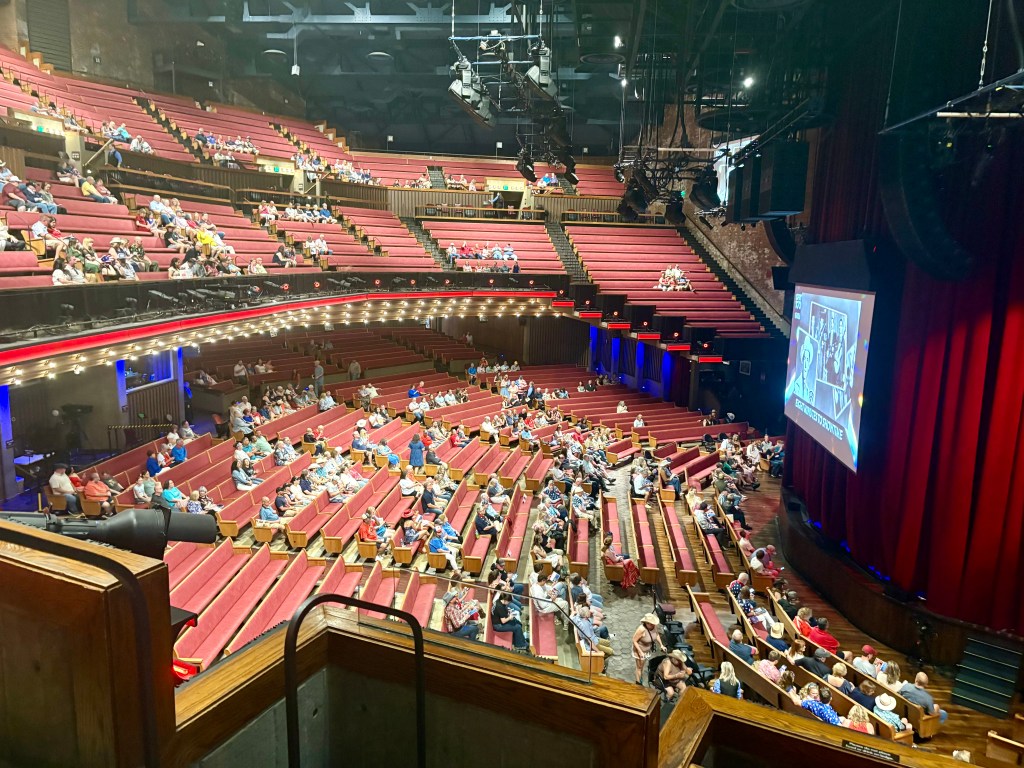
This was the crowd with 8 minutes to go to showtime, and I know that because it says so on the video screen. Recorded live shows need preparation like that.
There were more when the show started, about three or four times as many, but plenty of room to improve our seats which no one seemed to mind at all.
The Opry is an institution nonetheless. It’s where Taylor Swift began her career nearly 20 years ago when she had just turned 16. Dolly Parton was 13 when she graced the stage introduced by Johnny Cash, although it was another 10 years before she was ‘inducted’. All the greats of Country music have played the show. (And one of the great Greats as identified in a large mural downtown? Front and centre, nudging Dolly, Hank Williams, Kenny Rogers, Garth Brooks and Tanya Tucker just slightly off to the side is Keith Urban. That’s Aussie Keith, ex-husband of Nicole Kidman, actually born in Whangerai NZ but raised in Caboolture Qld.)
The show used to be recorded in the Ryman Theatre — still there in downtown Nashville looking like a church hall — before moving to its own premises on the outskirts of the city where the theatre is part of its own precinct with bars, accommodation, amusement parlours, playgrounds and huge car parks. In the middle of the current stage is a six-foot circle of oak cut out of the Ryman theatre’s stage. Newcomers to the Opry stand there while being inducted. And this is how you become an institution: you build stories around yourself. (And songs. One was sung the night we were there about the ‘Six foot circle at the Grand Ole Opry’.) Boy, are Americans good at this or what!
It was an odd night. We had just driven from St Louis in a Camry that vibrated and made awful noises. We were held up at the hire and left late. I thought it was 300kms, and it was actually 328 miles. Out by a factor of 1.6+. There’s no precise direct route so I was enjoying ambling along backroads till the distance made itself real (about 550kms in the end) and I joined the cars on the freeway going 80-85mph. Tiring. The only food we could find readily was a Maccas where we recognised the menu but not the produce. It was only a few days since Myrna had had her root canal done and she wasn’t feeling too flash. It was also a bit complex not to find the theatre but to get to it. We soldiered on.
Let’s start with the conclusion. It was a completely fascinating and entertaining night. The showband was sensationally good and the artists very slick. Why wouldn’t they be? I laughed very hard at the comic Gary Mule Deer. Sample: ‘Interesting that John the Baptist and Winnie the Pooh should both have the same second name.’ And we left the theatre happier than when we arrived. It had been fun.
There was some dancing to open — not sure how that went down on radio, but it looked terrific. Then 79 year-old John Conlee sang. It was an effort. Watching him prepare for the high notes hurt a bit, but he hit them all. Then he spoke: about the importance of church-going, his recent spiritual experiences, what his family got out of it, where you could find the church and who was in charge of it. Different. A surprise. As it transpired the only artist who didn’t mention God was the comic.
There was also a good deal of, and painless, self-promotion. ‘You made us Top 10 on the country charts for three months god bless you. We’ve gone to a whole other level since then. We’ve been voted …Etc.’ But there was another strong undercurrent — no. Surface current, main current — of which Frank Ray provided the best example.
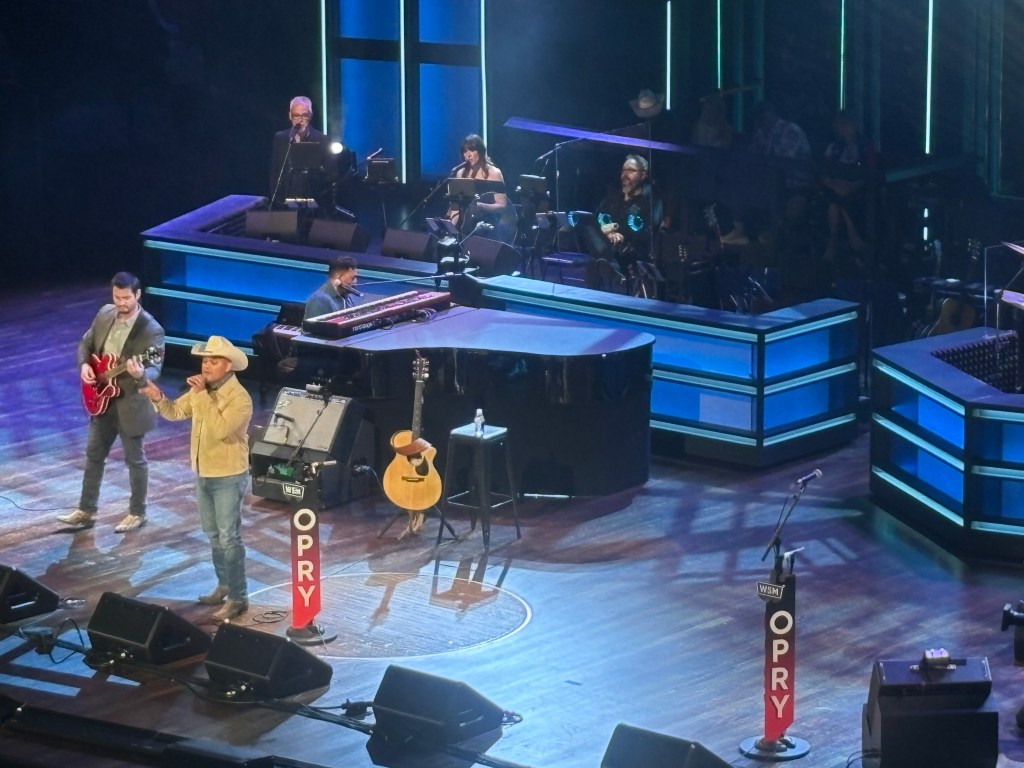
Here’s Frank (born Francisco Gomez; no one from ICE in the audience) who besides being a country and western singer with some recent solid commercial success had been a cop in Las Cruces, New Mexico for 10 years. And he had a well-developed and very effective schtick.
He kicked off with his magnum opus ‘Hard to be a Hero’. ‘You did what you had to do, but that’s not what they’re saying on the six o’clock news. Sometimes it’s the good guy who lives with the blame.’
He invited any current military or veterans to stand up for applause which they did with a degree of alacrity. Might have been 60. (In the US, military personnel, past and present, can be invited to board flights with the first boarding group.) Then first responders; same but more. Then national guard and security personnel. Yes. We are, as it happens, skewing fairly heavily male at this stage.
And then an invitation to stand up if you love your country. ‘There’s so many people don’t love this great nation of ours these days …’ The crowd didn’t rise as one, Amen, but in time and mostly they did rise and hold their arms in the air and cheer and they did say ‘Amen’ when he said ‘Amen’. And when he said God loves and blesses this great nation. (‘Amen.’) And when he said Gittalong to church for the sake of the nation. (‘Amen.’) And then he sang ‘I’m proud to be from the good ole USA.’ All the artists were playing the same cards but Frank had the strongest hand.
Is it uncertainty that drives this, nostalgia, wistfulness about a past that may or may not have existed when there was a chicken in every pot, all children were above average, jobs were plentiful and intelligible, and when women didn’t answer back so much? And the supervisor was a Bountiful God? Or maybe it’s just embedded cultural habit.
It makes Pete Hegseth so much more intelligible. Not Kash Patel. But Pete Hegseth. In this particular context, he can seem a more or less conventional part of the ecology.
* * * * * * *
We had arrived at one version at least, quite modest but heartfelt, of the celebration of the 250th.
It was Nashville. And it was country music. You must expect a bit of variation in a country with a registered population of 341,784,857 a year ago with perhaps 12-15 million unregistered and illegal immigrants. (Who knows? The relevant statistician has just been sacked.) Plus these people live in a country which can be 5000 kms from sea to shining sea, a big one with lots of geography.
A few days earlier we’d been in Washington.
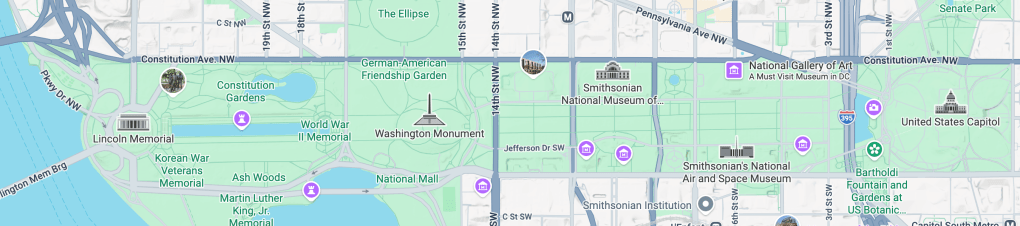
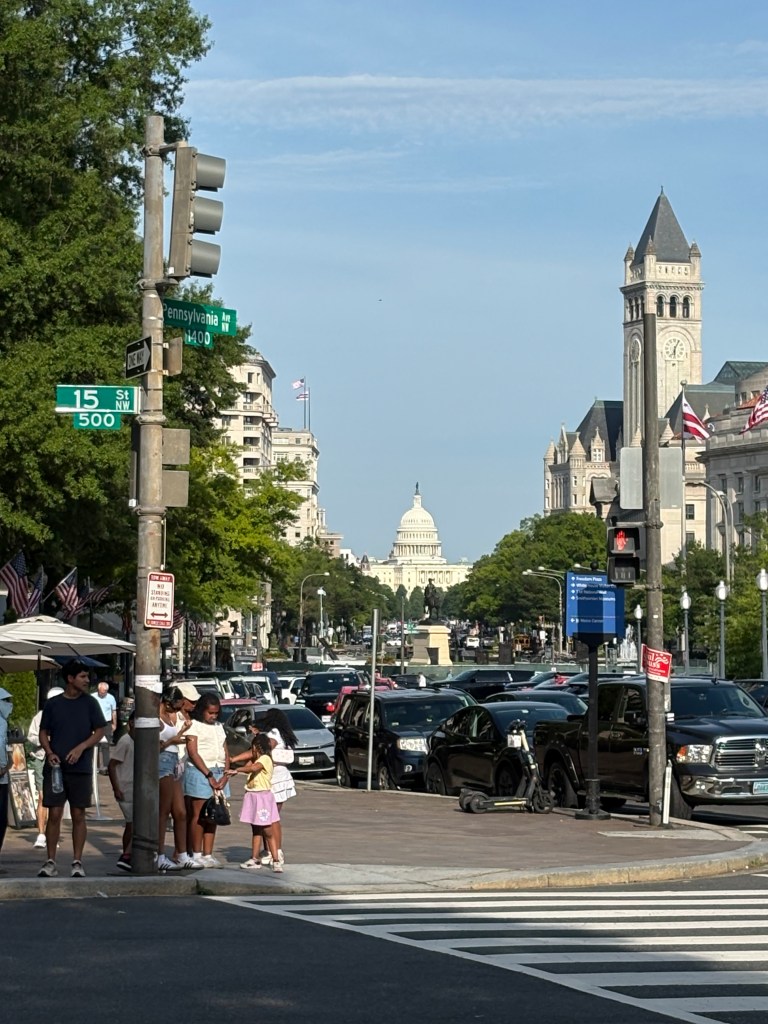
For the purposes of orientation (and Alan). This is the National Mall just south of the White House and its grounds. It is about 2.5 miles or 4 kms from one end to the other. It is bookended by the Capitol, the seat of government (down Pennsylvania Avenue in the pic at left), and the Lincoln Memorial. In between is the Washington Monument.
Between the Lincoln Memorial and the Washington Monument is the much vexed Reflection Pool. Lined along the Mall are institutions holding and displaying many of the nation’s most precious artefacts in the bits and pieces of the Smithsonian and other national museums and galleries.
At the left of the map you will see the Arlington Memorial Bridge. Trump plans his arch for the other side of the Potomac following the throughline of heritage monuments to the Arlington Cemetery where major figures in the life of the country are buried. (Including several Presidents and Audie Murphy.)
We wanted a look at the Great American State Fair which ran in the Mall for a fortnight before its climax on the night of July 4. A few days before then, we walked down 15th Street to the Washington Monument, at right, thinking to catch a glimpse of the Reflection Pool. Not a hope: all blocked off.
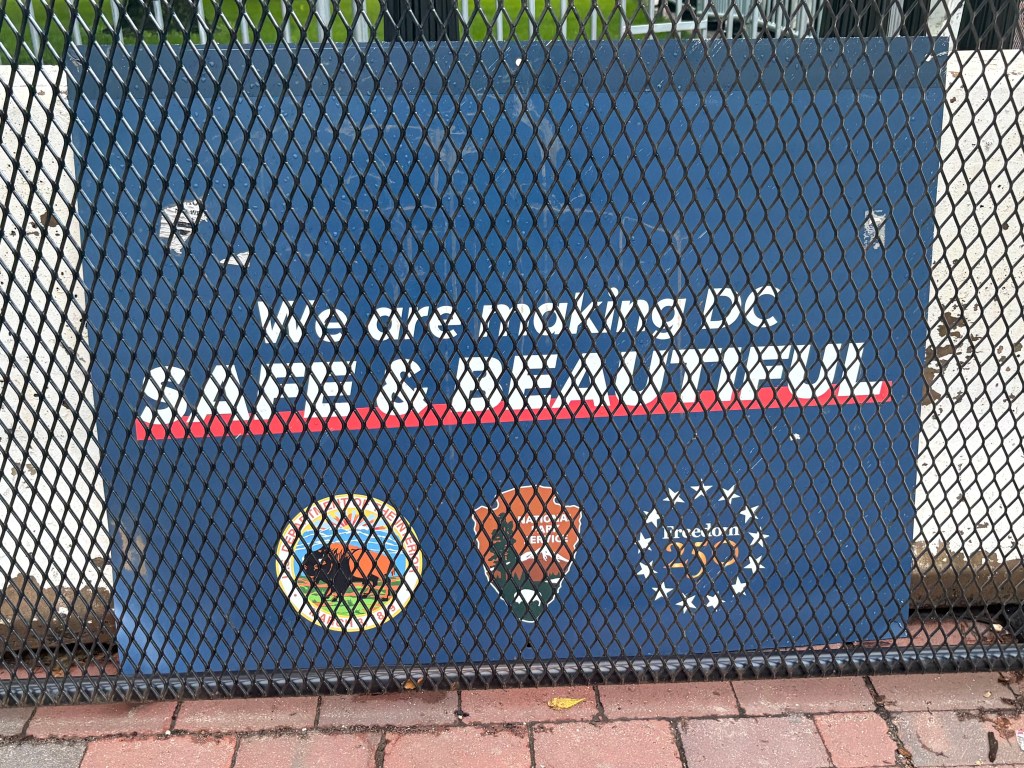
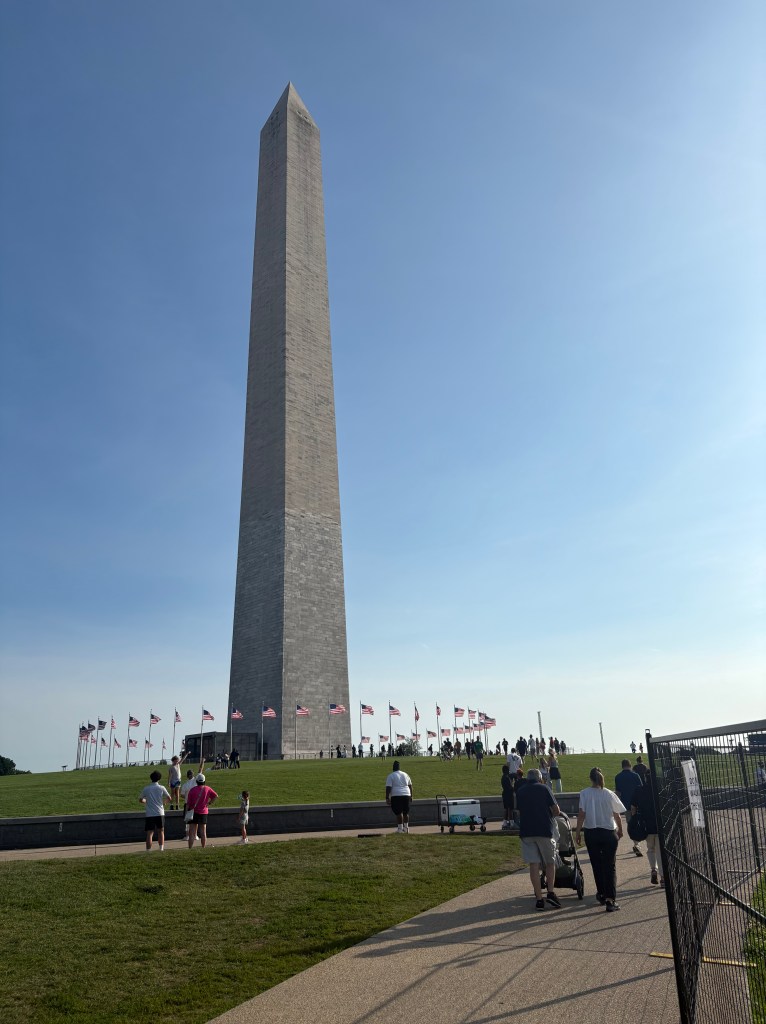
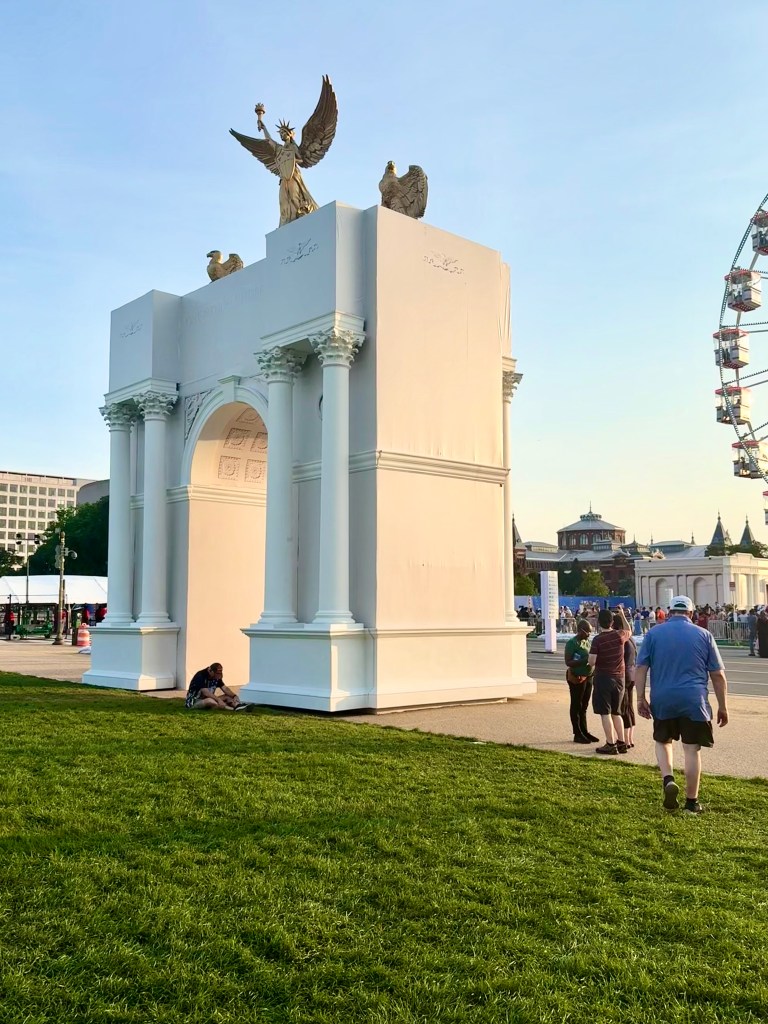
The State Fair was supposed to have exhibitions from all the states and federal government Departments as well as some other bits and pieces … a Ferris wheel, a rodeo operating sporadically and a scale mock-up of Trump’s arch. (To be 250 feet high. 250. Get it?) But this is the US, the greatest country on earth on the occasion of its semiquincentennial with such profound skills in entertainment and organisation. The Fair would have to be a bit out of the box surely.
We could hear a band in the distance which sounded great, so we found our way in, not as it happens an easy task, and walked past I’ll say several thousand porta-loos which seemed to be locked away behind a two-metre ringlock fence. But the music was beguiling and we found its source: the contribution to the Fair from the National Endowment for the Arts. Under the yellow awning they were giving away mock passports with Trump’s picture inside.
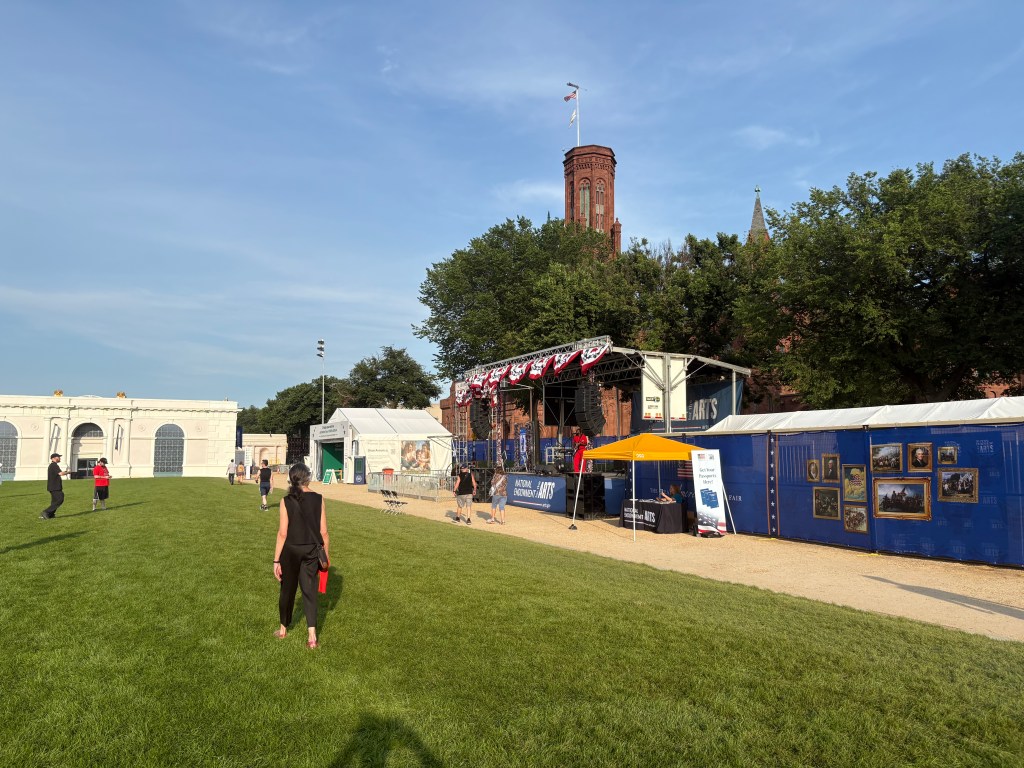
The band? Three pieces only, but absolutely 10/10. Heartfelt rhythm and blues very capably sung and played. Some of the best music we heard in America. But that was as big as the crowd got, although there were a couple of people who walked past.
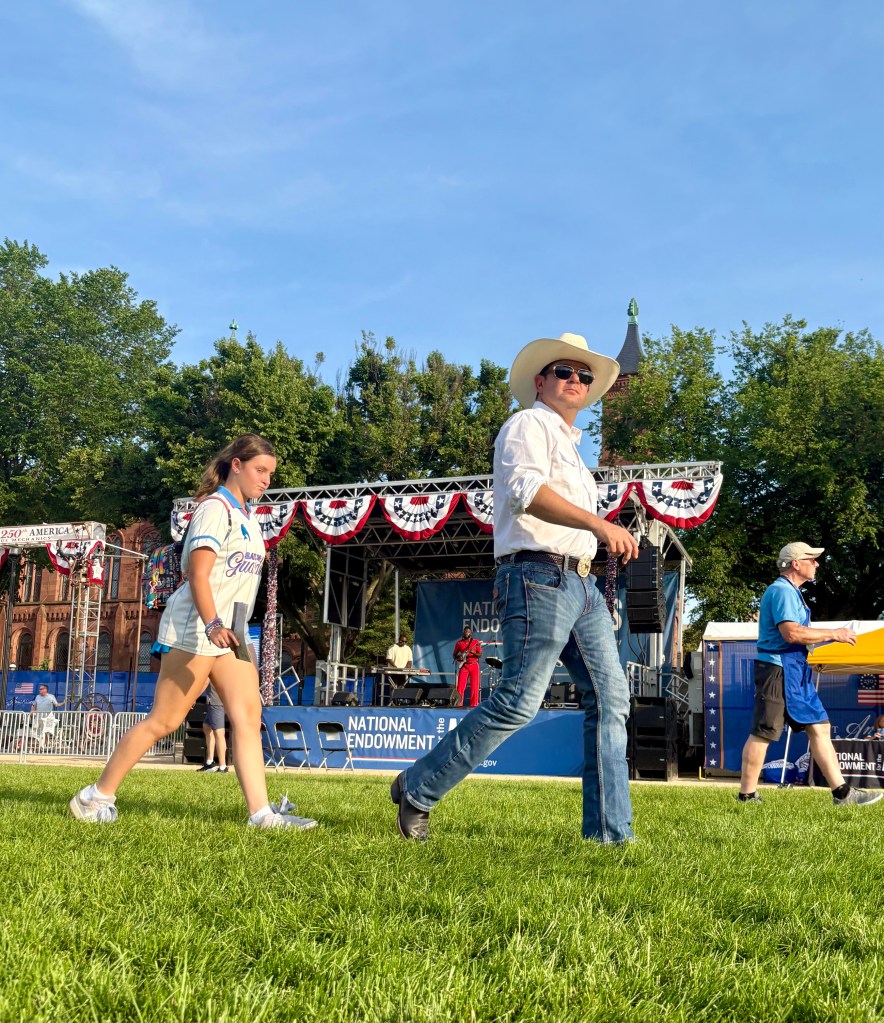
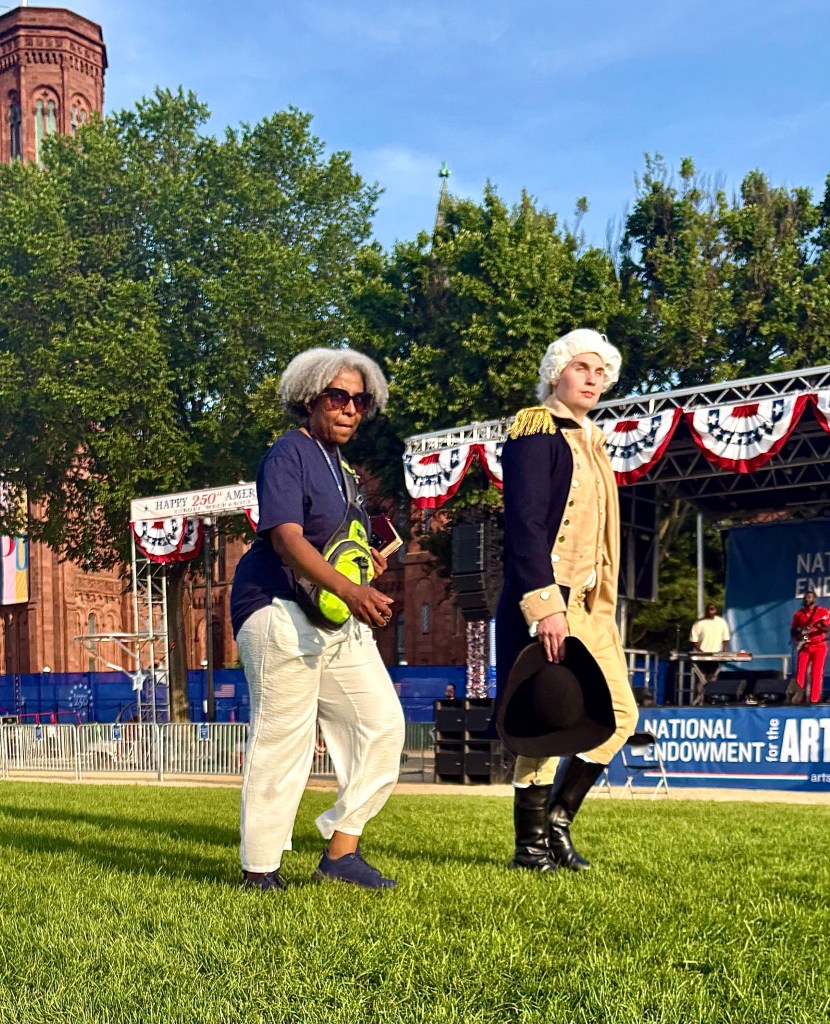
This is one half of the fair, no question the quieter end, but all the food, ALL THE FOOD, the only food, was down to the left. Turkey leg $27. Freedom hot dog $21.50. Lemonade $13. Unsurprisingly not much commerce was taking place.
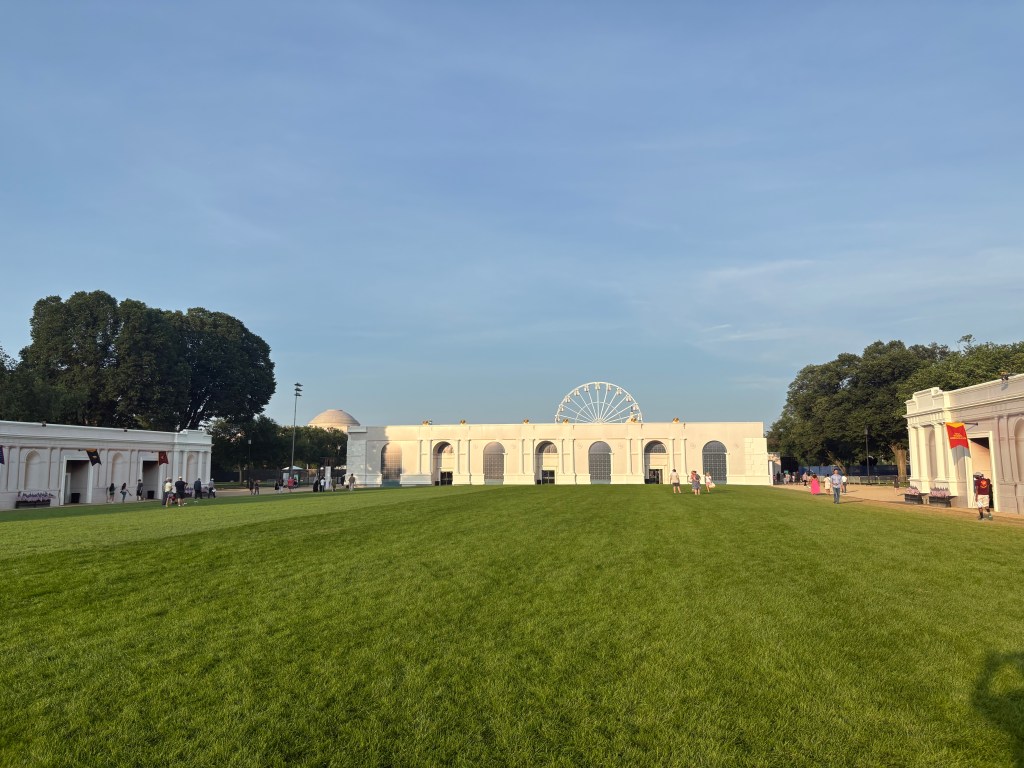
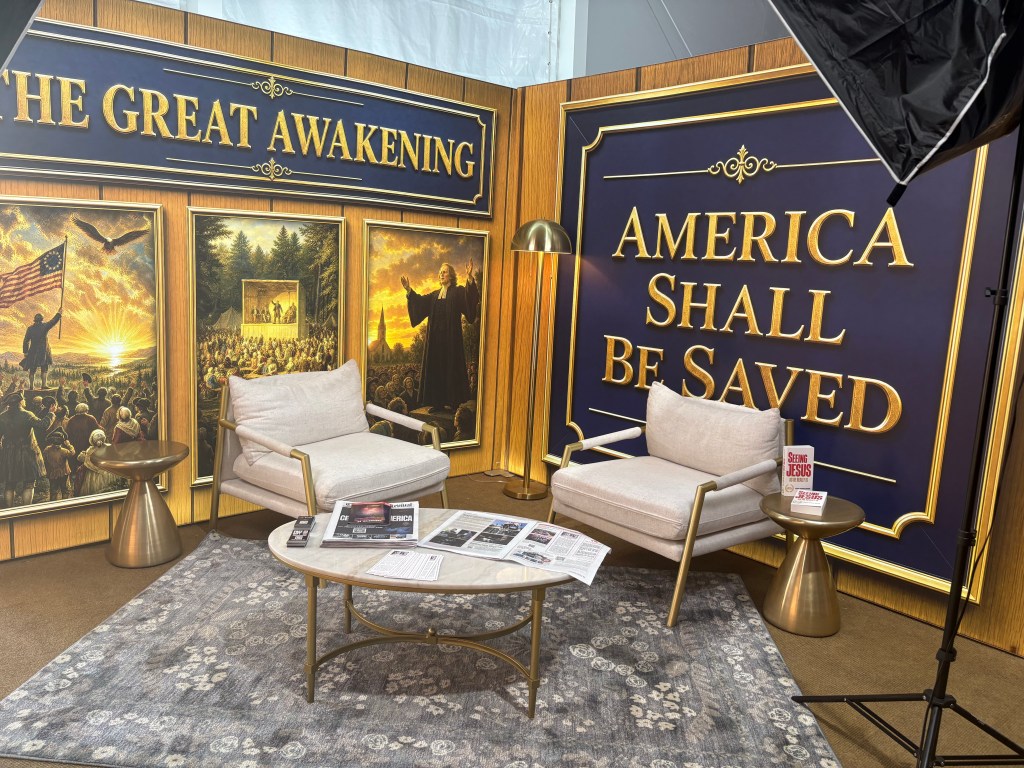
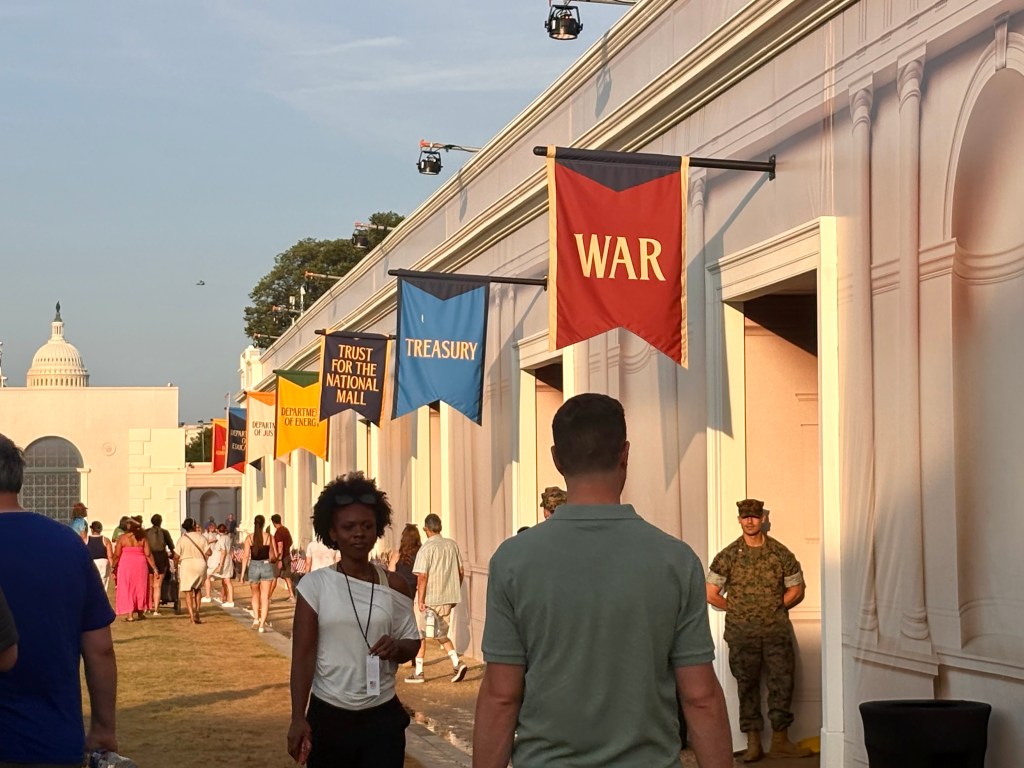
The divider building looks fairly solid but wasn’t. Like the rest, it was temporary in the extreme. It did only have to last a fortnight. It contained seemingly unusual contributions for a fair. This is one of them.

This is another.
And then the busy side, remembering that this was peak hour 3.30-4.30pm on a Sunday afternoon.
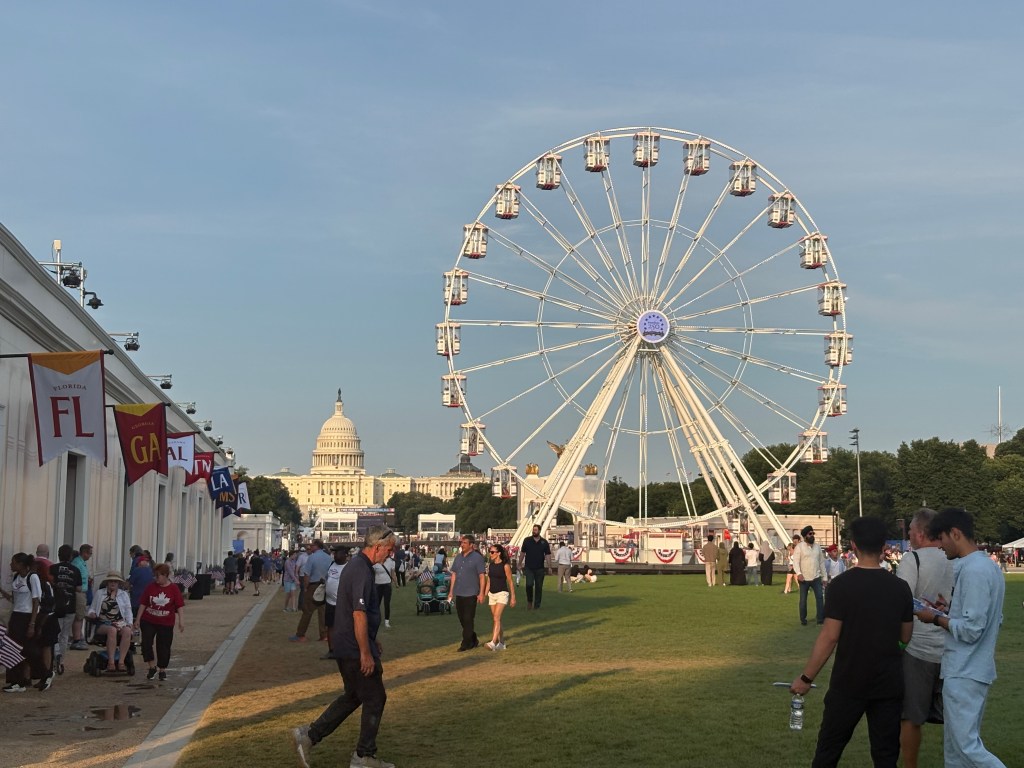
The flags above indicate the exhibits of the states and territories, Florida, Georgia and so on. A number chose not to participate. Below are the Department exhibitions.
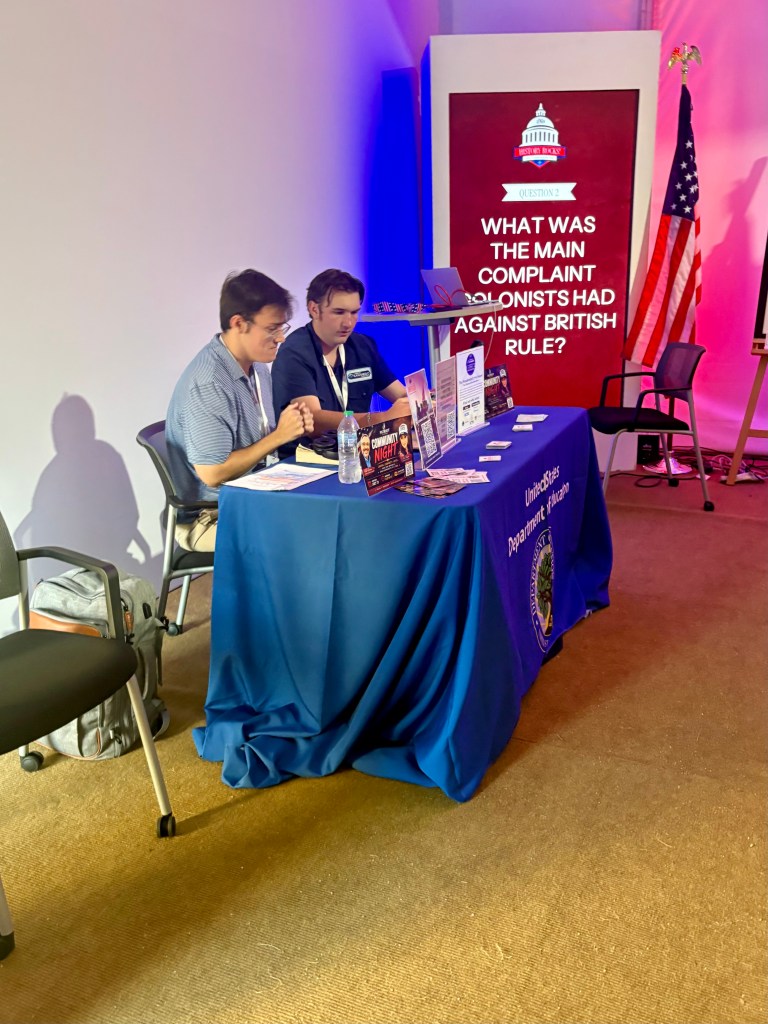
And this is the best that the Department of Education of the greatest nation on earth could do. That’s it. You’re looking at it. The lot. And now I investigate more closely it’s Kristi Noem’s picture on the brochure for the Community Night, lips pumped, MAGA-style hat. She’d been sacked for three months by then.
Finally, the crowning glory, the scale model of Trump Arch.
I left thinking that the Horsham Show could generally be of more interest and is usually better attended. How could Mr Showman Himself countenance such a fizzer? Well, there was no money to be made I guess. Besides being focused on important history, it was about good will and fun and people having a good time, so of marginal consequence.
* * * * * * *
‘The US is a country stubbornly and intensely attached to myths about the military’s positive transformative power on the health and quality of individuals who enlist.’ (David Craven in commentary about Graham Platner’s disastrous run for the Senate in Maine.)
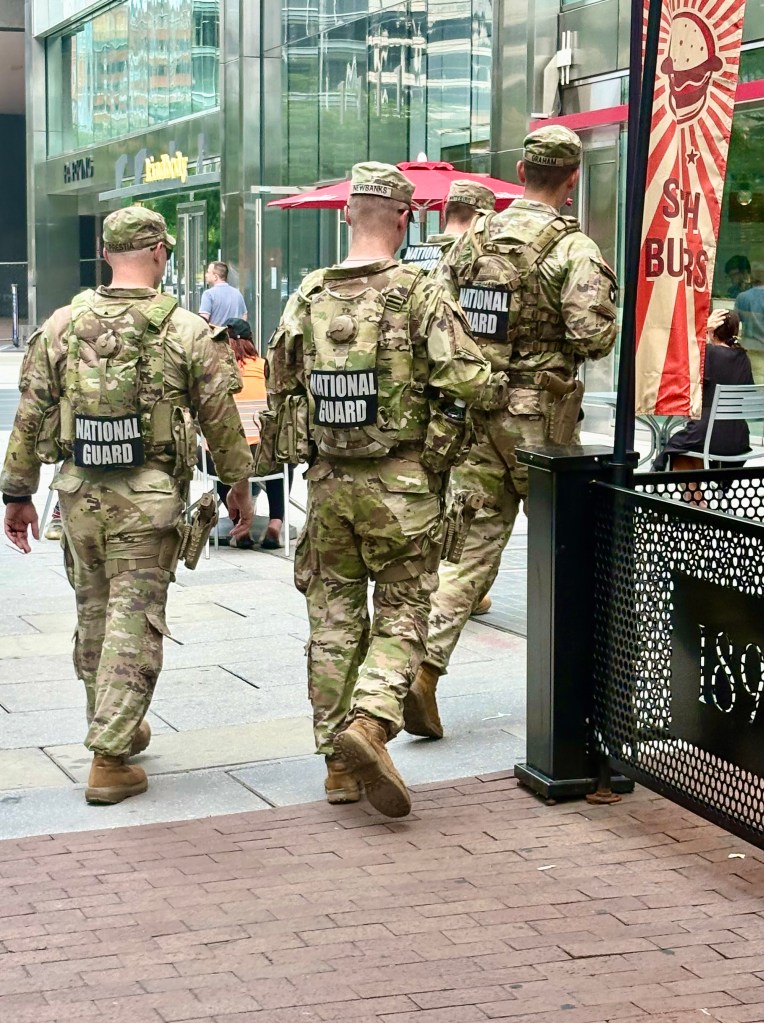
Prestia, Newbanks, Britebird and Graham refuelling at Smash Burgers downtown Washington.
* * * * * * *
On the wall at SLAM! aka the St Louis Art Museum, explaining its choice of contribution to the 250th.
Picturing Independence: ‘The American flag is more than a national emblem. It is a living, evolving symbol that reflects the nation’s highest aspirations and greatest challenges. The flag of the United States of America was first recognised by Congress on June 14 1777. For many Americans, the image of the flag is an important means of expressing their identity.
* * * * * * *
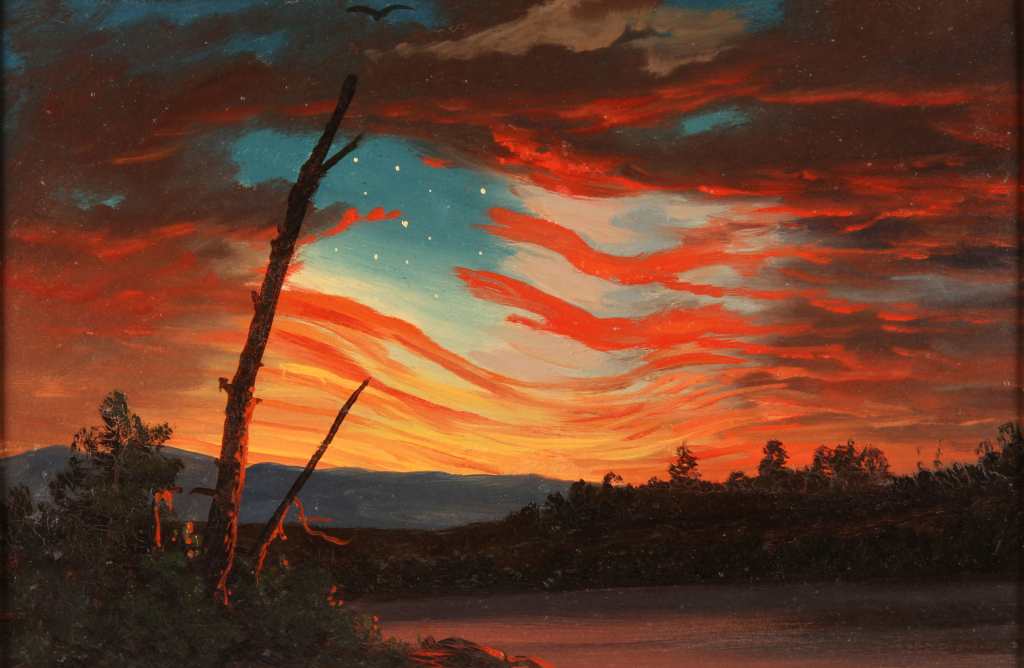
‘Our Banner in the Sky’. Frederic Church painted this after the attack on Fort Sumter in 1861 by Confederate forces began the Civil War. It was widely reproduced and became very popular. A lithograph was made from it and sold to benefit the families of Union soldiers. There are two versions extant both held privately. It is America. But one is quite regularly exhibited in the Smithsonian Museum of American Art in Washington. For a time Church was America’s best known and best remunerated artist. He achieved that status, at least partly, by producing the work of a great patriot. (We visited his remarkable house just out of Hudson.)
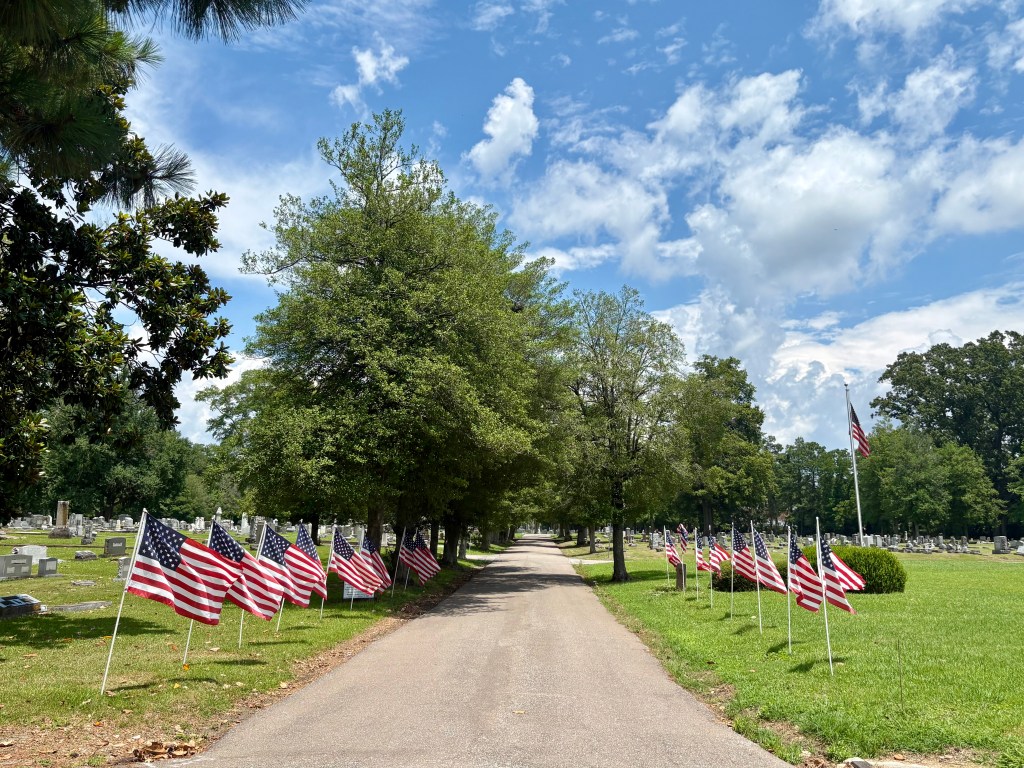
The entrance to the cemetery in Jackson, Tennessee.
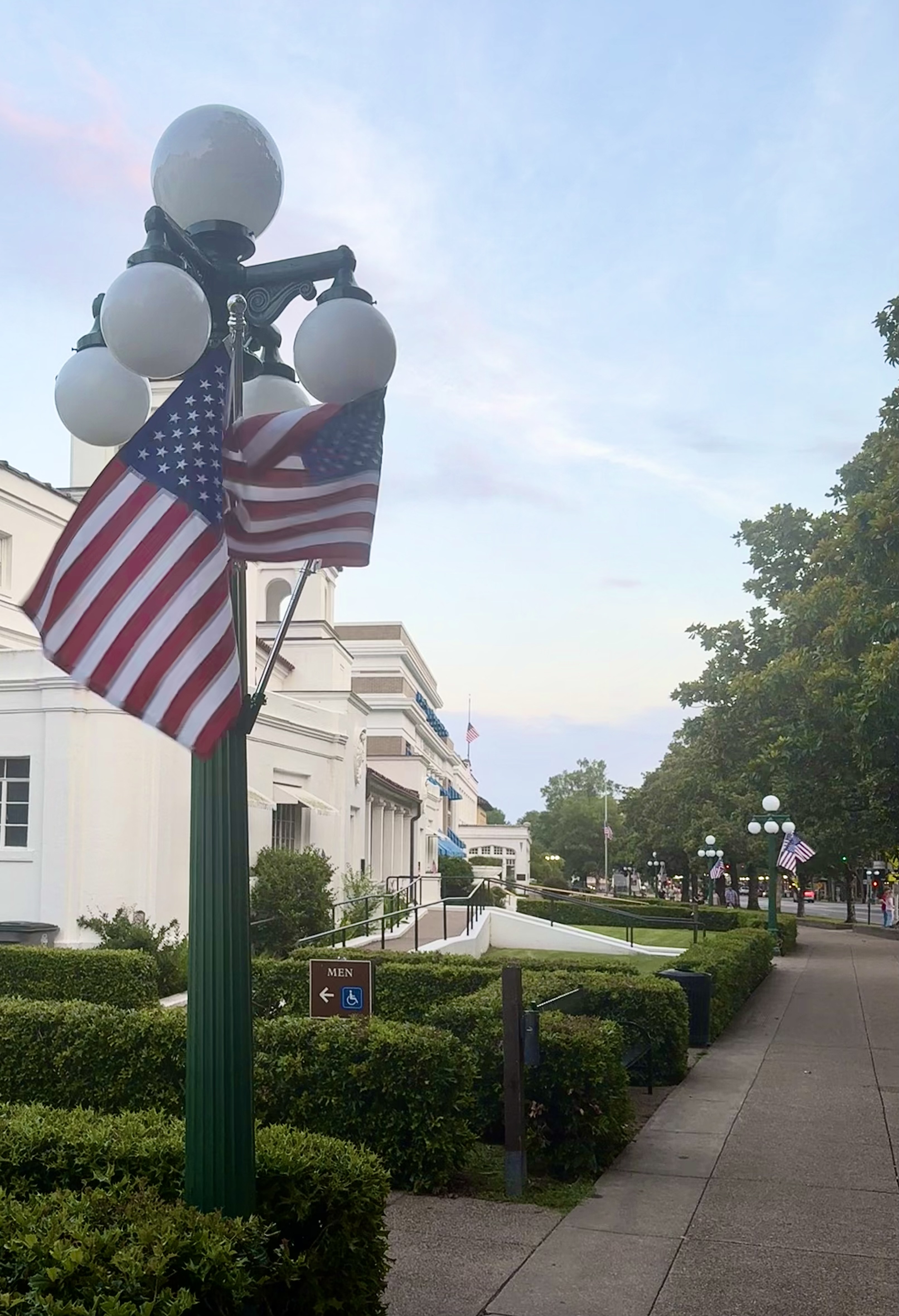
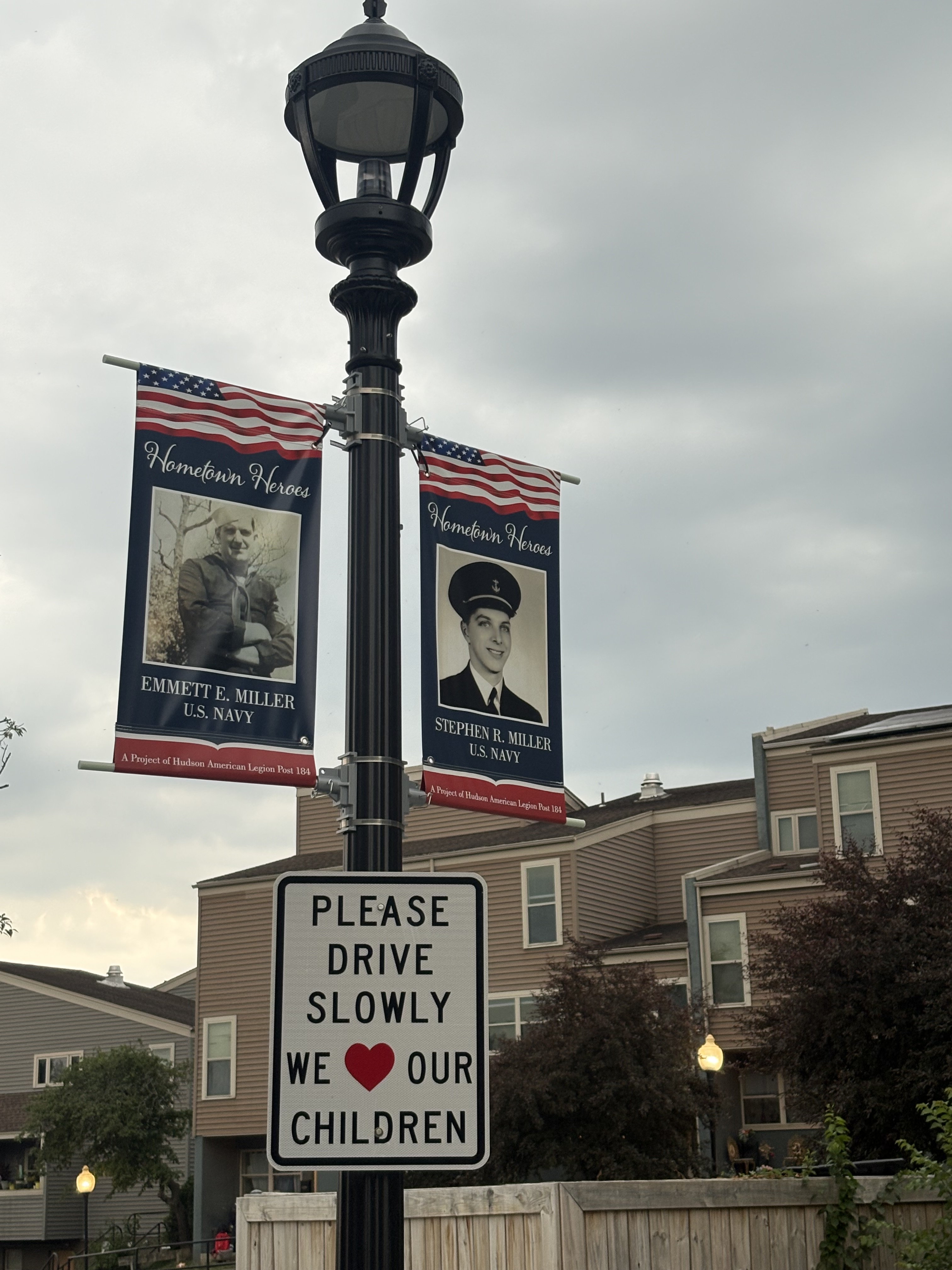
Street decorations in Hot Springs, Arkansas. Hometown Heroes decorating most lamp posts in the Hudson Valley (NY State).
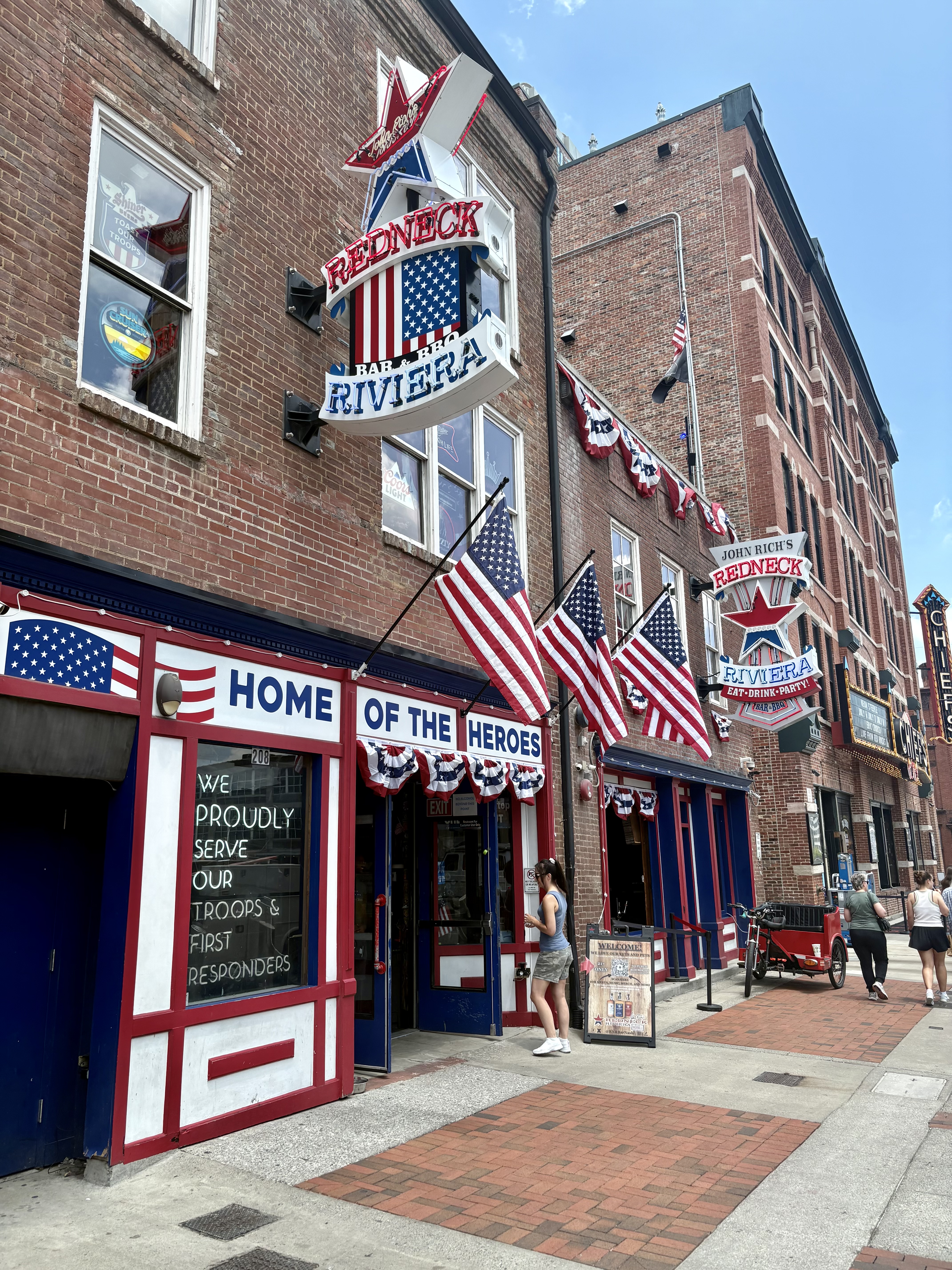
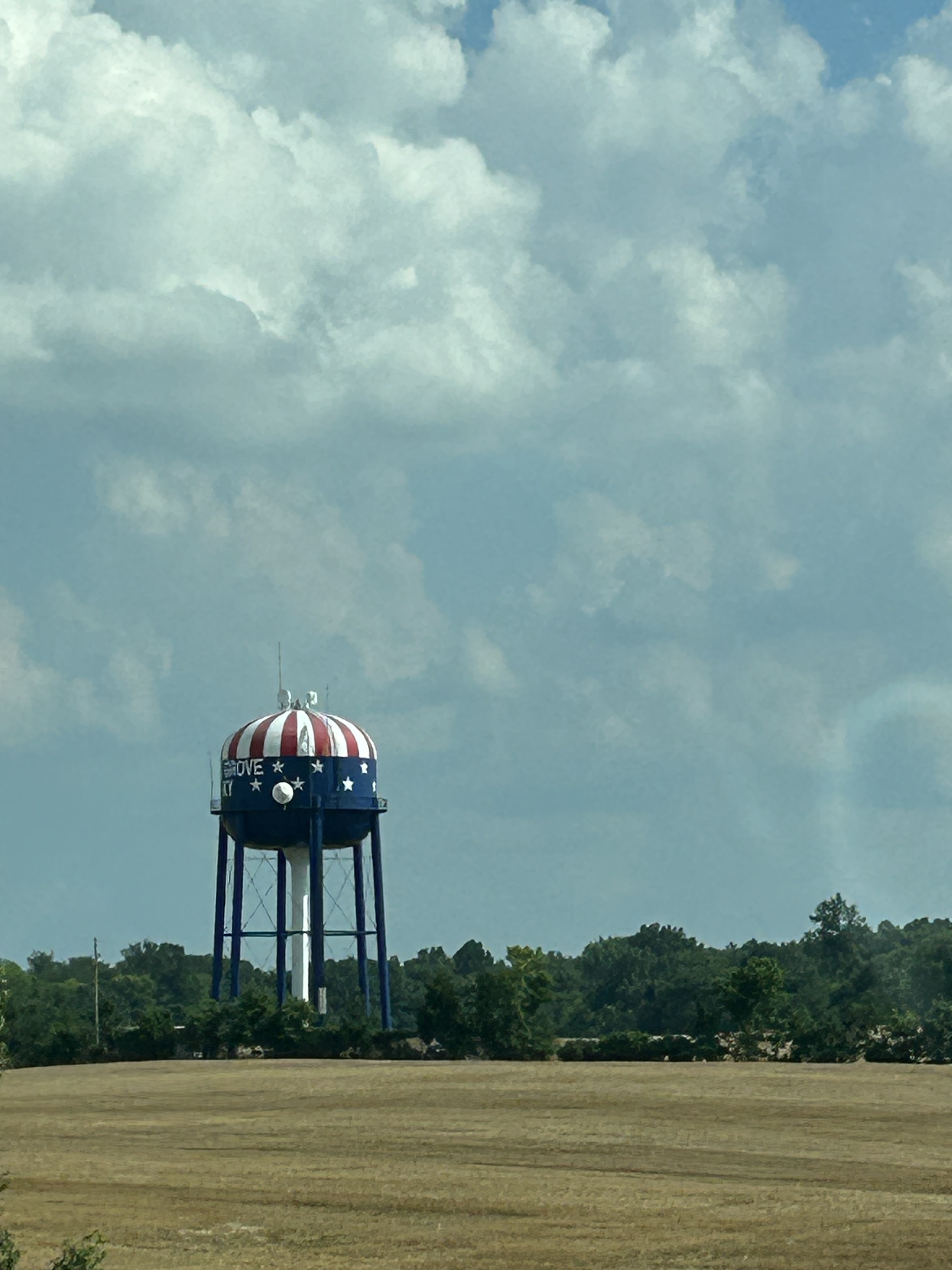
The Redneck Riviera Bar in Nashville’s Broadway, ‘proudly serving our troops and first responders’. [The ‘Redneck Riviera’ actually could be said to run along the Louisiana/ Texas coastline.] A water tower near Pembroke, Kentucky. The words might say ‘We love Kentucky’. One of many decorated like this we saw.
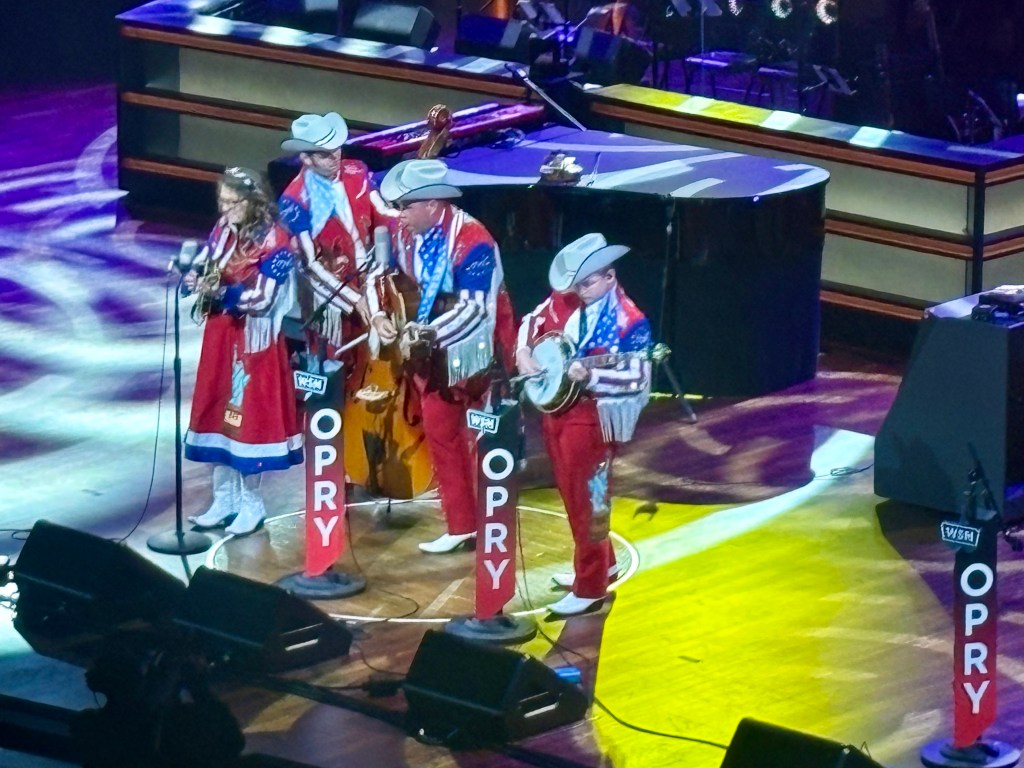
The Kody Norris Show playing with enormous speed, power and verve closing out the night at the Grand Ole Opry.
We went out into the night and Nashville was ablaze with fireworks, a peak hour’s worth of honking cars, drunks yelling greetings to each other and the world. It was appallingly difficult to find our way home.
* * * * * * *
The President of the United States’ public birthday party took place on the White House lawn focused on an erection called The Claw. It consisted of a series of cage fights in which two men (in this case) fight each other almost bare-knuckled and almost without rules (‘No kneeing in the head when the opponent is kneeling or on the floor.’ ‘No eye-gouging.’ ‘No kicks to the groin.’ That’s about it.) It cost $60 million to stage. Members of the audience paid a lot to attend but the event still managed to lose half its cost.
On completion of the main event, the winner announced, ‘I’m from America. Two hundred and fifty years ago we were way bigger than six-to-ten underdogs, and look at this country now.’
Among those attending were male members of the Trump family, Kash Patel, the CEO of Paramount (a deal in the wind), the Winklevosses, Mark Zuckerberg, (sitting near each other!), Kid Rock, the President of Poland, Joe Rogan, J.D. Vance, Marco Rubio and Pete Hegseth. This selection does skew male even if some of them seem to have gender anxiety issues.
After one of the events on the undercard the winner completed his amplified public ramble by yelling, and … ‘Michelle Obama is a man.’ Perversely in these circumstances this could have cast her in a very positive light.
* * * * * * *
According to a 2025 Ipsos poll, nearly 60 percent of Gen Z men (14 to 29 year-olds) say that their country has ‘gone so far in promoting women’s equality that we are discriminating against men’.
* * * * * * *
We listened to quite a lot of country music while we were driving. It was what was on offer but also there is often something quite telling in the lyrics. ‘Three chords and the truth’ don’t they say?
We were driving through the suburbs of Houston on our way back home from the H-E-B supermarket, itself a considerable entertainment, when I heard this song. It’s called ‘Gary’. The first line of the chorus is ‘There ain’t a lot of boys named Gary these days’, and it got me in. I think the clip builds a story that’s a bit grand for the sentiment. I like it like I heard it, in a lower key. But I thought it might have something to say about one stream of American life. (I also thought that John G with whom I had been corresponding would know what it was about.)
* * * * * * *
Elsewhere I have written about New York State’s public buildings. They’re not in New York; they’re in Albany, the state capital, and they are prodigious. Rockefeller prodigious. We went to their Museum, and saw a great deal of interest. But we stood just here for 15 minutes, transfixed, watching the video.
Below right is one of the fire trucks which attended the World Trade Centre disaster. It’s front is throughly burnt out. The back half still has its paint and fittings which were protected by the collapsed foot bridge which crushed it. At left is Billy Green, a first responder who responded first.
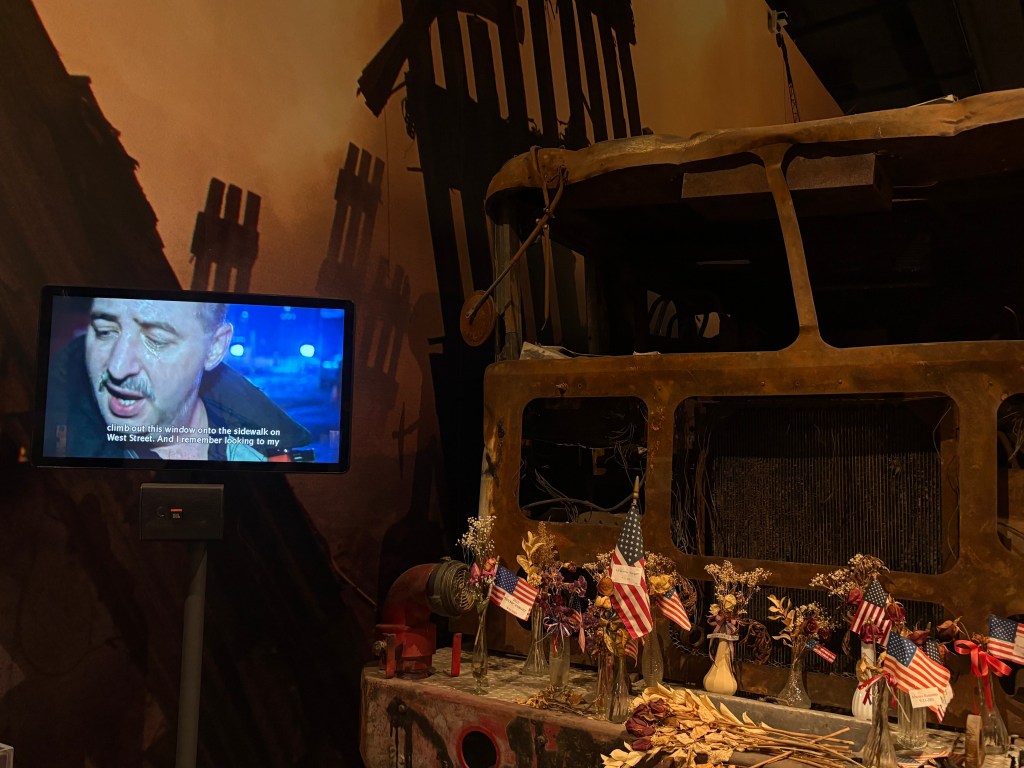
Billy, is not I think, a fireman any longer; but he was that day (which started on 9/10 and went into 9/11), one of a crew of six. The blackboard duty schedule of New York City’s Engine Company 6 for that day is mounted on the wall just behind the truck. The crew was the first to respond to the World Trade Center site on September 11, 2001. Their vehicle was a ‘pumper’, especially designed to push water all the way to the top of immensely high buildings, in this case two 110-storey towers. (Perhaps only in America.)
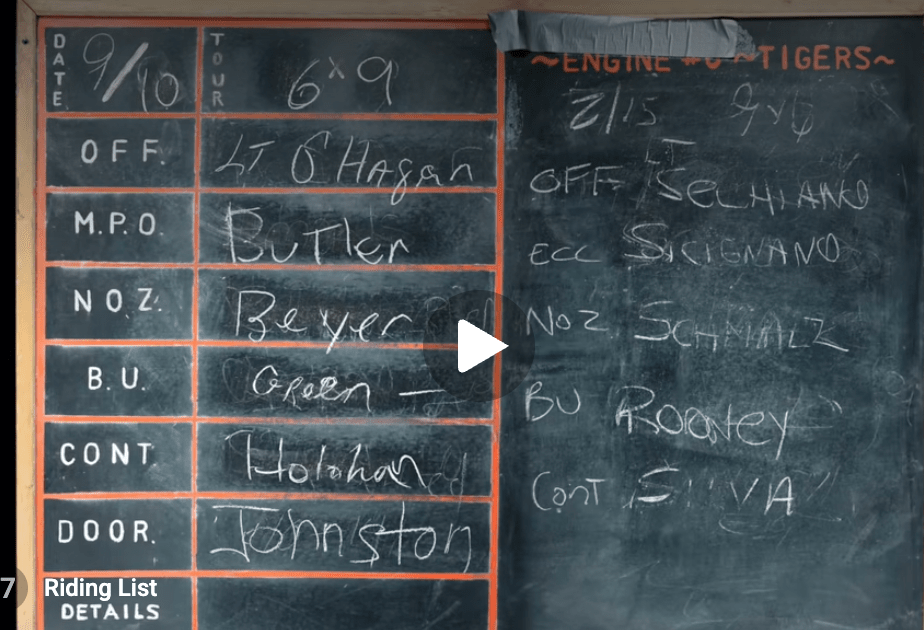
The building was on fire when they arrived but not yet collapsing. I wish I could tell you everything he said. I wish you could hear it for yourselves. I remember him talking about trying to find a way upwards on the stairs through the crowds coming down, the air already full of dust and detritus. One of his mates stopped him and told him they’d been climbing for 75 minutes (with 60lbs of equipment) and they had only got to the 20th floor. Shortly after that point the radio ordered a withdrawal and they had to find their way down again, this time with extremely limited visibility and still trying to clear floors by helping people who were trying to do the same. They finally found their way to the exit but he became conscious of heavy thuds nearby, the thuds of bodies hitting the ground, the jumpers. Even with a face mask and oxygen equipment, he lost all vision after that. He remembers putting his arm up to his face and not being able to see it whatever was in the air was so thick. It was chaos. He was not aware of anything around him but tried to walk in a single direction. After some time he hit a fence and he remembered a basketball court in the area and thought he knew how to find the gate. He felt his way round the fence, found the gate and was able to walk for some further time before collapsing. He was eventually rescued; four other members of his crew were not, four of the 344 firemen who died.
Only 20 people were rescued alive from the site. At least 2823 people died. There could have been more. There were fewer people in the building than normal because a vote was taking place and people were taking the opportunity to go to polling places before work. It was also the first day of the school holidays.
Over nine months the wreckage from the disaster, weighing 1.8 million tons — 108,342 truck loads — was taken to a place on Staten Island called Fresh Kills [‘Kills’ which recurs in place names in New York State and elsewhere in New England is a Dutch word for ‘creek’.] where it was sifted and sorted more carefully for a second time. An unusual proportion of the people involved in this task became sick as a result, not just from the copious amounts of asbestos in the buildings but the contact with dozens of other toxins as well.
But it will be Billy’s story, and his telling of it — still obviously indelible, both real and painful — that will stay with me. Nothing ersatz or ceremonial about that. And that too, is America.
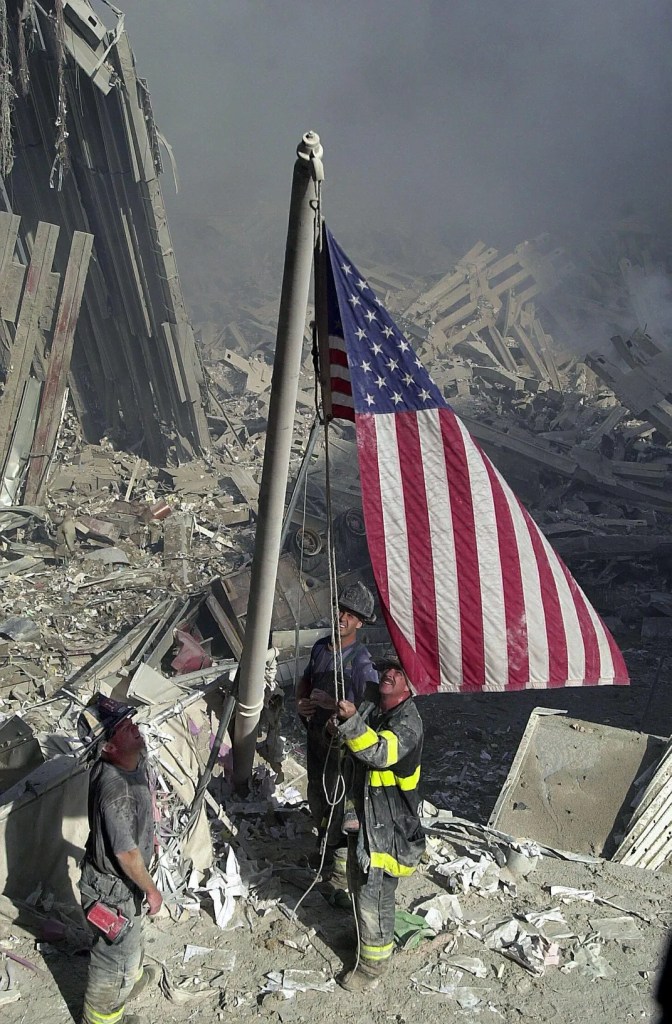
The first thing the firefighters did at the site when they were able was to raise the flag.
* * * * * * *
We are standing under the Gateway Arch at Saint Louis, July 3. Below us again is an auditorium where, in a most moving ceremony, 40 or 50 people have just received their American citizenship. There was much excitement and fervour among the new citizens.
Come for the drive.

