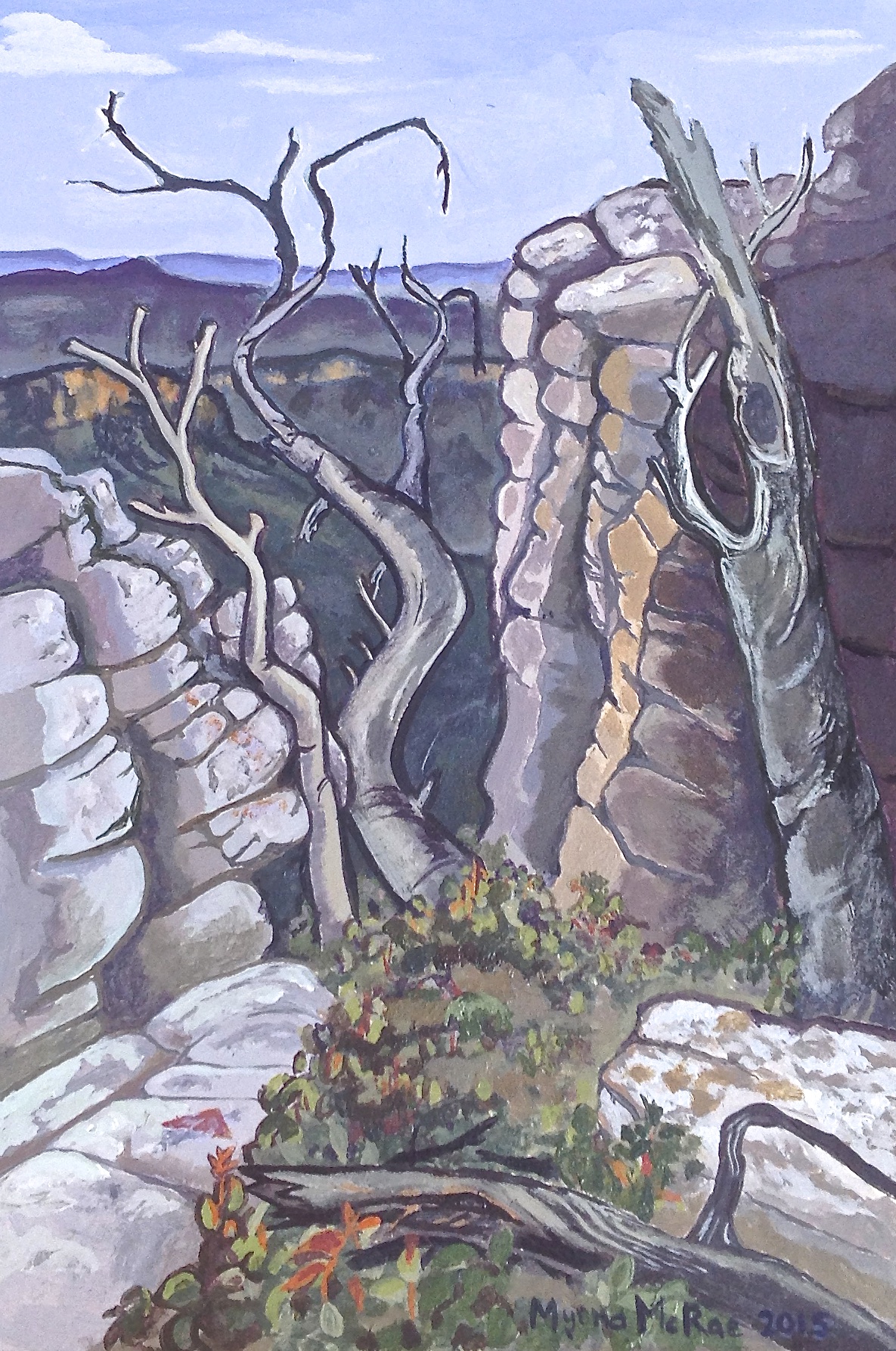
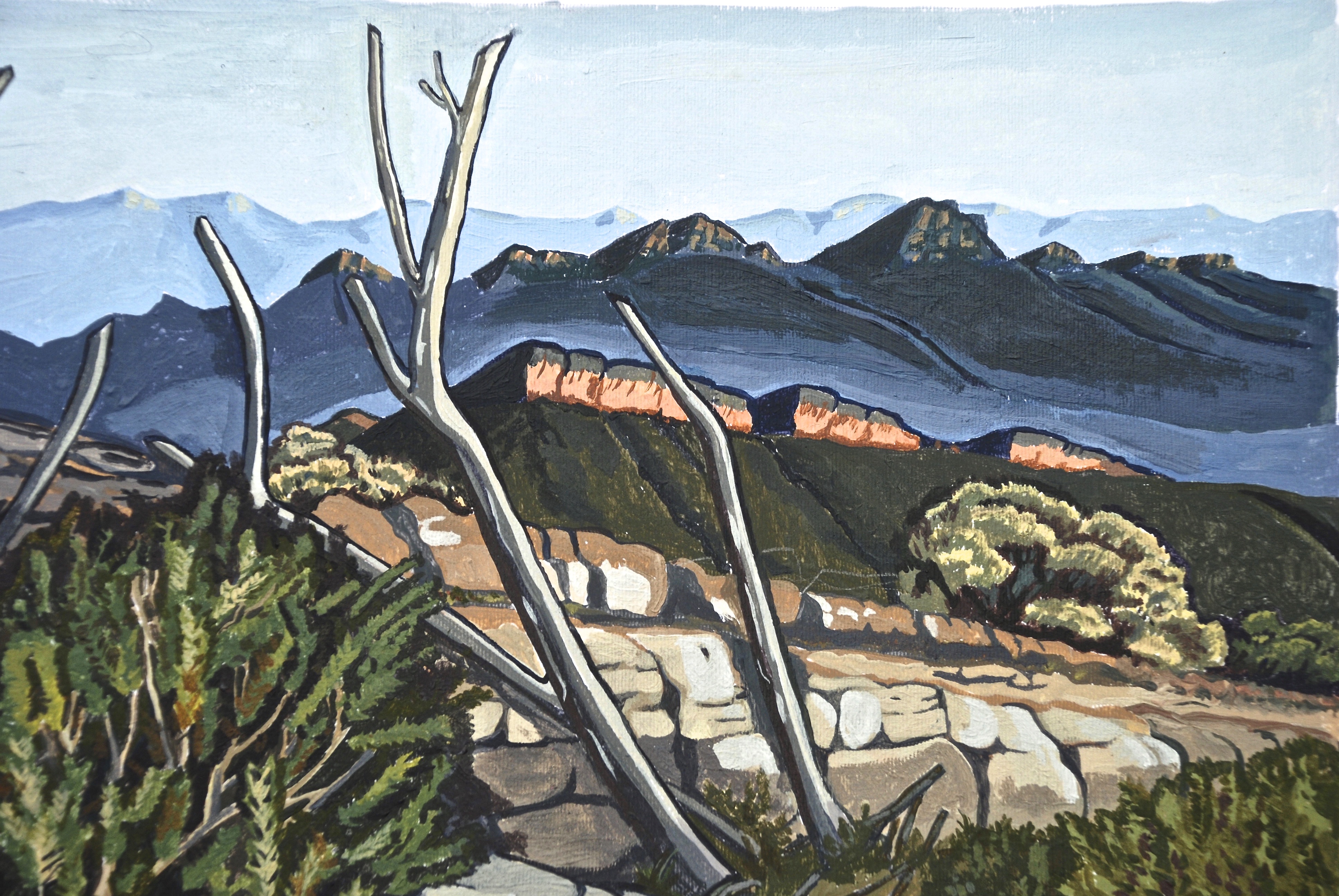
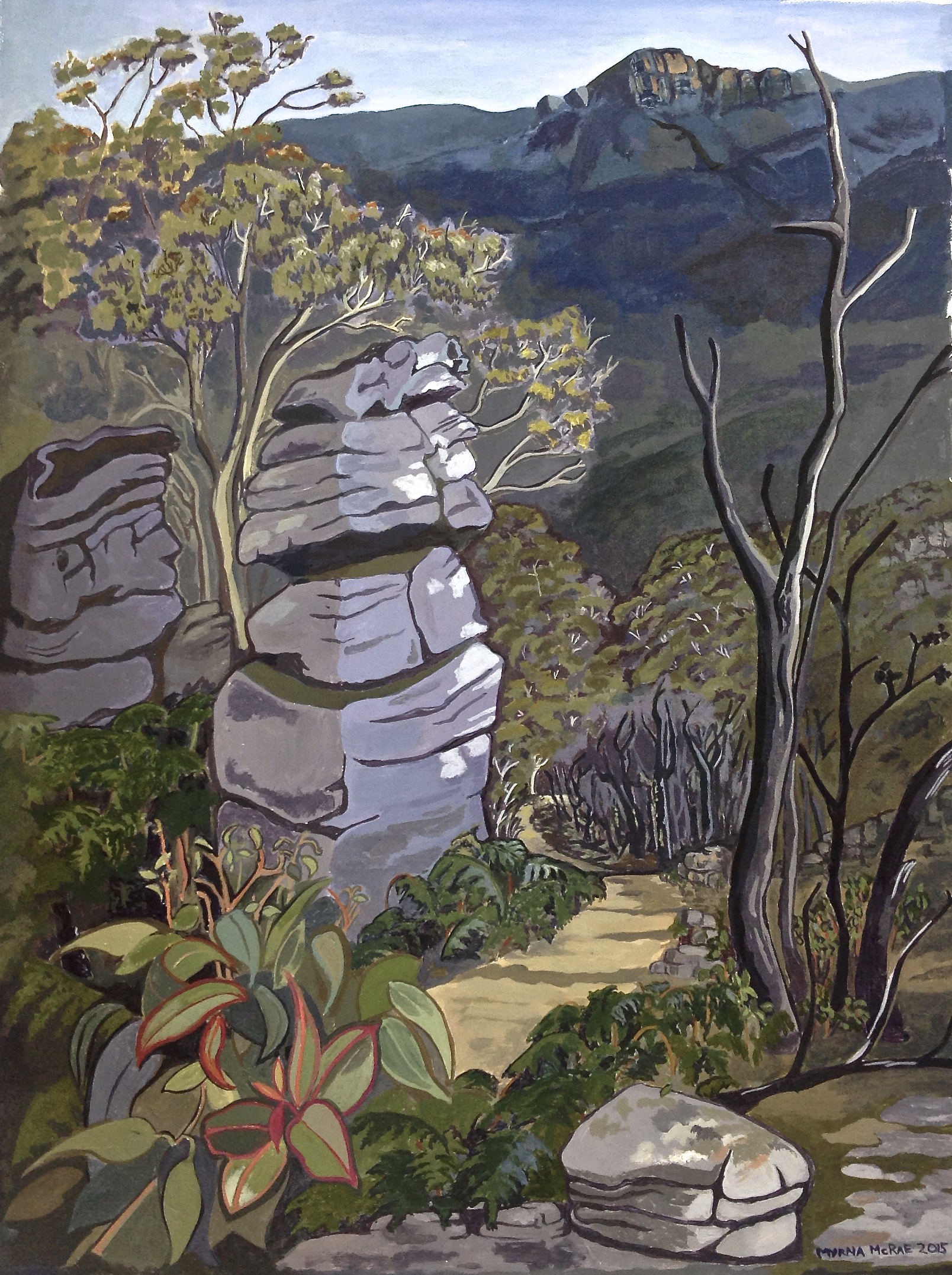
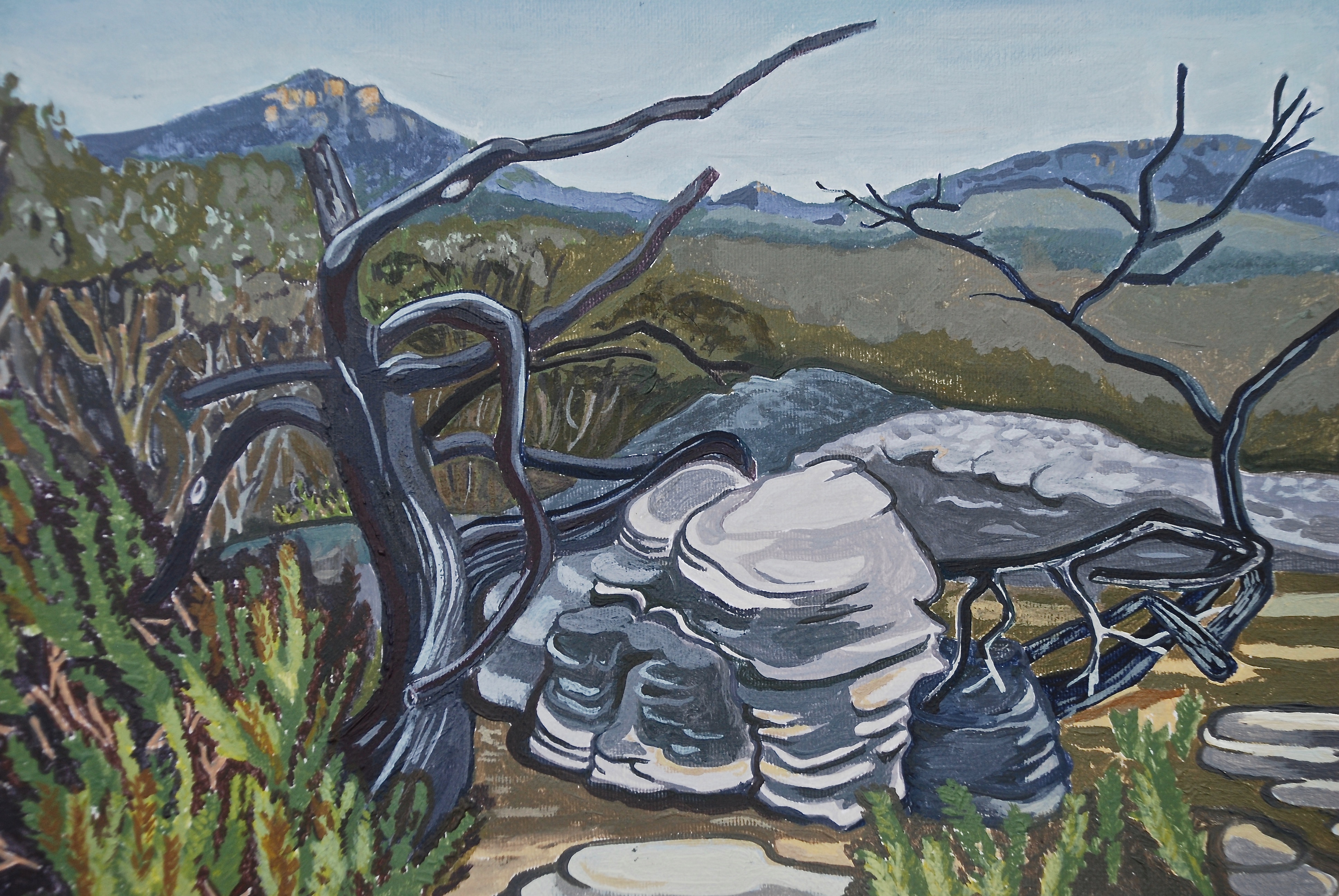
Denying Climate Change #1

‘Climate change is absolute crap.’ — The Hon. A. Abbott, at the time of writing Australia’s Prime Minister, Liberal Party function, Beaufort, Victoria, 2009

catani2

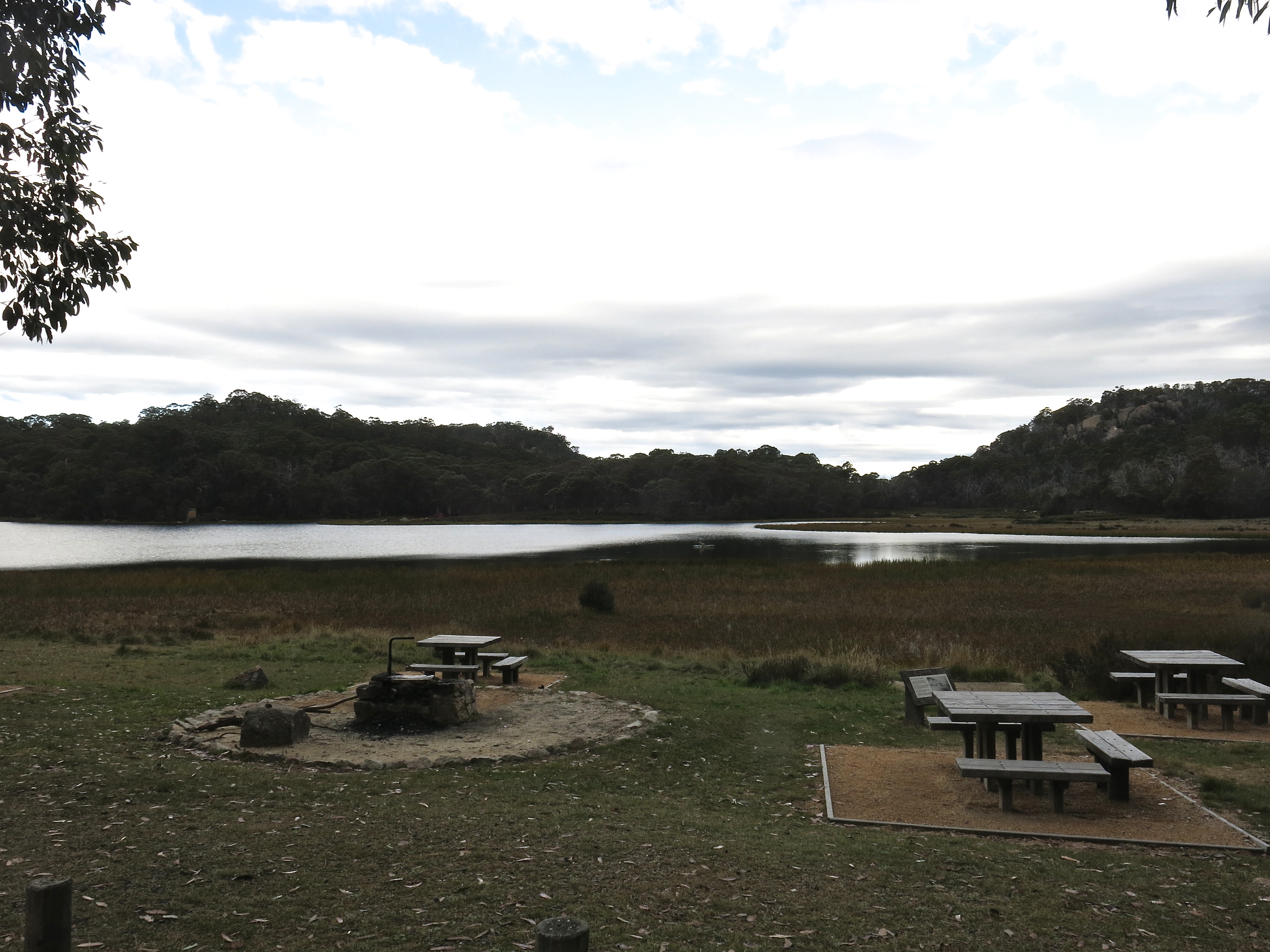
Lake Catani, Mount Buffalo, 1920. Skating on two foot of ice, an annual pleasure often lasting for as long as four months. Still happening in the early ’50s.
IMG_0778

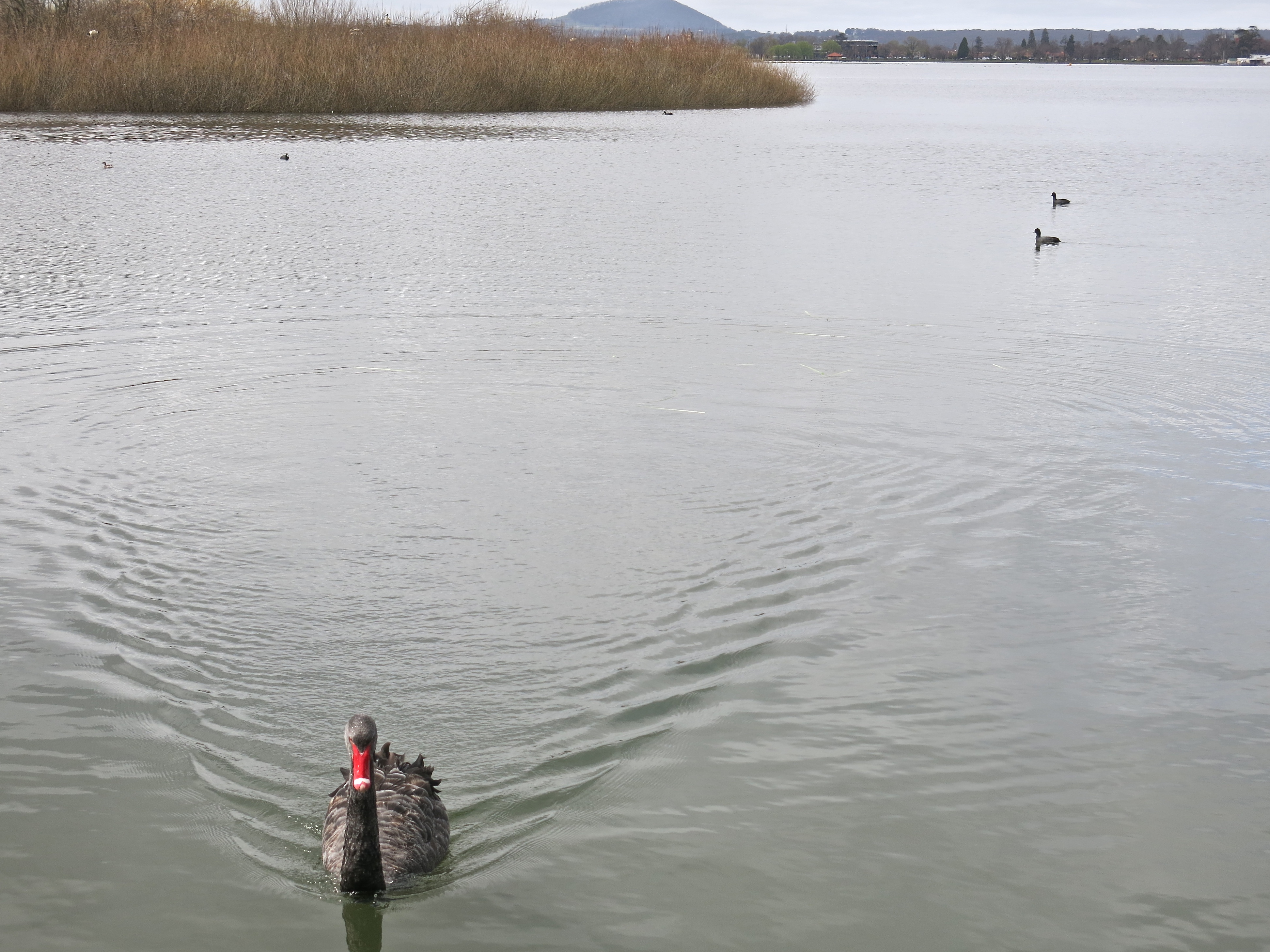
Lake Catani, a few months ago in high winter. It’s hard to see but it’s not ice at the edges; it’s reed and sedge. I don’t know when the last time it froze was but it’s a long time ago.

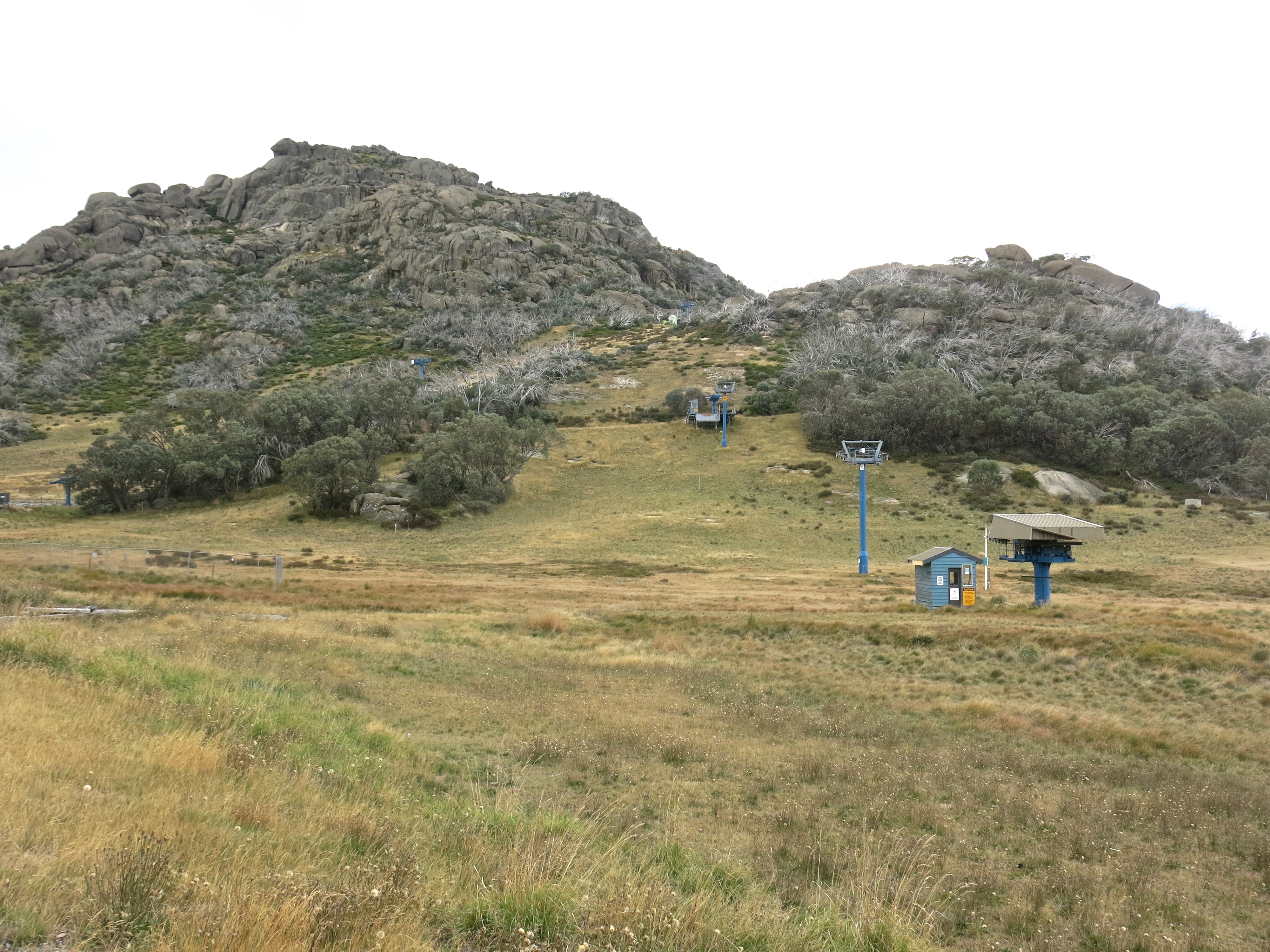
IMG_0771Cresta Valley, same glorious mountain mid-winter, the site of Australia’s first ski tow and the first place I ever saw snow. When I was there 40 years ago there was heavy snow just as there was almost every winter, enough to support six ski runs. Percy Weston who lived on or near the mountain for more than 70 years is quoted in a history of Mount Buff saying: ‘In my boyhood days winters were always 10-12 degrees Fahrenheit colder than they are today.’ Every Antarctic depression brought a mantle of snow that grew to a depth of about five feet and lasted well into Spring.

If you’re reading this in July or August you can see just how much snow there is on Mt Buff right now by clicking here.

IMG_0772The lodge that serviced these runs burnt down, some say for the insurance when the snow went bad but actually during one of the many bushfires, the exceptional number of bushfires, that have run across this high plateau in the last 30 years.

Mount Buff may see five feet of snow again, but if it does it will be in weird and troubling circumstances.

When we go walking we often see changes like this over time. They might be temporary or cyclic. Or they might be something else.

[A salutary deviation. When preparing this I was looking through what Dr Google had to offer and found a link titled ‘Heavy rain melts Mt Buffalo’s record breaking snow’, an ABC report from 2011, which would have put a bit of a hole in my story. But in fact the text indicates it should have read ‘Record breaking rain melts Mt Buffalo’s snow’. I checked the date and can confirm that 180mm of rain in 16 hours is quite a lot. We happened to be there on the day, romping across to the back wall. But if I hadn’t read past the headline I would have ended up somewhere very different. Often people don’t read past headlines.]

••••••

UnknownOn ‘Lateline’ some months ago Emma Alberici interviewed Maurice Newman, an intimate of the Australian Prime Minister’s and Head of his Business Advisory Council. In this country a powerful powerful man. After not much more than a minute he’s saying: ‘Science is whatever the science is and the fact remains there is no empirical evidence to show that man-made CO2, man-made emissions are adding to the temperature on earth.… When you look at the last 17.5 years where we’ve had a multitude of climate models, and this was the basis on which this whole so-called ‘science’ rests, it’s on models, computer models. And those models have been shown to be 98 percent inaccurate.’

‘By?’ Emma asks. ‘Roy Spencer’ is the instant and sure reply.

Roy Spencer, I thought. Roy Spencer. Wow. He’s the guy. He’s the one who knows. There are things I need to investigate here.

••••••

FigureheadBefore we chase down Roy let me come clean about my own position.

1) I strongly suspect the climate is changing. And not the weather, the climate. They’re two different things.

I’ve offered an example above of why. But today it’s the 1 February and should be insufferably hot. It is actually 17.9C, which it has been more or less since the Bureau of Meteorology published its findings that last year produced record heat. Anecdotes, personal observations, true enough to that extent, to that context, to that moment — but ungeneralised, unscientific.

That said, science doesn’t begin in the lab or with satellite instrumentation. Science begins with human observation and hypotheses, hunches in all their frailty. The rather unusual job of science is to test such observations and thoughtful guesses; to go with the data, and to say, not just yes or no, but this is how to understand it, and it’s a bit like this, and these are the things we still don’t know. Be careful of certainties.

That’s what we have experts for, and while I am not in awe of expertise I certainly respect it.

2) The second thing I think is that the activity of human beings is causing the change (‘anthropogenic warming’).

There is one ‘hockey stick’ that even Andrew Bolt can’t argue about and that’s this one.350px-Population_curve.svgSorry the graph is so small. Human population, earth, 10,000BC – 2000AD. Was less than 100,000 and in 2005, off this scale — 9 billion. A new study suggests that instead of plateauing as previously assumed the world’s population might be 11 billion by 2100. If so Nigeria will probably have a population of 900 million. You cannot alter an element in an ecosystem so significantly without anticipating other changes.

The information in this graph reinforces these presentiments. And I’ve tasted and waded through Beijing’s air.

china-energy-consumption-by-source-e1347409856398

Among all the argument there does seem to be universal agreement that coal-fired power plants contribute to the concentration of CO2 in the atmosphere, and if consumption is growing at this pace, then I fear 1+1=2.

3) I am certain that the climate and its influences are part of a larger platform of environmental stewardship, and am quite sure that climate change has pushed matters like resource depletion, air pollution, ocean acidification and pollution, soil degradation, and destruction of above and below ground clean water systems under the public carpet. I think the next huge war is more likely to be fought over water than oil.

A good example of this displacement are the ‘errors’ the English judge found in Al Gore’s ‘An Inconvenient Truth’. (See the next blog.)

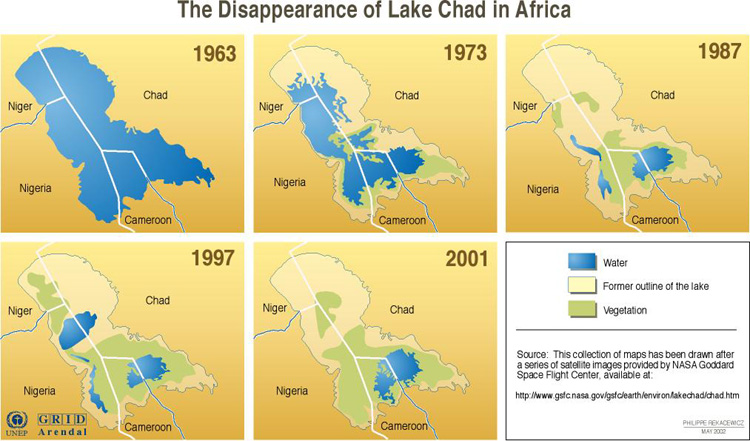
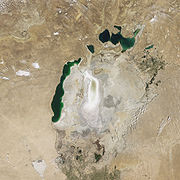
14-lakechadIt might or might not be climate change that has caused Lake Chad to be less than one-third the size it was 50 years ago. Other reasons may be population increase, over-grazing and overuse for irrigation. Phew, what a relief!180px-Aral_Sea_Continues_to_Shrink,_August_2009

Similarly, it might be the diversion of most of its inflowing sources by Soviet Russians that has destroyed the Aral Sea (at right. You can see its former outline) rather than climate change. But is that enough to cheer us up? Not really.

It’s all hooked up, and not in ways we can necessarily understand.

I believe in careful stewardship of the environment, or we’ll cop it. And I came to writing this thinking we’ll probably cop it and perhaps before climate change really kicks in.

My confession: In daily life I mostly take public transport and walk; but we own a car. I turn lights off when they are not being used, but we’re hooked into the grid which means we are using brown coal-generated electricity. I bucket water out of the bath when there is a bath, but I otherwise water our plants from the tap. We recycle and take our vegetable waste out to where it might be composted. I wouldn’t mind doing more, but I don’t.

I recognize that these actions are negligible and more because of habit or for my state of mind than the environment. I recognise the contradictions present in our use of air travel and consumption of food that has been grown far from where we live. I think the requisite change will require large-scale decisions which will impact on me and everyone else. I anticipate they must reduce the ‘quality’ of material life. But the option of doing nothing is likely to produce far worse results. I am very concerned about what sort of shape the environment our grandchildren inherit will be in.

•••••••••

‘With all of the hysteria, all of the fear, all of the phony science, could it be that man-made global warming is the greatest hoax ever perpetrated on the American people? It sure sounds like it.’ — Senator James M. Inhofe, the Oklahoma Republican, Chairman of the US Environment and Public Works Committee 28/7/03)

But what’s made people so angry, so divided in their views?

This question might be wrongly framed. Of course we’re going to worry. As J.K. Galbraith wrote in The Great Crash, 1929: ‘People of privilege will always risk their complete destruction rather than to surrender any material part of their advantage’. (He did also note in The Affluent Society: ‘Wealth is not without its advantages, and the case to the contrary, although it has often been made, has never proved widely persuasive.’) Without any doubt at all, we’re people of privilege.

But so angry. And so snarky …

The “climate change” crowd want money and power. There are hundreds of billions up for grabs IF you spout the party line. Power, there are many would be global autocrats among us just looking for a cause. Always have been, always will be. We must reject them. The ordinary true believer is a dupe, and will go to great lengths to avoid facing the fact that they’ve been duped.  (Peter Osborne, somewhat typically discussing Dr Tim Ball’s blogpost that we need to go to Hitler’s Mein Kampf to understand IPCC processes. An excerpt: ‘The entire climate change industry is based on fiction. Specifically, the notion that the planet is doomed unless capitalism is paralysed. This myth is gradually being exposed, leading to long-awaited cuts in government support.’)

You can get a big fat read of that sort of thing here.

And so, I don’t know, disturbing?

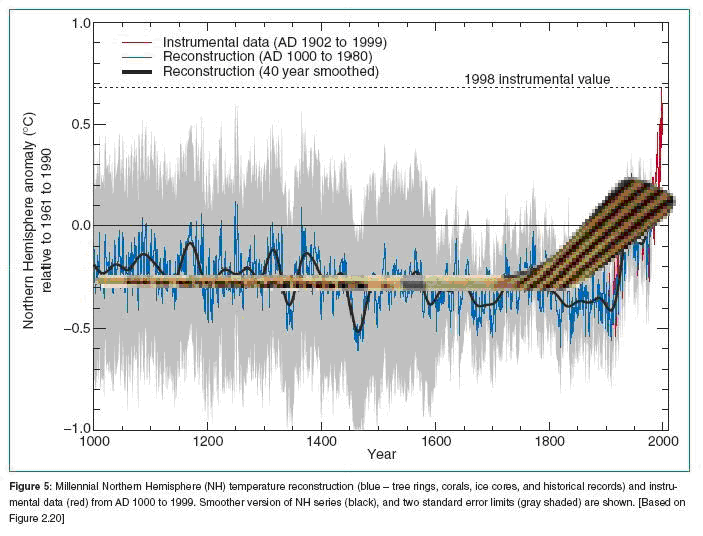
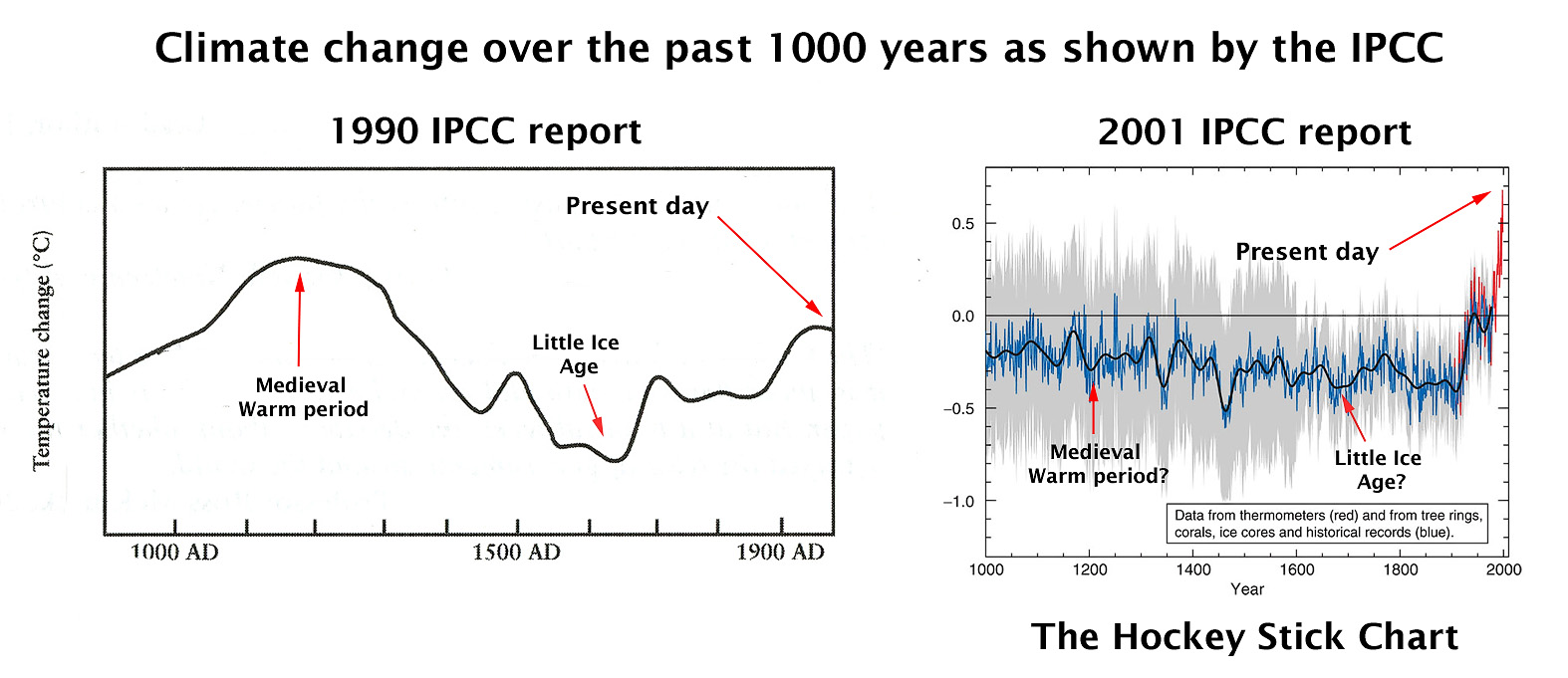
I’m amazed at the lack of common sense in our world today. If people would just use their brains rather than believe the Man-made Global Warming hype, they’d realize, so clearly, what a farce it is. Even before I watched your documentary [‘Not Evil just Wrong’] (which was great), I didn’t believe in Man-made GW…why? Well again, from a common sense perspective, if it’s true that man and all of our industry causes this, how do they explain the warming during Medieval time??? I’m not sure, but I don’t think they had factories, cars, etc. Or, I’ve often been perplexed by the fact that what we exhale and what plant-life on earth needs to survive is somehow a pollutant. And if Geologists have proven that historically rises in CO2 occur ‘after’ warming periods of our earth’s history…well…then their theories are pretty much bunked. But for me, a picture speaks a thousand words. If anyone looks at the depictions of what a ‘trillion’ looks like, they’d be horrified at what our governments are doing. But applying that…I read that only 29% of our planet is land, and of that, less than 1% of the 29% is actually inhabited by man. And of that…how much is actually industrialized? I just don’t see how we, being a teeny speck on this planet, can possibly cause any Global events. It just seems silly!— Michelle

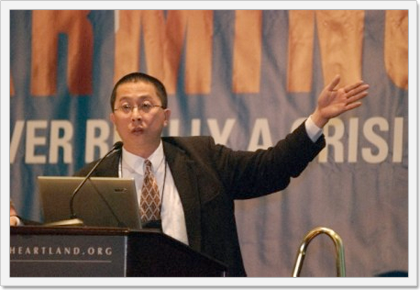
This almost reads like a plant from an organisation like the Heartland Institute. Covering all the touch sensitive issues in a little girl ‘don’t be so silly, use your common sense’ voice, it’s just a bit too carefully constructed. Am I dreaming or can I see a 35 year-old copy writer grinning away in the background like a Cheshire cat?

And, even if well-intentioned, so seemingly off the beam …

The proposed limits on greenhouse gases would harm the environment, hinder the advance of science and technology, and damage the health and welfare of mankind. There is no convincing scientific evidence that human release of carbon dioxide, methane, or other greenhouse gases is causing or will, in the foreseeable future, cause catastrophic heating of the Earth’s atmosphere and disruption of the Earth’s climate. … We are living in an increasingly lush environment of plants and animals as a result of the carbon dioxide increase. Our children will enjoy an Earth with far more plant and animal life than that with which we now are blessed. This is a wonderful and unexpected gift from the Industrial Revolution.

This is The Oregon Petition, apparently signed by more than 30,000 people even if they did include Geri Halliwell, Daffy Duck, Charles Darwin, Chewbacca and I.C.Ewe. But it is claimed 9000 people with Ph.Ds were among them, it was sponsored by scientists and it certainly was accompanied by a letter of endorsement from Frederick Seitz, former president of the US National Academy of Sciences.

240x173xpentti_linkola.jpg.pagespeed.ic.cWgrgsQCH6Then there’s the nut jobs on the other side like Pentti Likola (at left), an enthusiast for the consequences at least of the Nazi holocaust because of its impact on population growth.

What to do, when a ship carrying a hundred passengers suddenly capsizes and there is only one lifeboat? When the lifeboat is full, those who hate life will try to load it with more people and sink the lot. Those who love and respect life will take the ship’s axe and sever the hands that cling to the sides.

In which process he will be assisted by members of the Voluntary Human Extinction Movement who believe their goals might be achieved by: voluntarily abstaining from reproduction; not using medicine and eating less and less until death occurs; and using science and technology to evolve/devolve into non-sapient photosynthesizing organisms that consume the same amount of energy as they produce. I don’t know how many ‘Hard Green’ followers there are, but there are some. Years ago I was part of a group that turned down a subject to be offered at Years 11 and 12 called ‘Deep Ecology’ which promoted views like this, ‘biocentrism’ I think was its grand theme.

It’s not an issue for everyone. A 2007–2008 Gallup Poll surveyed people in 128 countries asking whether respondents knew of global warming and, for those who were aware of the issue, whether or not they thought it was human-induced. Over a third of the world’s population were unaware of global warming, with developing countries less aware than developed, and Africa the least aware. Of those aware, residents of Latin America and developed countries in Asia were most certain that climate change was a result of human activity. People who lived in Africa, parts of Asia, the Middle East, and a few countries from the former Soviet Union were most sceptical. Opinion in the United States was almost exactly evenly divided. A subsequent poll in 2014 found that that 51 percent of Americans were only a little or not at all worried about climate change, and 49 percent a great deal or a fair amount.

There’s a lot of people whose daily lives provide more urgent matters for attention. A WHO estimate of risk factors in High Mortality Developing Countries (HMDCs), for example — although it aimed to highlight the problem of climate change — discovered that climate change is only one-third of the risk factor of being overweight in an HMDC. ‘Physical inactivity’ and ‘iron deficiency’ both currently kill more than four times as many people as events attributed to climate change. The four biggest threats for people in HMDCs are being underweight, unprotected sex, high blood pressure, and lacking access to clean water and sanitation. These risk factors are respectively 24, 18, 14 and 11 times greater than mortality caused by climate change factors. At the moment. And that’s another important way of inhaling all this.

Finally, as a public issue climate change has gone off the boil. I remember in 1986 having to cull references to climate change out of Year 11 and 12 subjects in the new Victorian Certificate of Education. Just over 90 percent of all the new Year 11 and 12 subjects included climate change as an item of study in their early drafts. It seemed it had to be there. And I remember 20 years ago when heavy duty commercial Channel 9 ran a don’t-miss one-hour special hosted by Ray Martin about environmental issues which garnered a huge and uncompromised audience. This was typical; it seemed the duty of news outlets to promote awareness of the issues. Was this perhaps too successful, enough to mobilise an opposition?

According to a 2012 poll by the Pew Research Center, the proportion of Americans who believe that the earth is warming has declined by 10 percentage points in the past decade. Those who rate it as major issue has declined by 20 percentage points during the same period.

Paradoxically, by their negative stance, it is quite likely that in this country Tony Abbott and Greg Hunt have done more to enliven debate and raise awareness about climate change than any of their predecessors.

NASA_2000_2005

There’s a lot to be learnt from these reactions — things about the nature of popular discussion, things about the times, things about social and public media, things about politics, things about the role of experts (can I even write expert without inverted commas?), things about education, and especially things about the nature of knowledge and of science which are deeply disconcerting.

That’s mostly what this series of blogs is supposed to be about.

••••••

UnknownAnd Roy Spencer? He’s a serious climate scientist who believes that global warming is a reality, but naturally engendered.

From An Evangelical Declaration on Global Warming which he co-authored: “We believe Earth and its ecosystems – created by God’s intelligent design and infinite power and sustained by His faithful providence – are robust, resilient, self-regulating, and self-correcting, admirably suited for human flourishing, and displaying His glory.”

If you wish you can buy his most recent book here.

•••••••

This isn’t going to be one-way traffic. In fact serious complications will emerge, but to further add to the scenery we are going to look at some events from which controversies emerged.

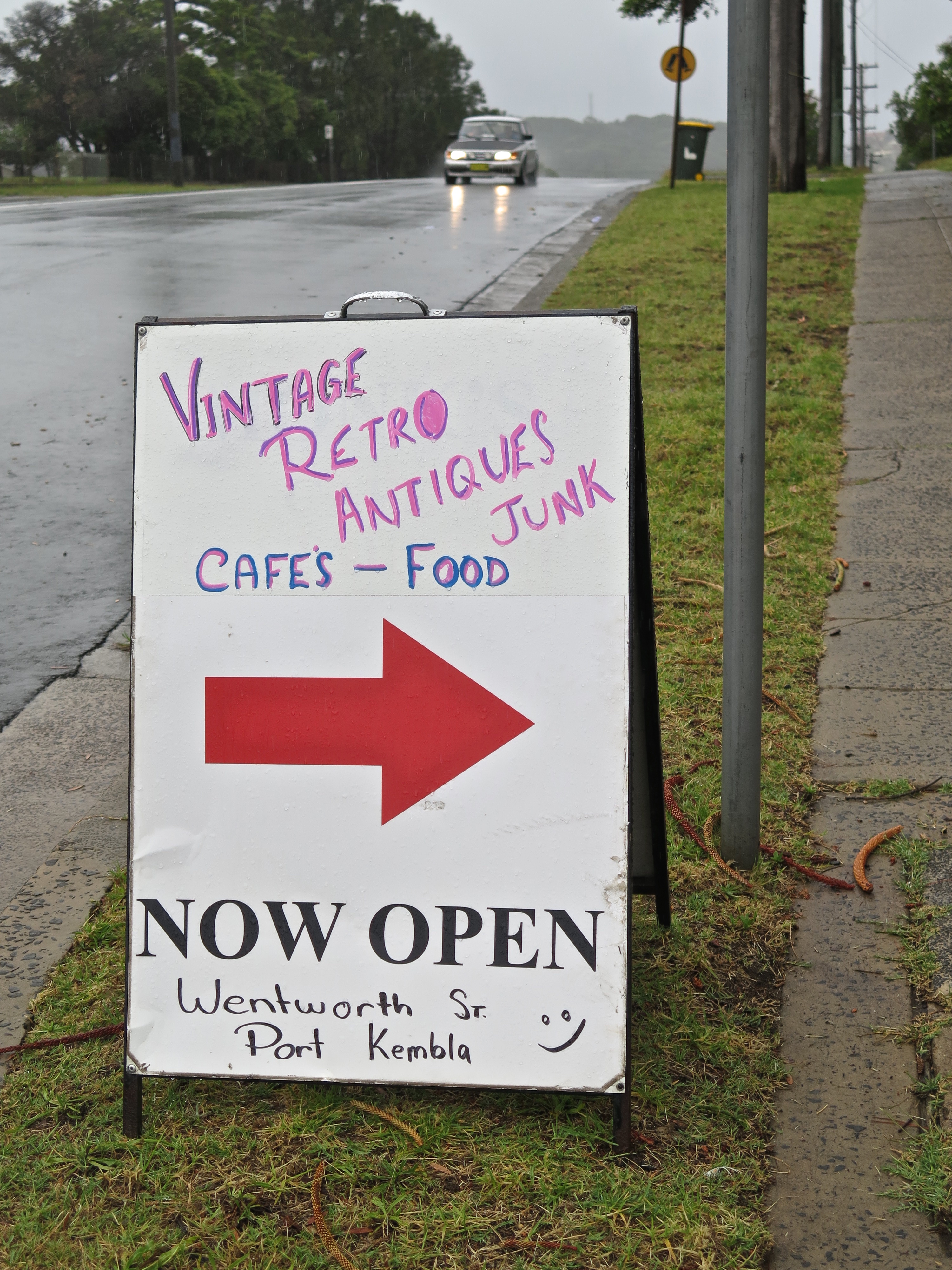
Wentworth Street

IMG_0057Port Kembla. Kembla meaning ‘plenty of wild fowl’ but to all contemporary intents and purposes — Steel City. Also Iron City, Copper City, Coal City, Heavy Industry City and, like all such places, subject to fluctuation.

In the early 1980s the various arms of BHP employed nearly 30,000 people in Port Kembla. That figure is now a little above 3,000. Business pages talk: ‘an oversupply of steel, overseas competition, a stubbornly high dollar and muted domestic demand from the construction sector have again brought steel to its knees.’

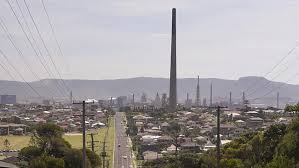
images-1Until 20 February last year it was also home to Australia’s highest chimney stack, 198 metres. Impressive or what? Unwind half an athletics track, stick it up in the air and blow industrial waste out if it. Port Kembla Primary School was once located next door but was closed down due to pollution problems including lead-contaminated soil, acid rain and soot. But that’s all. A warning alarm was fitted to warn of high toxin levels. I’m not sure if the kids were sent home or just instructed not to breathe when it went off.

In 2008, an inspection confirmed that the stack had concrete cancer. Demolition was planned for 2010 at a cost of A$10 million. Correct. $10 million. A team of 30 people working on it for 20 months with nine NSW government agencies involved. Taken collectively those factors would slow things down, but there were also asbestos concerns.

vp14r0_96_1024_672_w1200_h678_fmaxClearly the stack added a certain landmark frisson to Port. The Gong (the city of Wollongong) 10 k.s north and much bigger had nothing like this.

The stack did come down 12 months ago. The Illawarra Mercury had an 8-page commemorative wrap with a live blog. It was a major story in the Canberra Times. Thousands turned out to watch. Many of them would have been sad. The demolition would have left big hole in the landscape.5272032-1x1-700x700IMG_0066I guess this is relevant. When I was chatting to Julie Howard (at left) about Port Kembla the stack and its fate came up very early in the conversation.

But this is not about the stack. It is about Wentworth St, Kembla’s main artery.

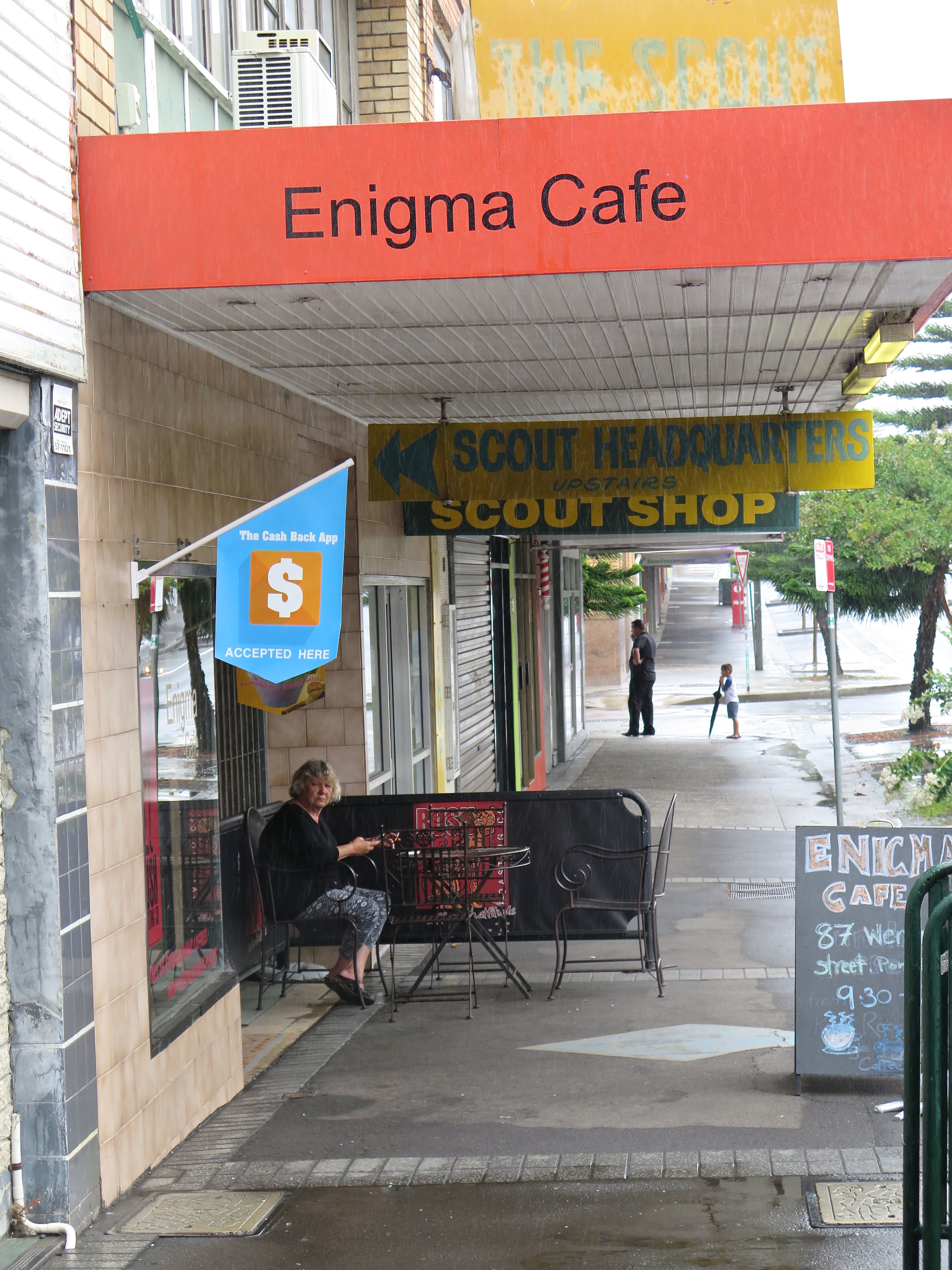
IMG_0014A couple of months ago I was due to make a visit to Illawarra Sports High not far away in Berkeley, had an hour to kill and needed a cup of coffee. I turned down Five Islands Road and took the funny little Darcy St dogleg to get me into Wentworth Street, drove down the hill, up the other side, did a U-turn and drove back again. I bought a paper and was directed to the Enigma Coffee Emporium where I met Julie and her excellent coffee and very fine home made cake.

I drank in as much of where I was as I could, because I wasn’t sure just where that was. And then I came back, twice, because I thought I needed to.

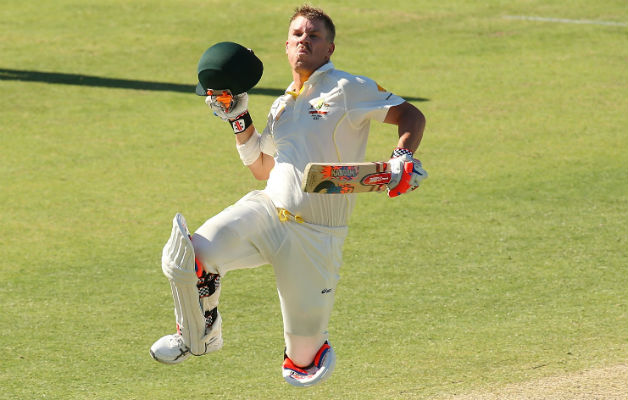
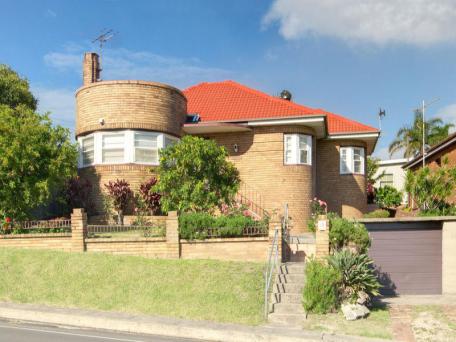
David-Warner-of-Australia-celebrates-his-century-during-day-three-of-the-Third-Ashes-Test-Match83UnknownThere was the architecture. Let’s call it NSW Deco, certainly with a strong ’40s and ’50s flavour but individual in a Dave Warner (at left and right) sort of way, a not-to-be-denied individuality, coupled with a little bit of ‘theoretically I don’t speak Hindi’ kind of individuality.

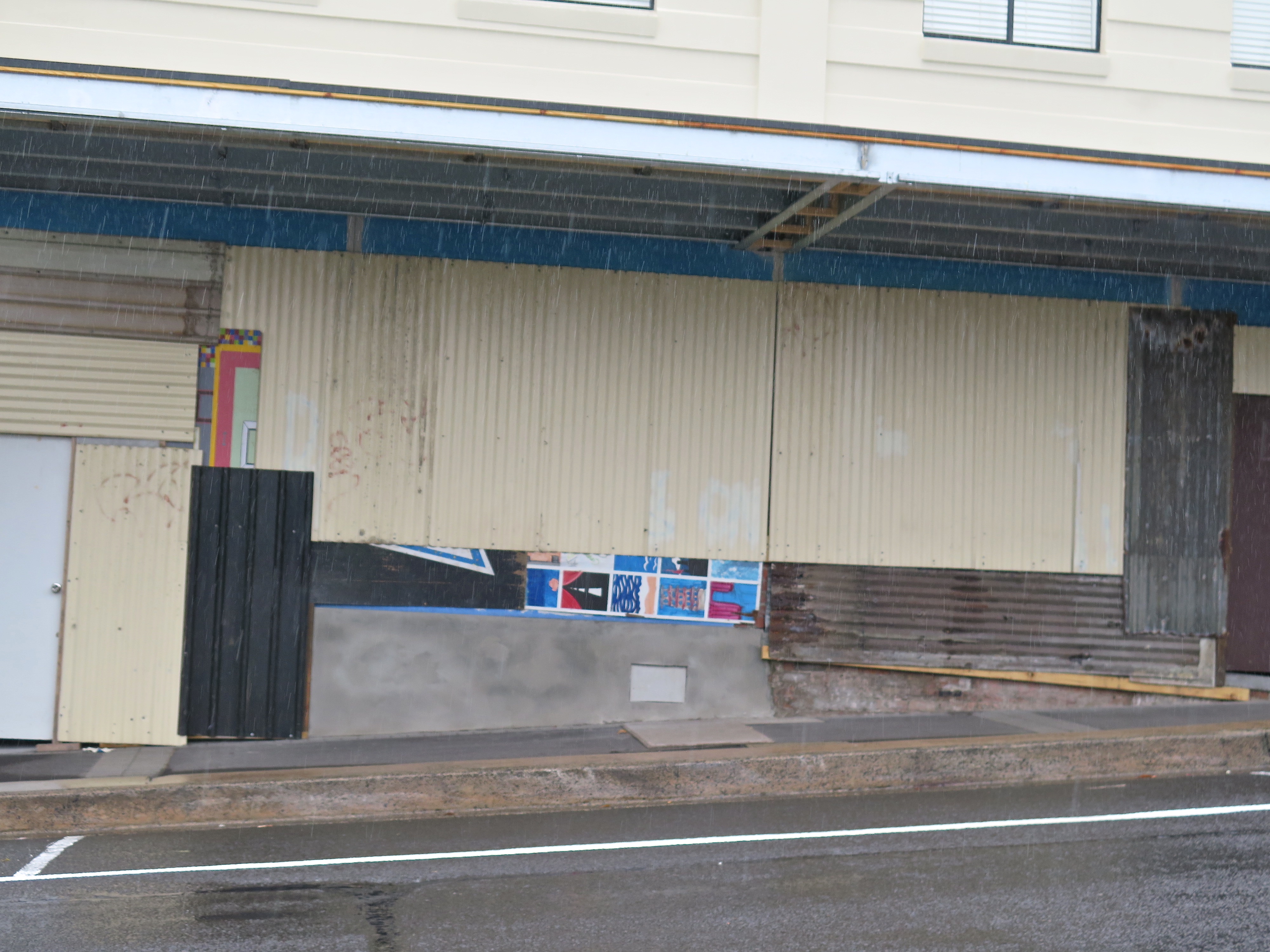
And there were the shops. More than half of them are empty. It is a ghost town in the middle of a conurbation.

I am moved by dying towns and we’ve seen lot of them. They are often the beginning of walks. Timber, mining, tourism — they are all likely to be near somewhere naturally beautiful or interesting, and they are all likely to be going up or down. Although I am very anxious in an empty shop, I like the patina of decay. I like thinking about who has been there and what they’ve been doing, the detail of social trajectories.

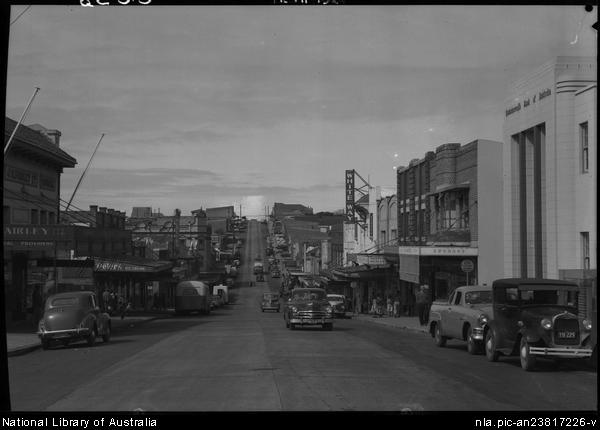
In that light I wondered what Wentworth Street had been like as a bustling shopping strip, if it had ever bustled because there wasn’t much bustling going on there now.app

 At left and below are glimpses of how it began, and what it became. nla.pic-an23817226-v

We found the Westfield’s mall — with more than 56,000 m2 of retail space (yes!!! punches air) — at Warrawong a kilometre away when we went to see Penguins of Madagascar. Film and mall were well suited. Both require 8 litres of coke and a cubic metre of pop corn for digestion.

The Warrawong Mall is one of the beasts that have killed Wentworth Street. And yet, and yet …

Let’s see a bit of what the street looks like now. The formidable houses are at ends of the main drag.images-5

images-6b268d0c193d7be076632913a1efe3918_l


main-1


IMG_0054IMG_0064


The lads have left their mark on some of the decoration.

IMG_0058

But art springs up elsewhere.IMG_0020

IMG_0052images-2The International Billy Cart Derby celebrated above, began in 1941, collapsed in the 1980s and recommenced in 2012.

IMG_0061


Is this so very different from the Rosalie Gascoigne below?Unknown-1

It is art, decay as art as well as art in decay. But it might also be art growing out of decay — the vacant buildings, the cheap rents, the congenial company — that revitalises Wentworth Street.

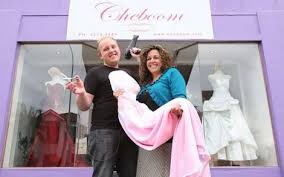
Both hills are showing signs of life. IMG_0050Besides a whopping bottle shop, the eastern end is growing a cluster of bric a brac and antique shops, and a bakery with fabulous smells. Amanda Johnson (at left) collects and sells vintage material and makes it up into wonderfully inventive bits and pieces. Dulcie Dal Molin is president of the Red Point Artists Association based in a Wentworth Street property and organises the Billycart Derby. The Illawarra Mercury quotes her: ‘Since the first revived race in 2012, Wentworth Street now has boutique wedding shops and an arts precinct.’

images-3

So hooray.


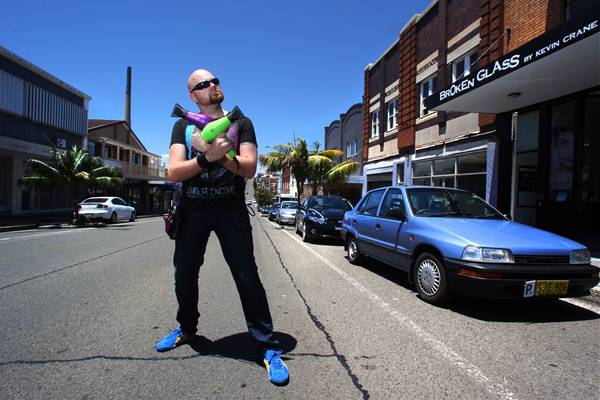
IMG_0067The other hill is dominated by the pub but there’s a chemist, hairdresser’s, newsagent, gift shop, more wedding stuff, flowers, party hire. Kevin Crane (looking fabulous at left) from Broken Glass hairdressers has won awards.w1200_h678_fcrop

It all just might work. The Wollongong City Council, which has just spent a small fortune on duding up its own mall, commissioned a town planning study about what to do with Wentworth St. It was published in 2007 and the recommendations were pallid, and cheap: work on the main street entrances, emphasis on pedestrians (there’s no one else there chaps), new street furniture and signage.

But, seriously, would you get town planners to sort out something like this? You’d have to agree for start about what the result was going to be.

I left with a sense that it might be women who make Wentworth Street into a home for more than their working sisters. Maybe that’s part of the regrowth phase. Low key projects, low financial investment, moderate to high emotional investment, modest ambitions.

I’ve got to say I like it the way it is right now, but a) I’m a blow-in and b) I’m not trying to make a living there.

But when it’s gone, it’s not going to be anywhere else.IMG_0072

Chuck Close at the MCA

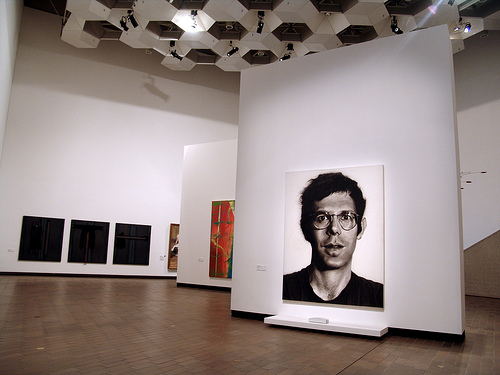
92532383_3784818cd6This is Bob where I first saw him in 1982, in the Australian National Gallery. It was an early acquisition and at nearly 3 metres high and 2.14 wide competed with Anselm Keifer’s ‘Twilight of the West’ for dominance of the space where they were displayed. Probably like most people I thought, hmm big photo, quality print, caught a moment and, probably like most people, was a bit shocked to discover it was a canvas covered with acrylic paint. However close you stood it was hard to be convinced. Photorealism realised.

Chuck Close was the artist.

I began to follow his career which has at least two unusual aspects. The first was that Chuck has prosopagnosia, also known as face blindness, a cognitive disorder where the ability to recognize faces is impaired while other aspects of visual processing and intellectual function remain intact. It can be acquired or congenital and may affect up to 2.5% of the population. The specific brain area usually associated with prosopagnosia is the fusiform gyrus which activates specifically in response to faces allowing the recognition of faces in more detail than other similarly complex objects. Rather thrilling in itself. To date, no therapies have demonstrated a capacity to remediate the condition. Prosopagnosics often learn to use ‘feature-by-feature’ recognition strategies involving secondary clues such as clothing, gait, hair color, body shape or voice. Because the face seems to function as an important identifying feature in memory, it can also be difficult for people with this condition to keep track of information about people, and socialise normally with others. Who else has prosopagnosia? Friend to primates Jane Goodall; UnknownFrench actor Thierry Lhermitte (at left) whose face you might recognise if not his name; possibly accounting for his very wide range of wives and mistresses playwright Sir Tom Stoppard (né Tomáš Straussler, who knew); Dr Karl of Triple J and splendid shirts fame; Oliver Sacks who despite writing case studies of prosopagnosia didn’t realise until recently he had it himself.

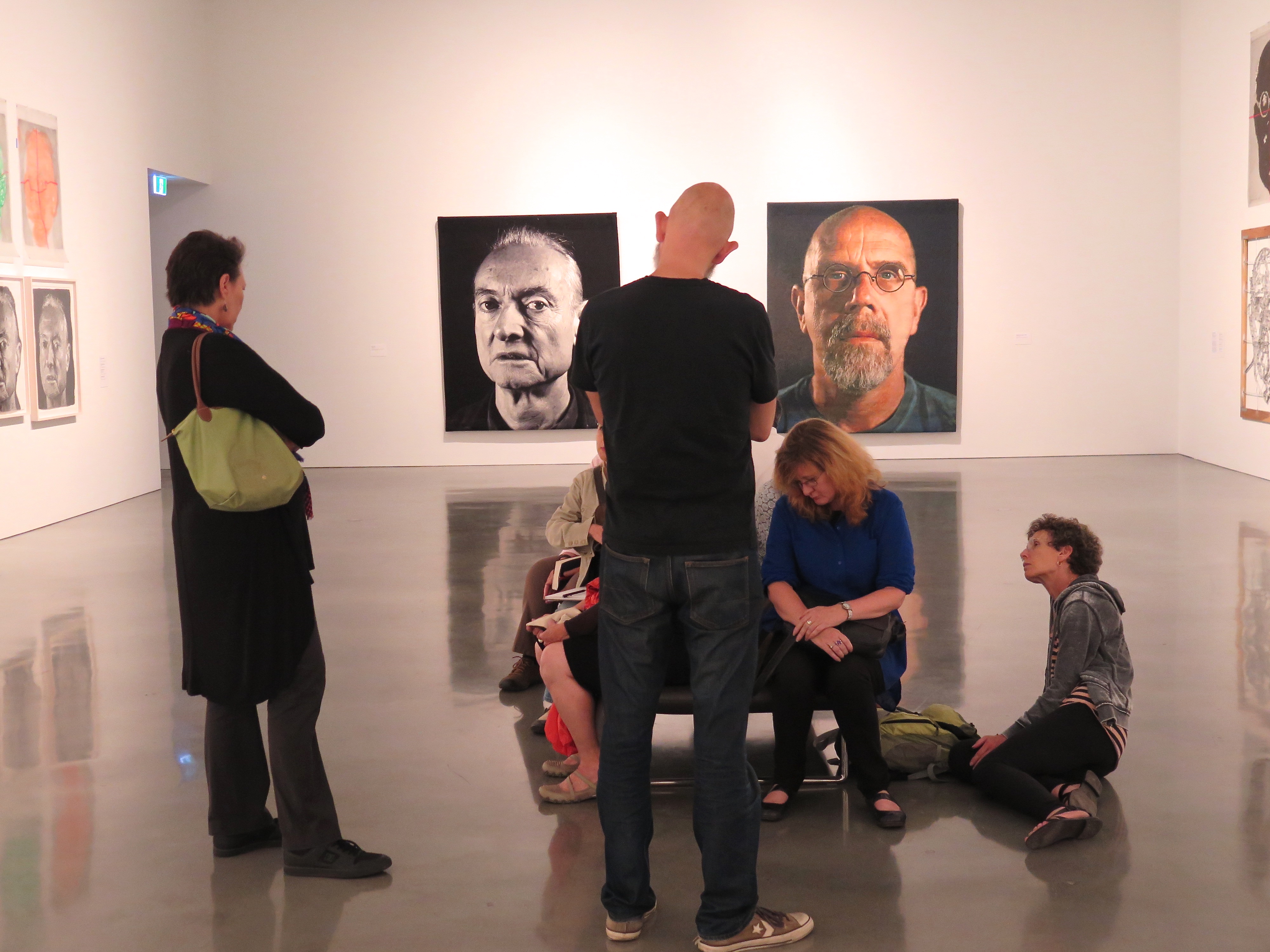
There is a major exhibition of Close’s work at the Museum of Contemporary Art in Sydney at present, and Myrna didn’t like it much. One of her reasons was that there were too many self portraits, and yes there were a great many, but maybe it’s a manifestation of his prosopagnosia. Close himself has said: ‘I have difficulty recognizing faces. That occurred to me twenty years after the fact when I looked at why I was still painting portraits, why that still had urgency for me.’ A need to establish your own physical identity?

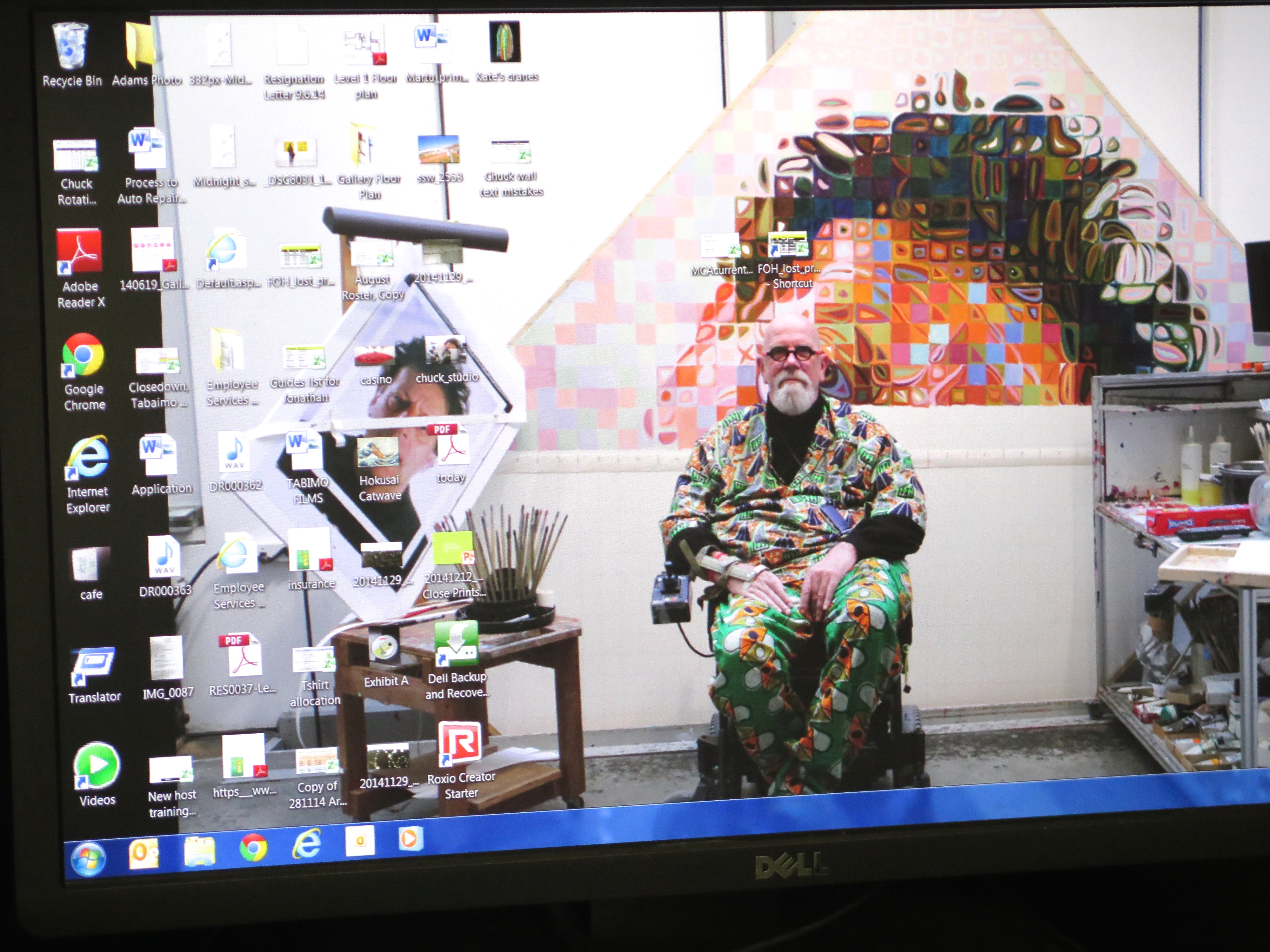
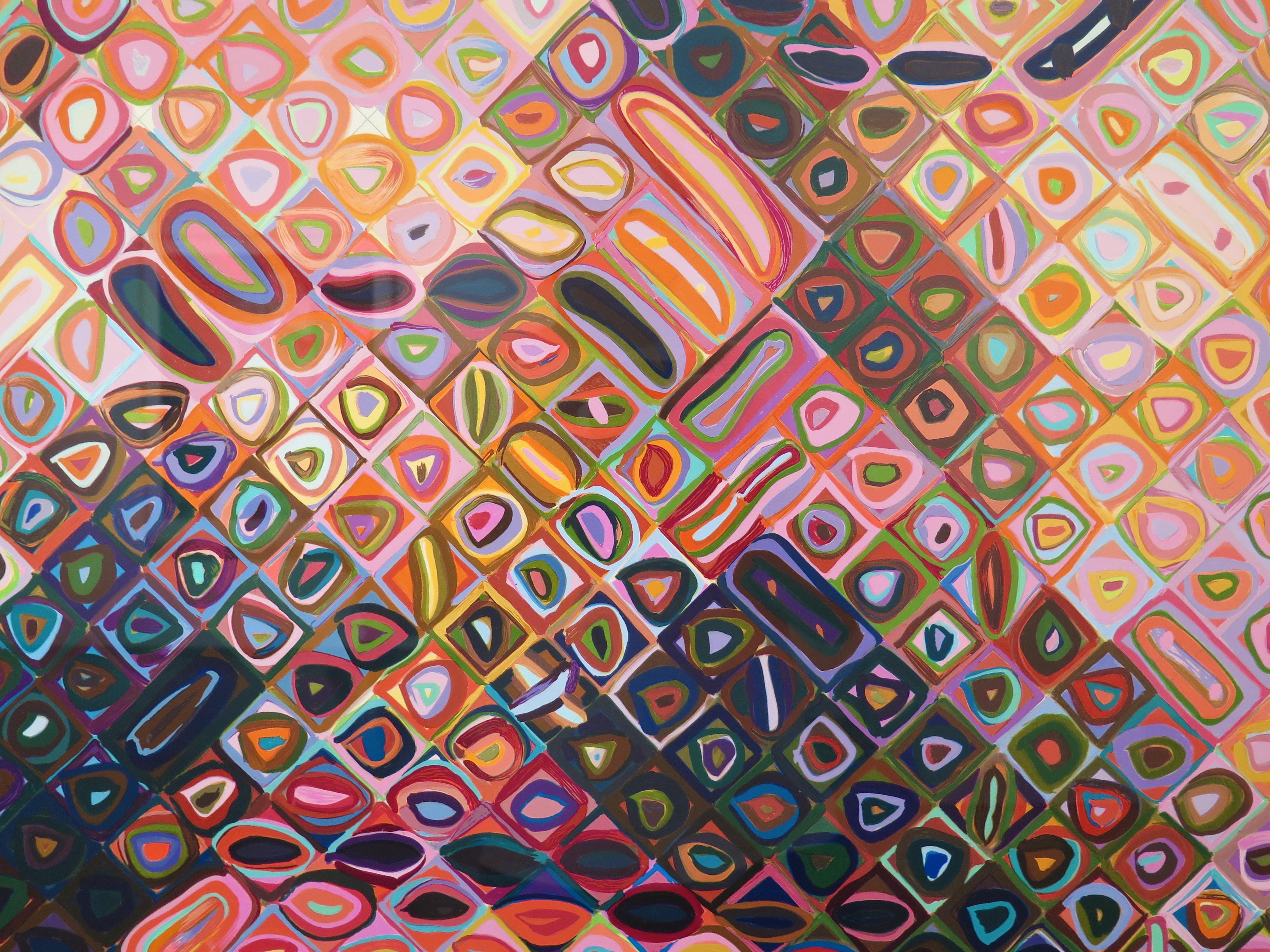
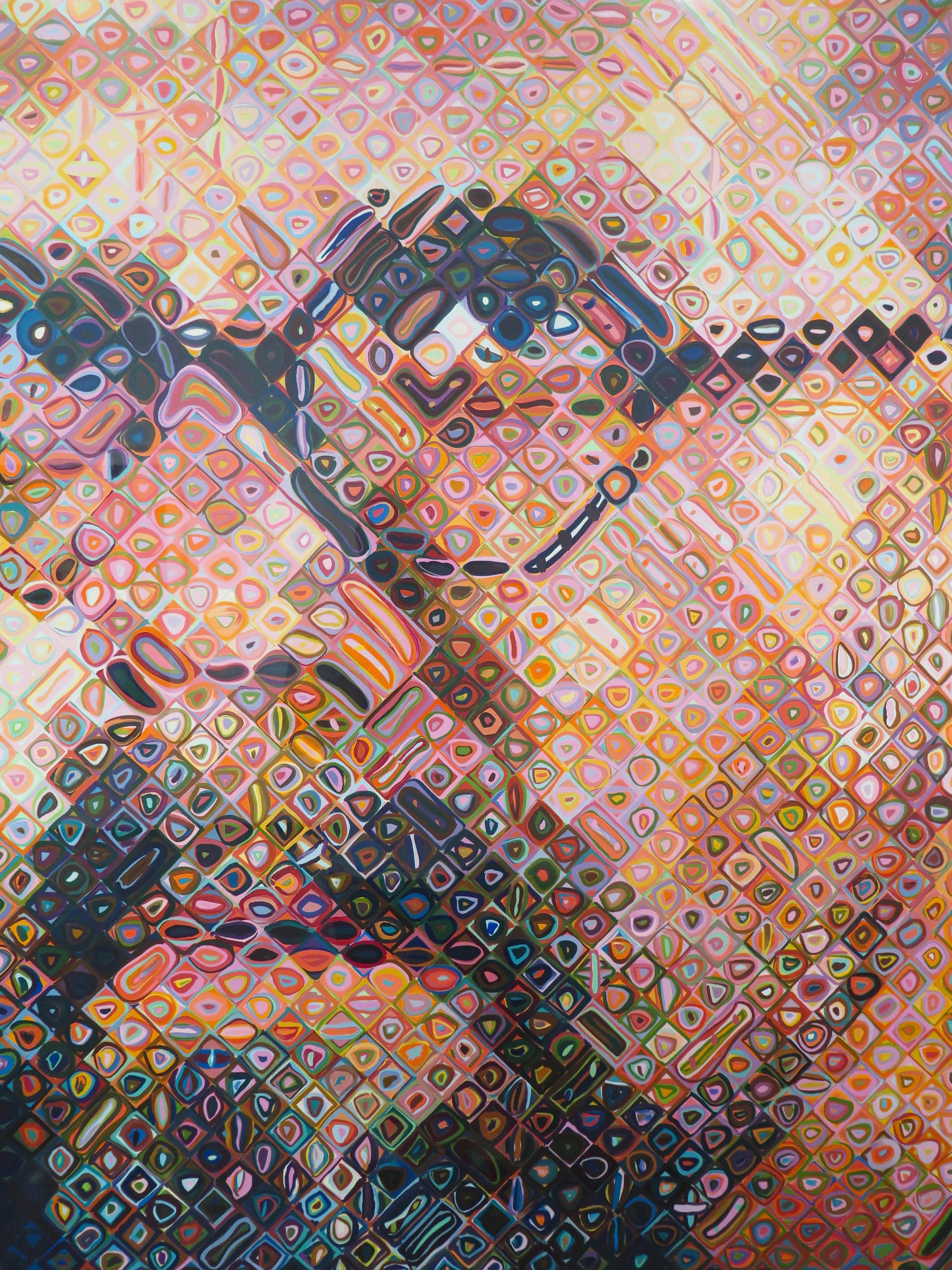
Perhaps paradoxically, Bob the subject (Robert Israel) has said: ‘I had wanted Chuck to ask me to pose for him, but I really didn’t feel it was proper for me to ask. Chuck’s decision of who he would paint had to do not only with whether you were a friend, but with the topology of your face.’ What’s he seeing there? Close tells his own story about Bob. ‘I had taken a break and was walking back into the studio. Looking at the painting, I realised that a highlight in one of the eyes was too bright. And I said, “Damn it, now I’m going to have to take his glasses off”. But when I realised what I had said, I pivoted on my heel and walked out leaving the lights on, the compressor on and the airbrushes full of paint. When you start believing in your own illusion, you’re in serious trouble.’ Clearly his relationship with his work is complex. Is this another version of the idea of art, high art, fine art, being a product of dysfunctionality? IMG_0113And this is Chuck. (It’s a photo that I took of the desktop of the computer at the entry counter.) He’s in his wheelchair. In December 1988, Close suffered a seizure which left him paralyzed from the neck down. A spinal artery had collapsed. He’s worked hard to get some mobility back and for some time he has been able to paint by strapping paint brushes to his arms and moving them — the second remarkable aspect of his career. So, rather than the very fine work with spray painter, airbrush and so on, his gestures have become larger and his media more wide-ranging.IMG_0107 Again, art influenced and modified by infirmity. At left is a detail from the self-portrait on the right. What brilliant colour management.IMG_0108

Another reason Myrna didn’t like the show was its focus on the technical aspects of the work. She had been warned. It was called ‘Prints, process and collaboration’ and it was one of the reasons I enjoyed it.

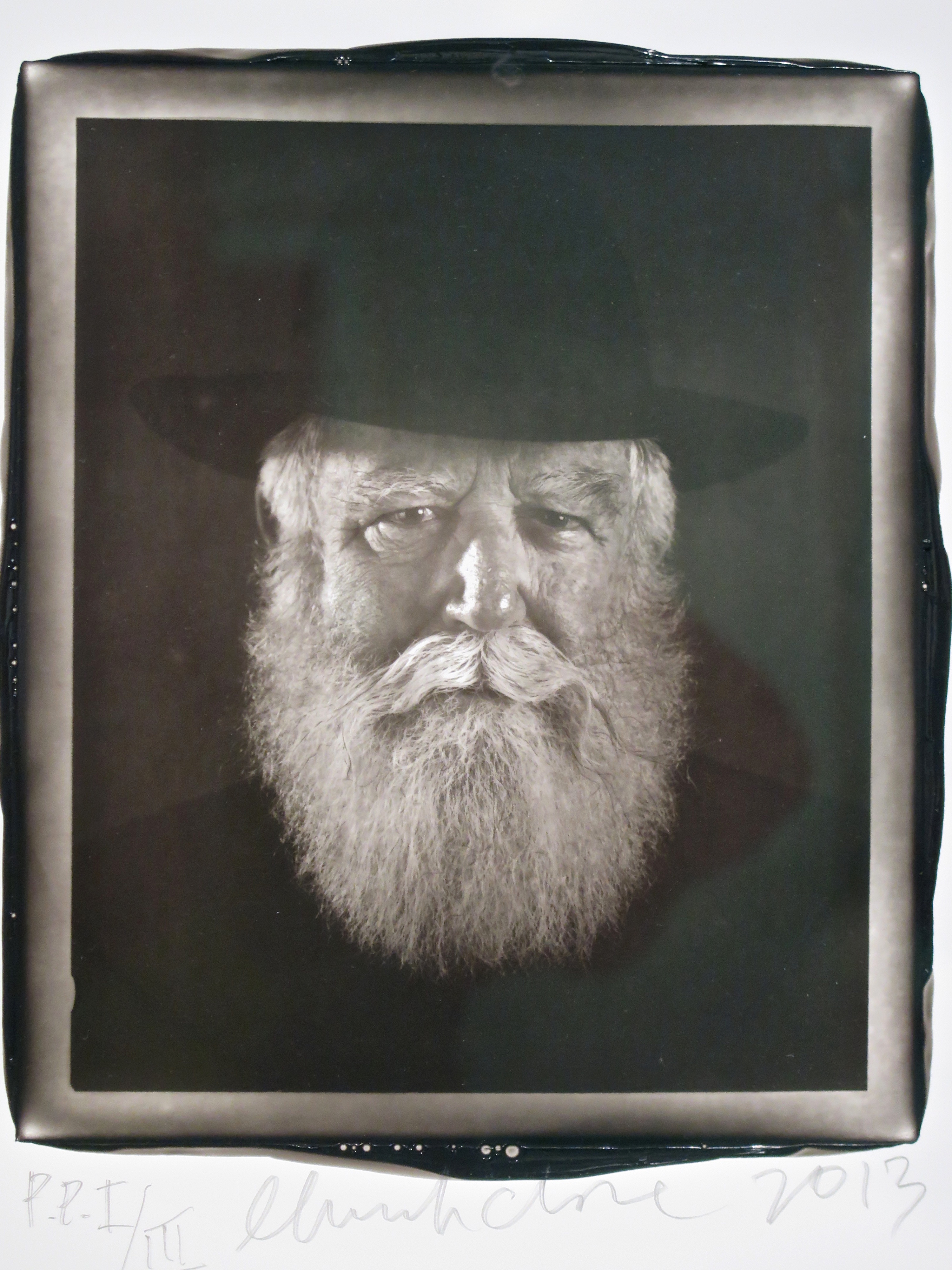
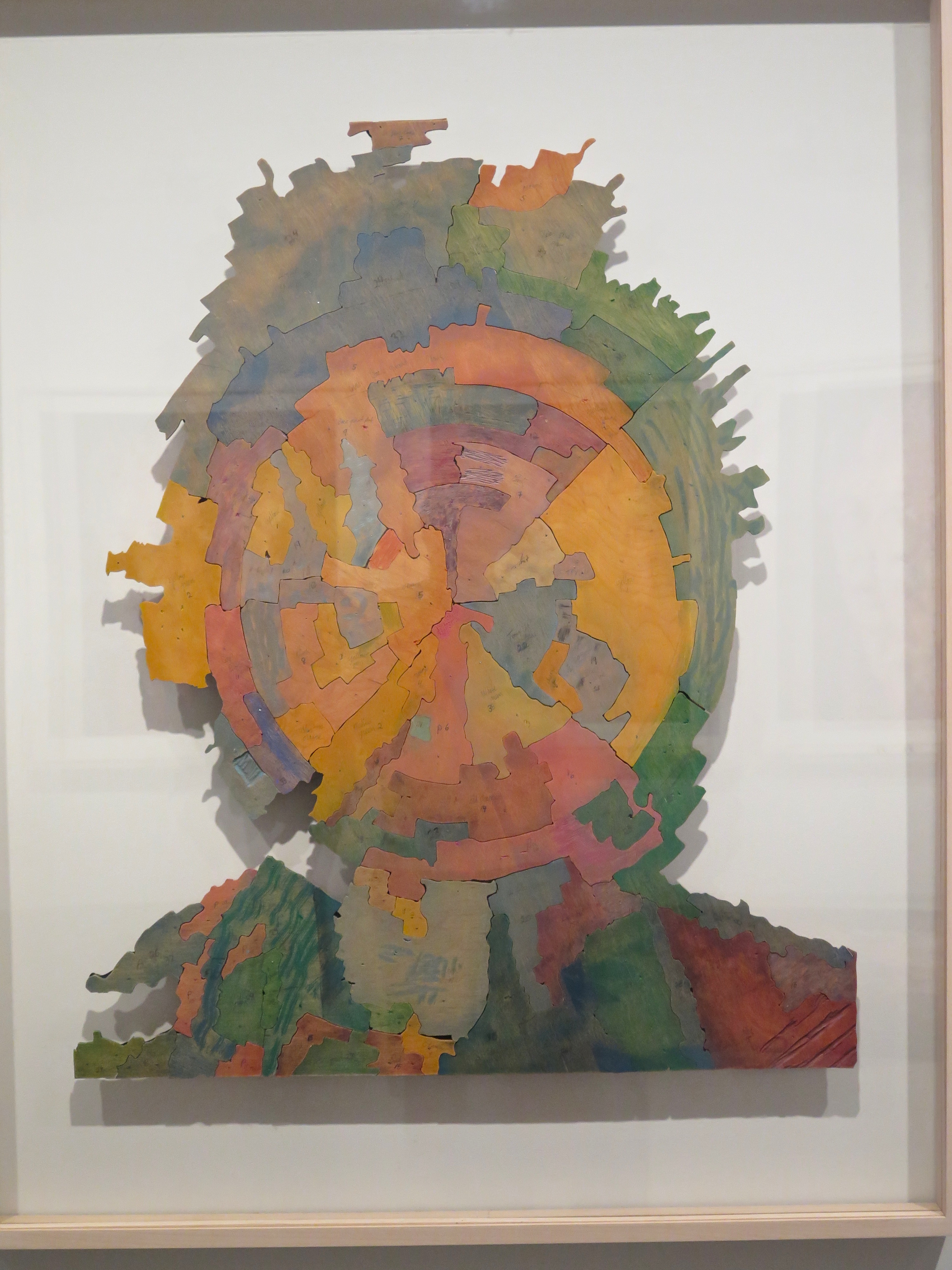
It was a display of North American can-do technological skill and willingness to experiment in collaboration with master craftspeople. I like that. He moved from paint to print a long time ago but now we have very complex photo processing which produced this lovely portrait in which the whites are stronger than I have been able to make them here.IMG_0104 IMG_0095And adventures in paper pulp (above, plugged into the grid at right according to a very detailed ‘colour’ chart), and renaissance games with perspective (below).IMG_0088And this, this, is a tapestry!IMG_0105 It was clear how the print series layering colour on colour become their own works of art both as individual pieces and as series.IMG_0083 Even the print woodblocks create their own jigsaw of delight. IMG_0097 Finally, the audience makes its own contribution.IMG_0103 IMG_0091Jacquard tapestries. Roy Lichtenstein on the left. Extraordinary.

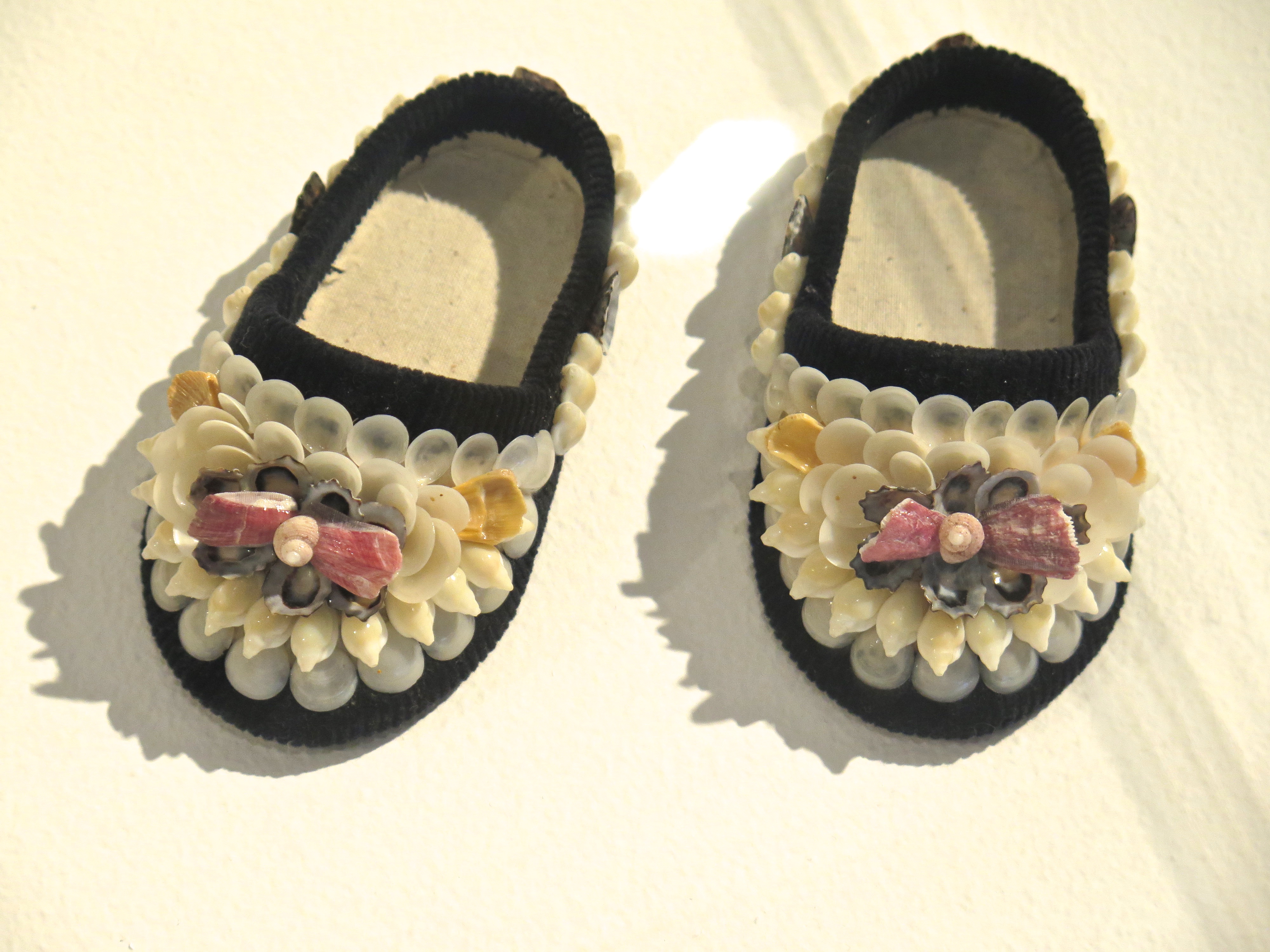
•••••••••• IMG_0024Tangential reason #713 for living in one place, or another: in the Wollongong Gallery you get just one pair of Phyllis Stewart’s gorgeous shell slippers. In the metropolis you get more.IMG_0109

Attractive Curiosities: wet and arty


IMG_0055

Pt Kembla sea pool. Two swimmers. Disappearing into infinity. The colours of ghosts. The terraces at left suggest another different time. Such a beautiful pool.

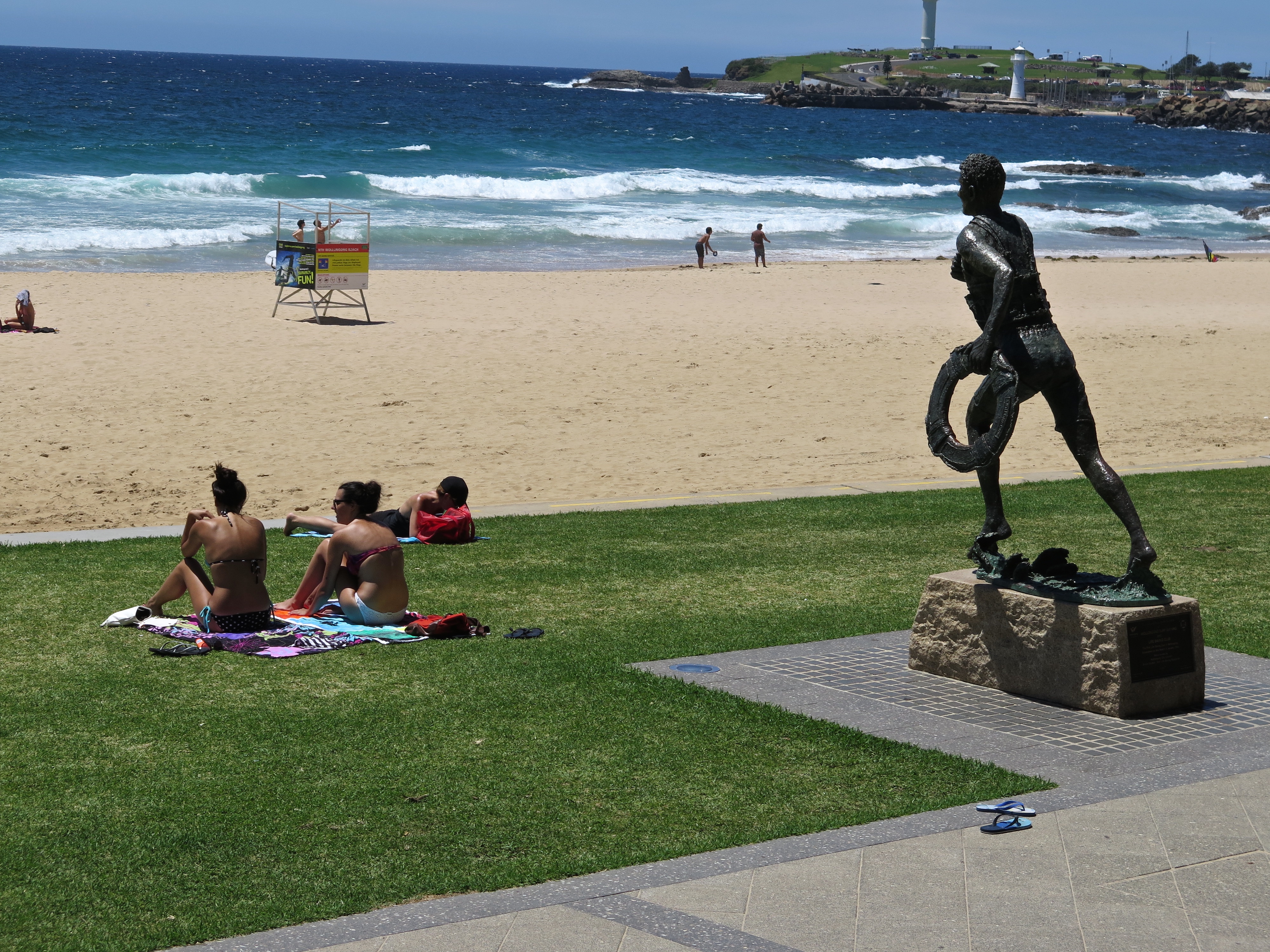
IMG_0009North Wollongong beach. Hot. IMG_0010From a distance the statue looks, what, Grecian? Up closer, a bit more terrorifying.

IMG_0007

The rocks above the Gong’s sea baths.

IMG_0042

Wedding Cake Rocks in the Royal National Park.

IMG_0152

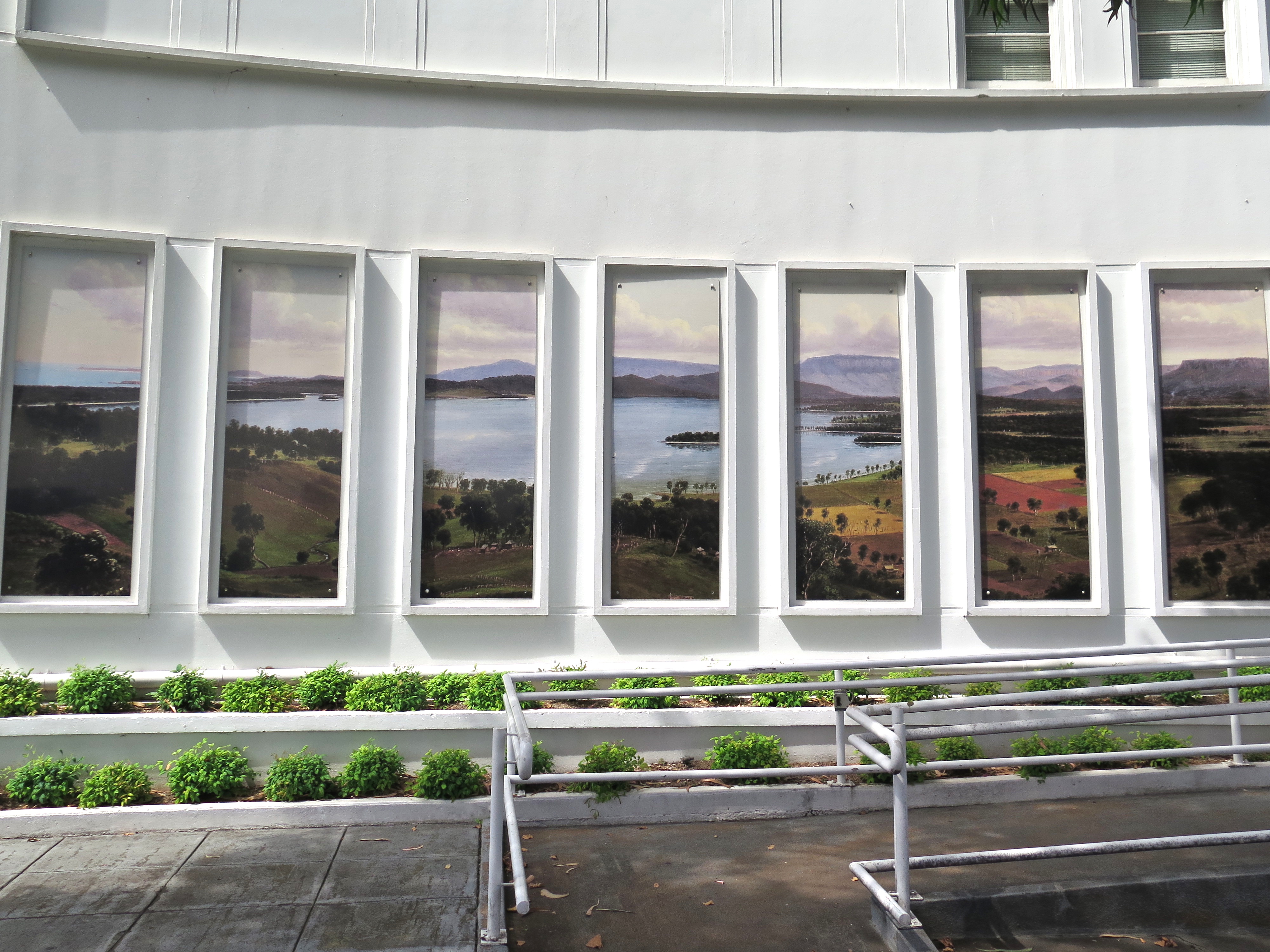
The Illawarra as described on the outside wall of the Wollongong gallery.IMG_0028

The Illawarra as described on the inside wall of the Wollongong gallery.IMG_0026

The Illawarra as described on the bedroom wall of the Wollongong gallery.

IMG_0027

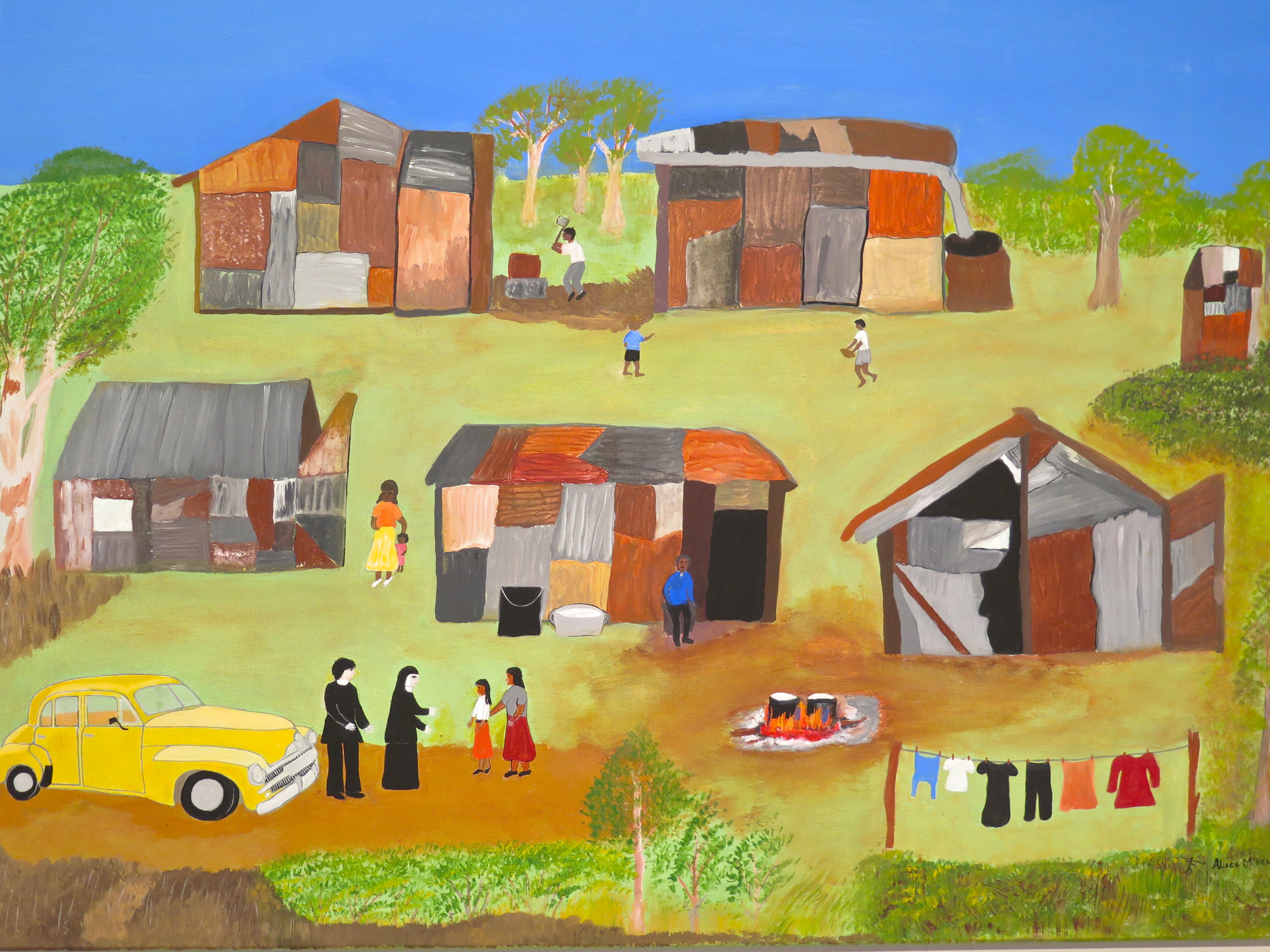
‘Why me?’ Alice McKenzie, Narwan woman. Self-explanatory.IMG_0021

Untitled masterpiece. George Tjungurrayi, Kiwirrkura man. Not self-explanatory.

IMG_0111

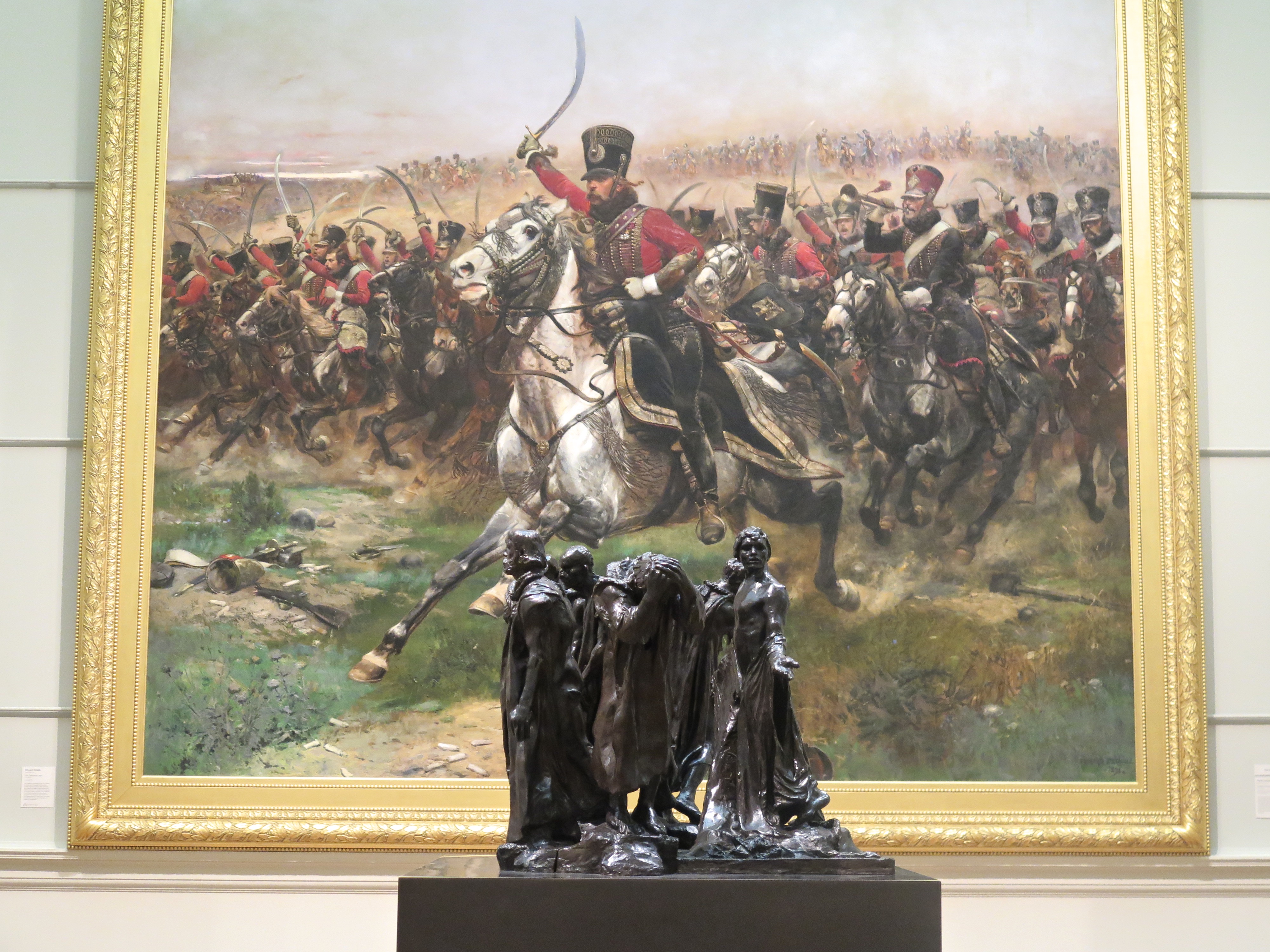
Lady Di providing direction to three Pre-Raphaelite chaps.

IMG_0129

Why this? Why anything?
IMG_0128

Sydney.IMG_0079

Pixillated.IMG_0125

Tasmania encore: 2014

MONA goes bad!

IMG_2099Headline! Freak out! I have previously expressed my confidence in and delight with Tasmania’s Museum of Old and New Art. But on our recent trip to Tasmania we went to MONA again and the unthinkable occurred. David Walsh seemed to have lost his touch.

We went. The bottom floor was closed in toto but the upper two floors were still mesmerising. Yves Netzhammer’s giant installation and the welcome return of Nolan’s ‘Snake’ were among the highlights. I also discovered who is singing flat in the Madonna exhibit, and decided it wouldn’t be the same without him.

During a discussion about tickets we got invited back the next night to the opening of the new monster blockbuster — ‘River of Fundament’. The work of the ‘greatest artist in the world today’, or ‘one of the most important artists of our time’ (Nicole Durling from MONA, whose taste I have previously described as impeccable). (Did the ‘possibly’ escape me? I might be being unfair.) Matthew Barney!!! Munich. Beijing. Hobart. 143 crates of material, one casting weighing more than 6 tonnes. Forget Ben Hur. Bigger than just about anything.

And an opening … wooo hooo.

Watching le tout Hobart done up and out and about was worth far more than the price of admission. Special mention to the glittering onesie shorts set. Jack was there (Thompson) and Brian and Rach (Brown and Ward. Come on.) among other luminaries. I don’t know whether that was a bad sign or not. Probably. In the last Monthly David Walsh is quoted as saying, now he just rings up Steven Pinker and says have you got some neurophysiology stuff? And his book’s out. He might have tipped over and gone a bit spack. Or he might just be enjoying the perversity of it all.

‘River of Fundament’ has been growing for decades, longer, from a request by Norman Mailer to turn his worst book ‘Ancient Evenings” into an opera. It is an opera. It is also film described by an art gallery staffer who went to see it as a 6.5 hour marathon (and yes it is) of ‘an artist’s aggressive hatred for his viewing audience.’ That might please David. It would certainly pique his fancy. We didn’t see the film which might provide some sort of entrance to what there was on display in the bowels of Berriedale Point.

What we were left with was (dull)48f813dfb65933c4cbf5df164733e7619bb4d356_1416572568

‘Barney’s three phallus forms, cast in bronze, first appeared during the Khu performance in Detroit in 2010, which is now part of River of Fundament, Act II: when Isis gathers up the scattered physical remains of Osiris, god of the dead, resurrection and Afterlife, in an effort to restore his spirit’s integrity. Dredged from the riverbed in the wreckage of the Crown Imperial, they are a shaft of crystal salt, a muddy twisted root and a silt-encrusted metal rod: here rendered in metal so ‘feathery’ it seems almost organic.’

and (heavy, in literal usage)

91963ba79b35fab7ca181f0cb9ede3b9d010ddd9_1416590681

‘The physical and iconographic origins of this powerful, immensely heavy (I think The Mercury, VOICE OF TASMANIA, said six plus tonnes) and more than car-sized form, completed just this year, lie in Barney’s great sculpture Djed which was cast on site in Detroit during the live Khu performance in 2010 (now seen in Act II of River of Fundament). Both Djed (too large to be brought to Tasmania) and the present work, Rouge Battery, are part re-embodiments of the Chrysler Crown Imperial that was beaten and ritually torn to pieces in Act I.

and sometimes big (although I quite liked this one. It’s Norman Mailer’s attic where he writes/wrote, upside down. Yeah I know, I know. Obvious.) But really …2dd2f77c0ad084b776387af306f01765861e2ba4_1416590528Excrement, putrifying matter, fighting or copulating bodies, all glisten with moisture. Sulfur is dissolved in urine. Organ pipes bubble. Molten metal flows. Mercury runs across a bathroom floor or falls from the cavities in a murdered car engine. Buffalo blood pours through the attic floor and down Mailer’s apartment walls when Norman III finally dies there. In the exhibition, the phallus forms in Coming Forth by Day [first pic above] seem to ooze into the base of their vitrine; something has drained out of Crown Imperial’s polycaprolactone tomb. The after effects of electrical actions, set solid in sculpture, seem still almost alchemically charged with metamorphic potential. And this great Boat of Ra is cast adrift here with its bronze mooring ropes, almost as far from either Egypt or New York as it is possible to be.

Mmmm obvious. You’ve now seen the highlights. It’s a mash-up of the end of the Detroit car industry, Mailer’s life and book, Ancient Egyptian mythology and the detritus of Barney’s mind. It was never going to be very engaging but without the 6.5 hour experience I’m afraid it’s nothing, just puzzlingly dull and trivial.

And we were left wondering if David had been seduced and violated by celebrity, one of the oldest and saddest stories of all. Or even, horror of horrors, whether he just might be bored.

But let’s be clear. Emphatic. This Emperor has no clothes. And now there’s whole floor of space that needs filling with good stuff. Like before.

••••••

TMAG

IMG_2038So let’s turn to quality. TMAG. Tasmanian Museum and Art Gallery. It’s been done up, completely re-thought, and it’s terrific. I loved it.IMG_2027

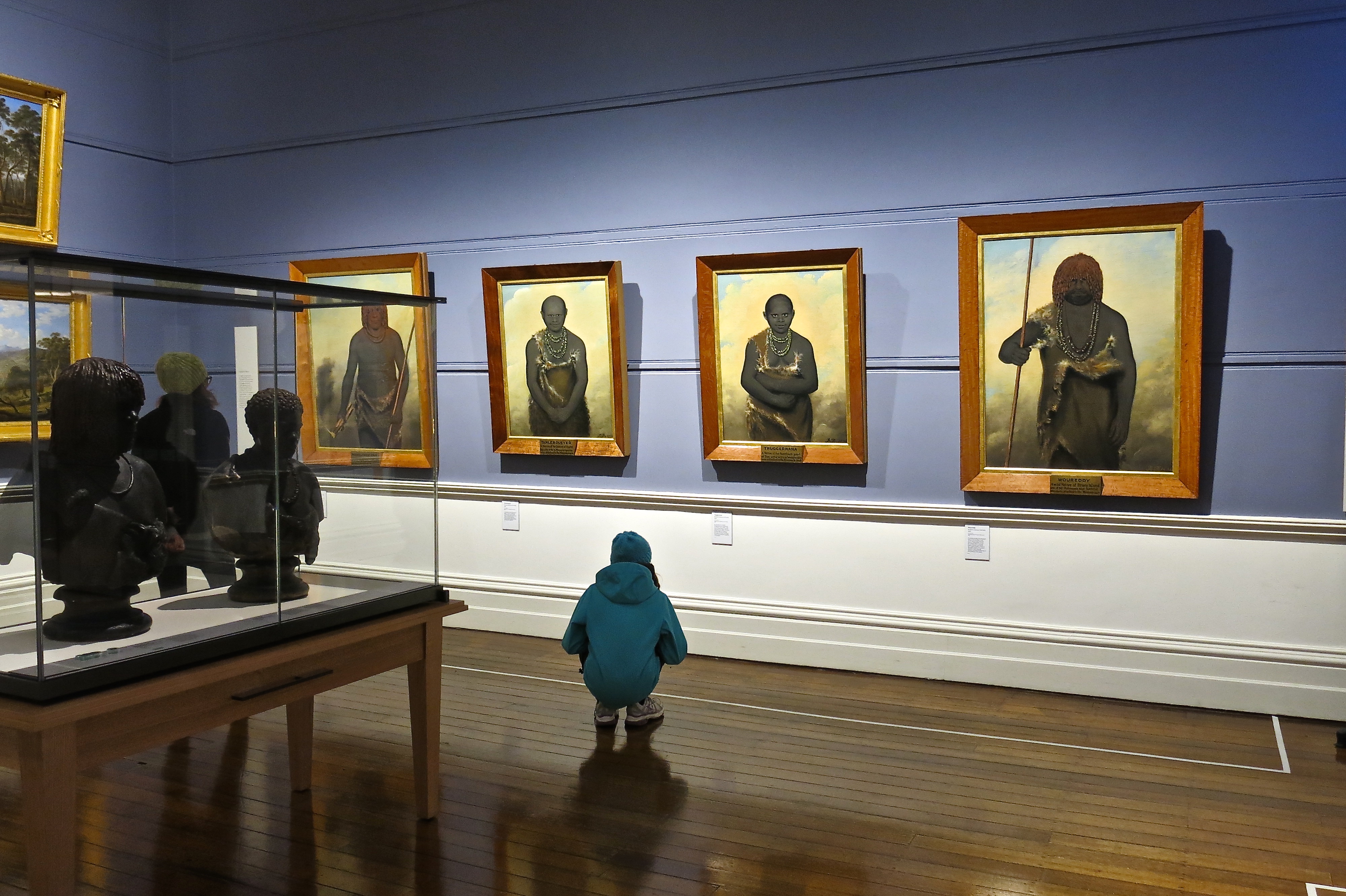
After a few hours you leave it with a very powerful sense of where you are, what it’s about and how it’s been with a very fine art experience thrown in for good measure.IMG_2025Upstairs is one of the two extant versions of Benjamin Duterreau’s ‘The Conciliation’ — George Augustus Robinson rounding up what he thought were the last of the Palawa Tasmanians and doing good by carting them off to Wybalenna on Flinders Island in Bass Strait where almost all of them died.IMG_2041

There is so much that could be said about this: the unintended irony of the title, the dog and the pademelon trading glances, the European obsession with the Palawa method of spear-straightening, the record of shell necklaces. And Robinson with his florid cheeks. A joke figure? It’s hard to read otherwise. But what gets me most is that, just like the other version in Canberra’s National Gallery, the paint is cracked and beginning to peel, mostly from the distinctive grey skin of the Palawa. They’re disappearing in front of our eyes. How appropriate.

Below from right: Woureddy (Truganini’s partner), Truggernana (Truganini), Tanleboueyer

IMG_2170The Bush

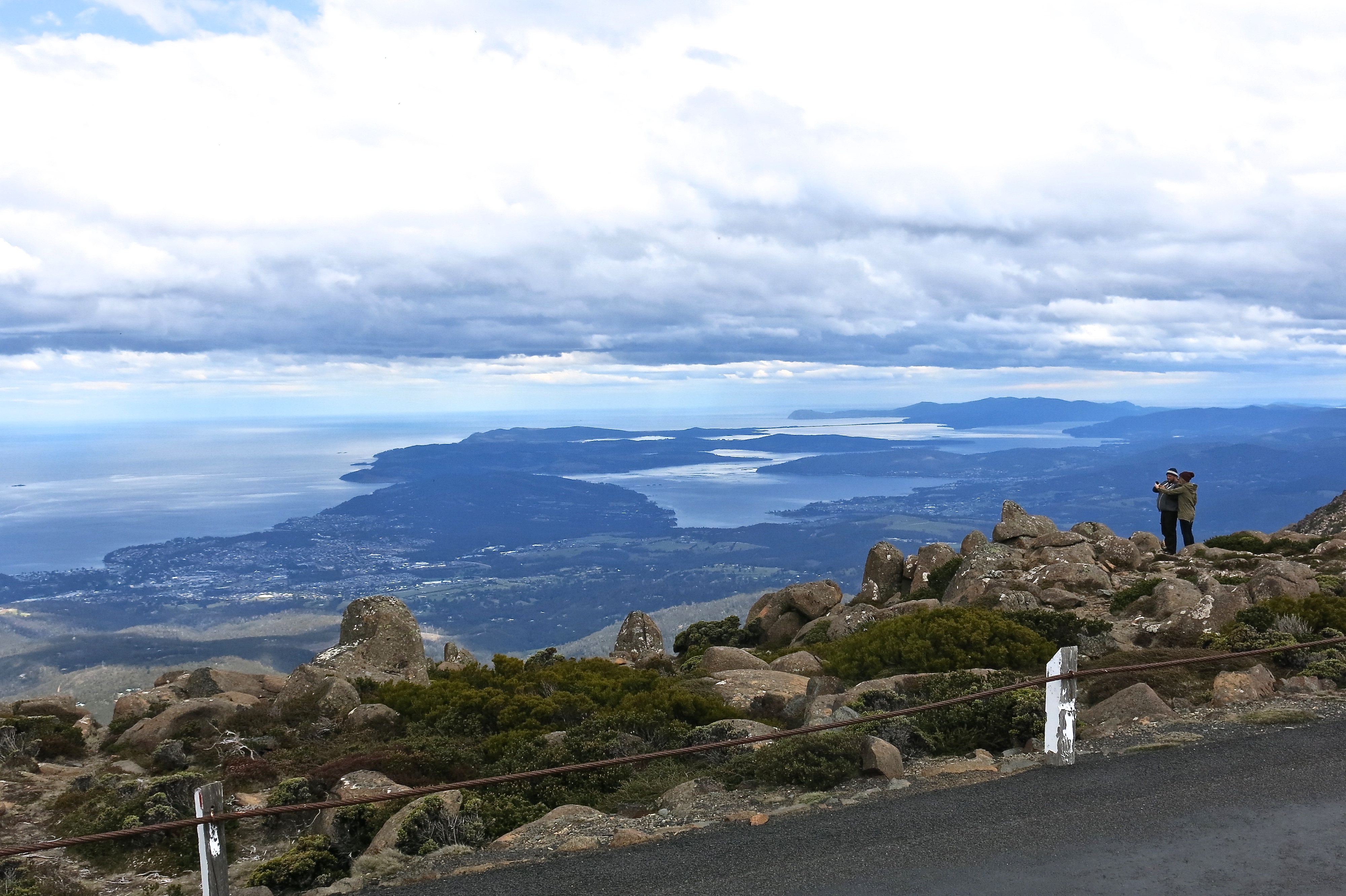
We climbed The Mountain up the Ice House track

(That view is in front them and they’re taking a selfie! Ha ho.)IMG_2016

IMG_2020and the scoparia was out. Below the very top it was a blaze of floral colour.IMG_2001

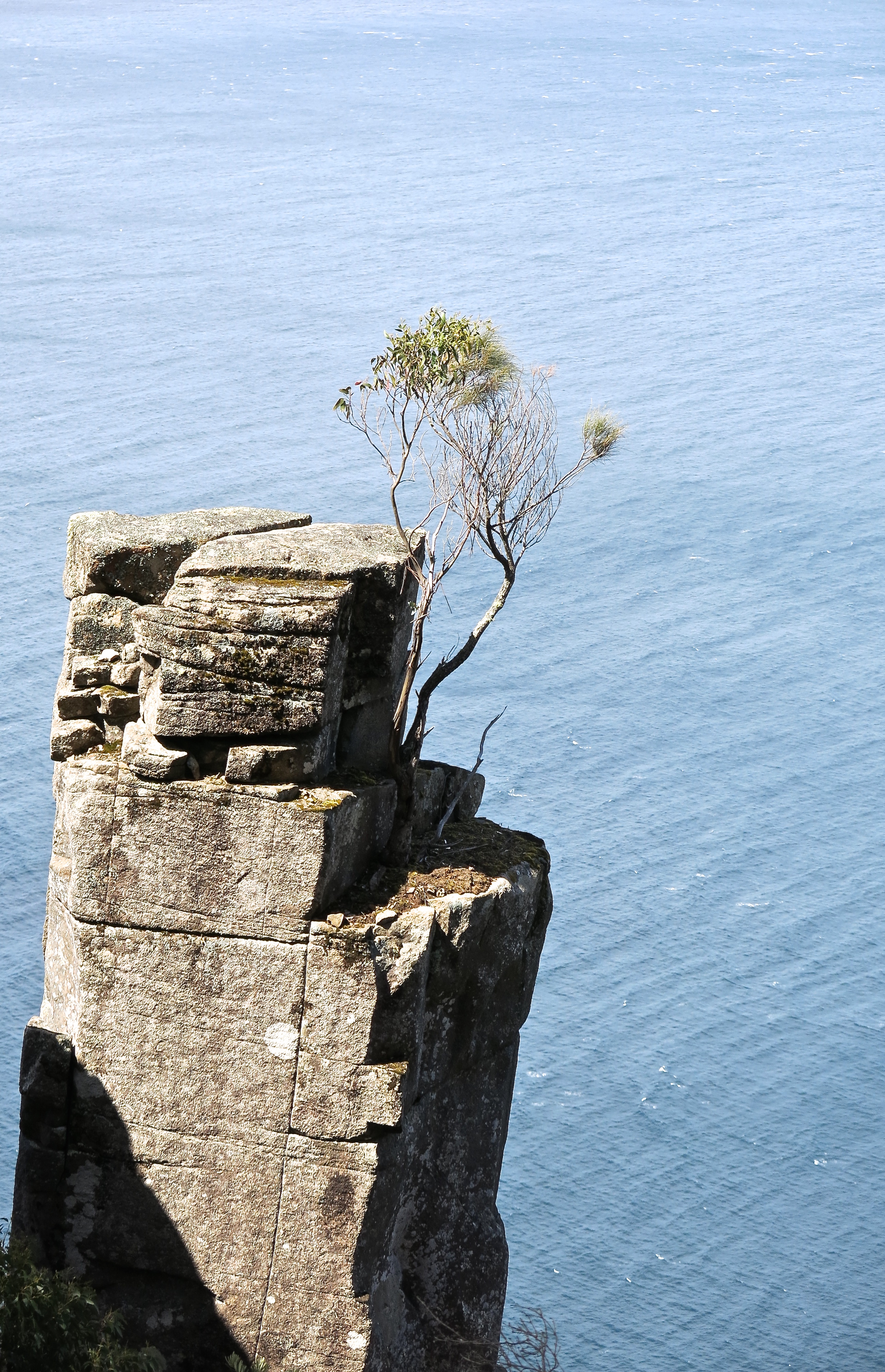
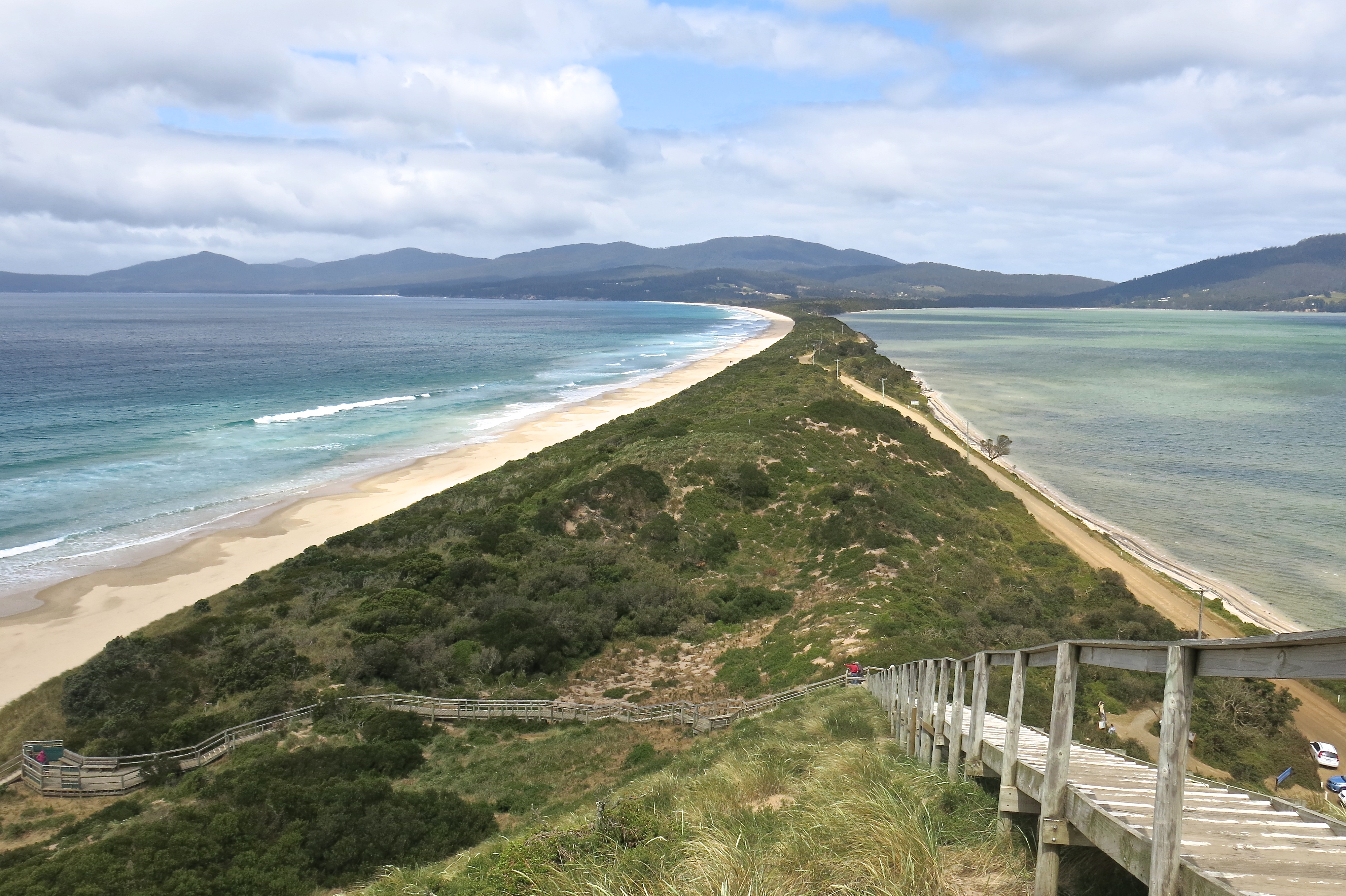
We spent some time on Bruny Island, visible off the coast above. I like the complementary lines in the pic. below of the Neck. So much beauty everywhere.

IMG_2096

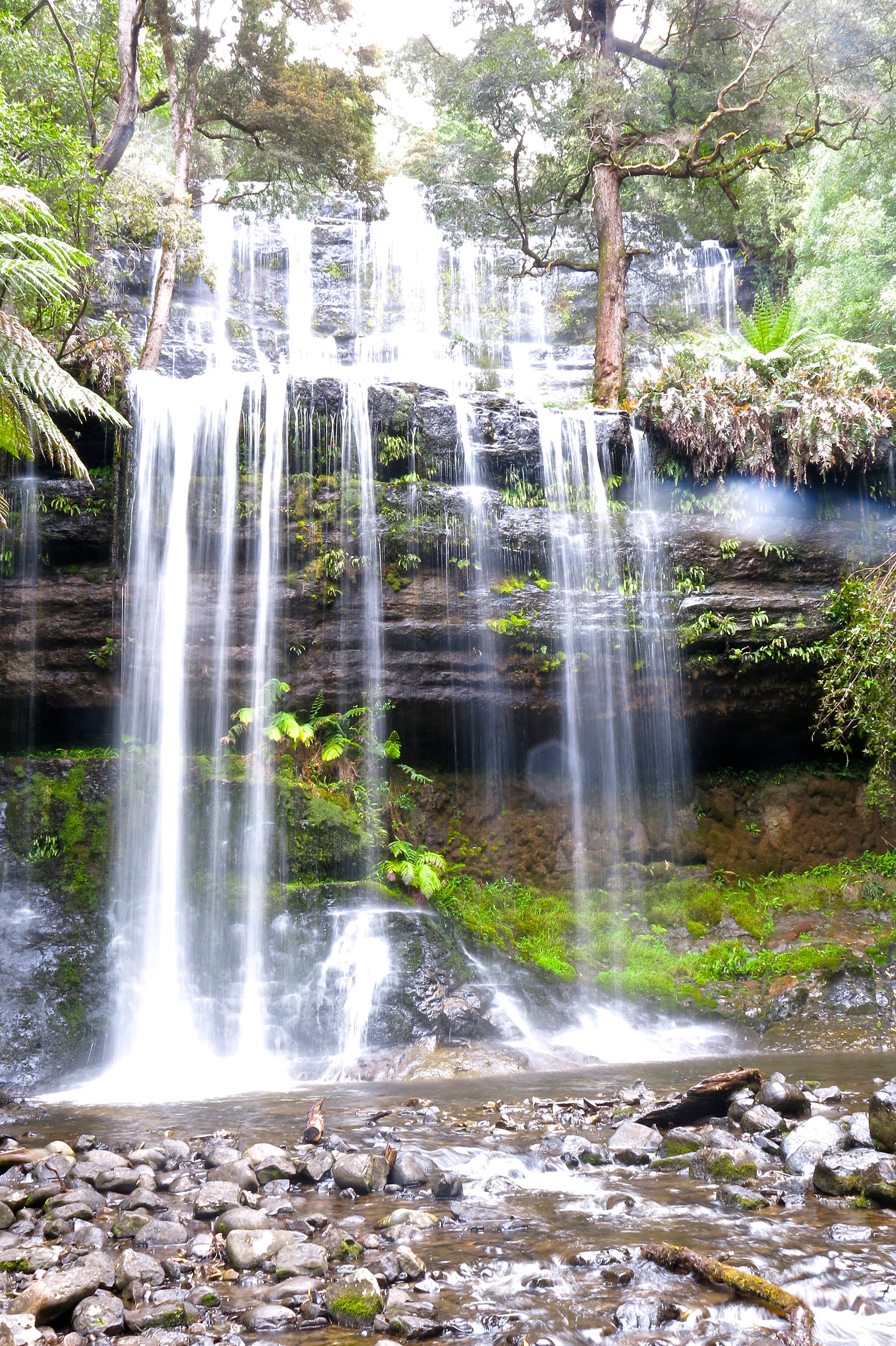
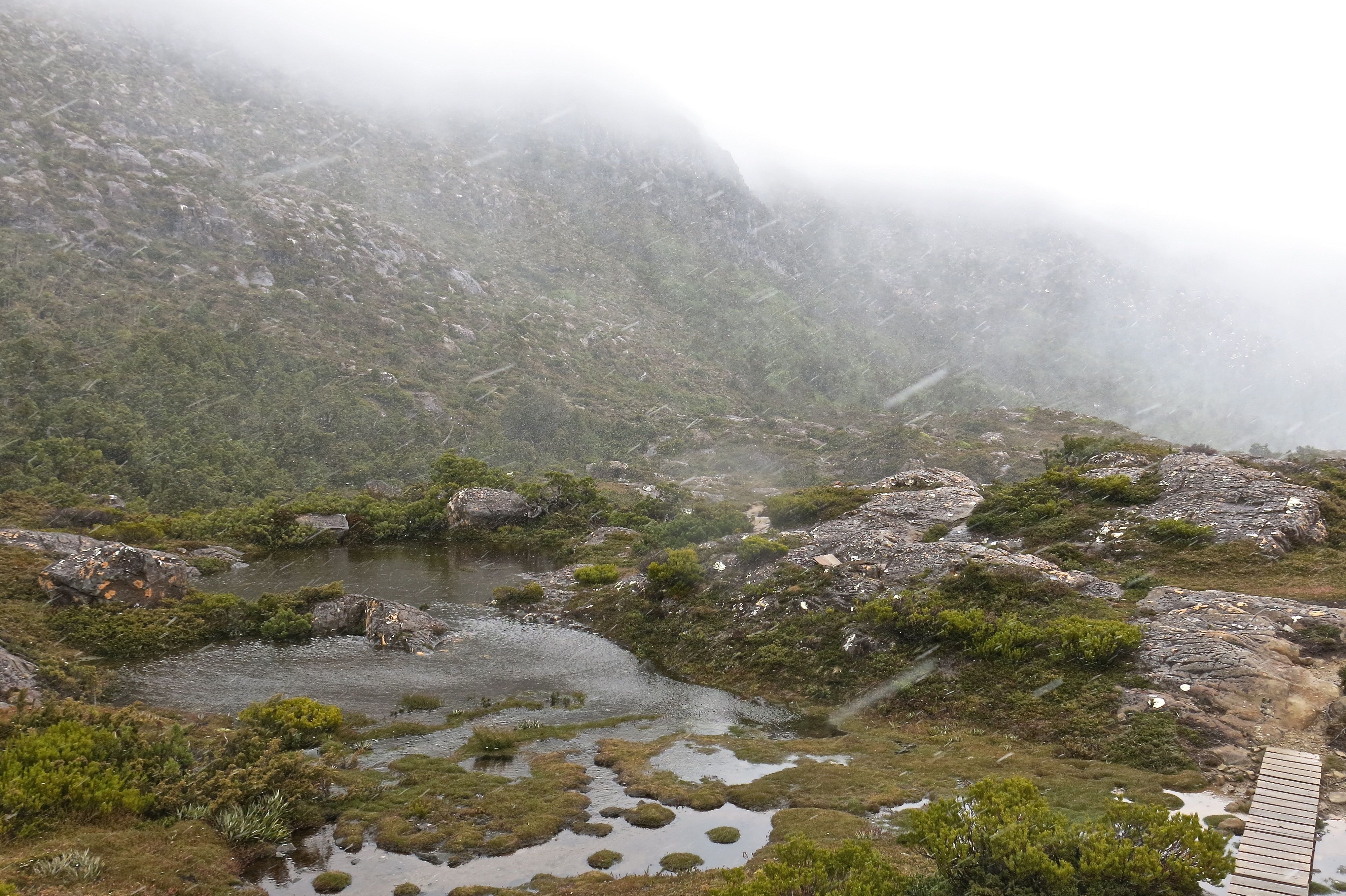
IMG_2114National Park. Russell Falls falling.IMG_2057We were there to climb Mt Field West, a very rocky traverse of the Rodway Range before the Mt Field plateau. We were going the long way via Tarn Shelf for reasons of scenery. But when we got up the top, it turned out to be for reasons of self-preservation. The wind was strong enough to blow me off the duckboards. The horizontal sleet would come from one direction and then suddenly shift to the opposite. It snowed. This is an effort to take photo of snowing.IMG_2091

Rarely have we encountered so many varied types of precipitation (mostly violent) in so short a time.

And this is how it looked at brief moments. Glorious.IMG_2088

But, we were rebuffed. The track up the Newdegate Pass was a river, the wind noise from the tops sounded like a steam train driven by dervishes, and I’d lost the feeling in my fingers. We turned back. IMG_2095What a place.

The new header pic is the view across the D’Entrecasteaux Channel out our Bruny Island shack window with Hartz Peak in the background.IMG_2158

Labilladiere Peninsula walk: 28 Nov 2014

IMG_2150First, this is a public service rather than the standard gripping entertainment.

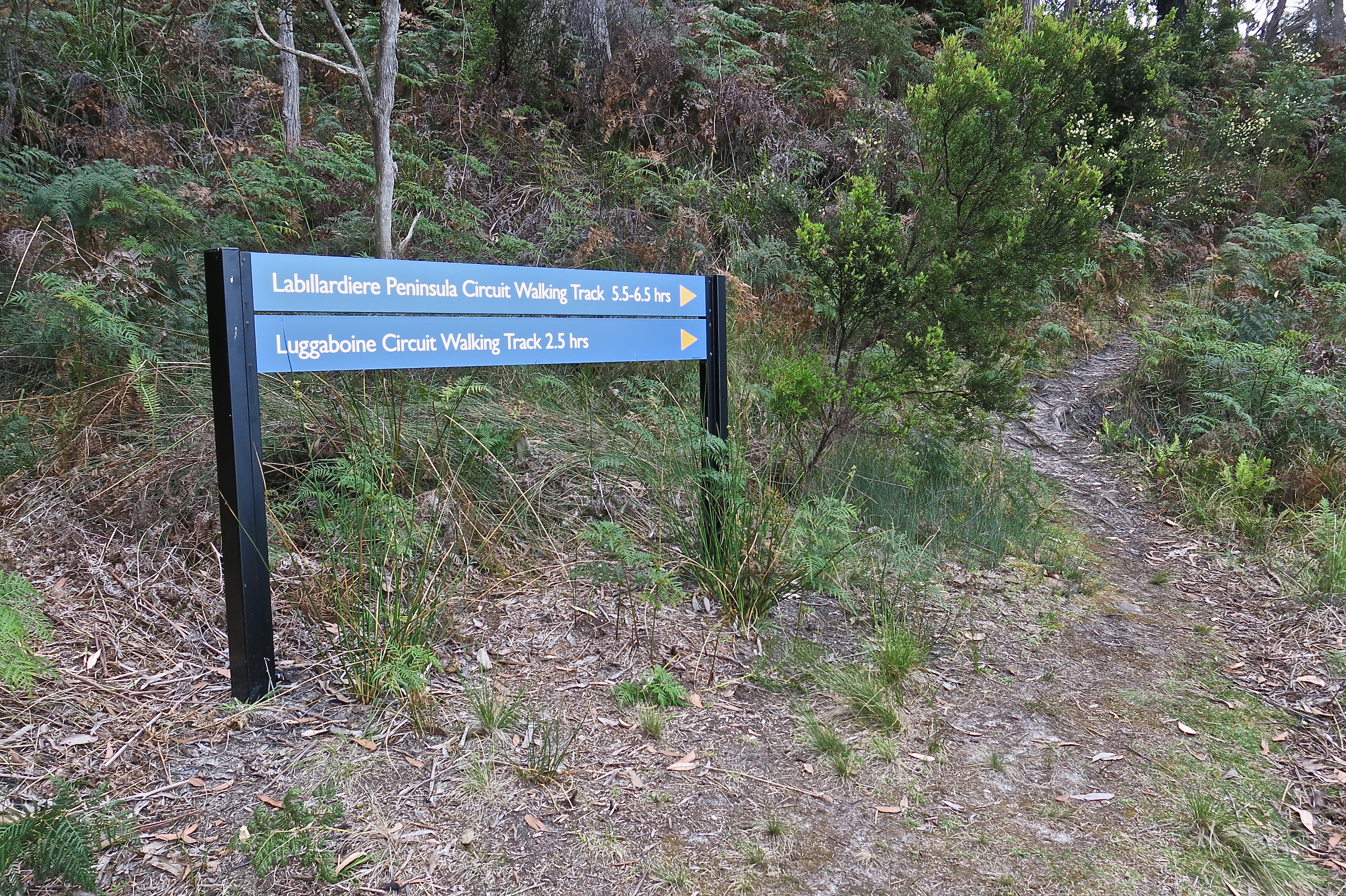
After finding an official-looking correction in our Bruny Island rental premises indicating that the Labilladiere walk was not 14 kilometres but 18, and not 5 hours but 7, I spent an hour on the net looking for information about which I could be confident and failing to find it: could have been five hours, or eight; could have been 12 k.s or 28. There’s a lot of cups of tea difference in those figures. As it is, the finger post immediately behind this sign says 5.5 – 6.5 hours rather than what’s here.

The maps were generally execrable. The scale on one suggested about 8 k.s all up. The most common map, on the Island brochure, suggests a mystery gap of about 2 k.s between where the track is supposed to start and ah… where it does start. So this is an effort to provide reasonably accurate up to date information about this very pleasant walk: times, directions and what to expect.

th-1Second (even though his actual patronymic was Houtou), ‘Larbi-yardi-air’. It makes it easier to remember.

Jacques L. (at left) was the naturalist on Bruny (or really Antoine Bruni, below) d‘Entrecasteaux’s voyage to try to establish what had happened to Lapérouse.th (A failure. Authentic remains were subsequently found on an island not far from Vanuatu.) Larbi-yardi-air made a number of major contributions to the collection and description of zoological, botanical and geological specimens novel to Europeans. Tasmania provided a party in this regard.

* * * * *

Despite what the board pictured above says, the walk circumambulating the Peninsula is probably a bit more than 14 k.s but not more than 16; and it took us a bit over six hours with two long breaks, or close to five hours of steady walking. There is, as occasionally advertised, a steep section over Mount Bleak gaining about 130 meters, but it’s short and the track is quite nicely graded.

The rest is the very definition of ‘medium’. If it wasn’t quite as long it would be ‘easy’. Painless exercise in a delightful environment.

While there is water at the camp ground, there is none available on the track.

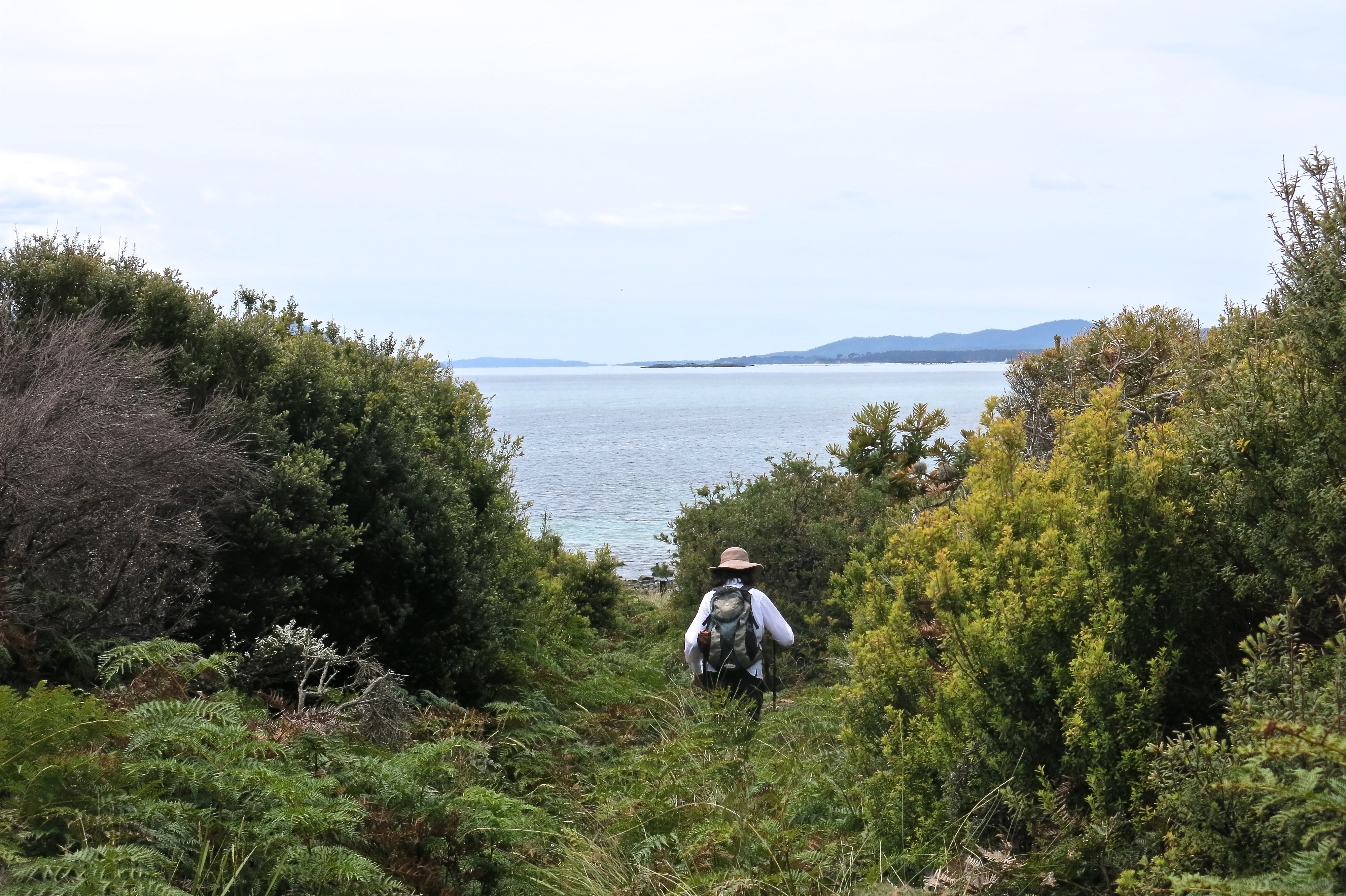
The track traverses four distinct environments: heathland, very thick bracken, beach walking, and a sandy littoral track through reasonably open grey stringy-bark forest.

The one thing about which there is absolute consensus is that the walk, a circuit, should be done clockwise. I agree, but not emphatically.

IMG_2132On the first north-westerly leg, clockwise does give you an intermittent series of long and attractive views over the beginning of the d‘Entrecasteaux channel, the coastline of the peninsula and the mountains of the southern range including Hartz Peak lowering away over in the background. On the other side direction wouldn’t make much difference.

The track starts at the car park in the Old Jetty camping ground at the very southern end of Bruny Island. (The Jetty served for decades as the access point for getting supplies to Bruny Lighthouse keepers.) Allow at least an hour and quarter for the drive from the ferry dock. And you can actually park at the track entrance in something helpfully called ‘Track car park’.

And if that’s what you want to do, start here.IMG_2151

You walk a couple of hundred metres and are confronted by a choice. You hit a fire trail which will eventually take you almost the whole length of the walk on that side of the peninsula. (There’s a footpad over the hill.) If you’re me, there is some inclination to turn left because you’re a bit turned around by the drive in and you feel a (valid) need to cross the peninsula — and that might be the way.

But it’s not. Turn right. That’s the last unguided directional decision you will need to make for the whole walk.

After 20-30 minutes you will come to a clearly signed option to turn right for the shorter Luggaboine Circuit (about 2.5 hours). This was described by the owner of the Adventure Bay general store as ‘the same, but shorter.’ Your choice.

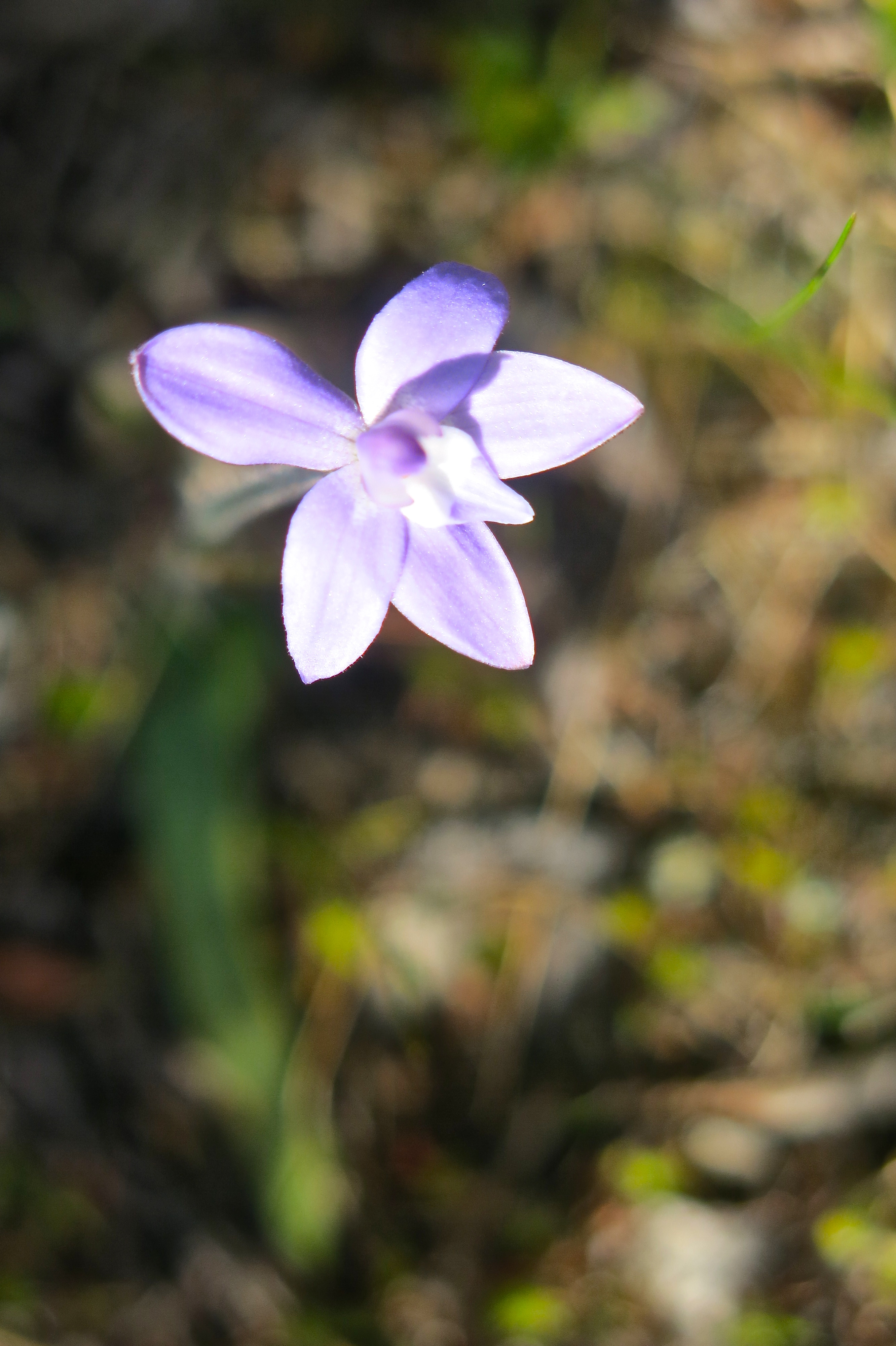
IMG_2130You’ve been walking through heath, sections of which are well above head height and some of which is waist high with the consequent effects on the view. In late November, and slightly past its best, this still provided a floral wonderland with hundreds of various types of orchids. In the longer views you can trace the course of the track as it wanders up and down over what looks like dune formations. There are two picturesque rocky beaches one of which, Hen and Chicken Rocks, is close to the track. The birdlife was exceptional all the way.

After about an hour and three-quarters, and just past Hen and Chicken Rocks, you will come to Mt Bleak. It took us about 15-20 minutes to get to the top. Views from the top are incidental rather than pronounced — you are still in fairly thick vegetation — but what you can see is lovely.

IMG_2134It is an easy descent from there towards Partridge Island which is appended to the tip of the peninsula. It took us a bit longer than I thought it would and if I’d been patient for another 5 minutes we could have had lunch at Hopwood’s Beach rather than parked on the side of the fire trail. This is after about two and three-quarter hours.

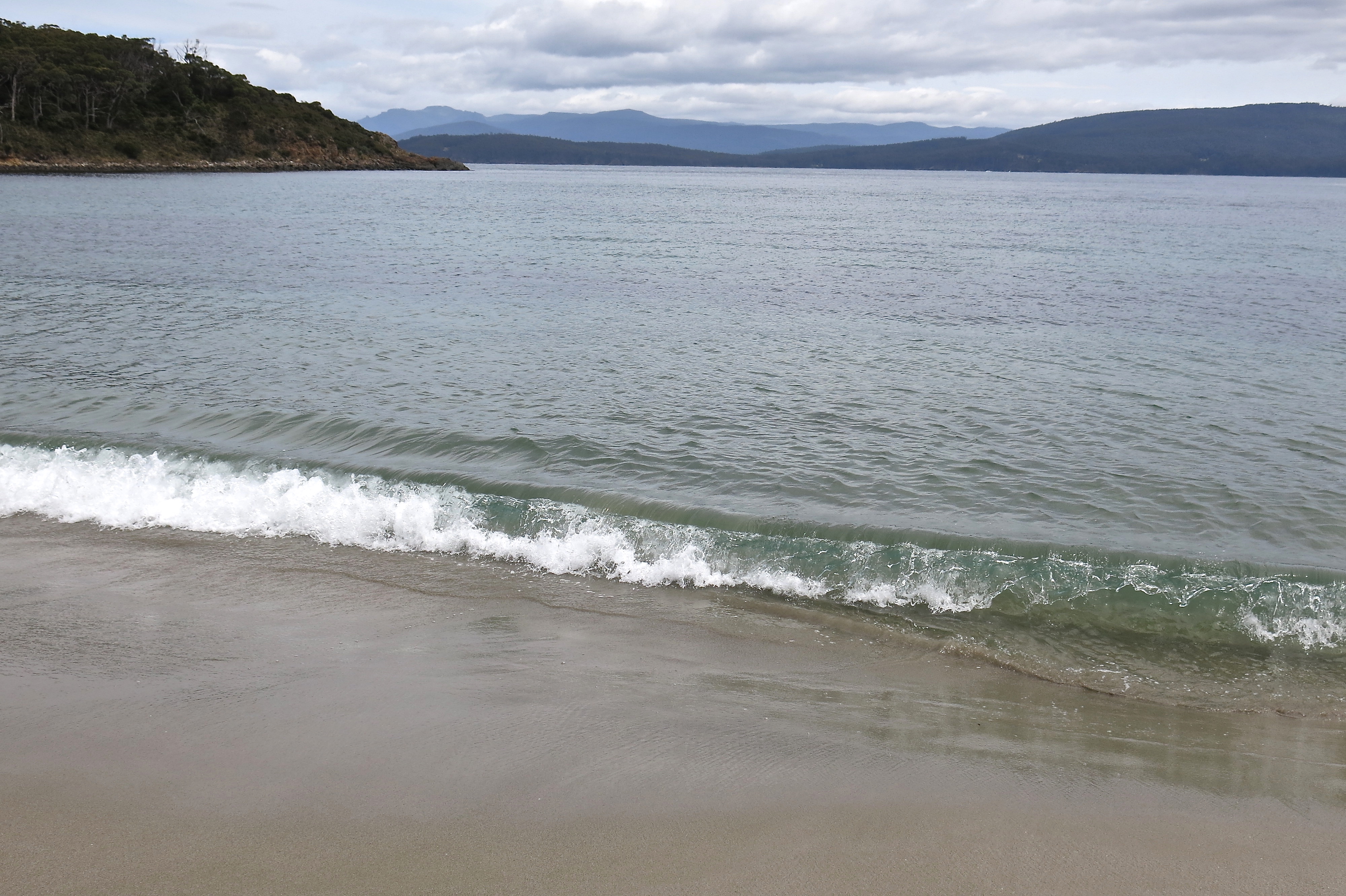
You climb out of the bush onto the beach for 200 or so metres before the signed entry to the trail on the other side. Then it’s about 15-20 minutes through some very dense vegetation with a lot of bracken where the track aperture is about shoulder-wide. I’d already nearly trodden on a two-metre black snake and I was pleased to get out onto Butler’s Beach. Below: this was after it had thinned out considerably.IMG_2137 You’ve turned the corner by now and the track takes you perhaps a bit over a k. on reasonably solid sand with lovely views.IMG_2135

IMG_2140Up off the beach, again well signed — in fact once you actually get there the signage and information are fine. Then a bit less than two hours of trucking through open stringy-bark forest along a gently undulating sandy track (with occasional patches of roots and rocks just to remind you that you’re in Tassie) sticking with the littoral at not much less than footpath pace.IMG_2143IMG_2149About 25 minutes from home, you’ll come to this, the second intersection with the Luggaboine Circuit.

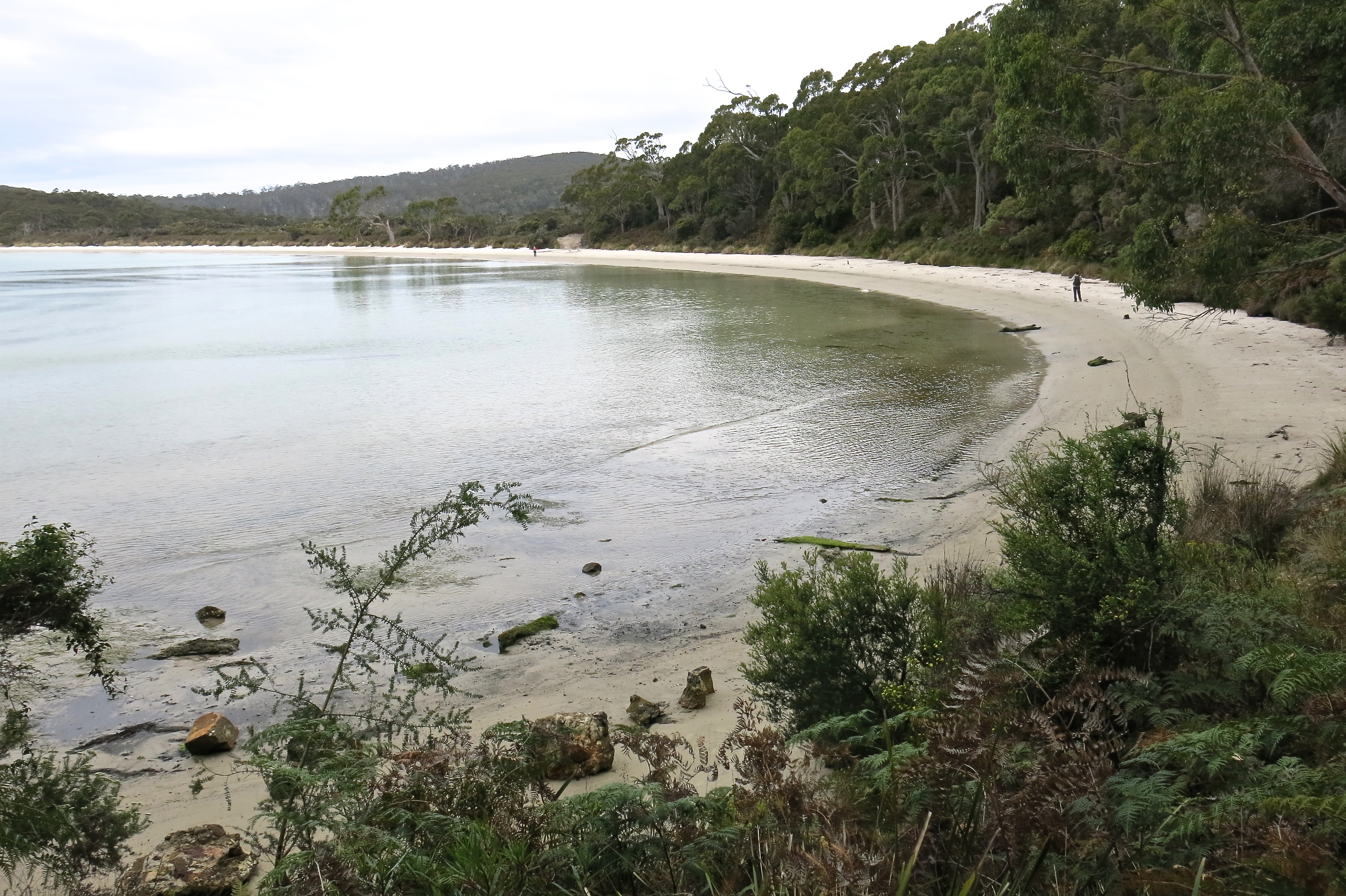
And this is the end. Note the track off the other end of the beach for the light house provisioning.IMG_2148


One foot either side of the Equator: and other stories of derring-do

Despite the quality of her outfit, this woman is making an unforced error. If she puts her right foot a little further to the right, just the other side of the grout, she’ll be doing the right thing. One foot in the northern hemisphere and one foot in the south. A thrill may travel up through her body although I’m not sure it will. I was left unmoved.

IMG_1872We’re just out of Pontianak (which also means ‘ghostly vampire’ in bahasa) on the banks of the mighty Kapuas, the biggest river in Indonesia, rising in the hinterland of Kalimantan. We’re near its mouth on the west coast where the Dutch decided to conduct a careful latitudinal survey in 1928 and at longitude 109020’E they placed a monument to precisely define the Equator. The Indonesians roofed said monument in the 1970s, and it is now Pontianak’s prime tourist attraction.

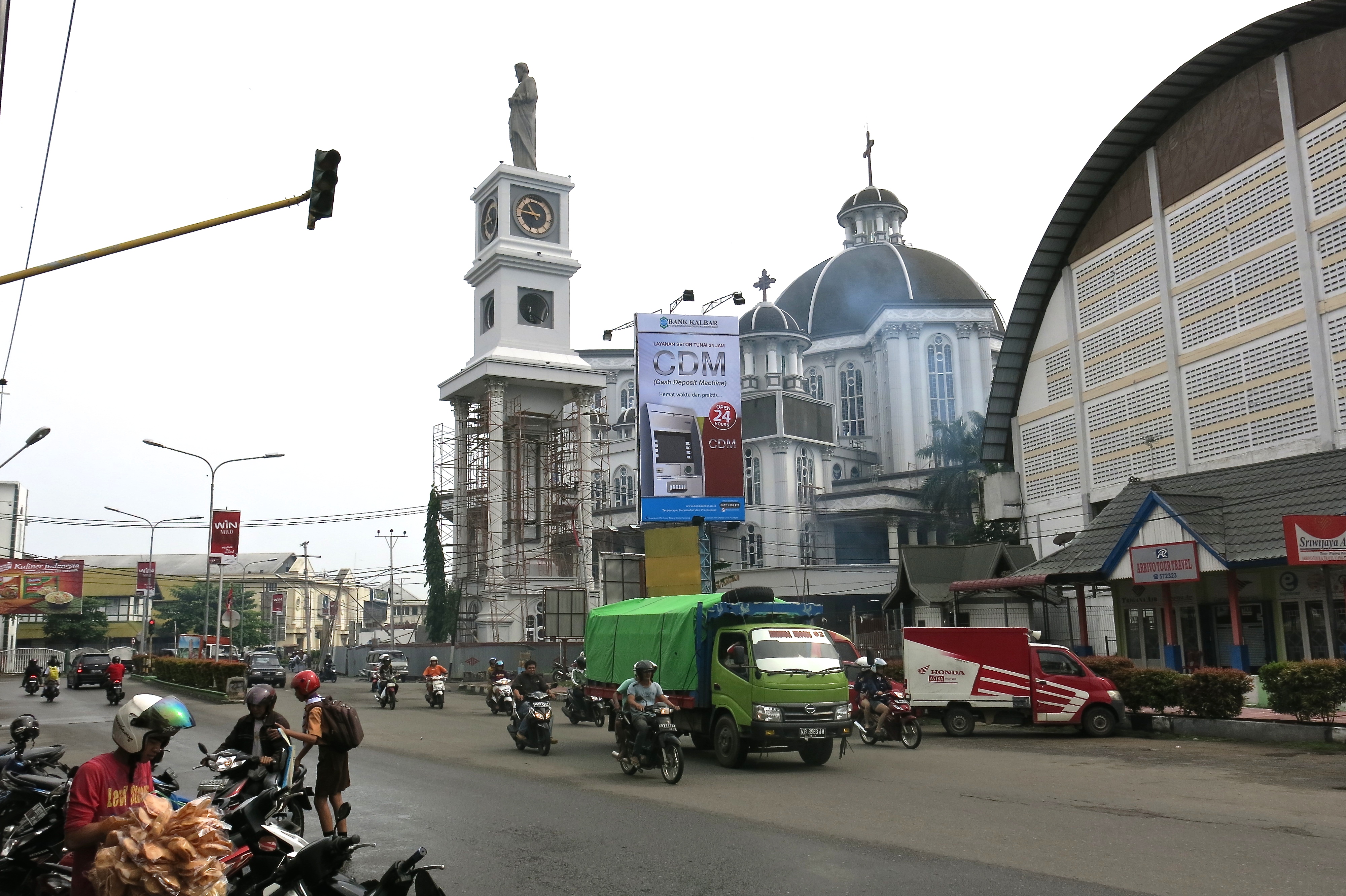
Pontianak is more than one-third ethnic Chinese and feels like it. To indicate its diversity, it has a huge Buddhist temple, an enormous Muslim mosque and a gigantic Catholic cathedral (below). IMG_1860

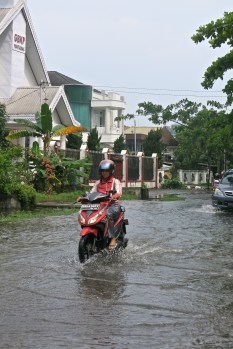
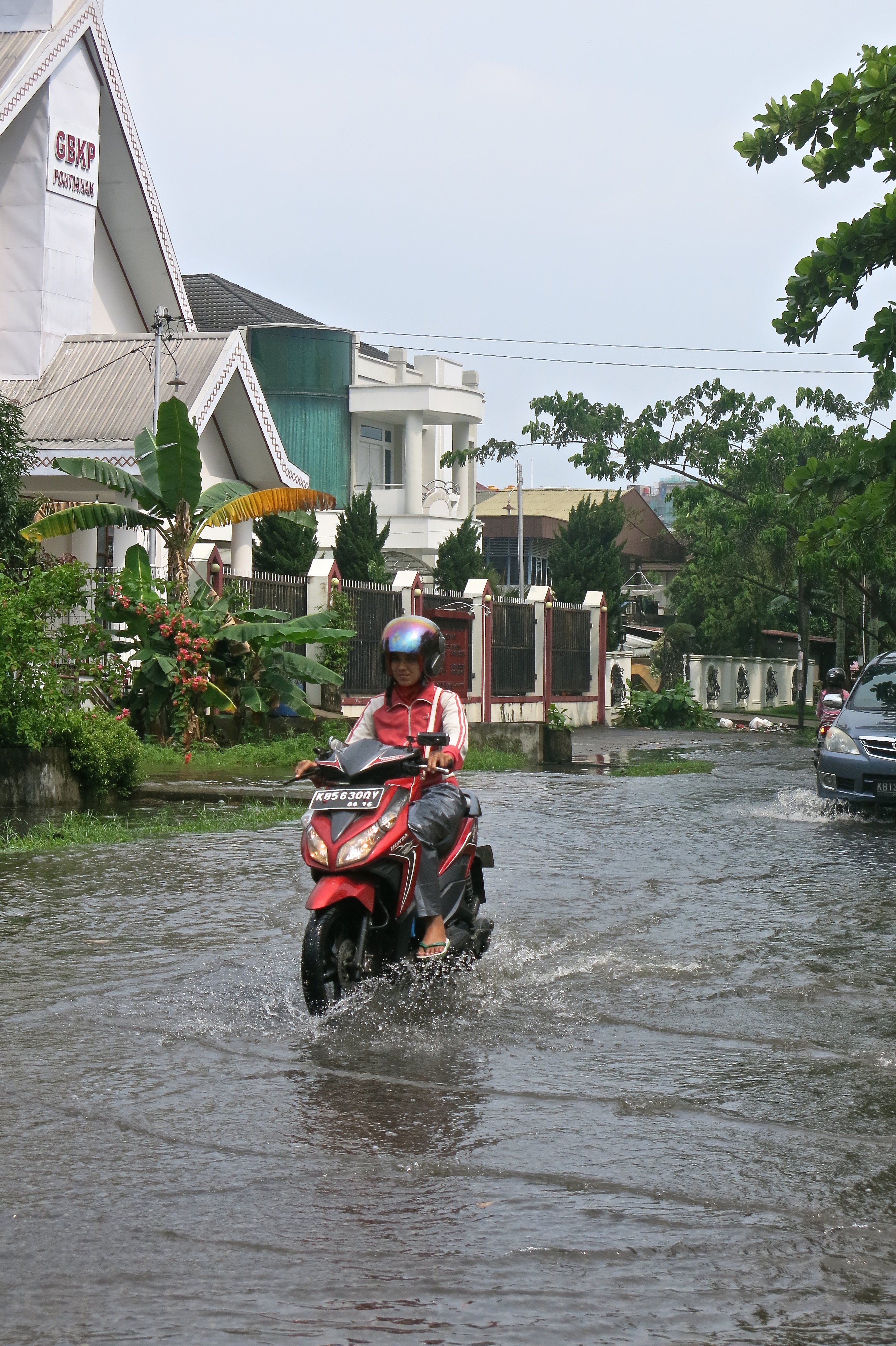
When I was there it rained. IMG_1852Only for half an hour but by that time the surrounds were flooded.

This must happen a lot. No one was fazed.

And while we’re on educational, what’s this?

IMG_1873

Rubber drying.

But to move from the paltry to lay some more important matters out.

IMG_1867Apart from the quality of its food, for which it is renowned, the really important thing about Pontianak is that with very little trouble you can balance an egg on its end. I did this, me, moi, so no special gifts required. This is anywhere at the Equator. Look at this. They’re at it everywhere.

Now how come?

There is a tradition elsewhere of balancing eggs on the vernal (and presumably autumnal) equinox — days of equal night and day. And although the National Geographic includes in its games for kids: ‘Some people believe that the gravitational pull of the sun that occurs on the equinoxes can help keep an egg standing on its end’, there is a tradition of rubbishing the whole idea on the internet. And there’s, you know, the direction water drains down plug holes separated by a couple of feet either side and … how come you lose all strength standing on the Equator? And what if you slip and fall through the cosmic doorway to a brighter future. (Ah no, that’s definitely just been made up).

I tried to balance an egg on its end at home and although, notionally at least, you ought to be able to balance almost anything, I couldn’t. In fact they were keen to just flop over. A little man in each of them threw himself sideways immediately the eggs were placed upright. It is suggested that you shake them so that the yolk settles at the bottom. I couldn’t make that work either.

I’ll leave that with you as one of the ineffable thrills available to the traveller to Pontianak.

• • • • • • • • •

Just while I’m here, I want to place on record that I got from Citadines Apartotel in central Jakarta to Terminal dua F of the Soekarno-Hatta Airport in 27 minutes. About 38 kilometres. To properly understand the dimensions of this feat it is necessary to understand that it has taken me 2 hours and 50 minutes, and that you always try to allow at least two hours.

I don’t take photos on this route. You think you’re going to capture the experience but it’s impossible. Coming the other way, arrival in Jakarta is usually a depressing experience — for me. Some people thrill to their first smell of kretek and fish paste. Tired, you forget to pay your US35 at the door and, despite the presence of his fixer, some morbidly obese anglo-celt has an incomprehensibly complex negotiation to complete which causes the payment queue to stall. There are 10,000 cabs (with 10,000 people keen to assist you to find one) waiting outside but none with your name on it. That will take an hour to appear because it must be arranged through Golden Bird not Silver Bird, although you are assured they’re the same company.

But in the end you are tucked up in the back seat of a Toyota Avanza and, once you’re shot of the airport proper, progress is good. You’re on a jalan tol, a freeway of sorts. Modernisation you think. Splendid.

But about 15 k.s later — by the time you get to Slipi when you’re struggling to make out the lights of the tower blocks through the tangible, cuttable, air — the true horror of it all hits you. It’s hard to believe that you could ever find a way through this wall of traffic. You’re stationary behind a bus belching partially digested diesel through your aircon and between a truck carrying scaffolding on one side and one with a very rickety looking load of wood on the other. And when I say behind and between I mean, you know … 10 centimetres.

Arriving this time we hit a giant wedding at the Hotel Mulia and didn’t move except for slight creepings sideways for 20 minutes. We didn’t move because there was a food truck delivering food to the wedding parked perpendicularly across two and a half of the three lanes of traffic. Selamat pernikahan Shana and Dewis. Best wishes. (But with an Indonesian pronunciation.)

IMG_1793To the right, Jalan Rasuna Said at 6am.

It is 5.45 in the morning, not my best time I readily confess. My driver has been waiting at Citadines for 45 minutes, arriving an hour early. Reception has rung twice to say he’s there. Could that have provided a motive? I don’t know. But he escaped from Jalan Rasuna Said almost instantly and headed off through the kampong lanes. Always up for something new, this is good I thought. I had enough time to get my flight, if no more than enough, but anything to get off Rasuna at six in the morning.

It was just a little like Hollywood. You know. Boom go the chook cages. Squash go the paw paws. Through the chicken rice shop. As we cut to local peasants fleeing with motor scooters crashing into each other and flying into the air, it occurred to me that I was about to witness a formidable display of Indonesian manhood. Can be good; but as the excitement mounts might just tip over into something not quite so desirable, especially when you’re a participant.

I’ve watched these performances of weaving through the traffic, often big black Mercs with windows even more heavily tinted than usual. No, you think, he can’t. He’s not going to make it. But he does, even if three scooters have to commit to the shoulder which in Jakarta could mean anything. And he does it again. It’s a bus, it’s a bus, it’s … and then as the jalan turns into a high overpass, you can see in the distance he’s still going, still at it. But I’d never actually been in the vehicle before.

It was far too early in the morning to think of what ‘slow down’ was in Indonesian, and ‘Stop’ which would be understood but unexpected might have produced a calamity. Zoosh we went, just missed him. Zhang, into that impossible hole. Pass on the left, bus in front, he can’t, it’s not poss … Ah my Lord.

On the jalan tol I peered over his shoulder and he was doing 147 kph. Oooo pak, I murmured. Pak pak pak. Phlooot, straight through the middle of two trucks with millimetres to spare. He was good. Outstanding of his type.

The ‘Kurangi kecepetan’ (‘reduce speed’) sign on the outskirts of the airport building seemed to induce a new rush of testosterone. Zhinnnnngg we went, round the clover leaves like a roller coaster. Dua F. Ya pak, ya. Ini. Two F, we’re here pal. He even stopped quickly.

I had some money in my pocket for a tip and I got it out thinking no way no way no way, although with qualifications. I was alive. I was here. I was even early, never a bad thing at CGK. He had shown me his best. There was a blue 50,000, 5 bucks, in the roll. That was never going to be included in any tip. But he snatched, too strong a word, Indonesians don’t snatch — lifted, yes lifted, the 50, cackled like crazy and was gone. I looked at my watch. 27 minutes, door to door.

• • • • • • • • •

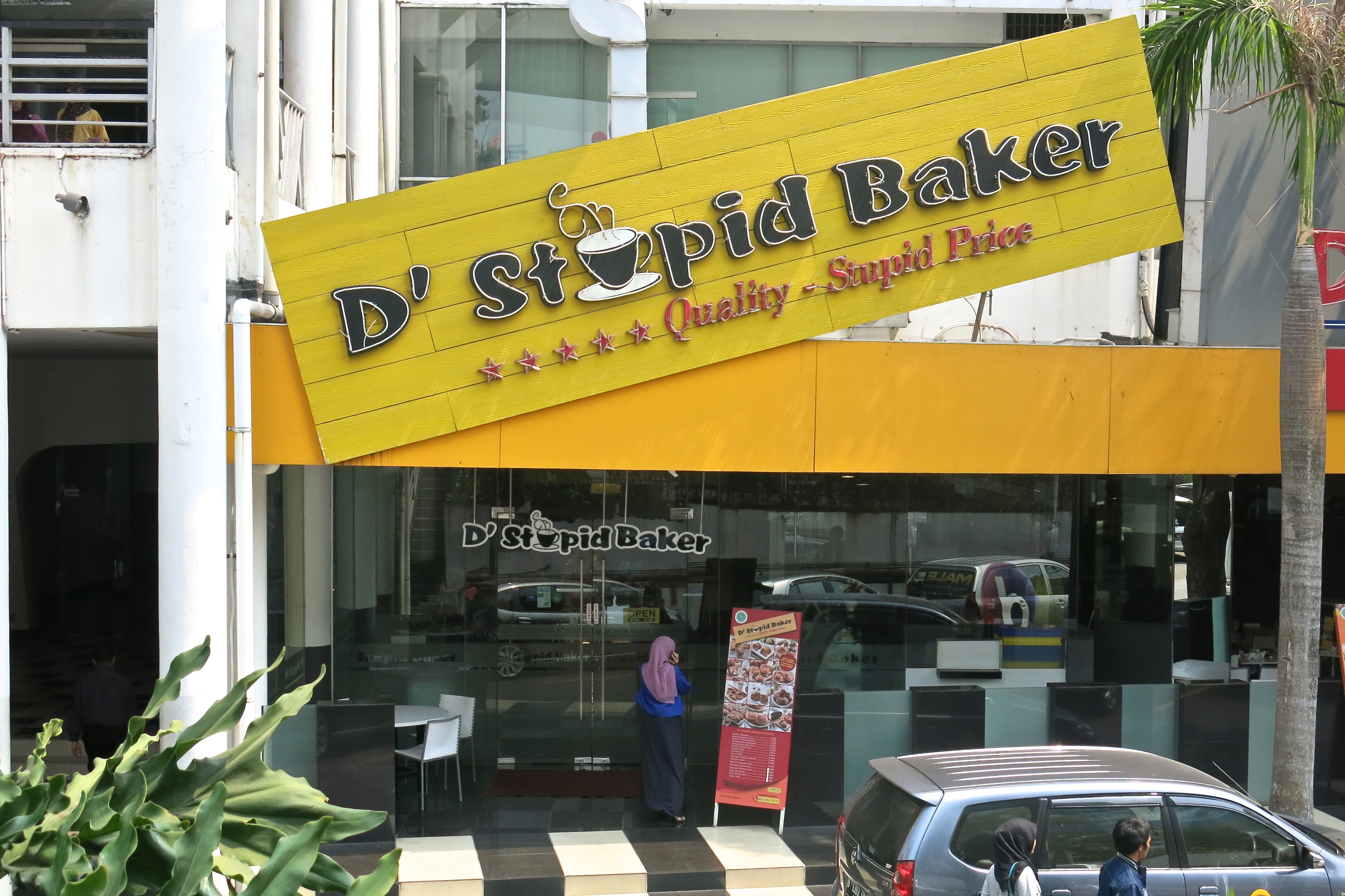
IMG_1770I had some time to spare on the first day so after I’d got something to eat at D’ Stupid Baker I thought I’d go for a walk. Midday, no hat, no map, no water, sandals not shoes — d’ stupid walker. But I thought I’d probably survive, and I did even though when I got back I was a startlingly sweaty spectacle. IMG_1791

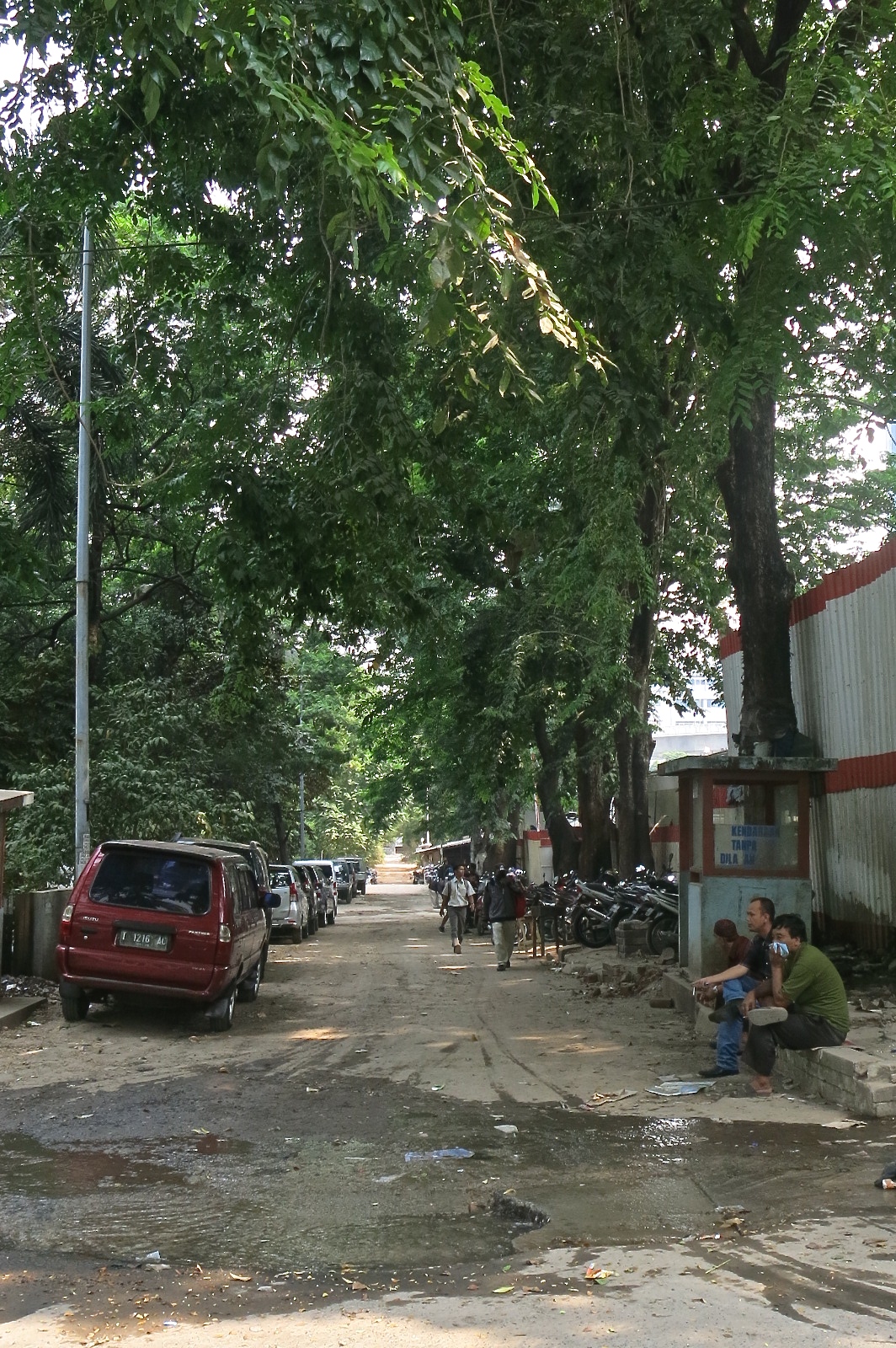
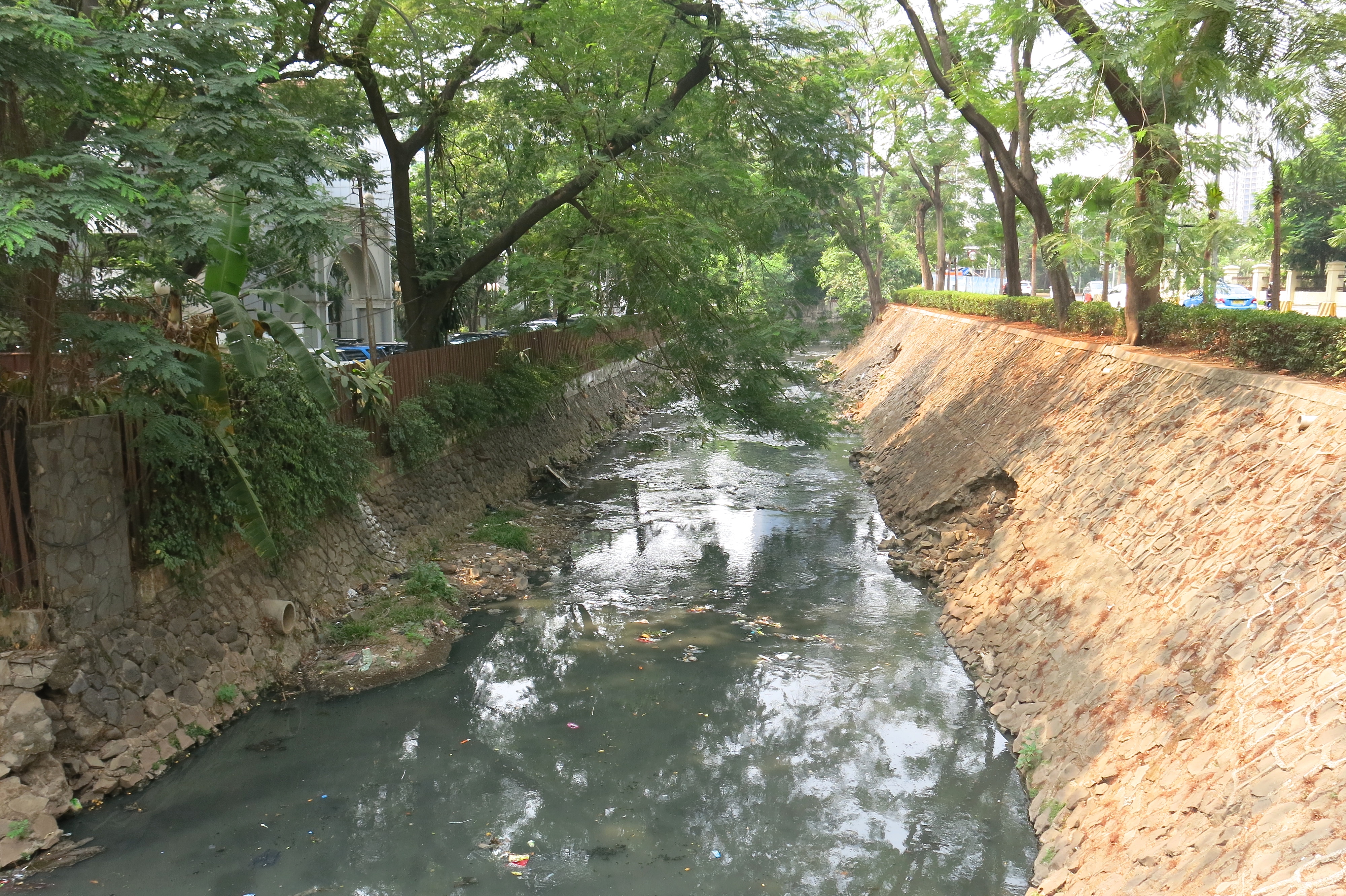
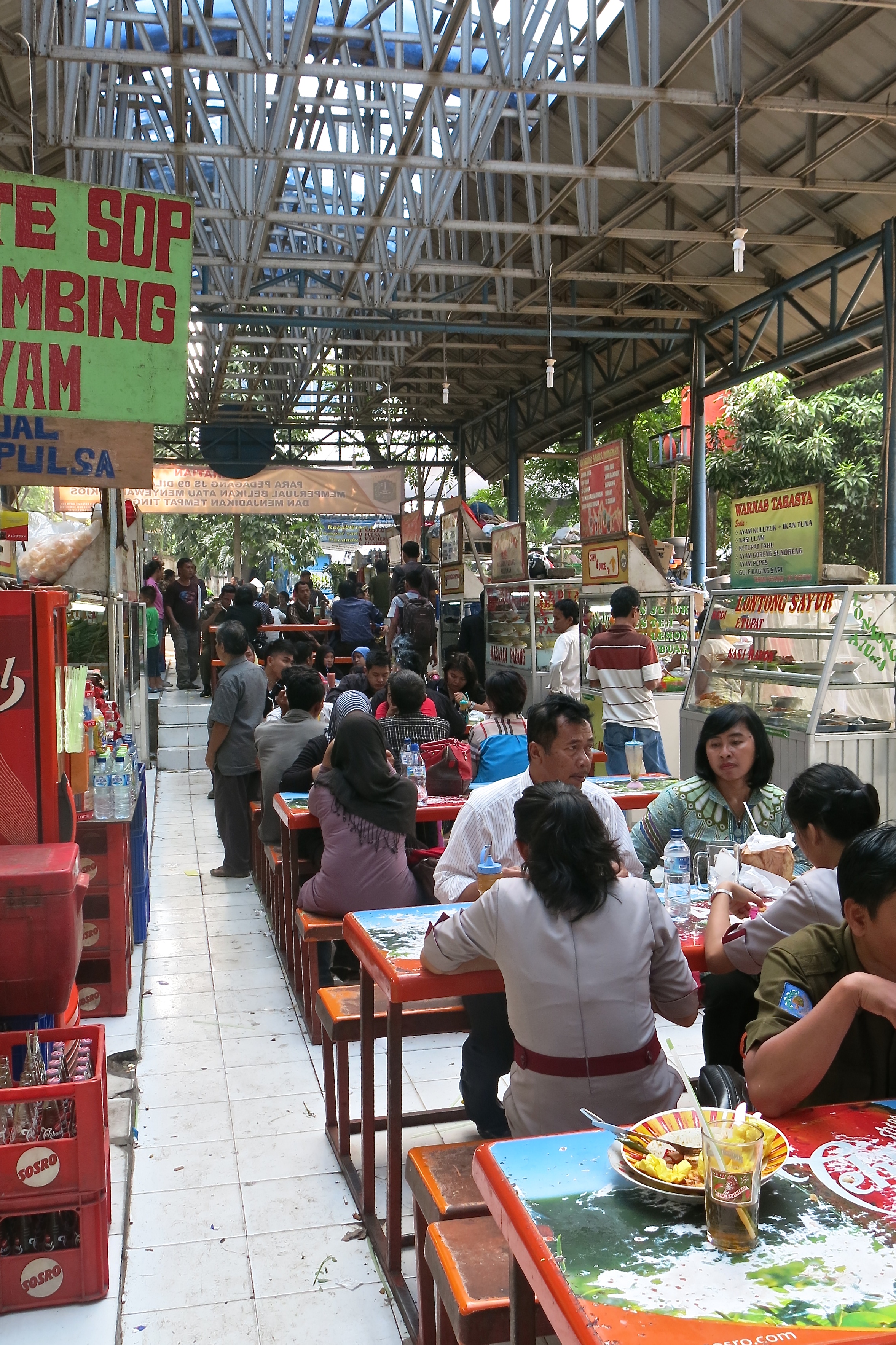
There were some shady alley ways besides the building sites along with a fetid waterway that kept pushing me further away from my planned route.IMG_1776 If I’d tried to wade through it I think I would have gone fizz like a Fruit Tingle and dissolved. I also had a chance to walk through some proper food courts.IMG_1783

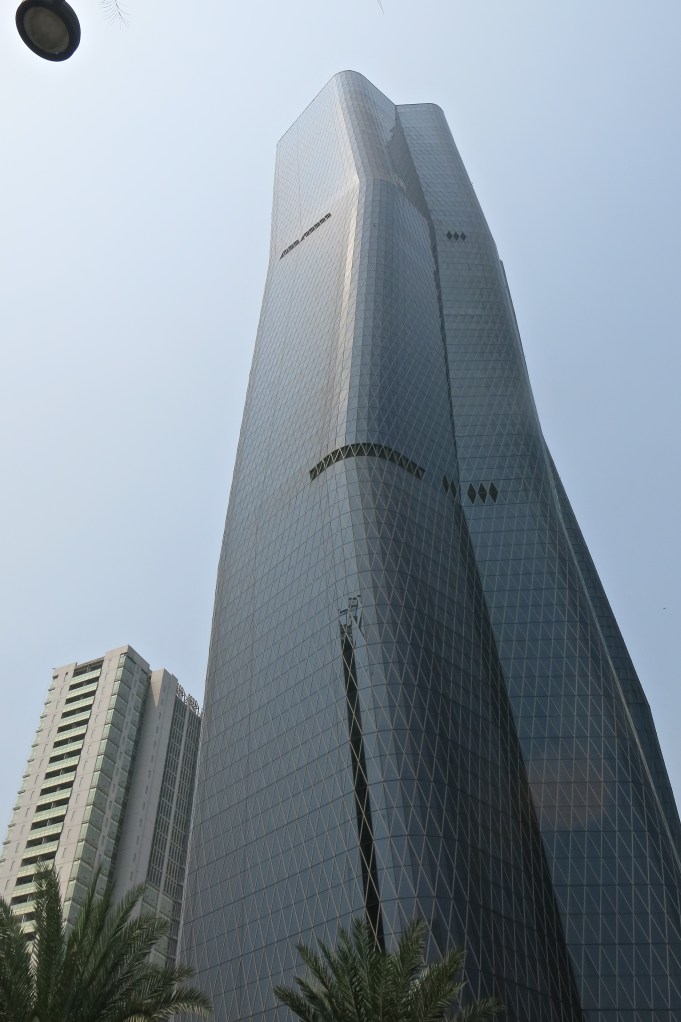
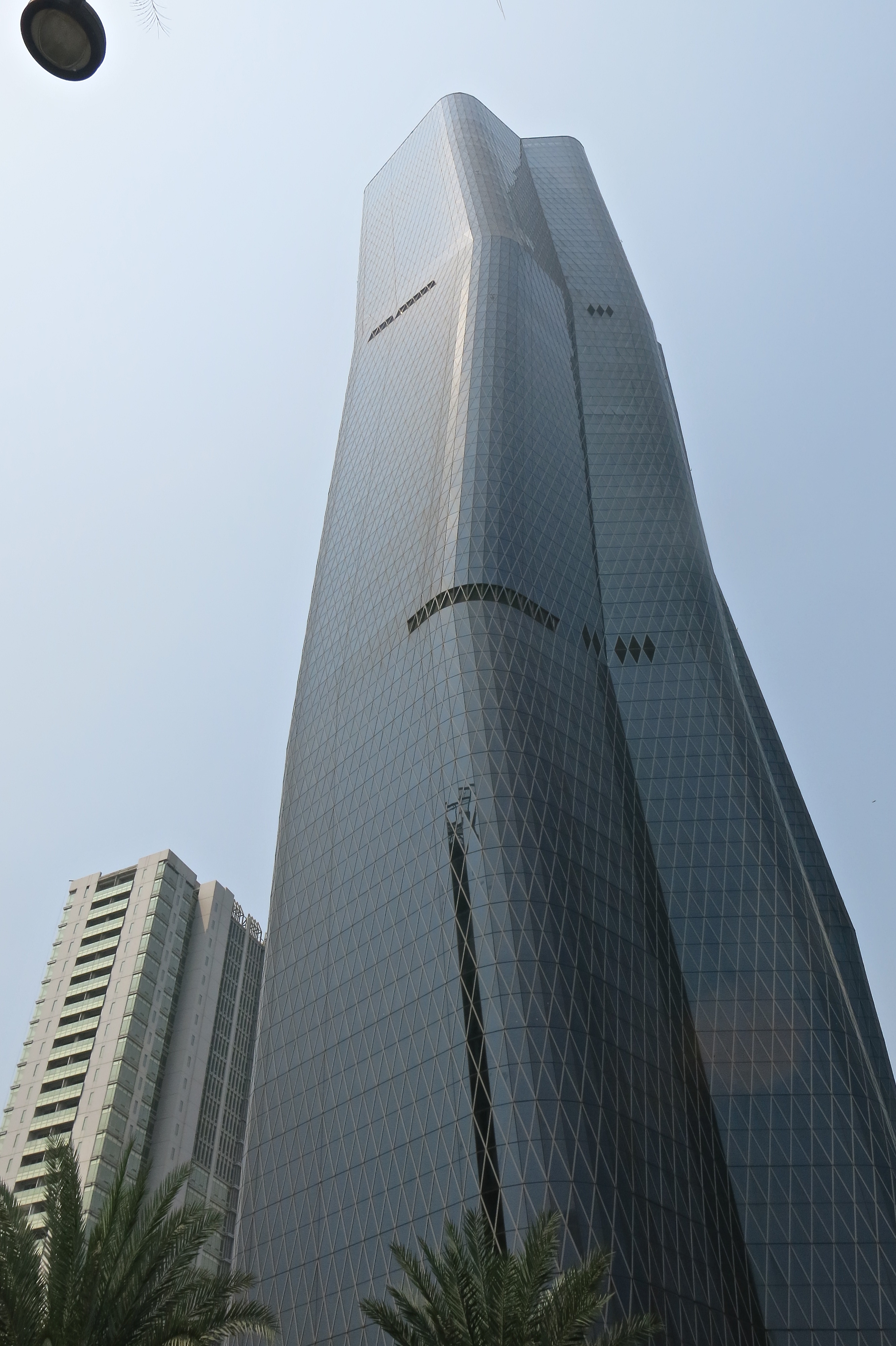
And then I came to this. IMG_1773Jakarta isn’t awash with remarkable modern architecture like Beijing, Singapore or the Emirates cities, but it does have the Bakrie Tower.

Which goes with this —600_MUD_1

Why, you may ask?

Indonesia is a country exceedingly rich in natural resources. On 26 May, 2006, PT Lapindo Brantas, an Indonesian company exploring for gas and oil, began drilling near the town of Sidoarjo in east Java.

In the first stage the drilling went through a thick seam of clay, then through sands, volcanic debris, shales, and finally into permeable limestone. Steel casing was installed in the borehole to help stabilize it. During the second stage the drill went deeper to about 3000m, this time without a protective casing. A series of small eruptions of water, steam and gas occurred near the site.

Then on the 27th a 6.3 magnitude earthquake occurred with its epicenter at Yogyakarta, 250 k.s southwest. Seven minutes after the earthquake a mud loss problem in the well was noted at the drilling site. After two major aftershocks, the well suffered a complete loss of circulation. This happens when ‘drilling mud’ — necessary for maintenance of the stability of the bore — pumped down a shaft does not return to the surface but is lost into some opening or a fault system. A day later the well suffered a ‘kick’, an influx of fluid into the well bore. This problem seems to have been rectified within three hours. Then, the next day, 29 May, steam, water and mud began erupting up to 200 meters above the well, a phenomenon that is now known as the Lusi mud volcano. (Lusi from Lumpur (mud) and Sidoarjo, the town, a very Indonesian piece of language construction.)

So it could have been the drilling, it could have been the earthquake, or it could even have been the sort of seismic fracturing that occurs on a day-to-day basis in many parts of Indonesia which is a very lively part of the ‘Fiery Circle’ which surrounds the Pacific tectonic plate.

But whatever it was, the mud (at a temperature of about 60C) erupted out of the ground initially at a rate of 180,000 cubic metres a day, now after 18 years slowed to a regular pulse. 1000 hectares, 13 villages and 28 factories have been inundated. Thirteen lives lost. Estimates vary but around 70,000 people have been forced to relocate.180px-Remenants_of_Sidoarjo_townUnknownThe mud stinks (of hydrogen sulphide among other things) and is described as toxic. Berms and levees have been built to contain and channel new mud flows into the nearby Porong river, which might not be everybody’s first choice. The levees have also collapsed quite frequently with the inexorable increase in the volume of the mud.

At the time this disaster was overshadowed by the impact of the Yogya earthquake: 6,234 deaths, 37,000 significantly injured and 1.3 million left homeless. However Lusi continues today, as do the demands for compensation which remain unresolved.

Who pays? Not us say Lapindo. Its Australian multinational partner Santos (18%) paid up ($US22.5m but not because they were responsible, just being good citizens) and fled. It was an act of god. The earthquake caused it. Etc. The government has in fact, after 18 years, provided about 20% of the agreed compensation.

This is an intriguing case of scientific uncertainty. Apart from its profound political sensitivity and financial implications, what happened was a matter of great geological interest. Thus a large number of studies were mounted of what actually had happened. Several teams of expert foreign investigators have concluded it was the drilling that did the damage. ‘The impact of the earthquake would have been no more than that of a heavy truck passing over the area.’ However round 2009 Lapindo’s PR firm started circulating new research that proved ‘beyond doubt’ that it was the earthquake, and in fact there is independently generated research claiming to do so. The cause of the disaster is not firmly resolved.
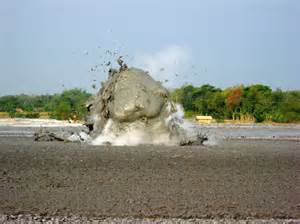
th-2For animists and environmentalists alike, however, there is something viscerally authentic about sticking something three k.s into the earth and the earth jacking up, blowing its top, spitting mud. Maybe nuts, but an attractive idea nonetheless. In 1928 that mighty metaphysician and superior spiritualist Arthur Conan Doyle published a story ‘When the World Screamed’ which pretty much follows that scenario.

The owners of Lapindo have gone to considerable lengths to distance themselves from the tragedy. They have tried twice to sell the company for nominal amounts (in turn US$2 and US$1m.), but were blocked from doing so by a governmental agency. Lapindo was initially asked to pay 2.5 trillion rupiah (about US$280 million) to the victims and about 1.3 trillion rupiah in additional costs to stop the flow. Thirteen of Lapindo’s executives and engineers were charged with violating Indonesian laws. This legal action subsequently stalled and SBY’s government took over the payment of the reparation funds (most of which have not yet been paid).

th-1Local and in fact international protests continue. The mud now contains sculptures depicting the suffering and despair of the residents. And this man here. Quite a good likeness. (The signs I can read say, left to right: ‘Our lives have suffered much destruction because of Lapindo’, ‘Justice must be served. No more waiting’ and ‘Machines are the destroyers of nature’.)afp-juni-kriswanto

thWho owned PT Lapindo Brantas? Indonesia’s richest man, Aburizal Bakrie, chair of the Golkar party for many years, a key figure in SBY’s government, the owner and developer of the Bakrie Tower and at the time, with spectacular irony, the national Welfare Minister.

From the Jakarta Post of 1 October this year:

The House of Representatives on Monday unanimously passed into law a bill that allows president-elect Joko “Jokowi” Widodo to force chairman of the Bakrie Group, Aburizal Bakrie, to fulfill his Rp 781 billion (US$65 million) financial obligation to the victims of the Lapindo mudflow disaster in Sidoarjo, East Java, next year.

Aburizal, who is also Golkar Party chairman, has lost the privileges he has enjoyed between 2007 and 2014 courtesy of President Susilo Bambang Yudhoyono’s administration.

The President had allocated more than Rp 6 trillion of government money in 2007 to compensate villagers living in the vicinity of the so-called ‘affected area map’.

Such generous financial protection for the Bakrie Group was among the reasons why Golkar helped the Yudhoyono government remain stable in the face of nationwide protests at the President’s generosity toward the conglomerate.

• • • • • • • • •
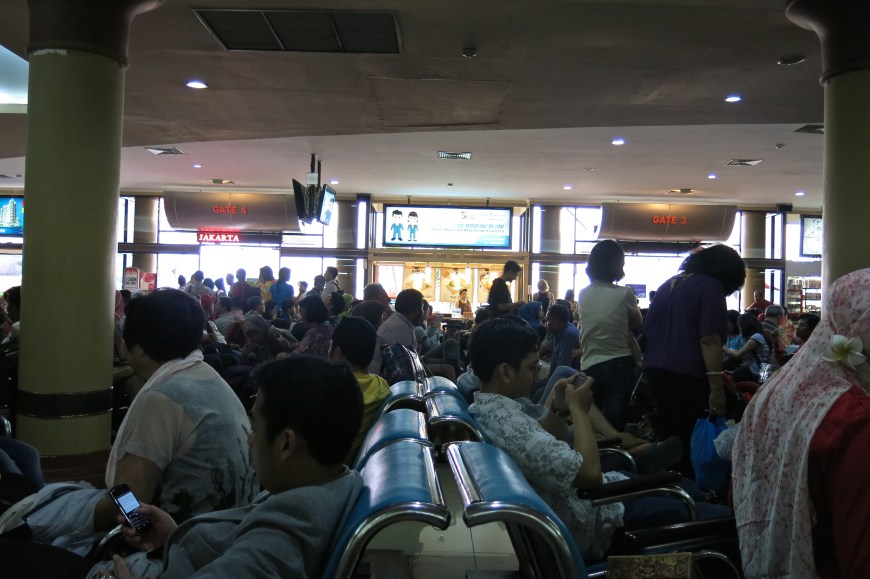
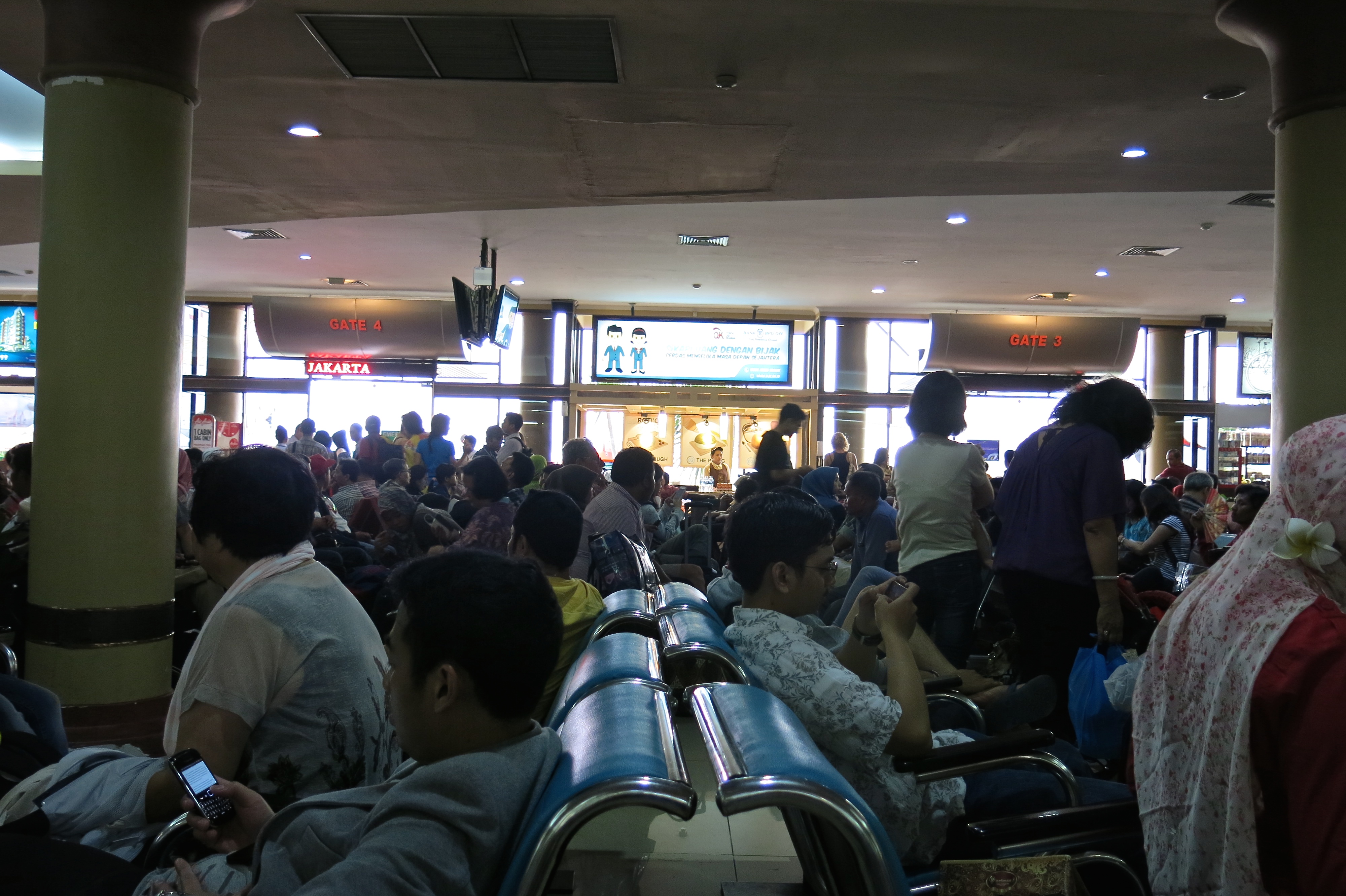
IMG_1920There are I think about 2500 people in this room, the waiting room at Yogya airport. I have counted a block of 100 heads and there are about 25 of these blocks. If there are 2500 people here then I think it may have been built to accommodate, under some pressure, 1800. There is, of course, no escape. You can’t just stroll back through the wall of officialdom to go for walk ‘land side’. You can’t. You’re in airport limbo land.

But, the real point, there are no planes leaving. When I say a waiting room that’s correct. Not a transit room. I know this because I have been here for more than three hours. From time to time another surge of occupants arrives, but the most visible aircraft sitting taunting us 40 metres from the glass wall which separates us from the runway has covers on its engines.

There may be some air conditioning, although I think not. If so, it is easily overpowered by the energy given off by this mass of human flesh.

At my nominal departure time a lone and lonely Garuda man says my plane has not arrived yet. When will it leave? He doesn’t know. Where will it leave from? Which gate? He doesn’t know. What time is it scheduled to arrive at Yogya? He consults his computer thoughtfully. Can’t help me with that. No information.

I’m asking because a power outage has blanked out all the information systems and while the lights are on again, the flight boards haven’t recovered. A nice young girl is forcing her way through the throng saying ‘567 Jakarta Li-ron Air. Li-ron. 567 Jakarta.’ This is a little like me going through the crowd calling out ‘2015 Footscray premiership. 2015 Footscray premiership’, although people are gathering in one corner and beginning to jostle one another with packages and huge items of cabin baggage. There is a hint of some cut durian filed away over there. But nothing happens.

Somewhere in the hubbub a voice is announcing something. It is completely non-competitive. I can’t even tell what language is being used. Could be anything. Could be the end of the world.

I must be clear. It is not the black hole of Calcutta. In fact I’ve noticed that the streamers attached to the air con grills are gesturing limply that they are being disturbed. But I’ve been here for four hours now and I am torn between choices. If I leave my seat for a visit to the kamar kecil (room small) which is becoming increasingly desirable, I won’t get another.

A middle-aged woman trips on the tiled floor (how?) and collapses into my lap. Sooory sooory pak. Her male companion looks at me angrily. I hold my hands up to activate the no fault clause, but if he had a gun he’d still shoot me. There is quite a lot of oblivious Indonesian good humour here, but it’s not the dominant mood. It’s not resigned good humour, just resignation. I can feel the slightest hint of panic appearing somewhere low in my belly. I’ve gotta get out of here.

Dozens of people are appearing with packages of ‘Yogya chicken’. They smell quite good and breakfast was a long time ago. I investigate. These packages are being given to all those whose flights have been cancelled. Hundreds of them.

Just as I wrote that magically one of the gate boards lights up its red letters: GA 252 Denpasar. Praise be! It’s a sign. What’s the time? 6.45. What time was I due to leave? 2.25. What the. Who cares? I could be an ebola victim. I could be trekking on the Annapurna circuit. I could be … travelling in Asia. But if it’s the wrong plane, I don’t care. I’m still getting on. I have a very urgent need to escape.

Which is not immediately satisfied. I join the surge towards the gate. I note that the Papuans who have been sitting opposite are going to Denpasar too, probably one hop on their way home. Interestingly, just as space appeared round the banks of seats they were sitting in, so an unbridgable gap, a force field, emerges around them in the queue. Altho I’m conspicuously old and white, and I’m wearing a white shirt with a collar AND I’ve got a briefcase, not even I can pull that off. There might be signs of bigger issues here, some cultural and racial distance waiting to be traversed.

The lights are on but nobody is answering the door. The minutes tick by. This is just a tease. The gate sign may simply be an indication that the plane has arrived, or that it might arrive, or that it had left its destination. Or that they want to test the gate sign.

Where I’m standing is at the main thoroughfare for any cross traffic, and there’s plenty of that. Back and forth back and forth. This way, that way. Like many Indonesian queues I’ve noted, this queue moves forward without anything changing at the front. Nothing is resolving; it just gets more packed up. 15 minutes. 20 minutes. What IS going on! The door opens. The door closes. People who look like they might be passengers go through, but only three. Or one. And then they come back. When the door opens, there is a comparatively pleasant gust of kerosene fumes and damp tepid air. The queue tightens up further.

There’s a commotion behind me. Twenty or so tourists with very loud voices which project remarkably well force their way down the middle of the queue following a German with a tour leader flag. I don’t know she’s German; she’s just speaking German. And possibly because of some money passing hands earlier they muscle their way to the very front of the queue while the flag bearer thrusts a mountain of paper at the gate staff.

After another five minutes, a purge. The boil is lanced. Other slightly disgusting body metaphors. The gates fly open and a torrent of travellers burst through. It’s 55 minutes since the GA252 sign came up. As I pass under the gate sign the information board clicks back into life distracting me from the fact that I am about to be hit by a blast of jet exhaust which has just knocked over the three people in front of me. I thought at first it might be some spectacular gust of wind. But it wasn’t. I laughed.

I wave my boarding pass at people I take to be staff but can’t arouse any interest. I flop into my seat. Hoo-rah. It was actually very nice out: a breeze, the prospect of rain. The hostess stands on my foot and I hear an unusual noise and look up at her horrified face. I turn to my left and across the aisle a chunky older man is in the throes of what could easily be a stroke. His face is contorted and his leg is very strangely bent up. Bloody hell.

So we disembark while he’s carried from the plane. I‘ve stopped looking at my watch. It doesn’t matter any more. The patient? Sure. Yeah yeah. I hope he’s ok. Yeah yeah.

And of course we will have wait our turn in the queue to take off anyway. The other night in Jakarta I counted 13 planes in our queue. We waited 50 minutes while other planes came and went. How does all this work? Think. Just how does it? Why doesn’t it all just implode? It might be like the traffic as it converses. The slightest tap of a horn, and it says ‘I’m here.’ or ‘Go.’ or ‘Move over.’ or ‘I’m passing on the left with two wheels in the snack shops.’ or ‘Make room. I’m coming regardless.’ There is no need to say thank you. That would be a waste of time and energy and it might be confusing. Everyone knows the conventions even if they are invisible to an outsider. But planes. They’re big, and when they crash …

Into my seat again. In my row of three there is an attractive young Indonesian woman. Next to me is her very unhappy infant.

What the rich pay for. Comfort of course, but also access, and also space. And also the right, uncodified to the best of my knowledge, not to have to wait.


IMG_1919

Tour de Wimmera

IMG_1528

Mt Arapiles, the very end of the Great Divide, poking its head out of a canola crop.

IMG_1433Victorian city mice tend to forget they have country cousins. It’s not deliberate. They just get bound up in the haste of the city and the rather limited boundaries of their geographical horizons.

That’s a shame, because there is so much to enjoy in the extra-urban world.

With two friends, Barbara and Graham, we thought we’d design a little tour, just a week, to revisit where we’d grown up, to chase up some of our favourite places but also to stretch out and drink in some of the less familiar big skies of the northern Wimmera, a region not famous for its tourist draw cards. What follows, however, provides some evidence to the contrary.

Would you travel with these people?IMG_1578

IMG_1251We drove up the Western Highway for lunch at Lake Wendouree Boathouse and some testing of the quality of the recent products from the Langhi Ghiran winery.

The destination was the Grampians. Graham and Barb were interested to see the burnt relic of Girin Flat; Myrna wanted to get some stimulus material — photos, vegetal matter, images — for a current painting project; and we all wanted to see the wild flowers.

IMG_1270

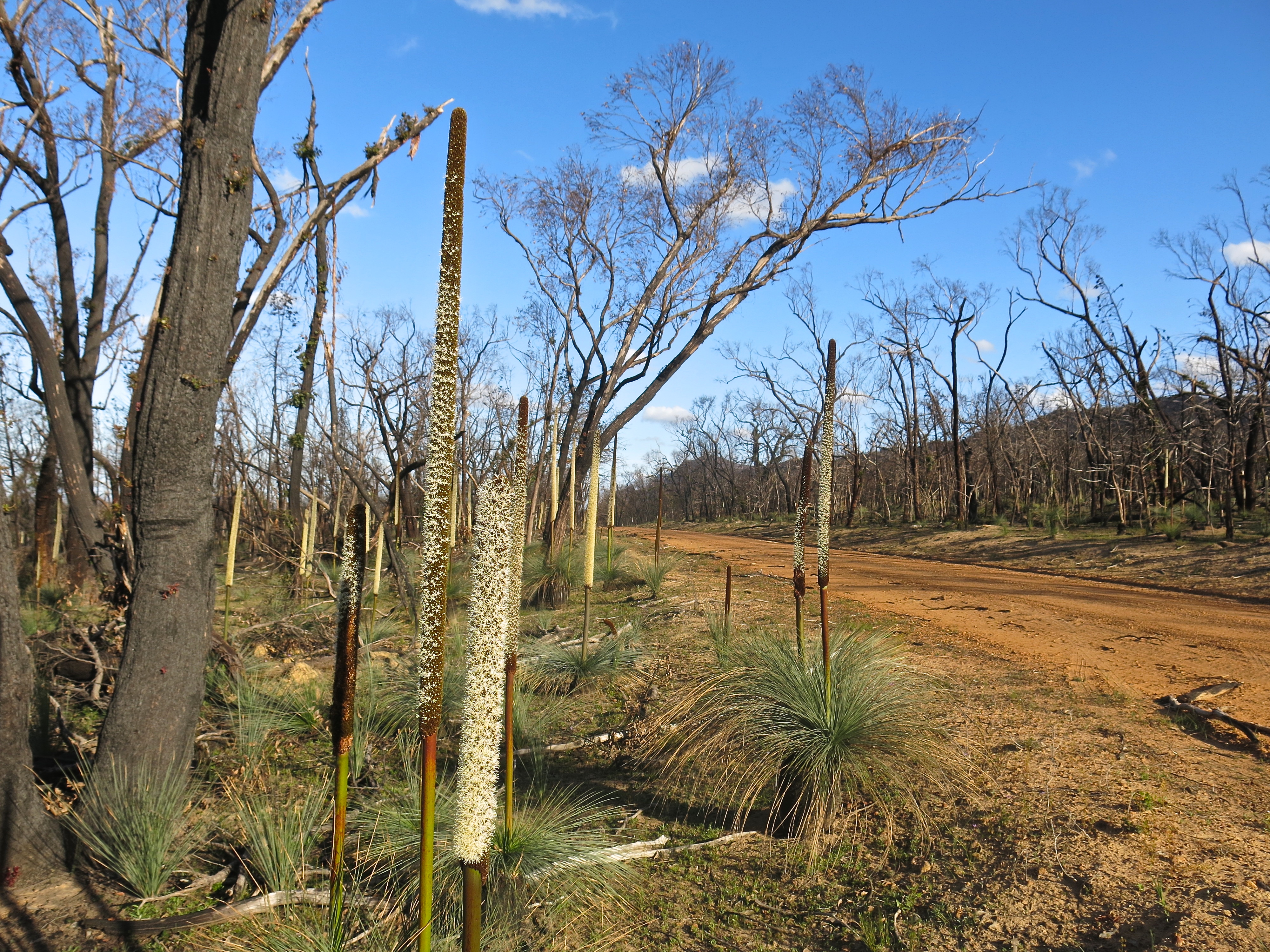
IMG_1552The wild flowers were only just coming out; they’d be at their best in another three weeks or so.IMG_1504 The big interest was in what we could see of the recovery from last summer’s fires. The blackboys (Xanthorrhoea Australis, Australian grass trees) in particular had shot and for long stretches of the road round the northern Grampians were everywhere. It’s rare to see them quite so floral.
IMG_1384

Hollow Mountain still looked its distinguished self even though much more naked than usual.

IMG_1381Trip Advisor moment: we ate and drank well at the newly duded-up Kookaburra Bar and Resto and, as part of a theme, enjoyed the Kookaburra Motel as much as we usually do.

Meanwhile in Hamilton Keith was casting through the personal ads (‘Mature, full-figured woman. Ask for Jazz…’) in the Hamilton Spec when his eye fell on an ad for opera at Alan Myers‘ remarkable establishment in Dunkeld. His three-chefs-hat gourmet restaurant/pub, the Royal Mail, enables one to explore simply all the varieties of foam available … let’s just say food adventures, and so they are. Bar, bistro, fancy bit — all at the foot of the looming Mt Sturgeon. The establishment over the road, next to the antique bookshop, holds the RM’s wine collection. But then there’s the family gardens (do check this link out, a great description of an extraordinary place) and so on and so on. The opera was on at the auditorium /gallery, newly minted out of Grampians sandstone and attached to a portion of the house. (Adjacent to the croquet lawn, but some distance from the tennis area, etc.) On its walls were, I would say,  3-4 million dollars worth of art: Martens, Piguenit, von Guerard, 15 or so early Australian masters, and a version of Benjamin Duterreau’s ‘George Augustus Robinson’. The other is in the Australian National Gallery.
Robert Divall introduced himself and the artists, Antoinette Halloran (at right) and Dimity Shepherd. Both were fine singers. IMG_1517

They sang the hits, we marvelled and then went off to eat shaking our heads in just slight wonderment. When we discovered that our 50 dollar tickets included payment for our meals at the RM they wagged violently. Graham led the flight to the car before those in charge changed their minds.

A night at the Rippon Road premises and a tour of Arborline is always highlight of a trip to Hamilton; then to Horsham up the Henty Highway the surrounds of which were looking magnificent. Then to Horsham … where I didn’t take even one photo despite seeing houses where Barbara, Myrna and I had lived, the schools we had gone to, the hospital some of us were born in, the stretch of the weir in which I turned into an ice-block during a three kilometre swim. But it was busy, Horsham, making Hamilton which is about the same size look sleepy. We like towns with signs of life.

Then west to Natimuk and Mt Arapiles, home to Brigitte Muir the first Australian women to climb the Seven Summits, the highest peak on each continent. The sharp face of Arapiles contains series of famous climbs.

The main reason though was for a detour through the Little Desert, an arid but complex paradise of small things.IMG_1536IMG_1556We lunched at Nhill. After dallying in the Little Desert we got the tail end of the offerings at Oliver’s, a resto set up to employ disabled people and going very well by the look of things.

IMG_1561

We chose to spend two nights in Rainbow because it was a suitable step off to Wyperfeld National Park which had adherents in the group and also because Rainbow has its own low key delights.

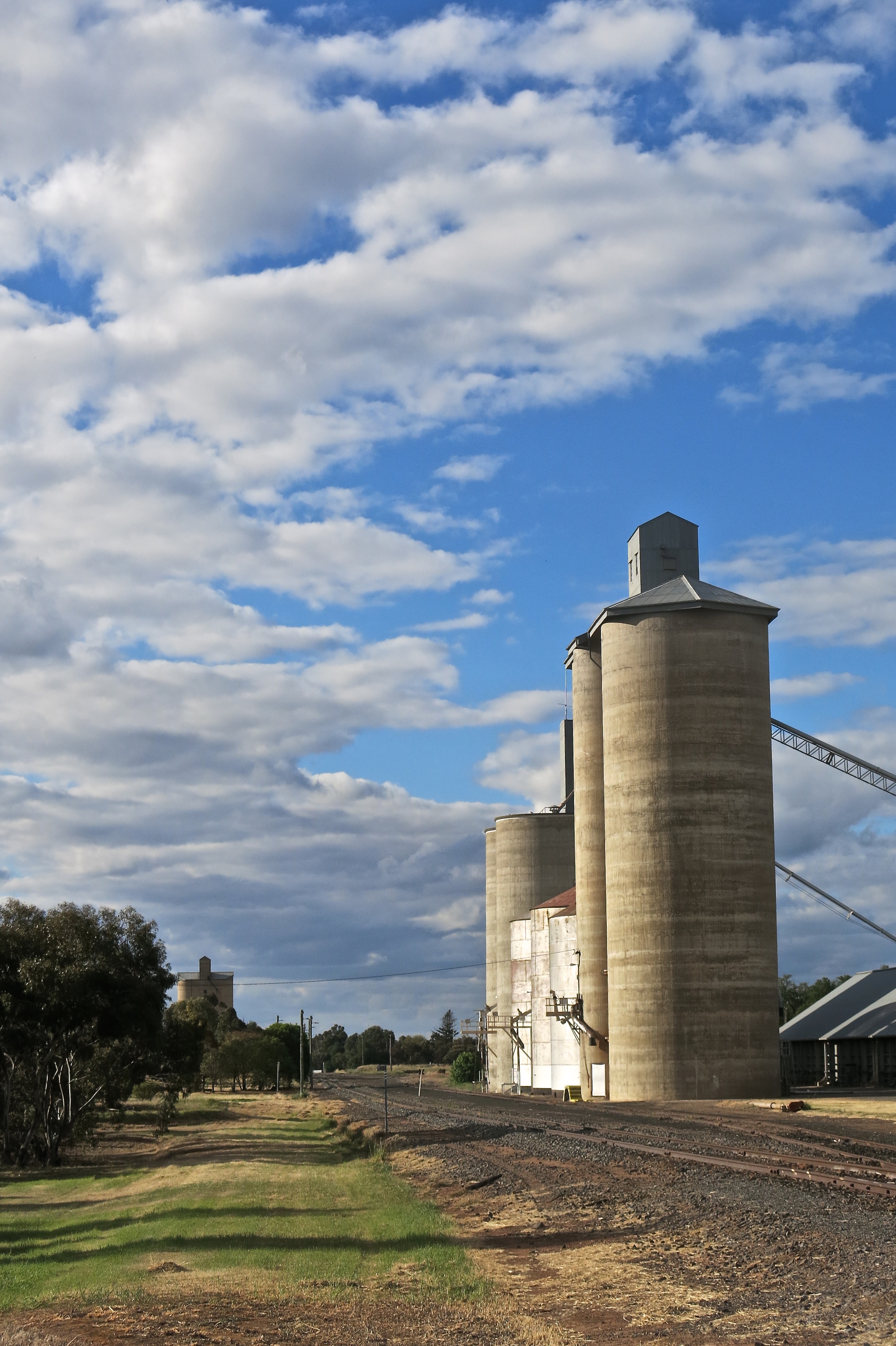
We drank the Eureka Hotel out of red wine for example — monumental drinkers in our party! But, yes, while plenty of beer was available, that bottle of Shiraz we drank was the last one they had. And it was 10 dollar parma night! (For those overseas: parma = veal parmagiana, in this case highly and variously modified.) And there was a very attractive open fire. It gets cold up there on the edges of the desert. And it’s got a fine set of silos, very clean air, a school fete featuring jumping castles which we just missed, and an IGA which sells most of the things you might like (including some well-aged St Hugo’s shiraz that the owner keeps largely for himself).

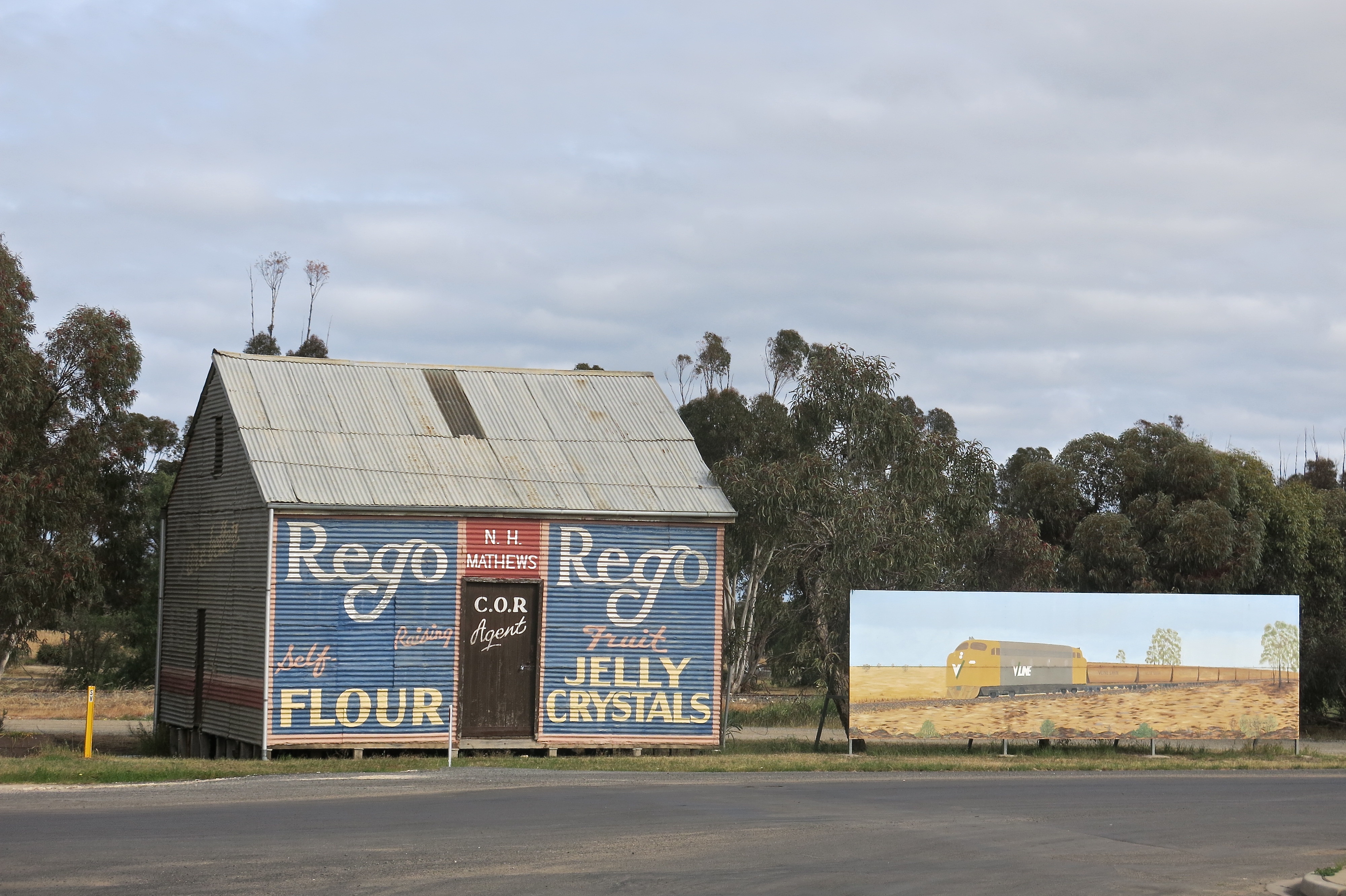
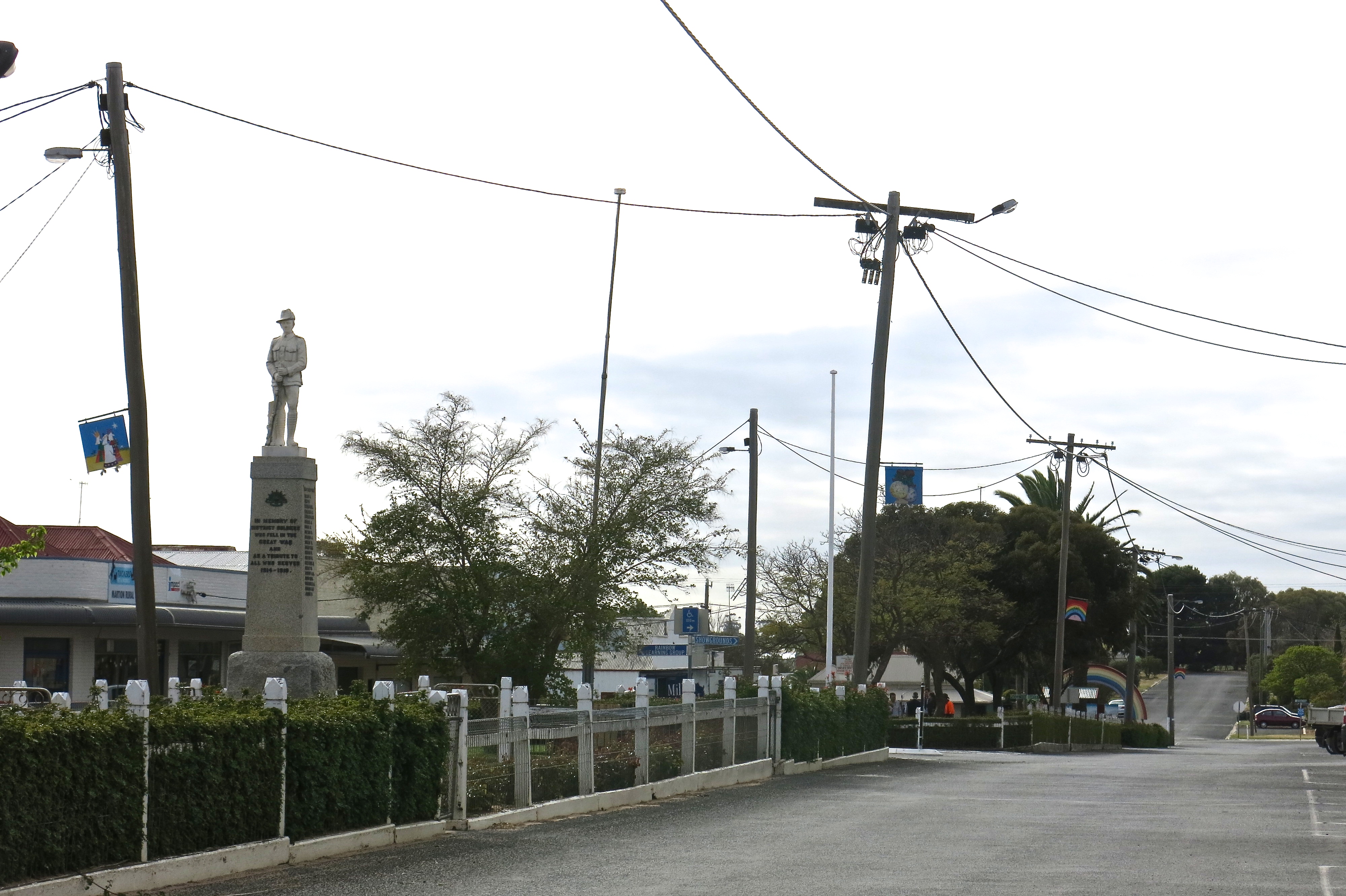
There were also several interesting pieces of public art. Graham said this was picture of the station to substitute for a real one; but there was a station even if the passengers getting on were bushells of wheat and barley rather than people. The centre of the end of the main drag, and I think rather lovely.

IMG_1600

For the purposes of orientation, this is the main drag, with returned servicemen memorial.IMG_1596

Then the paintings on the butcher’s shop — the butcher sold very good meat which we barbecued at the motel on our second night having exhausted some at least of the delights of the Eureka (the Royal’s lights were on but no one appeared to be home) — these really got me in. The way they had degraded increased their solemnity and knocked some of the folk art edges off. The diversity of what time had done to the medium was also most engaging. Wild. Appropriate. (The posters in the window are the work of Rainbow PS students advertising their fete. Inter alia, it had a football theme; 11 of the 18 AFL guernseys got a run on the poster nearest the door.)

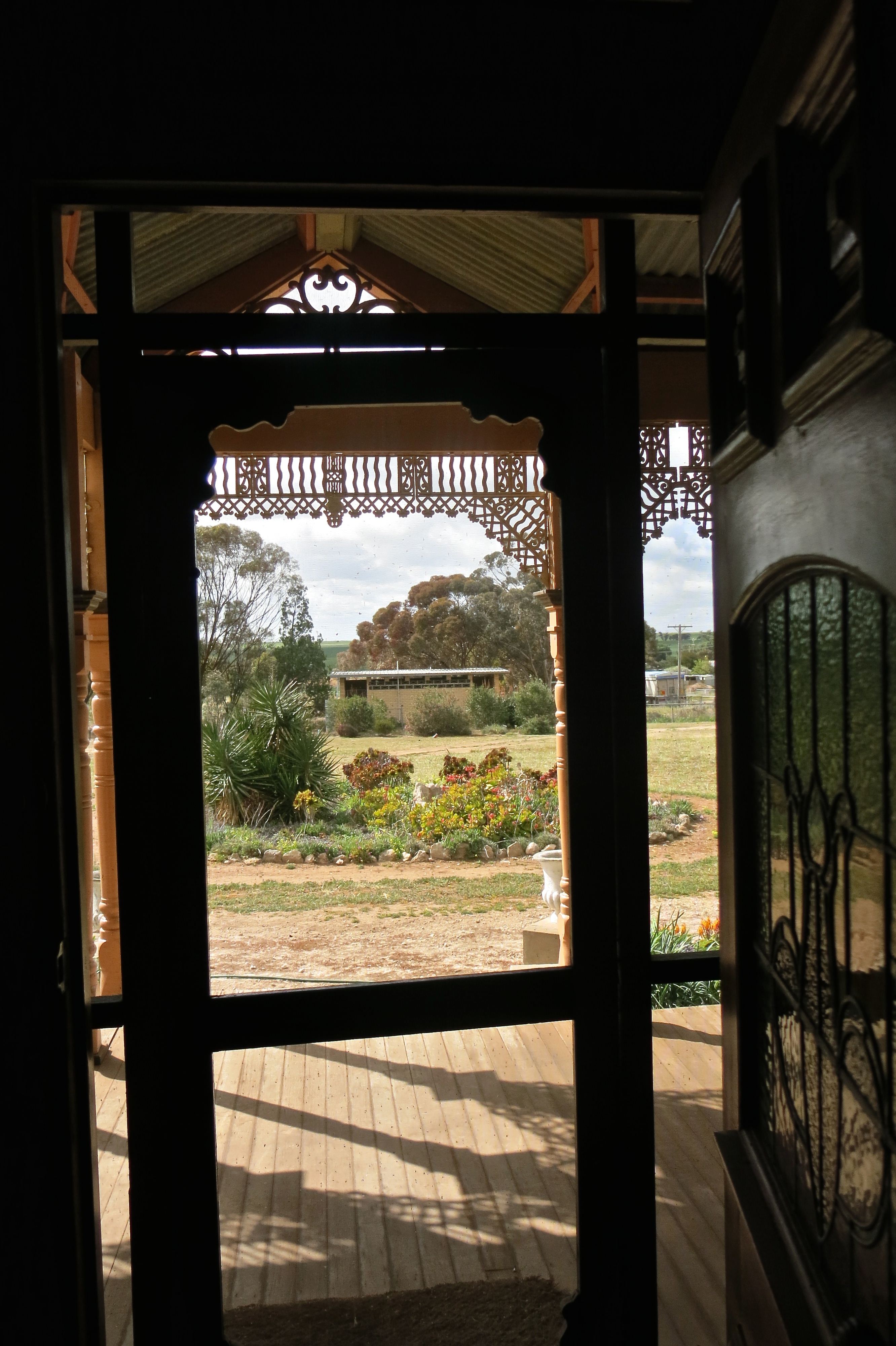
IMG_1598And there’s a big house at Rainbow — Yurunga. IMG_1566

It was built in 1909, a bare 20 years after Europeans settled this part of the Wimmera, and when more grain was loaded at Rainbow than at any other station in Victoria. The town had reticulated water — goodness knows where they got it from, almost certainly artesian — 30 men were employed as blacksmiths or wheelwrights; there were golf, football, cricket, gun, coursing and turf clubs, a brass band, a debating society, a progress association. Currently, with a population of 525 at the last census, most of those are historical memories, but there’d be worse places to live.

We’ve watched the decline of small towns happen in our life time, as farms get bigger and more industrialised, and people drive more easily and willingly to bigger centres to shop and do their business. So while Horsham (population round 14,000) thrives, the death spiral hits places like Minyip, Murtoa, Rupanyup, Jeparit, Beulah and Rainbow. (Altho something seemed to have happened in Birchip to keep it kicking.)

Yurunga was built by the Cust family who had also acquired a shop and 6000 acres. The shop burnt down one year later, but they built another. However, after three years they’d had enough and moved back to Melbourne, a very common story in this marginal country, never really meant for agriculture, paying costs in perhaps one of five years.

IMG_1570 (Not the Custs, the Liesfields in whose family Yurunga remained until its acquisition by the Shire in 1969. History in Australia runs in short spans.)

IMG_1571The house has a certain splendour nonetheless, verandahs all round, a climatic accommodation completely ignored by the chaps currently building houses in Horsham where even eaves are considered anachronistic if not obsolete. As long as the refrigerated aircon works, I suppose, who cares … This house had a coach house, a school room, a tennis court, a kitchen garden and an underground dining room. Not to mention pressed tin ceilings and a fine view of unused municipal conveniences at the end of its very grand passageway.IMG_1572

But, despite beguiling Graham (we still haven’t heard the outcome of his offer for the whole of the main street), we hadn’t come for the built environment. Nature beckoned.

The Wimmera River rises at Mt Cole quite close to Langi Ghiran where we’d begun our business. It runs through Horsham and Dimboola on its way to nowhere. It has the distinction of disappearing first into Lake Hindmarsh, the largest body of water in Victoria when it is full (almost never), then on into Lake Albacutya, then into Outlet Creek and on into a series of mysterious sites: Black Flat, Lake Brambruk, Lake Jerriwirrup, Lake Agnes and finally the Wirrengren Plain. And if you think Rainbow is a bit out of town, try the Wirrengren Plain. Although amazingly, whitefellas have tried to live there running sheep and cattle. Dingoes got the sheep, and the dry got the cattle — the shortest of shrifts.

There is a record of water covering the Plain in 1854. In 1917 Pine Plains some kilometres to the south got wet to the extent of flooding. In 1957 it covered Black Flat and with record rainfall in 1975 (when I was trying to build our house in the Grampians) Lake Brambruk filled. Since then, due partly to the imposts placed on the river downstream (weirs, irrigation, town water), these ‘bodies of water’ have almost always been dry. This means that the red gums which fill these depressions will die. They need wet feet at least every 20 years to keep going, and that will change the landscape forever. This is Lake Brambruk today.

IMG_1585The Wimmera river doesn’t run anywhere. It just disappears into the sand.

Apart from the two big ‘lakes’ these places are all in Wyperfeld National Park, a collection of different semi-arid environments with astonishing bird life and a wonderful sense of quiet.IMG_1591Sand dune country with stands of callitris, native pine, which does not regenerate after fire. After recent huge fires about 60 percent of the callitris in this area has been wiped out. More cheerfully, Graham and Barb proved their indomitability here with a very satisfying walk.

If north is up, it was mostly downhill from here, except for one great drive almost along a line of latitude: Rainbow, Kenmare, Beulah, Birchip, Wycheproof, Boort. It was very interesting to look at the variation in the crops over this 150 or so k.s. Those near Rainbow needed a soak, near Boort they’ll have a good year. But round Beulah and Birchip they might as well be putting their money on horses. This is what tens of thousands of dollars of seed, chemicals and labour sinking into oblivion looks like. These crops won’t even provide feed.

IMG_1609I’d been to Boort not long ago to talk to a teacher of Indonesian there, and found the delight pictured below. Great home-cooked food, good coffee and the sort of individual flourish that, sometimes, rural Australia allows. Look at the windows. This is a masterpiece of the genre.

IMG_1621IMG_1633IMG_1644You may be wondering about the stock in this area. Fortunately we have renderings of same. Big fellas aren’t they? There is even a town, district maybe, named after the Durham Ox. The caption on the pic reads ‘Henry F. Stone and his Durham Ox 1887. The early colonial cattle were of extraordinary proportions.’ (But um … that extraordinary?) The sheep was found in the Bendigo art gallery and the cow was wandering the streets of Boort, just over the road from ‘The Cup and Saucer’.

IMG_1614We did go through Birchip, for one year my home and, albeit a slightly different colour, this was my home.
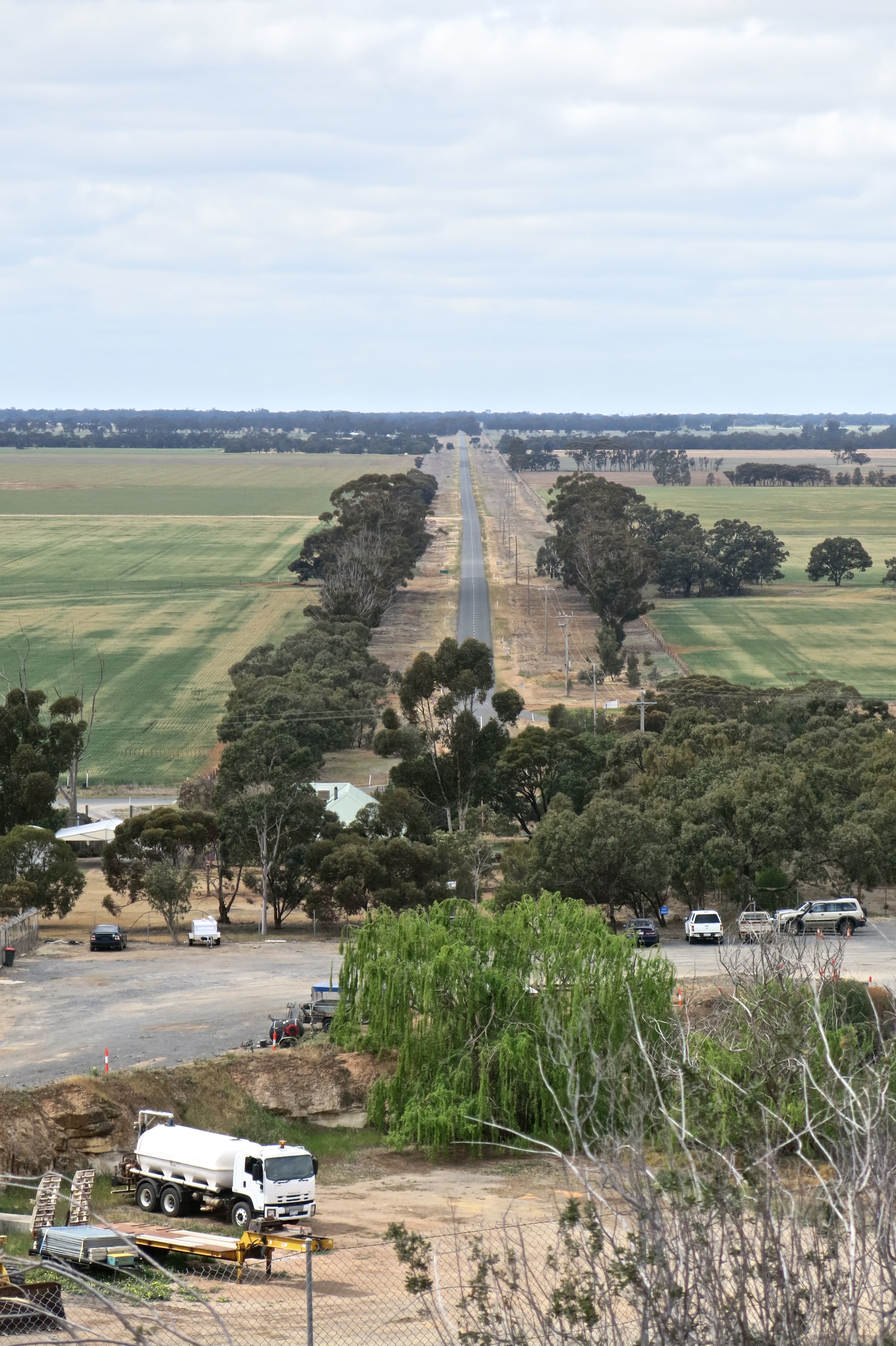
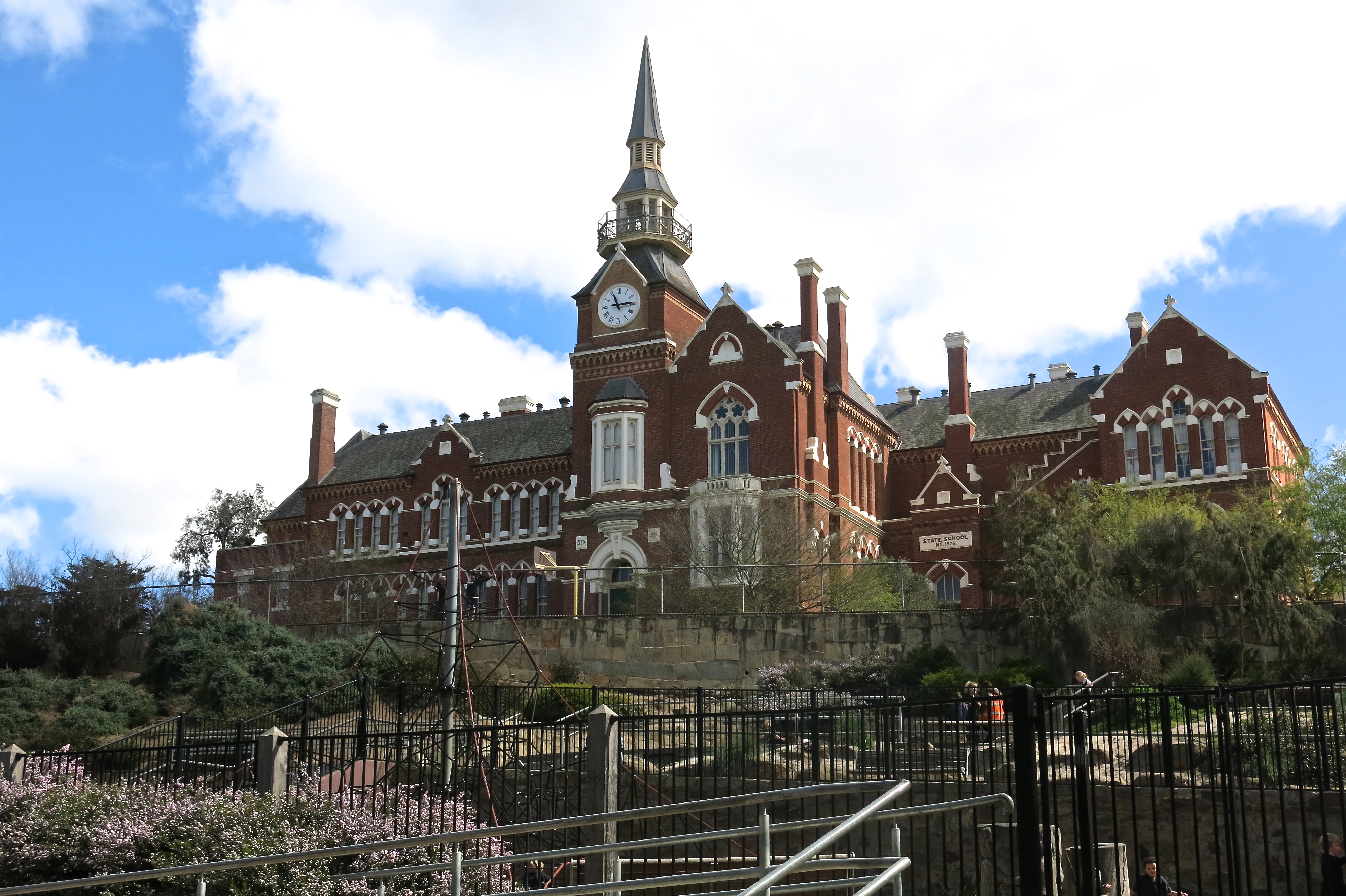
IMG_1618And I found it difficult to resist this pic from the top of Mt Wycheproof, billed locally as ‘the smallest mountain in the world’, towering a grand 43 metres above the surrounding plain and consisting of a unique substance known as Wycheproofite. How good is that!

Its the first frame of my first film and featured me driving along that long straight line of latitude towards my first job.

Before getting back to a more contemporary home, we drank in the delights of Bendigo where Barbara grew up. When I think of gold field towns I always think of people who found nothing and went home disappointed. But some people made some money. Obviously.

These were the days when public building was public building and meant to last. I give you Camp Hill Primary School.IMG_1629

The Bendigo Oval.IMG_1625

The Town Hall.IMG_1632That’s pretty Bendigo. But so in it’s way is this.IMG_1654

This is the interior of the Great Stupa at Myers Flat perhaps 10ks from the centre of Bendigo. It is only half built, will cost upwards of $20 million and is designed to last 1000 years. It will have attached a convention centre, a hotel, a monastery (built), 80 houses, a school, etc. The (somewhat unprepossessing I’m sorry to say) Buddha has been carved out of a single piece of jade and is the largest, most expensive etc etc etc. Like so many other things on this journey this all appeared as a delightful surprise.

How busy we ants are! What a piece of work is man. How noble in reason, how infinite in faculties. In form and moving how express and admirable. However, along with my Danish friend, there has been a stern inclination of late, for reasons which I’m sure are widely felt, to lose all my mirth.

So what better way to conclude than with something which has not lost any of its splendour after 30o0 years. It won’t always be in Bendigo but it was when we were there.IMG_1641(Just one more big sky …)IMG_1559

ELSEWHERE 2010. Why travel?

It’s straightforward to call the experience of travel artificial and ungrounded, and to go on about its inauthenticity, to cite the plethora of foolish misunderstandings and incorrect, shallow interpretations with which, from Marco Polo on, travel literature is filled. There … Continue reading →

ELSEWHERE 2010: The Ardèche. Balanced world

Lyon in transit A cup of coffee (une grande crème): €2.50 ($A3.75)

Mr Ryan saw us safely to Lyon. The ash cloud was still threatening but the airlines had decided that the governments were being unduly cautious and anyway they were losing a fortune. The vapour trials over Rome were proof of that.

It was May Day and things were quiet. We went for a pleasant walk with, in the back of my mind anyway, some interest in what would happen next, just how we would get to La Mastre. We could certainly get to Tain L’Hermitage, but the train to La Mastre which would have been great hadn’t run since 2008 and the bus time tables were clearly about school days even if we knew where the stop was. Taxi. Big bucks, but door to door. Two candidate companies failed but the third came through; and I must say taxis, those much maligned tourist rip-off taxis, provided impeccable service everywhere we used them.

As it was, the train did the right thing, the taxi was waiting exactly as requested and the longish drive along the gorge of the river Doux was a real pleasure. We were heading to La Mastre about 140 kilometres west but mostly south of Lyon in the Region of the Ardèche. This was the starting point for a walk shaped like a figure 8 with a tail. It would normally start from Lecrestet but the Lecrestet hotel people wanted their Mayday holiday.[1]

We chose this walk because we wanted a walk in France, we hadn’t been to the Ardèche before and didn’t know anything about it, and what was offered sounded about the right length (130 k.s, 7 days walking, one rest day) and level of difficulty (I’d say medium, I’ve forgotten what Sherpa said). Roman sandwichesI didn’t say much about the food in Italy (some unmentioned was sensational; click on the photo to the left), but it’s France and I would be lying if I said we weren’t also attracted by the prospect of quality regional cuisine.  IMG_1424 The Ardèche A cup of coffee (une grande crème): €1.80 ($A2.70)  IMG_1397.JPG

We arrived at the Hotel des Negociants in a light drizzle and I strolled downtown looking for some lunch and to see what was what. The meerkat had finally run out of energy and was having a snooze.

Downtown La Mastre on a Sunday morning is a quiet affair. Everyone has been to church[2] and then they’re off to hear the 40-piece town band playing in the square. 1The band La MastreThey weren’t much good but they were extremely well received and looked like they were having a lot of fun which is how I imagine playing in a big band to be. The photo won’t show this but the town was out to listen, yelling out requests not all of which were ignored. The last number included a trombone solo from a 40 year-old gent with slightly over-egged good looks and he played until exhausted, not long, and that was the end. Then off for Sunday lunch.

I sat on the steps of the band shell for a while trying to locate just where I was, something else that can happen to travellers. But I found a boulangerie open and we did well from the result. In the afternoon we strolled around the very quiet town and found where we were supposed to leave from (the auberge ‘The Calm Mother’! See below) and looked at the gorgeous stone houses and gardens.

The 70 year-old woman who runs the H. des N. was not a mamma. She was a Madame with a whip crack tone that had her minions trembling. Her 30 year-old daughter-in-law seemed to be doing most of the work. The daughter-in-law had three children including one who was three months old and a bad sleeper. She did the rooms and the cooking and was a very nice person when she wasn’t exhausted. Her husband seemed to be mainly on child care in so far as he was on anything.

There are parts of rural France that don’t quite appear to be a part of the modern world and the H. des N. was one of them. No computer. Not one. Amazing. That said, we sat down for dinner. Crudités, pintadeau roti avec marrons, tarte Ardèchoise et legumes, followed by les startlingly good fromages et pour M’sieur, une coupe d’Ardèchoise[3]. And it may sound disgusting but I remember also having some quail terrine that night. I’m not going to go on about food all the time. Promise. As may have been inferred, the spécialité regionale is chestnuts.

The rain had gone in the morning and the weather bade fair. This was a long day which included a simple height gain[4] of 960 metres and an aggregate height gain which was heaps more, lots of ups and downs. I hadn’t really wanted to start with the hardest day but there wasn’t much choice and we had had plenty of walking practice in Rome. 2The start (next to The Calm Mother)IMG_1407.JPG

The start of the start was a stiff climb of about 600 metres up out of the Doux valley, but the first 10 k.s were simply a delight, charming and seductive. The climb offered excellent views across the valleys to St Etienne in the north, the only minor mishap being Myrna trying to electrocute herself on an electric fence while photographing black pigs.

The track continued as it began with lots of navigation required: so many options, little waymarking and such specificity. ‘Behind the house on the left you will find two options. Take the track which appears to begin as a farm track with three stone piles to the right and then veers left through forest … .’ The notes were generally good but slumped in quality according to the difficulty of the problem.

On the way home in the plane looking at the line-up of recumbent bodies with overfull bellies at an indecipherable time mid air it occurred to me that air travel and walking are profound antitheses. However enjoyable, air travel is the last word in artificial experiences. That’s what suits the frequent flyer. On the other hand, Myrna says you don’t walk for a day, you walk through a day, meaning I hope that you are conscious of the terrain, the weather, the time, the surroundings, the task in a way that no other form of travel matches. It’s all there with you all the time, just er hem you and the track, and off you go. That’s it. You’re not judging your form or effort; you’re just off walking for a day. There isn’t anything else. And if you wanted a day to persuade someone of the delights of walking this was surely it. Narrow tracks soft under foot through chestnut forests, gorgeous long views, sunny warmth, animals, farm houses, rolling hills.The first town was Nozières and the one shop which was open (of three) had bread, cheese, ham and juice — everything you could want in other words. IMG_1427 IMG_0469I was wearing a T-shirt and my arms were becoming sun burnt. We were going well and at the foot of the Col de Buisson it was time to eat. As often in a saddle, there was a bit of wind here with a bite to it. An old man and his dogs were gesturing at us from across the way and we gestured back. Later we realised we had come to a tourist attraction, Mini-ville (a bit hard to see but it is at right), something he had probably had a hand in building, but we kept our five euros in our pocket and ploughed on up the Col to a high ridge. This was interesting because the forest had been badly knocked around by storms but also by a bush fire, not something you automatically associate with rural France.IMG_1433It was also interesting because the temperature had dropped ten or so degrees, black clouds were massing in the west, it was spitting and I had left our rain gear with our luggage because I was sure we wouldn’t need it, and the ridge at almost 1300 metres was becoming increasingly exposed.

This is another story about walking. It’s quite easy to muck things up when you’ve got your head down just forging along. You don’t get your map out, forget to read your notes, don’t put your gloves on when you need to (if you’ve got them) and before you know it … etc.

It seemed unlikely that we could make a mistake here because there was only one track, a forest road along the crest of the ridge, but we had to get off it, and according to our notes there was a cairn which signalled a left turn to locate a track which would take us down to another saddle. A cairn. A cairn could be anything. You could kick it over in a small fit of pique. Anyway, we missed it and suddenly found ourselves in a welter of logging tracks none of which were on the map.IMG_1428 Below us in the valley was a town which I was sure was Lalouvesc, our destination. I was out by about 90 degrees. We did get off the ridge eventually but it was a five or six k. mistake and as well it was getting quite cold. We found the right road and as sometimes happens — a fair bit really — there’s another hour of walking when you think you should be there. And it’s uphill. And you’re not completely 100 percent exactly sure just where you are. IMG_1435.JPG

Lalouvesc is built on the lip of a cliff and seems to have been some sort of staging post/ tourist resort for ‘taking the air’ since at least the mid 16th century. One of the hotels we passed had been there in one form or another since 1538.

That wasn’t our hotel. Ours had fewer stars (a generous one and half), but it did have a bath and after walking 30 k.s a bath is desirable. France has great engineers and several had been at work on the arrangements for getting water into this bath, but unfortunately at cross purposes. A trickle of tepid water was the best it could do until, after some considerable time and largely by chance, I found another button that activated what could be called a flow. Very tired that night and not detained by whatever there was on the television. My notes say: Très froid tonight. And so it turned out to be.

We woke up in good time, pushed the shutters back and it was snowing. Remember the sunburn the day before? Yes. I couldn’t believe it. Snowing. In early June! What would that mean for our progress? While we now had our wet weather gear along with warm clothes I had left our hats and gloves back at La Mastre certain we wouldn’t need them. IMG_1439

We ate petit déjeuner alone but for the cats in a huge dining room looking out at the snow which seemed to be increasing in intensity by the minute, big floaty flakes which largely melted when they hit the ground turning into something more driving and dense. An unseasonal orage, a storm, with winds of up to 140kph. Myrna was not as delighted as she was to become, but completely undaunted.

We geared up and went looking for the entry to the track. This was completely invisible. I was thinking about the intelligibility of: Madame, le chemin a disparu complètement. Nous voudrons voyager à St Bonnet avec les bagages s’il vous plait.[5] But la femme de bon courage made an executive decision that we would follow the D532 to St Bonnet (correct name St Bonnet le Froid; that’s true) which had the advantages at least of secure direction, once we had worked out with certainty that we were correct, and secure footing. The modest disadvantages were walking on tarmac and dodging the (very few) cars and trucks going past. The gentleman we asked for confirmation that we were on the D532 expressed concern for our well being and commented on the storm: extraordinaire. 6The roadIt was eleven k.s in driving snow to St B. le F. and a couple more to the Hotel Fort du Pre[6].

During that time it snowed in five or more different ways, some more pleasant than others. It hailed for a while too, viciously, and head on, as we passed through another saddle. We were on our way to a health resort famed for its views, but the views had disintegrated with visibility regularly down to 50 metres or so, just northern hemisphere Christmas card versions of pine trees outlined in white and the occasional stone house. This is not a heavily populated area. Myrna loved it; I was a bit cheesed off. But eleven k.s is not very far really, and we reached St Bonnet about lunch time with about 150 or 200 mm of snow on the ground.

A moment of meditation on the way.8On the way St Bonnet is not a big town. It has perhaps five shops and several big deal eateries, like the Hotel Fort du Pre, just out of town. IMG_1450.JPGBut one of those five shops is the Bar des Quatre Vents, and we brushed the snow off our gear and went inside. It was warm, the telly was on the weather channel, the patron was a 30 year-old spunk with a gracious manner and a will to help, and a kitchen that produced excellent food of exactly the type that one might want in those circumstances.

Restored, we ploughed on through the weather until the Fort du Pre loomed out of the fog. This was supposed to be the four-star treat of the walk’s accommodation where we were to spend our rest day. It had a flash dining room to which people came from all over the country to eat, adorned with chef’s hats awards galore by various luminous organizations. The premises had a pool, a sauna, a gym (all of modest scale), provision for massage and various herbal treatments, a table tennis table, a babyfoot table, a dislike of children and noise, thick carpet and nice rooms. Style? French bourgeois to a T: neat, polite, rule-driven, reticent, censorious.

There was a big thermometer on the wall outside and I kept checking, fruitlessly, to see if it would get above zero. The forecast was for warmer and wetter weather, but in the meantime the snow was increasing in intensity. I spent quite some time reading about French grammar and reflecting on my deficiencies and we went down for tea, dinner that is; and what a carry on it was. There’s a big difference between good food and mucked-around-with food and this was the latter, and we were somewhat peculiar randonneurs (walkers/hikers) from Australia disfiguring the perfection of the environs.

We went back to St Bonnet the next day to do some internet (the only public internet place on the whole route in a bookshop and papeterie run by a young man) and to see what was happening in the Bar des QV.

IMG_0500.JPGThis day the road crews were in having their grands déjeuners: chicken salad, roast pork and mushrooms, tarte tatin and a litre of red wine. 16 euros thanks. Brilliant. Pourquoi pas! Much better than being out in it, and they probably have something like that for lunch every day. It was as good as the previous day and we enjoyed its contrast with the starch of the Fort du Pre. The menu that night: quenelles lyonnaise aux poivrons; cervé d’agneau et pulpe de pomme de terre au fenouil; puding au rhum et raisin, or if you like: stodgy pepper dumplings; slice of lamb, and mashed spud with fennel; plum pudding. IMG_0496

St Bonnet the Cold? I read the explanation quickly but the story goes something like — a traveller found himself caught in the snow, lost and bewildered. Someone, St B., loomed out of the gloom and guided the traveller to comfort tying his donkey up to a suitable post. When the storm had subsided the traveller went to find his donkey and found him dangling in the air tethered to the cross on the top of the local church’s steeple, which can’t have been pleasant for the donkey, and it would seem arguable that these would be sufficient grounds for beatification. I am quite happy to accept that I may have missed some points salient to the story. 10Entry to The track

I was sure we would be on the road again to get to St Agreve, and that was nearer to 20 k.s. 9Fort du PreThe snow had not relented although when we left at eight in the morning it was cold and foggy but still. (Somewhere on the left is the entry to the track.)

We walked down the busier road to Devesset for a couple of hours without pause and had a cup of coffee in a pub which had a number of early patrons, after which we had our first very modest attempt to get off the main road, onto an alternative road really. But just after lunch the fog lifted and we could see a lake in the distance (a feature of the walk apparently), then, lightening my mood considerably, a green paddock, the first touch of colour in three days, just visible in the pic below.IMG_1458

The ice was cracking off the trees and it was noticeably warmer. We’re not talking sunny here, just the odd break in the clouds, excellent walking weather really, and we shifted back onto the track which was not far from and running more or less parallel to the road. It stayed like that till we got to St Agreve where I gave thanks at the Fontaine des Miracules on the outskirts of town, and we found the excellent and cheerful Auberge des Cevennes where one of the staff had lived in WA for a year[7] and was keen to swap stories. Myrna bought some buttons for a jumper she was knitting for Romany. We carry our domesticities with us.11Auberge des Cevennes

The next day was another delight. We had come down three or four hundred metres and the climate had changed markedly. There was an excellent boulangerie over the road from the auberge and we stocked up and skipped out of town which kept not wanting to disappear. It’s built around its own little mountain. IMG_1471

This was the beginning of the second loop of the figure 8 and we were to come back to St Agreve, which was a desirable prospect. IMG_1475.JPG We had morning tea in a cemetery at Beauvert (lots of places to sit) full of Picots and Chabanals. This again was the ‘as advertised’ version of the walk — birds, smells, wild flowers, silage, stone farm buildings converted into weekenders, deep pasture, lovely long views, rolling open hills. Then we were advised by a sign to deviate and we did, around the lip of a high plateau looking at our several destinations 500 metres below. Magnificent. This track then took us directly to the ruins of Roche Bonne. Better again. What a building it must have been. 13A Roche bonneIt’s built around a spire of rock on a very steep face. While ruined now it must have been an astonishing sight in its day. Its day appears to have been around the turn of the 11th century. Un certain Bertrand de Rocha Bonna was granted funds to build it and it changed hands variously for another 300 years ending up with Hugues et Gerenton de La Mastre, a connection. During the religious wars, the castle played a military role, Pons de Rochebonne being one of the principal Catholics of the region. It was taken in 1577 by the Huguenot (protestant) leader, then in 1577 was pillaged and destroyed in 1595. Around 1760, the priest from St Martin de Valamas wrote to his bishop that the castle was entirely destroyed, but the peasants were stealing its stones and something should be done about it. Which is how it remains today, although there are some signs of restoration. It is also close to a waterfall with dramatic character.

It was a long descent to the bottom of the valley, where we found the required abandoned railway line which would take us to St Martin de Valamas. St M. was home to a big retirement village on the flat, but the town itself was a violently steep climb away, 15 minutes of hard exertion, perhaps to keep the oldies fit. It had three cafes all of which were closed because it was the day before yet another French holiday[8], the staff of the Information Touristique were off for a five-day pont[9], and the town’s kids’ playground had one small rocker surrounded by metres of rubber mattingIMG_0540 with one of the sternest signs on the wall one could imagine: ages 2-7 only, adult supervision mandatory, one at a time, all responsibility abjured, well covered in other words.

It mightn’t be a load of laughs as a place to live, but it was very pretty. Mernz thought the cakes we found there were the best we ate while away.

We weren’t at our main destination yet. We had to absorb the fact that the Dogs had just beaten the D.s by four points, information provided by our reliable Hamiltonian football correspondent, and also to find an unsigned, barely described place called Les Chambas (a dialect term, we discovered, for ‘terraced fields’).

We sort of stumbled over it. I thought we’d found it, Myrna wasn’t sure. But I wandered through the garden up to the door and there was a foolscap sheet saying ‘Les Chambas. Bienvenu.’ It was big house, quite stylish in a 1970s sort of way, a B and B we thought. Mine host appeared from somewhere out the back and took us up to our room which appeared to be someone’s bedroom, closets full of clothes, no telly, no bathroom. All a bit spooky.

I’m not that keen on B. and B.s. They seem intimidatingly intimate and after a long walk you just want to fade out at least for a while. But anyway we were there. IMG_0544The dog ran in, pissed on the floor, jumped on the bed and came to visit me in the bath. Dogs, the French: a love affair. We had been advised that aperitifs were at 7.00 and we wandered downstairs, and there were other people there. We had thought we were the only guests, but we weren’t. There were three other couples (who didn’t know each other either) jammed together on two small couches speaking very fast French. The aperitifs were white wine mixed with a local liqueur, chestnut of course, raspberry and something else I missed. I missed a lot. But one of the older ladies took me in hand and we spoke pleasantly slow French and retired for dinner.

The hosts provided dinner for ten, themselves included at the table, most nights of the year. Now that’s not your everyday job. And people came from all over the place to eat with them. Madame la hôtesse spoke French like a machine gun but the others were kind and patient and we found ourselves comfortably included. French manners can also be wonderfully courteous and pleasant. 14Dinner at Les ChambasThe older couple had come from Lyon for a un voyage de dégustation (food trip, you know, like ours). He was retired, she had an interest in writing. The youngest couple were having a weekend away from their kids, grandparents had stepped in, and he was a swimming instructor with classes of forty (!) from a small place north of St Etienne. At the end of the evening we discovered he spoke good English, the rat, having spent a year in Ireland. But it was a night of great good humour and jollity with phenomenal food.

Should I say? People may start to talk. Chacuterie — pâté and sausage; prosciutto and cantaloupe; finely sliced eggplant and tomato concasse (‘smashed up’ I suppose); pork and a ratatouille that had been slowly cooked for some hours, and that’s the way to do it; cheese[10]; gateau aux marrons (a chestnut sauce on a very thin and large creme brulee). All cooked to perfection. One of the very good nights while we were away. IMG_1526

The next day was just a haul up the dismembered railway line and therefore a long steady climb which was never very far from the contour. What struck me was the number of massive bridges we went over, and the effort and cost that would have gone into building them. It would have been a fortune, an investment for the years, and now just a sandy rocky trail to nowhere for randonneurs. Walking without thinking, we passed some brilliant stone houses with fabulous gardens and were back at St Agreve before we knew it, and spent some time watching the world come and go in the bar happily doing nothing. What a life.

Later that night we borrowed the hotel’s computer and discovered that the ash cloud was back. The airports of Portugal, northern Spain and Italy, all of Germany and southern France were closed. That was significant news. We were due to fly from Marseille to Prague and then to Helsinki for home. We had been away long enough and didn’t want a wrestle with airports and schedules in foreign parts.

I went to bed with that largely in mind. We were due to return to La Mastre, the final leg of the figure 8, back to the pintadeau at the Hotel des Negociants. It was another gorgeous day’s walking, a long steady descent back down to the Doux valley, through orchards and vineyards and for some distance along the still cobbled Roman Voie des Marchands (Merchant’s Way/Road, at right). IMG_1541It rained steadily for a few hours but we had our rain gear. We arrived at Désaignes ready for lunch, and I’ve mentioned our offence to the restaurateur. Il y a une formule m’sieur, la formule de Dimanche. Oui oui oui bien sûr. Bien sûr. Mais nous ne le voudrons pas, s’il vous plait. Seulement café et un sandwich, une baguette peut-être …

We got to La Mastre after an excellent day to request use of the Hotel’s ordinateur (computer) which is when we found there wasn’t one. Old France, the ‘50s, perhaps insular, certainly by definition provincial. Dinner lacked the sparkle of the week before. Perhaps it was the repetition or the competition from Les Chambas or the ash cloud and our incapacity to do anything about it. That night Chelsea beat Wigan 8-0, a lot even for a mismatch and I watched a televisual hagiography of the French soccer club Paris St Germaine. I enjoyed it all but was struck by one of the chants adopted by the wild and aggressive PSG supporters. I can’t remember it exactly but it went something like: We wish to suggest to you that taking all things into account we will win the championship this year. French. It is a polite and highly embroidered language and I was becoming increasingly conscious of how brute my version of it was.

I proposed to my wife that perhaps it might be possible that we think of getting to Helsinki as quickly as possible. Then we might be out of the cloud which seemed to be congregating over central Europe, and Finnair would somehow have to look after us. Helsinki seemed like getting home. She concurred. But first I needed a computer.

IMG_1590It is six kilometres from La Mastre to Lecrestet by road but 15 via the track. I thought the road for a minute, but was very glad we didn’t. It might have been the best day. Lecrestet is normally where you begin so we were going back the ‘wrong way’. It began with a long climb out of town, four hundred metres in two kilometres, that’s steep, but we were up to a series of consistently wonderful views. It was a complex track but we didn’t miss a beat. And there was a computer at La Terrasse, our hotel destination.

Several hours were spent fooling around with tickets and bookings, most of which turned out to be redundant, a waste of time and money as Isaac our travel agent lost no time in assuring me when we finally made contact; and I hadn’t even worked out how to get back to the train at Tain l’Hermitage which was going to take us to Marseille. I was counting on the bus. The timetable assured us that it would be right, an early morning but quite doable. But when I asked our host about this he shook his head. Doesn’t happen. Only two buses a day, both too late to get us to the train. Back to the taxi, and the same excellent service prevailed, which just left the fact that I needed an email from Isaac confirming our changed tickets to Helsinki.

But what a walk! What a pleasure it was. So much to enjoy. Myrna had become impressed with this idea of the ecological balance this region represented: lightly populated, extraordinarily fertile, well watered, prolifically productive of the basics of life —and yet at the same time it had been left behind, abandoned. IMG_0517.JPGYou could almost forget global warming in the Ardèche in a way that has been impossible in Australia for years. The storm and the snow we experienced had been extraodinaire, unseasonal, unexpected, rare. But the product of the storm was more water on this fertile deep black soil, not a disaster.

I’m sitting in Broome (north-western Australia) in pindan savannah country writing this. It could hardly be more different. The road to Hall’s Creek, all 800 k.s of it, has three or four major rocky outcrops. Apart from that this is dead flat bright red soil country with nothing much growing above a couple of metres.DSC_0127 (these are baobabs.) We cross the mighty Fitzroy on the way which at present is only a series of pools. But in the dry, apart from the spring at Hall’s which creates the creek, there is no other non-artesian water in all that distance. ‘Ski Creek’, a water playground just after the wet, is sand. We pass the truck stop at Willare and go through Fitzroy Crossing but there are no other towns and, apart from a few signs leading off to station tracks there are no other signs of human habitation. There’s nothing much to eat for the cattle that wander through the spinifex and amble across the road in the late evening. They need fattening on grain before they can be sold.

The biggest issue here at present is the ruinous impact the 300 billion dollar gas project will have on the physical ecology of James Price Point (and the social ecology of the whole area). It’s another world just so far away. Some questions to which I have no answer. Is it some atavistic memory that makes countryside like the Ardèche so attractive to people like us? Why are its occupants fleeing it in droves for cities and for such a different life style? (Perhaps that answers itself.) The Kimberley could be described as an inhospitable environment, and this is the nicest time of the year and I’ve just been for a swim at Cable Beach, but should anyone besides its traditional owners live here? Tomorrow I will be with whitefellas who would live nowhere else.  

Marseille: worth more time 16 J-P.s terrace, the view

A cup of coffee (une grande crème): I’ve forgotten

We’re on the run home. If you’re still reading, you’ve been generous and need never have to think about any of this again.

It was pouring rain as the taxi took us to the train for Marseille which came but was 40 minutes late. It nonetheless seemed like progress. Jean-Paul Sartre had been a guest in our hotel in Marseille during the summer of 1978, and I say almost certainly in our room which was on the top floor with a terrace looking out over the Old Port. Marseille looked like a lot of fun, so interesting, almost not a French city with an amazing mix of people, but I was too tired to exploit it, too sick of trying to speak French and organise unorganisable things. We pottered around a bit, found the food bar in a Galleries Lafayette and prayed that the Marseille airport would be open and that Isaac’s email would arrive.

That email kept not coming, despite phone calls, despite prayers. We found groovy-ville which had a market and a very definite bohemian atmosphere; the streets generally were humming with all sorts of life; the weather was fine and we were settled in J-P.s magnificent pad; but I would say I missed Marseille, just passed it by.

Finally, Isaac’s email arrived, and as it turned out we probably didn’t need it. We got up at 5am — something I have to do again tomorrow and I don’t know how I’ll go; it’s not my favourite — but this morning was lovely. The sun rose during the 30 minute drive to the airport and everything glowed pink. The airport was open, the planes were flying, we spent a minute in Prague and then arrived in Helsinki and the Hotel Glo. By that time I’d read ‘The Guardian’. It was that easy.  

HELSINKI AGAIN

It was a tonic, like a smiling welcoming face. Everything was closed because it was Ascension Day but who cared? We slept the sleep of the just in an upgraded room, got up slowly and did a bit of shopping.

Helsinki had changed totally in seven weeks. These pictures are of the same place at the same time of day.IMG_1649 IMG_0817.JPG The snow banks had disappeared, the flowers were out, not a hint of ice in the bays and the populace had their party face on. The bloke in the Nike shop told us that it was their hottest day (250C) for three years, and whether or not it was true it was obvious that the weather had caused a total rush of blood in the locals. They were out in force stripped to the underwear, drinking beer and lying blissed out in the sun. The Esplanaadi which had been denuded of people when we were there last was packed with thousands of Helsinkians and the mood communicated itself. Finland had also just won the annual world ice hockey championship.

We thought we might go for a swim. After a hot walk we found the pool, and we also found the 100 metre queue which was stationary to get into the pool. I have never seen a queue outside a swimming pool before. Go the Finns.IMG_1646I had another pool marked on the map so we set off to find it. Unlike the other one, it was indoor and while not empty was not crowded and high high quality. We got back to the hotel in time to dress up for the opera — Myrna’s new Save the Queen (Rome) giraffe dress got its first outing — but we were not in time to eat. The opera was Verdi’s ‘Masked Ball’ really well done in a modern hall which was grand but intimate. No Finns in the lead roles, a Russian, a Spaniard, an Italian and a Pole, but it was all good. What we didn’t know was that the smart money had ordered food and drink for the several and long intervals. Still it gave us a chance to look around at what Helsinki offers in terms of class. We checked, and no one else had a Save the Queen dress on. We did lots of enjoyable things next day with a very special mention to the National Art Gallery but the tension was mounting and our final meal at Karl Johan was not a success.

Got on the plane. Came home.

••••••••••••••

  • [1] We booked it through a British company called Sherpa who for a perfectly reasonable fee, book accommodation for each night and undertake to move luggage from one spot to the next. Dinner and breakfast is included in the cost and you sort out your own lunch, a picnic (usually) or you might be at one of the towns on the way at lunchtime. They also provide maps and track notes.
  • [2] The Huguenots still have a church in La Mastre as elsewhere in the Ardèche. Free Protestants they’re called.
  • [3] A vegetable salad; guinea fowl roasted with chestnuts, spinach tart and green beans; cheese; butterscotch and chestnut ice cream
  • [4] From the lowest point to the highest, in this case La Mastre to peaks on the ridge, 320m above sea level to 1280.
  • [5] Madam, the track has completely disappeared. We’d like to go to St Bonnet with the luggage please.
  • [6] Renowned for its way with produits de terroir (the region, this local area), en particulier les viandes (meats), les poissons (fish) et les champignons (mushies).
  • [7] Without going further east. It’s a big country.
  • [8] They have a couple most weeks. It’s a reason for Andre’s longevity and good health.
  • [9] A way of establishing a long weekend. Holiday on Wednesday? Take Monday and Tuesday off, hence ‘bridge’.
  • [10] Roquefort, St Agur and something local. During the conversation we decided, complicit, that Australia didn’t have any cheese — what can you say? It had already been conceded, not by me, that Australia was the greatest sporting nation in the world. On return, what we were the first two cheeses I saw at our deli in the market? Rochefort and St Agur.