Christchurch and its earthquakes

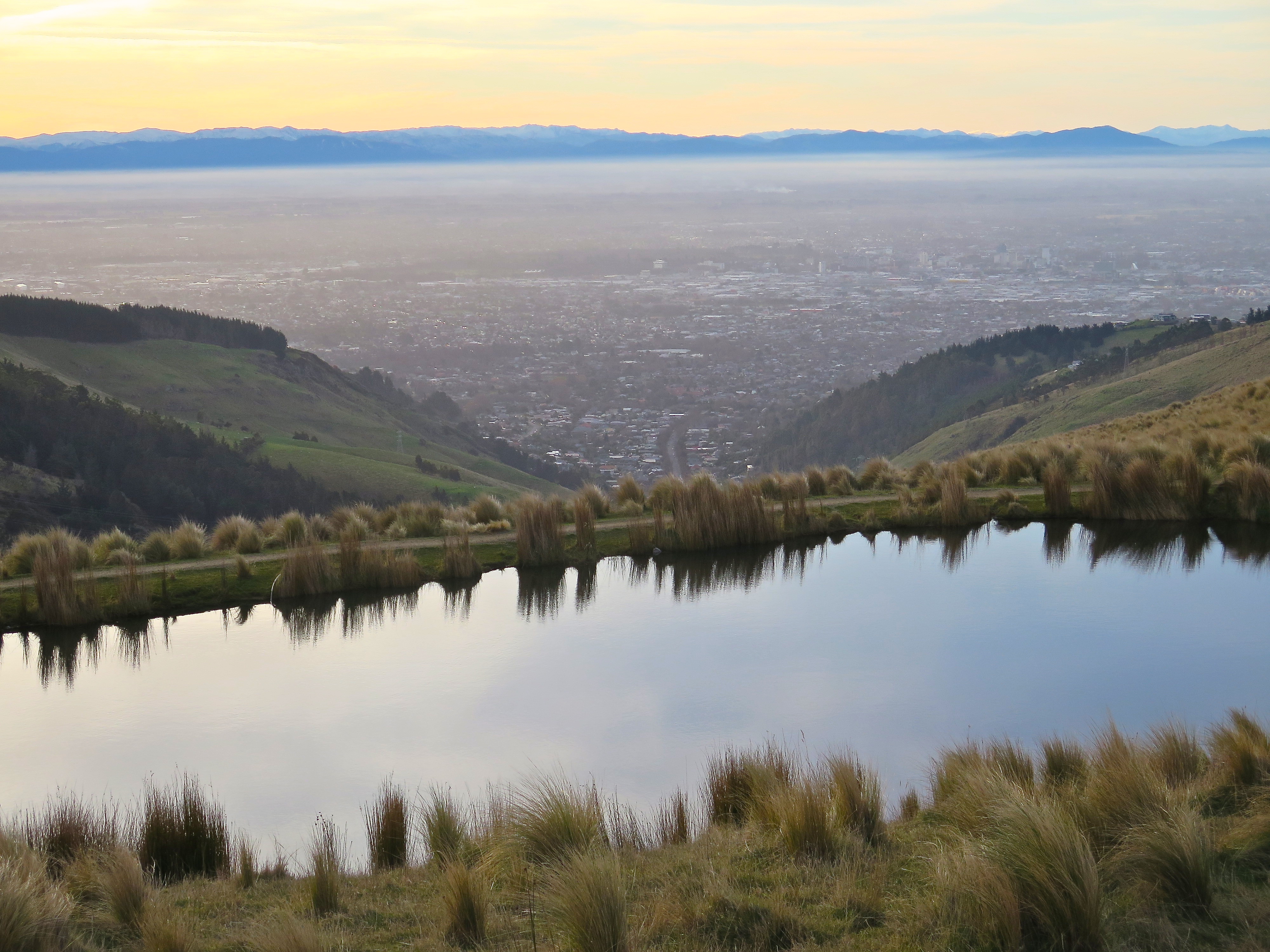
IMG_1885Christchurch. Third biggest city in New Zealand, just smaller than Wellington the capital. For those inclined towards using Geelong as a yard stick, and there are so many of us — twice as big. Capital itself of Canterbury the fertile plain where the lamb which fed Britain before its entry to the Common Market was raised. Dairy prices remain an important bellwether of community well being. IMG_1951Comfortable, dull, provincial, secure: the sort of place where you find an unusual number of private schools servicing the children of pastoralists and people clinging to traditions from elsewhere.

Chch has been described as the most English city outside England, and certainly at the opera we were surrounded by accents that began well back in the British throat. Salisbury, Gloucester, Worcester, Durham, Manchester and Hereford are street names in the central block. Ireland is represented by Armagh, Bangor, Tuam and Cashel; Wales by St Asaph; and the Empire, presumably, by Colombo, Montreal, Barbadoes (sic), Madras and Antigua. Hagley Park, 170 rather glorious hectares in the centre of the city could, by its plantings, style and usage, be Regent’s Park on the other side of the world.

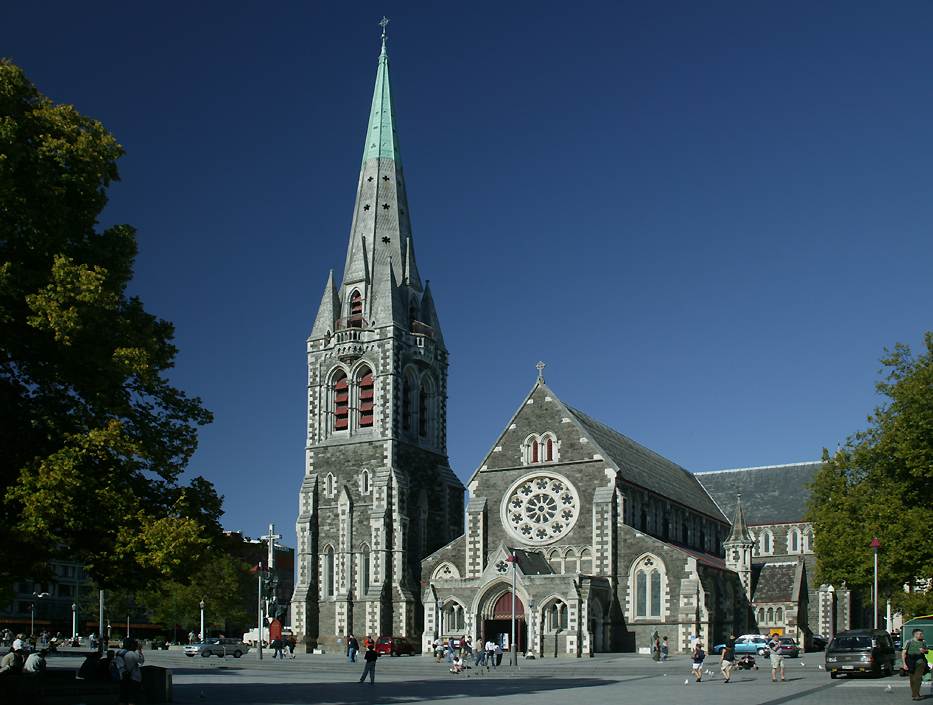
83251448The architecture which provides the city with some of its more definable character is a localised version of Gothic using grey basalt highlighted with white trim. The Provincial Chambers and the old Canterbury University buildings which became an art centre are fine examples, although the jewel in the crown? The Anglican cathedral standing to attention at the side of the city square.ChristchurchCathedralTrams trundle round its heart, although on just one line and really only for tourists.

Tram at Christchurch Arts Centre, New Zealand

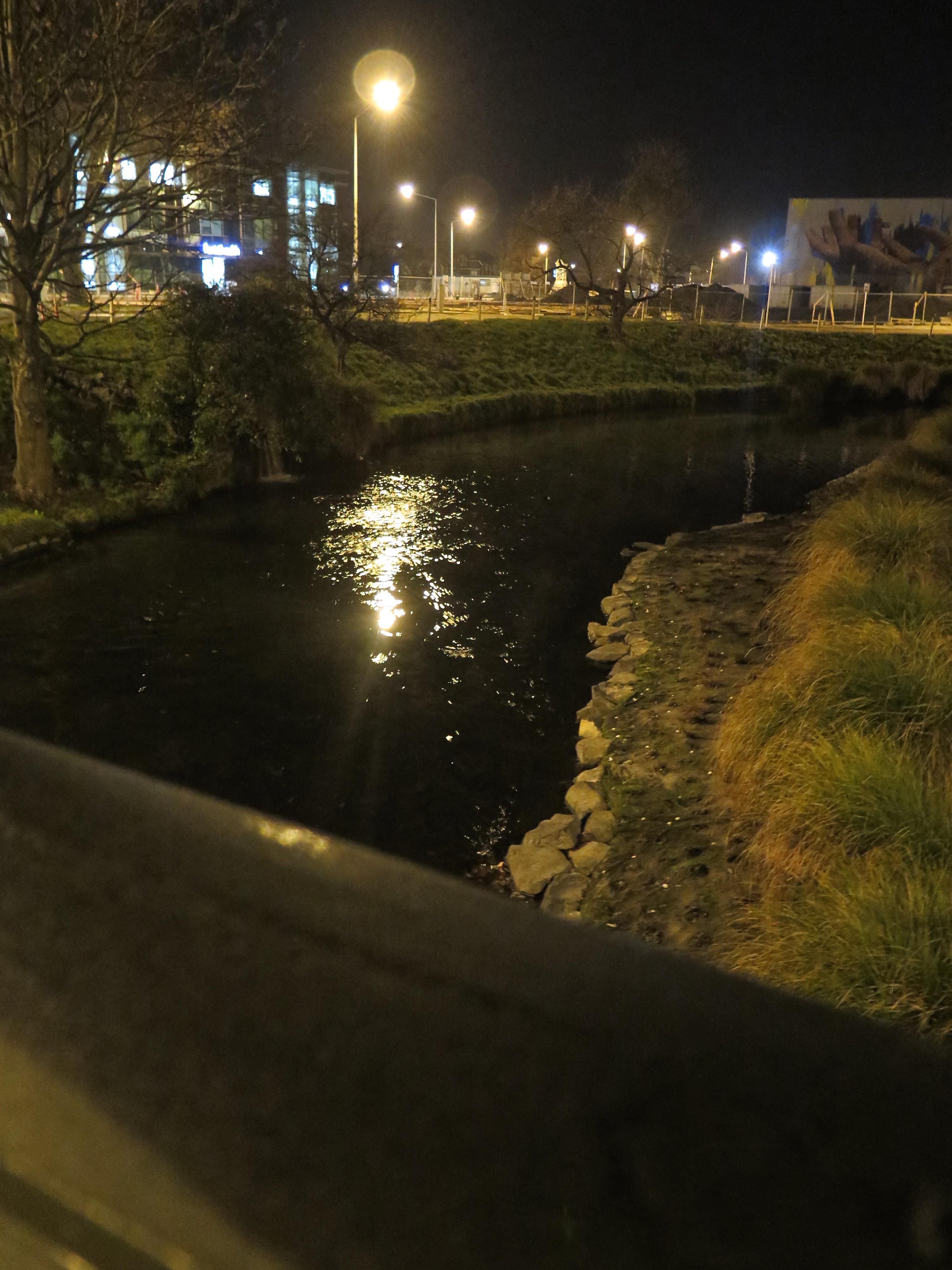
IMG_1905The Avon rises within the city  — at Avonhead: that’s Chch, prosaic but clear — a good deal less than a river but more than a trickle requiring eight bridges in the CBD alone. It ambles its way through the suburbs to the sea 10 k.s away as the brown trout swims.

One of Chch’s tourist offerings is to take to it by punt.

The Avon and the Heathcote, Chch’s other waterway, drain marshland depositing silt in the shallow estuary at their mouths.

IMG_1878A prosperous regional centre requires a deep water port and fortunately one exists 15 k.s south-east in the core of a volcanic crater. However the steep and rather intransigent Port Hills (the crater’s rim, from which the first photo above was taken and visible at right) separate the city from the port and its town, Lyttelton. A rail tunnel joined the two in 1867 but it wasn’t until 1964 that road traffic could avoid steep and winding climbs to get between Lyttelton and Chch. The road tunnel is 2 k.s long, bullet straight except for two wafty curves at beginning and end.

It wouldn’t do to talk Chch down. This is the home of the Crusaders. Played finals in 16 of 20 years of SuperRugby, winning the lot seven times. To the antipodean mind SuperRugby is the club world championship. The Crusaders offer big names, huge names: Dan Carter, Andrew Mehrtens, Justin Marshall, Kieren Reid aaaaannd Richie McCaw. International Player of the Year three times and now suiting up for his ninth consecutive year as captain of the All Blacks who have won 120 0f 136 international games in that time. He played the final of the last world cup with two stress fractures and a displaced screw in his right foot. ABs 8 France 7. If you think this doesn’t matter you haven’t been to New Zealand.
images-1 Richie and some of his closer friends.

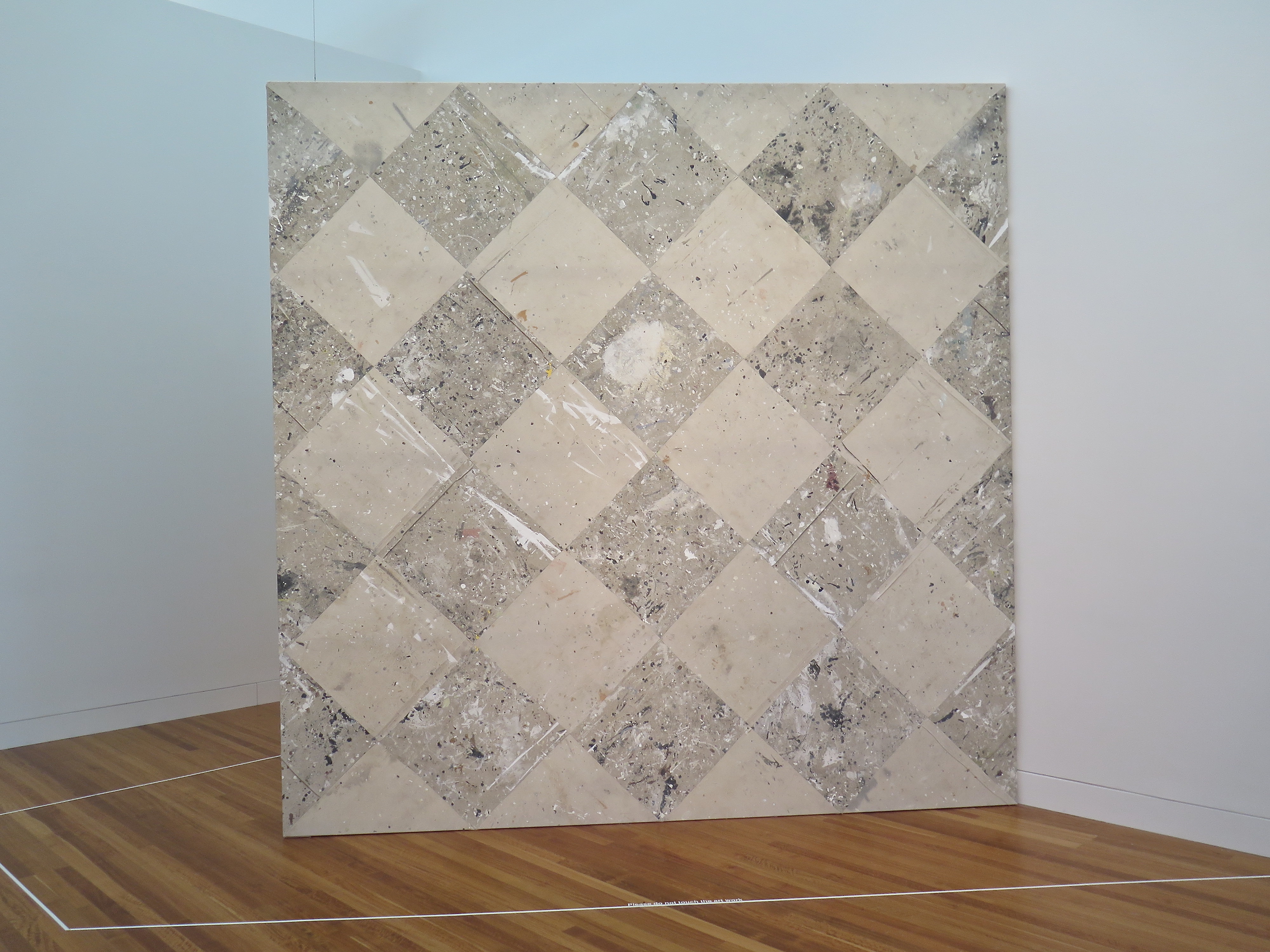
imagesChch also has a very fine art gallery which opened in 2003. It was designed to cope with earthquakes, being built on a concrete raft intended to evenly distribute seismic mutterings.

We’ve been there and loved it,IMG_0195

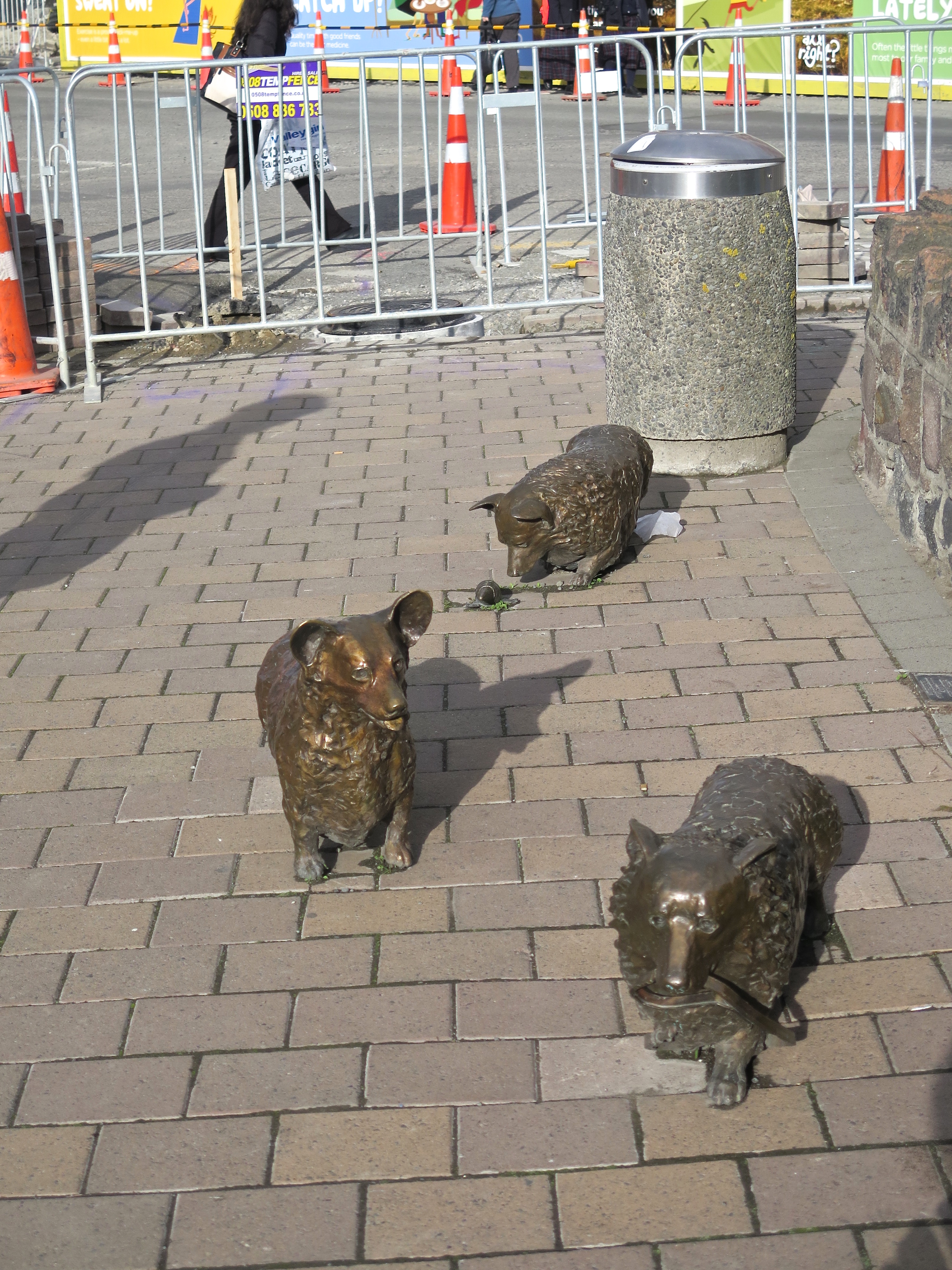
and we have also found the groovy part of town down High Street south east from the city: vodka bars, good coffee, nice places to sit, interesting passing parade, amateur art and a shop where I bought my all time favourite shirt owned by a former All Black who had headed off into the rag trade. You’ll know the spot. Near the corgis.IMG_1835IMG_0201


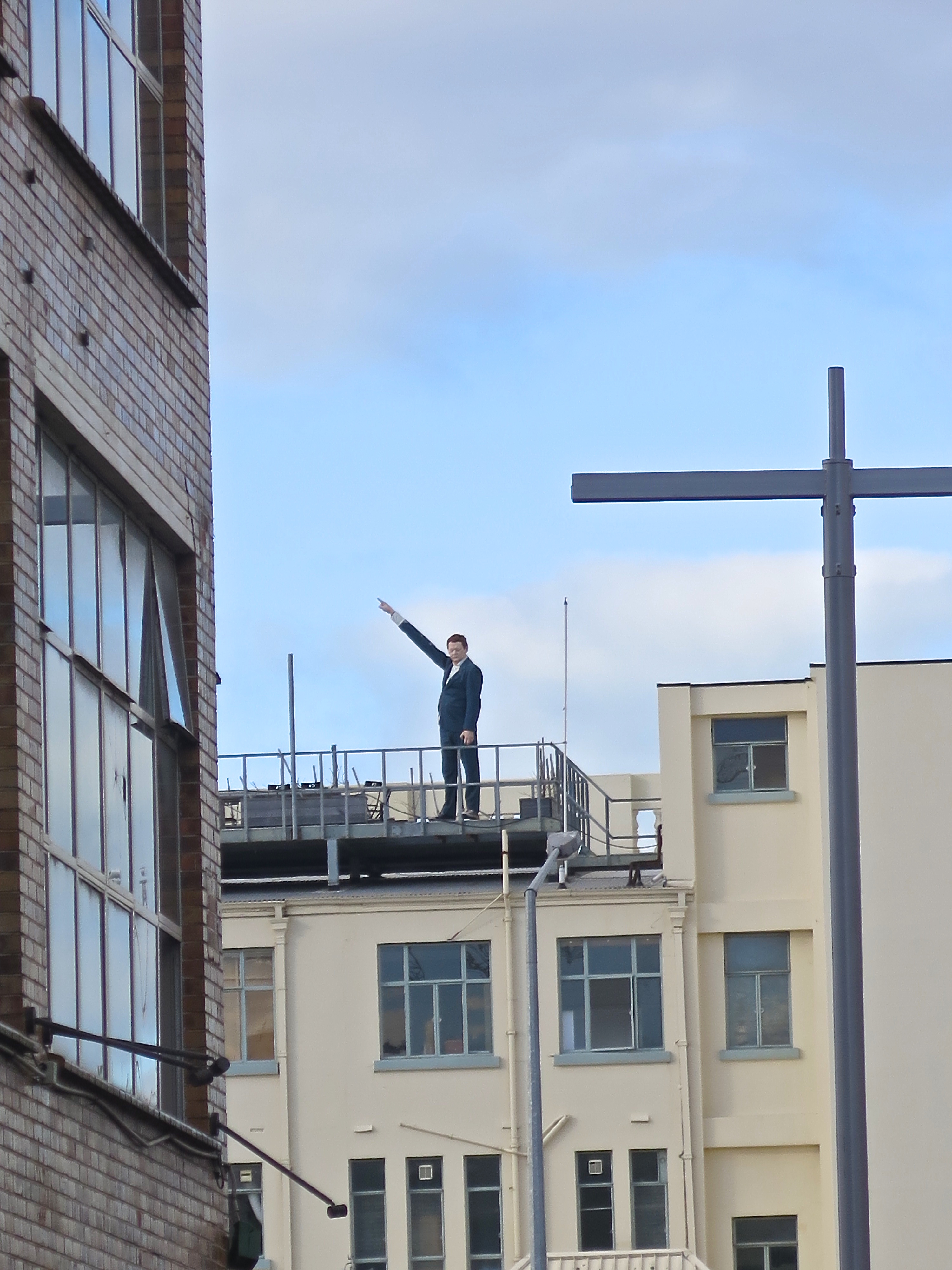
And then you look up, and just behind where Gill is sitting, instead of a very nice place to have breakfast, there’s this…IMG_1829

•• •• •• ••
IMG_1855

Signed ‘Fred Tunnecliffe, 2010’ and found in Freeman’s Restaurant, Lyttelton.

On 4 September 2010 4.35am a network of faults slid and yawned producing three major earthquakes almost simultaneously. Felt throughout New Zealand, the epicentre was 11 k.s under Charing Cross 40 k.s west of Chch. It was measured as being magnitude 7.1, equivalent to detonating more than five million tonnes of TNT. (For comparison the combined explosive force of the Hiroshima and Nagasaki atomic bombs was equivalent to the detonation of 33,000 tonnes of TNT.) This quake lasted 40 seconds — time it, add the noise and the very bizarre physical sensations, and tremble — and caused extensive damage to infrastructure. Power, sewerage and water supply were all seriously damaged. Many stone buildings heaved and cracked. 1,200 repairs to roads and traffic infrastructure were required mainly in the northern suburbs although following a diagonal line north-east south-west. Two people were injured, another died of a heart attack during the quake but it is not possible to assign it as the cause. Minor damage was reported from towns 400 k.s away. Subsequently four metres of sideways movement was measured between the two sides of this previously unknown fault.

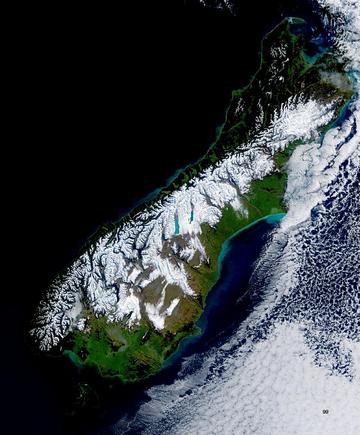
nasa_largeNew Zealanders are used to earthquakes. These after all are the ‘shakey isles’. The Southern Alps which form the spine of the South Island are one of the most visible and active examples of plate tectonics in the world. If you place a ruler on the snow line of the western side of this picture you will have discovered the Alpine Fault which has ruptured dramatically four times in the last 900 years, most recently in 1717. It is here that the Pacific and Indo-Australian plates meet and try to climb over each other. Intriguingly, the two islands are predominantly on different tectonic plates. 

Since 2010 there have been 27 quakes measured at 5.3 or (generally) higher, big quakes, in the country as a whole. In Christchurch itself the spire has been shaken off the cathedral several times in the last 100 years. A month after it was built in 1881 a tremor dislodged several blocks of ashlar from near the apex. Seven years later eight metres of the spire came down. But 2010 was a brutal example. 

Despite long term interest and intensive study, this fault had not appeared on the seismological maps. It was hidden under gravels and greywacke. Chch is under the cloud on the right of the photo, not obviously near the major faultline. But once this one was uncovered, a whole network of faults ‘all pointing at Christchurch’ became evident. Residents were warned of the likelihood of aftershocks and expected them. (Since then there have been more than 12,000. Twelve thousand.) However by Christmas most of the damage had been sorted out, the city was working, and much of the emotional bleeding had been staunched.

So when on 22 February 2011, a shake began at lunchtime, 12.51pm, it could have been an aftershock. But it wasn’t. Although measured in one way at 6.3, in terms of intensity and impact (on the alternative Mercalli scale) it became the strongest shock ever recorded in an urban area. It was shallow (under the Port Hills). What was breaking was very strong geologically, releasing even more energy. The shock waves didn’t bounce around but moved in the same direction actually gathering strength. And in a development which had not been seen before, the top layers of ground under the city were flipped off those which were deeper like an unsynchronised bounce on a trampoline, the shock of resettling intensifying the impact. Thirteen minutes later there was an aftershock of 5.8; less than two hours later one of 5.9. For an hour the ground barely stopped shaking. During that time the Port Hills in places became 40cm higher.

Ninety percent of the 600 or so CBD buildings were destroyed or rendered unusable. 12,000 properties registered damage exceeding $100,000. The tremors cracked and brought down masonry buildings, brittle regardless of their footings. IMG_1825185 people died, the majority of them in two office buildings which folded into themselves like layers of pancake. Millefeuille. One memorial, 185 empty chairs, is at right.

The earlier quake had generated 1,200 road repair sites. This one had created 38,000 if you could be bothered counting. You could just say whole areas like the northern suburbs and the region that lies between the city and the coast were stuffed: Dallington, Bromley, Bexley, Brighton, Sumner, Woolston, Mt Pleasant. Because while the tremors destroyed buildings via shaking, they were also creative.

708541Some of the most memorable photos are of the consequences of liquefaction, apparently firm soil being shaken so that it becomes a tide of silty sand with characteristics of liquid. Whole houses sunk metres into this material. The Avon became a grey trough in hundreds of hectares of ‘flood’.

The earthquake-proof Art Gallery which survived the shaking and was used as a command centre during the early stages of the aftermath, was discovered to be sitting on liquified soil. The whole thing had tilted and become unstable. It has been jacked up (much of the engineering in action in Chch is astonishing) and it will be put on base isolators, but it is still out of commission. 322,000 tonnes of liquefaction silt have been removed. As a result of this experience substantial sections of the city may be declared out of bounds for building. Just think of the legal and financial ramifications of that.

Nearer the hills there were massive landslips. One chased down the steep hill immediately behind Redcliffs School threatening the infants’ block. A teacher at the school describes being bounced up and down, ‘a foot or more’, as she tried to stand in a doorway hanging onto the door posts eventually leaving deep finger nail marks in the wood, but powerless to get to her students to help them. Fortunately the children all escaped harm.

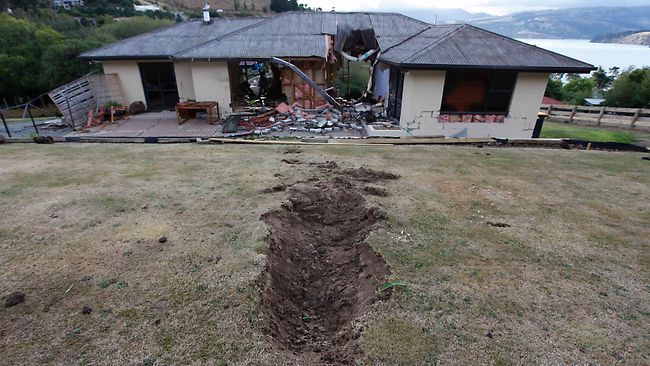
Stray boulders wreaked their own damage.315116-christchurch-lyttleton-earthquake One which had followed a trajectory like this was named ‘Rocky’ and sold on eBay for $60,000, a contribution to the recovery fund. So very New Zealand-ish.

IMG_1863Ballantyne’s department store (below) was one of the few CBD buildings to survive the quake and despite still being surrounded by space and remnant devastation it’s a going concern. Sometime after the quake while they were trying to retrieve some semblance of order in the shop, the manager provided free buses fitted out with champagne to take customers on day trips to the Ballantyne’s in Timaru 165k.s away.

And that’s the sort of thing that makes New Zealand one of the world’s great countries: make-do, can-do, will-do all at once, with a bit of good humour tossed in — all the qualities you need to live at the end of the earth. While the wooden roof trusses over the Wharenui pool were flexing 30 or 40 cms, the kids in the pool had to be forcibly persuaded to leave because they were enjoying the waves slopping over the sides so much.

•• •• •• ••

So in the hard flat winter light of 42 degrees south what does Chch look like now four and half years later?

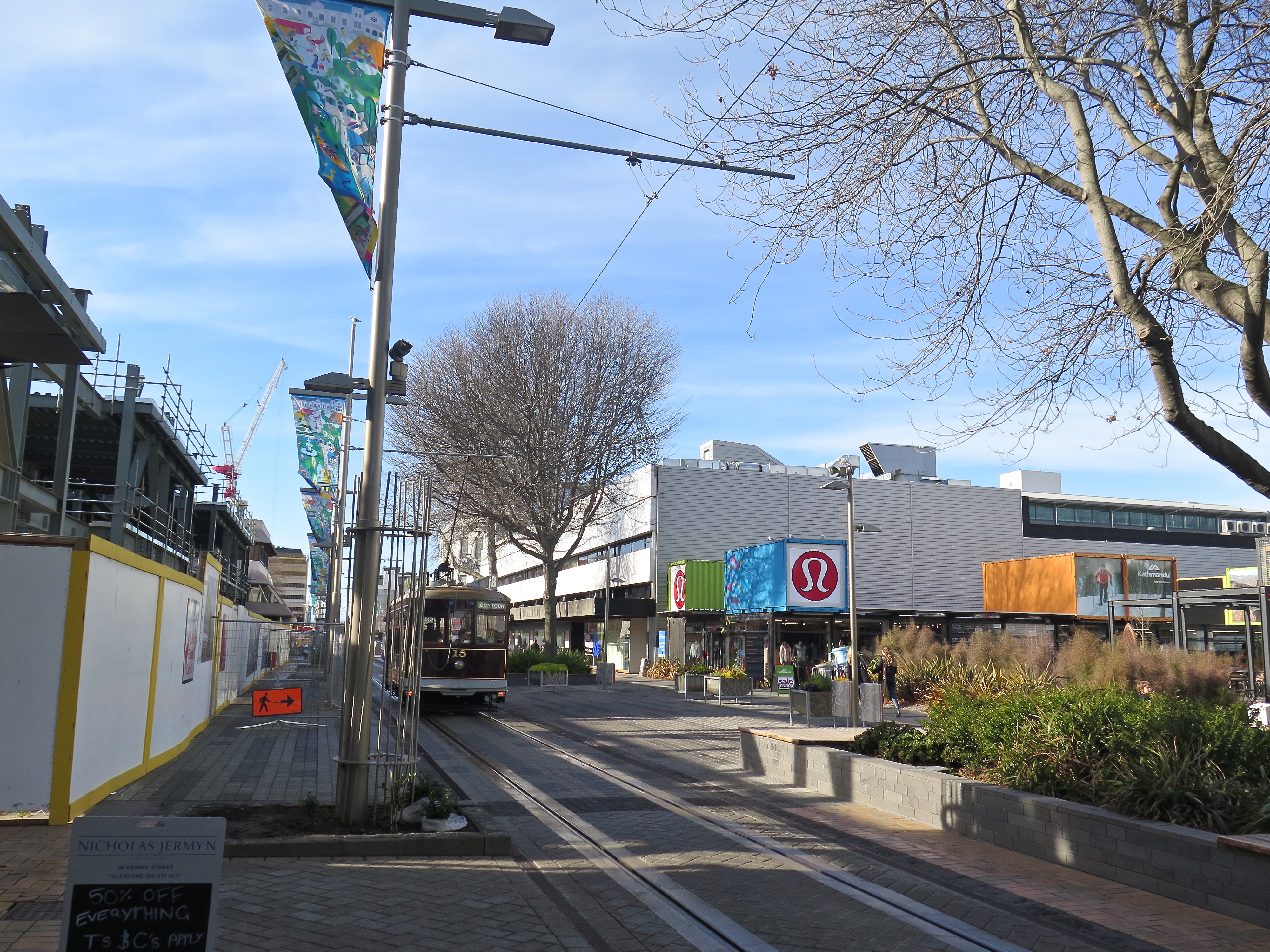
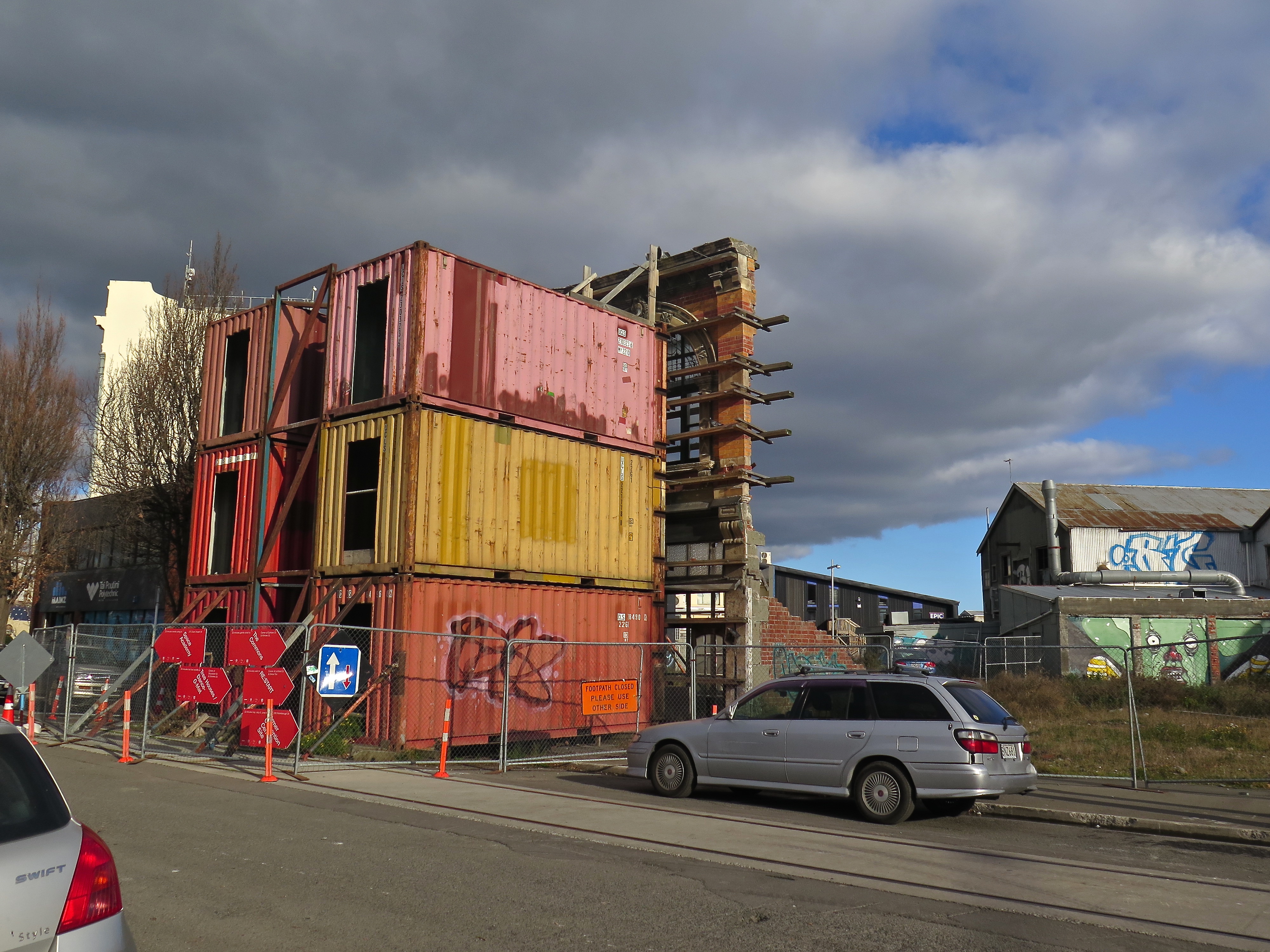
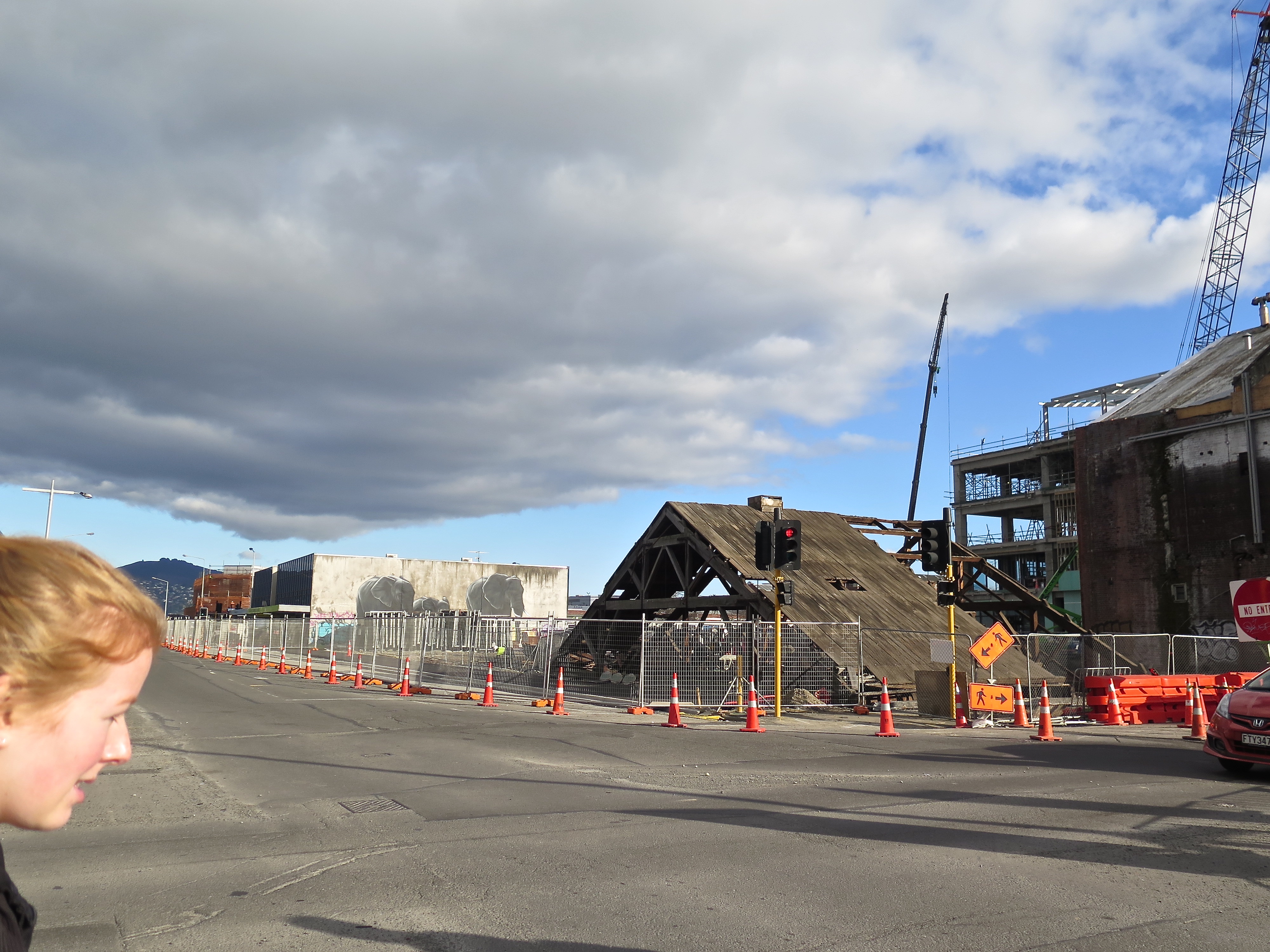
It looks like shipping containers and chain link fencing. The containers play a role in propping up bits of heritage or serving as a basis for ‘Re-start’ the shopping centre on the edge of what was the CBD.

IMG_1831IMG_1887IMG_1844It looks like a demolition site.IMG_1912
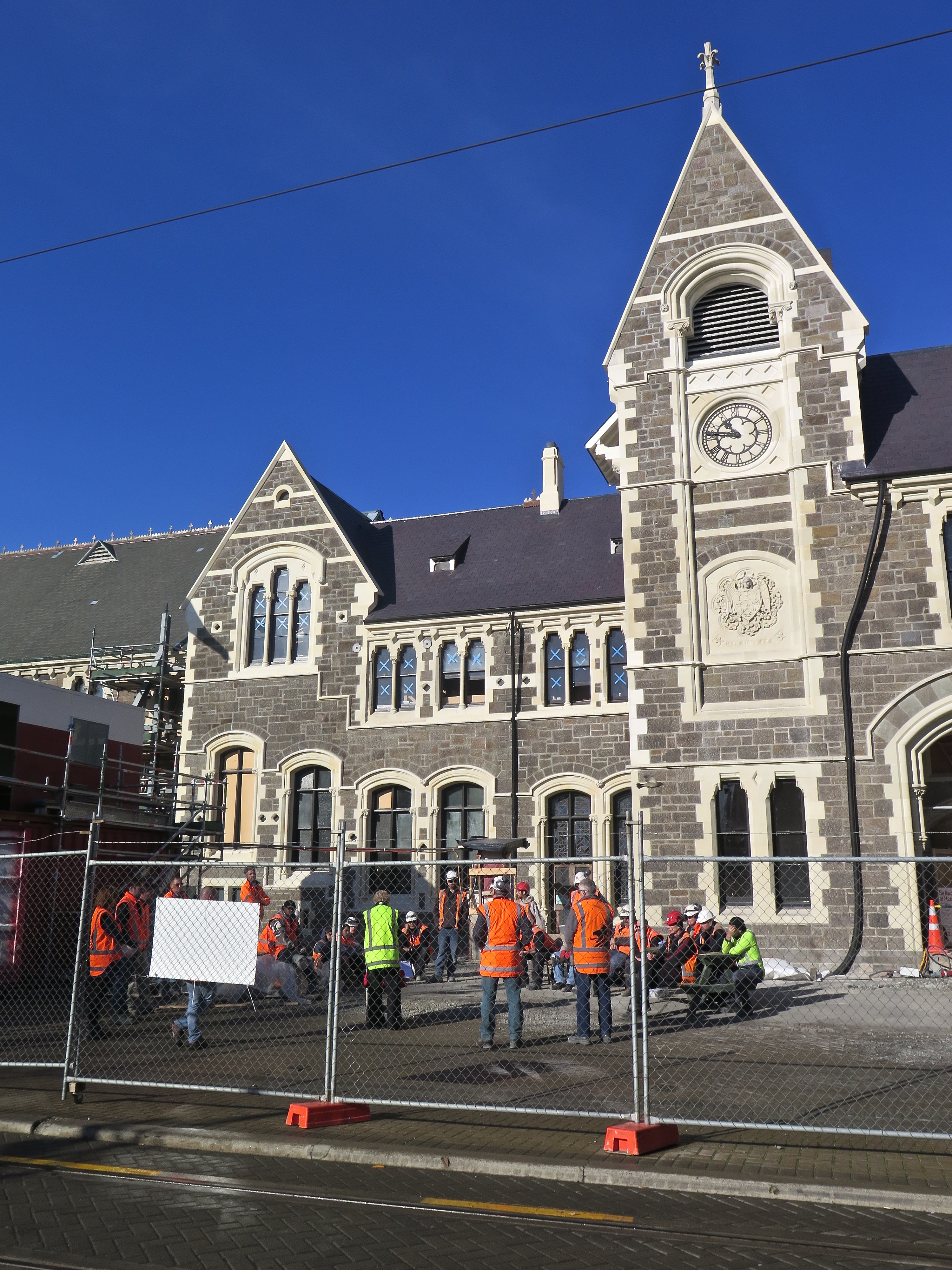
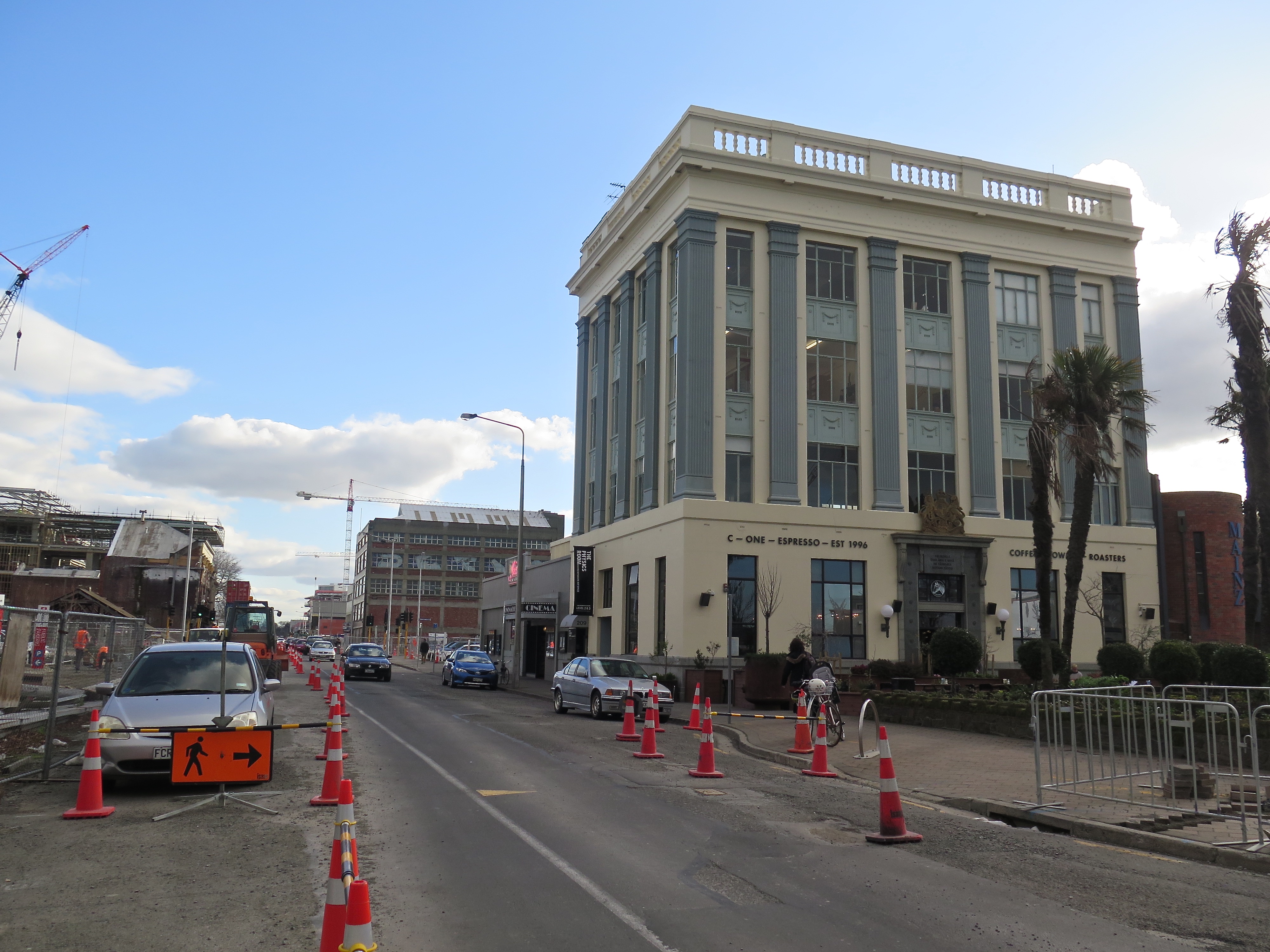
IMG_1819You look at a building and think, ah good fortune. That one got away. And then you look a bit closer and there’s windows missing, there’s bracing along one or more walls, the signage is broken and some of the kilometres of chainlink fence that is still everywhere in the city is keeping you away from ground level nearby. Despite not being wrapped in plastic like most of them are, it’s waiting for demolition. This also applies if in a more complex way to heritage buildings. The cathedral will not be saved in anything like recognisable form but the old Arts Centre might be.IMG_1856


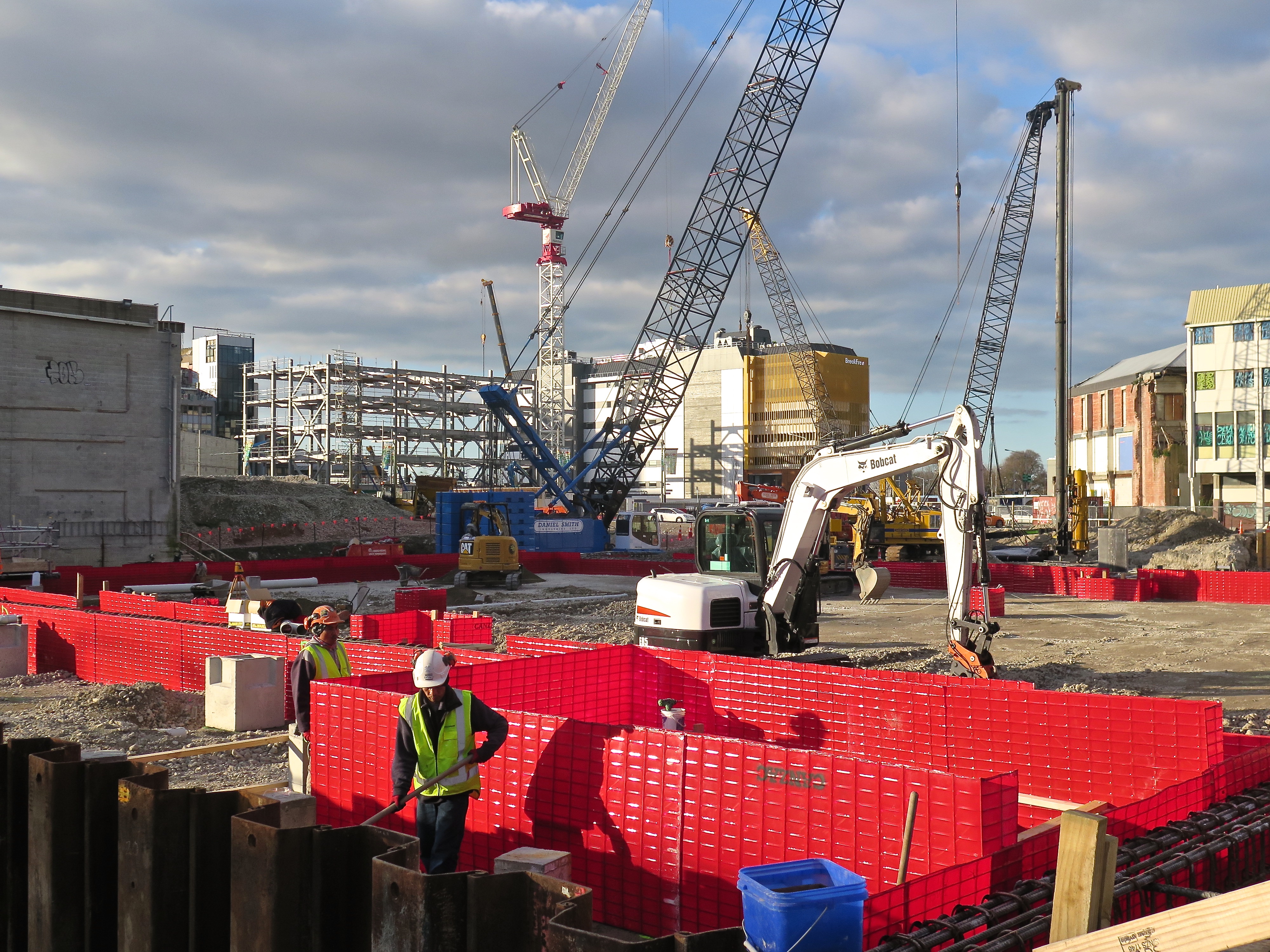
It looks like a construction site.

IMG_1849

If you want a job and know anything about construction, I would consider relocating to Chch. I think I read in the paper that 4000 skilled and semi-skilled Filipino workers had been brought in to work on repairs and new projects. Certainly wherever you look, in the city, in the suburbs, out of town, building is in train. But decades of work remain. I suppose until the money runs out. The Wallabies won’t be playing in Chch again until a new stadium is built. For that $500m. is required.

IMG_1888

It’s also a place to see remarkable engineering. Look at the steel in this pier (at left). The rod is as thick as your arm. And, as it happens, that might be one of the Filipino workers.

IMG_1865This is a bit hard to see but instead of adhering to standard contemporary versions of post and lintel construction using heavy materials like reinforced concrete these buildings are being built on steel frames, webbed or holed for lightness, designed to flex laterally to absorb shaking motions. It’s all so clever. Clever, but slow.

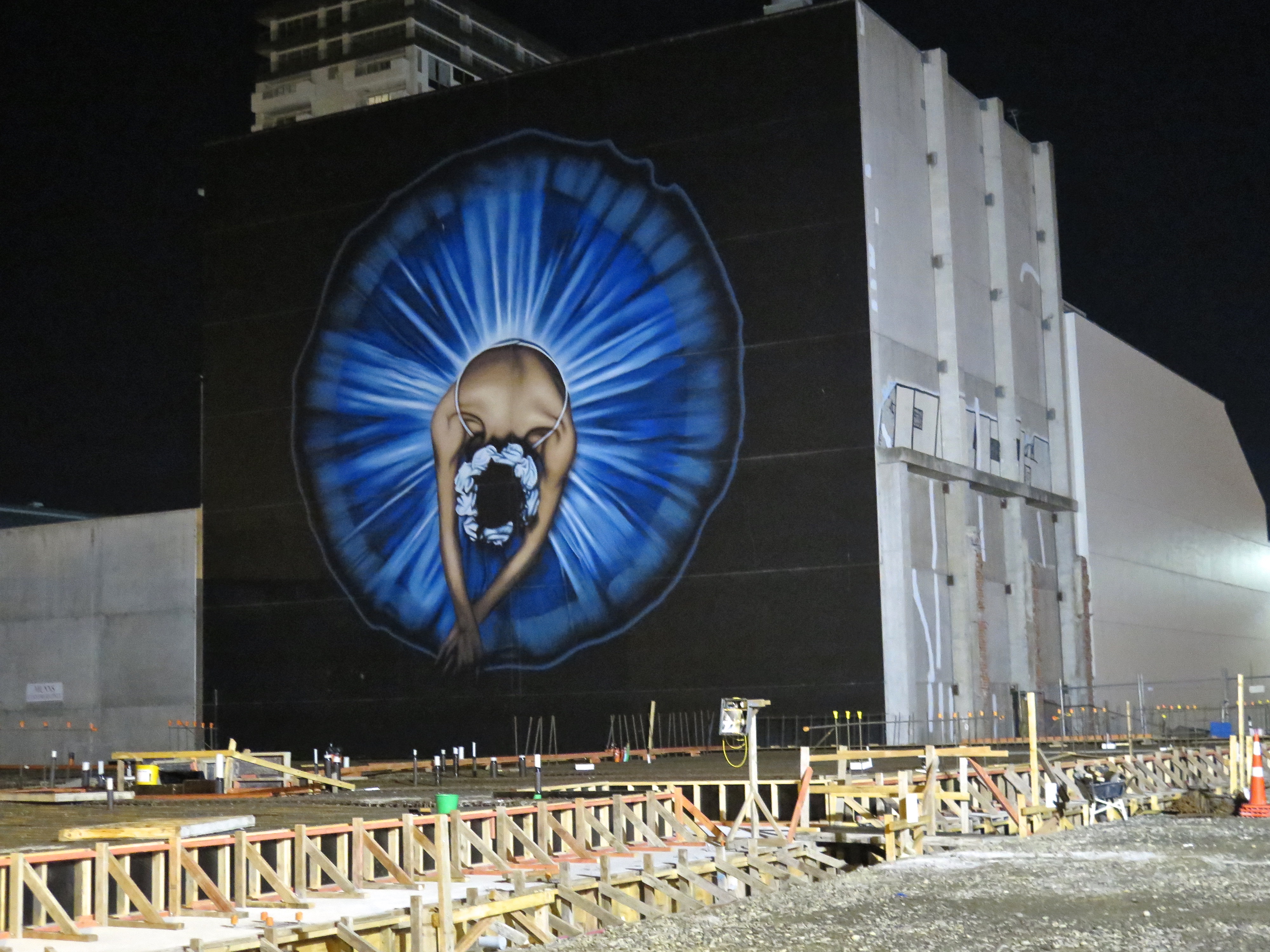
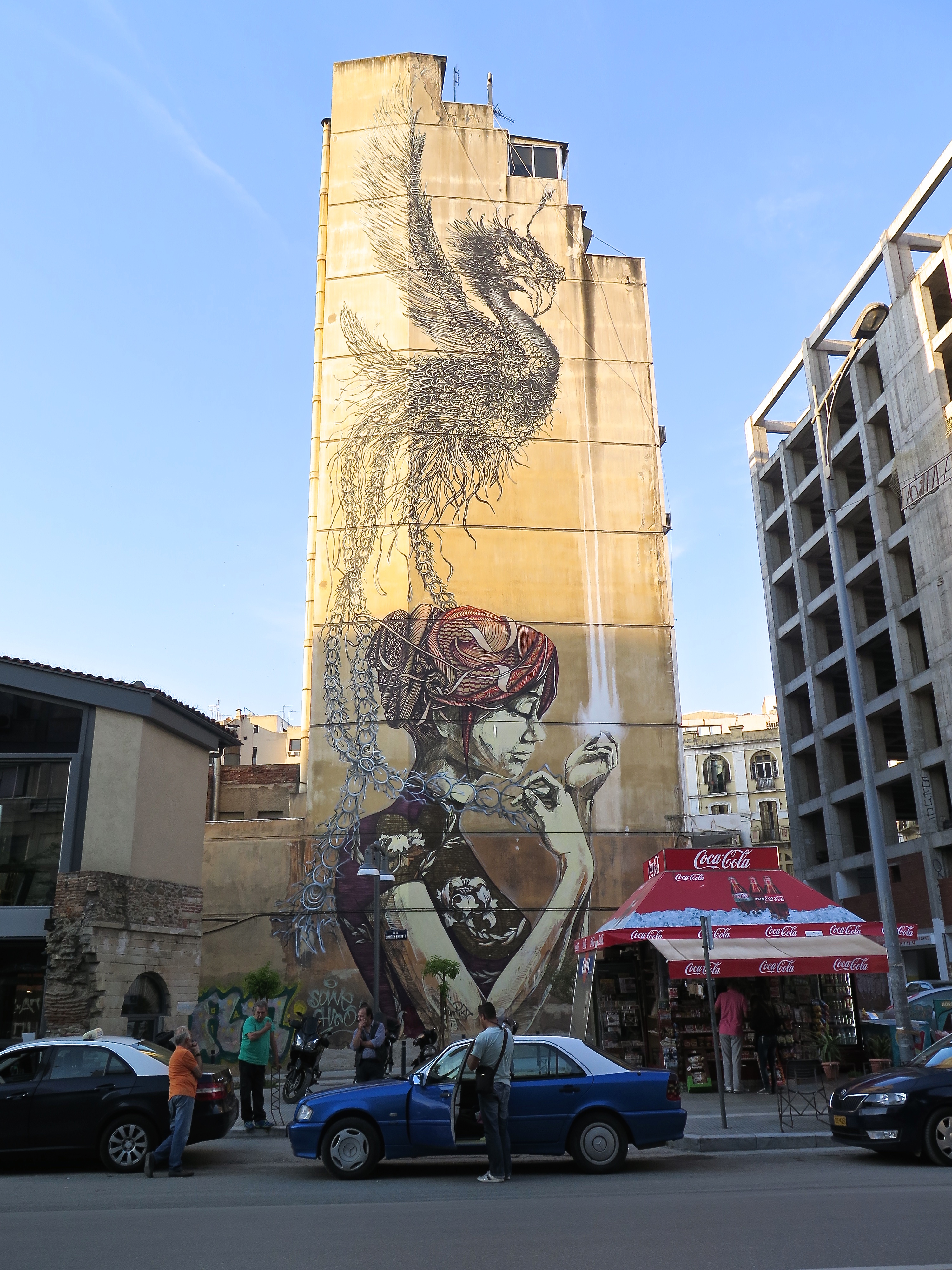
It looks like street art.

IMG_1891

Above is the back of our ostensible destination, the Isaac Theatre Royal reopened, a real quality restoration job, for a performance of Madama Butterfly, the first return of opera to Chch.IMG_1824

IMG_2004

IMG_1846


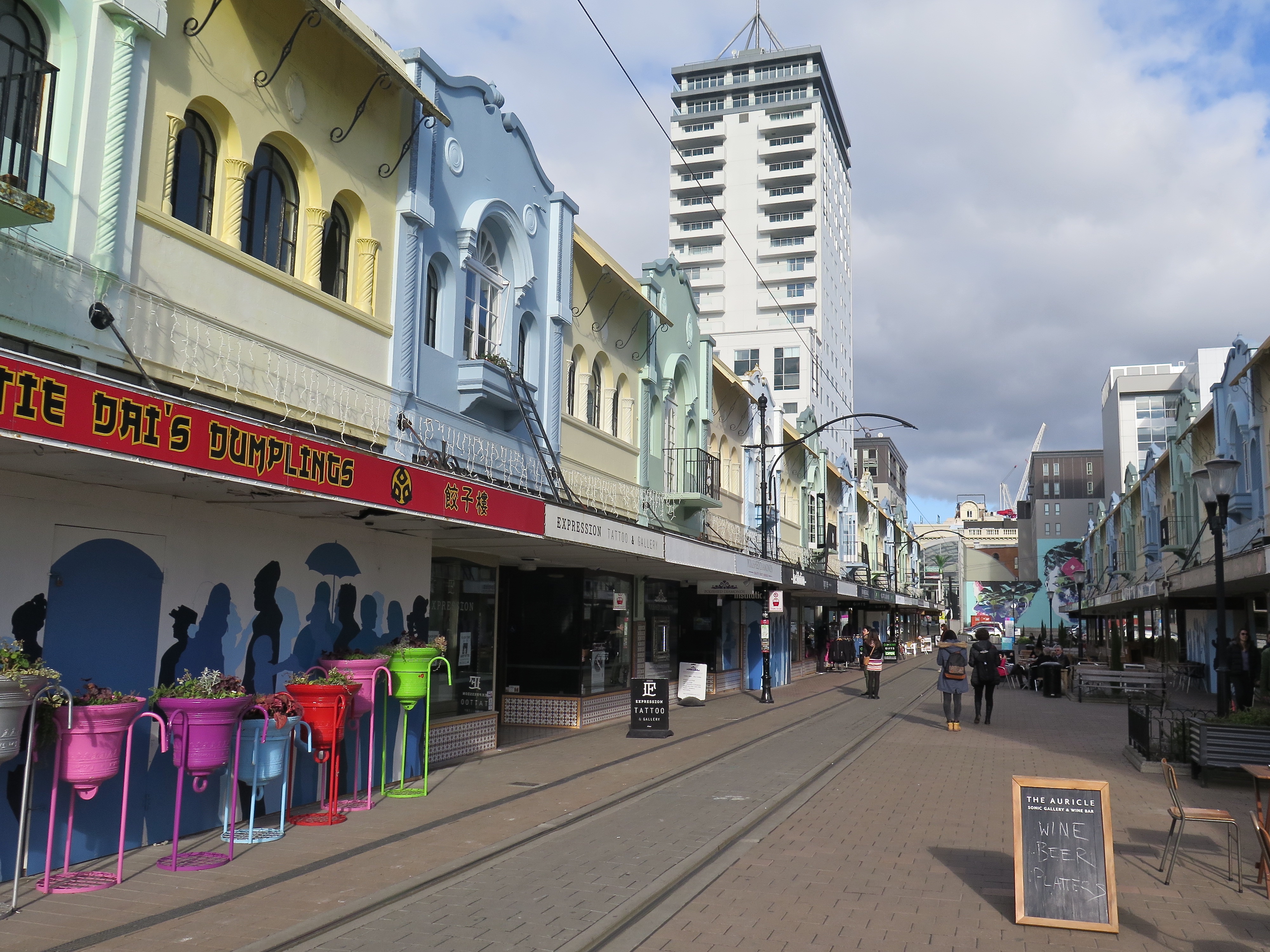
It looks like some places got off lightly. As Myrna said of the Victorian terraces of New Regent St, a street surrounded by air, they seem to be pretending that nothing has happened.IMG_1820IMG_1838And one of your very best coffee shops somehow survived largely unscathed. The management takes splendid potshots at the Minister for Canterbury Earthquake Recovery. As it happens the cafe is next to the corgis and as well as in very funny print, its sentiments are expressed on the seat Gill was sitting on.IMG_1908•• •• •• ••

How could the reconstruction have been uncontroversial? 
The recovery effort required was and is massive, both in the initial emergency but also afterwards. ‘The earthquakes’, says The Press, Christchurch’s major newspaper, ‘released a surge of community feeling and creative optimism. Christchurch was going to rebuild itself as a liveable, sustainable, adventurous, 21st century city.’

And that hasn’t happened. Yet at least. For a time united by the tragedy and its scale, the City Council and the national government have more recently been at loggerheads. Inevitably. Restoration has been slow. Insurers haven’t been as forthcoming as they might. Legal wrangling over complex property arrangements has slowed things down, along with what is claimed, as always, to be excessive bureaucratic oversight and interference. Heritage issues emerge regularly.

And no one has forgotten. In the first edition of The Press I read on this visit there were earthquake stories on 7 of the first 10 pages. Everyone we spoke to had a story. Of course they would have. 

But what has happened in those four and half years is that the locus of the city has shifted. The shopping action is in Riccarton, a suburb in the west which was considerably less affected than than the centre or the east. South of the city between Brougham St and Moorhouse Avenue now looks like the entry strip to a minor American state capital: tilt block, garish, fast food, fast furniture, fast tiles and hardware, fast garden stuff and fast anything else you might want to buy. It’s not so English any more. 

IMG_2006There’s a message here about good intentions and rational process. When you’re trying to normalise your life, the sustainable, adventurous, 21st century city will be made to wait. It will get trampled in the rush to stop the wall wobbling, to get water coming through the pipes, and to be able to buy a pizza more or less at will. But I hope something more is left of these splendid aspirations than a whopping big new convention centre. 

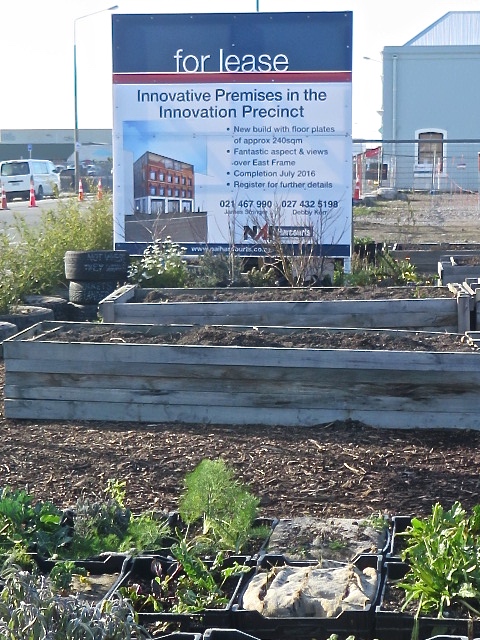
And this might just be me, but I would try to steer clear of Innovative Premises in the Innovation Precinct. That’s not New Zealand-ish. Not remotely.

Meanwhile … recovery, from what? A slip in the Alpine Fault may be close to due. Last time it produced a lateral movement of 8 metres combined with a vertical motion of two metres. This would dwarf the scale of anything that happened in 2011 and make a dreadful mess of probably all the scattered settlement on the west coast. The Hope Fault which runs not far north of Christchurch through Kaikoura shifts on average every 140 years. The last occurrence was in 1888. That’s the quake that shook the top off the spire.

So the other message has to be about our idea of permanence and its complement, the tractability of nature. As Joe Bennett writes in the preface to The Press‘s excellent book on the subject, ‘The quake brought Christchurch face to face with a harsh and simple truth: we live on the cooling crust of a molten planet and it is utterly indifferent to our well being. We are, in short, like ticks on a rhino.’

And that view, my friends, can be relied on. Solid as rock.IMG_1839

•• •• •• ••

And now for something more cheerful, a short love letter to NZ.

The Pleasures of Humankind

What can be learnt from the following?
Iloki Podrumi, Ilok, Croatia.IMG_0765


Dwa Jelena, Belgrade, Serbia.

IMG_0612


Gmeokellar, Vienna, Austria.

gastraum saal


Barley Mow, Clifton Hampden, England.IMG_1308


You could have said, beer. Six points for that.

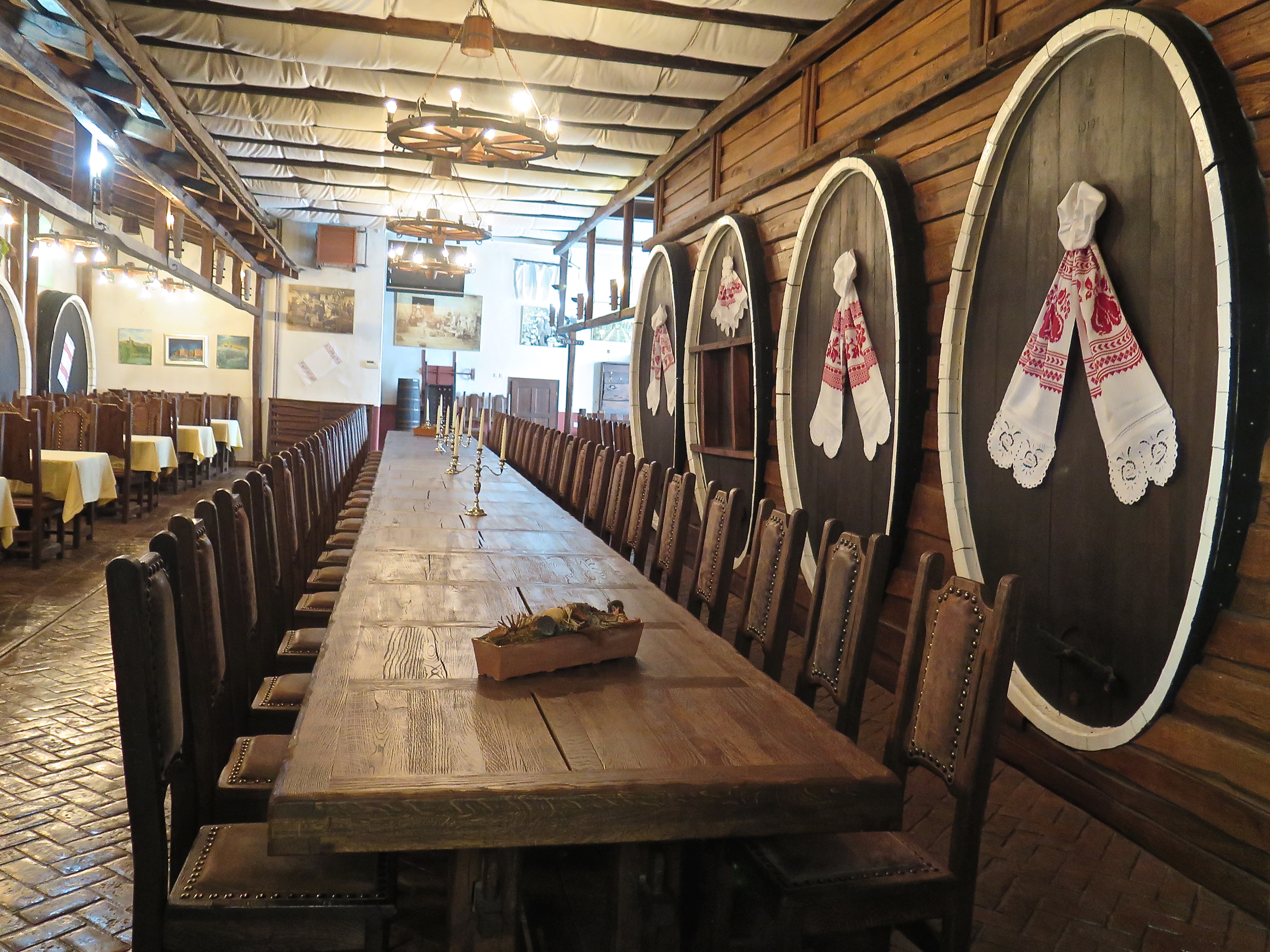
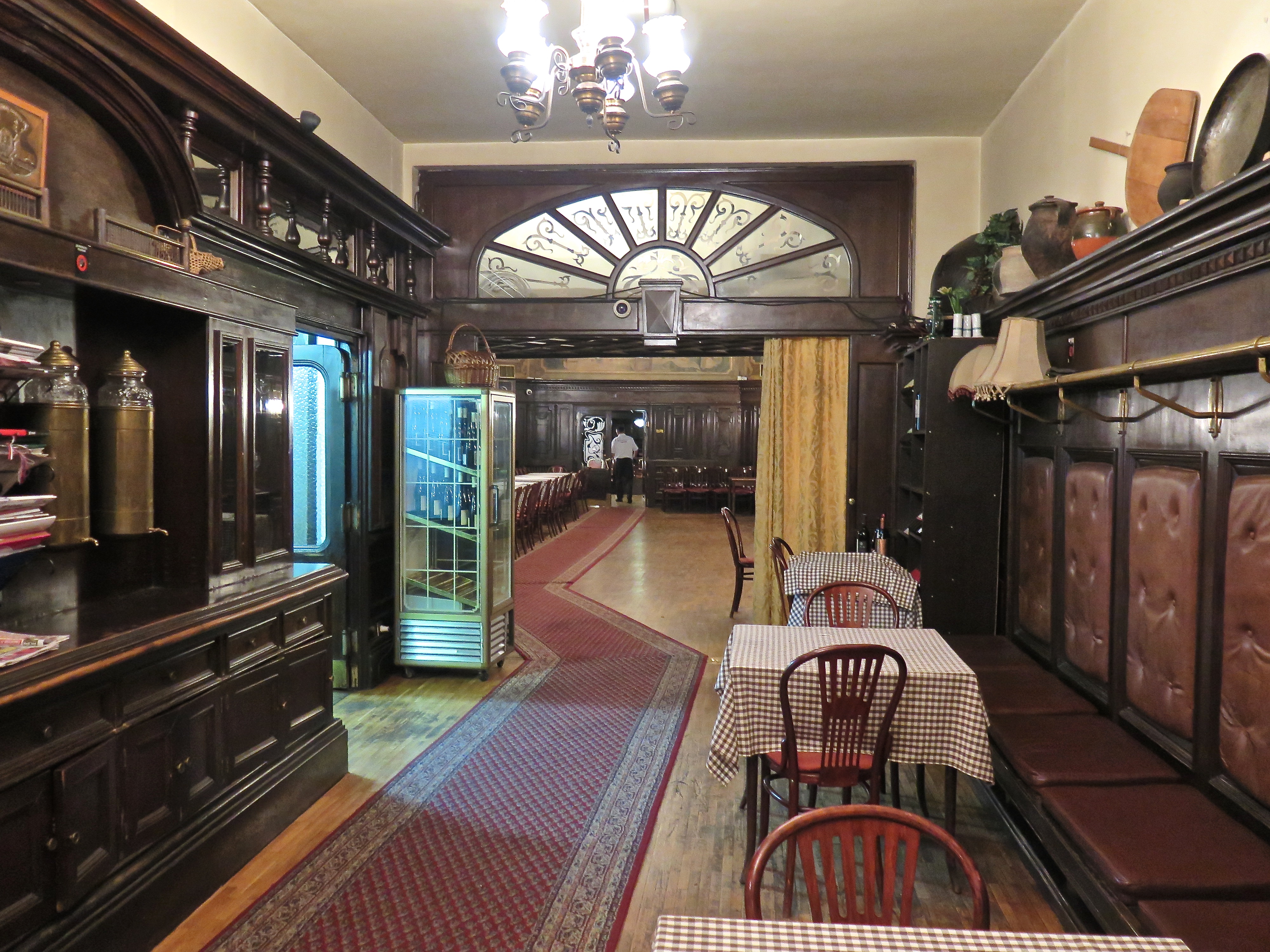
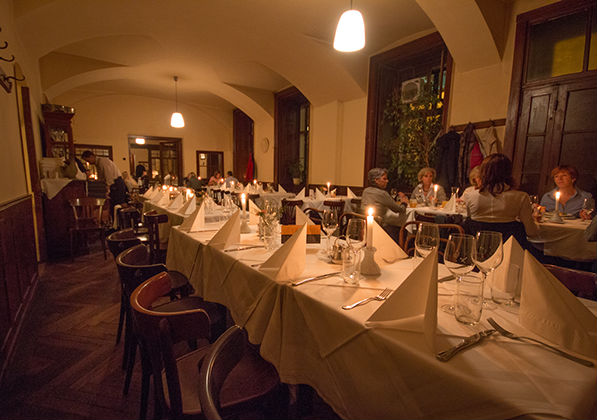
But I think it might be humankind’s desire to recreate the comfortable cave, to share each other’s company with, by and large, good cheer. Had a very good time in each of these.

It is also possible they may share staff.IMG_1314

•• •• •• ••

And I’m putting this in just because.

We met in a small village near Krušedol. She wanted to know who I was and why I was there. She hadn’t heard of Australia and I didn’t know much about where she lived. But she did a fine line in curiosity. Bless her heart.IMG_0651

And, now we cross the border.

On Being Serbian

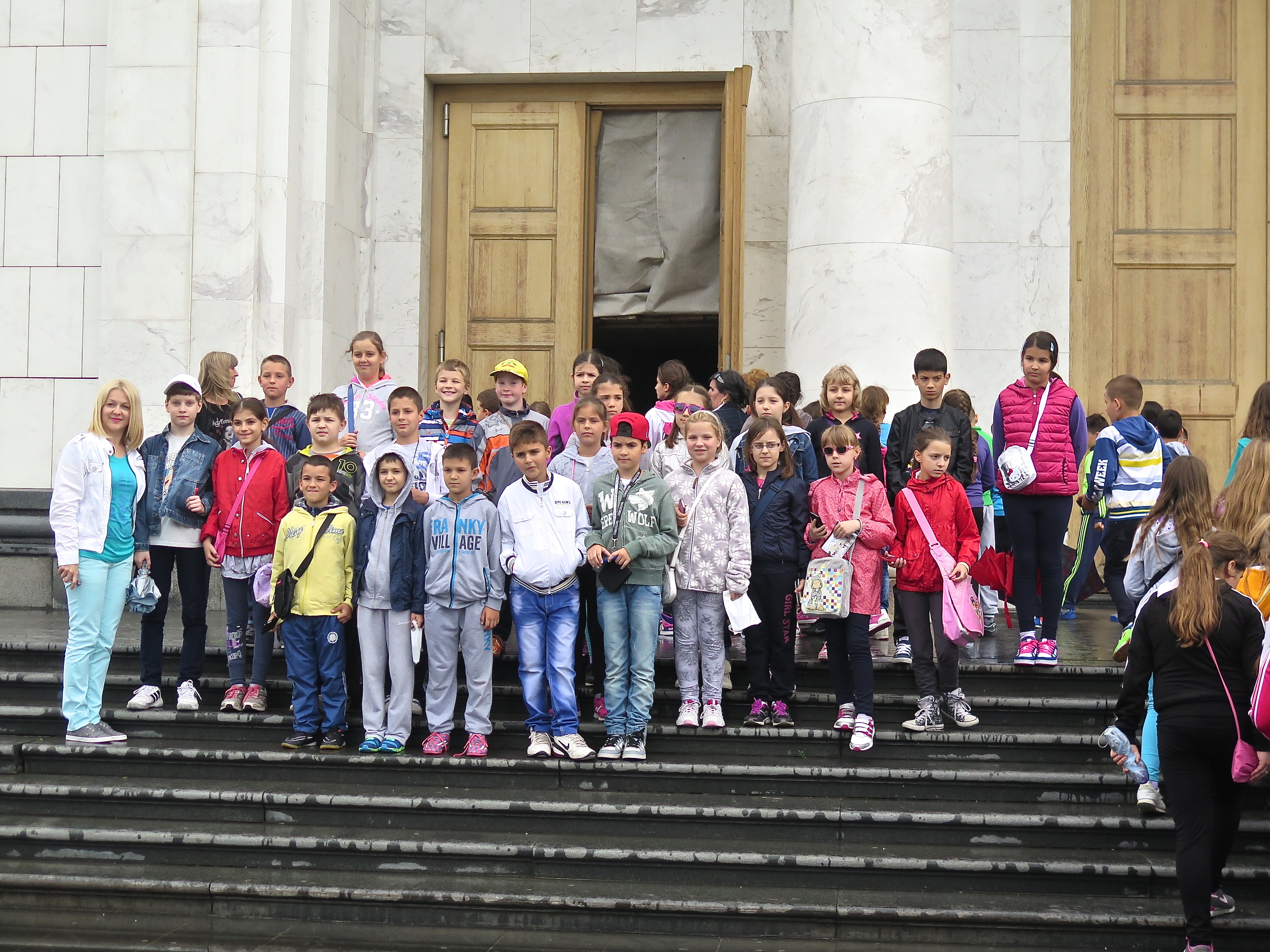
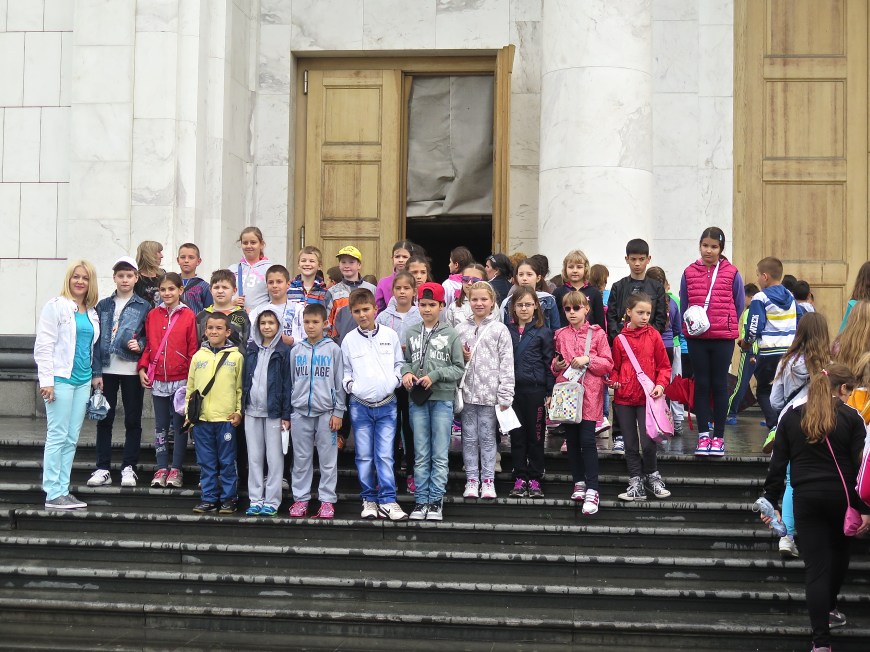
IMG_0626A class of Serbian kids on the steps of St Sava.

We arrived in Belgrade and it was raining for the first time since we had left home. 

The road from the airport to the old city is a highway through the new-ish and ordered suburbs on the west bank of the Sava, the Pannonian Plain side of Belgrade. Light industry, government buildings, tower blocks, wide streets. You cross the Sava and you’re in the Balkans. There was a bit of ducking and weaving through the old town — graffiti ubiquitous, mostly football team and Kosovo related we were told — and there we were, at 88 Rooms, Ulica Takovska.

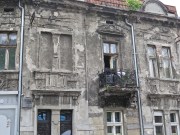
It was work experience day at the desk which produced a fair amount of fumbling. As can happen, an older girl/young woman held the keys to the kingdom, knew everything, fixed everything, organized everything. 88 Rooms is a new building in an old area. IMG_0601This was the view out our window. The hotel was new but not well made — cheap materials, careless work. The strike plate of our door lock fell off as we opened it. Too much drilling had left no wood for the screws to bite. A bit of that.
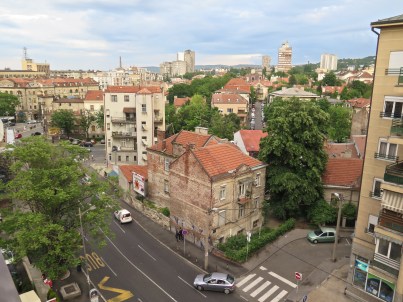
We walked down to Skardalija, the liveliest bit of a lively city. IMG_0603Down this street.
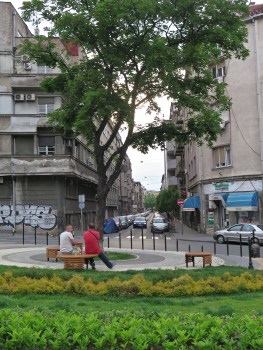


Past these men.

IMG_0619

But not yet these men. What champs.
IMG_0645

To here.IMG_0608

It looks like a Tourism Belgrade photo but it’s no fake. That’s how it was. The heart of good cheer and great Balkan music. Serbian music I’d better say. Our waiter at Dwa Jelena (Two Deer, founded in 1832 by hunters who came in with … so the story goes. Džejmi Oliver has cooked there.) couldn’t have been more helpful. Long day, big trip, first night new city, the chances of making a complete dick of yourself are profound.

imagesHe found us some nice wine, excellent bread, a good salad and this dish: four or five types of grilled meat on a bed of roast potatoes. Not complicated, very well rehearsed — probably sell 120 of those a night — but delicious. Then he talked us into having some cherry pie. This cherry pie became the benchmark for all culinary experience, subsequent and previous. We went back for another one a night or two later and it was ordinary. Isn’t that just life.

We had a terrific night, walked home and slept like a log in a good Serbian bed. I had organized a guide for the morning, a couple of hours round Belgrade.

•• •• •• ••

The correct name for Belgrade, our name, is Beograd or White City. There are many ideas for its source, but I think for the walls of the magnificent fort where the rivers Sava and Danube connect. Perhaps also for the beauty of the many buildings which have been destroyed over the years.

The history of White City begins 9000 years of continuous occupation. It has been called Singidun and some people say that it was established by Celtic invasions from central Europe [from the Halstatt people in 279 BC. ‘Dun’ is Celtic for ‘fort or ‘town’.]. The Romans were here [first and second centuries AD, and called it Singidunum] but there is good evidence to say that the occupation of this area by Serbs has been continuous over 9000 years. Some people say it was the invasion of the Slavs from the north, but I believe the Serbian Slavs were probably here already.

You must understand this is our home. We were here first and always.
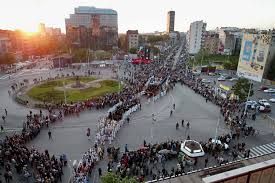
imagesRepublic Square. This is where we gather when we are happy, or sad. Or angry. Serbs will always tell you how they feel. Our language has been described as the purest and easiest to manage of any. Can you hear the music in it? I think you find it so. These streets we are in, Belgrade streets, are renowned as the safest in the world. We have no trouble here. This is interesting and ironical because many people also say we are the best fighters.

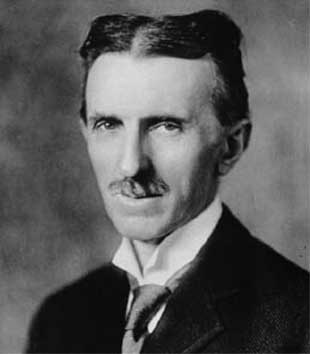
Nicola Tesla Museum. tesla64Nicola Tesla was an authentic Serbian genius. He is the father of alternating current and many dozens of patents of universal importance. He is proof of the quality of Serbian scientific thinking. [Tesla: born to Serbian parents in a Croatian town, went to university in Graz, Austria, lived in Slovenia and Czechoslovakia, migrated to the US at the age of 28, became a naturalized US citizen at the age of 35.] Like many of our achievements no one gives us credit for what is obvious. So much so, you could suspect that it is part of a deliberate plot. I don’t say that it is. I just want to tell you what I think you need to understand.
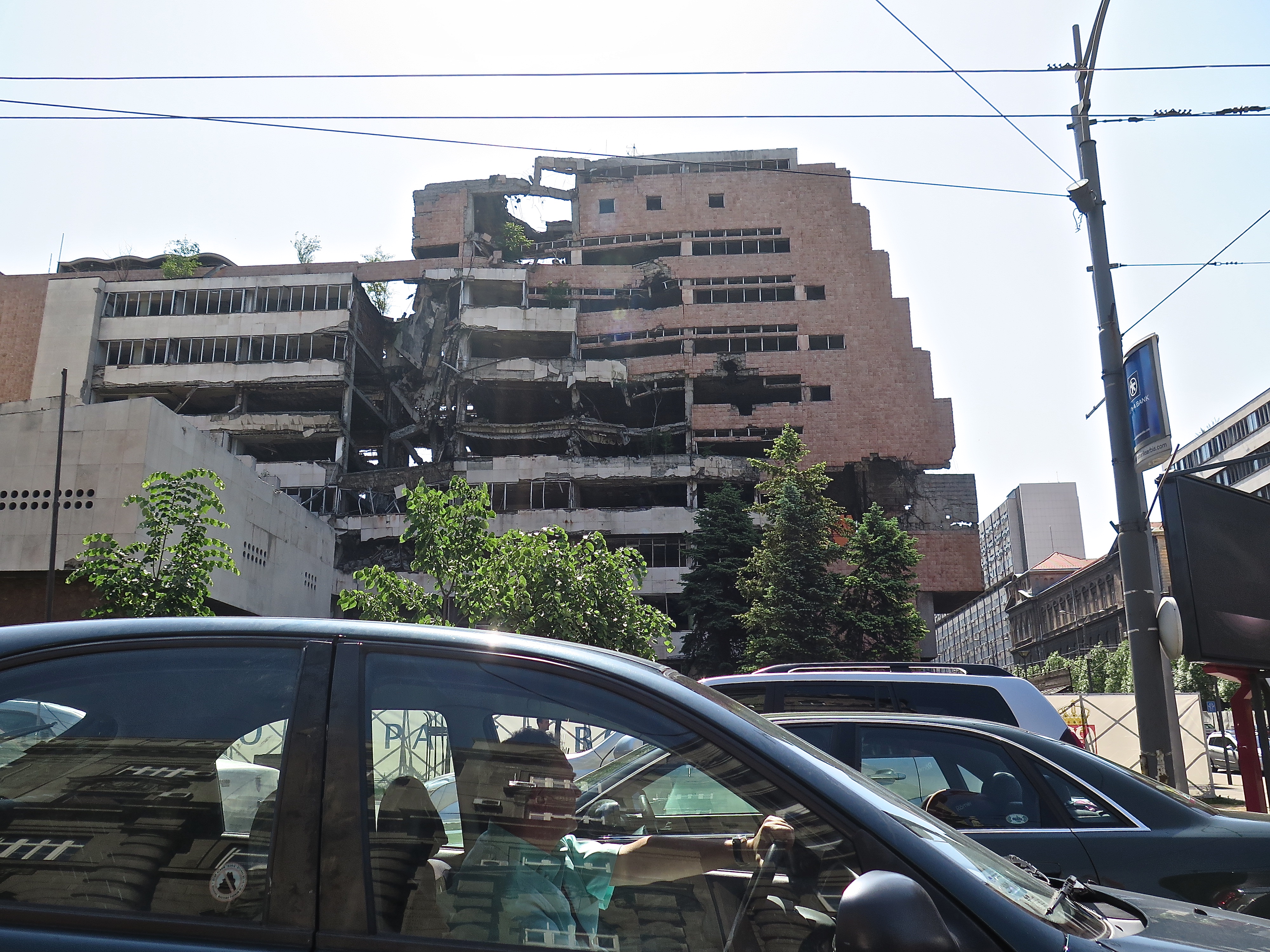
For example, you must understand that Belgrade has been destroyed by war and razed to the ground 44 [or depending on the source 38 or 52] times, and every time the spirit of the Serbian people and our determination to preserve our homeland has meant that it was rebuilt. Do you know any other city in the world that could say that? More than 40 different armies have tried to conquer Serbia, and we have outlasted them all. Even though many of our most beautiful and historic buildings are no longer, the soul of Belgrade is immortal. That is what the empirical evidence tells us.

We are a small people who as a Serbian poet has noted have the bad luck that our forefathers ‘built a home in the middle of the road’. Many centuries ago, they settled in the middle of Balkans, in the middle of the main road that leads from Central Europe to Central Asia, the Middle East and North Africa. It is the southern flank in any invader’s attack on Russia. To invade any country, to win any war in Europe, or the Middle East you must go through Serbia. It is the crossroads of the world, and yet our identity is still very strong.

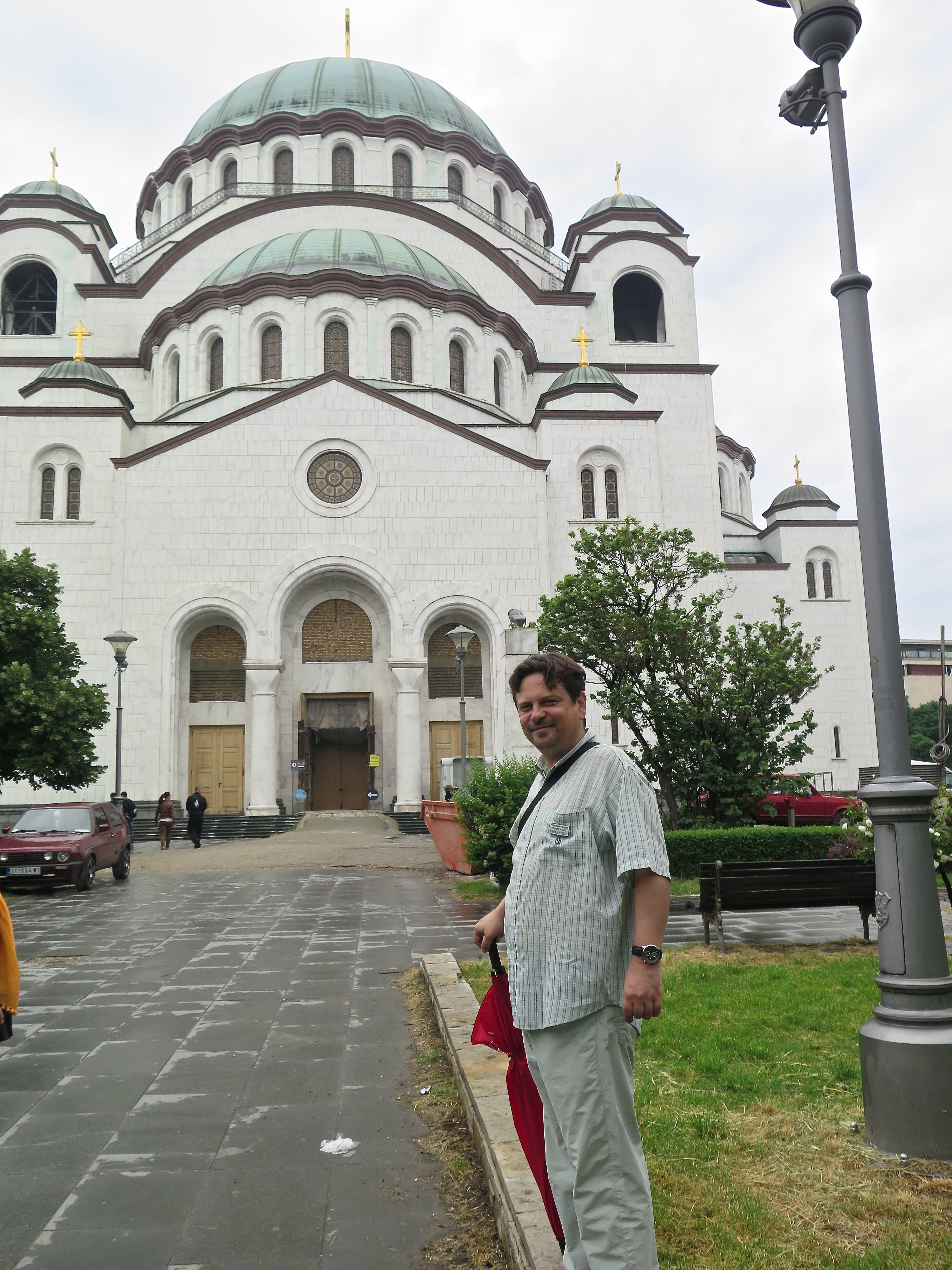
And now the basilica of St Sava, for me the heart and soul of Belgrade.
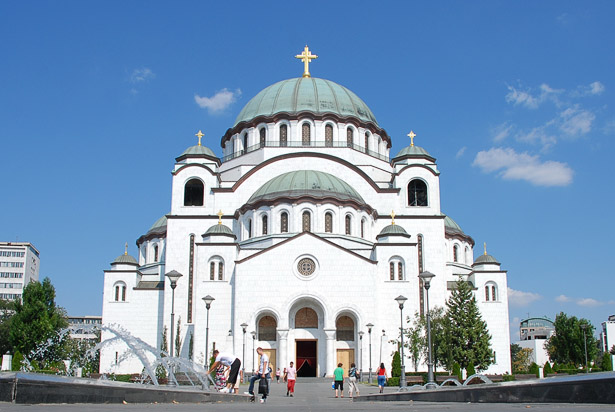
The Cathedral of Saint Sava is an Orthodox church in Belgrade, the capital of Serbia, the largest in the world. The church is dedicated to Saint Sava, founder of the Serbian Orthodox Church and an important figure in medieval Serbia. It is built on the Vracar plateau, on the location where his remains are thought to have been burned in 1595 by the Ottoman Empire's Sinan Pasha. From its location, it dominates Belgrade's cityscape, and is perhaps the most monumental building in the city. The building of the church structure is being financed exclusively by donations. The parish home is nearby, as will be the planned patriarchal building. http://en.wikipedia.org/wiki/Cathedral_of_Saint_Sava http://www.hramsvetogsave.com http://en.wikipedia.org/wiki/Saint_Sava
After fighting his brothers, Stefan Nemanja came to the throne in 1170. He had the title of ‘veliki zupan’. [like ‘prince’. He later became ‘Despot’, which has a technical meaning quite unlike its common usage in English. We spent quite a lot of time walking down Despot Stephen Street.] He began restoring the Serbian state in the Raska region and constructed many monasteries.

Stefan Nemanja’s successor was his middle son Stefan, while his youngest son Rastko became a monk, taking the name Sava, and dedicated himself to spreading religion among his people. In 1217, Stefan asked the Pope for the crown and became the first Serbian king. In 1219 his brother Sava secured the autocephalous status of Serbian church and became the first Serbian archbishop. Unknown-1He is St Sava, the Sun of Serbian Heaven.
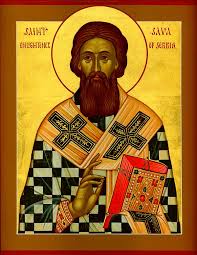
Autocephalous? Self head. There is no other boss. Not the Pope. Not the Archbishop of Canterbury; the Patriarch of Serbian Orthodox church is the head of Serbian Orthodox Church. Since 1219. Longer than you can know. Christian ethos becomes Serb ethnos. [Mark well those words.]

In 1594 the Serbs staged an uprising in Banat, the Pannonian part of Turkey, really Serbia, and Sultan Sinan Pasha retaliated by burning the remains of St. Sava, the most sacred thing for all Serbs honored even by Moslems of Serbian origin. The remains were brought from the Mileševa monastery in South Serbia and were burnt at this plateau, the most prominent in Belgrade, so that as many people as possible would know of this thing, the most bitter act of Ottoman history. However the remains did not turn to ash, but into light. This is true even in a semi-literal way. This light still warms the heart of the Serbian people.

We now build a cathedral according to our own Serbian Byzantine style on this site.

In 1895 a society of foremost citizens was formed to build this cathedral. This began truly in 1935, 340 years after the atrocity. I will tell you something interesting. The first and third prizes for the design were not awarded. The design which received second place was chosen.

During the war work ceased. The Nazis used this place as a parking lot, then as fortified defence. Later it was used for storage. Since Patriarch German, that is his name, 88 requests to continue building have been made for 87 refusals to change our ‘weeping walls’. But building began again in 1985. 100,000 people came to the re-opening.

You see the dome 70 metres from the ground and 134 metres above sea level. The height of the cross is 12 metres higher again. This is one of the biggest and most beautiful church buildings in the world. More than 10,000 people can be inside at any one time. Inside will be white marble with mosaic telling all of Serbian history. The white cathedral for the white city. It is not just a church; it is a national monument and national symbol. It speaks to us every day that we must be ready for self sacrifice. [What did he say? Christian ethos becomes Serb ethnos? Exactly.]

You notice something now we are inside. Can you see? No pillars. The dome was built on the ground and raised into place taking 40 days. This is one example of excellent Serb engineering skills.

I’ll tell you one story to make you weep. It always has a big effect on me. Rich American Serbs, there are many rich Serbs spread across the world, even in Australia, say we will give you the money to finish the church, many millions. Here. Have it. The people of Belgrade say no, we will get our money over time. We will sacrifice. The Patriarch says, we have waited 400 years to build this cathedral. We are happy to wait 400 more.

We say, St. Sava Church does not belong to anyone; we belong to it. It is built by all times and by all generations, by our Patriarchs, ancestors, forebears and fathers. There are four s’s on our cross, standing for: Samo sloga Srbina spašava (‘Only unity saves the Serbs’).

•• •• •• ••

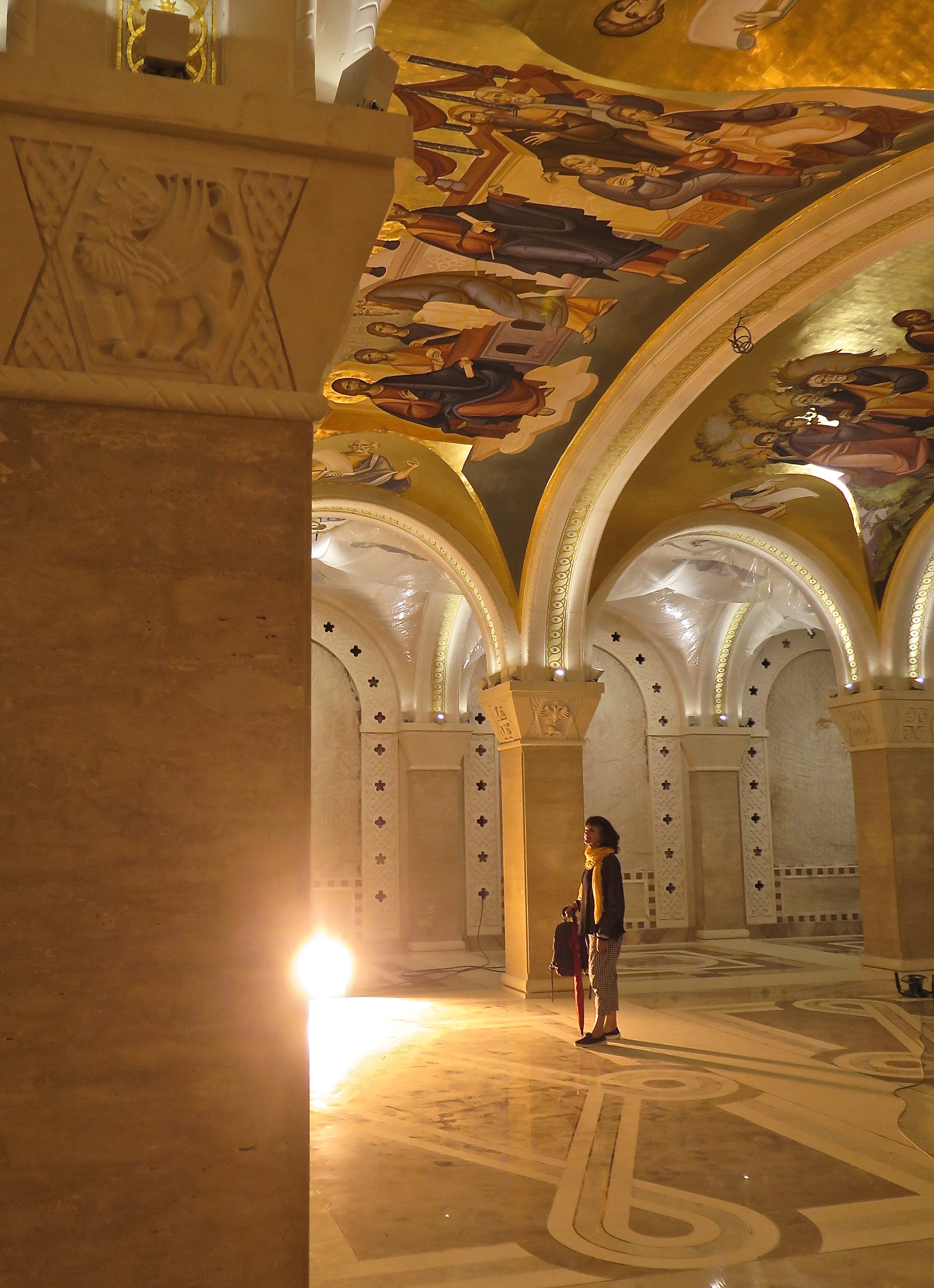
St Sava’s is not finished and has a rather eerie pre-stressed concrete/ plastic drop sheet feel inside. This will be changed for good or ill by several acres of mosaic.
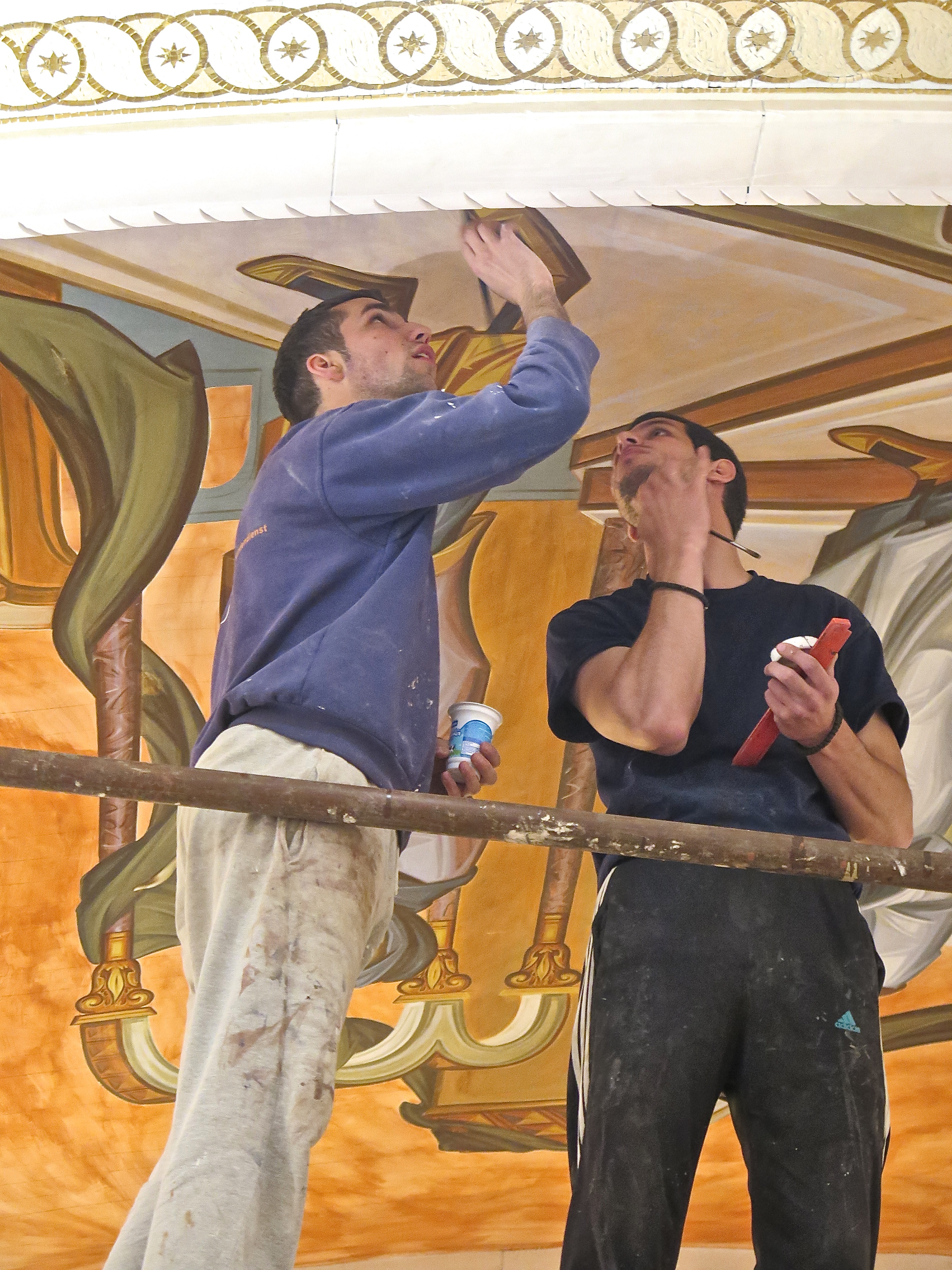
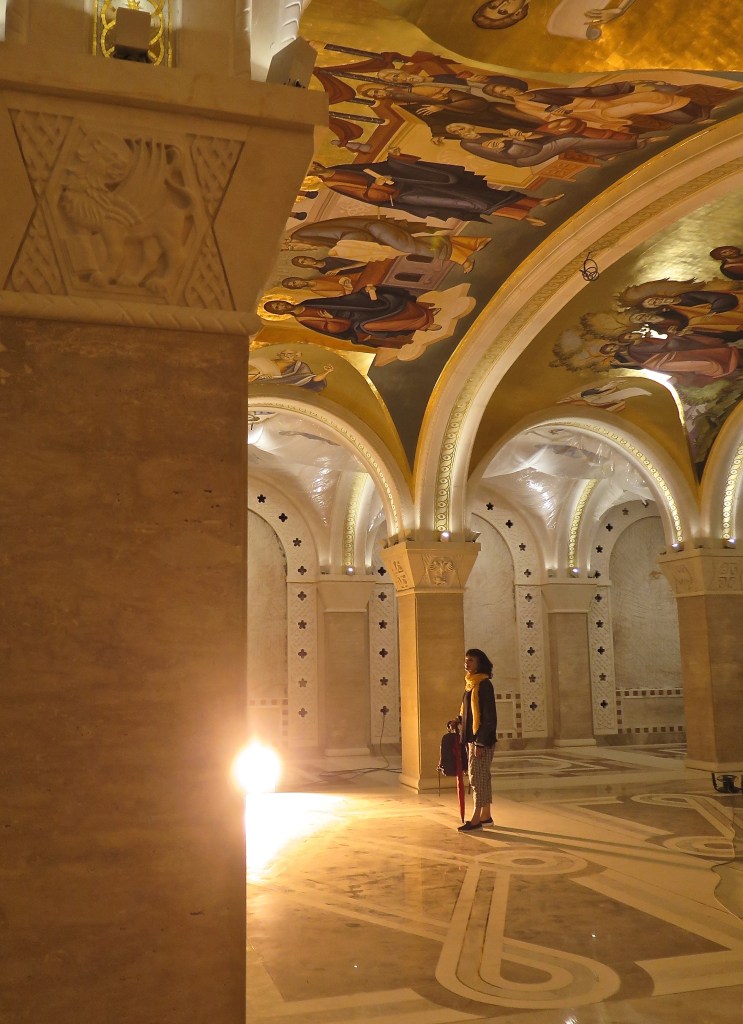
IMG_0628Another guide walked past with her croc of tourists, but she went downstairs to the crypt. She was a friend of our guide’s and we tagged along, as it turned out, a very special favour. The crypt is another proposition entirely, a product of patient and beautiful decoration. And she sang. She was a musician by training with an angelic voice which resonated through the subterranean spaces. It was quite a transcendent experience.IMG_0633
•• •• •• ••

Was Yugoslavia a good idea?

For me to answer that question I must sit down with coffee. [Magnifico Coffee, warm attentive service, great coffee, great cakes which we weren’t allowed to have until the lecture finished.]

First you must understand that the Serbian people are the real Slavs. Croats have the same language just different script, same background, same culture but they have been corrupted by their contact with western influences over many centuries, many times by fascistic movements. In Bosnia there are some leftover people from the Turkish invasion but really they are Serbs who were willing to do all the dirty jobs and who wanted to turn their coats and become Muslim.

The people who are not Serbs are the people who now have our most sacred possessions. The Albanians in Kosovo. They come from Asia near Azerbaijan. They have no part of our culture but they have our monasteries and our sacred places, including the most sacred place of all.
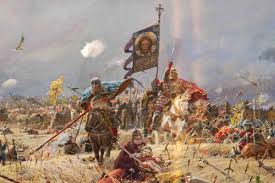
images-1To understand the Serbs is to understand their sense of pride. It is to understand why the Serbs celebrate June 28, St. Vitus Day, the day of the Kosovo Battle of 1389. Those who hate the Serbs claim we are a sick people who celebrate a day of defeat.

The Serbs do not celebrate this as victory or defeat. They celebrate the bravery, the pride of their forefathers who came to meet on the battlefield the intruder to their homeland. It did not matter that the advancing forces were immense. To protect their way of life, to protect their families, to protect freedom, all Serbian nobility came to fight. Most of them died on that day, June 28, 1389. Since that day the Serbs firmly knew that freedom has no price. Many Serbs, through generations and time, happily sacrificed their lives for freedom.

[The actual battle appears to have a been a particularly bloody draw. Both the Serbian King and Turkish Sultan perished, along with most of both sides. A relentless battle.]1389
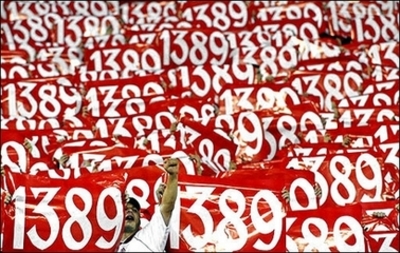
Belgrade Red Star supporters at a soccer match. To hear them sing ‘The Hymn of Kosovo’, click here. It may be possible that the 1990s Balkan wars started at a Red Star/ Zagreb Dynamo game. To investigate further click anywhere here  and scroll through.

If you have any interest in this topic the mood of it is wonderfully rendered in this series of very fine narrative poems. From the Introduction: ‘Serbs are possibly unique among peoples in that in their national epic poetry they celebrate defeat. Other people sing of the triumphs of their conquering heroes while the Serbs sing of the tragic sense of life.’]

This sacrifice stopped the Muslim invasion of Europe for 70 years. Are the grateful nations the ones who bomb our city and who slander our name in illegal tribunals? Our forefathers never fought to grab other people’s lands. Our forefathers never fought to impose our culture, our way of life or our language or religion on anyone. We fight for freedom, for the simple right to exist.

The Hague ‘Tribunal’ is not the first time that a conqueror attacks the Serbs as physical beings, but also attacks their pride. That is why, exactly on June 28, 1914, June 28 you understand, Prince Ferdinand, the Austrian heir to the throne, decided to have military maneuvers in Bosnia, then a majority Serbian province which the Austro-Hungarian Empire had illegally annexed six years before.

The Serbian answer was to assassinate Ferdinand. That is how World War I started, remember? Fifty percent of the Serbian male population died in that war. Every second man. The story of that Serbian sacrifice should be in every history book. That was the price the Serbs were ready to pay.

Milosevic? Milosevic was criminally insane. He is now dead, but his wife I believe is in Russia with many millions, billions even of money stolen from the Serbian people. This is one reason why we are so poor. The others are Clinton and NATO. But you must understand that our task in that war [1990s] was to protect Serbian people in the areas where they were living in many cases as majorities, but often under daily attack from their neighbours. 

Is it not right under international law that a country has the right and the responsibility to protect its citizens? The same is true of Kosovo. Kosovo is the cradle of our heritage and spirituality. This is the location of the Blackbird Field which gives meaning and purpose to the Serbian nation — in Kosovo, part of Serbia. The eradication of the Serbian people and our culture in Kosovo is an attack on the overall European cultural heritage and tradition.

You probably do not know that the Albanians who have overrun Kosovo are not Balkan people. They are Asian. Their real name is Shqiptars and their origins are somewhere near Azerbaijan from where they have been driven. They have a reputation as thieves and smugglers and as criminals. They have Mafia who attack Serbs and destroy their property. And [by declaring their independent status] they have done something illegal directly against the spirit of international law. Does Spain make the Basques a separate country? Does Germany think that Bohemia or Bavaria should be a new nation? England says no to Scotland becoming separate. And yet they are happy to spread lies and propaganda about the Serbs in their most sacred country, 20 percent of Serbia.

Srbenica? It is war. Bad things happen in war. Always, by everyone. But this is a big propaganda tool. All the talk about Srbenica but you forget. During the war the Ustashe regime [installed with the support of the Italian Fascists as the government of Croatia] killed no one knows how many but tens of thousands of Serbs. Their lives were obliterated without trace. Two hundred and fifty thousand were expelled, and 200,000 forcible conversions to Catholicism occurred. We know this. It is our history. We live with it every day. Does anyone in the west talk about this? Is that in your newspapers?

August 4 we have the anniversary of the Croatian attack on the Serbian majority region of Krajina in 1995 that resulted in the expulsion of 200,000 to 300,000 Krajina Serbs. This was the largest population displacement during the Yugoslav breakup in the 1990s. It was the largest expulsion in Europe since World War II. Maybe the largest act of ‘ethnic cleansing’ since the Holocaust. In 1997, the names of 1,542 Krajina Serbs killed in the assault were recorded. Over 73% of the houses of Krajina Serbs were destroyed. The Krajina expulsion was an act of genocide not seen in Europe since World War II.

Do you read about that in your western newspapers? The US and Western media referred to it as an ‘exodus’ and an ‘assault to oust Serbian rebels’, ‘Croatian Serbs’, the oxymoron propaganda term developed by the US State Department. These facts been covered-up and deleted from the mainstream history of the Balkan conflicts because the victims were Serbs and because a majority population was destroyed and denied self-determination.
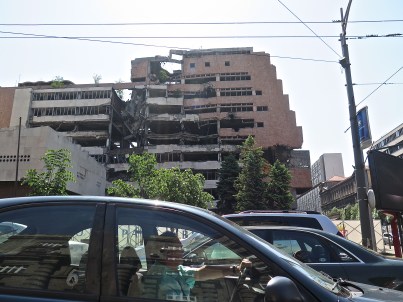
IMG_0754Do you like to sit still as NATO bombs of the colonialist powers rain on your head?

I am not certain but I have the opinion Serbs are proof of what the great psychologist Carl Gustav Jung called the ‘collective unconscious’, the collective unconscious that causes a people to rise up and claim what is theirs. Sometimes violence is necessary for this to occur. We don’t shy away from that. What is our alternative?

•• •• •• ••

He left us in Prince Michael Street. It had been quickfire, fierce and exhausting.

This is one of those listening processes where you begin by thinking: oh that’s interesting, here’s a new insight — he was a nice guy, very well educated in a particular fashion, speaks more languages than I do, has lots of experience. Then move along to thinking, my goodness, is that how all this is constructed? At least it is a consistent world view even if it’s been punched a bit out of whack. And then you end up thinking just, gosh.

We walked slowly down through a lively main street where people were shopping eating drinking and enjoying themselves. It looked quite normal.IMG_0744
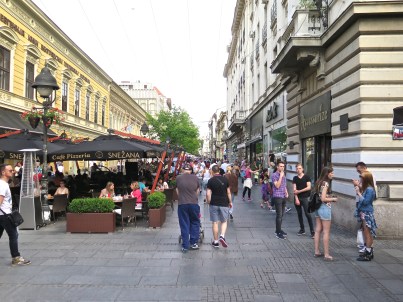
IMG_0640We stopped at the ‘?’ café because it was on the way to where we were going — the rivers and the fort — and looked just fine. ‘?’ because for many years it was known as ‘By the cathedral’ café and then the cathedral objected. So, hands thrown in the air — ‘?’ Stylish, professional service, happy to cater for our every (modest) whim. The last word in friendliness.
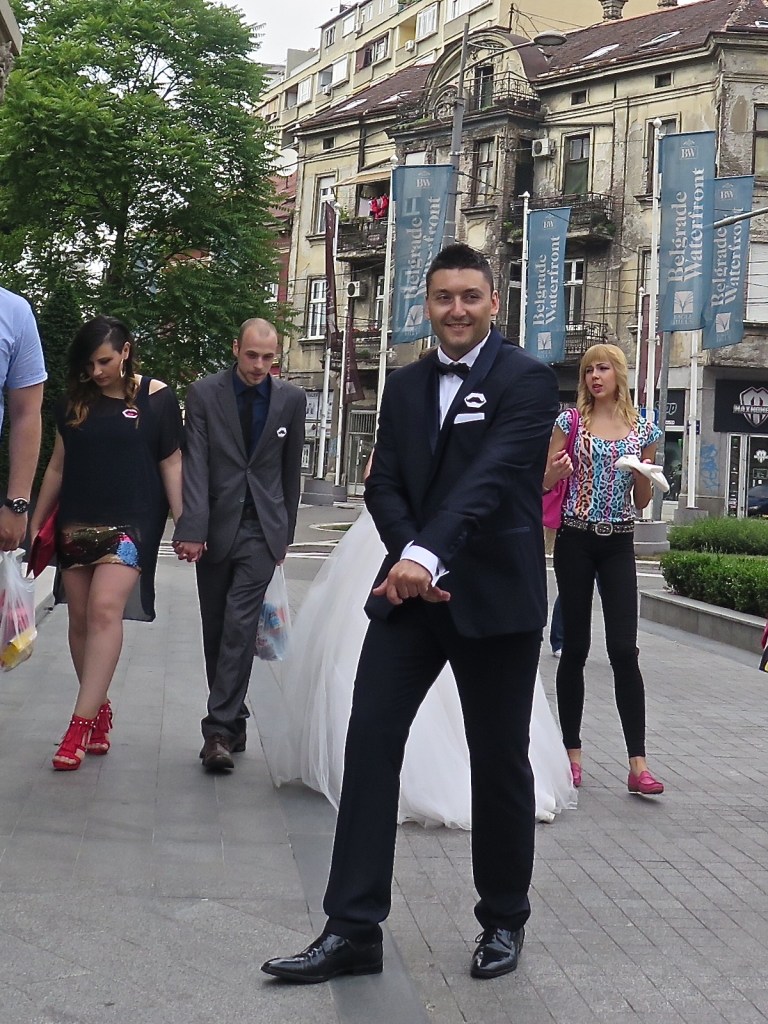
IMG_0763Just because … Isn’t he cute?

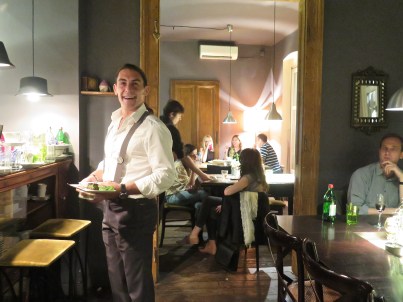
That night we spent a lot of time trying to find a particular restaurant. Our problems could be explained by two salient matters. 1) It was a vegetarian restaurant, very Serbian actually but voluntary vegetarianism is improbable in Belgrade, and 2) it was called Radost Fina Kuhinjica, ‘Nice Little Kitchen’, and so it very much proved, but people had trouble getting a grip on such a generic name, and, hidden away in the back of an apartment block, even people living right next door didn’t know it was there. We were treated with great interest, warmth and generosity and super food and, on advice from a delightful young waiter, otherwise an engineering student, Ergo Temet wine. Chase it down. A small Serbian miracle.IMG_0649
•• •• •• ••

Next day. Different guide. Same story.

We wanted a look at the Serbian countryside. Mike was interested from all sorts of perspectives; among other things he’s a farmer grazier. The tour fitted. It was a drive up to the city of Novi Sad (‘New Present?’ ‘Today City?’) further upstream on the Danube across the laser-flat Pannonian Plain with a deviation through the hills of the Fruska Gora. On the way we visited Krušedol monastery. IMG_0660
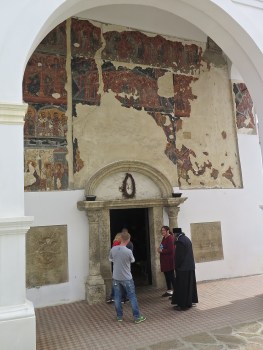
Two patriarchs of the Serbian church are buried there.
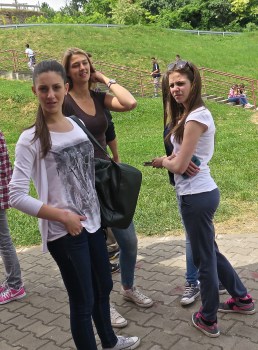
IMG_0662Some Serbian kids at Krušedol.

I think Joci knew very little about Krušedol except that it was old and Blind Freddy could see that. The interior had some very fine murals that he had trouble explaining.

‘After Kosovo (ie 1389) it was very important for the Serbs to have their own religious figures. So for the Virgin Mary we have St Angelina, for St Peter we have … and St John … These are the great figures of Kosovo.’ You mean you have Serb substitutes for the whole group of major Christian figures? ‘Yes we do.’

I didn’t pursue this. It might have been a language issue, and I didn’t really want him to tell me anyway. It was getting weird.

Earlier I had asked him what the process of change had been from going from collectivised farming to privately held farms to the giant industrialised concerns we were driving through. ‘To understand this process you must understand the Serbian people and their relationship with the land, and this really begins at Kosovo 626 years ago. This is when we became a nation …’ Thirteen minutes later he was still going. I timed him just out of interest. We had been through the Albanians, the NATO bombing, the importance and delights of Krsna Slava — the celebration of a family’s saint’s day — the quality of Serbian family life. Then I reminded him of the question which he had forgotten.

It’s not an easy question, but I just wanted impressions, not a detailed answer. He’d lived through the experience. And there is always the option of saying I don’t know. But he was Serbian, proudly and emphatically, and this is why he was telling us what he thought we needed to know, what we had to know. 

‘You are Scottish?’ Well, not me really. My ancestors … a long time ago, 150 years ago. ‘That is a short time really. What do you think of what the English have done to your homeland? Don’t you feel angry about that? Do you not want to seek revenge?’

•• •• •• ••

We stopped at Sremski Karlovci, the centre of which is a Spatial Cultural-Historical Unit of Exceptional Importance. Some idea of its history can be gained from the facts that in Croatian it is known as Srijemski Karlovci, in German as Karlowitz or Carlowitz, in Hungarian as Karlóca, in Polish as Karłowice, in Romanian as Carloviț and in Turkish as Karlofça

IMG_0677Saved by the need for a cup of tea! It was such a relief. If you’re walking around you can drift off on your own, but in a car there is no escape. But moreover immediately in front of us was an orkestar, one of the things I love about the Balkans, which might have been going to play. (‘Underground’: such a Serbian film. Too long, but a monstrous tour de force. Five and a half stars.)

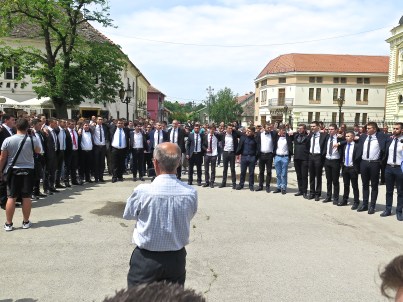
We sat down in the square and I asked Joci to show us just where Kosovo was using his phone. He couldn’t find Kosovo on the map. And that is true. That was Serbia sure, but which way was Kosovo? He scuttled off to buy a paper map and rather absently — the day was balmy and I was out of the car — I noticed a crowd gathering. I am looking at the photos now and in a crowd of two to three hundred I can see only three women. A lot of the men were relatively young. They were quiet and focused, their attention fixed on a door in a large building on one side of the Square. Joci came back and I asked him to find out what was going on.

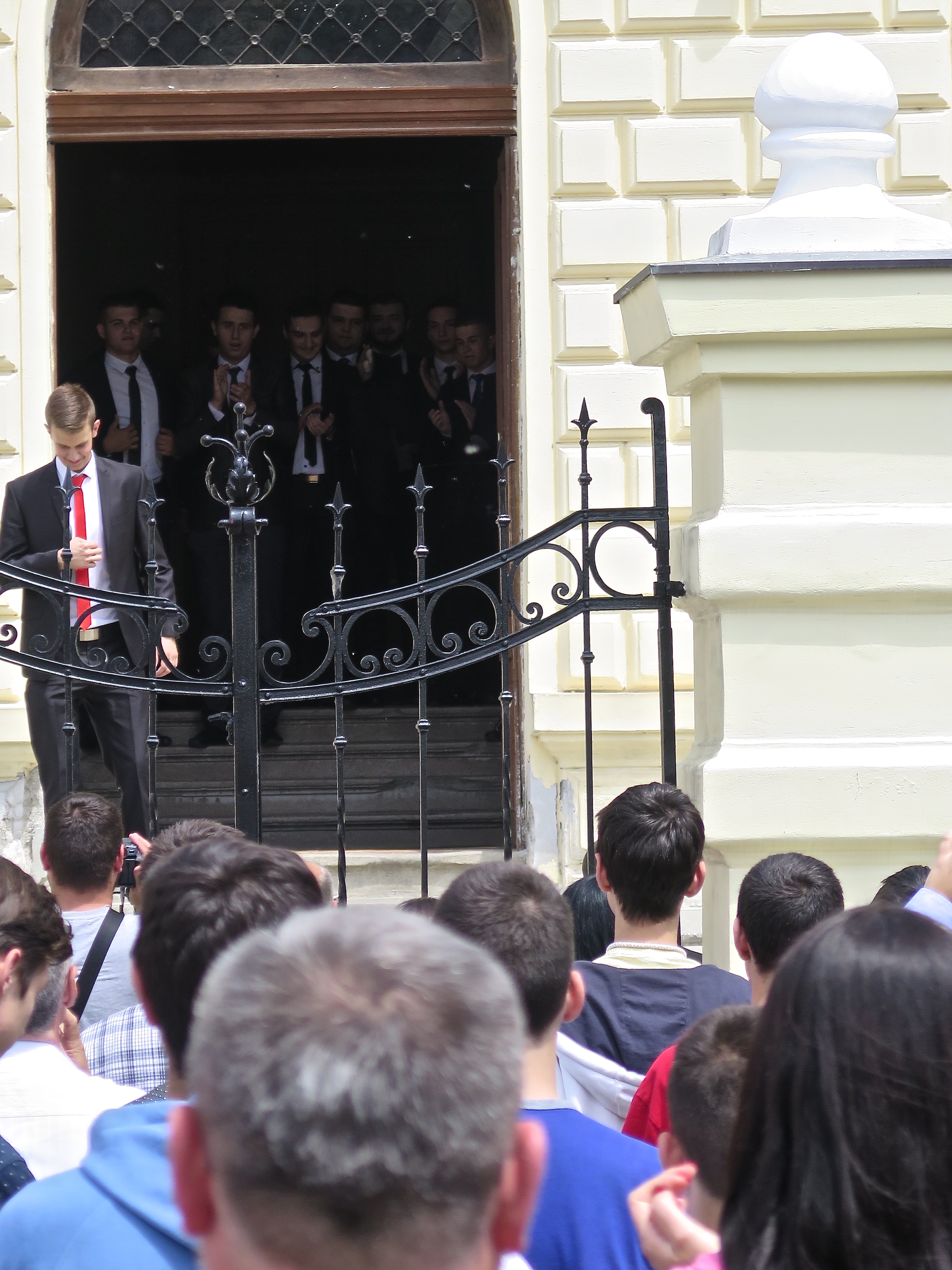
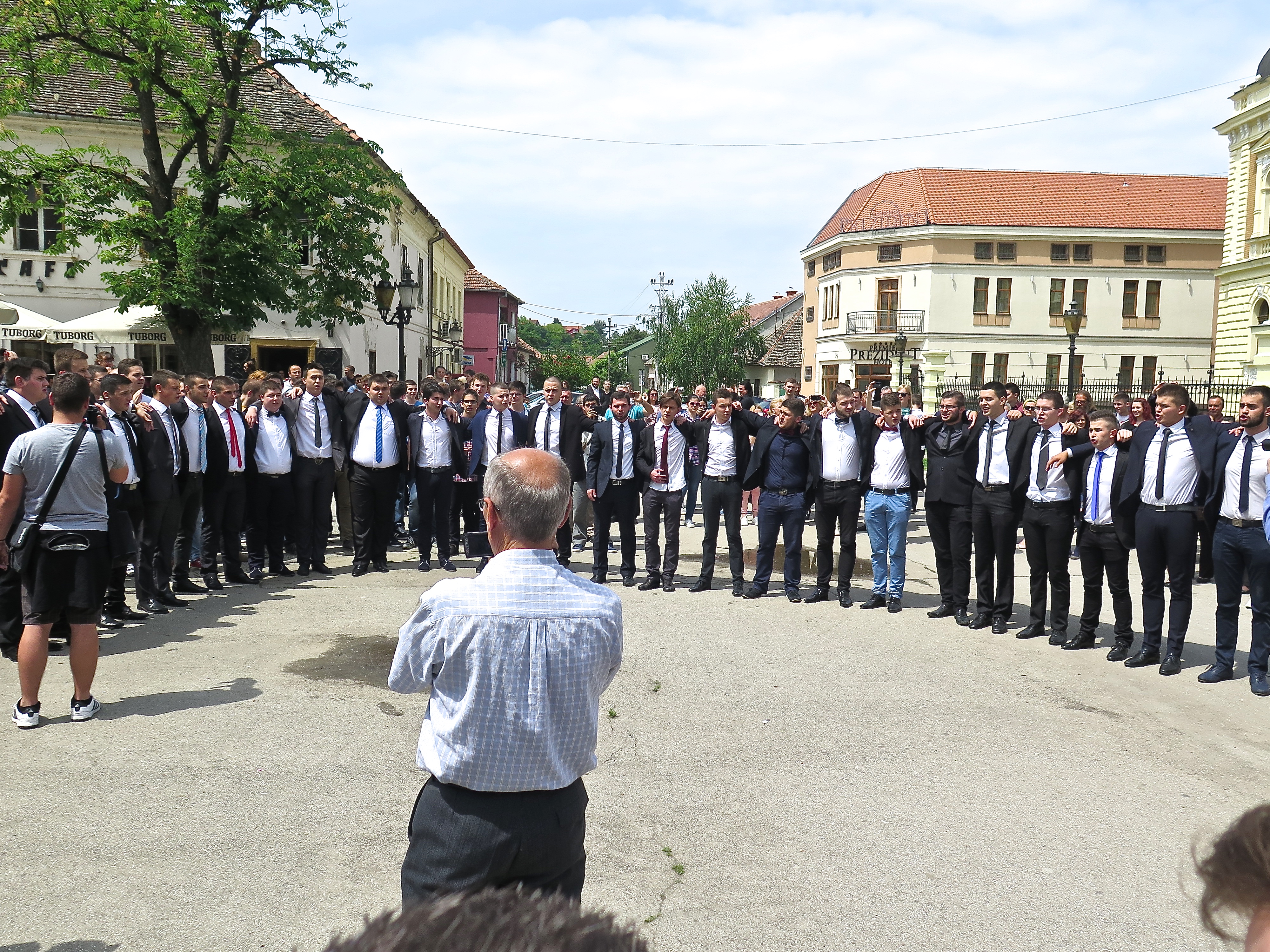
The building was the Clerical High School of Saint Arsenjie (Sava’s successor) and we were on the brink of the final part of the graduation ceremony to the Serbian priesthood for every single successful candidate for 2015.
IMG_0680At midday a bell tolled and the crowd drew up taller peering like meerkats. A door opened and from inside this room a sonorous chorus of male voices emerged. Not hesitantly or carelessly discordant, as we might expect from young males, but with immediate force and strength.It is the Hymn to Kosovo, Joci whispered. And so it was.

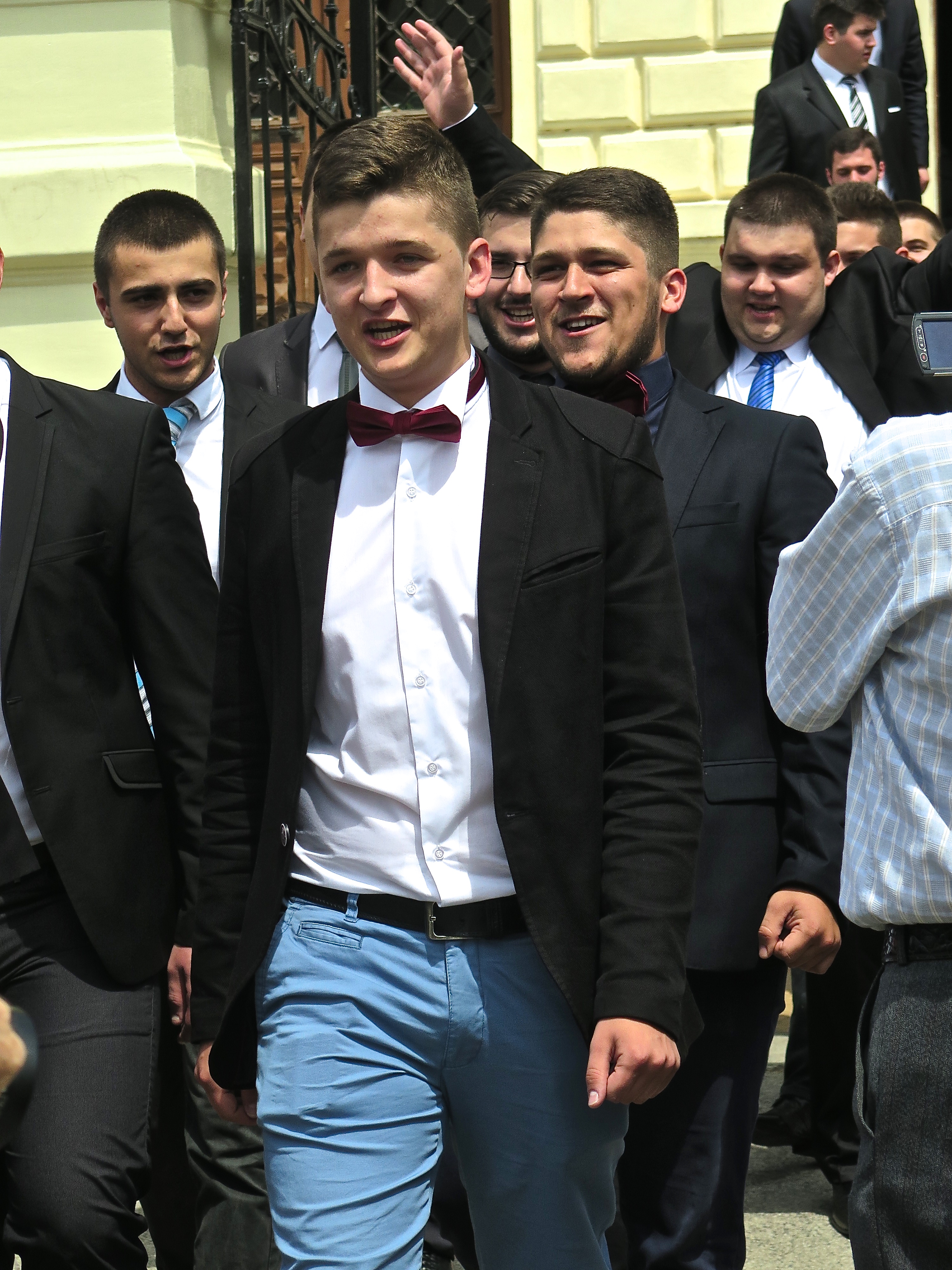
IMG_0681Still inside, they followed this with the Serbian National anthem ‘God of Justice, thou who saved us when in deepest bondage cast’, and then one-by-one they emerged blowing kisses to the crowd, or saluting like football players who have scored a goal, a wide range of unlikely gestures really, in what turned out to be a sort of popularity contest by acclamation. IMG_0687
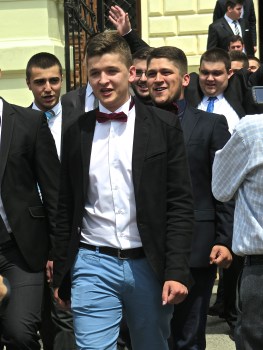
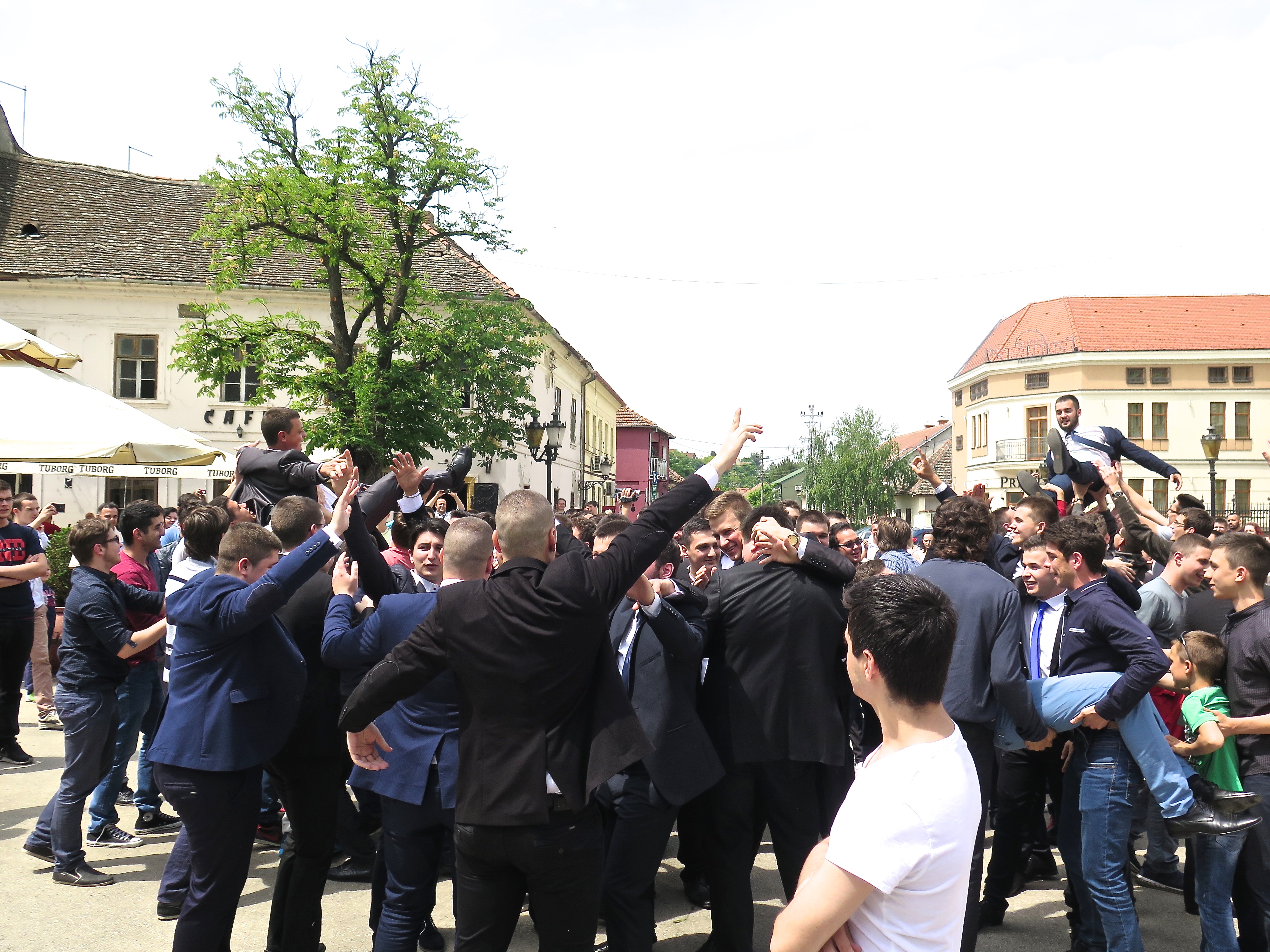
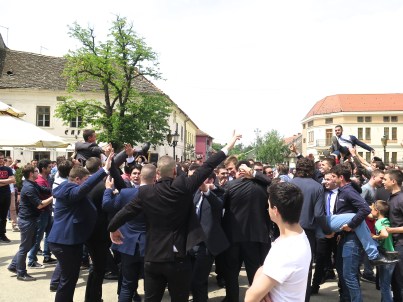
IMG_0692They then linked arms in the square and sang and sang and sang. I have no idea what they were singing, some sort of amalgam of sport, nation and god perhaps — but their repertoire was endless. Then suddenly they stopped, the band started playing, the big flags arrived, and they began throwing each other up in the air before marching off round the town. It was something else. Christian ethos becomes Serb ethnos.IMG_0697
The air had become heavy with the siren call of testosterone. The ambiguous siren call of testosterone: be like me, be a man; but as well, fight me or fight someone. I had got myself in the ruck of all this and while absorbed and intrigued found myself feeling a little shaken, anxious, not something I’m used to. Just for a moment; but if, that day, the Serbs had been fighting me at the Blackbird Field they would have won. In fact, it would have been a massacre.

We ate lunch looking out over the Danube. Joci relaxed, we talked about this and that and I made a sudden discovery that we had to get back to Belgrade almost immediately. We had exhausted his stock of information and the retreads were becoming deadly. And anyway we had an opera to attend.

•• •• •• ••

After leaving Joci meditating at length on the significance for the Serbian people of Carl Gustav Jung’s notion of the collective unconscious, we went to see and hear Verdi’s ‘Nabucco’ which is known for the Slaves’ Chorus but offers much else besides.
1000 dinars for just one ticket. That seemed a lot. I couldn’t quite get a handle on it. First I thought it might be some catastrophic sum like trying to go to Covent Garden or something. On further investigation the current exchange rate makes that equivalent to 12.36AUD. Opera. Four rows from the pit. Unheard of. What do you get? Three youngsters in a recital? A slave’s solo instead of a slaves’ chorus?
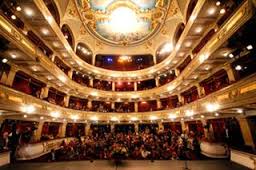
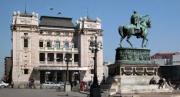
imagesUnknown-1The Belgrade National Theatre building has seen better times and I’m guessing but I’d say they were round 1870-1890.IMG_0642 The French influence in that period is still evident in the boulevards outside and the evident grace still visible in some of the building. The theatre still sells seats for the parterre (‘on the ground’) which would seat 2-300 and then four tiers, cylindrical rather than staggered, faded plush, gilt embossing and a big crack in the parapet of one tier where the percussion section was seated. The brass were a bit rusty but the orchestra of 45-50 produced the score faithfully and with vim.
Not that much in the way of costumes, but if you want costumes watch the Met at the movies. The set was a tilted circular slab which rotated but not too much. It was well under control. The high priest of the Jews came out and provided a true and highly seductive bass baritone, Abigaille was a pocket rocket with enormous power, and Nabucco himself warmed up over the course of the evening to give us a terrific rendering of his big aria in the third act. The chorus (of 30 or 40) sang with verve and had no trouble filling the hall with quality sound. Thought did fly on wings of gold. Completely memorable. And for $12.36. One of the great bargains of all time.

•• •• •• ••

Our first guide had told us we should visit the Museum of Yugoslav History to fully understand Serbia. The cab driver didn’t know where it was. ‘Next to Tito’s house. And his mausoleum. In the park.’ ‘Where is Tito’s house?’ He apologised later. It was his first day.

Apart from the surly and unhappy staff, who were probably being paid two and threepence a week, the Museum of Yugoslav History consisted of one large room which was empty, one large room which had a small model of a nondescript building in it and one large room which had been divided up into a suite of hanging spaces. ‘Art as a Resistance to Fascism’ was on display. IMG_0723IMG_0722These were some typical offerings.
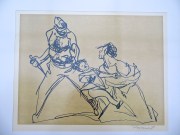
I hated it. Yes it’s serious. Yes it’s recent. Yes they did it too. Yes they’re bastards. But I hated it. I was fed up with the wallowing, the malady in the collective unconscious or whatever it is that is fed and given succour every day. I looked outside just to make sure the sun was still shining. We caught the bus back into town and had three fabulous hours chatting in the sun and watching one version at least of Serbia get on with life.

 •• •• •• ••

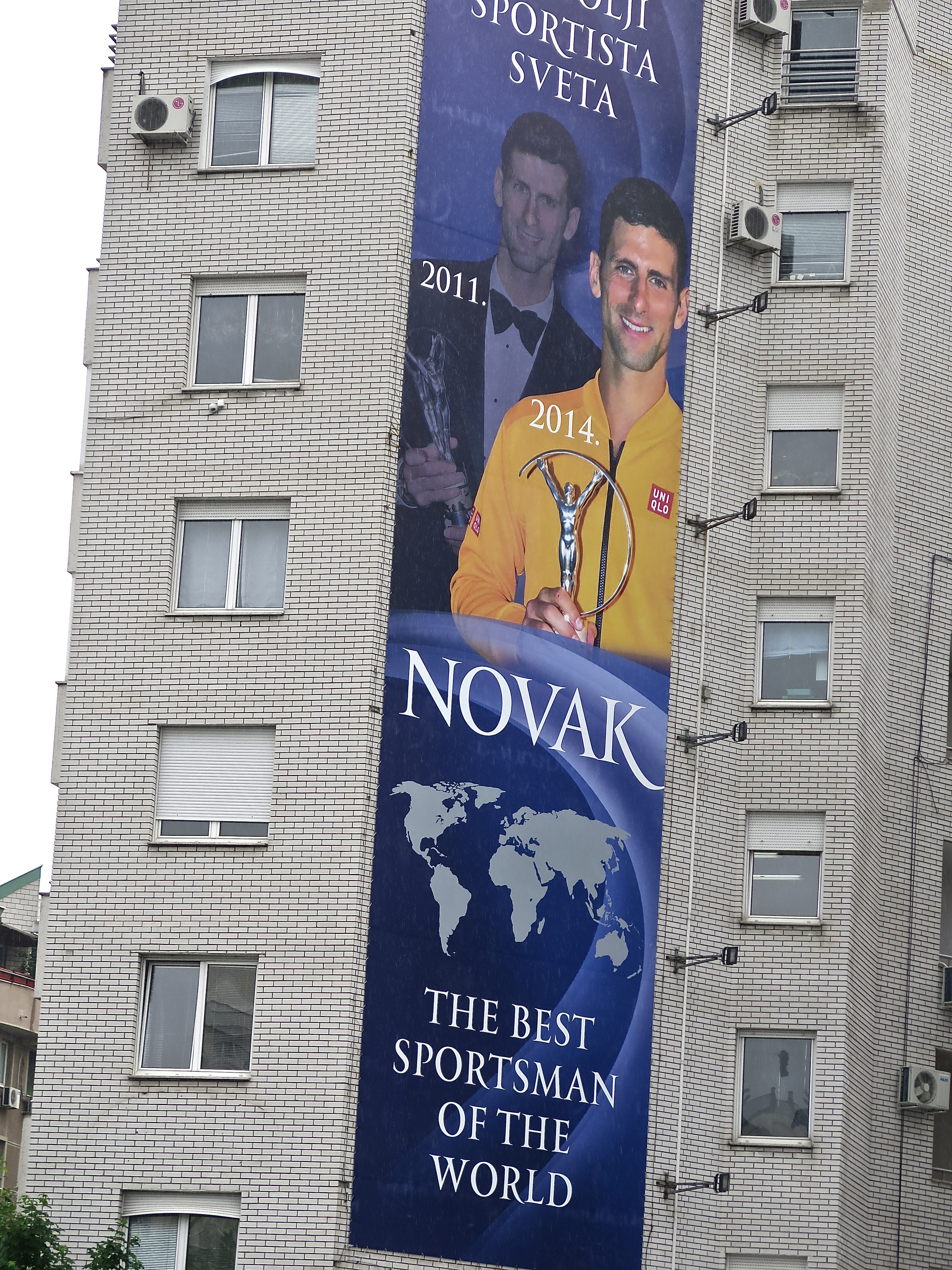
The best known Serb in the world is not Slobodan Milosevic. The best known Serb in the world is Novak Djokovic, ‘The Joker’; urbane, charming, articulate; spruiker for the importance of family life, apparently delightful company.

I watched him play Roger the other night. What a match. What masters of their craft they both are. It wasn’t because no one will be allowed to beat the Serbs again that Novak won, but I thought I saw in those glinting eyes and the ferocious concentration and the determination not to lose … well, what did I see?IMG_0622
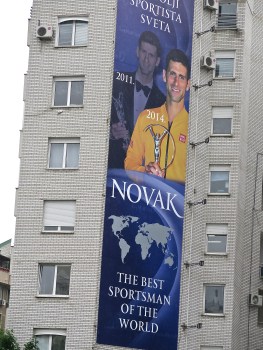
 This sign is above his mum and dad’s restaurant.

St Paul’s Correspondents

IMG_0369

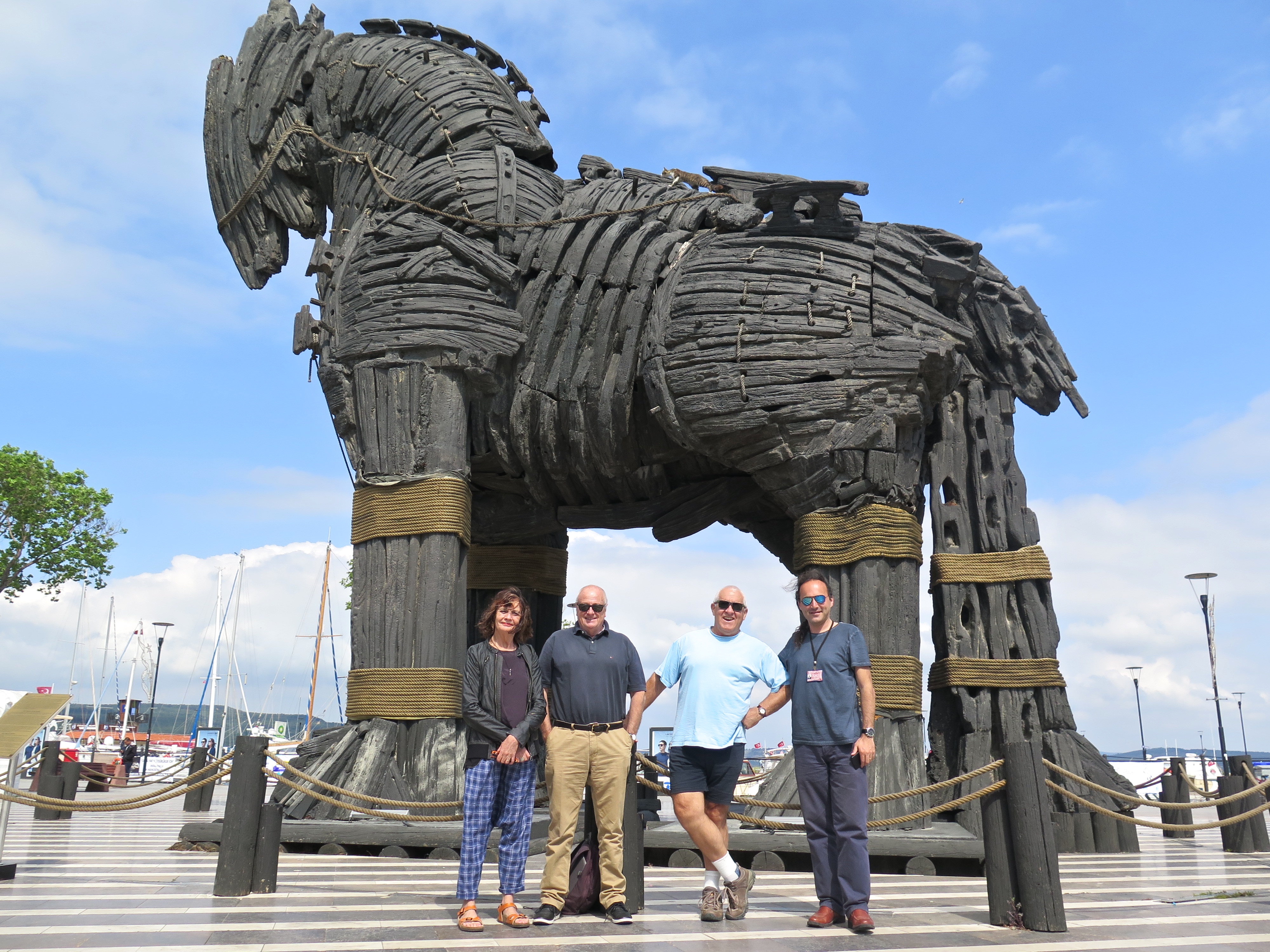
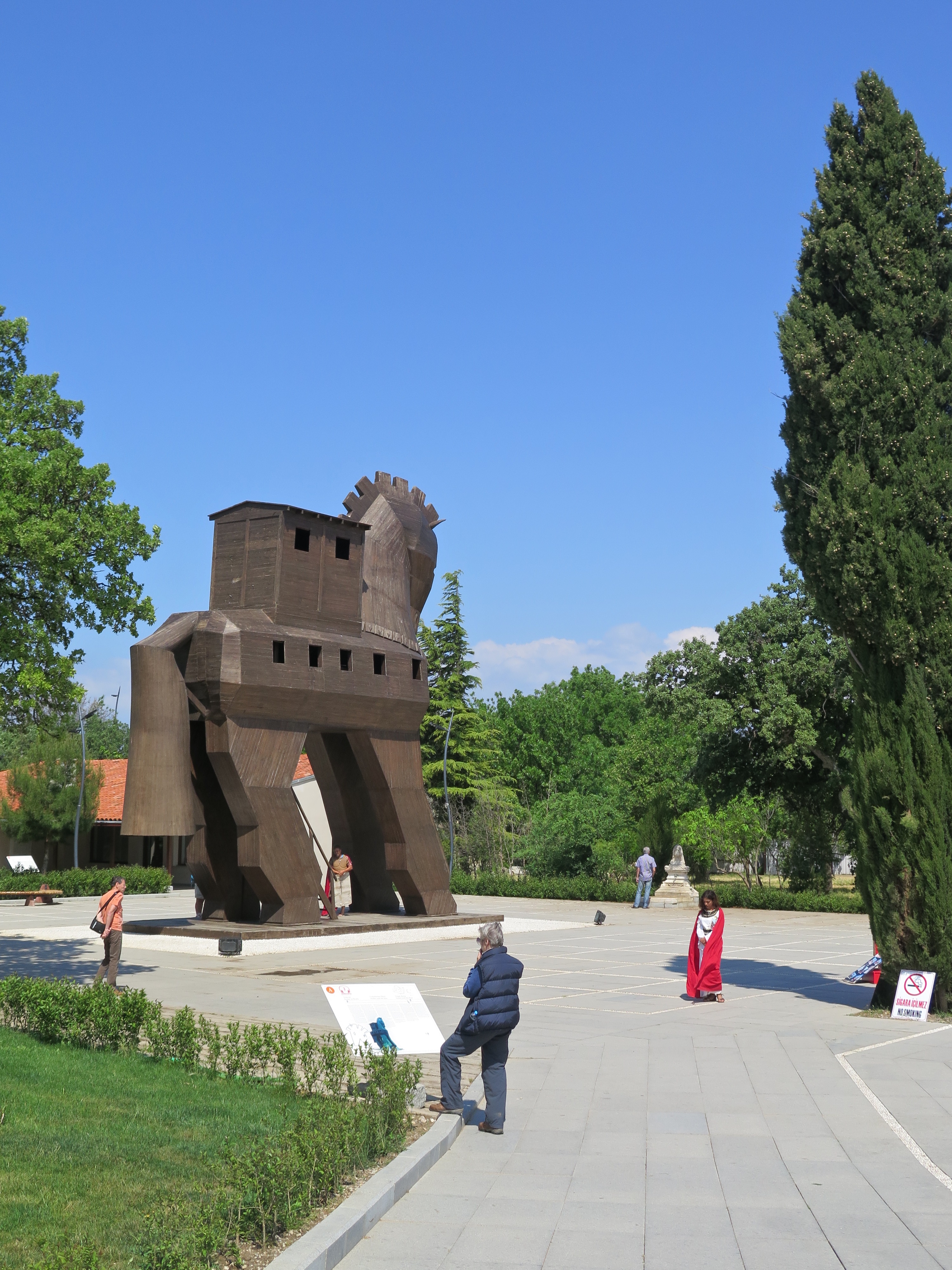
Hmmm. Where to begin? Maybe here. The happy foursome with a Trojan horse, a Brad Pitt Trojan horse. An Eric Bana Trojan Horse. [In fact a prop from the film ‘Troy’, at Canakkale.] No real Trojan horse ever looked so good.
IMG_0372For example, the Trojan horse of Troy, an amiable but unimaginative threat to the well-being of Priam and his community that wouldn’t have fooled anyone. IMG_0382

This whole business of course is a feat of the imagination, but looking out to sea at Troy through Schliemann’s cut (at right), I could see Achilles dragging Hector’s body around these plains, Hector being tethered to Achilles’ chariot, ironically enough, by straps passed between his Achilles tendons and his tibia. Despite suffering this for 12 days in a row Hector’s body remained completely undefiled, protected as it was by Aphrodite and Apollo. … Ah, those were the days.

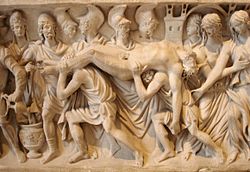
[Hector’s body being returned to Troy: from a Roman sarcophagus.]250px-Hector_brought_back_to_Troy

That said, in those days these plains would have been part of the Aegean Sea. Over time silt brought downstream by the Scamander has shifted the coastline some kilometres west.

It could have been because of the quality of our guide (very high) that Troy staggered meaningfully into life. It reportedly poses problems for tourists. I think the reasons might be that is too small, smaller than one envisions perhaps, and too complicated with nine major levels each representing a differing period of habitation. There are also subdivisions of the levels. Homer’s Troy, for example, may have existed during level VIIa (1300-1190BC), and this may have been the way in to the Troy of that era. That excites me.IMG_0386

St Paul visited the area in which Troy is sited. He called it Troas. He asked Timothy who lived in Ephesus 360 k.s away to pick up the coat he had left there and bring it to him (2 Timothy 4, 13). He was in prison in Rome at the time. In the Year of Our Lord 64 that’s a six-month task. There must have been something else going on. Must have been. Maybe he had left some important stuff in the pockets.

But we were in Pauline Territory.st-pauls-missionary-journeys-tube-map.jpg

For our route, stick to the middle: Troas, Assos, (insert Pergamom), Ephesus, Samos. Go left and up: Athens, Thessalonica.

It is tempting to talk about the Greeks here, or the Turks; but we are immersed in the period of city states. The Aegean islands were named as they are today, but the coastline regions were those of Troad, Mysia, Aeolis, Lydia, Ionia, and below the river Meander (you heard it here first) Caria and Lycia. As their names suggest these are often peoples associated with the Pelopponesian Peninsula (‘Greeks’), remnants of Alexander’s conquests, the littoral of the Pergamom empire or simply inhabitants with roots going back several hundred years. The locals are speaking Greek, and some would claim these are the sites of high Classical Greece.

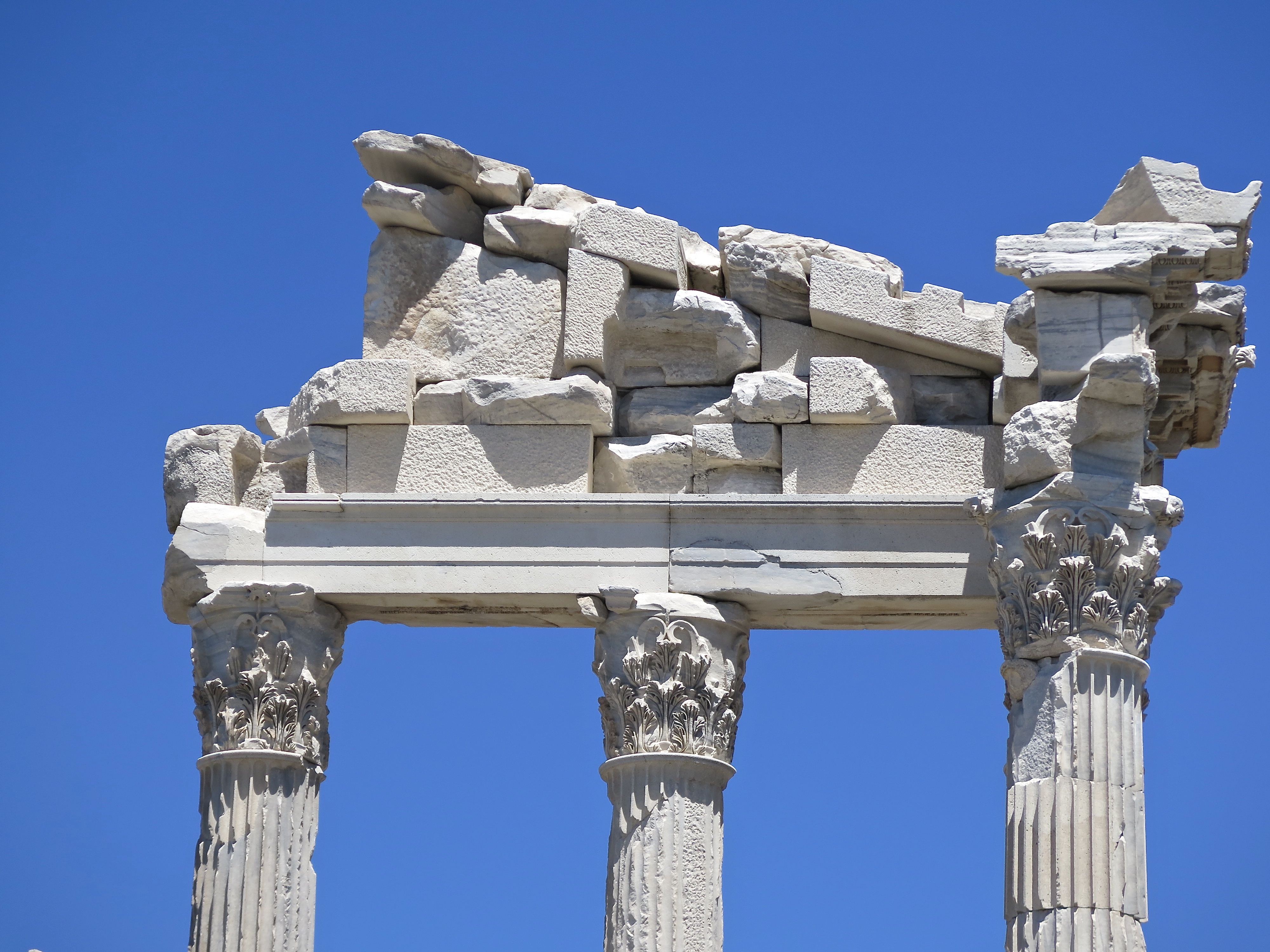
[A section of the pediment of a Greek temple at Pergamom]IMG_0423The Turks (‘Turcae’) are mentioned by Herodotus in the 5th century BC as living above the Sea of Azov which today would make them Ukrainians. Chinese sources of the same period locate them in western Mongolia and Tajikistan, on their way to the Turkmenistan of today. It wasn’t until the 11th century AD that Turkish-speakers ventured into Anatolia (the big lump of Turkey on the eastern side of the Bosphorus/ Sea of Marmara/ Dardanelles).

The dominant mob in Paul’s time was of course the Romans, but this didn’t have a major impact on the makeup or ethnicity of these cities, although there is evidence in the case of Ephesus at least that it made them large (c. 50,000) and prosperous. There may however have been the question of taxes and if certain types of religion were going to play a part in insurrection you might find yourself in chains in gaol in Rome — as Paul did. But before that he travelled extensively and by some lights quite freely, although clearly he did suffer for his cause, a zealot in the literal sense for his god.

After finding some disciples at Ephesus not quite on top of their situation, he spent two years there, correcting, cosseting — and arguing. 

‘He entered the synagogue and for three months spoke boldly, arguing and pleading about the kingdom of God; but when some were stubborn and disbelieved, speaking evil of the Way before the congregation, he withdrew from them, taking the disciples with him, and argued daily in the hall of Tyrannus [a school]. This continued for two years, so that all the residents of Asia [Minor] heard the word of the Lord, both Jews and Greeks.’ [Acts 19, 8-10. The next ten verses are also worthy of attention.]

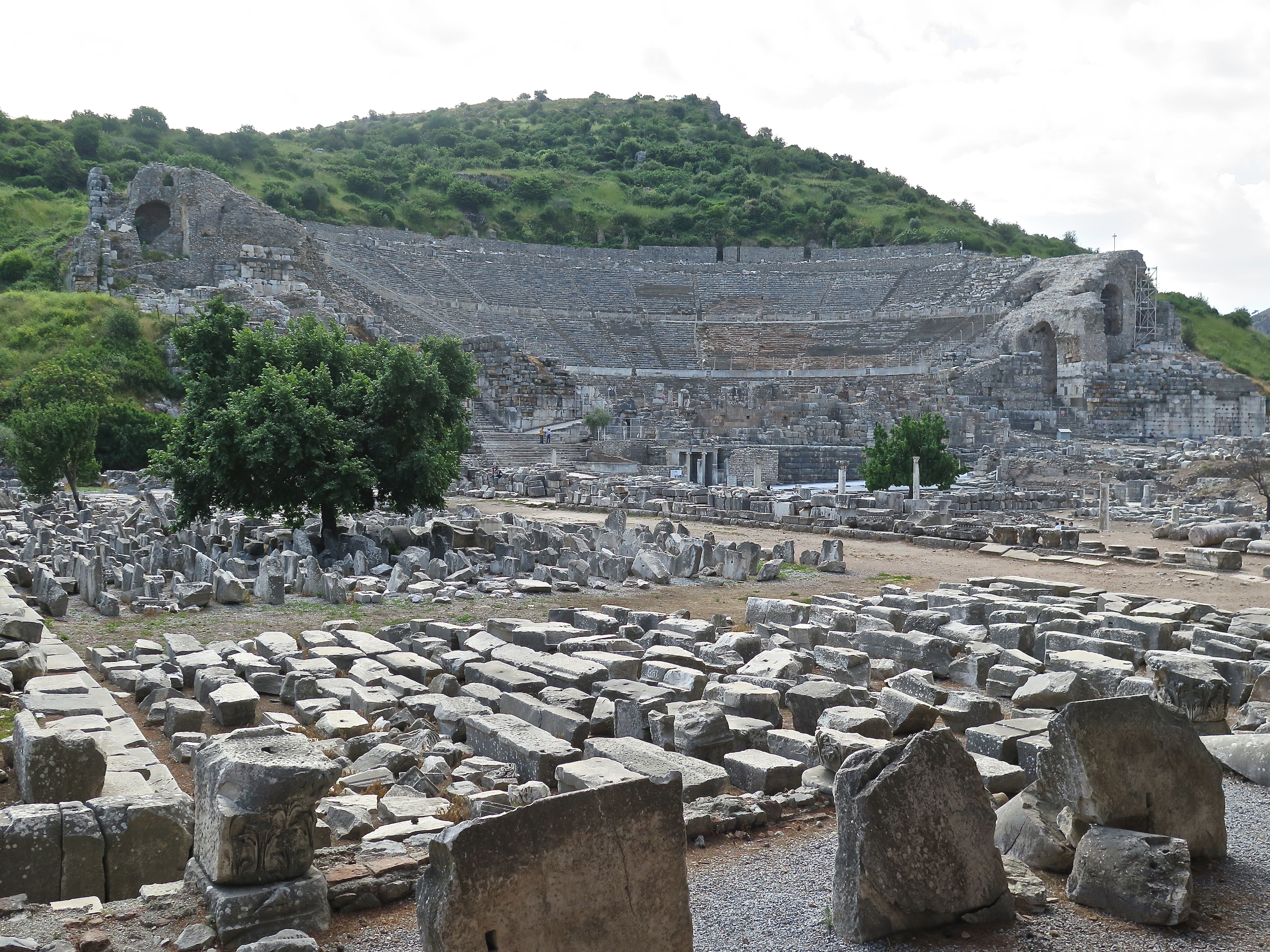
During that period it is believed that he preached three times at this amphitheatre.IMG_0486

Whoops. Right place, fabulous but wrong photo. (For whatever reason they were trying to take an ‘Oh what a feeling’ jumping photo to post on Facebook. I took one too.)

Here. This one. Capacity: 3,000. Filled it three times. Little wonder that he had some correspondence to attend to.IMG_0490
We will come back to that issue shortly; but at Ephesus there are several things to note in addition. Just to the right out of sight are the remnants of the market, a very big affair. You could easily tell where all the shops had been but only a former President of Business Educators Australia could immediately see the point of access for goods and the nature of the wholesale/retail transition process. I was honoured to be in his company.

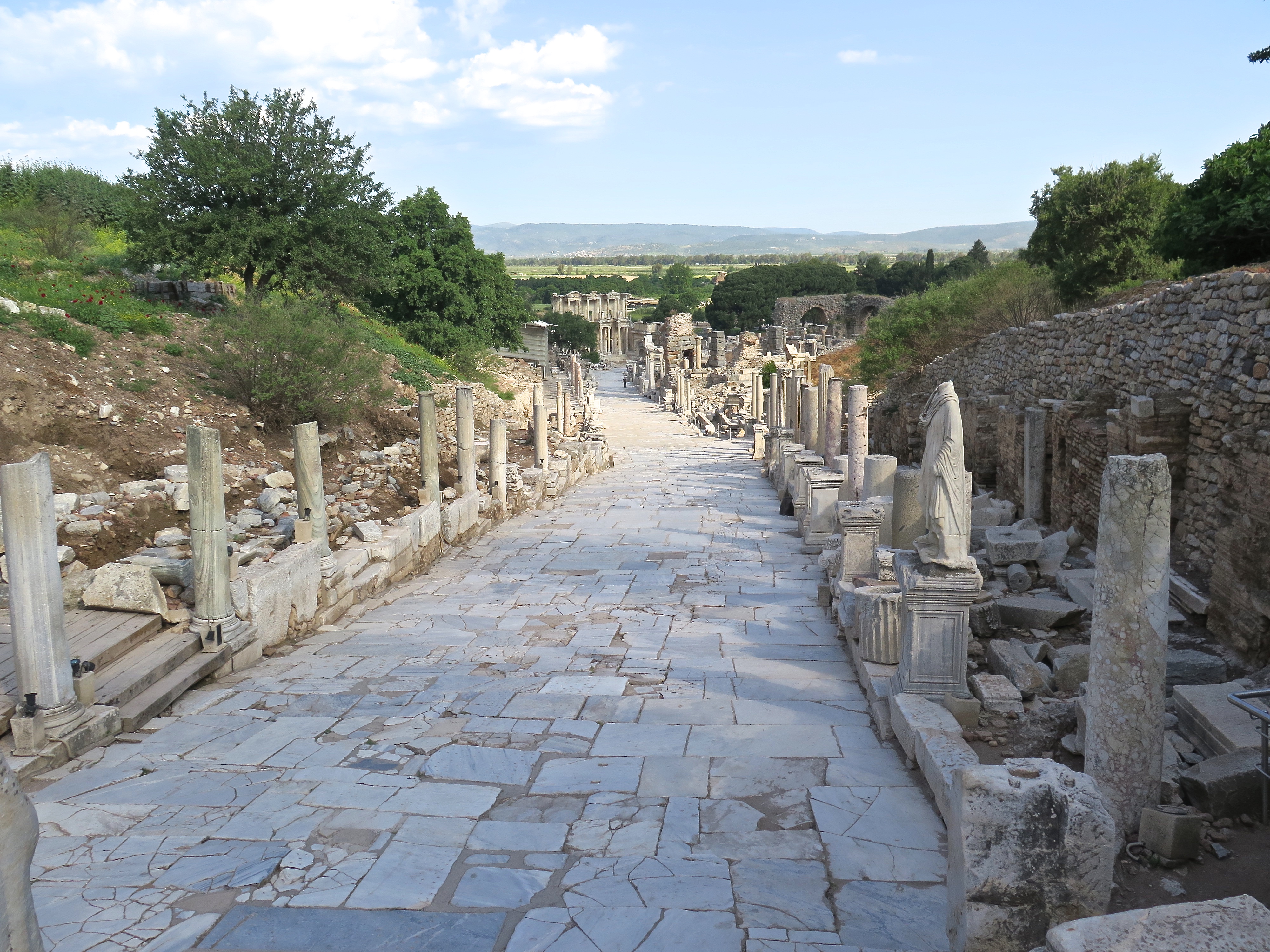
And together we saw this which not many other people have.IMG_0458The main street of Ephesus with almost no one in it. Just one figure in the far distance. Luck. About 8.45 on a Sunday morning before the cruise ships had unloaded.

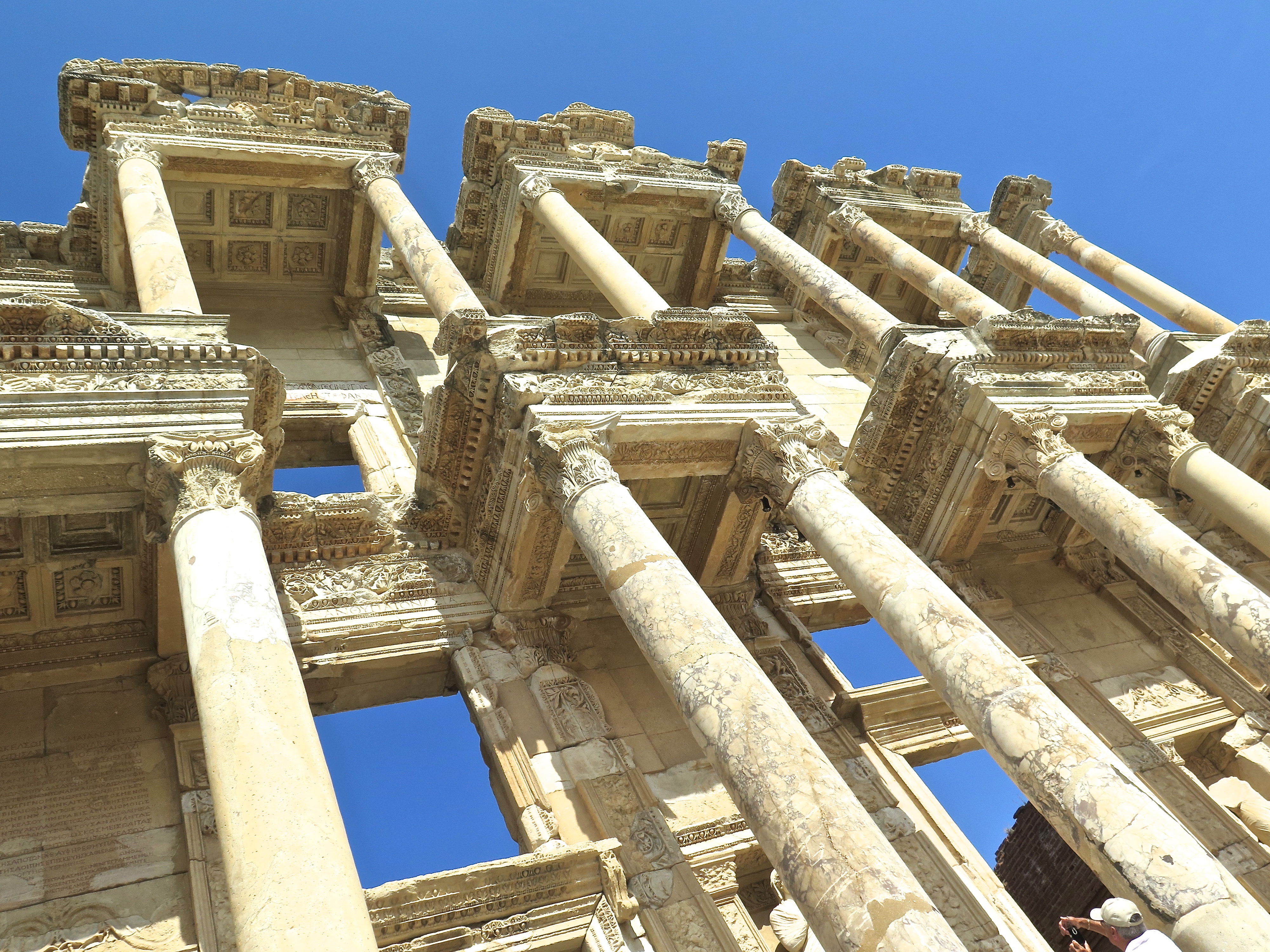
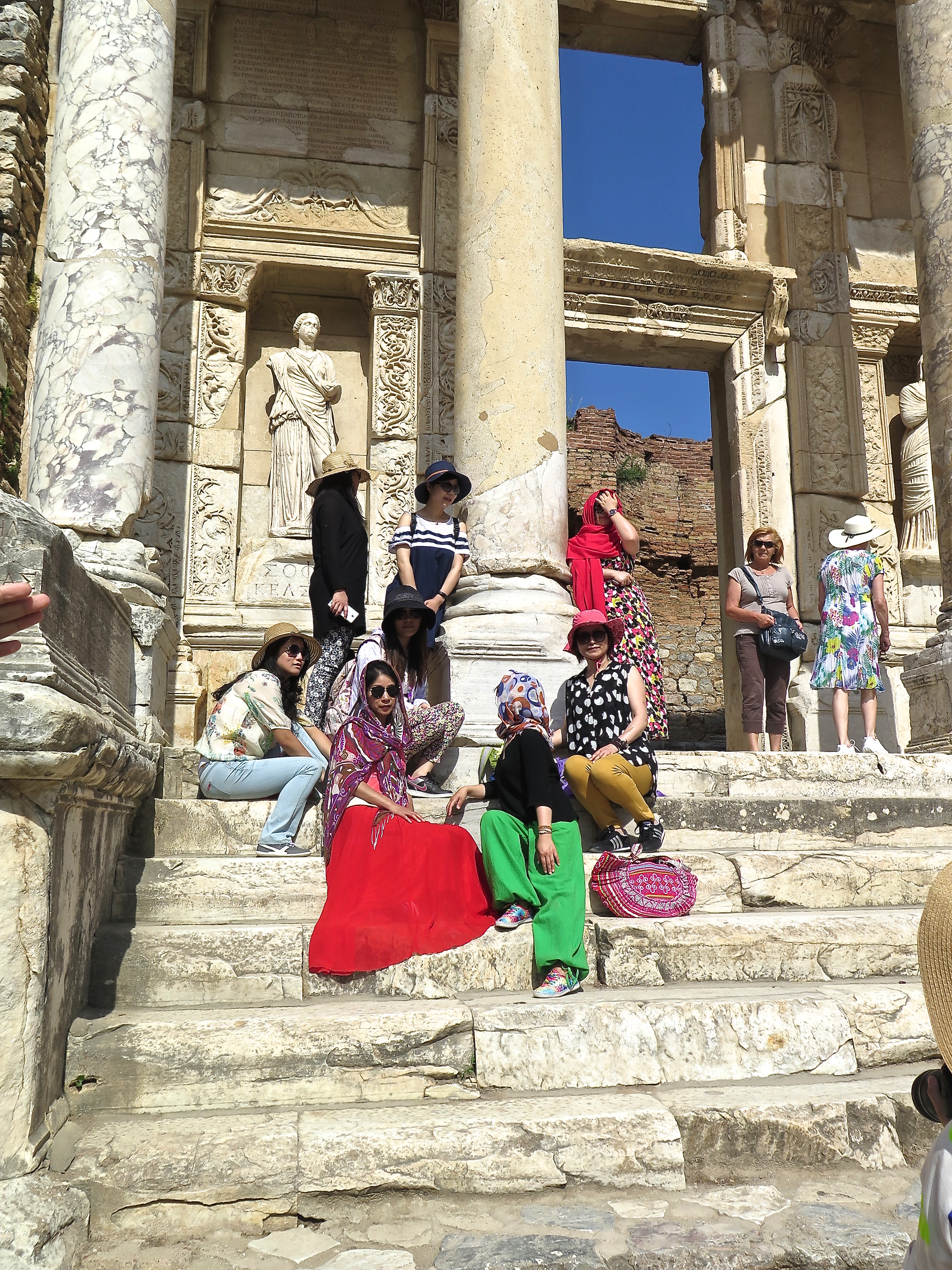
Mostly they would have been coming to see this, the Library of Celsius.IMG_0483
IMG_0482Which can also be draped.

Elsewhere it is possible to find things of this nature (below).IMG_0456


The explanatory tag says, inter alia: The MEMMIUS MONUMENT ‘Built between 50 and 30BC at a particularly prominent site, it is an honorific monument for Gaius Memmius, a grandson of the Roman Dictator Sulla … At present there is no reconstruction at the site, but instead a Cubistic modern architectural collage.’ A Cubistic modern architectural collage eh? So much to learn; so little time.

But on the opposite side of the promenade is a big surprise, something I hadn’t anticipated: an excavation of something like a giant pile of condominiums, where the better off Ephesians lived.IMG_0476

You are looking at several houses here, separated by walkways a metre or two wide. The decoration is startling in its modernity. The women figures wear makeup which wouldn’t be out of place in Flinders Lane. The functions of the house are instantly recognisable. But why should that be a surprise? What’s 2000 years between friends?

Just before we leave the wonders of Turkey …

You climb up to the ruins of Assos via this narrow, rocky street. Not one person invited us to buy anything. Not one.IMG_0389The ruins of Pergamom were great but time spent in the modern city, Bergama, was better. We were sitting down at lunch in a kebab joint and a class of 8 year-olds with minders swarmed in. Very well behaved but hungry kids. Great fun. The wonders of the normal world were generally on offer.  Below, he was banging the bits of fibre glass off the awning with a stick, officially an Occ Health and Safety matter. IMG_0441 •• •• •• •• ••

OLYMPUS DIGITAL CAMERA

OLYMPUS DIGITAL CAMERA

See the bloke talking to me, well he’s been to every one of the 116 grounds used by teams in the English Football Association’s top five leagues. He’s a keen Southampton Saints fan and has seen every match this season, in every part of the country. He’s also a member of the Barmy Army and has been to every test ground in Australia and South Africa. He thinks Melbourne is quite fair enough and liked the atmosphere at the MCG on Boxing Day, but it doesn’t really stack up against an English football crowd. He doesn’t want to go to India because he is confident that he would get food poisoning. ‘They [unclear referent] all do.’ He has tickets for every Ashes test in the 2015 season. He doesn’t like people who drink wine in a shout. He drives a BMW M5, the 412kW model which can do 2oo plus miles per hour, although he has had trouble finding places to confirm that. He has been on 18 cruises. (Count them. 18. His deceased wife got him on to them. They were ‘her idea of heaven’.) The thing he likes best about them is the food and that you don’t have to think about anything. He used to own 17 cabs but now he’s given that over to his daughter. Just takes a third of the profit each year. The British election had not taken place, but he looked forward enthusiastically to Cameron and the Tories getting back in. The other crew? A joke! He also knows quite a lot of somewhat pedestrian jokes, and has a way with a well-rehearsed bon mot. Anything else? Just ask. It’s a pleasure.
•• •• •• •• ••
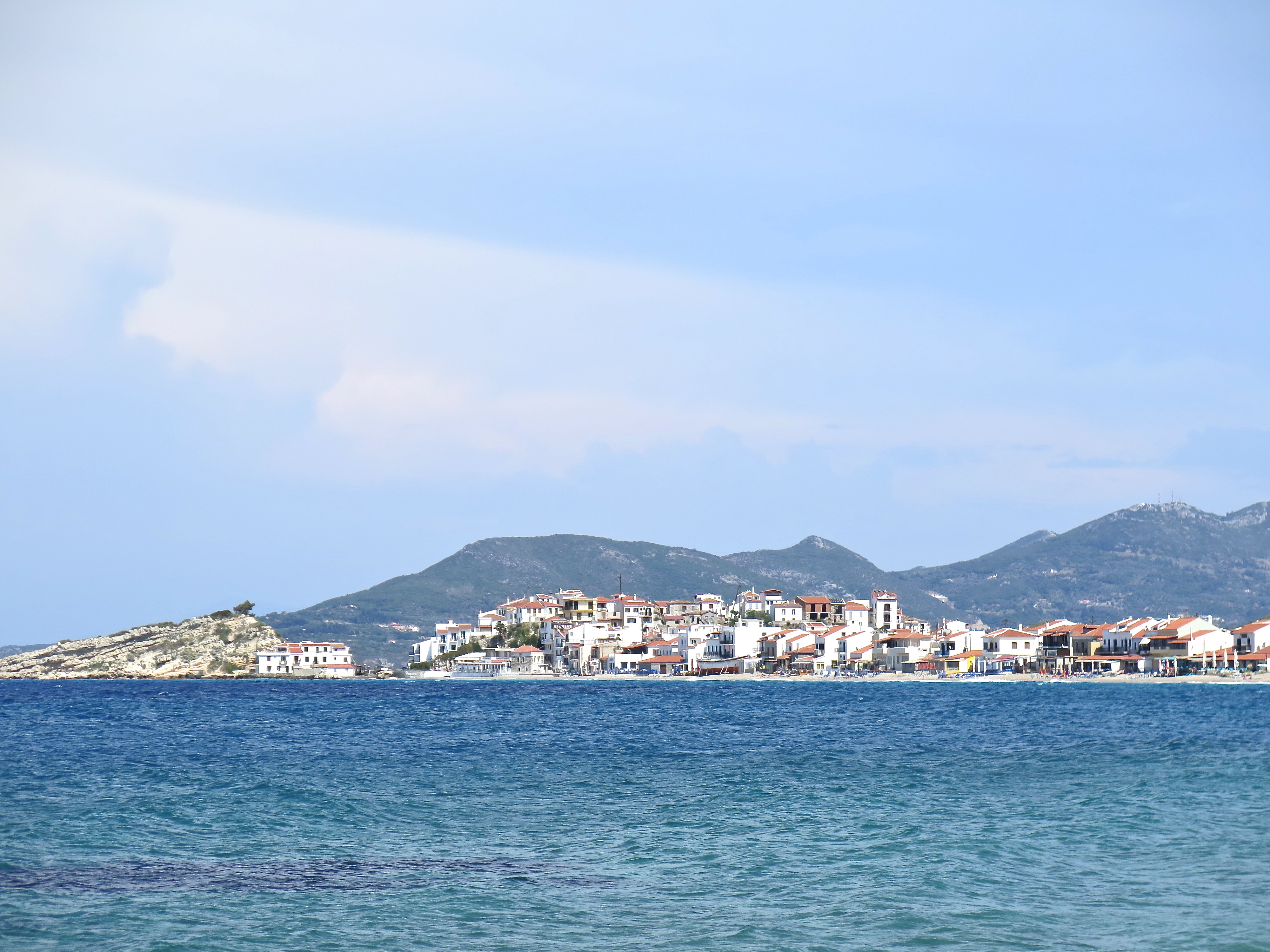
IMG_0518At its closest, the Greek island of Samos is just a few hundred metres off the Turkish coast. But the ferry takes a very pleasant hour round the eastern point. I don’t know what sort of time Paul would have had there. A swim perhaps? A few great meals washed down with some of the island’s famous, and wonderful, muscat? Bit of arguing down the street?IMG_0520
There was a basilica in Samos the town, in Karlovassi the biggest town and maybe in Pythagorio, birthplace of Pythagorus. Orthodox of course. I have no idea what Paul would have made of the Councils of Nicaea. He may have felt it was time to move the Pharisees out of the temple again. Interesting how as a recurring phenomenon they are harder to eradicate than Cape Weed, always festering away.
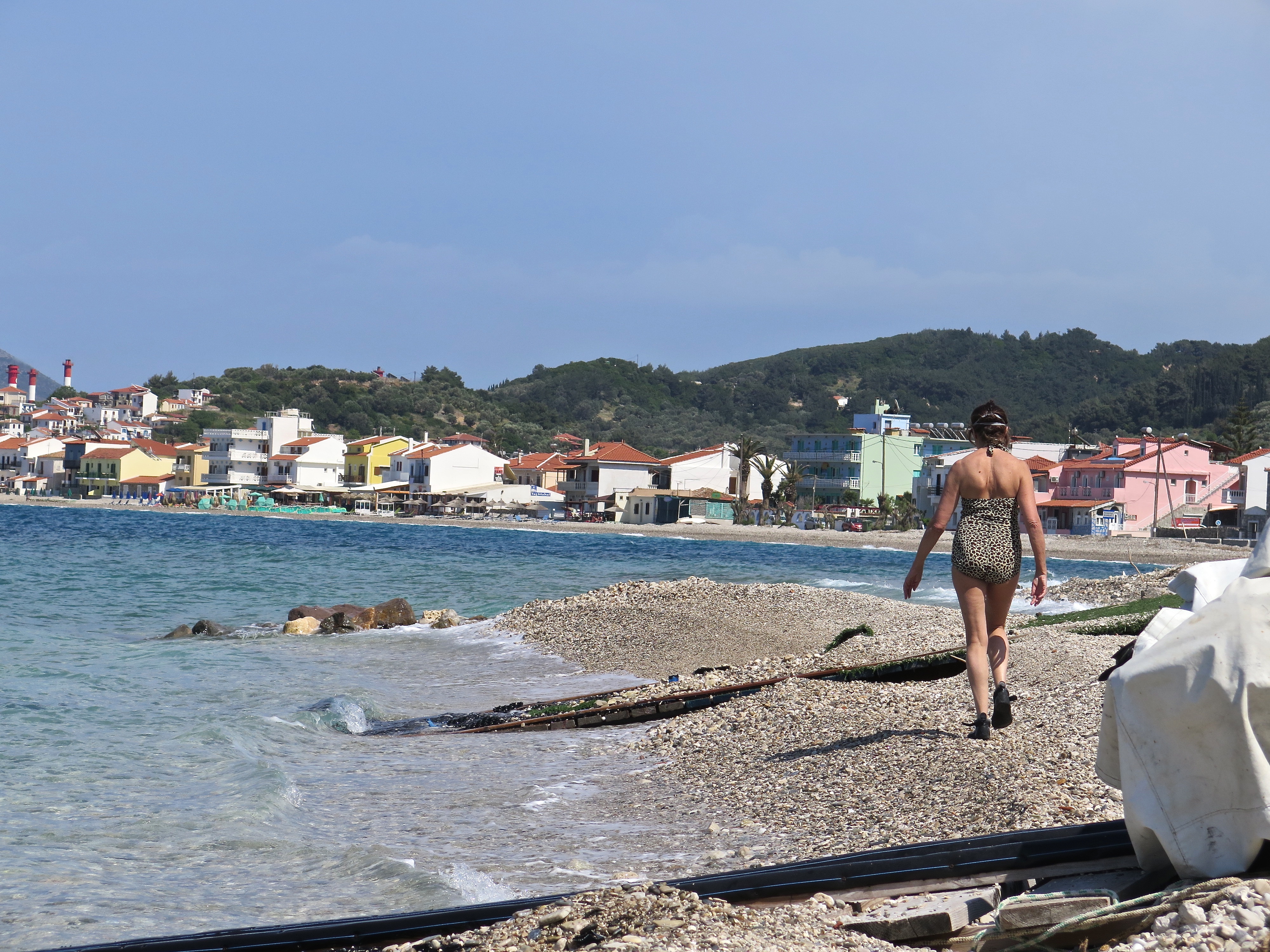
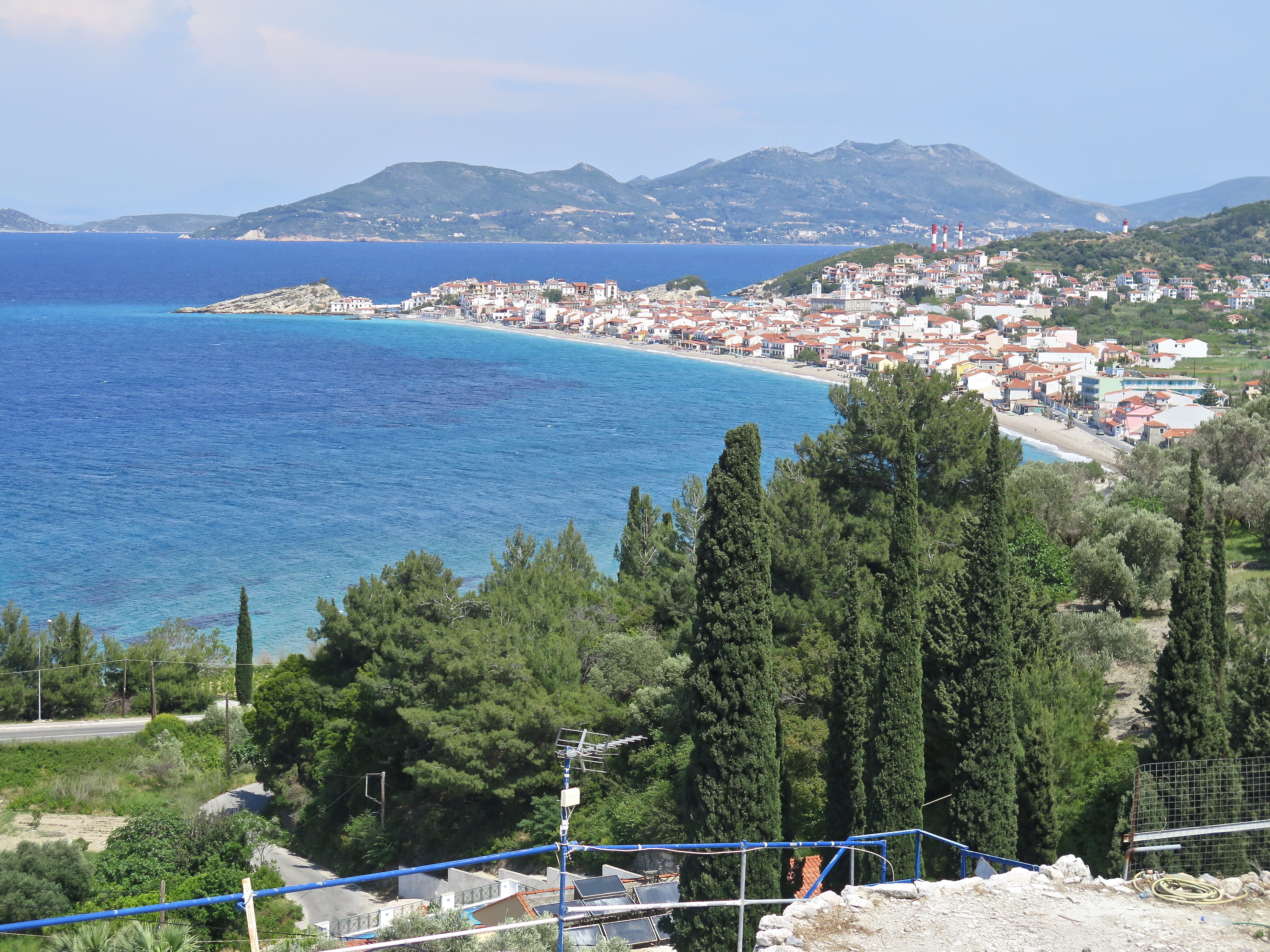
IMG_0517Our hostess at Kokkari described her sybaritic life as ‘perfect. [pause] For seven months of the year. The rest of the time it rains and there is no one here.’ Her hotel had a huge pool and a monster view and a beach you could swim at and, after a short walk, you could dine at Cafe Mythos where we consumed what could have been the best food in two months.IMG_0523This photo has all the appropriate colours, and the representative icons of the beach at least. I don’t have a suitable photo of the verdant hills, burdened with produce: olives, grapes, fruit, bee hives, goats, egg plants, peppers, hosts of other vegetables, maybe a cow or two. But you could live here. I understand about the Greek islands in a way I didn’t before. Ah how travel broadens one.
IMG_0542Up in the hills driving aimlessly we stumbled into a small village which Lord Rowland pronounced authentic as only he can. We found the square, ordered some coffee and fresh fruit juice (it must be said that the owners of one of the properties had lived in Springvale for 10 years, but, you know, c’est normale …) and a minute or two later he said, now all we need is some old men chatting over their coffee.IMG_0544

I like to make sure he gets what he needs.

•• •• •• ••

Paul’s letters provide succour, and direction, to the faithful (and wavering: so many paths, so many maverick offshoots). He’s building an earthly institution with heavenly bricks which is not a task for everyone.

Commentary suggests that what he’s got to say to the Ephesians is meant to apply generally — no personal greetings, generalist in tone, carefully structured and highly polished. And right here in Chapters 1-4 is the dominant language of many forms of contemporary Christianity, laid out with some care but no exposition, plunged straight into use, as though anticipating complete understanding of the mysteries of terms like blood, flesh, spirit and Spirit, cleansing, sanctification, redemption and grace. And this is the ultimate statement about grace. We are being saved from our status as children of wrath, the passion of the flesh, and the desires of body and mind. Rich in mercy, God will save you. This is it. This is the deal.

The other two chapters shift tone and offer some more down home advice: ‘Look carefully how you walk … do not get drunk with wine … wives, be subject to your husbands … the husband is the head of the wife as Christ is head of the church … husbands love your wives … children, obey your parents … fathers, don’t provoke your children to anger … slaves, be obedient to those who are your earthly masters …  Put on the whole armour of God that you may be able to stand against the wiles of the devil.’ The Epistle finishes with a wonderfully poetic plating up: loins, breast and feet, adding shield.

Understanding chapters 1-4 is a matter of faith. They have a cosmic grandeur that, regardless of what is argued in the halls of Tyrannus’s school, you will either go with or be puzzled by. Chapters 5 and 6 however seem to me to provide a very clear message. There is a balance undeniably: wives be obedient, husbands love your wives; kids don’t play up, parents don’t give them cause to, and so on. But the clear message is: Know your place. Don’t rock the boat.

I don’t know how the first century cultural context would qualify and frame this idea; or whether, as well as the Ephesians, Paul is dropping the Romans an incidental line suggesting that this movement, this crusade for new belief, is not dangerous. His Lord did suggest rendering to Caesar that which was Caesar’s. Knowing your place might also be a pretty useful promulgation for someone who is trying to set themselves up as lead director of a new organisation. But I think it probably transcends time as a doctrine. These are ideas absolutely fundamental to any discussion of human behaviour, and in these matters at least he — or whoever wrote this, there is some question — has come down firmly on the side of keeping the status quo in order.

What do Christians do with that? We know the Pope is a Catholic, but is he really infallible for example? Is anyone? Should Christians be unhesitatingly subject to their leaders and, if so, of what are their leaders (husbands, parents, slave masters) made? Is this actually the answer, the thing that will see us right — just shut up and absorb whatever comes, and everyone will be happier? There’s a very big school of thought (led perhaps by husbands, parents and slave masters) coming in behind that as the way to go.

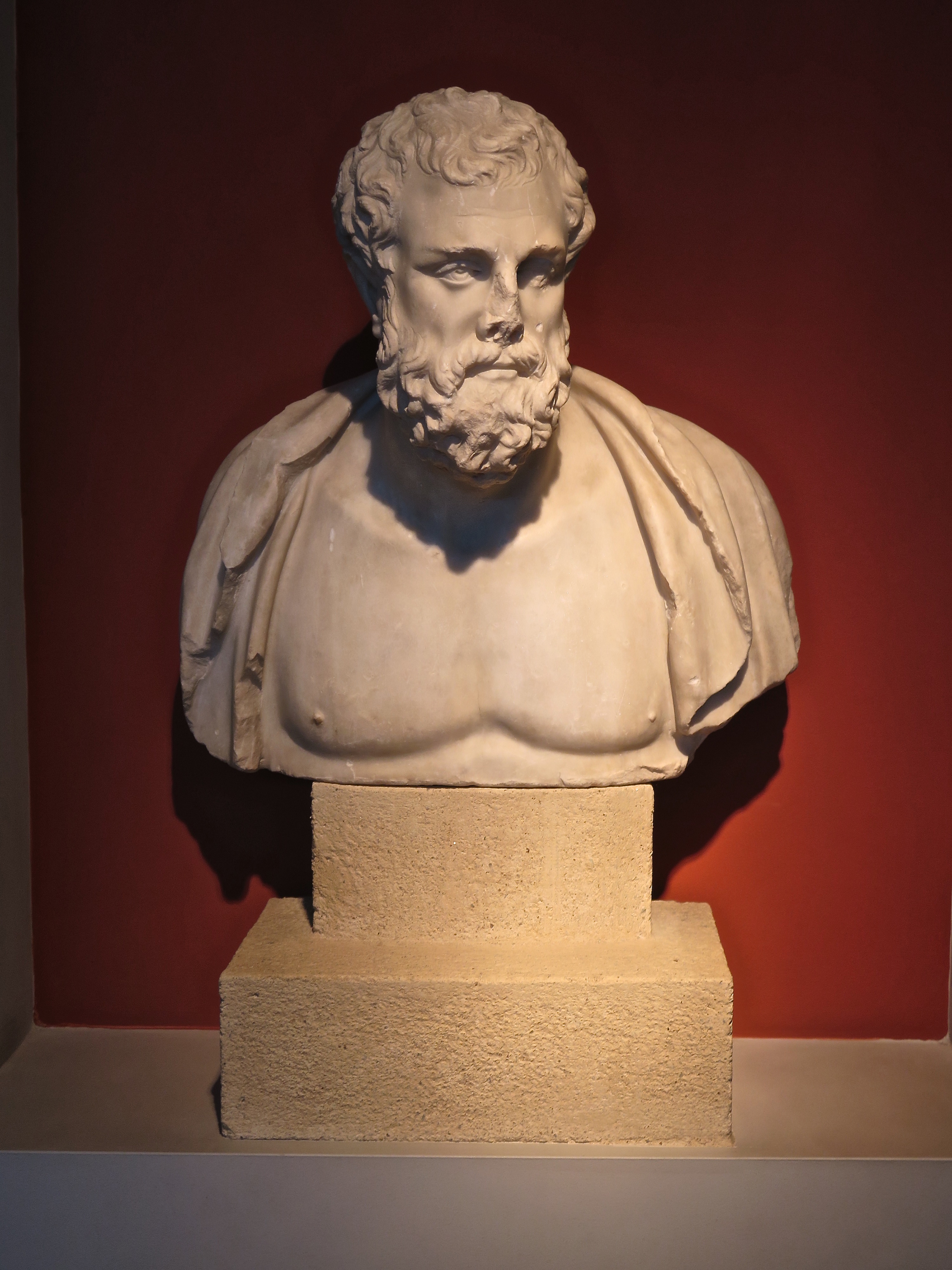
These, of course, are the sorts of tangles you get into when you move from the cosmic to the concrete, and when you move from doctrine to institution. (An ‘intellectual, recognisable as such by his simple himation.’ Thessaloniki’s Archeological Museum)IMG_0562

What did Paul have to say to the Thessalonians?

In Paul’s time Thessaloniki was a Roman ‘free city’, and an important trade hub with a very busy port, a major stopover on the Via Egnata, the main road from Rome (including a sea voyage) to Byzantium (subsequently Constantinople/ Istanbul), still one of the two main drags through the city.

It is known that Paul preached three times there in the Jewish synagogue, the site of which as it happens was 100 metres from our hotel. It was always an important Jewish city and became more so after the Sephardic Jews were driven out of Spain in the late 15th century. Many, even most, found a new home in Thessaloniki. By 1520 they were the majority ethnic group.

The smarties of this group reminded Suleiman (the Magnificent, the Ottoman Sultan of the time) of Mehmet’s proclamation of religious freedom in 1358, and in the process generated an agreement whereby they were able to pay sub-wholesale prices on goods as long as they took on the task of making Thessaloniki a trade centre. Well they thought about that for a fair while and ummed and ahhed … no they didn’t. They realised all their Hanukkahs had come at once. Over time this agreement made Thessaloniki an extremely important financial centre as well as responsible for the trade of 55% of the tobacco consumed across the world. As ever, the good times weren’t to last, but that’s another story. IMG_0596

This information and this photo come from the Jewish Museum in Thessaloniki. The city also has two very good museums devoted to Archeology and Byzantium. And great food. And good hotels. And all in all was a very good place to visit. (And just by the way is also the birthplace of Mustafa Kemal Ataturk as well as the heartland of the Bulgarian Revival Movement.)IMG_0595

What did Paul have to say to the Thessalonians?

Maybe … Weren’t we good to you when we came to stay? ‘Like a nurse taking care of her children?’ We worked really hard separately, and together, didn’t we; and we are missing you terribly. I was worried. That’s why I sent Timothy down to check how things were going and I’m thrilled to hear you’re all sticking with it. Keep it up. Great. Just in case you were wondering, if you don’t ‘sudden destruction will come upon [you] as travail comes upon a woman with child and there will be no escape.’ We are sons of the light not darkness. ‘Since we belong to the day, let us be sober, and put on the breastplate of faith and love, and for a helmet the hope of salvation.’

The second letter contains some material in the same vein — good on you, we’re so proud, we’re talking up the Thessalonian church all over the place. The aeschatology is slightly more florid in its expression, with ‘mighty angels in flaming fire’ on our side, but ready to do some serious damage to the unbeliever. However the main purpose of the letter seems to be to reassure the faithful that the Last Days are not imminent and that anyone who says otherwise is, well, ‘a son of perdition.’… ‘If anyone refuses to obey what we say in this letter, note that man, and have nothing to do with him that he may be ashamed.’

If you go and see a film called ‘Going Clear’ you can watch this in action. Very hard work setting up an organisation, particularly one based on system of belief rather than a concrete operational program with tangible product. And do you have any choice but disconnection? That’s a serious question. Banishment is more lingering but seems more humane than slaughter.

And here we were in Greece in the middle of all the carry on about the ‘Grexit’. I can imagine the letters being sent from Germany and France to Mr Tsipras and the even more racey ones going until recently to Mr Varoufakis.If anyone refuses to obey what we say in this letter, note that man, and have nothing to do with him that he may be ashamed.’ And so it goes.

‘That men do not learn very much from the lessons of history is the most important of all the lessons of history.’ A. Huxley. No fool.

•• •• •• ••

We saw icons to burn in Thessaloniki, although given its appalling history with fire that is an inapposite thing to say. Icons both ancient and modern.IMG_0571IMG_0582IMG_0589IMG_0581


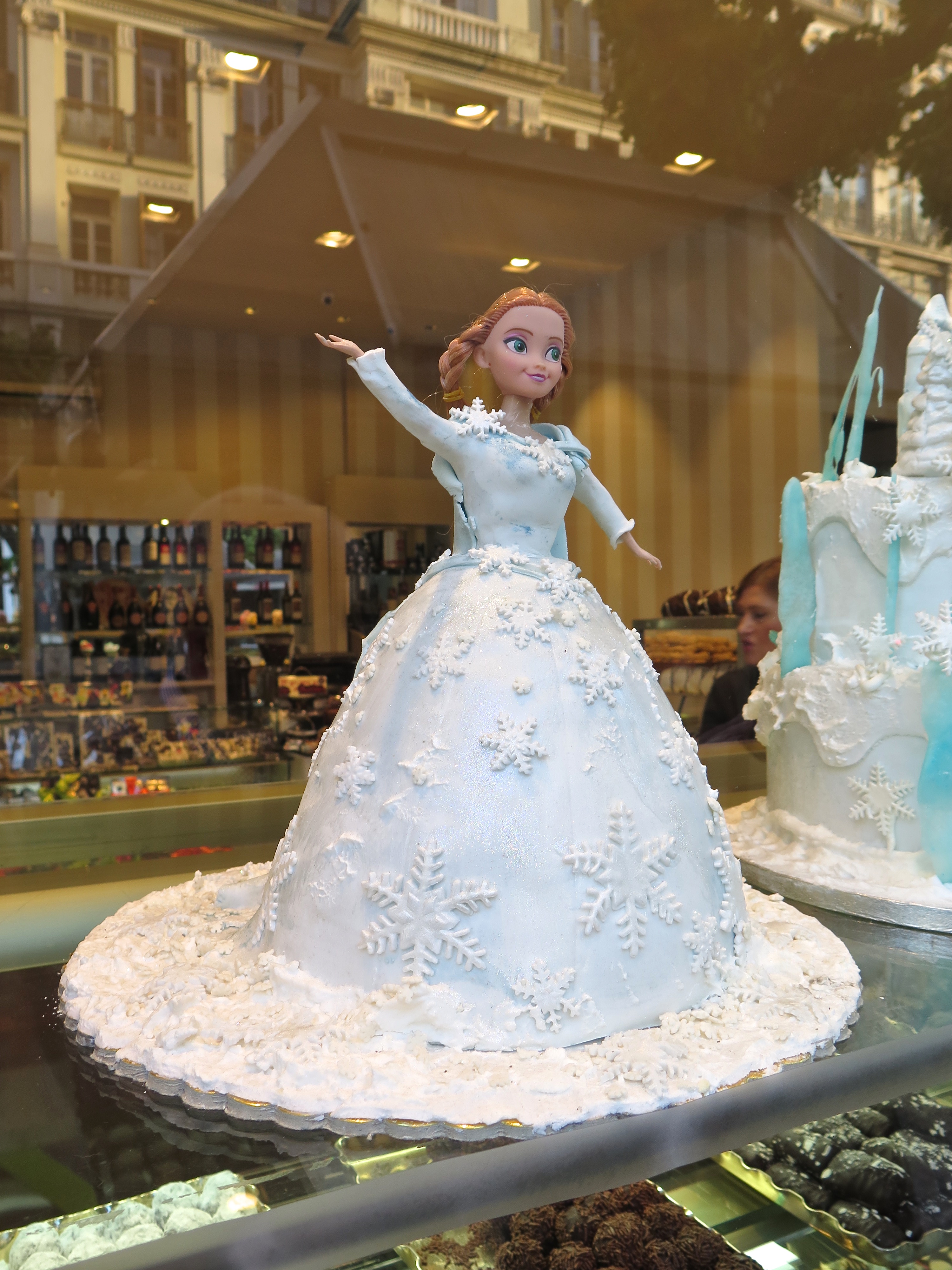
And yes it’s Elsa from ‘Frozen’ and she’s a cake. We know that because we have grand daughters, and we live in the modern world. Heaven knows what Paul would have made of it all. 

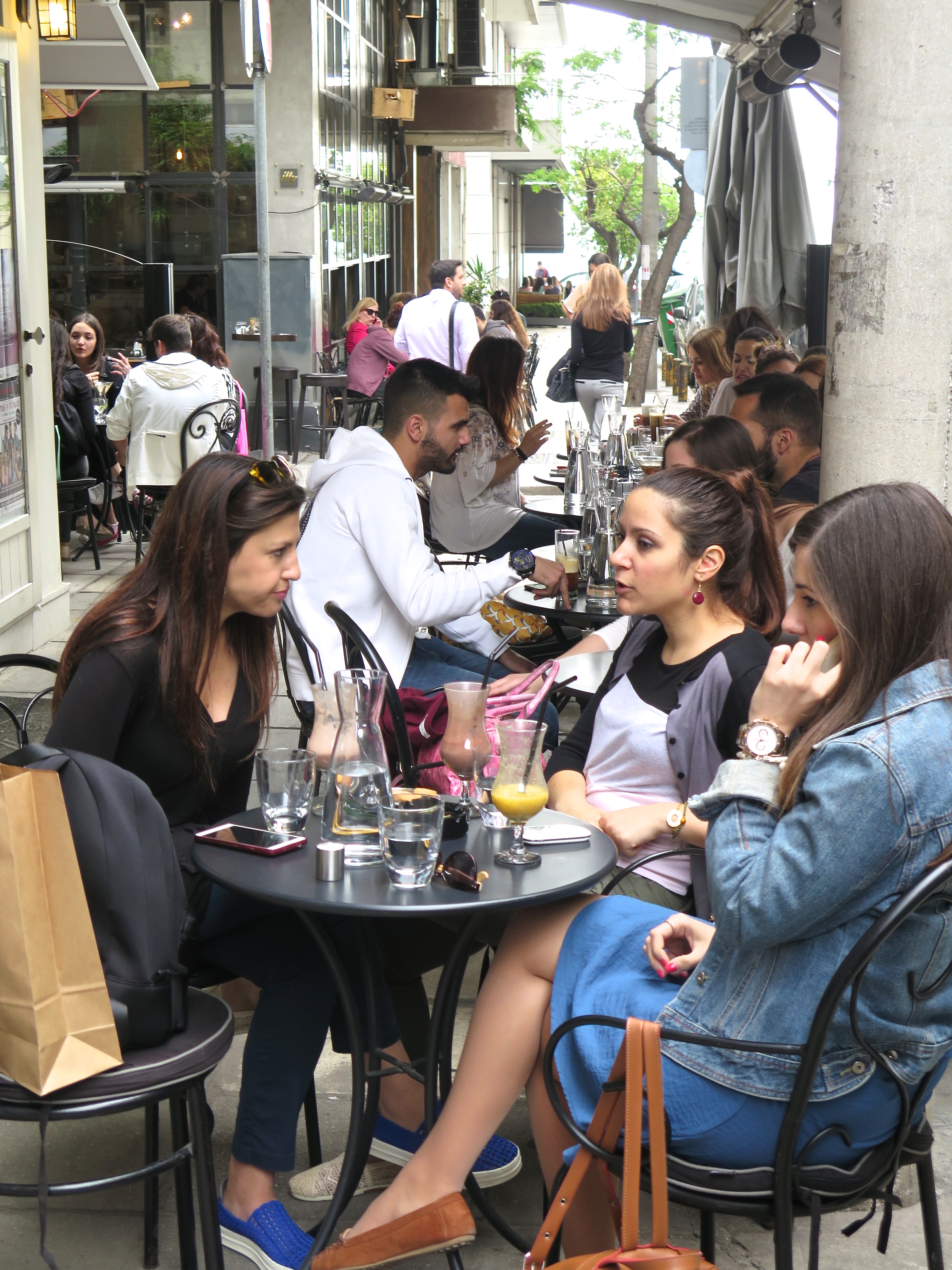
How was Thessaloniki? Buzzing, happy, apparently prosperous, a delight to visit. Like this.IMG_0576

But there are some things you can never leave behind. Eeeeeeeeeeeee …IMG_0598

To Belgrade, to Beograd, to meditate on what it means to be a Serb.

Gallipoli: Two Stories

IMG_0360
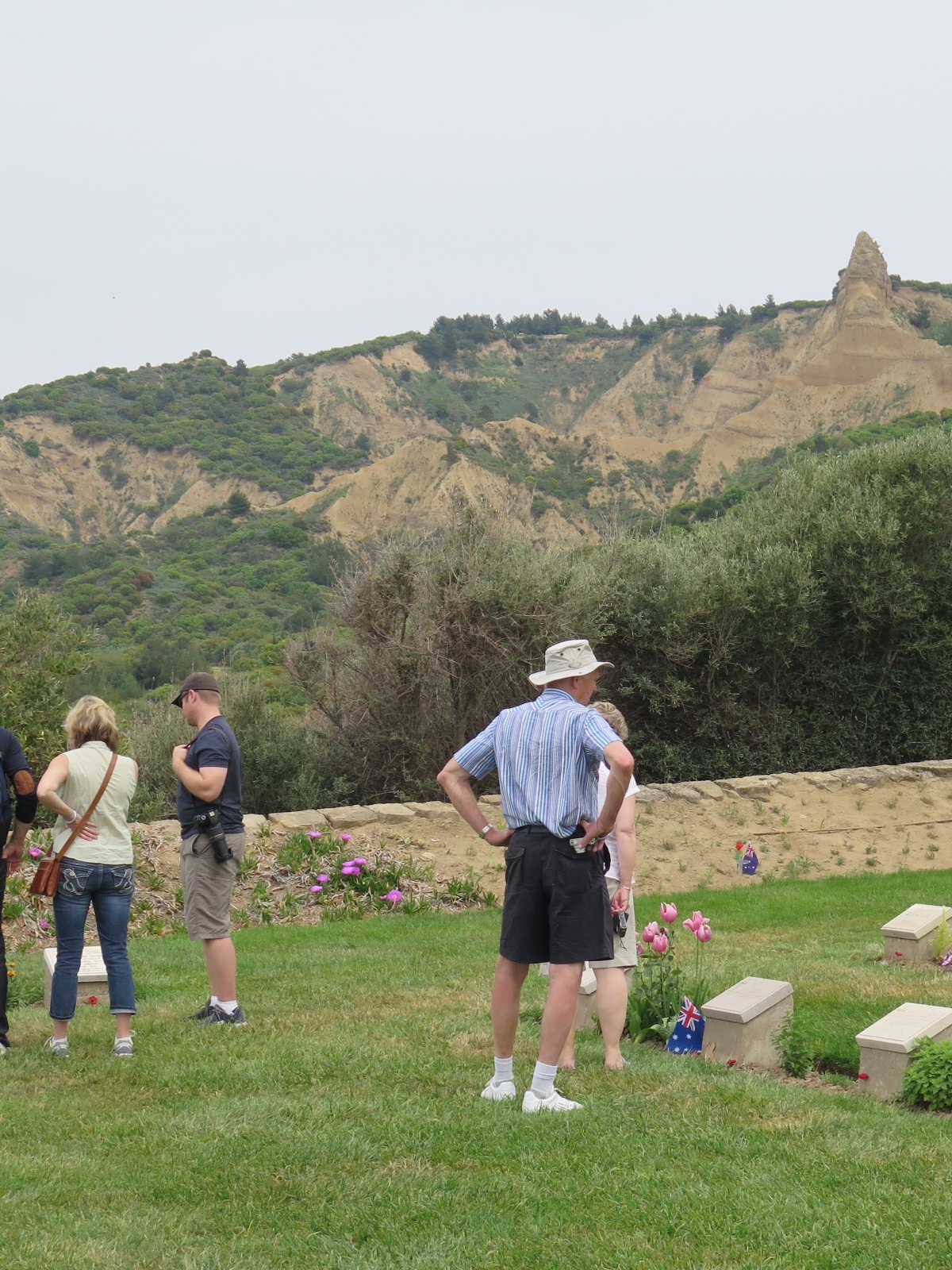
IMG_0362This is Gallipoli. A National Park with many well-used walking trails incorporating a very few very small villages, one of which, Kocadere, we stayed in.

There were two stories here for me.

The picture below summarises one of them. These are the clay hills of Anzac Cove with The Sphinx in the top right hand corner. The stance, suggesting thoughtfulness and incomprehension, seems entirely appropriate.

IMG_0879IMG_0309In the other direction the Hellespont, 1.2 kilometres at its narrowest, swum by George Gordon Lord Byron on 3 May 1810 and now by many others on the annual anniversary. It has an undercurrent as well as a surface current — which go in different directions and also change direction — and is one of the most crowded and dangerous shipping routes in the world.

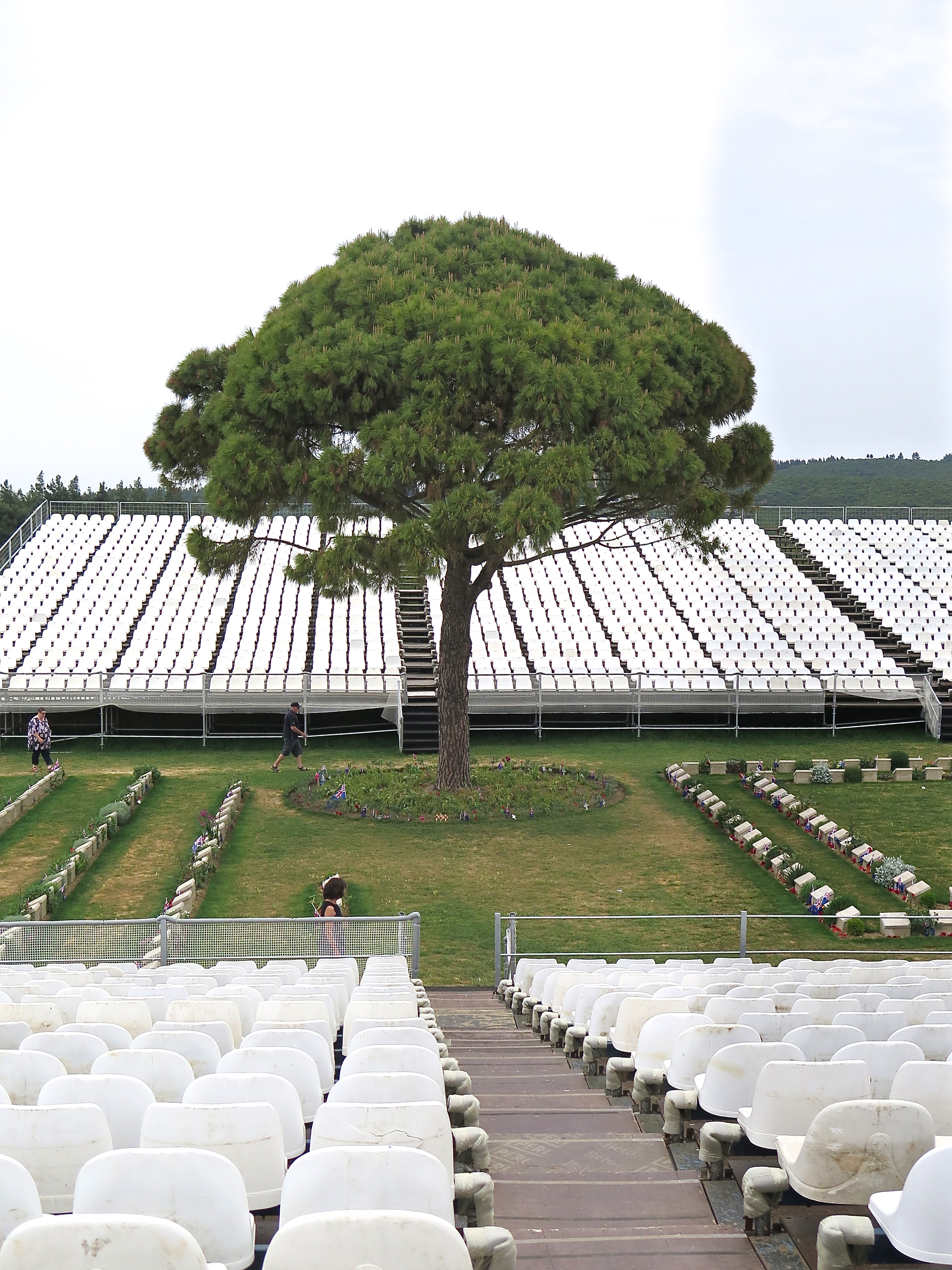
We were there 12 days after the centenary of the famous Anzac landing, and the residue of the impact of the centenary commemorations was everywhere.IMG_0318 This is the lone pine at Lone Pine for example.

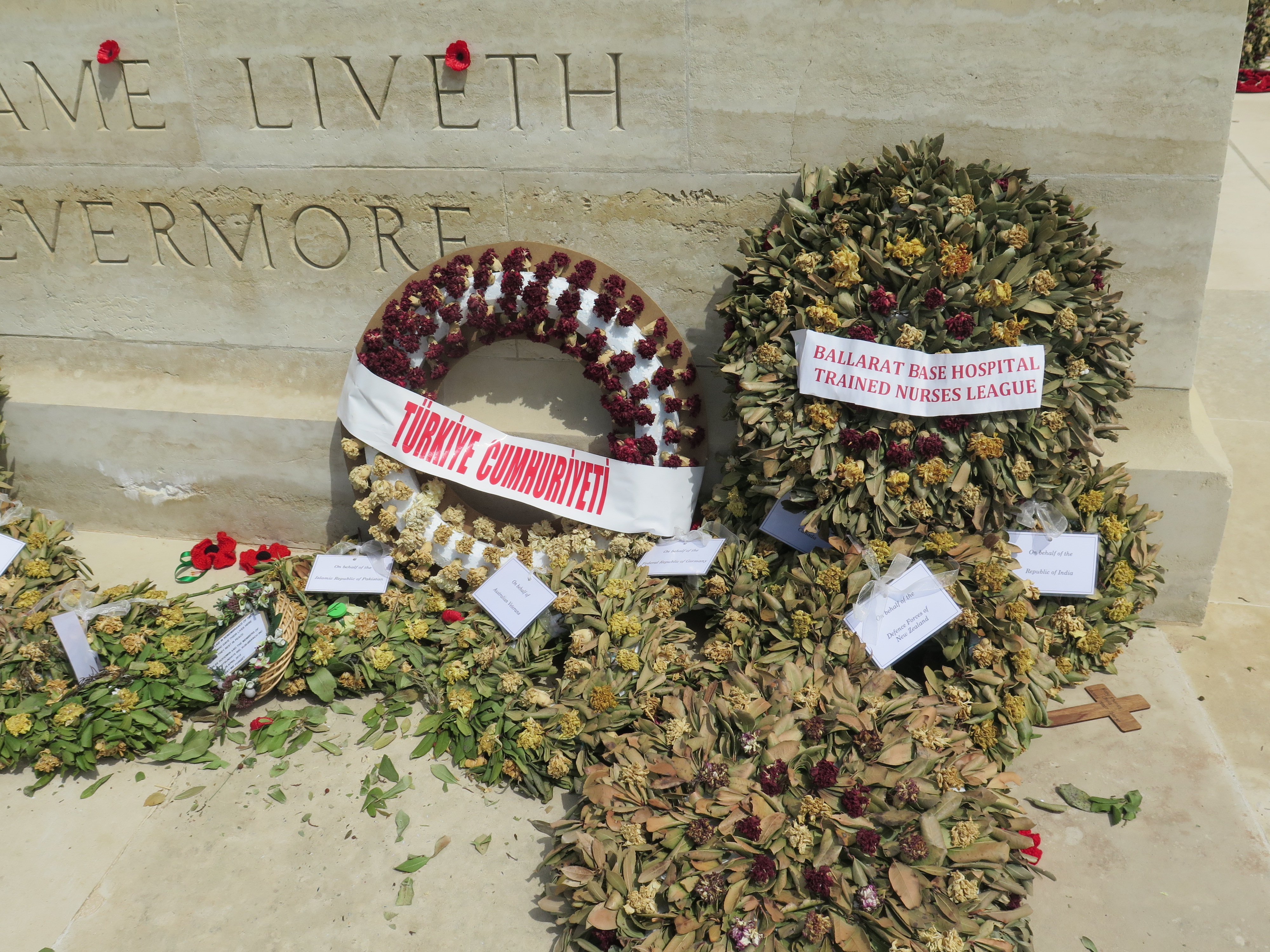
And here are some of the fading wreaths.

IMG_0321

This set has contributions from many of the major players. You can’t read them but the cards say: On behalf of the Federal Republic of Germany, The Turkish Republic, the Government and People of Canada, the Republic of India, the Islamic Republic of Pakistan, the Defence Forces of New Zealand, the Government of France, etc. But, as you might be able to read, one of the most visible is that from Ballarat Base Hospital Trained Nurses League.

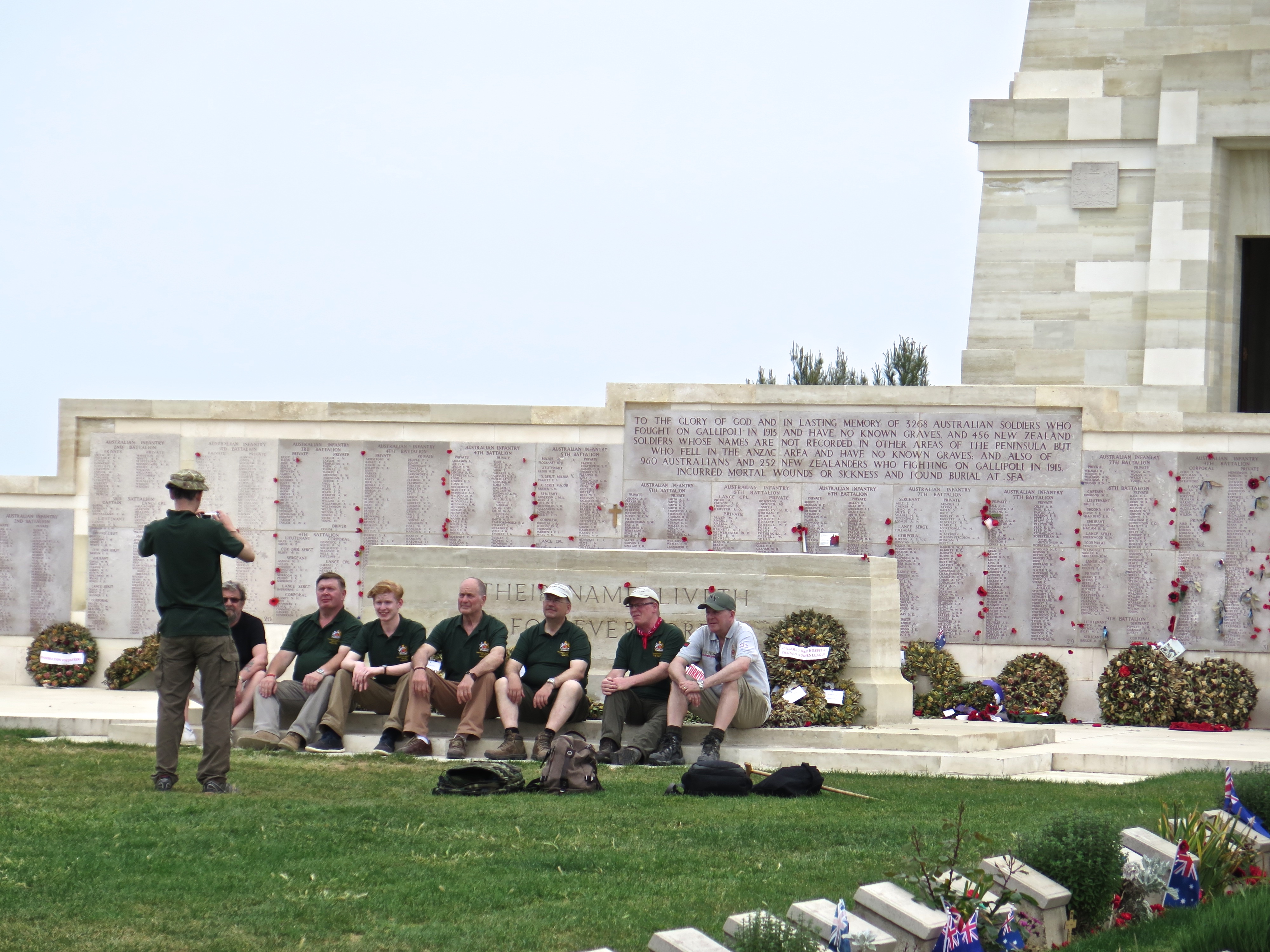
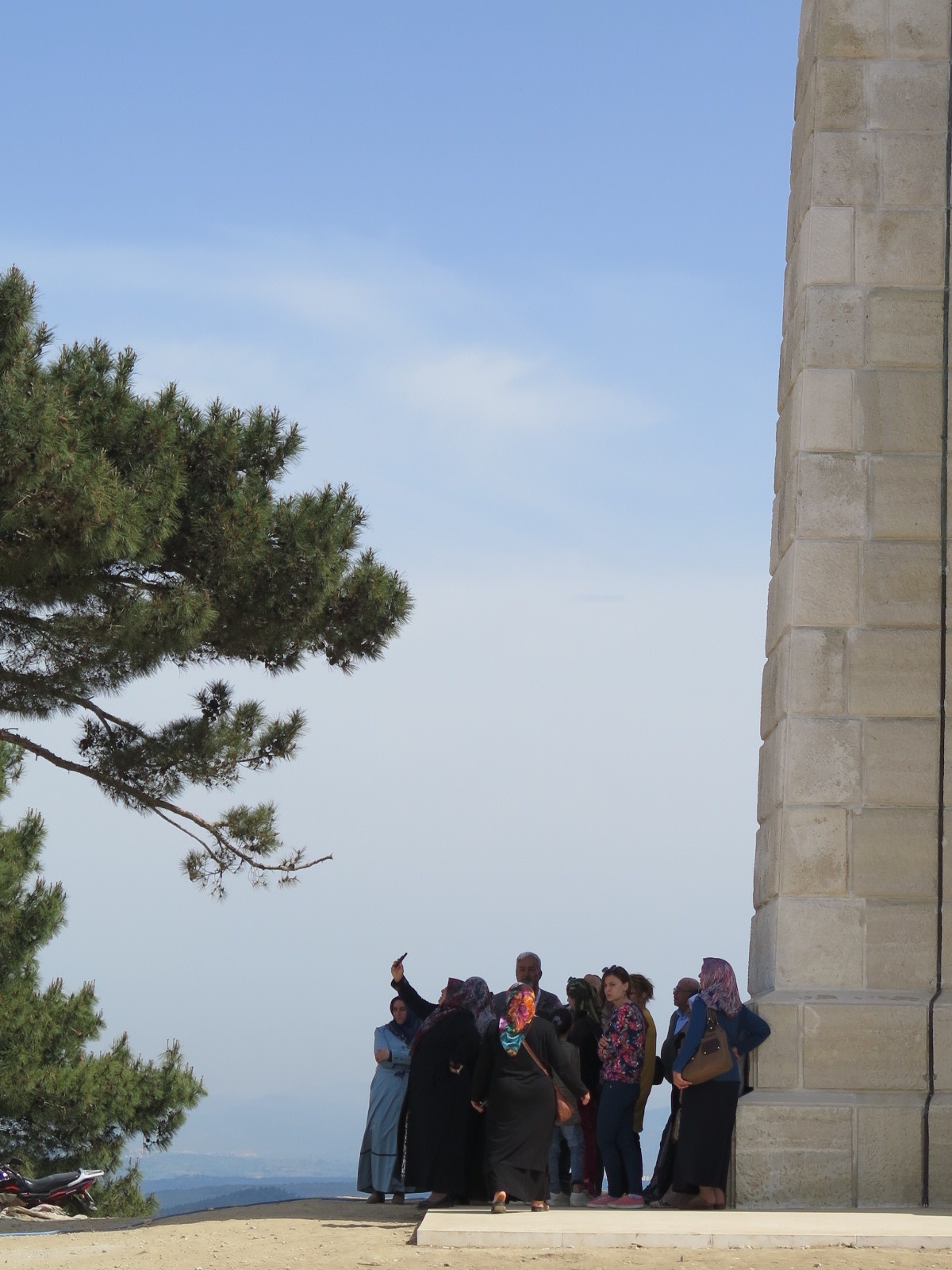
Below is the sort of thing Australians might anticipate populates the area, Aussie mates, comrades, pilgrims, visiting a semi-sacred site, ‘where the country became a nation’. These blokes might have climbed up one of the many trails on the Peninsula through its, now, thickly-wooded ribs to get here — feeling it, spending time just getting a hint of what it might have been like.

IMG_0315
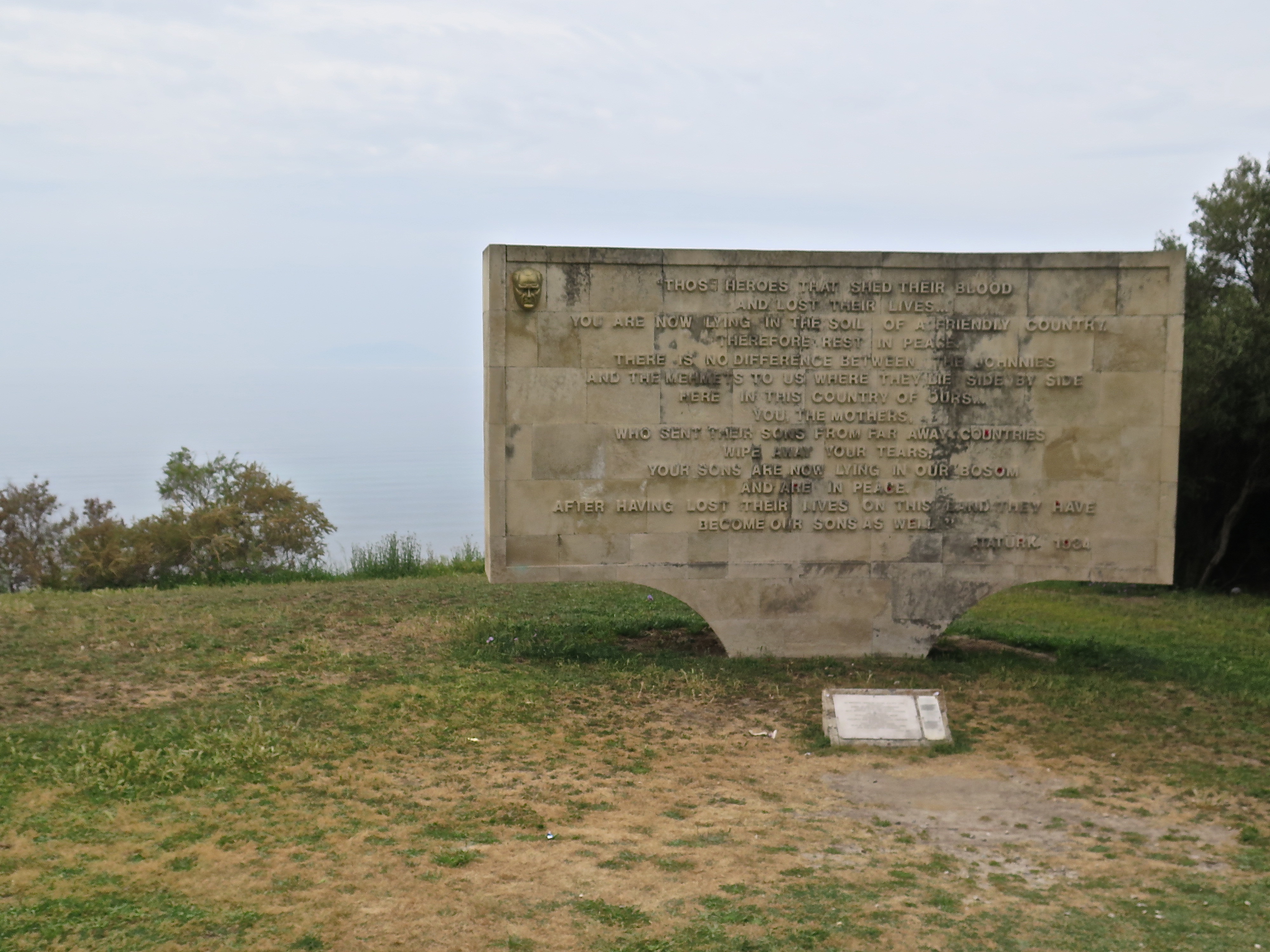
They will have encountered, appreciated and might well have been comforted by Mustafa Kemal Ataturk’s words:

Those heroes that shed their blood and lost their lives … you are now lying in the soil of a friendly country. Therefore rest in peace. There is no difference between the Johnnies and the Mehmets to us where they lie side by side here in this country of ours. You, the mothers who sent their sons from far away countries, wipe away your tears. Your sons are now lying in our bosom and are at peace. After having lost their lives on this land they have become our sons as well.

1934. What a man. How visionary, how conciliatory, how truly grand. And this becomes the second story.

[IMG_0307A footnote to hand here that will not invalidate the second story, but may cause trouble with the quote above that is actually set in stone at Anzac Cove (at left) and at three other sites in Australia, NZ and Turkey. Read this: Words about the Anzacs are shrouded in doubt. 

‘Very few things happen at the right time, and the rest do not happen at all. The conscientious historian will correct these defects.’ ~Herodotus, The History of Herodotus]

Back to the story … This photo of a Gallipolean photo event is more typical.IMG_0323Or this one.IMG_0346The nation actually made here was modern Turkey.


IMG_03278,709 Australians died during these battles; another 18,000 were casualties — clearly the site of a major military tragedy. And yet the 2,779 New Zealanders who died (with 5150 missing or wounded) represented a higher proportion of their country’s population. The 22,000 British soldiers who died, not to mention the 27,000 French casualties, nor the Indians, nor the Senegalese, probably fought just as bravely as the Anzacs. 198,000 Allied casualties were evacuated from the Peninsula. This was one of the things going on at Suvla Bay (over on the horizon in the pic at left; the sign says something like ‘Ataturk’s lookout’ or ‘where A. supervised from’) where, as one commonly heard story has it, the English were having a tea party. It was actually the site of a vast makeshift hospital.

Despite — or perhaps because of, it is war after all — the deaths of 86,692 soldiers with nearly 170,000 missing or wounded, the Turks prevailed. (In truth, the Ottomans; Turkey didn’t exist.) Mustafa Kemal was their commanding officer.

IMG_0328He began the Gallipoli campaign as a Colonel in charge of the 17th Division, but after successfully predicting the movements of the Allied troops at two crucial moments he was given overall command of the Ottoman forces. One of these moments was during the initial Allied landing when he orchestrated the occupation and control of the ridge above the invaders. Without this action, the outcome could well have been different.

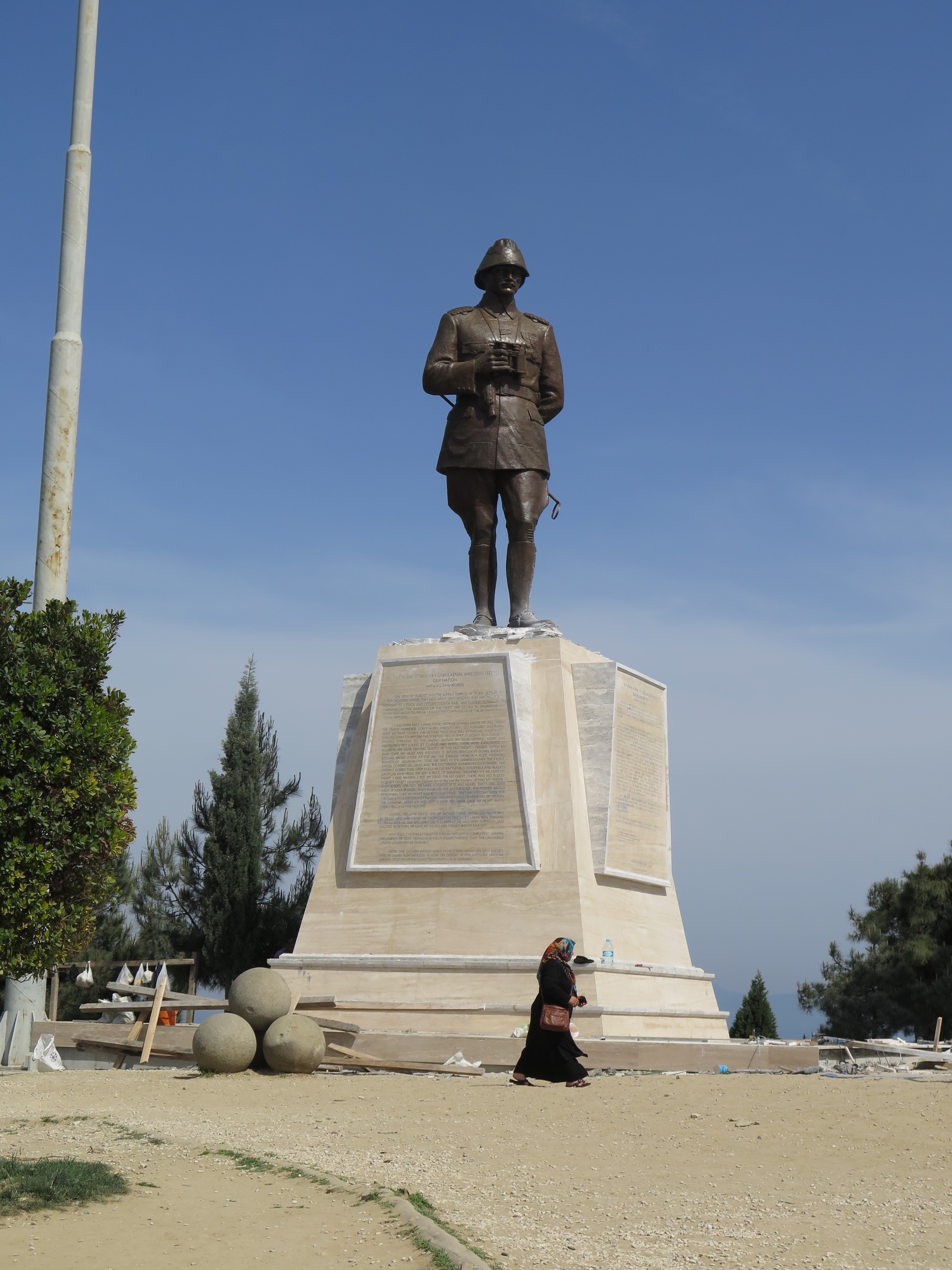
During the fighting Kemal (‘Perfection’, a name he may have been given by a maths teacher or, as seems more likely, by himself) was hit in the chest directly over his heart by a piece of shrapnel. He was saved by a pocket watch which was destroyed in the process, the remnants of which he later presented to Liman Von Sanders, his German colleague. This story is told in several languages by the plaques on the plinth of this statue.

Unknown-2Hailed as the ‘Saviour of Istanbul’, a few hours drive away, Kemal became a public figure and his political interests received a major boost. Such is his centrality in Turkish history of the last 100 years that it seems obvious to me at least that this — the Gallipoli campaign, and its result — is the launching platform for the new, post-Ottoman, Turkey — the modern, secular state. Still.

Postwar, in their customary enlightened way, the Allied powers stripped all Arab provinces from the Ottoman Empire (the Sykes-Picot Agreement establishing the conditions for many of the current problems in the Middle East), put the Greeks in charge of a region surrounding Smyrna (on the Turkish Aegean coast, now Izmir) and asserted economic control over what little of the country remained. At this point, Kemal was already a key figure in an independence movement based in Ankara, the goal of which was to end foreign occupation of Turkish-speaking areas and to stop them from being partitioned.

The Sultan’s government in Istanbul sentenced Kemal to death in absentia, but he continued building both military and popular support. With the help of money and weapons from Soviet Russia, he conducted a series of successful military campaigns before turning his attention to the Greeks, who had left a bitter trail of destruction during their drive towards Ankara.

With Kemal at the head of the army, the Turks stopped this advance and several months later launched an offensive that sent the Greeks into full-scale retreat all the way back to Smyrna. A fire coupled with the depredations of angry Turkish soldiers drove several hundred thousand Greek and Armenian residents to evacuate, permanently. [One utterly absorbing account of these events can be found in Louis de Bernieres’ Birds Without Wings.]

Kemal then threatened to attack Istanbul, occupied by the British and other Allied powers. Rather than fight, the British agreed to negotiate a new peace treaty and sent invitations to both the sultan’s government in Istanbul and Kemal’s government in Ankara. But before the peace conference could begin, the Grand National Assembly in Ankara passed a resolution declaring that the sultan’s rule had ended. The last Ottoman sultan fled his palace in a British ambulance. A treaty was signed in July 1923 that recognized an independent Turkish state.

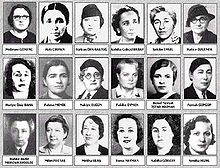
Unknown-1That October, the Turkish Grand National Assembly proclaimed the Republic of Turkey and elected Mustafa Kemal as its first president. (It was 1934 when the name Ataturk, ‘Father of the Turks’, was granted to him.) He then set about the task of turning Turkey into a modern country. Thousands of new schools were built, primary education was made free and compulsory, business and industry were reformed, women were given equal civil and political rights and elected to parliament. These 18 women were members of parliament in 1935.
220px-First_female_MPs_of_the_Turkish_Parliament_(1935)

He also encouraged the wearing of western dress and was emphatic that the country’s development must be secular.

IMG_0438

We were also at Gallipoli just prior to the recent Turkish elections. Our host at Gallipoli Huts, Eric the Belgian Turk, charming, chatty and angry, told us at some length of President’s Erdogan’s scurrilous plans to curry favour with poorly educated voters from the central and eastern hinterland. Erdogan appears at right in a carefully air-brushed campaign poster from a hoarding in Bergama. Eric, who might know, claimed that during the past few months 35,000 of these people had been bussed in to Gallipoli free of charge with an unexpected 200 Turkish lire in their pockets. At the same time membership fees of the Muslim League were paid by the government and women were being encouraged to wear headscarves.

This was a modest example of one of the many provided by Eric and Onur of Erdogan’s perfidy and corruption. (For example, here and here and here.)

So Erdogan, this odious man, is using the talismanic aspect of Gallipoli for his own purposes, in the shadow of Kemal but so obviously traducing his memory. This is happening now and, in terms of significance,  seems so much more immediate and telling than the connections Australians might want to establish here.
IMG_1239

There are statues of Kemal everywhere in Turkey. They pop up in the most surprising places. But this one might be considered important as the central focus of Taksim Square where these sightless eyes recently watched the violent break up of a gay pride celebration at Erdogan’s instruction. Kemal had trouble maintaining personal relationships. I don’t know what his attitude to the LGBTI world might have been.

IMG_0298This is Gallipoli, a modern National Park where people frequently come for the sole purpose of bush walking, some every year, although Eric sells the Australian Department of Veteran’s Affairs 500 room nights of accommodation every year. The park has several petrol stations on its outskirts where first class food is served. Gallipoli Huts at Kocadere come highly recommended for both accommodation and food. In the last photo of a photo, Onur is obliging Eric the Belgian Turk, his wife and crew — something to include on Facebook or Trip Advisor. I can’t remember. Something to include in the modern world of which we, and the Gelibolu Peninsula, are a part.IMG_0333

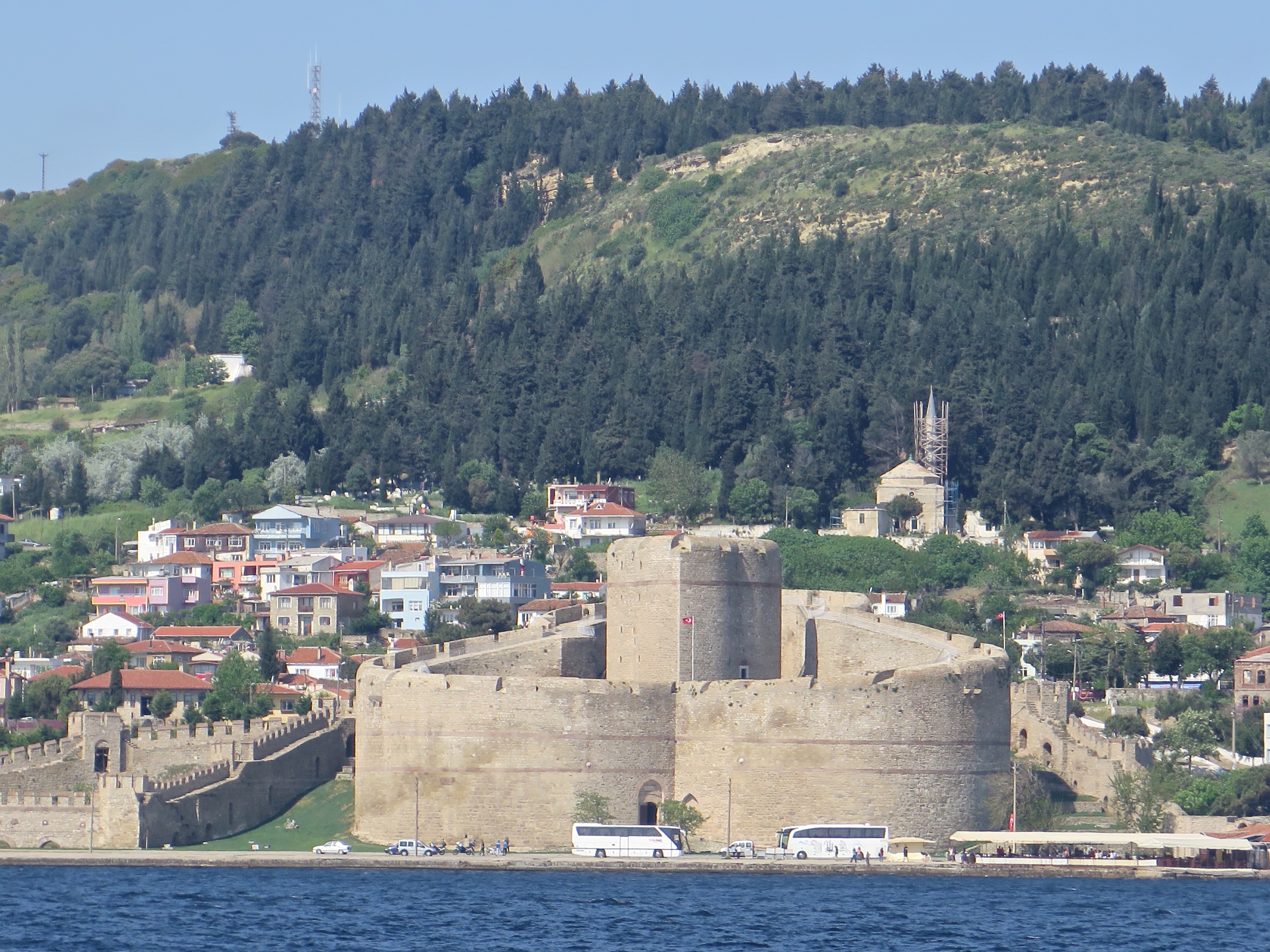
IMG_0366As you leave the Peninsula on the ferry to go to Canakkale on the oriental side of the Dardanelles you look over your shoulder to see the fort at Eceabat, a symbol of the guard house this place has always been; but also something more literal. This.

IMG_0363As translated by Onur, loosely but absolutely to the spirit, it says: ‘Stop Traveller. You don’t know that this land you’re stepping on is a place where one era finished and another began. Stop and think about that.’

That’s the big story.

Next: Following the tracks of St Paul.

Istanbul: Tourism

In the top three cities of the world, my top three anyway. (For differing reasons, Shanghai and Rome.) Vivid, maritime, exotic (ish), historic, a crucible, noisy but manageable — just the place to remind you you’ve arrived on the other side of the world. IMG_0168The anteroom of the foyer of our hotel, the Pera Palace. High tea was available here after 2.30pm. Agatha Christie wrote Murder on the Orient Express on our floor in a corner room across from Mike’s. (Amaze yourself.)IMG_1234

Myrna casting her shadow on Mesrutiyet Caddesi early in the morning. And below, on Istiklal Caddesi, Freedom Street, a main drag if Istanbul has one — about the same time. Besides it being Englishtime, the two figures make the photo worthwhile.
IMG_0180The church of Holy Wisdom, Hagia Sophia, a version of which has been on this same rather splendidly located site since 537AD. It became a secular monument in 1937 in one of the ambitious reforms of Ataturk’s government. This is a standard photo — the scaffolding adds a certain piquancy — but the building’s grandeur is undeniable. For some reason I liked it much better this time. IMG_0211The Basilica Cistern. You don’t think much about places to store water. But if you didn’t have any you would. James Bond happens to have been here as well. (‘From Russia with Love’. The fish are still there, but let me tell you he wouldn’t have got far. What’s with the grey suits I wonder? They have serial longevity as a recurring motif.)IMG_0214The twist here is provided by two upside down stone heads, one of which appears here. There are all sorts of stories about them, but as evidenced by a look at the other columns it is simply an arresting case of recycling.IMG_0217Tremendously exciting for the visitorsIMG_0224
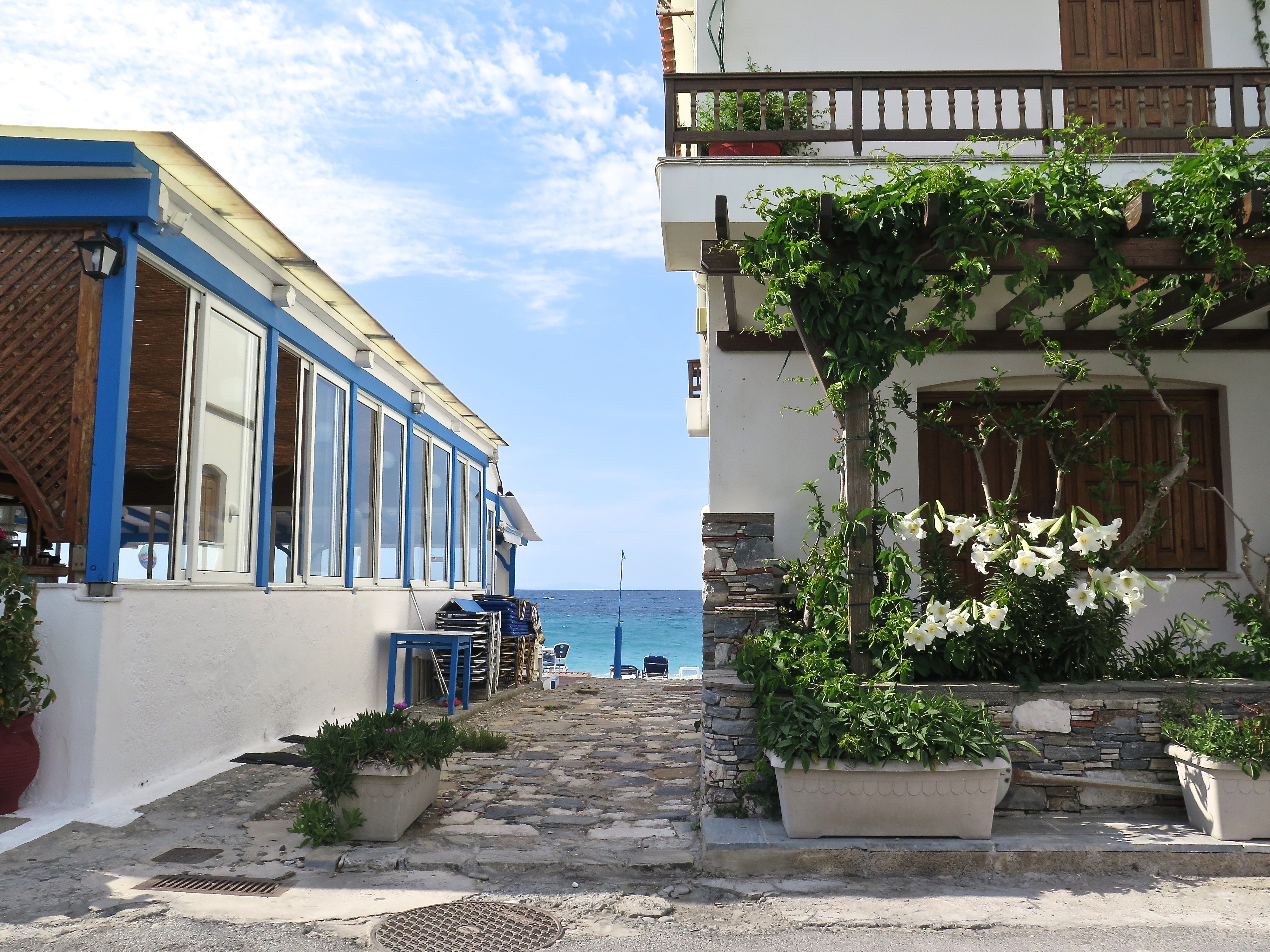
who nonetheless do not frequent the cafe, unappealling in this cool, and dank, environment.IMG_0231A guard, stopping people surging forward in the Blue Mosque. She missed one chap — Indonesian I think — who spent a happy few minutes taking selfies with his iPad. I have a pic of him too but this one includes more of the glorious building.
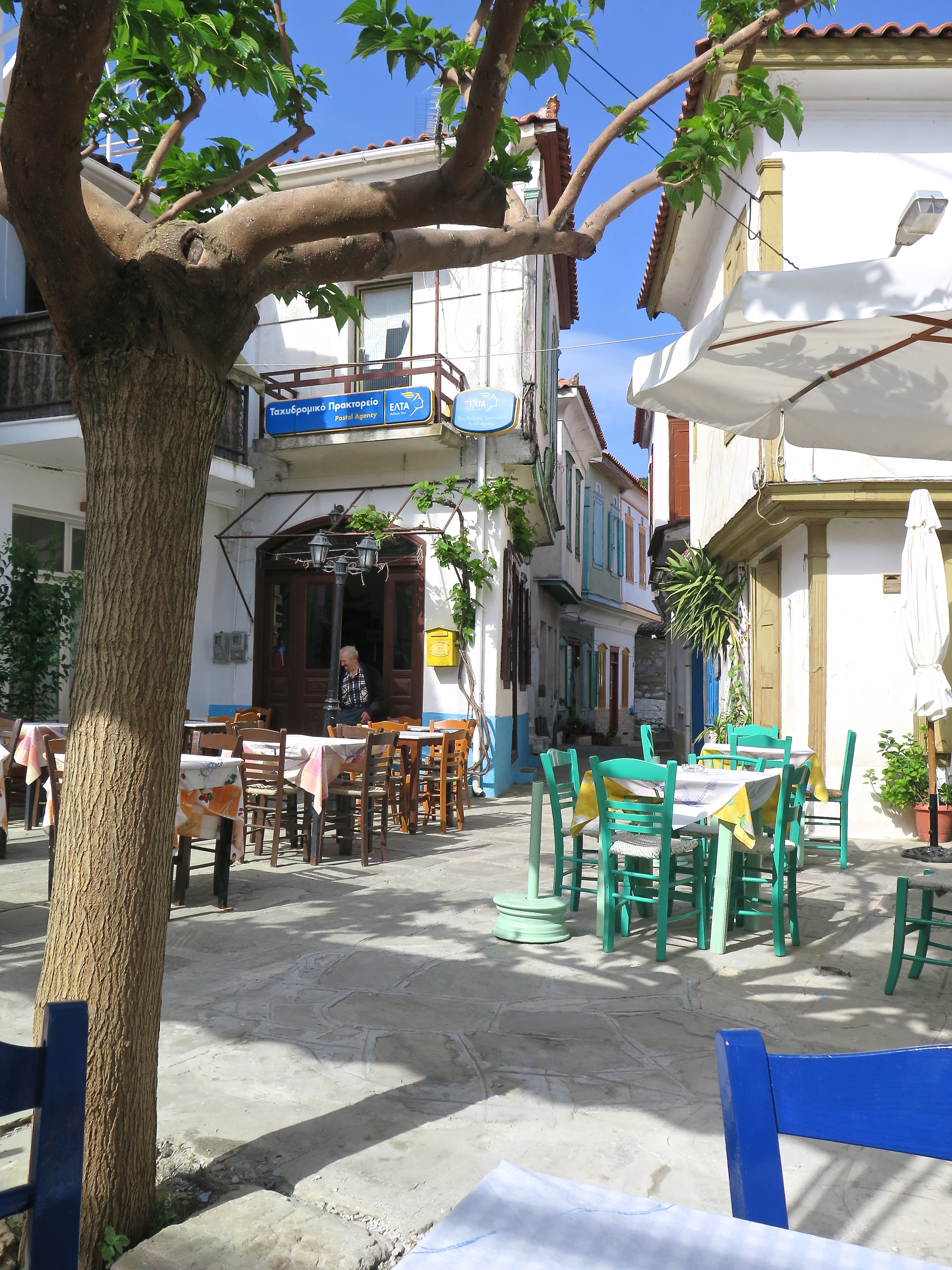
IMG_0193Some instruction at the gate to the Dolmabahce (‘fountain garden’) Palace, a preposterous confection not holding together too well after 160 years despite (because of?) having 14 tonnes of gilt spirited about its person. A travesty which made its own important contribution to the bankruptcy of the Ottoman Empire.IMG_0277Man and tree in the Topkapi Palace gardens. Irresistible. Answer: no idea, although he spoke German.
IMG_0250My companions. First night. Big town. Not sure what’s on the menu.IMG_0186And one of the all time great guides, Onur Erturk. He’s about to become a father. Give him some business. Email: onur@rehberonur.com

IMG_0261

Now to something more cerebral.

We went to the Gelibolu Peninsula just a few weeks after the centenary of its most famous moments. Follow us there. It’s not exactly as you think.


Wonderland

IMG_2194
invite‘Wonderland’ is the name of Myrna’s latest art exhibition, held at Red Gallery in North Fitzroy with three other artists and opened very kindly by Helen Brack on the hot and muggy evening of 25th of February. IMG_2178

IMG_2199The hordes were in attendance, including other distinguished artists. And good looking hangers on.IMG_2193

Some were a bit cheesed off at having to put up with it all.

IMG_2196

There are people who for various reasons couldn’t come. There are others, like us, who might like a record of the occasion and the works to turn back to from time to time. At present about a third of these chaps have found new owners, and we are assured they have gone to good homes.

Remember (and this is for you Baxter Holly with your febrile ways): a painting is not just for Christmas. It needs constant attention and affection. (I think that’s how that goes. Jess will be able to tell me.)

So, four larger works (all approximately 700 x 500mm) and six smaller studies (300 x 400mm) related to experiences in the Grampians mountains in western Victoria where we grew up; three of  ‘Fish’ (again 300 x 400mm) favourites of the little girls and destined for their walls; and four abstracts (same size) to some degree influenced by 20 years of lessons from Helen Brack. All are acrylics.

The note attached to Myrna’s paintings (never a more difficult genre than that) said: ‘Famous for its strange rock formations and beautiful trees and flowers McRae has been inspired by the colours and dramatic forms. Through the paintings she has explored the unusual features and meanings of this environment – her own personal wonderland.’ She actually had a lot more to say about it all than that, but that’ll do for the time being.

Names and dates are below the paintings.

Image4inviteCountry (Grampians Series, 2014)


IMG_0037                                                      Study for Life Cycle (Grampians Series, 2015)


Grampians#3                                                    Study for Country #1 (Grampians Series, 2014)


IMG_0040The Entry (Grampians Series, 2015)


Grampians #2
                                             Study for Country #2 (Grampians Series, 2014)


IMG_0036                                                     Waves (Grampians Series, 2015)


IMG_0034Watching (Grampians Series, 2015)


Grampians #1                                                           Study for Country #3 (Grampians Series, 2014)


IMG_0049                                                         Study for The Entry (Grampians Series, 2015)


IMG_0035Life Cycle (Grampians Series, 2015)


IMG_0050On the Road to Hamilton (Grampians Series, 2015) This didn’t get an airing. I hung on to it.


IMG_0038                                                                    Fish #1 (2013)


IMG_0041                                                                       Fish #2 (2013)


IMG_0044                                                                       Fish #3 (2013) (in real life better focused)


IMG_0047                                                                       Conflagration (2013)


IMG_0043                                                                          Leaning (2013)


IMG_0045                                                                            Connection (2013)


Myrna #2                                                                             Equilibrium (2013)

Denying Climate Change #2: Battles in the War

There have been some seminal moments in the climate debate where the issues, and attitudes (and tactics) have come to a head and made themselves very clear. Three occasions when the lid has come off and the contents boiled over.

The Hockey Stick

soonlegatesfig11988. It was a drought in the US and the Senate’s investigation of it that brought public attention to James Hansen’s views that ‘the abnormally hot weather plaguing our nation’ was due to global warming. Unknown-2James Hansen (at right) being at the time head of the NASA Godard Institute for Space Studies, one of the three primary global sources of aggregated climate data (‘GISS’ in the documentation).

That same year, Margaret Thatcher became a vocal advocate for concern about anthropogenic (human made) climate change. It was convenient — she bent her shoulder to this task at around the time she was closing coal mines in the north of England and promoting the virtues of nuclear energy. She was also, of course, a scientist (chemistry) by training. Prince Charles supported her views but, in a very different political environment, her friend Ronald Reagan did not.

Reagan’s administration, worried about the influence and impact of politically unfettered scientists speaking out about climate change, successfully lobbied for the formation of the Intergovernmental Panel on Climate Change (IPCC) to provide reports subject to detailed scrutiny and approval from government delegations before publication.

As such matters go, this all happened fast. The IPCC, set up by the World Meteorological Organization and the United Nations Environment Program, was created later in 1988. Its formal purpose was to prepare assessments on all aspects of climate change and its impacts, with a view to formulating realistic response strategies. (UnknownAlthough what Roy Spencer thinks is: ‘Unquestionably, the U.N. Intergovernmental Panel on Climate Change was formed to build the scientific case for humanity being the primary cause of global warming.’)

Its first summaries were comparatively uncontroversial: human influence was suggested as being only as likely as natural variability to be causing climate change. But by the late 1990s a number of teams of climatologists were producing findings that recent warming was indeed exceptional and suspicion increased that the source of this was anthropogenic.

mann_2110724bIn 1998, Michael Mann (at left), Raymond Bradley and Malcolm Hughes published a paper subjecting paleoclimatological data (from sources such as lake sediments, coral and ice cores, in this case bristlecone tree rings) to new methods of statistical analysis which they had developed to show variation in the patterns of global surface temperature in the northern hemisphere going back 600 years.

For a scientific paper it drew considerable publicity. The New York Times highlighted its finding that the 20th had been the warmest century in these 600 years. However these proxy data are inherently imprecise. Mann said so himself. ‘We do have large error bars. They become more sizable as one gets farther back in time… . There is still quite a bit of work to be done in reducing these uncertainties.’ But nonetheless the Times quoted Mann as saying: ‘Our conclusion is that the warming of the past few decades appears to be closely tied to emission of greenhouse gases by humans and not any of the natural factors’.

A further paper published in 1999 went back a further 400 years subjecting additional data to the same statistical techniques with the same results.

The Third IPCC Report gave considerable prominence to the group’s findings and the summary graph which encapsulated them. The Report was in fact launched in front of the graph as a massive background image as well as featuring it on the cover. It looked like a hockey stick. For 950 years the trend line was more or less flat then whoosh, up with a rush.

Why did it matter? If it was unusual, if it was as big as claimed, if it was happening now and if, as claimed, it seemed increasingly likely to be the product of greenhouse gases produced by human activity, it provided evidence of what some scientists had been suggesting for some time — evidence, and an image. Without these data, the heart might get chopped out of the argument.

Since 1965 there had been references in scientific and historical literature to a period called the ‘Medieval Warm Period’ lasting from about AD 950–1300. A much cooler period termed the Little Ice Age is believed to have followed. The existence of these ‘anomalies’ was noted in the first progress report of the IPCC in 1990.

In fact the two graphs looked like this. You will note in the graph on the left hand side that average temperatures in the Medieval Warm Period are above those presently being experienced.Comparison-charts

But the first hockey stick sidelined the Medieval Warm Period. It illustrated just one big kick-up commencing in the mid 20th century.

The hockey stick was an easy focus for media coverage, and immediately became a focal point for both sides of the debate.

Willie7-6-11Astrophysicists Willie Soon and ex_baliunasSallie Baliunus were two of the earliest respondents to these papers claiming that the methodology was flawed, that other data made it clear that warming had ended early in the C20th and that the Medieval Warm Period which provided evidence for alternative views had been ignored. Any contemporary variations would be the result of solar activity.

Members of the US government bought in. A Senate hearing chaired by John McCain was held in 2000 to discuss the report Potential Consequences of Climate Variability and Change which had been released in June for public comment. Witnesses at the hearing included Fred Singer, whose statement cited the Oregon Petition as evidence of the mainstream nature of his views. He said there had probably been no global warming since the 1940s. ‘Satellite data show no appreciable warming of the global atmosphere since 1979. In fact, if one ignores the unusual El Nino year of 1998, one sees a cooling trend.’ From this, he concluded that, ‘The post-1980 global warming trend from surface thermometers is not credible. The absence of such warming would do away with the widely touted “hockey stick” graph.’

Pat Michaels (contrarian? denier?) emerged as one of the leaders of the anti-Mann/hockey stick movement through his blog World Climate Report. Keith Briffa and Phil Jones from the East Anglia Climate Institute (UK) separately published papers coming to the same conclusions as Mann et al despite using different methods. The battle lines were forming.

The Bush administration’s Council on Environmental Quality chief of staff Philip Cooney, a lawyer who had formerly been a lobbyist for the American Petroleum Institute, edited the first draft of the Environmental Protection Agency Report on the Environment removing all references to reconstructions showing world temperatures rising over the last 1,000 years, and inserted a reference instead to Soon & Baliunas’s papers. UnknownIt was in this context that Senator James Inhofe made his ‘manmade global warming is the greatest hoax ever perpetrated’ contribution.

steve_mStephen McIntyre (left), a Canadian with a background in mining, appears.McKitrick He believed he had the skills to audit what Mann and Co had done, and asked for and received the base data. With the help of Ross McKitrick (at right), an economist, a critique of the hockey stick paper was published six months later. ‘The hockey stick shape’, they said, ‘was primarily an artefact of poor data handling and use of obsolete proxy records.’ The Cooler Heads Coalition (a collaboration of most of the major climate change denying organisations) made hay with the paper.

Unknown-1Late in 2004 Mann and nine other scientists including Gavin Schmidt another Director of NASA’s Godard Institute, set up the blog RealClimate ‘a resource where the public can go to see what actual scientists working in the field have to say about the latest issues’. Early in 2005 McIntyre set up the competition, the blog Climate Audit.

If you read recent postings you’ll catch the flavour: Schmidt saying they need some new blood after ten years; McIntyre running through issues of his current court case v. Mann.

These two blogs will take you to most of the more sane tastemakers in the climate debate. If you want a dose you can try the Climate Sceptics Party, JoNova or Watt’s up with that. They are mesmerizing in their intensity. (Andrew Bolt sometimes writes about other things. These folk don’t.)

But if you want to find a source for all the fury, the hockey stick could be it.

In 2005 Congressman Joe Barton, chairman of the House Committee on Energy and Commerce demanded that the IPCC and the three authors of the ‘hockey stick’ papers provide full records of their work. The scientists were asked to provide not just data and methods, but also personal information about their finances and careers, information about grants provided to the institutions they had worked for, and the exact computer codes used to generate their results. Amid an outcry focusing on charges of bullying and harassment, the scientists complied. But the controversy has continued.

The blog of the Competitive Enterprise Institute, a ‘free-market think tank’, opens an article on Mann with the line: ‘Penn State has covered up wrongdoing by one of its employees to avoid bad publicity.’ It initially included the line: ‘Mann could be said to be the Jerry Sandusky [a convicted child molester] of climate science, except that instead of molesting children, he has molested and tortured data in the service of politicized science that could have dire economic consequences for the nation and planet.’

This is not atypical of the nature of debate. In this recent case Mann chose to sue. He has by now had plenty of practice in political contestation.

Political scrutiny of climate science funding has continued. In fact a consistent denialist theme, rarely stated so gloriously as this quote, is: ‘The true solution to “man made global warming” is to stop the self-perpetuating funding of the people employed to study it.’

Some of the detail of this debate is dealt with in the next blog••• in this series. But it might be noted that even at the time of its initial publication, the hockey stick pattern was largely confirmed by four other independent studies and has subsequently been replicated by more than 20 different modeling processes using the same, similar and different data. Seven of them are contained in this graph.judge-3-640x390It might also be noted that contradictory versions, grounded in science and otherwise, are a bob a dozen. This is the deniers’ preferred version.

images-3


An Inconvenient Truth: ‘Ok kids I’m going to show you a film. But just before I do …’

250px-GoreFireBreathing(Graphic: Conservapedia)

Al Gore’s talk and slide show was turned into a film released in 2006 and seen by many millions of people. But not by then US President George W. Bush, who when asked whether he would watch the film, responded: ‘Doubt it.’ Senator Inhofe didn’t plan to see the film (in which he appears) either, comparing it to Adolf Hitler’s book Mein Kampf. ‘If you say the same lie over and over again, and particularly if you have the media’s support, people will believe it.’ (Godwin’s Law has proved a popular move in climate change debate. Dr Tim Ball’s contribution can be read here for example.)

The film — which featured the hockey stick mentioned above in such a way that Gore was required to use a platform lift to get to its upper limits — was intended to make a splash/cause a heatwave, and it did.

As it gathered popular momentum some politicians took steps for it to be available for school programs.

However, in the US 50,000 free copies were offered to the National Science Teachers Association (NSTA) which declined to take them. In correspondence the NSTA explained that the DVDs would place ‘unnecessary risk upon the [NSTA’s] capital campaign, especially with certain targeted supporters’, and that it saw ‘little, if any, benefit to NSTA or its members’ in accepting the free DVDs. Different distribution mechanisms were offered via advertising space in the NSTA magazine and newsletter but publicity via paid advertising didn’t quite seem to be the point to those making the offer. Discussing this issue, the ‘Washington Post’ noted that in the previous decade the NSTA had received $6 million from Exxon Mobil, which also had a representative on the NSTA board.

In the UK, as part of a nationwide ‘Sustainable Schools Year of Action’ launched in late 2006, the British Government, Welsh Assembly Government and Scottish Executive announced that copies of An Inconvenient Truth would be sent to all secondary schools in the UK. Study of the film was included in the science curriculum for all fourth and sixth-year students in Scotland.

images-2Early in 2007, Stewart Dimmock (at left, and I’m sorry about the photos but that’s what’s available), a school governor from Kent mounted a legal challenge with the at the time undisclosed assistance of Unknown-3Christopher Monckton (below), arguing that schools are legally forbidden to promote partisan political views and, when dealing with political issues, are required to provide a balanced presentation of opposing views.

In his judgment, Mr Justice Burton, stated that the requirement for a balanced presentation did not require that equal weight be given to alternatives to a mainstream view, and ruled that it was clear that the film was substantially founded upon scientific research but was being used to make a political statement and to support a political program. He went on to rule that it contained nine scientific errors which can be read here.

Make up your own mind. There may well be an issue with hyperbole and wavering relevance. But nine among hundreds ….

The judge made a requirement that these errors must be explained before the film was shown to school children. [Imagine. ‘Hey kids …’] Failure to do so would be a violation of education laws.

The government acted on this ruling. Dimmock complained that ‘no amount of turgid guidance’ could change his view that the film was unsuitable for the classroom. Monckton remains an active campaigner against IPCC views.

‘Climategate’

The Copenhagen Summit of 2009 is a matter of particular interest to Australians because it was when the Government of the time appeared to give up on ‘the greatest moral challenge of our time’ — also known as Rudd’s meltdown. (A sidelight: Edward Snowden’s monster leak of 2014 revealed that the US and Chinese government negotiators had both been spying on other conference delegations at the Summit and formulated their tactics accordingly.)

‘Climategate’ provided some additional flavour to the proceedings. What happened? You may remember.

Several weeks before the Summit, servers at the Climatic Research Unit at the University of East Anglia, one of the world’s three main climatic data collection and management points, were hacked and more than 1000 emails and 2000 computer files were copied to various locations on the Internet.

Emails exchanged by Phil Jones, the head of the CRU, Keith Briffa, the tree ring expert, Tim Osborn, a climate modeller at CRU and Mike Hulme, director of the Tyndall Centre for Climate Change Research were the particular targets. These four had all contributed in various ways to IPCC reports.

At the time, a short comment appeared on Stephen McIntyre’s Climate Audit website saying that “A miracle has happened’. Very shortly after excerpts from the material began appearing on climate change skeptic websites and blogs before finding their way into the mainstream media.

The two most publicised quotes are these.

Jones to Michael Mann, Ray Bradley and Malcolm Hughes: ‘I’ve just completed Mike’s Nature trick of adding in the real temps to each series for the last 20 years (ie from 1981 onwards) and from 1961 for Keith’s to hide the decline.’ [Nature is a scientific journal]

Kevin Trenberth to Mann: ‘The fact is that we can’t account for the lack of warming at the moment and it is a travesty that we can’t’.

Andrew Bolt’s commentary is reasonably representative of the climate change skeptics’ characterisation of the situation.

So the 1079 emails and 72 documents seem indeed evidence of a scandal involving most of the most prominent scientists pushing the man-made warming theory — a scandal that is one of the greatest in modern science. I’ve been adding some of the most astonishing in updates below — emails suggesting conspiracy, collusion in exaggerating warming data, possibly illegal destruction of embarrassing information, organised resistance to disclosure, manipulation of data, private admissions of flaws in their public claims and much more.

His updates are here.

But a better sense of how they were treated by groups of skeptics can be found in a book called The Climategate Emails (2010) edited and annotated by John Costella and published by the Lavoisier Society. Mining magnate Hugh Morgan wrote the introduction in which he asserts, inter alia:

The Climategate emails demonstrate that these people had no regard for the traditions and assumptions which had developed over centuries and which provided the foundations of Western science. At the very core of this tradition is respect for truth and honesty in reporting data and results; and a recognition that all the data, and all the steps required to reach a result, had to be available to the scientific world at large.

There are two issues which now have to be addressed. The first is the damage which has been done to the standing of science as an intellectual discipline on which our civilisation depends. The second is the status of the IPCC, since that institution is the source of scientific authority on which prime ministers and other political leaders rely to legitimise their statements about global warming.

A portion of a very long response from the US Science and Public Policy Institute (otherwise known as Bob Ferguson with some help from Christopher Monckton and Willie Soon):

Let the climate criminals stand trial, and let them be fined for offenses under the Freedom of Information laws, and let them be imprisoned for their fraudulent tampering with scientific data, and for their suppression of results uncongenial to their politicized viewpoint, and for the sheer venom with which they have publicly as well as privately denigrated all those scientists with whom they disagreed, and for the insouciance with which they interfered with editors of scientific journals and with the process of the UN’s climate panel itself.

Death threats were made against Phil Jones and two of the other scientists. This is not a small matter.

No fewer than seven investigations resulted: the UK House of Commons Science and Technology Committee; the UK’s Science Assessment Panel; Pennsylvania State University, Michael Mann’s employer; the University of East Anglia; the US Environmental Protection Agency which was consequently petitioned by government agencies, business and industry groups and activists to overturn new regulations related to greenhouse gas because they were based on corrupt science; the US Department of Commerce to investigate whether the National Oceanic and Atmospheric Administration (NOAA, the third of the key collectors) had been fudging data; and the National Science Foundation to see if Michael Mann had been behaving unprofessionally.

No evidence of professional or scientific misconduct was found in any of these investigations. The two excerpts quoted above are in context quite benign, when explained more so.

Nonetheless, writing in ‘Newsweek’ about the issue, Sharon Begley noted: ‘One of the strongest, most-repeated findings in the psychology of belief is that once people have been told X, especially if X is shocking, if they are later told, ‘No, we were wrong about X,’ most people still believe X.’

In 2011 a second set of 5000 emails apparently from the first hacking was released just before the United Nations Climate Change Conference in Durban. It didn’t have much impact.

The emails certainly reveal informal chatter that few professionals would necessarily have wanted to become public. They’re men (and yes they are mostly men. curry_06bJudith Curry is the one of the few science women in this argument and she moves from side to side of the fence) in a hurry with a strong sense of embattlement trying to give form to a monster that they have touched and believe in, but whose shape won’t quite make itself known.

There is no bomb to explode to prove unassailably that you can split the atom, and the major end product, the outcome of your work, is something as problematic as persuading others of the legitimacy, and over time the urgency, of your findings.

So what’s true?


Denying Climate Change #1

‘Climate change is absolute crap.’ — The Hon. A. Abbott, at the time of writing Australia’s Prime Minister, Liberal Party function, Beaufort, Victoria, 2009

catani2

Lake Catani, Mount Buffalo, 1920. Skating on two foot of ice, an annual pleasure often lasting for as long as four months. Still happening in the early ’50s.
IMG_0778

Lake Catani, a few months ago in high winter. It’s hard to see but it’s not ice at the edges; it’s reed and sedge. I don’t know when the last time it froze was but it’s a long time ago.

IMG_0771Cresta Valley, same glorious mountain mid-winter, the site of Australia’s first ski tow and the first place I ever saw snow. When I was there 40 years ago there was heavy snow just as there was almost every winter, enough to support six ski runs. Percy Weston who lived on or near the mountain for more than 70 years is quoted in a history of Mount Buff saying: ‘In my boyhood days winters were always 10-12 degrees Fahrenheit colder than they are today.’ Every Antarctic depression brought a mantle of snow that grew to a depth of about five feet and lasted well into Spring.

If you’re reading this in July or August you can see just how much snow there is on Mt Buff right now by clicking here.

IMG_0772The lodge that serviced these runs burnt down, some say for the insurance when the snow went bad but actually during one of the many bushfires, the exceptional number of bushfires, that have run across this high plateau in the last 30 years.

Mount Buff may see five feet of snow again, but if it does it will be in weird and troubling circumstances.

When we go walking we often see changes like this over time. They might be temporary or cyclic. Or they might be something else.

[A salutary deviation. When preparing this I was looking through what Dr Google had to offer and found a link titled ‘Heavy rain melts Mt Buffalo’s record breaking snow’, an ABC report from 2011, which would have put a bit of a hole in my story. But in fact the text indicates it should have read ‘Record breaking rain melts Mt Buffalo’s snow’. I checked the date and can confirm that 180mm of rain in 16 hours is quite a lot. We happened to be there on the day, romping across to the back wall. But if I hadn’t read past the headline I would have ended up somewhere very different. Often people don’t read past headlines.]

••••••

UnknownOn ‘Lateline’ some months ago Emma Alberici interviewed Maurice Newman, an intimate of the Australian Prime Minister’s and Head of his Business Advisory Council. In this country a powerful powerful man. After not much more than a minute he’s saying: ‘Science is whatever the science is and the fact remains there is no empirical evidence to show that man-made CO2, man-made emissions are adding to the temperature on earth.… When you look at the last 17.5 years where we’ve had a multitude of climate models, and this was the basis on which this whole so-called ‘science’ rests, it’s on models, computer models. And those models have been shown to be 98 percent inaccurate.’

‘By?’ Emma asks. ‘Roy Spencer’ is the instant and sure reply.

Roy Spencer, I thought. Roy Spencer. Wow. He’s the guy. He’s the one who knows. There are things I need to investigate here.

••••••

FigureheadBefore we chase down Roy let me come clean about my own position.

1) I strongly suspect the climate is changing. And not the weather, the climate. They’re two different things.

I’ve offered an example above of why. But today it’s the 1 February and should be insufferably hot. It is actually 17.9C, which it has been more or less since the Bureau of Meteorology published its findings that last year produced record heat. Anecdotes, personal observations, true enough to that extent, to that context, to that moment — but ungeneralised, unscientific.

That said, science doesn’t begin in the lab or with satellite instrumentation. Science begins with human observation and hypotheses, hunches in all their frailty. The rather unusual job of science is to test such observations and thoughtful guesses; to go with the data, and to say, not just yes or no, but this is how to understand it, and it’s a bit like this, and these are the things we still don’t know. Be careful of certainties.

That’s what we have experts for, and while I am not in awe of expertise I certainly respect it.

2) The second thing I think is that the activity of human beings is causing the change (‘anthropogenic warming’).

There is one ‘hockey stick’ that even Andrew Bolt can’t argue about and that’s this one.350px-Population_curve.svgSorry the graph is so small. Human population, earth, 10,000BC – 2000AD. Was less than 100,000 and in 2005, off this scale — 9 billion. A new study suggests that instead of plateauing as previously assumed the world’s population might be 11 billion by 2100. If so Nigeria will probably have a population of 900 million. You cannot alter an element in an ecosystem so significantly without anticipating other changes.

The information in this graph reinforces these presentiments. And I’ve tasted and waded through Beijing’s air.

china-energy-consumption-by-source-e1347409856398

Among all the argument there does seem to be universal agreement that coal-fired power plants contribute to the concentration of CO2 in the atmosphere, and if consumption is growing at this pace, then I fear 1+1=2.

3) I am certain that the climate and its influences are part of a larger platform of environmental stewardship, and am quite sure that climate change has pushed matters like resource depletion, air pollution, ocean acidification and pollution, soil degradation, and destruction of above and below ground clean water systems under the public carpet. I think the next huge war is more likely to be fought over water than oil.

A good example of this displacement are the ‘errors’ the English judge found in Al Gore’s ‘An Inconvenient Truth’. (See the next blog.)

14-lakechadIt might or might not be climate change that has caused Lake Chad to be less than one-third the size it was 50 years ago. Other reasons may be population increase, over-grazing and overuse for irrigation. Phew, what a relief!180px-Aral_Sea_Continues_to_Shrink,_August_2009

Similarly, it might be the diversion of most of its inflowing sources by Soviet Russians that has destroyed the Aral Sea (at right. You can see its former outline) rather than climate change. But is that enough to cheer us up? Not really.

It’s all hooked up, and not in ways we can necessarily understand.

I believe in careful stewardship of the environment, or we’ll cop it. And I came to writing this thinking we’ll probably cop it and perhaps before climate change really kicks in.

My confession: In daily life I mostly take public transport and walk; but we own a car. I turn lights off when they are not being used, but we’re hooked into the grid which means we are using brown coal-generated electricity. I bucket water out of the bath when there is a bath, but I otherwise water our plants from the tap. We recycle and take our vegetable waste out to where it might be composted. I wouldn’t mind doing more, but I don’t.

I recognize that these actions are negligible and more because of habit or for my state of mind than the environment. I recognise the contradictions present in our use of air travel and consumption of food that has been grown far from where we live. I think the requisite change will require large-scale decisions which will impact on me and everyone else. I anticipate they must reduce the ‘quality’ of material life. But the option of doing nothing is likely to produce far worse results. I am very concerned about what sort of shape the environment our grandchildren inherit will be in.

•••••••••

‘With all of the hysteria, all of the fear, all of the phony science, could it be that man-made global warming is the greatest hoax ever perpetrated on the American people? It sure sounds like it.’ — Senator James M. Inhofe, the Oklahoma Republican, Chairman of the US Environment and Public Works Committee 28/7/03)

But what’s made people so angry, so divided in their views?

This question might be wrongly framed. Of course we’re going to worry. As J.K. Galbraith wrote in The Great Crash, 1929: ‘People of privilege will always risk their complete destruction rather than to surrender any material part of their advantage’. (He did also note in The Affluent Society: ‘Wealth is not without its advantages, and the case to the contrary, although it has often been made, has never proved widely persuasive.’) Without any doubt at all, we’re people of privilege.

But so angry. And so snarky …

The “climate change” crowd want money and power. There are hundreds of billions up for grabs IF you spout the party line. Power, there are many would be global autocrats among us just looking for a cause. Always have been, always will be. We must reject them. The ordinary true believer is a dupe, and will go to great lengths to avoid facing the fact that they’ve been duped.  (Peter Osborne, somewhat typically discussing Dr Tim Ball’s blogpost that we need to go to Hitler’s Mein Kampf to understand IPCC processes. An excerpt: ‘The entire climate change industry is based on fiction. Specifically, the notion that the planet is doomed unless capitalism is paralysed. This myth is gradually being exposed, leading to long-awaited cuts in government support.’)

You can get a big fat read of that sort of thing here.

And so, I don’t know, disturbing?

I’m amazed at the lack of common sense in our world today. If people would just use their brains rather than believe the Man-made Global Warming hype, they’d realize, so clearly, what a farce it is. Even before I watched your documentary [‘Not Evil just Wrong’] (which was great), I didn’t believe in Man-made GW…why? Well again, from a common sense perspective, if it’s true that man and all of our industry causes this, how do they explain the warming during Medieval time??? I’m not sure, but I don’t think they had factories, cars, etc. Or, I’ve often been perplexed by the fact that what we exhale and what plant-life on earth needs to survive is somehow a pollutant. And if Geologists have proven that historically rises in CO2 occur ‘after’ warming periods of our earth’s history…well…then their theories are pretty much bunked. But for me, a picture speaks a thousand words. If anyone looks at the depictions of what a ‘trillion’ looks like, they’d be horrified at what our governments are doing. But applying that…I read that only 29% of our planet is land, and of that, less than 1% of the 29% is actually inhabited by man. And of that…how much is actually industrialized? I just don’t see how we, being a teeny speck on this planet, can possibly cause any Global events. It just seems silly!— Michelle

This almost reads like a plant from an organisation like the Heartland Institute. Covering all the touch sensitive issues in a little girl ‘don’t be so silly, use your common sense’ voice, it’s just a bit too carefully constructed. Am I dreaming or can I see a 35 year-old copy writer grinning away in the background like a Cheshire cat?

And, even if well-intentioned, so seemingly off the beam …

The proposed limits on greenhouse gases would harm the environment, hinder the advance of science and technology, and damage the health and welfare of mankind. There is no convincing scientific evidence that human release of carbon dioxide, methane, or other greenhouse gases is causing or will, in the foreseeable future, cause catastrophic heating of the Earth’s atmosphere and disruption of the Earth’s climate. … We are living in an increasingly lush environment of plants and animals as a result of the carbon dioxide increase. Our children will enjoy an Earth with far more plant and animal life than that with which we now are blessed. This is a wonderful and unexpected gift from the Industrial Revolution.

This is The Oregon Petition, apparently signed by more than 30,000 people even if they did include Geri Halliwell, Daffy Duck, Charles Darwin, Chewbacca and I.C.Ewe. But it is claimed 9000 people with Ph.Ds were among them, it was sponsored by scientists and it certainly was accompanied by a letter of endorsement from Frederick Seitz, former president of the US National Academy of Sciences.

240x173xpentti_linkola.jpg.pagespeed.ic.cWgrgsQCH6Then there’s the nut jobs on the other side like Pentti Likola (at left), an enthusiast for the consequences at least of the Nazi holocaust because of its impact on population growth.

What to do, when a ship carrying a hundred passengers suddenly capsizes and there is only one lifeboat? When the lifeboat is full, those who hate life will try to load it with more people and sink the lot. Those who love and respect life will take the ship’s axe and sever the hands that cling to the sides.

In which process he will be assisted by members of the Voluntary Human Extinction Movement who believe their goals might be achieved by: voluntarily abstaining from reproduction; not using medicine and eating less and less until death occurs; and using science and technology to evolve/devolve into non-sapient photosynthesizing organisms that consume the same amount of energy as they produce. I don’t know how many ‘Hard Green’ followers there are, but there are some. Years ago I was part of a group that turned down a subject to be offered at Years 11 and 12 called ‘Deep Ecology’ which promoted views like this, ‘biocentrism’ I think was its grand theme.

It’s not an issue for everyone. A 2007–2008 Gallup Poll surveyed people in 128 countries asking whether respondents knew of global warming and, for those who were aware of the issue, whether or not they thought it was human-induced. Over a third of the world’s population were unaware of global warming, with developing countries less aware than developed, and Africa the least aware. Of those aware, residents of Latin America and developed countries in Asia were most certain that climate change was a result of human activity. People who lived in Africa, parts of Asia, the Middle East, and a few countries from the former Soviet Union were most sceptical. Opinion in the United States was almost exactly evenly divided. A subsequent poll in 2014 found that that 51 percent of Americans were only a little or not at all worried about climate change, and 49 percent a great deal or a fair amount.

There’s a lot of people whose daily lives provide more urgent matters for attention. A WHO estimate of risk factors in High Mortality Developing Countries (HMDCs), for example — although it aimed to highlight the problem of climate change — discovered that climate change is only one-third of the risk factor of being overweight in an HMDC. ‘Physical inactivity’ and ‘iron deficiency’ both currently kill more than four times as many people as events attributed to climate change. The four biggest threats for people in HMDCs are being underweight, unprotected sex, high blood pressure, and lacking access to clean water and sanitation. These risk factors are respectively 24, 18, 14 and 11 times greater than mortality caused by climate change factors. At the moment. And that’s another important way of inhaling all this.

Finally, as a public issue climate change has gone off the boil. I remember in 1986 having to cull references to climate change out of Year 11 and 12 subjects in the new Victorian Certificate of Education. Just over 90 percent of all the new Year 11 and 12 subjects included climate change as an item of study in their early drafts. It seemed it had to be there. And I remember 20 years ago when heavy duty commercial Channel 9 ran a don’t-miss one-hour special hosted by Ray Martin about environmental issues which garnered a huge and uncompromised audience. This was typical; it seemed the duty of news outlets to promote awareness of the issues. Was this perhaps too successful, enough to mobilise an opposition?

According to a 2012 poll by the Pew Research Center, the proportion of Americans who believe that the earth is warming has declined by 10 percentage points in the past decade. Those who rate it as major issue has declined by 20 percentage points during the same period.

Paradoxically, by their negative stance, it is quite likely that in this country Tony Abbott and Greg Hunt have done more to enliven debate and raise awareness about climate change than any of their predecessors.

NASA_2000_2005

There’s a lot to be learnt from these reactions — things about the nature of popular discussion, things about the times, things about social and public media, things about politics, things about the role of experts (can I even write expert without inverted commas?), things about education, and especially things about the nature of knowledge and of science which are deeply disconcerting.

That’s mostly what this series of blogs is supposed to be about.

••••••

UnknownAnd Roy Spencer? He’s a serious climate scientist who believes that global warming is a reality, but naturally engendered.

From An Evangelical Declaration on Global Warming which he co-authored: “We believe Earth and its ecosystems – created by God’s intelligent design and infinite power and sustained by His faithful providence – are robust, resilient, self-regulating, and self-correcting, admirably suited for human flourishing, and displaying His glory.”

If you wish you can buy his most recent book here.

•••••••

This isn’t going to be one-way traffic. In fact serious complications will emerge, but to further add to the scenery we are going to look at some events from which controversies emerged.

Wentworth Street

IMG_0057Port Kembla. Kembla meaning ‘plenty of wild fowl’ but to all contemporary intents and purposes — Steel City. Also Iron City, Copper City, Coal City, Heavy Industry City and, like all such places, subject to fluctuation.

In the early 1980s the various arms of BHP employed nearly 30,000 people in Port Kembla. That figure is now a little above 3,000. Business pages talk: ‘an oversupply of steel, overseas competition, a stubbornly high dollar and muted domestic demand from the construction sector have again brought steel to its knees.’

images-1Until 20 February last year it was also home to Australia’s highest chimney stack, 198 metres. Impressive or what? Unwind half an athletics track, stick it up in the air and blow industrial waste out if it. Port Kembla Primary School was once located next door but was closed down due to pollution problems including lead-contaminated soil, acid rain and soot. But that’s all. A warning alarm was fitted to warn of high toxin levels. I’m not sure if the kids were sent home or just instructed not to breathe when it went off.

In 2008, an inspection confirmed that the stack had concrete cancer. Demolition was planned for 2010 at a cost of A$10 million. Correct. $10 million. A team of 30 people working on it for 20 months with nine NSW government agencies involved. Taken collectively those factors would slow things down, but there were also asbestos concerns.

vp14r0_96_1024_672_w1200_h678_fmaxClearly the stack added a certain landmark frisson to Port. The Gong (the city of Wollongong) 10 k.s north and much bigger had nothing like this.

The stack did come down 12 months ago. The Illawarra Mercury had an 8-page commemorative wrap with a live blog. It was a major story in the Canberra Times. Thousands turned out to watch. Many of them would have been sad. The demolition would have left big hole in the landscape.5272032-1x1-700x700IMG_0066I guess this is relevant. When I was chatting to Julie Howard (at left) about Port Kembla the stack and its fate came up very early in the conversation.

But this is not about the stack. It is about Wentworth St, Kembla’s main artery.

IMG_0014A couple of months ago I was due to make a visit to Illawarra Sports High not far away in Berkeley, had an hour to kill and needed a cup of coffee. I turned down Five Islands Road and took the funny little Darcy St dogleg to get me into Wentworth Street, drove down the hill, up the other side, did a U-turn and drove back again. I bought a paper and was directed to the Enigma Coffee Emporium where I met Julie and her excellent coffee and very fine home made cake.

I drank in as much of where I was as I could, because I wasn’t sure just where that was. And then I came back, twice, because I thought I needed to.

David-Warner-of-Australia-celebrates-his-century-during-day-three-of-the-Third-Ashes-Test-Match83UnknownThere was the architecture. Let’s call it NSW Deco, certainly with a strong ’40s and ’50s flavour but individual in a Dave Warner (at left and right) sort of way, a not-to-be-denied individuality, coupled with a little bit of ‘theoretically I don’t speak Hindi’ kind of individuality.

And there were the shops. More than half of them are empty. It is a ghost town in the middle of a conurbation.

I am moved by dying towns and we’ve seen lot of them. They are often the beginning of walks. Timber, mining, tourism — they are all likely to be near somewhere naturally beautiful or interesting, and they are all likely to be going up or down. Although I am very anxious in an empty shop, I like the patina of decay. I like thinking about who has been there and what they’ve been doing, the detail of social trajectories.

In that light I wondered what Wentworth Street had been like as a bustling shopping strip, if it had ever bustled because there wasn’t much bustling going on there now.app

 At left and below are glimpses of how it began, and what it became. nla.pic-an23817226-v

We found the Westfield’s mall — with more than 56,000 m2 of retail space (yes!!! punches air) — at Warrawong a kilometre away when we went to see Penguins of Madagascar. Film and mall were well suited. Both require 8 litres of coke and a cubic metre of pop corn for digestion.

The Warrawong Mall is one of the beasts that have killed Wentworth Street. And yet, and yet …

Let’s see a bit of what the street looks like now. The formidable houses are at ends of the main drag.images-5

images-6b268d0c193d7be076632913a1efe3918_l


main-1


IMG_0054IMG_0064


The lads have left their mark on some of the decoration.

IMG_0058

But art springs up elsewhere.IMG_0020

IMG_0052images-2The International Billy Cart Derby celebrated above, began in 1941, collapsed in the 1980s and recommenced in 2012.

IMG_0061


Is this so very different from the Rosalie Gascoigne below?Unknown-1

It is art, decay as art as well as art in decay. But it might also be art growing out of decay — the vacant buildings, the cheap rents, the congenial company — that revitalises Wentworth Street.

Both hills are showing signs of life. IMG_0050Besides a whopping bottle shop, the eastern end is growing a cluster of bric a brac and antique shops, and a bakery with fabulous smells. Amanda Johnson (at left) collects and sells vintage material and makes it up into wonderfully inventive bits and pieces. Dulcie Dal Molin is president of the Red Point Artists Association based in a Wentworth Street property and organises the Billycart Derby. The Illawarra Mercury quotes her: ‘Since the first revived race in 2012, Wentworth Street now has boutique wedding shops and an arts precinct.’

images-3

So hooray.


IMG_0067The other hill is dominated by the pub but there’s a chemist, hairdresser’s, newsagent, gift shop, more wedding stuff, flowers, party hire. Kevin Crane (looking fabulous at left) from Broken Glass hairdressers has won awards.w1200_h678_fcrop

It all just might work. The Wollongong City Council, which has just spent a small fortune on duding up its own mall, commissioned a town planning study about what to do with Wentworth St. It was published in 2007 and the recommendations were pallid, and cheap: work on the main street entrances, emphasis on pedestrians (there’s no one else there chaps), new street furniture and signage.

But, seriously, would you get town planners to sort out something like this? You’d have to agree for start about what the result was going to be.

I left with a sense that it might be women who make Wentworth Street into a home for more than their working sisters. Maybe that’s part of the regrowth phase. Low key projects, low financial investment, moderate to high emotional investment, modest ambitions.

I’ve got to say I like it the way it is right now, but a) I’m a blow-in and b) I’m not trying to make a living there.

But when it’s gone, it’s not going to be anywhere else.IMG_0072