
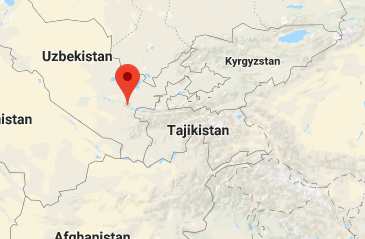
Samarkand

We got to Samarkand by Very Fast Train. That surprises some people. It needn’t. In some regards Uzbekistan is a very modernised country with an intriguing mix of the very old and the very new.
Temur is buried in Samarkand. He is to be left alone. A team of Russian busybodies exhumed his body on 20 June 1941.  Three days later Hitler invaded Russia. He lies now in this unassuming black coffin (in the centre below) — not even the most ostentatious in the room — in accordance with Islamic practice which discourages lavish display.
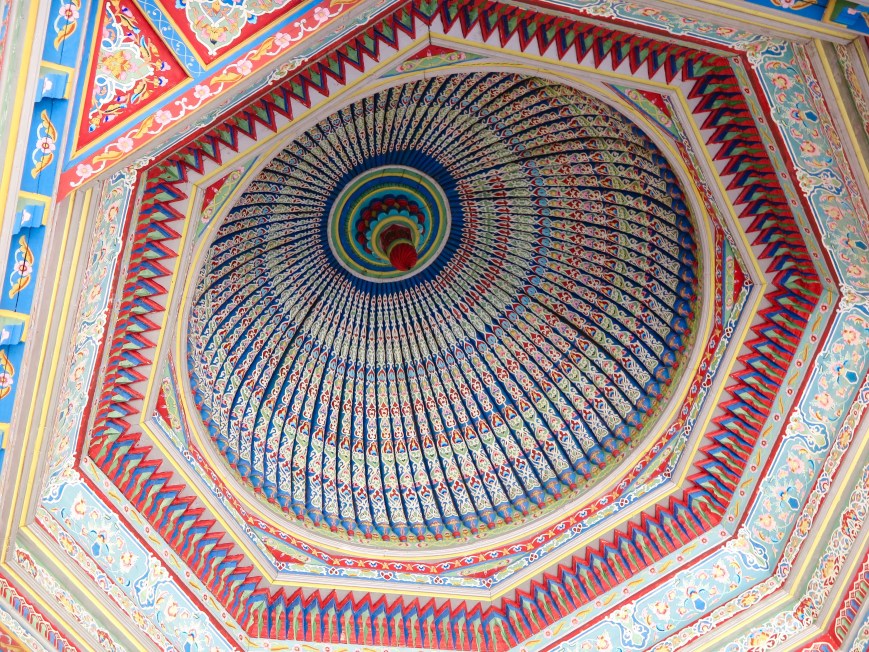
 But in fact there was lavish display. Just look at this.
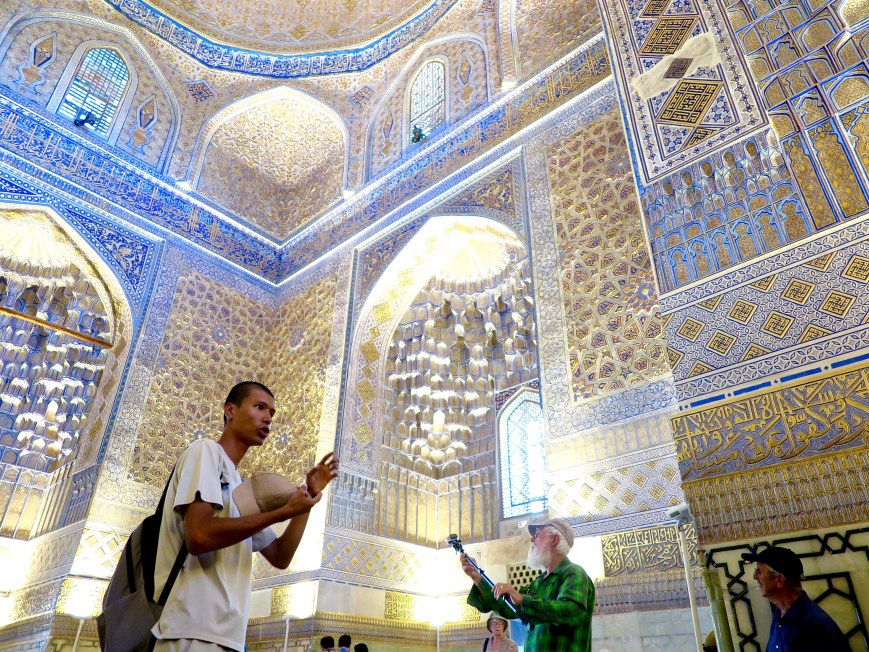 Lochin telling us the story, Tony taking pics, Torquil looking on. Temur’s mausoleum and a very serious encounter with muqarnas ‘created by the geometric subdivision of a vaulting structure into miniature, superimposed pointed-arch substructures, also known as “honeycomb”, or “stalactite” vaults. Made from different materials like stone, brick, wood or stucco, its use in architecture spread over the entire Islamic world’. They are simply amazing.
 And once you started looking, they were everywhere. This is the pishtaq, the formal entry, to the mausoleum of Temur.
The iwan is the recessed area. Look at its roof.
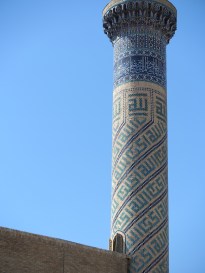
But there are so many things to admire here, starting with the range of colourings in the tiles, the multiplicity of the patterns, their arrangement, the cunning of the use of the calligraphy in the third top layer. The minarets too are covered in a stylised version of Allahu Akbar, ‘God is great’.
This visit was to begin a flood of encounters with remarkable pieces of architecture. People come to Samarkand to see the Registan (literally ‘sandy place’), the heart of Temurid architecture. This is two-thirds of it. You can see the bend, rather spooky in the flesh, in the right hand minaret of the Ulugh Beg madrassa, the oldest which significantly influenced the design of the others. Madrassas throughout the USSR were closed in 1925 by order of Stalin and most fell into acute disrepair. You are looking at wonderful and incomplete restorations.
This is the other third.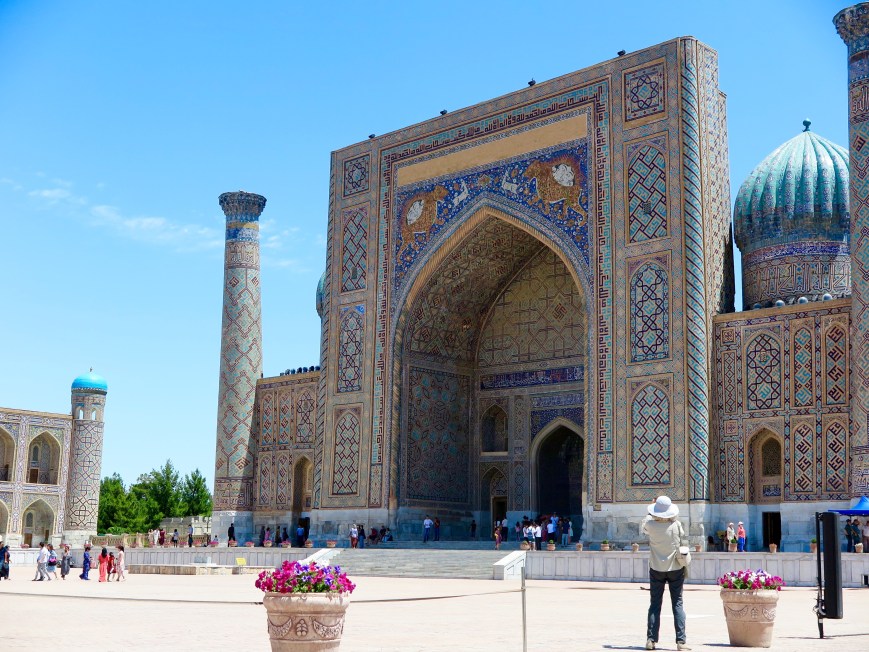 There are many reasons for its significance but at least one is the primary decoration of this element of the Registan, the Sher-Dor Madrassa, the ‘lion-bearing school’.
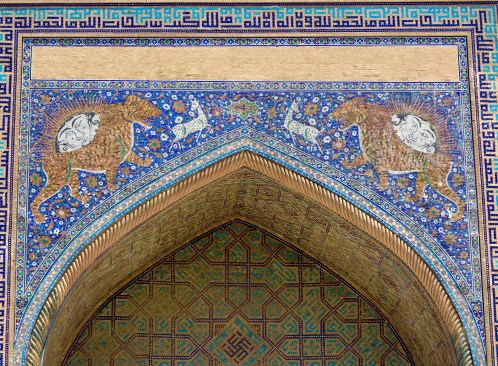 For fear of idolatry, Islamic decoration is meant to be non-figurative and yet here on one of Islam’s great monuments we have lions (masquerading as tigers), deer and faces set into rising suns. After a week of patterns, flora and calligraphy this comes as a surprise, and a cause for some wonderment.
What was going on? No one can be sure. It’s a madrassa not a mosque; that lets the reins off a bit. It would also make sense to assume that there was some Zoroastrian influence in play, and also that Governor Yalangtush who commissioned the building in 1619 might have wanted some form of facial recognition. Regardless, it makes this building special, a standout in a heavily congested field of architectural delights.
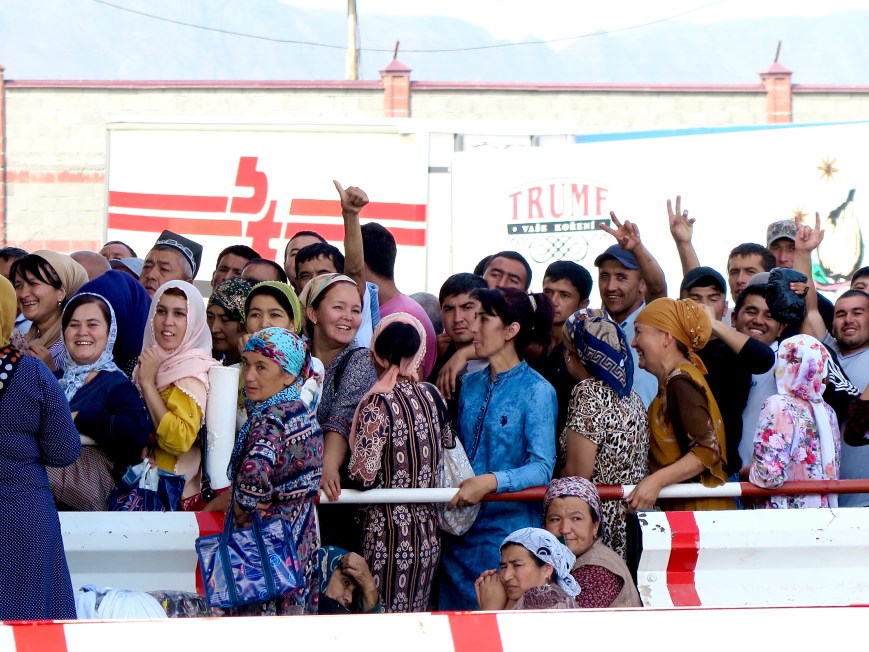
We went back to the Registan two nights later for a light show projected on the face of the middle madrassa accompanied by a very racey soundtrack which you needed headphones to hear. The paying customers sat on those seats. The unpaying customers, and there were hundreds and hundreds of them, were just behind me staring through a chain-link fence.
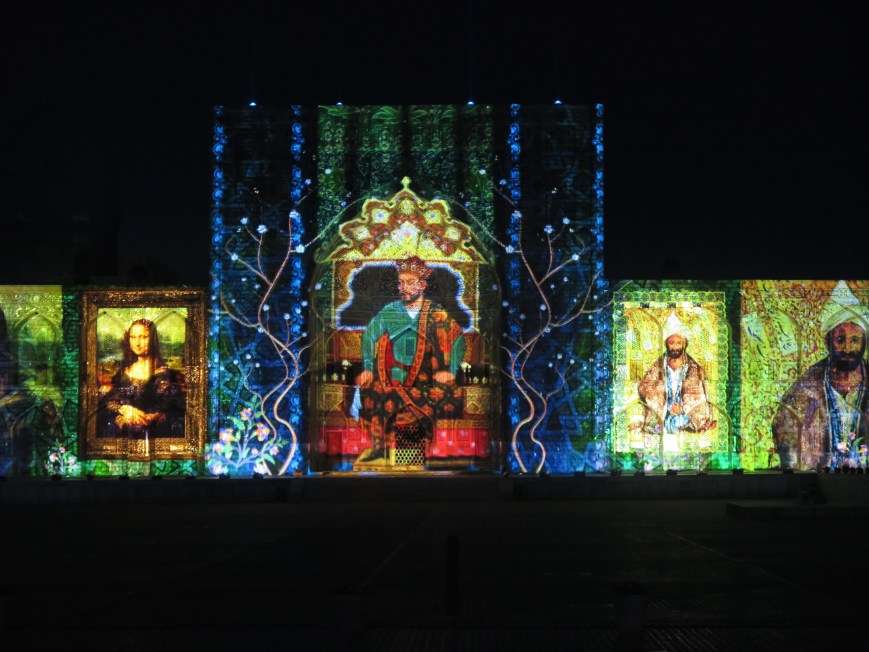 It was a spectacle. Formidable. We learnt that Love makes the world go round, and that Uzbekistan and Samarkand in particular are pretty much at the centre of the universe as indicated above by Temur hosting not just Ulugh Beg, his grandson, but the Mona Lisa and I think Shakespeare just out of shot on the far left. Remember you are looking at the face of a complex building, a fact which was forgotten a few minutes into the 20 minute show. Made in Germany, it was brilliant, and nothing the security could do to shoo away the freeloaders had any impact.
And then there was this day which just unrolled one remarkable thing after another. My journal is reduced to headings.
 It began at Shohizinda, ‘the Living King’, so called because it is believed that Mohammed’s cousin Kusam-ibn-Abbas is ‘buried’ here. Inverted commas because popular legend has it that he was beheaded for his faith. But he took his head and climbed into the deep well (named ‘Garden of Paradise’) up the back of the buildings where he’s still living now. There are certainly mausoleums for members of Temur’s extended family, Rumi the scientist and astronomer, as well as other dignitaries and aristocrats. And it just goes on and on. I haven’t got a photo which does it justice as a whole. But I do have this photo of the main element of Kusam-ibn-Abbas’s mausoleum, which I think was also where we listened to an imam sing an extended prayer. Glorious.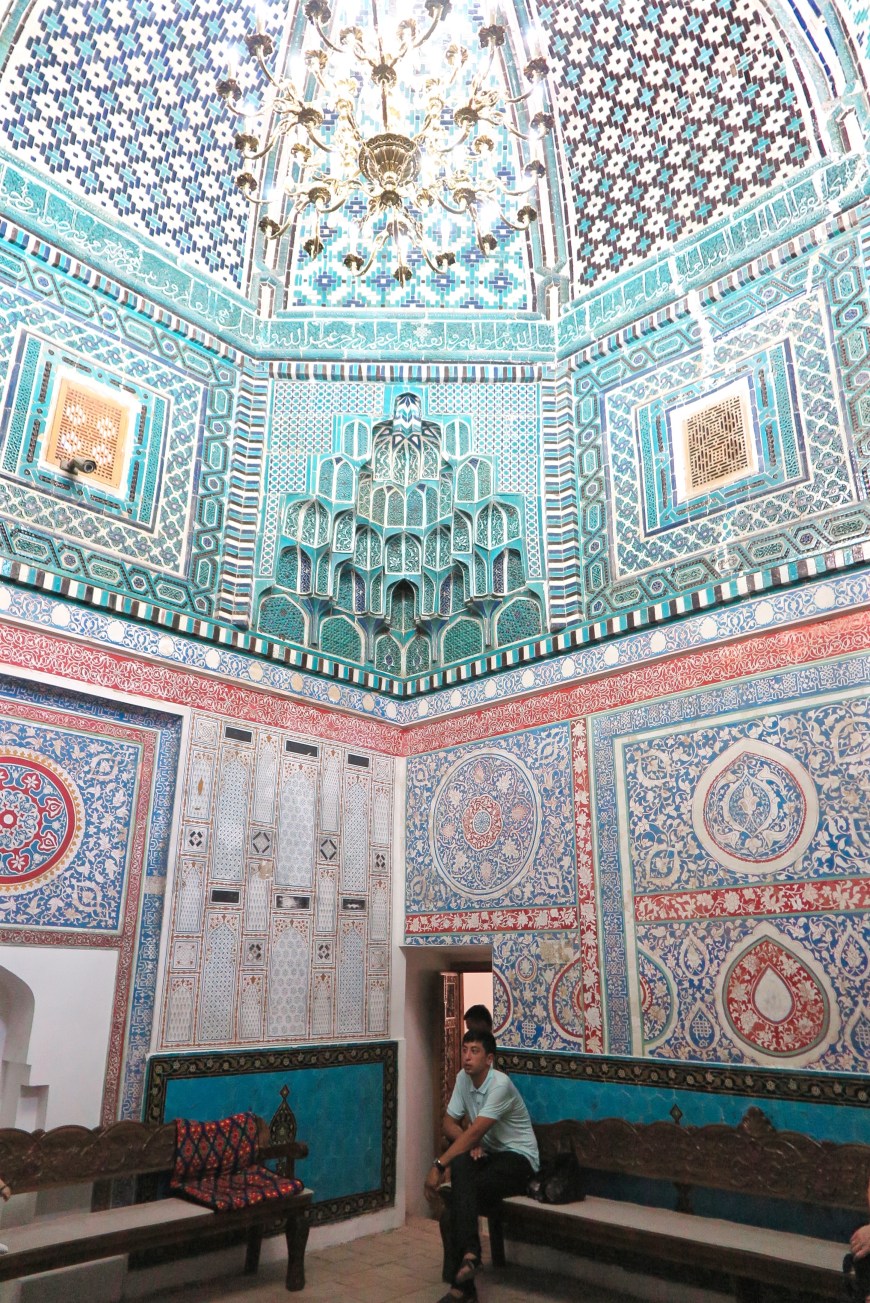
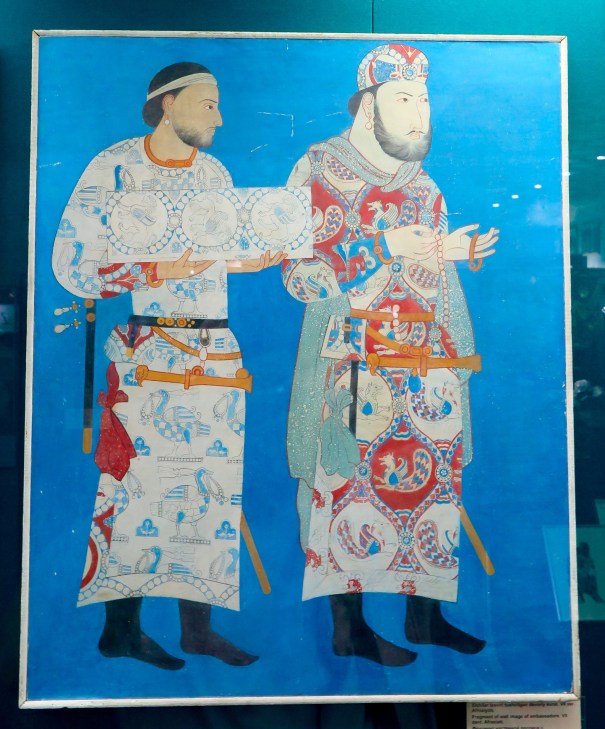
This area is quite close to Old Samarkand, a series of holes in banks of clay, legible to an archeologist no doubt but not so much myself. The Afrasiyab Museum is nearby and it had a collection of stuff to look at. I say, well … educative. Its heart is the remnants of a substantial fresco important for the historical record of which this is but a very small part.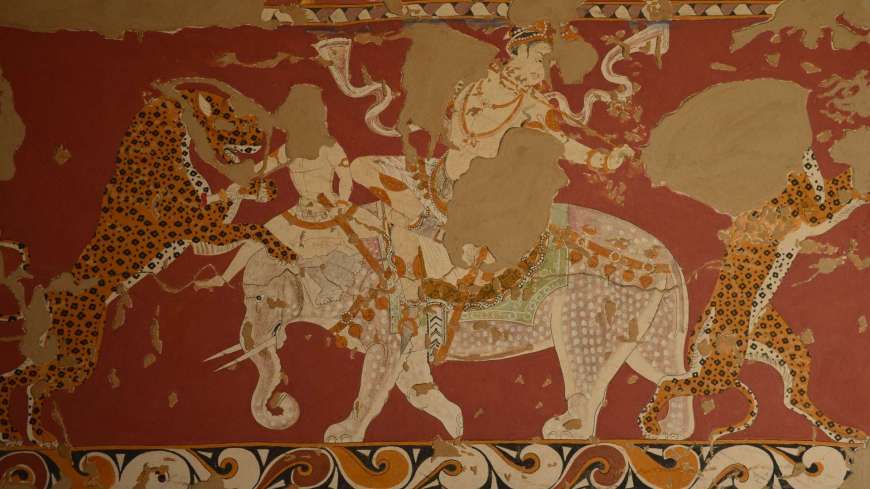
And then Ulugh Beg’s observatory. It was 39 degrees and largely shade-free, which limited its impact for me. But what was going on at both Shohizinda and the observatory — everywhere — was this: a mutual admiration society in the fashion stakes. There were these wonderful vibrantly coloured clothes wherever we looked.
 It was a Saturday I note, so probably a day out, a day for wearing your finery, and speaking the universal language of lifting a fold of clothing and making noises and gestures of deep approval.
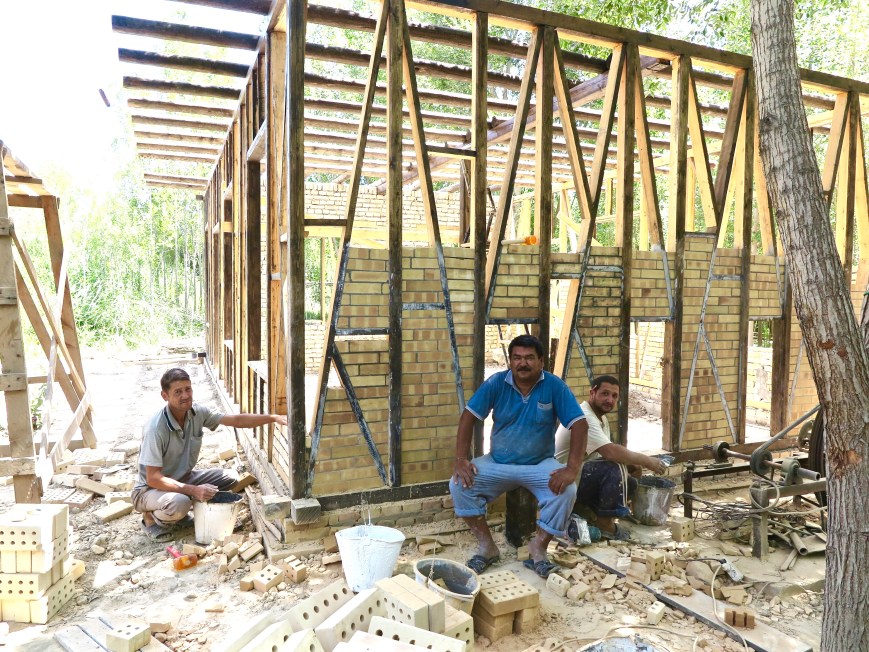
Then — we did everything this day — then we went out of town to a small scale Uzbek version of Sovereign Hill where we saw paper being made and polished by hand,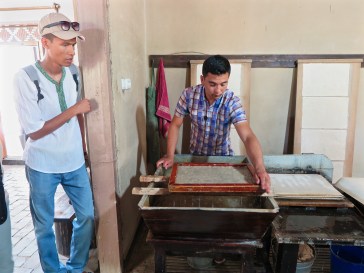 a new building being built,
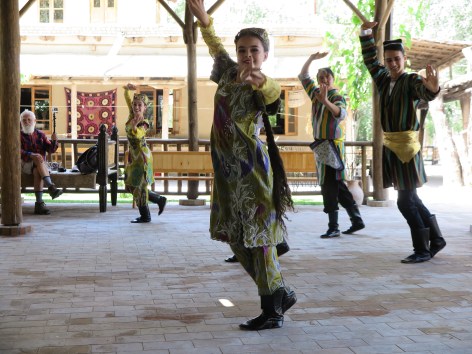
 dances being danced,
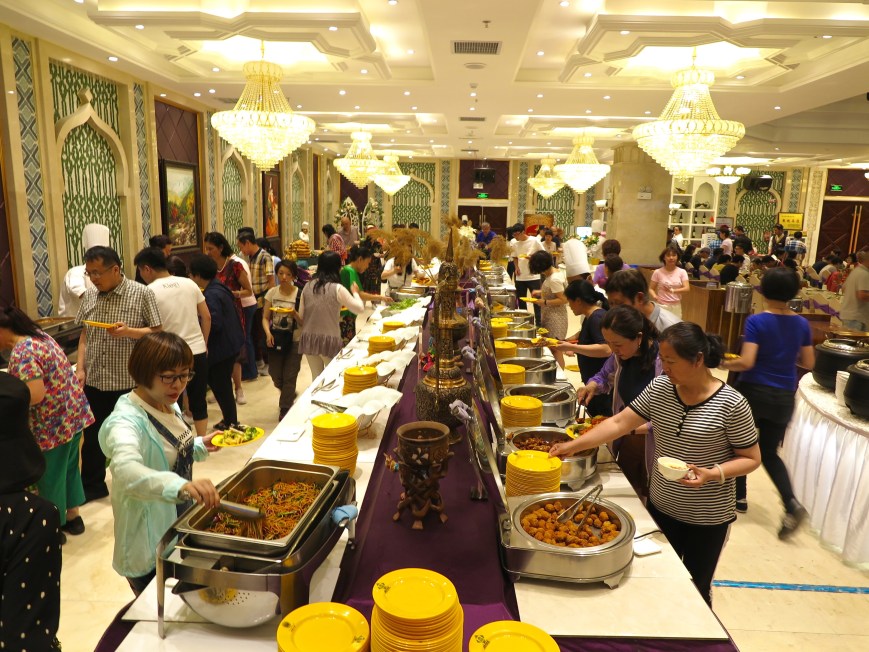
 and a feast being eaten.
It looked like a wonderful meal, a really fine version of standard fare, but I still wasn’t eating. Underpinning this enterprise is Lochin and his mate, the owner of the establishment, trying to keep old Uzbek culture alive. More power to their arms. Then that night we went to see the light show at the Registan. Then, later: tired, very tired.
What we were looking at out the bus window.
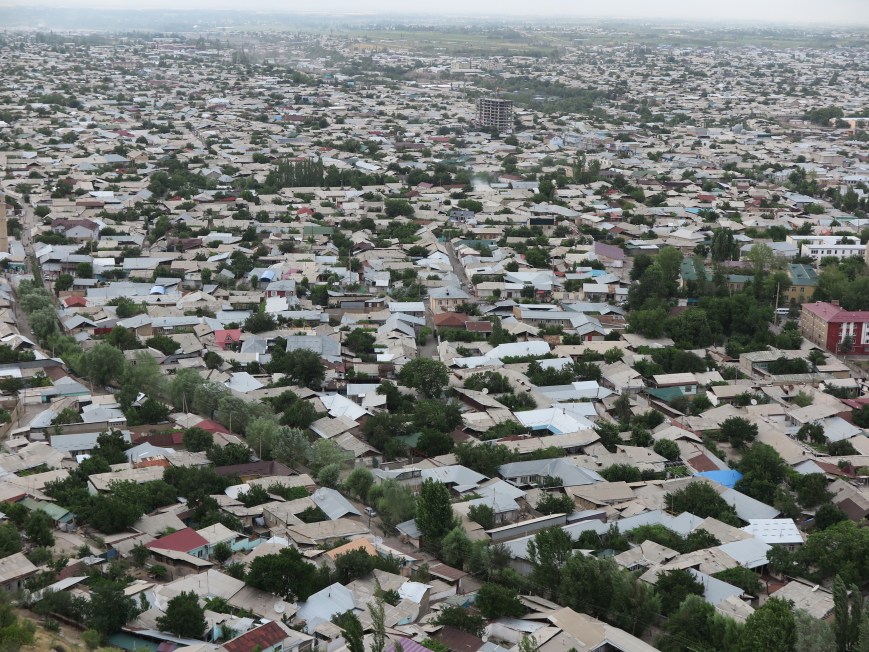
The suburbs (Note the long walls behind which there was often a large garden)
A car boot sale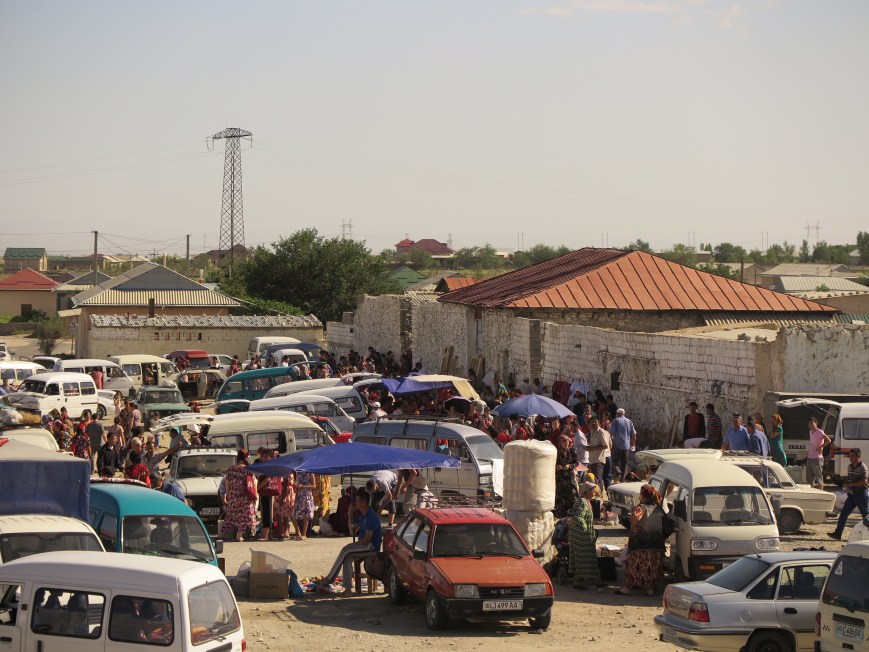
The countryside. The further west the more desert-like.
A farm. This appealed to me because it shows just how committed these people are, in the most precarious of circumstances, to trees.
Government housing. We saw thousands of these, literally. If you are prepared to wait 18 months one of these could be yours for $US3000. If you don’t want to wait, $US8000. US dollars were quite normal currency, not for small things, but for any bigger purchase.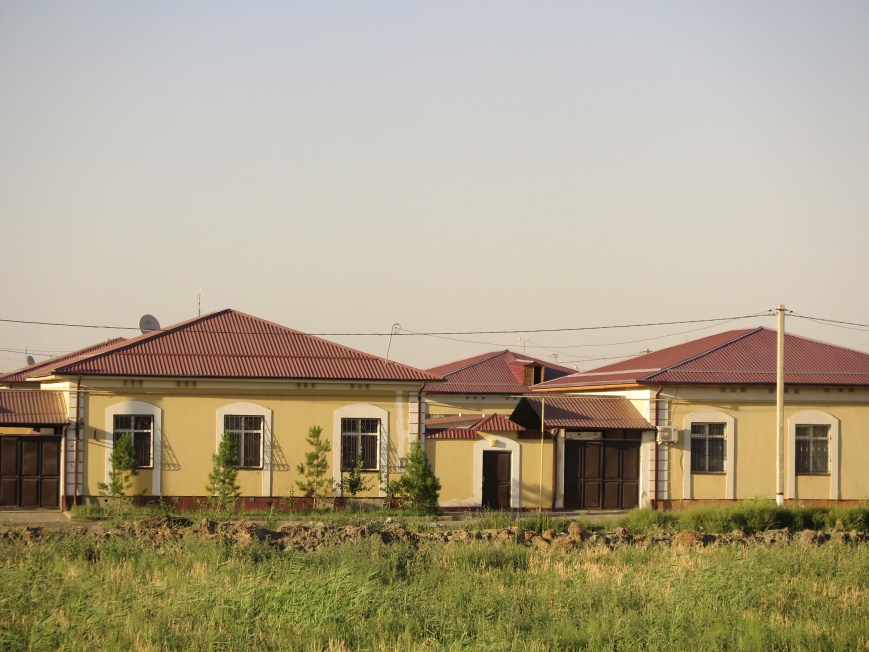
Shahrisabz
There is a perfectly serviceable, well maintained and direct road from Samarkand to Bukhara (in case of puzzlement, ‘Buxoro’ in Uzbek). My heart drifted sideways as we turned south-ish onto something considerably inferior in the road stakes. Where were off to? Mystery Tour.
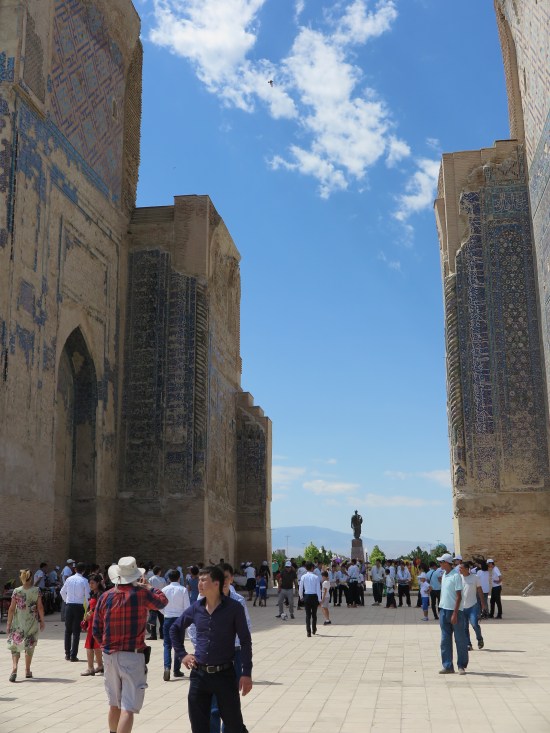 An hour or so later we arrived at Shahrisabz (Shar-ree-sarbz) at some sort of fete, like a tentative service club offering, a collection of minor Sunday surprises. Either children or very small people being married, several dozen in fact
 very junior boxers laying into each other (one kid would have a turn, biff biff biff, and then the other, biff biff biff),
 martial arts troupes, a smattering of food and craft stalls, a sort of information-y booth where the primary concern was taking selfies with non-Uzbek visitors, and a group of recalcitrant (as far as the Russian cameraman was concerned anyway) Uzbek dancers, singers and musicians. He could not get them to do what he wanted; they just kept launching off into enthusiastic private performances.
Temur was born near Shahrisabz and built a mighty fortress/palace here, the Ak-Saray (‘white palace’), purportedly with 1000 rooms. Certainly the remains of the pishtaq (in the distance below, and in the first photo of this sequence, 75m high originally. Could that be true?) suggest a mighty building.
An inscription on one of the towers boasts: ‘If you feel like challenging our power, look at our buildings’, reminiscent of Shelley’s Ozymandias: ‘Look on my Works, ye Mighty, and despair!’ But instead of nothing beside remaining, with lone and level sands stretching far away, there is another cause for despair: something intended by the government to be ‘a theme park tourist attraction’. It was built in 2017, a product of bulldozing two ancient ‘mahallas’, housing areas. This destruction caused the area’s delisting from the UN’s World Heritage collection.
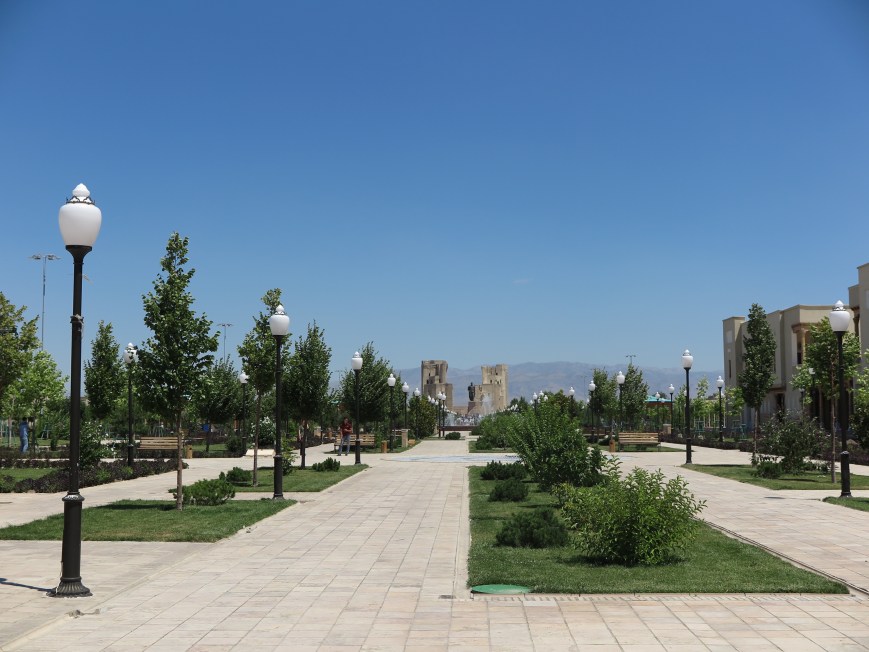 Shahrisabz, a fairly nondescript city with a big history and a population of 100,000, extends over a large area, but this strange affair, about 500m long and 200m wide is somewhere near its middle. At one end are the remnant towers of the Palace entrance. At the other is a tomb Temur built for himself. But he is entombed in Samarkand and instead his son’s body lies here. In between there is a weird expanse of concrete paving, lamps, water features, young trees and turf (Shahrisabz = ‘city of green’) surrounded by two- and three-storey apparently empty buildings, some commercial and some intended for housing. It is to be a tourist attraction. It’s hard to see just how.
On reflection what we might have been looking at was a particularly strong example of contemporary Central Asian public space design. See e.g., these pictures from Ashgabat, capital of Turkmenistan (at left) and Astana, capital of Kazahkstan.
Shahrisabz also has a Polish War memorial. I wondered why. The story. In 1939 when Poland was partitioned by the Nazis and Russians, somewhere between 600,000 and a million Poles were shipped off to Central Asia by the Russians, primarily to Uzbekistan where they were initially put to work on cotton production. They were unsure who to fight for in the War but an army of 60,000 displaced Poles from Central Asia fought for Russia before transferring their allegiance to Britain and becoming the Second Polish Corps of the British Armed Forces. There are 22 Polish War Memorials in Uzbekistan. Another odd footnote: Regiments of (non-Polish Uzbek soldiers were dominant among the Soviet troops which took Berlin ending WW II.
We had an excellent late lunch on the roof of the Cafe Fez with just enough breeze to be comfortable and moved on.

Bukhara
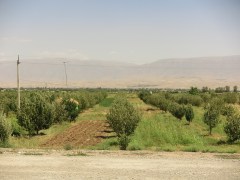 Westwards was into more flattened, arid country. We had left the comparatively fecund country around Shahrisabz and its Keshka Darya (‘beautiful/ pleasant river’). It seemed a long drive as such things often do — early start, big deviation (worth it) to Shahrisabz, unknown and fairly featureless country, no landmarks to judge progress, not a great deal of speed over rough roads. The photo below features a natural gas plant scarcely visible in the far distance.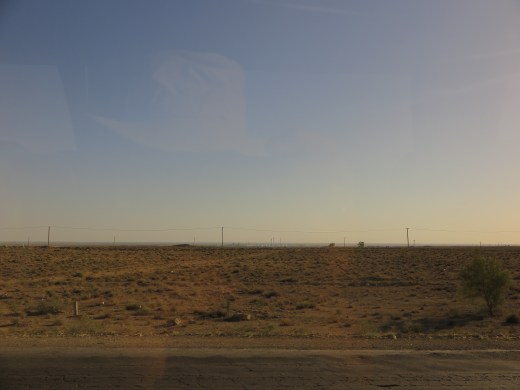
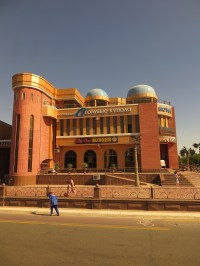
It was 38C as usual when we woke next morning for breakfast in our excellent hotel, the precursor to another packed day. Bukhara is described as a ‘city-museum’ with more than 140 historical monuments, and it did feel like that. Not that it was awash with tourists, but it did have a great many tourist facilities — that sort of restaurant, that sort of hotel, that sort of market, those sorts of galleries. I don’t know what the signs on the building at right say in Russian (except ‘cafe’ and ‘restaurant’), but the sign in English says ‘The One BURGER Open 24 hours’.
 We walked through an amusement park to find ‘one of the most highly esteemed works of Central Asian architecture’, the Samanid mausoleum built between 892 and 943 AD. I remember it mostly for the fact that it is built entirely out of mud, and that all that decoration is the product of cunning placement of bricks of essentially the same shape and size.
But it has other significance. Orthodox Sunni Islam strictly prohibits the construction of mausoleums over burial places, and yet … The Samanid mausoleum is one of the earliest of the very few departures from that restriction in the history of Sunni Islamic architecture.
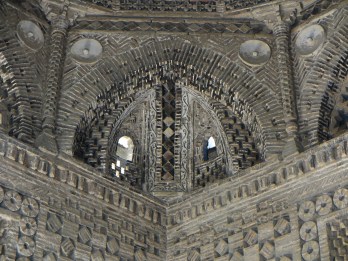 It is one of the oldest monuments in the Bukhara region. When Chinggis Khan invaded (1220AD, most of its population at the time being Indian/ Pakistani traders and their families!), the shrine had already been buried in mud from flooding, thus saving it from destruction. The site was only rediscovered in 1934 by Soviet archeologist V.A. Shishkin, and required two years for excavation and, I can only presume, a great deal of restoration.
The shrine has been considered sacred by local residents, and pilgrims would pose dilemmas and questions to a mullah who would reply from behind a wall in order to preserve anonymity for petitioners. The shrine was once the centerpiece of a vast cemetery where, among others, the former Emirs of Bukhara were buried.
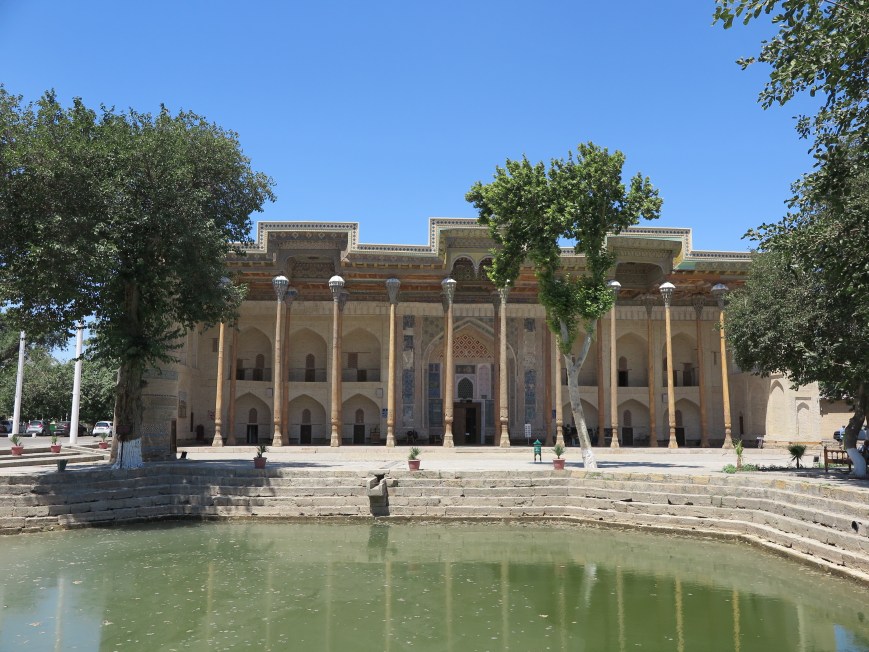 Another short walk got us to this working (‘Friday’) mosque where a very friendly and considerate imam gave us instruction in the meaning and practice of Islam. I thought again how generous Lochin had been with his efforts to introduce us to his religion, and also how likely it was that the Russians, having made every effort to do so, had succeeded in knocking some of the sharper edges off Islam in Central Asia. We were directed to the mihrab, the niche in the wall indicating the direction of Mecca, next to which was, as customary, the minbar, the pulpit from which the sermon is given. He also told us about the nature of prayer and showed us how to participate. Some of us did.
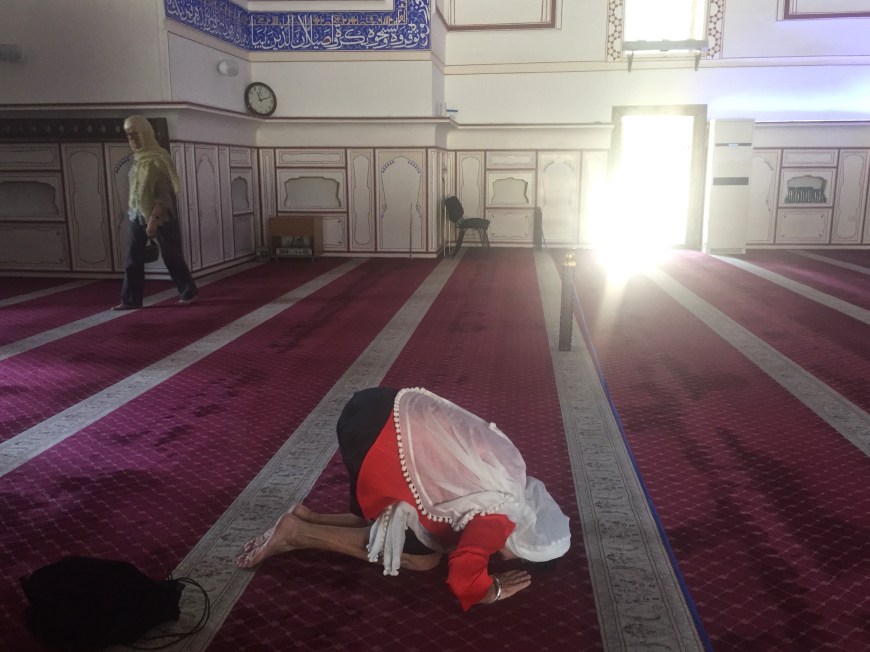 As we left, Myrna held out her hand for him to shake before realising that this was not quite the done thing. He smiled and laughed, took her hand and shook it warmly.
We moved on to the Ark Fort. This was the fortress home of the Emirs of Bukhara, the last of whom was driven out by the Russians in 1920. (As it happens the Russian forces were led by Mikhail Frunze who as hugely retentive readers may remember lent his name to his native town Bishkek from 1926 until independence in 1991.) These walls were extraordinary to see as were the bits and pieces collected to interest visitors up the top. This, I think, is where the people who looked after the stables lived.
  I like the colours and the forms in this photo just per se. Maybe the shadow play on the imperfections in the rendering. But there is something else about what we saw here. I think perhaps expressions of grandeur which are intriguing but not very grand, qualified with something more local, individual and ‘imperfect’. Something that is wrestling with an introduced culture without completely understanding it, modifying it according to local precepts producing something which is often desirably unusual. This is an observation about civic architecture and art. Those sorts of ‘mistakes’ don’t interrupt the purity and precision of most of the religious building.
This is the last Emir, Khan Sayyid Alim. He fled (hmm examine photo and insert suitable verb meaning ‘ran away from’) before the Russians came.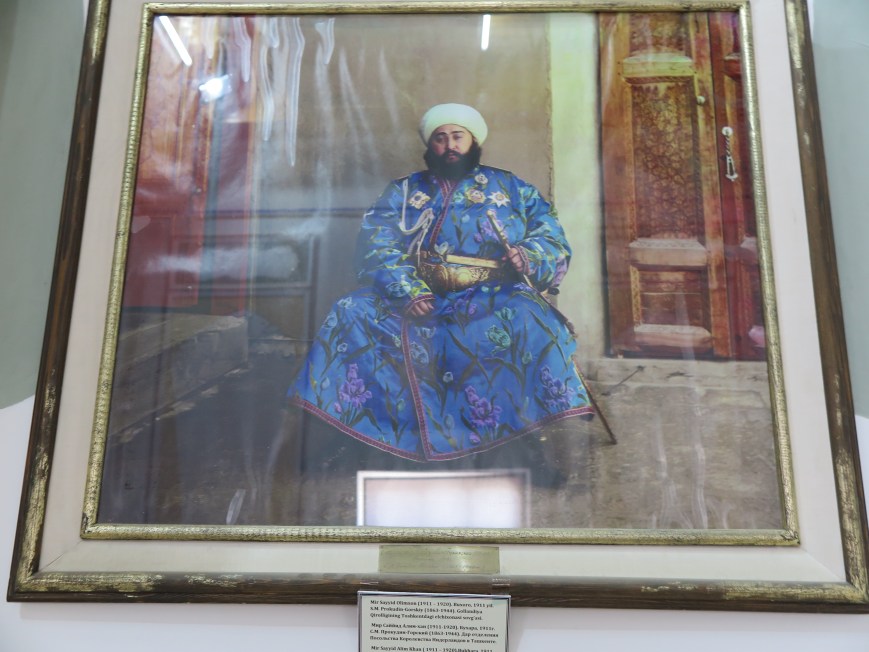
We’re still walking. We are in the forecourt of several mosques near this wonderful minaret,  and, below, this working madrassa for students aged over 18, four levels of study offering both religious and secular subjects. Not all students join religious orders. The quality of the education received at many major madrassas like this one is believed to be very high.
 And a required photo apparently.
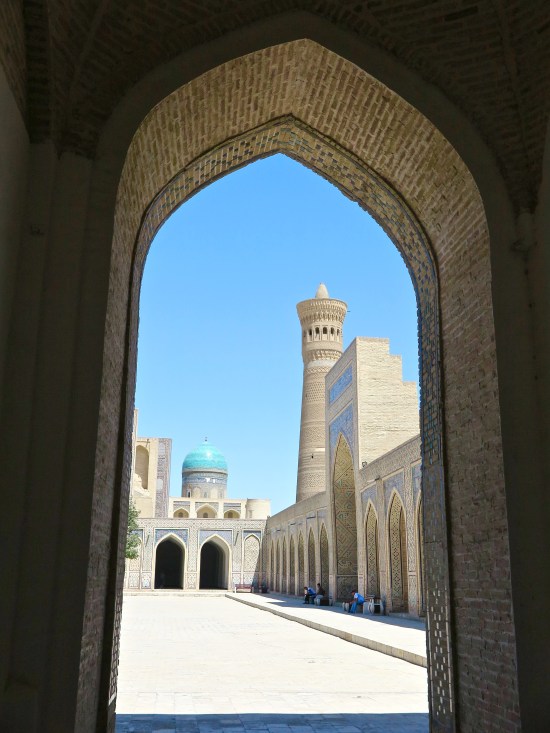 There is something very satisfying about these forms and colours in this environment.
We hadn’t even had lunch yet. (Outstanding dumplings and plov, a bit like risotto. We were coming close to exhausting the range of Uzbek cuisine. Again the meal was made more pleasant by being up on a shaded roof in the breeze. )
There was so much more but let us throw ourselves on a pile of rugs. Trample them. Smell them. Rub your hands on them.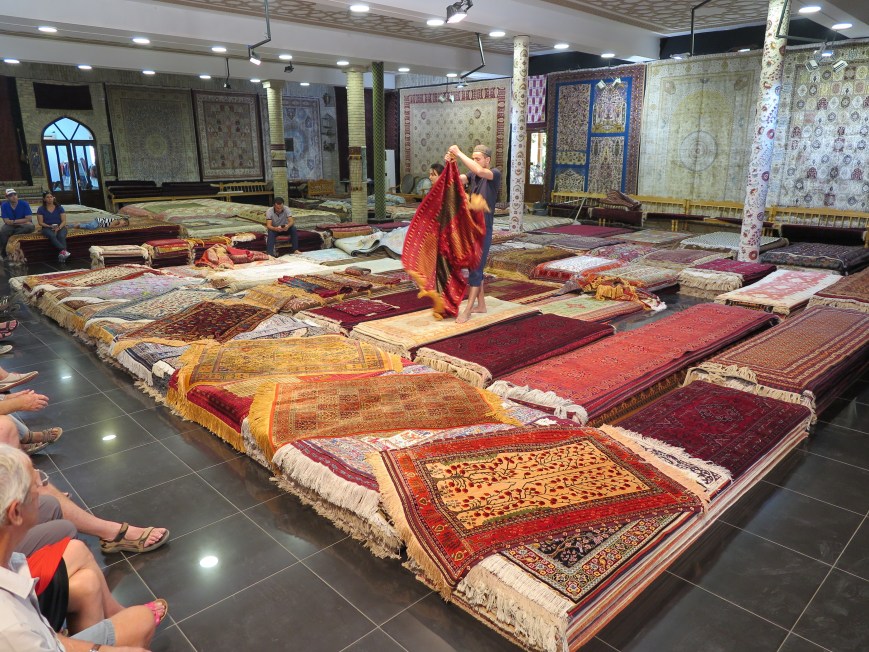 I am a sucker for rugs, a complete sucker. Check out the one at the front under the red and orange one. An ancient design with a family of deer wandering round what might be the Tree of Life populated by birds. (We found the identical design on a rug of the same size in Israel’s National Museum. ‘Song of Songs’, Bezalel Workshop 1820.) So striking. So intense. I saw it as soon as we walked in. (I wonder why it had been placed just there … strange.) Silk. Amazing to the touch. Shimmering with light. I look at it every day and am grateful. Cost? Formidable. There were no bargains here. These are real ones.
These rugs were being made by 60 youngish women who tire — after couple of years, no longer; their eyes go — of tieing 400 knots to the inch. As the salespersons are keen to point out, the work involved! Months in even a small rug.
 And how do you sell rugs?
Simple. Seduction.
Meet Sabira. She knew all the ways to sell rugs and probably anything else that might have taken her fancy. The knots she ties circumscribe first your will and then your wallet. She had honed her skills and her English accent working in London for several years.
We had dived in fully clothed and made our purchase. Marty and Rikie took a more measured approach and spent a night deciding to go back and have another look. Rikie put a dint in Marty’s bargaining position by calling out across the room, ‘This one Marty. Buy it for me for my birthday’, but we believe it has already been a great success in its new home.
We saw a photo gallery, we saw pottery being made, we saw a miniaturist, and we saw a collection of suzanis (‘by needle’) which attracted a great deal of comment when Myrna posted her photos of a dozen or so on her Facebook page. They exemplify what might be imported from Uzbekistan to influence Russian/Western European artistic influences. No special interest in precise symmetry, although it could occur when desired, skilfully but not industrially made, a real pleasure in modest eccentricity. They were vibrant and deeply engaging.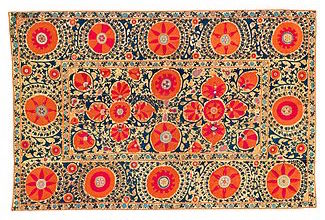
And then on the outskirts of town — sited by hanging a sheep in each of the four quarters round Bukhara and being guided by the one where the sheep rotted most slowly — we came to the Summer Palace now in some decline, another strange amalgam of Russia and Central Asia. Here too is this ‘style’ that I am trying to describe.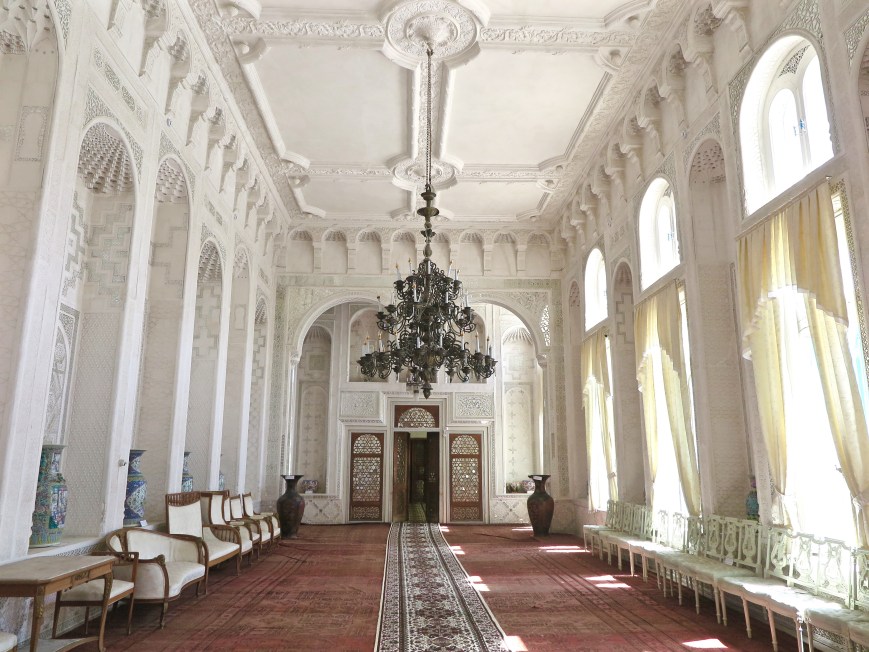 The Grand-ish Hall. Note the muqarnas in the alcoves.
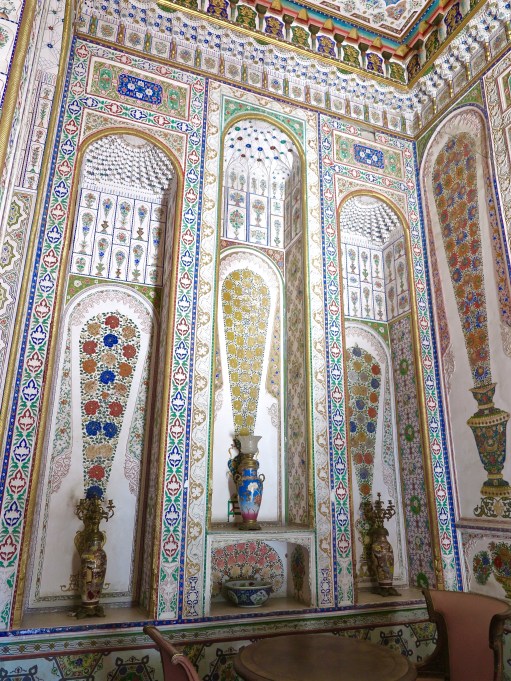 Pots full of flowers which will never die. (and Muqarnas)
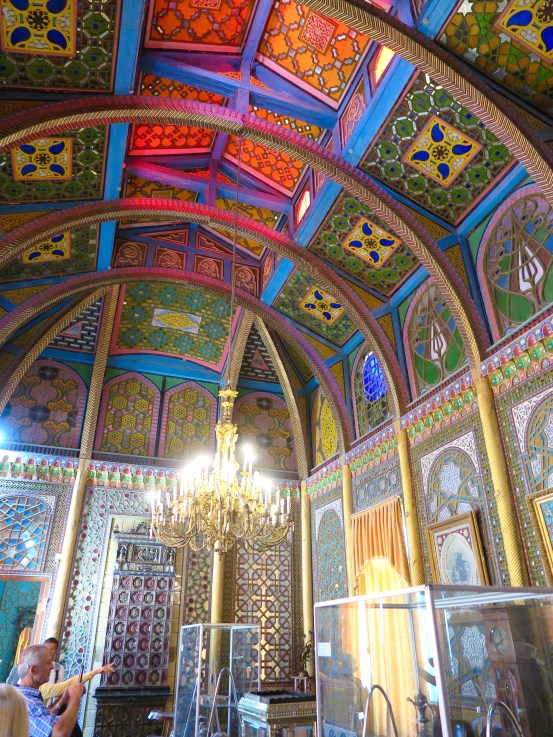 A sitting room, and these colours are all true — a fury of decorative art.
These are the reasons why you might go to Bukhara.
 Finally, a small mosque built by a businessman to assuage his god. Tiny inside, and infected with a rash of some sort of commerce, what I’m really looking at is the stork nest — part of the building, lovely — and what I’m really doing is standing next to and chatting with a delightful 10 year-old girl who is trying out her English to sell me some beans and nuts. My one regret, from weeks in Central Asia — my sole regret, it had been more than wonderful — is that I didn’t buy any.
The Very Fast Train took us back to Tashkent for a 2.30am flight to Istanbul. We were driven to the airport by a 6 foot 4 Kazakh who spoke perfect English and whose son, by dint of the new Silk Roads, was studying Japanese in America. We got to the deserted airport 3 hours early with only the football for company. Uruguay 3: Russia 0. Not a popular result here, but I was secretly just as pleased.
And then, a destination the Silk Roads often tried to dodge, somewhere I was looking forward very much to visiting — JERUSALEM …
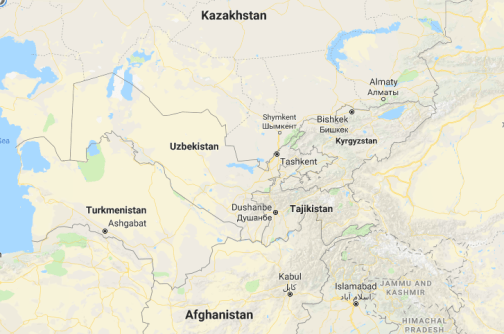
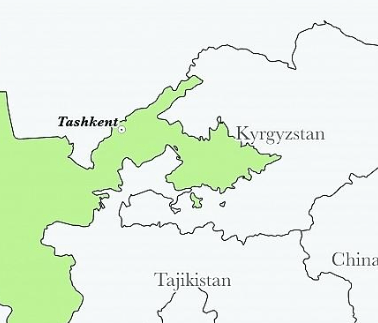
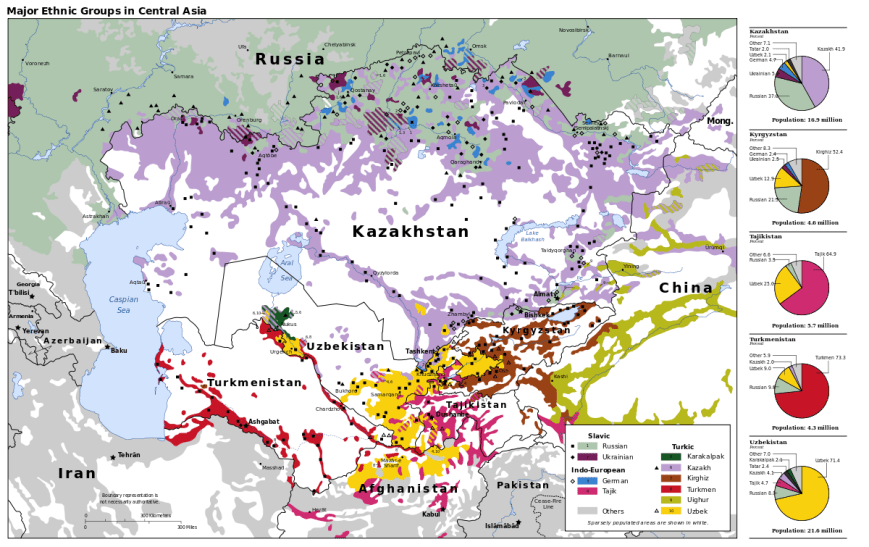 Ochre for Uzbeks, red for Tajiks, brown for Kyrgyz. Sort that out. (No one lives where it’s white: mountains or desert.)

 with the slender strips of fertile green in the arid mountains (see at left for example, out the train window, Adijan to Tashkent), this region has hosted urban civilisations for a long time. Samarkand and Bukhara had been cities for centuries before Alexander the Macedonian conquered them in the 4th century BCE. It was here too that Chinese explorer Zhang Qian sequestered before returning home to make his report on the fertile aspects of Transoxiana, the land between the Amu Darya (in Ancient Greek ‘Oxus’) and Syr Darya, the huge rivers that used to feed the Aral Sea from the Pamirs and the Tian Shan.

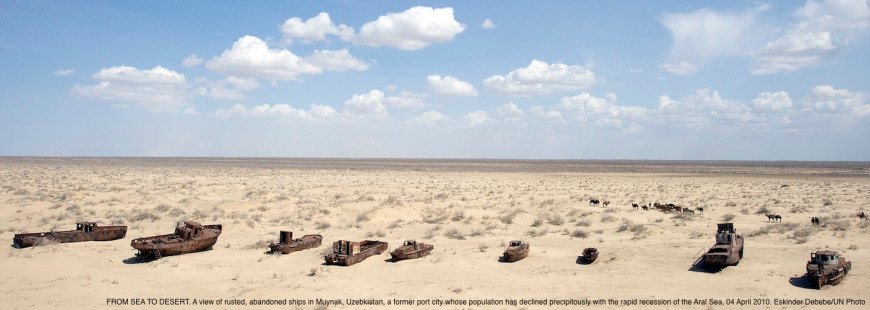
 But the ecological issue was far more profound than the cultural one.
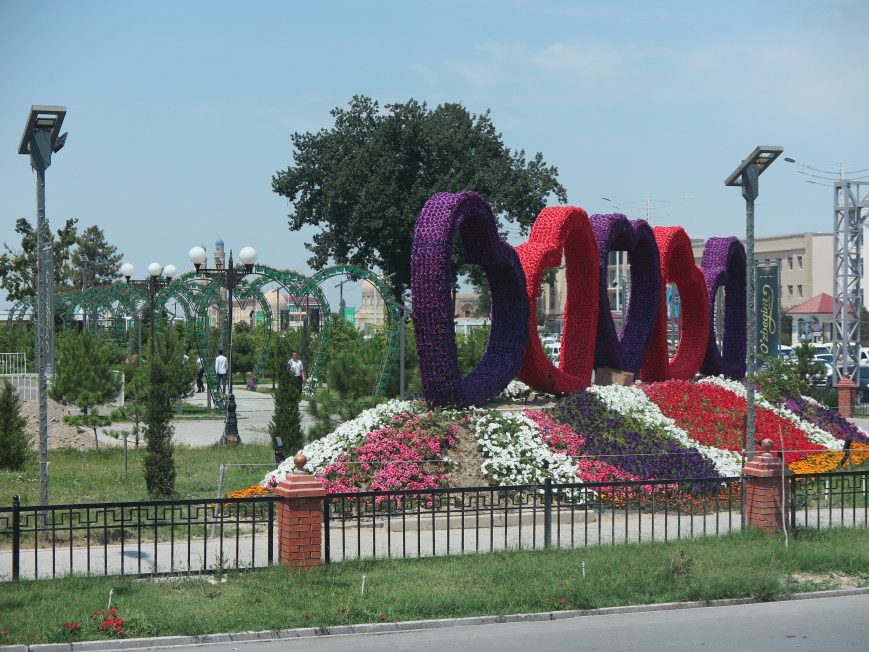

 This stone mural was the best feature of Andijan’s museum, a sad dark place with, inter alia, a large collection of representational paintings which were ugly, poorly crafted full of muddy colours and badly presented. We went there while we were waiting for our train to Tashkent. One day it may be full of wonders but it was a slightly punishing experience as we tried to be polite listening to a long dull explanation of each of the exhibits which was then translated. Hard work. I was also hungry and tired. We slid out of range. The hunger issue was resolved by eating in a cafeteria, a meal for which I had high hopes


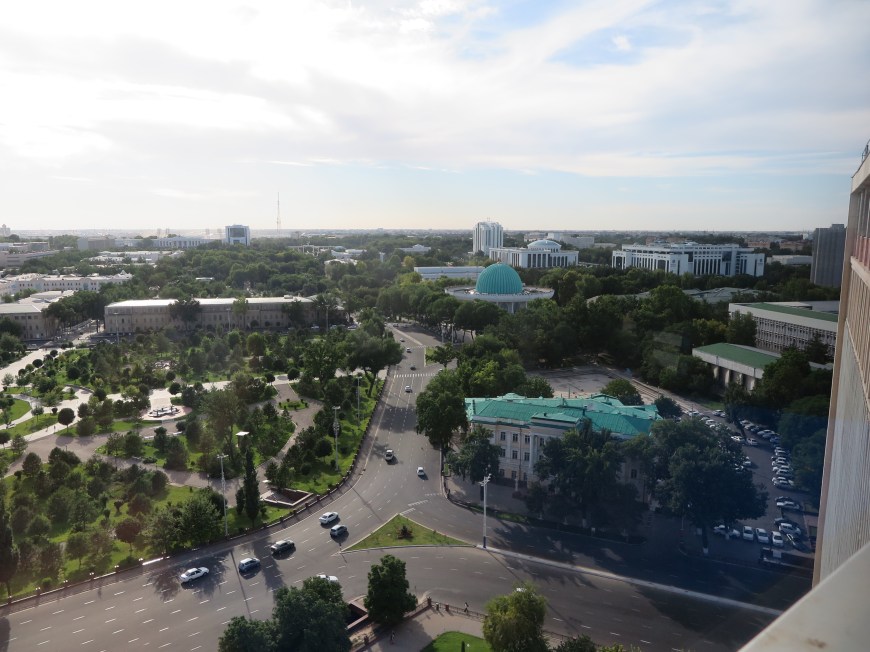 This is just a small section of the central ‘park’ area named after Temur who has pride of place in the middle, with our fascinatingly sub-grand hotel in the photo below as a backdrop. The hotel was representative of vast aspirations which had not worn well, but it did have a very interesting and diverse clientele: a genuine gathering of nations. You’d stay there for that reason alone.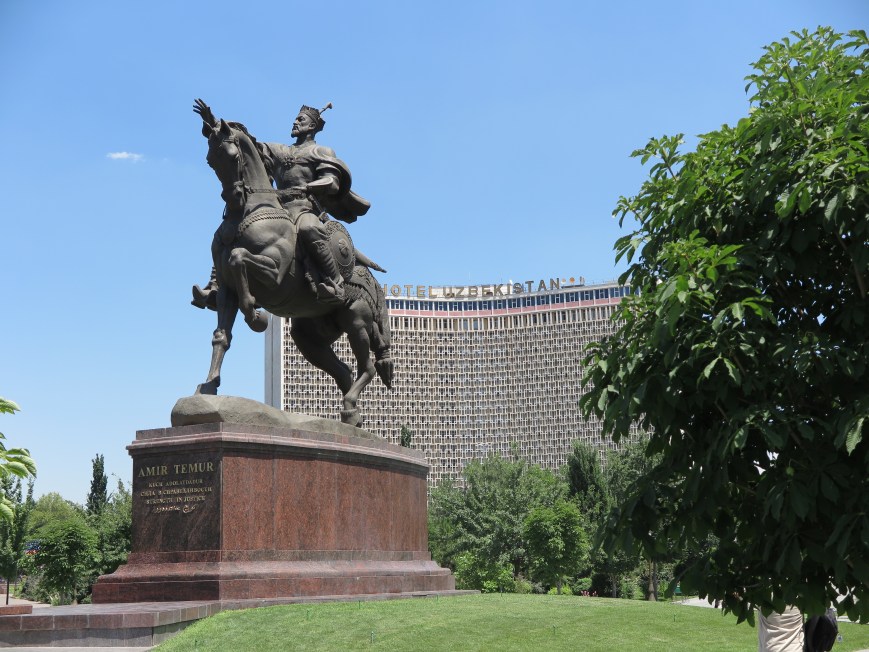
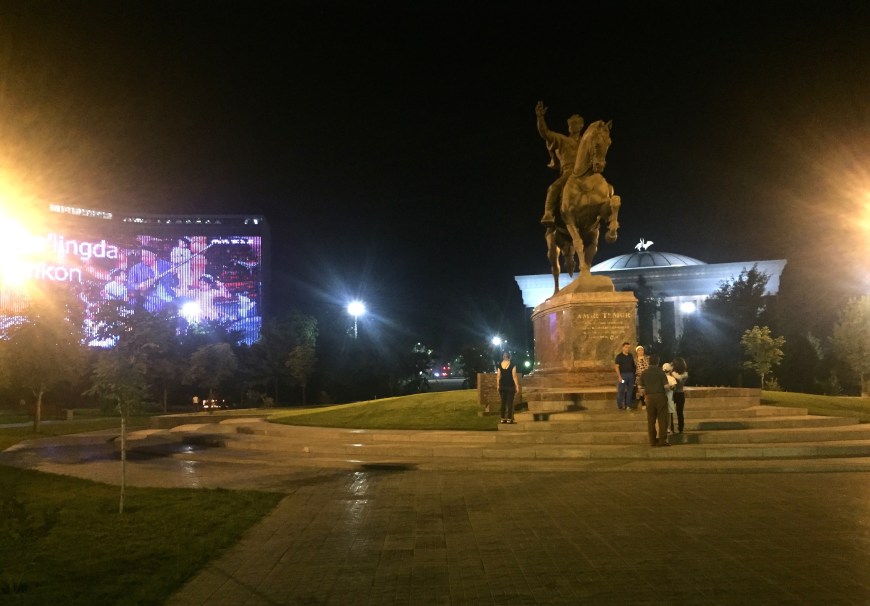

 Let’s see if I can find one. Bingo.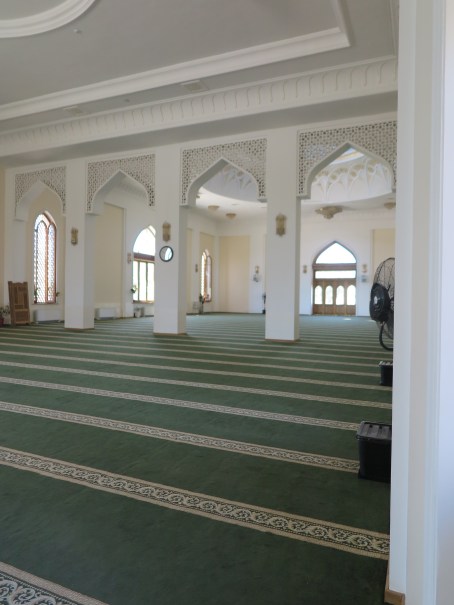


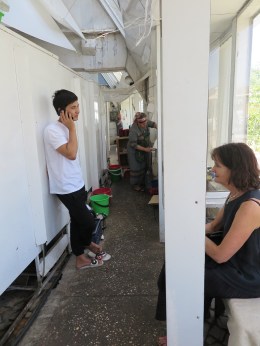 The market! Ah Lord. I customarily resist markets unless I want to buy something.


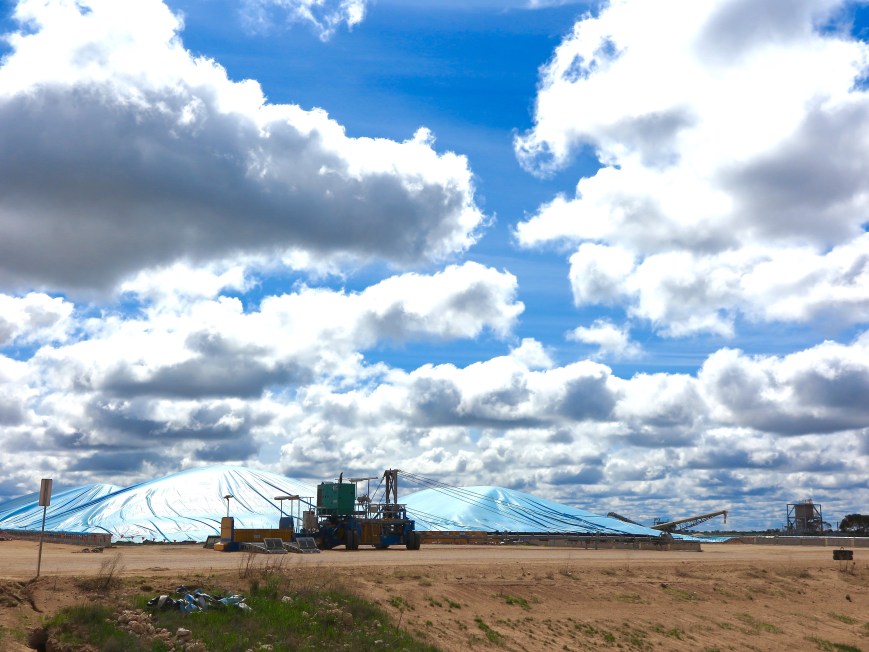


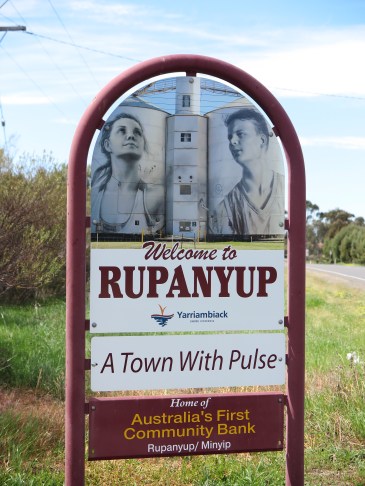

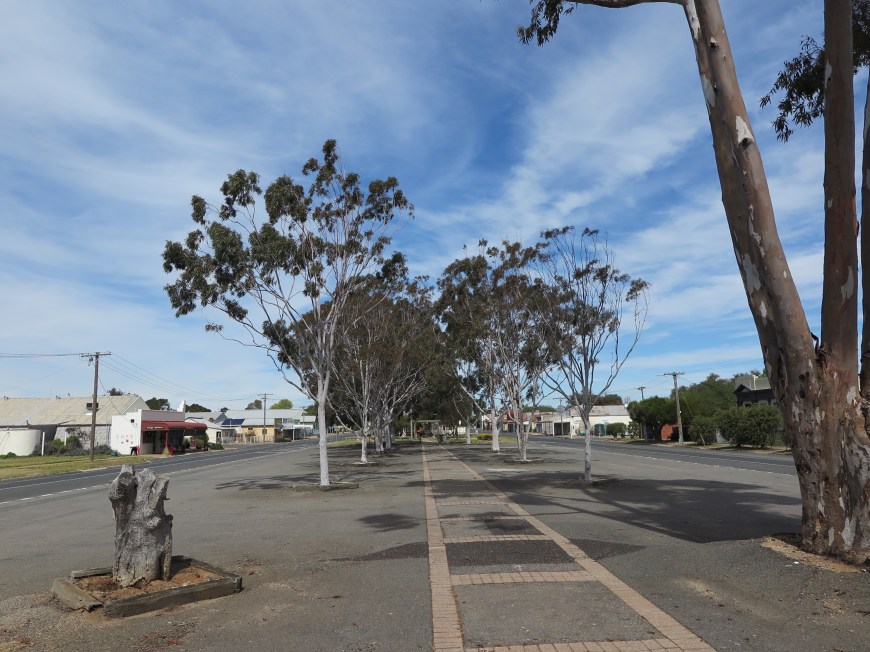
 Now instead of Patchewollock shopping in Patche, Patche (if there’s anyone at home) shops in Rainbow, Rainbow in Warrack, Warrack in Horsham, Horsham in Ballarat and Ballarat is already commuting to Melbourne, so … might as well.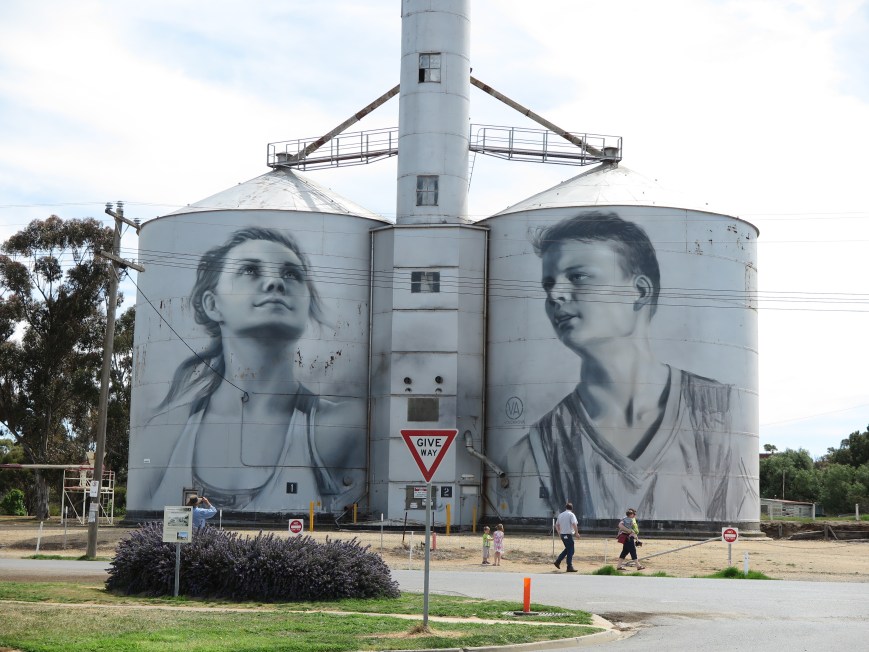


 There is a view that you can’t or, really, shouldn’t take photos like this. They only hint at the whole feeling of epic spaciousness or for that matter the death cage match between the tidy monoculture, not yet exposed to summer, and the fabulous mess of the indigenous remnants (at left). And also, they say, too much sky. Too bad.
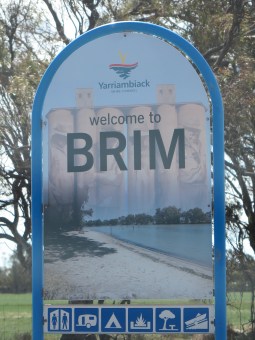 Guido van Helten’s iconic Brim mural was the first silo artwork to appear in Victoria, and soon infused the town’s community with newfound energy and optimism. After gaining widespread local and international attention, Brim’s silo art success shone a spotlight on the Wimmera Mallee region and inspired the establishment of the Silo Art Trail.
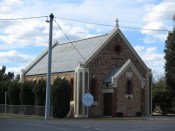 Through Beulah where my family once lived during a drought of epic proportions. That must have been more than 80 years ago. At left is the church where my father was the minister.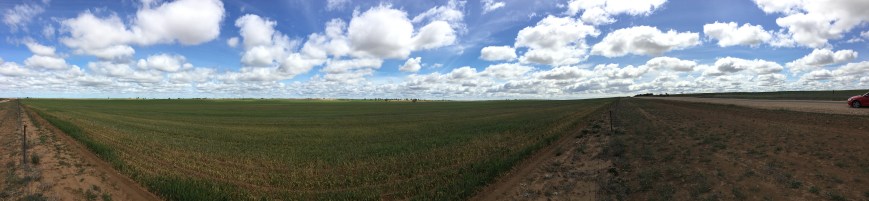
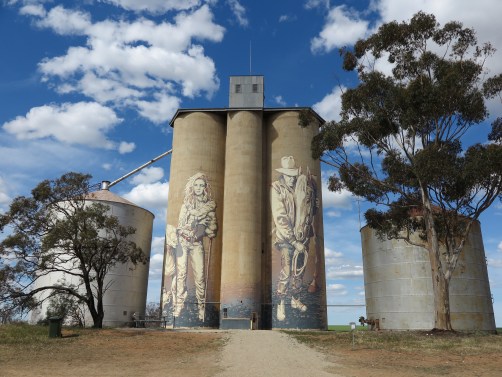
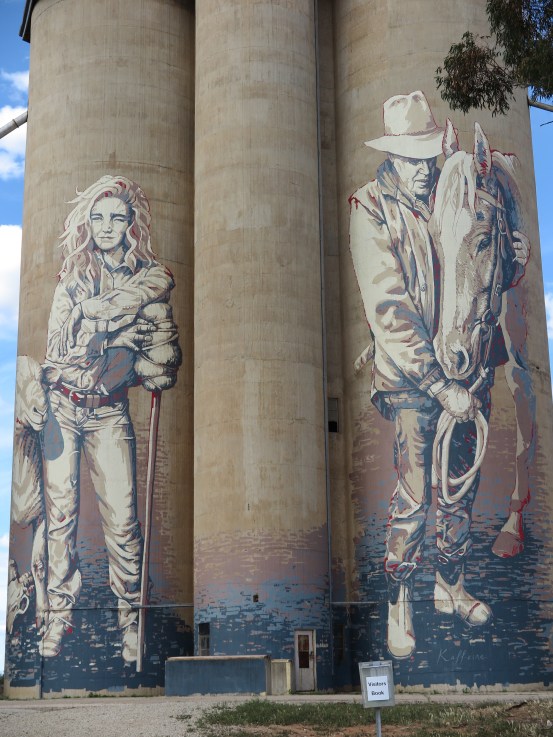
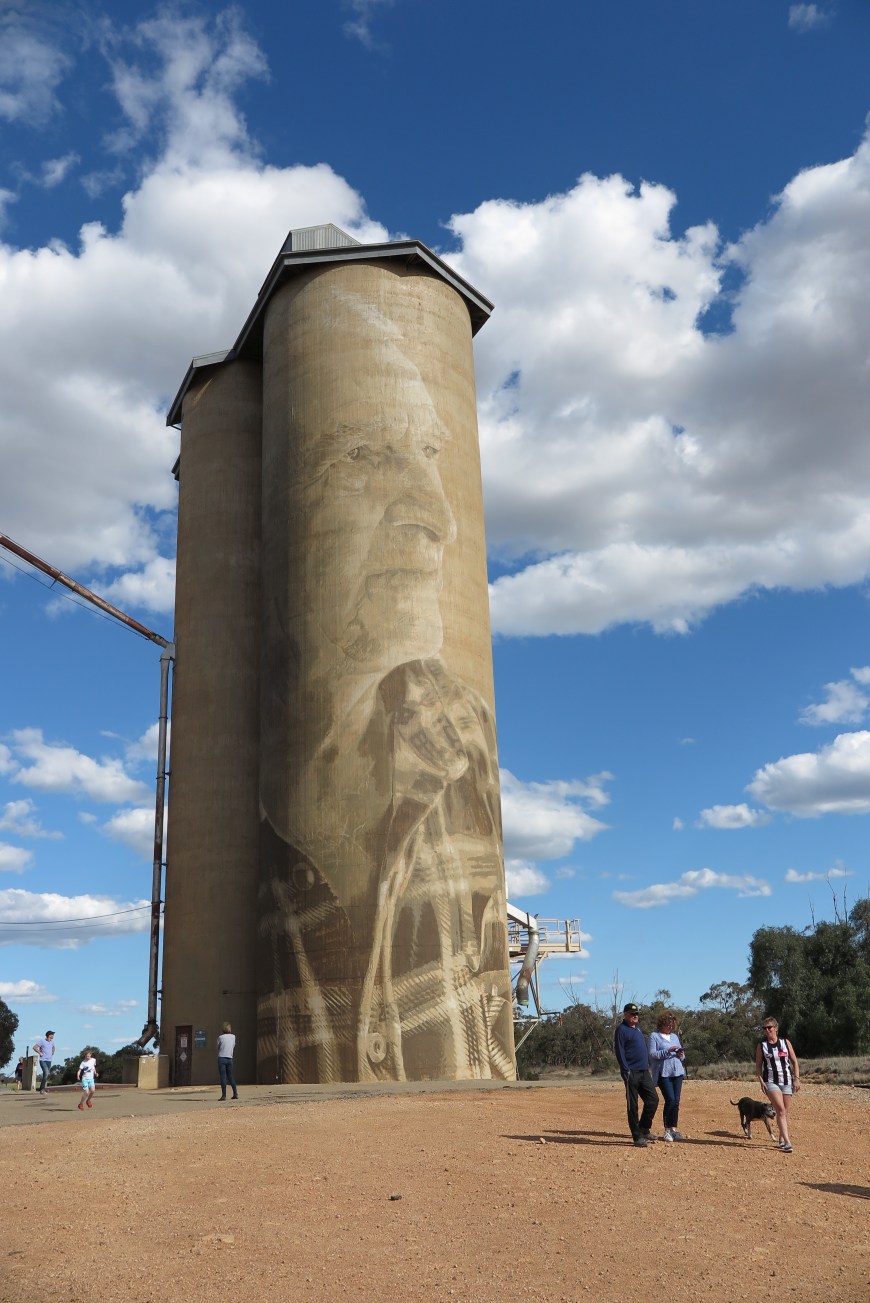


 Kerry Vogel who described herself as the ”accountant/ sales manager’ told me that story.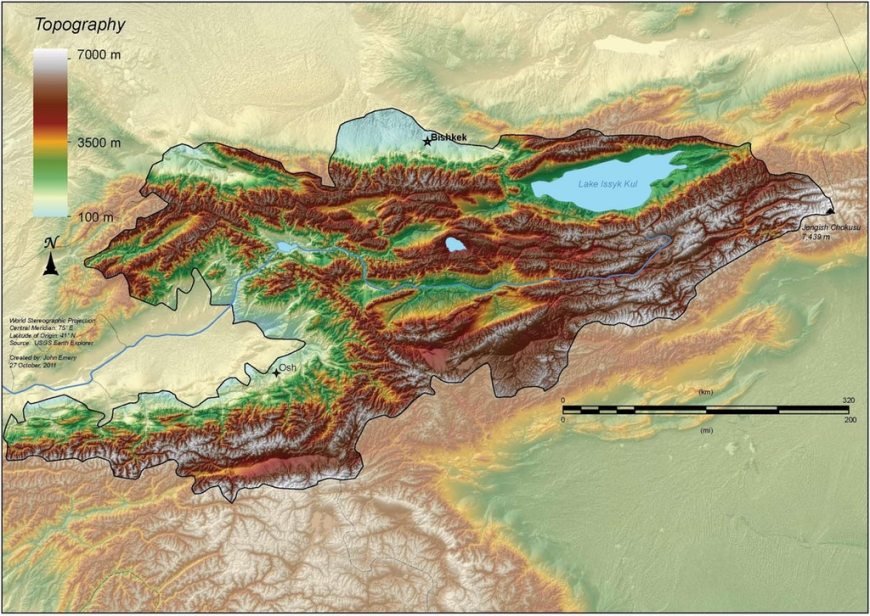
 On the border with China at the far right of this map is Jengish Chokusu, ‘Victory Peak’, 7439m asl. It is very rarely climbed because of weather and access issues and the fact that the most common route involves a 14km trek along the top of the massif of which it is a part, above 7000m all the way. On the Chinese side (pictured at left) it is called Tomur, ‘Iron Peak’ in Uyghur. I think it has only been successfully climbed once from this side.


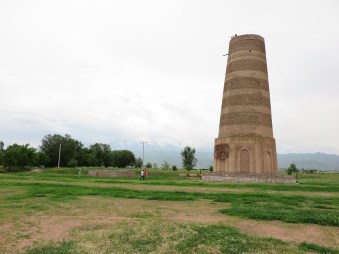

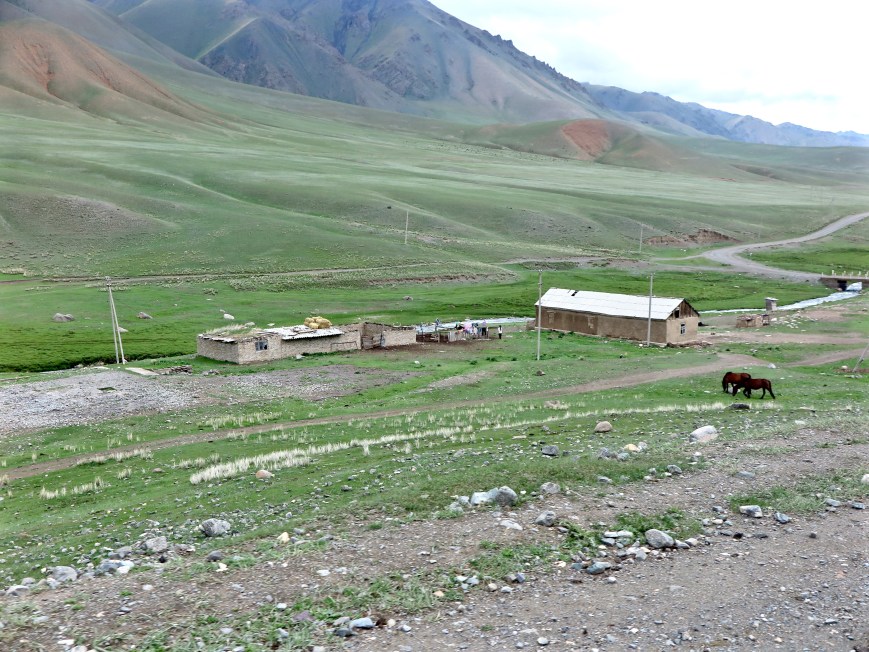 A template for the farms.

 Below: our accommodation, and perhaps more interestingly, our dining room and the kitchen as well. There wasn’t anything else.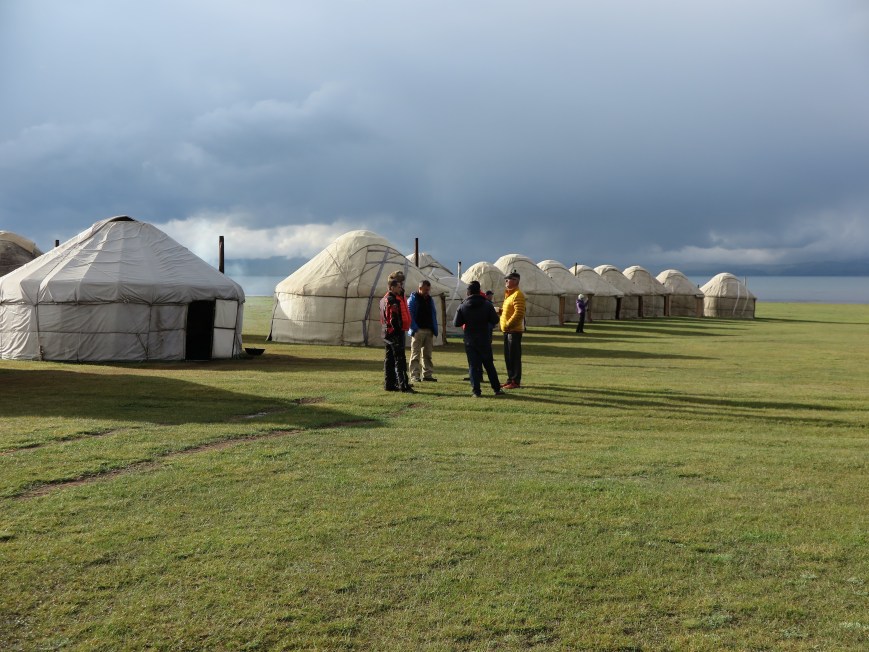


 This is how you put up a yurt. Three of the distinctively Kyrgyz tunduks are visible, one at the top of the frame and two leaning on the covers at left. Erecting a yurt is one of the sports at the Nomadic Games. I think I remember Artem saying that the record is less than 10 minutes.
 ‘Sleeping in a yurt loomed as one of the challenges of the trip. Dormitory accomm, snoring, cold, 150m to the toilet etc etc. But it turned out just fine. It was cold. Formidably. We did have a number of people in the yurt. It was 150m to the toilet. Fresh snow is falling on the hill we climbed yesterday. When I wandered off for a pee it was absolutely silent, and still — no animal noise, dogs had been barking earlier — no wind either. The bedding weighed kilos and the [coal and very effective] stove went out, but it was snug. And I was happy.’
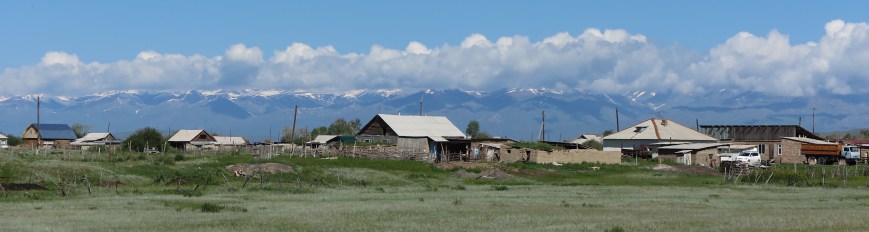
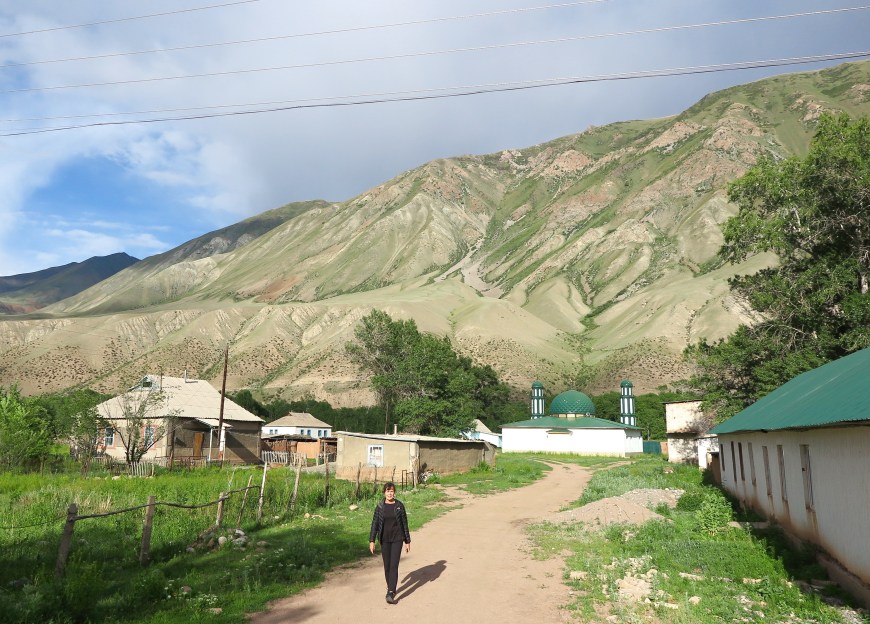 There isn’t much at Kyzyl Oi, just a remote village that wanted tourists, and not just for their money.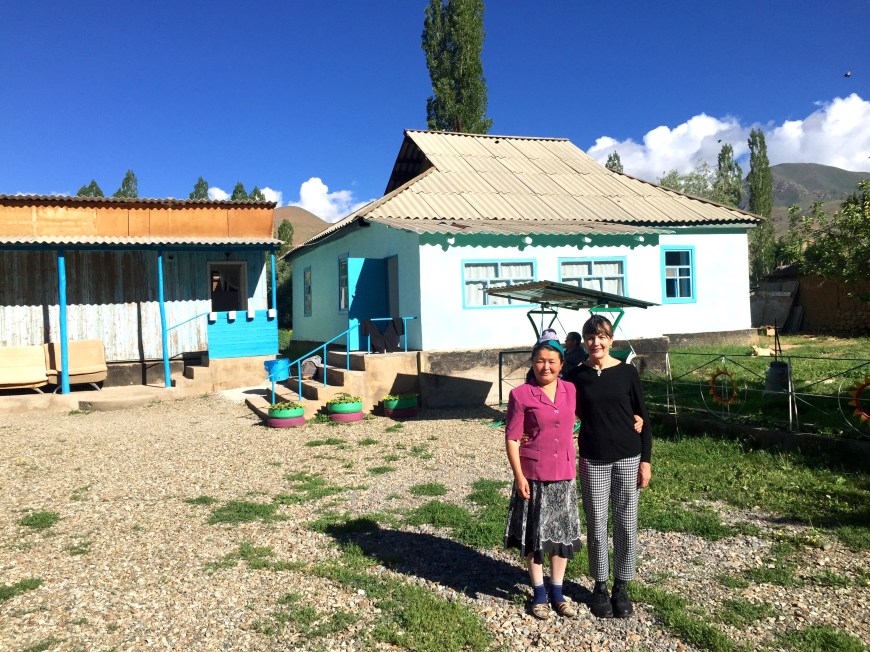

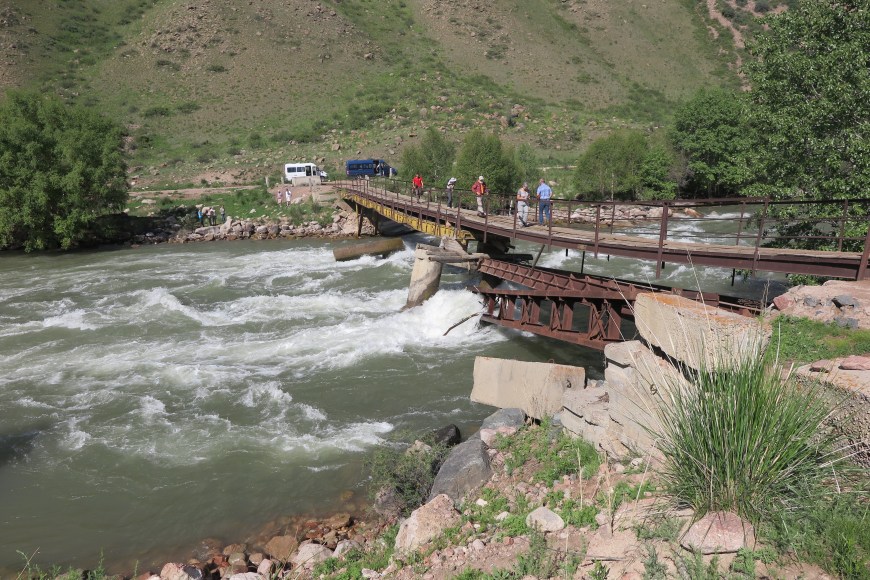 The farmers of Kyzyl Oi take their stock over this bridge on a regular basis. There must be others but it is the only bridge I can remember for 80km. It has taken quite a whack to its concrete pile supports and the girders on this side have collapsed, but I’d hate to be the person trying to rebuild it. Just watching the water power past in a fury was entertainment in itself. We followed it up its gorge for about 60km and not for one second was it less than a noisy torrent until it spread out through the pastures of the Suusamyr basin. But first …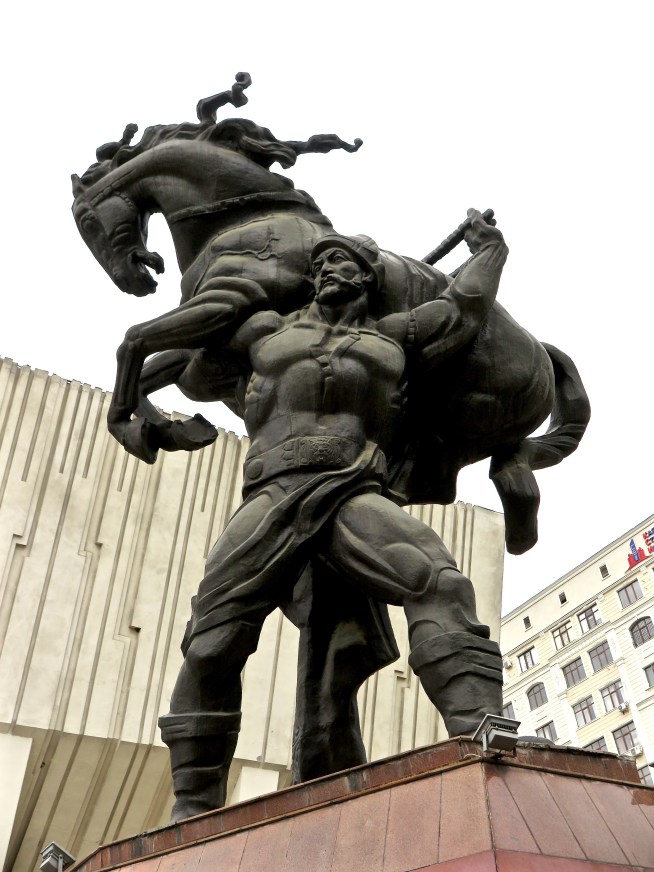
 Sources agree that he lived in a village (above) in the Suusamyr basin now named Kojomkul after him, that he was kind and concerned about the common good, that he was unchallenged as a wrestler, and that he was big. Definitely big. How big? 230cms tall (7’6″), and weighing 165kg (350lbs). That big. One story has him lifting and carrying on his shoulders (maybe moving?) a stone weighing 750kg.


 The lake is dammed at one end for hydroelectricity production. Some of this is sold to Kazahkstan; some may go to Uzbekistan although it has plenty of energy resources of its own. The hydro plant was showing major signs of wear and limited upkeep, but you could get an idea of what, quite recently, had once been.
 It’s not a great photo. It’s from the van where I was holding my teeth apart to stop them from shattering. But for me it was history.
  We were on our way to Arkyt, scarcely visible at left from up the top of the hill, another remote-ish homestay at the end of an odd little run of Holidayland — yurts with fiber glass roofs, ‘log’ cabins, unemployed frames of rusty steel with flapping fabric, coffee shops but not as we know them. That sort of thing.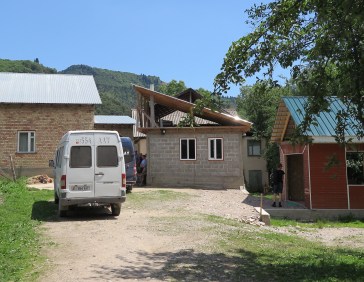



 She may have. It could have been a bit lost in translation but these are her five children. The perky chap in the red polo shirt who spoke good English and wanted to engage in conversation is 10. She is 25.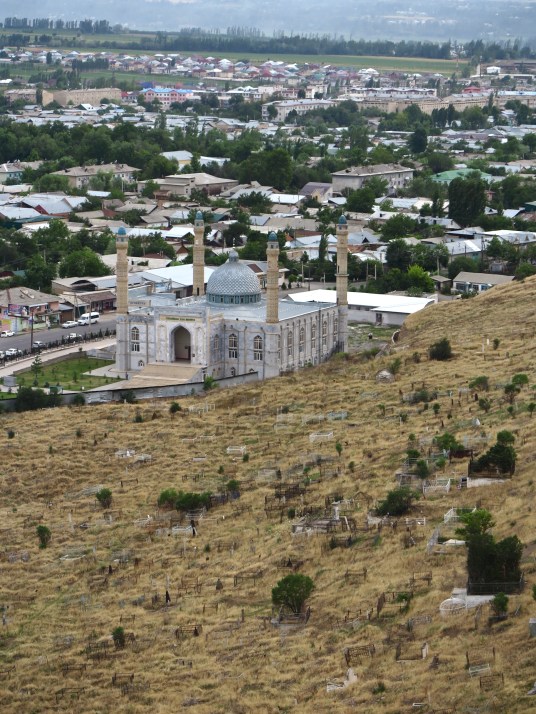
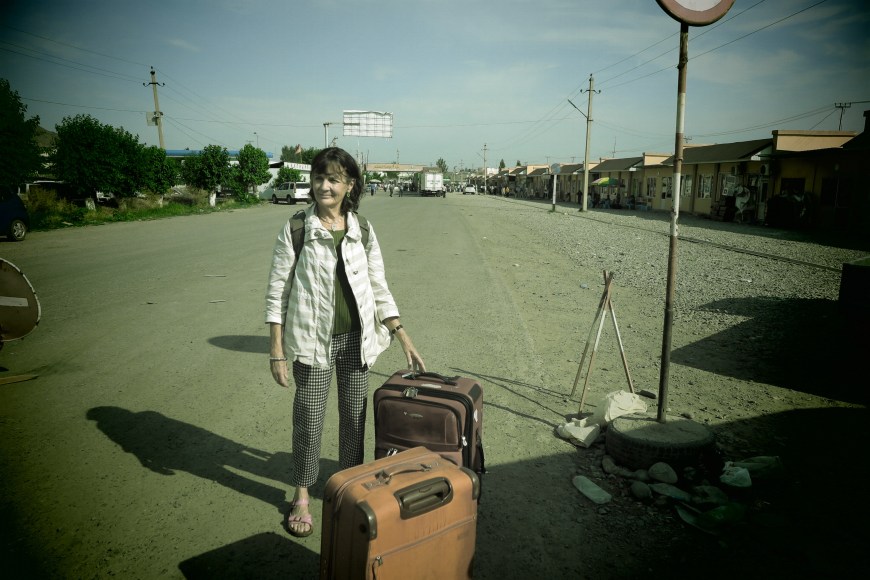

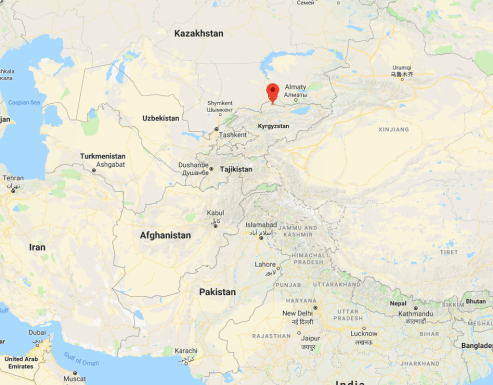

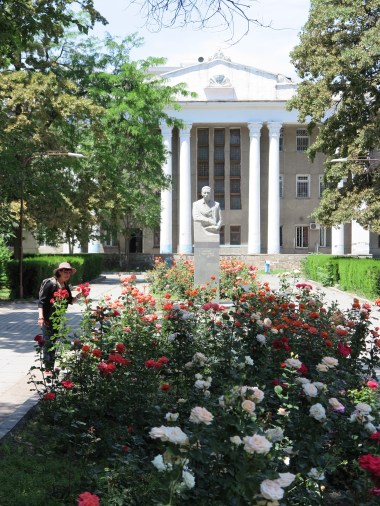
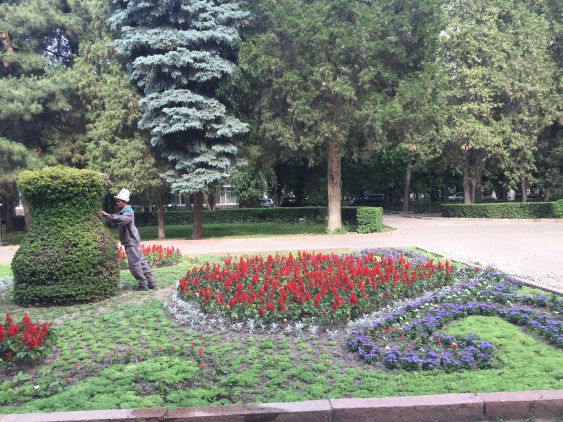
 But Bishkek is on the flat. We were driving through long avenues of mature trees: oaks, ash, poplars, cedars, conifers, plane trees. Completely unexpected and heart-lifting. This planting we later found out was begun in 1890 by Alexei Fetisov, a Russian botanist. So some of these trees are as old as the city itself, a matter to which we will return. Not everything on the Silk Roads is 4000 years old.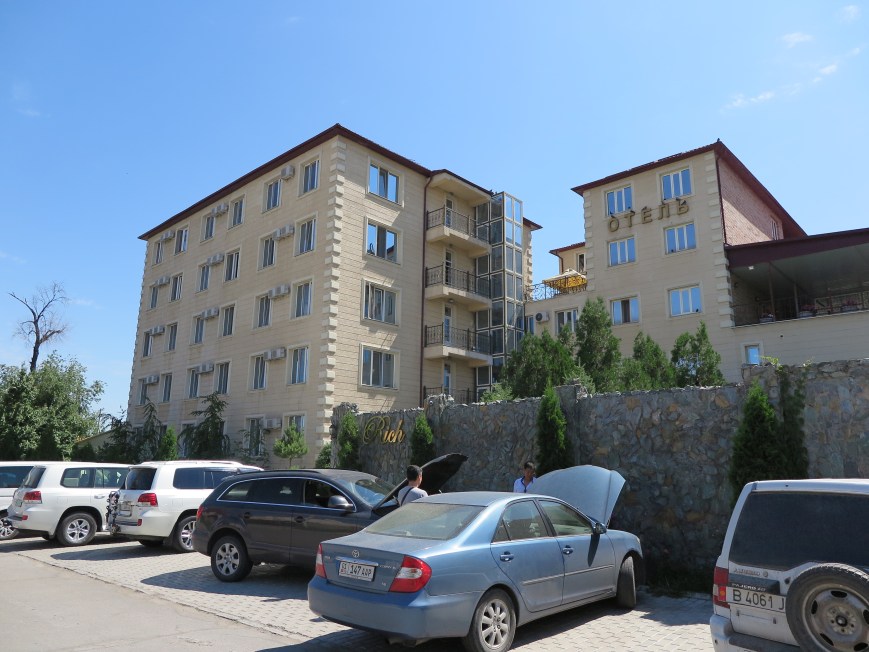

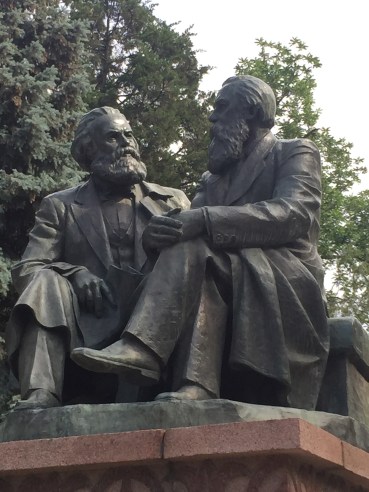

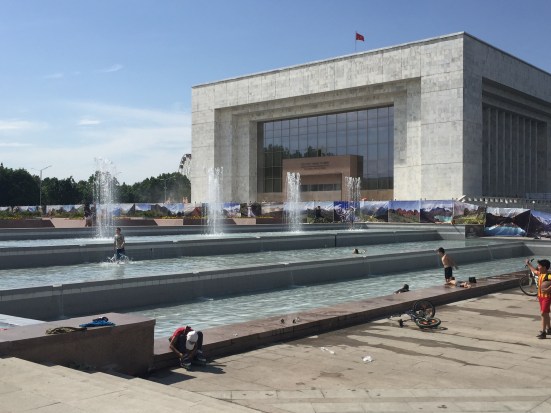



 Further to the right over the road is the restaurant Arzu (‘desire’, ‘passion’) where we ate twice. Once was the first night, the end of this expansive day. We went with Freya, a tour companion who we had met while getting our passports confiscated in Urumqi.

 In times past very few people travelled the length of the Roads. Caravansarays (at left what’s left of Tash Rabat, which we didn’t see) were often separated by 30 or 40 kilometres, a day’s travel, and you might travel to one or two further on, do your business and then return to where you came from.
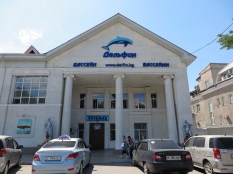 Among other things, we had a swim in the Dolphin Pool with a squad of 10-14 year old boys surging in an uncontrolled fashion up and down the pool. We needed to rent special flip-flops/ jandals/ thongs to enter and had to wait for some unspecified reason, but with the kids’ mums we were able to watch UFC (Ultimate Fighting Championship) mayhem on the TV in reception.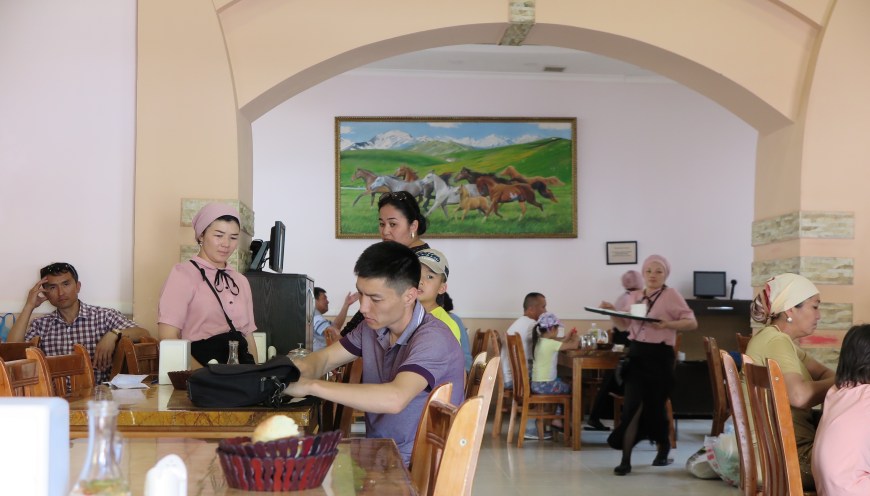


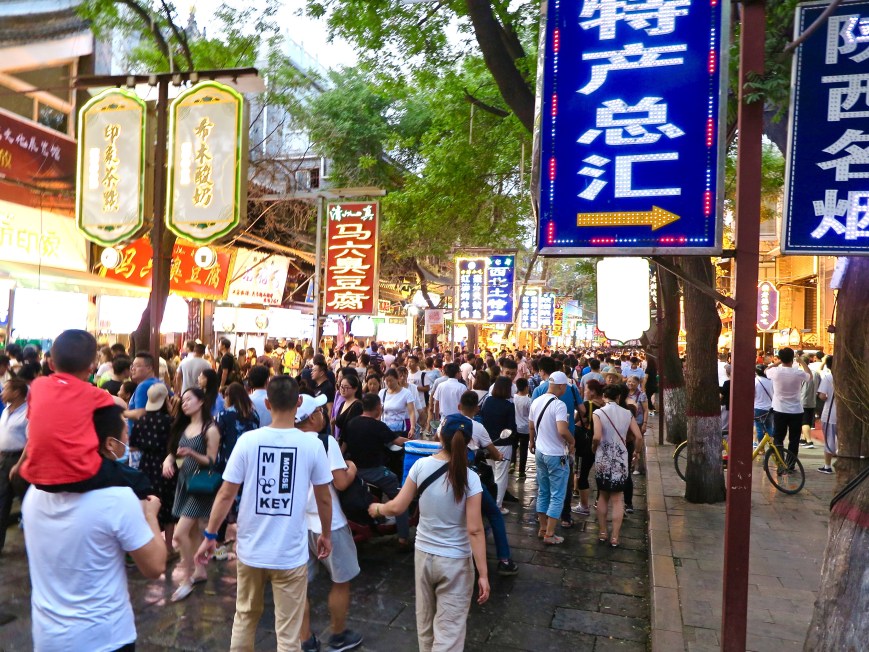
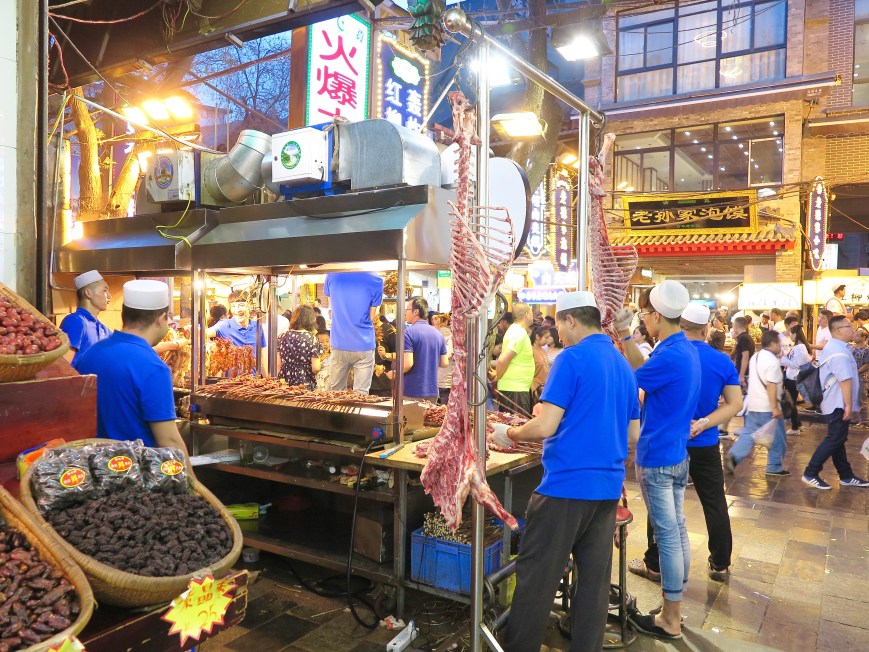
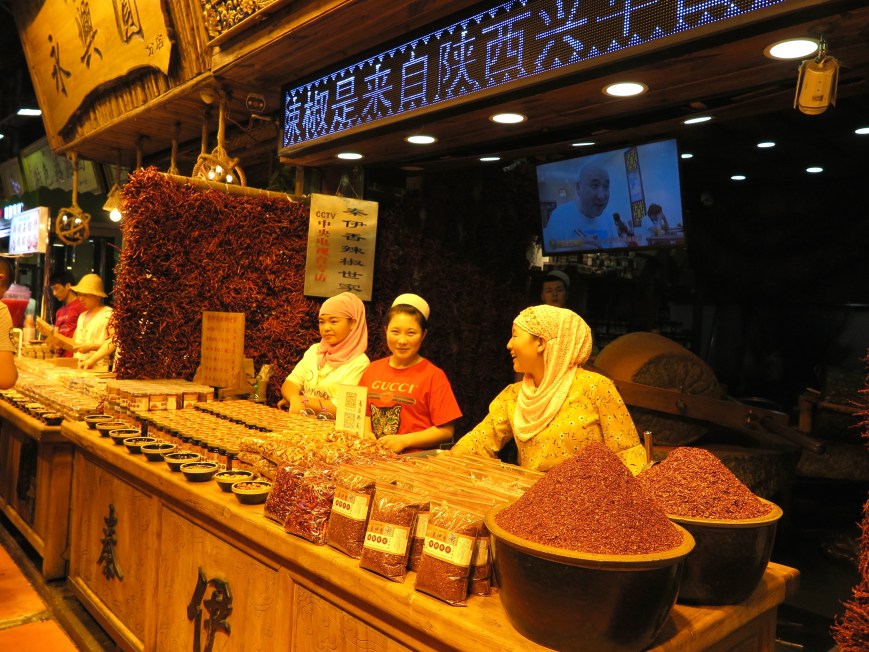
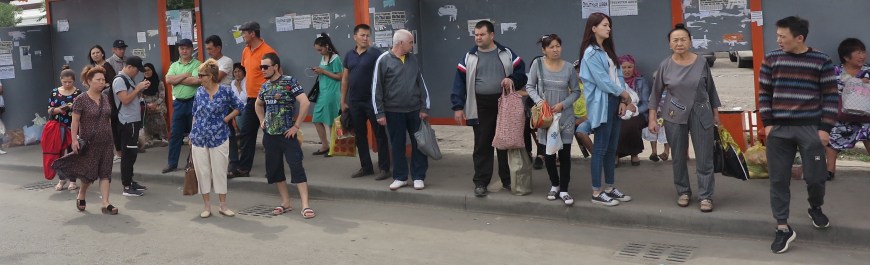
 Further along the street we found women winding spun sugar into Turkish fairy floss, the drinking yoghurt you would get in Kyrgyzstan, Uzbeki bread, endless versions of halva that you could just as easily find in Palestine, a dozen or more bao stalls, boiled lamb chopped into the middle of hard bread and covered with a ladle of spicy broth (which promptly restored me).
 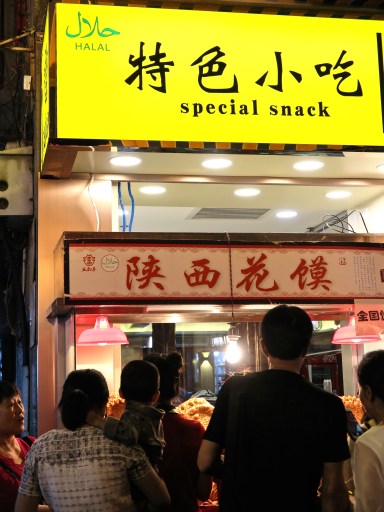 What sort of ‘Special Snack’? A halal special snack.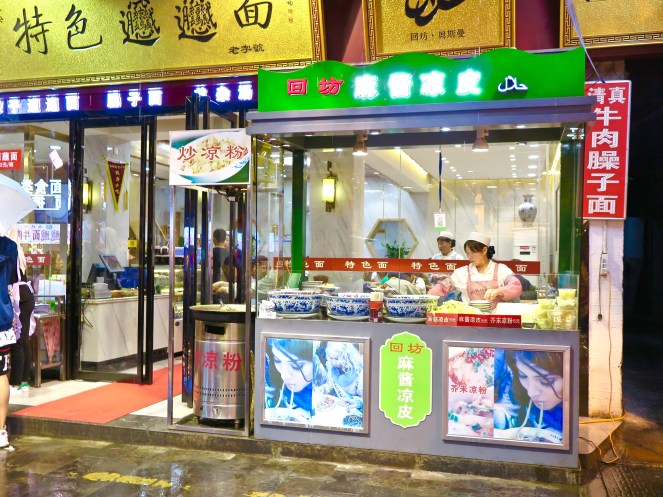


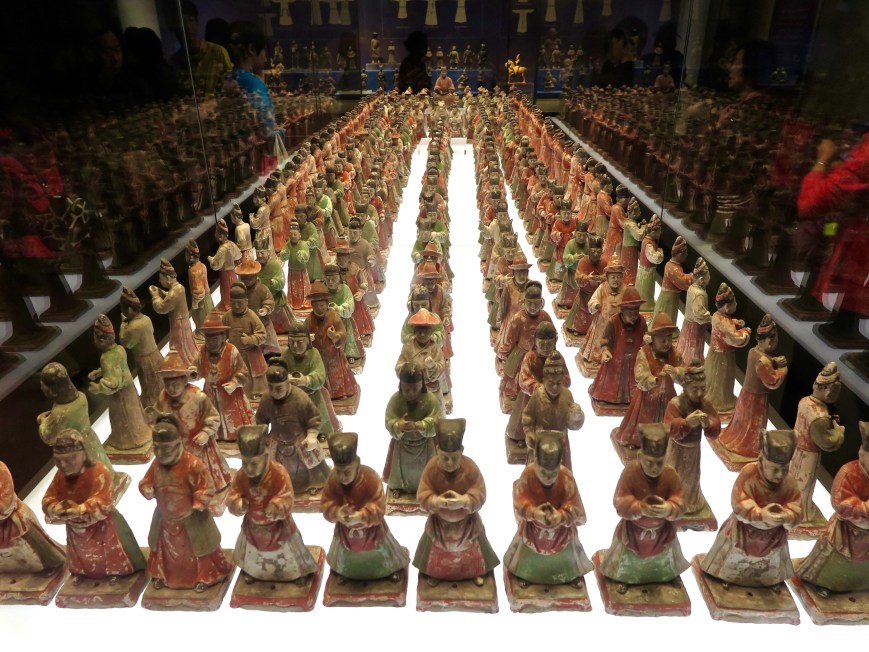

 The museum introduced me to Zhang Qian, a Chinese official and diplomat who served as an imperial envoy to the world outside of China during the Han dynasty. (At left, as rendered in the Shaanxi Museum.) The information in the museum suggests he spent 14 years trying to find ways across the various mountain ranges to the west of China: the Tian Shan (contemporary Kyrgyzstan), the Pamir (Tajikistan) and the Karakorum (Pakistan), each of which has peaks above 7000m. And, in addition, to find his way past the local inhabitants of the region east of Xi’an including the Xiongnu, a coalition of nomadic peoples which included the Hun famous for their ferocity, who had long history of hostility to the Han.


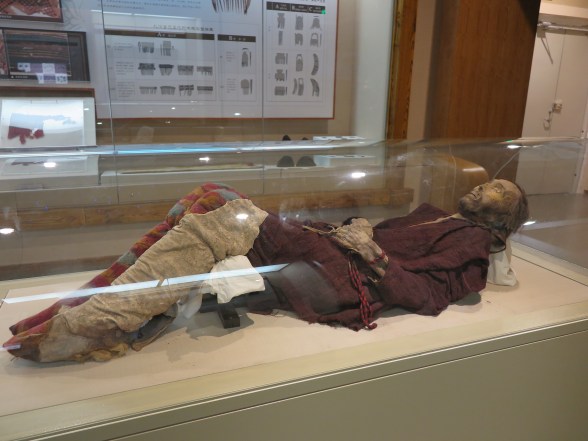

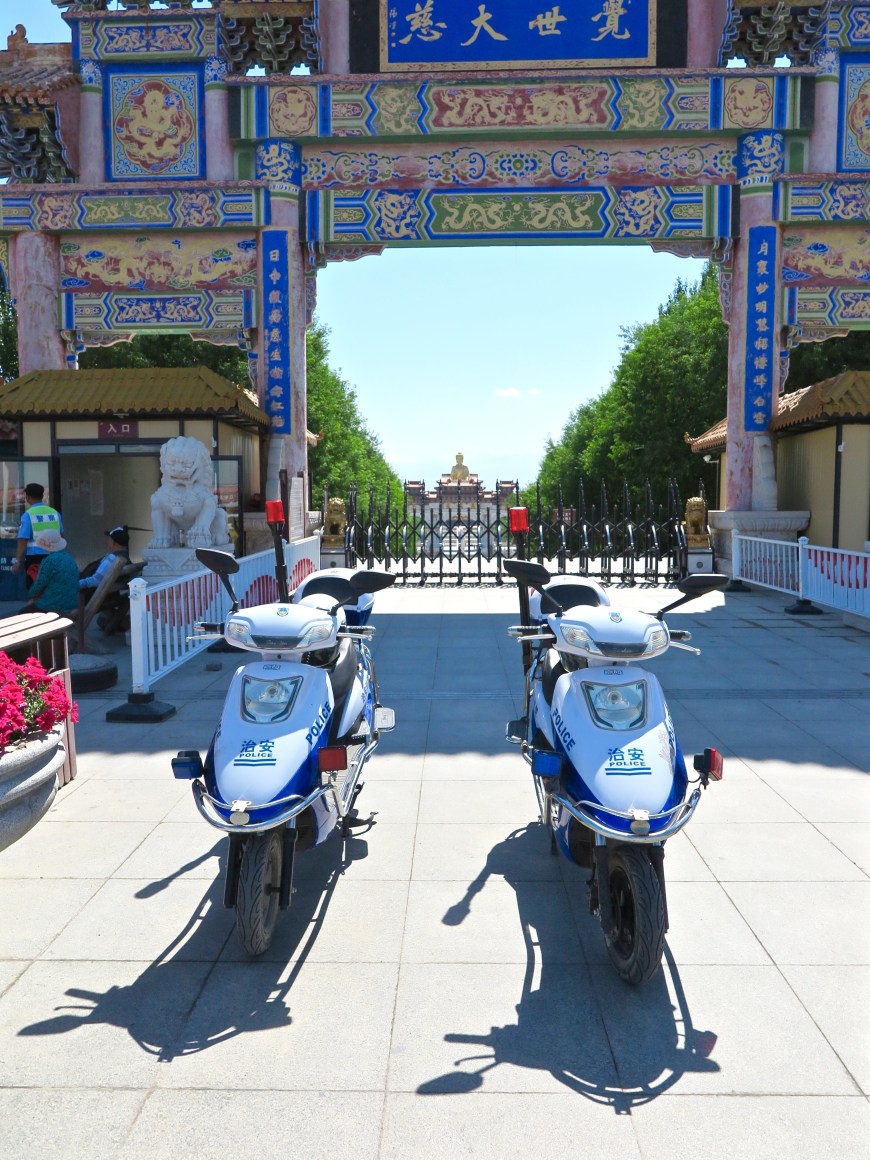
 Monster golden Buddha in what is billed as an environmental park, Urumqi’s latest major tourist attraction.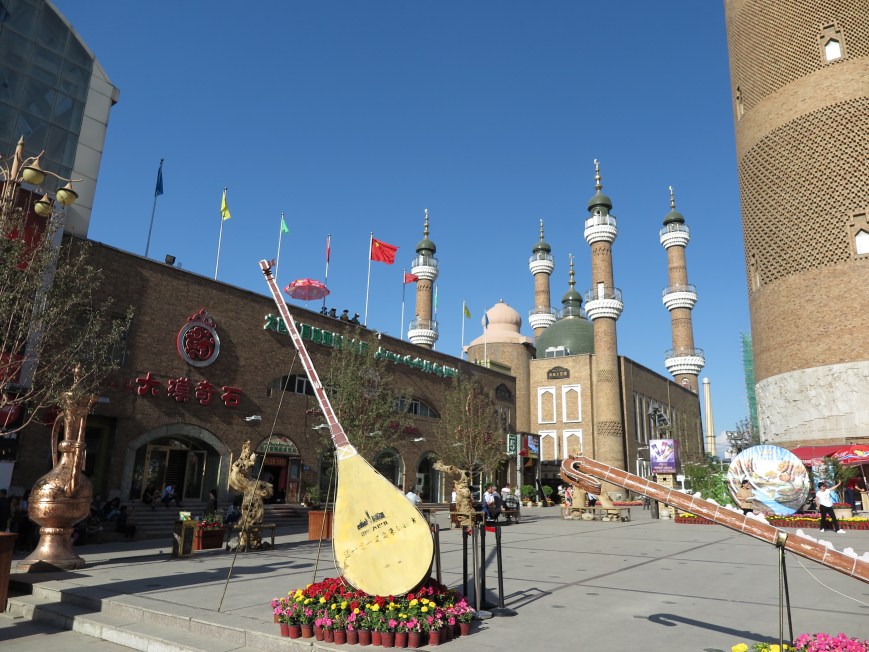

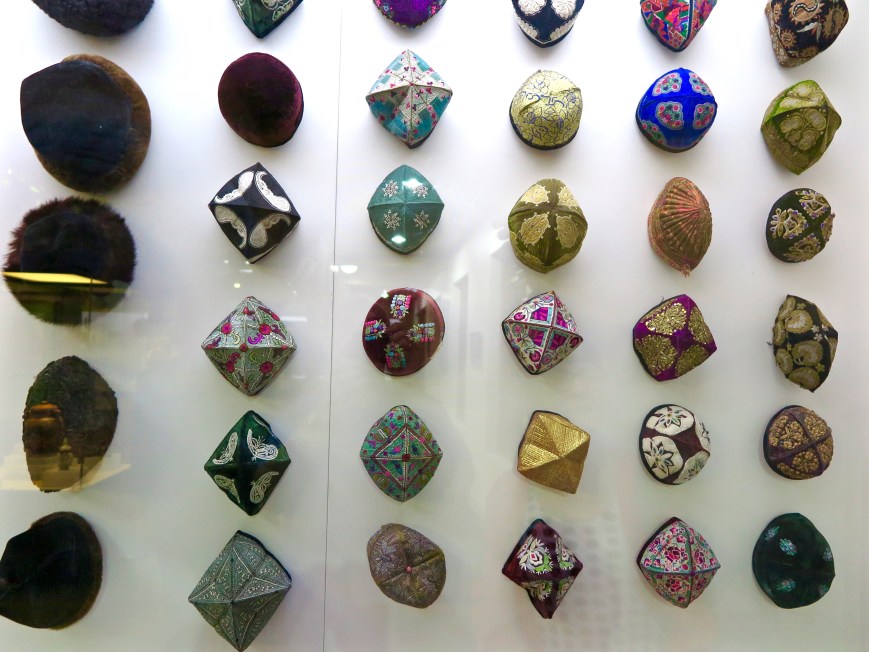


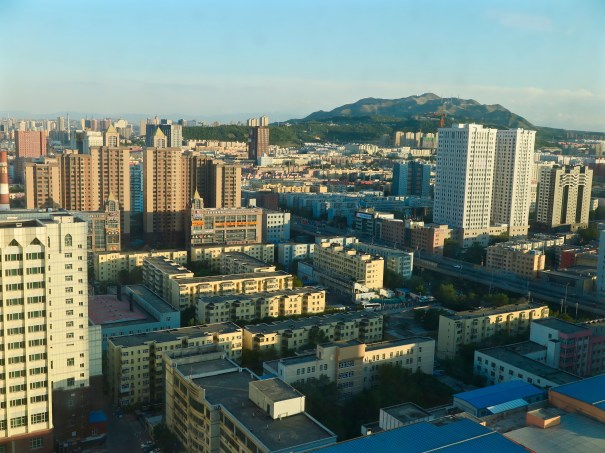
 Urumqi is situated in a highly strategic location. In essence to go west from China by land you have two options. The first is to find your way round the Taklamakan Desert, one of the world’s largest, to Kashgar and then north to Bishkek or Andijon through the river valleys and mountain passes of the Tian Shan. The second, much easier, is to go round north of the high mountains. Urumqi is the key to that route. (Both are part of China’s ‘Belt and Road’ initiative.)












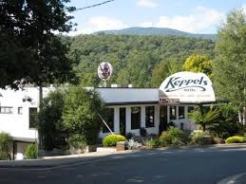 I wrote that about nine years ago and as I remember now and I think correctly, the very first time I discovered Marysville was by going to a conference there, a retreat, a charette, an event designed to correct the problems of the world. That would make sense. That was one of the things Marysville was for, one of its primary purposes. We stayed at the pub (at left). It was cold. That would always make sense.


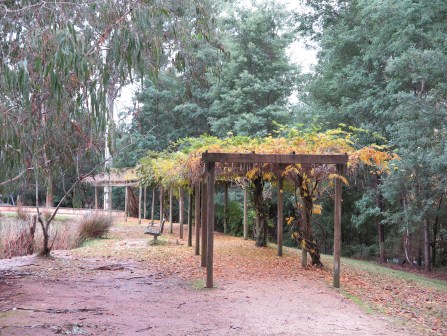

 The five guest houses at their peak used to accommodate 500+ visitors; this in a town with a resident population in 2008 of 406. (Marylands above and below) However modern people no longer want to stay at guest houses. They don’t play croquet. They like BnBs with or without Air. And you might now go to Bali rather than Marysville for your honeymoon.
 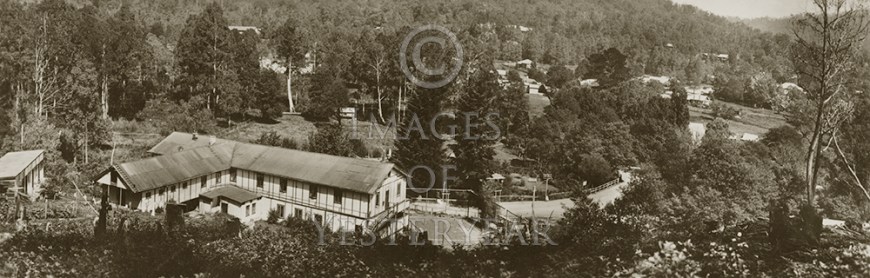 The Marylands’ drawcard shifted from the croquet lawn, the full-size pool table and the rather limited concrete swimming pool to gourmet-ish food and queen-size beds. But during our time it was always teetering, full of fond memories rather than paying customers. The Mary-lyn became a successful haven for semi-permanent residents over 50 and, pre-fires at least, was an important staple of the town’s economy. It was destroyed and hasn’t been replaced.
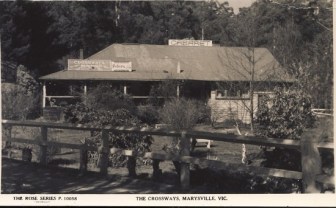 Crossways, opposite the church at the T-intersection, has somehow stayed alive since the 1920s. This photo includes a large sign saying CABARET attached to its roof. CABARET. Unimaginable in Marysville.
 The verandah would be aswarm with flocks of the King and Crimson parrots memorialised in its doors.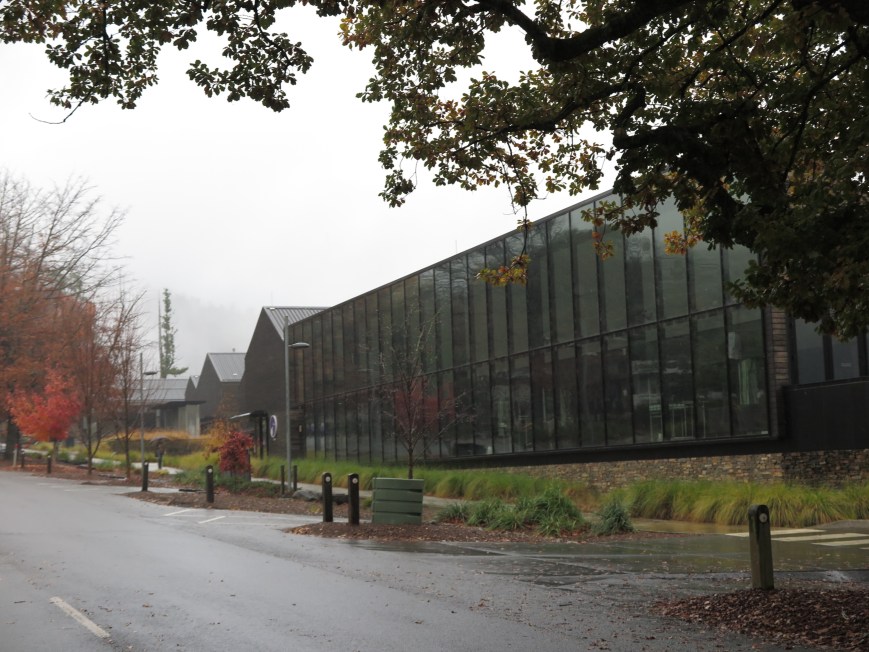


 And The Duck Inn, the new pub, was a real find. Very well situated on the main drag, terrific food, great place to sit, cosy fire, excellent service. A real bright light on the horizon. One interesting thing was that the new baker in the bakery might have been Vietnamese, the person who checked us into the motel was Chinese and our hosts at the Duck Inn were assertively Korean. An Asian infusion might just be a launchpad for recovery.
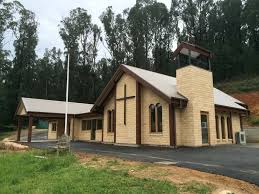

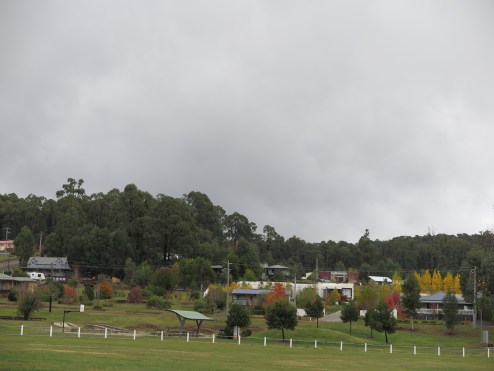 The view across the oval. With a couple of exceptions the new housing is still fairly unimaginative, fairly stock-standard suburban, rather than holiday resort inventive. But it has improved markedly from the first efforts of the recovery.
 At country football games it is customary to nose cars up to the oval fence, all the better to honk after a goal. But I don’t know whether this car park will be much used. Ever.
 Geelong by night





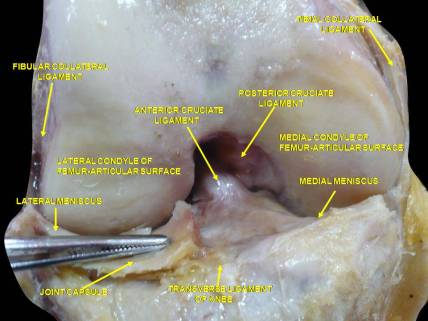
 The posterior and anterior cruciate ligaments are key elements holding it together. Appearing in pink in the middle of this simplified illustration, they are ‘cruciate’ because they are arranged like an ‘X’, a cross. The medial ligament at right here protects against excessive lateral movement. They can all be torn from their moorings or ruptured. Ruptured ACL? 9 months after surgery before you’re going again.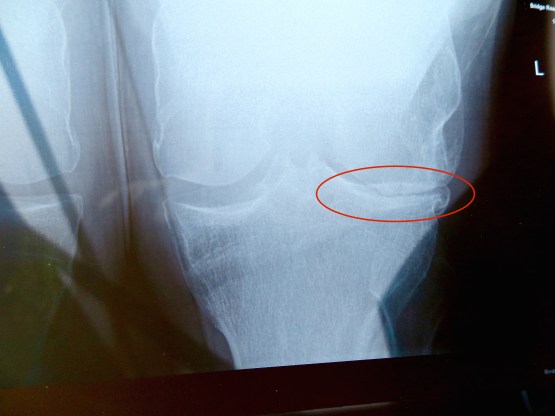


 mcraeblog