For Geoffrey, who knows it all already.
• • • • • •
Bourke St, Grand Final week. (pics: Findlay Films)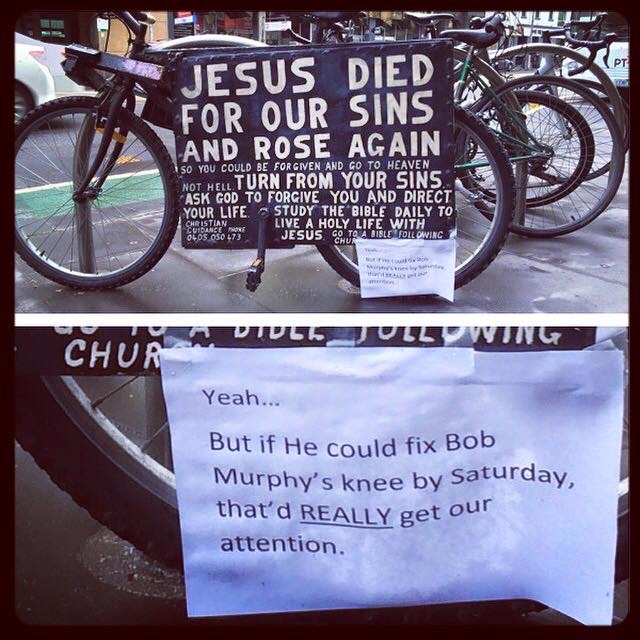
I was there. Round 3 versus Hawthorn. The Hawks had got out to a 30-point lead midway through the second quarter but the Dogs pegged them back with five unanswered goals and then poked through another four — from unlikely sources. Shane Biggs, for example, got two. Eleven Dogs players kicked goals that day. Caleb Daniel, the semi-adolescent helmeted ant, had been everywhere. From a dispassionate view, it had been a showcase of fast fluent elegant football. But then, like they do, like they had for the last three years, Hawthorn came pumping back. A seven goal last quarter. Sicily (who’s Sicily?!) kicked three before Jakey Stringer managed an unlikely effort to put the Dogs three points up with a couple of minutes to go.
Having trouble with the tension — because I knew we could beat them, it was just when — I’d left my seat 15 minutes before, wandering heart pounding round the passages of Etihad Stadium, catching glimpses of the game on the TVs, through the entries or the spaces left for the wheelchairs, trying to read what was happening from the crowd noise (47,000 in). I got down to the bottom tier and stopped in the aisle just behind the goal posts, 30 metres from where Bob jumped to spoil Sicily landing awkwardly. I could actually see the look on his face. He knew he was gone.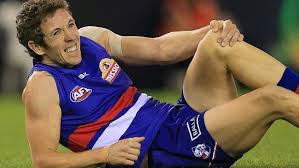 Ruptured anterior cruciate ligament in the same knee he’d wrecked in the same way in 2006. Surgery, then out for the season.
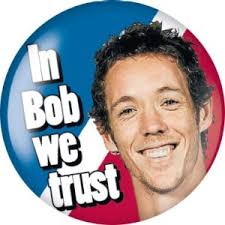 This is Bob. Bob! Our Bob, our favourite, who could be the most popular footballer in the Australian Football League. Witty, smart, thoughtful Bob who for a time wrote the most engaging and quirky football column going round, Melbourne’s civilisation made flesh. A gentleman, son of a former nun and a priest if that matters at all, kind, committed, the face of the AFL’s go at feminism, the ‘I want to play football like a girl’ campaign. In 2015 he was chosen in a wildly popular move as All-Australian captain. And his football skills … silk we say. Just silk. Not quite Chrissy Grant, but damn close. In his pomp you’d go to the footy to watch him.
That week I wrote him my first ever letter to a footballer, remembering him as a skinny twig and the tip from Ron Ikin that he was going to be great. He’d played football with the People’s Beard (Murph’s fond name for the stalwart ruckman Ben Hudson), he’d played in three preliminary finals, he’d drunk coffee at The Auction Rooms with Roughy. He didn’t have to, shouldn’t, feel he owed the fans anything. If he went through the rehab and another pre-season, he’d be suiting up in 2017 at age 35, at the very margins of a professional sportsman’s working life.
That was Bob gone. The heartbeat of the club. Coach Luke Beveridge, a close friend of Bob’s, was in tears at the post-game press conference as he suggested that the Western Bulldogs were a glass half-full club and that they would dust themselves off and be ready for the Blues next week.
And so we were. We won. But we lost JJ, Jason Johanissen, the form attacking backman in the comp. Matt Suckling went off with an ankle and possible knee injury that never seemed to get better. Tom Boyd got the shoulder injury that dogged his whole season. The week after, Luke Dalhaus did his medial ligament. A couple of weeks later big Jack Redpath from whom the coach had coaxed a whole new level of commitment and capability did his ACL. Jake Stringer had injury reports from five games in row. Mitch Wallis broke both bones in his left leg and waited screaming with pain for the ambulance. In the same game Dale Morris went off with a hamstring problem (and, as it turns out, played the last four games with two fractured vertebrae). Before the round 19 game against Geelong the team had to make five changes forced by injury. In that game Tom Liberatore played with broken ribs before doing something complex and more enduring to his foot. Jack Macrae did his hamstring. Marcus Adams who had been a revelation just disappeared with something wrong possibly with one or both of his legs. They are all first choice players, half a team full.
We kept winning quite regularly, with mystified journalists — when they could ever be bothered writing about the Dogs — labelling them in the most polite and second-favourite-team terms as unserious lucksters, cheeky pretenders. This was a team of mostly second string players punching way above their weight, just waiting to be found out really. And you look at the list and who could argue.
We dropped games to Geelong (twice), got beaten by St Kilda somewhat unnecessarily and were thrashed by Freo in the last game of the season. We had 15 wins on the board, but whatever you might hope you couldn’t expect much from the finals. Not legitimately. Seventh place. Everyone knows this is nowhere.
• • • • •
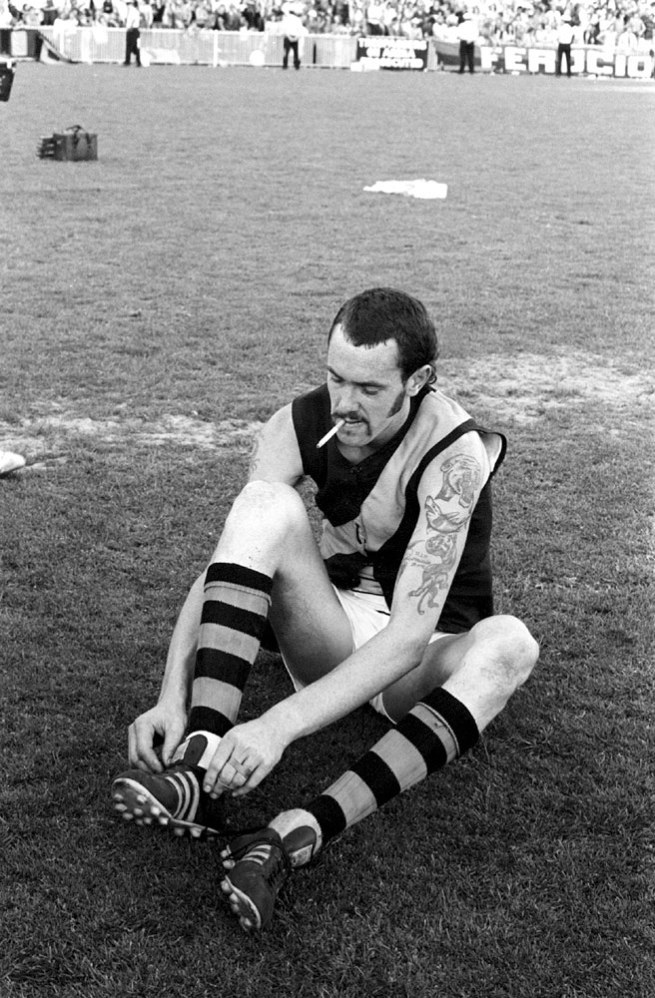
How it used to be. Proper footy. Robbie ‘Bones’ McGhie preparing for the 1974 Grand Final. Centre half back! The wind would have whistled through him. Richmond by 40 points over North. Barry Richardson 5, Royce Hart 3. It might be forgotten that Bones came to the Tiges from Footscray and before ending up at South Melbourne, transfers which may have been driven by a shortage of smokes or Sharpie haircuts at the two previous clubs. Note lace-up jumper (and what a good idea that was) and tatts before people stopped commenting on tatts. (The photo is another Rennie Ellis masterpiece.)
 I grew up in the bush barracking for Fitzroy. I liked their colours, maroon, royal blue and gold; plus it cut you out from the herd. Especially seeing they never won and hadn’t won a Premiership since 1922. That may be what drew me to them. Underdoggedness.
When we moved to Melbourne and I started taking the football more seriously, I used to get upset watching them lose. So under some modest pressure I began to accompany Mr Ainsworth to watch the Dogs, Mr Ainsworth being a rusted-on-from-birth supporter who to some degree structured his life around the footy season. We were subsequently joined by Mr Smith and Mr Keenan who is no longer with us. That’s all a long time ago now. I’ve probably seen about 450 Dogs games.
This is also history, but the trips around to the suburban grounds were about 15 percent 0f the attraction. It was a big day out to Moorabbin but, wading our way through the black bomber jackets and big blond hair, we could never work out where to stand. We most certainly had our spot on the hill at the Western (later Whitten, but for me always the Western) Oval between the stand and the Barkly Street end with Big Nose, Fat Guts and The Maltese and his two kids. If the football palled you could always watch the sunset’s developing reflection across the river flats on the newly built Rialto and the other city buildings. That’s what you can do from the west.
If 15 percent of the attraction was touring Melbourne’s suburbia, 50 percent was the growth of a narrative around the players. The majority of these 35 or so years have been lean pickings in terms of wins, but there was always someone to talk about. 
The Hawk, for example. Dougie Hawkins, football genius, crazed human being, uncontrollably bubbling over with life. Geoffrey will want me to remember the confession in his ‘autobiography’ Hawkins My Story: Both sides of the fence that he was going to/had? burnt d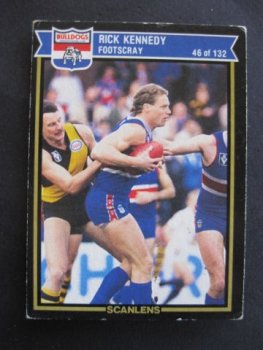 own the house of someone who’d bothered him. He was captain for four years (1990-93) and was club games record holder for 12 years till Chris Grant ran him down in 2006. He also ran for the Senate as a member of the Palmer United Party in 2013.
We loved Ricky Kennedy who spent his time troubling the kidneys of opposition forwards. Super Steve McPherson, who you’d always pick but somehow never quite clicked into peak form: yet another Tasmanian enigma. The Wog Squad (Libber senior, Hose B and Dimma), at their best guaranteed to get the ball — or you die. Fossie Foster drifting across half back or half forward taking mark after mark. As good as Royce Hart? Definitely. He’d hand off to Mickey ‘Fruitcake’ Ford or Greg ‘The Iceman’ Eppulstun (recruited improbably from Won Wron Woodside) who we watched growing from mid-adolescents into men. Galaxy Coleman who tried hard but Lord he was clumsy. Coxy, who when asked in his AFL profile which six people he’d like to have dinner with passed on both Nelson Mandela and Elvis Presley and nominated ‘six strippers’. Simon ‘The Stock Broker’ Beasley (and er hem … ex-bookmaker, a little trouble with the law) who kicked 105 goals in 1985. We could never work out how. John Georgiades who kicked 8 goals in his first game and then never got another kick. Ilija Grgic, Steven ‘Koly’ Kolynuik, Steven ‘Kretters’ Kretiuk, Danny Southern: hard men of the west. Some of them could play and some couldn’t, but we built them all into stories.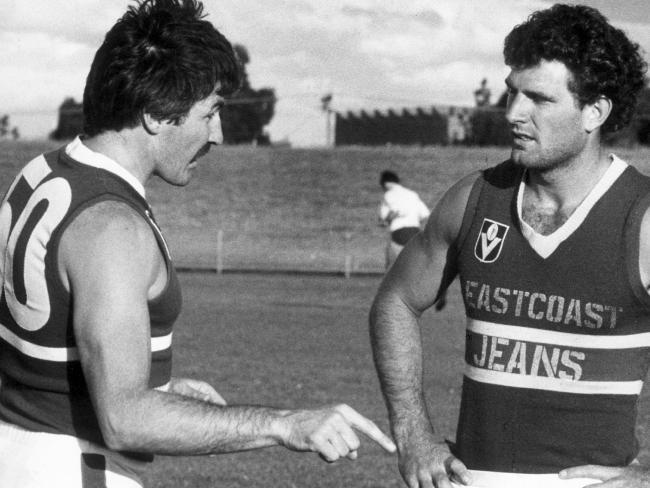 Mick Malthouse at left, was the first decent coach we had while I was in attendance, among extraordinary dross — I give you Royce Hart, Bluey Hampshire, Alan Joyce, Peter Rohde. (Note the sponsor. Eastcoast Jeans for the Western Bulldogs. This asymmetry used to drive Mr Ainsworth mad. ‘They can’t bloody get anything right! Etc. Etc.’)
Mick is with Jimmy Edmund. I loved Jimmy Edmund. He was captain from 83-85, which included a preliminary final. The previous years had been incredibly lean, years when the handpass which bounced at least once to a team mate was instituted as a mandatory skill, but Jimmy had a bit of a vibe about him, one of those strong medium-size players that on a good day can turn a game. We were up there on our hill one day when, clearly under instruction, Jimmy ran onto the field to the centre bounce, biffed someone, then ran off again. It was, I think, a most defined and truncated version of what is known as ‘flying the flag’. There’s lot of that residual detritus lying round in my mind.
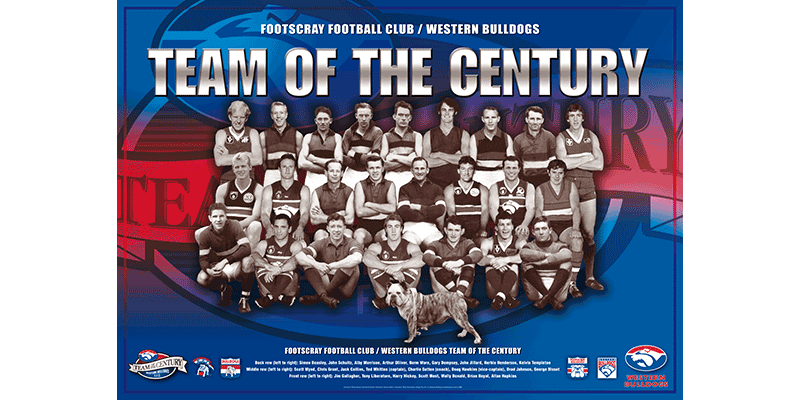
Of this ‘team’ I saw Gary Dempsey, Scott West, Choco Royal, the Hawk, The Stockbroker, Kelvin Templeton, Brad Johnson, Scotty Wynd, Little Libber (both Brownlow medallists, awarded for best and fairest player of the season although opposition fans like to question Mr Liberatore senior’s fairness). And all-time legend Chrissy Grant. Mr Fairness Itself, who was robbed of his medal. There’s some good players there, but it wasn’t necessarily The Greats we were interested in.
The other 35 percent of the attraction? Match results I suppose. On the field winning was a brief frisson of pleasure rather than an expectation. Off the field things always seemed rocky. Mr Ainsworth could usually help with insights into trouble at the club. We always seemed to be selling our best players or our captain. Ian Dustan, club champion three years in a row and with Kelvin Templeton holder of the highest score ever kicked by two players in a game (22.12 between them, July 1978, how about that!) got sold to North. Jimmy Edmund got choofed off to the Swans. You’d just get a bit of momentum, and clonk!
The major crisis occurred in 1989 when Nick Columb, a fairly colourful racing identity, became President of the club and decided it was broke. While he was promoting the idea of a merger with Fitzroy, the administrators were taking the heavy equipment to the door. The supporters exploded and Peter Gordon and Irene Chatfield (the face of the fans) took over raising enough money to pay off the most urgent of the debts.
Since then there’s been enough wins to keep the fans interested if not ecstatic. Terry Wallace and Rocket Eade were professional coaches who had quite lot of success (in Bulldogs terms: not bottom three). But then there was the McCartney era, 2012, 13 and 14. Everyone agreed he was a nice bloke and ‘a great teacher of men’ to which I used to reply, but no one’s idea of a football coach. We seemed to have a fair team that couldn’t win — 15th (out of 16) in 2012, 15th in 2013 and 14th in 2014. At the end of 2014 the Coach was sacked, the captain asked to be traded to another club and Brownlow Medallist Adam Cooney went to Essendon.
Returning to the present, on Grand Final day, Bob wrote in ‘The Age’ newspaper: ‘A football club’s history is a delicate balance. There is a wafer-thin line between romance and baggage. … At the end of last season I spoke publicly about the fact our club was bruised at the end of 2014. But the reality is we were merely nursing the freshest batch of bruises. Like a Scottish loch, some of these waters run deep. I’m told my club has an ancestral link to Scotland. There’s a clan who know a thing or two about the ripple effect of defeat. For all of my club’s glorious romance of survival and the spirit of working-class heroes, the scars of our past are visible like the thousands of lochs on a Scottish map. With only one premiership in 91 years there are far too many of our clan who feel disgruntled, bitter or unfulfilled. Some have left, never to return.’ That was the grim bit, the calm reflective bit, of what he wrote.
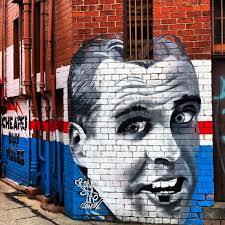 That’s us. All-time Dogs hero Teddy Whitten with a pillar in his head. (I’m sure that wasn’t intended.)
•••••
Even if we finished seventh in 2016, we were still in the finals. Dogs’ fans could anticipate the season would last one or maybe two more weeks.
To start with we had to beat the madly in-form West Coast Eagles in Perth, a close to impossible task. The Eagles had lost just seven of the last 32 matches they’d played at home. You had to play the 22 on the track and the 50,000 in the stands. However, the Dogs’ midfield began with a sustained assault. Caleb Daniel and Luke Dalhaus just … well they just … performed. At the final siren Dogs by an unprecedented 50 points. The only downer was Lin Jong, The Chinese Footballer, who we love, breaking his collar bone.
Next up was Hawthorn. Hawthorn who always find a way to win. The last three premierships in a row just for example. Mr Smith and I were in the best seats in the house, front row of the upper deck of the Olympic stand. I’d been waiting for this, because I knew this was the time that we were going to beat Hawthorn, and it would be a great pleasure to stick it up those brown and yellow arseholes. (Sorry. Lost it there for a moment.) It looked a bit dodgey for the first half. We were holding them but only by the fingernails. They kept getting away like they do — the Cyril factor. But at half time we had scored the last goal and there was a sense that things might turn. Then in a sustained burst of brilliance — and no one, just no one, does this like the current Bulldogs (samples here) — we kicked eight straight. Game over. The Three-Peat boys had finally met their match. We tried our best to be nice to the dairy farmer from Terang and his family who were sitting next to us, the only Hawks supporters in a block of Doggies fans, promising in future to always pay a fair price for milk, but I went home grimly replete.
This win meant we were in a prelim (the game before the Grand Final). Since and including 1954, the last premiership, Footscray/Western Bulldogs has been in 11 prelims and lost 9. I was present at six of those losses: 85, 97, 98, 08, 09, 10. Before some of these at the ceremonial pre-game dinner we had discussed how we’d go if we ever got into a grand final and agreed we wouldn’t be able to cope.
In 97 we lost by two points after leading by 22 at three-quarter time AND after Libber had kicked a goal that was called a point. (AND Chris Grant, one of the fairest players to have pulled on boots, polled the most Brownlow votes only to have its award disallowed after he had been suspended not on the basis of an umpire’s report but unprecedented intervention by Ian Collins, at the time AFL Director of Football and previously Chief Executive of a rival club. That’s a Footscray story, one that actually still burns.) Seven points down against the Saints in 2009 after a bodgey free kick in front of goals (against Brian Lake, to St. Nick ‘you can’t touch him’ Riewoldt) before the ball had even been bounced at three-quarter time.
The opponent was to be the Greater Western Sydney Giants, the ersatz team made up of first round draft picks and ageing stars. In Sydney. At some dog box stadium that seated 20,000 people. ‘Age’ journalist Greg Baum, on the dot as always, described it as ‘the team long overdue for a premiership versus the team precociously ahead of schedule. The team that has paid its dues versus the team whose dues have been paid for them. Cinderella versus the ugly sisters. … A team with one-and-a-half players worth of talent in every position versus a team whose coach implores them to each play like one-and-a-half men.’
‘The football was magnificent, the tension almost unbelievable’, says the AFL website’s match report. The Dogs kept just ahead for the first half, then Roughy got a ball in the face that left him temporarily blinded in one eye. He wasn’t coming back: so no ruckmen at all, Tom Boyd and Zaine (sic) Cordy trying to make a game of it against Man Mountain Mumford. Three goals to GWS left them, for this game, well ahead, but somehow the Dogs scrambled a couple back. Three-quarter time and the Giants were just one point up, dead even really, but after the break they kicked two quick ones: 13 points up, an insuperable lead in this game. But these boys play till the end. Aforesaid Zaine Cordy got one which was more than his brother (Ayce (sic)) ever did. Then after a scintillating run, JJ flicked the ball over towards Bontempelli, who in his languid way just let it bounce and paddled it until it came up into his hands and The Bont wasn’t going to miss. Jack Macrae slotted the sealer. His first set shot and first goal of the season. A six-point win.
I was sequestered in a Daylesford motel room watching this game. Sometime later when company arrived there were questions about my health because I was so pale.
• • • • •
Grand Final. First time for 62 years. How do you accommodate this?
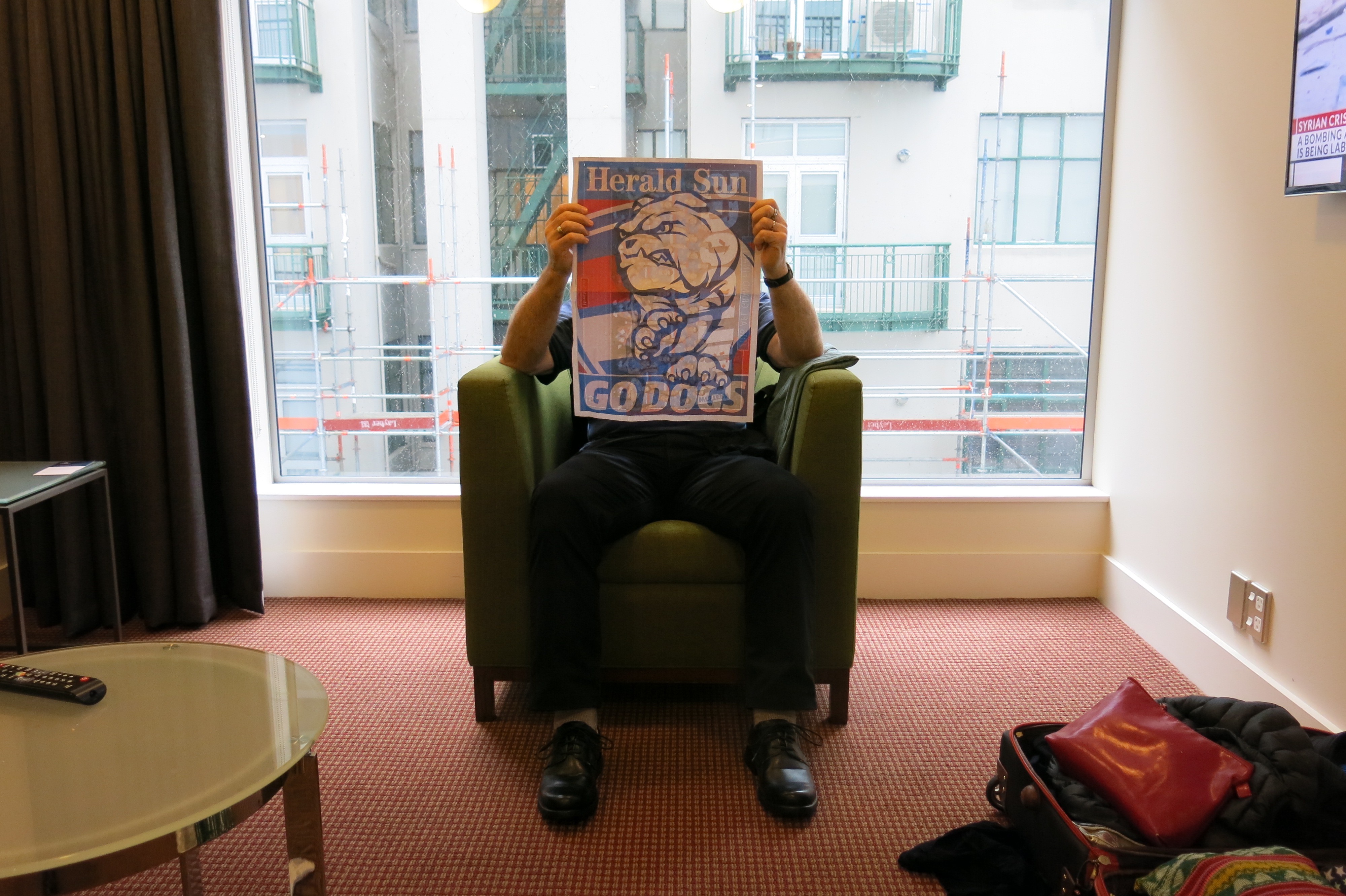
First, by going to New Zealand. Here I am sitting in our room at the Bolton Hotel in Wellington. (Mr Ainsworth was in Milan, Mr Smith in Kilmore.)
Second, by asking the help where I could find the game televised. They were capable of many things but seemed to go to the thinnest of water at this most important request. As it happened I found it in our room on an obscure cable channel called Duke devoted mainly to transmitting American college sport. Didn’t matter though. Not one whit. Because that night we were going to see NZ Opera’s version of Sweeney Todd at the Saint James. I can only say I’d arranged all this long before there was any chance of the Dogs being at the pointy end of the finals.
I watched the anthem and the first five minutes. No one appeared to be able to hold the ball. It was like soap. Then it was time to go. Deep breath for the pleasant half hour walk along The Terrace to Courtney Place. We hadn’t decided where to eat occasioning the usual crisis and in our meanderings we went past a pub where raucous patrons had the game on. I don’t think they were watching, and if they were they weren’t concentrating properly. Any game requires focus; how much more so a grand final? Five minutes to go in the first quarter, Dogs four points up. I tried to ask the motley about the run of play but they seemed to have no idea what I was talking about.
We had dinner a few hundred metres up the street, a slightly tarted-up version of a Turkish takeaway where the food never seemed to come. I was a bit on edge. The conversation didn’t really flow. The meal did come. We ate it. I ran back to the pub. The score box said five or so minutes to go in the second quarter, Swans up by 8. The punters seemed to have lost all interest. I ran back to the theatre because it was time to go in and anyway I couldn’t focus.
We saw an exceptionally fine version of Sweeney Todd, Teddy Tahu Rhodes being wonderful in the main role, Antoinette O’Halloran perhaps even better as Mrs. Lovett. I stayed calm at interval and didn’t race off down the street, just stood there looking benign and foreign. What I wanted now was to immerse myself in the second half of the music, walk quietly home, open the AFL website and look at the worm — the score progress graph — and that’s just what happened. Myrna took a look at me and said, ‘Lost by five points.’ And I said, ‘No. We won.’
• • • • •
How do you deal with the impossible? Just because it’s desirable doesn’t make it reasonable or — ready? — processable.
Before the Grand Final Lord Rowland dropped me a line wondering ‘what odds would have been on offer six months ago on:
- Being in the AFL Grand Final – 30/1?
- Winning the AFL Grand Final – 50/1?
- Being in the VFL Grand Final – ?
- Winning the VFL Grand Final – ?
- Winning both Grand Finals – 200/1?’
10,000/1 more like. Matthew Lloyd, current doyen of tipsters, tipped against us in each of the finals. We’d done well he thought, but now for the real stuff. Well Matthew … But everyone else who wasn’t seduced by the romantic dream knew we had no hope.
We started from seventh place. We had to win four on the trot against opponents who for various excellent reasons were most unlikely to be beaten. We’ve got a team that includes: Z. Cordy, F. Roberts, J. Hamling, none of whom could possibly be in a premiership team. Daniel, Dunkley, Hunter, McLean are good kids, but children. We do not have a power forward. Jakey Stringer has become ‘The Package Unwrapped’, a mile out of touch. Best forward: Tory Dickson. Crikey. Against Buddy Franklin and Tippett? You jest. We’re very short all over the field. Even helmeted, Caleb Daniel just rises to most people’s nipples. We make Dale Morris, a Collingwood six-footer, take on and beat gorillas every week. We haven’t really got a ruckman. And we didn’t have Bob…
But above all, we don’t have hope, not really. Which is to say that we make no assumptions. We qualify hope, measure it, keep it in its place with the lid pretty tightly on. The boys do well. We like them. They’ve had a good year against all sorts of adversity and they seem a nice bunch. We’re not the types who go along to grand finals. Not to play anyway. And that’ll do fine.
• • • • •
Before the game one of the commentators describes the Dogs perhaps unnecessarily as having been ‘a carcase on the football landscape’, but Bevo in the pre-game interview suggests ‘there’s a bit of glue there’. Danny McGinlay’s so smart run-through banner says: ‘We’ve beaten all the others/ defied all the odds./ Today this team of puppies/ become true Bullgods’.
The first quarter is one of relentless pressure — no biff, nothing unbecoming, nothing spiteful. These teams are going to win by beating rather than bashing the other side. Just relentless pressure, as Dennis Cometti says, like a game of pinball. The Swans miss two easy shots, and so go eight points up rather than 18. That helps. Cordy (Z.) misses Lachie Hunter clear in the goal square but then produces a remarkable tackle and kicks a goal from the boundary line. Buddy Franklin has rolled his ankle but Hamling has beaten him one-on-one twice already. No one is ahead. Neither team has got off to their lethal flying starts.
One minute into the second quarter Tom Boyd, the six million dollar flop, kicks a very difficult goal from an un-Tom-Boyd-like mark. Hamling and Roberts, journeymen at best, are playing the games of their lives in the backline. The Swans’ Grundy takes something that looks a lot like a mark, but eventually it spills and Tory Dickson cleans up for a goal. Picken gets another beauty. At the 12 minute mark we’re 16 points up. JJ is getting a lot of the ball but keeps kicking it to the opposition. Josh Kennedy, such a good player, has just cut loose for the Swans. Bang, a goal. Bang, a minute later. Another one. The Swans are getting on top. They’ve kicked four goals in seven minutes. Toby McLean gets a dodgey free and then just before half-time has a no-look snap from a scrimmage in front of goal, and after an 11-goal quarter it’s the Swans by two points.
At half time we get a look at Bob Murphy, floating round in some disembodied state, madly chewing gum, his eyes glazed and impenetrable, clapping his hands in some sort of dedicated but directionless encouragement. Disposals 198-197; inside 50s 25-24; contested possessions 80-79; time in the forward half? Exactly 50-50. Even watching the replay for the third time my palms get sweaty.
Tippett, who without dominating has been playing well — the Swans are no pushover at the best of times — takes a good mark but misses with his kick. Tommy Boyd has somehow developed soft hands to go with his wrists of steel and his usual stiff-arm marking style. From a play he has initiated, Dickson flicks one through and the crowd goes insane. We’re ahead again. Jack Macrae gets a whack on the head from Laidler after a mark. Fifty metres (always a very useful penalty). But he hooks it, a big chance, missed. Jake Stringer kicks another possession out of bounds on the full. He couldn’t hit a barn door today. There’s a scoring lull, but it’s full of incredible tackling, full of lucky and unlucky bounces, endless half volleys: nothing is clean possession. Rampe stands in a tackle and gets pinged for holding the ball. A margin call. Free kick count 17 to 4 our way, but there have been plenty of games over the years where it’s gone the other way. Might be our turn; success breeds luck perhaps. The Bont has come good and Boyd (T.) takes two more killer marks. At three-quarter time we’ve had 7 of the last 10 scoring shots, but we’re still only eight points up. Have we squandered the championship quarter?
Last 30 minutes for the year. Four minutes in Buddy gets a goal and Papley has already kicked a point — so there is one point in it. Is this the end? The Sydney steam roller about to come good? 12 minutes to go and Jakey finds a trademark stroke of genius and gets one from nowhere out of the back of a pack. They can’t break us. Not yet.
Mr Ainsworth has watched the game a number of times wondering just when it was that we were going to win. I say it was this.
Thirty metres from the goals Papley kicks into Biggs, the man on the mark. Biggs follows up but is tackled. Dalhaus gets a tap forward. Lloyd (Swans) picks it up but Biggs smothers his handpass. Macrae gets it, off to Dunkley who handpasses ahead of Biggs yet again. Cordy (Z.), shorts pulled off displaying his nether regions, gets it out of a pack but can’t quite get it onto his boot. It spills to Daniel who gets it to Tom Boyd who kicks into the back of Stringer. It’s in the air. Biggs gets it again but is immediately stripped. A Swans handpass, desperate and misdirected, is picked up by Dunkley, to Macrae who somehow flicks it off his boot over to McLean who spills the mark into the path of Picken who picks it up and goals.
From Papley lining up to kick the ball until the goal umpire has raised two fingers, time elapsed: 39 seconds. (A chauvinistic moment, Australian Rules football, surely the greatest of all team games.) The turning point wasn’t Picken’s goal. It was the absolute determination in that passage of play, this late in the game, to keep control of the direction of the ball. We’re seven points up and there are still seven minutes to play. Enough time to lose it, but not if we play with that sort of desperation.
In his game day ‘Age’ article Bob had also written, ‘I’ve tried to explain with varying degrees of success that en masse we are an uncomplicated group. That doesn’t mean simple, only that these Bulldogs have a gift for simplifying things. Considered as music, we have some virtuosos with classical training. But for the most part this is a garage rock band. Tell us when the game starts, we’ll plug in and crank it up to 11.’ With seven minutes to go in the last quarter they were still at 11, even 11.5. They weren’t going to lose it from here.
A minute later JJ ducks past McGlynn and kicks a long one. Huge. This must be it. Unbelievable noise from the crowd. The umpire has the ball back in the middle ready for the bounce, when a score review is called for. The replay shows that the ball has somehow bounced on but not completely over the line and the Swans’ Laidler has touched it on the bounce. One point. Back to the old days? The curse? Macrae kicks another point. Then Dale Morris with his two fractured vertebrae runs down Buddy in the centre of the field, a free, but advantage — play on. Tom Boyd picks it up and from 80 metres has a shot and it bounces … bounces … through. ‘And the western suburbs erupt’, says Dennis Cometti. This must be the cork in the bottle. Fifteen points. Yep. It’s looking like it. McGlynn (Swans) misses a set shot from thirty metres out and hangs his head. Tommy Boyd kicks a point. Can the Swans get three goals in five minutes? Probably not. Two minutes fourteen to go Stringer squares a beautiful pass to Liam Picken who controls it well enough to get his boot on the ball from just a few metres out. What a game he’s played. That’s the absolute sealer. We will win. The coach comes down from his box to the boundary line. Bob’s there too, tears streaming down his face. Bench: Hunter, Boyd M., Smith, Cordy Z. (sic). The siren goes as Toby McLean misses a set shot. Chrissy Grant and Rohan ‘Bubba’ Smith embrace dissolving in their own sets of tears.
There were those who put it down to the controversial bye before the finals which gave five of our injured players an additional week to recover. Or the injuries during the game to Buddy Franklin (who didn’t seem to be impeded) and Hannebery (only towards the end of the game). Sydney’s foolishness in picking McVeigh and Mills who were clearly not fit was noted. The internet seethed with the free kick count and the number of dodgy ones that went our way and there was some weird Trumpian inference that the only explanation for the result was that we must have cheated. Bruce ‘Cyyyrrrrrrilllll’ McAvaney, unbearable man that he is, was more interested in the retirement of his co-commentator than the result. But we won.
Let it be recorded: Dogs 13.11.89 Swans 10.7.67.
• • • • •

JJ was awarded the Norm Smith medal for best on ground. If any individual could have won it, it should have been the Swans’ Josh Kennedy. The point of the Dogs is that no player dominates or wins a game on their own. Boyd T., Boyd M., Morris, Hamling, Roberts were all great; but it was Dalhaus and Libber who were at the bottom of the packs, the fundamental part of the swarm that won the game; Jack Macrae gave his sweet left foot a big work out; The Bont … always; Dickson kicked the goals; Picken! Picken, ah … and so on.
Then in the post-game carry-on two unusual things happened.
No one made the traditional Australian ‘thank you’ speech, the one that begins ‘I’d just like …’. In his concession, Keiran Jack the estimable captain of the Swans (who have a player-instituted ‘no dickheads’ policy, bless them) began: ‘Just huge congratulations. You guys play footy the right way, so you’re well congratulated today.’ Honourable, decent, respectful.
And there was none of the conventional idiot triumphalism from Bevo. ‘It took our very best to beat the Swans. They’re a tremendous side. At half time I really thought it would take something extra special to win. The boys had given their all already. … And to you, the fans, we’ve felt like the Beatles this past week. You’ve boosted our spirits. We’ve ridden on your wings really. Our players couldn’t have given any more. They’re totally spent.’ Just as he says this there’s a cutaway to the players who are jumping up and down, hugging each other, clearly far from spent. It’s himself he’s talking about.
‘Thank you very much.’ And he turns away, but then as though drawn by something important he turns back to the microphone and says, taking off his premiership medallion: ‘Before I go I’d like to get Bob Murphy up on the stand. … 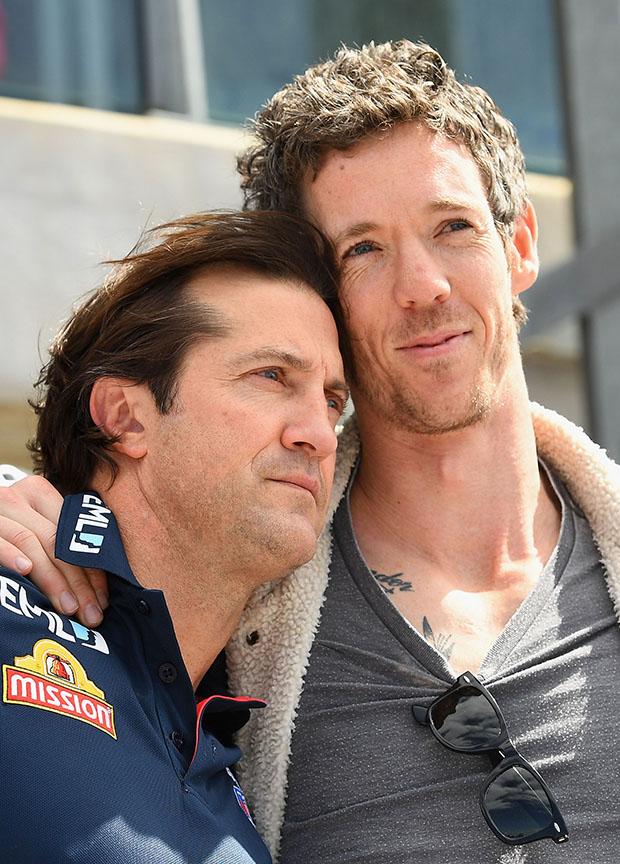 This is yours Murph. You deserve it more than anyone else.’
A short while later, Sam Lane, a female journalist, they’re friends, catches Bob who’s worn his game day jumper under his track suit top. Catching him has not been an easy task. We have been watching him having an out-of-body experience geeing up the crowd to roar even more.
‘Robert Murphy, Robert Murphy can you put into words what is running through your veins?’
He struggles, visibly. Then he says, measuring each phrase: ‘We must be dreamin’. It’s somethin’ else. We didn’t even allow ourselves to daydream about this. (A second wind and really to the crowd) Sons and daughters of the ‘Scray, we’re bringing it home. Hoooooomme.’ He strides away gesturing to the crowd still warbling.
And we won, he won, but he didn’t play and the next day he gave the medal back. The AFL, recognising that something special had happened, had already replaced Bevo’s medal, and the spare one is now in the Western Bulldogs museum celebrating the love and respect one can have for one’s fellow human beings.
After the game Boydy said: He [Bob]’s our leader. We’ll just have to do it again for him next year I reckon.’ Aged 35. He’ll be deft and experienced but the injury will ensure he’ll never be as quick or agile as he was. Maybe Bob’s role is spiritual adviser. Maybe we won because he could devote himself to building a scarcely penetrable wall of single-mindedness and (good) will with Bevo. Maybe we won because he wasn’t playing.
• • • • • •
When I get the annual survey of club members it requests choice from a seven-point scale whether I am ‘not very interested’ to ‘passionate’. I’m not even torn at this point. Mr Ainsworth would be a 7, I come in about a 5. I barrack pretty emphatically but I don’t buy merchandise. I wear my scarf sparingly. Myrna wears the cap when we go walking. When Footscray won the VFL Grand Final and The Chinese Footballer won the award for best on ground playing with a partially mended collar bone, the other shoulder strapped to confuse the opposition, I was just as happy, happier, than when the firsts won. Unalloyed happiness. Completely uncomplicated happiness. But this …
The Dogs have caught the car. What now? I guess I’ll just have to go along to find out.


 resentation of its users. They have bulges in feminine places but are otherwise eviscerated, including the two who may be in flight from care.


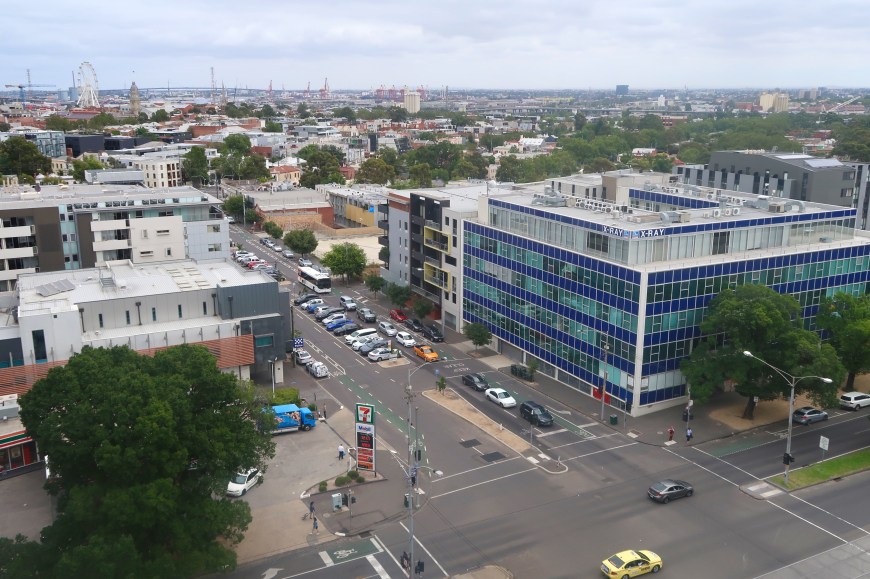
 ‘The Spot’, the headquarters of the Melbourne Business School is a building I see a lot and quite like.

 A wonderful sculpture. Victor Tilgner, who lived in the second half of the 19th century. Constructed 1891-96 — good work takes time, then and now — in the Imperial Art Foundry of the world’s second most liveable city, Vienna. It was purchased in 1923 by the Colonial Mutual Life Assurance Society and provided the primary adornment for this splendid building in Collins St. (Check out the central arch.) Melbourne has had its moments.
  This building was unceremoniously demolished in 1959, and this is the replacement.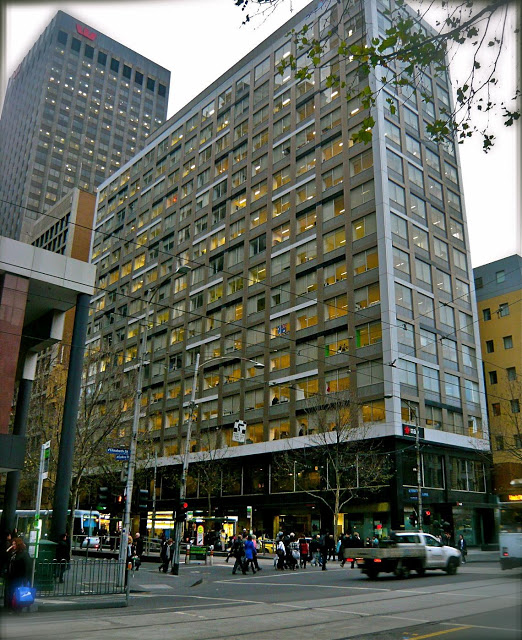
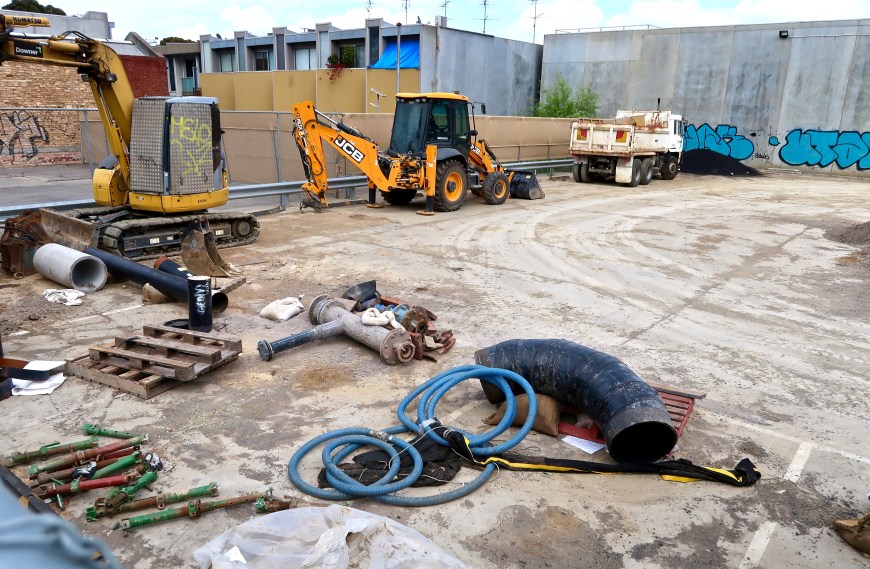
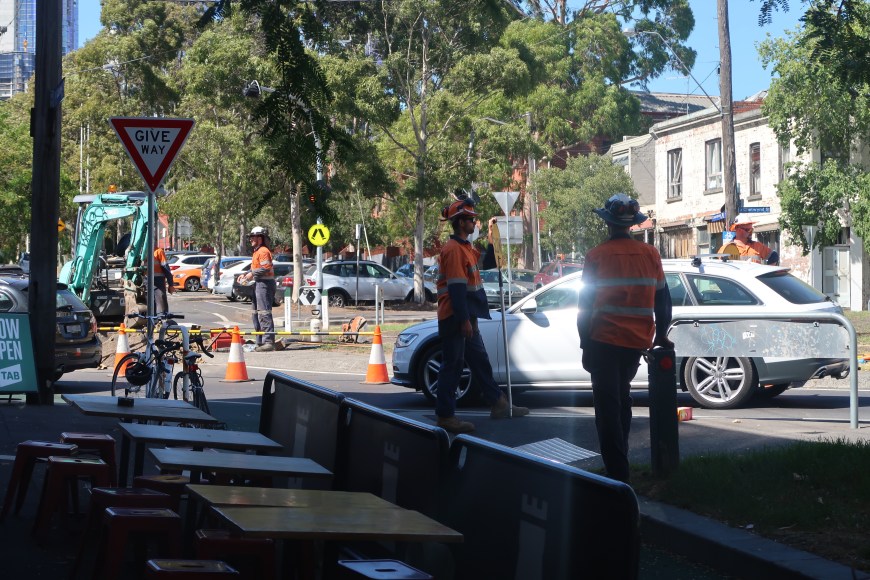

 You can look further down the street and, above all that infrastructure, it’s a sea of green. It was once a watercourse running down to a swamp, a corroboree ground for Wurundjeri people. It is now North Melbourne Football club’s home at Arden St. That’s one of the delights of North Melbourne. It’s a mix.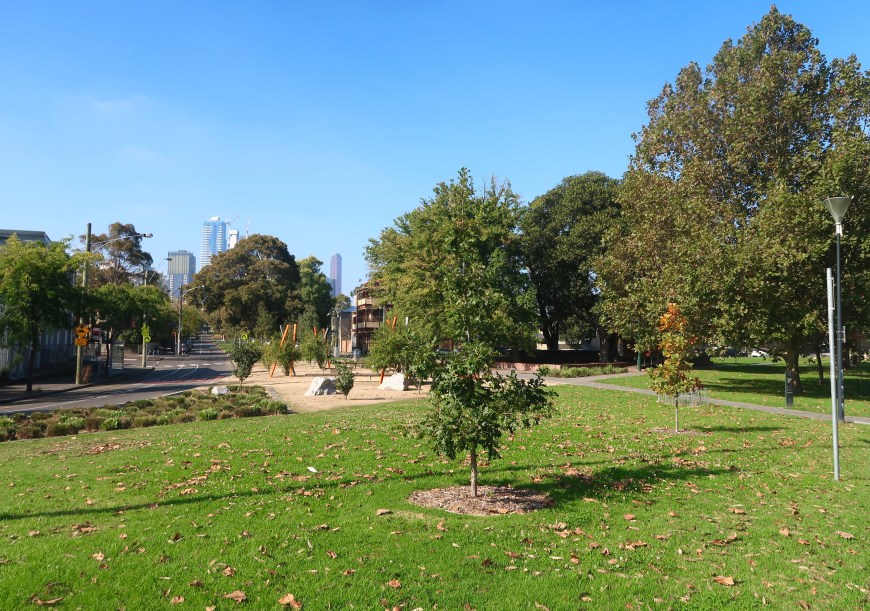
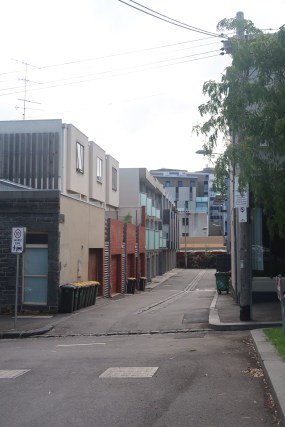




 Who’s bankrolling it though? Well, there are a lot of empty buildings in places like Suzhou and Guangzhou, and there has to be places to invest and grow capital.
 One recent analysis suggests that there are more than 80,000 vacant properties across the metropolitan area. I don’t mind one bit about the Chinese money; but I do mind that the investment and the tax regime that underpins it are making housing unaffordable for the people who want to live and work here. In the last 12 months prices have risen by 16 percent. The median price for houses in Melbourne has gone from $375,000 10 years ago to $819,000 now; the median price of units from $305,000 to $623,000. That is unsustainable.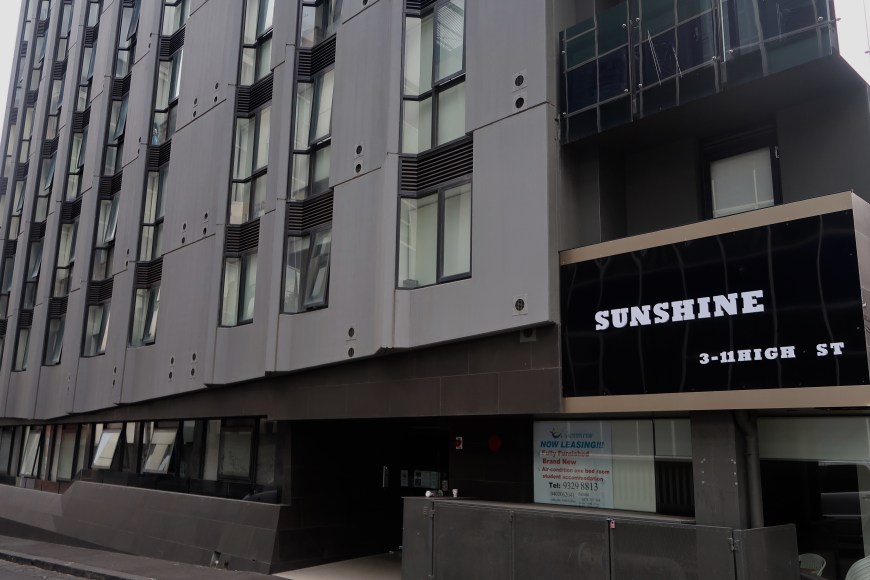




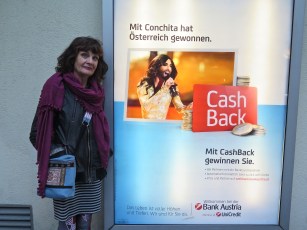

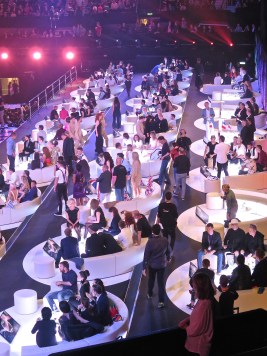
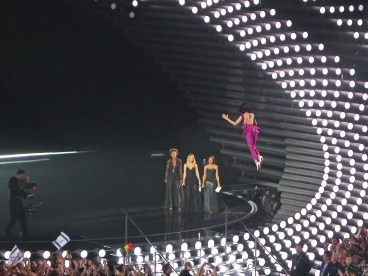

 Monika Kuszynska (Poland) sang from a wheelchair.
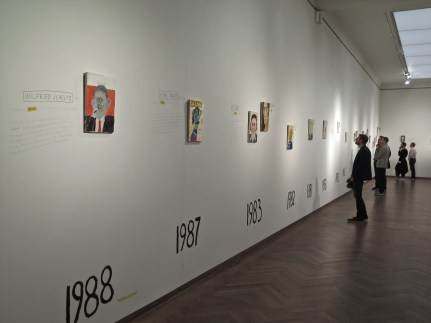

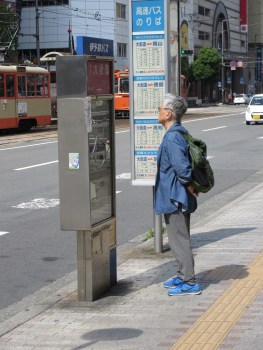
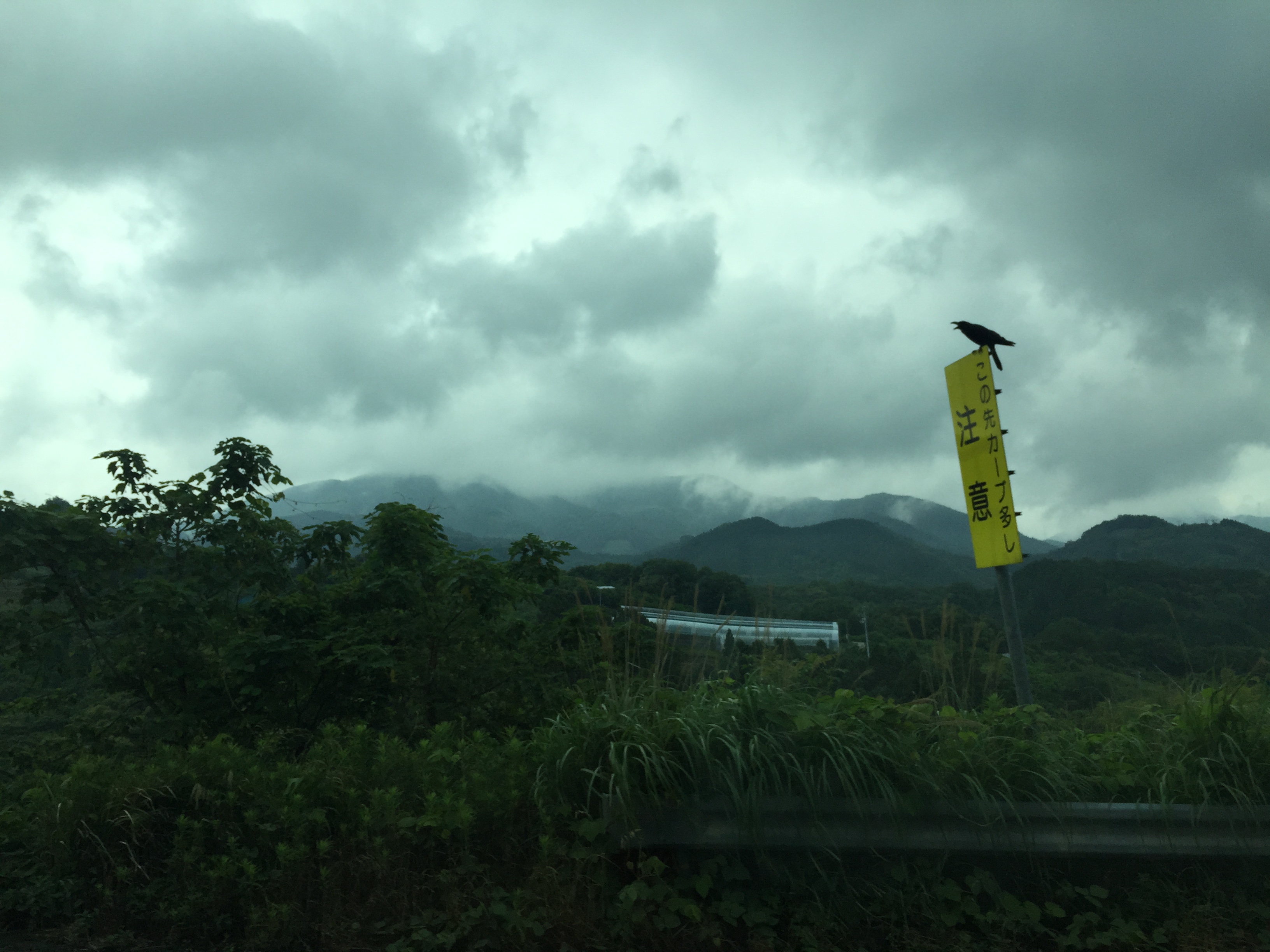 My Japanese expert, thank you Shelley, translated the sign for me. ‘CAUTION. From here on there are many curves.’ And so indeed there were. A long haul up and over a pass, but by the time we got to the bus change the mist had dissolved into a beautiful day.
 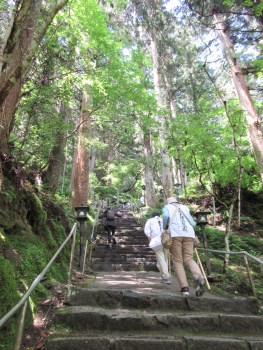 The first temple was about 800 metres from the bus stop and about 400 metres vertically, a heart starter. Iwaya-ji, The Cavern-housed Temple, Number 45, is set into the side of what is really a cliff face and was an intriguing affair. Internet information: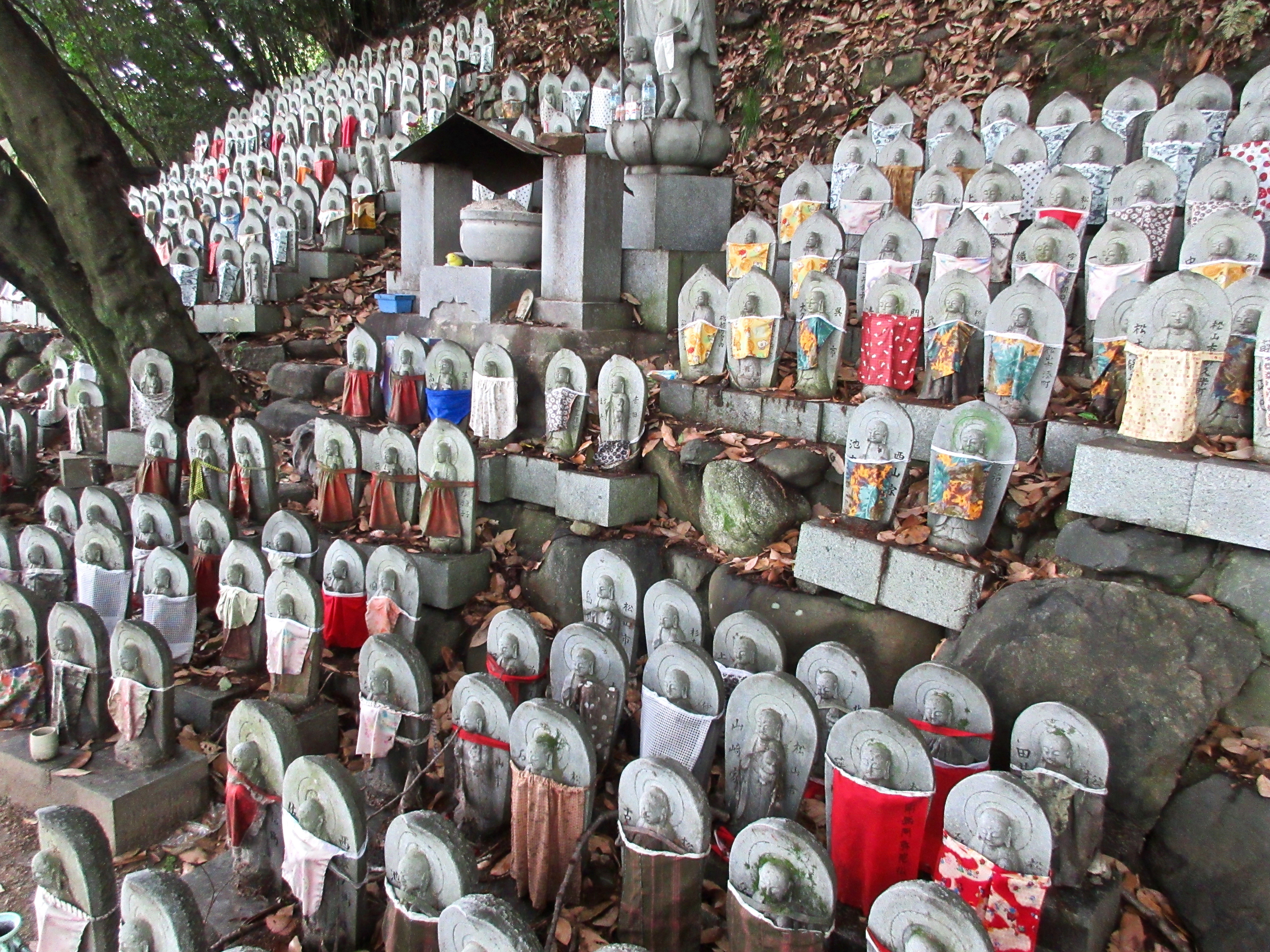
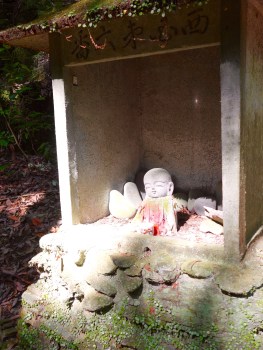 n the way up you pass remarkable sets of J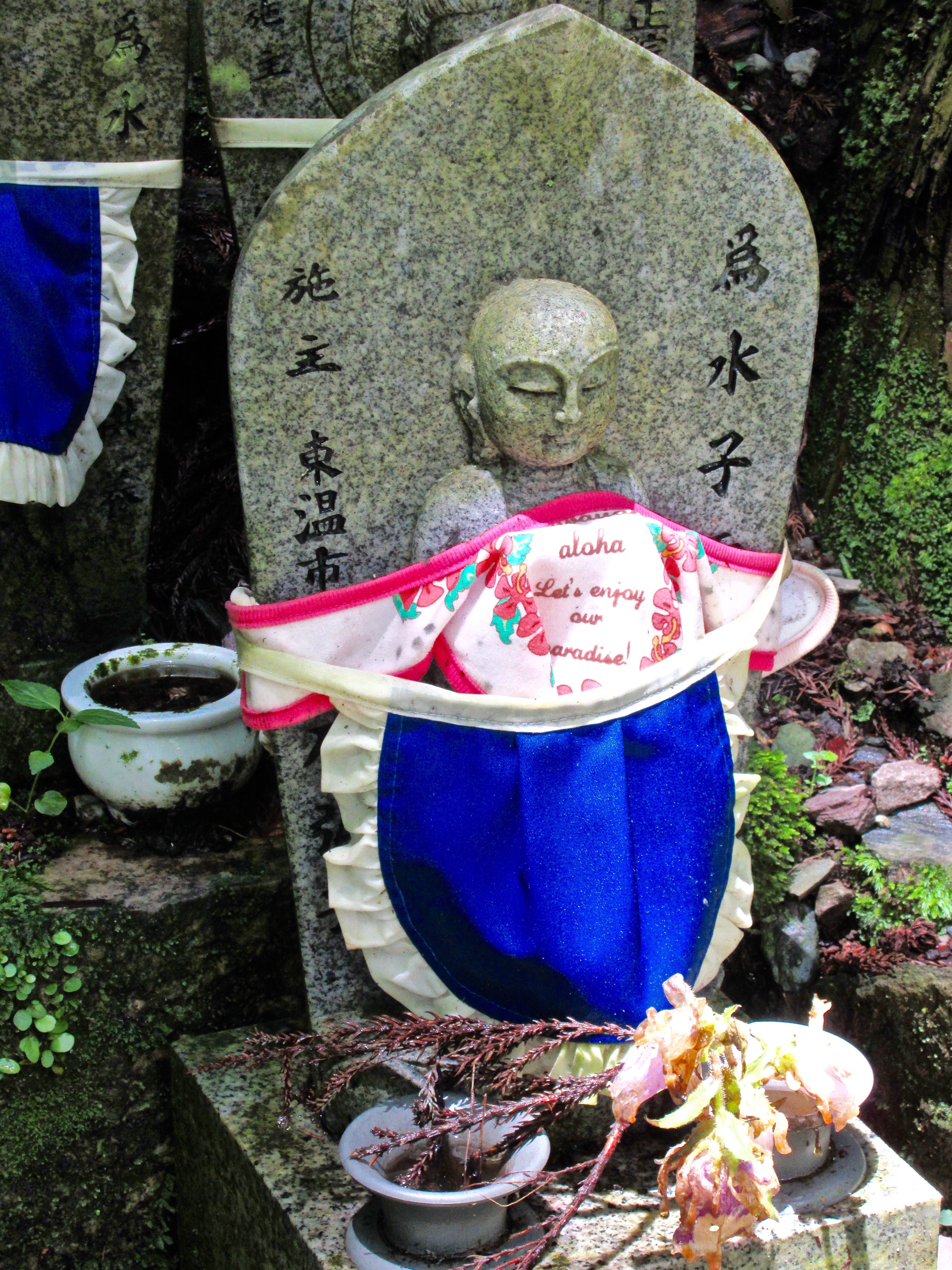
 bove the temple is one of many caves nearby where monks have meditated for centuries. I climbed up to look at walls covered with coins and other offerings, but mostly coins.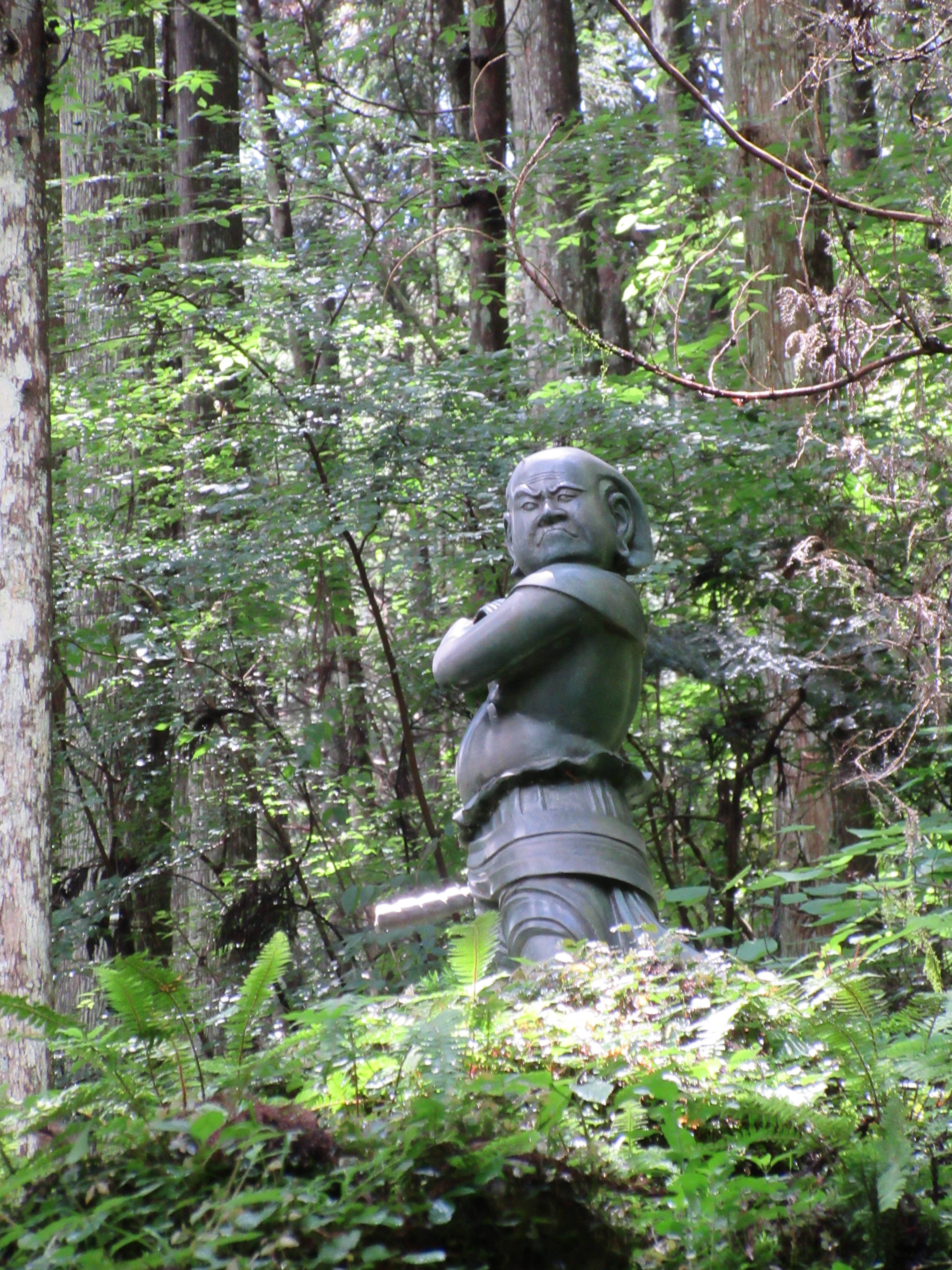
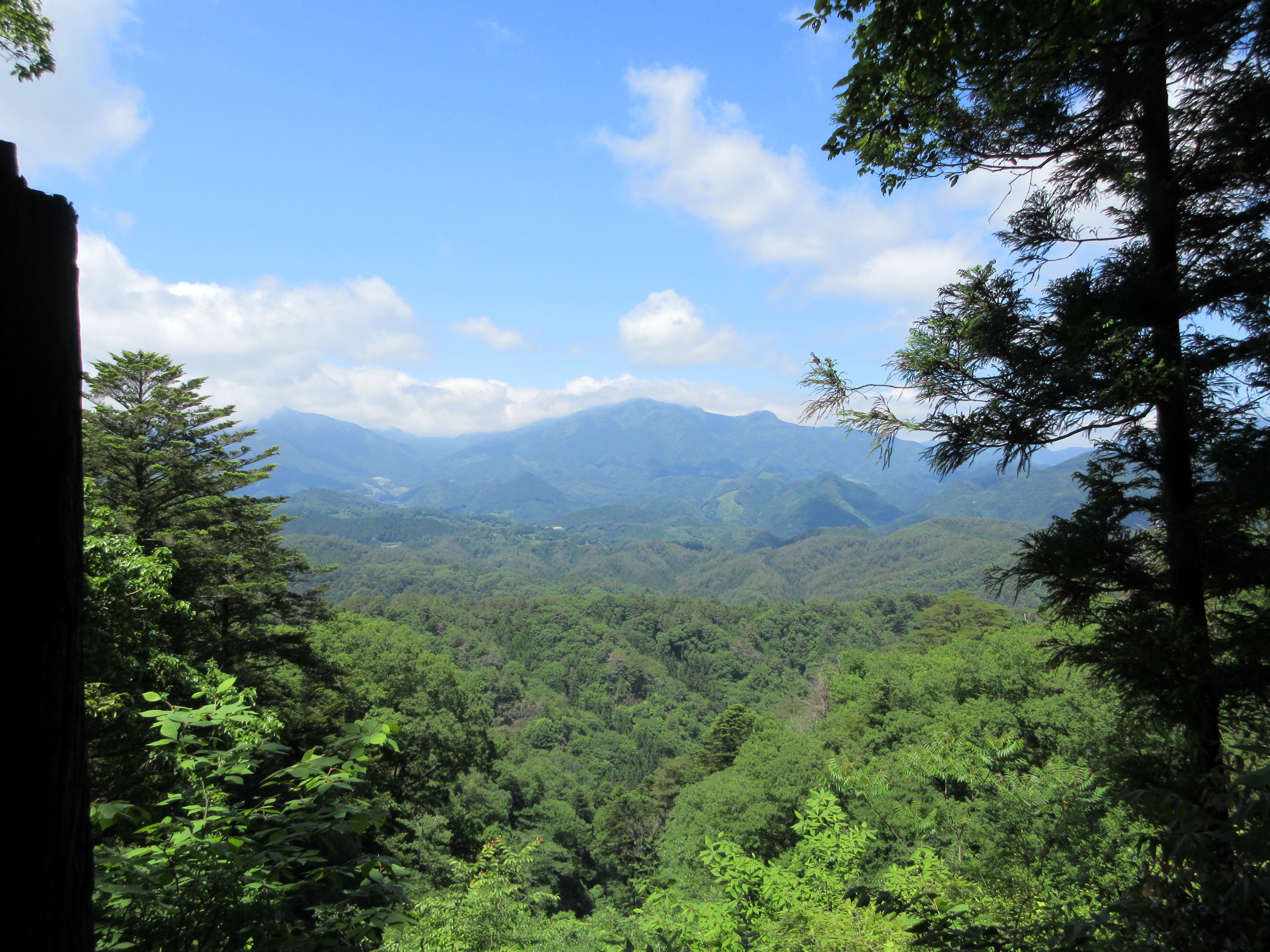
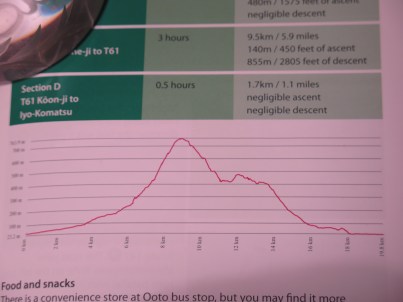
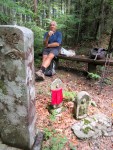 e were sitting up in the air maundering our way through lunch complemented by some new discoveries from the Matsuyama shopping arcade, when I got the white book out again and realised it was going to be another rush to get to our bus. If we missed the one we’d set ourselves for the next one would get us home around 8.00, too late. So down through the paddies at pace and through the town of Fusuwara. We got two lots of additional advice about where the track restarted. Both were correct in their own way but incomplete costing us about 20 minutes. 2.3 the sign said when we got back on track, then 1.4 after that and, with a very steep and slippery climb included, 50 minutes to do it in. This colours the experience.
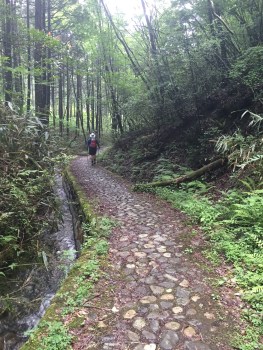 As things stood, after climbing very hard for about 20 minutes we topped out and had a steepish descent: steps, cobbles, following a concreted creek, in mud — all that. We saw the day’s second temple, Daiho-ji, Great Treasure Temple, Number 44, but didn’t stay. We had a bus to catch. We arrived a bit sweaty but deeply content at 15.38 for 15.42, four minutes, just time to breach the vending machine. This had been a fabulous (half) day’s walking. I would like to do it again, more slowly.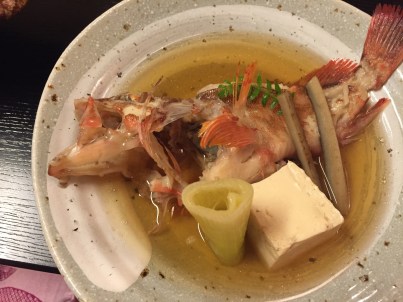
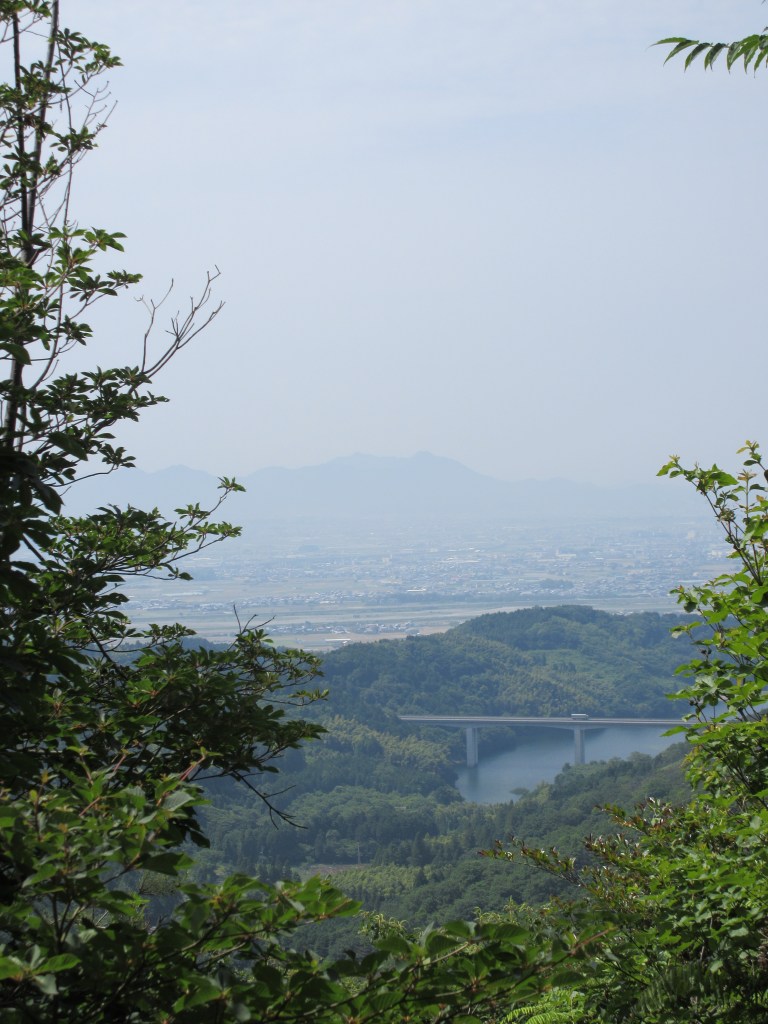
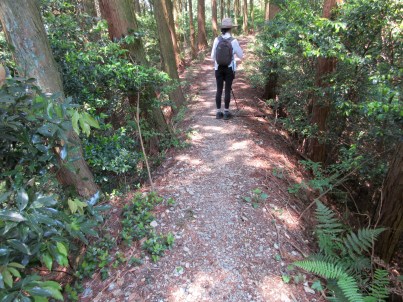
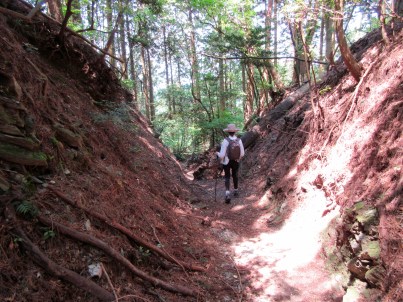
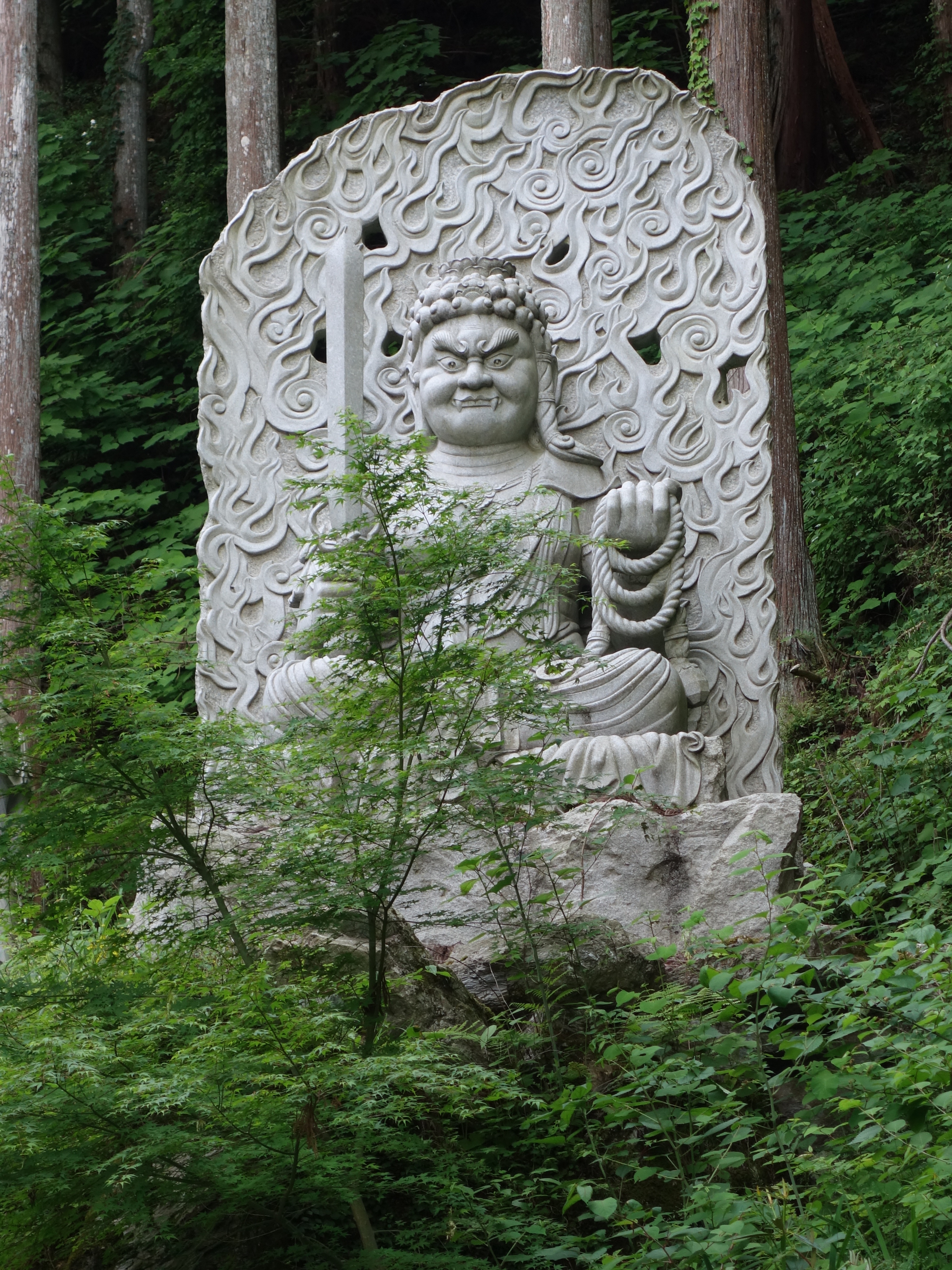
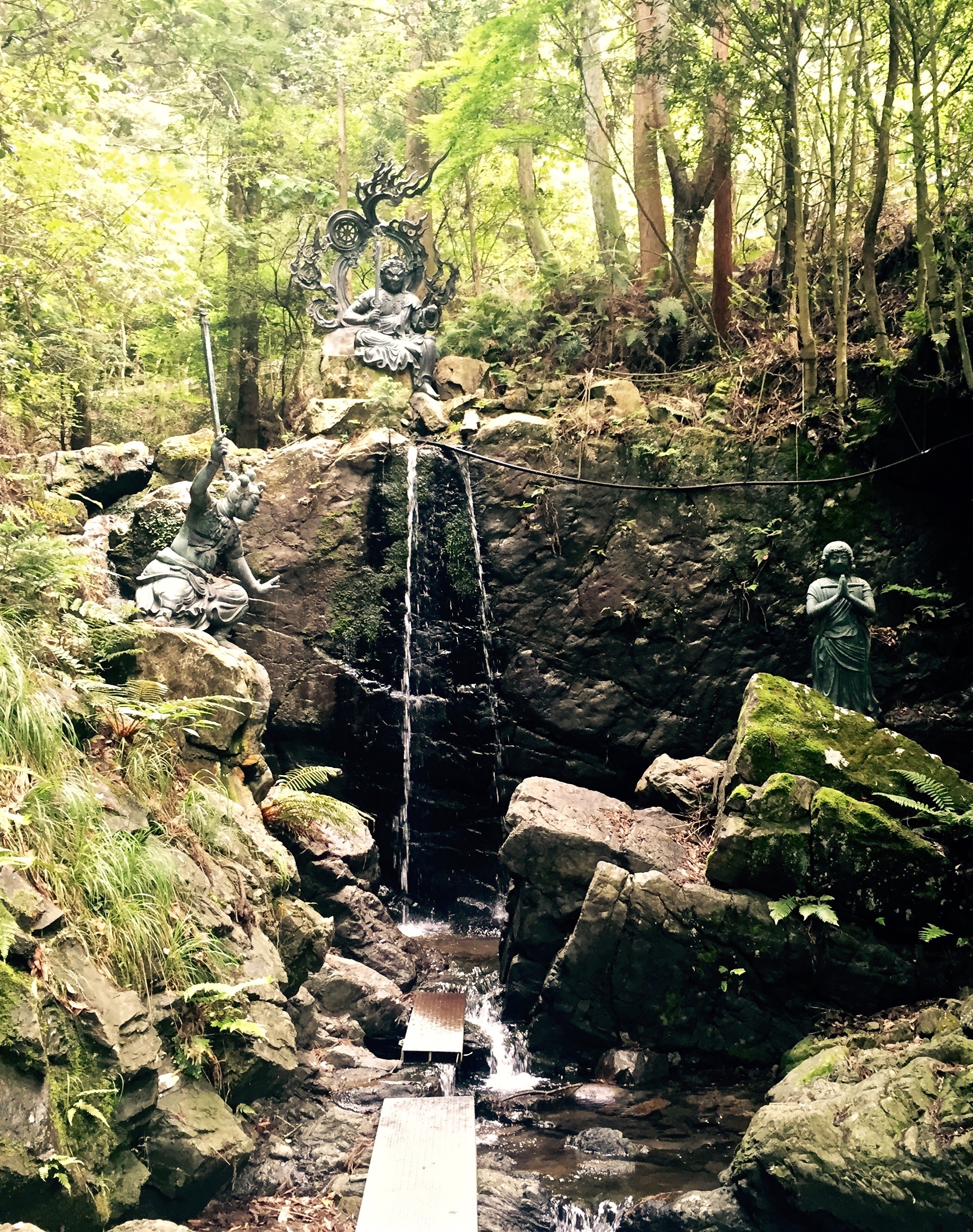 Fudo Myo-o at top with Kongara and Seitaka.
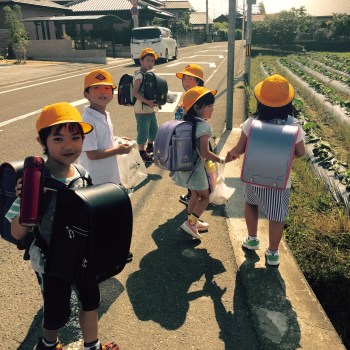 We were down in the town of Komatsucho by this stage with not much more than kilometre to go. Distracted by the boggled interest of some school kids, we weren’t quite sure how many right angle turns we’d made and asked a passing motorist for directions to the last temple,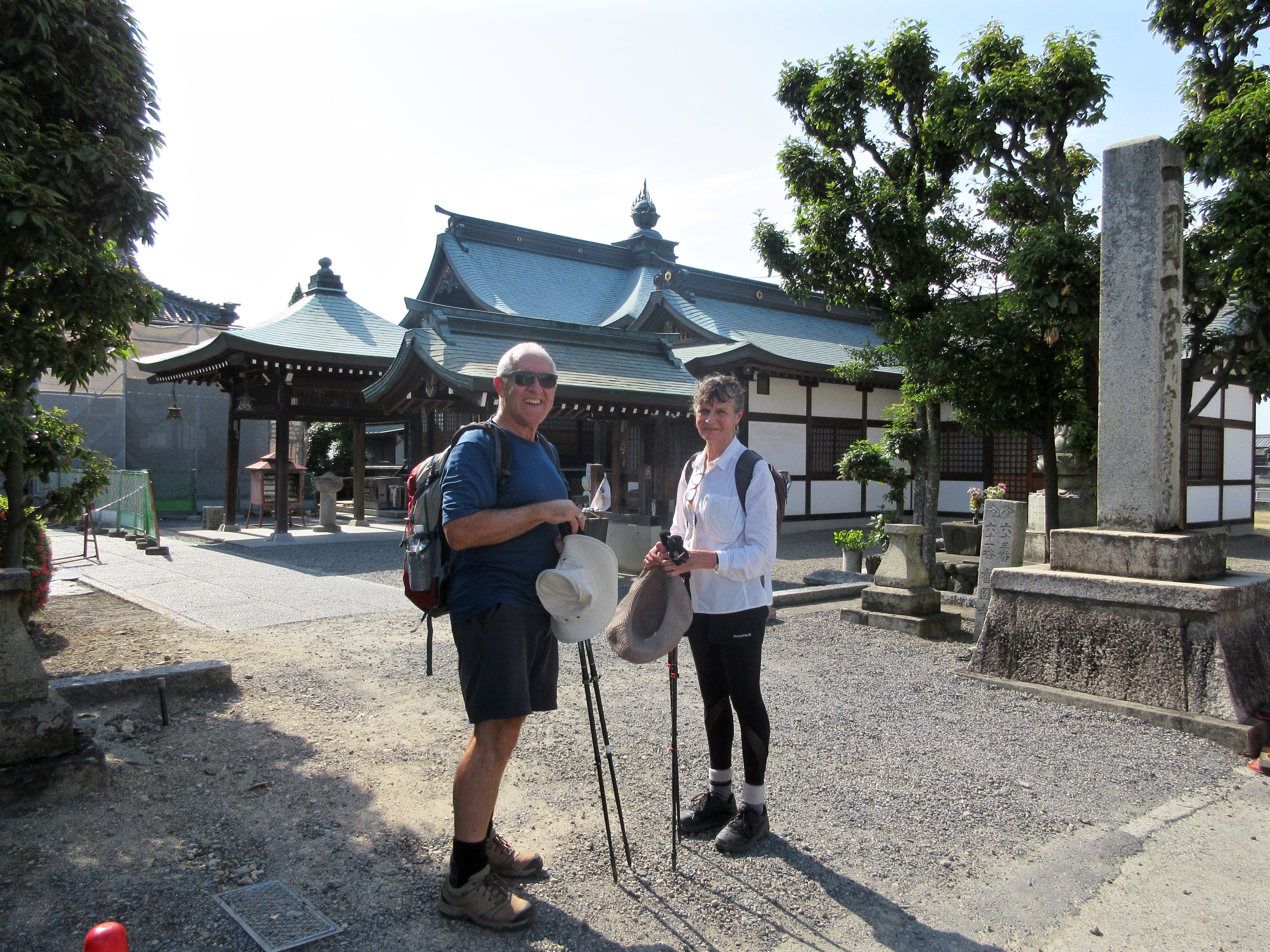
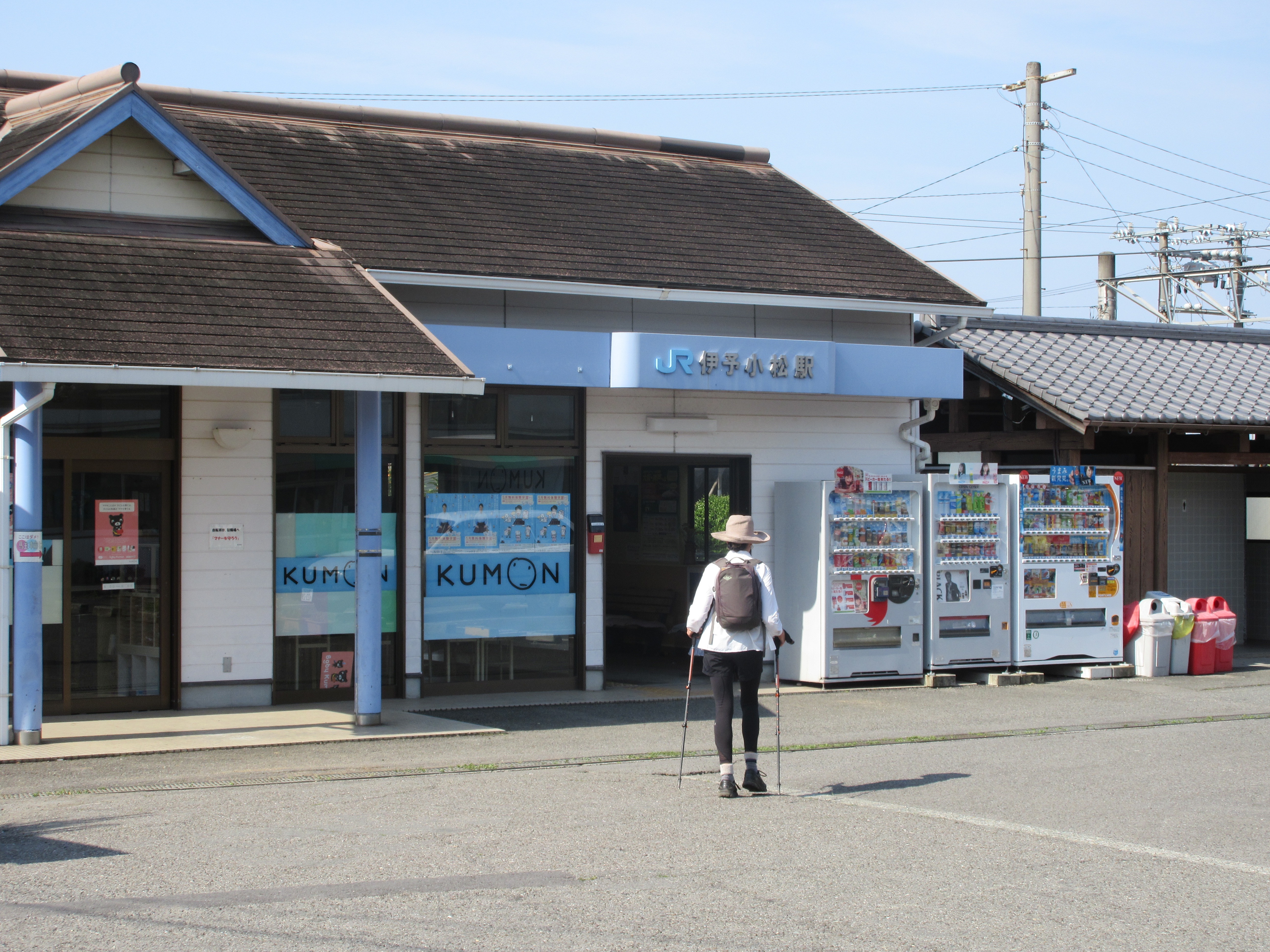
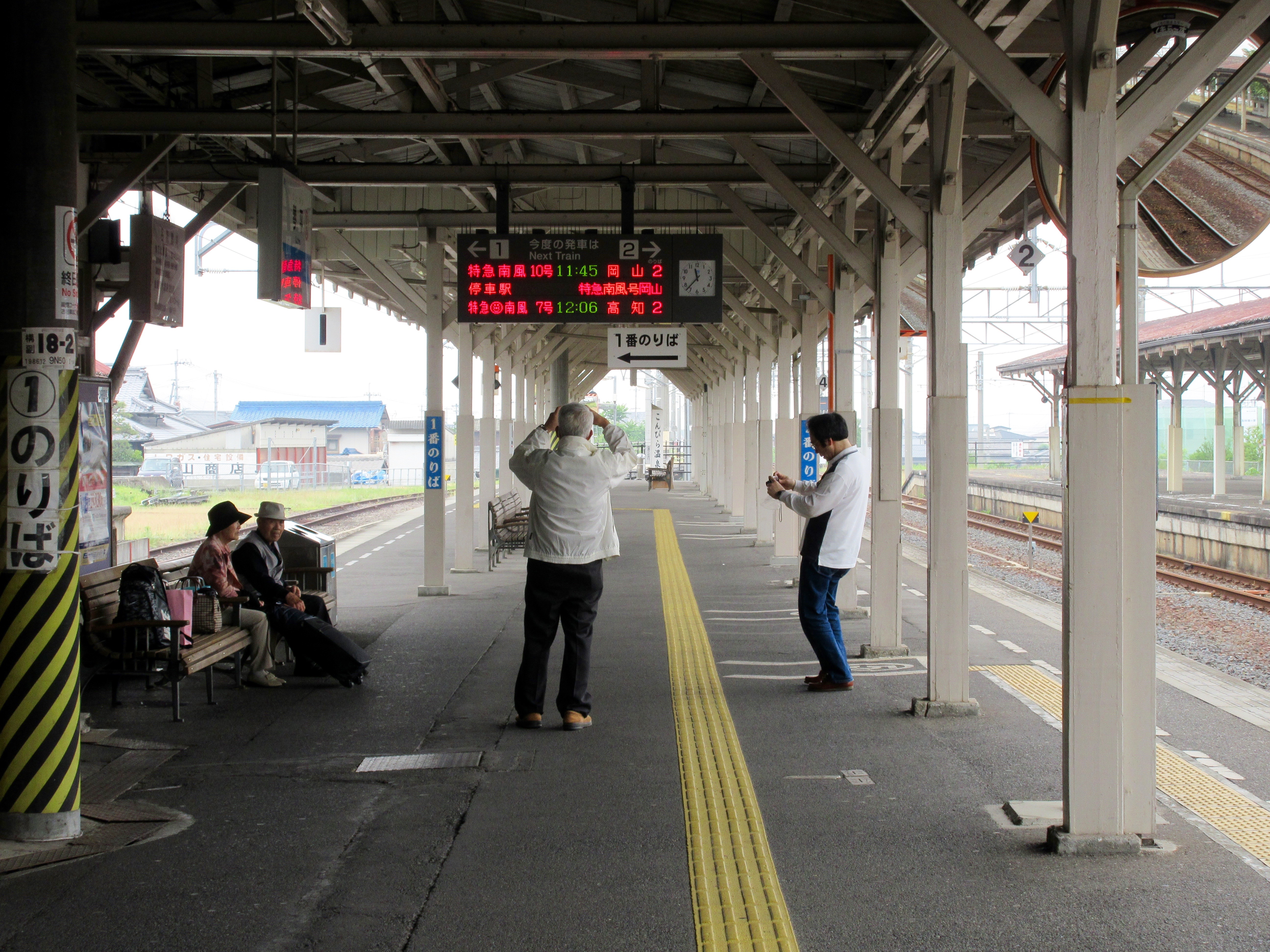 The next morning we found ourselves on a train heading further west along the northern coast of Shikoku. It was a late-ish departure and we’d spent part of the wait in Kotohira at the Palanquin, a tiny establishment devoted to coffee and sandwiches, thick with smoke and rarely I think patronised by non-Japanese. We were treated with glee and lavish assistance.
  We did get the right bus — however short the trip that is a prerequisite — and got off at the right stop somewhere in the middle of the countryside and walked back the way we had come to Taisan-ji, Tall Mountain Temple, Number 56. The temple itself was not of great interest, but its siting was. It felt just a bit like being in another world, a possible product of too many trains and buses.
 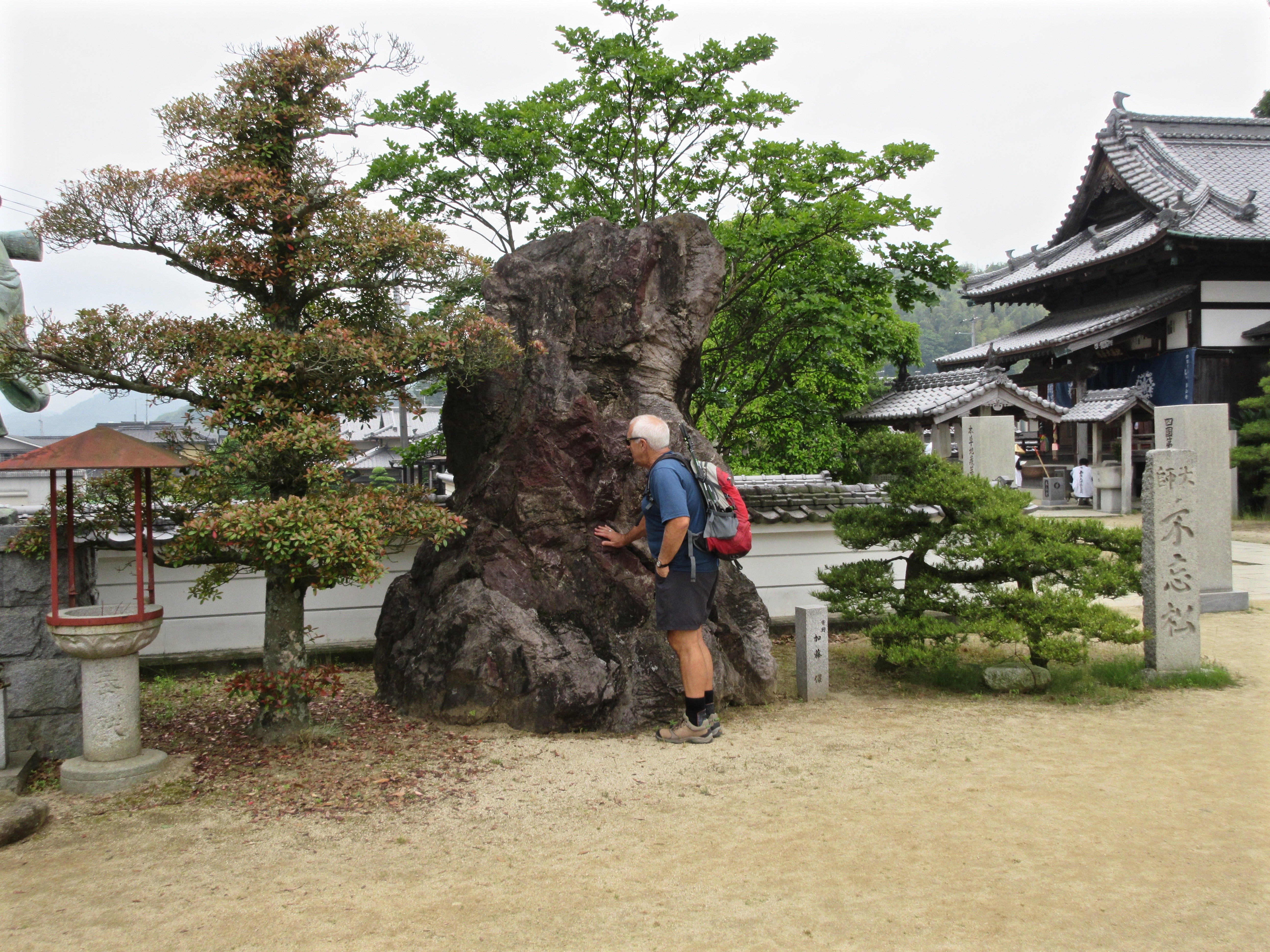 I liked this rock with its colourful striations. The small pine next to it is believed to cure all lower back ailments.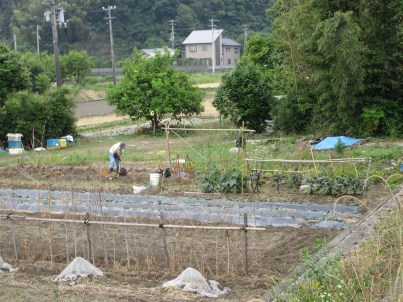
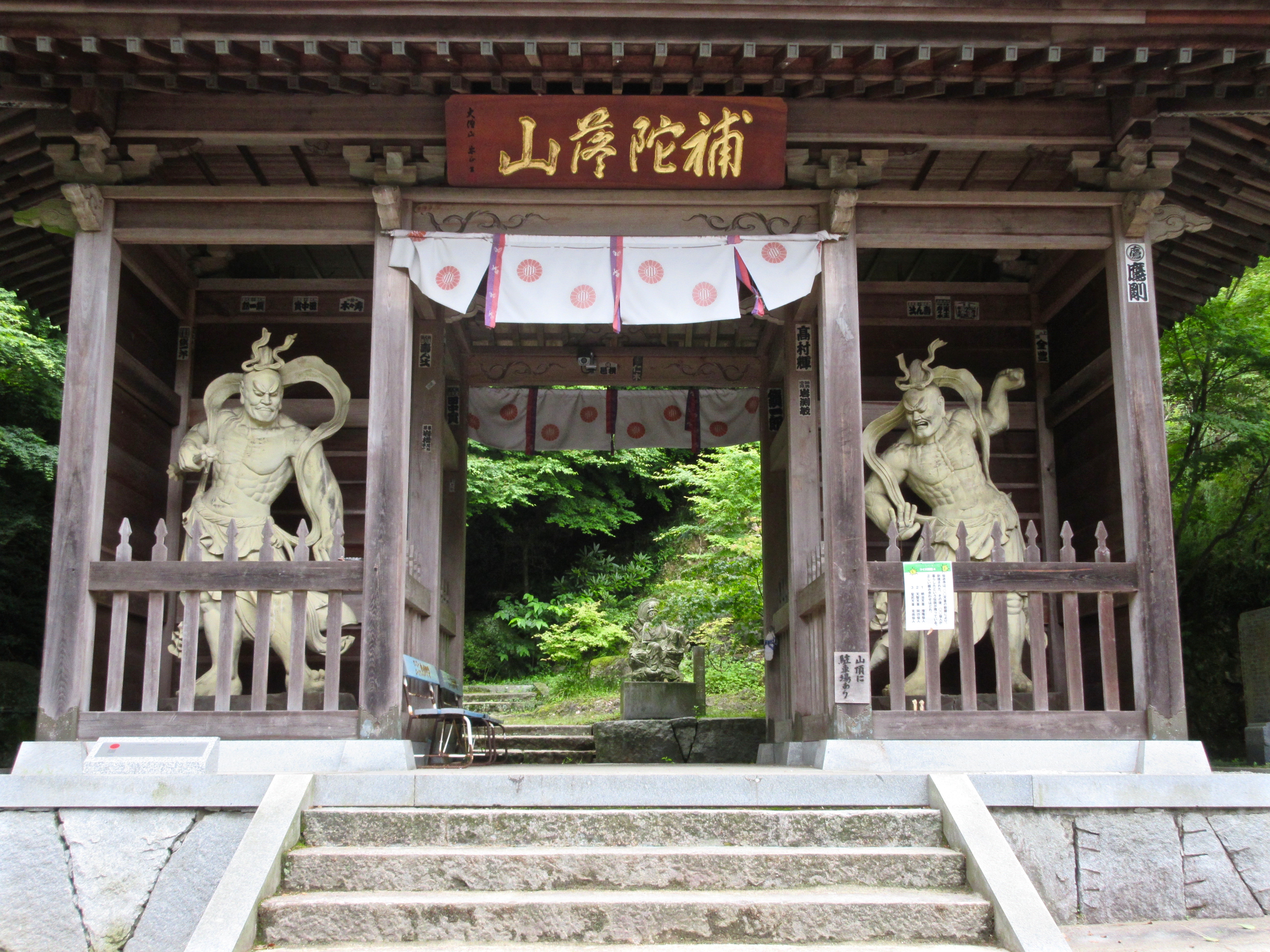 A mini version perhaps of the famous guardians of Senso-ji in Asakusa (eastern Tokyo). If so, they are Fujin the god of wind and Raijin the god of thunder. The road looked the easier option, but I had eaten the cakes and needed to perform some act of contrition. We made our peace with these chaps and headed through. Our progress was interrupted by some people in a car desperate to provide ossetai who, poor things, had to chase us 80 or so metres up some of the steepest and slipperiest steps going round. What was it? Bottles of drink, some crisps and lolly bars.
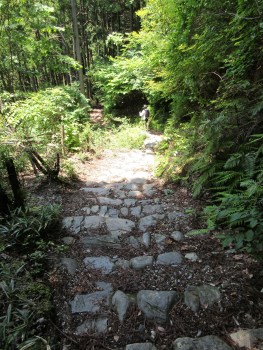
 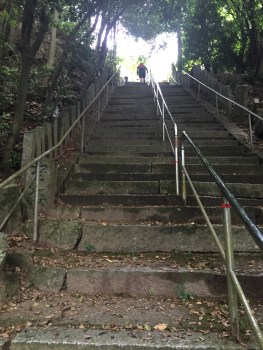 We continued on 200 more metres making extensive use of the handrail, where there was one. That’s the ascent, the final 280 metres. What an entry. And we landed head first into thick fog.
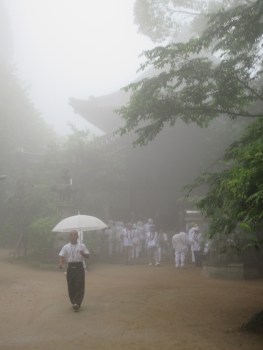 We were staying here at the shukubo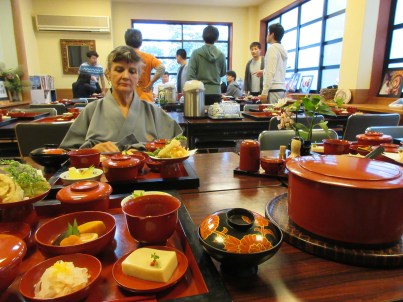
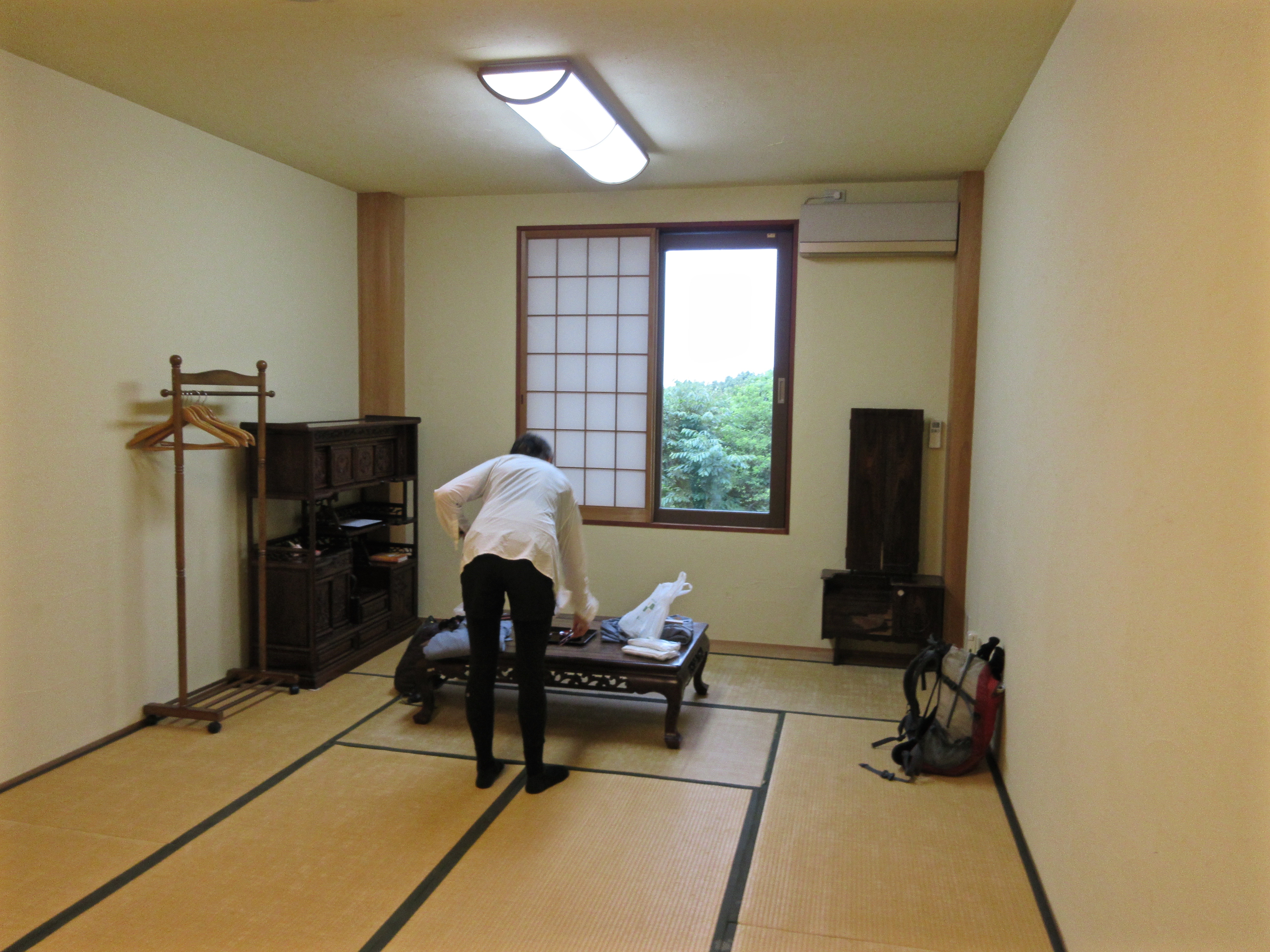 I woke at 5.00,
 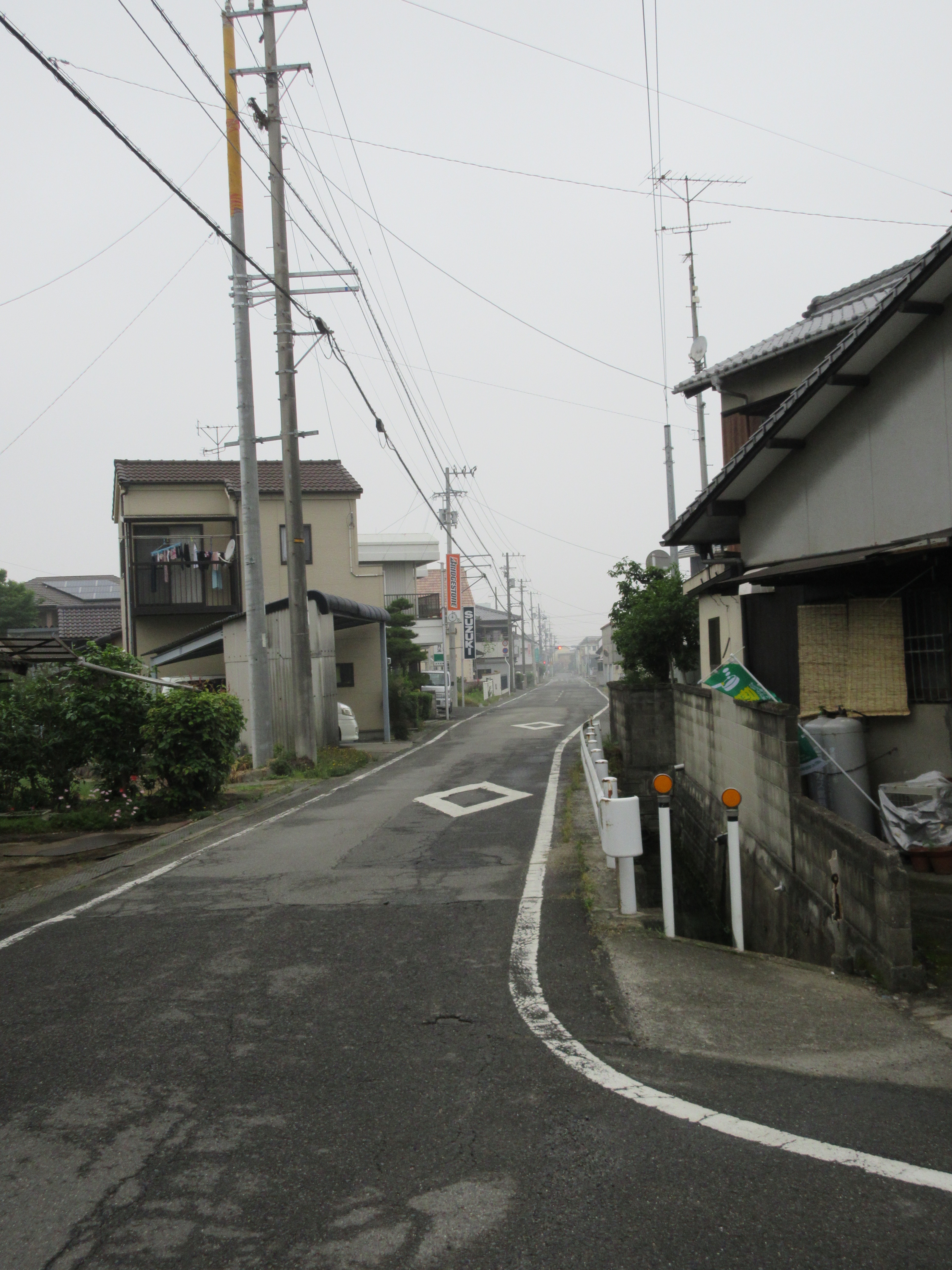 Except for these guys — the number of Japanese, in Ehime at least, it takes to dig a hole on a Sunday morning.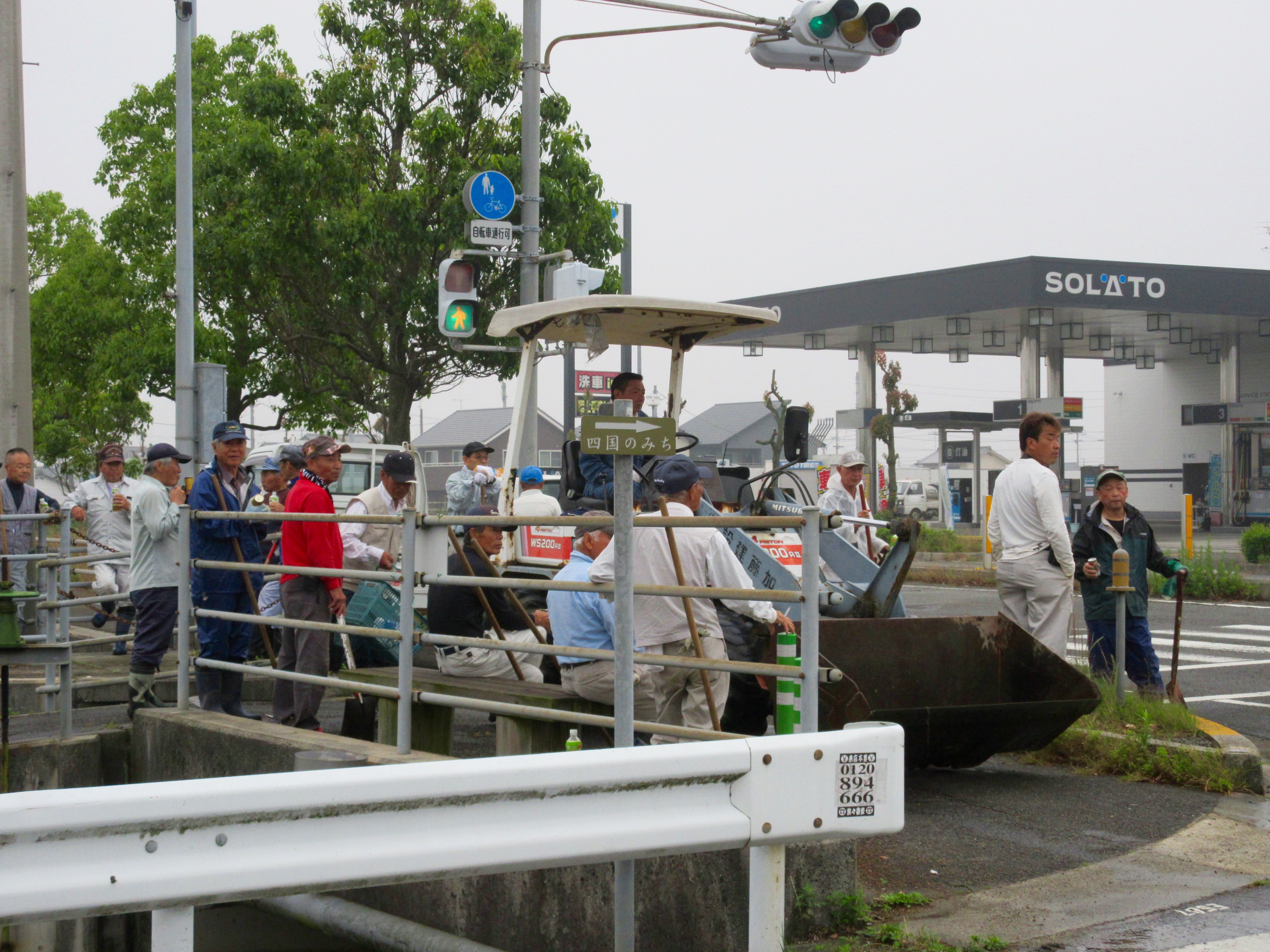
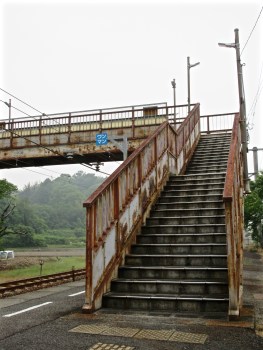 It was only couple of k.s to the station and they took us along a concreted canal which probably once would have been a creek, past tennis training where the Nishikoris of the future were playing very capably, four or even six to a court, past a school where band practice was in full swing and soccer and dance practice were vying for space in the yard. One of the complaints of foreign teachers working in Japan is that they work a seven-day week, 50 or more weeks a year, including summer camp supervision. To do less is to display lack of commitment.
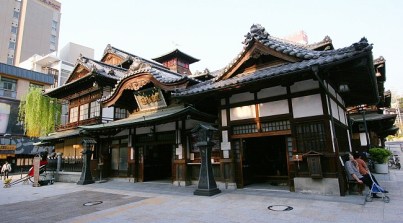 and just as close to a shopping arcade with black sesame softu crema, I was thinking about where we were and what had been happening — no bird’s eye, no shape, bobbing up out the ground hither and thither. I was finding its intricacy understandable but slightly wearing. Yesterday, we had been negotiating our way round a mountaintop temple. Today, in the heart of a tourist destination, choosing between a Lawson and Willie Winkie for coffee, eating an astonishing variety of food, encountering major variations in landscape … But then I thought maybe the medium is the message. This is how it is. This is what we were up for. If in some moments, and they were only moments, it was overwhelming, it was also unforgettable.
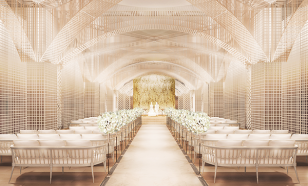
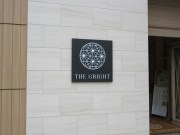 We had passed the Scrivener Department of the Ehime Prefecture Canal System and The Gright, billed in English as: ‘
 We were welcomed by another champion of the hospitality industry.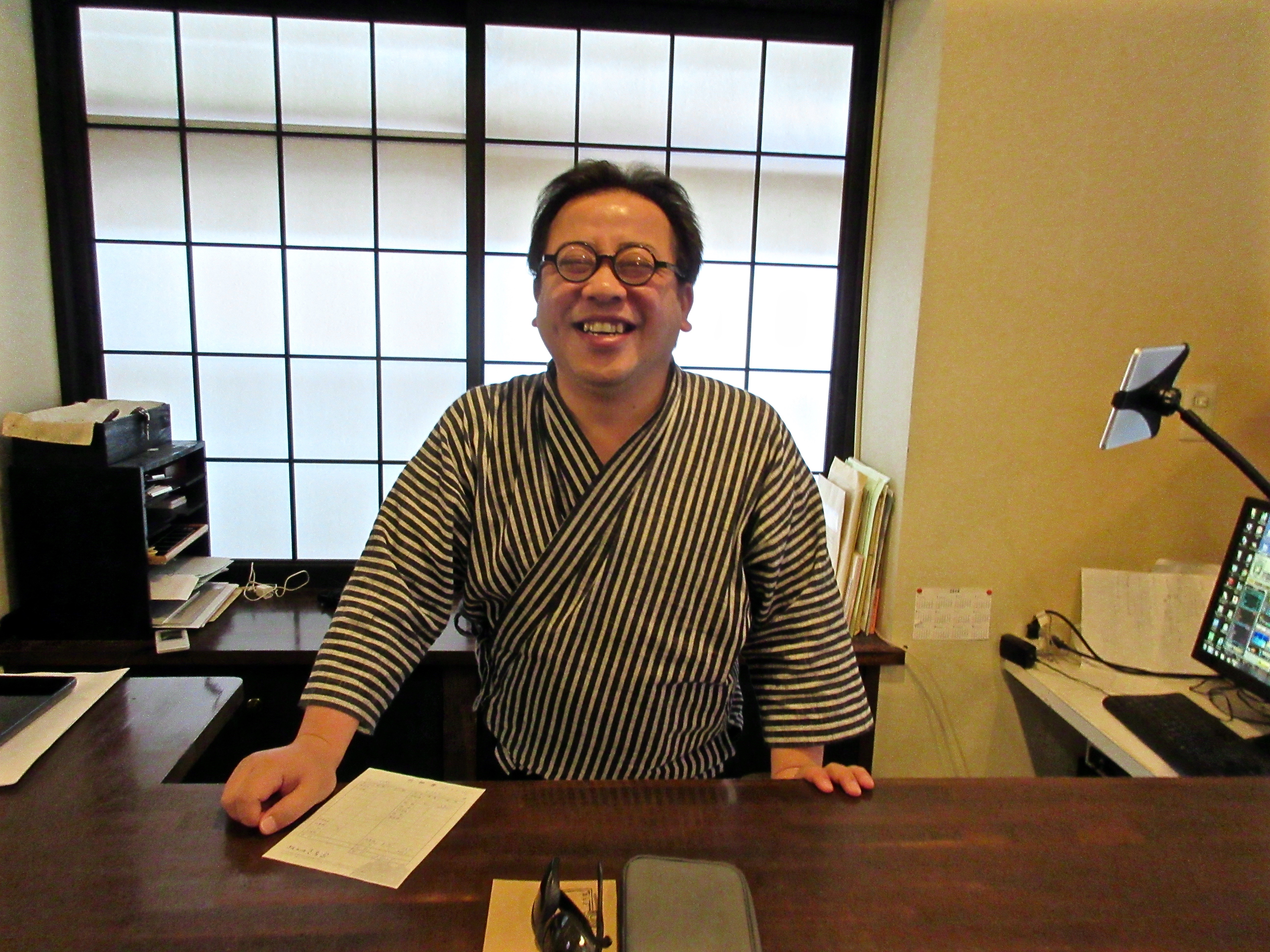
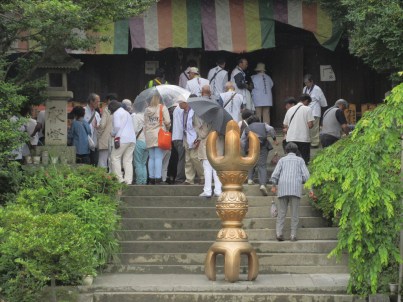 Sunday afternoon, and it was seething with o-henro and other tourists, a busload of Spaniards amongst them, who were behaving more egregiously than us at our worst. We were in town. The city gardens were on top of a hill which provided excellent views of the city and I had my bird’s eye view. We had passed the Dogo Onsen complex and stumbled over the Botchan Karakuri Clock, Botchan being a popular novel written by local Natsume Soseki and widely read by Japanese school children. On the hour the characters emerge and do their clockwork thing, delightfully, and then it all folds away till next time.
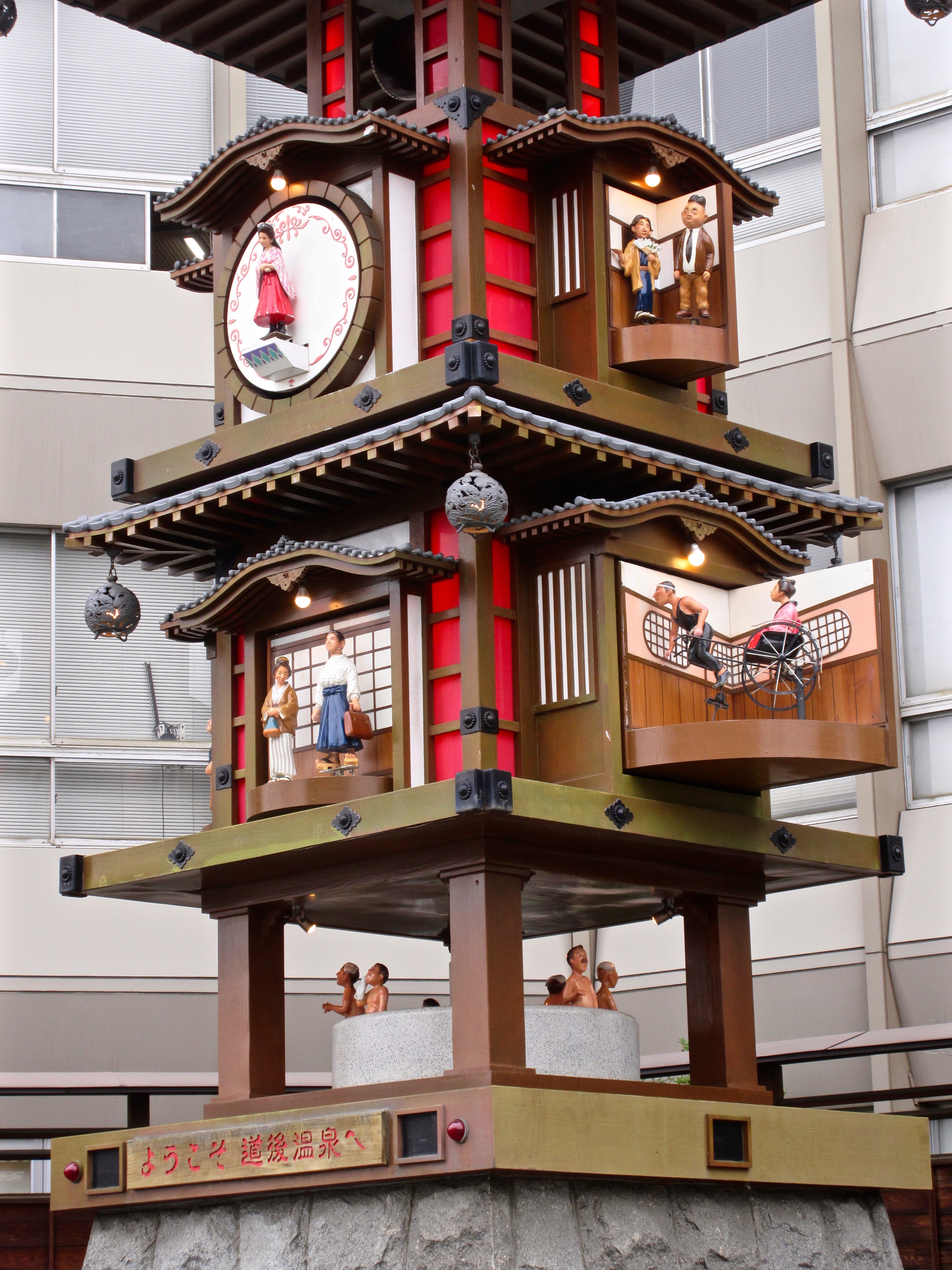 At its base is a trough fed by a mineral spring for walkers to salve their weary feet, before heading off to the very fine onsen and
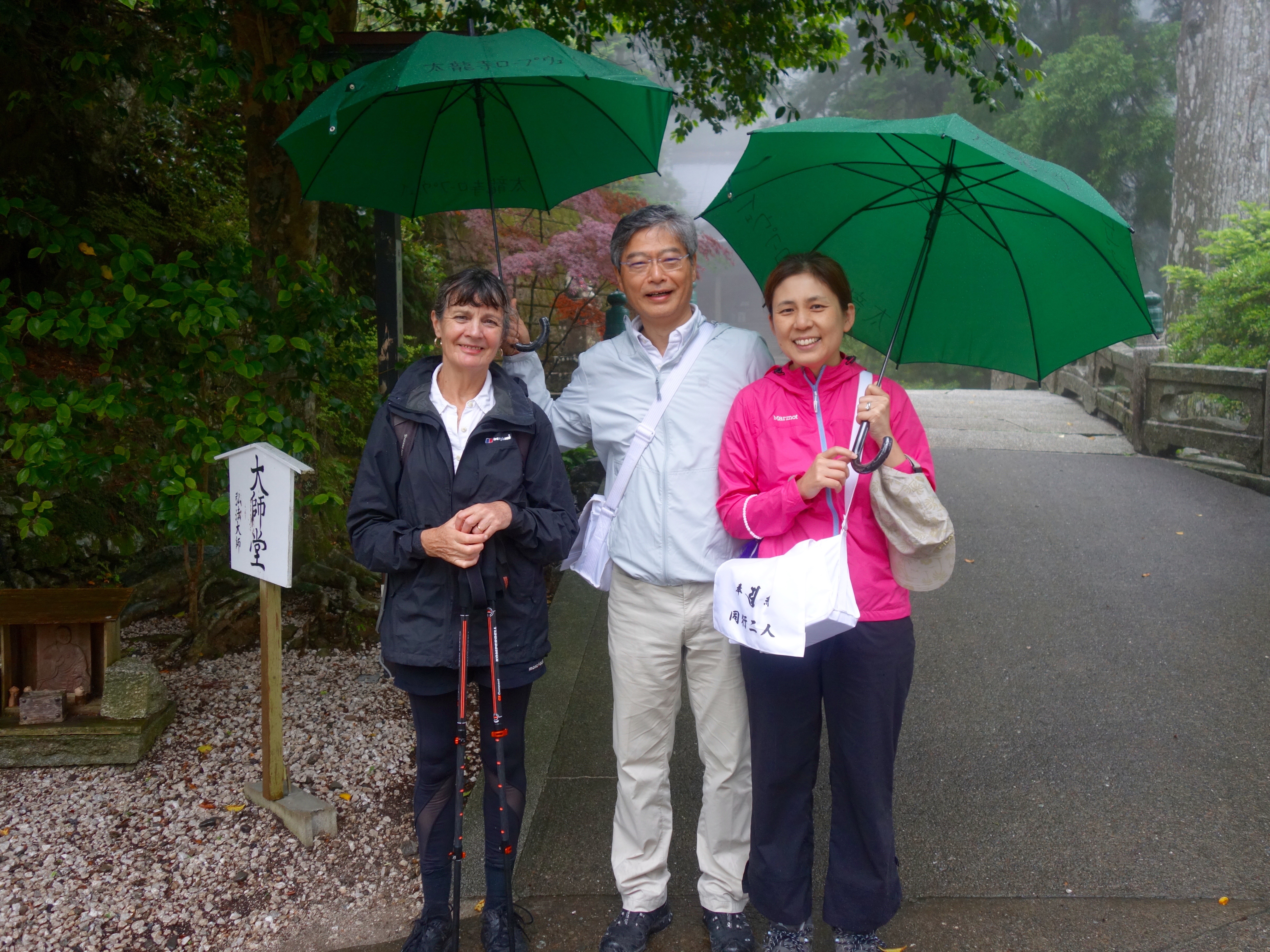
 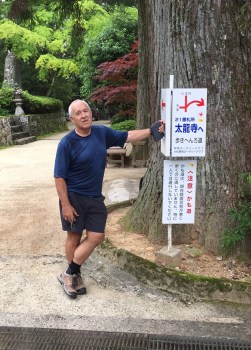 Day 4. I didn’t really feel like I look. Just caught the moment. It had been a great day’s walking and I was actually ready for more, but we were shortly about to get off the mountain via cable car, ropeway in the vernacular. It was another nansho temple, Tairyu-ji, Grand Dragon Temple, Number 21.
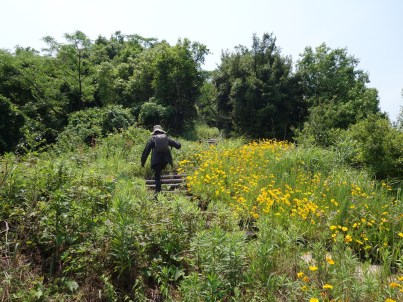
 bus driver had dropped us off with 450m to climb in a bit over 3km, 1 in 6. That’s about what it felt like, but we were up for it that day. It was a lovely path winding through forest and we began with a preliminary reward.
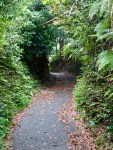
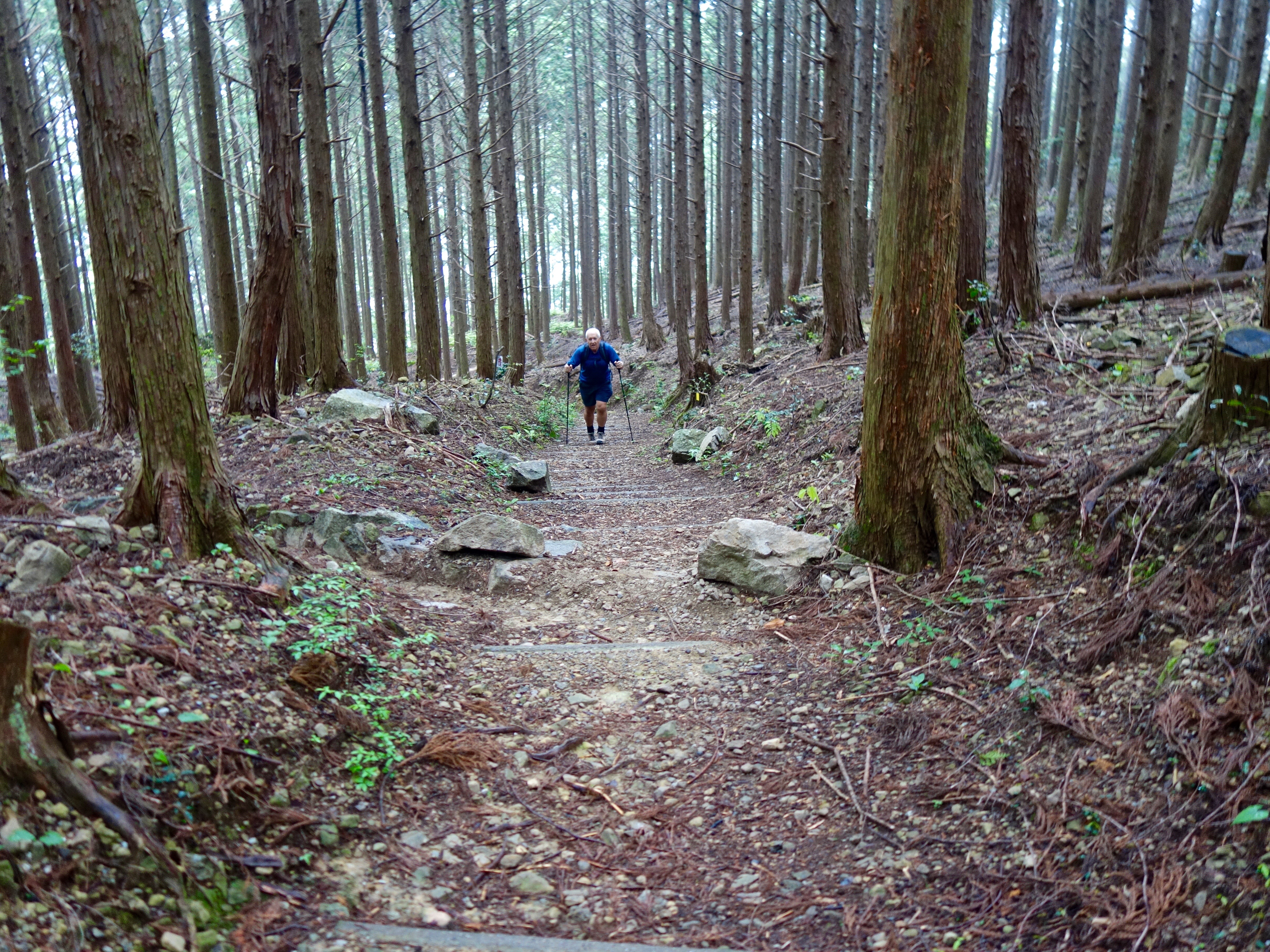
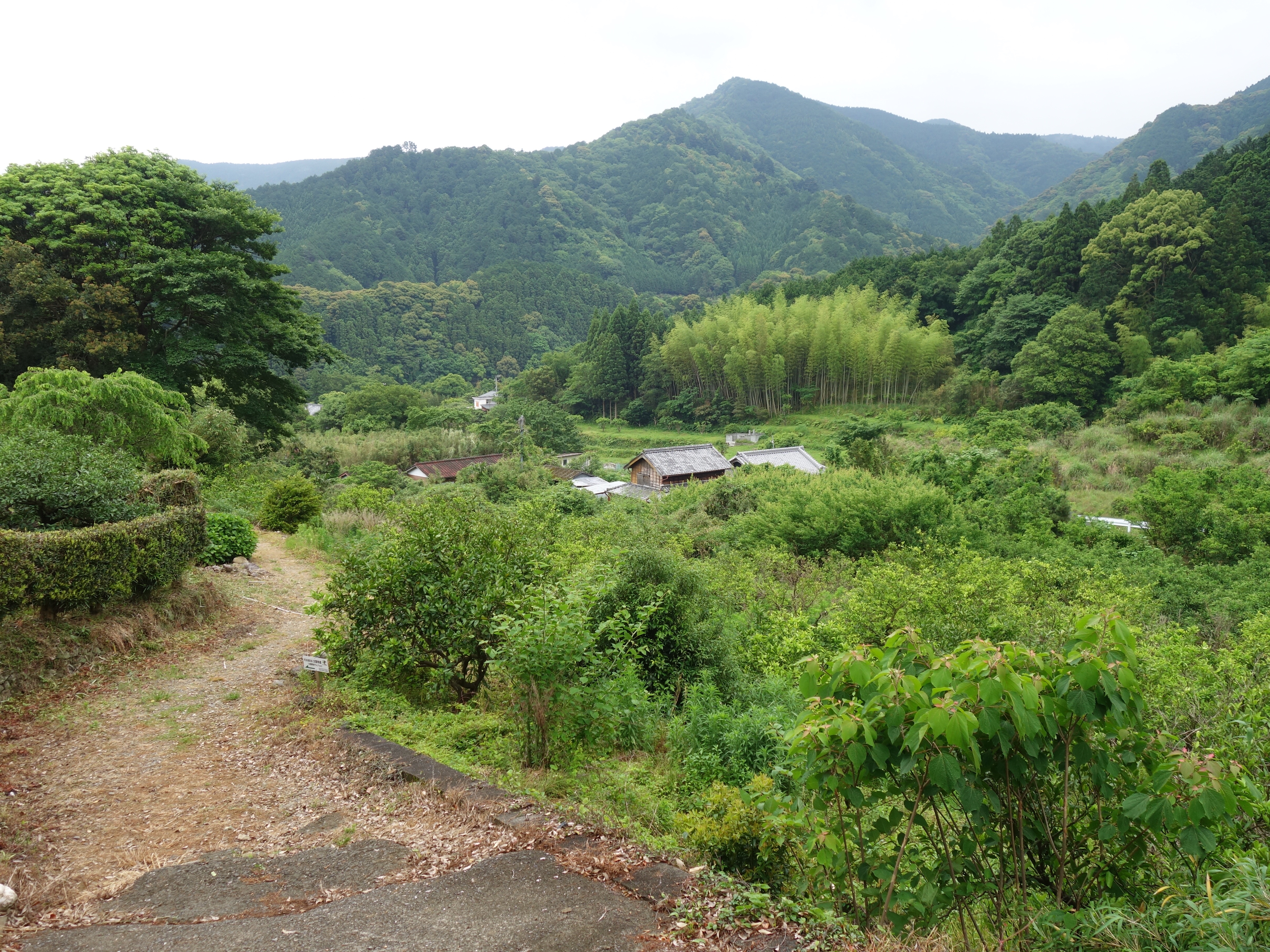 After a short look round on this peak there was a long but straightforward descent which just kept unfolding in its loveliness. Near this point we walked through a serious and extensive collection of bonsai and met the gentleman who enquired about the health of Murray Rose. His group of o-henro were having a congenial but lively squabble about directions. Newly seasoned and knowledgable etc etc, we were able to point them in the direction from where we had just come.
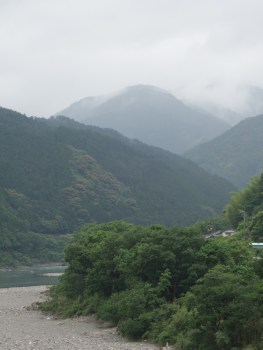 The Nakagawa River, famed for the clarity of its water but on this day an opaque icey aqua, was at the foot of this descent. Across this bridge the next climb began. For half of the way, this one stayed on a tarred road, very narrow — just trafficable if you were driving a Japanese little car or van — following a creek valley up the hill. Uphill but only vehicle grade.
  Easy walking even meeting this friend on the way. The road led to a disused farm where this oddity appeared.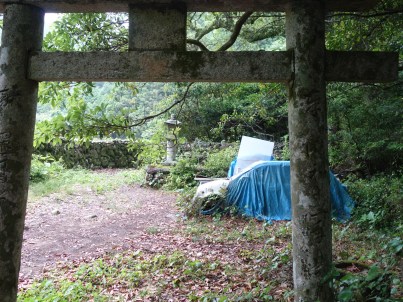
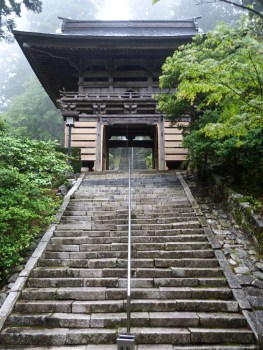 As customary, just to keep you honest and remind you of a few salient things, the big climb is supplemented by several sets of steps. Tairyu-ji was being repaired but that didn’t interfere with its complexity and beauty. It is suggested that Kobo Daishi sat on a rock peak near here to practice Kokuzo Gumonji-ho, a short mantra. To pray for improved memory this mantra must be repeated a million times over the course of 100 days. You’d probably remember that at least even if nothing else.
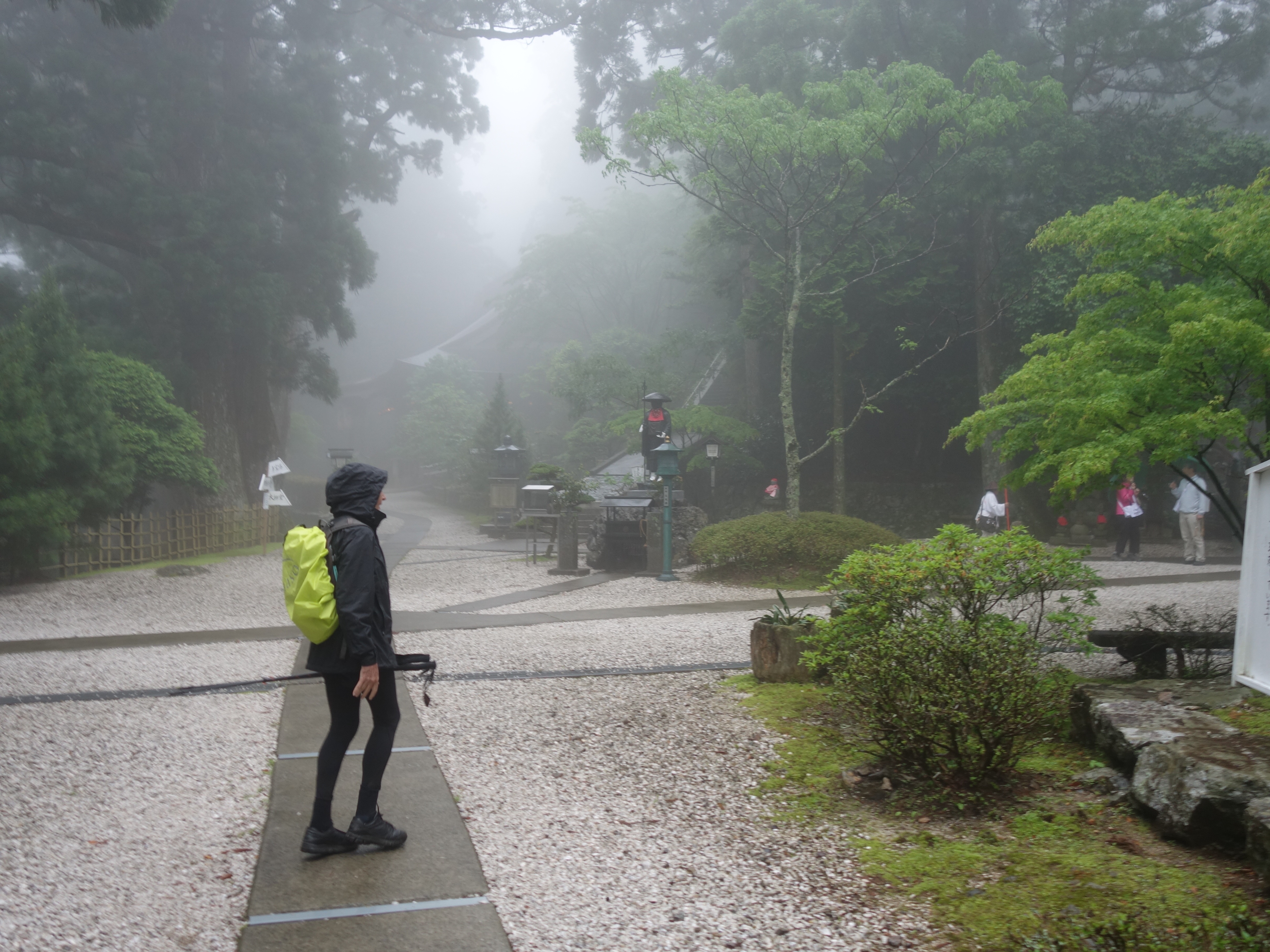 At the ropeway station we were offered and gratefully accepted a cup of mushroom soup and paid startlingly reduced fares: a version of ossetai for overseas visitors perhaps. All sorts of things were promised of the view on the 15 minute journey down but in thick cloud we saw nothing till the Nakagawa suddenly came into focus just below us. We found a Lawson (ubiquitous convenience store chain) which provided coffee and a snack and we found the bus which would take us back to Tokushima. It was full of school kids, about 30 of them, whose hot breath and damp clothes fogged up the windows instantly which is how those windows remained for the hour and a quarter of the trip. We got on at Wajiki East which sounds as downtown as it was. The terminus of the ropeway was the only real built feature and yet here come all these kids. From where? And going past how many schools in 75 minutes on the bus towards Tokushima? And anyway, doesn’t Tokushima itself have schools? Thirteen train stations, no schools?
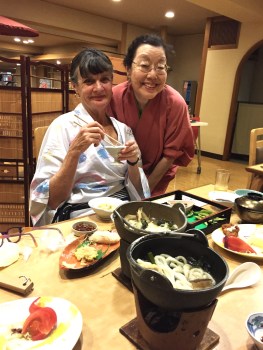 Half slept; this was a standard journey. The groovy girls in the back seat did their phones. We got back to Subaruyado Yoshino (the ‘Pleiades Ryokan’: subaru=constellation) to be accosted again by very good food in vast quantities, and a long and exhausting conversation in a combination of those well known languages Google translation and charade.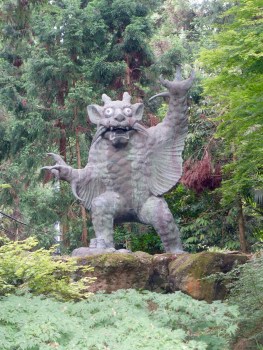
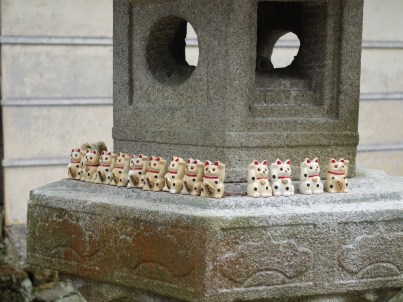 Shiromine-ji, White Peak Temple, Number 81, was a fascinating place with at least three major layers of buildings in the middle of very highly developed gardens. At the entry we were welcomed by this collection of maneki-neko, and then there were goats and chooks and sheep and birds and monkeys. And this chap. No idea who or what he is, but there will be a story. There always is.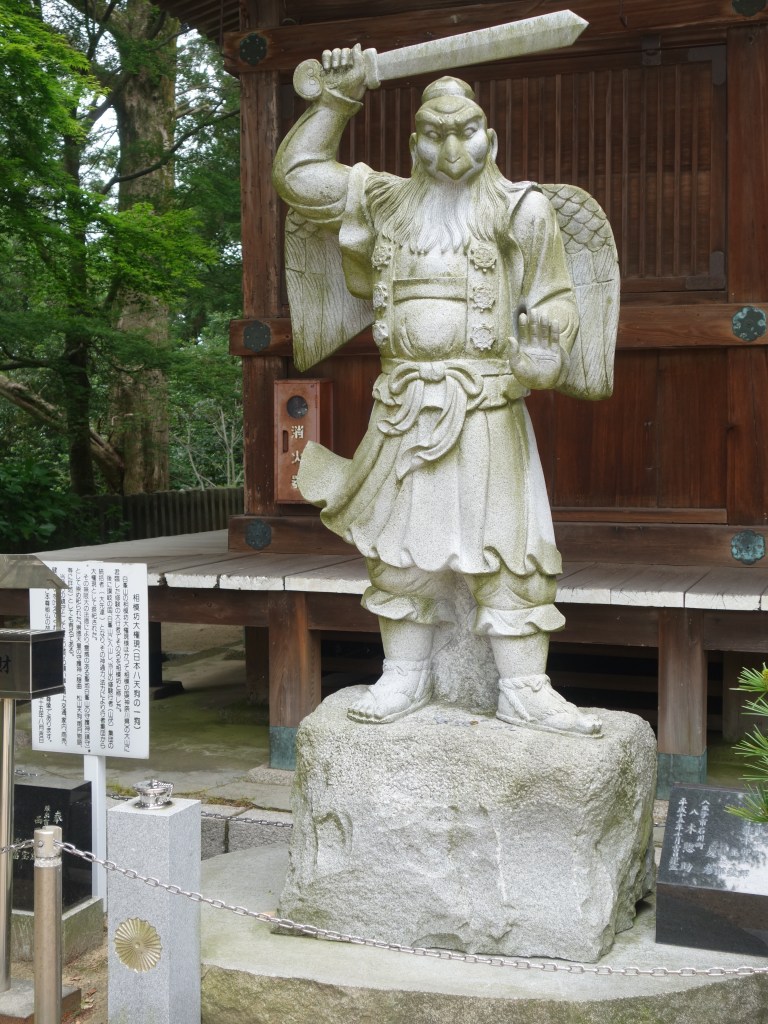
 This is also where my camera lens decided to stick on the limits of its digital zoom. This is the last picture it took — from about 40m away.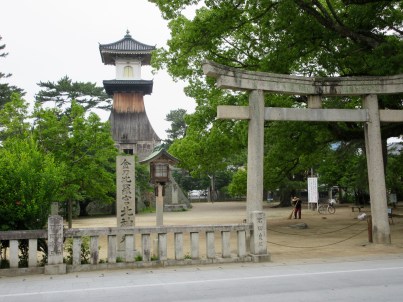
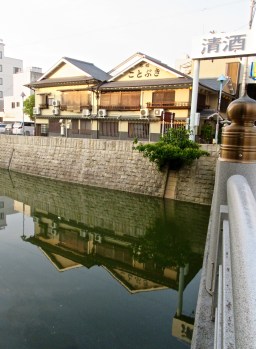 Those instructions claimed that our accommodation was six minutes walk from the station. It might have taken us nine. Maybe 15. No disaster. We were the only customers at Kotobuki (Congratulations! or Long life!), sank into its bath and ate one of the really great Japanese meals ever. This wasn’t perfect classical cooking. We had some of that at Matsuyama and applauded it roundly. This was a meal cooked by people who have a deep-seated understanding coming from the very marrow of their bones for what would be interesting and tasty. They proved themselves to be wonderful hosts in any number of ways.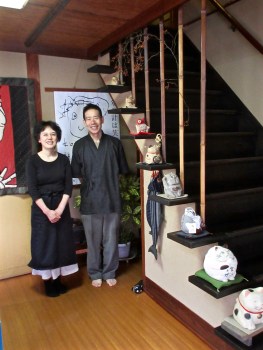
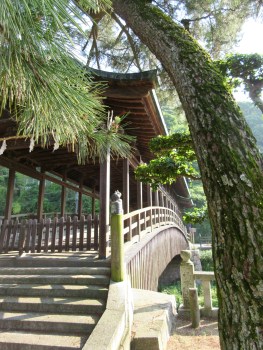 We went to see the Sheath Bridge. This is the information I have about it: ‘Year is a bridge that God is in you over only once. Since a little away from the approach you can see people even less slowly. It can not be over, but I recommend enjoy the view.’ Challenging, but I think — God is in the bridge. You can only cross it once (a year?). It’s locked up the rest of the time. But it’s good to look at. I’ve also found a story about a demigod who had all his toes cut off and therefore made sheaths for his feet which came off while fleeing from an army of monkeys. Take your pick really.
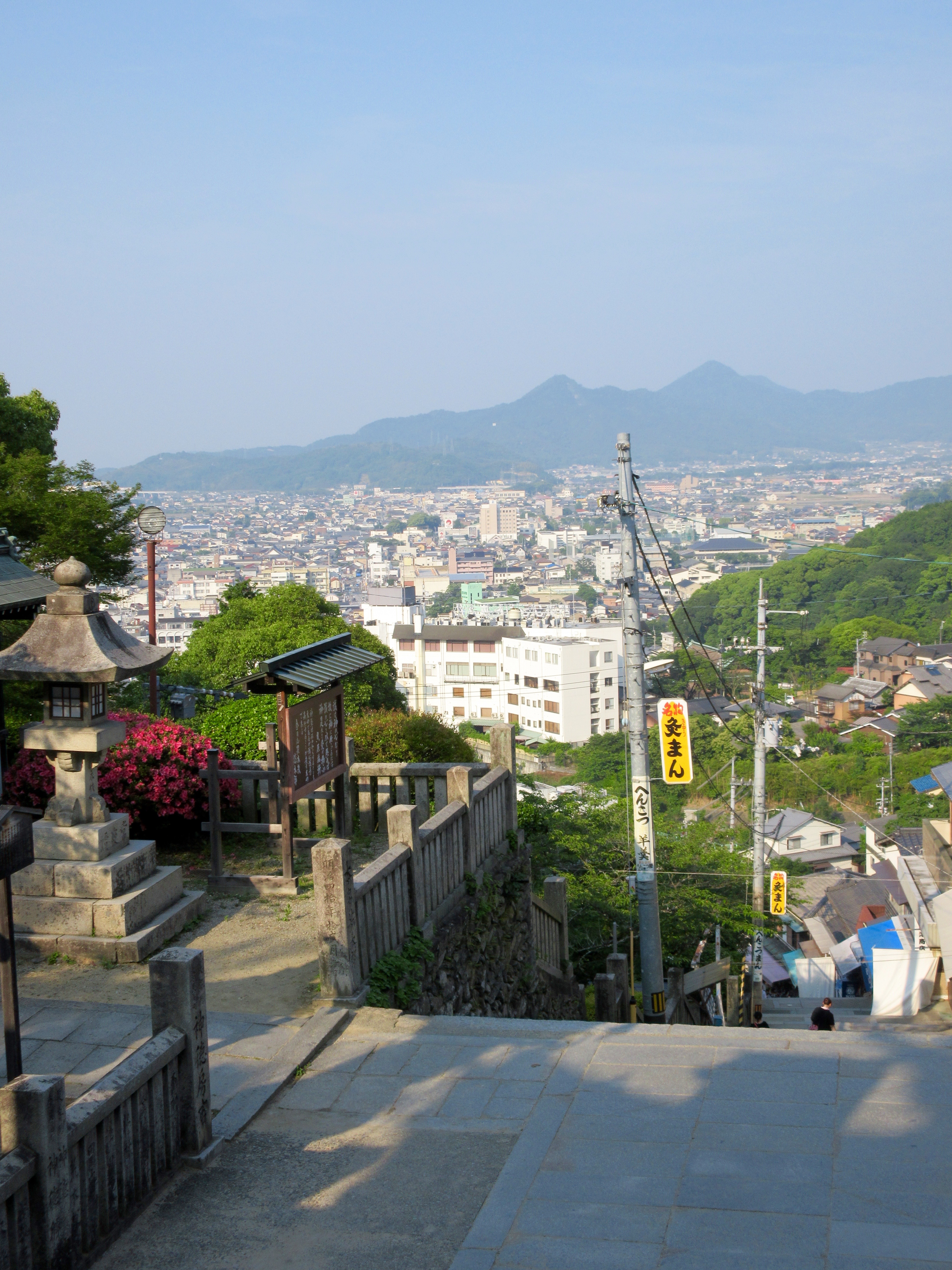
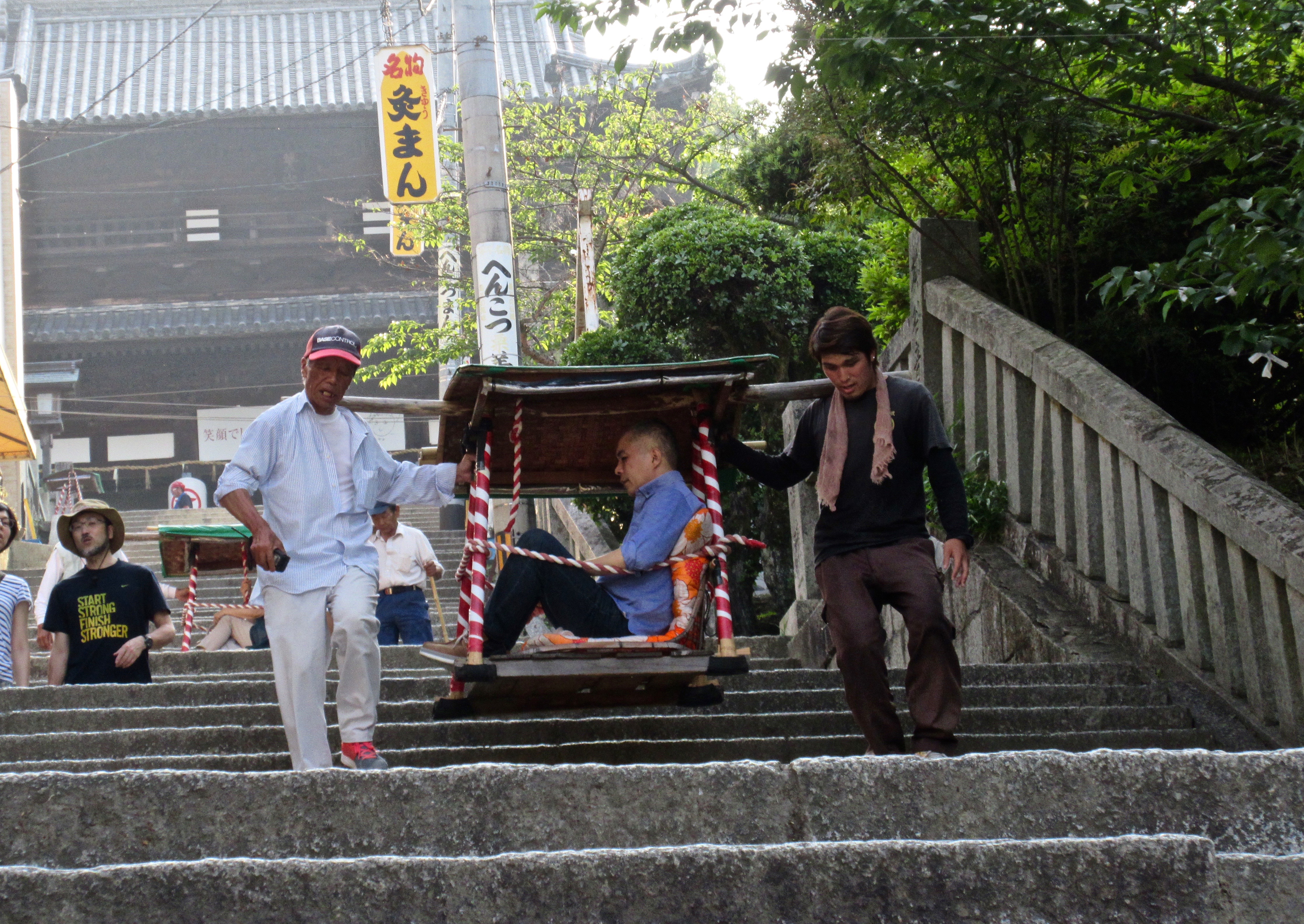
 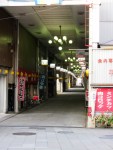 Konpira-san is the largest Shinto shrine on Shikoku and that’s the main reason for visiting the town of Kotohira. Its population is officially about 10,000, although I don’t know where you would put the city limits. On the flat side of the main drag it’s heavily populated semi-agricultural land which covers a considerable plain.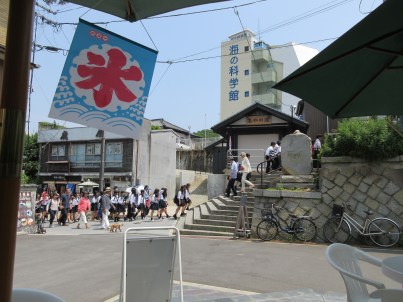
 I’ve seen bigger wisteria plants but this one was enormous and, in flower, has five colours. We had a look around and like anything built into the forest wall this temple had its charms. I rang the bell and murmured a request for good fortune, found the track opening and off went. Up up up.
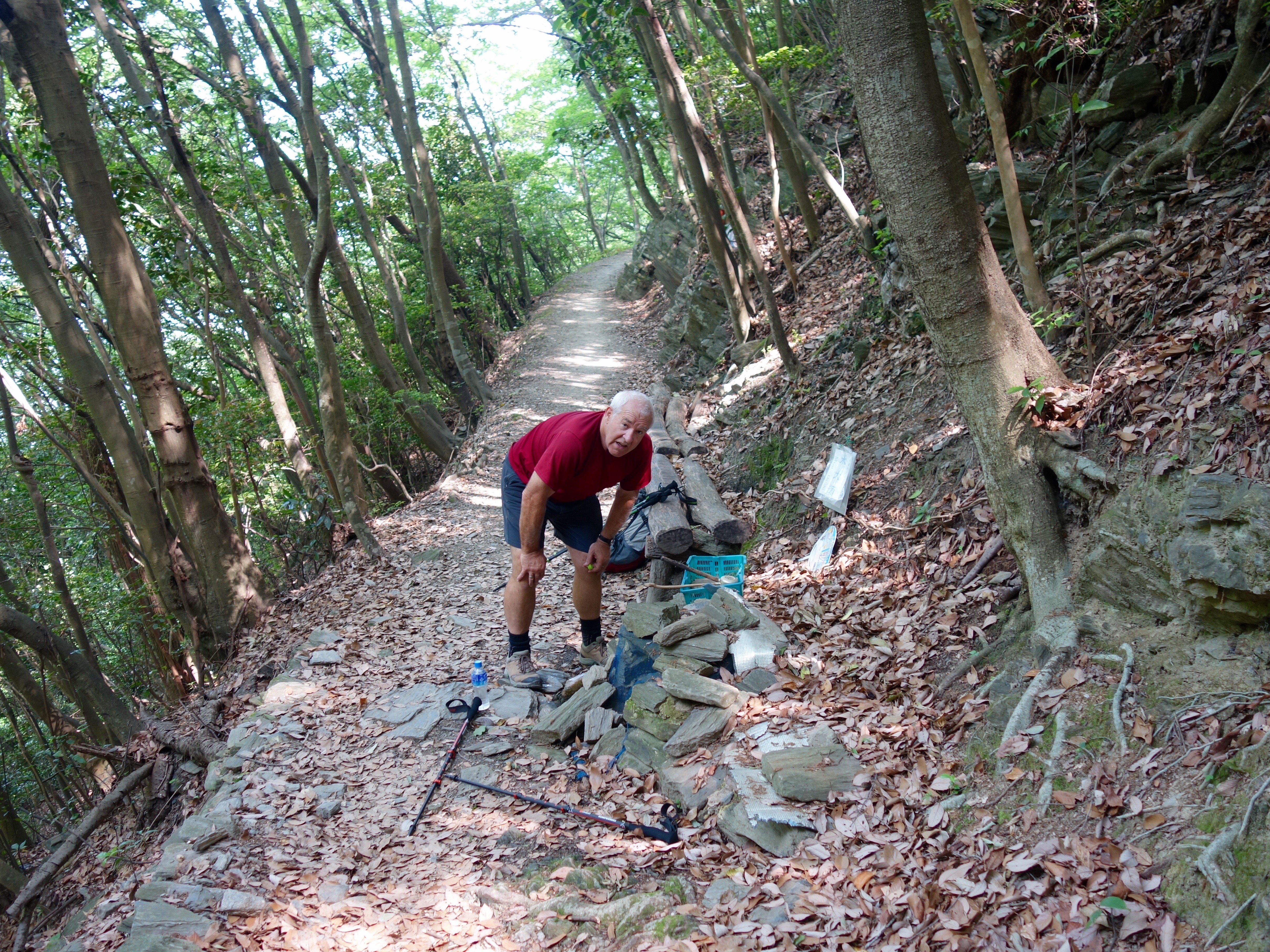 Note the fall off to the left. We quite often found ourselves walking next to a sheer but quite heavily forested drop. The pad would be running round the lip of small plateaux. Splendid walking. We got to Choudoan Temple, not one of the 88, but the peak of the first climb and ate one of our volley ball-sized apples and some rice crackers, discovering that the packet was a quarter full of dried whitebait. Japan. It was hot, round 30C and fairly sticky. My clothes were wringing wet.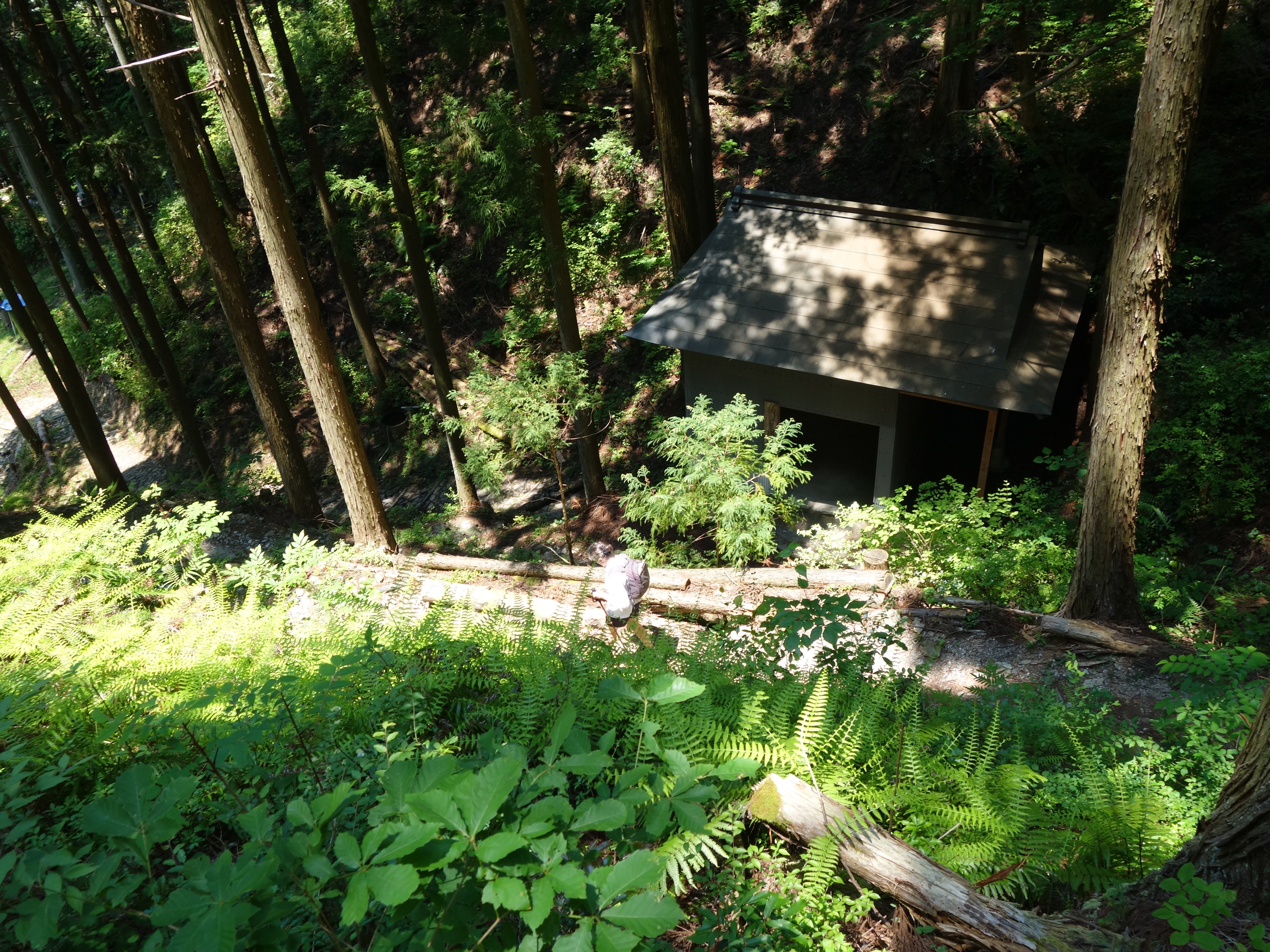
 In
In 
 The last big climb was an effort. I remember we passed a group of six middle-aged women o-henro, and flopping at a rest area with some chocolate and resisting the temptation to finish off our water — not much else. There is no photographic evidence of anything till we get to Shosan-ji which itself provides 20 minutes worth of false dawns. You hit the
  made road and think you’re there. Then the distance signage goes a bit weird. Another kilometre just drops in from thin air. It looks domestic when you get to the wonderful entree of a fenced path with scores of stone lanterns and start being entertained by a dozen or so huge bosatsu, but there’s still quite bit to go.
 T
T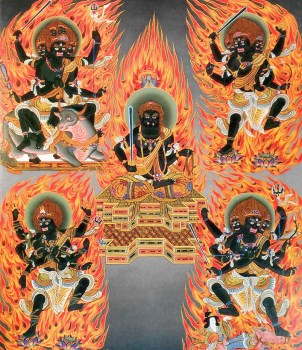
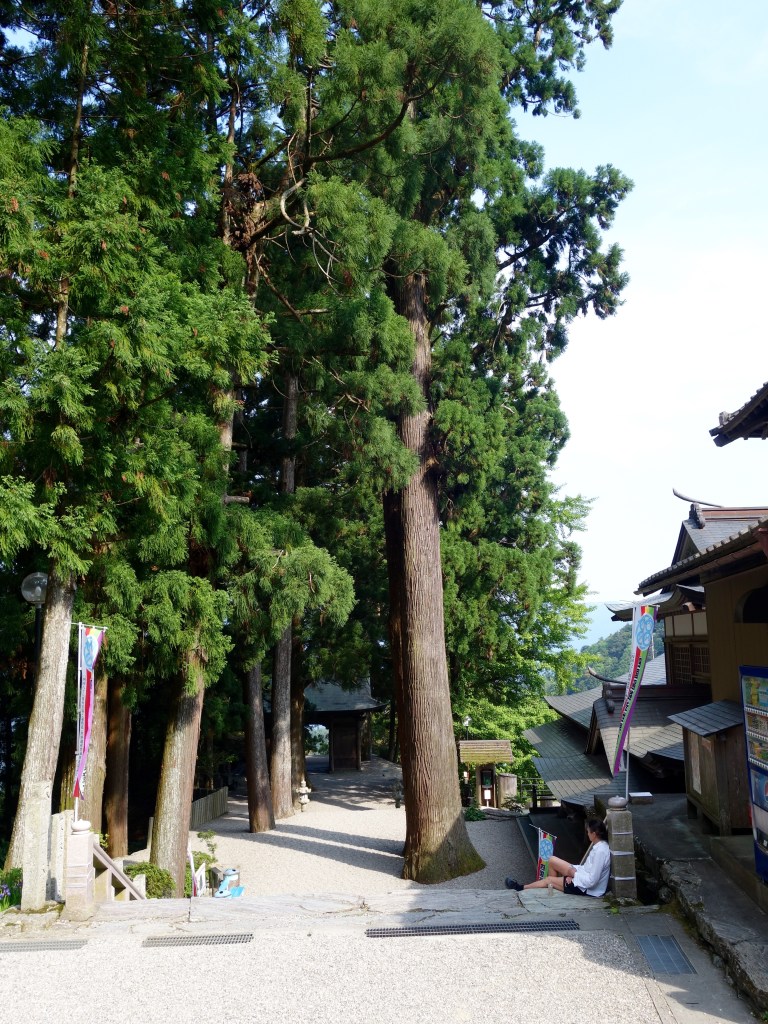
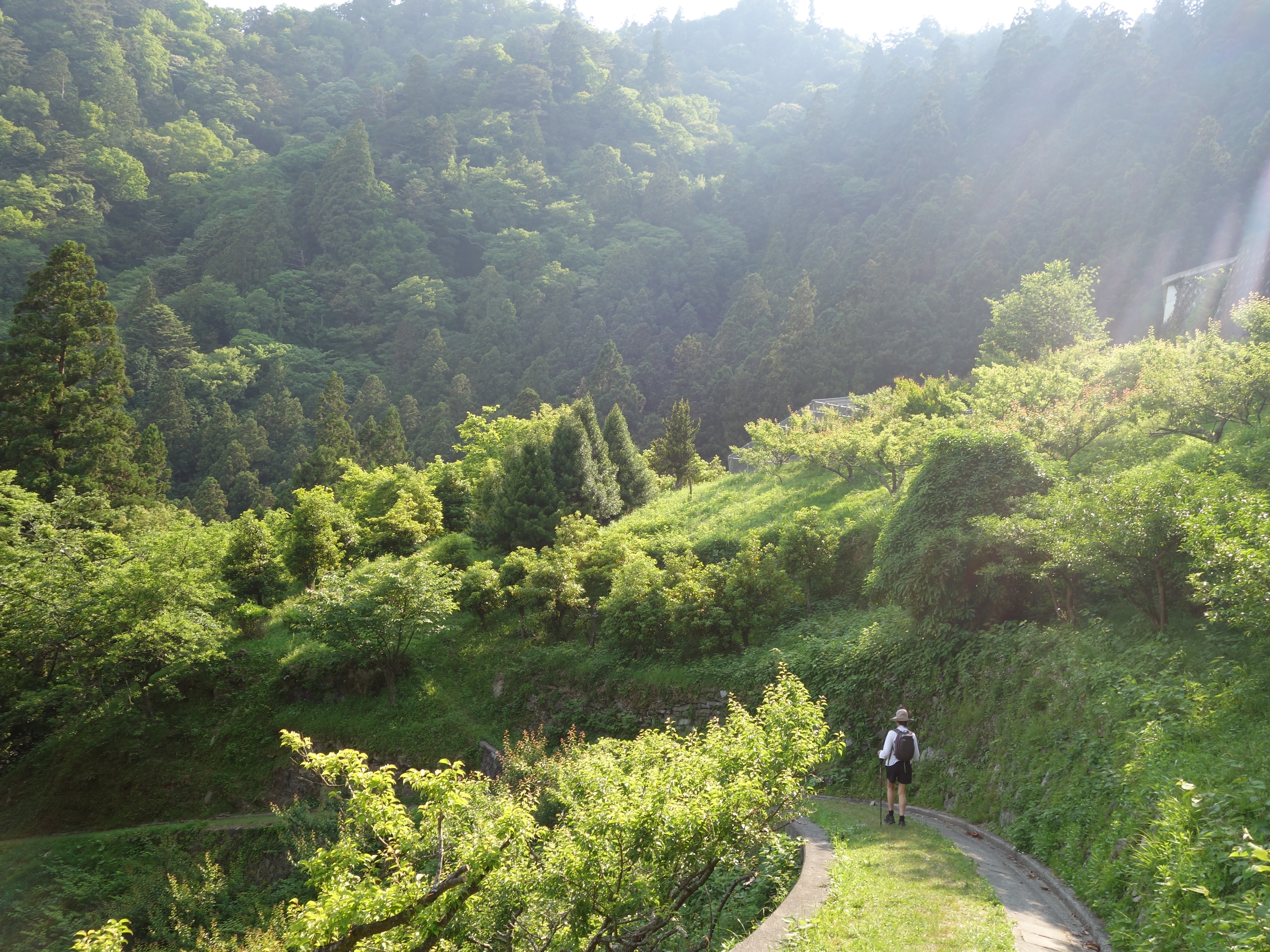 It looked easy. We found bits of the road and were supposed to find short tracks to cut across the huge hairpins. Some we found and some we didn’t, ending up in a sort of shadow game with a young pilgrim both of us assuming the other knew where they were going. I was holding our map ostentatiously, but like all maps at this time of day we were about a kilometre behind where I thought we were. We stopped the shadow game, had a yarn, told him where we wanted to go and he zipped off at speed. (He hadn’t done the climb from Number 11.) In a few minutes he was waving and pointing. He’d found our minshuku (big b&b, small guest house). Arigato, my friend wherever you are. Arigato.
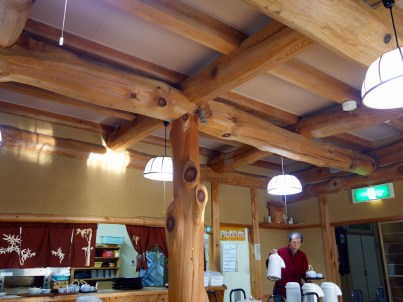 I would do none of those things usually, and our hosts were extremely gracious and forgiving, cooking us a terrific meal. However two middle-aged, gimlet-eyed female guests were monitoring our every move to see what infamy we (Myrna was in this too. She washed her clothes in a hand basin and wanted to leave them to drip on the tatami!) would commit next, and the intake of breath when I staggered off the verandah in my indoor shoes was like the hissing of a snake.
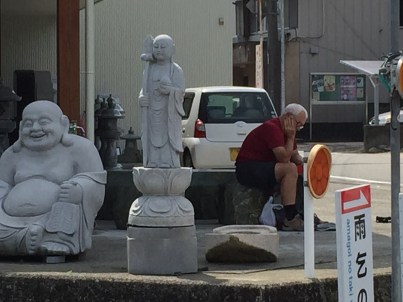 I watched the kids going to school and examined a remarkable sport-proof fence 15m high that surrounded the playing field with an ingenious system of stiffening by cables with zig-zag buttressing. And with the gracious assistance of a stonemason’s products, I studied up the day.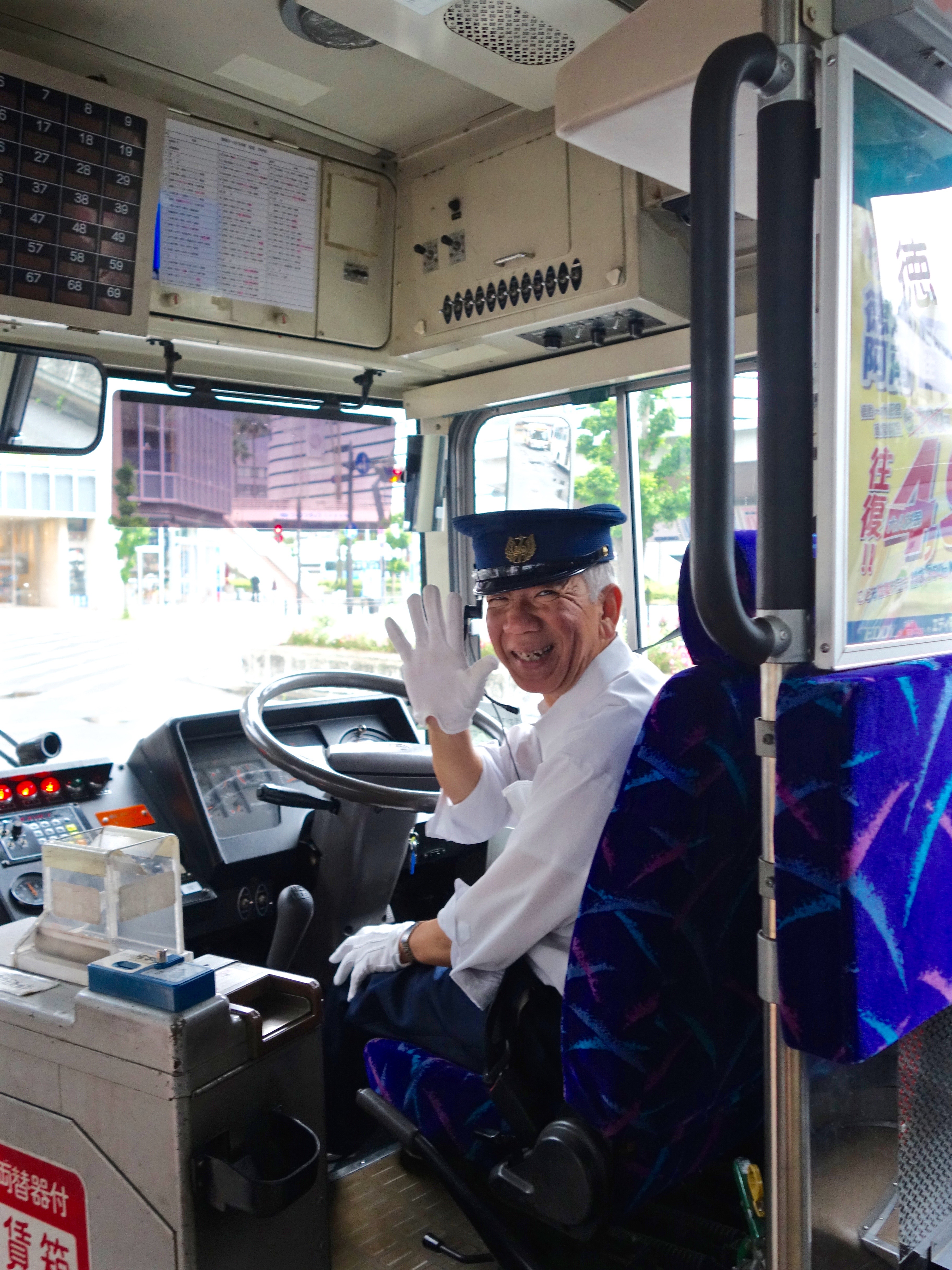
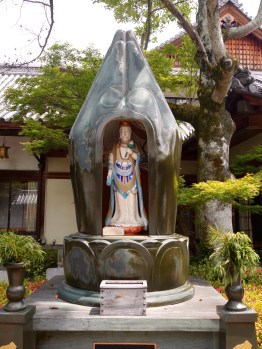 We got off at Number 13 Dainichi-ji, The Temple of the Supreme Buddha Dainichi. It had lots to interest us and lots of 0-henro action for mid morning. Its accessibility on a main road may have been a factor, but it also has this rather striking statue of the bosatsu Kannon, the goddess of mercy, enclosed in prayerful hands. Several pilgrims took our photo; it must have been a slow day shutter-wise.
 Over the road was the Ichinomiya Jinja, a major Shinto shrine with big horses and a large stone construction which suggested Shinto’s animist roots. In addition in this photo you can almost see the entrance to the Ichinomiya Castle ruins, to the path up to them anyway.
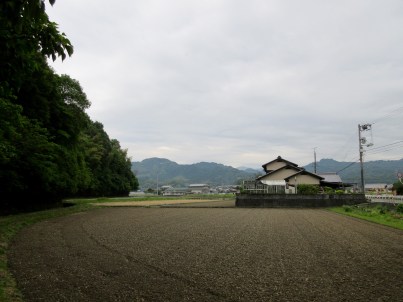
 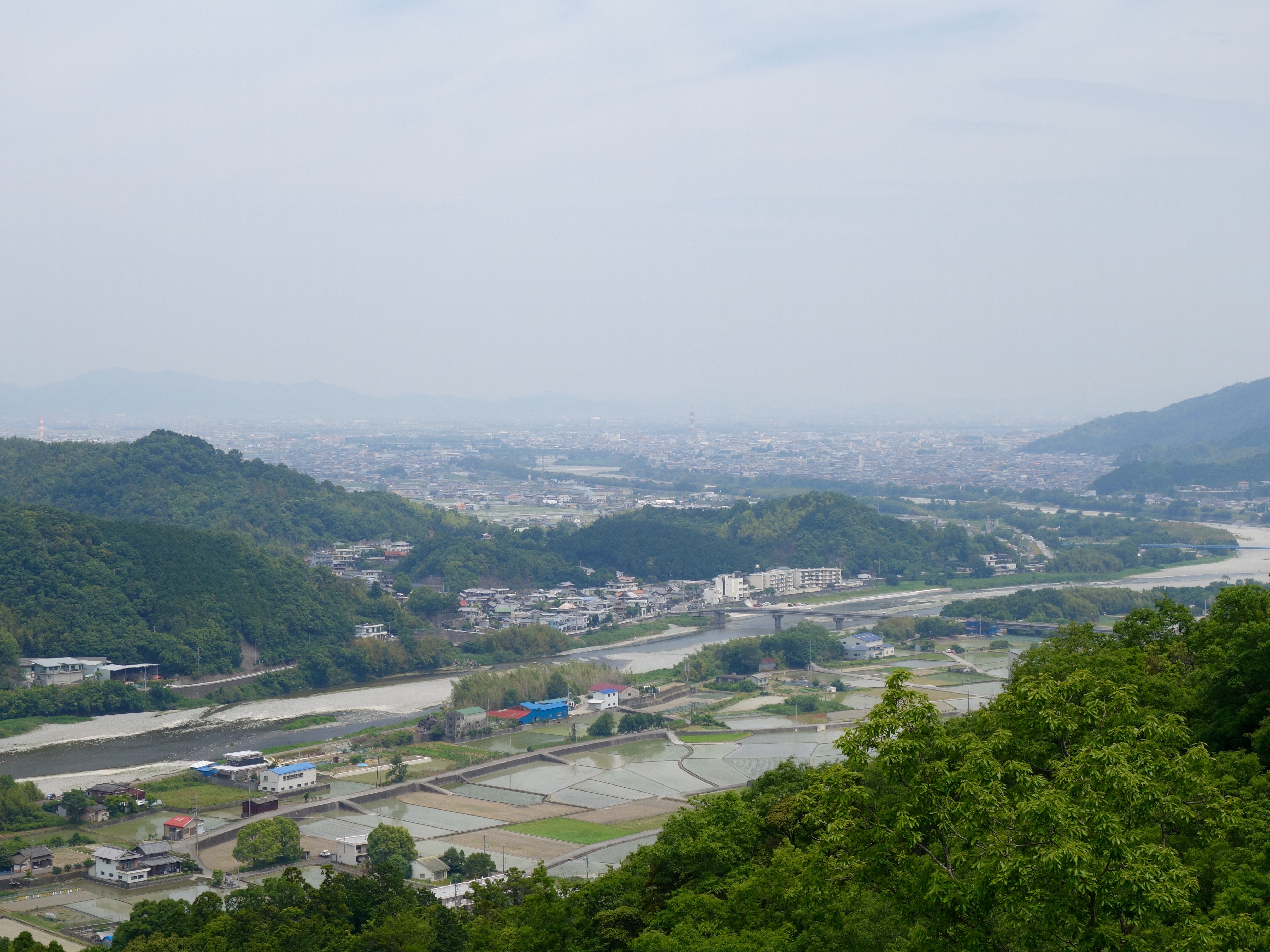 The track would take us through the those paddies, across the bridge, through the intersection of the two green hills in the mid ground and eventually to Tokushima in the far distance. Several temples were bedded in the back of the hill on the left. It all looks so easy.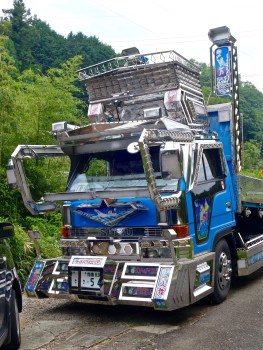
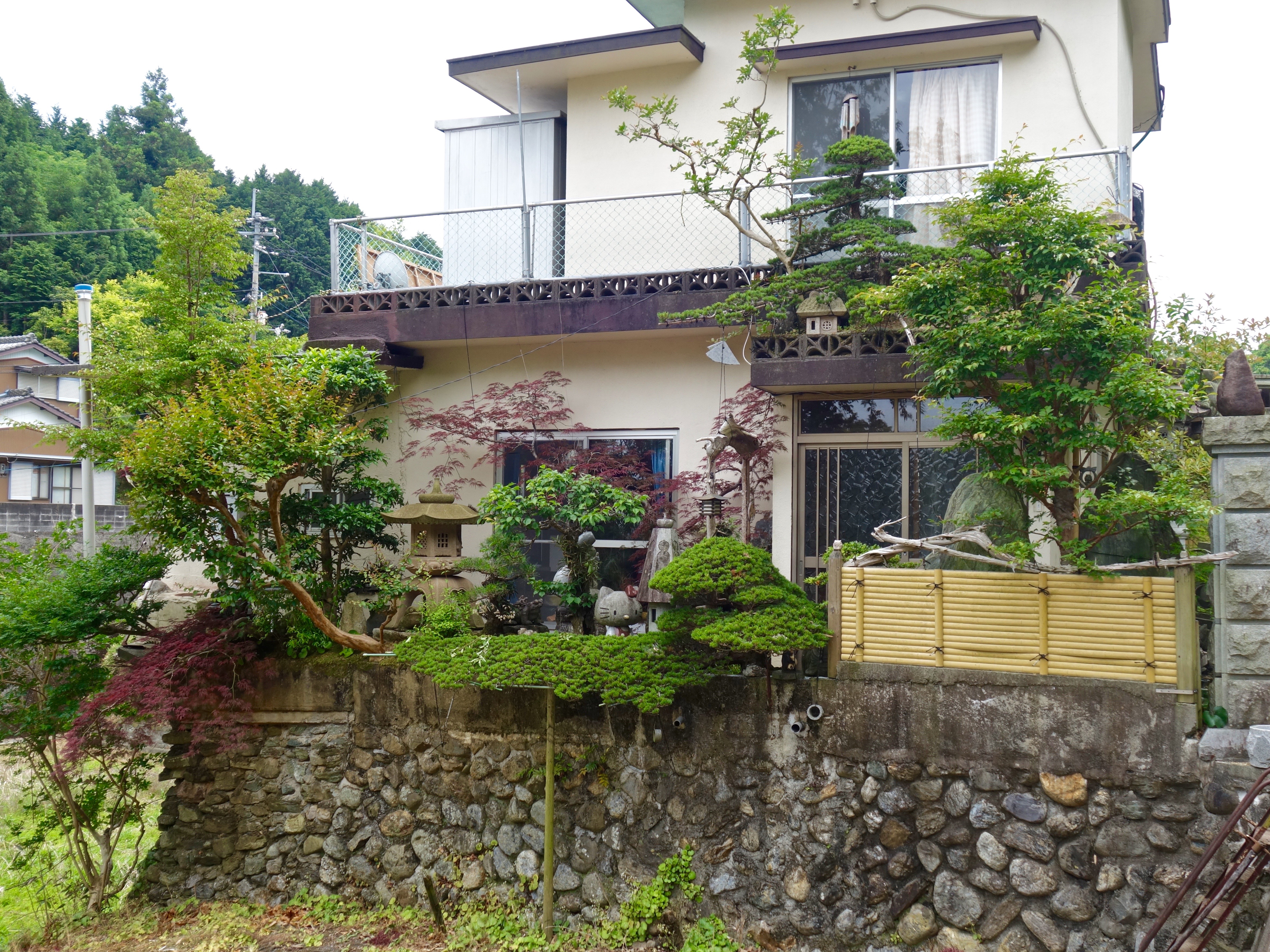
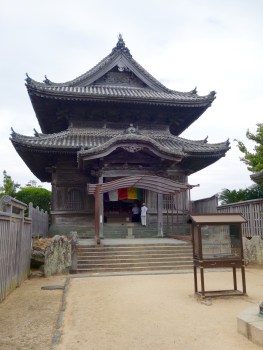 is on or near archaeological remains of the original and just as the guide book says, it exudes age and atmosphere.
 A great deal of the imagery and statuary we saw was concerned with the protection of the health and welfare of children. Placing a bib on the infant is a worshipful act reflecting a specific or general request for care or intervention.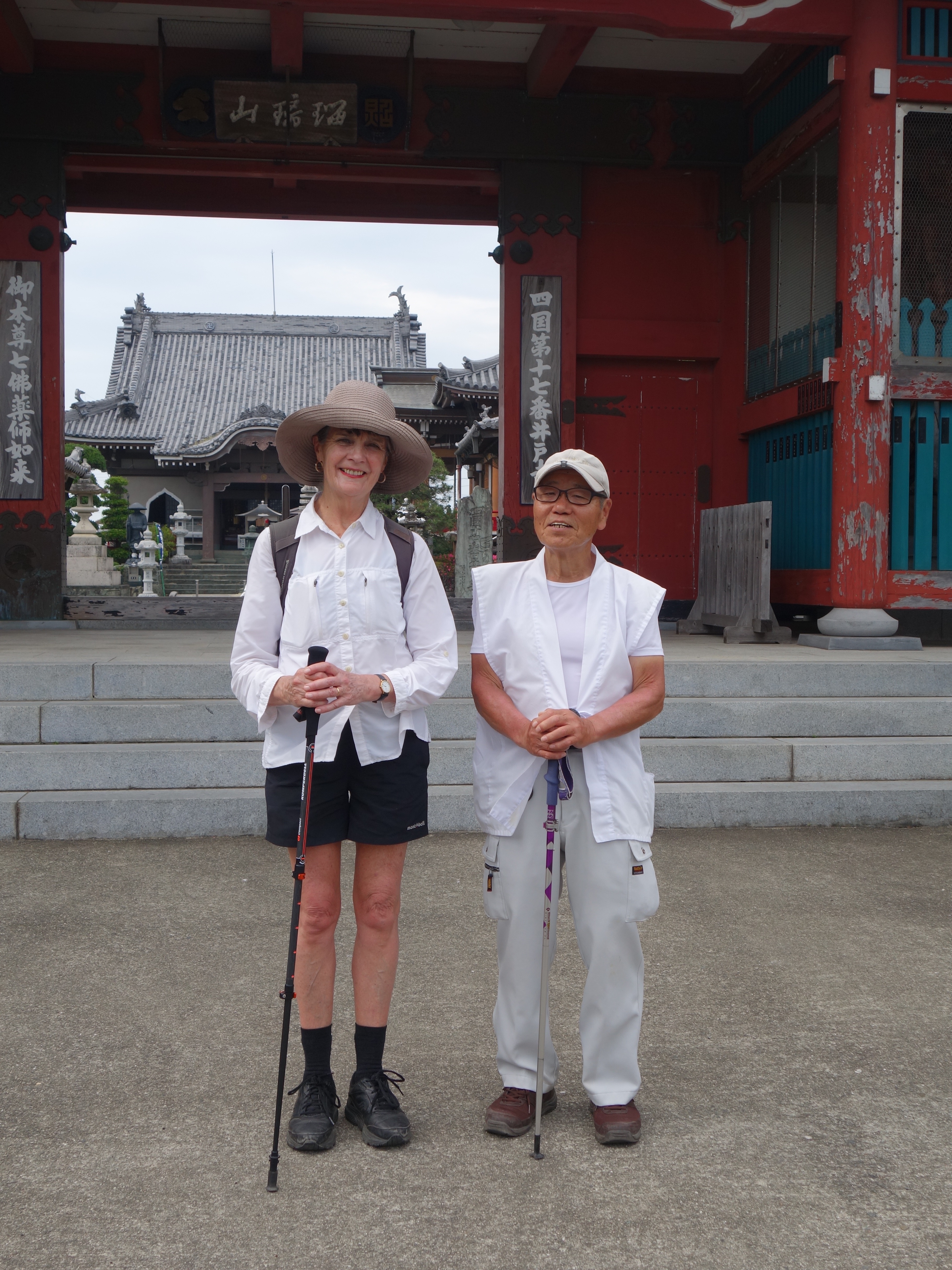
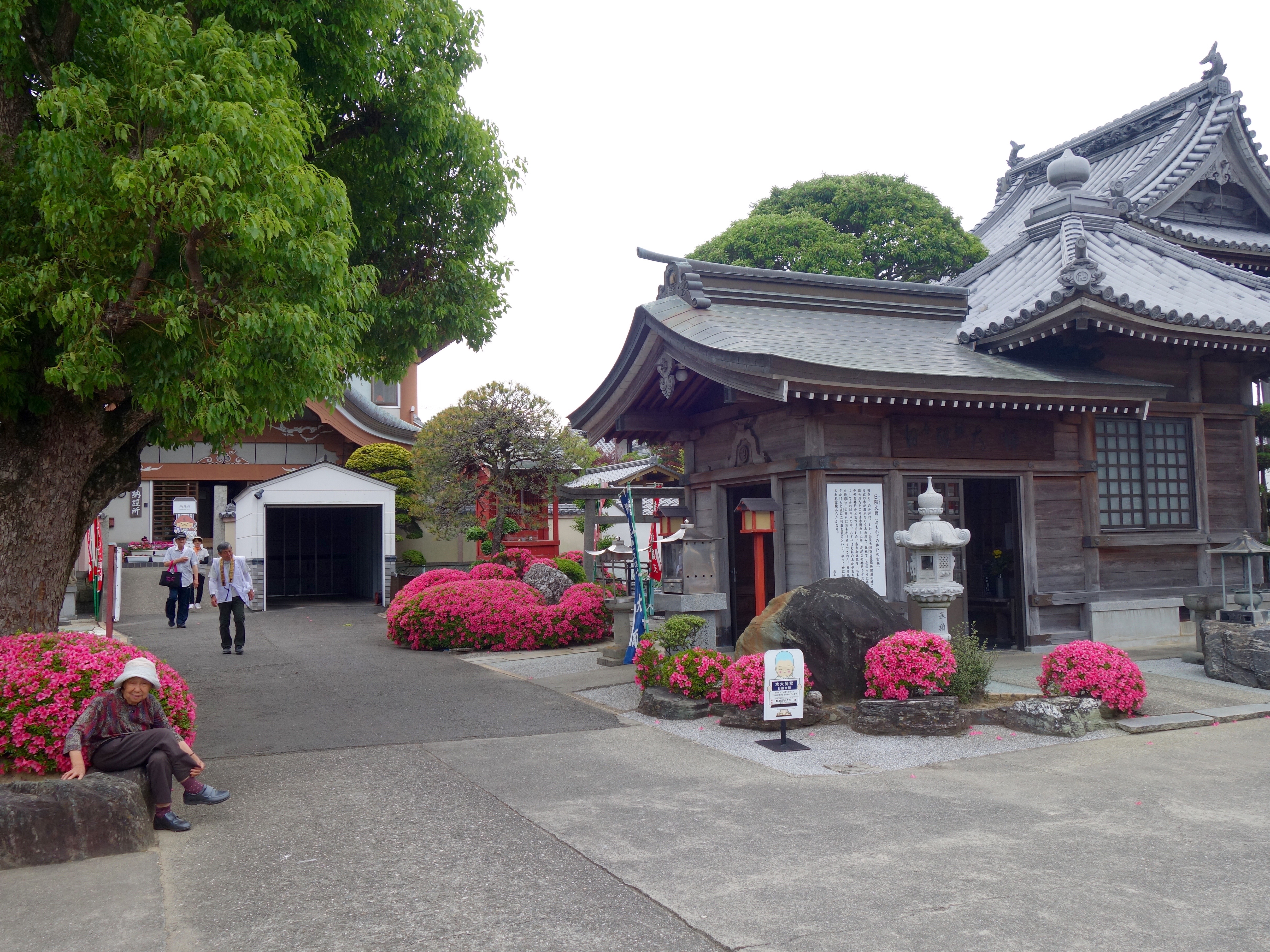
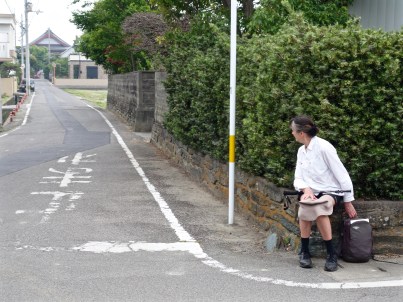
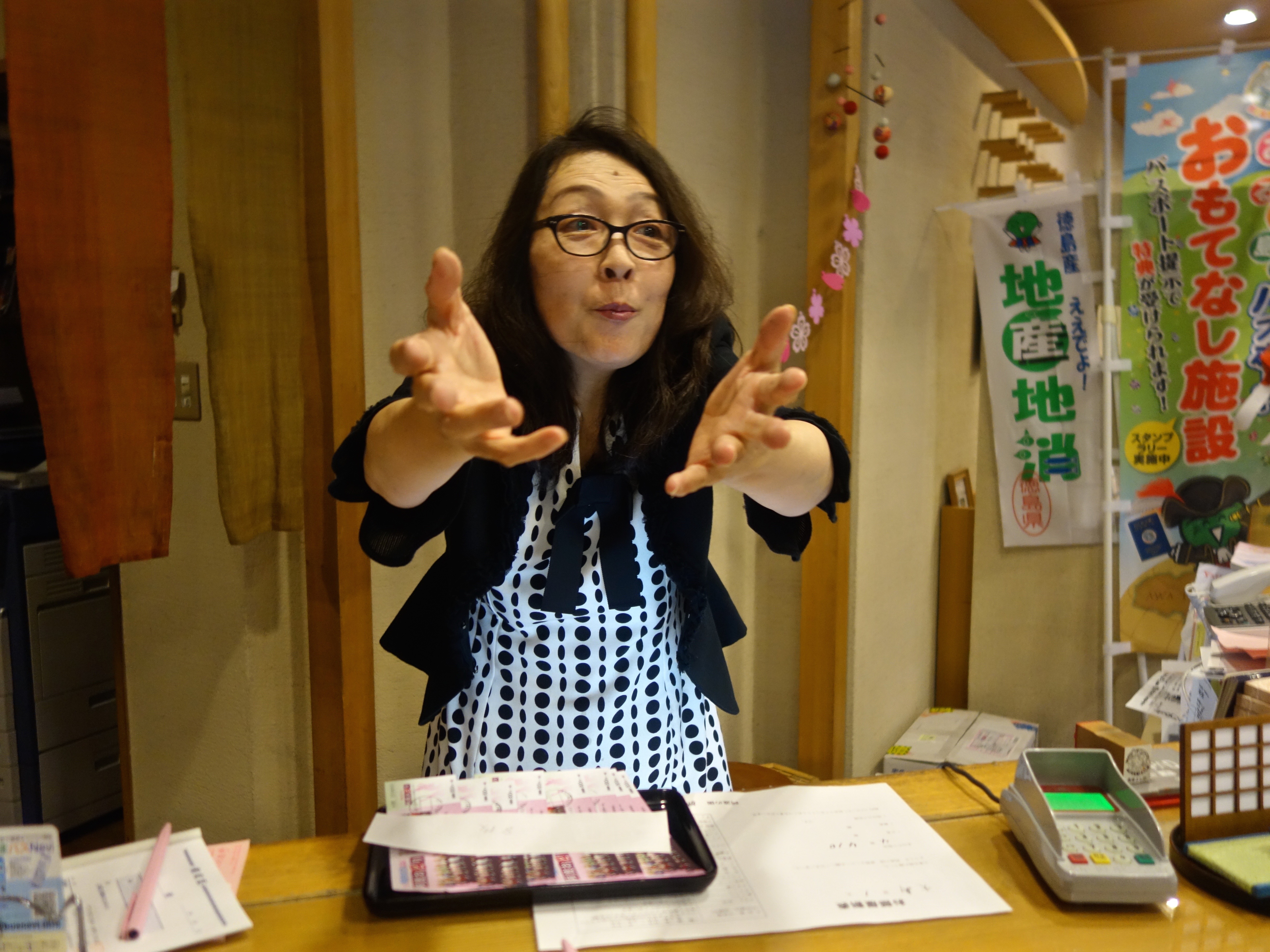
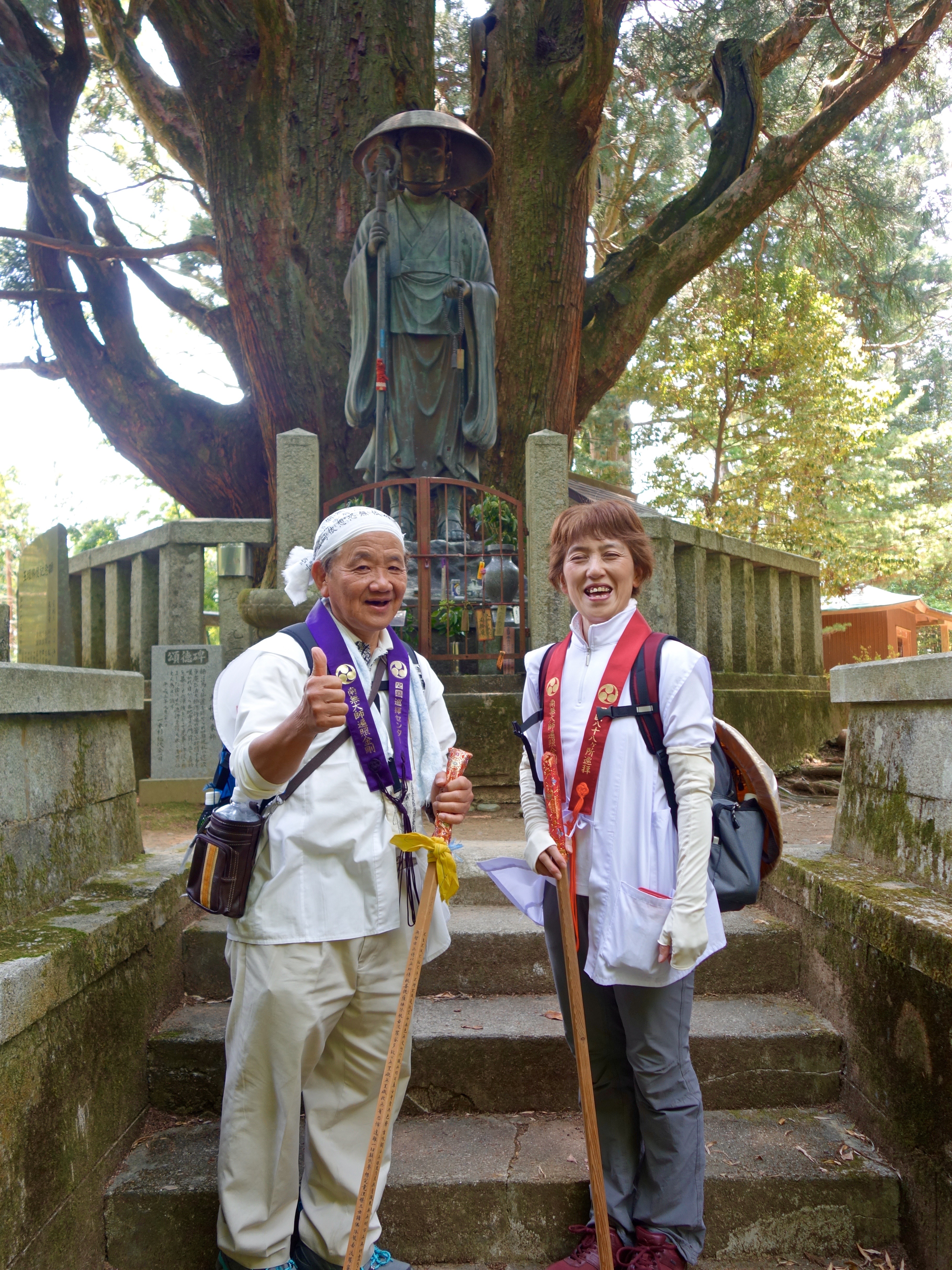
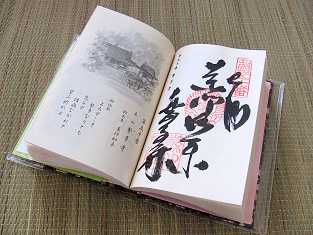 I thought about it. Even as souvenirs, but of what? Wouldn’t it just be a version of fancy dress? Most unsuitable for what the vast majority of pilgrims treat as a most serious undertaking. As it happens I was so discombobulated I didn’t even buy a guide book which, despite having our inch-thick wad of paper from Oku to protect us, would have been a good idea. One dominant thought was that anything we didn’t eat we’d have to carry.
 which connect Honshu, an intermediate island called Awaji, and Shikoku, and got off where we were told to, Naruto Nishi bus stop, and sort of looked around. That first moment … I don’t care who you are, you’re just not with it.
  We found the stone steps as required and shot up them, well past the metal gate (as specified) which would take us through the German Forest, a war memorial that you mightn’t have imagined being there. A couple of turns to find a main road and walk along it for 420m. (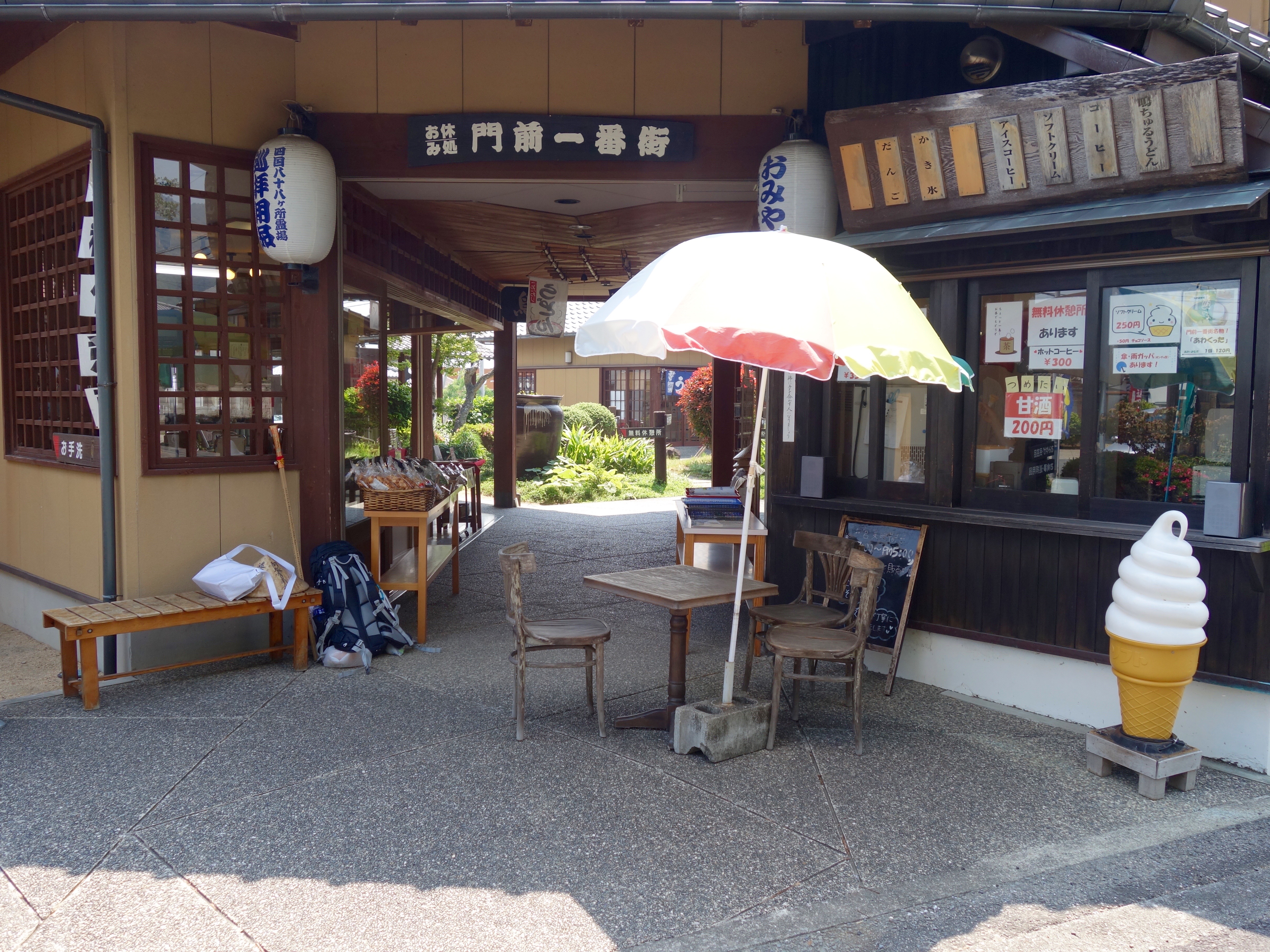
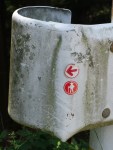 noticing the little red and white pilgrims which so helpfully marked the way. Motion; and this track of course was easy. If you couldn’t get from Temple One to Temples Two and Three you simply wouldn’t be trying.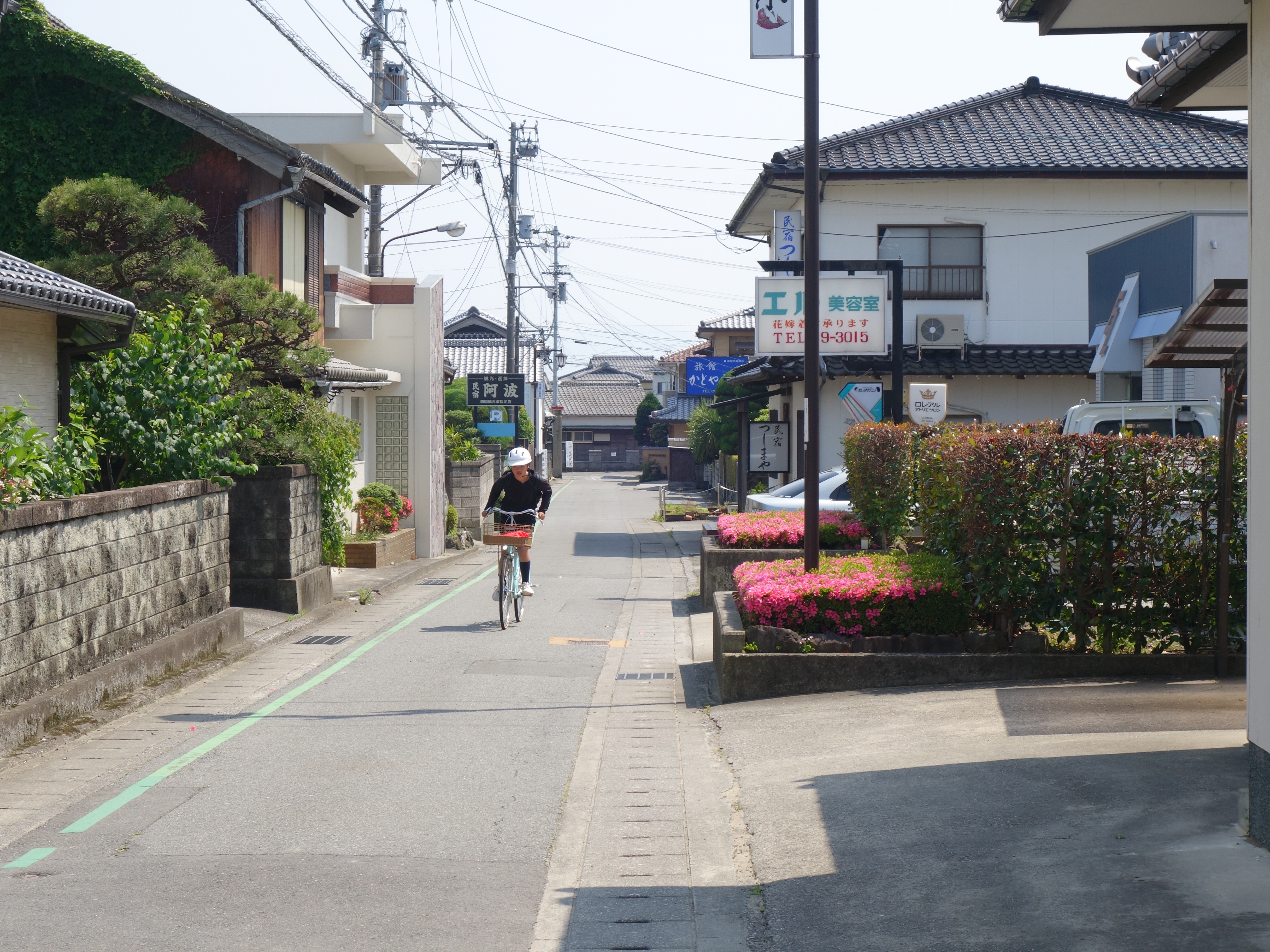
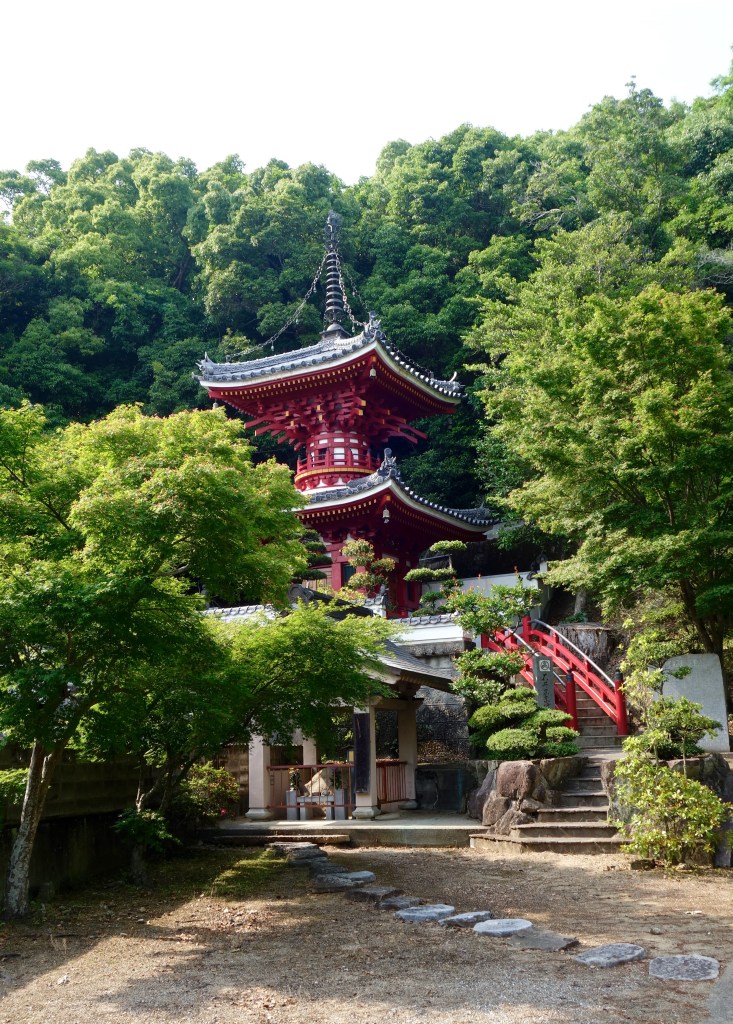
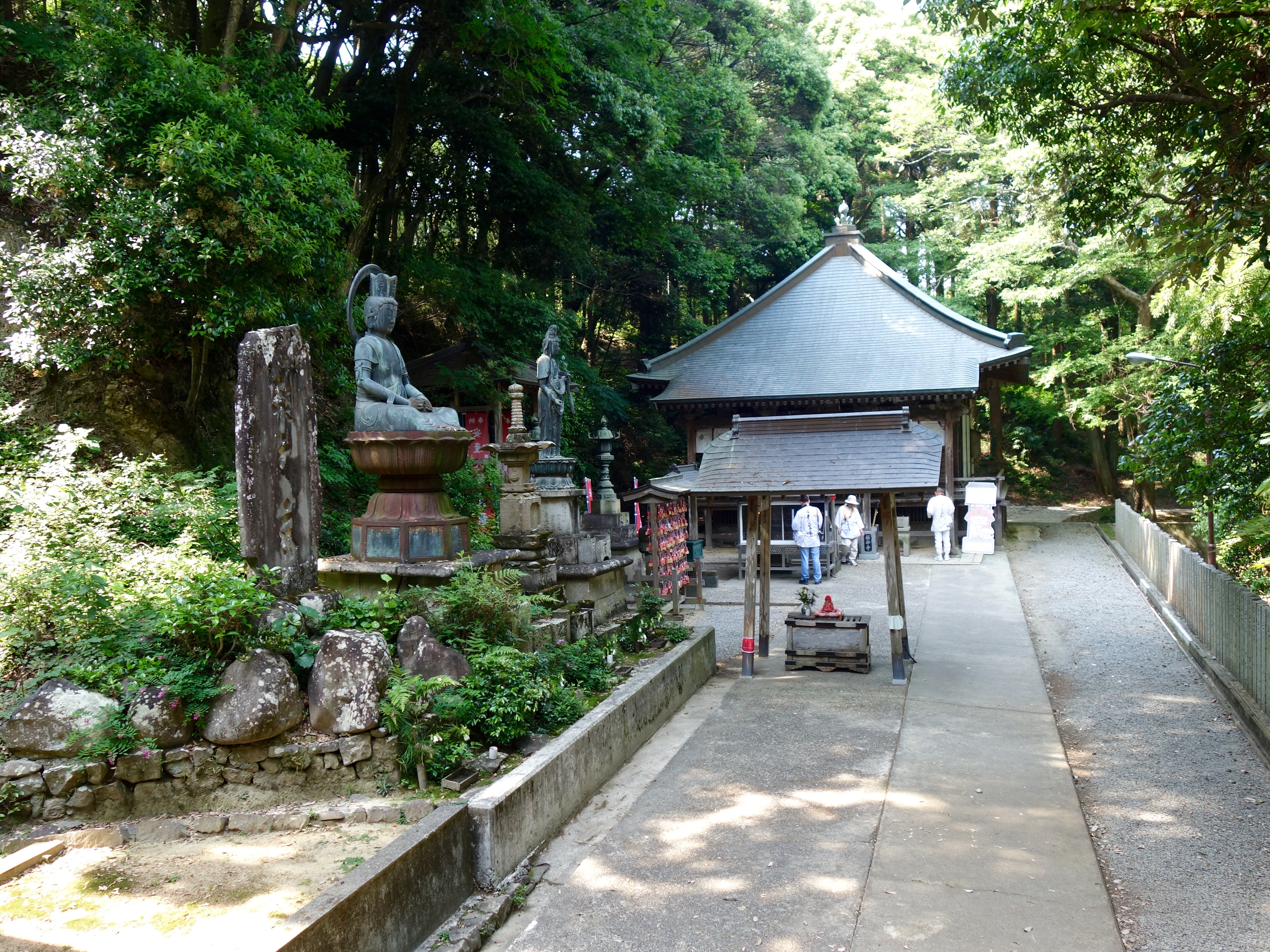 As so often, the temple complex was embedded in a very pleasant garden full of enticing mysteries. I never unravelled most of these, but you could begin developing your own constructions of it all.
 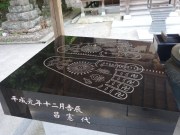 For example, at left are bussokuseki, forms of very ancient Buddhist icons from a period when icons of the Buddha were forbidden. (‘Thou shalt have no graven images.’ There is obviously an urge to make the ineffable visible and concrete which has a huge impact on the practice of any religion. Humans are easily distractible.)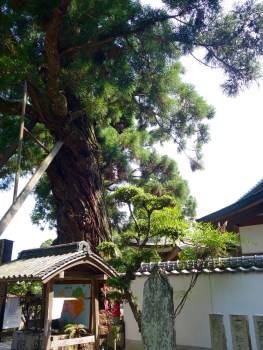
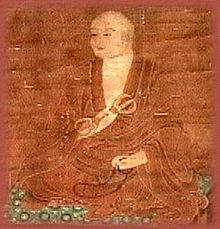 Born in 774AD a kilometre from the temple where we stayed on this first night, he is the founder of Shingon (True Word) Buddhism. His own enlightenment seems to have been derived, initially at least, from long periods spent in isolated mountain retreats chanting sutras. An exceptional student, he gained the trust of his Emperor and was included in a state mission to China, Xi’an in fact which is a long way from Tokushima City. The story goes that he completed a prodigious feat of learning there, memorising in 3 months what usually took 30 years, and came back to Japan to spread Esoteric Buddhism. Esoteric: abstruse, obscure, arcane, rarefied, recondite, abstract, difficult, perplexing, enigmatic, inscrutable. Why would you be spreading this? What sort of rod have you made for your own back? Other perspectives suggest that Shingon introduced or enhanced ritual (especially the use of mantras) in a religion that had focused on good works and personal action.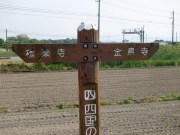
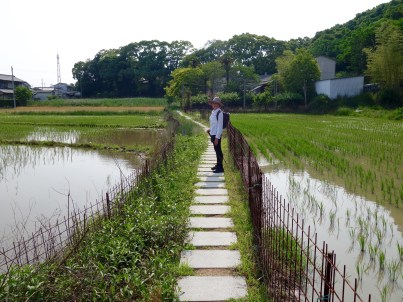
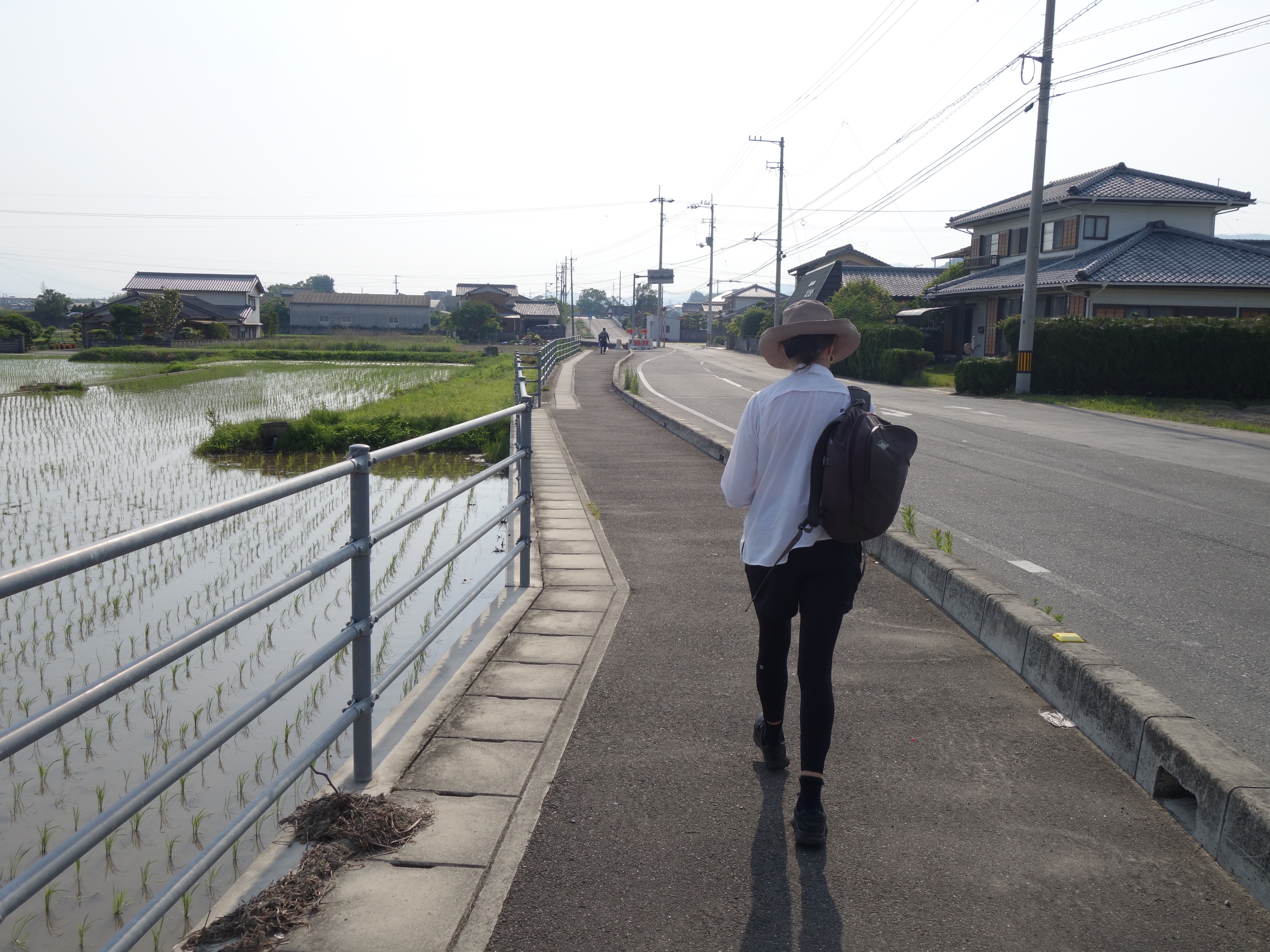 But where exactly? You are in the middle of a series of paddy fields after a long day and there appears little option but to place your fate in the hands of the almighty. However, the only other guy on the bus got off with us and while he hadn’t gone the full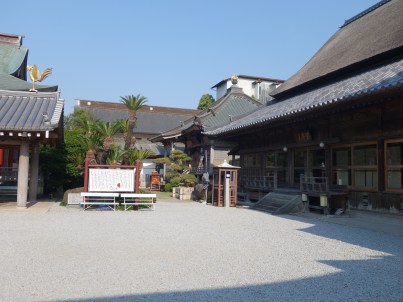
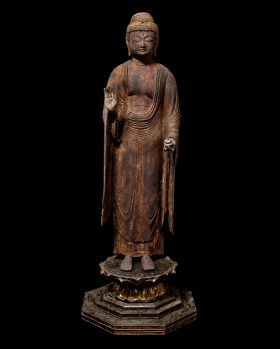 Q. on the internet: ‘Do Buddhists Worship Idols? A. Buddhists sometimes pay respect to images of the Buddha, not in worship, nor to ask for favours. A statue of the Buddha with hands rested gently in its lap and a compassionate smile reminds us to strive to develop peace and love within ourselves. Bowing to the statue is an expression of gratitude for the teaching.’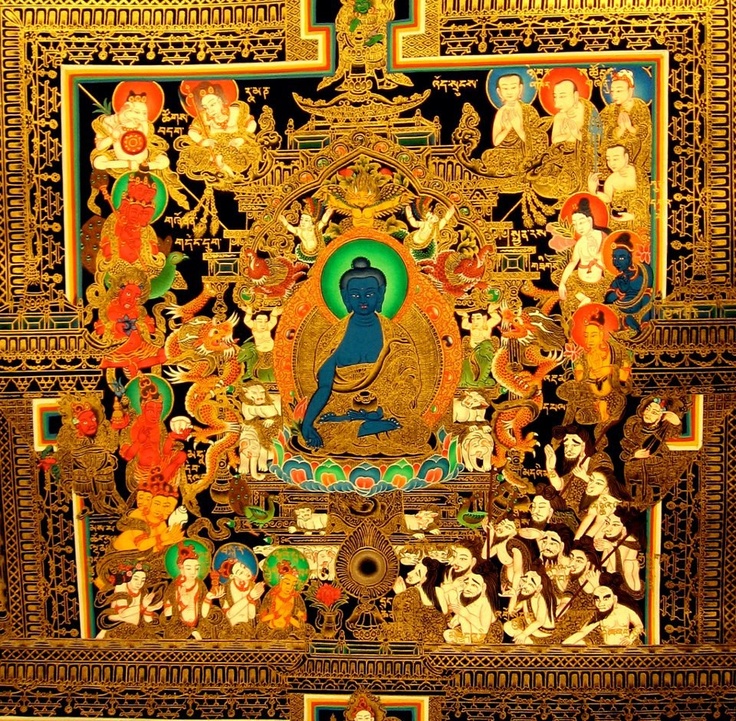
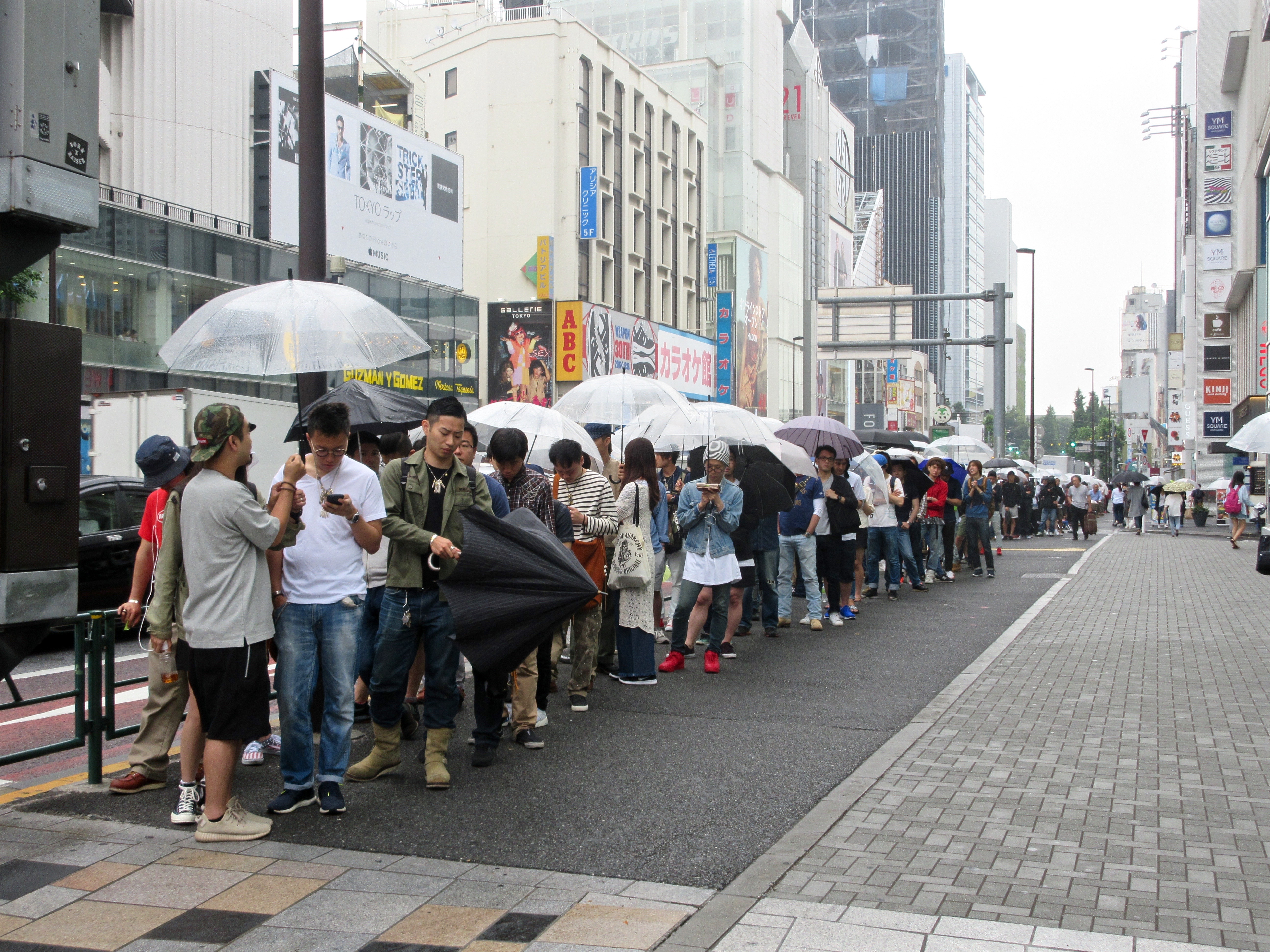
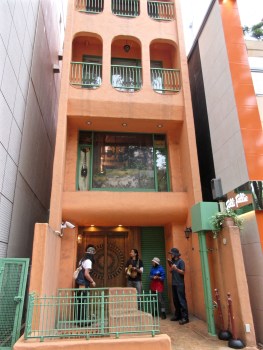
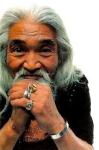 This is Goro. His background is misty but he certainly spent some time in America with a group of Navaho. Native American is the defining influence of his product. Social media thinks he may be dead and may not really be producing the silverware being sold. His story is embellished in print.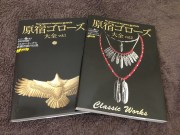
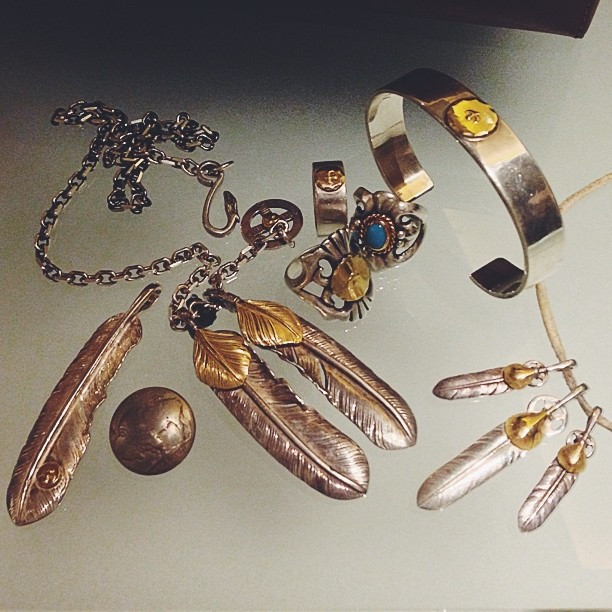
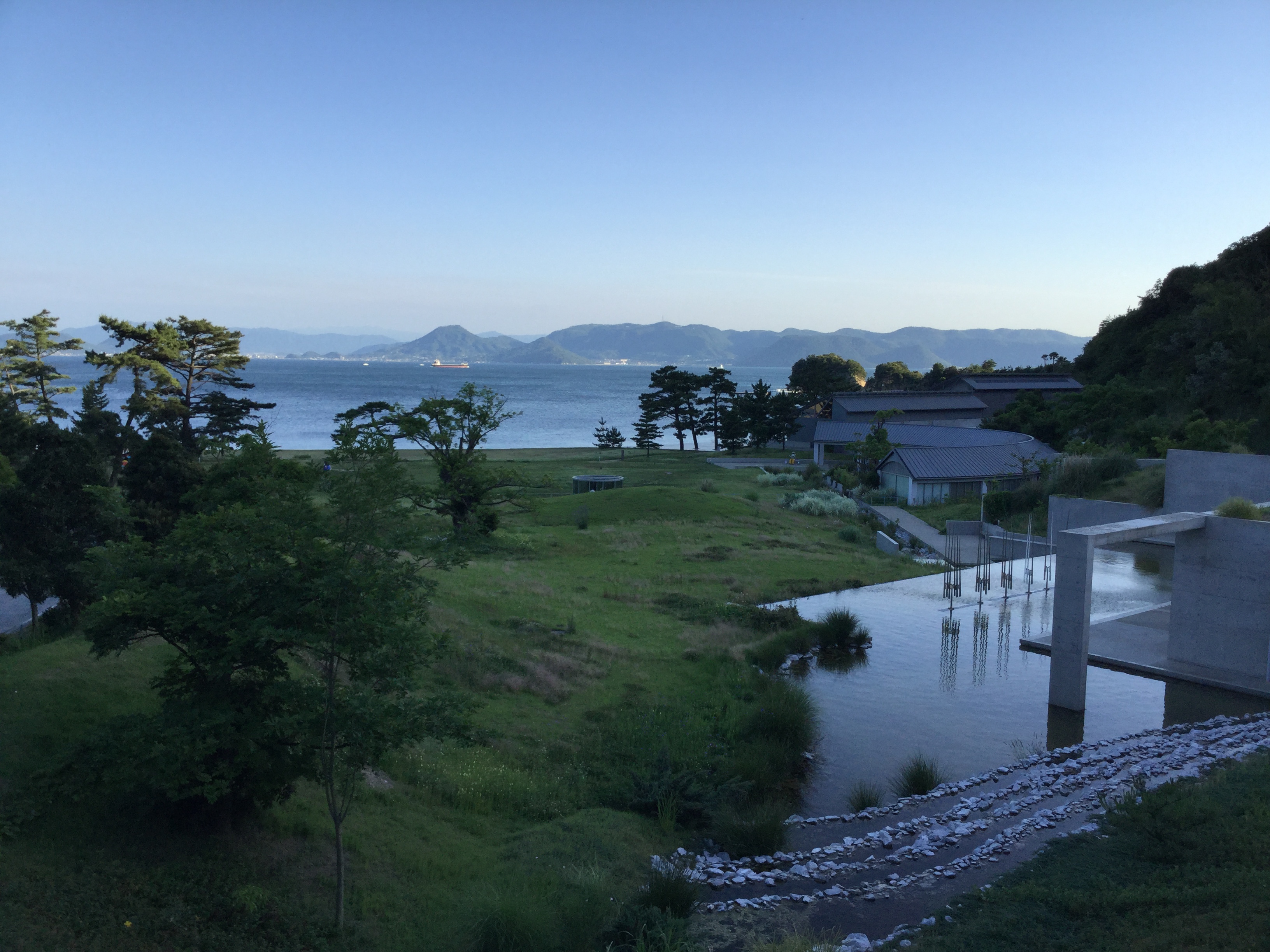
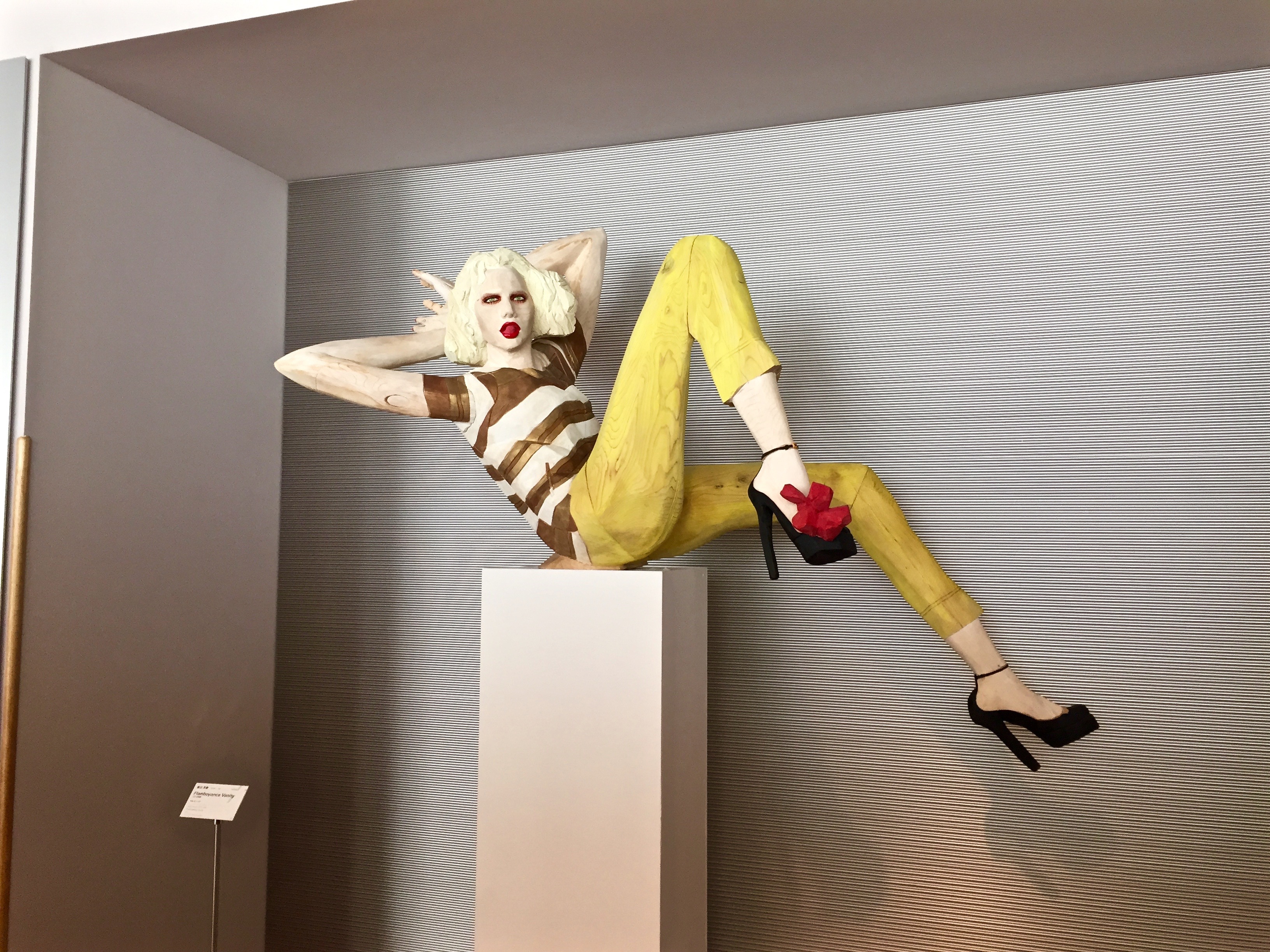
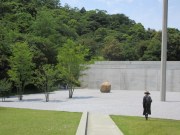 But the art. That’s what we were there for.
 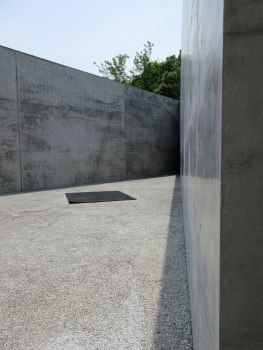 I listened to the girl, one of the several, underground, tell us that and thought she’s had to say that three hundred times today and that’s her only job. That suggests I didn’t have my mind on the job. I also thought how did they get that rock in here? They must have built around it. And that’s when I thought the art here is embalmed in concrete 40cms thick. You can’t change it. Lee Ufan Museum is only going to be changed by a calamity of immense proportions.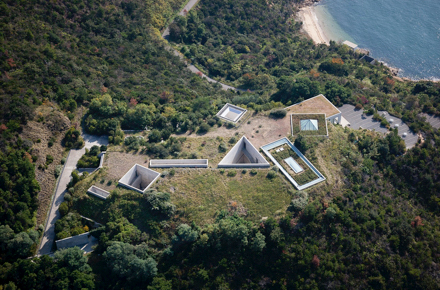
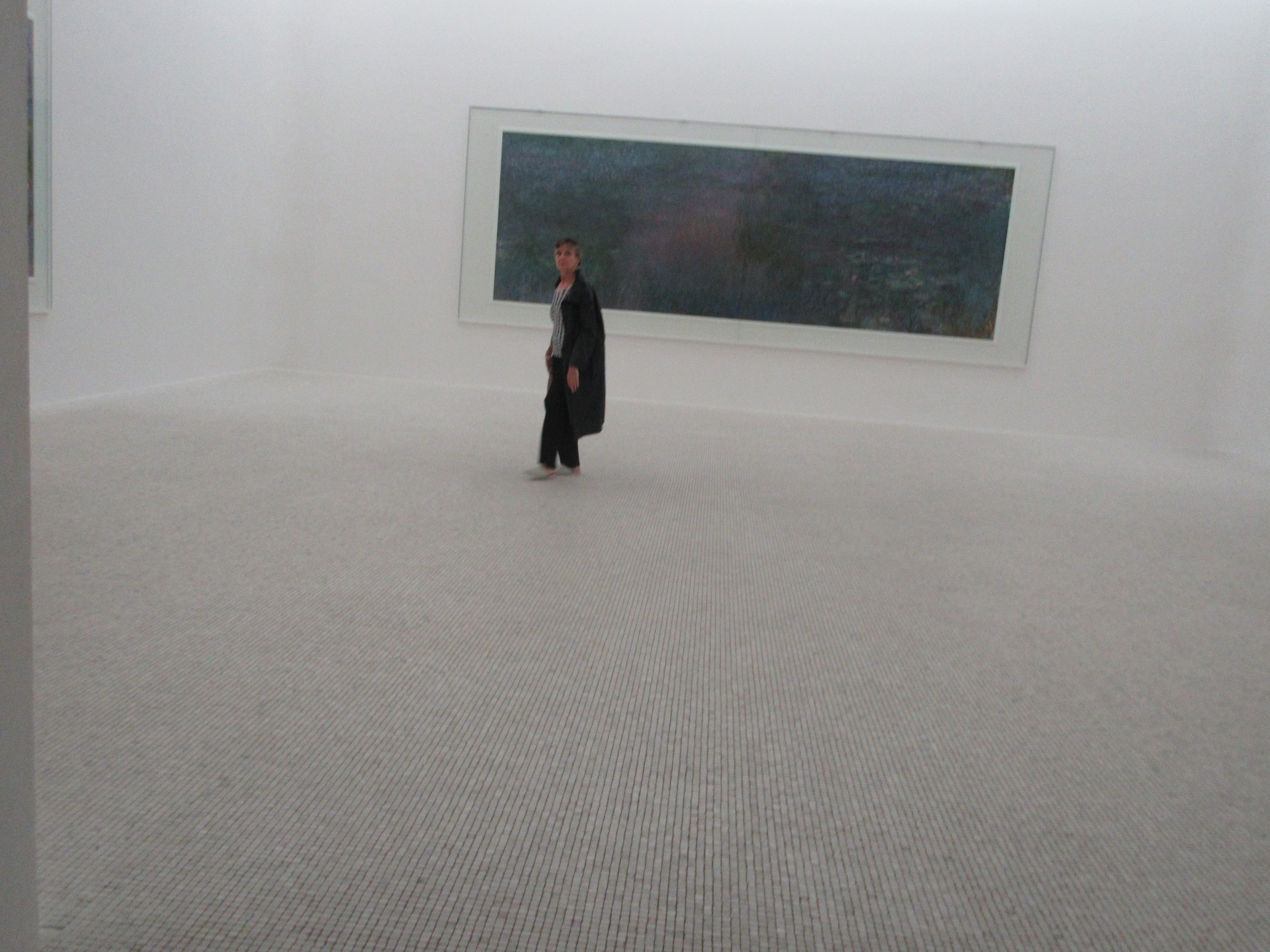
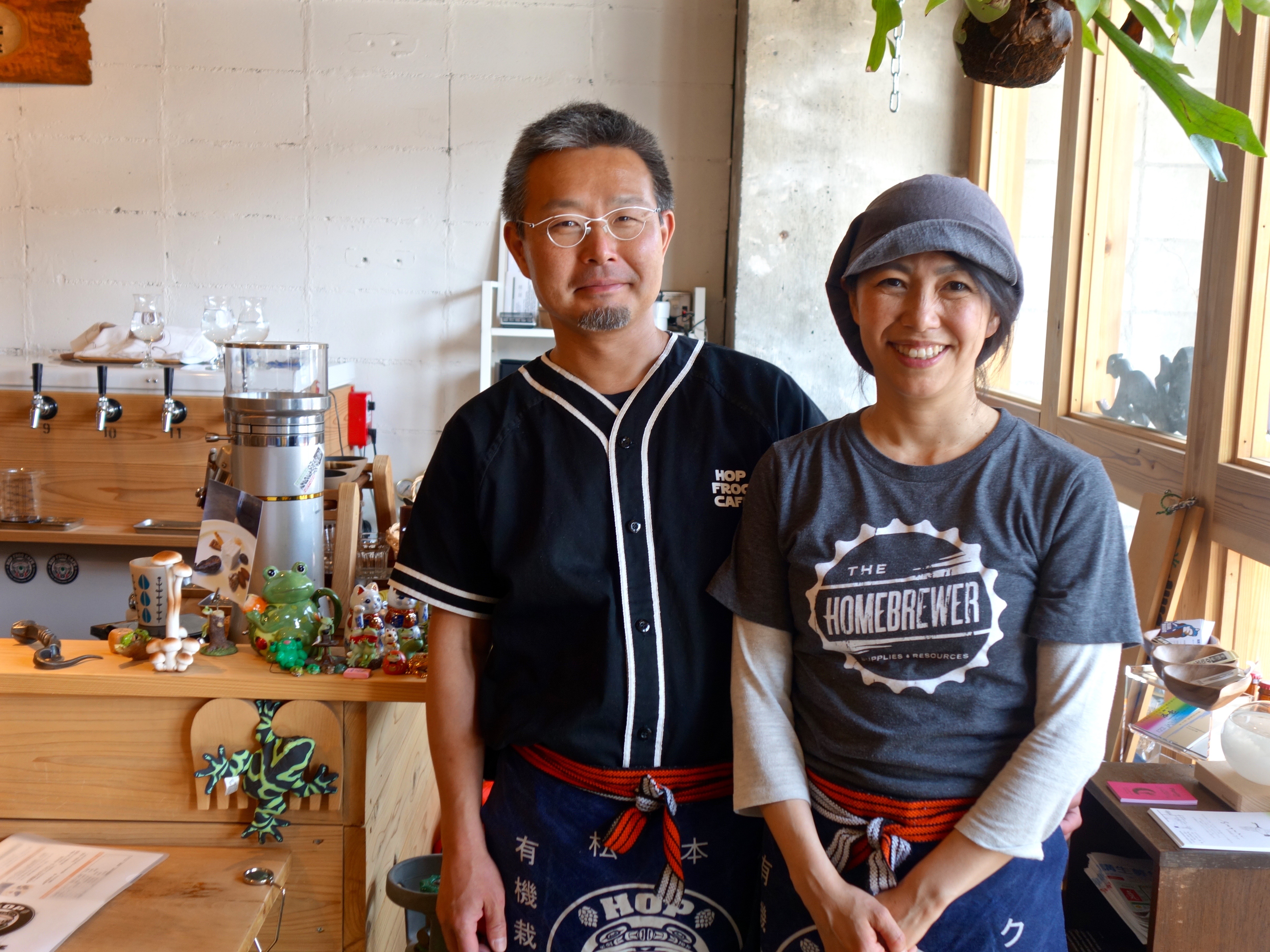
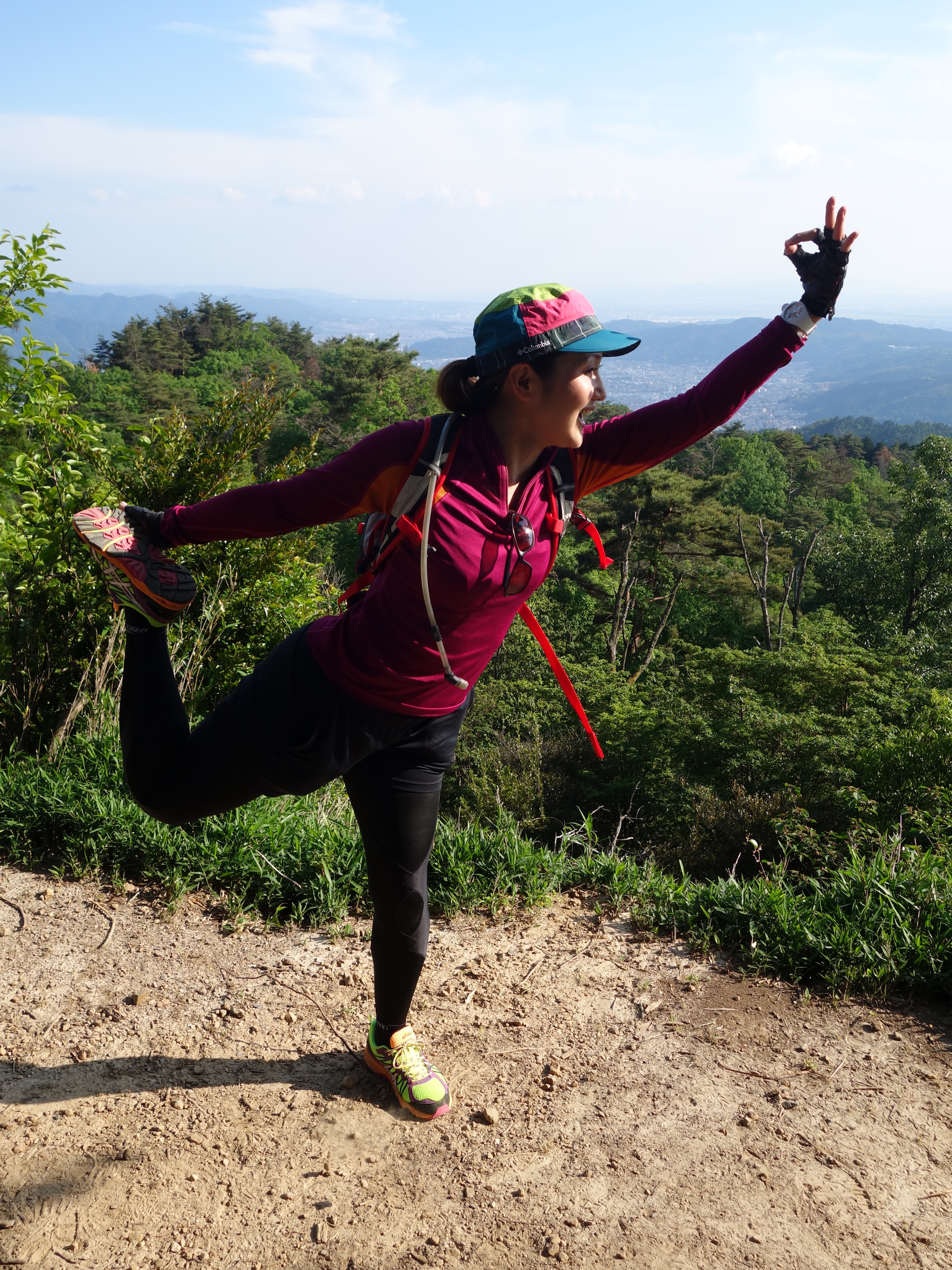
 remarkable encounter on the top of Mt Daimonji. She arrived with a flourish and began by offering us honey lollies to keep us going after our big climb. Then told us she had walked from Inari, about 30 km away with some big hills between here and there, among other things picking up rubbish that people had left behind. ‘There hasn’t been much.’ She was on her way to Ginkaku-ji (the ‘Silver Temple’) still a few km away down a very steep hill. Then she revealed she had been in Brisbane the day before and that she was an air hostess. Then she told us a lot of other things about living a healthy and somewhat forceful life. Then we spent quite lot of time trying to take good photos of each other and failing. She wanted Kyoto in the background but the position of the sun rendered this unlikely.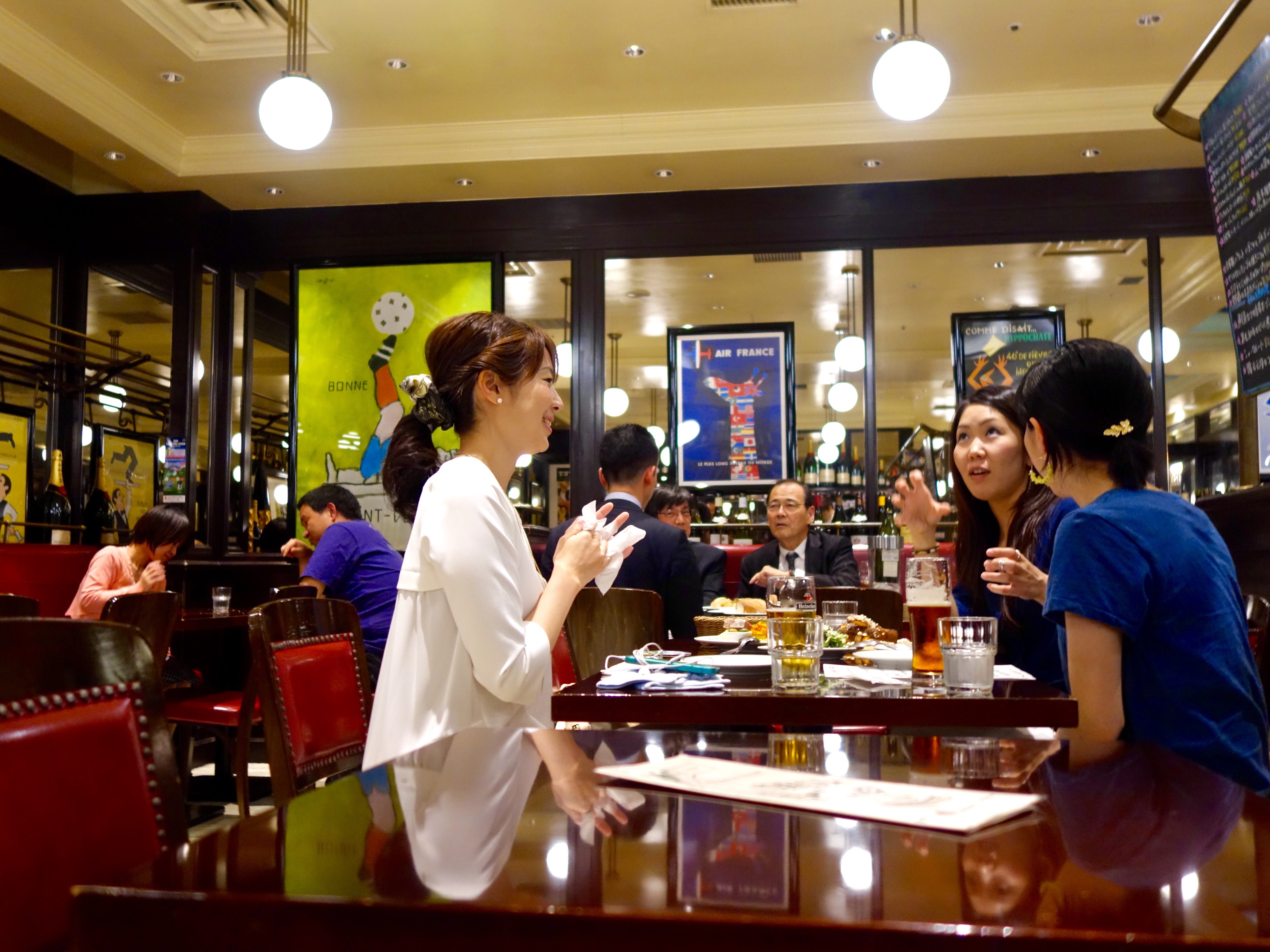
 mcraeblog