
MEXICO CITY
We took the subway to Coyoácan, ‘The place of the Coyote’, a southern suburb. In Mexico City you can ride all day underground for 5 pesos, about 40c Australian. It is an excellent bargain and a very efficient way to get round. We were going to see one of the first things that appears on high scale Google map of Mexico City, the Frida Kahlo Museum. Weird. What is it about Frida? In her absence she has taken the world by storm.

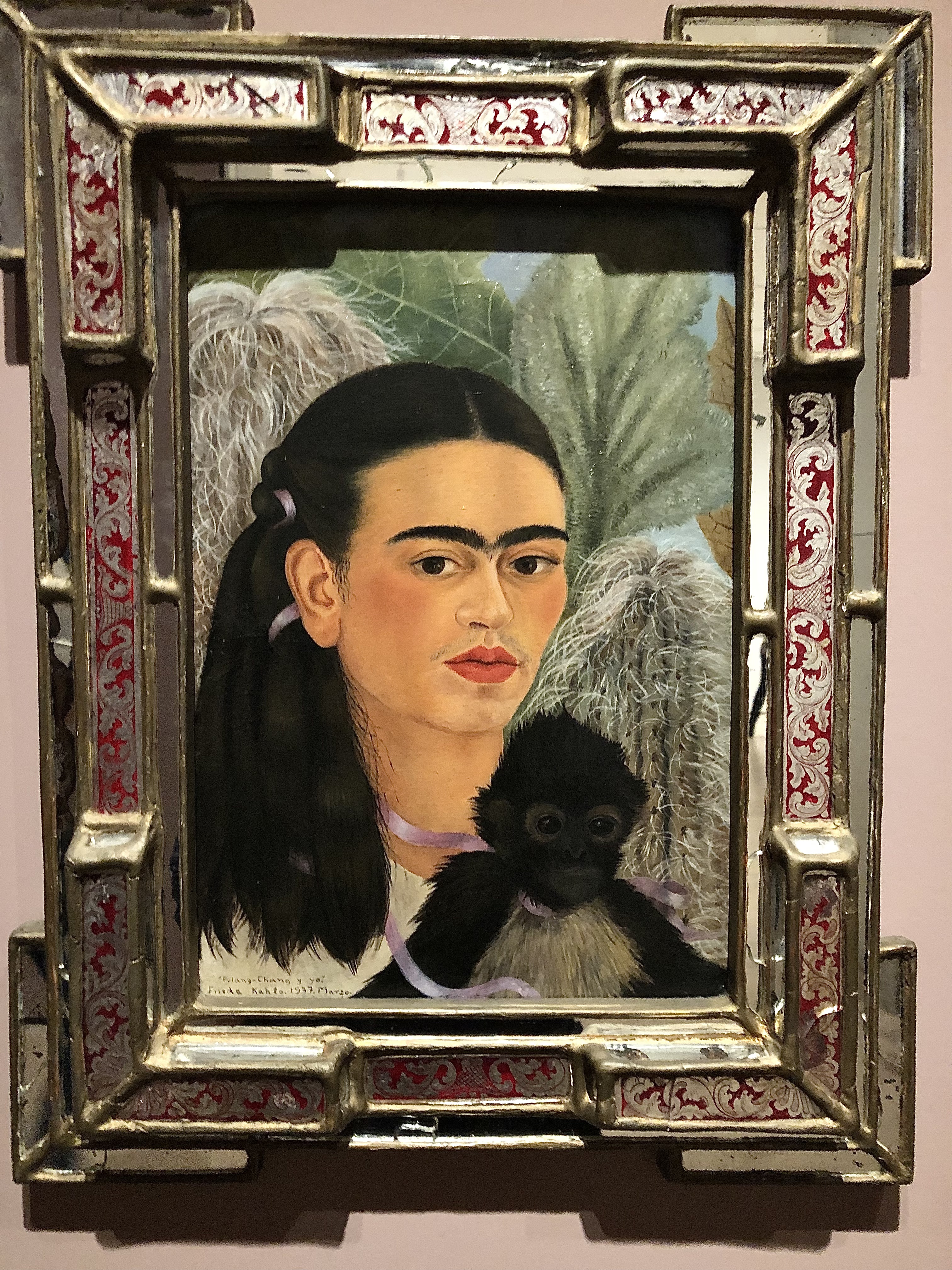

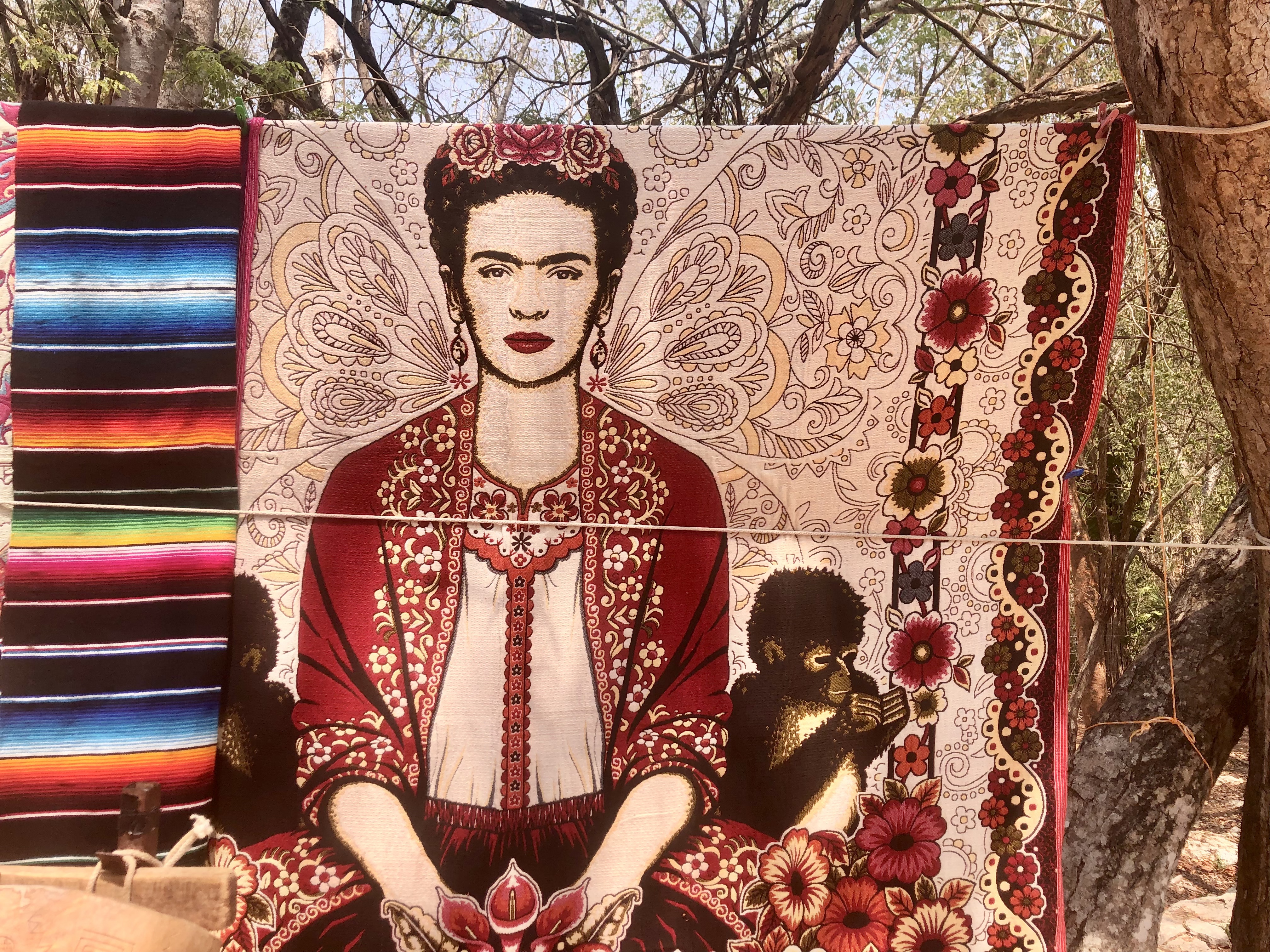
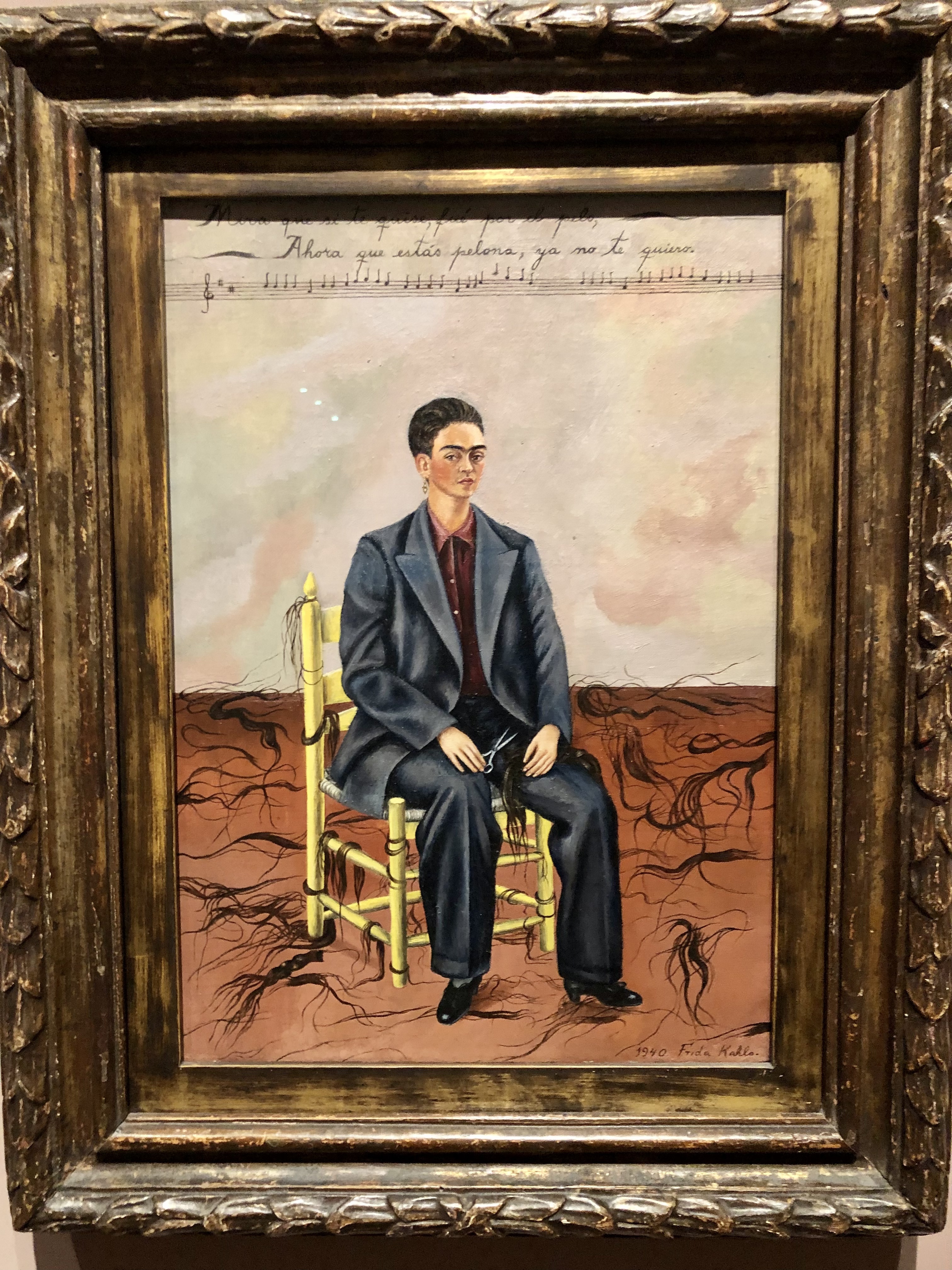

Clockwise from left, portrait by Diego (LA County Museum), self portrait (MOMA, NY), ‘The Two Fridas’ (Chilean artists, MOMA, NY), self portrait after cutting hair (MOMA, NY), printed cloth (Chichen Itza stall), self portrait as a girl (Coyoácan).
What is it about Frida? Can’t just be the eyebrow. I should be answering this myself. As well as an incredible story which won’t be rehearsed here (try Carlos Fuentes’ The Years of Laura Diaz for the lurid version), I’ve got a granddaughter called Frida who owns Frida earrings. That’s enough. Anyway we wanted a look at her museum, and went. One of its apparently notable features is its blue walls. These became less notable as we went elsewhere in Mexico. In fact, normal. A further feature is the rather brisk and dismissive attitude of its staff.


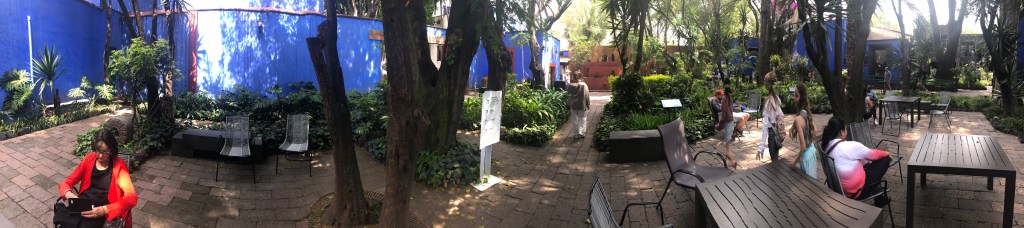
You couldn’t take photos, but I snuck this one. She was on socials while she should have been admonishing me. The house (shared with Diego Rivera, now the museum) is expansive and comfortable. The room where she painted has large areas of glass and a lovely outlook over the garden which is the best part of the whole experience. There is almost none of her work here. It’s in New York, Paris, London …
Leon Trotsky, with whom she had an affair for two years, lived just round the corner. I was very keen to see just where. He, too, had a lovely garden with a couple of special features: guard turrets with slits for gunfire.


It didn’t work in the end because, sitting at this table he was attacked and killed, not with an ice pick as I have always thought but with a mountaineer’s ice axe, a much more formidable weapon.
It was Sunday afternoon and the Zócalo at Coyoácan was bopping.

Puebla
Put Puebla on your list for when you go to Mexico. Such a good place I hardly took any photos.
Lining up for churros.

And Christina’s delightfully moody photo through the window of the restaurant towards the cathedral. Look at the placement of the street lamps. Art.

And to acknowledge, which I haven’t done well, that we were travelling in company.

Oaxaca
I guess it has to be the the church of Santo Domingo de Guzmán, and its convent.
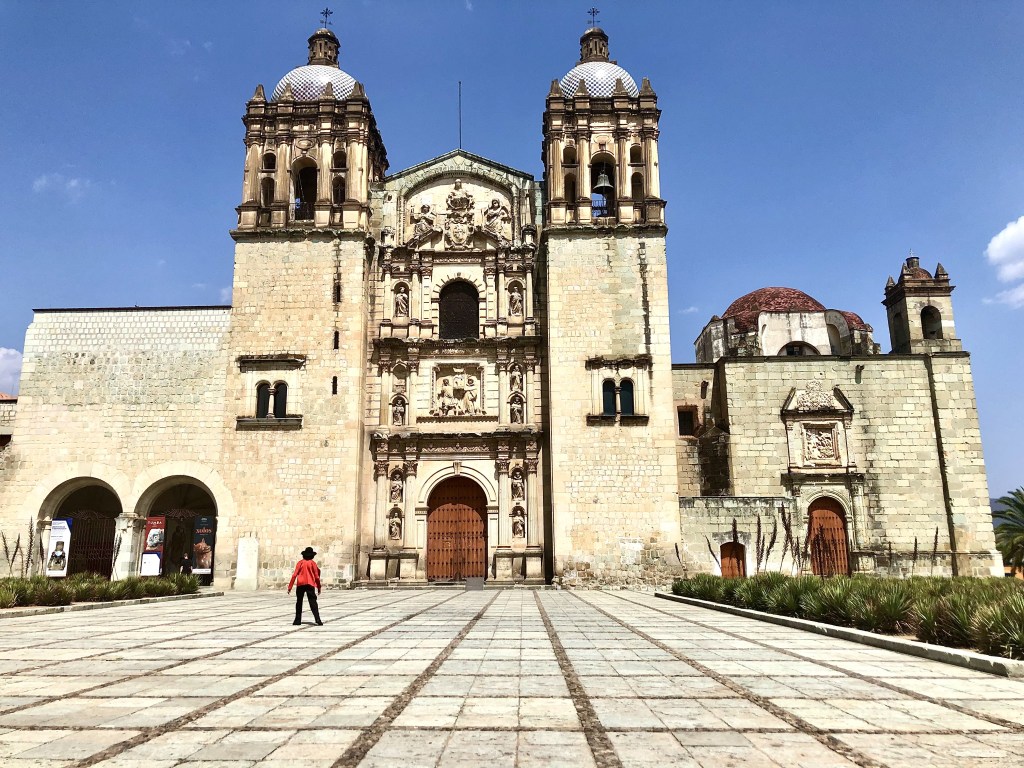
We couldn’t get into the cathedral so I won’t pretend we did, but we did get into the convent, a majestic building in itself perfectly designed not just for its purposes but for the climate as well.
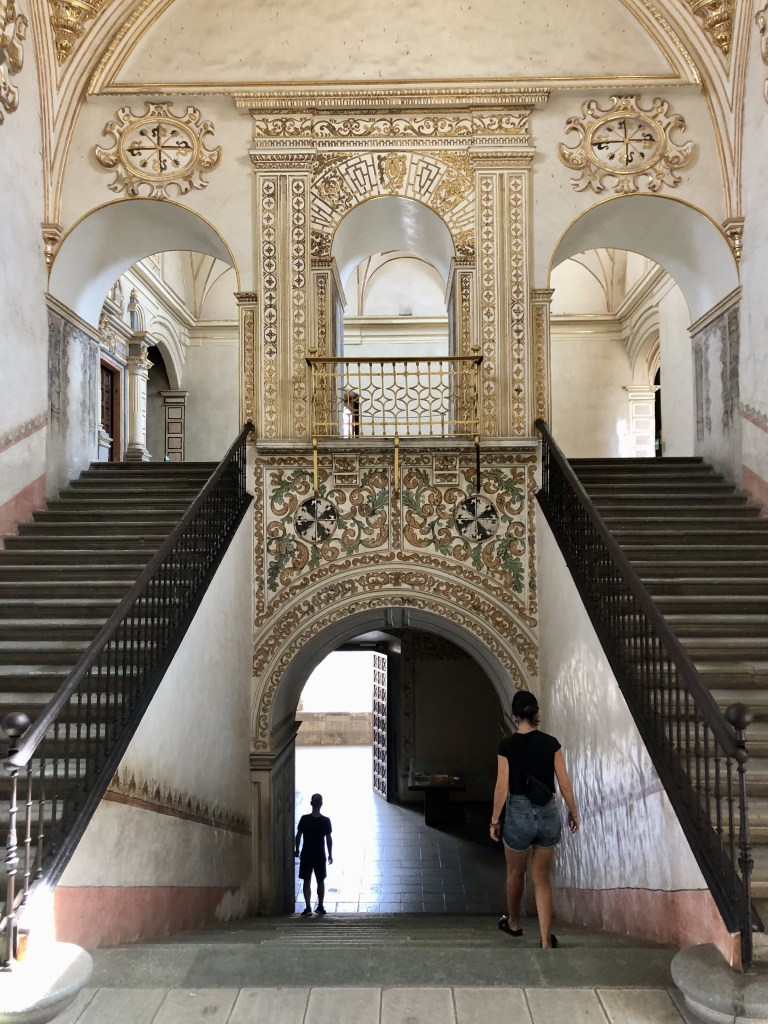
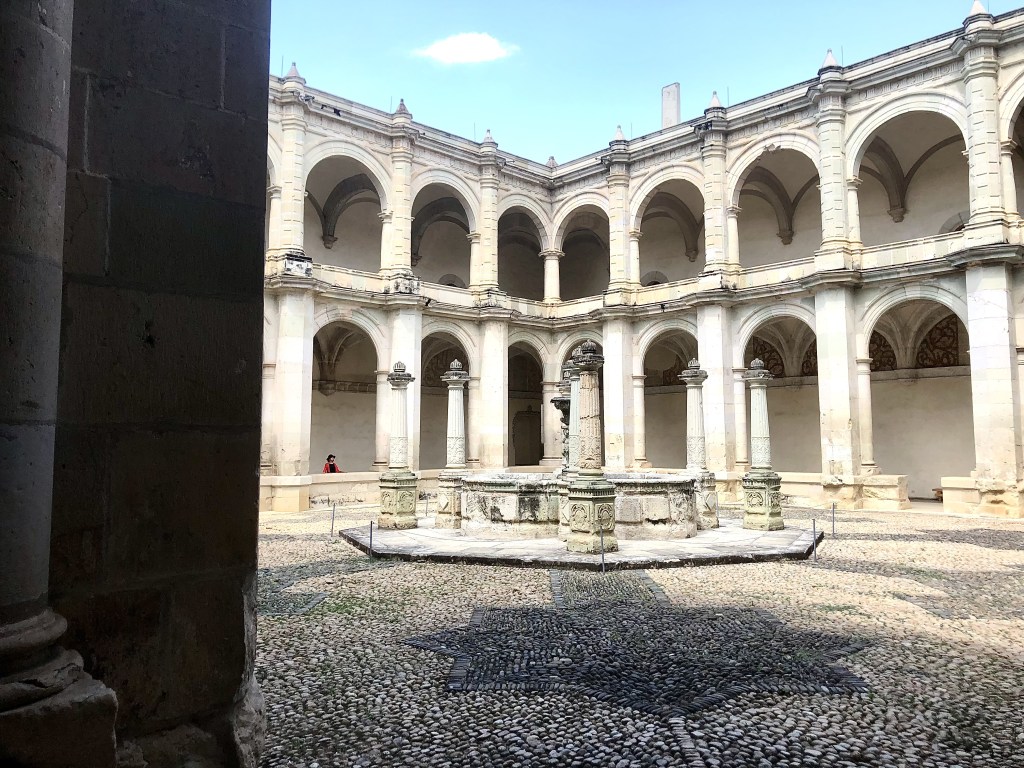

It’s the history of Mexico sitting in front of you. Building was commenced in the late 16th century and it was consecrated in 1608. Since that time it has been a military warehouse, stables, police offices, during the civil war home to each of the contending armies, closed entirely to Catholic worship after the Reform wars, reconsecrated and returned to worship and religious use by agreement with Porfirio Diaz, a towering (and corrupt) figure in Mexican history, received the Pope in 1979, and now it is World Heritage listed. The convent now houses a large collection of cultural artefacts and art displays. And it is the most beautiful and substantial set of buildings, walls a metre thick.

Or it might be that lifesaver, nieves (‘nn-yev-ess’). Mexican ice cream is not that good, often served runny it seemed, but nieves … It’s a cross between crushed ice and sorbet and in this instance, slap bang in the middle of the Oaxaca market, offers the choice of a lot of flavours. Here — we went back several times — Myrna is on tuna y limone, prickly pear actually with lemon strongly hinting of lime. Myself, tamarillo and mango. Vive Chaguita! Spectac.
And, we didn’t see this, but we could have. (It’s Margie’s I think.) It was the sort of thing you saw without trying.
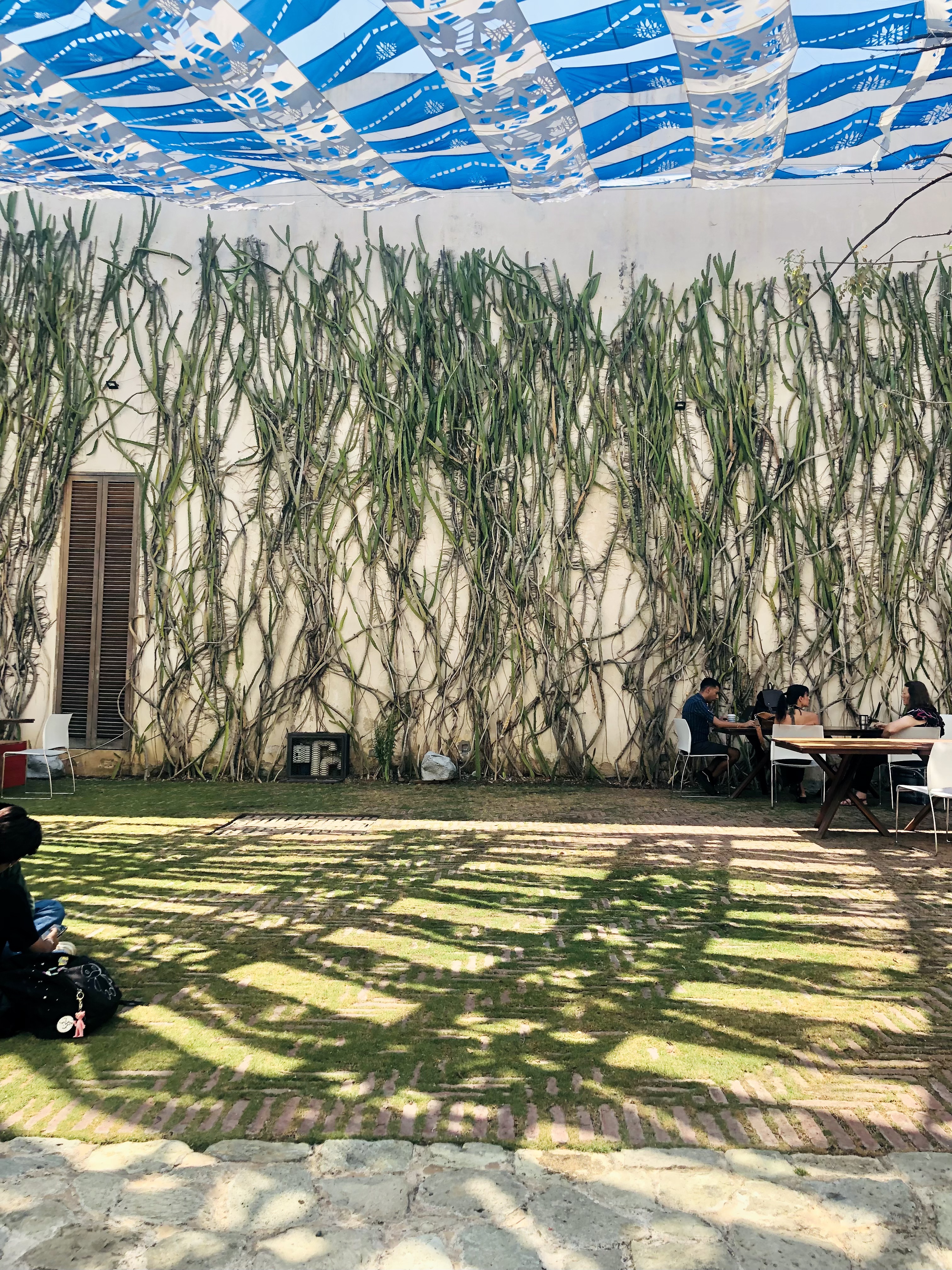
They’re celebrating the 15th anniversary of the Museo Textil which was (the Museo) a terrible fizzer. Not terrible, just a fizzer. But next door we found an ‘arts precinct’, the Centro Cultural San Pablo which had so much to see, including an art exhibition, a display of brilliant photos and Polish film posters.


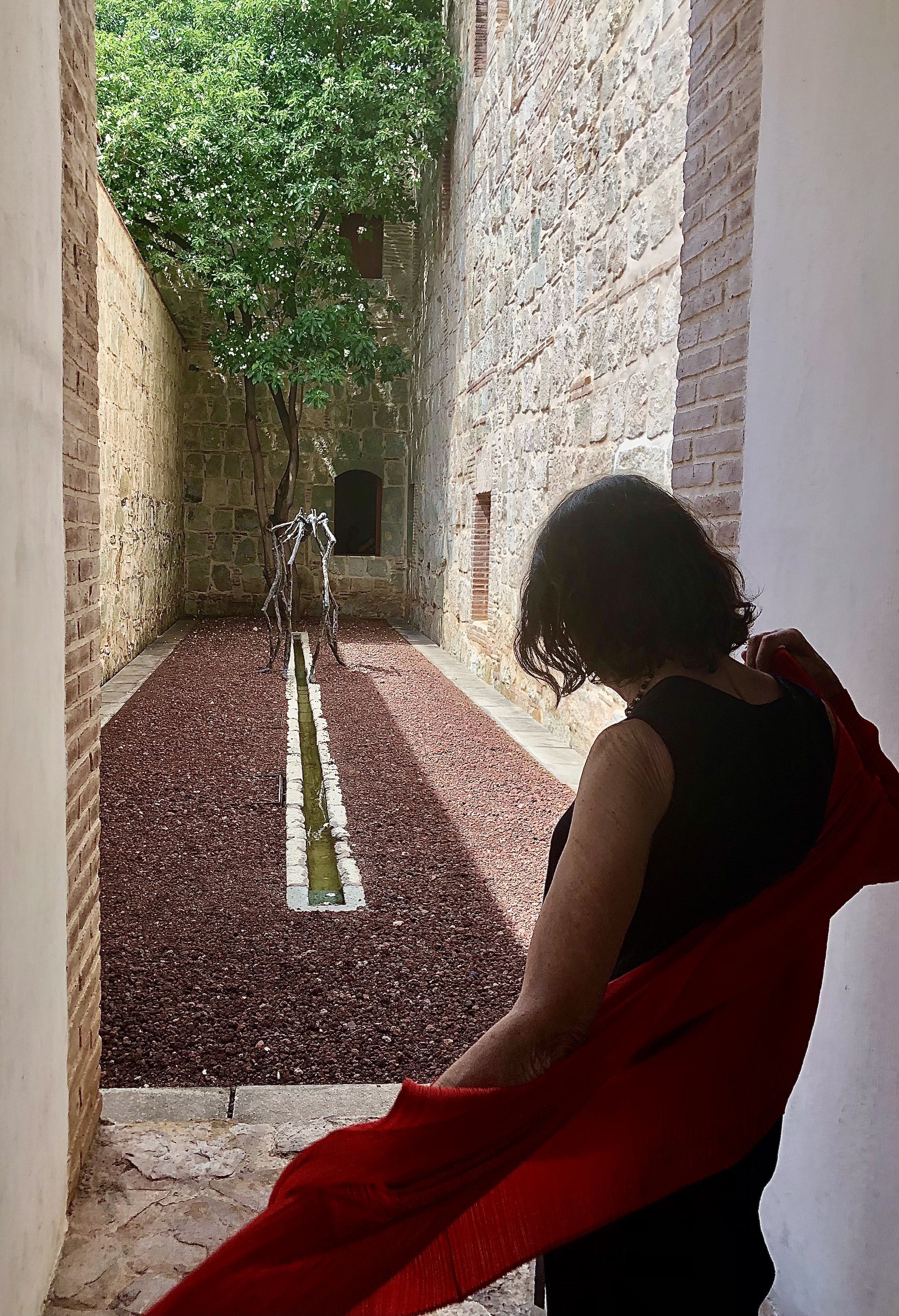
San Cristobal de las Casas
12 hours overnight on the bus but lots to be interested in and like.

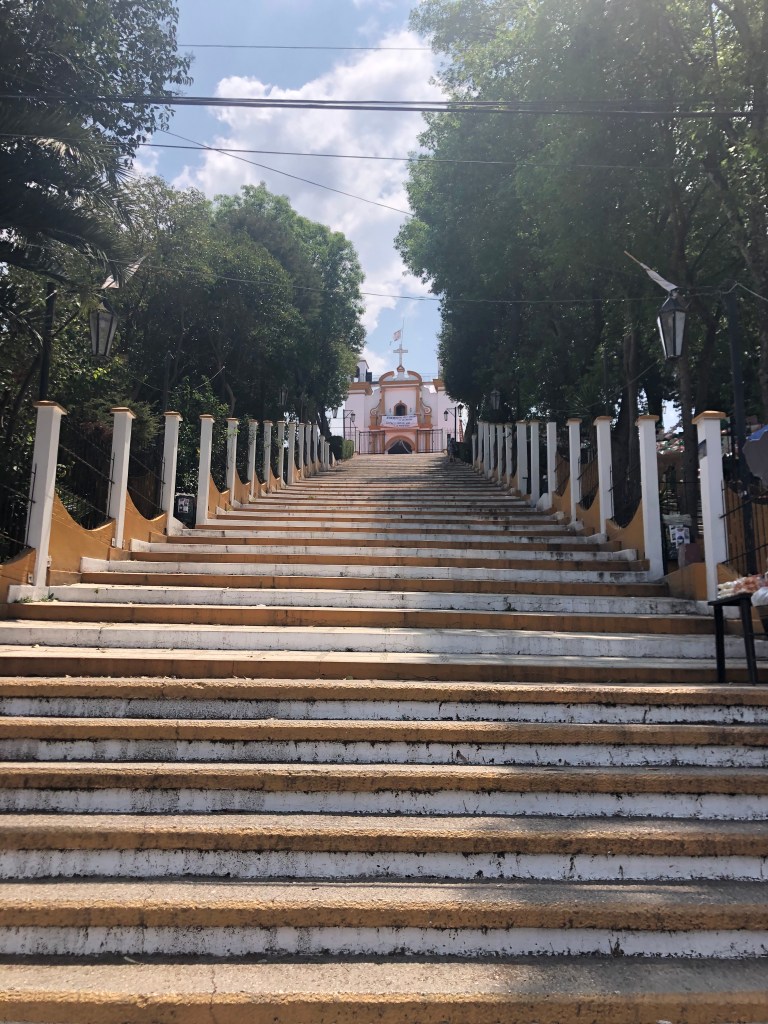


The garden above was very close to the amber museum which was a serious civic effort to get something happening, but it might have lacked a central dynamic person with powerful vision and commitment. And money. We were sitting there in the little plaza outside the museum ringing our granddaughter Romany for her 15th birthday — like a lot of 15 year-olds she was still in bed, mostly asleep — and some music started.
After about 20 minutes they put their big skirts on and the dance, already wonderful, developed whole new dimensions. Just practising.
If the amber museum had been a bit of a 👎, the Jaguar House and the jade museum were most assuredly 👍 👍👍.
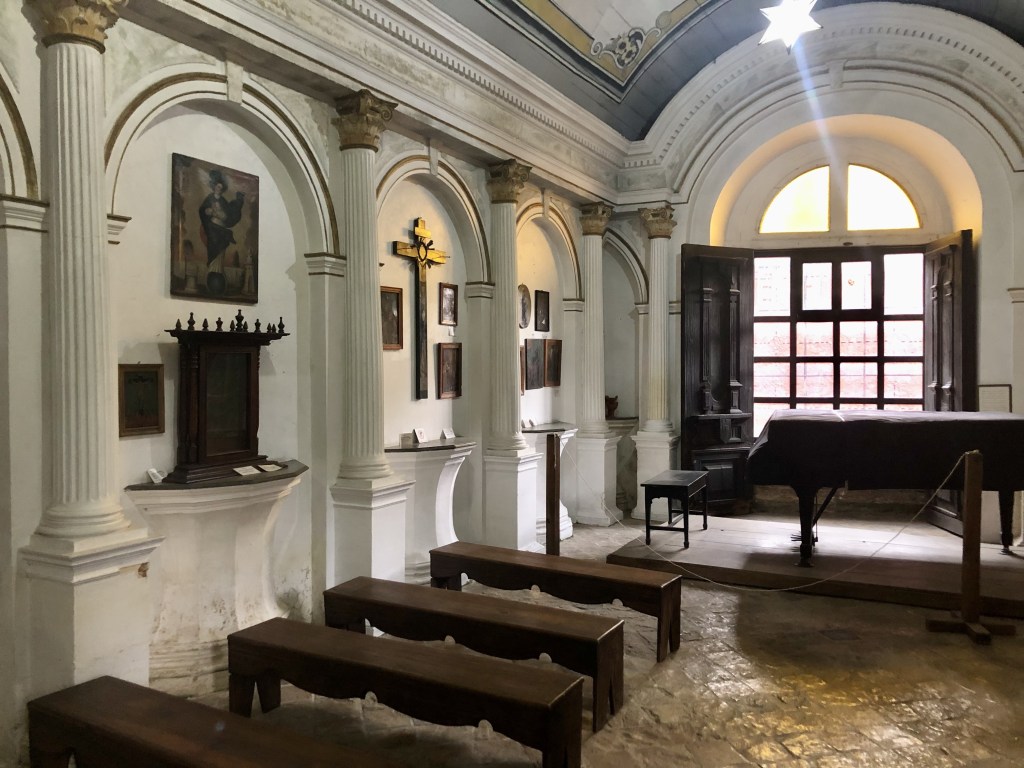
The Jaguar House (Na Bolom) was an old seminary (the chapel with a grand piano), which had been bought by Frans and Trudi Blom (Duby). He was an anthropologist and she a photographer who made their lives’ work supporting and protecting the Hach Winik (‘true or real people ‘ in their own language), a sub-group of Mayans living in the jungles of eastern Chiapas and Guatamala. She outlived him by 30 years and made her own very powerful mark.
The table in the dining room seats 30; they used to have music recitals in the chapel; the library is formidably impressive and was and is made available to people who seek access. This is a life choice we have come across before, Walter and Carolina in the Saxon villages of Romania, maybe Paddy Leigh Fermor in remote Greece, big personalities reveling in an exotic context, wanting to protect it, and choosing to do so by publicising it not least by providing hospitality to movers and shakers. It’s a life not without contradictions but if you had plenty of money it could be enormous fun.

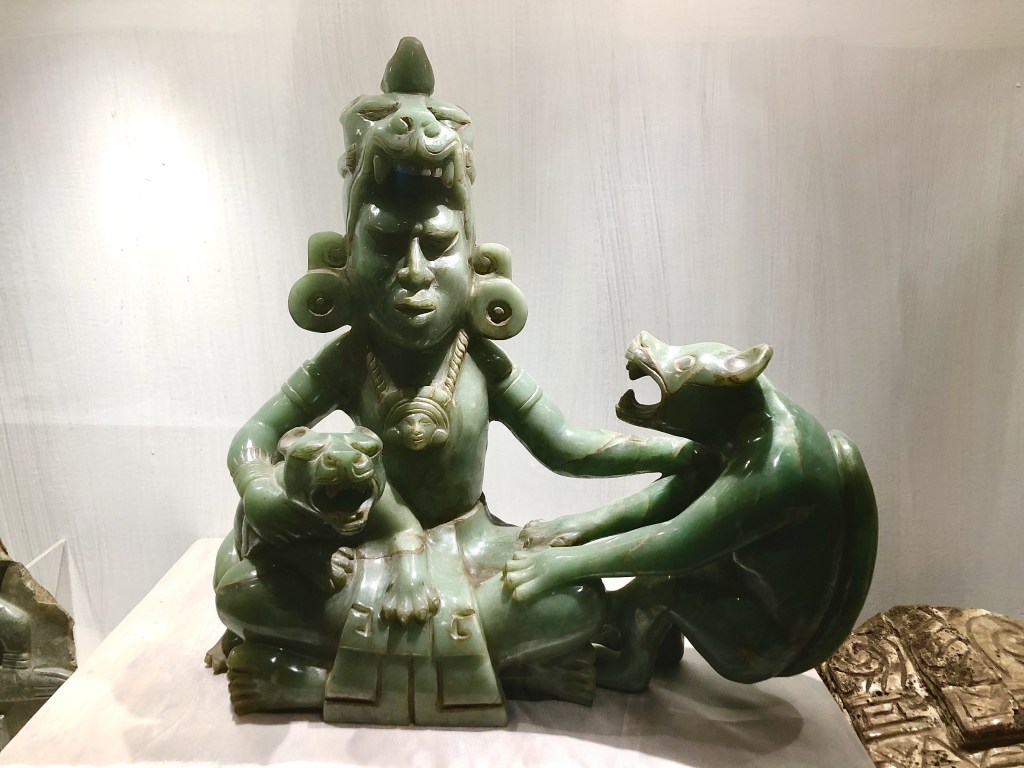
Pre-Hispanic jade in the Jade Museum.

And we did see this, quite a big deal.

This is the death mask of K’Inich Janaab’ Pakal, Pakal the Grand, who governed Palenque from 615 AD until 683, 68 years, one of the longest reigns in recorded history, and during the pomp of Palenque’s mightiness.

The mask which would have been built on and enclosed the dead man’s actual head has been reconstructed from 212 pieces of jade as well as conch and obsidian for the eyes. (See at left, pre-reconstruction) His massive ear plugs give an idea of his grandeur. Pre-Hispanic Meso-Americans were generally enthusiastic about body penetration and plugging: ears, tongues and, in the case of warriors, penises.
And now to his kingdom.
Palenque
Always gets a bad rap. The ‘Lonely Planet’ writer had collected all his negative adjectives and pasted them together to describe it. Go, hide, have a shower, get out— that was the message. Even Val had unkind words to say. Myself, to the contrary. This was the day of the bus ride in the steely grey dawn to avoid angry Zapotecs, but we got to the Azul Falls, nice enough — ‘blue’ and quite big, an enjoyable swim — and with its 1,000 stalls authentic enough. Genuine tourism at work.
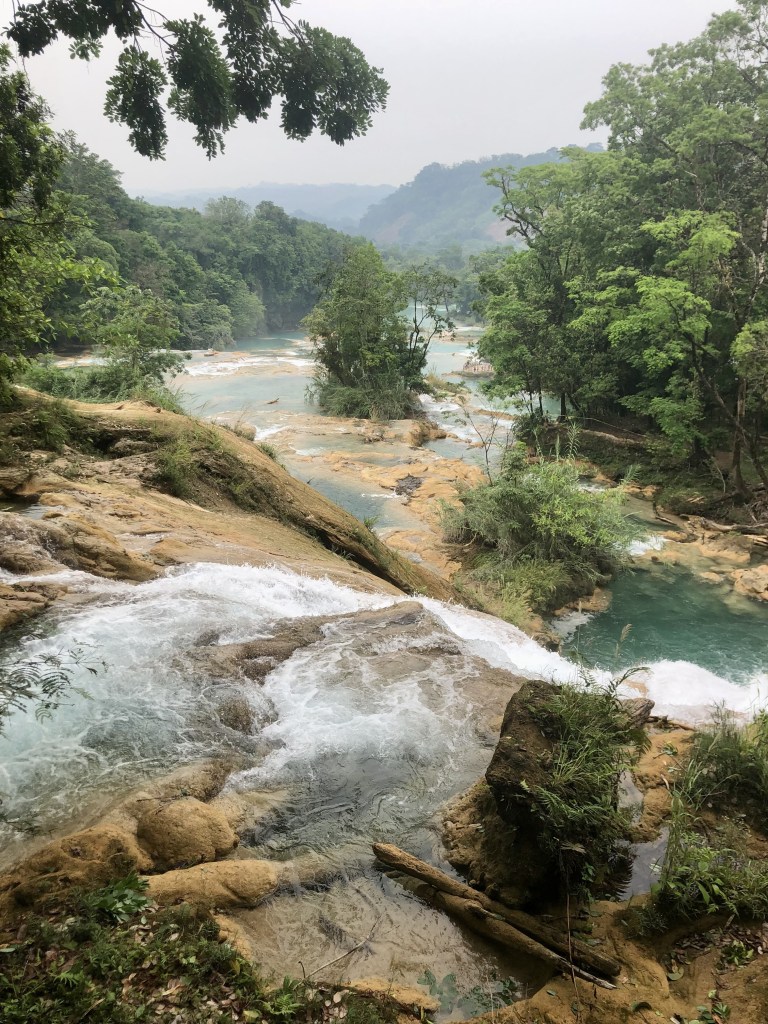
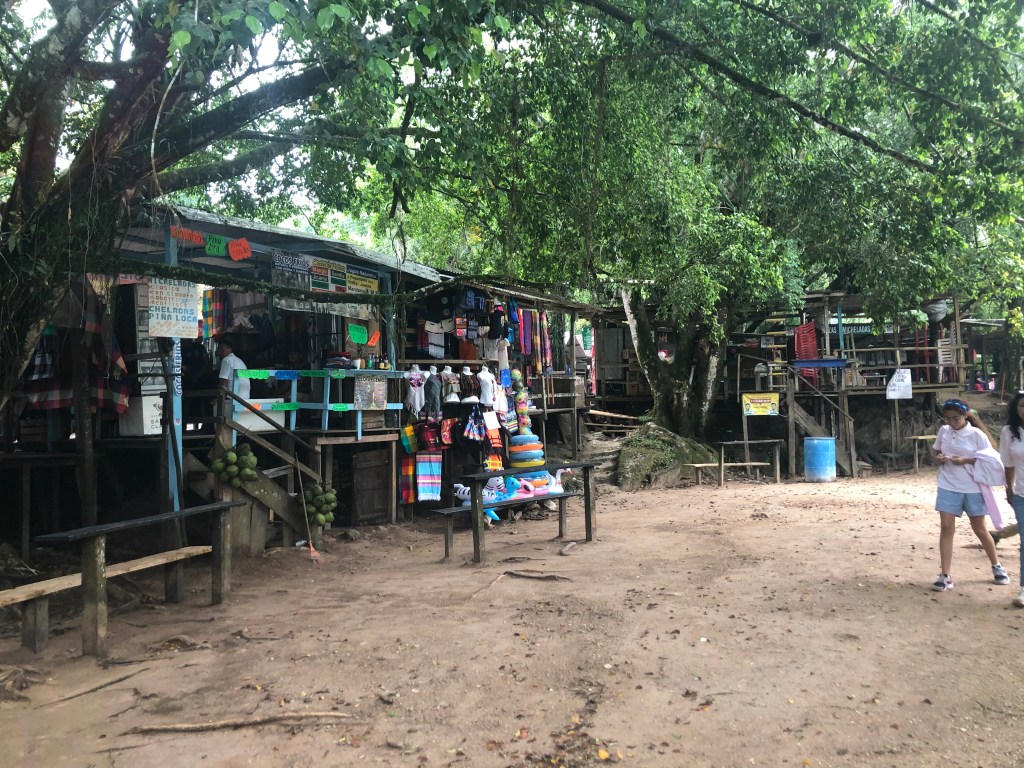
And we had this view out our hotel window which I quite liked. Over the road it’s a honky-tonk with a huge welcome sign out, on the right a gigantic supermarket with ice cold aircon. That’s Mexico as well.

We’d arrived in another part of the world where there are not many mountains and a lot of poverty. But a few kilometres out of town …


The ancient city of Palenque. Not one or two but hundreds of buildings, awesome, spectacular, and we had it pretty much to ourselves. Can you have a favourite ruin? If so, these are mine.
Mérida
It was ferociously hot, certainly 38 possibly 42, which can colour your view. Our hotel had a pool but the water was naturally heated. For our first adventure we had a destination, a series of them really, but the internet connection was such that the blue dot simply did not keep pace with our walking which meant that we went to lots of places we didn’t mean to and found things we didn’t intend. Always a pleasure.
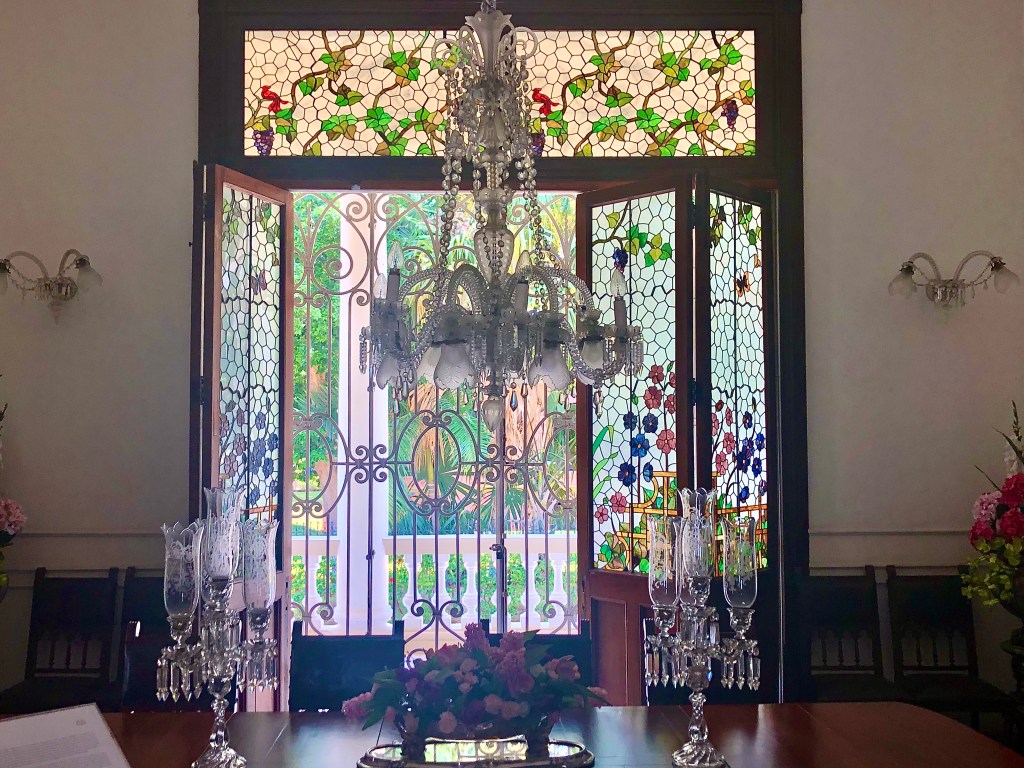
This was one of them, ‘Quinta Montes Molina’, one of a series of grand late 19th/ early 20th century houses lining the Paseo Montejo, Mérida’s grand avenue. It had a story. Built by a Cuban businessman who had made a fortune out of henequén, a Spanish way of talking about agave fibre. Spooked during the Revolution, he and his family fled back to Cuba (out of the frying pan perhaps). It was taken over by a wealthy Spaniard who had seven children, one of whom committed herself to maintaining it as it was, and as it is today. Lots of interesting things to see in it including this mini-wall of Tiffany glass (with crystal chandelier).

We passed the Bangin’ Body Fitness Gym and Dance Studio on our travels but didn’t drop in. You could find that and many other such enterprises in Mérida, the capital of Yucatan state. We’d left the most obvious poverty behind in Chiapas, Tabasco and especially Campeche. It is a big city with an international airport and lots of other stuff. It has a Mayan market which inhales tourists, and it has festivals and red carpet events with people arriving in limos dressed up to the absolute nines and to which for some reason we weren’t admitted.

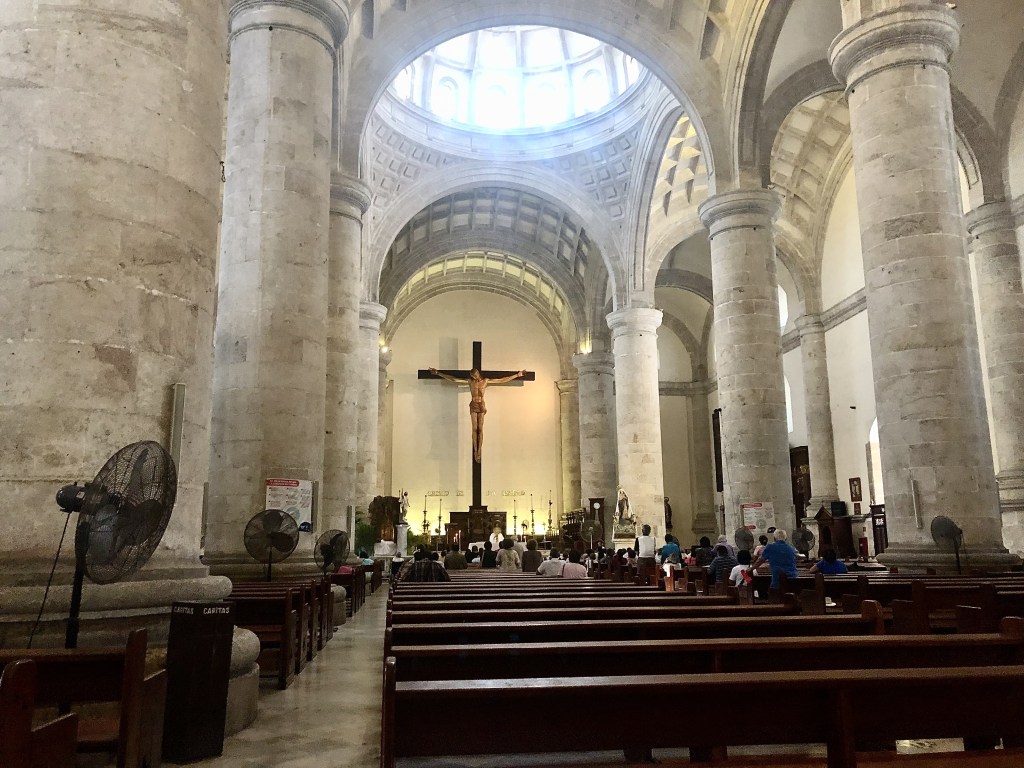
And it also has this cathedral which I liked as much as many — we’re on aesthetics here — stripped almost bare during the Revolution, left like that and quite stark and dramatic as a result.
Finally, very far, so very far from the luxury of Po. de Montejo, out in the back blocks of the jungle really, we had the best meal of any in Mexico and one of the best ever.
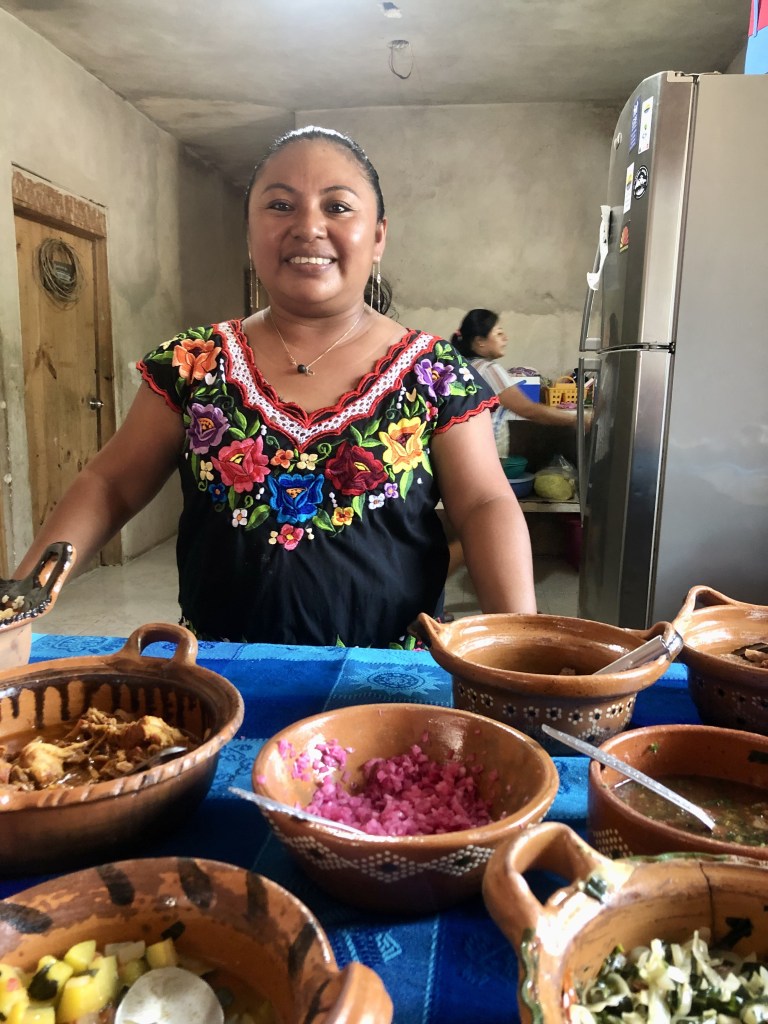
A Mayan meal. I have just counted 14 different dishes, and I can’t tell you what they were. I know I had some chicken which had been marinated and cooked in the ground for some hours but most of the dishes were vegetarian and just delicious. This is an enterprise supported by Intrepid. May god bless all concerned.
Playa del Carmen
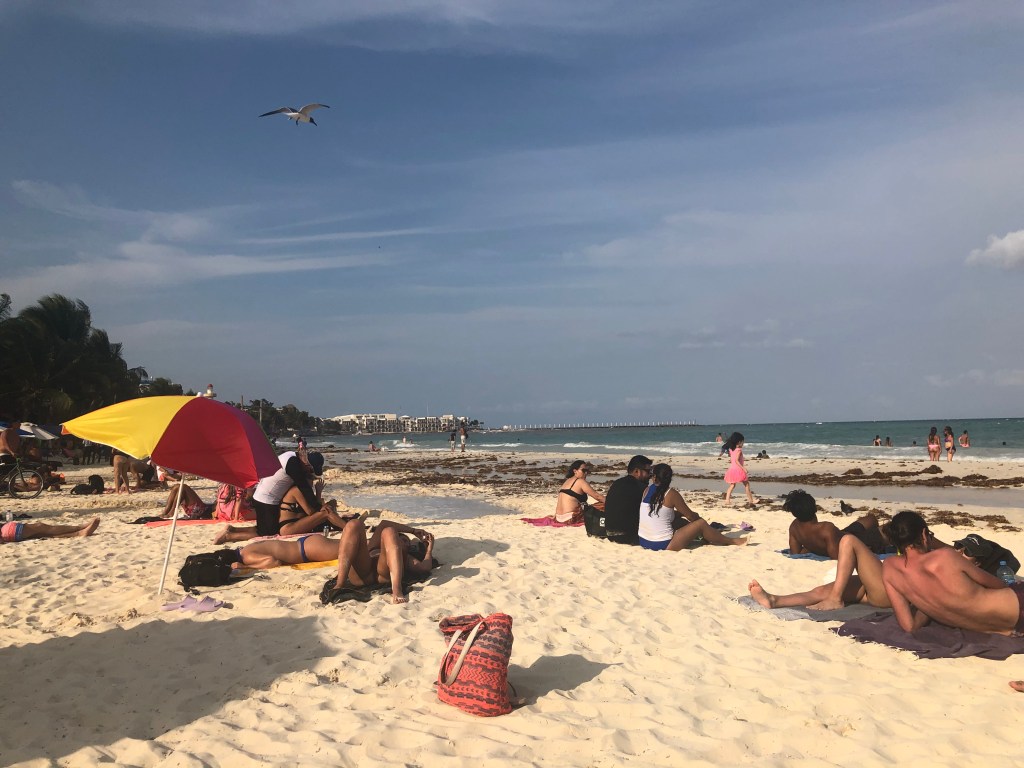
Carmen’s Beach, part of the self-proclaimed Mexican or Mayan Riviera, Cancun, Puerto Morelos, Tulum, Cozumel (an island with those big buildings in the background). Noise, smells, shills, bikinis … this really is another world where young Americans come to get drunk. This sample of the Caribbean provided a strong undertow with short, choppy waves.
We again got up at an ungodly hour and flew from Cancun to Newark. But first, follow along with this oddity. Don’t worry. No panic. We’ll still get to America, just by a different more cerebral route.

 mcraeblog