

Yes. ‘Sunday’. Ken Done. Dominant in its gold frame at the public threshold of the Art Gallery of New South Wales.
The attached note says: ‘Sunday was painted from a beach house on the Wyargine Point in Sydney Harbour that Ken Done calls “The Cabin” nestled into the landscape of Rosherville Reserve and overlooking picturesque Chinaman’s Beach. … While Sunday was painted from and inspired by this setting, Done says it’s not a direct representation. It “reflects a feeling that shows the joy of being in this space. The pattern of the clouds, the boats, the people on the beach … it is a feast. And if colour is a language, then the language for Sunday is joy.”‘
It would have been unthinkable not so long ago. Ken Done? Not to be taken seriously. A bit awful really. Hopelessly commercial. For tea towels, place mats, cheap scarves, possibly swimwear; and for people who don’t know anything about art.
But, frankly, how absolutely correct that placement is: Sydney as it would like to see itself and sometimes is. Gorgeous.

The Harbour was covered with scales of sun glitter, the bridge exhibited itself like a formidable flexed (and symmetrical) bicep, the Opera House was perched on Bennelong’s Point like a ruffled cockie. And then in the evening there was the breeze, an erotic whisper, the fag end of the Southerly Buster massaging your sensibilities and because it is summer leaving dainty beads of humid sweat.
Melbourne to live, but Sydney for a visit.
We’d come as the final leg of the Tour de Siblings to celebrate my 75th birthday — we’re all getting on — and this was to see 90 year-old Dorothy. I thought we would stay at Kings Cross. I hadn’t been there for a while and the station is handy. It was also just a walk to her church in Waterloo where we would meet.
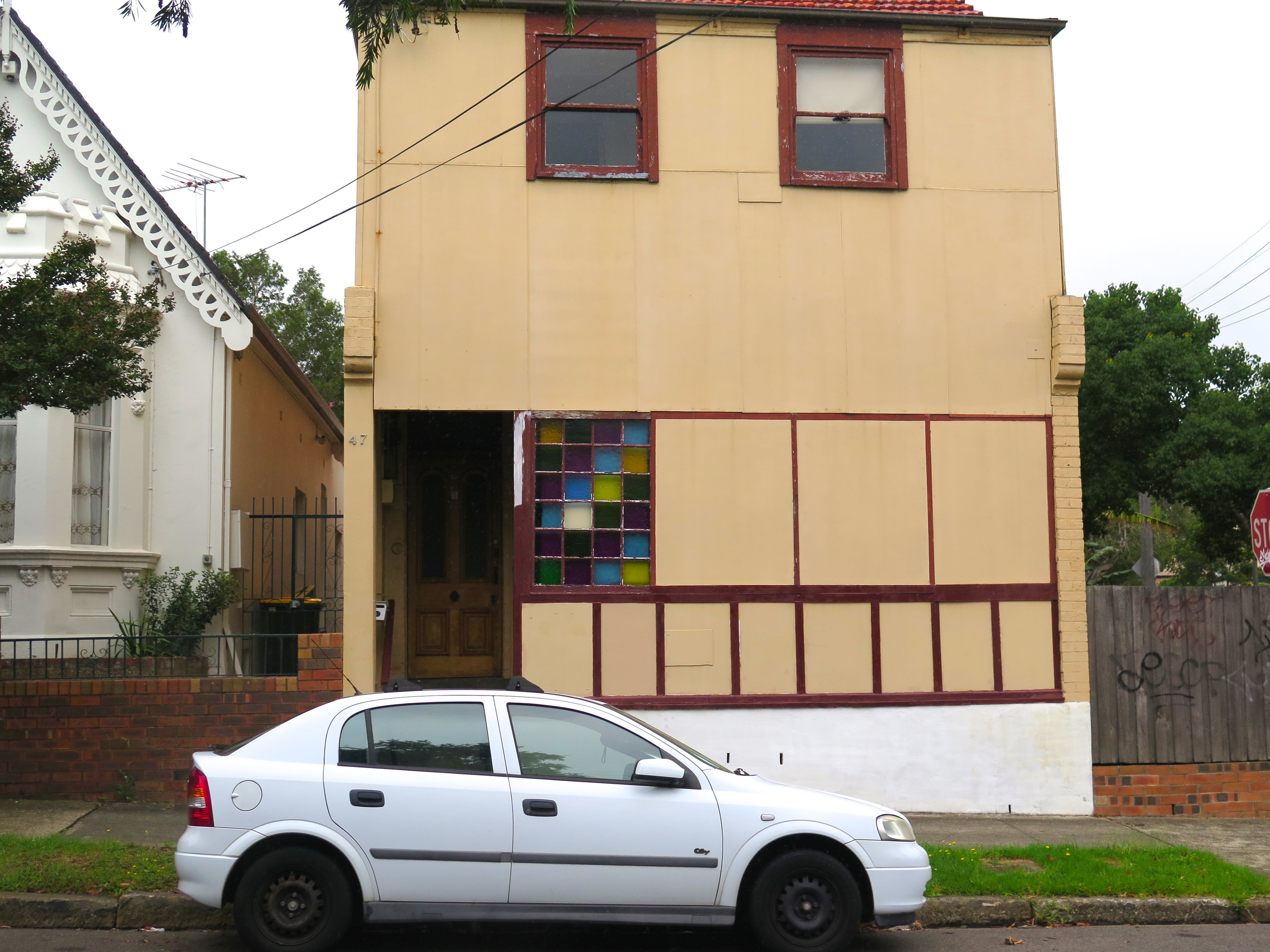
I had some uncertainties about the accommodation I’d booked and paid for. It had been very hard, impossible actually, to get in touch with the property owners to find out, for example, how we would get in. So I was disappointed rather than flabbergasted to arrive at a laundrette with no obvious place to sleep or make a cup of tea. I had two ideas in my pocket. The first provided a room but with no view and we needed some offset for our distress. The second — the Hotel Indigo, warmly recommended — had everything we needed including wide perspectives through our windows over Woolloomooloo to the city.
The Cross has tidied up and gentrified since I last looked, especially the Potts Point end (which was always pretty schmick).


In the 1930s buildings of this sort

were replaced by buildings of this sort
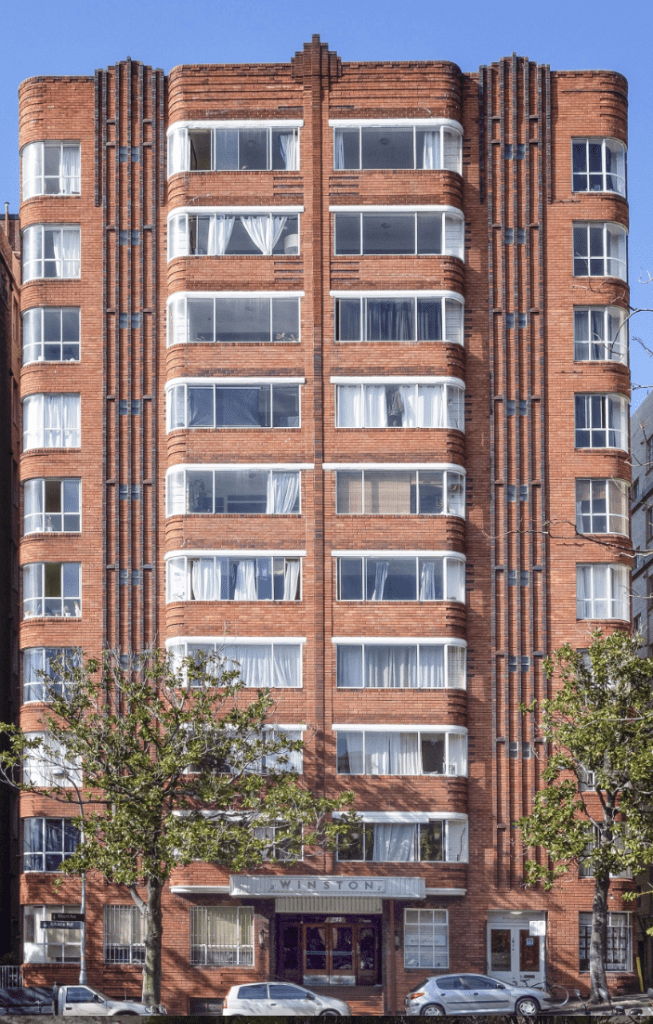
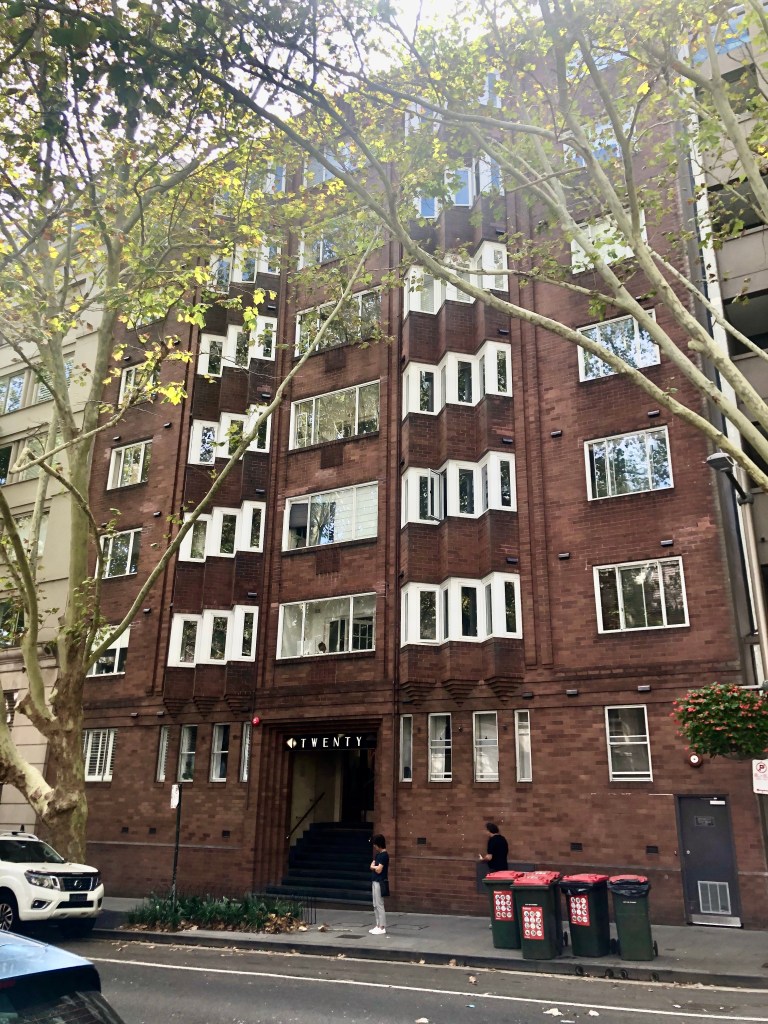
with entrances like this.
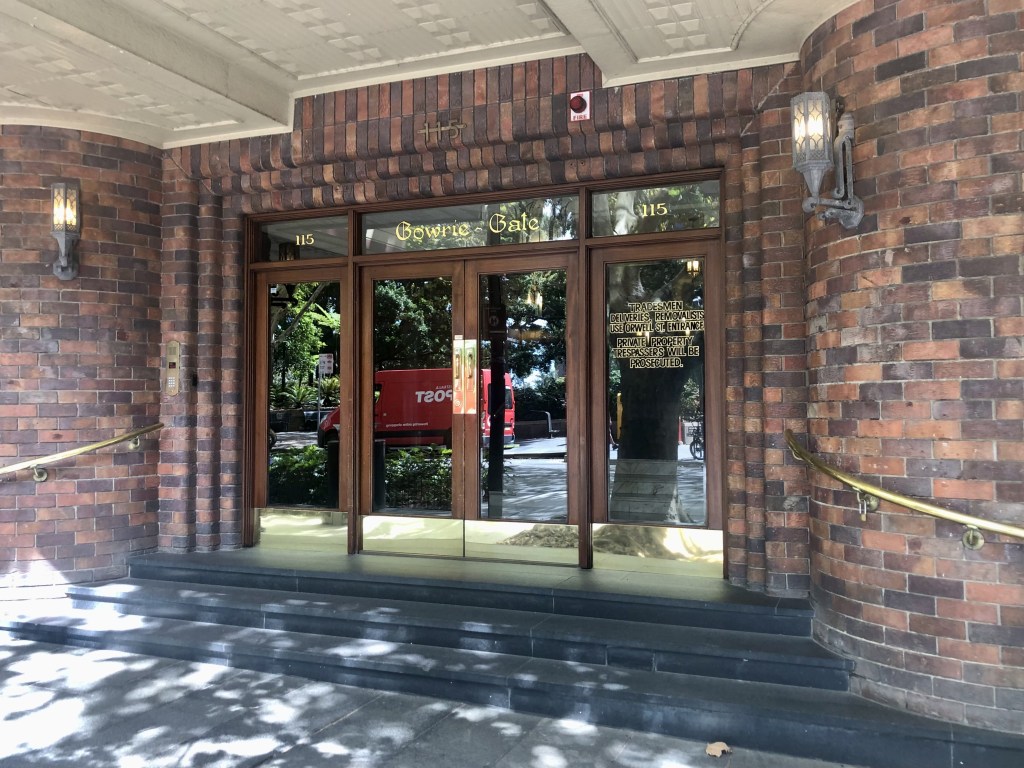

Art Noveau Deco run wild. [There now Graham. Okay now?] And after nearly a century they’d still be good those apartments.

Just for the memories.
The Gazebo, the ‘Gazza’, once a hotel and for a long time my Sydney accommodation of choice, now apartments and a distinctive building visible from many points of the skyline.
I knew this was the El Alamein Fountain but thought it was located in Anzac Square. I now discover that acre of paving and concrete is the Lambert Peninsula National Park and think that to be a bit weird.
The walk from the Cross to South Sydney Uniting ambles its way through the tree-lined streets of Darlinghurst and Redfern full of blunt but picturesque Georgian cottages tight to the footpath. Every 100 or 150 metres there are hole-in-the-wall places with a dozen boxes or stools on the footpath where people eat pain au chocolat and drink coffee. Runners pad past in their leisure wear; torsos often naked for the men, nearly so for the women. Buff bodies everywhere. Gay couples (in the week before Mardi Gras) lean in to each other, sublimely indifferent to public interest. These streets are theirs.
There are cities in the world that would kill for areas like this. There are other cities which would kill them off promptly and decisively.


Dorothy is 90, a sweetheart and a bit of a dag. As well as that she is the Reverend Dorothy McRae-McMahon, resolute pioneer of the place of women in the church, the author of a dozen popular books of liturgy, and a warrior — without necessarily meaning to be so, it came to her as naturally as breathing — for the rights of the downtrodden.
She has a gift for saying and writing things that people can connect with, especially those living with trouble, helping to ease their pain. God has spoken to her mysteriously but directly. Her certainty of that is complete. You can make of that what you will but in her line of work it is practical.
For many years she was the minister at Pitt St Uniting in the heart of the city. But now she is a parishioner at South Sydney, a most remarkable church on the southern fringe of its inner suburbs. The church property is 100m from Redfern Park where the Rabbitohs used to play, and more saliently where Paul Keating gave the Redfern Address, still a vivid reminder of what all Australians should know, remember and take to heart: “It was we who did the dispossessing. We took the traditional lands and smashed the traditional way of life. We brought the diseases and the alcohol.”
The church’s congregation is unusually diverse: in terms of sex and gender; in terms of affluence; in terms of cultural and ethnic background; in terms of education; in terms of health and wellbeing; in terms of drug of choice (which might be Ceremonial Grade matcha). Dogs, kids, people in off the street looking for some shelter just absorbed into the mass which I remember on my visits as being striking for its relaxed intimacy. Stuff going on all over the place, but still having a purposeful shape, capped off with a shared feed.
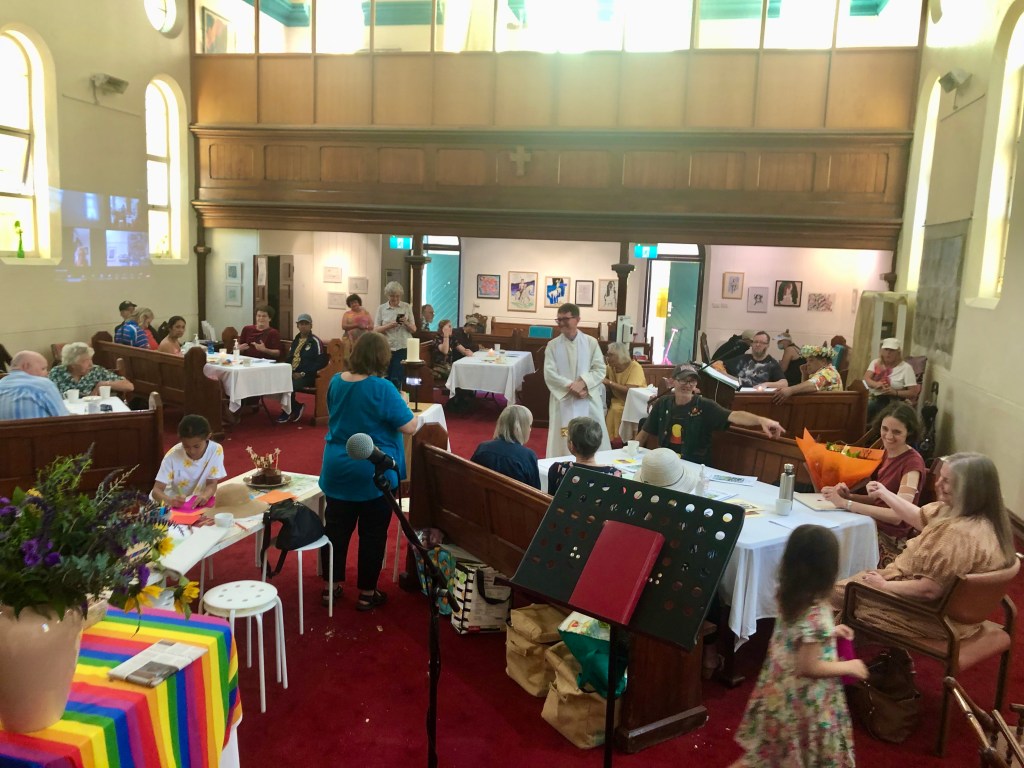
That’s a church service. But a year ago. Various parts of the church building are being renovated because the Sydney sandstone of its decorative front has turned out to be porous and flakey. The service I went to most recently was held in a community centre a short way down the road. But just the same sort of thing. Everyone publicly welcomed by name, the minister providing the homily but not a lot else. There were a dozen ways to contribute and perhaps 20 people did, reading lessons, providing notices, or mentioning people and their situation to be remembered in thoughts and prayers.
One reason I wanted to use this photo is because Andrew Collis is in it. It is shared magic, but he’s the magician. Slight, quiet, but both deft and definite, he is such an admirable presence. There is not the slightest sense of disorder, nor is there anything about these services that is dumbed down. A lot of the ideas discussed are chewy and testing.
The text for that Sunday’s thinking out loud — like everything else, so carefully prepared — was Luke 4: 14-30, a curly one made more so by the reality of its rendering.
Jesus goes home to Nazareth and at the synagogue reads from Isaiah: “The Spirit of the Lord is upon me, because he has anointed me to bring good news to the poor. He has sent me to proclaim release to the captives and recovery of sight to the blind, to set free those who are oppressed.” He rolls up the scroll and sits down. You can see it. This is direct reportage. Then he says, ‘It’s me. You heard it here first. I’m the one.’ After the ‘That’s Joseph’s lad though isn’t it? I thought he was a carpenter’ moment, “All spoke well of him and were amazed at the gracious words that came from his mouth.”
There follows a bit of to and fro where Jesus seems to be demanding to be a prophet but without honour in his own country. The history of prophecy, he suggests, is that people like Elijah and Elisha largely ignored local issues and did their best work elsewhere. But “when they heard this, all in the synagogue were filled with rage. They got up, drove him out of the town, and led him to the brow of the hill on which their town was built, so that they might hurl him off the cliff.” A sharp turn, about which you’d like more detail for full comprehension. However, and what might or might not be the moral of the story: “But he passed through the midst of them and went on his way.”
It’s a story with its share of puzzles, but this day it seemed to be about courage in the midst of adversity, about adhering to your principles, about being honest and open regardless of the consequences. And that would all fit.
Andrew has been there for 10 years and I imagine the fact that there is a garden and chooks in a chook pen at the back of the church might be at least indirectly down to him. I grow in confidence when I look at the list of the church’s working groups: Arts, Mirrung Garden, Hospitality, Ministry Development, Property and Finance, Safe Church, and the ‘South Sydney Herald’ a monthly with a circulation of 10,000. How do these things grow out of such apparently sparse resources? Andrew has been there for 10 years, but for only a few weeks longer. I hope another hero emerges.
This might be the modern church everywhere. I don’t know. I’m not an adherent. I don’t as a rule go to church. But this is the ultimate Anti-Trumpism, alive and well. However modestly, ‘Great’ in actuality rather than as a word on a red cap. This is lived and productive and sustaining diversity, equity and inclusion — the much maligned DEI — and proof that it can happen at least somewhere and be beneficial for all concerned.
• • • • • •
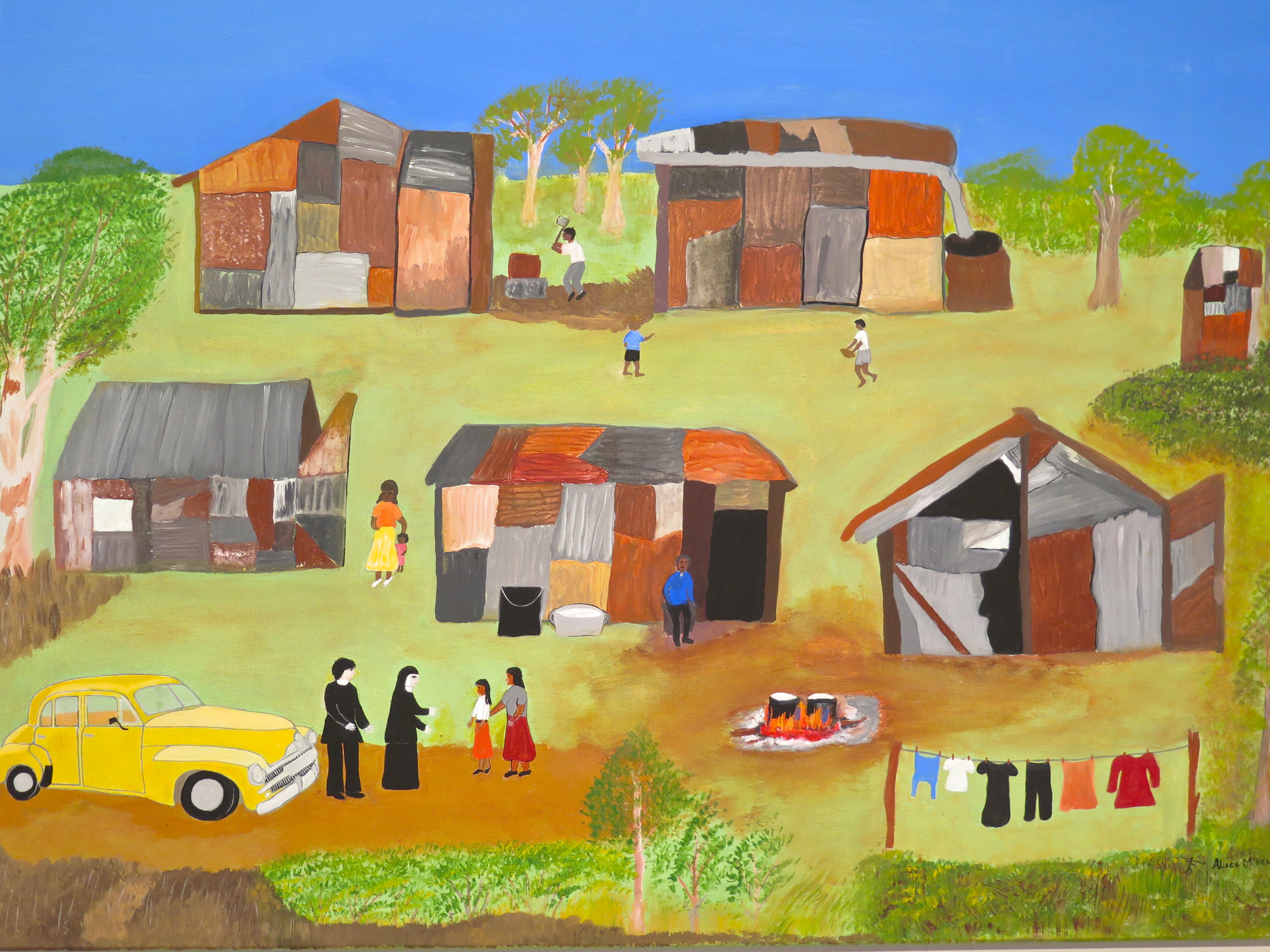
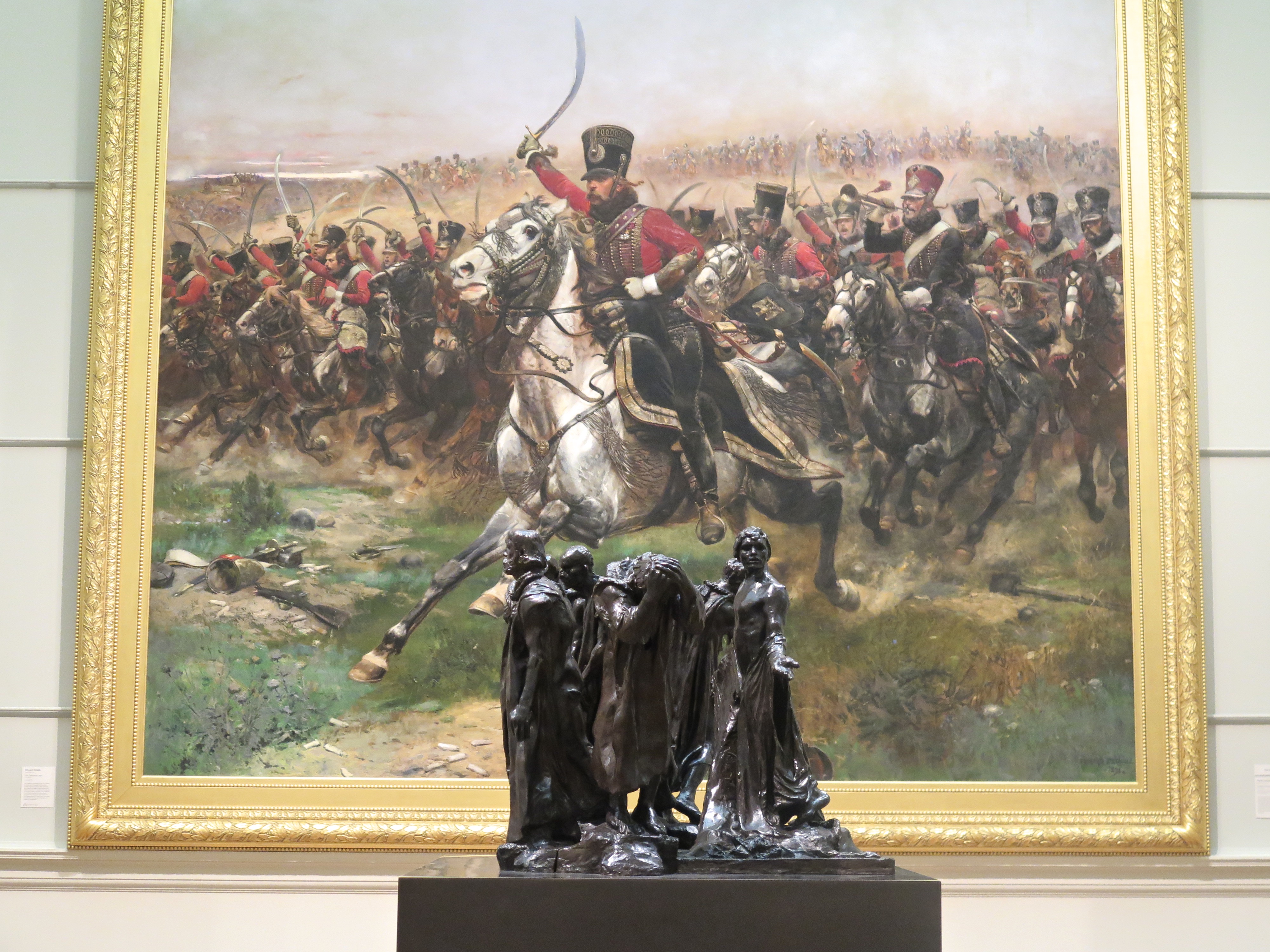
Finally the gallery seems to have been tarted up. There’s better stuff in the new building; there has been some re-hanging among the Victorians for the first time in living memory; the Asian section has been re-imagined. My arts correspondent tells me there is a new director. This turns out to be only prospectively true. July. So it wasn’t that. Just time for a bit of house-keeping, and the revelation again of the superior quality of the AGNSW’s Indigenous collection.

A fine way to finish. Ginger Reilly at his best: Nyamiyukanji, the river country with gnak gnak, Ginger’s Jukurrpa, in the foreground.









 mcraeblog