This was a destination, something I really wanted to see. Coatlicue (‘koh-at-lee-kway’), ‘Snake skirt’, or for some people, and this is a whole different rendering, Tonantzin Tlalli Coatlicue ‘Our Mother Earth with the Serpents Skirt’. (In the National Museum of Anthropology.)
It was found in 1790 during excavations of the Templo Mayor in the centre of Mexico City. After some months it was reburied. One view is that that happened because the statue was so horrifying. A second is that the local indigenous people had discovered where she was and had begun leaving votive offerings — this is 270 years after the supposed dis-establishment of their religion and its practices.
Regardless, she is a dramatic creature. She’s hard to photograph because she’s lit from above and leaning quite a long way forward making her even more threatening. 3.5m high. Monster clawed feet with eyes inserted in them, furred legs full of symbols, and then the skirt woven out of very carefully rendered snakes/serpents and fringed with heads and rattles. The snake belt has a skull mounted front and back. The necklace is composed of human hearts and hands. The forearms are raised palms out in a pouncing gesture. At the elbows are ‘monster’ joints, zoomorphised faces with bared teeth. The lengthened breasts and small rolls of flesh on either side of her midriff indicate that she is a mother. And the head may look fierce but in fact she has been recently decapitated. The scalloped ruffle indicates that. Her ‘head’ actually consists of two serpents locking teeth with the tusks which are a consistent feature of Mexican figures. The serpents can mean wisdom but they certainly mean blood.
She is in the round. From the back she is quite similar and just as confronting as she is from the front. But she is in the round in three dimensions. Under the base of the statue is this carving. It could be Tlaltecuhtli, the Earth God or possibly Tlaloc, a more senior figure who includes a long list of matters related to water in his domain.
It is a masterpiece from any point of view, including engineering. It is likely that it was at the upper level of the temple. How did they get it up there? And how did they stand it up after carving the bottom?
Coatlicue is a crucial figure in the Mexican pantheon. She is often described in terms such as Earth Lord, eater of men, dangerous presence, and wise or at least dominant advisor to Huitzilopochtli (‘weatz-lo-poach-lee’), the dominant god, the god of warfare and The Sun. Huitzilopochtli is also Coatlicue‘s son. She was impregnated by a ball of feathers and produced a warrior whose first task was to fight and kill his sister (related to the Moon) and 400 brothers (‘the uncounted stars’).
Here are the consequences for his sister, Coyolxuahqui (‘coh-yohl-shaw-kee’), ‘Woman with Bell Cheeks’. At left as she is today in the Templo Mayor Museum. At right is as she may have been, painted and lying in a pool of blood. (Coatlicue would also have once been ablaze with colour.)
The colour makes it easy to see the nature of the dismemberment (find the scallops), the belled cheeks, the monster joints and skull tagged on her belt. She is carved into a large stone disk 3.4m in diameter which was mounted, not once but in five different iterations as the temple was rebuilt and expanded, near the foot of the main steps. It is surmised that one ritual event would be to copy what had happened to her and cast the results down the steps onto this giant medallion.
What was death in this instance? Something quite different to our sense of it. Coatlicue was the recognition of a cycle of generation and decline. In death she was simply reclaiming something that was hers, life extending into death, death a part of life, part of an endless cycle. Life had no higher function than to flow into death. Octavio Paz talks about this: ‘Since their lives did not belong to them, their deaths lacked any personal meaning. The dead disappeared at the end of a certain period, to return to the undifferentiated country of shadows, to be melted into air, the earth, the fire, the animating substances of the universe’. In some moods we might agree.
I was looking at material about this on a Khan tutorial on YouTube. The two presenters talk up the lurid aspects of the statue and its savagery. But then someone has commented: ‘Tonantzin is beautiful. In order to understand the image of Tonantzin Tlalli Coatlicue (‘Our Mother Earth with the Serpents Skirt’) one would have to see it with Mexicas eyes, unlike the ‘Christian serpent’ that represents everything that is evil. To the Mexicas the serpent was as sacred as the eagle. The serpent represented wisdom, because they are the closest to the earth, hence, they adorn her skirts, the open hands along with the hearts represent life, and the skulls death, because she gives life to everyone and takes everyone back when we die. In reality it is a beautiful statue.’ This is the difference between an adherent and an anthropologist.
• • • • • • •
To the visitor, symbols of death — skulls and skeletons especially — abound in Mexico. Ornaments, clothing, cutlery, home decoration, the Lucha Libre, festival puppets, children’s toys, ceramics, confectionary, earrings and endlessly on other types of jewellery. It was impossible not to notice. And art works. We spent an hour or two in the very good art gallery of Mérida and one exhibition was a collection of prints from a recent competition. Print after print was full of skeletons or versions of an imagined — in some cases terrifying, in others more benign — afterlife. This was despite there being no restriction or direction about topic. You just produced what you were inclined to, and this was the widely shared inclination.
‘Goodbye forever’ by Hazel Hernandez
‘The one of (or about) skeletons 3’ by Josué Garcia
So not just skeletons associated with death, but as the inhabitants of a busy urban setting.
And, helpfully bowdlerised by our fellow traveller Anne, this might be some sort of climax. It has to do with Pito Perez, presumably in the background, a popular fictional figure introduced for the first time in the novel, The Useless Life of Pito Perez. He is a classic picaro, a rogue, and this painting may refer to an incident in one of the books. I don’t know. But this would seem to be some sort of apotheosis in the combination of sex and death. No one (but Anne) appeared to be turning a hair.
• • • • • • •
The great celebration in Mexican life is Día de los Muertos, the Day of the Dead. Two days really, November 1 & 2, corresponding with, but by no means the same as, the Roman Catholic commemoration called All Souls’ or All Saints’ Day.
Here’s an explanation from Mexican Sugar Skull, a confectionary company.
Indigenous peoples descending from the Aztec, Huastecos, Zapotecs, Mixtecs, Mixes, Chinantecos, Purépecha, Mexica, Otomi and Mayans were forced to adopt Catholicism and give up their multitheistic religious beliefs. Catholic priests believed they would have more success in converting the Indigenous if they could keep their cultural pagan customs and apply Biblical stories, saint’s names and a monotheistic God to what the people were already believing. Hopes were to convert slowly over several generations and this would create a less combative relationship between the missionaries and the indigenous populations. The indigenous Indian groups all had similar but regionally unique ways to honor their ancestors. They had death rituals, burial ceremonies, beliefs about the afterlife and beliefs that souls could return from the dead at prescribed times to commune with the living. Many Pre-Conquest indigenous traditions called for feasting, building altars, drums & chanting, offerings to the dead and story telling. …
We believe that the gates of heaven are opened at midnight on October 31, and the spirits of all deceased children (angelitos) are allowed to reunite with their families for 24 hours. On November 2, the spirits of the adults come down to enjoy the festivities that are prepared for them.
In most Indian villages, beautiful altars (ofrendas) are made in each home. They are decorated with candles, buckets of flowers (wild marigolds called cempasuchil & bright red cock’s combs) mounds of fruit, peanuts, plates of turkey mole [a rich thick sauce], stacks of tortillas and big Day of the Dead breads called pan de muerto. The altar needs to have lots of food, bottles of soda, hot cocoa and water for the weary spirits. Toys and candies are left for the angelitos, and on Nov. 2, cigarettes and shots of mezcal are offered to the adult spirits. Little folk art skeletons and sugar skulls, purchased at open-air markets, provide the final touches.
Day of the Dead is a very expensive holiday for these self-sufficient, rural based, indigenous families. Many spend over two month’s income to honor their dead relatives. They believe that happy spirits will provide protection, good luck and wisdom to their families. Ofrenda building keeps the family close. On the afternoon of the second day, the festivities are taken to the cemetery. People clean tombs, play cards, listen to the village band and reminisce about their loved ones. Tradition keeps the village close.
Oh to have confectionary companies like that one.
What does Paz say? ‘Everything in the modern world functions as though death doesn’t exist. Nobody takes it into account, it is suppressed everywhere: in political pronouncements, commercial advertising, public morality and popular customs. … The Mexican, in contrast, is familiar with death, jokes about it, caresses it, sleeps with it, celebrates it. True, there is as much fear in his attitude as that of others, but at least death is not hidden away.’
Could be true.
The nearest we came to death in Mexico was, after climbing up the 80 stairs to the Iglesia de Guadalupe at San Cristobal, finding ourselves watching a funeral. I found the music, of which there is a snatch here, most moving.
• • • • • • •
Another thing on my pre-expedition list was the temple of Cholula, the largest pyramid in the world. This is not a natural hill; this is dirt covering a building.
Cholula, the largest pyramid (and temple) in the world, had a Catholic church, the Santuario de la Virgen de Los Remedios on top of it. A very elegant and attractive Catholic church as it happens. There is a metaphor, an obvious one, at work here. This is how it happens: the command position is commandeered. It’s just sort of startlingly obvious here. I have written elsewhere on the topic: if you want to study really effective marketing, you must start with the Roman Catholic Church.
(I’ve just found this pic and have stuck it in for the view of Popocatepetl not available when we were standing on that terrace. It’s for me.)
But the metaphor might be too obvious. The Indigenous peoples of Meso-America were not wiped out and neither were their social and religious constructions. We saw lots of evidence of the syncretism that the confectioners refer to.
This cross is in the middle of the Peubla market. It is Christian, but we do not have a Christ figure hanging off it. The imaging has been modified to reduce the obviousness of human sacrifice as a fundamental part of the introduced religion when it was something that the good Catholics of New Spain were trying to discourage. Instead we have something like a list of symbols, nails, hammer, hands — still rather threatening.
Another reason to notice is because Peubla, a wildly attractive town full of interest is an ‘artificial’ town built by and populated by the Spaniards as a way station for their major trade route between the Mexican Gulf and the Pacific. Spaniards only. What were Indians doing in town? Running the market you’d have to think. Or, if you like, playing a major role.
This church, San Juan Bautista, is just outside San Cristobal at San Juan Chamula.
Chamula is a very particular place. It has a population of about 75,000 and almost all of them are Tzotzil, a variety of Mayan. They also speak Tzotzil, their own language. Pre-Hispanic culture, or an idea of it, has been preserved. Many of the women were wearing shawls and home-made black wool skirts on this very hot day, their hair braided in a particular way, the way of the Tzotzil. And, extraordinarily, it is autonomous, run separately from the regional and national government by members of its own community. Public behavior is managed by men dressed in sheep skin vests holding large wooden sticks.
When we were there the church was awash with flowers, and awash more generally with scrubbing and hosing going on to flush out and replace the pine needles that were covering the floor. At the same time it was decorated, perhaps functioning is the more accurate word, with thousands of lit candles in clumps, but everywhere. Also in clumps on the floor were parishioners mostly gathered round someone, sometimes dressed in white with a mirror hanging from their neck which I believe suggests access to another world. These people had taken control and were conducting their own highly individual ritual ceremonies.
The small groups were chanting, sometimes whistling, oblivious of each other. The key figures are apparently referred to as shamans not clerics, or not clerics as we know them. There appears to be a role for live chickens to absorb evil spirits and also the consumption of fizzy drinks which make you burp to rid you of the same sort of thing, and pox (‘posh’) a fierce alcoholic spirit which would influence your perception and mood.
The walls are covered with images and statues of recognisable Catholic Christian figures, although pre-eminence is reserved for John the Baptist, not Jesus. Nonetheless the church has been decommissioned or ex-communicated or whatever the word might be by the official Catholic Church.
The vibe walking back down the main street to our bus was palpable. Chamula offers tours of itself to make money out of tourism. Don’t go; you mightn’t come back.
And then there was Santa Maria Tonantzintla on the fringes of Puebla. This is the church Aldous Huxley once described as the most unique church in the Christian world. (Reputedly. Would Aldous Huxley have said ‘most unique’? Nah.)
It’s a knockout. Exquisite. Overwhelming. Plain enough on the outside (except for the topiary birdhouse on the left as you enter), you go in … KAZANG! Full tilt Mexican Baroque.
It is built on the site of a temple to a Nahuatl princess. This might have had some impact, who knows? Val told us the story, and I think it goes that a group of artists from Tonantzintla contributed to the decoration of the Puebla cathedral. They did such a good job that when they asked if they could decorate their own church approval was granted. So we have a beguiling phantasmagoria of black, brown, multicoloured as well as white golden-haired cupids, celebrations of corn and flowers, birds and jaguars, black disciples and several thousand characters completely unrecognisable in the Christian firmament. These are not my photos because no photos were allowed. If they were they would show the whole building festooned with fresh flowers and smelling like heaven must.
A model and illustration of what Tenochtitlan (the site of Mexico City) may have been like. In the National Museum of Anthropology.In the centre of the model is today’s Zócalo, the giant city square.
Early in the 14th century the Mexica were a small, obscure nomadic tribe searching for a new homeland. One of the many things they were good at was dates. We can say with confidence that in 1325AD their wanderings came to an end. They entered the valley in which Lake Texcoco was situated and put down roots there because they were also a profoundly religious people. A serpent had been observed fighting an eagle on a cactus. This was a sign, the sign, to stop and settle.
This place became Tenochtitlan which two hundred years later at the beginning of the 16th century was one of the largest and, in some ways, the most sophisticated cities in the world, smaller than Constantinople but as populous as London and Paris. It was most carefully planned on a grid based on the cardinal points of the compass. It had causeways between islands for transport, aqueducts to carry fresh water and sewers to dispose of waste. It supervised and benefited from trade across the indigenous nations of the peninsula. Its scientists and mathematicians had developed a sophisticated understanding of astronomy, time and certain forms of manufacture. As Cortés was delighted to discover, they mined, smelted and fashioned precious metals including alluvial gold. They had wide well made roads, but no beasts of burden. Wheels were used only for toys. Over a reasonably short period of time (1325-1521) the city had developed from its bare, wet origins into a metropolis, the heart of an empire led by a single ruling leader supported by classes of nobles, priests, warriors and merchants.
The city was founded on a small island in the western part of the lake. To create living and farming space the Mexica sank piles into the water and formed small land masses they called chinampas, or floating gardens. Until they became stabilised which they did to some degree over time — Mexico City is still visibly wobbly — they could operate like wicking pots, absorbing water from below and not having to rely on the variable rain fall. They have now populated most of where the lake once was.
I knew about this. I’d read the book. (Inga Clendinnen, Aztecs: An Interpretation, not to be missed, masterly.) And just while we’re here, the word Aztecs, which in Inga’s book only appears on the cover. (Almost.) ‘Aztec‘ was a term coined by German explorer Alexander von Humboldt derived from ‘Aztlan’, the term the Mexica used to describe their original home in northern Mexico. He wrote about this in 1810 and the term was taken up and popularised — obviously most successfully — by American historian William Prescott. ‘Aztlan’ means ‘place of the white heron’ which suits my purposes here.
We are at Tlahuac (‘La wuck’ is close enough), and Alfredinho is telling us about chinampas. As far as she knows, Alfredinho’s forebears have lived right here since pre-Columbian times. Our guide Valeria is at right. Now I look there is an effigy of Coatlicue, ‘Snake skirt’, in the foreground along with some gaily coloured corn and a Yoplait jar. And in the background there is one of the many white herons we saw on this and other days. We are about 25kms south from the centre of Mexico City and still in the remnants of Lake Texcoco. This is somewhere you wouldn’t be unless you were on a tour, and perhaps more accurately on a very particular tour with Val who was rather wonderful. And in the background is the edge of a chinampa.
The trees planted for the purpose have constructed a bank with their fiercely interwoven roots. Several hundred years of earth moving, composting and vegetal litter has produced this result.
We were assured, in the most contemporary of terms, that everything grown here was completely organic and pesticides were never used, although post-Columbian plastic was used for cloches to support seedling growth and some out-of-season produce. It is worth noting that climate change had impacted on the nature of work here.
We had lunch all of which had been grown in a section of this chinampa (many families have plots here) and it was very nice indeed.
A view on the way back from lunch. The hills in the background are covered with the houses of the wealthy.
To qualify the tourist romance, other parts of Tlahuac are believed by the locals to have been built on the rubble generated by the monster earthquake of 1985. This has added to the already considerable instability of the region. Most of Mexico City is subject to subsidence (up to 15cms a year in town, 40cms a year in Tlahuac). At left is an example from right next to the cathedral and the Templo Mayor. Look at the balcony. Groundwater extraction (see The Sacred Cenote) contributes significantly to this problem.
The worst affected are those living in the pueblos originarios (pre-Hispanic towns) which scatter through the Tlahuac region, an area growing rapidly from an influx of people from other parts of the country to live on the city’s fringe in the hope of finding ways to make a living. These fringe areas also happen to be those most prone not just to subsidence but to earthquake damage as well. In The Labyrinth of Solitude Mexican Nobel Prize winner Octavio Paz talks about how ‘Our territory [Mexico] is inhabited by a number of races speaking different languages and living on different historical levels.’ This has social and economic consequences.
Everything is a package.
We remain on botany.
Central Mexico between Puebla and Oaxaca. Not atypical.
Unalloyed good. No qualification. It is the Jardín Etnobotánico de Oaxaca, the Ethno-Botanical Gardens of Oaxaca.
You can only visit under supervision, so we were on a tour. It was very hot with little shade and the tour was to last two hours. I was sure I couldn’t possibly last one hour let alone two. But I was left wanting more. The guide was Caroline a mature-aged Canadian botanist who had lived in Oaxaca for at least part of many years, and she was brilliant. Two of the most entertainingly educational hours I have had in my life.
What did I learn?
47 varieties of corn, all manner of colours, are grown in Mexico. None of them is ‘sweet corn’ as we know it. 28 of these varieties are endemic to Oaxaca Province. The kernels are hard and, and, through selection and breeding, tend to be large. Their primary purpose for millenia has been for flour. I add: tacos, round pancakey affairs made out of corn flour are the staple of the Mexican diet. They can be found on most street corners and are served with your choice of filling: refried beans, shredded pork, guaca mole (‘avocado sauce’), carne (MEAT). To me they taste of the smell of earth, soil that is, most certainly savoury rather than sweet. That smell/taste can be found throughout Mexican food. Corn is ubiquitous.
There are several thousand varieties of peppers. Only one genera is ‘hot’. I add: which doesn’t stop it being used very widely in Mexican cooking. EXCEPT, it is very frequently served as an accompanying salsa which you can choose to include in your meal or not. Often there were three: red (conventionally very hot), green (hot but often in local and unusual ways), ‘white’ or clear (lots of differing things, garlic and onions for example). Three of goodness knows how many. Regionality is defined to some extent by the nature of the sauces served with easily recognised meals.
La Ceiba, ya’axché in Mayan, the kapok tree, is one the two trees sacred to Meso-American peoples. They considered them as a connection between the earth where their roots reached down into other realms and heaven where their crowns towered. Can grow up to 75m high, their branches distinctively stick out at right angles, their trunks are covered in very sharp, and hardy, spines which can be up to 20mm long. Impaling oneself on the spines has had meaningful gravity in a range of spiritual contexts. And of course, their fruit is full of useful fibre. En passant, Cortés ordered the hanging of Mayan emperor Cuauhtemoc from a Ceiba, just turning the knife.
The second is the ahuehuete, the Montezuma Cyprus. It has very strong and useful timber. Its resin was also widely used to treat gout, ulcers, skin diseases, wounds, and toothaches.
There are more than 2000 species of cactus. More than half are endemic to Mexico. Brazil has the next most, fewer than a quarter. Canada has none. Nor has Australia. They grow very slowly but, without intervention from insects, humans or disease, there is no reason why they can’t live forever. Almost literally. The primary form of threat at present is climate change because they have a low capacity to adapt to fundamentally changed climatic circumstances.
Despite it having spikes the agave, or maguey, is not a cactus. It is a succulent and was fundamental to pre-Hispanic life. It was the source of fibre, so clothes, shoes, rope, roofing thatch, thread and so on and on. Its spines were used for needles, its leaves for lining baking processes in the earth. Its sap can be used as a sweetener. It is also the source of pulque, an alcoholic drink, used for example by sacrificial victims and still drunk today. But not as widely as its derivatives, mezcal and tequila. And, yes my goodness, they do flower, a precursor to death.
The sap of the copal tree is valuable for its olfactory properties. Through history it has been used as incense, as well as a varnishing and gluing agent, and a medicine. When burned, Copal resin produces a sweet, earthy smell. But it is also excellent wood for carving. Oaxaca is known for many things, its mole sauces for example, but also its art. One of the things you can find there that you can’t really find anywhere else, certainly not in the same profusion, is alebrijes, carved and decorated animal figures the ‘product of the nightmares’ of the artists. These rather special and very big ones were produced by husband and wife, Jacobo and Maria Angeles, and in the Oaxaca art gallery.
Lastly, Caroline is pictured collecting bugs off the prickly pear in the foreground. She brought them over and encouraged tour members to squash them, then claimed that what we were looking at was the most valuable export from the Americas to Europe for 150 years. They were cochineal bugs. The bugs are about 5mm long and in the past they were collected by brushing them off the plants. The amazing red they produce is now used to colour food and lipsticks, but in the 16 and 17th centuries they were the primary source of all red dye. Red, the royal colour, was almost impossible to reproduce in any other way until artificial dyes came along. More valuable than gold.
Why do we know so much about pre-Hispanic peoples? Firstly it isn’t that long ago that they were introduced to a larger world. Secondly, they offered endless narrative imagery in carvings and drawings and their own imagaic languages. Thirdly, they spoke many languages but Nahuatl, the language of the Mexica, was translated into Spanish and vice versa very early on, not least by a Nahua noblewoman Cortés took as his mistress. (Footnote: ‘La Malinche’ who even has a major pass named after her. In contemporary accounts she is pictured marching at the front of the army with Cortés. He dumped her.) Considerable effort was also put into alphabeticising it so it could become, as it did, a written language. Vast amounts of information were stored in codices — pictures and writing on European paper — on all sorts of subjects and over time. Here we have one sheet drawn from the Codex Osuna, a message directed to the Spanish king.
The writing is in Nahuatl. The middle ideograph is about harvesting cochineal. It is a complaint about not being paid for work. Interesting that they could. This is not an entirely subject people.
Mexico City is like another world Nice this year they say
— Donald Fagan, ‘Maxine’
What’s the photo for Mexico? It’s so hard. There are so many choices. Maybe this one.
Orientation
WHERE WE WENT
Mexico is the 13th biggest country in the world. I didn’t know that. We arrived in Mexico City (in the red rectangle on the left). What is it, half, two-thirds of the way south of the US border? Didn’t see anything north of that. Looking at the country’s ‘Peace and Well being’ Index, the closer you are to the American border the less peace you can expect to encounter and the more constrained your well being. The drug gangs are spread around, but they cluster in the north. Where we were (in our tourist bubble perhaps?) there was not the slightest sign of trouble. We did get up at 3 o’clock one morning — encountering the steely grey of dawn an unfamiliar experience for me; and it wasboth steely and grey — for the bus ride from San Cristobal to Palenque. This was to avoid any encounter with the unrest which is troubling Tabasco Province. No one was going to get shot but the bus could have been held up for a while. We travelled about 2800kms with confidence. It’s a big country.
And, as you might imagine of an isthmus between two giant continents, it is mountainous. The altitude of each of the first three cities we visited is higher than any point in Australia. Popocatépetl, an active volcano which was in hiding the day we went to Cholula hoping to see it, is 5400m high. Reaching out to Cuba is the Yucatan Peninsula some of which is very flat indeed, and a good deal of which is tropical unlike the more easterly spine. The Equator runs well to the south but the country is still generally hot. A lot of the country is very dry. It rains in central and south Mexico in their summer and autumn, May-October.
In 1519 Cortés began an invasion by Spaniards from roughly where the major port on the Caribbean, Vera Cruz, is today. Conciliatory at first but progressively becoming more violent, in 1521 he was in a position to destroy Tenochtitlan, the Mexicas‘ capital, and did so. (‘Muh-shee-ka’, Aztecs, but the name they called themselves.) He could not have done what he did without very considerable help from the many peoples of Meso-America who did not like the Mexica. There remain many many indigenous peoples in Mexico who have differing cultures, languages, styles. In addition Mexico has had slaves from Africa and a great deal of immigration from the US ranging from commandants of capitalism to high-maintenance hippies. Trotsky was only one of many Russian and central Europeans to seek asylum there. Of course, Spaniards came, some no doubt considering it an exciting and rather mystifying version of a suburb of Madrid or Seville until they discovered otherwise. It has drawn horticulturalists, historians, archeologists, anthropologists, geologists and many other ologists. From a US perspective, it is close, relatively easy and the food can be enticing. As with Cortés, the sense that you could make money here might be enduring. And people have. Carlos Slim, for example, is an outrageously rich man. A decade ago he took his turn at being the richest person in the world. The wealthiest suburbs of Mexico City — Polanco, Bosque de Lomas, La Condesa — are as opulent as anywhere. And if you want cool, try Roma Norte or parts of Oaxaca (‘uh war-ka’. This will recur.)
Injection
On our second night in the city we went to see the Ballet Folklorico of Mexico at the Palacio de Bellas Artes, the Palace of Fine Arts. The building itself was worth the price of admission.
Photo by that very clever fellow traveller, Caro
And then inside was the curtain made by Tiffany of New York. Out of glass. (I include the bald head of that American to remind me usefully that there are people in the world who know everything.)
I was still suffering from the occasional jetlag dropout — when you’re suddenly both asleep and for example reliving an unhappy event from your 20s or perhaps driving a car over a cliff — and wasn’t entirely persuaded at the beginning. A bit hokey maybe? But by the time we got to singing along with ‘Viva Mexico’, the monster finale, not a dry eye in the house, I was shouting applause.
This is only a screen shot. You can watch the lot if you like. Here.
It was an introduction to, among other things, death and its symbols, the solitary indigenous warrior, the startling headdresses of Moctezuma, the cowboy and cowgirl, mariachi Mexico’s very own music which I had unaccountably forgotten, the ribbon dance, duelling harps, astonishing bands and the elegance of Mexican ‘folk’ dance, more varied and interesting and simply more beautiful than so many of its ethnic competitors. Flamenco, tap and ballroom somehow merged to produce something deeply original, the women dressed in skirts with 540 degrees of cloth that were a crucial part of the dance. Bits from everywhere but somehow making sense as a whole.
The night after we were in Puebla and the Lucha Libre, ‘Free Fight’, happened to be on.
On the travellers’ principle Do Everything, we went. Downtown at the dedicated stadium were dedicated fans housed above either side, according to their propensities, behind wire fences. The wrestlers appear, beat their chests, salute their followers, taunt the opposition fans and then do their business for 20 minutes or so. Consequently they drag themselves from the ring, apparently spent and mortally injured.
It’s a dance, choreography at a very high pitch and practiced to a polished gem. I can confirm that during the making of this event no participants were harmed. None. Even the bloke dressed like a chook. If the Ballet Folklorico had been magnificent, this had been bullshit, but magnificent bullshit. Glorious passionate ornate bullshit … that could, like that fascinating amalgam which is Mexican Catholicism, be taken seriously.
Every country might have their crazy sports, but Lucha Libre just seemed to suit Mexico down to the ground.
• • • • • • •
Mexico City is the sixth most populous city in the world. Its heart is the Zócalo, this massive public square.
The square is surrounded by the National Palace (in the middle), various government offices, some upscale housing and the cathedral. On the left in the picture, it is an amalgam of constructions and styles, the contribution of several different centuries, coming apart in places but a masterpiece of religious inspiration and baroque imagination.
Between and behind the palace and the cathedral this can be found, remnants of a Mexica temple, the Templo Mayor, which, in its day, defined not just the centre of the city but the precise cardinal points of the compass and in fact the sacred centre of the universe as the Mexica knew it to be. Fundamental, powerful, serious, consequential.
In order for the sun to come up each day, the blood of countless hundreds of thousands — mostly captive warriors from other communities colonised by the Mexica for that very purpose — had spilt down its steps. Stretched face up over a large convex carved stone, priests holding the four limbs, a plunge of an obsidian or flint cutting instrument, reaching in for the beating heart to display it, skin flayed off and for some time worn by nobles and warriors. For us savage, perhaps barbaric, drama; for them, presumably, quotidian life.
When Hernán Cortés was administering the final coup to that Mexican world in 1521, the temple was one of the first things he destroyed, razing it to the ground, building a cathedral on the site and laying the foundations for several centuries of colonial regimes, … correctly other colonial regimes. He wasn’t just tackling a world view; he was destroying an unpopular empire which itself had colonised a substantial portion of the Mexican isthmus, ocean to ocean, in what would seem to us a very bloody and brutal fashion.
Mexico hosted the Olympic Games in 1968. The ‘Zócalo‘ is a few hundred metres from the Plaza of the Three Cultures (pre-Columbian, Spanish and Independent) where, ten days before the Games were to open, students protesting the Mexican government’s use of funds for the Olympics rather than for social programs (and onlookers and locals and children and old people) were surrounded by the government forces and shot at with live ammunition. Estimates of fatalities range from 200 to 500; certainly more than 1000 were badly wounded. 1354 were arrested. The ‘Massacre of Tlatelolco’ is an open sore in Mexican memory. Responsibility has been disputed and widely assigned. It seems it was the US, for example, that provided the weapons on the basis that they were to be used ‘to ensure the Olympics proceeded peacefully’. It wasn’t until 2001 when the government finally changed after 71 years, President Vincente Fox opened the files. The information they contained validated reporters’ eye witness accounts:
Thousands of students gathered in the square. The government version is that the students opened fire. There is clear evidence now that there was a unit that was called the Brigada Olímpica, or the ‘Olympic Brigade’, that was made up of special forces of the presidential guard, who opened fire from the buildings that surrounded the square, and that that was the thing that provoked the massacre.
The opening of the Games proceeded as normal. (It was here Tommie Smith and John Carlos, first and third in the men’s 200, gave their black power salutes. Peter Norman came second and, for being on the podium, was banned by Australian officials for life. In another odd miracle Bob Beamon broke the world record for the long jump by 55cms, something that just does not happen. That record stood, not approached, for 23 years.)
‘Zócalo‘ is not the Mexican or Spanish word for ‘Square’ or anything of civic relevance. It is the word for ‘plinth’. In 1843 Antonio López de Santa Anna, who — counting puppets — may have had six terms of Presidency between 1832 and 1853 and is somewhere near the top of the highly contested field of Mexican leaders who ‘failed the nation’, cleared the markets which had grown up on this area. This followed riots which resulted in a number of deaths and the destruction of much of the informal infrastructure which had been developed. In the centre of this new plaza he determined to build a monument to Mexican Independence. But his project got only as far, so to speak, as first base.
For ever and a day, the ‘Zócalo‘, the centrepiece of the city’s centro historico (and also that of Oaxaca, Mérida, Guadalajara and many other Mexican cities) contains a joke, and an anti-authoritarian joke at that, a tiny eruption of revolt. (Footnote for Santa Anna: It was he who lost Texas to the US and then kept negotiating more bits away to prop up his rule. More especially, he married two young heiresses and was present at neither wedding.)
The layers that are present here in the Zócalo and its surrounds, including the Palacio and the Plaza de las Tres Culturas as elsewhere in Mexico, are thick and rich, all of them, as complex as any in the world with this contemporary mix of old, new and even older worlds, of unkempt and churning governance, of cruelty warmth and generosity, and the conspicuous prominence of religion, entangled with sex and, especially, death — all in a blaze of unabashed flagrant colour.
That, I think, is why you would choose to visit Mexico.
The teeming Tree of (Mexican) Life (noting the centrality of corn, and religion).National Museum of Anthropology
Up the street in Oaxaca. It had been Easter.Purple and white, the colours of The Passion.
Just a street corner. Oaxaca too.
El Piñar (‘Pinewood’), one of the mansions of Mérida.
‘Three eras of Yucatan history’ (my translation), Fernando Pacheco, one of Yucatan’s most significant artists
Street art in Puebla
There is more. A good deal more.
Tune in here for growing lettuce on top of a lake.
A journey of 30,000 kilometres begins with a tram ride.
Number 19 (in shot), up Sydney Road from Grattan St to the terminus at Baker St. One kilometre walk to the intermediate destination in Coburg North to deliver a mended jumper (in the plastic bag). Private transport to the airport. Actually a hotel at the airport because we needed to be there at 4am to get a 6 o’clock flight to Sydney connecting with a flight to LA. I thought this was a good idea because you could change the sheets, make the bed, clean the floors, check the fridge, get rid of the rubbish, that sort of thing, in a leisurely manner rather than trying to go crackers at 1.30 in the morning. Plus you’d already be at the airport.
That all went like a dream, a good omen, because what was ahead was reasonably ambitious. A tour of Mexico covering a lot of country, an investigation of Boston and the north-east of the United States, a walk in Provence’s alps, a big drive through France with time spent in Burgundy and Alsace, some time in Singapore … well, that’s just how the thinking turned out. It covered what we thought we would like to do, albeit in something of a hurry. Seven weeks, six countries, one twice, 27 different beds and a night spent in a bus, 9 flights with 7 different airlines, a dozen bus rides, commercial, private, big, medium, mini, for about 2800 kilometres, a lot of them pretty bumpy (Mexican speed bumps!! Bloody hell), three subways, two lots of trams, trains exotic and otherwise, company known, unknown, recovered. Yes I know, heroic. Plenty of opportunity for things to go wrong.
But I felt pretty good about those Things when we got to the airport for departure. We were in good time and good fettle. I had a folder full of bits of paper all backed up on my phone that were proof against surprises. They were all well rehearsed. I could visualise issue and response. Then a bit of a hiccup: we hadn’t filled out our Qantas authorisations to fly. Just the details of our COVID vaccinations. No issue: I had the records to hand.
Then the swiping of the passports began. Whatever she did, the Qantas checker-in could not bring up our ESTAs, the US Electronic System for Travel Authorisation without which you cannot enter the country and in fact without which the computer will not issue a boarding pass. The ESTA is not a complex affair, straightforward personal data, vaccination info, the questions you still fill out on the form to enter Australia. It’s just quicker and more efficient now.
I was only a bit bothered because I knew about ESTAs. It wasn’t a surprise. I had done ours some weeks before and had paper and digital copies to prove I’d done so.
But the computer said no. And no. And no. And no. And no again. Time was passing, and instead of being in good time for our flight the boarding time came and drifted past. This was a BIG issue, because with a round the world ticket if you miss any leg the rest of your ticket is immediately cancelled. Were we to fall, catastrophically, at the very first hurdle?
A supervisor who had been hovering was summoned. He took our passports and bits of paper away while we stood, faint, moving off after clogging up that lane of the check-in for 45 minutes. He came back with what I would describe as an intent look on his face. ‘How much did you pay for these?’ he asked. ‘Fifty-eight US.’ I knew all this. I’d done it. I’d been careful. I had the proof. It must have been their computer. ‘It should have been 21. You’ve been scammed I’m afraid. There is no record in either case of an ESTA. Without that we can’t issue you a boarding pass.’ So what do we do? ‘You can apply now, but it can take up to 36 hours to get a response.’
We sat on a luggage belt and began the applications on our phones. Phones have small screens when you’re freaked out and your fingers get unaccountably fat and there are several steps including the transfer of money and we were just sitting there with no concrete prospects and why were we doing it anyway because where we really needed to be was Mexico City rather than LA. Maybe just say, fuck it and give up. Write the whole thing off … too hard …
Did it take 15 minutes? It might have, I can’t remember. It might have been twice that. But we finished them and clicked Send. What now? Two old folks sitting on a luggage belt in an airport departure centre right out of the game.
Another actor arrived, a deputy supervisor who invited us to stand at a different counter and talk to her. We considered various options. As we spoke my ESTA arrived. Just the faintest glimmer on the horizon. The faintest. She looked and looked at her computer, and went off and spoke to people, and came back and looked some more, and made noises which were neither encouraging or discouraging. Went off again and came back and said, ‘We think we can get you on direct flight to LA tomorrow afternoon. Would that work for you?’ Yes it would. Salvation. Qantas did that for us, Qantas, which also provided flights at least as comfortable, reliable and efficient as any other airline we subsequently flew with.
So we went downstairs, got a cab (during the ride Myrna’s ESTA came through) and went home, messed up the bed, may have brought dirt in on the floors, found nothing in the fridge and the internet turned off, put some rubbish — the fake ESTAs — in the bin, and slept fitfully. Tomorrow was going to be another day.
A cenote is a sinkhole, a natural hole just here in limestone, sometimes very deep, which exposes the water table. There are a number of tourist-level ones on the Yucatan Peninsula where (if you’re our travelling companion Caro) photos like this can be produced.
You can imagine the durability of their cultural significance in a land mass so hit-and-miss with water that one of the four foundation Mexica (Aztec) gods was Tlaloc (and there was an equally important Mayan equivalent: Chaac), lord of celestial waters, lightning flashes and hail, and patron of land workers. His main purpose was to send rain after the dry months to nourish the corn plantings, and it is almost impossible to say how important that was. Tlaloc, perhaps punching a bit above his weight looking at that pot, married Xochiquetzal (Quetzal Flower) the goddess of fertility, sexuality and youth.
He had his own ‘earthly paradise’ (as opposed to the celestial paradises in operation) where Mexica who died from one of the following illnesses or incidents would meet and live with the family of water-related deities: drowning, lightning strike, dropsy, leprosy, scabies, gout, generalised aches and pains, and people with stunted growth who were physically similar to Tlaloc’s divine helpers. This narrative is interesting not least for the list of defined ailments. Mexica: Good. Different. So sophisticated in some ways.
Digression: I thought a lot about water in Mexico. Mexicans drink only bottled water, mainly from 20 litre garrofons, the sort of thing you’re supposed to stand around at work, but from little bottles as well. They buy around 28 billion litres annually spending $US15.9b to do so. The cost of 1,000 litres from the tap (mostly but not always non-potable without treatment) is about $US2; the same amount of water, sold in bottles, costs between $US450-650. The bottled water is mainly artesian. The water table is declining, a process which climate change may hasten. 90m plastic bottles are disposed of annually.
And they drink Coke. Bottom rows, 5-litre bottles for just over 3 Australian dollars.
We’re back: The focus is this cenote, Chichen Itza’s Cenote Sagrado sometimes referred to as the ‘Well of Sacrifice’.
It doesn’t look like much here but it is of enormous cultural significance to Mayan peoples.
Chichen Itza is the largest complex of Mayan buildings discovered to date. It is in the middle of the north of the Yucatan Peninsula and dates from 600-900AD. It covers 30 or 40 square kilometers and has an absolute host of buildings including 5 or 6 major temples, an observatory, a market square, domestic buildings, and a colonnade several hundred metres long.
These buildings are of many different architectural styles suggesting the cosmopolitan nature of Mayan society at its peak. Many surfaces are covered in detailed carvings. Hard to imagine, but they would have all have been painted, mainly red, green, blue and purple.
It also has a massive pelota court (160 x 70m), its sides covered with quasi-realistic figures as well as symbolic narratives. Pelota is one of those fascinating oddities (to us) of Meso-American life. Played with a rubbery ball a bit bigger than a grapefruit, you could only use your elbows, thighs and buttocks to move it with the apparent object of getting it through rings mounted at variable heights in the air, here about 6m.
And it might have been if you lost, you really did lose.
The severed head. Of the loser?A massive spout of blood in consequence, rendered as serpents
But what the hundreds of thousands, the millions, come to see is this, the Temple of Kukulcán, the ‘feathered serpent’ prominent in many Meso-American mythologies, or, post-Cortesian, El Castillo.
It was almost certainly built over the top of another pyramidal temple. In addition, in 1990, it was determined that both were built over a cenote, which would thus be in the middle of a straight line north-south axis with the Cenote Sagrada, about 500m from the core of the temple, and another less important cenote, Xtoloc (‘iguana’) about 350m away, powerfully amplifying the significance of each. Maya and Mexica alike attached enormous gravity and import to the cardinal directions.
Although its political significance had diminished, there were still Mayans living at Chichen Itza (just as there are today) when the Spanish arrived in the Yucatan in 1526. The Cenote Sagrada was still of high order religious significance. Its status remained stable for centuries after that. Perhaps until influencers decided to use it as a backdrop.
When, after several failed attempts, the Spanish eventually conquered the Yucatan this area became a cattle ranch albeit called Cuidad Real, Royal City. But over time it was reclaimed by the jungle. In 1843 John Lloyd Stevens, an American, by profession a diplomat and by inclination an explorer, published a book with illustrations by Frederick Catherwood called Incidents of Travel in Yucatan, an account of his explorations of Mayan culture. It excited considerable public interest. Could such a building actually exist readers wondered? (This photo will be explained further below, but Catherwood’s illustration is in the foreground being held.)
In 1894 the United States Consul to Yucatán, Edward Thompson, purchased the Hacienda Chichén, which included the ruins of Chichen Itza. He explored his ‘property’ avidly and with the interests and sensitivities of his time. He is best known, however, for dredging the Cenote Sagrado over a period of six years. He recovered artifacts of gold, copper and carved jade, as well as the first-ever examples of what were believed to be pre-Columbian Mayan cloth and wooden weapons. He also found a number of skeletons and human bones indicating that this had been an arena of human sacrifice. Thompson shipped the bulk of the artifacts to the Peabody Museum at Harvard University.
This story is only partly about the religious significance of water. It is also about co-incidence and the little epiphanies which occur when you travel.
From Cancun we travelled to New York City. The central mission was to go to MOMA to look at its collection of seminal modern art. But the crowds were thick, thick beyond compare really, and everything looked promising so we decided to go to a side exhibition called ‘Chosen Memories’ just to get out of the ruck. It was all wonderful but two contributions stuck out.
The first was series of lithos by an Argentinian, Leandro Katz, revisiting and reconstructing Catherwood’s illustrations, to make comparisons over time but also to try to provide visual commentary on the way Catherwood may have romanticised what he was seeing. The photo above is one of those lithographs.
It was a how about that! moment. Engrossing.
This is another one suggesting that Catherwood was not far off the mark. Catherwood at the left, Katz on the right.
And following, just in a slightly different direction, putting myself in the story …
Katz’s lithoMy photo, Palenque
But then there was a second contribution by Gala Porras-Kim, a Columbian artist focused on this, a very careful rendering in pencil she had made of all the pieces of textile (including the museum’s centimetre reference marks) which Thompson had dredged from the Cenote and donated to the Peabody Museum.
It was a multi-faceted work which included a copy of a letter she had sent to Jane Pickering, the Director of the Peabody. Part of it reads:
… I am interested in objects suspended from their original function by being stored and displayed in institutions solely as historical objects. In this case, these votive offerings were submerged as tributes to the Mayan rain god Chaac, and probably never meant to leave the cenote. It is clear from the documents regarding the provenance of these objects that human laws were used to displace them from their intended place to their current location at the Peabody. Their owner, the rain, is still around.
Some of the objects had been preserved over centuries because they were submerged in water in the cenote. Their current state of dehydration, caused by their extraction and maintenance by conservators, permanently changed their composition so now they are just dust particles held together through conservation methods. The Peabody is, in fact, preserving this dust as a shell of its past shape. Your storage, being in one of the driest environments in which they can exist, is in complete opposition to their submerged wet state.
The museum is tasked with caring for the object, but should not be limited only to the physical conservation of material form, by extending this care to the immaterial and preservation of the ritual function — the dignitary interests — that still may exist within the object. Since we can only speculate on what the rain might want, we can, by extension, consider ways in which we can reinstitute the ritual life they continue to have within them as well.
[Offering a discussion of possible ideas for restitution]
… Thank you again (etc.)
Two days later we could be in the Peabody (in the suburbs of Boston) and I looked forward to checking signs of increased reverence to ritual function.
There were many signs of ritual function as we walked up through Harvard.
The Stadium, built 1903. First vertical use of reinforced concrete. Janis Joplin performed her last show here. Iconic?The ‘Old Yard’. A mystical absence.
The Harry Elkins Widener Library: 57 miles of shelf space. He went down in the ‘Titanic’: an offering to the water gods?
The Memorial Hall. A major temple recognised in heritage listings.Rubbing John Harvard’s toe. An ancient ritual? Should the Peabody be notified?
The Peabody is really the Peabody Museum of Archaeology and Ethnology with a particular focus on the Americas. It is ‘one of the oldest, largest, and most prolific university natural history museums in the world’. (‘Self praise is no recommendation.’ B. Findlay’s mother.)
It specialises in paleontology and had skeletons of big things. But I was more interested in how it treated the First Peoples of Meso-America and their artefacts. Had it learnt its lesson and repatriated materials to their natural homes?
It had certainly learnt some lessons in the arena and, perhaps of course, was a model of political rectitude. Notices everywhere explained and apologised, well justified really, justified and explained, not that they had much to apologise for, and nothing that I could write to Gala Porras-Kim or the curators at MOMA about. Models of a temple, a copy of a statue, couple of other bits and pieces, a terrific Day of the Dead altar,
and a water colour copy of a Guatamalan mural suggesting that gossip existed well before The Modern Era.
My favourites turned out to be a Lakota dance head dress and the Penobscot canoe.
We moved on quite quickly to the Museum of Natural History next door and found a truly weird and wonderful collection of glass flowers. All glass. All. Every single bit.
And minerals. OH those minerals!
Is that full circle? … Hmmm. No. Oh well. True stories can lack a narrative arc. Quite strong linearity though. We have at least got to America, for a time the home of revolution. But first, art. The 10 Best Paintings in the World. Phoooot, … just imagine.
Elena Ferrante only had the one. I have at least three.
After, in each case, a long gestation, three stunningly good books were published in 2021/22 by people I know. Great books. Books of consuming interest. Unusual books. In each case, written with a passionate commitment to the task and its outcome. I have the incidental and particular pleasure of listening to the voices of people I know.
These ones.
They have some things in common.
Each of the three is profoundly ambitious. In each case that ambition has been realised but has also taken the books off into highly individual directions.
Dean’s is probably closest to the mainstream in terms of conception and execution. It is its sensibility that makes it idiosyncratic. Bookclubs of retired academics may take it up with some avidity, but I don’t think the other two are going to get on the lists that circulate of favoured choices. There is a stream, which is not main, for Meredith’s book; but Michael’s book belongs in a special place intire of itselfe.
The last two were both (initially) self-published and so they haven’t been massaged into what might be considered a commercial form by the publication process. They remain exactly as the authors intended them to be, and this is most obvious in their structure. Such dramatic choices as Meredith and Michael have made will unsettle readers whose preference is to remain settled. But all three use structure as a fundamental component of meaning. To create his case Dean imports these stony blocks of investigation and lays them one on top of the other decorated by the remarkable relevance of his own experience. Meredith has her own particular template which imposes some order on a mighty efflorescence. Michael’s book starts with a review of what you’re about to read. Not all books use structure as a fundamental component of meaning, but really good ones make the most of the possibilities allowed by their craft.
All three are built on a mountain of research. They all share a delight in the acquisition and sharing of a fact, part of a fervent need to be comprehensive and accurate in the exploration of their concerns. While they love a fact, each is suspicious to some degree of veridicality, the truth of an utterance, any utterance: Dean because of the partiality of history; Meredith because of the uncertainties implicit in the way life evolves; Michael because this is part of the bim-bam of his story. But they can’t hide it; they do love a fact. And so do I.
None of them are formal or distant narratives. The three books are all-in wrestles with issues which have been bothering these authors for a long time. And the matter in question is profoundly serious: living with nature; accommodating the reality of Australian history; and pain, violence and masculinity with all its kinks.
There is both trauma and release in exposing yourself in this way. I thought of calling it mature writing with an adolescent indifference to self-exposure, hoping that ‘adolescent’ would suggest its freshness and ‘indifference’ would be understood as the carelessness of courage.
Two of these books have had important public recognition, but forget the acclaim. Doesn’t matter. Make your own mind up. Read them. Each of them is a monument to intelligence and craft which can stand confidently secure in their truth to themselves. And, frankly, that is both a) out of the box and b) more than enough.
• • • • • • •
Fifty years ago we were married at Meredith and Gil Freeman’s place in Thornbury. I wanted it to be there because the whole set up — an old private hospital with much treasured blood stains on one wall — was a live example of living with the (very urban just there) land, living sustainably and thinking about what you were up to. And then there was the garden. Meredith had transformed the northern suburbs hydrophobic sands and clay into the richest mulchy loam imaginable. Forget the endless things growing in it, this soil simply bristled with goodness. It made you want to wallow in it. Three Michelin Stars: L’un des meilleurs jardins, vaut le voyage, one of the best gardens, worth the trip, a fact reported in a ‘Women’s Weekly’ of the time.
After decades of helping to improve bits of Merri-bek city (think the rejuvenation of the Merri Creek and its valley, the establishment of CERES) they decided after a slow transition to move full-time to nine acres of land at Kardella in South Gippsland. Before European incursion South Gippsland had thick, remarkable vegetation and forests of giant trees. ‘The Thorpdale Giant’, a eucalyptus regnans or Mountain Ash, measured 115m tip to toe when felled in 1880. This happened 20 minutes drive from the Freeman’s property. However they were moving onto a property which had once been a dairy farm, the side of one of the area’s now bald green hills, and they got about its transformation.
That’s one of the lines to follow in A Garden of Useful Plants. Another is Mem’s ‘bit of an obsession’ with growing food. But it’s not a series of just slightly annoying green yarns. It’s nothing like that at all. It’s a spill of the contents of a very thoughtful person’s mind.
In a very positive and elastic way it might be thought of as an almanac. It is an almanac in that it is structured by season, except because Meredith is writing it they are not European seasons. She has chosen to use the eight seasons of the Kulin Nation. As I write, yesterday was the end of the ‘Hot North Wind and Fish Trap Season’. Today we begin the ‘Eel Harvest and Inter-clan Business Season’. As the moon cycles through its phases that in turn will become the ‘Thunderstorm and Rug-Sewing Season’. (I am pleased to discover that marngrook, a precursor of Aussie Rules, is to be played in the ‘Cold West Wind and Artefact-Making Season’.) Near the beginning of each section are Jim Poulter’s short descriptions of what these seasons entail, often shaped by what’s happening with various plants. Mem’s comfortable and pervasive awareness of the very long term habitation of where she lives thickens everything out.
Like any good almanac this is just one of several organising principles. The sections actually do begin with short essays on elemental features of Place, this place. (Seasons, forest, birds, animals, very small things and so on.) We do find out a bit about what’s going on in the garden seasonally but, like any good almanac, then you shovel in piles of whatever is on or in your mind (along with letting your husband and grand daughter provide very skillful water colour illustrations).
What’s on Meredith’s mind? Well … a lot. And rather than shrinking with age those concerns appear to be expanding and reaching out towards the cosmic. ‘This book sets out to tell two stories, though neither has a proper beginning or end. Both have involved looking beyond familiar ways of thinking about any piece of land and horticulture including gardening … constantly reminding myself that what appear to be bold, narrow lines defining meaning, are really wider belts of vaguer grey, sites for exploration and emergence of new ways of seeing.’ One story is what she (and her species) has learnt about living off this particular piece of land; the other is ‘a kind of chronology of my world “starting” with the big bang but focusing on this piece of land as it is now and the plant and animal communities, including the human community, that I find myself part of.’ This provokes a series of questions which include, for example: given the dramatic changes to this landscape over the last 150 years, what plants should be encouraged to grow here now, to the benefit of both human beings and the environment as a whole?’ Large questions. Huge questions. Seminal questions.
So, not an ordinary gardening book then. Which is not to say you won’t run into some durably grounded advice: Think about water. Keep the ground covered. Replenish the soil immediately an area is emptied. Don’t plant the same crop in the same place twice in succession. Attend to the individual requirements of plants. These are couched (in explanatory paragraphs) as possible rules of thumb in a consideration of whether rules of thumb can ever be helpful or real. In fact one of the cosmic elements of the book is living next to, below, on top of and with constant uncertainty and change. Look smell touch think are the constant implied exhortations.
But she supports this process most effectively. Her essay on ‘Very Small Things’, for example, describes what’s in ‘a teaspoon of good garden soil as measured by microbial geneticists: a billion invisible bacteria, several yards of equally invisible fungal hyphae, several thousand protozoa, and few dozen nematodes. That’s in one teaspoon. Over an acre, active bacteria alone may have the same mass as two cows’. These startling facts are not left there. We laypersons are helped to imagine this environment and how it works.
‘At the bottom of the soil food web are bacteria and fungi, which are attracted to and eat the substances given off by plant roots, their exudates. These, in turn, are eaten by bigger microbes like some nematodes and protozoa, which are food for bigger nematodes and anthropods. And so on. The materials they don’t use — I hesitate to use the term ‘waste’ — become available to feed the plants. …
‘It’s the plants that are in control of all this activity, most of which takes place in the root zone or rhizosphere within a millimetre or two of the roots, as the energy resulting from photosynthesis in the leaves is used to produce root exudates in the form of carbohydrates and proteins. It’s a shame there aren’t shorter, more memorable English words for these, but they contribute to the picture nonetheless. They feed my imagination as well as each other. I think I can picture what is happening.’ I think I, a neophyte, can too.
Every ten pages or so a sharp little observation has been pulled out. So: ‘A trail of bloodied pure white feathers. All that remains of a goose and the nest she had been sitting on near the boundary fence, under which there is now a hole.’ These might be best understood as short poems.
Sometimes Mem chats away to herself as though we’re on tour but eavesdropping.
From a rumination on Climbing Beans: ‘I’ll call them French beans, though they’re not all French. Another name is green beans, though they’re not all green. They had been cultivated for thousands of years in Central and South America before Columbus brought them to the Mediterranean. They were introduced to France in the late sixteenth century, and it was the French who popularised them — a bit like kiwifruit, an important crop from New Zealand that is actually native to China. … Our borlotti beans are descended from seed given to me twenty years ago by the Greek gardener who sold us the plastic greenhouse … As I have plenty of seed, I always seem to plant them too close together. But the plants at this stage are lush and green with lots of pods already set. It doesn’t matter if they’re not easy to reach … those I can’t reach easily are left to dry on the vine for eating during the winter or planting next season.’
The Purple King need to be picked young. ‘Too young is not really possible; too old is very likely so I don’t risk it.’ The green beans might be either Giant of Stuttgart or Lazy Wife, ‘the latter so named possibly because they bear prolifically or because they’re stringless.’ In either case they are ‘straight and beautiful’. Both varieties have white seed which is hard to tell apart. The Scarlet Runners on the chook shed have their tips trimmed most probably by ringtail possums.
There’s that mood — not everywhere, but often — and it’s deeply seductive because you don’t need to respond, you can just listen (or in this case read) fascinated like listening to anyone who is completely immersed in their subject, but in this case and rather specially, knows what could be interesting about it for others.
Reading it again I am struck by how addictive the book is.
When should you eat a peach? The ‘correct’ name for a plantation of hazel trees is a plat. The significance of including ‘common’ in an animal, plant or insect name; swamp wallabies getting into the chook garden. When to plant carrots and the point of mixing the seed with very dry sand … that’s from just a few pages in the first section. It is a cornucopia without the horn.
The history of propagating (or trying to) mountain pepper; felling giant cyprus trees, up hill; snails having both a penis and a vagina; parsnip seed must be fresh or it won’t germinate; the lure of tangelos; speculation about how to define a garden; the carbon cycle; the creatures the First Fleet brought with it; the Australian ancestry of songbirds; should you prune your tomatoes? … it all just tumbles over itself, all of life, thrillingly full of life. But because of the shortness and precision of the entries it is never distractingly untidy. And everything you realise, every single thing, is related to this block of land.
This is a serious book. Earlier I mentioned that Meredith had set herself some large questions. She would be the first person to say, to insist actually, that she hadn’t answered them decisively. (Drawing the black line.) That’s correct. But sometimes if you throw armfuls of fascinating observations, facts, speculations and enthusiasms at a questing wall you can just stand back in wonder at how many stick, the admirable and stimulating patterns they make and the way their meaning evolves.
This is a great book.
Meredith Freeman (2022) A Garden of Useful Plants: Seasons in the Gippsland Hills Illustrated by Gil and Stella Freeman. Self-published. 338pp. Includes appendices: ‘A Garden Tour’, ‘Australian Native Food Species’, ‘Exotic Fruit and Nut Species, Named Varieties’, ‘Some Birds We Have Seen’ and a very useful ‘shortlist’ of related reading.
I haven’t seen him for a while but Dean lives round the corner. He’s been a fixture in the tangle of acquaintances of my professional life, in my mind still famed at one point for wearing (in his official role as an influential Federal Ministerial Advisor) green shoes. He’s been writing forever, and is exceptionally good at it. Telling Tennant’s Story, though, has been an excavation of his heart as well as his head.
I’ve mentioned his writing skill. He is also a meticulous and tenacious researcher. He has useful connections. He has a keenly-defined and long-developed political sense. Those attributes are all in evidence in the book. But what he’s got that no one else has is that he’s all those things … but from 1952 (aged 10) to 1955 he also lived and went to school in Tennant Creek.
Tennant and its surrounds are not my favourite part of the country. Neither, at the time at least, were they Dean’s. ‘[Fifty years on] I had never been back and never wanted to go back. In fact, I’d wanted not to go back. I didn’t like it when we lived there and ached to leave.’ (His father was the school’s head teacher.) Tennant Creek is about as close as you can get to the absolute geographical centre of the Northern Territory, the part of Australia most densely populated with Aboriginal people. Yet during his time in Tennant they drift past ‘as in a tableau’: a group from the mission coming to the pictures but sitting separately, a shared sports day, shadows playing cards near a humpy in the spinifex on the other side of the Ashendens’ fence. They ‘were very nearly invisible yet somehow always there somewhere: sometimes referred to, even discussed, but never explained.’
This is familiar terrain for white Australians growing up in bush towns. Were there any Aboriginal kids at my school? I would have said no till I started counting them.
‘We’d won the country and then set out to win the story as well. The struggle over what the story would and would not tell was as much a part of the story as the events themselves. By the time I reached Tennant Creek [on the first of a series of return trips] … the story had been added to my list of things to find out about. Eventually, it worked its way to the top.’ That’s the genesis of this book.
The hole to be filled is ‘the other side of the story over which the great Australian silence reigns, the story in short, of the unacknowledged relations between two racial groups within a single field of life.’ Dean has taken this statement made by Bill Stanner in one of his 1968 Boyer lectures as his Pole Star.
He starts his description of the way the silence was constructed in 1860. It could have been earlier, 50 or 60 years earlier, after first contact and probably even before Blaxland, Wentworth and Lawson had been shown how to traverse the Blue Mountains. I, too, was transfixed by the early white explorers (how far did they walk?! how long without water?!). If there was a role for a ‘blacktracker’ or a ‘friendly native’, it was always subordinate, but worse, vacant. There was no sense of such people as sentient or of their character, of their will, of their families, habits or lives.
That makes the issue not only one of right or wrong although there’s plenty of that; it means you don’t know what happened. There isn’t a history of any quality. You can’t share. You’re oblivious to the lives of your fellow countrypersons. On the one side there have been various constructions which have had their own purposes; on the other, covering a crucial century, there’s a void. This is the issue that Telling Tennant’s Story is tackling.
For the purposes of the book it was fortuitous that Tennant Creek was where Dean found himself. It’s had it all. The town was initially related to a Station of the Overland Telegraph Line so it has that contact history. The Line’s constructors were careful, sensitive to a degree but not to be distracted from completing their task, and armed. Just north of Tennant an incident at what became known as Attack Creek turned Stuart and his team back (a fact we discover is locally known and celebrated by some) but prompted massive and violent reprisals.
And then Tennant is at the intersection of the Stuart and Barkly Highways, the latter being the major track of the pastoralists who swept west across the grassy tablelands into the Territory from Queensland and almost completely eliminated the peoples living south of the Gulf of Carpentaria with the very bloody assistance of the Queensland Native Police. But this experience is qualified by the fact that the traditional owners, the Warumungu, were also known by their neighbours as bata aurrinia, ‘people who live on hard (infertile) ground’. This might have enabled them to prolong aspects of their conventional lives.
This connects with its identity as the site for a uniquely generous offering of anthropological information (access to 88 ceremonies in a couple of months for example) when such had a slender vogue. Baldwin Spencer, the academic, and Frank Gillen, the postmaster who contributed the term ‘Dreamtime’ to the lexicon, were the recipients, intriguing characters who leap off the page in Dean’s telling.
Thirty years later it was where W.E.H. Stanner was sent to see if the government should constrain the activities of miners (gold, and later copper) to protect the interests of the Warumungu. He described how much life had changed for them in thirty years and how restricted their access had become to their tribal lands. Stanner remained a central figure in trying to build a public understanding of Aboriginal life, perspectives and rights for several decades.
As the area over which the Warumungu had any sort of sway diminished, a mission was established nearby. Children were taken and became part of the Stolen Generation. The Warumungu was among the first groups to launch a claim (which failed in egregious circumstances) under the first Land Rights Act, that of 1976, a legacy of the Whitlam Government.
As Dean notes: ‘By the time I’d made the last of three trips back to Tennant I’d learned that the struggles over whether and how to tell Tennant’s story were for a century and half Australia’s struggles writ small, and intense.’ The stories in this first section are gripping, fascinating, so well told with some, by no means all, leaving you with a nasty taste in your mouth and a bit of acid in the pit of your stomach.
But it’s all there, or at least as much as is possible in the circumstances. You can get a grip on the lenses that were dropped into the optometrist’s tool to change the focus of the public perspective. One example was in the paper today, remembered from a Grade Five reader, a little ditty: ‘We wrought with a will unceasing/ we moulded and fashioned and planned/ and we fought with the black and we blazed the track/ that ye might inherit the land’ (from ‘Pioneers’ by Frank Hudson).
Differently, the anthropological lens, he suggests, ‘helped make an authoritative way for us to see Aboriginal people as the constructors of a rich, complex and in some respects remarkable civilisation, thus tackling both the armchair theorists in Europe who declared that they were biologically primitive and the local hatred and contempt from the violent frontier.’ But at the same time, they ‘provided a way to overlook what had been done and to feel better about what was now theirs [ie ours, the country]. A seductive double: an affecting insight into a world now, sadly, almost gone, together with the scientifically established fact that it was no-one’s fault, really, just the inevitable and irresistible workings of evolution and progress. … Don’t look here. Look over there.’
The inevitable and irresistible workings of evolution and progress produced another revolution dating from around the mid-60s.
The second half of the book is titled ‘The Struggle to Dismantle the Silence’. It refers to and contains evidence of the massive increase of material about, and acknowledgment of, Indigenous experience. The Australian Institute of Aboriginal Studies (now the AIA and Torres Strait Islander S) was established in 1964. Typical of the times, it didn’t have an Aboriginal member on its board until 1971, a fiendishly slow process of what has been described as ‘Aboriginalisation’, perhaps resolved only in 1992 when Marcia Langton became the first Council Chair to be a woman and Aboriginal. An audit in 2014 confirmed that AIATSIS then held over 6 million feet of film, over 40,000 hours of audio, 12,800 unpublished manuscripts and record series, 653,000 photographs, and 120,000 print and published materials (3,000 of which are rare books) as well as other miscellanea. These numbers would have increased substantially by now; it is a very lively organisation. The book footnotes that nearly 20 years ago Rachel Perkins’ online directory ‘Black Book’ listed more than 2700 Indigenous organisations and individuals working in 95 professions in the arts, media and cultural industries. ‘Thousands of Aboriginal artists, writers, dancers, actors and directors, activists and intellectuals have combined with thousands more non-Indigenous cultural workers to give the Aboriginal world an astonishing prominence.’
But all this stuff fed straight into the context of the ‘history wars’. What had happened was not the struggle to tell the story any more, but to commandeer and reshape it, to get control of it in a field of contestation and to turn it into a political weapon. ‘The Aboriginal people and their relationship with the rest of us had become the sites of proxy political warfare and synthetic emotions’. (He goes on to say ‘but there’s real stuff there too, ranging from just feeling bad (in my case whenever I think about those kids crossing in front of the screen at the Pioneer Picture Theatre) through to how everyone felt when Cathy Freeman won the big race.’ The book is never less than even-handed.)
You might have forgotten about this: Henry Reynolds’ bolts of lightning about the frontier wars, Paul Keating and the Redfern speech, the wrestle over Bicentennial celebrations and histories, Geoffrey Blainey, John Howard and the black armband view of history, Hugh Morgan and the miners, the IPA, Noel Pearson’s interesting political trajectory, and even Keith Windschuttle. It’s all in the book. Go back to it, and marvel. It’s history.
What is our obligation to the past? Every nation’s history can reek of disgrace. Is it better to acknowledge these issues or cover them over and move on? A strong example to think about is the issue of the 19th and early 20th century killings and massacres. The existence of many of these is now firmly established. Were they wars? They weren’t fought with the niceties of the laws of combat, yet the first Geneva Convention was established in 1864 before some of the very worst killings. And if they weren’t wars, were they murder? And if they were murder, who was punished? And how culpable was the Government given that Aboriginal people were supposed to be under its protection? Or are these issues just too problematic to confront?
Being Dean, he doesn’t leave these questions hanging. He deals with them most thoughtfully and suggests good ideas, solid ideas, for action. Don’t preach they begin. No more preaching. ‘What the truth needs is not more “telling” but more comprehension, more absorption and more acting upon. That cannot be done by trying … to convert millions by preaching at them’. Most Australians don’t need conversion he suggests. Most Australians want to see things put right, and you’re wasting your time trying to convert the others. But ‘the fraction of the silence that remains is embedded in rituals and symbols and institutions of memory and commemoration … the barely noticed history curriculum of everyday life, the means by which the past attempts to perpetuate its own account of itself’.
A case in point — the Australian War Memorial, the ‘repository of the soul of the nation’ and its choice of what to display. Currently, Dean asserts, it is telling only part of the truth and ‘sustaining the myth that the white Australia of the War Memorial’s imagining is always and everywhere the goodie’, and its new $500m funding is designed to enhance this view. But more Aboriginal people were killed in the Queensland frontier wars than all Australian casualties of the First World War and considerably more than those of the Second. If this is a war memorial, and it is Australian, … ‘no wars’ (?), as Kevin Rudd said in a speech not long after his Apology, ‘no revolution (?), no bloodshed’ (?) Really? If the AWM is to follow its mission — ‘to assist Australians to remember, interpret and understand the Australian experience of war and its enduring impact on Australian society’ — I’m afraid we need the lot.
‘Truth’ is an increasingly vexed idea. President Trump and his spokespersons made ‘truth’ mean ‘only superficially true; that which is asserted or felt instinctively to be true, with no recourse to facts’, thus ‘truthy’. It is enough to cause people to steer away from talking about the truth and ‘truth-telling’.
Does that matter Dean asks, and bumps off three standard responses. ‘Coming to terms with our unresolved past?’ Nah. What’s that mean? ‘We’ll remain blind to the way others see us.’ Something in that, but down the list a bit. ‘Let’s get it sorted and move on.’ What, and never think about it again? Best We Forget?
He provides two arguments for the pursuit of these particular truths which he finds compelling.
The first, in summary, is that ‘for many Aboriginal people a problem more common, less detectable and as damaging as ‘overt racism’ or ‘discrimination’ or ‘disadvantage’ is having to live with a half-comprehension of who they are and where their circumstances have come from’. As a touchstone think about the work whitefellas put into their family histories, their memoirs, their genealogies, their heritage-ness. I can find a dozen Aboriginal acquaintances who would cheer heartily about that without even having to think about it.
The second is that ‘the pursuit of truthfulness through disciplined enquiry and evidence, tested and contested, rather than through revelation or gut feel or general agreement (or the internet) is foundational’. True. He doesn’t say foundational to what but I would say a civilised society. And not only that, it is enormously satisfying to hunt for and get closer to what actually might be the case. Geoff Blainey says: ‘Both sides deserve blame and praise’. But that’s not it. That’s not it at all. It probably isn’t even secondary. History is not a moral contest. Just tell me what happened. The rest will take care of itself (and probably in exotic and unexpected ways).
And that is the main reason why this is a great book. Dean’s book makes a serious effort to tells us what happened, to him as well as to others. It’s a model of what he is arguing for. It’s sober (and witty), thorough, interesting, comprehensive in scope but rich with case and detail, provocative … but above all, it’s right.
• From a very strong field, Telling Tennant’s Story won the inaugural Australian Political Book of the Year Award (2022).
Dean Ashenden (2022) Telling Tennants’ Story: The strange career of the Great Australian Silence. Collingwood, Black Inc. Strangely also 338pp. 46pp of notes and 26 pp. of bibliography (in fine print) and several very useful maps and photo illustrations.
BUY: Any decent bookshop or wide options on line.
• • • • • • •
Disclosure: Michael is my nephew. In certain lights I can look like an older version of him. When we arrive at Coffee Roasting Warehouse it regularly appears that Wardrobe has issued us with identical instructions. We enjoy a gossip, the same things amuse us, and we share a lot of opinions including about Juan Davila. I hope it’s not presuming too much to say that we have the capacity to console each other. This may need to be borne in mind with relation to what follows.
Nobel prize winner J.M. Coetzee, who knows a bit about writing, called Michael’s book Grimmish: ‘The strangest book you are likely to read this year’. So let’s take that as our starting point. ‘Strange’ … what does the author have to say?
‘How do you write a book? You have an idea, and it grows or strengthens and doesn’t go away. You do your research, or your imagining, and you construct fences around what will be in the book to demarcate against what will not be in the book. And then you write it, and that is when the problem of structure looms, a glass mountain that defies all attempts at climbing. …
‘In 2021 I published a book, Grimmish. … It is not wilfully strange, but strangeness is what happened when I tried to pitchfork all the material I had assembled into the structure I selected.’
In this essay published in ‘Meanjin’ (Winter, 2022), Michael describes Melville and his Moby Dick in particular as an influence. But not as much as contemporary Australian-Chilean artist Juan Davila.
‘Davila denies himself nothing. He references politics, aesthetics, art history and iconography from different continents and traditions. He pastes newspaper cuttings on the canvas and scars the surface with graffiti. He is a figurative painter of rare skill who surrounds pieces with tattered gingham borders, or undermines them with kitsch frames. He used to hang his paintings in galleries and then work directly on the walls, surrounding these expensive items with rough cartoons, ambiguous smears, abstruse visual jokes.
‘More than any writer, he showed me how I could handle my material in Grimmish. Rather than the conventional novelistic method—a synthesis of all that the author has imagined and researched and theorised, sieved and distilled—I employed a pastiche of Davila’s approach. Hence my book shoehorns in newspaper stories, cultural arcana, stupid jokes, rural horror, grandiloquent expounding on masculinity, and a fragment from a short story I wrote maybe 20 years ago that seemed to fit. I couldn’t settle on an epigraph, so I included dozens: very serious clowns tumbling from a book-sized clown car; footnotes; changes of register; blooms of staccato prose and sweeps of self-conscious legato, trying to mimic the detonations Davila embeds in areas of otherwise lyrical brushwork.’
Mmmm yes, but this is misdirection. It sounds like Grimmish could be a ragtag miscellany. To the contrary. Another read has prompted me to think again about the fastidiousness of the organisation and certainly the creative flair but also the care with which each of the effects is orchestrated.
I think of the book as something like a complex zoetrope. You look through the slits at something which is moving, the same set of concerns, but constantly — at least when you spin it, slowly in this instance — giving you new perspectives.
(To remind you of what a simple zoetrope looks like and does, one illustration. Remember? Your younger self might even have made one.)
Zoetropes can be very complex. Michael’s is considerably more complex than this one. More like this one actually. The seminal point of this slightly dodgy comparison is that still things are brought to life via means which are not obvious or intuitive. They’re constructed and in unexpected ways.
What are the set of concerns? ‘The idea of suffering, the look and pointless parabola of a career fighting for money, exchanging pain for a living wage, meditations on masculinity [and its intimate relationship with these other things], the acceptance of slings and arrows [and how this might refract on these ideas], my lonely brutal samadhi [of a piece with pain, its consequences and management]’.
The ostensible vehicle is Saverio Giannone, born Avellino Italy, 16 March 1881. Fighting sobriquet Joe ‘Iron Man’ Grim/m. 1.7m (5 foot 7). Fought as a middle and welterweight but also against heavyweights. Turned pro 1899. Wikipedia thinks he had 152 fights; BoxRec 179; Michael and the National Advocate 348+. Wikipedia’s record has him 152 fights for 24 wins (10 by KO), 22 draws, 2 no contests and, the point — the proportions will be about right regardless of the quantum — 104 losses. After the first few years he wasn’t fighting to win but to show and prove that even after the heaviest punishment he couldn’t be knocked out. He earned money by being a receptacle for what most of the world would consider extreme pain. In one six-round fight Jack Johnson knocked him down an estimated 17 times. He kept getting up. At the end of the fight Johnson is quoted as saying: ‘I just don’t believe that man is made of flesh and blood.’ True. Okay? True. Grimmish is an (exploded) ‘non-fiction novel’. Okay? True. That’s what it says in the review at the start.
Does it matter if Grim was (ever) a real person or not? Probably not. But what happens in the book after a short stoic hymn to the consequences of violence is that Grim’s reality is established. The story is all there. We’re in the boxing world where someone (Michael probably) can afford to laugh if only inwardly at having produced a sentence like: ‘Grim sent a lightning right into the Cobar Chicken’s tater trap’ and, holding his breath, gritting his teeth as ‘another blow smacks into Grim’s face with a sound like a shovel hitting a watermelon’. It’s not a restful book. This section, more like hyper-active journalism than anything else, sets up Grim’s reality and the reality of what he’s up to. After that you can, and do, forget about it. What? Whether Grim really existed and did what he did. Did he though? Yeeeeeees. Read the book.
The unnamed witness figure shares the narration with Uncle Michael who lives among grand canyons of print and who drinks recurrent flagons of Royal Reserve sherry, a fight fan, who after a particularly violent bout finds himself in Grim’s dressing room washing down his trunk and legs. Subsequently he becomes Grim’s companion in so far as Grim has companions. Is that true? Probably not. Who cares. Get on with the story.
We have described the hittee, but what about the hitter, the administrator of the punishment? When you hit your opponent with everything you’ve got, and he keeps getting up. And again. And Again. What does this mean not just for inflicting further pain, but for your sense of agency, your self concept, … your capacity for compassion? You’re Grim’s opponent. How do you feel? Let’s try, in sequence. Distracted. Puzzled. Puzzled Further. Bemused. Angry. Furious. Livid (a word that appears regularly in the book in both its meanings). Bewildered, then possibly Despairing. Humiliated? As Grim does his post-bout tricks, handstands, dance moves, and shouting from the ropes, ‘I am Joe Grim. I fear no man on earth’, you might wonder who has won.
Foucault: Empathy means that the pain inflicted on a punished person causes pain to the punisher. Were any of his opponents empathic in that sense? Could this even be said to be true? We all know the old saw, this is going to hurt me more than it will hurt you. But in whose hand is the cane?
New slide in the zoetrope. Ah … Jack Johnson v Tommy Burns, ‘unforgivably’ black v white, with all Sydney watching because it would have been too hot to stage in the US, too racially charged. Uncle Michael is sent on a trip to Sydney by a bookie to check the pre-fight form and discovers Grim has been sparring for both men. Grim is able to supply, profitably, the inside that Johnson will win in a canter. Uncle Michael’s written submission is an opportunity for a whirl at youthful, turn of the century consciousness which is deeply engaging.
Enter the goat.
We must keep moving. There are so many more slides. But, enter the goat, the smelly, voluble and very sweary goat, one of a group of three (with Uncle Michael and Grim) apparently marooned in the desert on their way to Perth. This provides an opportunity for some knockabout word play and several rather good shaggy pig stories, good enough to return to without suffering. This is also an opportunity for Grim to suddenly inherit Michael the author’s logophilia and tell one of the several stories of (masculinist?) brutality in the book. It’s the story of Grim’s growth and formation, a revelation rather than an explanation of his very particular attributes, and you will read it, it will come to an end, and you will think, quietly, wow. Gosh. Okay fair enough. At the end of the goat’s story you may be more inclined to think, yuck, phew it’s over, that’s a relief. After which the goat might respond, harden the fuck up.
Another slide, quite a different colour: a very sharp (in the painful sense) and exact description of the experience of waiting with dread for the unpredictable onset of clinical depression. No punches telegraphed here, just the anticipatory terror. Another sort of pain. Acute. But it plays on towards Grim’s later incarceration for mental illness. That doesn’t have to be a connection, but it can.
You’ll be getting the idea by now I hope.
Could Grim have died? Of course he could have. Benny Paret was killed in the ring by Emile Griffith. The history of boxing like other ‘combat’ sports is spattered with deaths. This, Michael suggests, exposes the degree to which spectators are also voyeurs. But what is it to endure pain with its mortal dangers as a choice? What is it to endure the pain of being a largely ignored but compulsive writer as a choice? What sort of pain does that entail, and what does it suggest about the reams of other people who have completely unfulfilled ambitions but who will keep trying like rats (it’d be pigs in this book) on a wheel. It’s lucky we forget pain, not just for the birth rate, but for the way we can disguise its ubiquity.
Grim and crew watch a head-butting competition in the Ladies Lounge of the Norguna Pub (I think) to which they have been transported. Drinkers with improbable names run at short distance towards each other clashing heads. The winner, meaning the survivor, drinks free at the pub for a week.
Several matters arise. Pain and its administration in Grimmish is largely a cooperative venture. It’s what people do to each other, and without thinking about it you might find yourself thinking about that. The film ‘Banshees of Inisherin’, that very neat summation of Irish history as well as human nature, comes to mind. As does the war in Ukraine.
Next, drinking free at the pub for a week is deemed sufficient incentive to become involved in this blood bath. Too far? Too much? Too unfair to the drinkers in country pubs? If you can find room you can think about that too.
Enter Dora from Billinup, a tremendously suitable Western Australian name. You’ll have to know about Concha Michel and Isadora Duncan to be able to visualise her, but she is quickly realised in other ways. You are provided with three versions of her interaction with Grim to produce a compound figure. She is warm and attractive in each. This also allows an opportunity to observe Grim’s rather odd fight preparation: odd to you and I, perhaps not to the initiate. It involves what might appear on second or third glance to be more extravagant pain and this time self-inflicted.
There are several last slides, a wind up phase after the flurry of punches in the middle rounds. Joe is institutionalised in the Claremont Asylum, a harbinger of the way he is to live out his life. We have a tour of his mind some of which is rendered as a version of Jas. H. Duke’s sound poem ‘No no You can’t do that’. He has another fight in Charters Towers against Paddy Regan. We ease our way out of the stadium, breathing hard.
It’s not one for everybody this book, but it is one, a real one.
FOOTNOTE
From a footnote: ‘I once spoke to the UFC [Ultimate Fighting Championship] heavyweight champion1. and suggested that if every person on the planet engaged in a fight to the finish, he would presumably be the winner. … I asked him if that made his head swim. He wasn’t interested. I thought then, and think now, that he was frightened of the isolation. 7.5 billion people behind him and in front of him — what?
1. Knowing the author to have been a former editor of ‘The Fist’, I am inclined to believe this.But I don’t think the Champ was frightened by the prospect of isolation, more just wondering how long he had to put up with dumb questions like this.Great idea though. Commendable.Any title with ‘World’ or ‘Universe’, and most certainly ‘Ultimate’, in it is likely to be problematic.
Two matters. Footnotes in a book, a novel? Not that odd really. Dean’s book has got 46 pages of notes, and whether you stick them at the back of the book or the bottom of a page makes little difference. The footnotes in Grimmish serve the customary purpose of footnotes: bibliographic references which include delightful surprises and indicate a slightly nutty addiction to research and a bad case of bibliophilia; adding enriching detail which nonetheless might forestall the flow of reading for some readers; adding detail that is slightly digressive; adding detail that is wildly digressive but terribly interesting anyway. See eg the Regan story p. 196 in my edition. I was trying to think of a novel with footnotes and couldn’t. But I checked Julian Barnes’ 40 year-old masterpiece Flaubert’s Parrot and there might as well be. He uses everything else.
Secondly, the footnote above is an excellent illustration of what some readers might find distracting/ discomforting about the book: the conjunction of boxing and what we might call philosophy. Actually Barthes, Hazlitt, GB Shaw, Terry Eagleton and Joyce Carol Oates all make their contributions to Grimmish. (The last: ‘If the boxing ring is an altar it is not an altar of sacrifice but one of consecration and redemption. Sometimes.’) There is Norman Mailer’s The Fight, great and as recommended byThe Tough Guy Bookclub, but perhaps not for the more fey questions. Donald McRae’s Dark Trade … There would be others, but this is a marriage of soft and hard, maybe even manly and unmanly. (‘I wanted more than anything to grow into a man who could not be hurt by others. Joe Grim was that dream.’ Are you allowed to say that?) This will be enough for some people to reel back in abhorrence from one or the other but especially from their communion. Boxing is not a core subject at the Philosophy Dept of the UofM and, like many such establishments, the Sutton St headquarters of North Melbourne Boxing doesn’t go out of its way to sign up philosophers. Unsettling, if not necessarily strange.
But then, as Paul Smith writes (as quoted in the book) ‘Masculinity isn’t always a pleasant thing to behold, and it’s always difficult, sometimes unpleasant to write about — it’s certainly a difficult thing in just about every respect.’ And one of those respects might be: ‘[There is] something in men, in every millimetre of the world map and every dot on the line of time, desperate to scramble up that hill of pain to see how high they can get.’
Although I’ve made a slanting case for finding one of the book’s aspects as strange, I’m not sure it is a strange book. ‘Strange’ is hardly an unqualified version of praise in any case. A strange book might be otherwise pretty crapulous, or simply strange and nothing else. A book which is both strange and good must have a lot more going for it.
Grimmish is what happens when an author pursues exactly what they think they should, applying every trick at their disposal to pull it off. Rather than strange, Grimmish is deeply individual in its sensibility and combination of interests. I don’t mean just boxing and ‘philosophy’. I include a vivid eye for the idiosyncrasies of humankind and how they play on and off each other. I include a real appreciation and interest in historicity and its potential to help wipe away shadows. I include fishing through the vast oceans of creative and questing culture to see what you can find. I include the rather startling and courageous honesty which is a feature of most of Michael’s public writing on topics of his choice. This is the primary source of the book’s ‘softness’, which is not so much soft as flesh without skin, if not the ultimate reveal then approaching it.
Helen Garner: “Grimmish meets a need I didn’t even know I had. I lurched between bursts of wild laughter, shudders of horror, and gasps of awe at Winkler’s verbal command: the freshness and muscle of his verbs, the unstoppable flow of his images, the bizarre wit of the language of pugilism—and all the while, a moving subterranean glint of strange masculine tenderness.”
Helen knows something about writing too.
• In 2022 Grimmish was one of a short list of five books for Australia’s most prestigious literary prize, the Miles Franklin Award. I didn’t know this — never even considered its possibility — but the long list, short list and winner are decided in the one process on the same day. I think if the judges had had another ten days to think about it, Grimmish would have won. The winner, Bodies of Light, is a very good book but it tails off and you become suspicious of the diminishing authenticity, however well meaning, of the author’s investment. Grimmish is more ambitious, more interesting, more original, and more complete, in its own terms more perfect actually, than any of its competitors. (See also ‘Disclosure’ above.)
But what did I say at the beginning? Forget the acclaim. Doesn’t matter. Make your own mind up. Read them. Brilliant.
Michael Winkler (2021) Grimmish. Self-published I am going to say, although now Tasmanian publishers Puncher & Wattmann send him an occasional sliver of the commercial proceeds. 205pp.
BUY: Amazon, Booktopia, elsewhere on line, and from Michael’s website which as well as more of his writing contains a lot of other interesting responses to Grimmish.
Four years ago I wrote a blog called ‘The Mouth of the Murray’ which took up issues related to the depradations of the Murray-Darling river system after years of drought and decades of misuse.
The blog was quite widely read, opened anyway, which pleased me because I felt great concern about what was (and still is) a massive environmental problem. From Goondiwindi and Warrego to the mouth, 3000 kms, there were issues getting worse. But rivers die from the mouth up and so it was the Coorong that was the most vivid canary in the mine.
The Coorong is a coastal dune lake, a body of water bounded by a coastal dune and fed from time to time by ocean water — not unheard of but not so terribly common either, and the Coorong is a very large one. From the mouth to the end of the southern lagoon is about 110 kms and while its width varies it can be up to 4 kms. It is also a very precious one recognised under the Ramsar Convention as a wetland of international importance.
In the screen shot above you can see Wellington where the Murray enters Lake Alexandrina. You can also just see its mouth near Mundoo Island. Goolwa is to its left and then to the right you can see the long green strip of the Coorong (an attempt at the Ngarrindjeri word kurangk meaning ‘neck’).
This is what it looked like when we were there four years ago, a dry salt pan with a tiny amount of vestigial plant growth.
And this is disastrous because the area’s ecology will be transformed by events of this scale, potentially almost nothing alive, potentially permanently.
But there has been rain. Lots of it, and while the floods have been described in terms of human catastrophe it is an ill flood that blows no ecosystem good.
The water from the Namoi, the Lachlan, the Macquarie, the Castlereagh and the Condamine, the Barwon, the Gwydir and the Paroo, has been working its way down the system, reconnecting and reinvigorating the Darling, filling the Menindee Lakes and in the Murray’s case swamping the Barmah Forest along with the outskirts and suburbs of the towns along its banks.
You think, well I do anyway, that all this water will take just a day or two, or a week maybe, to travel the length of the system, but it doesn’t. When we were in South Australia at Christmas the major flood level of the Murray at Renmark was going to take four or more days — it seemed uncertain — to arrive at Mannum about 400 kms away. The water is travelling downstream of course but it’s also spreading spreading spreading finding places that have been flooded before but this time seeking out new adventures.
At Murray Bridge when we crossed it in early January it looked like this, three or four kilometres wide.
On the other side of the bridge it had divided and turned into two monster streams.
The ferries had been closed at Tailem Bend and Wellington. But at Tailem Bend, about 30 kms downstream, it had resumed discipline, swollen and busy, but not yet spilling its bulging rolls over the flood plain.
It had been raining here too. Langhorne Creek had had its regular floods in October and most unusually, even the salt pans on the landward side of the road had plentiful water in them.
Melaleuca nesophila, Honey Myrtle, a Western Australian native, was growing like crazy throughout this part of South Australia. It seemed perfectly suited.
You can see it at left below out the front of this shack and its bin. It is I think the second last house before the Coorong National Park begins, and from its front door …
… da dah. You can see this. The Mouth: 200m of open water, not a dredge in sight. (They were in fact parked several kilometres back towards Goolwa, but not in use, possibly saving some of the $6m a year that their use otherwise costs.) It was a fabulous sight.
From here to get anywhere else you need to retrace your steps off Hindmarsh Island, so back to Goolwa. We had seen people — and a dog, not quite the thing in a national park — on the point overlooking the mouth and had some lukewarm ambition to do the same. But we found the road closed at the Goolwa Barrage a long way from where we wanted to get. Although you can’t see it in the picture of the Barrage below, for the first time in ages the five Murray barrages (see here) were open in a major way. Since 5 January 576 gates have been open; the usual figure is more like 40.
A few days later we crossed the river again at Murray Bridge and began the trip down the side of Lake Alexandrina to rediscover the Coorong. This is what we found: a glorious expanse of water.
We need some video here because Jack’s Point, everywhere we walked really, was awash with bird song. Saw some flying, but they were otherwise hidden in the bushes, with a dozen different calls trilling away.
Finally. Proof. The Coorong has its own numinous quality partly because of Colin Thiele’s book Storm Boy in which pelicans and their chicks play a central role. And here they were. A squadron of 15 or 20 pelicans in front of us, with many more flying about. These ones were feeding avidly with gulls ever so correctly pinching the remnants from the swarm of fish!
Remember this photo?
Currently there are fish in the Coorong. And if there are fish in the Coorong, there is so much else.
And you might note in the somewhat indistinct photo above with the pelicans, there are white caps. Quite a stiff breeze was blowing on shore from the south-west.
Despite the mighty expanses suggested here, the Coorong might be a couple of metres deep at its deepest. The idea of white caps on its surface is strange and elusive. But here it was, pretending to be a real sea. Was being a real sea. White caps. On the Coorong. Frankly, hoorah.
Last light in Horsham. It’s hot. And it’s the T&G building soaring above the plain.
The Ascension attended by adoring container handlers. Once Batman’s Swamp, once the site of Dudley Mansions, once something else entirely. Now the view across to Footscray from Sassy’s restaurant.
Our friend Rikie Rupert on the Old Ghost Road, one less travelled, in the South Island of NZ. Marty, Rikie’s husband’s photo.
Chiara’s party, the photographer.
Photographing a bourek, a bourek! in the Queen Vic market.
A wedge-tailed eagle flying over the outskirts of Penshurst with the Grampians mistily in the background. From the top of Mount Rouse, one of the Western District’s noble volcanic cones.
One edge of Australia’s largest wattle seed farm. 70 acres/ 30 hectares of plantings, maturing quite quickly as acacias do. Wattleseed? ‘Wattleseed must be considered the unsung hero of Australian native foods, as it is a very rich source of protein. Since the 1970s, Wattleseed has been grown in Africa to provide protein to drought-affected populations. It is a low glycaemic food, which releases its sugars slowly and can be used by people with diabetes to help maintain blood sugar levels. Wattleseed also contains high concentrations of potassium, calcium, iron and zinc. Wattleseed has a nutty, roasted coffee aroma, with touches of sweet spice, raisins and chocolate. It has a savoury, nutty, wheat-biscuit flavour. Mount Napier, another of those wonderful cones, in the background.
Harvesting wattleseed as practiced at Tarrington has delectably basic elements. After putting your tarp underneath, you hit the tree with an aluminium pole. On the right day, at the right temperature, with the right humidity, the pods full of seed will drop. The tarps are dragged off to the seed cleaner into which the crop is fed. The result from this process is about 80 percent seed. The pile of empty pods is here in front of us. This machine, straight out of a Thomas Hardy novel, is about 60 years old but the staff of Arborline know a good thing when they see one.
Strathalbyn is 14 kms from the Langhorne Creek wineries, one reason for going there. But there are others. Two of them are the Strath Motel and breakfast at the Hammer ‘N Tongs. This startlingly verdant memory of England sits in the middle of a flat brown plain.
Playing golf in California. Obviously not my photo. But there must be a message here somewhere.
Twin-subjecter, Thomas Hirschhorn, in the Gallery of South Australia
First performance of three generations of dancers: 43, 70 and 14, all caught just at that moment when you’re required to close your eyes. They opened them a little later. (Ann Harkin specials at the Footscray Festival)
We were noodling around the television looking for something that would hit that difficult pre-Christmas spot. Ancient Inspector Morses? Seen them all, and Morse’s nasty streak is becoming more pronounced with time. Ten series of ‘Vera’? Too greyed-out pet. Can’t you do something about that Kenny love? The Year in Review on the ABC? Nah, not 2022. I’ve seen it. The (three, count them: three) Bachelor (s) doesn’t start till next year. Netflix. Anything to see? Usually no. But ‘Harry & Meghan’ comes up on the home page. Myrna says how about that? I say sure, flick it on, and get back to catching up on the five Guardian Weeklys I’m behind.
I’m not really watching. I haven’t had much interest in Harry & Meghan. You know … Royals, whatever. As far as I know, knew, she seemed a bit off the air in a slightly shrill southern Californian way. With Harry there’s the interesting colour of his hair, the Nazi uniform and the girls, his Mum’s death and her almost equally tragic life, and of course the recent breakup with the family which all seemed not quite at my attention grade. Whether above or below I can’t tell you. Besides the Guardians are burying my head in the pure insanity of the Ukrainian war, as well as the climate crisis, Liz and Rish!, the consequences of the spectacular own goal that was Brexit, and FIFA’s complicated version of the same in Qatar.
For those who missed it, this is what Barney Ronay thought about that:
Beyond that, Qatar is not, when you look more widely, some kind of rogue state peopled by a different kind of human being. In fact, the best way to look at it is perhaps as a very literal-minded and efficient expression of the forces at work across every other modern state. Qatar just does it wilder, harder and without apology. It is a reductio ad absurdum of the idea of supremely wealthy overlords, of the surveillance state, of an underclass of workers, of increasingly repressive laws, of the global carbon addiction. Do any of these sound familiar? In many ways Qatar is like your furiously able and efficient younger colleague; who has essentially looked at this, learnt the mannerisms, and said, yeah, we can do that.
Barney is rarely wrong.
But I was catching glimpses of the pair on the screen and it started to reel me in. By the end I was close to glued. Like most people, the more closely you look the more interesting they get. So while I accept it might take a pretty courageous argument to recommend watching the full six hours of ‘Harry & Meghan’, the series, let alone taking it seriously, this is my purpose here.
• • • • • • •
These are my arguments.
If you want to have a point of view, you need to actually see what all the fuss is about.
The series is something of a masterpiece of its type, and is worth examining as a fine example of purpose full art.
It is a case study of the confected and visceral hatred that seems to drive so much public and semi-public discourse at present.
Harry and Meghan are both more engaging, interesting and intelligent people than you thought. They have thought deeply about their predicament and have made clear rational choices about it. They probably won’t win the war but they know exactly how it’s being fought and who is fighting it. But do you believe them?
• • • • • • •
The Fuss
“The first three episodes of ‘Harry & Meghan’ recorded 81.55 million viewing hours around the world after its debut last Thursday, Netflix said, ‘the highest view hours of any documentary title in a premiere week’. More than 28m households watched at least part of the series.”
‘Squid Game’, ‘The Stranger Part IV’ and especially ‘Wednesday Addams’ out-rated it world-wide. (Although it is the highest rating Netflix series ever aired in Britain, out-rating ‘The Crown’ the previous winner; and, just incidentally, an estimated 2 billion people watched Harry and Meghan’s wedding on TV.) But that’s not really the point.
A lot of people watched it but just about as many seem to be writing about it and far more are talking about it. I have read more than 30 (of 100s) considered reactions to it and several hundred (of what seems like millions) short ones. We were sitting out at dinner the other night when, perhaps after overhearing our conversation, the diners at the next table left saying, ‘We might as well not pay like that phoney parasite Meghan Markle.’
You might already have an opinion. It might need substantiation.
You can say what you like about their irrelevance, their insignificance, their tedium, the inconsequence of their issues and you’ll have mates. But don’t you speculate about just what made Jeremy Clarkson write (and his editors agree to publish!) this?:
We all know in our heart of hearts that Harold Markle is a slightly dim but fun-loving chin who flew Apache helicopter gunships in Afghanistan and cavorted around Las Vegas hotel rooms with naked hookers. But then along came Meghan, who obviously used some vivid bedroom promises to turn him into a warrior of woke. One day, Harry will tell the truth about his wife [but] now it seems that she has her arm so far up his bottom, she can use her fingers to alter his facial expressions. I actually feel rather sorry for him because today he’s just a glove puppet with no more control over what he says or does than Basil Brush.
Meghan, though, is a different story. I hate her. Not like I hate Nicola Sturgeon or [serial murderer] Rose West. I hate her on a cellular level. At night, I’m unable to sleep as I lie there, grinding my teeth and dreaming of the day when she is made to parade naked through the streets of every town in Britain while the crowds chant, ‘Shame!’ and throw lumps of excrement at her.
Everyone who’s my age thinks the same way. [etc.]
This was published in the December 18 edition of mass circulation tabloid ‘The Sun’. I can see him sitting at home in his study on the farm writing it, Boris Johnson without the wit, imagining himself as part of a group (men) sitting around a table, wood panelling, leather cushions, drinking, roaring laughing, having a competition as to who can say the most disgusting thing and then get it published in ‘The Spectator’ say, or, on this noble continent, in a menu. (‘Small Breasts, Huge thighs, Big Red Box’ Haa Haaaaaaaa. Yeah put that in. Hilarious. ‘Ditch the witch.’ Fantastic.)
But I can’t see the why. Why them? The degree of malevolence … what is it exactly about these two that excites such profound animosity? Or is it just a mindless pile on? (like the way Adam Goodes staged for free kicks …)
We’ll return to that question. But what are we dealing with just here?
The Series as a work of art
The medium is the message.
In this war of Californian Hollywood v. British Red Tops (as the British tabloid dailies are known) the message of the medium chosen by the principals and the Director, Liz Garbus, is a claim to the highly-polished and scrubbed voice of reason, ‘Truth’ as we call it, Meghan and Harry’s Truth.
You would be a duffer not to spend a moment thinking what a long and expensive puff piece, in which the focus is soft, the colorations pastel and the houses impossibly grand. You may wish Episodes 1 and 6 advanced more speedily with less footage devoted to displays of just how cute Archie is. But you can’t deny the skill with which the whole thing has been structured and composed. Garbus knows her business.
‘Harry & Meghan’ is not a documentary. We don’t have any of that ‘equal time’, ‘but on the other hand’ business. Three or four times we get a black text cell with legalistic responses to assertions that have been made, but it is a personal narrative. It is completely and unapologetically their story — their home movies, their video logs, their happy snaps and their friends and confidantes, some of their relations. The primary structural vehicle is their talking heads andtheir voice over commentary.
But there is a resolute skill with which this has been managed, and it’s partly because Harry is such tremendous talent: articulate, poised, balanced, convincing. And open. He’s been through this. He’s seen what happened to his mum, and thought about it analytically. He has lived with Charles. He has learnt how punishing it is to maintain these iron bonds of formality and ‘doing the right thing’ and, driven to some degree by the nature and example of his wife, he is going to tell his ‘truth’. He has some idea — a more sophisticated idea than Meghan I think — of the dimensions, reach and indomitability of what the pair are up against, but he is not dismayed. He has been in the army, he has fought in combat situations, and he has a concept of how simple courage can be.
Harry & Meghan is also a love story. They are a good fit; so apparently different in background and yet in some essential ways quite alike; and they quite evidently love each other. This will of course draw mortal offence from some. (Yuck! Keep it to yourself. We don’t want to know.) But that is just background. The story they want to tell goes like this.
By way of explaning the ‘whole thing’, Harry proposes, ‘Anyone in my situation would have done exactly the same thing’ [viz. dissociating himself from the institution that is the Royal family]. In saying this he is entirely believable, but with the obvious proviso that there is no one anywhere else in the world in his situation. He is a Royal, and as a former courtier observes, ‘[The Royals] lack many of the freedoms that the rest of us take for granted. Choice of career for example, certainly choice of religion, choice of activity, choice of wife even’.
His mother would have understood. The way Diana was hounded by the press is not just illustrated by footage of her in flight but by clips from the Martin Basheer BBC interview with her crisply crucifying her oppressors from under a verandah of hair. This interview is also sampled for depictions of Royal life and entry into it. (It is Diana, not Meghan, who says ‘I was completely unprepared for it’, Diana … who’d been hanging round versions of this rhubarb most of her life.) We are provided with effective evidence of the pervasive influence of the British press and its paparazzi — ‘We pay, you pose. That’s the deal’ — and the almost unbelievable lengths to which they will go for a picture and to construct stories based on the whiffiest of half-truths.
The second episode contains Meghan’s growing up story. The initial focus is on the ‘growing up’ entailed by getting together with Harry, ‘H’ as we say. ‘My face was everywhere. My life was everywhere. Livestream cameras focused on my house and yard were installed on my neighbours’ houses.’ This is followed by a roseate portrait of her earlier life as the product of a household for many years run by her single mum, Doria, a social worker (a relevant fact of which nothing is made). Doria gets a good deal of air time. She too is very capable talent, warm, measured, puzzled by all the shenanigans surrounding her daughter but at the same time insightful about them and determined to stand her ground, her own ground.
The pitch is that Meghan was not at all glam growing up; she was the ‘big nerd’, the smart one, the eleven year-old who got a national television ad changed for stereotyping the business of cleaning dishes as a female task. Immersed in her studies, dux, valedictorian: it’s all there, a strong pictorial record. And then her history as an activist for all the right causes, especially — and the irony of this really — female empowerment. She’s not who you thought she was; she’s got a lot more strings to her bow. That’s the message, and the series goes to some lengths to prop up this view. She is or has been a UN Women’s Advocate for Political Participation and Leadership for example. But this case is more convincingly made through her own ‘domestic’ contributions to the series. She is smart. In the finest of American traditions she is highly articulate. And she is, in her own terms has to be, committed to not being brow-beaten.
She is also light-skinned. Her mother had never given her ‘the talk’, but in the tsunami of attention (‘The only title for Meghan is BLACK BITCH’) Doria anticipates that that the issue of ‘race is coming down the pike’. And lo and behold, it slithers and then is slathered right down the middle of the road in 72 point-type. ‘Straight outta Compton’ was one example from ‘The Sun’. Compton, a suburb of LA, has been notorious (in the media) as a low rent black and mixed-race gang area. ‘Straight outta Compton’ is the name of a gangsta rap album. Meghan and her mother had never been to Compton, but the message was received and endlessly amplified.
David Olusoga and Afua Hirsch, British writers and public intellectuals, and Black, are excellent choices as running commentators. The contributions they make are consistently interesting and insightful. One of Olusoga’s points, roundly ridiculed by the critical press and right-wing commentators especially, is that the emergence of this relationship coincided quite precisely and interactively with the lead up to the Brexit poll. According to a ‘Daily Mail’ poll (which is a bit like saying according to the neighbourhood goat, but still), 7 out of 10 Britons at that time thought there were too many immigrants in the country. It is generally agreed that this was one of the main issues which drove the ‘Leave’ vote.
But then, for a time, the tide turned, the wave lifted. There she was: ‘relevant to the modern world’, ‘a breath of fresh air’, a gifted worker of crowds, a warm presence with a compelling smile. There were those who thought that her introduction into the Royal family might help to make it more like Britain, to look less like the white remnants of a largely black and brown Empire and more like the contemporary cosmopolis that it is.
The tide goes out. Meghan has a step-sister Samantha who provides: ‘Meghan’s life is a lie: Sister’, ‘Her ex was a porn star’, ‘Meghan’s gangsta friends involved in drug scam’. The mass which is her father Thomas rolls into view and finds that photos posed for the tabloids (scouring a hard cover copy of ‘Images of Britain’ for example) can earn him $100,000 a shoot. Was money ever made so easily? This man has got to come to the wedding? And Samantha? Well no not Samantha, definitely not Samantha, and five days before the wedding Meghan discovers from a tabloid headline that her father is not going to come either.
I wouldn’t just have had Kate in tears over the flower girls’ dresses, I would have given up about now.
The wedding: tide high and incoming. The dresses were fine. The Queen and Doria were able to make conversation. The homily referring to Martin Luther King as an example of the transcendent power of love was delivered with most un-British force and vigour by Michael Curry, the African-American primate of the American Episcopal church. A gospel group led by Karen Gibson sang ‘Stand by Me’. And there would have been people watching all that thinking, pushy bitch, she’s had a bit too much to do with this wedding. Spoiled the whole thing. Doesn’t she realise it’s for us? US!
In short order this was followed by the couple touring Australia (and NZ and Fiji): 76 engagements in 16 days and Meghan is pregnant. Despite her getting a bit narky, it appears a brand new page has been turned in that fusty old book. The colonials adore them. It’s a rave up, a love job. On arriving home the press are saying ‘more popular and better at it than all the others’. This matters, it is explained, because popularity is the Royals’ currency. It funds their charities, allows them to go about their business, and (in William’s case) positions them for becoming monarch. Harry is incisive on these matters. He grasps exactly how all this plays out and is respectful of its requirements.
But the leaking begins. Tabloid headlines: Meghan is mean to Kate. She’s bossy. She’s demanding. She’s a narcissist. She refuses to play the game. He talks to his father to ask him for help in staunching the bleeding. ‘It’s about time it stopped isn’t it?’ he says. ‘For everyone.’ Charles advises that you can’t take on the media.
Meghan asserts that at this stage she became alert to the fact that she wasn’t just being thrown to the wolves [by the Royal Communications Offices and by implication their bosses Charles and William], she was being fed to the wolves. This appears incontrovertible.
Father Thomas re-emerges with a new game. ‘Royals a secret Scientology cult’, he headlines, and when this is received with tabloid acclaim he kicks on, doubles down, imagines more. What a dude. On the advice of the Royal offices Meghan writes him a private letter to ask him to ease off. Shortly after extracts from this letter appear in ‘The Sun’. A redacted ‘full’ version which highly colours what Meghan has written is made available on line. A social media campaign against her heats up. A respectable authority cites evidence that about 70% of the more than 150,000 online attacks come from just 83 accounts, at least 11 of which can be linked to her step-sister. (Denied by lawyers acting for same.)
You’re reading this and thinking this sounds like a movie, and yes of course it does because it is a movie, but by this stage you’ve forgotten. You’ve heard Harry and Meghan talk about it clearly and persuasively. You’ve seen the footage of the paps in the boats off Vancouver Island. You’ve seen the threats. ‘Meghan needs to die. Somebody needs to kill her. Maybe it should be me.’ A podcast is published calling for Archie to be put down. The Palace withdraws security. And you can’t imagine how they’re going to get out of this one.
The case has been made: they’ve gotta get out of this place if it’s the last thing they ever do, cause girl, there’s a better life for me and you. You can watch the rest about the court case and Charles’ perfidy and William’s tantrums and the backdooring and Oprah and the next smear campaign … but, yes, the case has been made. And if you’re not persuaded you’re a block of granite, or just a bit bored. It’ll be later that you start asking yourself what the hell is going on.
Red Tops v. Hollywood. Hollywood has played this set exceptionally well but Red Tops are either indifferent or inflamed. They continue the game by their own rules, regardless of who’s up the other end and in the confident certainty that it will go on probably at least forever. Maybe longer. Look.
The Aversion
I was persuaded. I thought it was a salutary tale of a certain type of innocence encountering some of the realities of life and responding with the (not inconsiderable) resources at their disposal. I had no trouble identifying the bad guys.
Others demurred.
Petronella Wyatt (‘Petsy’, partner B. Johnson 2000-04) writing in ‘The Telegraph’ for example:
Like the perpetually wronged 1940s cartoon character Mona Lott, the Sussexes decided on a vicious and destructive narrative that has left no door open for a return to the royal fold if life in LA goes awry. Which means their options are running out.
Who are they, really, when you strip away their tawdry celebrity? Before Meghan joined the Royal Family, she was an inconsequential television actress staring at the abyss of bit-parts in B-movies. It was only her marriage to Harry, and the generosity shown to her by the late Queen, that made her a star.
Her intelligence is basic rather than profound, and her values acrid and transient. She is a bolter [A bolter! Surely not.], who won’t stick to things she finds hard or disagreeable, nor accept life’s rougher edges. Can she truly set up her stall amongst the cream of America — amongst people whose fame is of the solid and enduring kind that is based on extraordinary talent, frequent hardship, hostile criticism and grindingly hard work?
No. Harry and Meghan had one big chance to prove themselves and make their future unassailable, one big chance to look themselves in the mirror with pride and self-assurance. They were given that chance as working members of the Royal Family.
When the curtain came up on the first act of their starring role as a couple, the audience, namely the British public, were warm to the point of effusion. So was the Press, though the Sussexes have singled it out for particular opprobrium.
The Queen even gave Meghan special privileges — such as allowing her to stay at Sandringham before her marriage — that were denied to Kate. But they took their chances and threw them back in the faces of those who had wished them well.
So, disdain. How sharper than a serpent’s tooth indeed …
Meanwhile the ‘Daily Express’ reports that ‘former Colour Sergeant Trevor Coult who won the Military Cross in Iraq in 2006, has claimed the Duke of Sussex, who resides in Montecito, California, was “absolutely appalling” for criticising the royal family in the show, and that the series and Prince Harry’s attitude towards the King and other members of the royal family was damaging the morale of British troops fighting for the country’. And Nigel Farage has helpfully revealed that the whole thing is about nothing more nor less than Meghan positioning herself for a run at Congress.
And the more sober press? Former Royal correspondent Stephen Bates in ‘The Guardian’:
So this is what snowbound, strike-hit Britain needed on a Thursday morning: a rich and entitled couple living in agreeable circumstances in California bemoaning their treatment by the media, the royal family, courtiers, a woman in the crowd in Liverpool, Meghan’s father and even the Queen by implication. Assailed by “them” and “they”.
Yes, it’s the Harry’n’Meghan show on Netflix again, another two and a half hours in which the Duke and Duchess of Sussex back resentfully into the limelight to reveal once more their truth, complete with home movies of their son Archie and copious intimate photographs showing them intruding on their own privacy. So, what’s new? Well, on this telling, they have been bullied and harassed out of The Firm they worked so hard for: five engagements in five days during their last week in Britain. And the cottage the Queen gave them in the grounds of Kensington Palace was really rather pokey.
Et voila. Fair enough! We all can agree with Nigel Farage that they’re ghastly! There’s the money thing for a start.
They’ve got all this money, they’re privileged and they’re still moaning. This lament comes in a range of colours one of which is a sombre shade of browny-grey and straight from the shoulder.
Asking for tolerance is one thing, but asking for tolerance of feudalism built on institutionalising inequality, tax breaks and legal exemptions for sovereign billionaires? As far as the royal family are concerned, Harry and Meghan don’t want a coup: they want their cut. … The experience of Harry and Meghan, or any number of similar figures in public life, is limited. More importantly, it cannot flow downstream. It cannot ever become about the Home Office, or the black unemployment rate, or the black prison population.Their gripes with the press focus only on the treatment of them as royals, never extending the very short distance to understanding that celebrities are only part of a business model for some papers whose bread and butter is the constant hammering of, and misinformation about, migrants, Muslims and other minorities (Nesrine Malik in ‘The Guardian’ 19/12).
But however interesting and prospectively valid, Malik’s view is unrepresentative. The most common view is you’ve got all this money — it just comes raining down on you for no reason — and you want a lot more you disgusting shits.
The actual amount paid by Netflix and not for just this series but for material generated over a four-year period is unknown but rumoured to be $100m, a nice round figure. That’s a lot of money, however as Marina Hyde (also usually correct) observes:
Of all the charges laid at the door of Harry and Meghan, we can reasonably discount the idea that being paid by Netflix is the sin to end all sins. I’m not sure how people think the British royal family have historically accrued their vast wealth, but a contract with a streaming giant is right down the list of money-spinning horrors. Let’s face it, there are a lot worse ways to lay your hands on a reported £88m in today’s money. No one dissolved the monasteries, here. No one ran a foreign country as an extraction colony. Looting-wise, no one did much beyond taking a call from telly warlord Ted Sarandos and thinking: yes please. This is the market value of my truth.
But as you ramble through the criticism, one feature emerges. It tends to shift, then congregate around and then focus quite specifically — on Meghan. (See Clarkson above for an ostentatiously clear example of this.) Harry is just a ‘glove puppet’ and Meghan’s real name is The Manipulator. It’s Meghan where we should focus. She’s the one who has ruined everything. She’s the cause of all the problems.
Apart from the obvious issue of being a bolter, what else is wrong with her? Lord, where do we start?
Okay. Background.Family. Awful. Oh maybe not her mum, and maybe not her sister (she just tells the truth about what a lying bitch Meghan is) but that father. He’s beyond awful. Like Wallis Simpson, Divorcee. And wasn’t she married before? And wasn’t he a drug dealer or a porn star or something? Poor. And they lived in those poor suburbs in LA … There’s all that. She’s not entitled. She’s an upstart. Even, … she’s common. So there’s a class-crossing problem, standard really for royal marriages because just where can you get access to that stock of suitable princes/ princesses?
She’s an actress. All that stuff she says, that’s just acting. Even when she’s not acting, she’s acting. She’s so phoney. She’s been trained to cry, you can see all that. This seems to be coupled with a more generalised and I had thought anachronistic suspicion of female actresses and their behaviour and morals. In this context that’s an oddity. As Jonathan Freedland points out:
[Harry and Meghan] continue to provide the service Britons have been demanding from the Windsors for a century or more. And what is that service? At its simplest, it is entertainment – or, perhaps more accurately, diversion.
All the Royals are actors. With a public like that, they have to be.
And then there’s the Race Card. She isn’t Black but she is mixed race. The idea that this is a primary source of criticism is common. (And where are you from? Yes but no, where are you from? Where are your people from? There’d be plenty of that.) But I don’t think this is what has people grinding their teeth. It might be but the accusation of racism is often only a blanket abstraction that is used to throw over the complexities of real situations. In fact shouting RACIST! may be enough to have the desired effect. Not Black, however the issue might be that she is American, the sort that can find the idea of curtseying amusing.
What did Henry James say?
The American’s sense of spontaneity, sincerity, and action leads him into natural actions. He seems to represent nature itself. On the other hand, the European’s emphasis on form, ceremony, ritual, and urbanity seems to suggest the artificial. It represents art as an entity opposing nature. Finally, these qualities lead to the ultimate opposition of honesty versus evil.
Henry actually only said something of the sort, albeit in several very long novels. This is commentary. He would never be so bald and obvious. And simple. But as I have written before, communication depends on cliche and stereotyping and this is a good case in point. ‘These qualities lead to the ultimate opposition of honesty versus evil.’ That’s where this sort of talk takes us.
Meghan is expressive, cuddly, loud, direct. And while all the reasons above compound into one glorious ball of hate, I can’t help thinking the main reason we hate Harry & Meghan is that she’s a mouthy woman who doesn’t know her place and won’t do what’s she’s told. In the end, that might be it.
I was reading ‘Passion’ at the time, one of Alice Munro’s truly amazing stories. The heroine, Grace, is similarly out of water in an adopted home and family. They make assumptions about her and her behaviour without checking for evidence. There is a mute understanding that she will marry the oldest boy. But she doesn’t. She’s been sitting on her own box of ideas.
She could not explain or even quite understand that it wasn’t jealousy she felt; it was rage. And not because she couldn’t shop like that or dress like that but because that was what girls were supposed to be like. That was what men—people, everybody—thought they should be like: beautiful, treasured, spoiled, selfish, pea-brained. That was what a girl had to be, to be fallen in love with. Then she’d become a mother and be all mushily devoted to her babies. Not selfish anymore, but just as pea-brained. Forever.
It seemed to fit.
The Truth
‘Harry & Meghan’ illustrates and confirms several things we already knew.
One is that life in the public eye is extraordinarily punishing. The bigger the eye the more punishment. Scarcely survivable. Why doesn’t Meghan just suck it up, goes the line. The rest of them (us!) did. The news, the point of difference, is that she isn’t going to.
Another is that the series casts a violent beam of light on what a Royal is required to be and consequently is. That’s not news. It was 2013 that Christopher Hitchens wrote this in a public letter (well worth reading) on the occasion of Kate Middleton Duchess of Cambridge (as was) giving birth:
If you really love him, honey, get him out of there, and yourself, too. Many of us don’t want or need another sacrificial lamb to water the dried bones and veins of a dessicated system.
The series provides access in a unusually digestible way to how the whole apparatus is quite deliberately constructed to produce as its by-products people who are at best unhappy and at worst emotionally, culturally and morally crippled. That’s Royalty, and this is behaviour for the populace to model. ‘Some recollections may vary’ indeed because they always do. But it’s not the highlight reel of the series that proves this point but the relentless day-to-day of being rich, entitled and pointless.
This is a couple of nice young people fighting for their right to be who they are. That’s what I thought, and my heart went out to them. They are stuck because Harry is in a weird situation which he understands and respects at quite remarkable depth. I think he must have learnt a lot in the army about surveying territory and strategic analysis. ‘What has happened is that I’ve changed to the point where I’ve outgrown my environment’, he notes. He has been educated in a way that his mother never was. She had rat cunning and a profound survival instinct — and no partner, no staff, no office — to help her. ‘I am a strong person’, she told Martin Basheer and my lord she must have been.
Meghan explains why they are not lying low, just tucking themselves away behind the ‘no comment’ that is the Royal patois. ‘We’re under the microscope, and if we’re under the microscope you should look at what we’re looking at. That’s what we’re for. How can it be that we can never talk about things like mental health, the environment, gender equity? Are we to be silent from now on?’ That’s an honourable perspective.
‘It is also true’, as the Guardian notes in an editorial, ‘that the greatest villains of this whole saga are not King Charles, Princes William or Harry, or any of the individual royals, but the relentlessly intrusive and hyperbolic British tabloid press and the lying and abusive world of social media.’
And if you’re going to say that — again, the bleedin’ obvious — you’re going to have to talk about the audience that funds and feeds on these industries of outrage. You will need to engage with the proposition that emotional cake and visual distraction will in fact keep the masses content. We are going to be taught some very unpleasant lessons about ourselves.
They’re the obvious takeaways.
• • • • • • •
Samantha Markle, half-sister of Meghan Markle, is calling out the Duchess’s new Netflix documentary. Speaking with Tucker Carlson on Fox News, Samantha took a swipe at Meghan’s claim of taking care of sick grandmother during the final days of her life.
She fumed: ‘The whole grandmother thing – that just did it for us. I think my grandmother would be rolling over in her grave if she saw that. [Meghan] didn’t take care of her, she visited her maybe twice. She never made apple butter with her because my grandmother was making apple butter, like, in the 1970s before Meghan was even born. So, it’s been so far-fetched.’
That’s not what happened. Listen to me will you. Listen. And I’ll tell you what happened. It was a Thursday, and she didn’t. No … just listen.Shut up. No you shut up. SHUT UP!You weren’t even there.
What resonated with me more strongly was the portrait the series provided not of people telling the truth, but of trying to convince you, the greater public, that what they are saying and showing IS The Truth, a universal event happening at this instant in at least 100 million households. It’s a case study of this process. And what makes this situation particularly compelling is that this is occurring in a super-charged environment, one constructed not just by Barney Ronay’s ‘furiously able and efficient younger colleague’ but by him and teams of his mates operating competitively. That is also why it is worthy of attention. It is the World Cup of extraordinarily common versions of this situation.
How to tell a story, a story that you firmly believe to be true, that you have lived through, a story that may be crystal clear — you think— at points, if complex at others, and whatever you say … they just don’t believe you. How could that be? How do you make yourself believed? Can you find an arbiter who will make things right? Can you build the requisite message — big enough, strong enough, insuperable enough — from the medium?
So for me the powerhouse notion of the netflix series Harry & Meghan is not their story, their so carefully constructed personal narrative, and whether or not it is successful. (Is in the US; is not in the UK apparently.) It is whether or not you believe them and why or why not. It is your reaction. Will you say, I don’t like them therefore it’s not true?
In the end it will be pointless because they inhabit a fairy tale, and that’s true whether you’re being crowned, giving speeches at the UN or digging the garden supervised by paparazzi. The idea of truth will have been compromised so comprehensively by the circumstantial ecology that it won’t mean anything.


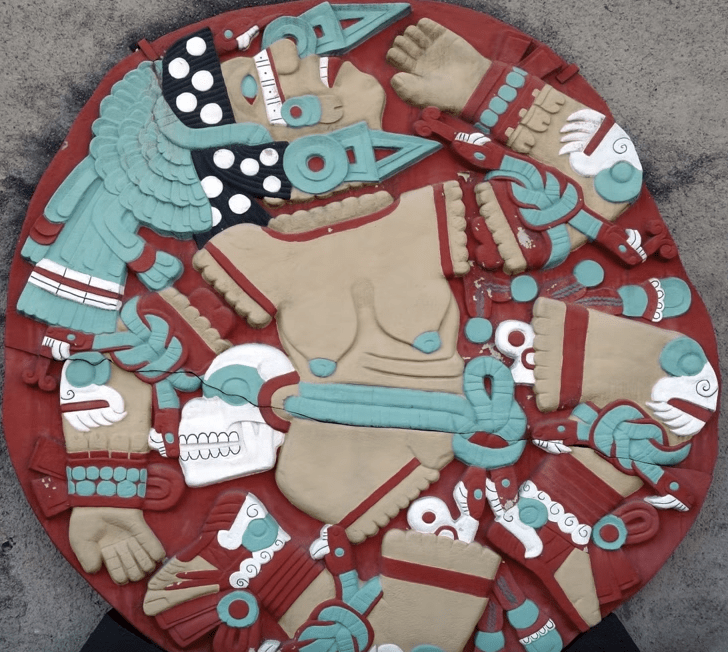
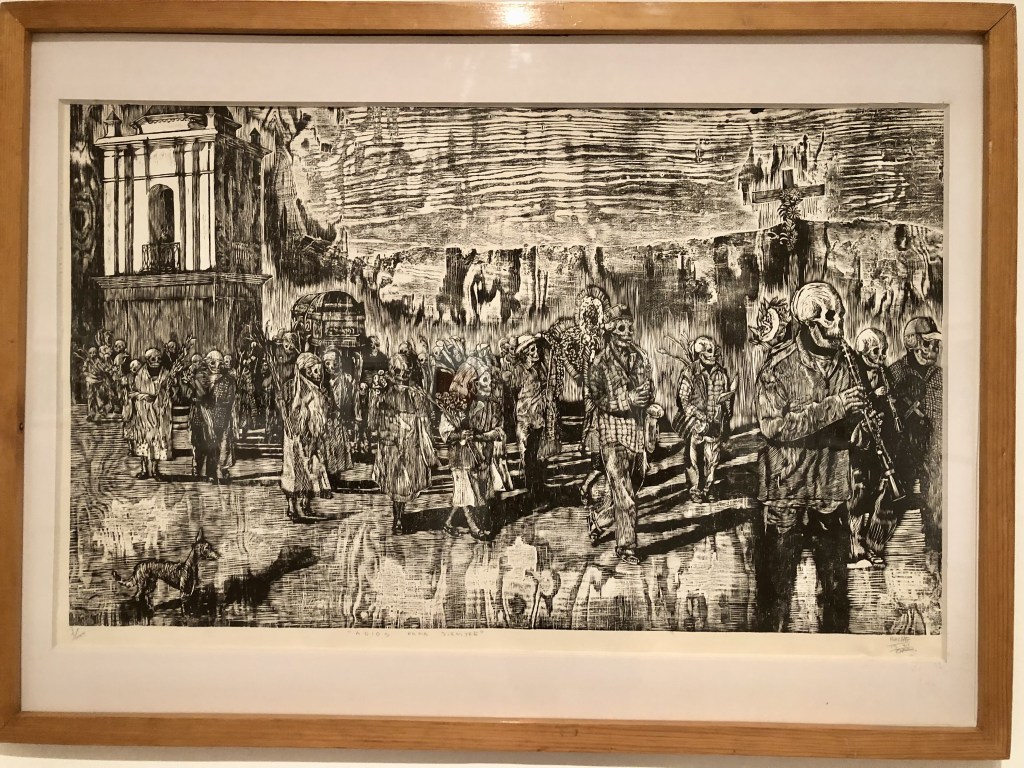

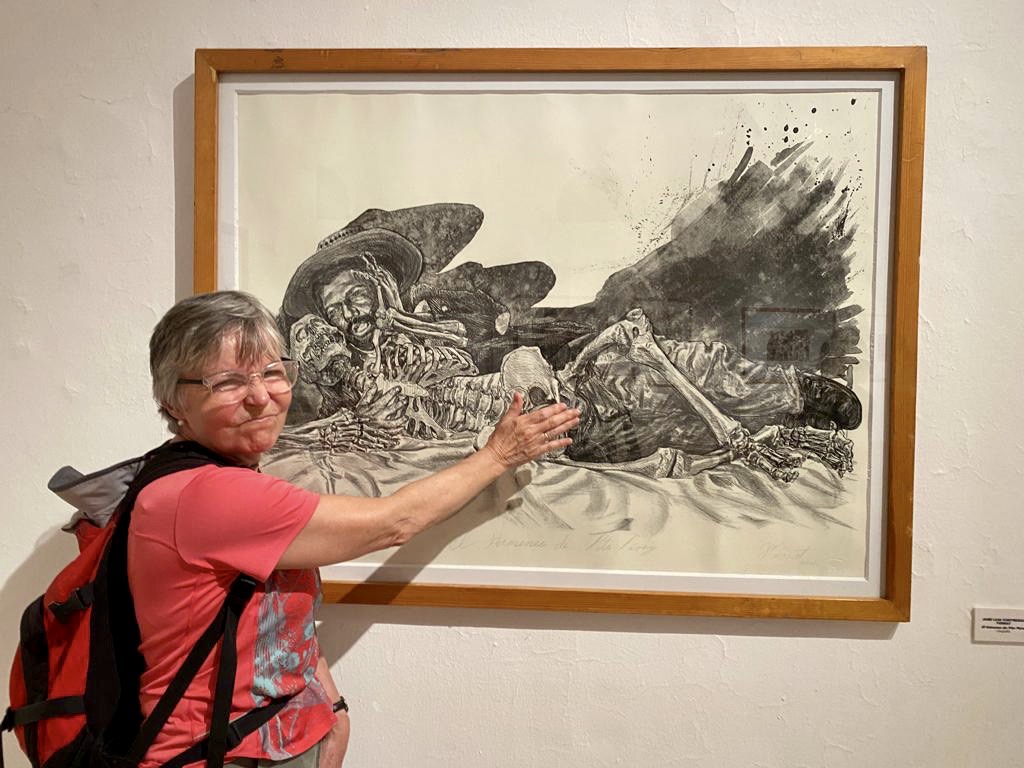


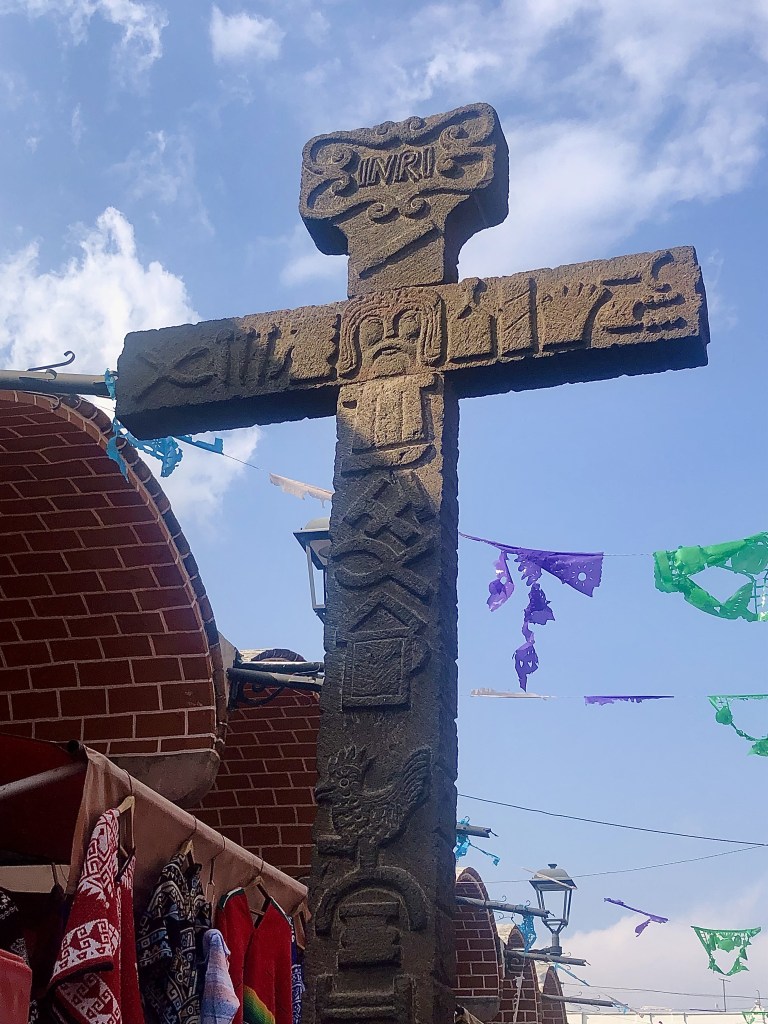
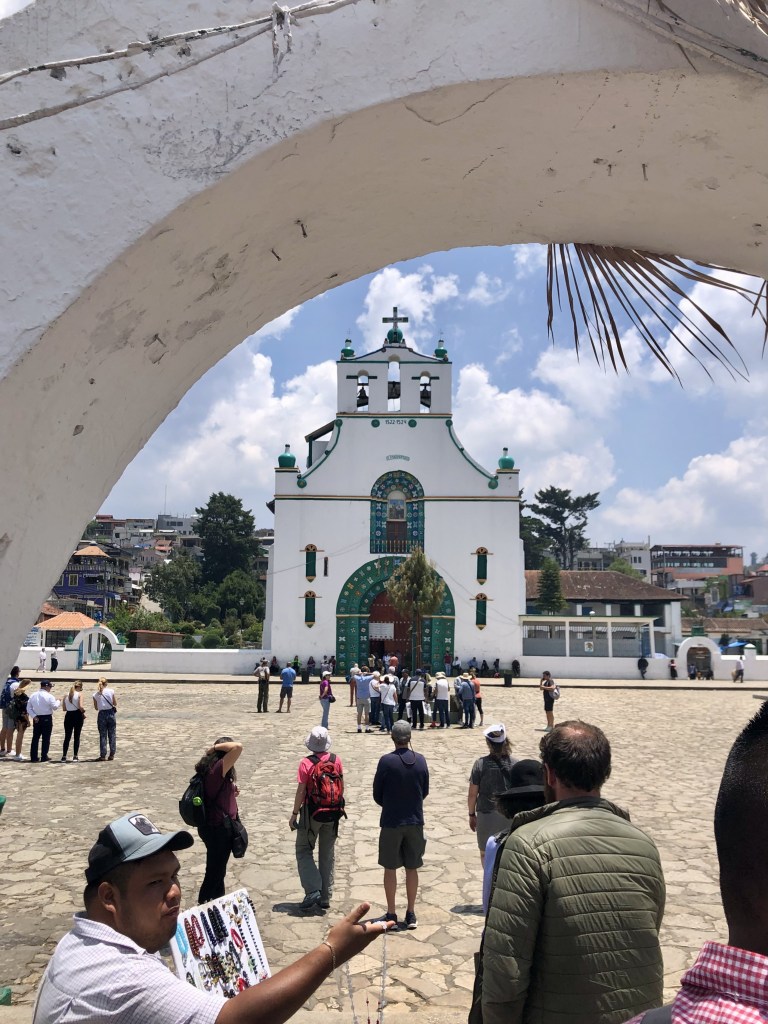
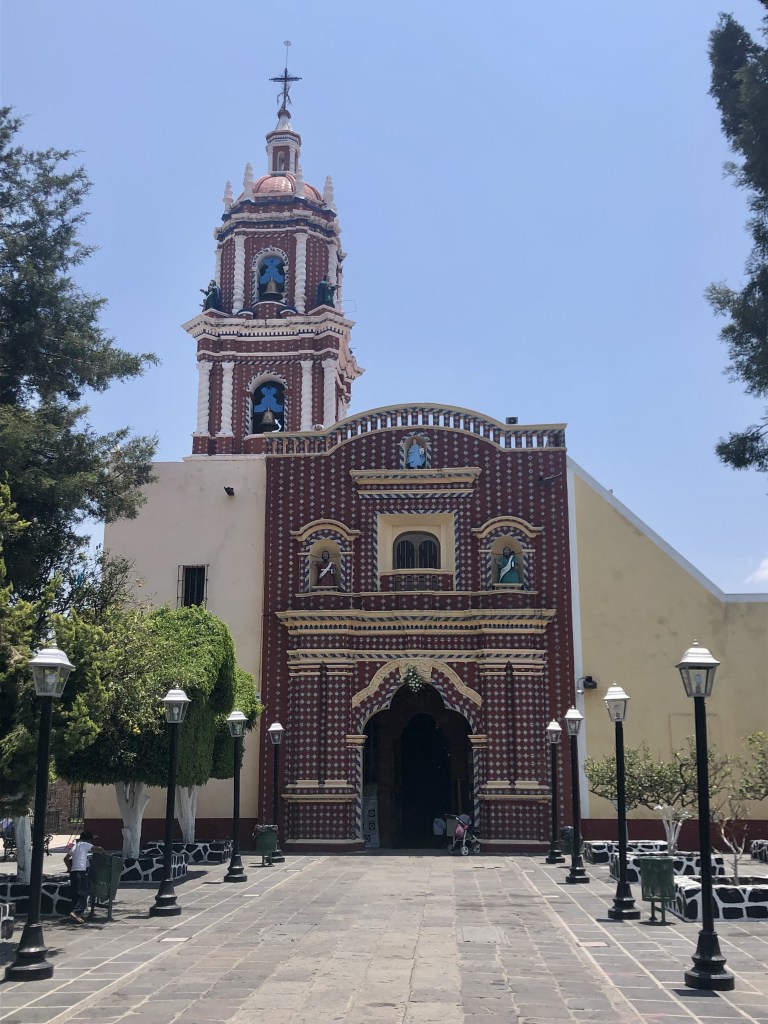
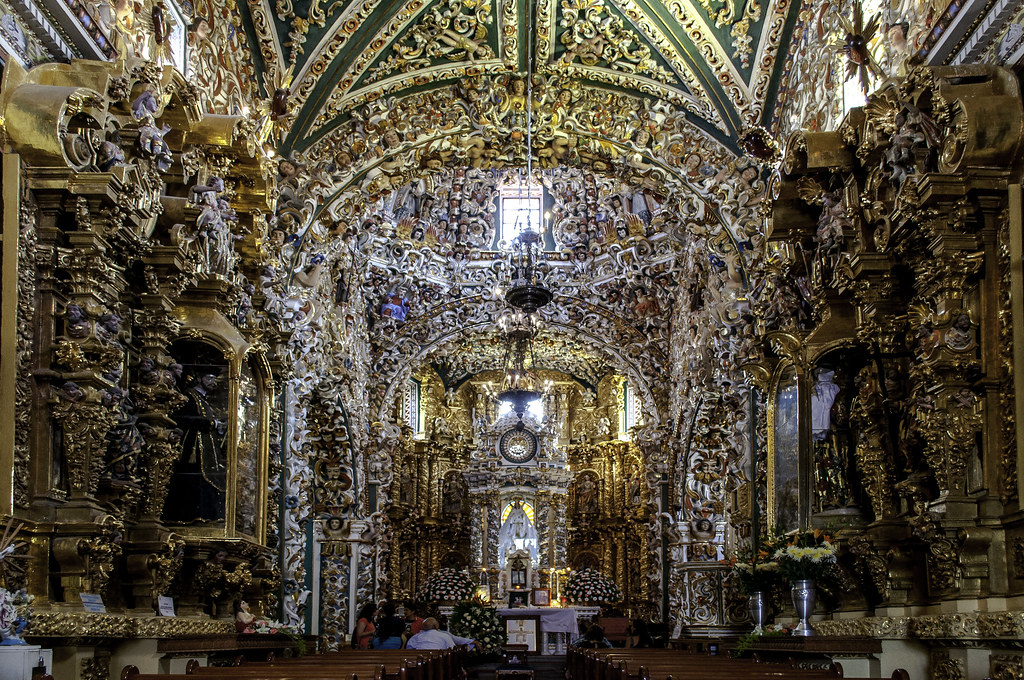


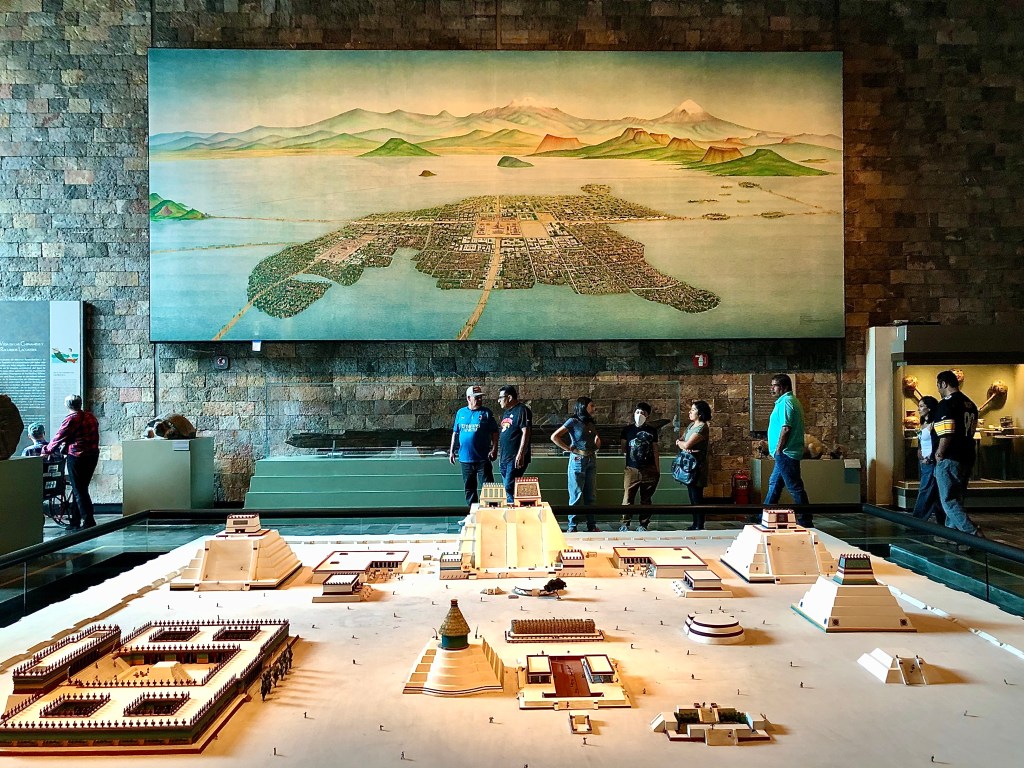

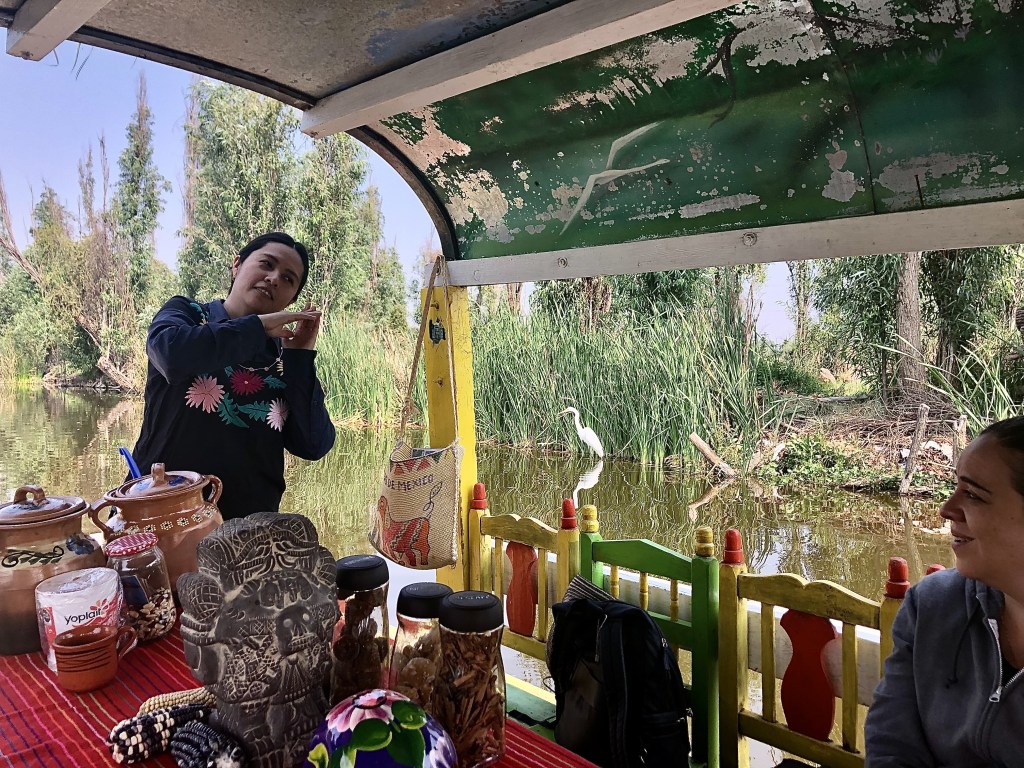
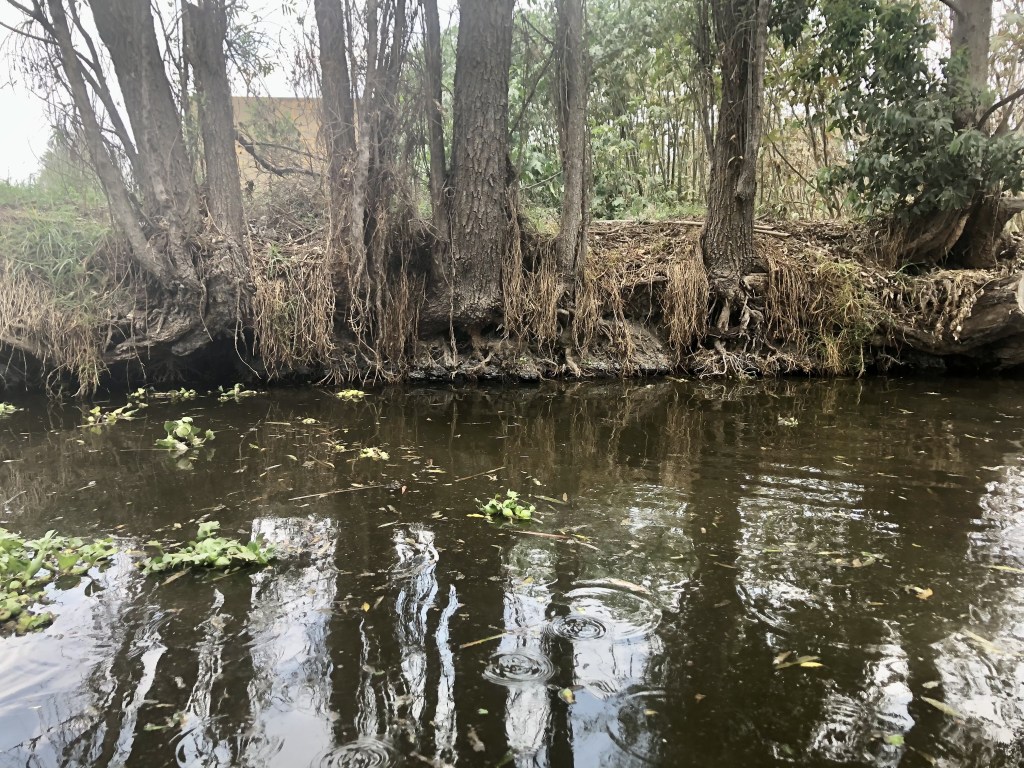

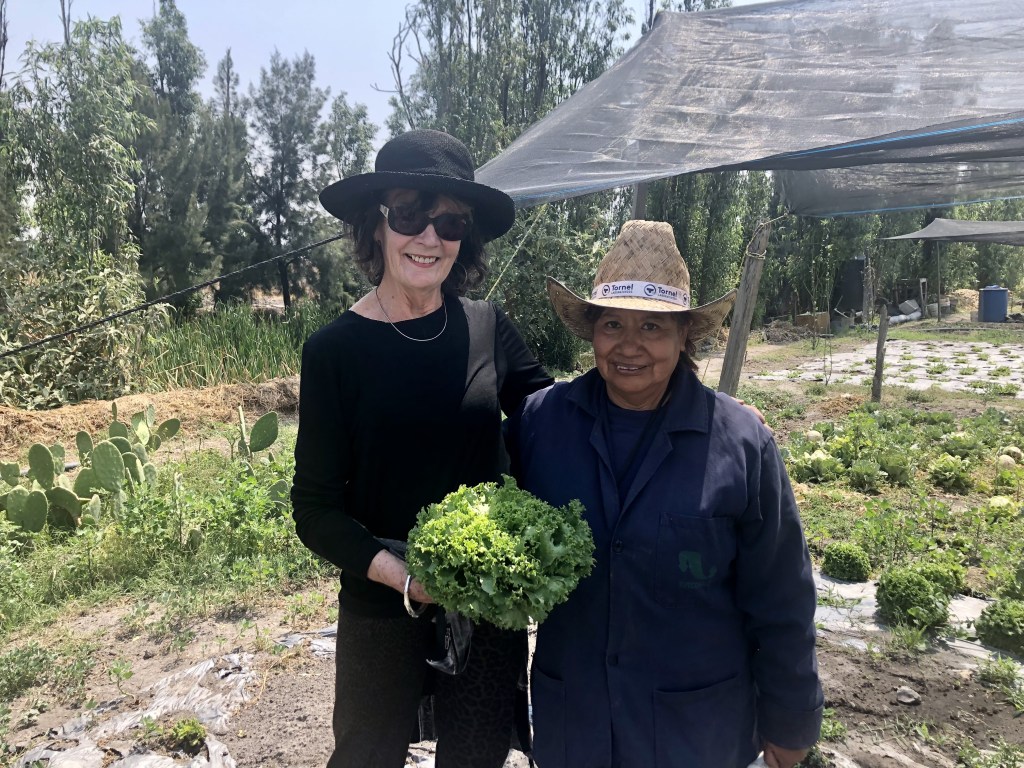


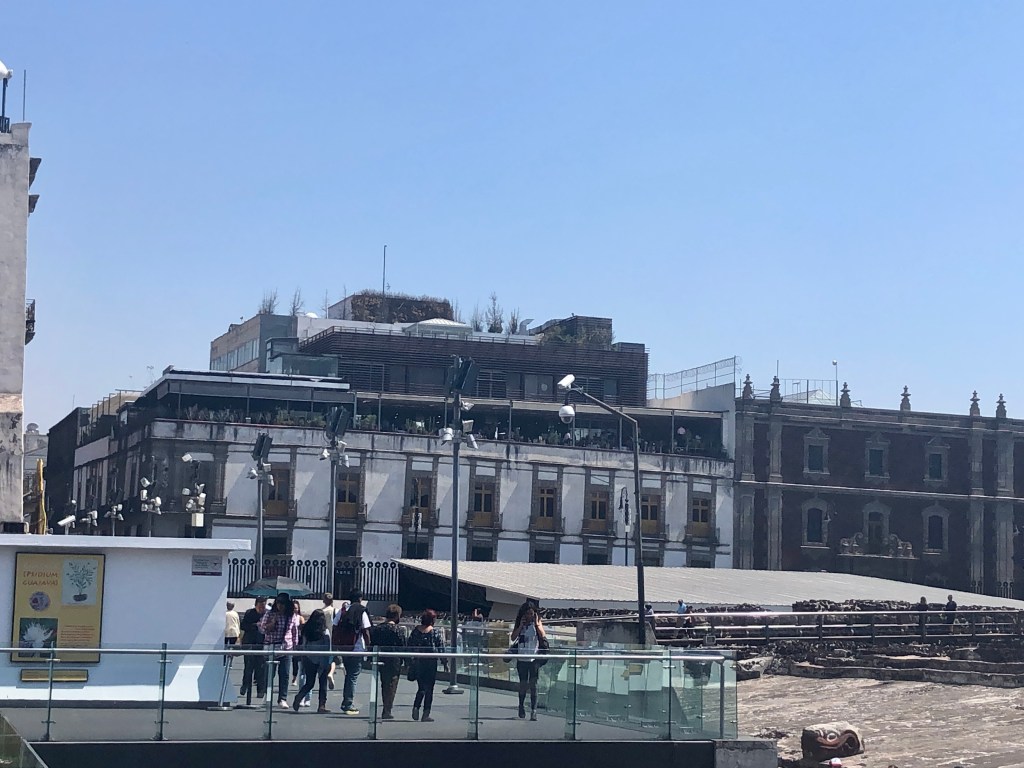
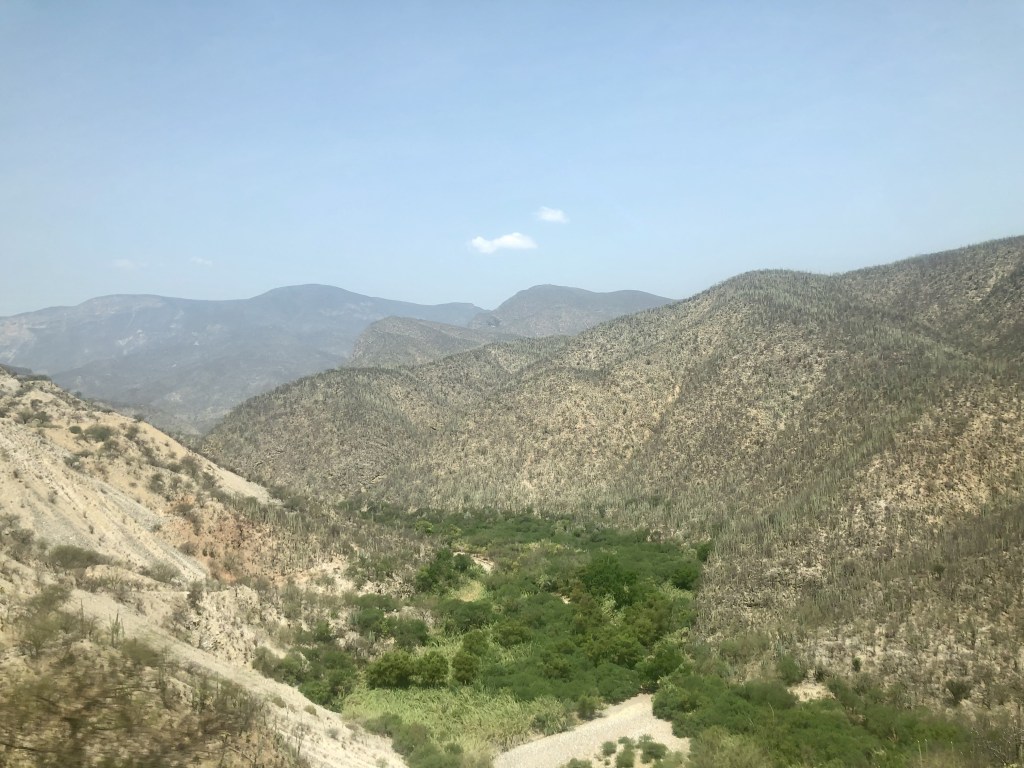


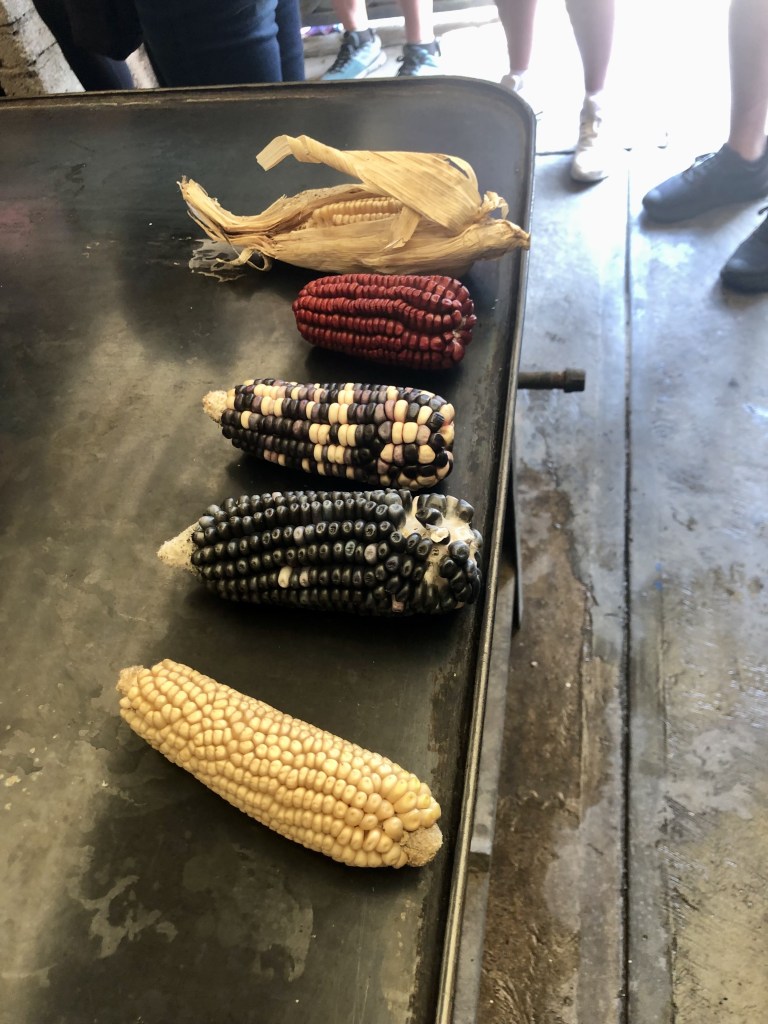


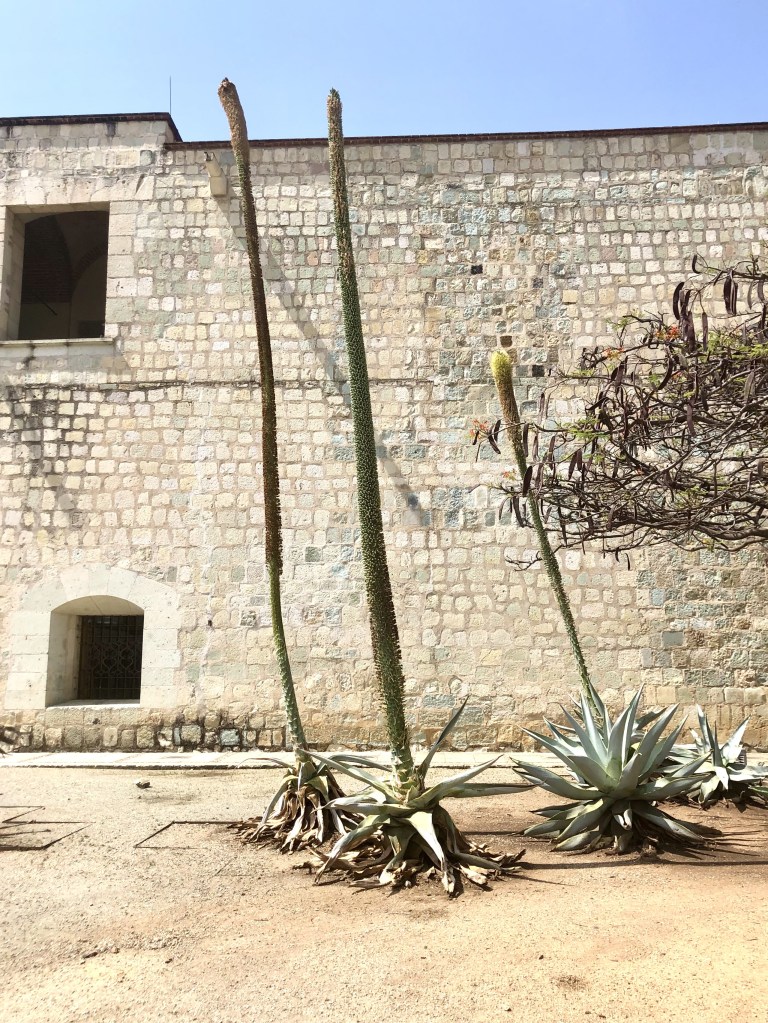


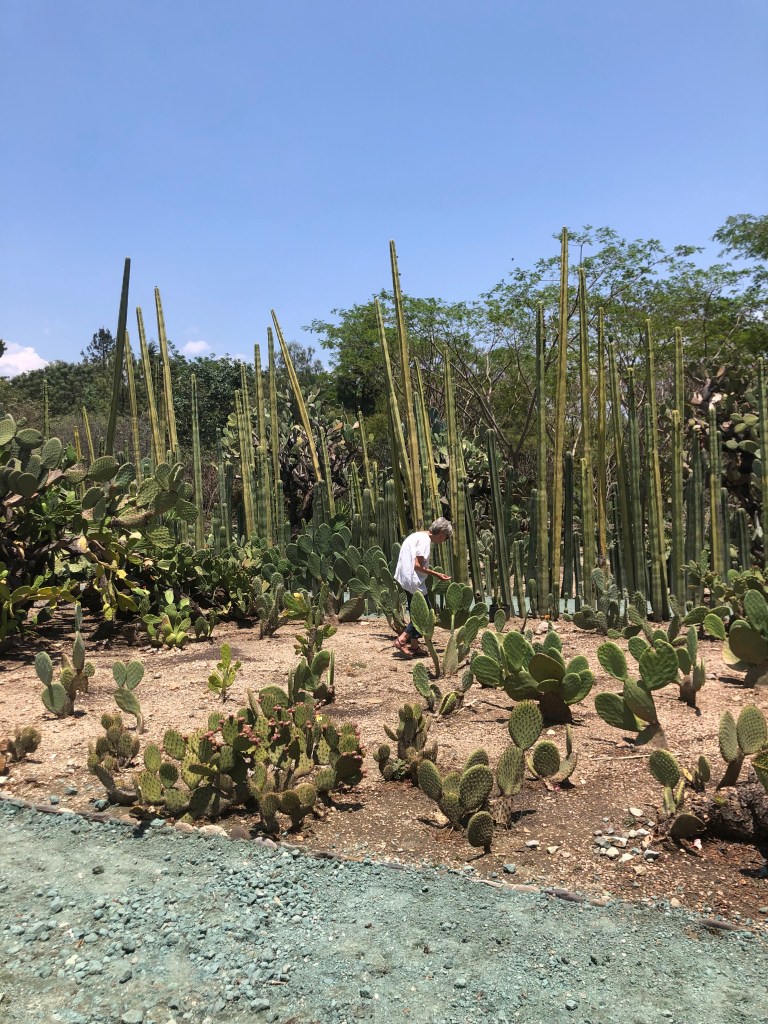
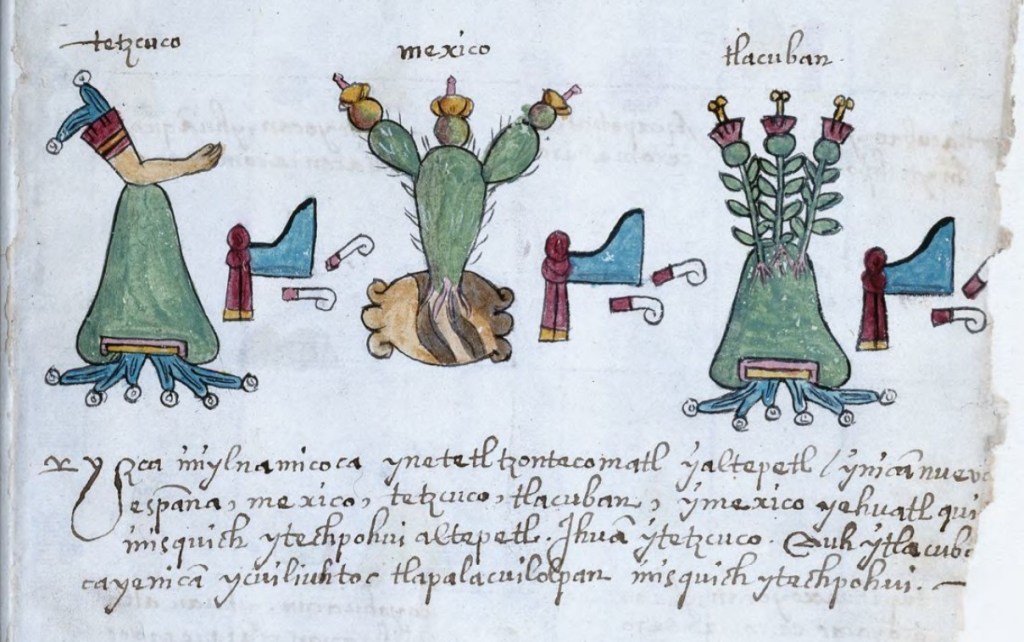
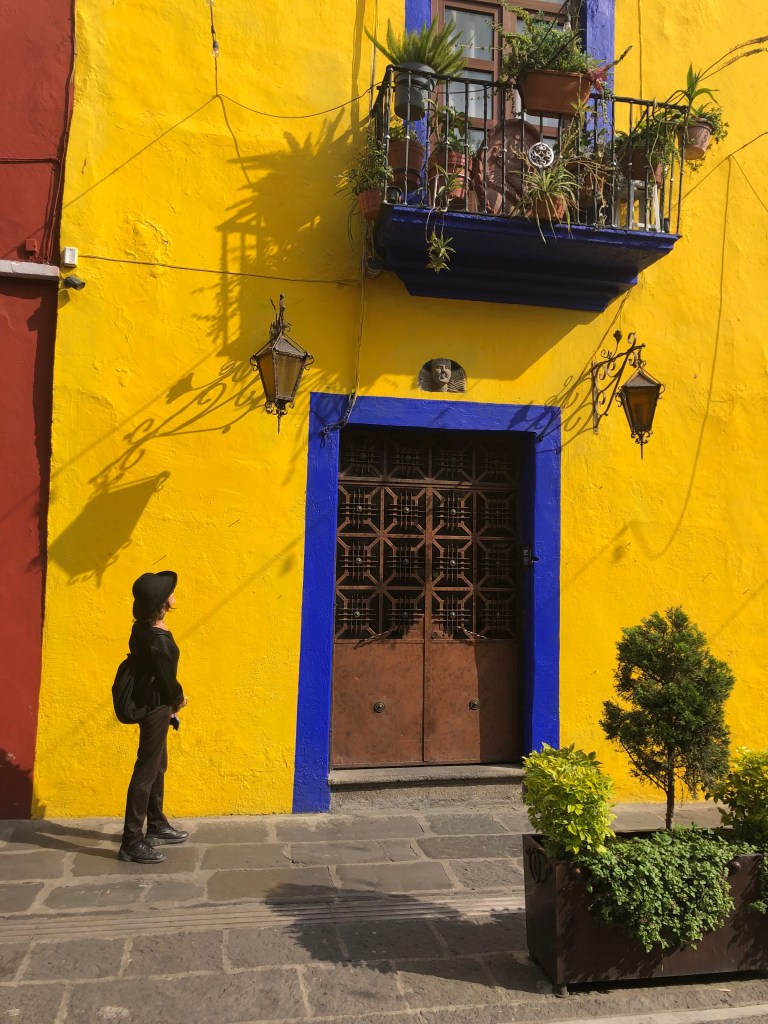


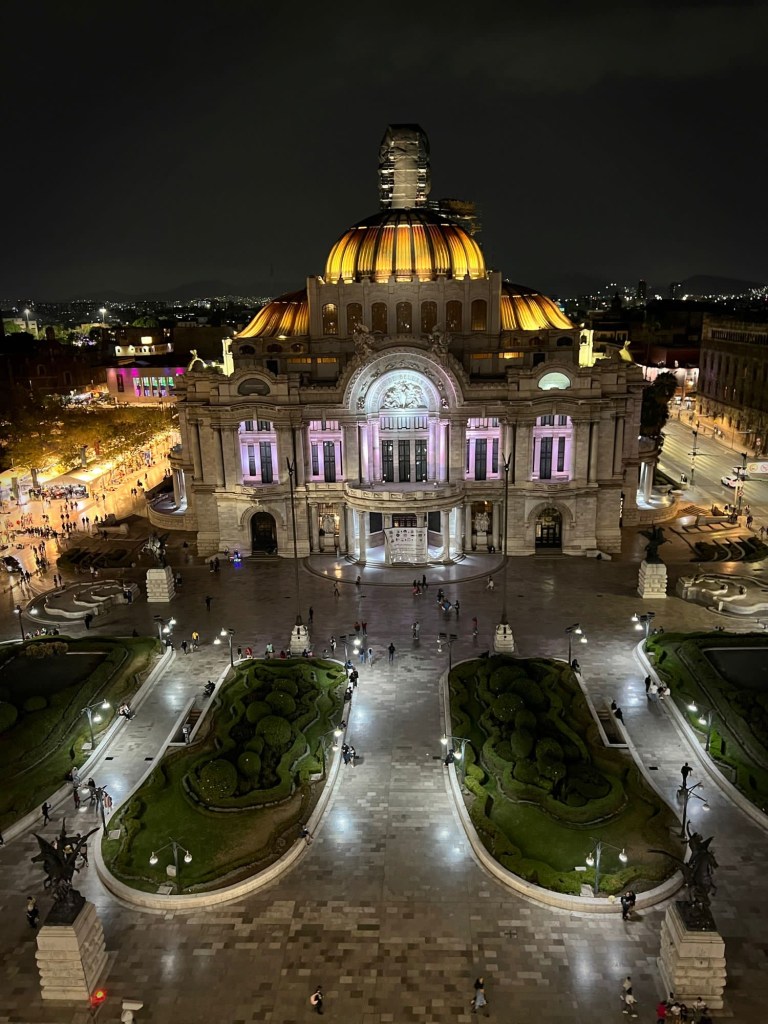
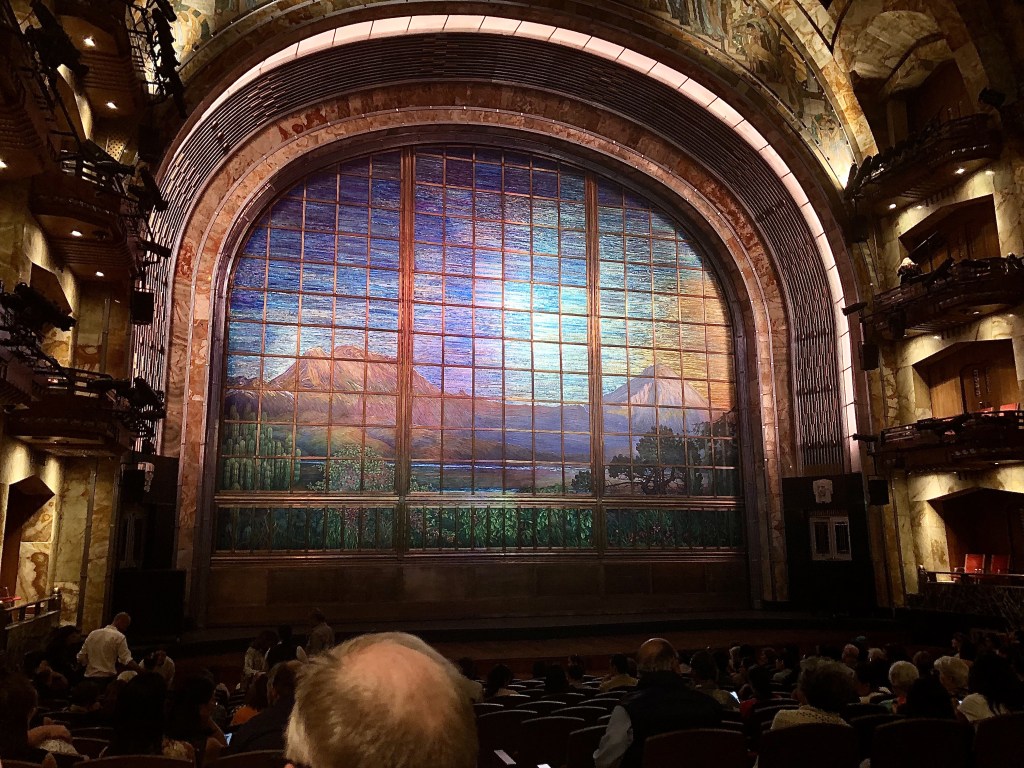



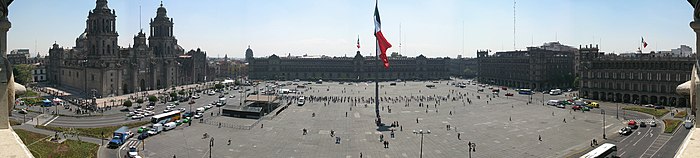

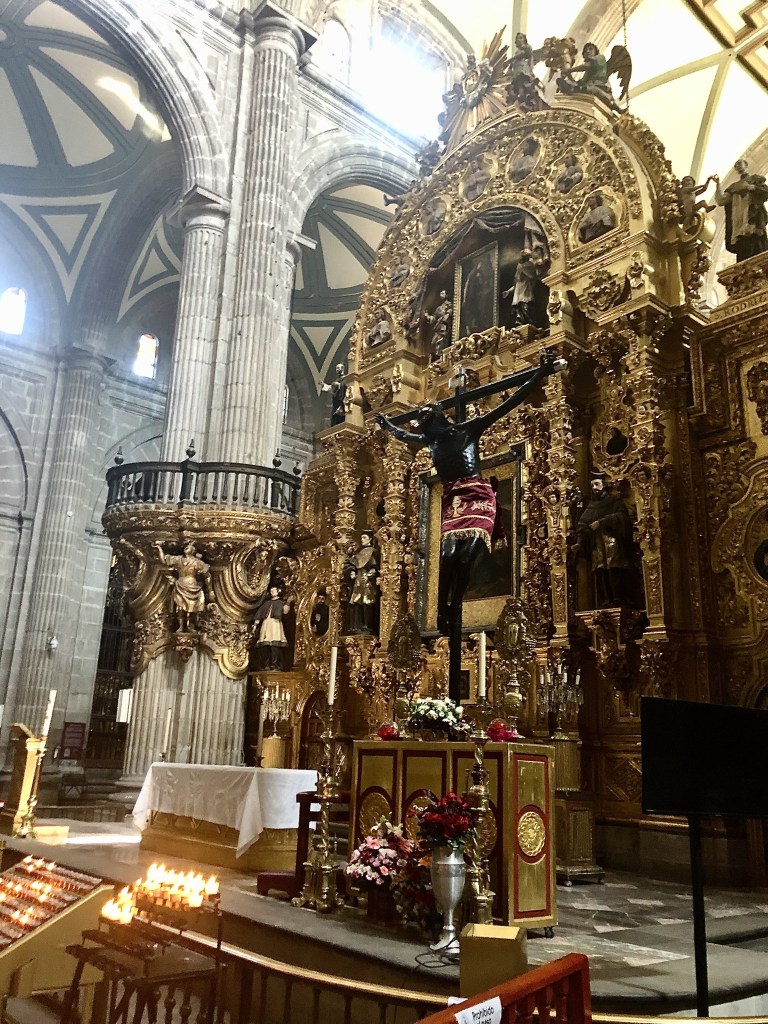

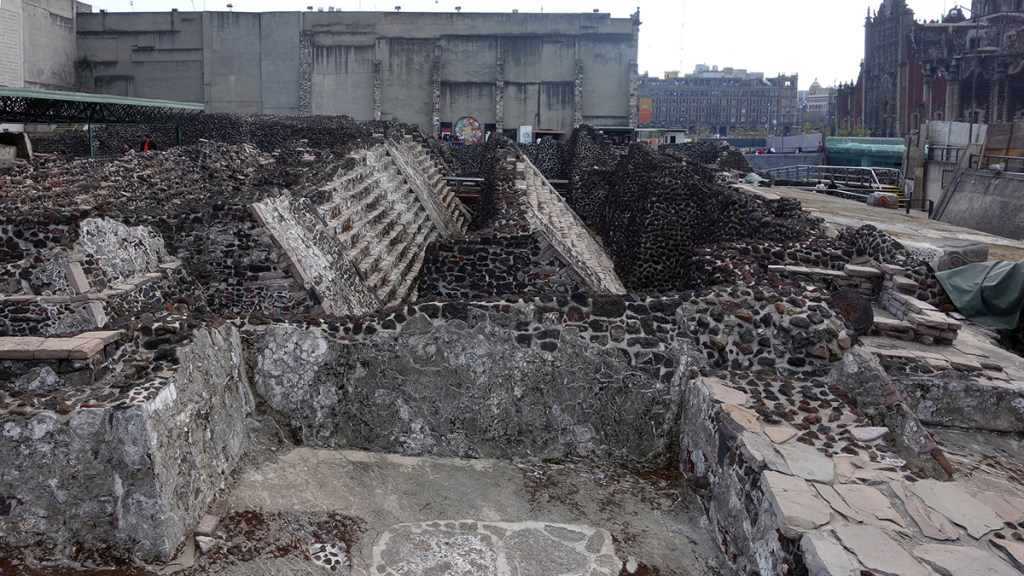
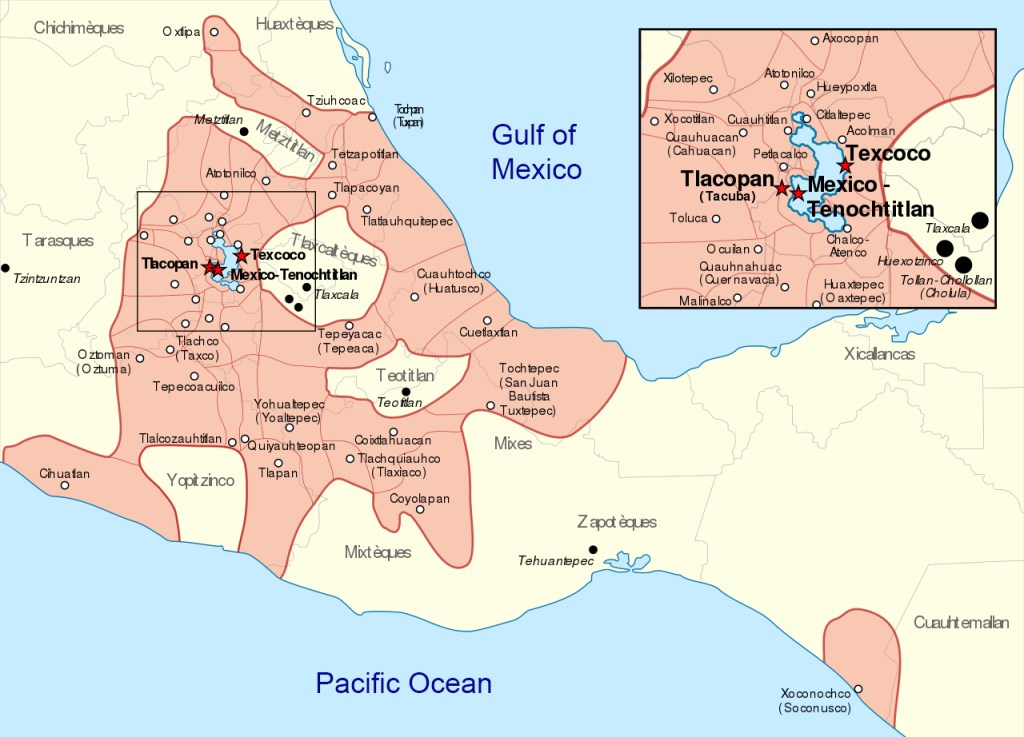


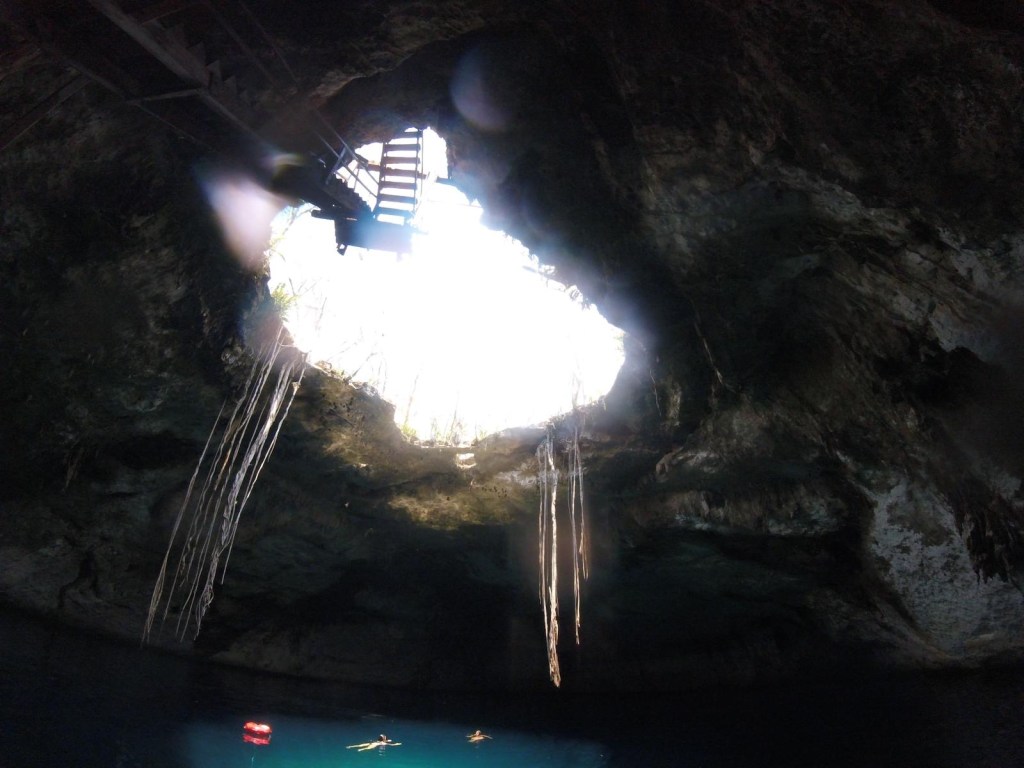





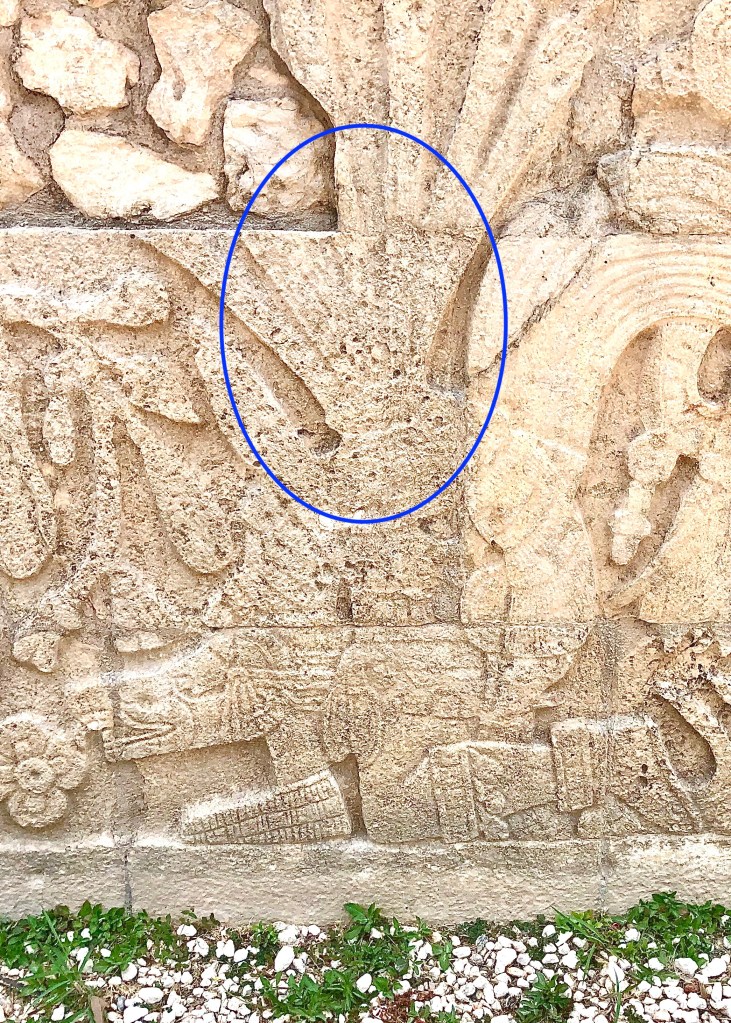

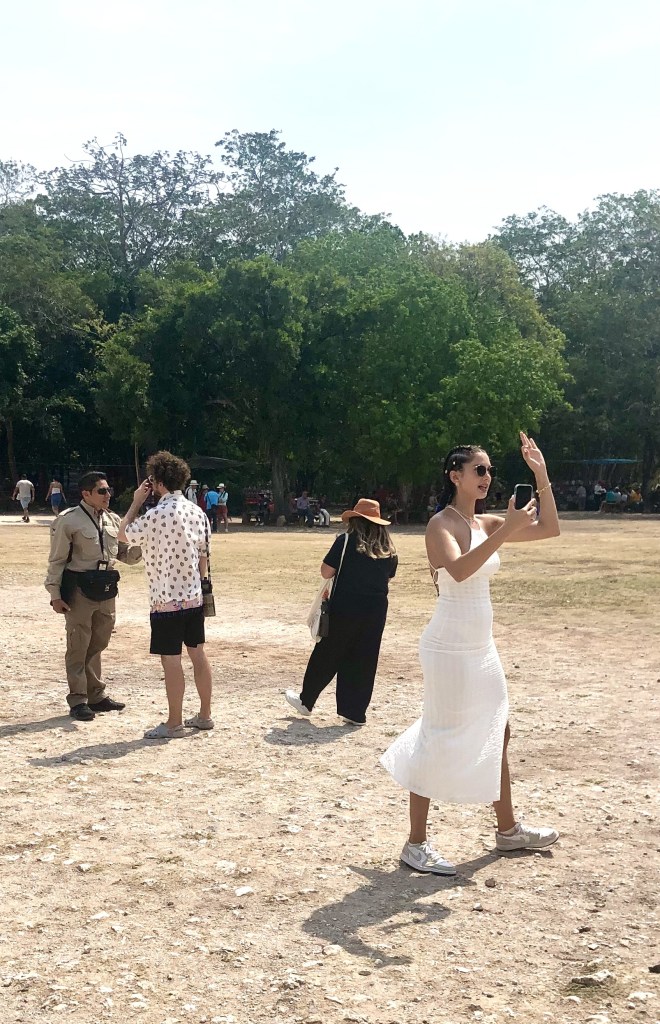
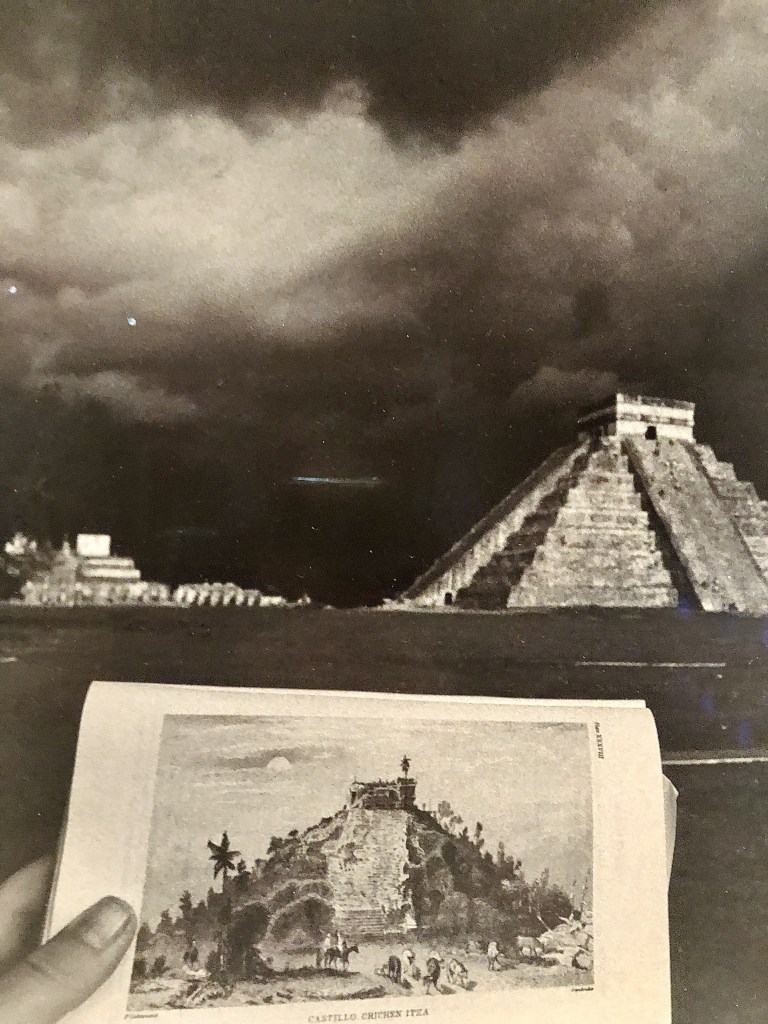
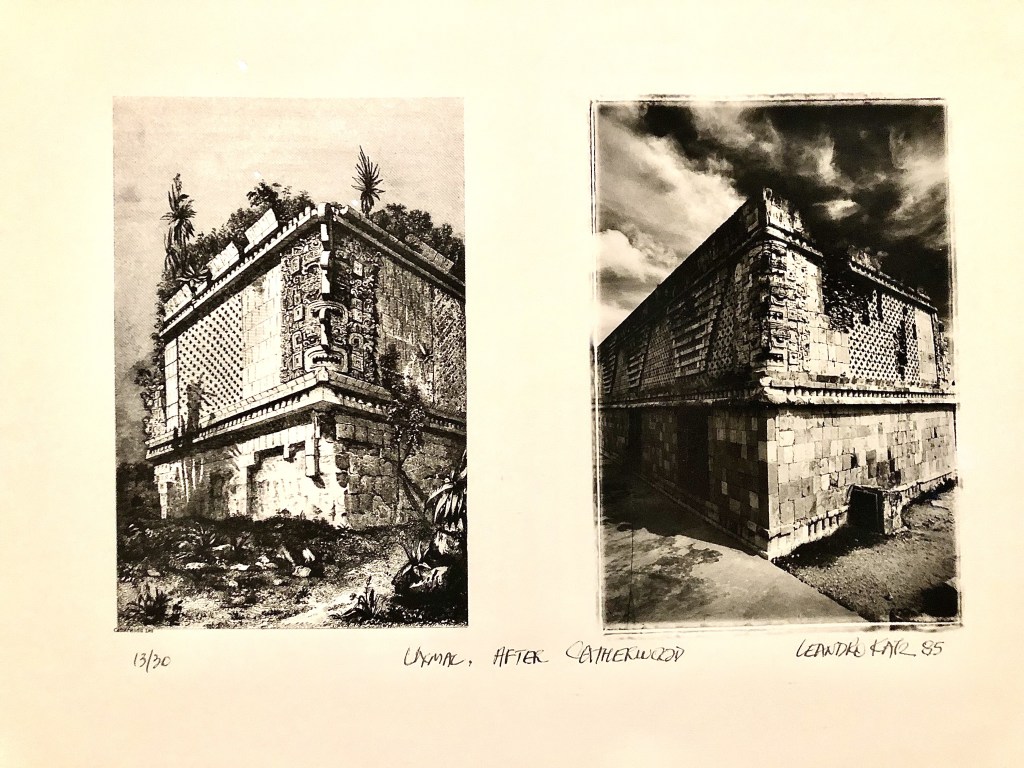
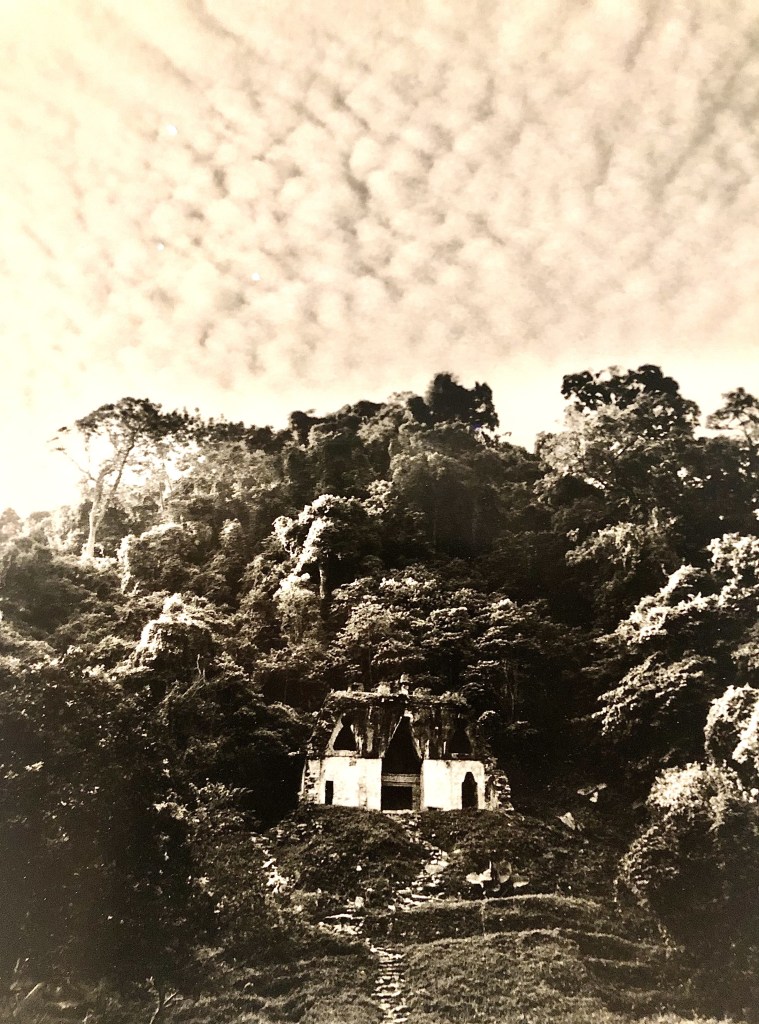
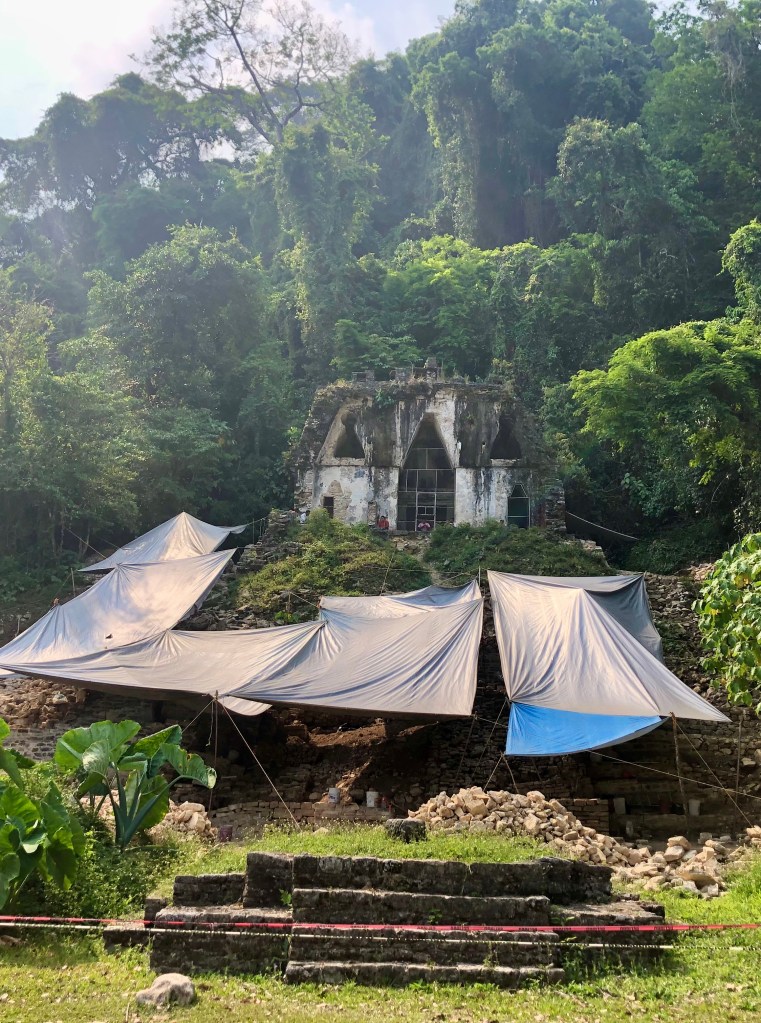

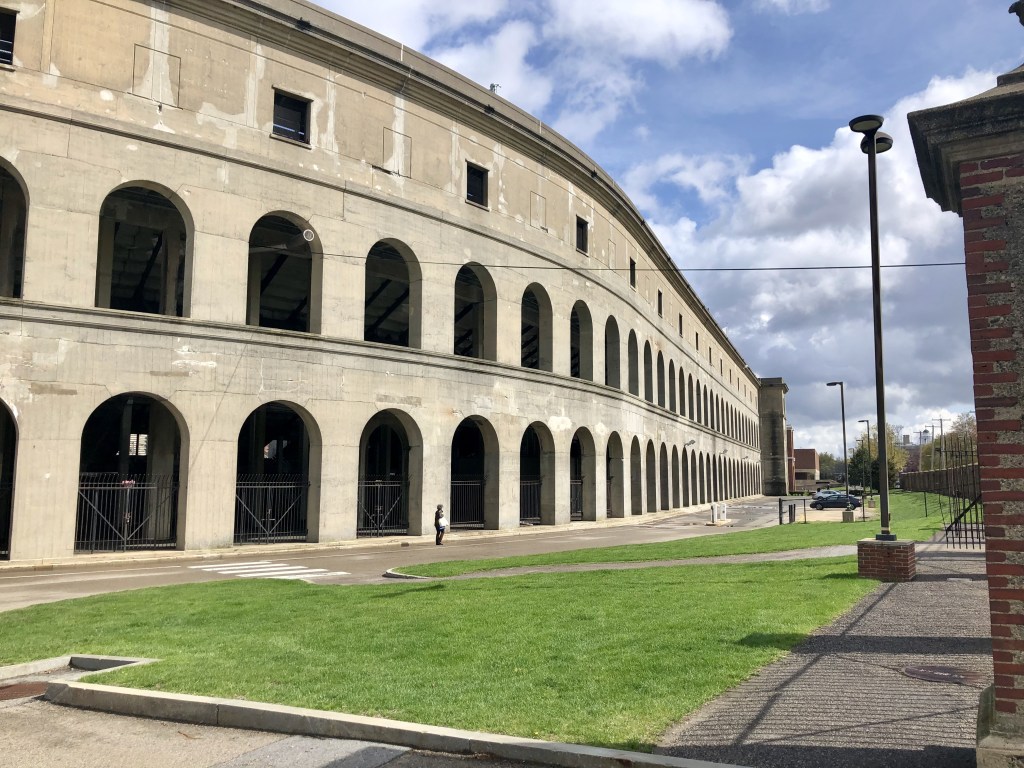
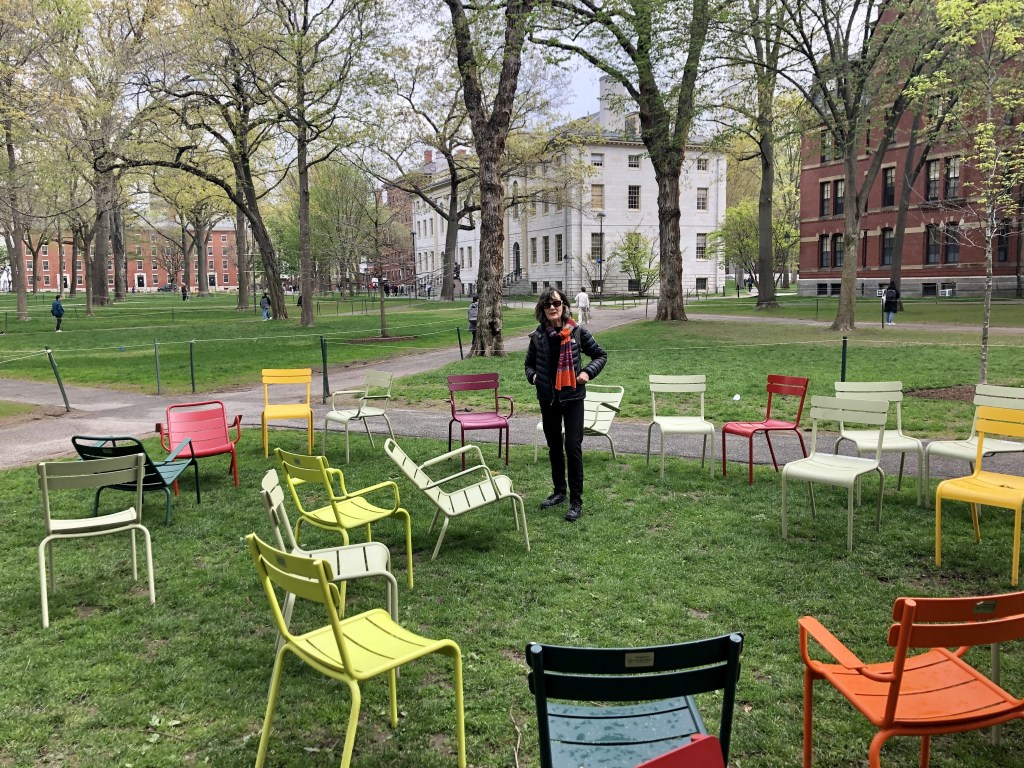


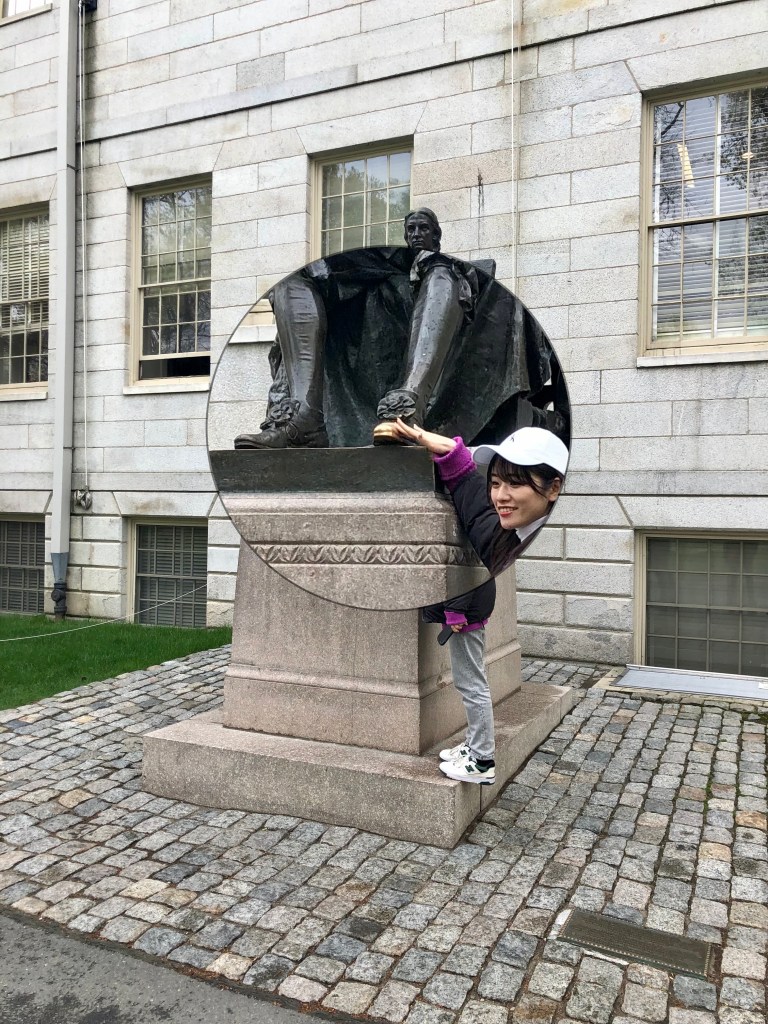


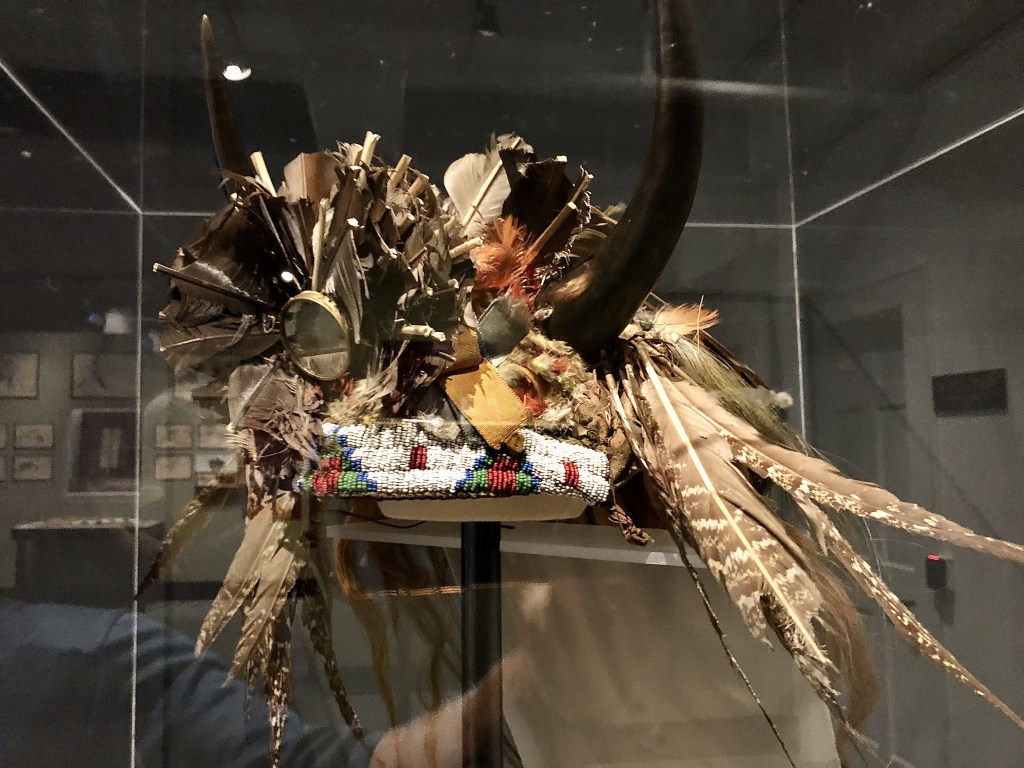
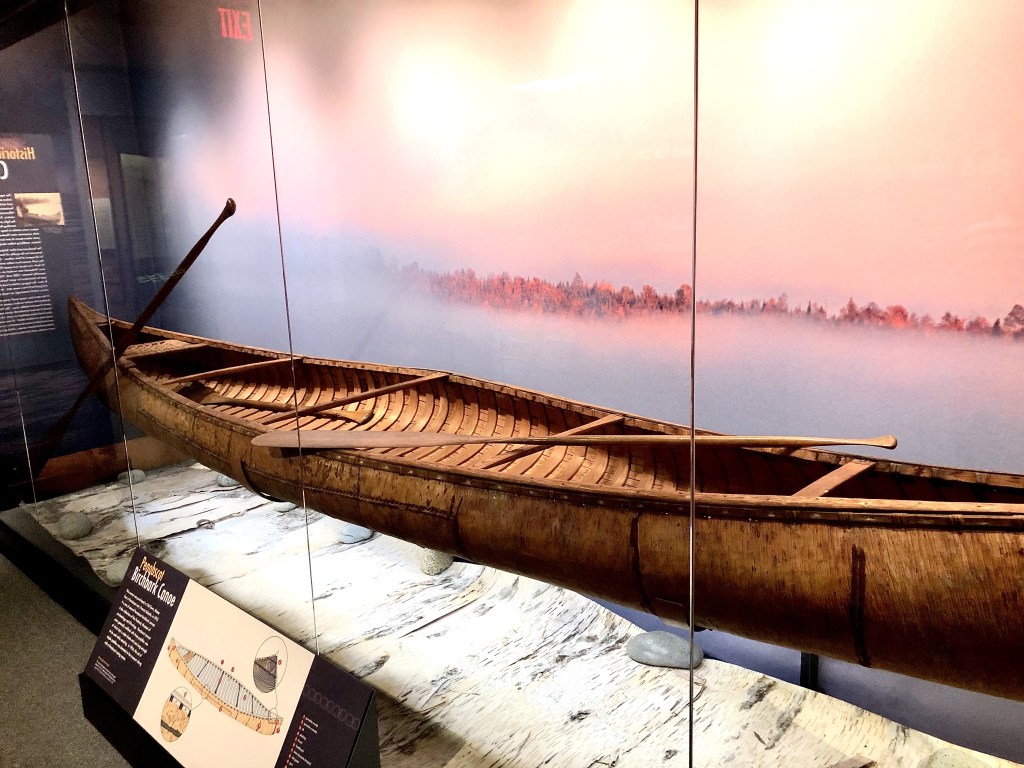
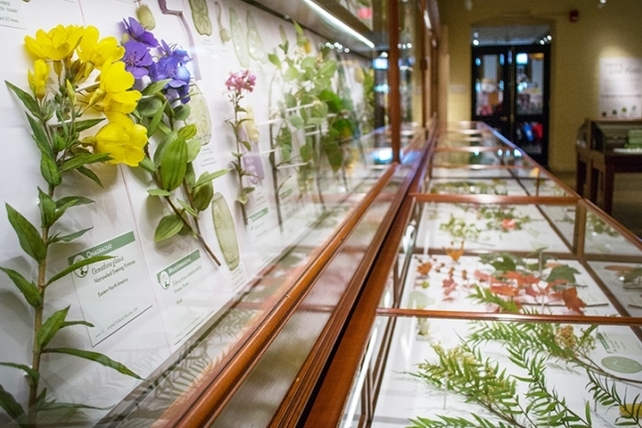
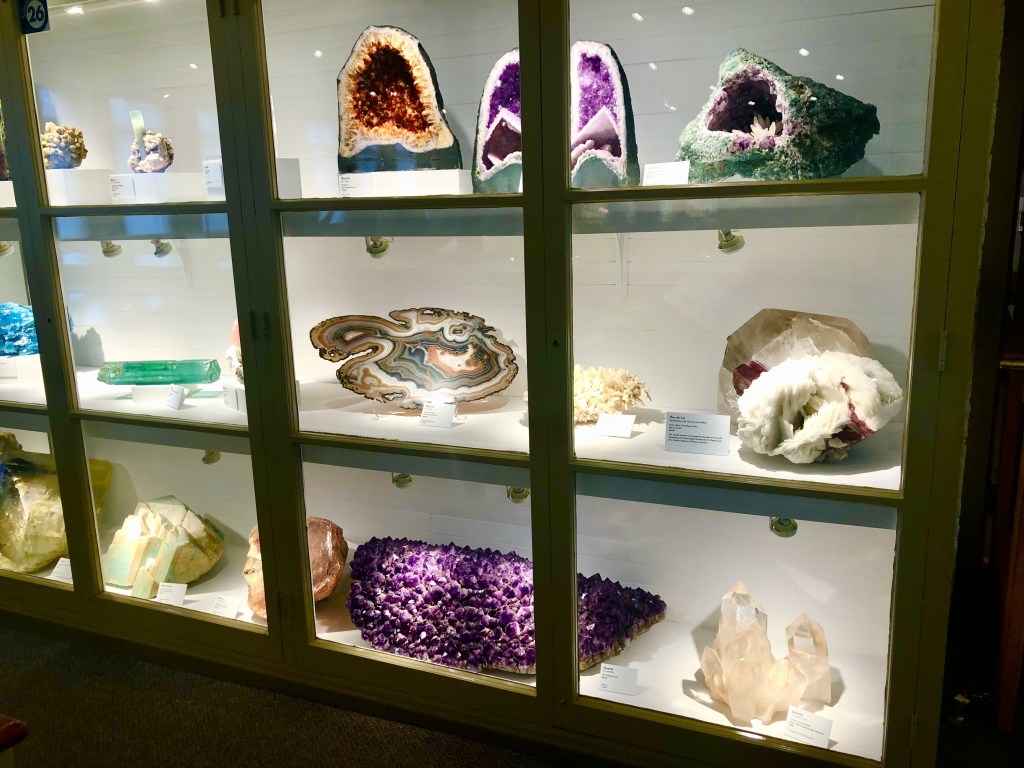


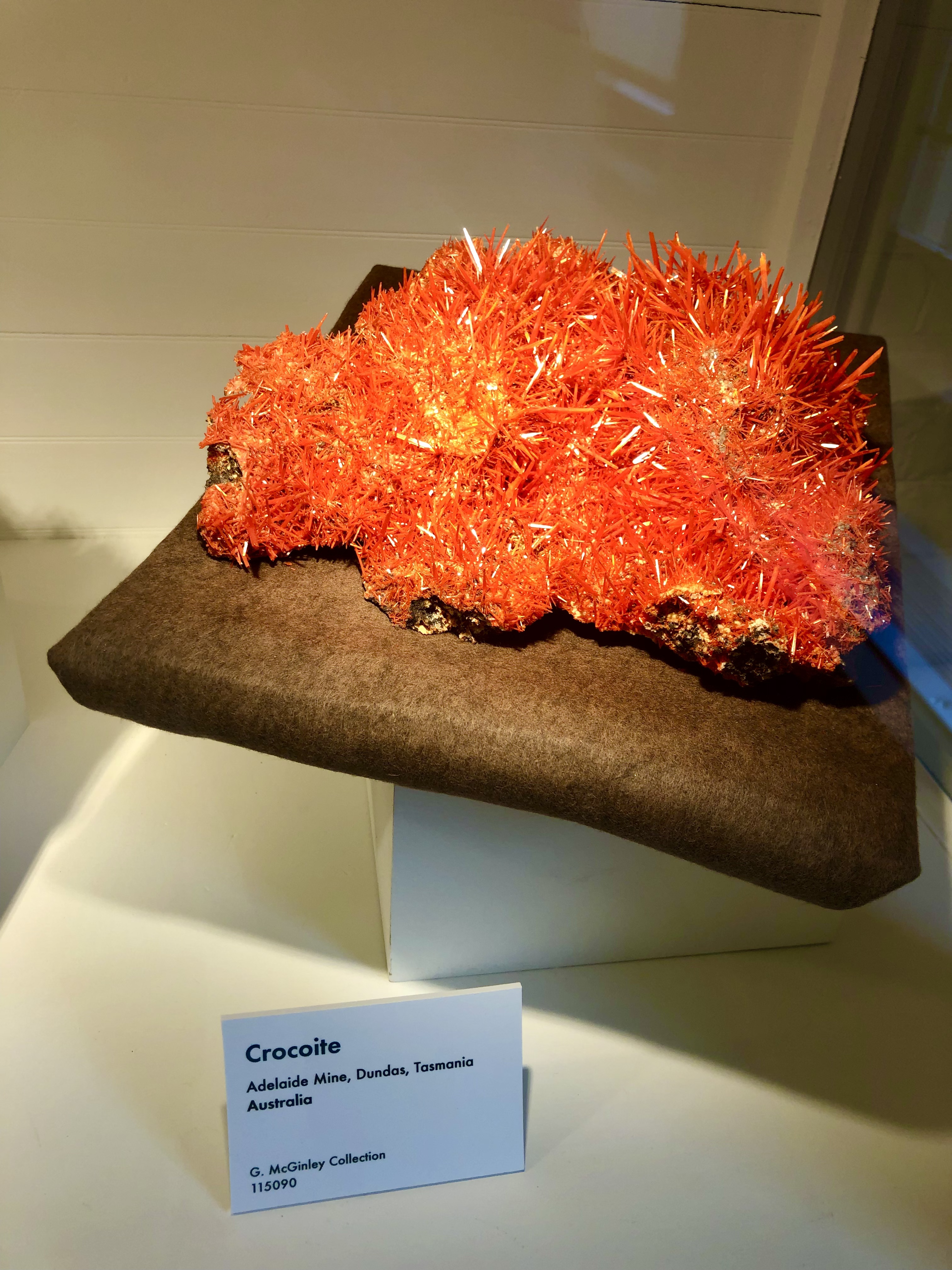
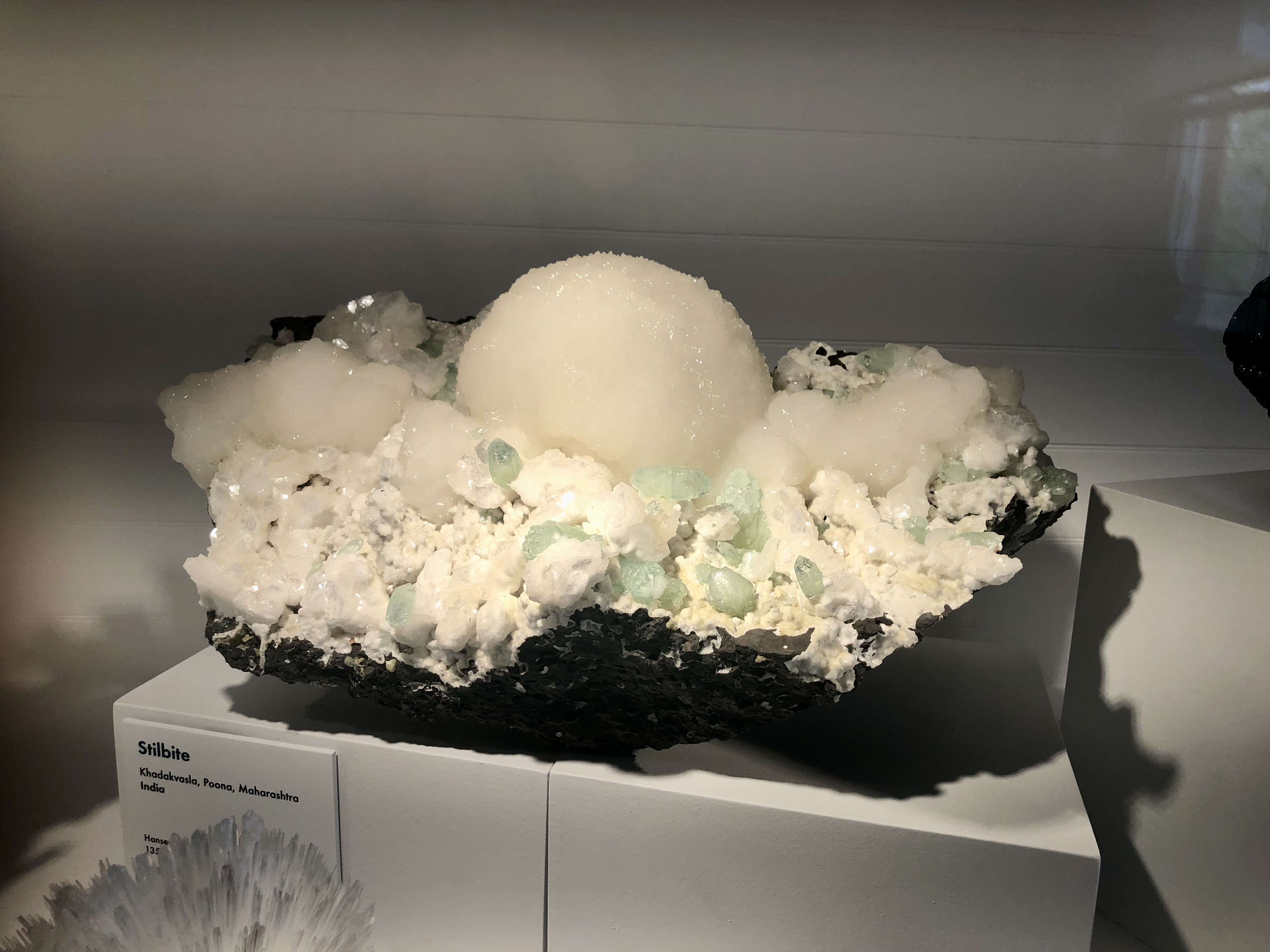
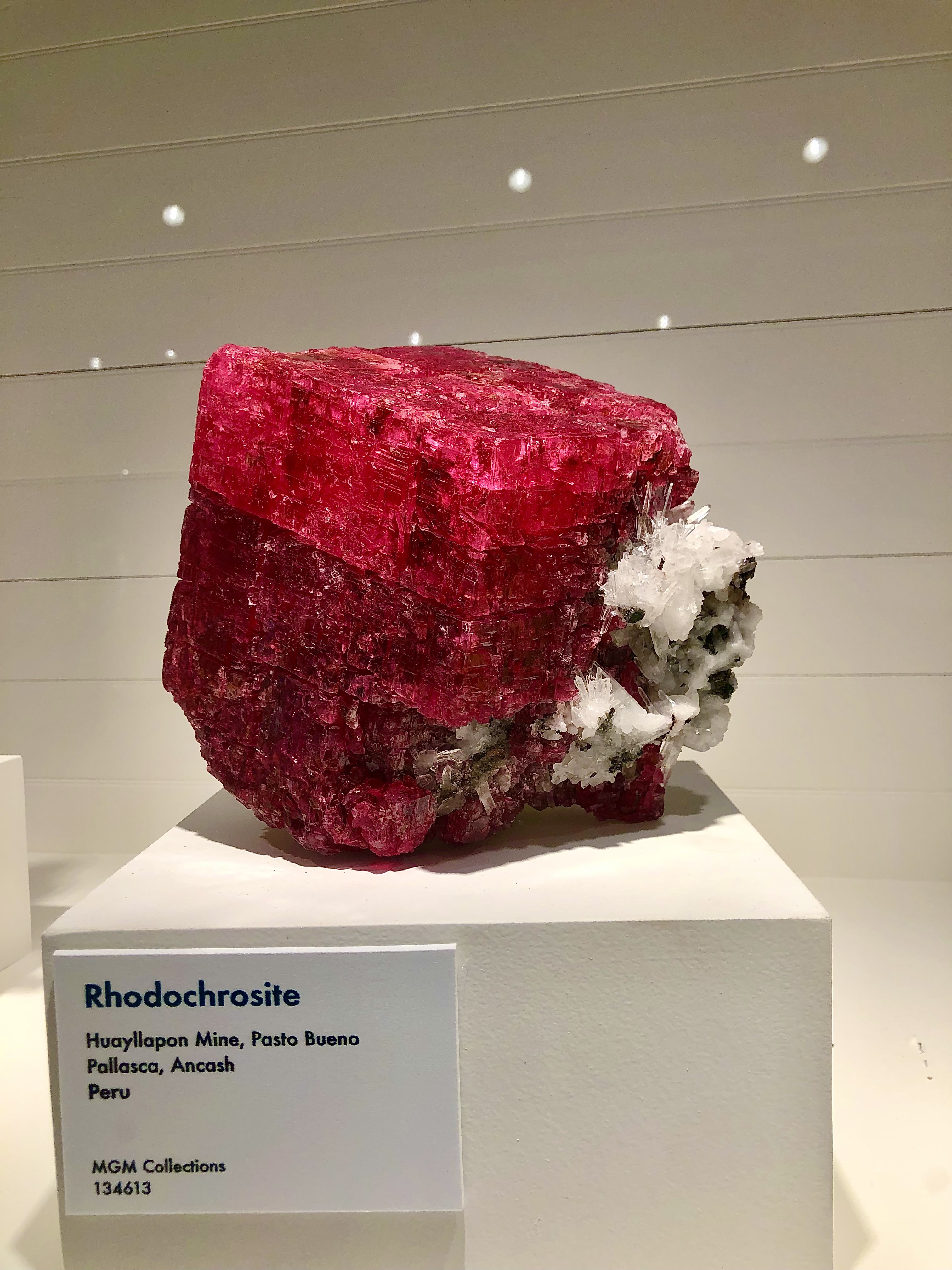


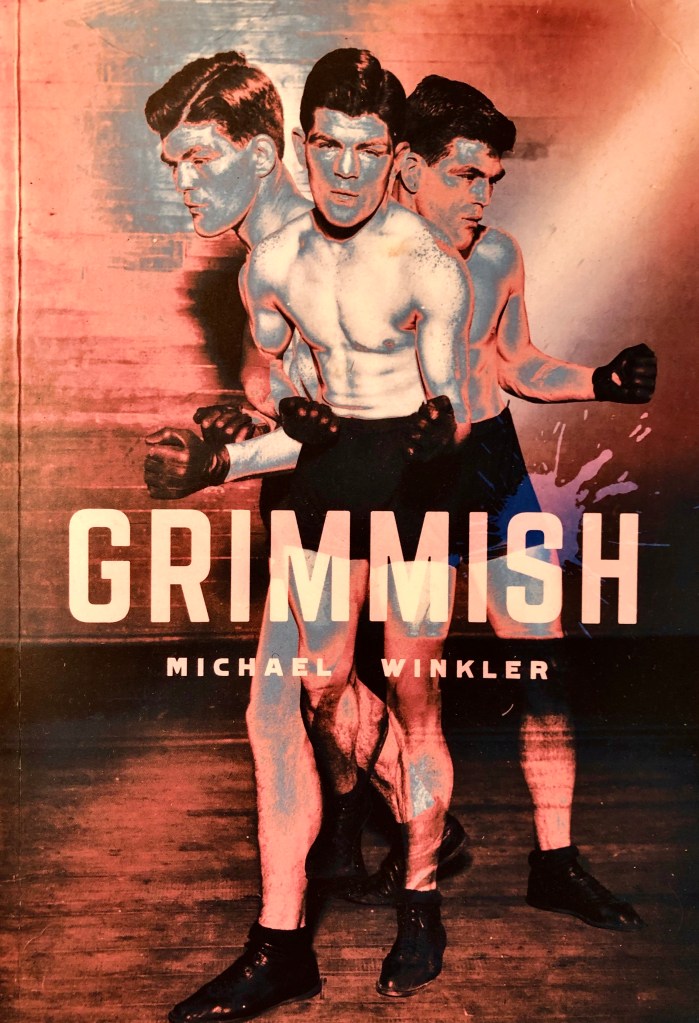


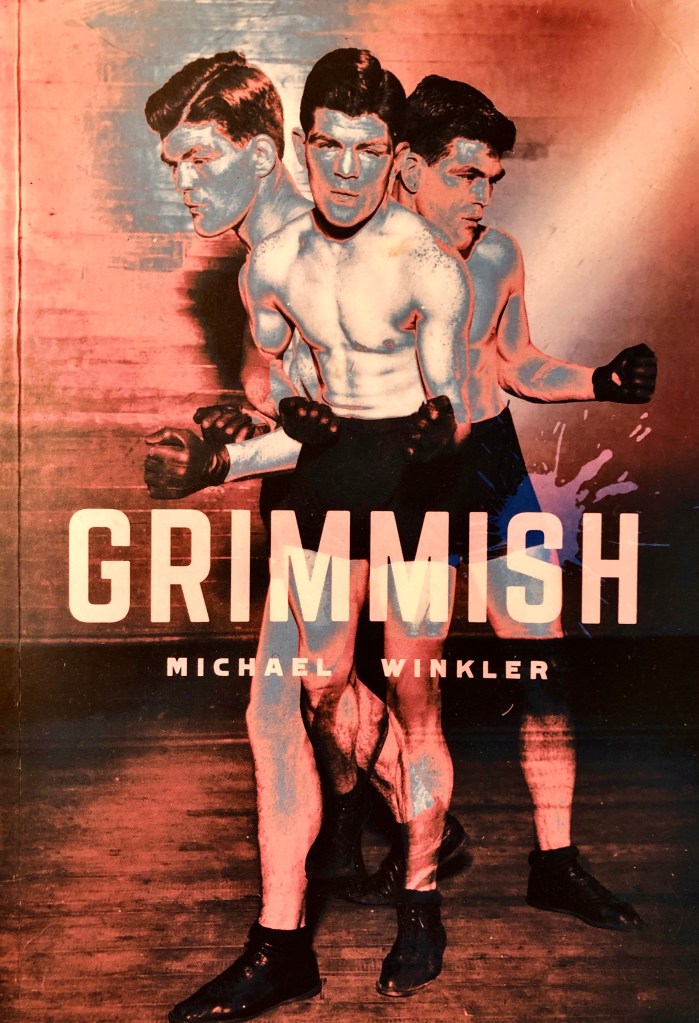


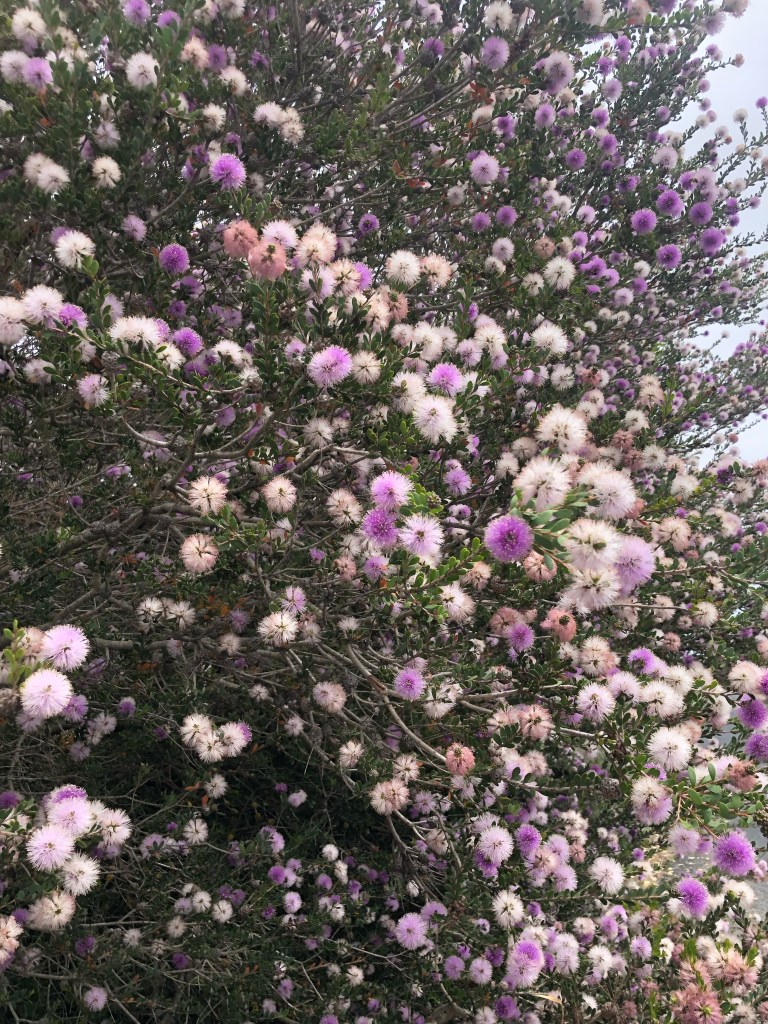












 mcraeblog