
Now phones have cameras in them — and what a good idea that was — I’ll say 18 million great photos are taken everyday. Yeah. Let me check … yes. Correct. Eighteen million. We don’t see them all; and we don’t all take them either.
But then there are the truly towering ones. What makes them so truly good, so truly towering?
What does AI say? ‘There is no single “greatest” photo, as the assessment is subjective and depends on criteria such as emotional impact, historical significance, or technical innovation. Several photographs are widely considered the most famous or influential images of all time. Different sources and experts highlight various photos as significant for their powerful imagery and lasting impact on the world.’ And a number of these are listed including: Earthrise by William Anders, Raising the Flag on Iwo Jima by Joe Rosenthal, The Terror of War (‘Napalm Girl‘) by Nick Út, (Click here to see them with discussion.) Afghan Girl by Steve McCurry, and Tank Man by Geoff Widener. (See below.)
But after stewing about it — prompted by Tim Dobbyn’s book about my friend Merv Bishop and reviewing some of Merv’s pics as well as other people’s — I think that you probably can define certain photographs as ‘great’.
So here are five ideas why some photographs might be greater than others. They are illustrated with what might now seem to be somewhat old-fashioned examples, ones from an earlier life when my father in a gesture of prodigious and completely uncharacteristic prodigality subscribed to Life. But I think they stand up.
The quality of the reproductions here is inferior. I apologise. And of course several of these features might be found in the same photo.
• • • • • • • • • •
They may be particularly eventful or dramatic.
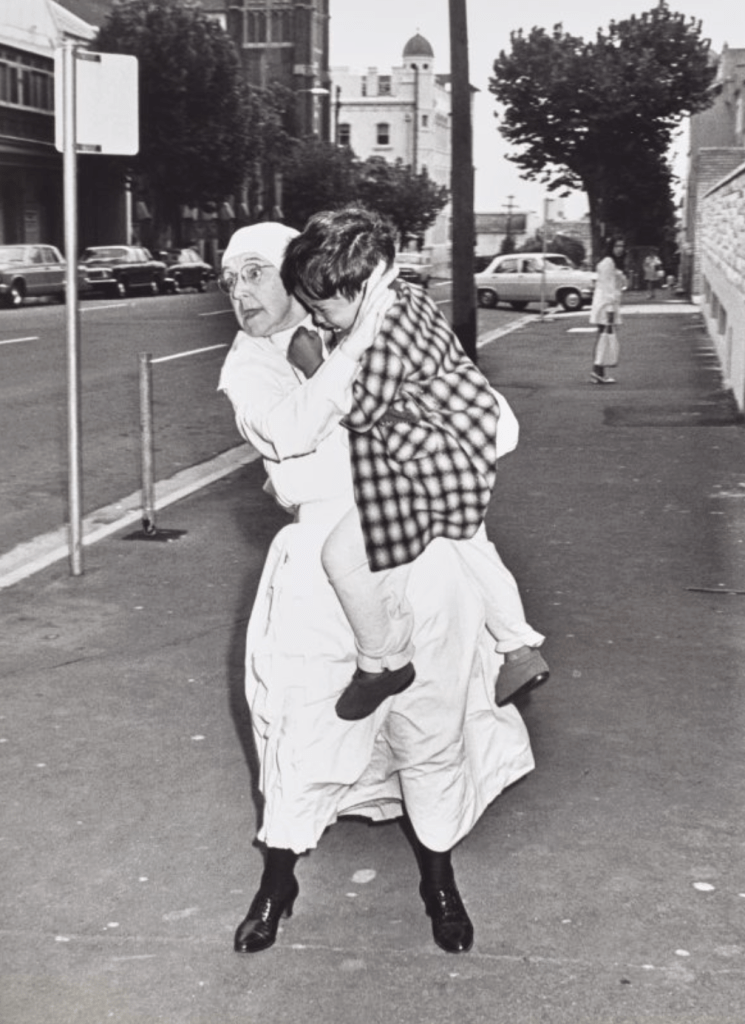
This photo has a special place in Merv’s heart. It won the News Photo of the Year in 1971 and helped to establish his profile as a photographer of note. Everything is right about it. The expression on the nun’s face sets the tenor, but you have the kids’ distress, the turning girl and even down to where the nun’s (very shiny) shoes have toed the line. Merv likes to say, correctly, that the kid in the nun’s arms is now an ear, nose and throat specialist.
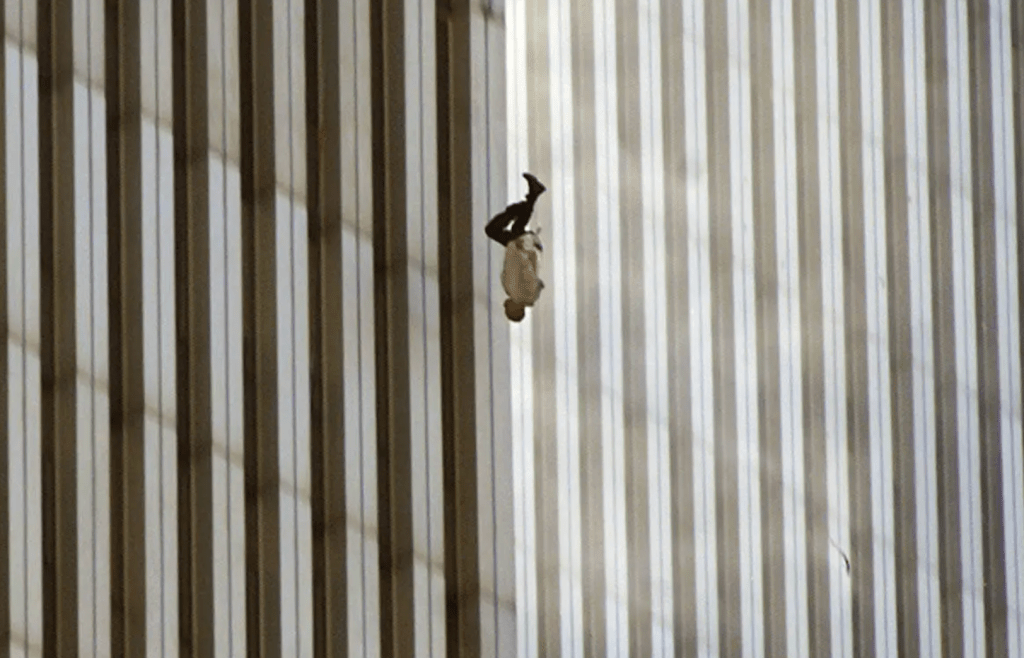
World Trade Centre, 11th of September, 2001. It is estimated that around 200 people jumped or fell to their deaths during this tragedy. There are difficult protocols about photos like this, and there was a big fuss when it was published (consequently increasing its renown). In this frozen (but seemingly so relaxed) and highly artificial moment it has a mesmerising quality.

We assume the bear must reach the ever-so-distant land for safety. That might be true or it might not. But it is almost impossible not to assume so. The intimation/ metaphor becomes reality. For me, heart wrenching.
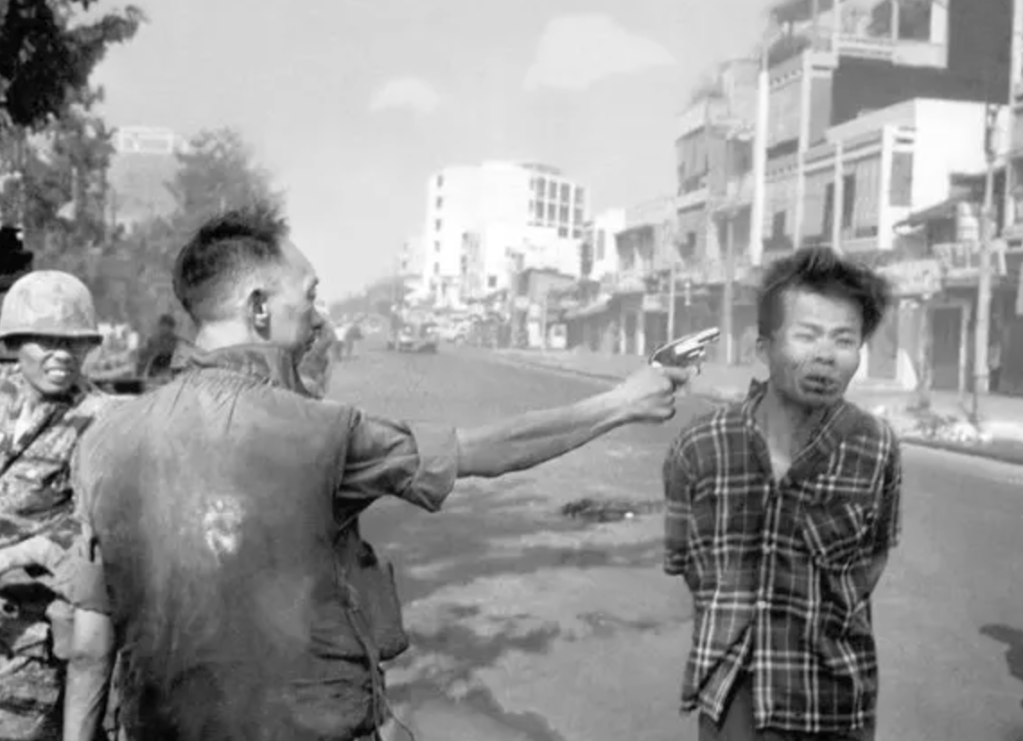
Nguyen Ngoc Loan, the national police chief of South Vietnam, executes the Viet Cong fighter, Nguyen Van Lem. Another of these photos like ‘Napalm Girl’ which swayed American public opinion towards the conclusion of the Viet Nam war. Nguyen 1 obviously a war criminal. Nguyen 2 obviously harshly dealt with. In fact, Nguyen 1 appears to have been a very highly thought of war commander renowned for his fair dealing. Nguyen 2 was the leader of a Viet Cong Unit which had killed 47 people earlier that morning.
Does adding information like that bring anything to the experience of looking at a photo? Does it change our fundamental reaction to the image? Should it? Is it meaning or just something like visual impact that we are responding to? (There is no such thing as ‘just’ visual impact of course. Everything we see is processed by neural networks that have processed so much else. But you know what I mean; maybe immediate rather than reflective responses.)
That question matters particularly with photography because unlike other art forms we are supposed to be looking at reality, something that really happened, something that can be confirmed by a photographic image. (There is some additional discussion of this question RIGHT HERE.)
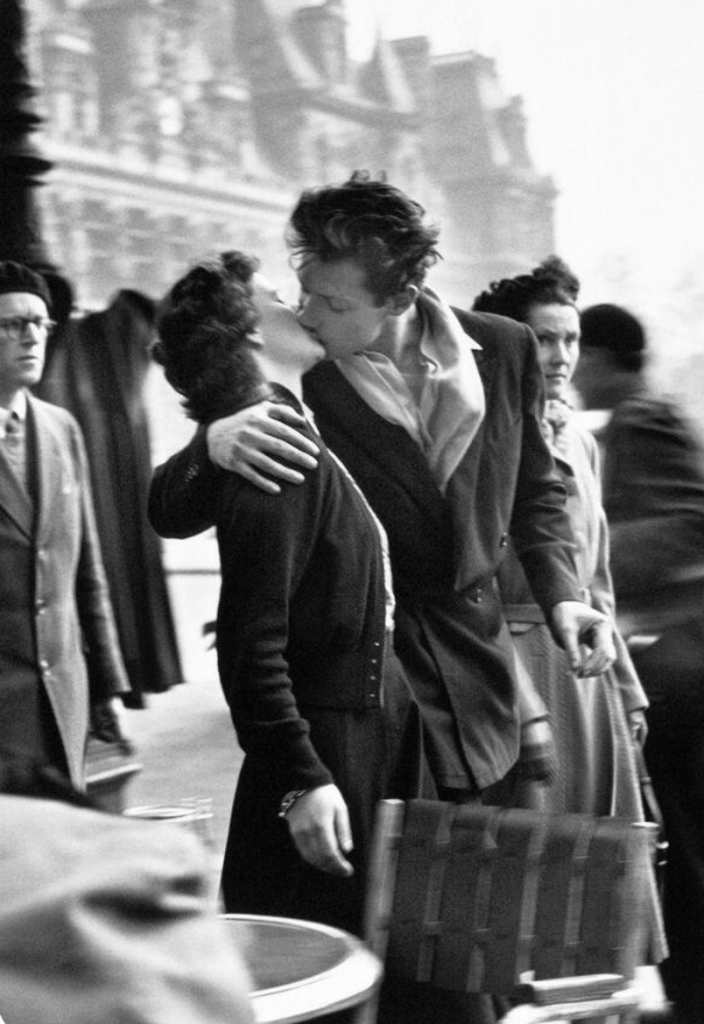
They may be particularly romantic or erotic.
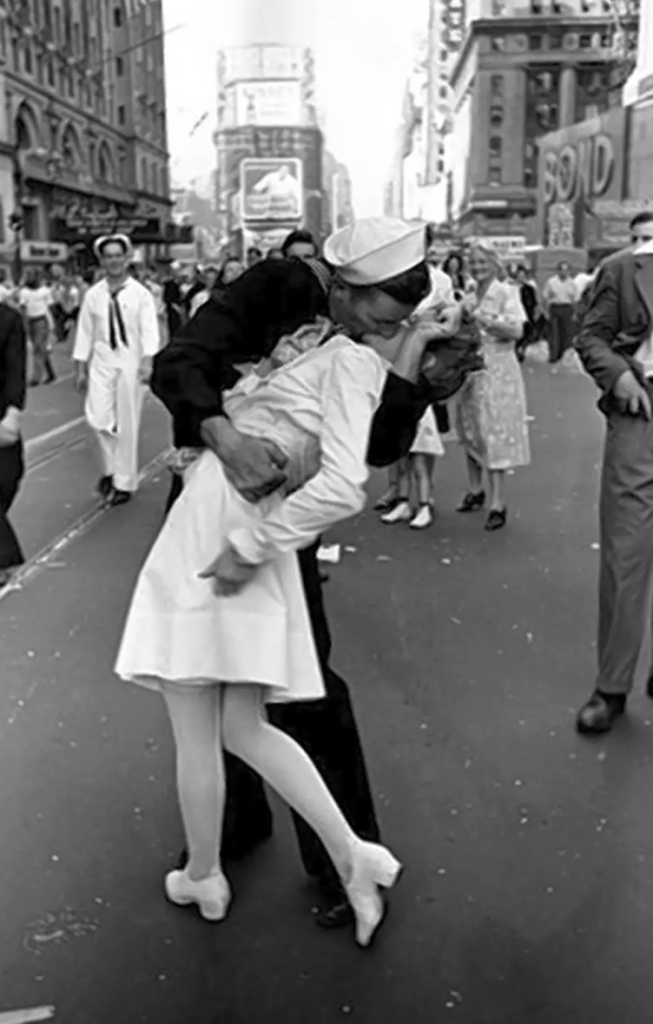
V-J Day in Times Square, 1945: Alfred Eisenstadt
Which one? I have chosen Doisneau’s because although the men in both pics are so terribly masterful, the French chap has a bit more style — the scarf, the gesture of the left hand, the waist tuck of the double-breasted suit. The sailor appears to be on his way to eating the woman — to him unknown — to celebrate the war’s end. But in both cases we understand that there is a passion which we can only celebrate.
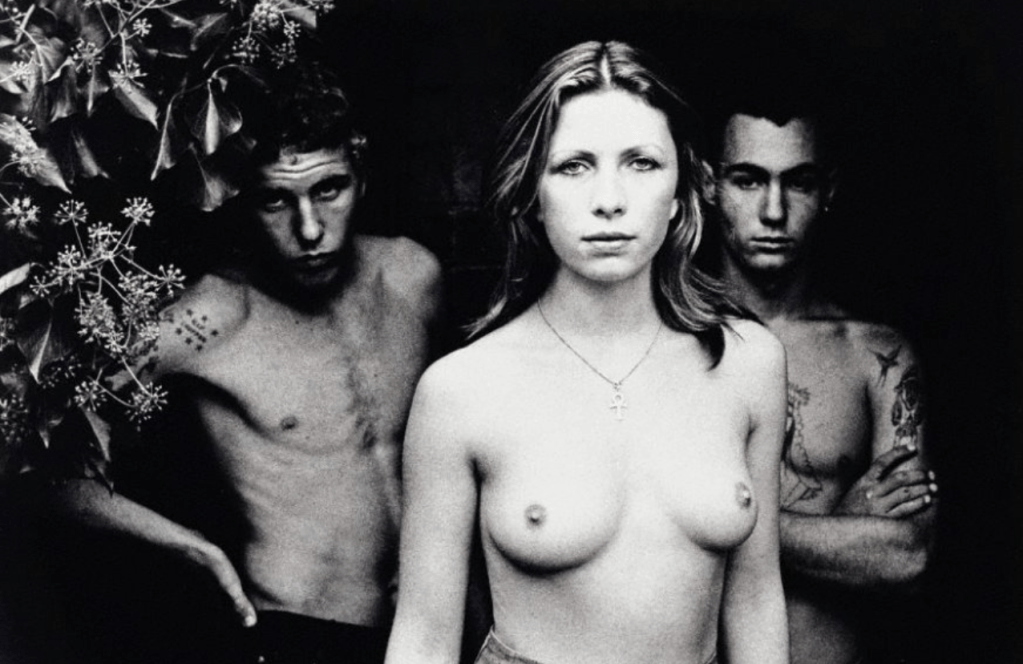
An Australian photographer, and an Australian photograph (and can I suggest so much of its time as well as place (St Kilda)). Fearless despite her naked torso. Fearless. There is a flash, no more, of menace in the chaps behind her, (they’re Sharpies!), but she is in charge. Her breasts are those of a young woman; her eyes so much older. All challenge. Not so much romance, but the right degree of complexity to be erotic.
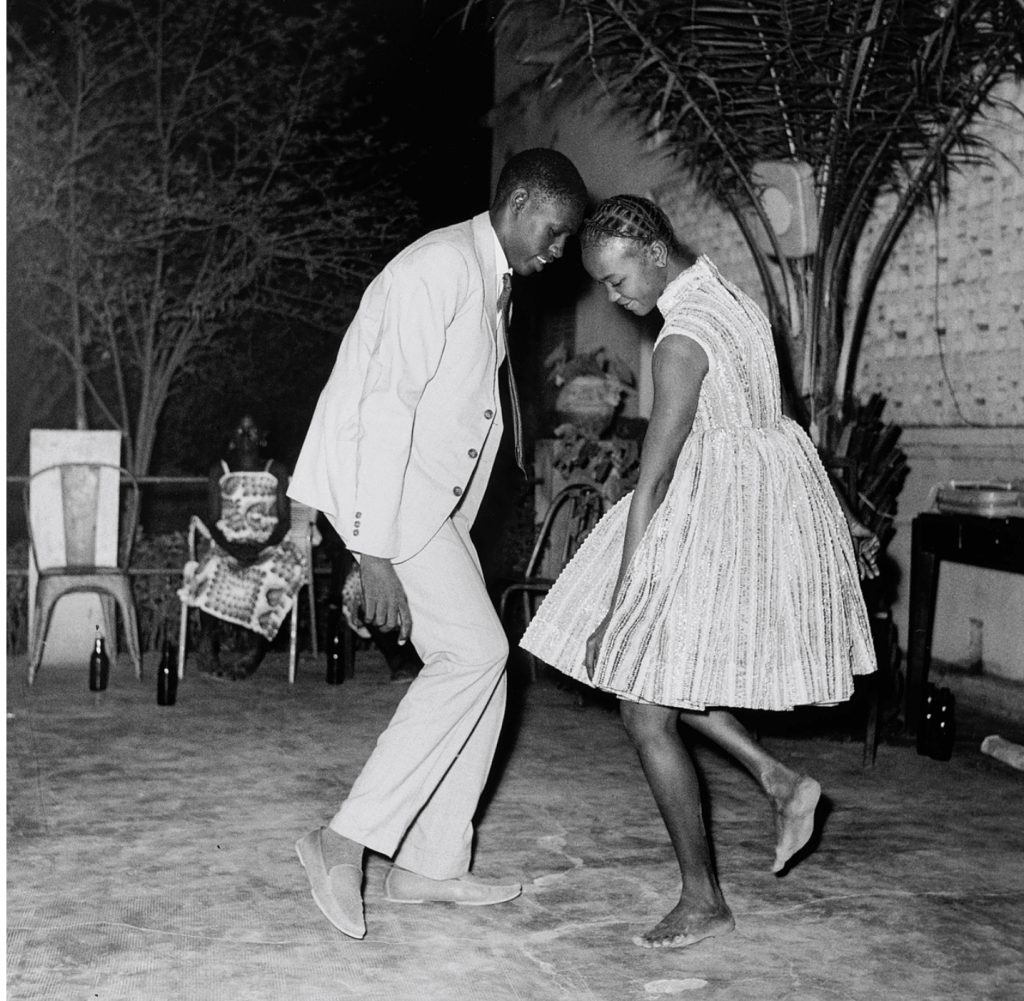
Probably not a photo you’ve seen before. It is here partly because it is African but also because of the truth of whatever it is between the couple, and the delicious modesty of its expression. Something which is so desirable and human. Unalloyed. Nothing as loud as joyous, and it mightn’t endure. But at this moment … transcendent.
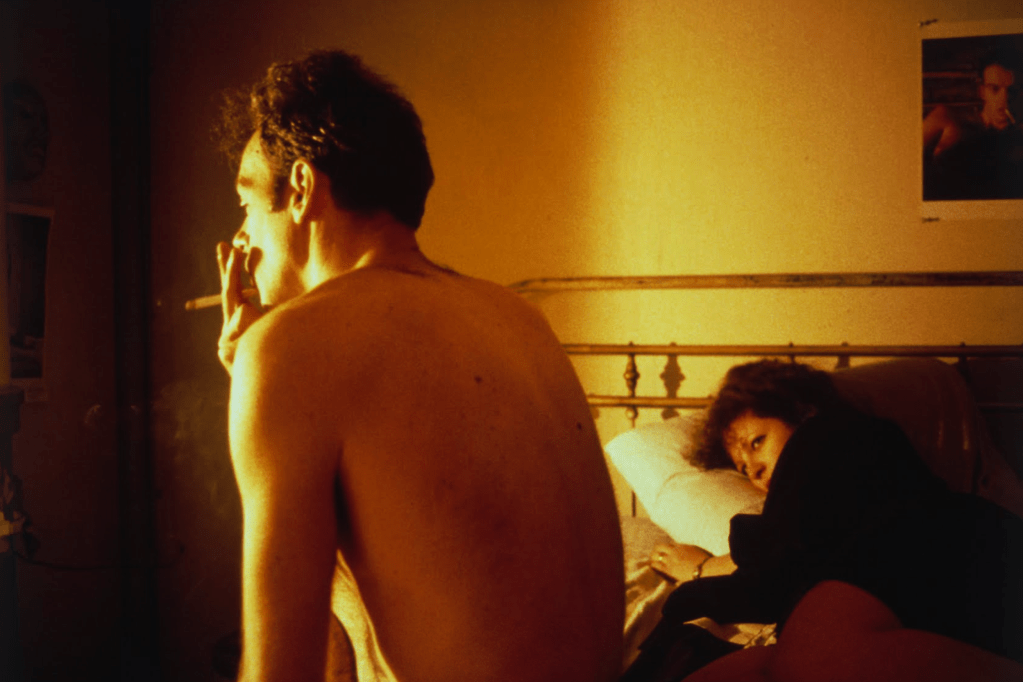
And maybe its antithesis. That point in a relationship. What’s going through his head? Does he want to be out with the boys? Is she going to have her heart broken? We can’t see the guy’s face but we know the state of play. A stage, an essential part of romance. We know this. We can relate.
They may record something spectacular or unusual.
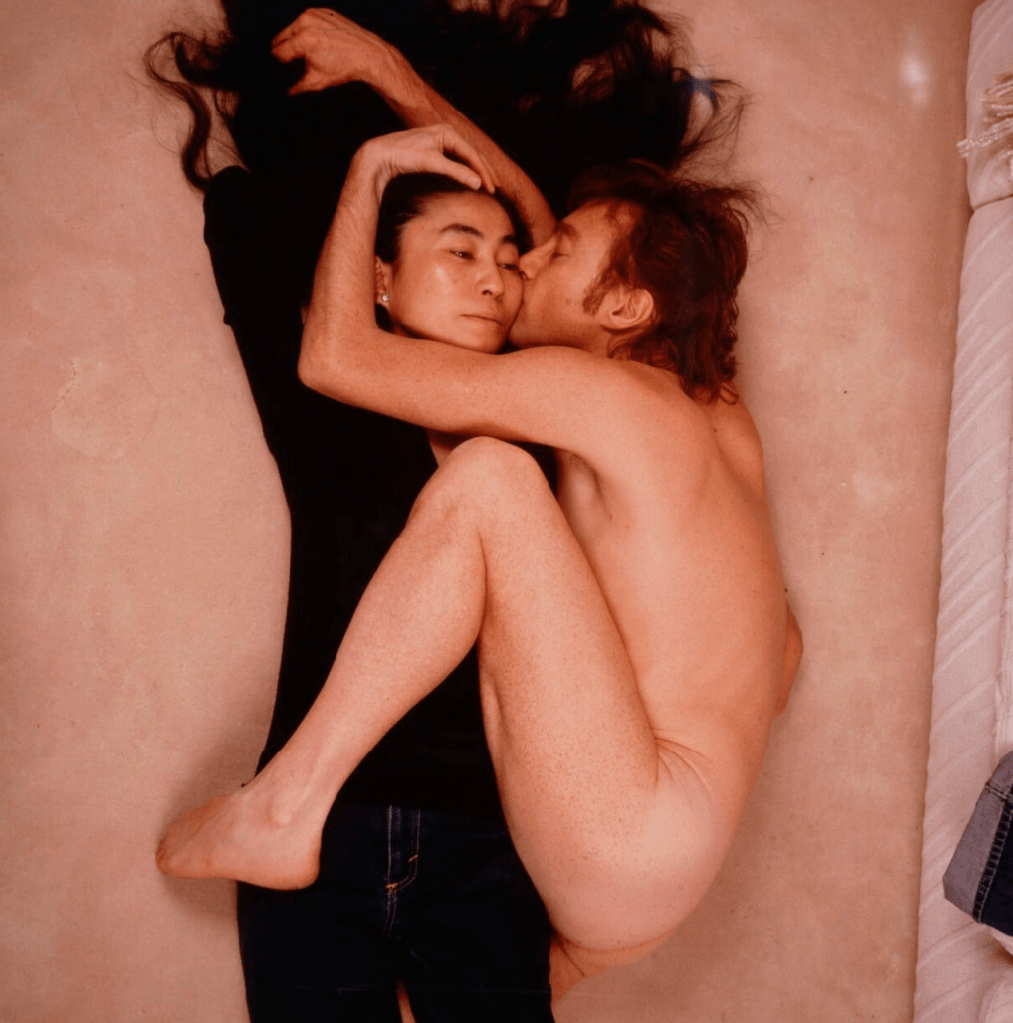
Neither romance nor eroticism in this photo, but it is very hard to say that it’s not of interest. Some growth — naked growth, naked MALE growth — has attached itself to an impassive human object with glorious hair. It doesn’t hurt that the two subjects are quite well known. Whoever decided, it was a striking idea.
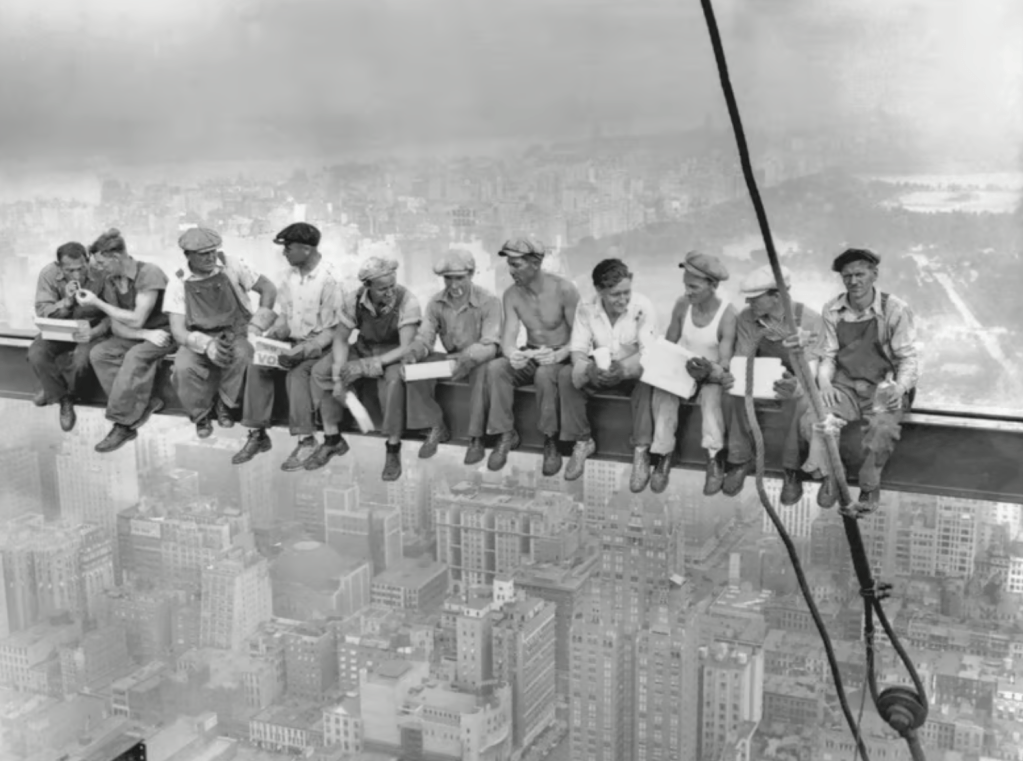
Yeah. Seen it. A million times. One bloke is lighting another’s cigarette off the one he’s smoking. Those white things are their lunch boxes. Is this what they do every day or just when a photographer is round? Who cares? 860 feet above the ground and they’re having their lunch, Central Park a misty blur below and behind them.
There might be stuff on Tick Tock that prompts as much or more vertigo. But this is the original, and I defy you to run your eyes along their shoes without just a little intake of breath. Plus they’re at work. This is what they do for a living. Plus plus you don’t get faces like that on Tick Tock.
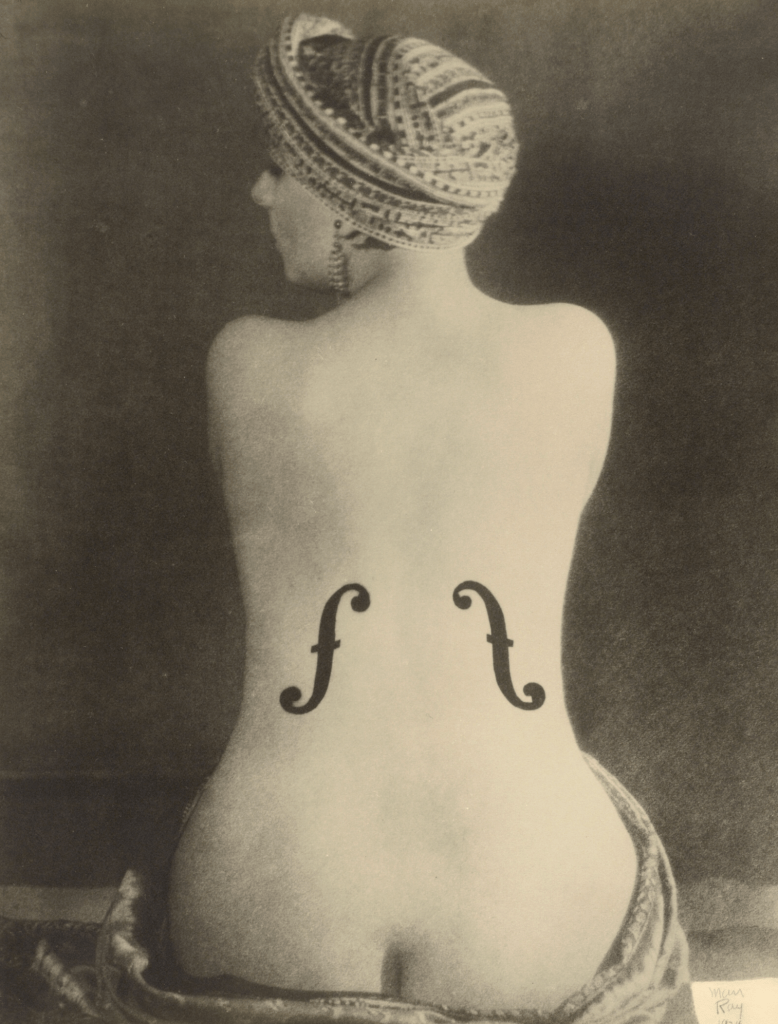
We’re moving into hazardous territory here, but I’m convinced. An unadorned set up: a model, palpable, soft, no hard edges, like one of Ingres’ baigneuses, painted with f-holes. And because it’s Man Ray, it will be just for the fun of it. There’s no special meaning to be made here. Don’t make up a story about models and lovers, search for antecedents, or muse about the possibility of ‘le violin d’Ingres‘ meaning ‘hobbyist’. It’s Dada. It’s impact, not meaning — BANG. LAUGH. It’S An ODdITy, and you haven’t seen it before. Just enjoy it. (And this is a screenshot of the most expensive original print of a photo ever sold: $US12.4m, Christie’s New York, 14 May 2022. Someone must appreciate the joke.)
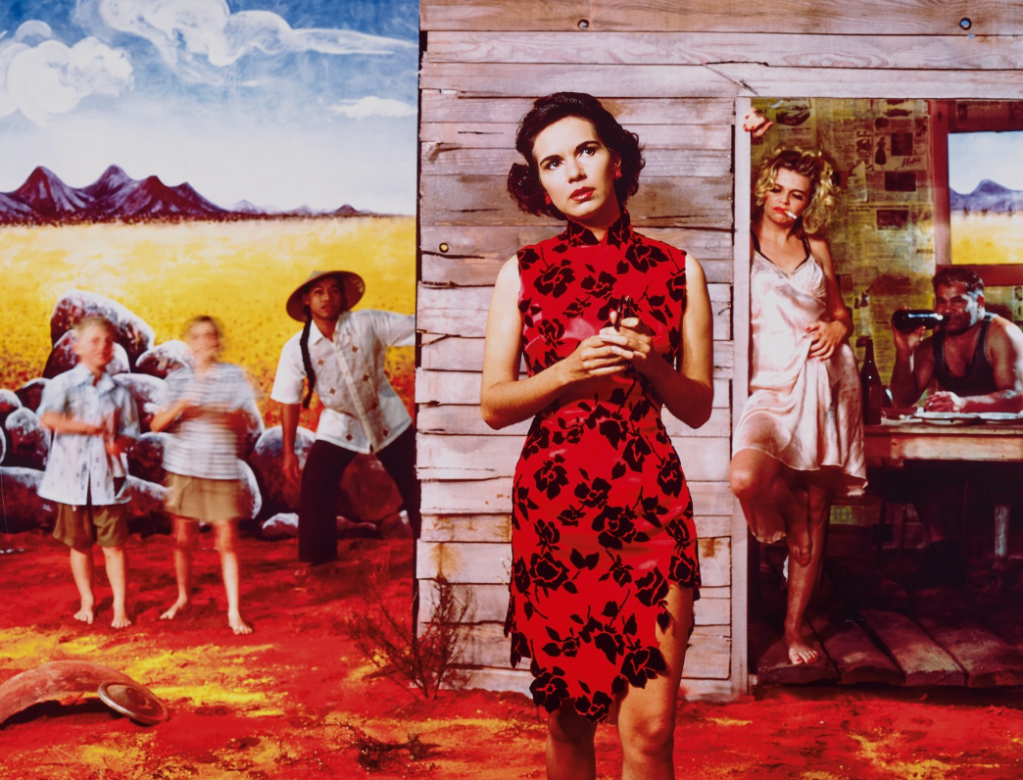
The transition is complete. It is a set-up. Comprehensively. Unashamedly. Tracey, innocent in her cheong sam, leaving a collection of challenging detail to perhaps make her way in the world.
So, can you call it a photo? Well … it is a photo, even if photography here, as is true far more widely, has become a hybrid art. Two considerations. It’s Australian, and Tracey was a friend and colleague of Merv’s at Sydney’s Boomalli Aboriginal Artists Co-operative as well as being the curator of his first significant show InDreams. Unusual? Sure. Spectacular? Unquestionably.
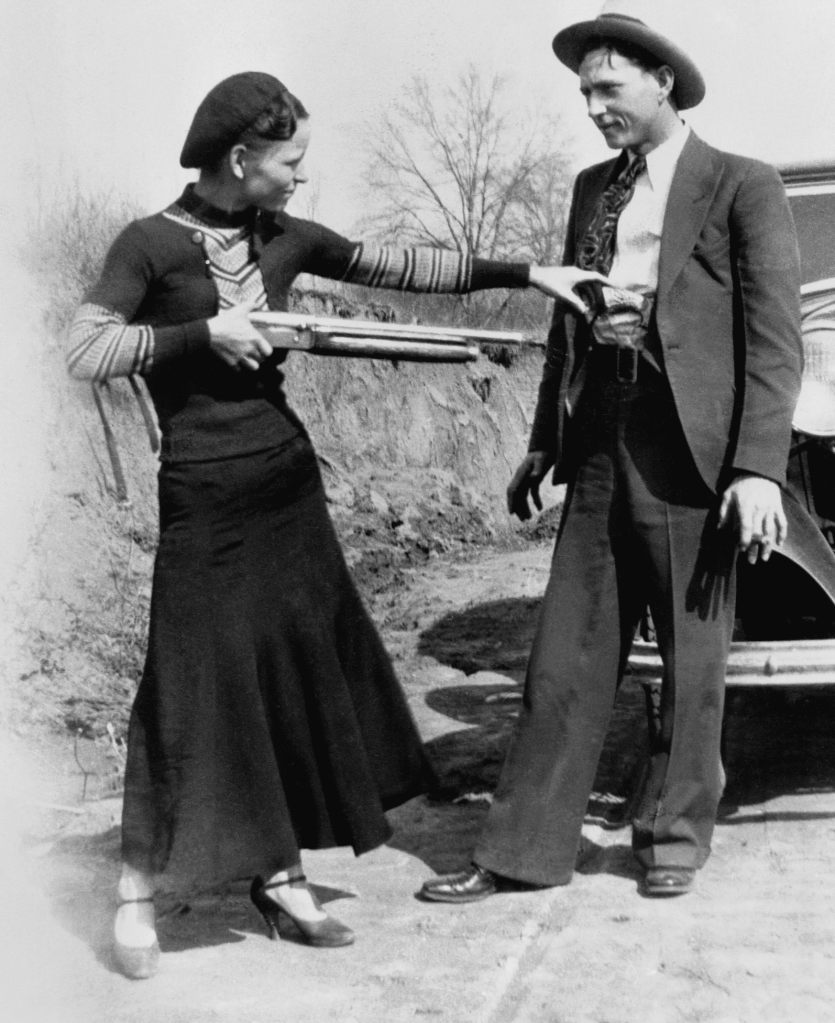
Extraordinary. It really is Bonnie Parker and Clyde Barrow. Mucking round with a pump action shotgun. (W. D. Jones was a member of the gang, at the time 16 years old.) They had a camera, liked to take photos and did so. In fact they kept a record, however incomplete, of their exploits. It was a modern thing to do. The photo is sort of sweet — Clyde’s goofy expression and, despite the tension in his fingers, his you-would-have-to-say relaxed stance. But there it is. Bonnie and Clyde. Maybe you should expect that; I didn’t. I’m saying, strikingly unusual.
There might be something particular about their aesthetic or the way they have been composed.
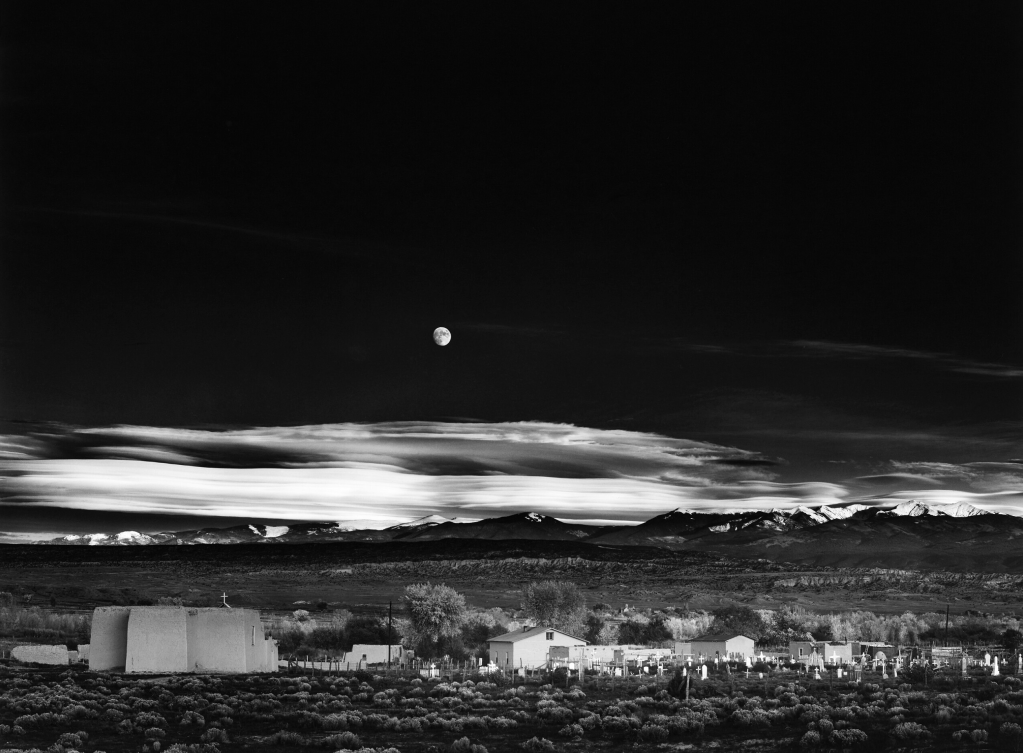
You might note the very limited number of photos in this collection without people as their focus, and yet landscape photography is a capacious field with many distinguished operators. Perhaps not many as good as Ansel Adams. Just how does he get those very sharp whites and velvet blacks? A master in the darkroom obviously, but this photo has interest wherever you look.
In one of those inspired choices which make art, the moon is almost centred with that great black void above. The flow of cloud intersects the picture while contrasting dramatically with the detail of the crosses in the cemetery and the ever-so-crisp lines of the buildings.
I am inclined to reach for adjectives like ‘classical’, but how would that help? Who knows how aesthetics works? ‘I know what I like’, might really have some pull after all. But would everyone agree that it is something special? I think so.
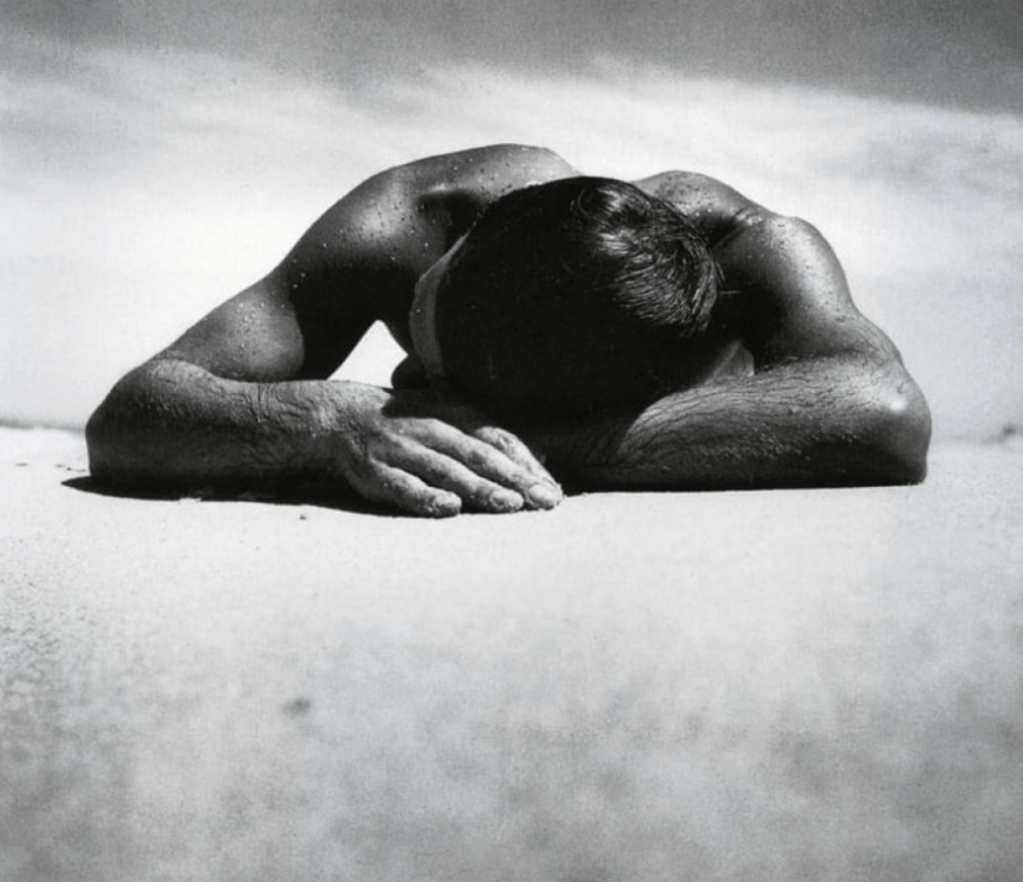
Australian, indelibly. You know the experience, you’ve felt the sun after the cold of the surf, you’ve had sand in your togs. It’s cultural. Of course it is. But that’s not all that makes it a great photo. It’s not a person (no legs, no body, not even a face); it’s a shape, and I think it’s the line up the arms and across the back that is so satisfying. This is complementary with the contrast of the dark shape and both grounds, fore and back, and the fact that the shape is the only thing in focus. Everything else (including the horizon line) is fuzz. Courageous choices which paid off big time.
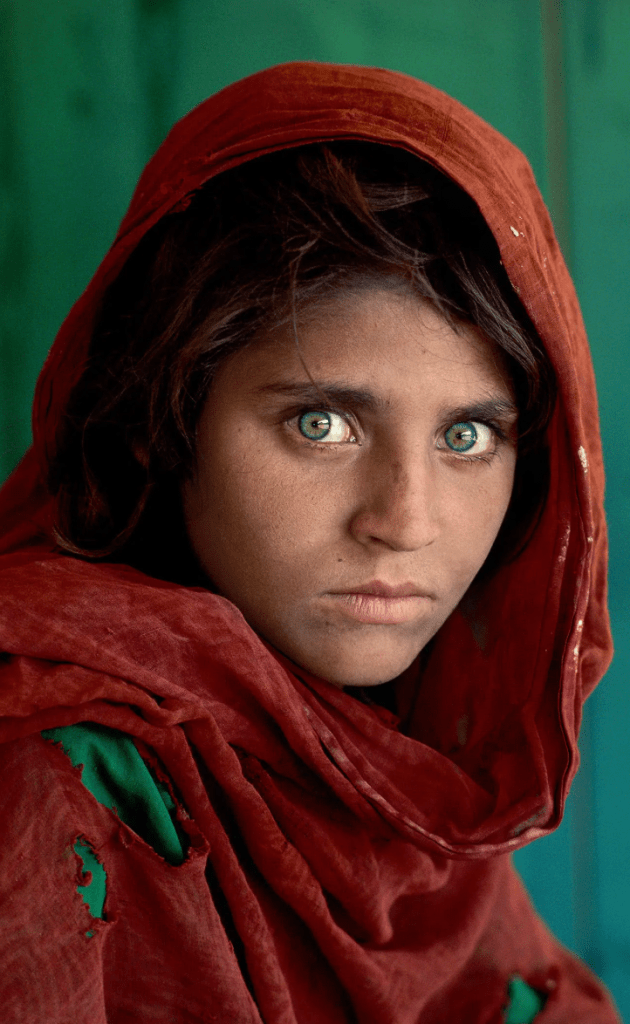
Pashtun girl really, but that is splitting hairs. Her name is Sharbat Gula, and she has eyes which are hyper-alert. Just a girl, but we must believe those eyes have already seen far far more than they should have. And they are rivetting, rivetting enough to make us forget the extraordinary colour match of eye, background, undergarment, and the complimentary framing of the face by the rust-red material which echoes some of the strands of her hair and the innermost parts of her irises. What a photo!
They may be strikingly familiar or have become iconic.
I might be cheating here. Another chicken-egg issue. Are they great photos because they are famous, or are they famous for one of the reasons above? And if so, why have we got a separate proposition here?
Let’s say they have the power to be great through familiarity. We construct them to be great and, when we think about it at all, designate them as such.
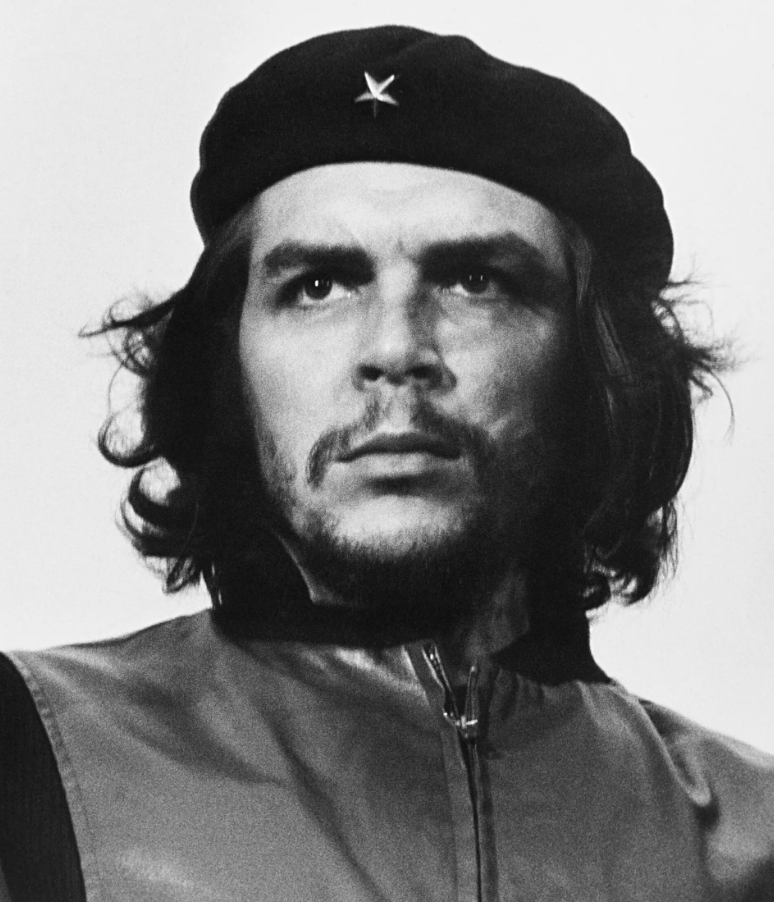
You might have had a T-shirt or a poster with this on it. If not you might need to explain the reason. Che, the heroic guerilla with international resonance very likely influenced by this photo. Composed, steely and puissant without even trying to be. Fortitude, depth, a leader.
What are we reading to understand this? Good eyebrows of course, and eyes set deeply enough to give us shadows which emphasise the darkness of his eyes and their twinkling pinpricks of light, shadows which also give us the highlight on the right hand side of his face. Film star good looks? Yes, but so much more as well.
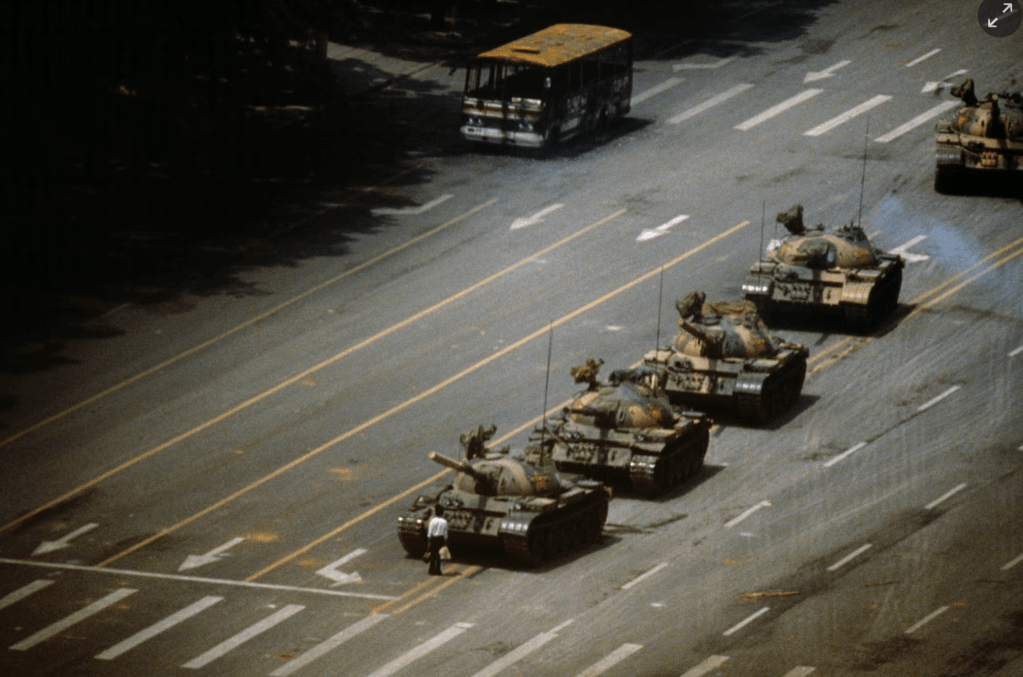
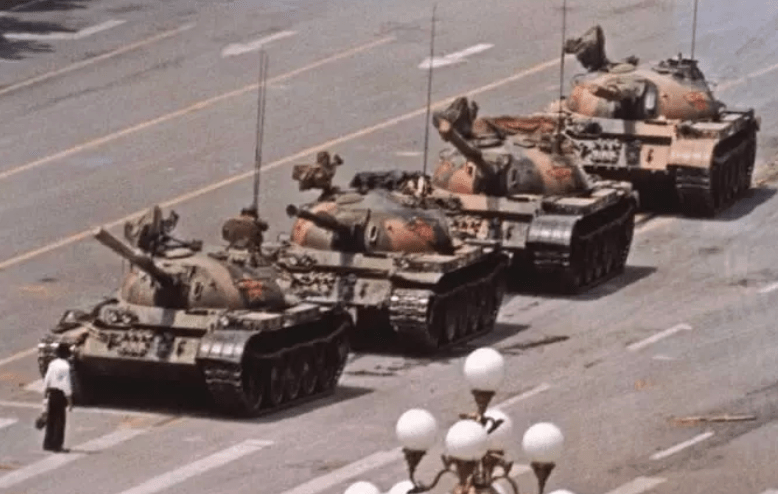
Tienanmen Square, Beijing. Packed with students protesting anti-democratic acts by the government. Cleared at the order of Deng Xiaoping. Scores of tanks, not evident in these photos, poured into the Square smashing through barricades. At this point, one man with two shopping bags stands in front of the first tank of a column and as the tank manoeuvres to go round him shuffles back and forth to continue standing in front of it. The tank stops, the column stops; man versus machine, a civilian versus an army. A big subject for a huge story.
Four photographers got this photo. Franklin’s was the first, Widener’s the most widely used. The others were Terril Jones, and Arthur Tsang Hin Wah. Australian ABC correspondents Max Uechtritz and Peter Cave were the (only) journalists reporting live from the balcony with Willie Phua shooting the accompanying video.
There is a theory that the whole thing was a set-up to make the Chinese government look better. A clean white shirt was not what the protestors were wearing. It took place right in front of the hotel where it was known that foreign journalists were staying. The soldiers respond quite passively to his actions and don’t hurt him. He is not arrested after leaving the scene. His identity remains unknown. Your call. Still a great pic.
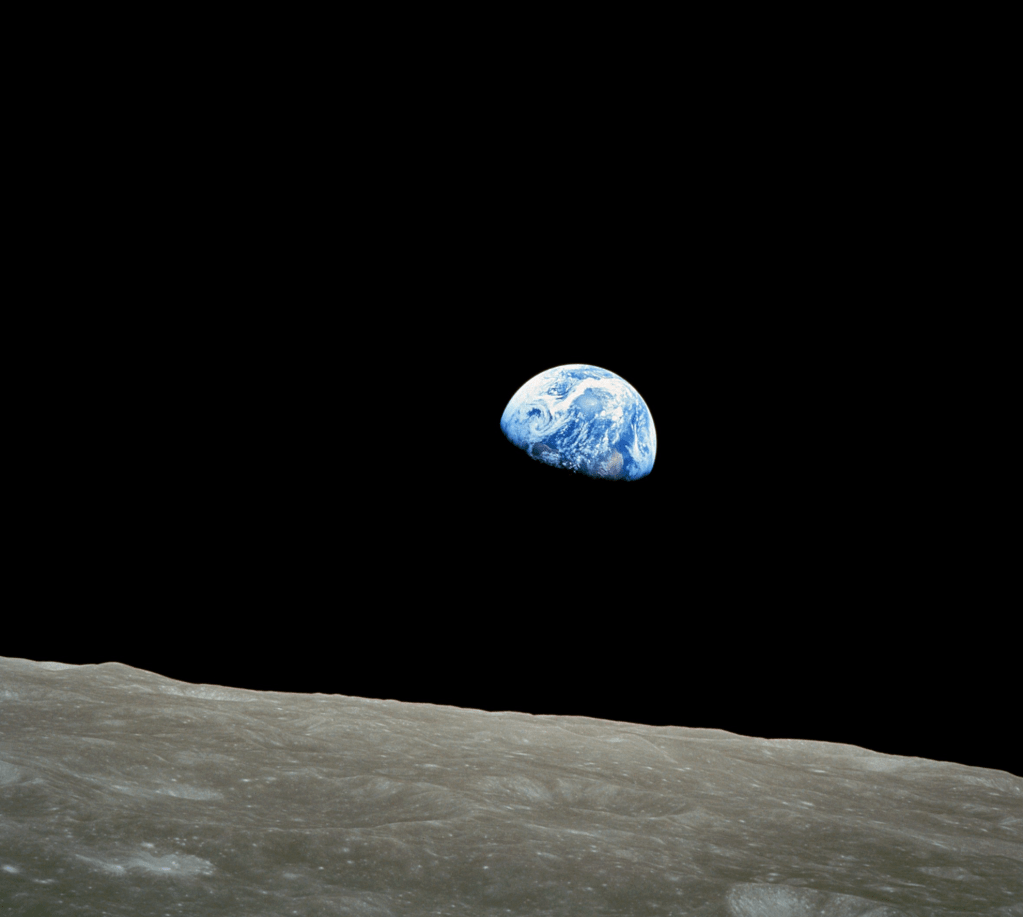
One from a collection taken by astronaut William Anders on the Apollo 8 expedition, the first crewed spacecraft to leave Earth’s gravity, orbit the Moon, and return safely. It was generated after a cute little back-and-forth between Anders and Jim Borman, the flight commander who is sometimes credited with taking the photo.
Anders says: ‘Oh my God! Look at that picture over there! There’s the Earth coming up. Wow, that’s pretty.
Borman: Hey, don’t take that, it’s not scheduled. (joking)
Anders: (laughs) You got a color film, Jim? Hand me that roll of color quick, would you.
And this is one of the results (which include the ‘half-Earth’ just breaching the horizon). Claimed to be the most reproduced photo ever, it featured on a commonly-used US stamp. It has also been described as ‘the most influential environmental photograph ever taken’.
It is eventful, dramatic, records something spectacular and unusual, has its own exquisite aesthetic, and might even be considered romantic. Great photo.
• • • • • • • • • •
Two of my favourite great photos.
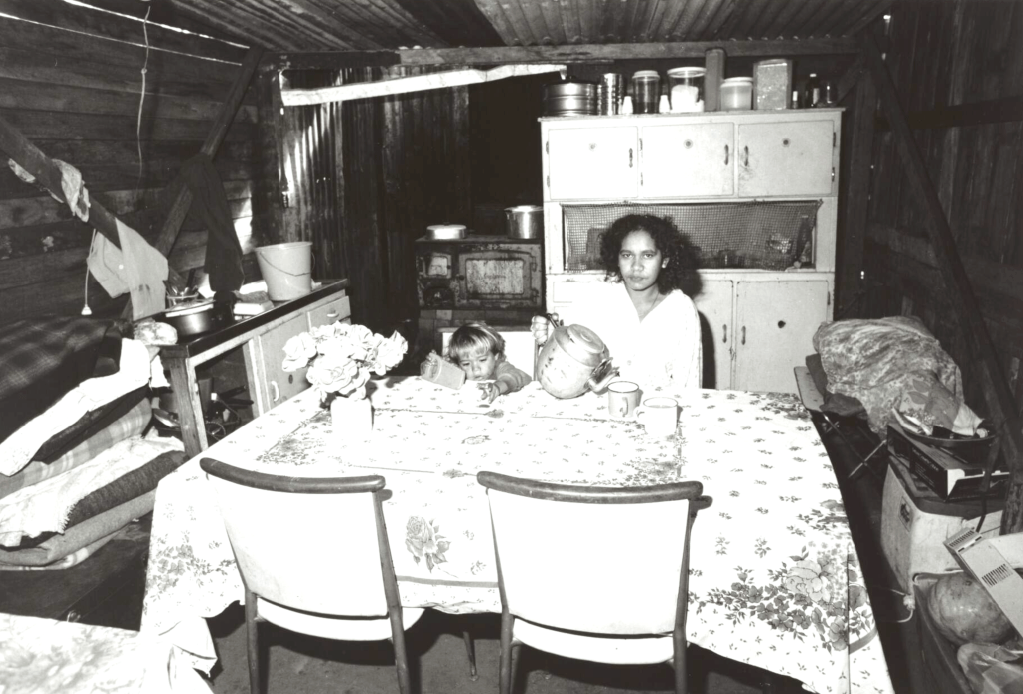
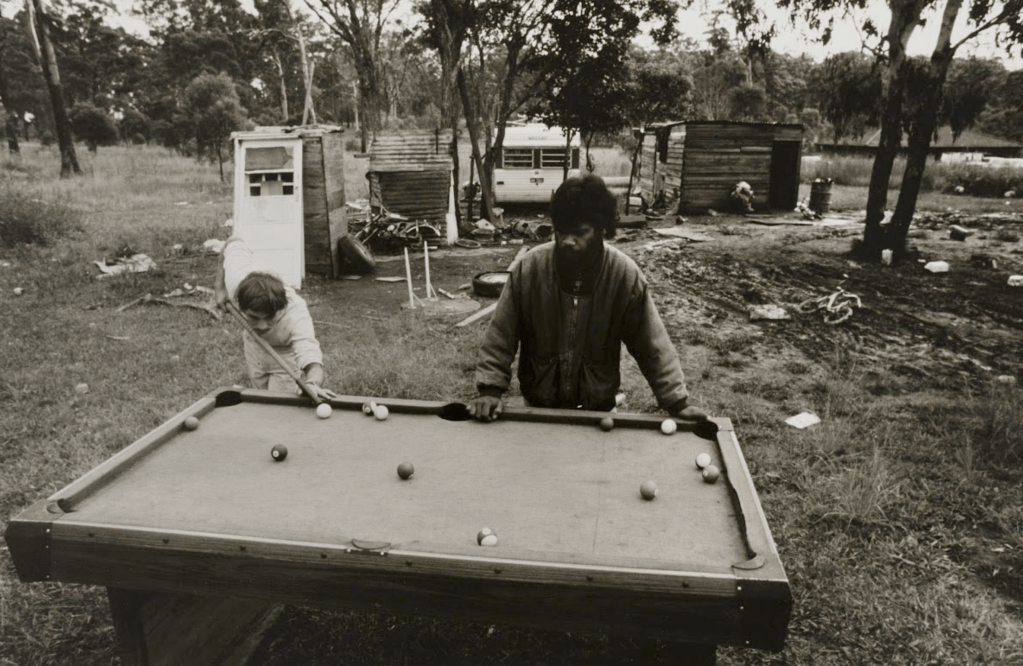
For their humanity.
 mcraeblog