You know these three photos. Of course you do. Exceedingly well known. They are on Mr. AI’s list of the greatest of all time. But there are questions.
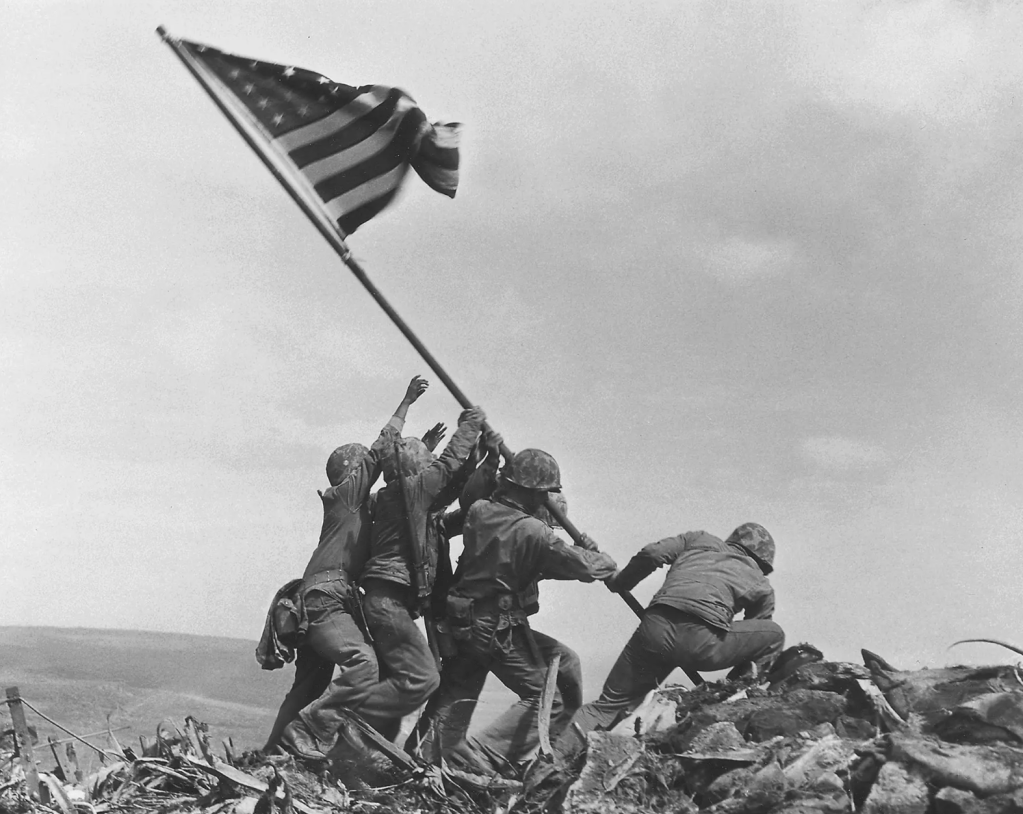
Raising the flag on Iwo Jima 1945: Joe Rosenthal
The first one, ‘Raising the flag’, has appeared on stamps, on a war bond, is memorialised in bronze as the national monument to the US Marines in Arlington, Virginia. Etc. Etc. It won a Pulitzer Prize. The remaining flag raisers (two died in later fighting) were sent on tour through the length and breadth of their country although one who never wanted to go in the first place was sent home for drinking excessively. John Bradley identified as the man taking the lead in the front of the planting didn’t like talking about it much either, the main reason possibly being that he wasn’t there.
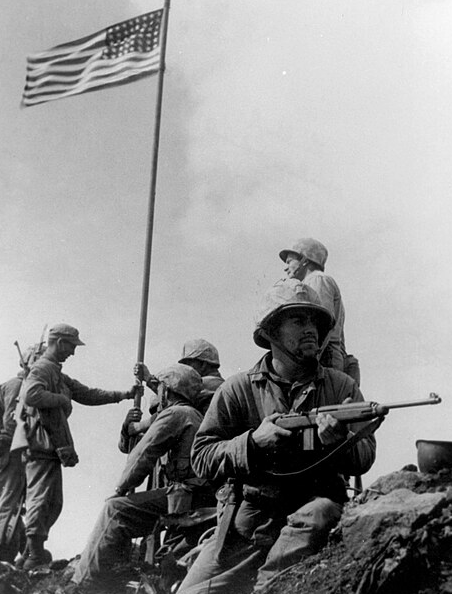
Here’s a pic of the flag actually being raised after the hill was captured.
Bit low key eh. The flag has been attached to a bit of metal pipe they found on the top on the hill. You could get a statue out of it but it would have its limitations.
Joe Rosenthal was there of course and tells a terrific story about it, a terrific American story really. But he wasn’t there. Not then. He came later in the day when they did it again with a much bigger flag. He may have posed the raisers.
Okay. So what? Does that matter? Well, too late really to be asking questions like that. What does ‘real’ mean anyway? The statue is up! And it’s a beauty.
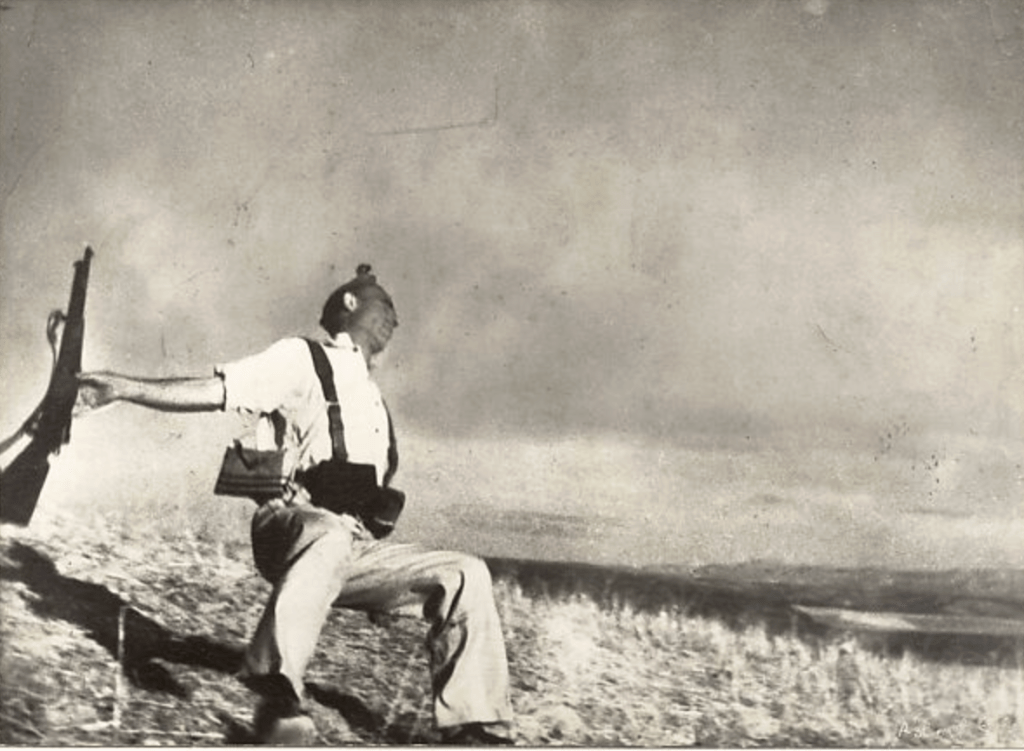
The Falling Soldier 1936: Robert Capa
And ‘Falling Soldier’. Spanish Civil War during the Battle of Cerro Muriano. ‘A soldier [identified as Federico Garcia] at the very moment of his death. He is shown collapsing backward after being fatally shot in the head, with his rifle slipping out of his right hand.’
Like a lot of these photos it had a huge impact on publication (in Life magazine of course, on the cover). This is war. This is the good guys, or a good guy, being shot. Kafflooiie. Horror.
Capa has said: ‘I was there in the trench with about twenty milicianos [militiamen] … I just kind of put my camera above my head and even didn’t look and clicked the picture, when they moved over the trench. And that was all. … [T]hat camera which I hold above my head just caught a man at the moment when he was shot. That was probably the best picture I ever took.’
Hmmm … except it appears that the photo was taken at Espejo, a location about 50kms from where that battle was fought. Federico Garcia really did die at Cerro Muriano, but behind a tree. During this war photographers were granted no access to areas of live fighting. Many years later a suitcase full of Capa’s negatives was found none of which were of this photo but with scores of others apparently rehearsing the scene.
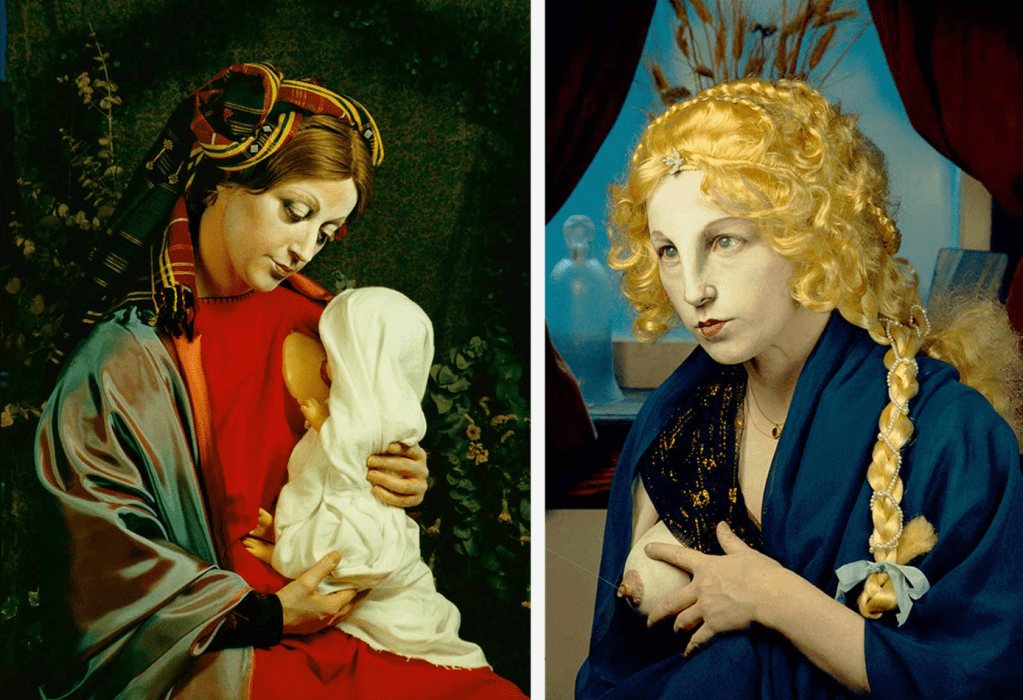
Does it matter? Does Cindy Sherman really look like this?
Untitled #223 and #225. 1990: Cindy Sherman
We know that Cindy is faking it. Whatever it might be she’s up to, it’s something else. In terms of our appreciation of the photos there is a different set of criteria operating. With ‘Raising the flag’ it probably doesn’t matter because Rosenthal has made such an excellent job of the tableau, and anyway it’s too late. The platoon has bolted. But ‘Falling soldier’ … is it such a great photo if it’s just a bloke falling over? It would seem to gain most all its strength from its authenticity and context. Without that …
Next question please.
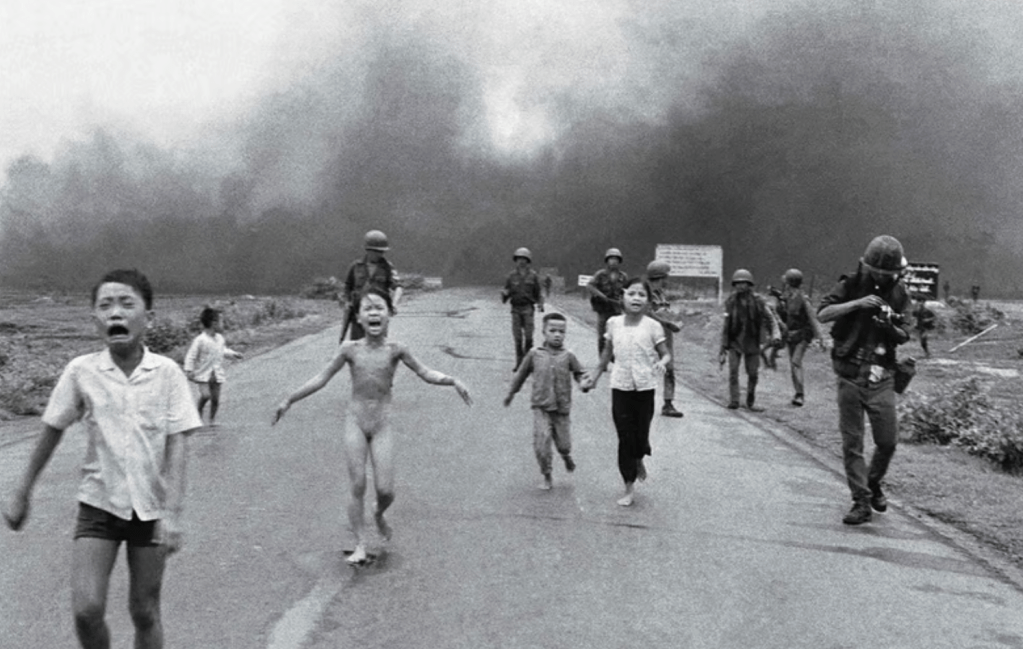
Who took this photo?
Napalm Girl 1972: Nick Út
Well it says ‘Nick Út’ doesn’t it? There. In the caption. You can find many many instances of him identified as its author. Near universal. He won a Pulitzer Prize for it — sometimes described as the most important image of Viet Nam’s ‘televised war’, World Press Photo’s Photo of the Year in 1973. What’s the question?
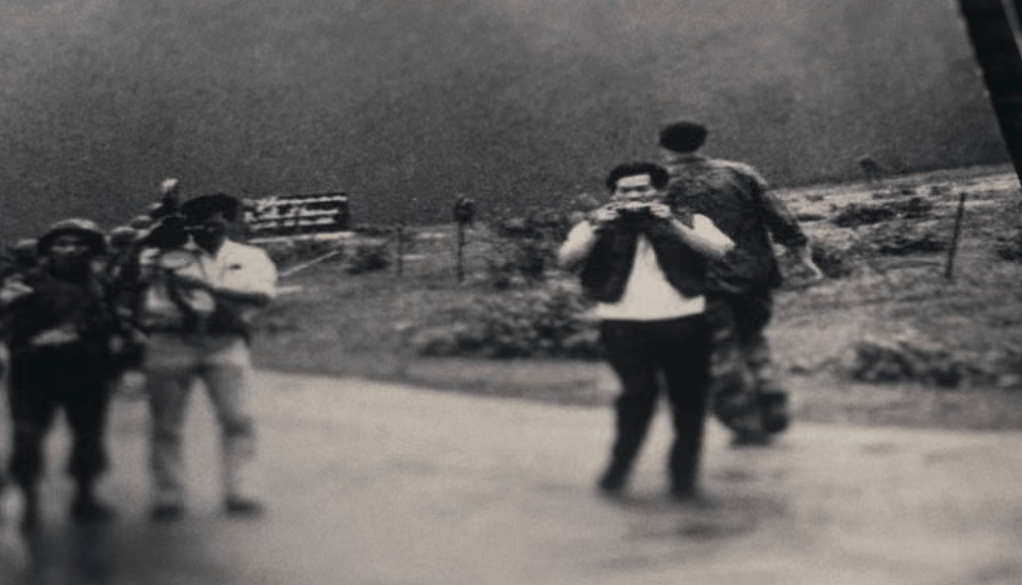
Well, one of these guys did and none of them are Nick Út.
Út was there, but only near there. ‘Based on images taken by and of Út that day, he would have had to sprint about 560ft forward, snap the famous photo, then run back 250ft, then turn around to be seen walking toward NBC News cameramen – “an extremely implausible scenario”.’
To find out what actually happened you can watch ‘The Stringer’ on Netflix or read The Guardian‘s take here. But it appears that Nguyễn Thành Nghệ, another photographer who was working as a driver that day, took the photo and sold it to Associated Press for $20 and a print. Carl Robinson, Associated Press’s photo editor on duty in Saigon that day alleges that Horst Faas, ‘the bureau’s legendarily domineering photo chief’, ordered him to change the image’s credit from the stringer to Út, the only AP staff photographer on site that day.
Interesting to know, but does that matter? Does the authorship impinge on the impact, on the ‘greatness’ of the photo?
I don’t really care — not really — who took it (although Mr. Nguyễn might), but I do think it suggests something about how photos become ‘great’. Generally you need your team working for you, a big, capable mainstream team (like AP). You need something to carve a path through the 18 million others. You need the cultural apparatus bent in your favour and, reviewing lists of ‘great photos’, it helps enormously if you’re American or American-sponsored.
We might have to begin again from the idea that great photos are also popular and well known. The egg of publicity may well, must, give birth to the chicken of perceived quality.
• • • • • • • • •
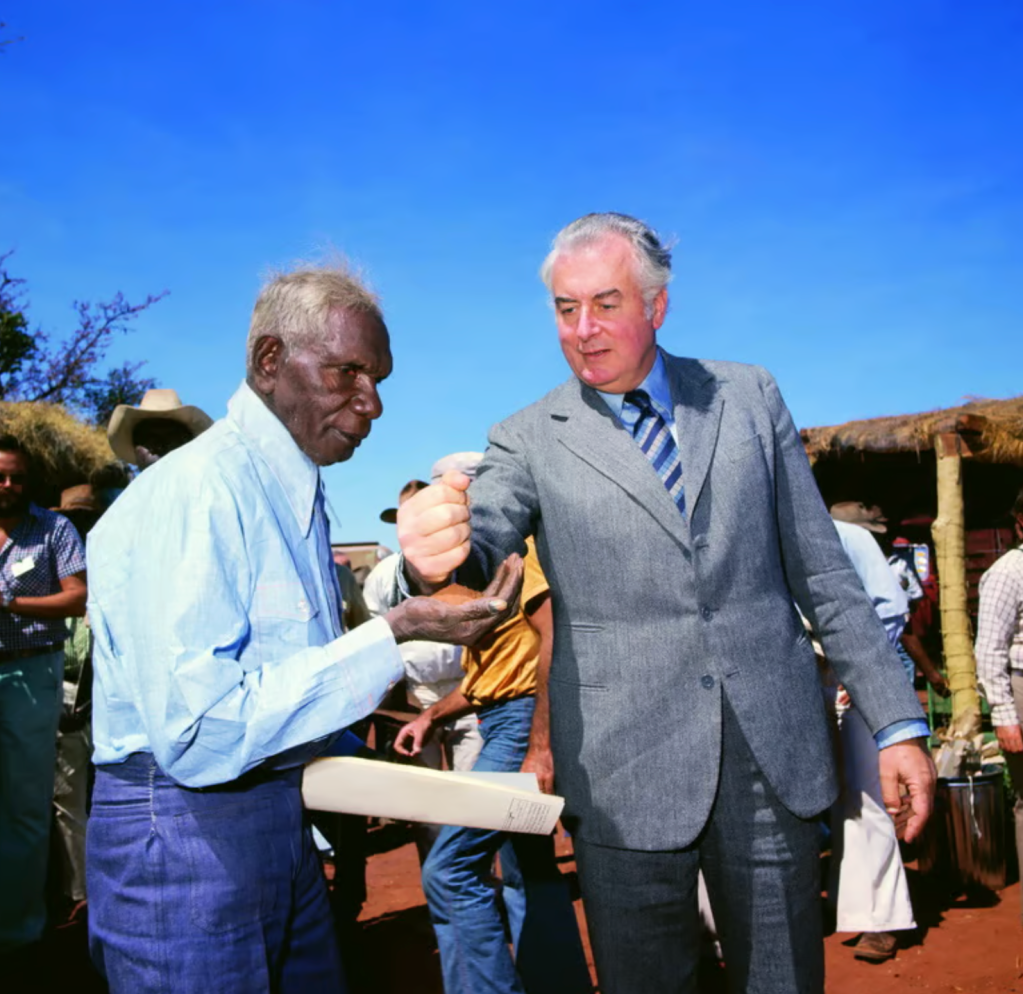
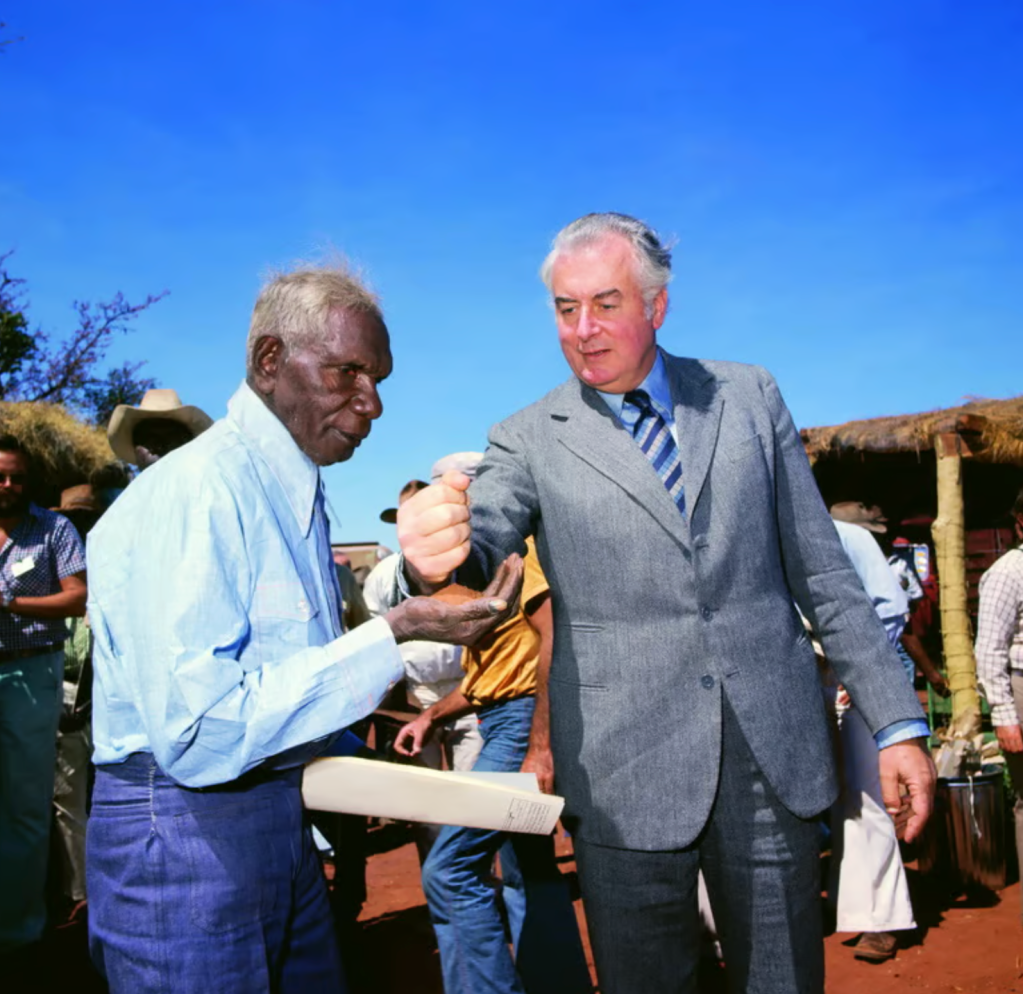
‘When I got back from Wattie Creek [the Dept of Aboriginal Affairs] got me to convert [the photo of Whitlam and Lingiari] to a black and white image’, Mr Mervyn Bishop notes. It wasn’t used anywhere until six months after the event, three months after the Whitlam government had been sacked. Even then it was tucked away inside the Aboriginal News, hardly a dominant mainstream publication. It was 10 years later that Kev Carmody, haunted by his memories of Merv’s pic, wrote ‘From Little Things Big Things Grow’ with Paul Kelly. It didn’t chart especially well. It did better in a version by The Get Up Mob in 2008.
It was when the song was performed in front of Merv’s photo projected on two giant screens at Gough’s memorial in Sydney Town Hall that the song and more particularly the photograph cemented their place in public life and esteem. In 2014. Thirty-nine years after it was taken.
He’ll laugh. Technically a pretty disgusting photo, but pink eye and all it’s caught something. Swervyn Mervyn, the Bishop of Dubbo. Magician. Showman. All Star. Champion.
Among these hundreds, Australia has one contribution. And it is this.
Merv had been manning the Dept of Aboriginal Affairs’ stand at Brisbane’s Ekka (Agricultural show) when he got a call because something big might be taking place at Wattie Creek. In Mt Isa while the plane was refuelling he happened on Keith Barlow, another photographer mate working at the time for the Australian Women’s Weekly. Barlow and his journalist colleague Kay Keavney became intrigued by this adventure of Merv’s and decided to tag along. Merv would have been hazy about what was happening as well as a bit excited. Eyelids batting up and down, huge grin that might turn into a grimace, sucking his teeth: what’s he doing? you’d think. What’s he up to? It’s not every day you go to Wattie Creek, not for any reason — it’s a bit out of the way, in the desert, about 550 kms south of Darwin — but, you know, could be promising. Could be anything. At least I’ll see what the bugger’s up to.
Whitlam’s government had negotiated the return of a portion of Gurindji land in the form of a pastoral lease — not a big deal in the scheme of things, but the beginning of something much more consequential. 16 August 1975 was nominated as the ceremonial handover. The speeches were made under a shelter constructed from tree boughs and canvas. It’s there in the background.
Gough said, inter alia: ‘I want to give you back formally, in Aboriginal and Australian law, ownership of this land of your fathers. And I put into your hand this piece of the earth itself as a sign that we restore them to you and your children forever’, and strained some of that very red desert sand from his hand into Vincent Lingiari’s.
This is a sliver of Vincent’s reply, translated from the Gurindji, and worth recording not least for its remarkable generosity of spirit. ‘We want to live in a better way together, Aboriginal and White men, let us not fight over anything. Let’s be mates.‘
This was all happening under the shade of the lean-to, hopeless for a photo. All shade, no definition … you wouldn’t even see the sand. ‘Mervyn said he looked at Barlow and they both grimaced.’ Merv to Whitlam — nothing should stand in the way of a good pic — ‘Mr Whitlam would you mind if we do this picture again outside in the sunshine?’ That’s Merv. When it comes to business, all business. He lowers his voice, and his chin, when he gets to this point in the story, and does his Whitlam. ‘Certainly Mervyn.’ Barlow held the other photographers off taking his turn only after Merv had finished. ‘I crouched low to include a good portion of sky. … I imagined using it on the cover of a magazine. I wanted to leave room for a masthead, National Geographic or Life or whatever.’
I’ve heard this story many times but I’m thieving here from The Book, and its author Tim Dobbyn notes that there were at least four other photographers there that day. They got the pic too, or versions of it; but, Tim says, they didn’t get the sky. Have another look. How important is that sky. And the dominance of the two figures in what would have been a helter-skelter scene with all sorts of things going on. The little cone of sand is in Vincent’s hand. Merv did get the picture. History was made.
But not for more than a decade, and it nearly didn’t happen. Read the book (pp. 104-105) and discover the role that Paul Kelly and Kev Carmody played in its re-discovery and how from little things big things can grow.
• • • • • • • • •
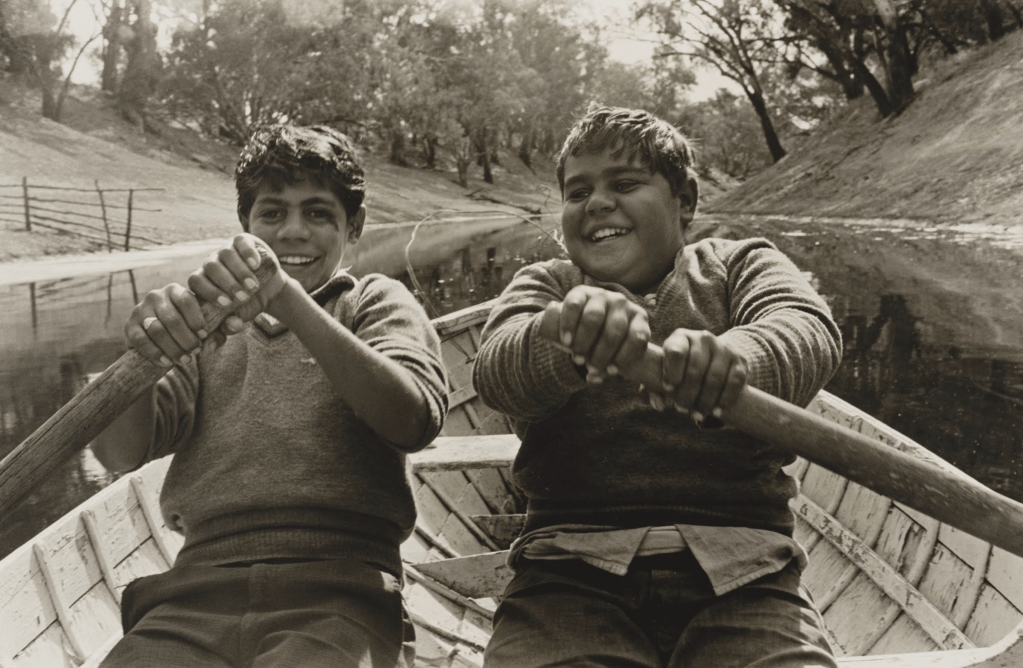
That’s not his best pic. There are others. The book says more than 50,000.
This is one of his favourites.
Cousins, Ralph and Jim. Brewarrina. 1966. Two lads skiving off from school rowing down the Barwon near Gundawera Station. The joy of life. (Where’s the photographer? Yes of course, in the boat too. You forgot that didn’t you.)
• • • • • • • • •
On an appallingly hot day I flew to Sydney from the Sunshine Coast to attend the book’s launch. I did feel I needed to be there. Because of the heat and the excitement of seeing friends I hadn’t seen for a long time it was a slightly out-of-body experience. I’m not sure the book shop staff managing the occasion did it justice: too sweaty, too rushed, too keen to get home, insufficiently respectful to what I think is a great work.
Another one in Canberra followed, then Melbourne. By Melbourne the 80 year-old maestro was a bit puffed and in his absence I was invited to add just a little colour and movement to the event. What follows is something like I said.
• • • • • • • • •
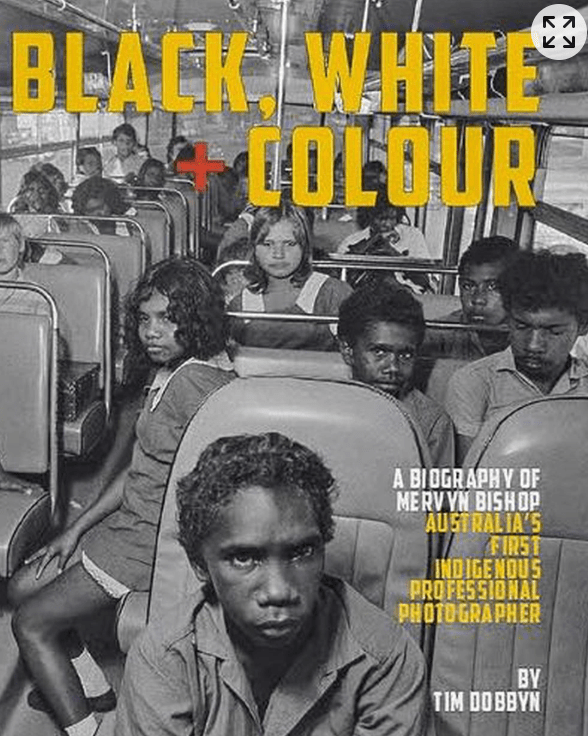
I am David McRae and I have a bit part in this book. Merv and I spent eight months on a project wandering around Australia together and became fast friends.
We are surrounded here [the Avenue Bookstore in Elsternwick] by thousands of books, perhaps tens of thousands. I want to give you three reasons why this particular book is unique among them. Not a bit unique, or possibly unique or unique on Thursdays. ‘Unique’ as per the Oxford Standard Dictionary definition. One of a kind. Out on its own. Exceptional.
The first reason is that it contains 74 photographs. 18 of them are of Merv. He’d like that. He’s always been a handsome boy with a wicked glint in his eye. 8 others provide complementary context and illustrate just how assiduous Tim has been in the preparation of the book.
And 48 of them have been taken by Mervyn George Bishop. I note here incidentally that only one is of Gough Whitlam and Vince Lingiari.
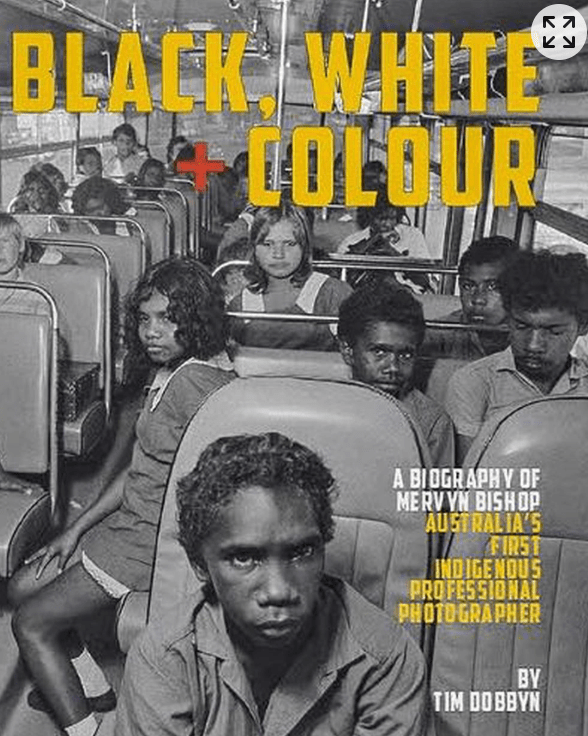
Merv is not a good photographer; he is a great photographer. Technically he is hugely proficient. But his great photos, and there is one on the book’s cover, are as good as anyone’s. And I do mean anyone’s. Very seriously, he is properly in a list with Annie Leibovitz, Steve McCurry, Dorothea Lange, Ansel Adams, et al. It is a lovely irony that his photo of Cecil Beaton is included in the book.
Why are they so good? Partly because he takes so many. He’s got a lot to pick from. You and I breathe: Merv takes photos. And has done since he was 12. His camera is an extension of his arm. Curating his archive would be, and has been, the work of the world.
But he’s also got what we have to call an ‘eye’. Famously he asked Gough and Vince to repeat the sand pouring moving them outdoors so the picture could be at its absolute best. He composes his pics as naturally as his son dances and his daughter smiles. It’s just there. Innate.
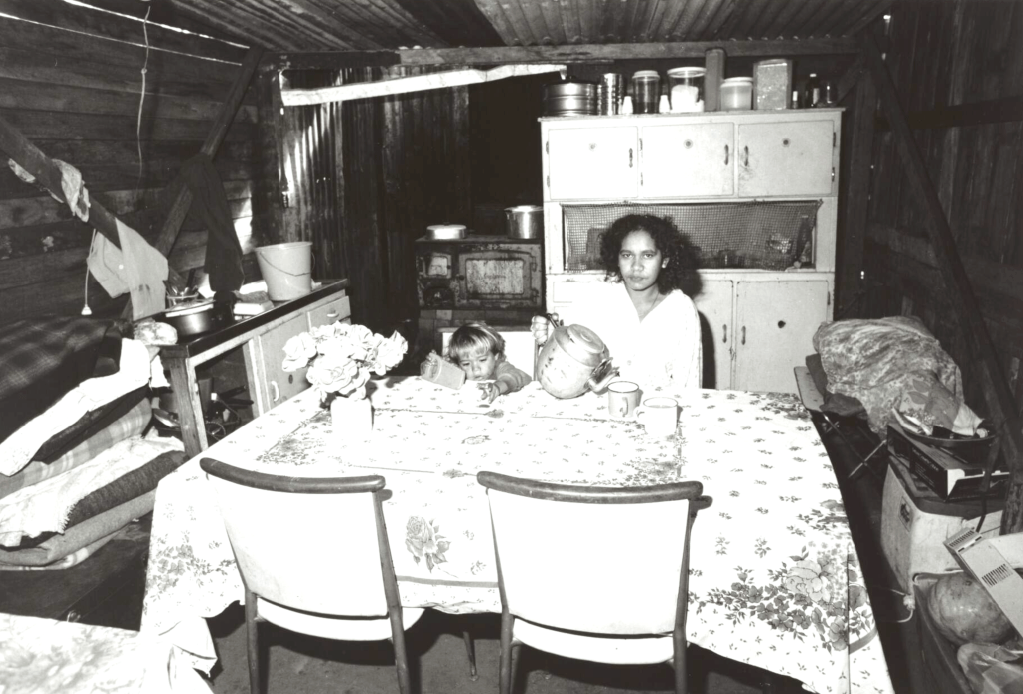
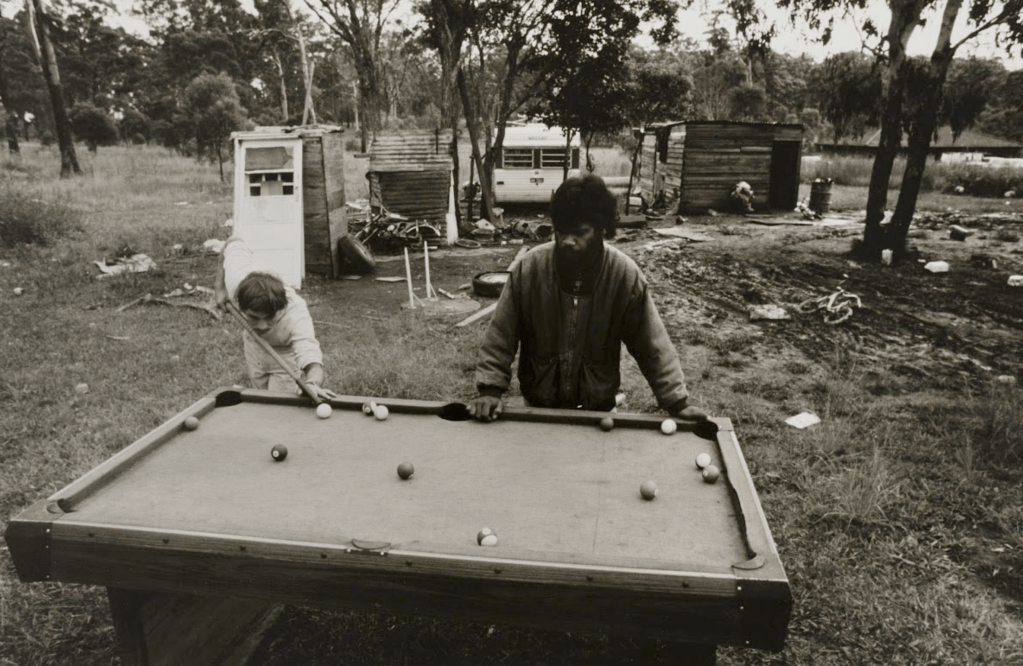
And tellingly, he has had access to places and contexts that very few other people have. It is possible that Merv has been to more of Australia than anyone else ever. I’m thinking here of the requirements of his work for the Dept of Aboriginal Affairs, an unsurpassed record of Black Australia at a particular point in time (which he would say was an opportunity not sufficiently exploited). And then the later work for various purposes of which the Burnt Bridge photos in the book are indelible examples.
48 Mervyn Bishops. A tiny slice of his output, … but what a slice.
[You can if you wish CLICK HERE to take you to a discussion generated by thinking about what makes a photo great.]
The second reason. This is a book about a great artist by someone who is not only also a very fine artist but a lifetime close friend of the great artist. This never happens. You can be a friend, or you can be a biographer, but simply from circumstance never both. It just doesn’t happen. Biographers can be sympathetic or insightful but they are never friends. (The only other possible case I can think of is Best Minds by Jonathan Rosen, another fine book as it happens, in which the friend ends up as a psychotic killer. This is not the case here.)
Read the first chapter, which is something of a masterpiece: two friends on a knockabout adventure wandering round the western plains of New South Wales. Merv’s making his jokes and cackling at his own great humour. But nonetheless he makes sure they visit Fred Hollows’ grave in Bourke. There’ll be a day’s itinerary but Merv will decide that he wants to go and see something that he might or might not remember and ends up doing an ironic little shake-a-leg dance clanging two rail spikes together before heading off to a Bowlo for the night’s tucker and a beer, saying gday to everyone but probably knowing half of the assembled throng, them or their ‘lations.
Only a friend could get Merv so right, and, far more pertinently, only a very good friend would have permission to get Merv so right. Because Merv is a big dag. And of course, the book leaps into life as a result. So honestly correct, so fair dinkum. We are reminded that this great photographer is also a human being, an incredibly interesting and likable human being, who has nonetheless ridden some rough roads.
But such a capable pair this writer and this photographer.
The book is meticulously researched. Some would say perhaps over-researched. Via its preparation I discovered that something I had always believed to be true — the product of our work together had won an international prize — was fiction. Almost certainly over-researched in some regards.
But it is also written with the ease and precision that only a lifetime in journalism can generate. It is such an easy read. So detailed, so smooth. As a fellow writer I can also say, and such a shitload of work.
That’s two reasons. They may have been obvious. There is a third that might be less so.
It is a book about Black Australia that you never read.
Not Alexis Wright, not Tyson Yunkaporta, not Melissa Lucashenko. And certainly not Bruce Pascoe. No dizzying cosmology, no complex moiety patterns, no tjukurrpa — something different, can I say again — unique. This is a book embedded in a Black Australia that doesn’t have a literature.
The last census told us that just under one million Australians identify as Indigenous. Quite a lot. What do we know about that million?
Here are a few things. Some are eminent and well known. Some, maybe five percent, are wealthy and live very much like other wealthy Australians.
About 15 percent live in remote Australia, about half of those living in very remote communities. This is the location of The Gap that never closes and, while they live there, this is likely to remain the case.
But that leaves 80 percent. And that’s where this book is located.
The 80 percent. They live in Australian towns and cities. If you follow the Newell Highway from Echuca through to Brisbane, you’ll pass somewhere near the homes of a couple of hundred thousand blackfellas. Throw in Rocky, Bundaberg, Townsville, Cairns and Perth and there’ll be a lot more.
These are people with jobs, families who send their kids to school in uniforms, who shop at the supermarket, who have footy teams they barrack for, who enjoy a barbecue, and pavlova and French cakes, who might be ambitious or relaxed, whose lives go up and down a bit like everyone else’s.
But there is more. There’s always more. And when you read the book you will understand that there is more.
Some things perhaps you might expect, but there are others that will almost definitely surprise you. You might jump a bit at the challenge to some of the stereotypes of your settled thinking, and be reminded of the complexity of the elements from which our lives are constructed. You might also think about the warp and weft of culture, in plural form, the magic of its assembly and the extraordinary variety of its products.
Case in point: Mervyn Bishop. Living in Oatley, almost but not quite in ‘The Shire’, home of Scott Morrison and his ilk. Happy family. Suburban, maybe a bit Uptown, a bit Flash Blak. Asked in his job interview for the DAA if he knew any Aboriginal people.
On the other hand, First Aboriginal This First Aboriginal That. Blah blah blah. Somehow it is never not a question.
And that’s the third thing that makes this book unique. It’s not called Black, White and Colour for nothing.
[You can if you wish CLICK HERE to take you to some further thoughts about cultural construction.]
I think in accord with his wishes, I would say that Merv’s not a great Aboriginal photographer. He’s just a great photographer. And what’s he like? Like no one so much as Mervyn George Bishop, and what an interesting person!
And great work Tim to have rendered all this with such care, thought and skill.
I’ve missed Christmas, but BUY THE BOOK. [That’s a live link. You can go straight there.] Tell others about it.
Now phones have cameras in them — and what a good idea that was — I’ll say 18 million great photos are taken everyday. Yeah. Let me check … yes. Correct. Eighteen million. We don’t see them all; and we don’t all take them either.
But then there are the truly towering ones. What makes them so truly good, so truly towering?
What does AI say? ‘There is no single “greatest” photo, as the assessment is subjective and depends on criteria such as emotional impact, historical significance, or technical innovation. Several photographs are widely considered the most famous or influential images of all time. Different sources and experts highlight various photos as significant for their powerful imagery and lasting impact on the world.’ And a number of these are listed including: Earthrise by William Anders, Raising the Flag on Iwo Jima by Joe Rosenthal, The Terror of War (‘Napalm Girl‘) by Nick Út, (Click here to see them with discussion.)Afghan Girl by Steve McCurry, and Tank Man by Geoff Widener. (See below.)
But after stewing about it — prompted by Tim Dobbyn’s book about my friend Merv Bishop and reviewing some of Merv’s pics as well as other people’s — I think that you probably can define certain photographs as ‘great’.
So here are five ideas why some photographs might be greater than others. They are illustrated with what might now seem to be somewhat old-fashioned examples, ones from an earlier life when my father in a gesture of prodigious and completely uncharacteristic prodigality subscribed to Life. But I think they stand up.
The quality of the reproductions here is inferior. I apologise. And of course several of these features might be found in the same photo.
• • • • • • • • • •
They may be particularly eventful or dramatic.
Life and death dash, 1971: Mervyn Bishop
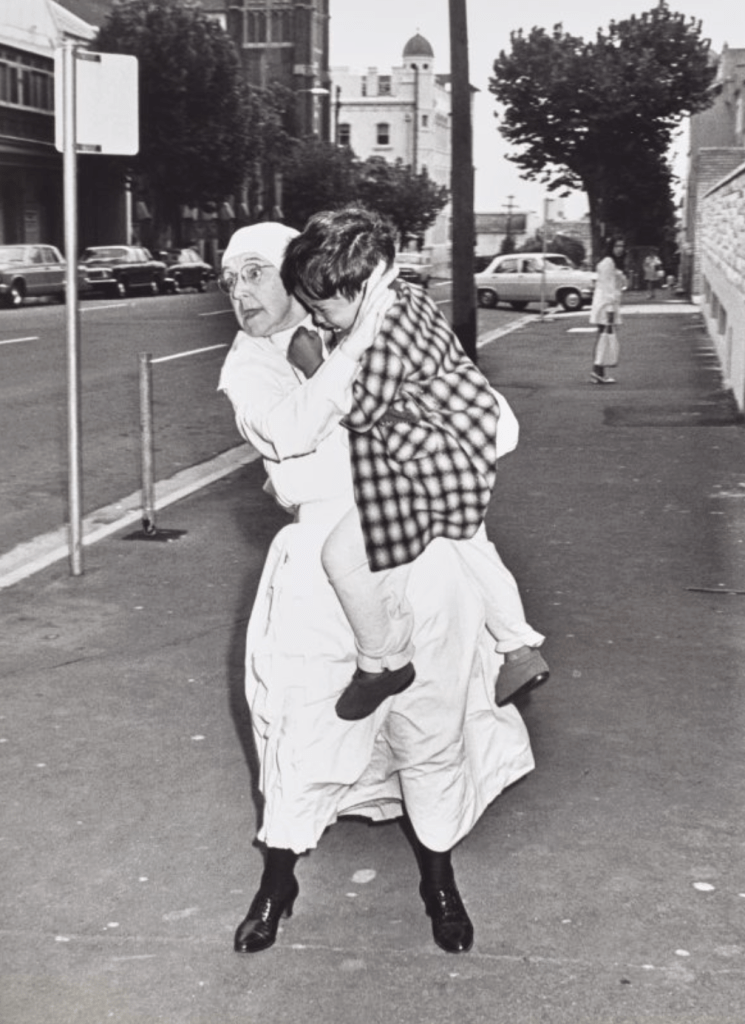
This photo has a special place in Merv’s heart. It won the News Photo of the Year in 1971 and helped to establish his profile as a photographer of note. Everything is right about it. The expression on the nun’s face sets the tenor, but you have the kids’ distress, the turning girl and even down to where the nun’s (very shiny) shoes have toed the line. Merv likes to say, correctly, that the kid in the nun’s arms is now an ear, nose and throat specialist.
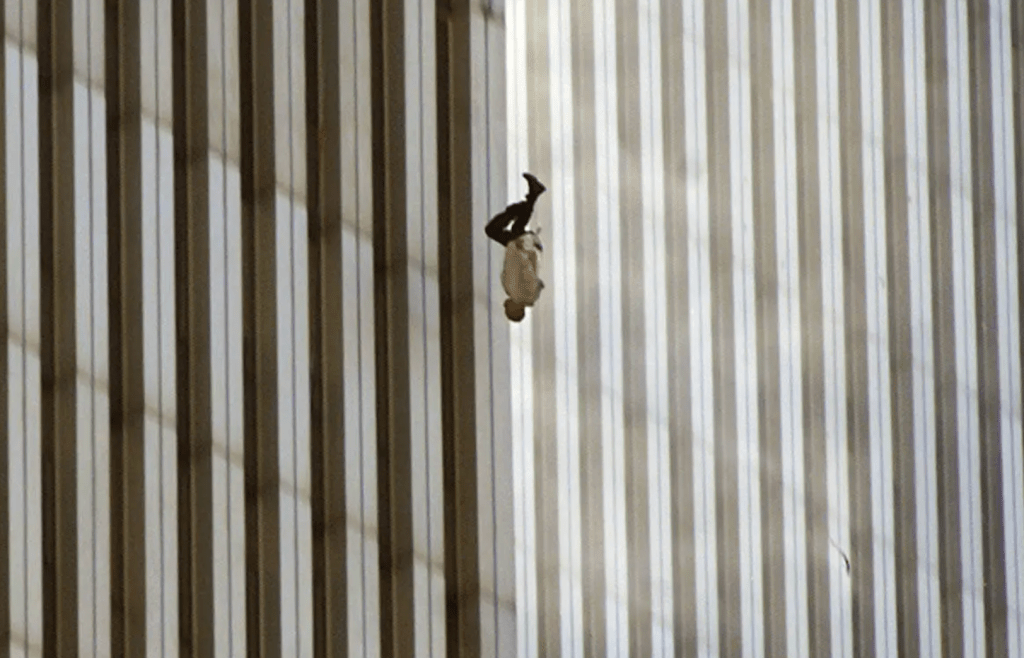
Falling Man, 2001: Richard Drew
World Trade Centre, 11th of September, 2001. It is estimated that around 200 people jumped or fell to their deaths during this tragedy. There are difficult protocols about photos like this, and there was a big fuss when it was published (consequently increasing its renown). In this frozen (but seemingly so relaxed) and highly artificial moment it has a mesmerising quality.
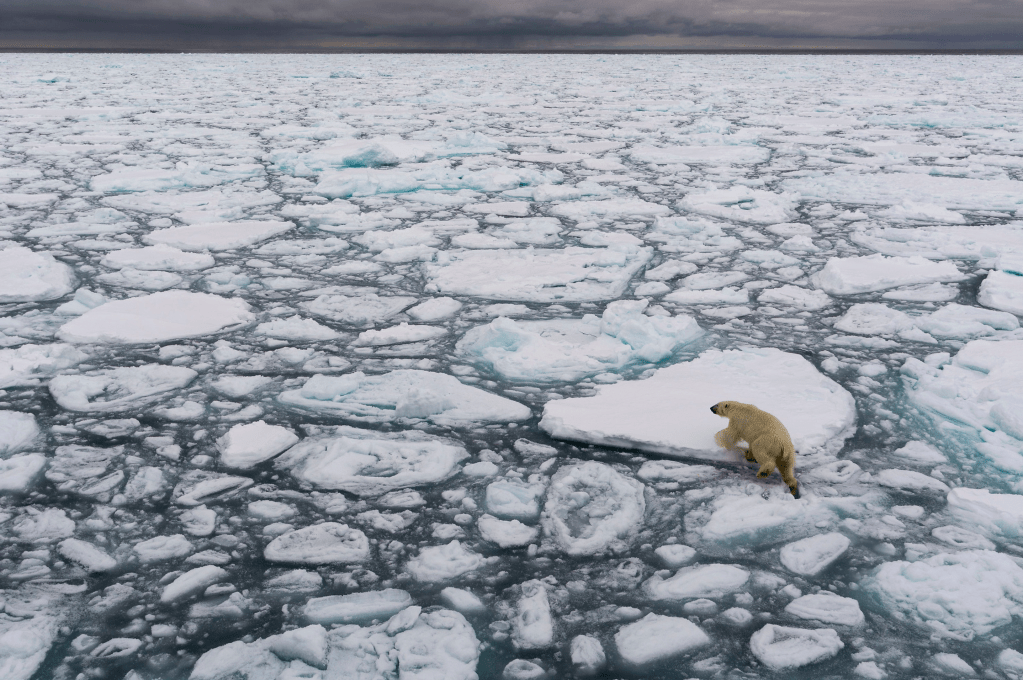
Climate change, 2018: Sergio Pitamitz
We assume the bear must reach the ever-so-distant land for safety. That might be true or it might not. But it is almost impossible not to assume so. The intimation/ metaphor becomes reality. For me, heart wrenching.
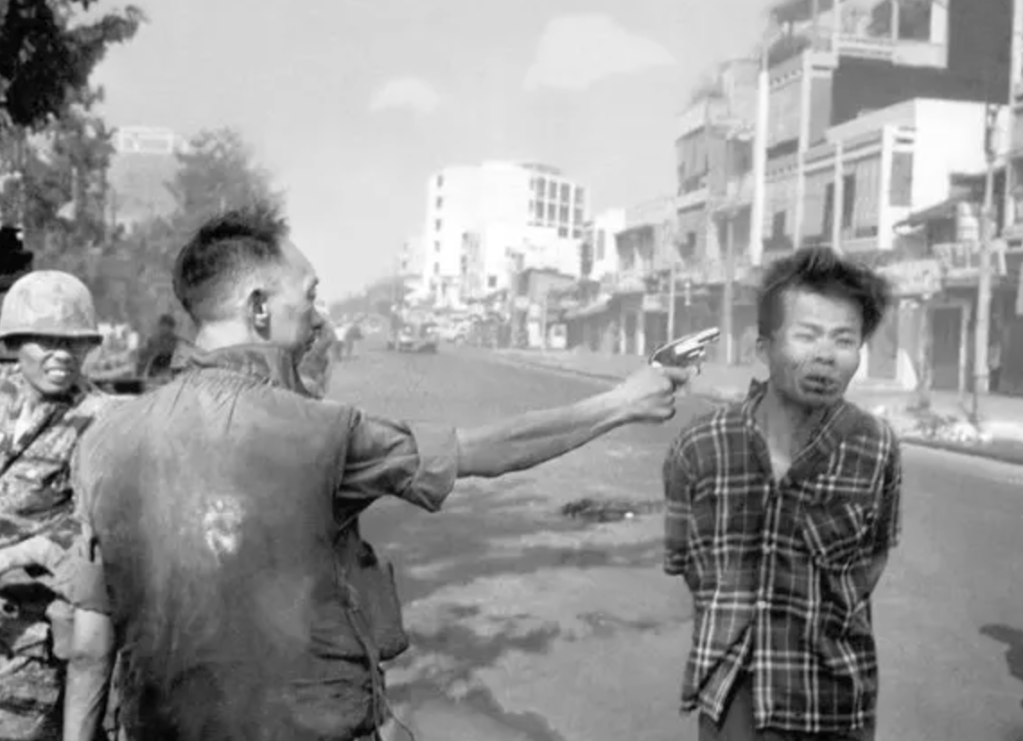
Saigon Execution, 1968: Eddie Adams
Nguyen Ngoc Loan, the national police chief of South Vietnam, executes the Viet Cong fighter, Nguyen Van Lem. Another of these photos like ‘Napalm Girl’ which swayed American public opinion towards the conclusion of the Viet Nam war. Nguyen 1 obviously a war criminal. Nguyen 2 obviously harshly dealt with. In fact, Nguyen 1 appears to have been a very highly thought of war commander renowned for his fair dealing. Nguyen 2 was the leader of a Viet Cong Unit which had killed 47 people earlier that morning.
Does adding information like that bring anything to the experience of looking at a photo? Does it change our fundamental reaction to the image? Should it? Is it meaning or just something like visual impact that we are responding to? (There is no such thing as ‘just’ visual impact of course. Everything we see is processed by neural networks that have processed so much else. But you know what I mean; maybe immediate rather than reflective responses.)
That question matters particularly with photography because unlike other art forms we are supposed to be looking at reality, something that really happened, something that can be confirmed by a photographic image. (There is some additional discussion of this questionRIGHT HERE.)
They may be particularly romantic or erotic.
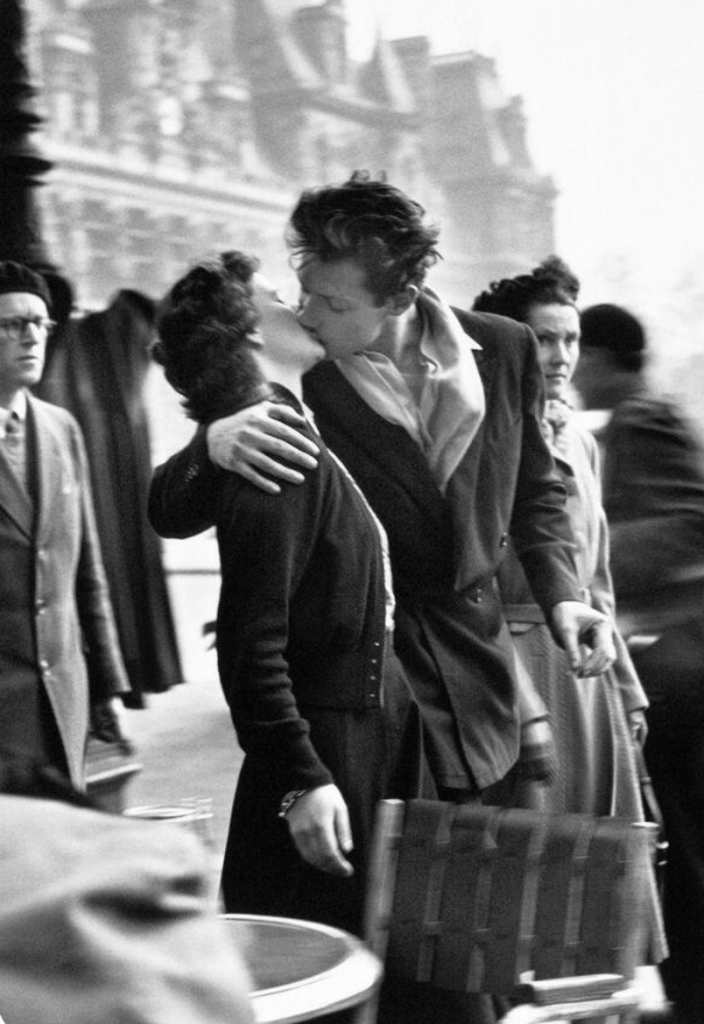
Le baiser de l’Hotel de Ville, 1950: Robert Doisneau
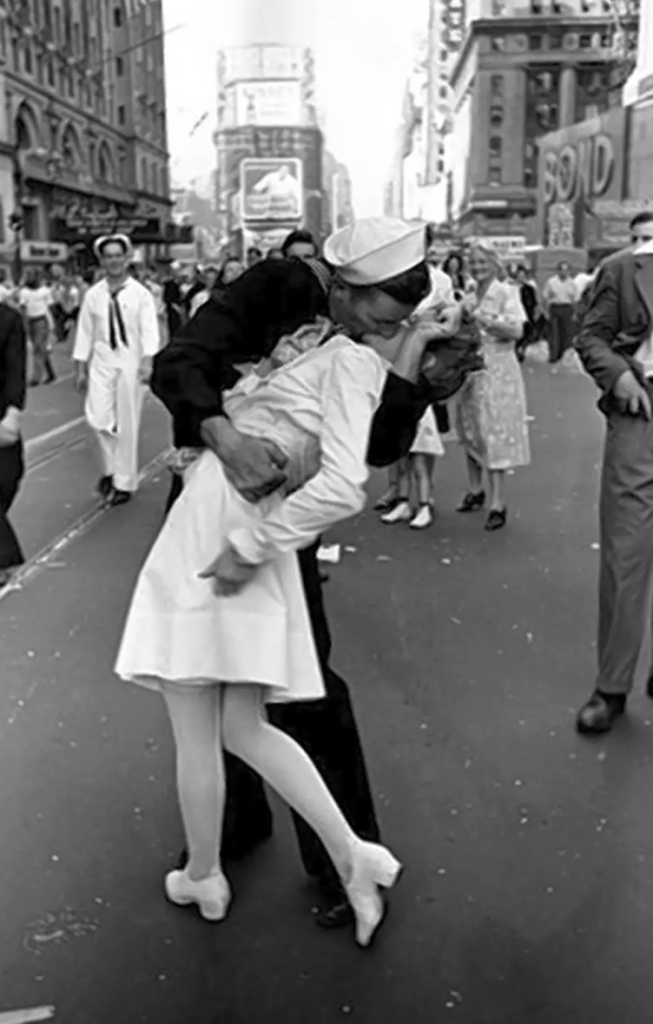
V-J Day in Times Square, 1945: Alfred Eisenstadt
Which one? I have chosen Doisneau’s because although the men in both pics are so terribly masterful, the French chap has a bit more style — the scarf, the gesture of the left hand, the waist tuck of the double-breasted suit. The sailor appears to be on his way to eating the woman — to him unknown — to celebrate the war’s end. But in both cases we understand that there is a passion which we can only celebrate.
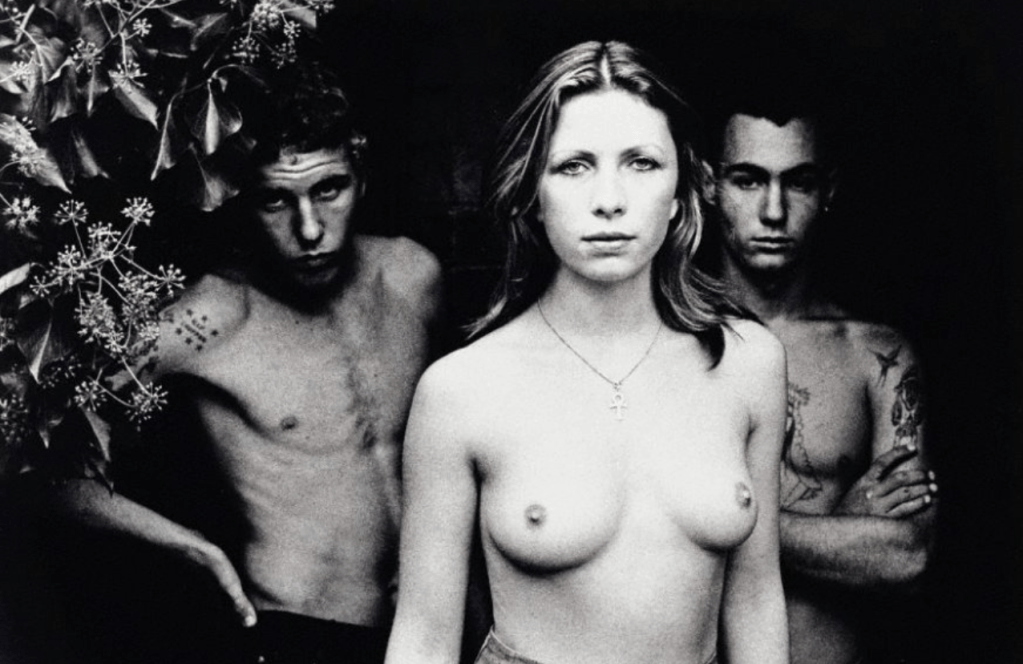
Vale St, 1975: Carol Jerrems
An Australian photographer, and an Australian photograph (and can I suggest so much of its time as well as place (St Kilda)). Fearless despite her naked torso. Fearless. There is a flash, no more, of menace in the chaps behind her, (they’re Sharpies!), but she is in charge. Her breasts are those of a young woman; her eyes so much older. All challenge. Not so much romance, but the right degree of complexity to be erotic.
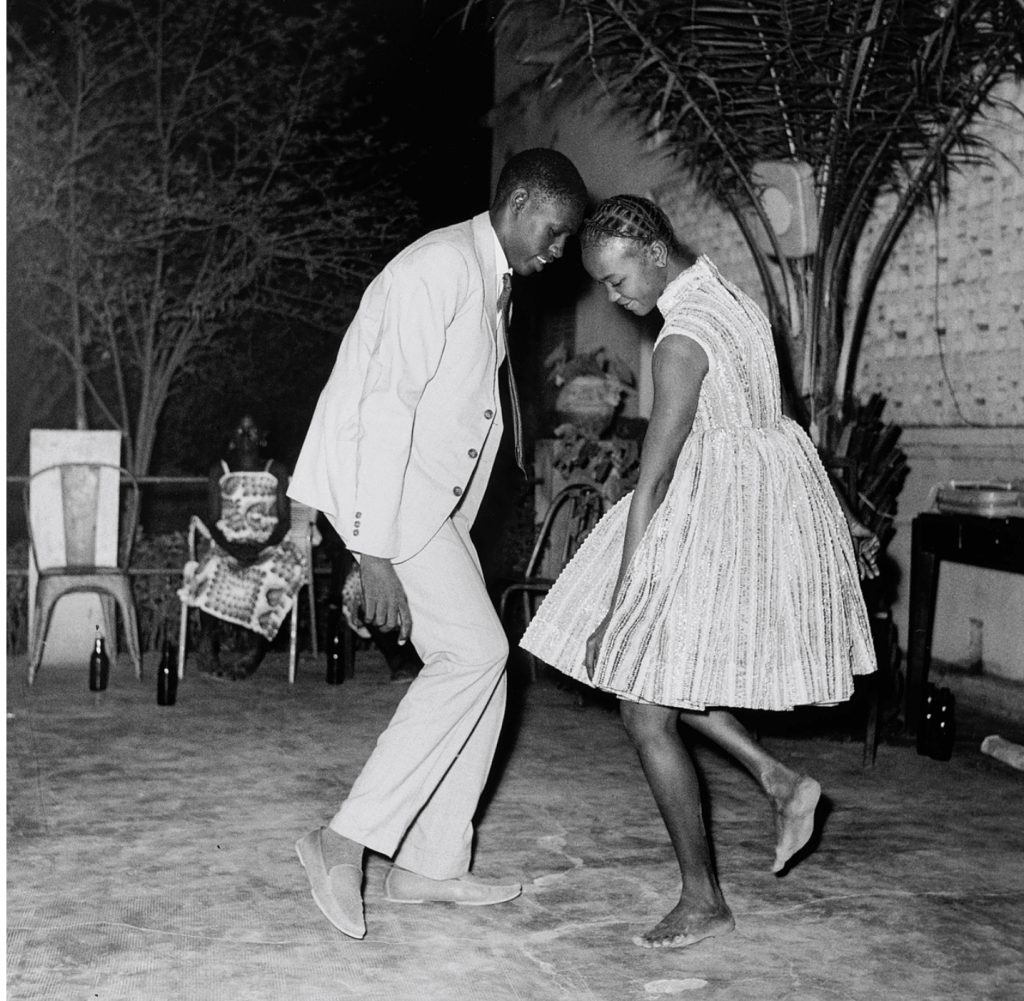
Nuit de Noel, 1962 (in Mali): Malick Sidibé
Probably not a photo you’ve seen before. It is here partly because it is African but also because of the truth of whatever it is between the couple, and the delicious modesty of its expression. Something which is so desirable and human. Unalloyed. Nothing as loud as joyous, and it mightn’t endure. But at this moment … transcendent.
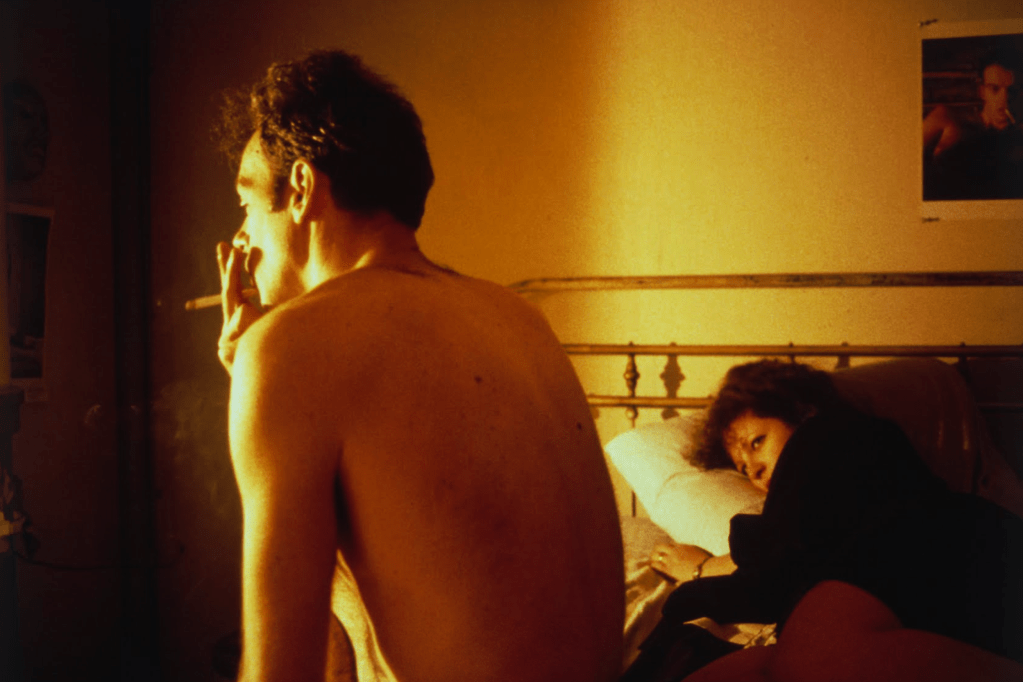
Nan and Brian in bed, 1983: Nan Goldin
And maybe its antithesis. That point in a relationship. What’s going through his head? Does he want to be out with the boys? Is she going to have her heart broken? We can’t see the guy’s face but we know the state of play. A stage, an essential part of romance. We know this. We can relate.
They may record something spectacular or unusual.
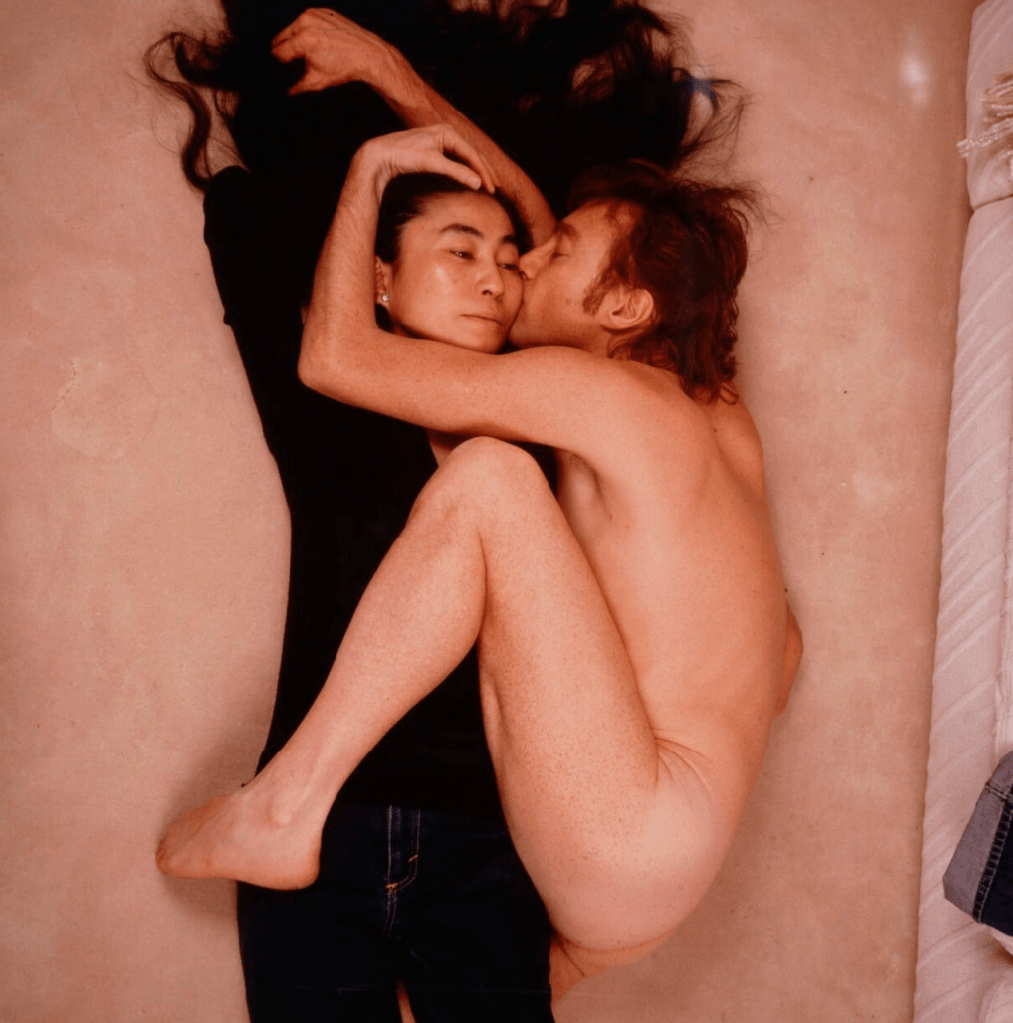
Yoko Ono; John Lennon, 1980: Fran Lebowitz
Neither romance nor eroticism in this photo, but it is very hard to say that it’s not of interest. Some growth — naked growth, naked MALE growth — has attached itself to an impassive human object with glorious hair. It doesn’t hurt that the two subjects are quite well known. Whoever decided, it was a striking idea.
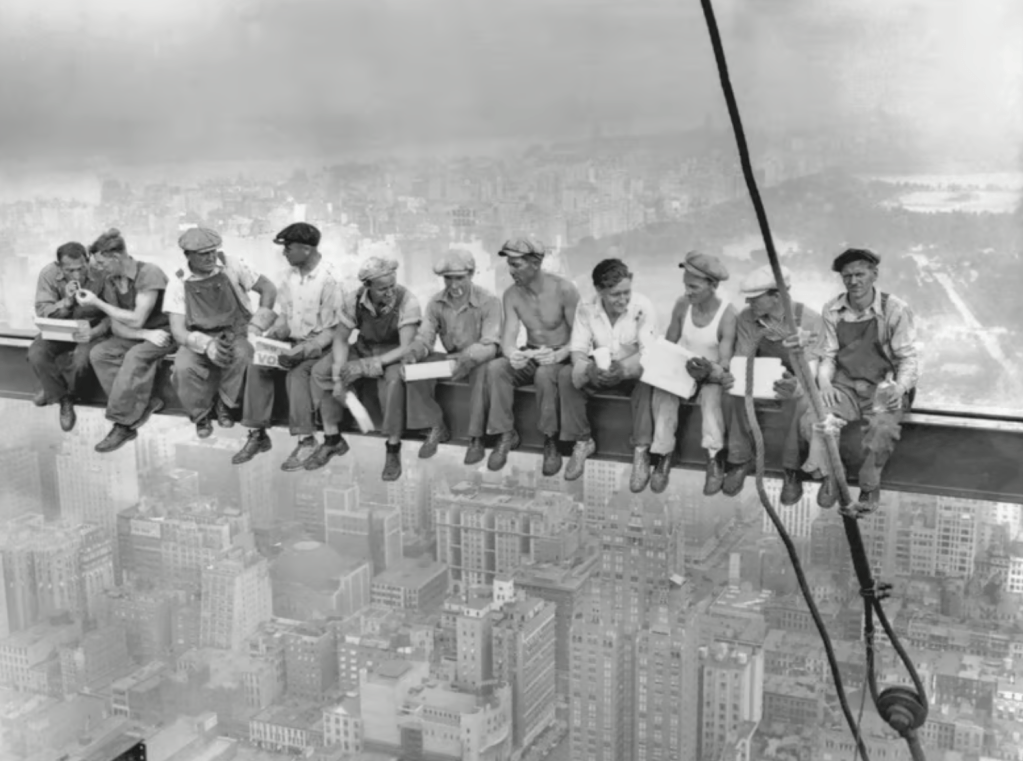
Lunch atop a skyscraper, 1932: Charles Ebbets
Yeah. Seen it. A million times. One bloke is lighting another’s cigarette off the one he’s smoking. Those white things are their lunch boxes. Is this what they do every day or just when a photographer is round? Who cares? 860 feet above the ground and they’re having their lunch, Central Park a misty blur below and behind them.
There might be stuff on Tick Tock that prompts as much or more vertigo. But this is the original, and I defy you to run your eyes along their shoes without just a little intake of breath. Plus they’re at work. This is what they do for a living. Plus plus you don’t get faces like that on Tick Tock.
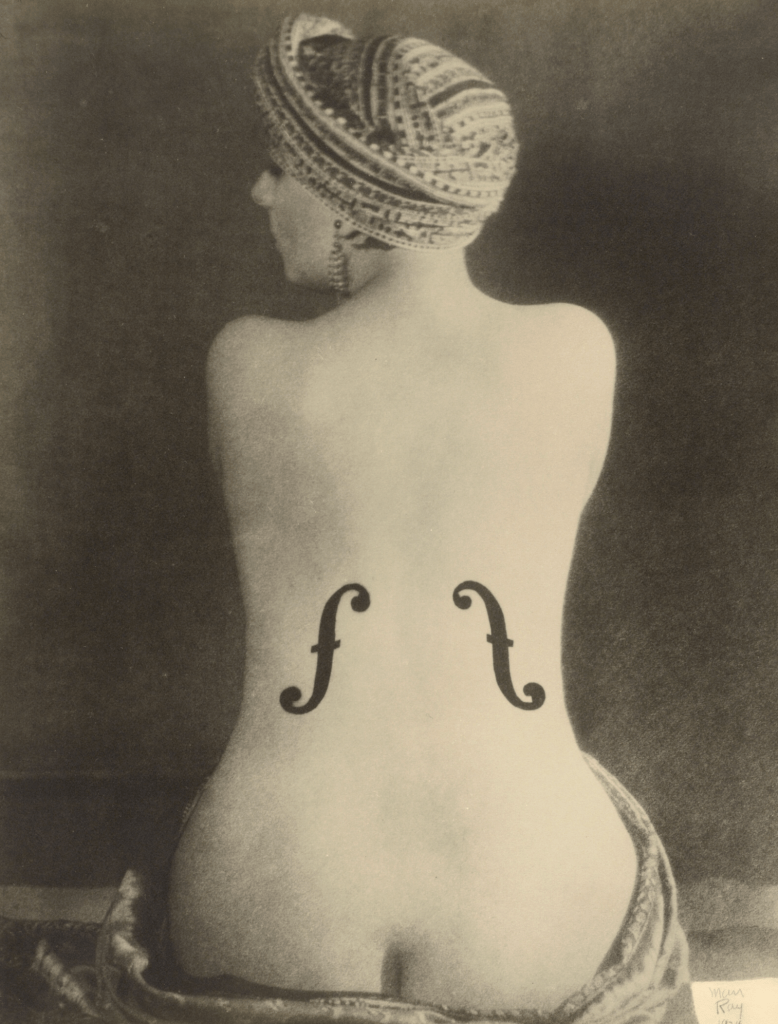
Le Violon d’Ingres, 1924: Man Ray
We’re moving into hazardous territory here, but I’m convinced. An unadorned set up: a model, palpable, soft, no hard edges, like one of Ingres’ baigneuses, painted with f-holes. And because it’s Man Ray, it will be just for the fun of it. There’s no special meaning to be made here. Don’t make up a story about models and lovers, search for antecedents, or muse about the possibility of ‘le violin d’Ingres‘ meaning ‘hobbyist’. It’s Dada. It’s impact, not meaning — BANG. LAUGH. It’S An ODdITy, and you haven’t seen it before. Just enjoy it. (And this is a screenshot of the most expensive original print of a photo ever sold: $US12.4m, Christie’s New York, 14 May 2022. Someone must appreciate the joke.)
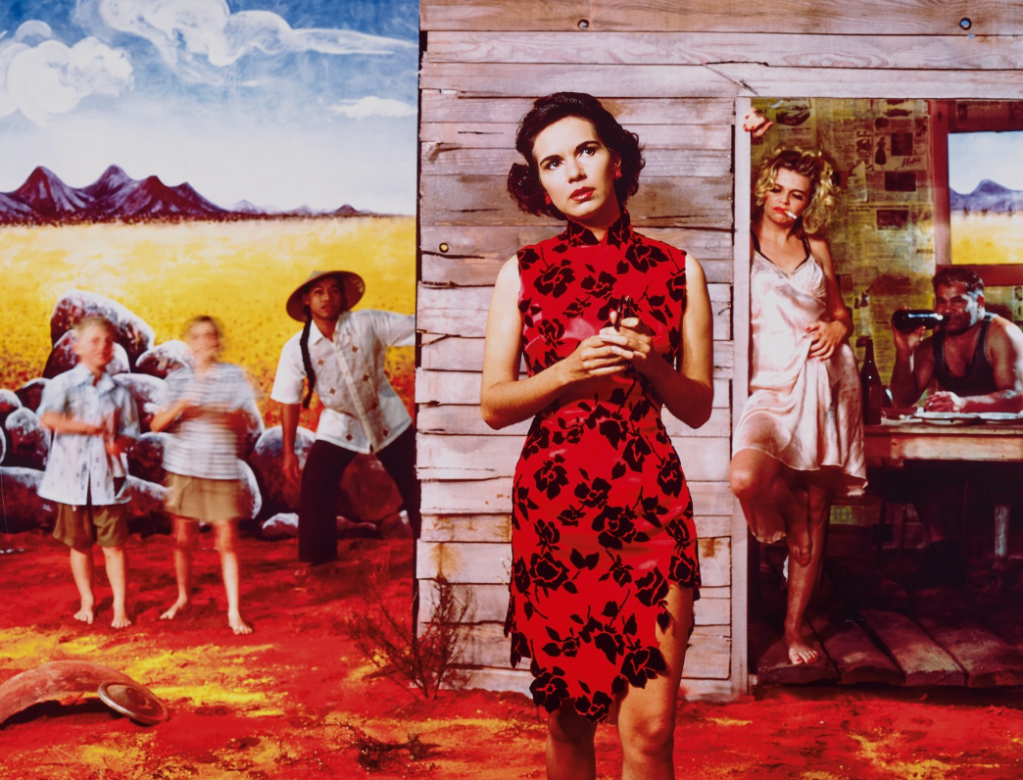
Something More #1,1989: Tracey Moffatt
The transition is complete. It is a set-up. Comprehensively. Unashamedly. Tracey, innocent in her cheong sam, leaving a collection of challenging detail to perhaps make her way in the world.
So, can you call it a photo? Well … it is a photo, even if photography here, as is true far more widely, has become a hybrid art. Two considerations. It’s Australian, and Tracey was a friend and colleague of Merv’s at Sydney’s Boomalli Aboriginal Artists Co-operative as well as being the curator of his first significant show InDreams. Unusual? Sure. Spectacular? Unquestionably.
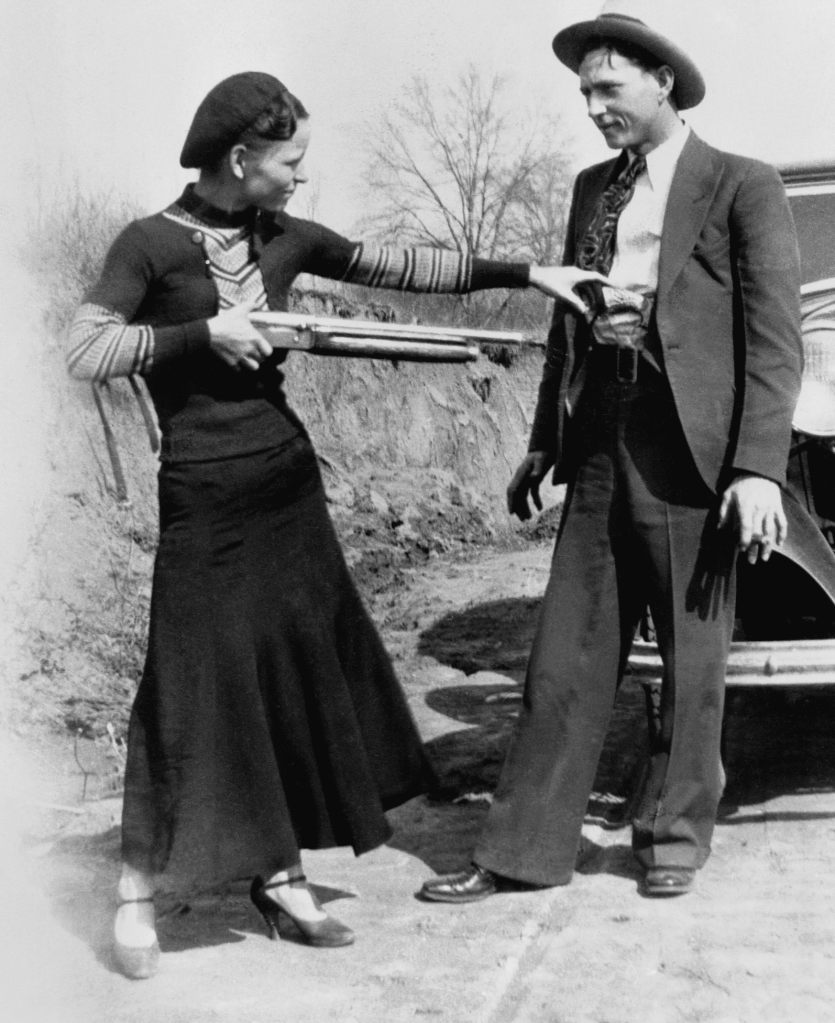
Bonnie and Clyde, 1930: W. D. Jones
Extraordinary. It really is Bonnie Parker and Clyde Barrow. Mucking round with a pump action shotgun. (W. D. Jones was a member of the gang, at the time 16 years old.) They had a camera, liked to take photos and did so. In fact they kept a record, however incomplete, of their exploits. It was a modern thing to do. The photo is sort of sweet — Clyde’s goofy expression and, despite the tension in his fingers, his you-would-have-to-say relaxed stance. But there it is. Bonnie and Clyde. Maybe you should expect that; I didn’t. I’m saying, strikingly unusual.
There might be something particular about their aesthetic or the way they have been composed.
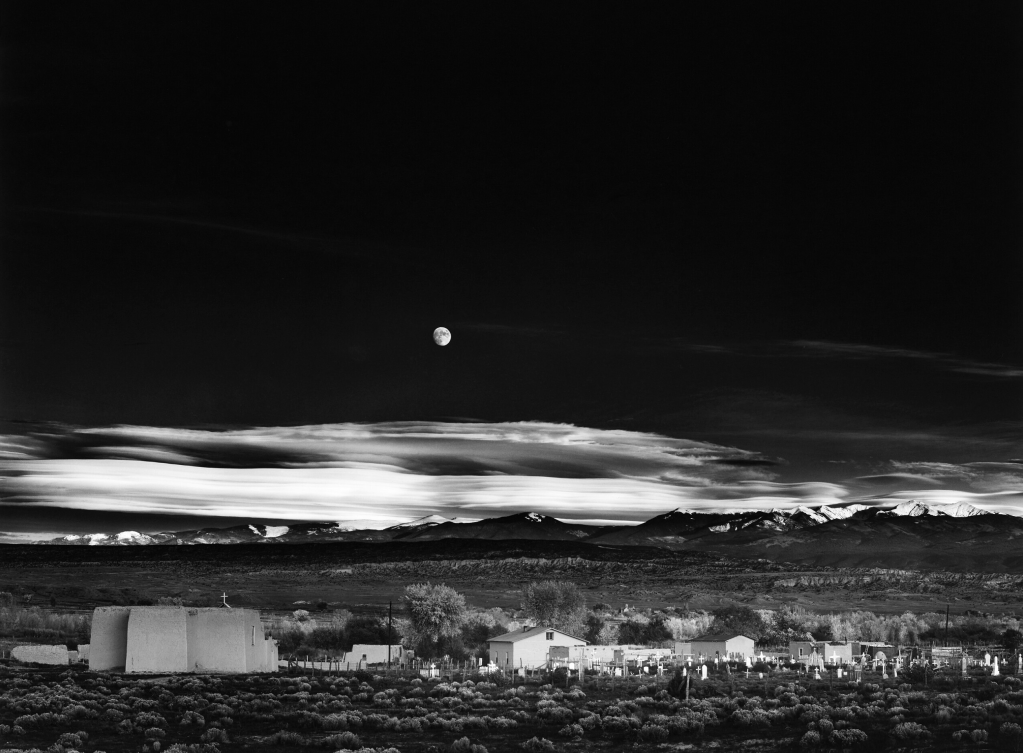
Moonrise, Hernandez, New Mexico, 1941: Ansel Adams
You might note the very limited number of photos in this collection without people as their focus, and yet landscape photography is a capacious field with many distinguished operators. Perhaps not many as good as Ansel Adams. Just how does he get those very sharp whites and velvet blacks? A master in the darkroom obviously, but this photo has interest wherever you look.
In one of those inspired choices which make art, the moon is almost centred with that great black void above. The flow of cloud intersects the picture while contrasting dramatically with the detail of the crosses in the cemetery and the ever-so-crisp lines of the buildings.
I am inclined to reach for adjectives like ‘classical’, but how would that help? Who knows how aesthetics works? ‘I know what I like’, might really have some pull after all. But would everyone agree that it is something special? I think so.
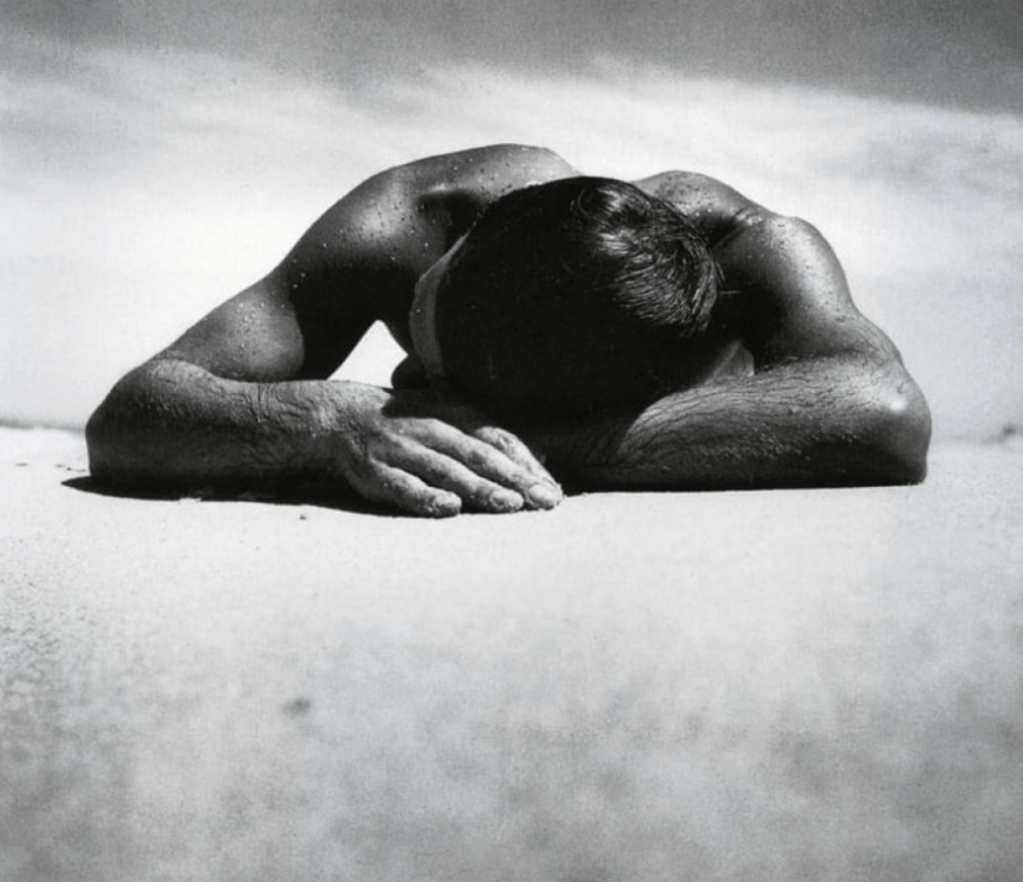
The Sunbaker, 1937: Max Dupain
Australian, indelibly. You know the experience, you’ve felt the sun after the cold of the surf, you’ve had sand in your togs. It’s cultural. Of course it is. But that’s not all that makes it a great photo. It’s not a person (no legs, no body, not even a face); it’s a shape, and I think it’s the line up the arms and across the back that is so satisfying. This is complementary with the contrast of the dark shape and both grounds, fore and back, and the fact that the shape is the only thing in focus. Everything else (including the horizon line) is fuzz. Courageous choices which paid off big time.
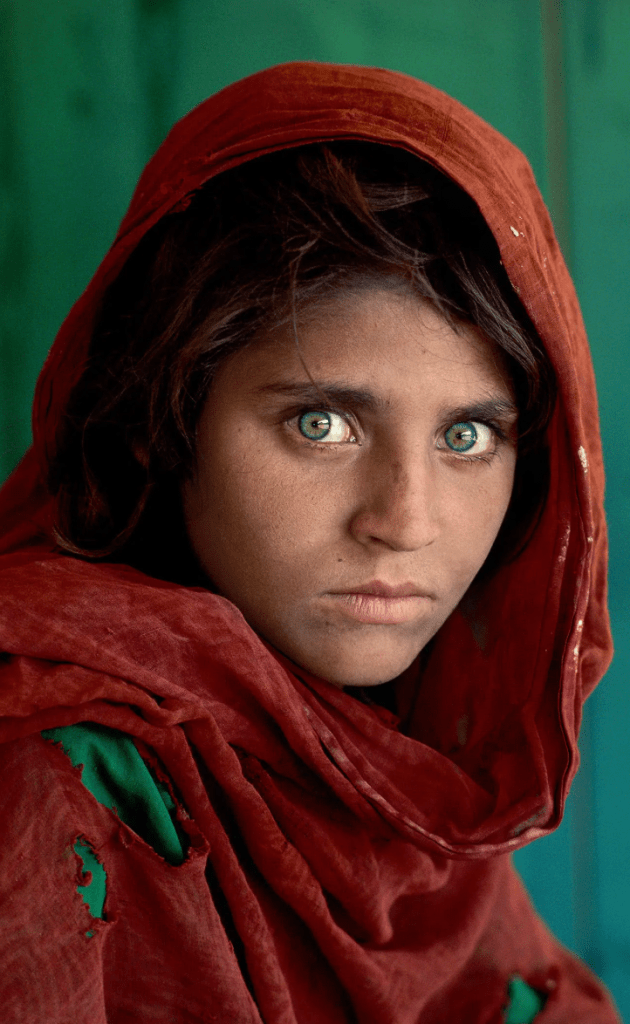
Afghan Girl, 1984: Steve McCurry
Pashtun girl really, but that is splitting hairs. Her name is Sharbat Gula, and she has eyes which are hyper-alert. Just a girl, but we must believe those eyes have already seen far far more than they should have. And they are rivetting, rivetting enough to make us forget the extraordinary colour match of eye, background, undergarment, and the complimentary framing of the face by the rust-red material which echoes some of the strands of her hair and the innermost parts of her irises. What a photo!
They may be strikingly familiar or have become iconic.
I might be cheating here. Another chicken-egg issue. Are they great photos because they are famous, or are they famous for one of the reasons above? And if so, why have we got a separate proposition here?
Let’s say they have the power to be great through familiarity. We construct them to be great and, when we think about it at all, designate them as such.
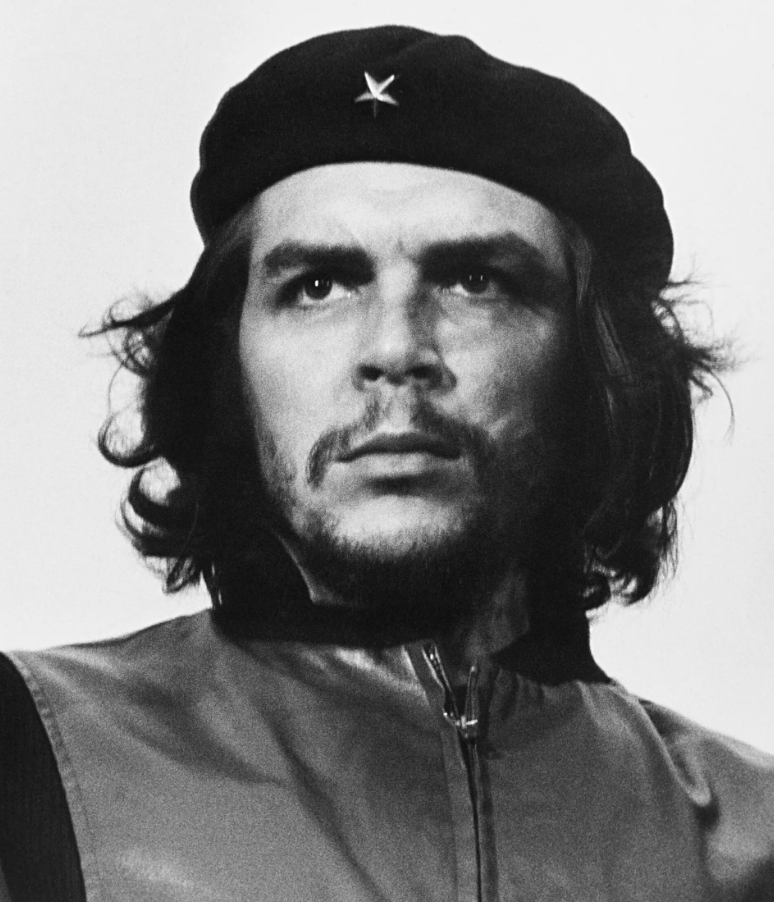
Guerillo Heroica, 1960: Alberto Korda
You might have had a T-shirt or a poster with this on it. If not you might need to explain the reason. Che, the heroic guerilla with international resonance very likely influenced by this photo. Composed, steely and puissant without even trying to be. Fortitude, depth, a leader.
What are we reading to understand this? Good eyebrows of course, and eyes set deeply enough to give us shadows which emphasise the darkness of his eyes and their twinkling pinpricks of light, shadows which also give us the highlight on the right hand side of his face. Film star good looks? Yes, but so much more as well.
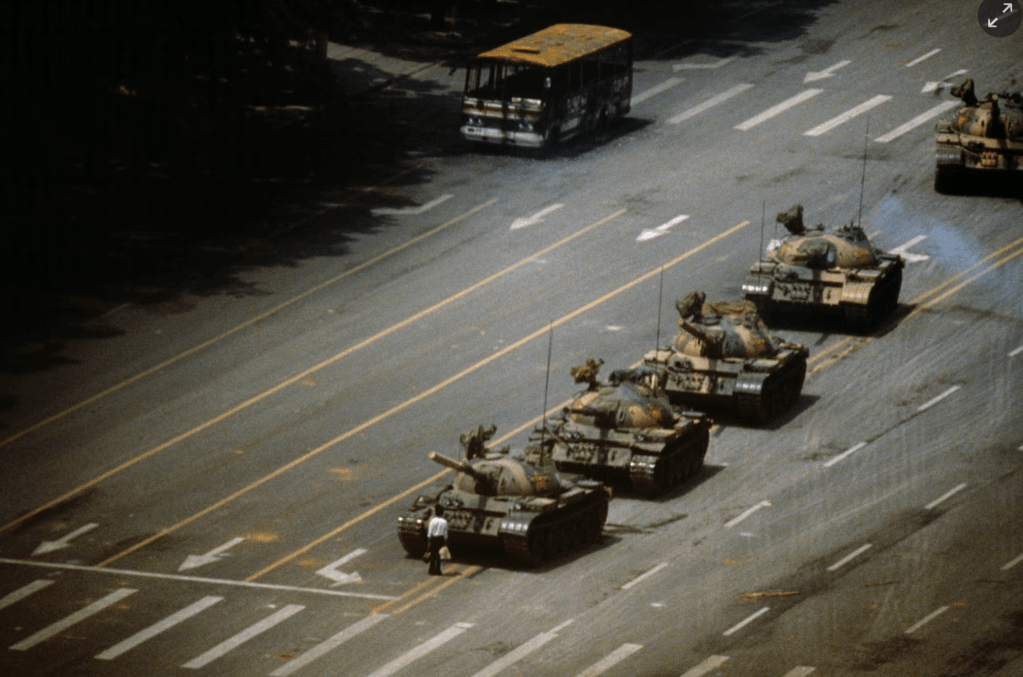
Tank Man, 1989: Stewart Franklin
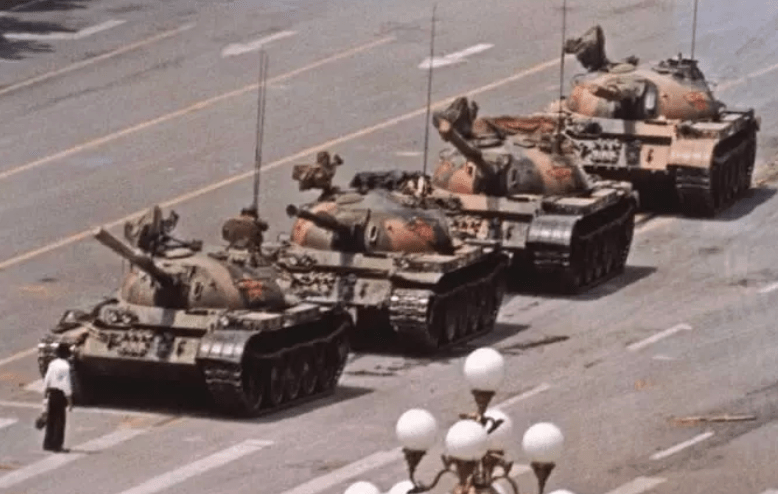
Tank man, 1989: Geoff Widener
Tienanmen Square, Beijing. Packed with students protesting anti-democratic acts by the government. Cleared at the order of Deng Xiaoping. Scores of tanks, not evident in these photos, poured into the Square smashing through barricades. At this point, one man with two shopping bags stands in front of the first tank of a column and as the tank manoeuvres to go round him shuffles back and forth to continue standing in front of it. The tank stops, the column stops; man versus machine, a civilian versus an army. A big subject for a huge story.
Four photographers got this photo. Franklin’s was the first, Widener’s the most widely used. The others were Terril Jones, and Arthur Tsang Hin Wah. Australian ABC correspondents Max Uechtritz and Peter Cave were the (only) journalists reporting live from the balcony with Willie Phua shooting the accompanying video.
There is a theory that the whole thing was a set-up to make the Chinese government look better. A clean white shirt was not what the protestors were wearing. It took place right in front of the hotel where it was known that foreign journalists were staying. The soldiers respond quite passively to his actions and don’t hurt him. He is not arrested after leaving the scene. His identity remains unknown. Your call. Still a great pic.
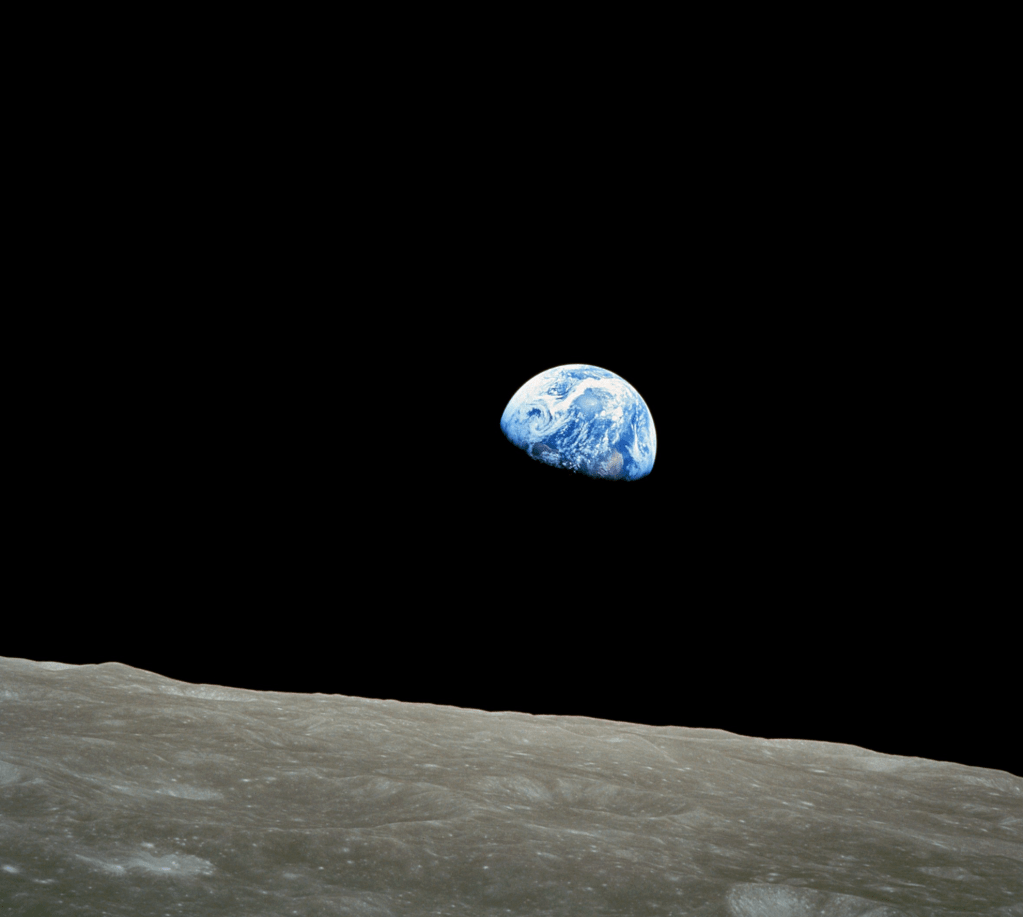
Earthrise, 1968: William Anders
One from a collection taken by astronaut William Anders on the Apollo 8 expedition, the first crewed spacecraft to leave Earth’s gravity, orbit the Moon, and return safely. It was generated after a cute little back-and-forth between Anders and Jim Borman, the flight commander who is sometimes credited with taking the photo.
Anders says: ‘Oh my God! Look at that picture over there! There’s the Earth coming up. Wow, that’s pretty. Borman: Hey, don’t take that, it’s not scheduled. (joking) Anders: (laughs) You got a color film, Jim? Hand me that roll of color quick, would you.
And this is one of the results (which include the ‘half-Earth’ just breaching the horizon). Claimed to be the most reproduced photo ever, it featured on a commonly-used US stamp. It has also been described as ‘the most influential environmental photograph ever taken’.
It is eventful, dramatic, records something spectacular and unusual, has its own exquisite aesthetic, and might even be considered romantic. Great photo.
The subtitle of Black, White + Colour is ‘A Biography of Mervyn Bishop Australia’s First Indigenous Professional Photographer’. And of course that’s true, important and commercially sensible to bill the book that way. But its contents provide a more complex if still wonderfully coherent account of what it is to be Merv and the contexts and events which have helped shape him. In my related blog I’ve referred to this as ‘the warp and weft of culture, in plural form, the magic of its assembly and the extraordinary variety of its products.’
I’m particularly interested in this because it has provided a lesson I have had to learn myself, many times and sometimes to my cost.
Naturally you must read the book for a proper account of Merv’s world. (Off you go and buy it. HERE.) Treat this as a taster with a slight twist of emphasis.
• • • • • • • •
HOME
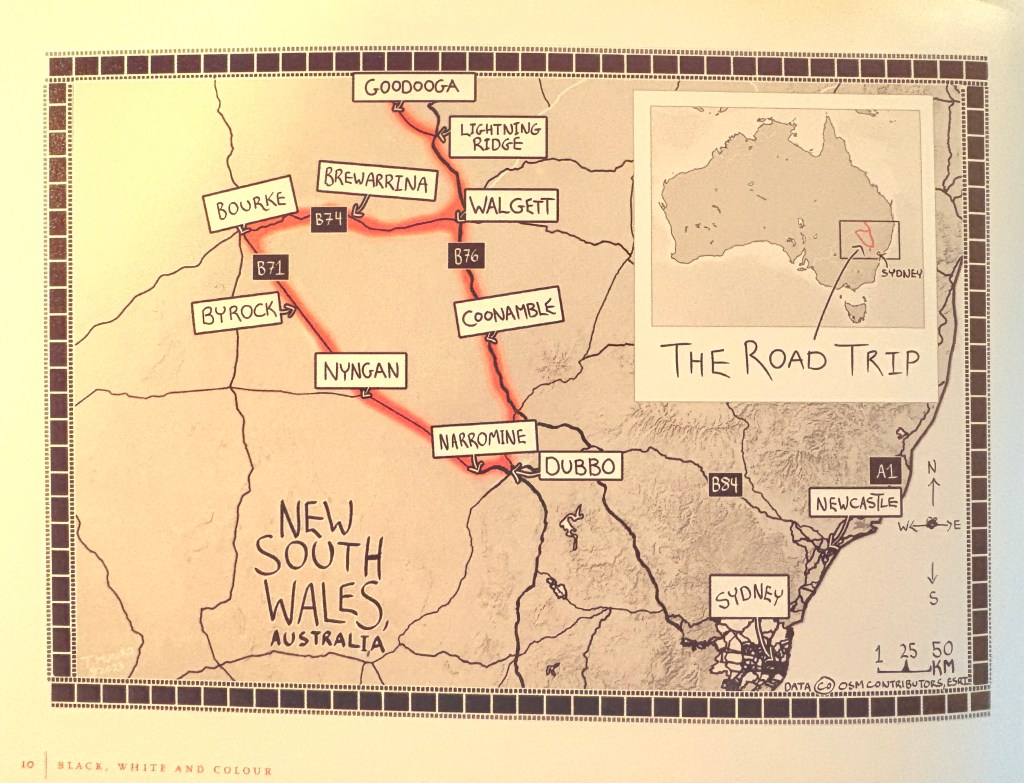
This is the map from the book which describes the road trip Tim and Merv took together to help prepare it, revisiting old stamping grounds and relations, the sites of some of his photographs, RSL and Bowling Clubs — landmarks of north-western NSW, a very special, interesting and not much visited part of Australia. The grey nomads pull in at Goodooga’s springs and might buy an opal or two at The Ridge, but they’ll whip past the steel shutters of Walgett and not spend too much time at Bourke. Byrock’s population is 50. Maybe. It used to be the case that one of them would be a teacher.
This is remote country, and the distances between settled points can seem vast, in fact it might seem that no one lives here, but that would be quite wrong.
Merv was born in Brewarrina (known to anyone who knows it as ‘Bre’, pron. ‘bree’). The Barwon, which when joined with the Culgoa becomes the Darling, teeters along between Walgett and Bourke in great whorls now often barely damp. Bre is half way. Above Walgett the cotton farmers have stripped out the rivers’ flow. When they were left wild this stretch of the Darling was home to an important paddle steamer trade. At Bourke you can still visit the wharf where the steamers used to tie up, now usually 10-15 metres above water level. TheWandering Jew was one of the last to operate. It caught fire at Bre in 1914 and sank.
150 years ago Bre became a hub for that commerce. It had a bank, a courthouse, two hotels, two stores, a regional administrative office, a school. Today it has a population of about 800, from some points of view 30 fairly sparsely settled blocks in the middle of nowhere, but big enough for a swimming pool and a Catholic primary school as well as a government one. Leo Schofield was born here in 1935. His father was one of the publicans.
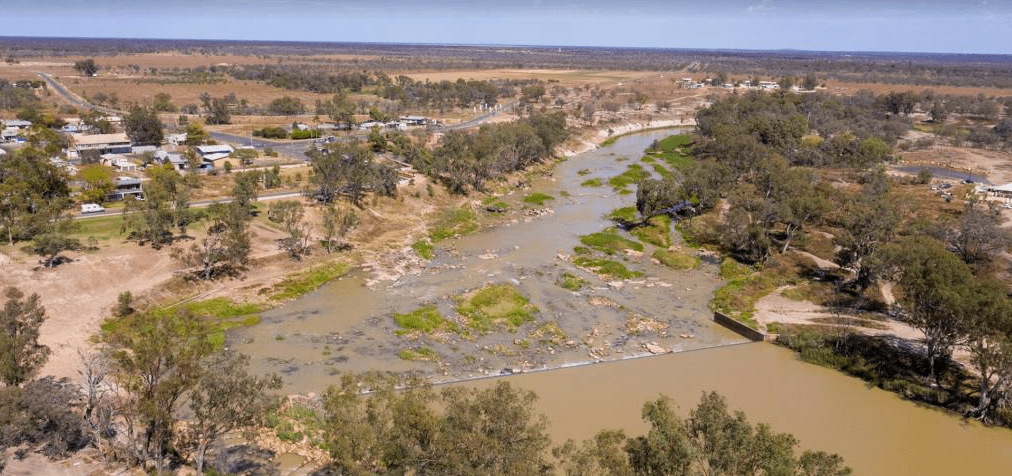
And it has its fish traps, Bhiamie’s Ngunnhu, Bhiamie being the creator figure of this region’s mythos.
Most of the straight-line barrier in the photo is a comparatively modern contribution. The rest could be 40,000 years old which would make these traps one of the oldest human constructions in the world. That’s the claim. But there is no doubt that the river and its traps — already a fluid junction of several First Nations groups: the Ngemba Weilwan, the Murrawarri and the Yuwaalaraay — would have been major drawcards for festivities, food gathering and other forms of socialising for the dozens of clans spread through what today we think of as northern NSW. A mix of peoples.
In 1886 the Aborigines Protection Association established a mission near Bre on a reserve of 5,000 acres 10 miles east of the town and on the opposite bank of the Barwon. The very first mission in New South Wales, it kept operating until 1966. If you want to know a bit about what it was like [in 1954] you can read Dr. Ruth Latukefu’s recollections here.
Bre Mission kids, sometime between 1932 and 1937: the Reverend Canon A. Leyland Bird
The mission was established initially to deal with/ accommodate/ respond to the number of Aboriginal people camping round Bre and their ‘intemperate behaviour’. It soon became marshalling yards for the problems (and non-problems; just sent, or taken) drawn from an area ranging from Tibooburra, 10 hours drive west from Bre today, to Cobar and Lightning Ridge, half the distance in different directions. The mission was — not my term but a Royal Commission’s — ‘an enforced concentration of Aboriginal people’, a concentration camp. And in that camp were ‘Aboriginal’ people, or ‘Indigenous’ people, or ‘First Nations’ people. But whatever you want to call them, it is a bit like saying ‘European’. They had different languages, different cultures and lore, and different Countries none of which were at Bre. They didn’t always get on. Why would they? A mix of peoples.
Bre was also home to some of the powerhouses of the Aboriginal world. Essie Coffey might be the best known, but Steve Gordon and Tombo Waters lived there as well. Big names, strong leaders of renown. Part of the mix of peoples.
One of my own Bre stories is a memory of giving a talk to the staff at the school where at the time Michael Chamberlain, post-Azaria, was teaching. If he lifted his head once from his newspaper during the time I was speaking I didn’t notice, suggesting that as well as unwonted celebrity he was a man of keen judgment. Part of the mix. Places may be small but they are not without characters.
• • • • • • • • •
Mervyn’s father Minty was the lovechild of a travelling [Punjabi] merchant, Baroo Fazldeen, and Mervyn’s grandmother, Suzannah McCauley Bishop. Suzannah’s mother is listed as Aboriginal in her marriage certificate to Robert Bishop of Melton Mowbray, England. Her father is identified as a labourer named John McCauley, likely an Irishman according to family DNA results. On Mervyn’s maternal side there is a similar pattern of Aboriginal women and White men. (p. 24)
Such ancestries are not uncommon in parts of Australia, especially where there were disproportionate numbers of White men and White women.
• • • • • • • • •
Merv’s mother, a woman who wore a hat when she went out, had a camera, a Brownie Box which Merv started using at 11. He bought a camera of his own when he was 12.
‘We were uptown Blacks’, Merv says. ‘We knew we were kind of special but we didn’t chuck it around saying “We’ve got this” or “We’ve got that”. We would have got a slap.’ But, nonetheless, ‘I think we [Merv and his sister Cynthia] missed a lot of the stuff the other kids copped, racism stuff in town.’ (p. 40, 41)
SCHOOL
Mervyn did well at school in Brewarrina despite a full plate of other interests. ‘Margo Collins and I used to run neck-and-neck for the top of the class,’ said Mervyn. ‘If I came first, I’d get five pounds from dad and if she came first she’d get five pounds from her stepdad. They used to bet on us.’ (p. 51)
But when Merv was a student there Bre Central topped-out at Year 9. After that for Aboriginal boys the trades were an unpredictable possibility, for girls domestic service might have been feasible. For smarties and if you got a leg up, a bank or an office job might be available.
Both Merv’s mother and father were ambitious for him. But it was the interest of the vicar of the local Anglican church where Merv was an altar boy which might have been decisive. At the age of 14 he was sent off to the Holy Trinity Boys Hostel in Dubbo so he could attend the local public high school. Bits of money were put together from various sources — including the efforts of the Dobbyn family — to find the £60 per term boarding fee plus the other costs associated with going to school. He had two mates there from Bre, but of the 60 boarders he was the only Aboriginal kid.
At 14. Late morning on your own catching the steam train from Bre to Byrock. With some patience that would hook you up with the daily diesel from Bourke to Dubbo where you’d arrive in the early evening, home a day away … already an adventure and you hadn’t even started.
And Dubbo: Queen of the Western Plains, with a river and a zoo. Population in June 2021: 43,516, of whom an unusually high 86 per cent (including Glenn McGrath, various famous rugby league players and Dave Mason and the rest of The Reels) had been born in Australia.
Dubbo is on Wiradjuri Country, and at the census 16 per cent of the town’s population described themselves as Aboriginal. In summer that proportion rises as folk come down from the river towns further north to get out of the heat. This is not always to everyone’s taste including that of the local Aboriginal population.
The first two public buildings erected in Dubbo were the police station and the gaol. The Old Gaol remains a major tourist attraction, ‘an appealing oasis in the midst of the Dubbo CBD’ to quote the brochure. Eight men were hanged in its courtyard: a Dane, two Chinese, three Irishmen and two Aboriginal people. A mixture. ‘Rolf Boldrewood’ (in fact Thomas Alexander Browne) wrote Robbery Under Arms while he was Clerk of Courts there.
When I was a regular visitor you could get excellent coffee at Scotty’s in the main drag. It may now be Ha Noi Corner. The Hog’s Breath Cafe where I mistakenly ate once, and I think once only, closed in 2021. It’s the same sort of muddle of cultural influences, borrowings and exchanges that can surprise you in a middle-sized rural centre.
• • • • • • • • •
Merv ‘went into some sort of meltdown’ in his Leaving (11th and final year) exams and failed four of his six subjects missing out on the prospect of a job with the ABC. He went home to Bre.
WORK
He got a break.
Early the year after he left school he was offered a job at the ABC in Sydney, “a general dogsbody” sort of job. Not quite out of the blue, but a pleasant surprise nonetheless. Three months later, bored, he applied for a job as a photographer at the Sydney Morning Herald and got it. Subsequently he had some formal training in a part-time course at the Sydney Tech. Tim Dobbyn, the author, quotes Harry Millen who originated, devised and taught the course as saying, ‘It was most strange to have an Aboriginal in the class.‘ As might be assumed, his work took him to all sorts of places including to the social pages. On page 76 of the book there is evidence that Merv has been snapping at a cocktail party in Rose Bay. The women in the pic look like they may also be thinking, ‘It is most strange to have an Aboriginal in our lounge room.’
Merv had been a prefect. He wouldn’t have cared. He would have giggled about it later as he produced a delightfully embroidered recount.
A colleague at the Herald: “None of us ever thought of him as Aboriginal . … there was a real camaraderie there.” (p.77) This somewhat ambiguous quote is paired with a ho ho story that turns up everywhere in Blackfellaland. In the darkroom — “Hey Bishop, are you there? Are you there Merv Bishop? Smile so we can see you.” Dominance is sometimes spectacularly unaware. And dumb. And wet.
Like run-ins with the police on the basis that he was the Blackfella in a group who were otherwise White; or the continued occasional refusal of service in a bar. And it could turn around. I don’t know that he could count the number of times he has been called a ‘coconut’ or similar. (‘Coconut’? Black on the outside, White on the inside.)
Eight years after beginning at the Herald he took ‘Life and Death Dash’ (see below) the photo which won him the Press Photographer of the Year Award. Mervyn was a C-Grade [pay grade] photographer when he took the award-winning photo and would be a C-Grade photographer when he left three years later in 1974. … Even absent the contest win, it seems incredible that Mervyn would not progress to at least a B-Grade level by 1974. “There was a glass ceiling for Aboriginal photographer Mervyn Bishop at the Herald,” Merv said. (p. 87) Later Tracey Moffatt asked him why he didn’t stack on a turn. “I had to maintain a sense of propriety in the hope that maybe other Aboriginal people would be able to gain employment there as well.” (p. 89) I had entered the assimilated world of the White institution. There were very few Aboriginal people in any profession and hardly any that I could share my experience with in Sydney. My Aboriginality was in different places, but there was no place for it at the Herald. (p. 188)
He left, and applied for a job as a liaison officer with the newly established federal Department of Aboriginal Affairs. The interviewers were concerned about whether he could relate sufficiently to Aboriginal people living on reserves and in impoverished communities. “Have you had much to do with Aboriginals? Mervyn recalls being asked. (p. 91) Eventually he was employed as a low-paid clerical assistant to take photographs.
During these years he had married Elizabeth Johnston whose mother believed her English ancestry could be traced back to the days of the Magna Carta. She asked Merv one day how much money it would take for him to walk away.
ART
The thing is, Mervyn was never in the art world, he was a photojournalist. (Tess Allas, art curator and champion of his successful nomination for the Red Ochre Award for a lifetime achievement in the arts by an Indigenous person. p. 150)
The ’80s for Merv were a period of mooching round between different jobs, a number of which were tenuously associated with education. He began hanging round Tranby College, ‘a space [in Glebe, very inner Sydney] for Mob to gather, share stories, and gain further skills and knowledge through community programs, events and accredited training’. He needed the use of a darkroom for a project he was working on, and of course he would start chatting because that’s what he does. Merv is a world-class chatter. He and Andrew Dewdney, an English academic who was working at Tranby at the time and who had become a mate, were putting up an exhibition of student work in a shopping centre. One of the panels included a print of the Whitlam/ Lingiari photo. Merv said, ‘That’s my photo,’ He wasn’t upset about it being used. It was more pride. (p. 120)
Dewdney … argues that the Tranby experience enabled Mervyn to look back on his archive and reassess his own work and heritage. ‘He could look at that collection not merely as Joe Photographer but as an Aboriginal photographer.’ (p. 130)‘[Tranby’, Dewdney says] ‘was where he was challenged around his cultural heritage and Aboriginality.’ (p.119)
His first major show was ‘In Dreams’ in 1991 at Sydney’s Australian Centre for Photography. Tracey Moffatt was asked to curate it. ‘I thought I have only seen this one great image of his. But [when she started digging through all the material at Merv’s home at Oatley] I found this treasure trove of images.‘ (p. 131)
The show opened the day his wife died. Tim [Bishop, Merv’s son] said the ACP was packed that night and if you hadn’t known his mother had died that afternoon you wouldn’t have caught on. ‘I truly think that some people have a calling, and one of Dad’s cards that he plays so well is that of a showman … to this day I don’t know how he was able to do it. ‘ (p.133)
‘In Dreams’ toured 17 Australian venues and went to England. ‘So much of becoming known as a photographer has to do with being established within the history of photography. This means getting your work seen in an exhibition, and, more importantly, being published as well written about.’ Sandy Edwards reviewing the exhibition in Filmnews. (p. 135)
There were some more landmarks along the way, including some international recognition and a solo exhibition at the AGNSW. But two others stand out vividly.
The first was in concert with the NSW State Records office. Susan Charlton, its Creative Producer, recognised this image as one which was also held by the Records Office during one of the more exotic turns of events in Merv’s life: his story, illustrated, at the Sydney Opera House with him narrating. William Yang, Chinese-Australian artist, with his hand on the wheel.
This is Merv’s maternal grandparents plus flowergirls on their wedding day at Angledool in 1925, colourised and with birds inserted.
The Records office had 1000 images which had been collected over the years from the Aboriginal Welfare Board which they wanted to develop into an exhibition.
This was the mission: ‘Though the policies of successive governments aimed to dismantle their culture, Aboriginal people have always found ways to reunite with family and community and to create contemporary links to their culture. Today the Board’s written records and photographs are valuable for the leads and clues they may provide to help in this process, creating a new purpose and place for the photographs within contemporary Aboriginal life.
‘Decades after the photographs were taken, they still produce mixed emotions for Indigenous viewers — from the delight of seeing rare evidence of community and culture to the sad reminder of loss and separation. Because of these sensitivities, the entire exhibition process involved the consent, advice and support of many strands of the Indigenous community, including the NSW Department of Aboriginal Affairs for guidance and protocols; an advisory group for ongoing input and support; and the approval and contribution of individuals and communities represented in the Board’s photos.’ (From the catalogue which can, and should, be viewed HERE.)
But the real stroke of genius was to have Merv along not just to take photos at this extremely popular and important activity (over two years visiting 17 regional centres), but to just be himself, greeting, introducing, facilitating. What a VERY good idea.
The second was a commission to take portraits of 22 of Sydney’s Aboriginal Elders for the Australian Museum. ‘I always think: Do a picture that they would like as much as me.‘ (The Bishop Theory of Art, p. 176) And this proved to be the case. Here they are: huge, but warm, relaxed, comfortable, feeling at their best, representatives of a living vibrant culture.
‘In this startling image, composition, contrast, and Aboriginal social commentary combine. It is a classic example of photojournalism that has since transgressed its original context and come to insinuate the impact of religious missions within Aboriginal Australia and, in particular, on the Stolen Generations.’ AGNSW art note
Merv: ‘There was only one Blackfella there that day and he was behind the camera.’
THE BARRICADES
‘Mervyn didn’t charge the barricades,’ [Hetti Perkins, a distinguished art gallerist says.] ‘Instead he went under or around them to get where he needed to be.’ (p. 200)
Mervyn’s story is … a caution against easy assumptions at a time when race and racism occupy large swathes of public discourse. He cut his own path, defying at times the expectations of both White and Aboriginal people. Mervyn is often celebrated as a chronicler of Indigenous Australians but sees his body of work as much broader. He resists drawing too large a message from his life and his images, yet he inescapably stands as an Australian treasure. (Tim Dobbyn, the author, p. 9)




 mcraeblog
,_Ni%C3%A9pce_1827_%E2%80%94_HRC_2020_(cropped).jpg)


