
‘We desire to have a city that will be the Gotham of Australia … [and] in a few years will rival London in size, Athens in art and Paris in beauty.’ King O’Malley in 1904, an American masquerading as Canadian so he could be a member of the Australian parliament, taking on the job, as Minister for Home Affairs, of designing and developing a capital for Australia.
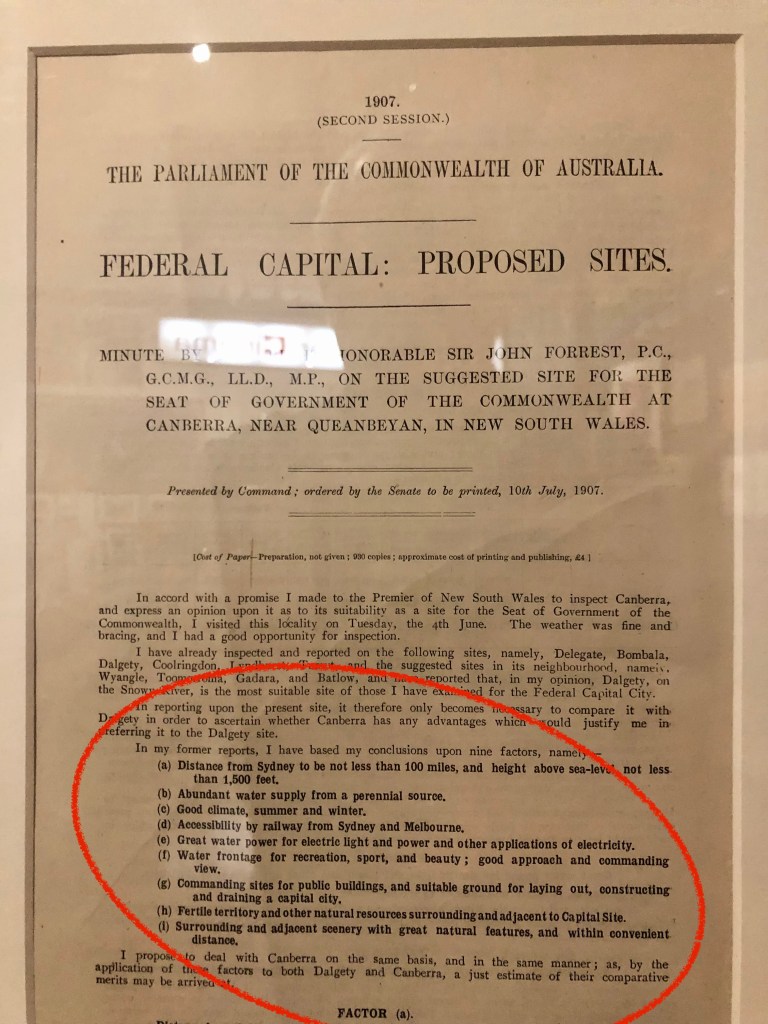

Dalgety, about 150km south of the ACT, got the initial nod for the site of the new capital but the NSW government wouldn’t cede the land. Too hard and expensive to build a rail connection certainly, but also too far from Sydney. Canberra was second choice from eight options.
The word ‘Canberra’ may be a corruption of Ngambri, the name of one of the four Indigenous tribal groups living there prior to the disruption and assumption of their lands. Or it may mean (in Ngambri) ‘space between a woman’s breasts’, the breasts in this instance now called Mt Ainslie and Black Mountain.
Alternative names proposed at the time included: Austral, Aurora, Captain Cook, Caucus City, Cookaburra (😬), Dampier, Eden, Eucalypta, Flinders, Home, Hopetoun, Kangaremu, Myola, Meladneyperbane, New Era, Olympus, Paradise, Shakespeare (🤔), Sydmelperadbrisho, The National City, Union City, Unison, Wattleton and Wheatwoolgold. Probably lucky some of those didn’t get up.


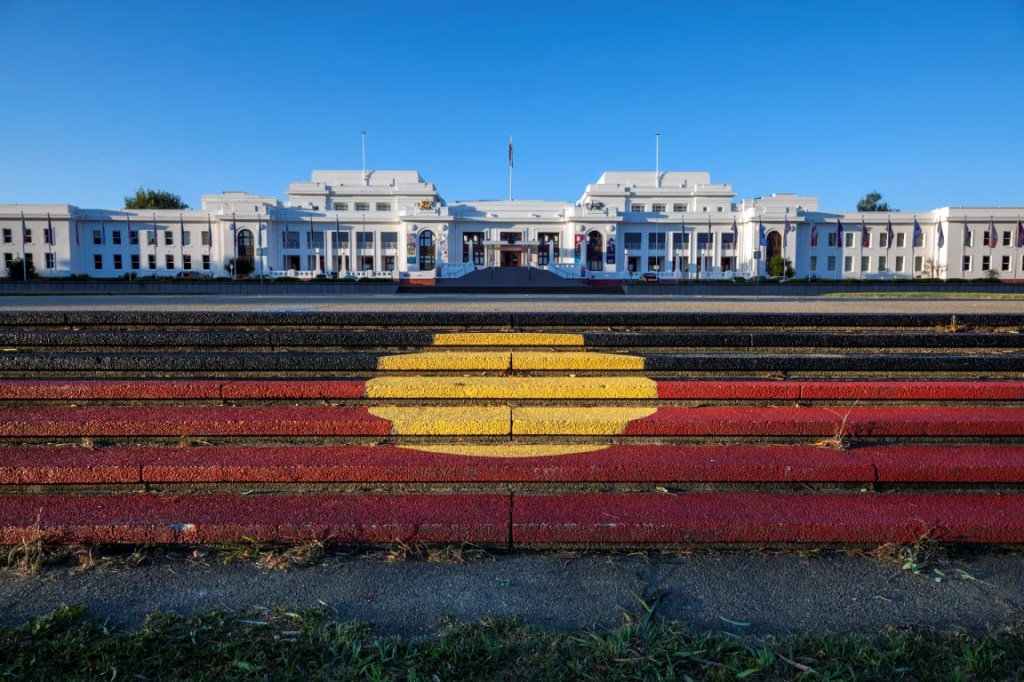
Building of the new ‘old’ parliament house commenced in August 1923 and was completed, after what must have been a constant series of construction and other challenges, early in 1927. It was not designed by the Griffins, Walter Burley and Marion Mahony, but it could have been. Very Chicago School: clerestories, very strong horizontals, interesting sight lines, furniture matching walls matching floors matching fixtures matching ceilings. Passionately symmetrical, built round the two houses — Reps and Senate. Snug, I thought. A building very easy to warm to if not to heat.


The view via this transect through the House of Reps frames the War Memorial (invisible here) perfectly.
John Smith Murdoch, Australia’s first Commonwealth Government architect, did design it in what was called the ‘stripped classical’ style. Good job, but it was only ever intended to be temporary. It does seems like a lot of work and effort for a temporary building.
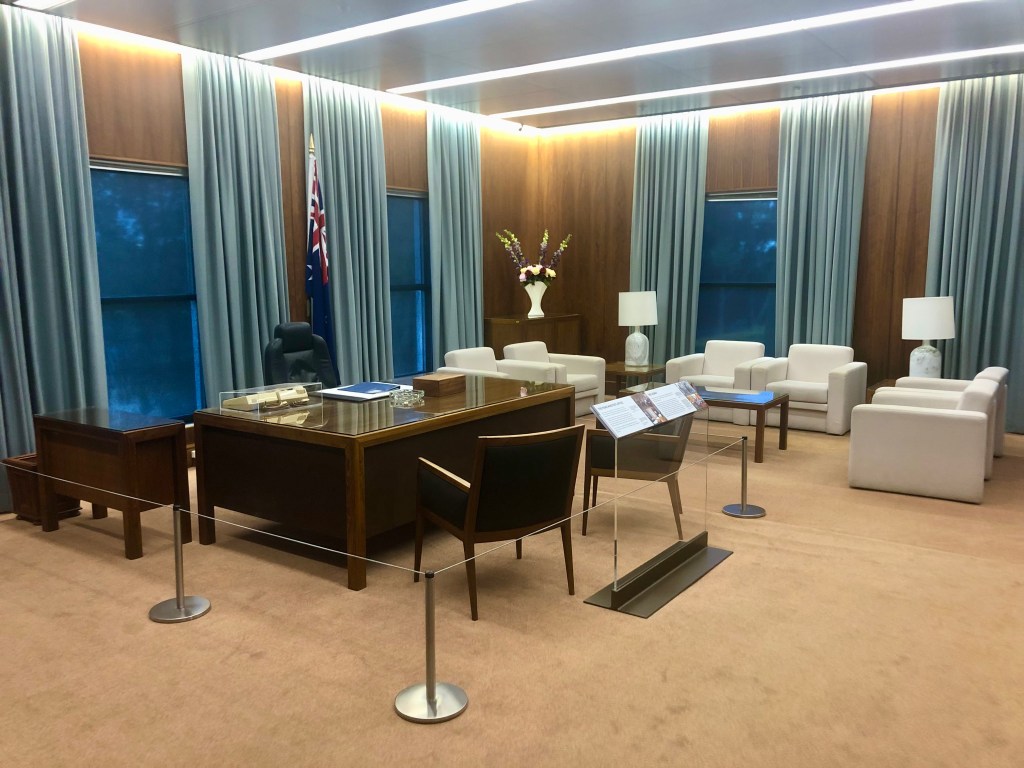
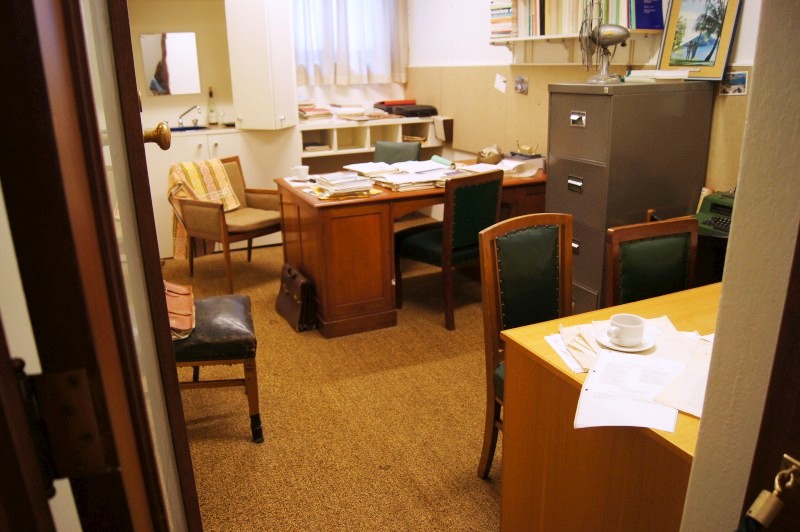
The Prime Minister may have had ample space but a run-of-the-mill MP and three aides would work in an office smaller than this, about 4m x 2.5m. Shall we say limited confidentiality which, who knows, may have been a good idea. New Parliament House where more than 5000 people work on sitting days has nearly eight times the floor space of the old one.

• • • • • • • •
‘You won’t find a whole settled essentially stable community that is so smug, so bourgeois, so comfortable, so well-educated. I mean this may be fucking paradise. I’m not saying it is. But it’s as good as it gets.’ (Jack Waterford, staple of the Canberra Times, legend. And I know just what he means. It has occurred to me every time we go there. All those facilities. All that cycling and jogging.)

It can be quiet downtown.


Although there will usually be a jogger to add to the vibe.

It will also be socially aware, generously so.

With plenty of thoughtful instruction.

• • • • • • • •
In his very good book about Canberra, Paul Daley suggests ‘the role of a [national] capital is to host its legislature and judiciary, its memory (the National Library of Australia; the national archives, the galleries), its conscience (the Aboriginal Embassy and the National Museum of Australia with its vast collection of Indigenous remains and relics) and tell the story of disastrous events that almost derailed a fledgling federation (the Australian War Memorial).’
In a recent visit we made the most of these, especially its memory.
One of the reasons for our visit was to have a look at ‘Fit to Print’, the exhibition in the National Library curated by Mike Bowers of press photos printed from glass-plate negatives (one chance only). A very generous selection and display from the 18,000 or so held by the Library in its Fairfax Collection. All round 1930: another time, another life.

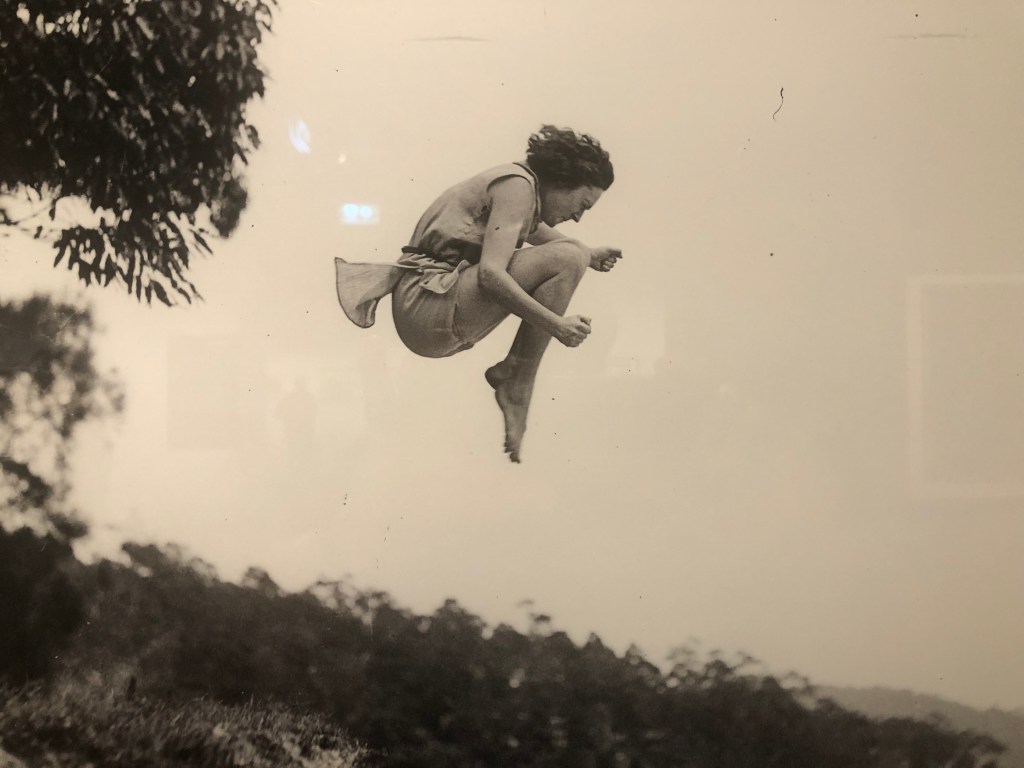
Moments caught at a performance by Inge Stange’s dance gymnastics students, Sydney 1933. ‘This type of physical education is better adapted than almost any other for inspiring inner cheerfulness and new courage to face life in these uncertain times.’

William Lygon, 7th Earl of Beauchamp and, for a time, Governor-General of NSW, with some chaps at Bondi. ‘I doubt’, he observed, ‘whether anywhere in the world are finer specimens of manhood than in Sydney. The life-savers at the bathing beaches are wonderful.’ Using certain information about his activities which could only be described as salacious, his enemies were able to move him on. Smith’s Weekly noted that when his wife divorced him at the time ‘it came as little surprise’. But, bless him really. He’s having such a good time.
The National Library also had its customary display of ‘treasures’. I liked these two among others:
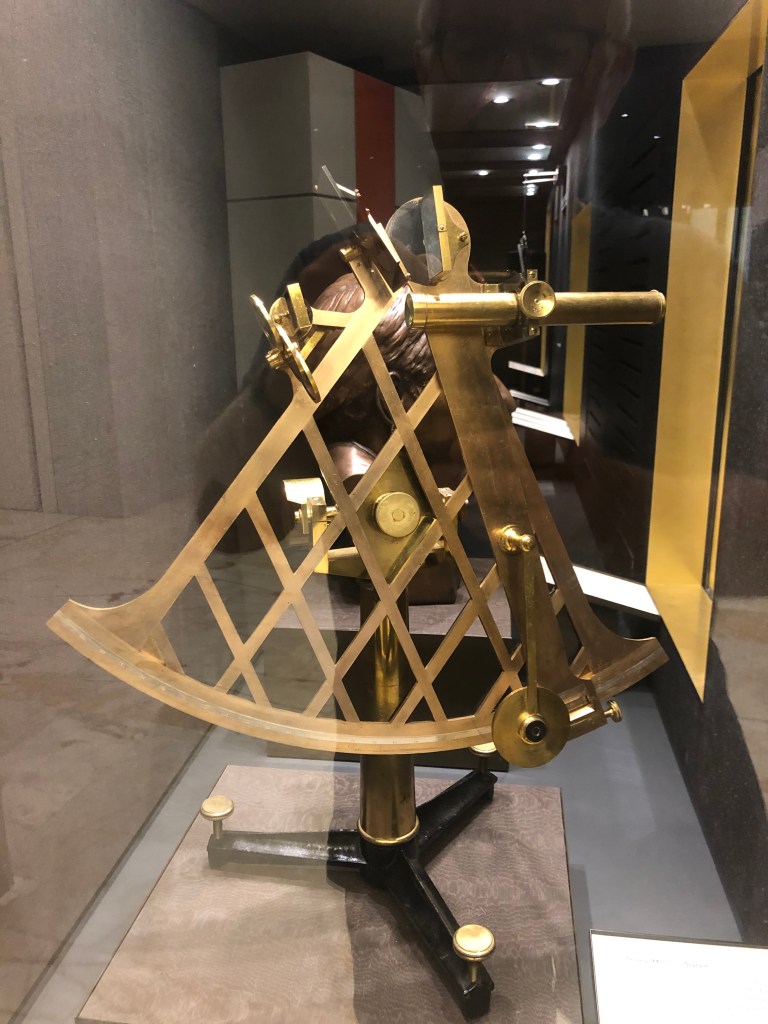
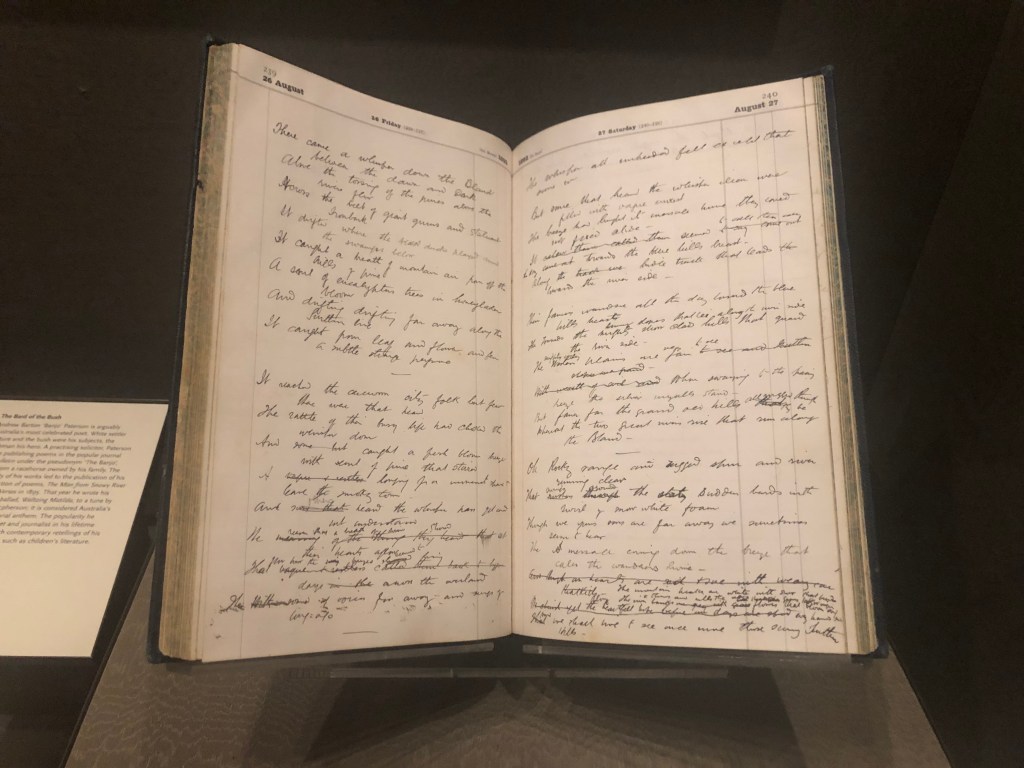
At left, Major Mitchell’s sextant; and above, Banjo Paterson’s ‘Diary used as a notebook’ open at a draft of ‘The Wind’s Message’. Not his finest work, but ‘The Man from Snowy River’ is just over the page.
And … you can look at Leonard French’s glorious windows while you’re having your coffee.
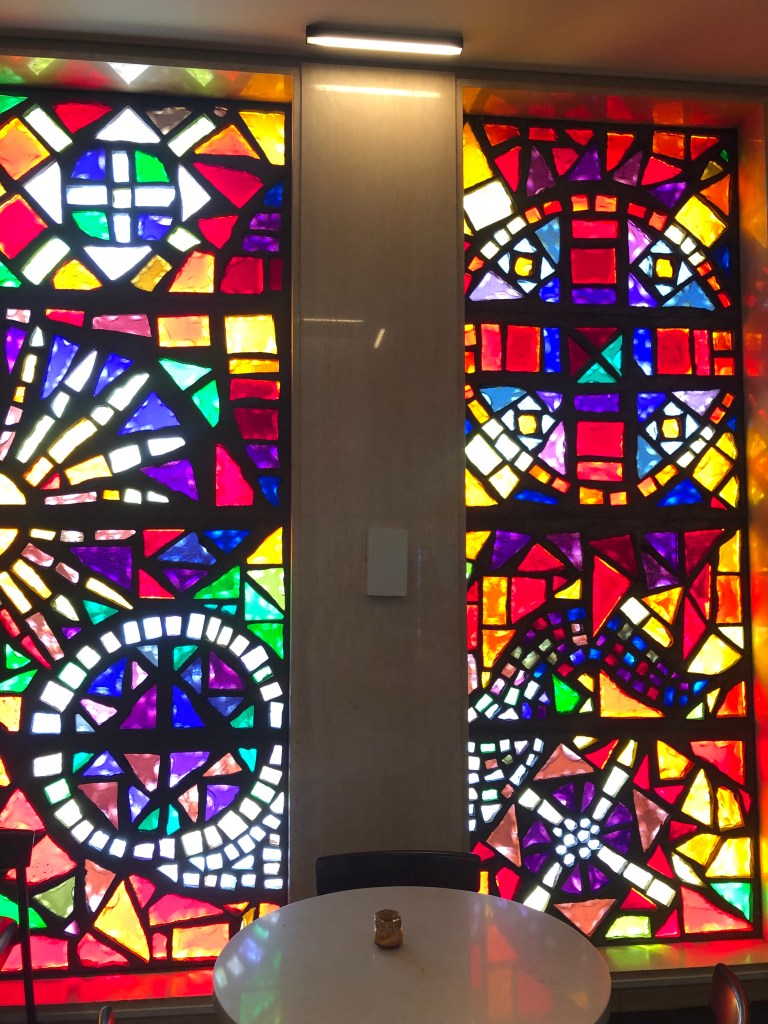
National Library: 9.7/10. At least.
And then there was the Gallery. You must go to the Gallery, but it was looking and feeling a bit Brutalist, just a tiny bit stuck around 1980, those enormous rooms bullying their contents which examined closely seemed like they might be second choice. The new Gaugin, the new Monet, the new Munch: not my favourites anyway, but the sort of thing you might mention when you are talking about examples of the absolute range of an artist’s work including when they had a go at something that didn’t quite work.
Best thing downstairs by a mile —

What a very great painting that is. And what a cultural landmark. It was time.
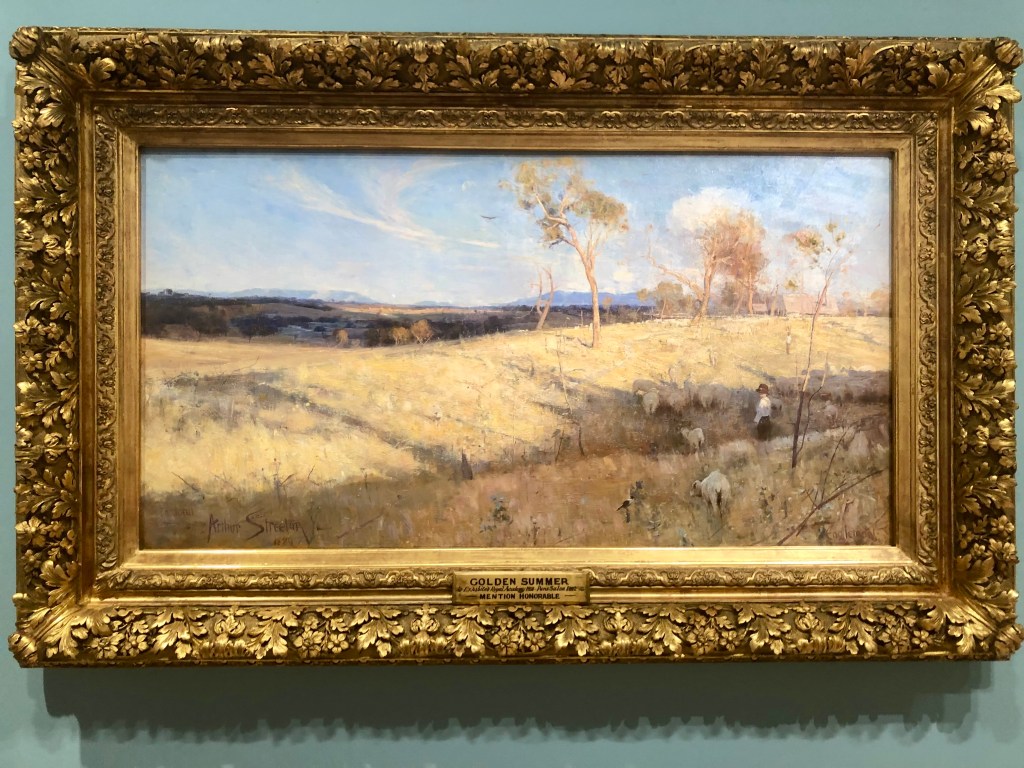
Upstairs was ‘Golden Summer, Eaglemont’ in its very fancy frame. A Mention Honorable at the Paris Salon of 1892 is noted. I’m confirming golden and not just because it’s the Dandenongs in the background. This was the title piece (called ‘Golden Summers’ at the time for some reason) for the best exhibition of Australian Impressionists ever mounted, NGV 1985. I remember it indelibly.
Also upstairs was this, ‘Bush walkers’ by Freda Robertshaw painted in 1944.

Intriguing. So carefully painted, and so formidably un-bushwalkerly. The figures, frozen from inception to completion, would not have been capable of walking anywhere let alone in the bush. Could they be aliens perhaps? Which is not to deny the considerable interest of the painting. I’d be happy to look at it carefully …hmmm, four times a week. Evidently the same genre as Charles Meere’s iconic ‘Australian Beach Pattern’ (which can be found in the Gallery of NSW) from just a bit earlier. Similarly carefully painted. Statuary, with a sea made of actual glass. That ball, suspended forever. (You might note the hint of domestic violence in the deep background. Us Aussies! Always up for a laugh.)
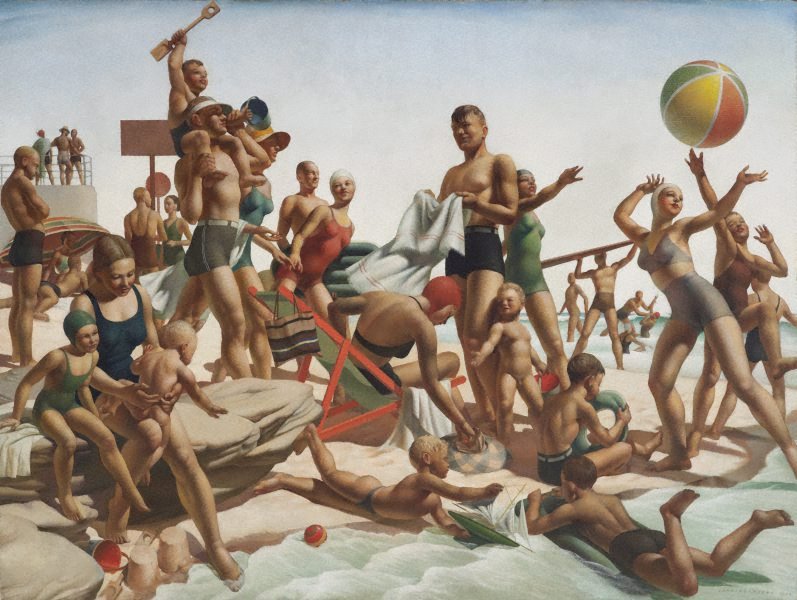
Just incidentally it is on record that Englishman Meere really didn’t like the beach, and he may have painted himself into the picture as the chap at left looking at least thoughtful (perplexed?) if not entirely discomfited.
Also on display was an exhibition of contemporary ukiyo-e, Japanese woodblock prints, the best known example of which is Hokusai’s ‘The Great Wave off Kanagawa‘. In his Hawaii Snorkel Series Japanese-American Masami Teraoka offers his own take on the slightly libidinous shunga tradition. His ‘View from Here to Eternity’ is below. The placement of the woman’s head provides a challenge.

There was also this glorious ‘Lotus Table’ by A&A Design, 1200mm in diameter and made out of ‘custom-dyed rye straw’.

The Drill Hall gallery had a very large exhibition of conceptual art which we think we are unable to explain except that some conventional thinking is involved as well as aesthetic appreciation. I liked it but not as much as a series in the same place by Simon Gende, an artist from PNG. (When did you last see paintings exhibited by an artist from PNG?) Even more exotic was that the theme of the series was the attack on the World Trade Centre and subsequent events stalking, capturing, killing and burying Osama Bin Laden.
This is ‘Twin Towers’. The legend in always so attractive Pidgin at the bottom says ‘Tupela balus bumpin Twin Tower long America USA‘. ‘(‘Two planes [balloons/ birds/fellas] crashing into the Twin Towers which belong to/in America USA.’)

In the museum, one-third closed for a new exhibition when we were there, we found the last day of Pompeii, so to speak, a good deal made out of not very much but with its moments …
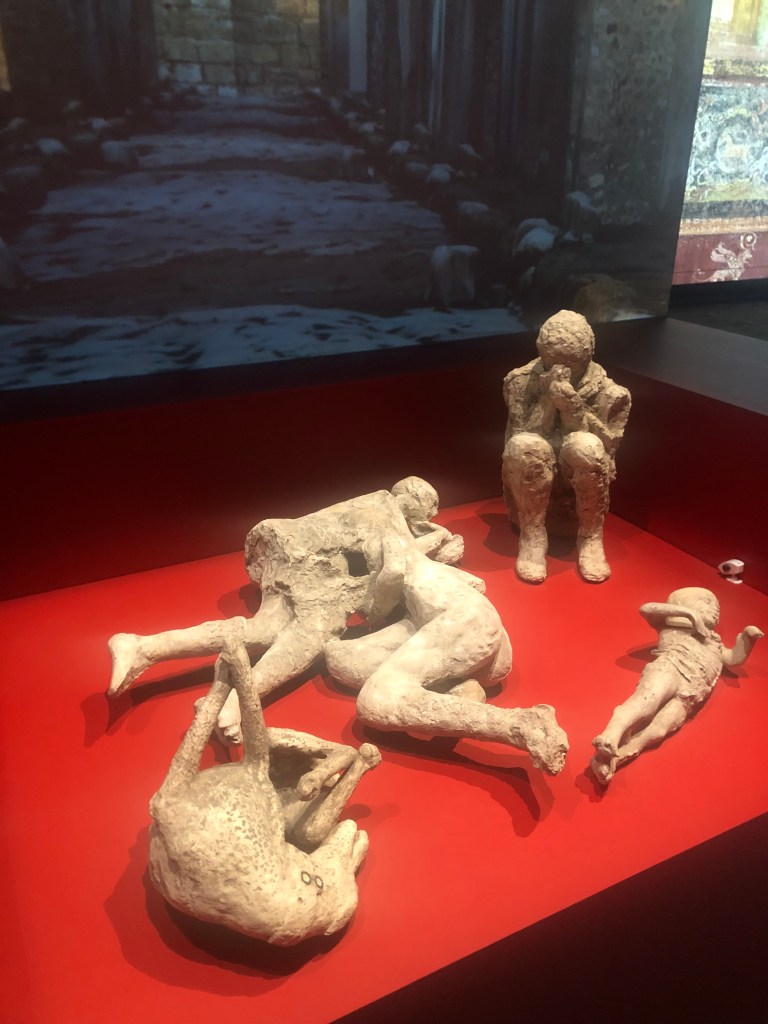
and a pink van plus Holden. Good. And someone taking a somewhat decontextualised selfie.

It is a city — now, so very much not in 1927, and not really till the 1970s — of public art … (You can tap on these pics to see them better.)
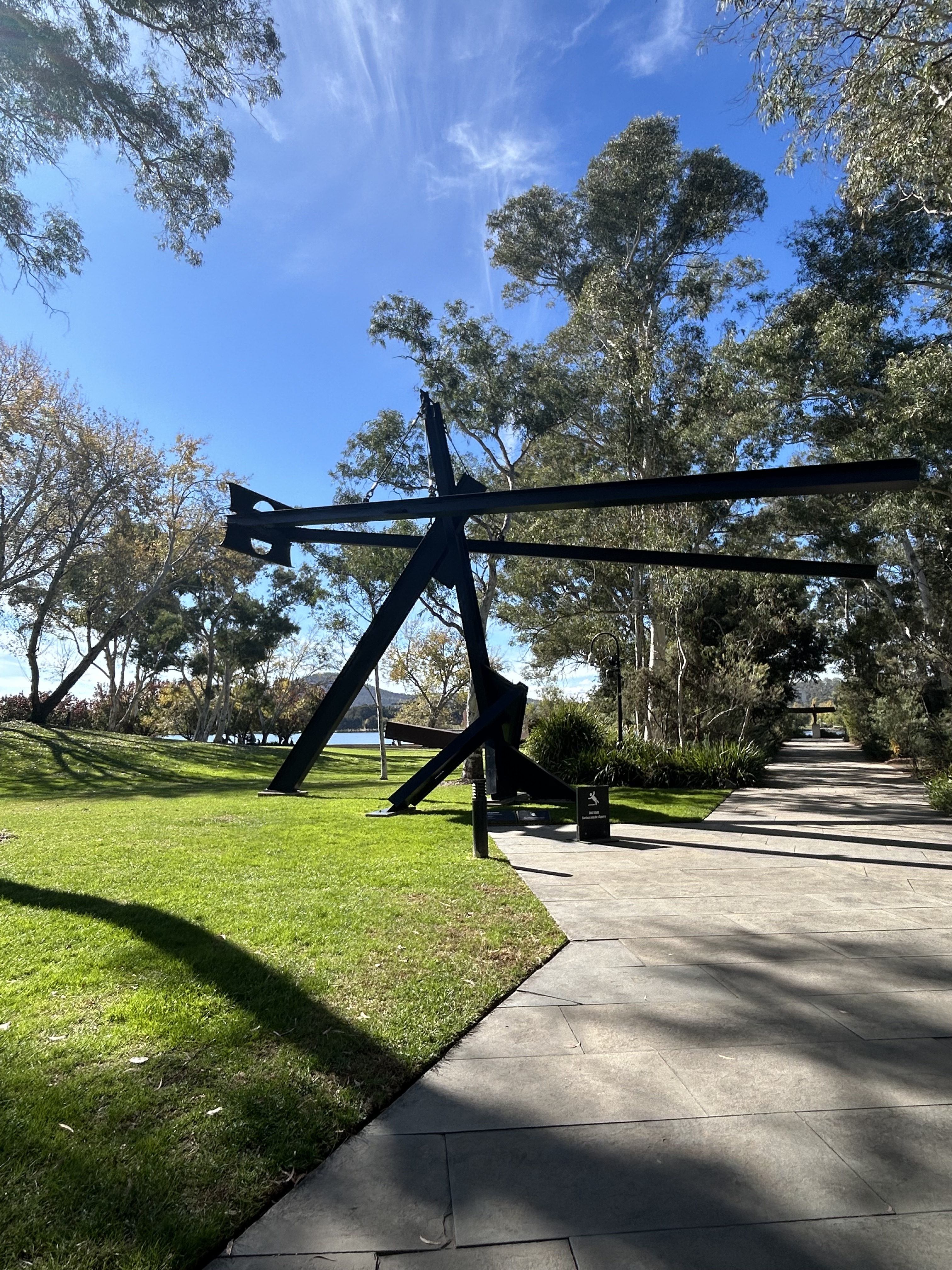


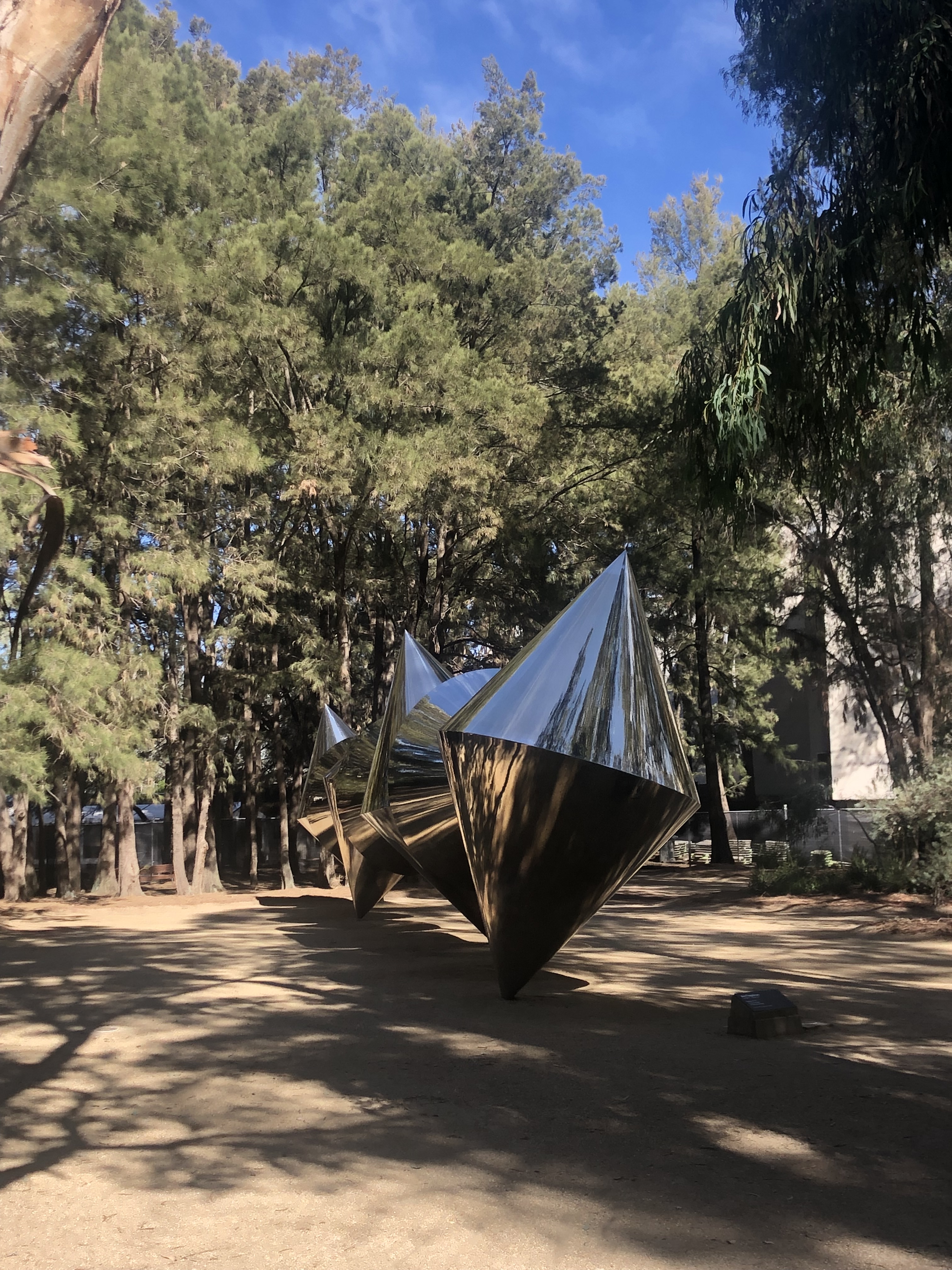

and edifice. Hard to move without bumping into, or at least experiencing, an edifice.


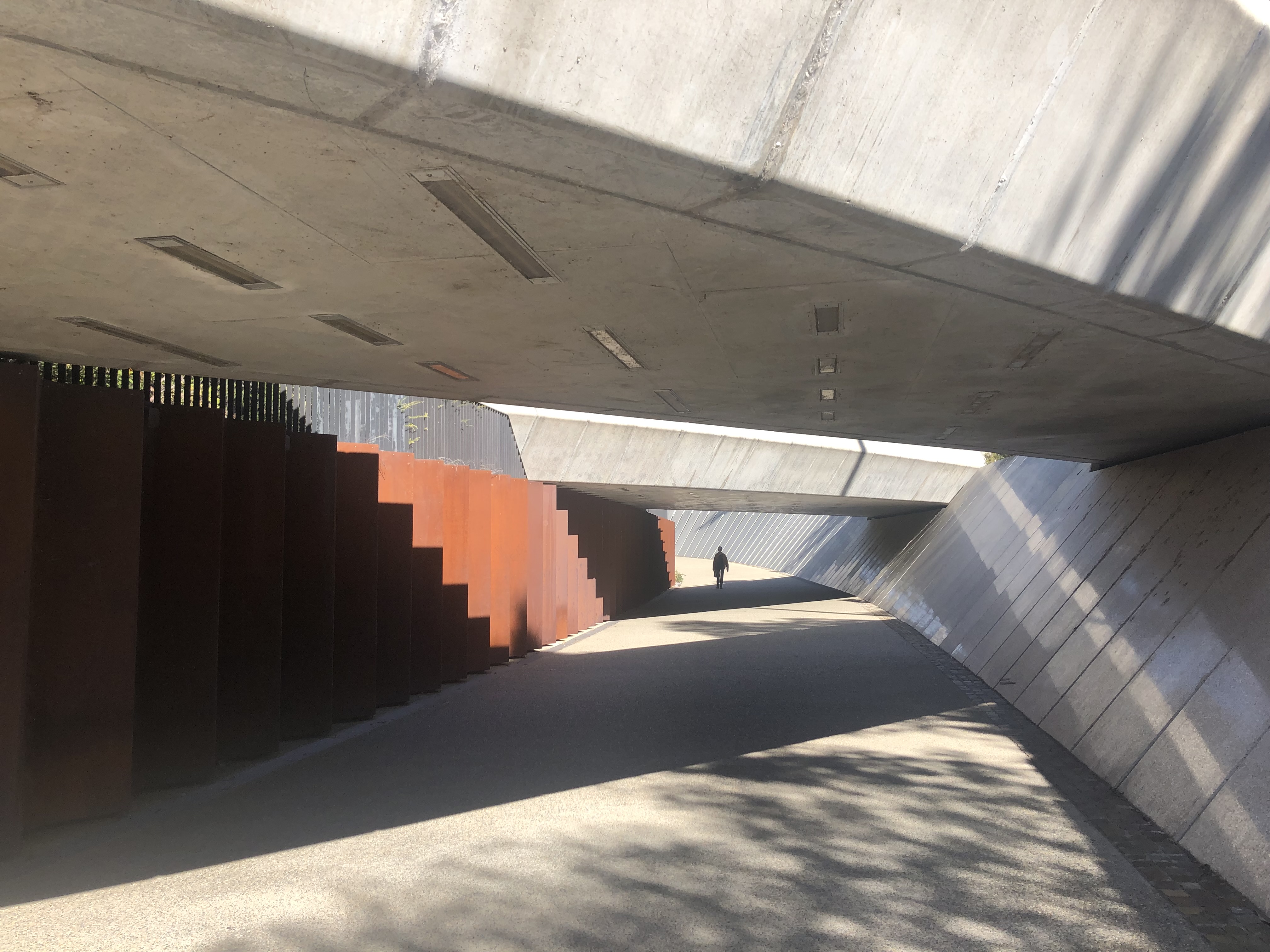

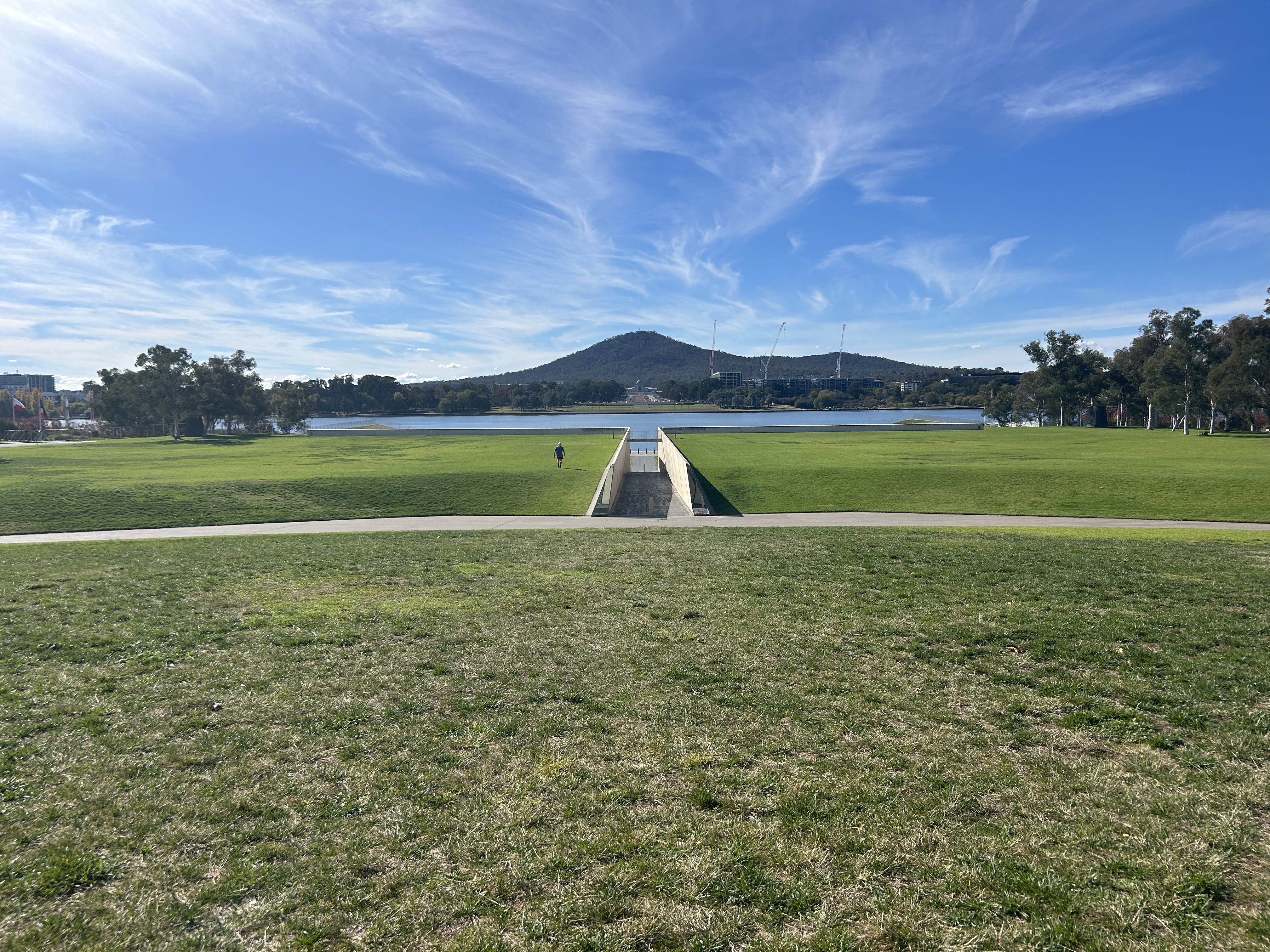
The Gallery (bottom left), the High Court building (‘Gar’s Mahal’) overwhelming two galahs as it does its users, the massively over-engineered Bowen Place pedestrian underpass, and the mysterious ‘Commonwealth Place’, the outcome of a competition, from front and back, itself just in front of John Dunmore Lang Place. John Dunmore Lang, a Scotsman, a Republican and an Australian patriot who didn’t live to see Federation. I don’t know what he’d make of Canberra today. His Place is largely a blank of struggling lawn.
But just along from here is Reconciliation Place which does have a range of features including these standing stones each of which incorporates some First Nations art.


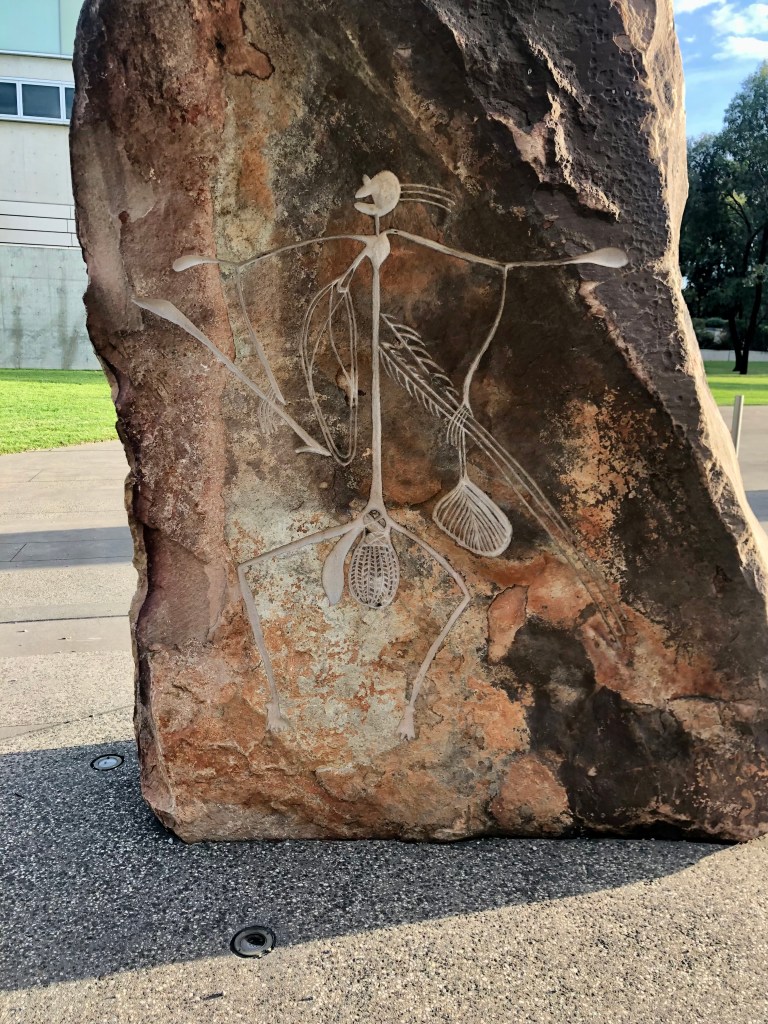
As appropriate the art is representative of different traditions and cultures, quite easily recognisable like the one on the left. But I have never seen Gwion Gwion (at right) with all their complexities anywhere other than the Kimberley. Perhaps a courageous decision.
And trees. Trees trees trees. Hundreds of thousands of them. One of the great arboreal projects of Australia. What a wonderful thing. Especially thinking back to the bare paddocks of 100 years ago. It was autumn of course and there was ample evidence of the extent of alien deciduous planting …
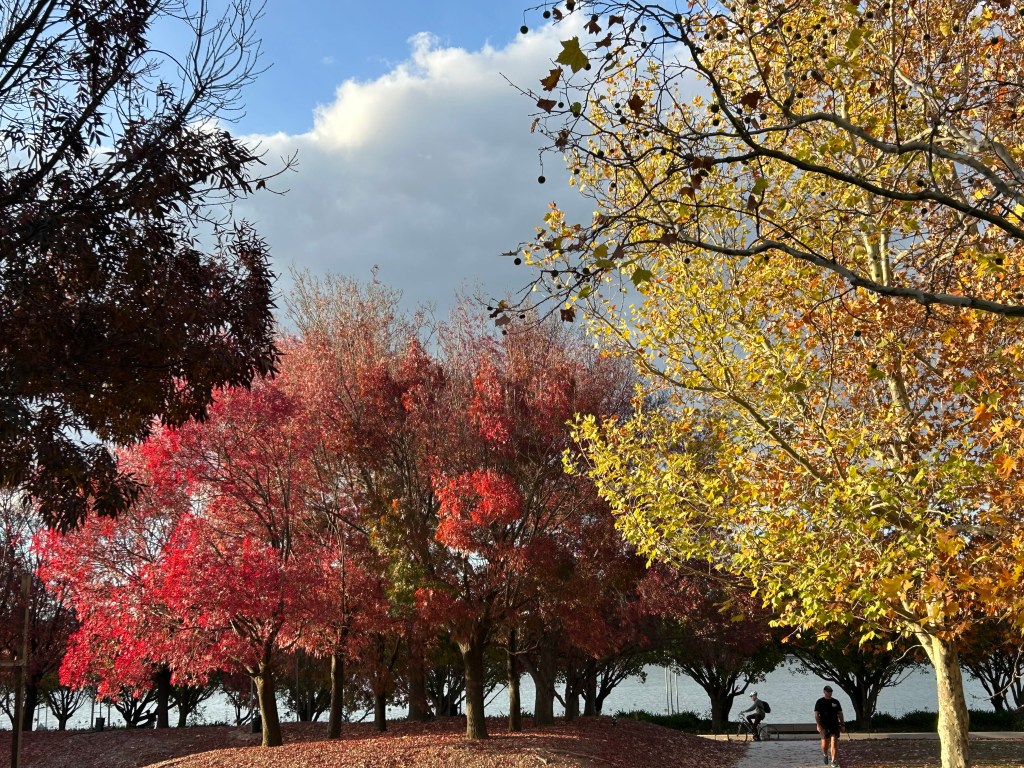
and the absorption with monocultures, a version of town planning aesthetic concerns dominating the truths of ecology, but at least they’re trees.

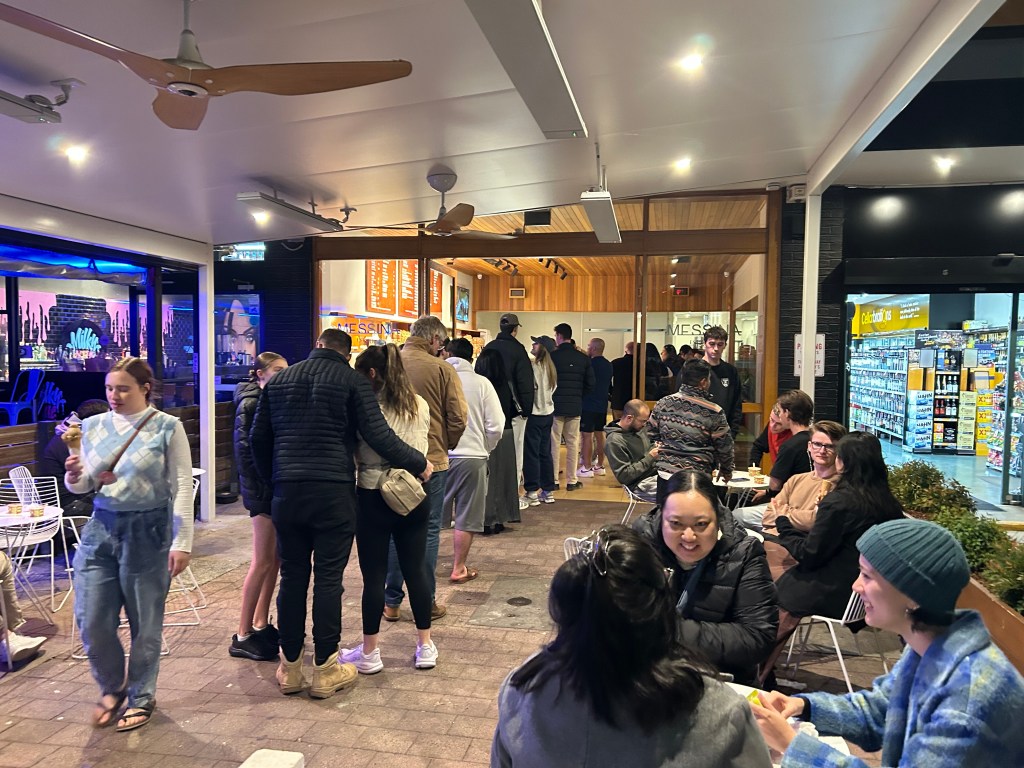
Perhaps the most signal image from our trip was this: round 9pm, Lonsdale St as downtown as you get, temperature minus 4, queuing up at the Messina gelato bar for ice cream. You might imagine otherwise, but you don’t miss out on a thing in Canberra.
 mcraeblog
You missed Monster Hotel with the BEST and largest vegetarian restaurant in the Siuthern Hemisphere with sensational decor. Some other great restaurants too, good walk around the lake, not so good vineyards surrounding there, Braidwood close by, Floriad, the painting if Saint Gough in ParliamentHouse. We had a very different visit to Canberra, the great thing about travel, every journey unique.