
Try to look at this blog on a desk top if you can. Phone screens simply will not do the pics justice. The introductory material is here.
‘The bush holds much more than the eyes can see.
Photographers seek to capture it, filmmakers record it, but what they bring back is mere imagery. Beyond the image, another world lies.‘ (Nicholas Rothwell, Ilkara)
But the image still has power: to startle and surprise, to intrigue and expand your perspective and sense of wonderment.
I wondered if we were going to see something like this. (Click here and watch it move.)

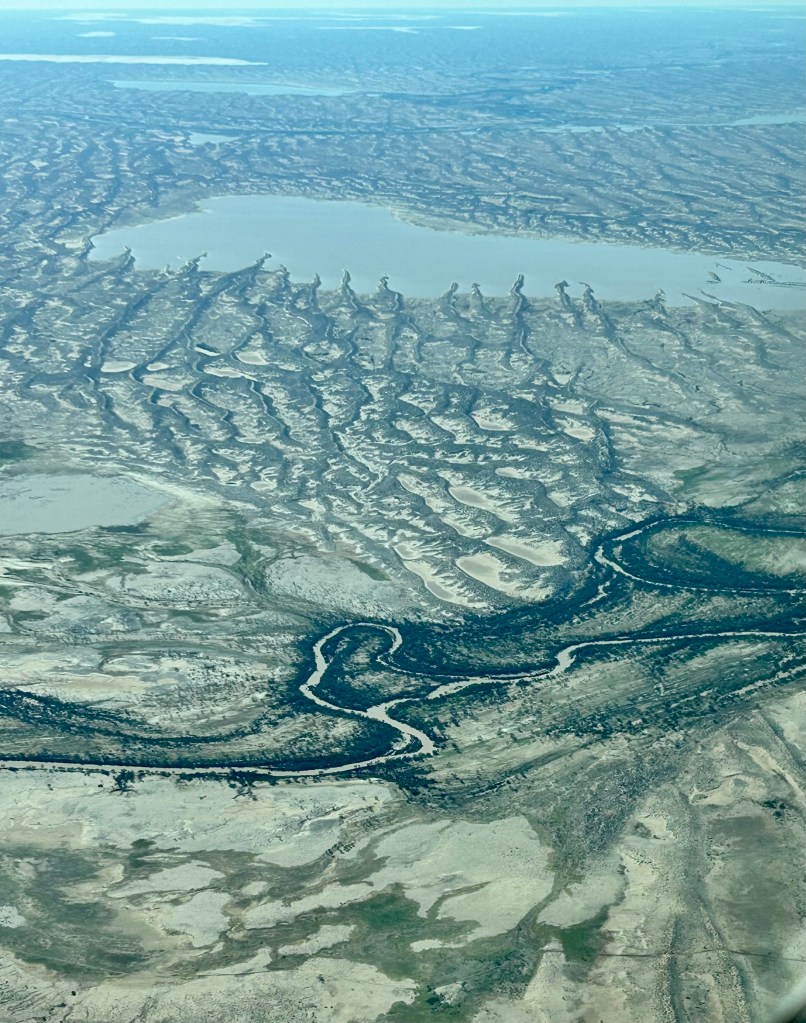
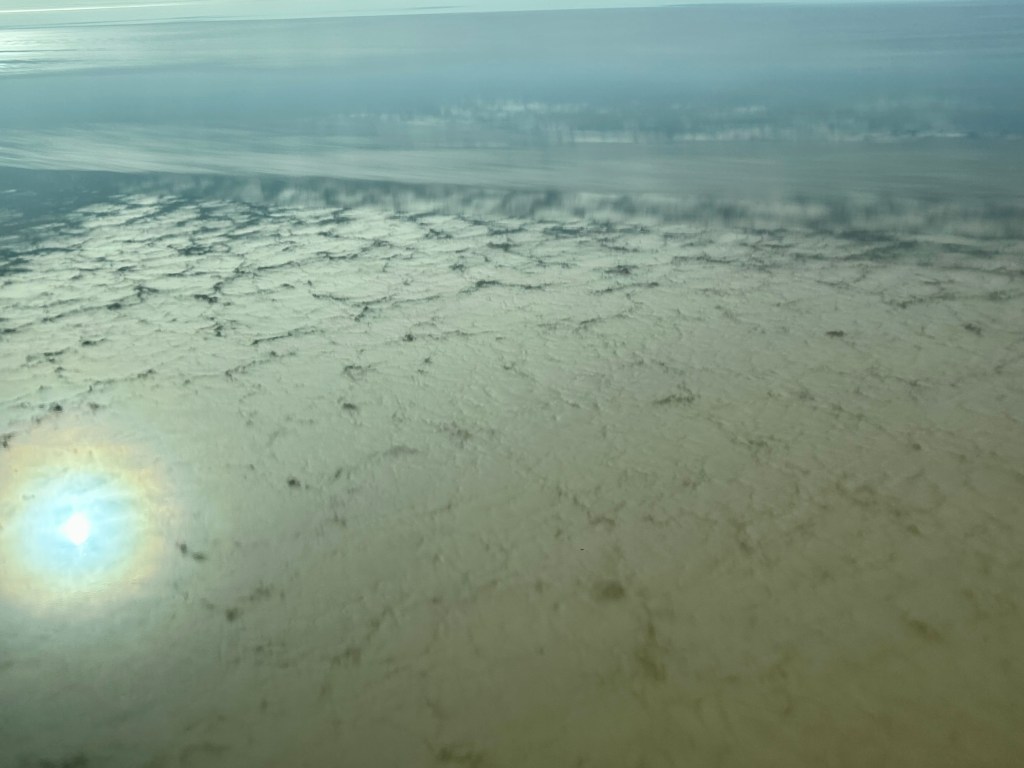
Wouldn’t that have been out of the box! But we didn’t. We got this close to Kati Thanda South. It is salt, not water, that we’re looking at.
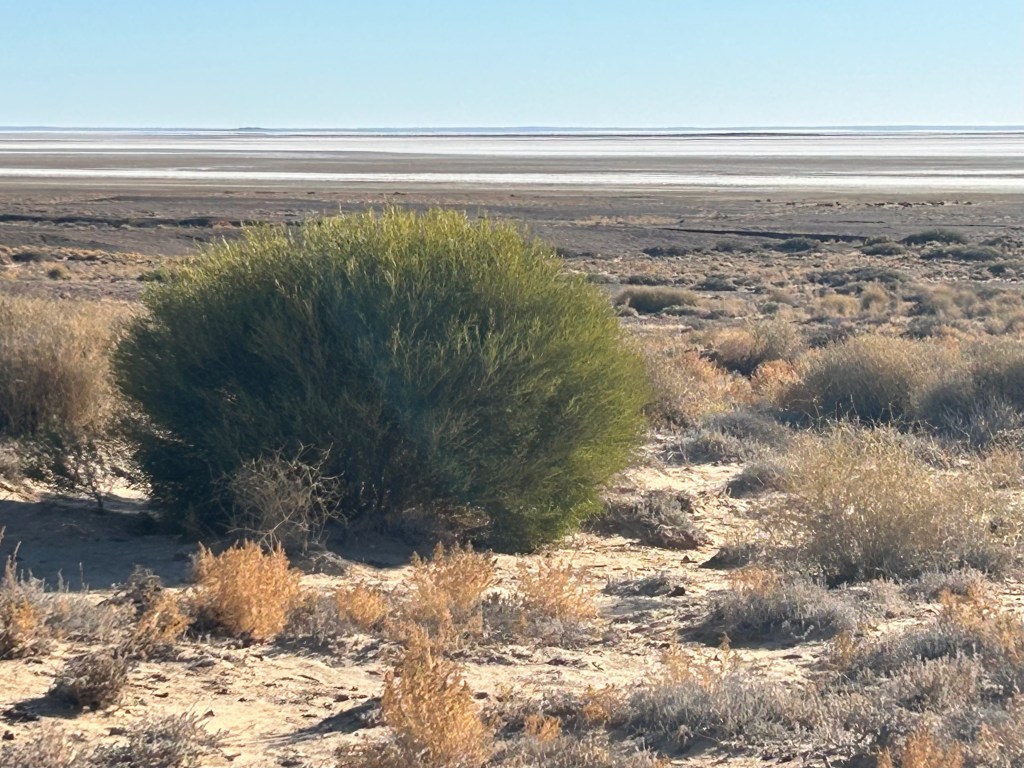
From the air like this …

While we were there, water which would possibly fill the southern lake from the floods north of Innamincka was on its way down the Cooper. This stolen photo provides a rather thrilling update. That’s it. The real thing. The Cooper entering Kati Thanda South — a most unusual event.

Our views were mostly from the air.

We flew from William Creek to Birdsville in the late afternoon, at about 800-1000m, and were able to see how the water was creeping in. We flew back early the next morning, and very low, 150-200m, following the Diamantina and Warburton through Goyder Lagoon to one of the northern entry points to the lake.
And this is what it looked like initially. (You can click on any of the photos in the galleries of three or two to enlarge them individually.)


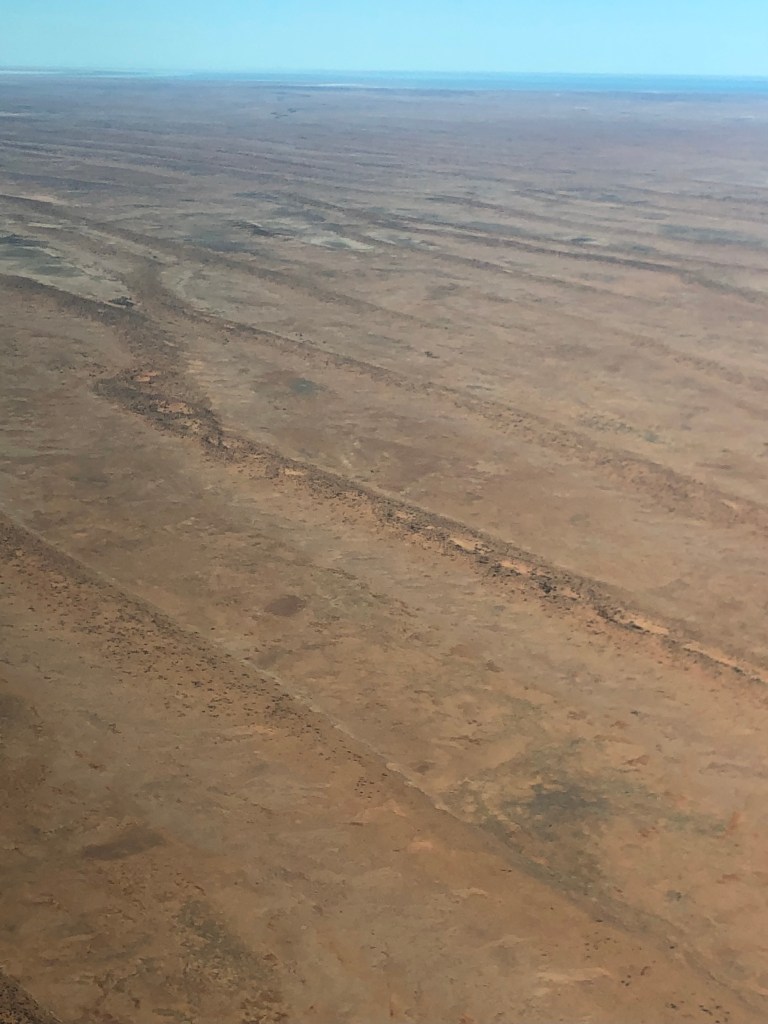
And then …
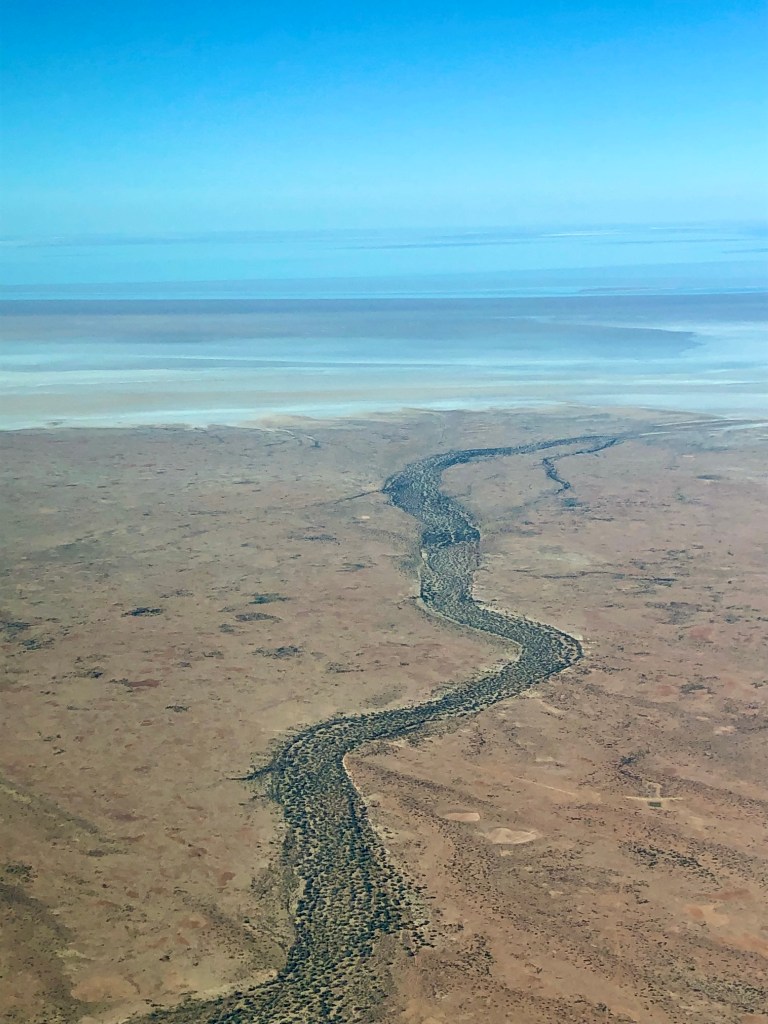


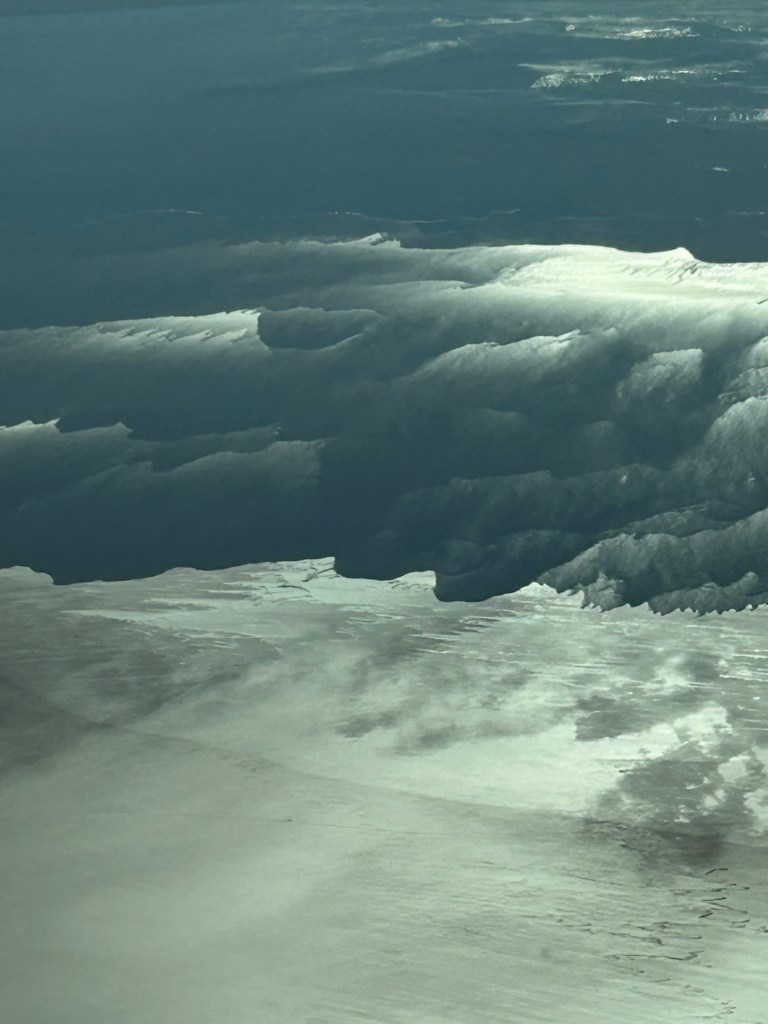
Some of this may have been cloud reflections. We don’t know and neither did anyone else. But that’s what we saw, us and the camera.




And below is a gibber desert (the stony edge of the Simpson) … with channels which have recently run through it!


And Birdsville. Population 110. For the annual races 8-9,000. Red dirt country: but on this day in such vivid green. It is the Diamantina at right. The plume of steam from the town’s artesian bore is in the top left hand corner. The water comes out of the ground at a constant 98C.

The next morning we went back the other way, lower and following various water courses.
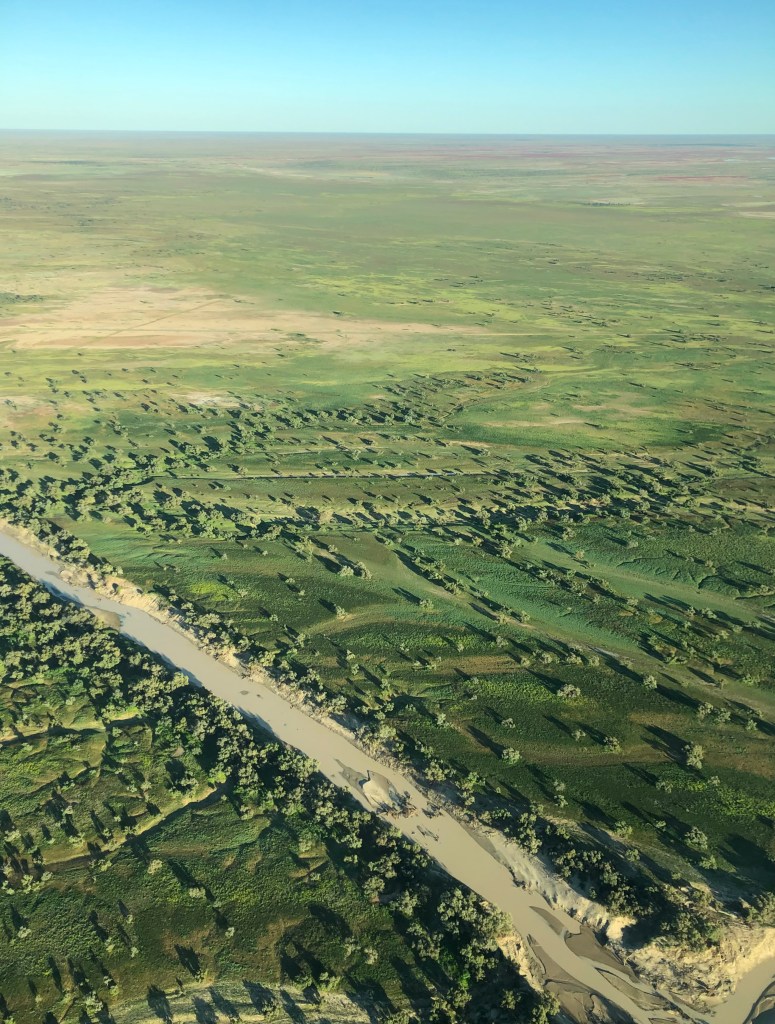
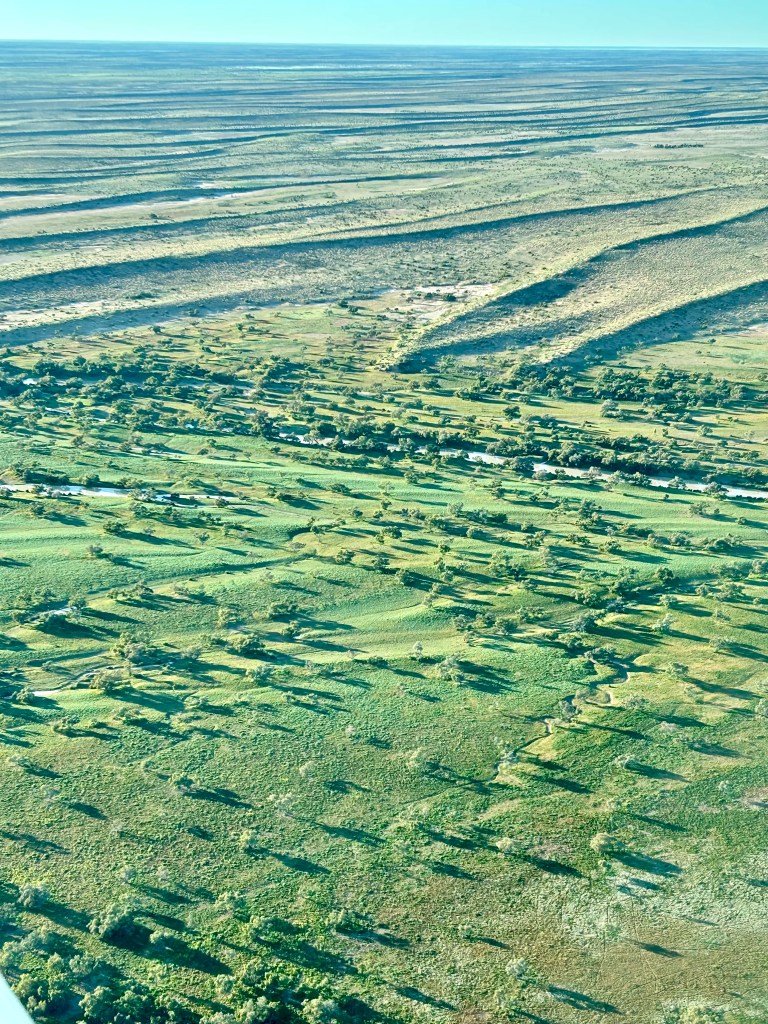
At right above, meeting the Diamantina are the famous longitudinal sand dunes of the Simpson desert, usually a vast sea of orange and magenta.
There were these big intermittent bodies of water with their extraordinary shapes and colours.
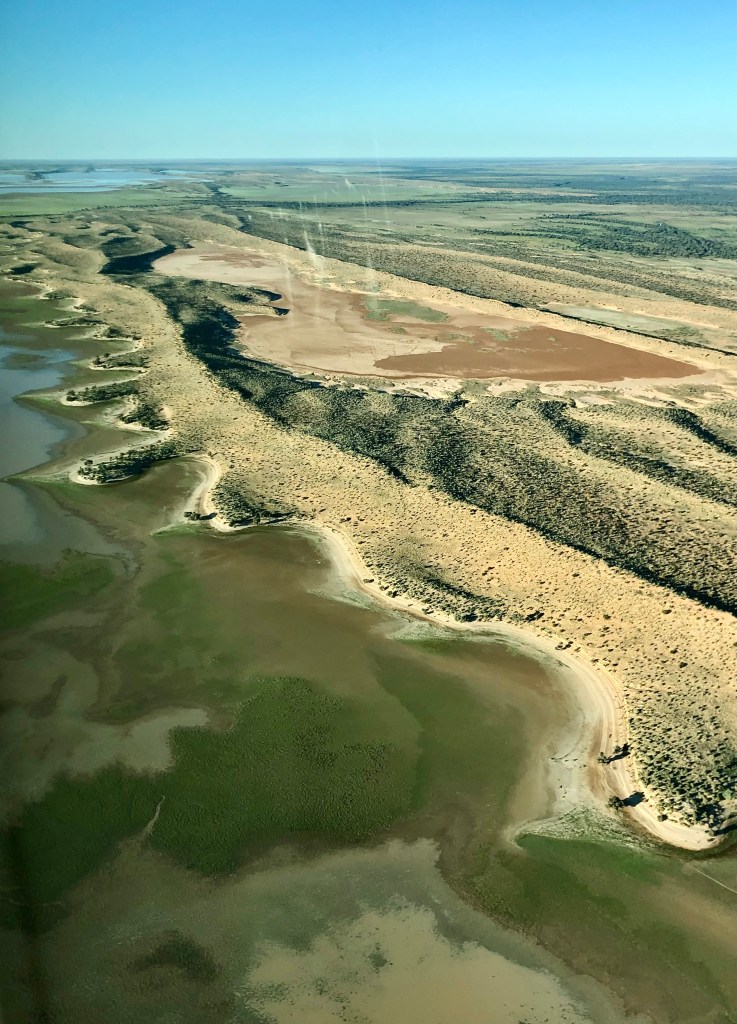
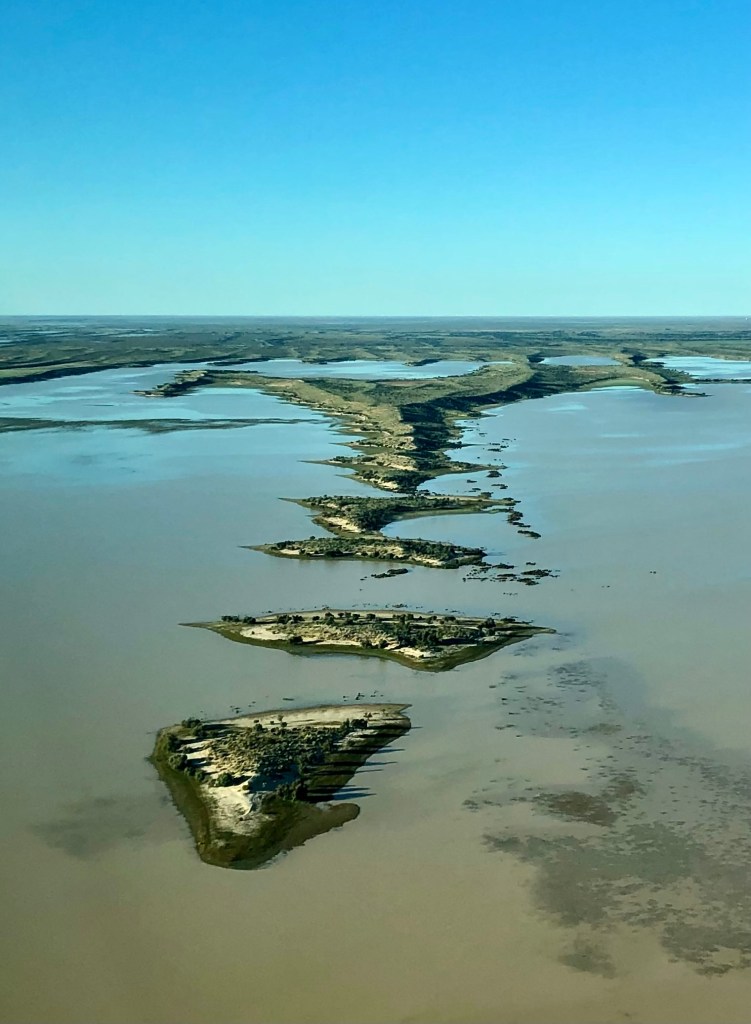
The Goyder Lagoon.
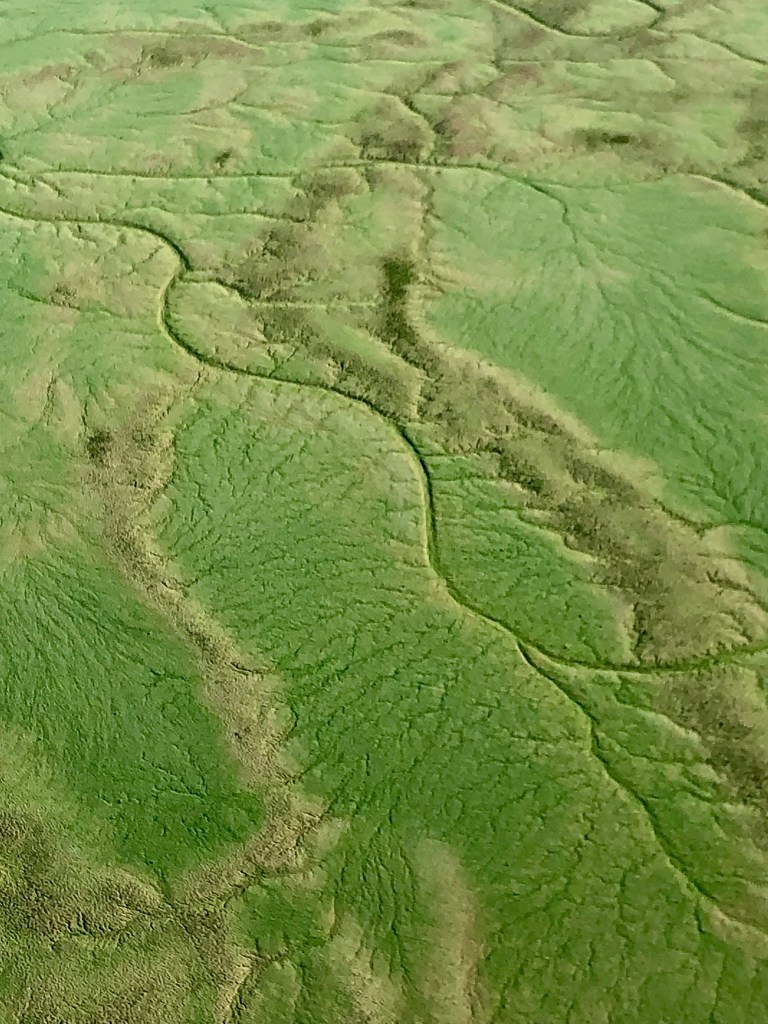

And the Diamantina which crossing state boundaries has become Warburton Creek splitting into myriad channels and then re-forming.
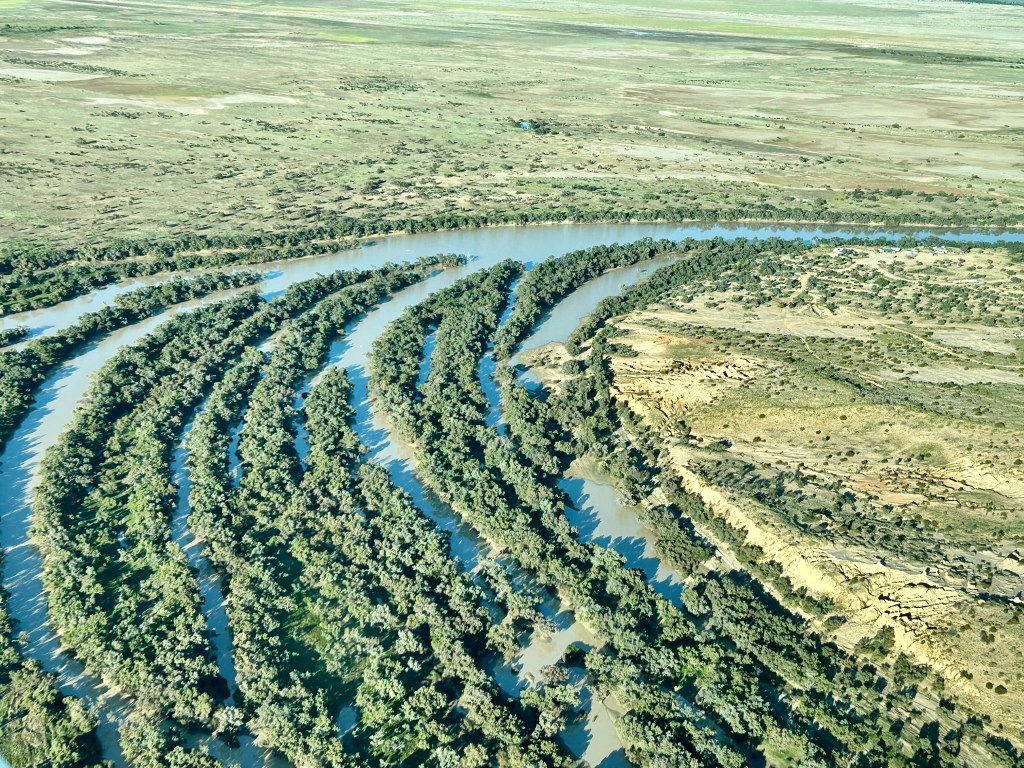
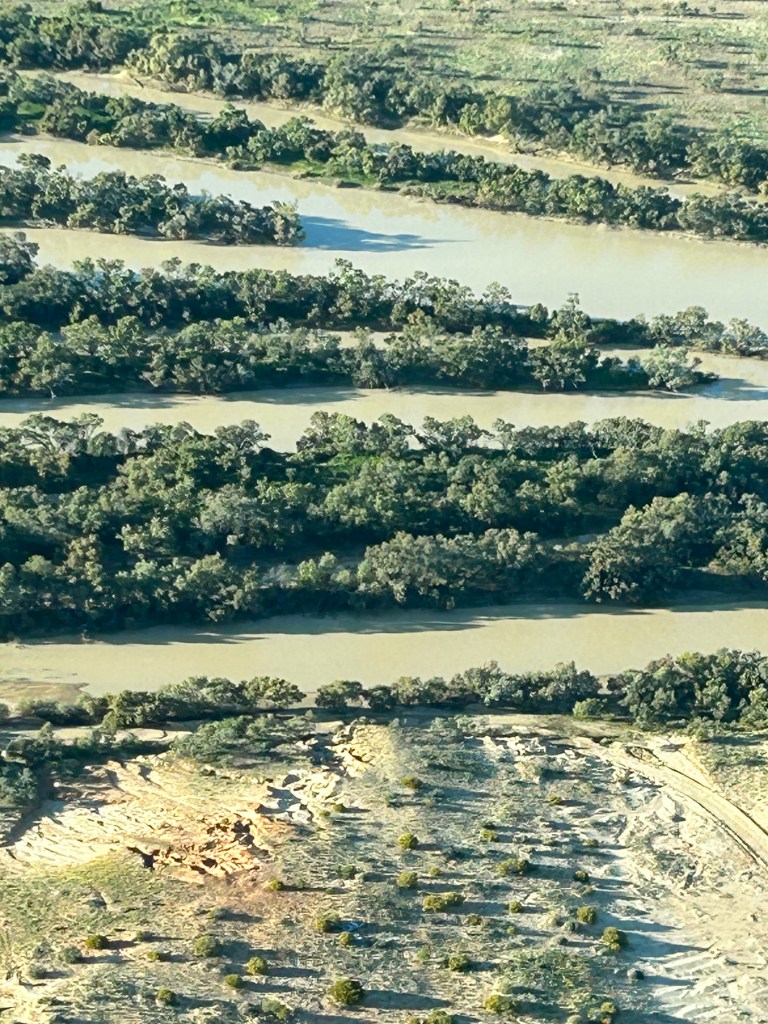
We went looking for birds and did find some. At left is a collection of pelicans not so far from the shores of the lake (at right).


But the remarkable scale and geography of the whole — from our vantage point — didn’t lend itself to a focus on wild life. It was there absolutely no doubt, but this was a different sort of life.


The transcendent type.
 mcraeblog