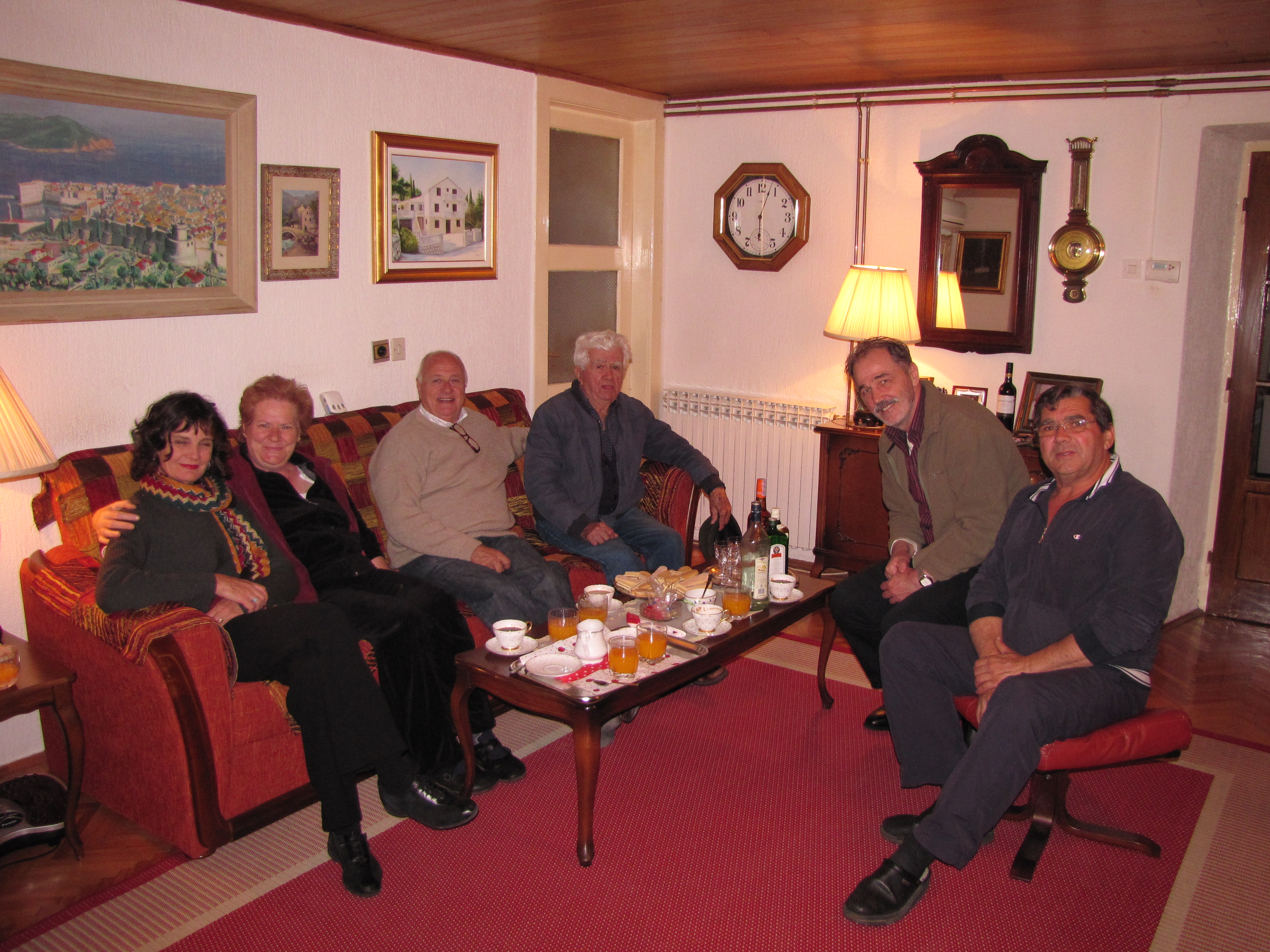
ELSEWHERE 2010 Slovenia: Our Party

A cup of coffee (cappuccino): €2.50 ($A3.75)

Slovenia deserves its own fair treatment; it’s an interesting place. But I’ve gone on too long.

We were in Ljubljana, its capital, for two nights because of the complicated way you need to go to get from Zagreb to Venice (via Villach in Austria: three train trips and four hours on a bus). We hadn’t been to Slovenia and wanted a look.

The story would be: exhausted the tourist resources on the first afternoon. They had their own interest. A national historical collection of Slovenian art is not just the same as such a thing elsewhere.

Next day we had a walk through the suburbs, ate brilliant burek at a fast food joint where the owner was very surprised to have customers who could only point and smile, found all sorts of things we hadn’t planned on including a bit of the old city which we wouldn’t have known about otherwise, a functioning rather than a decorative bit.

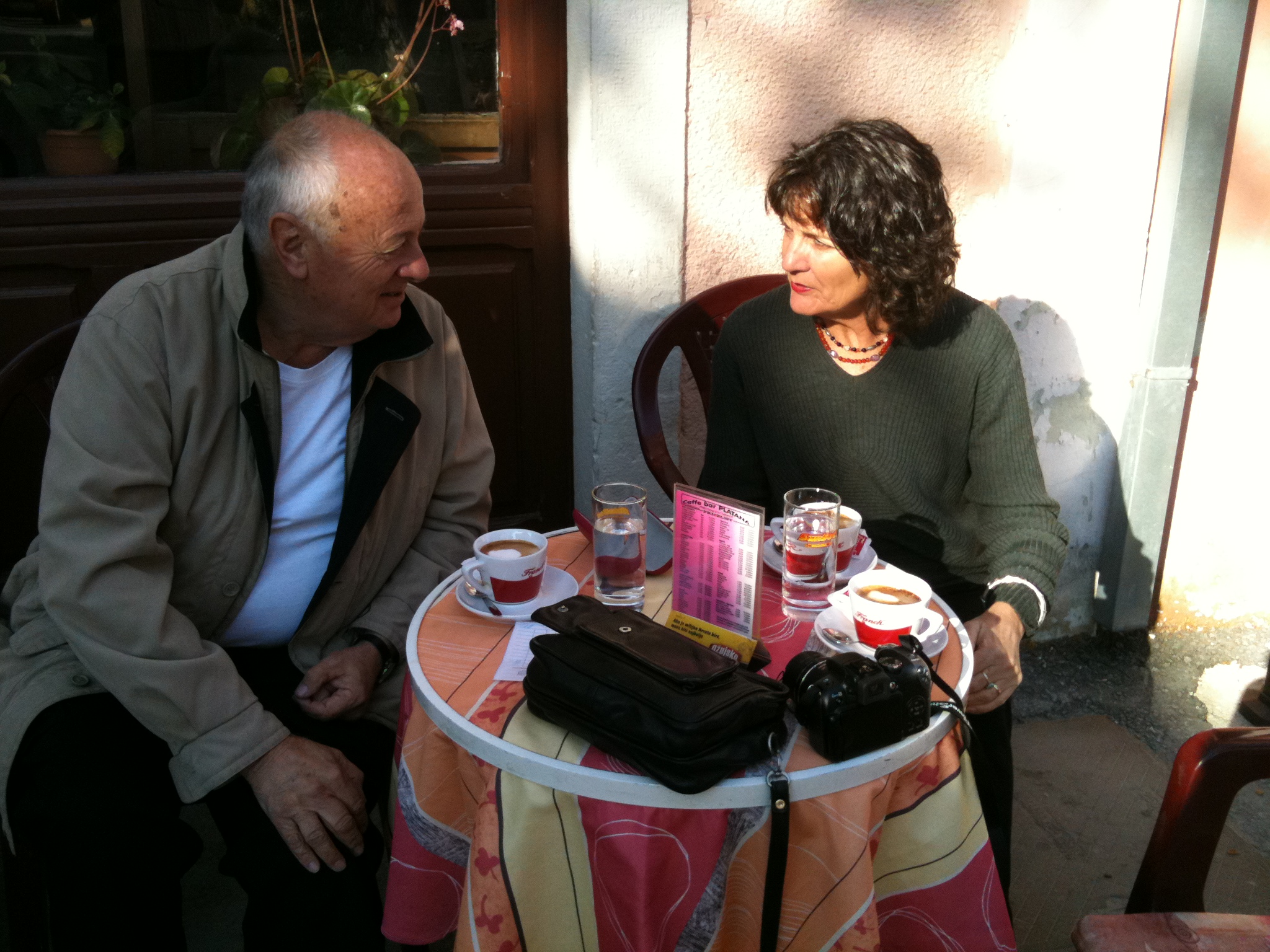
IMG_1262The coffee was good, the sun shone. Myrna ate the best ice cream she has ever had. The hotel had windows that opened, lots of TV channels, and free internet, a garden out the back with a goat in it and lovely helpful young men. We could do washing. Travellers will understand.
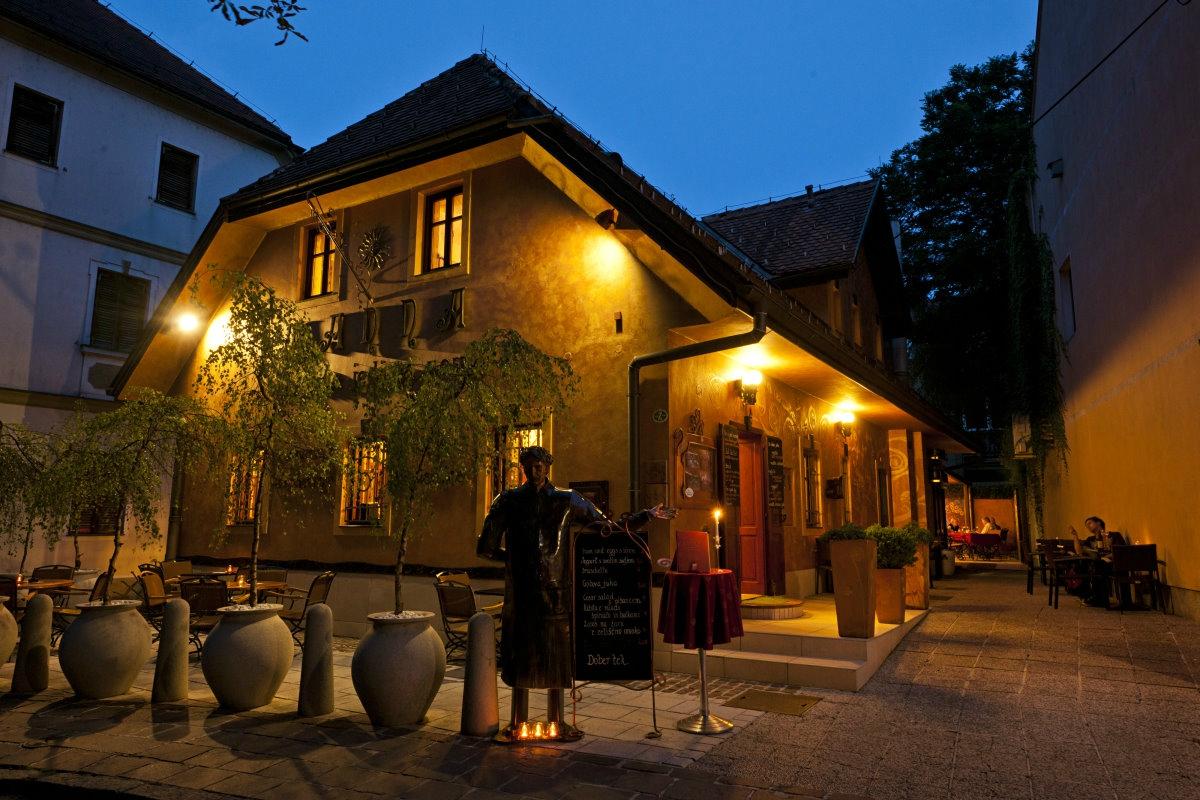
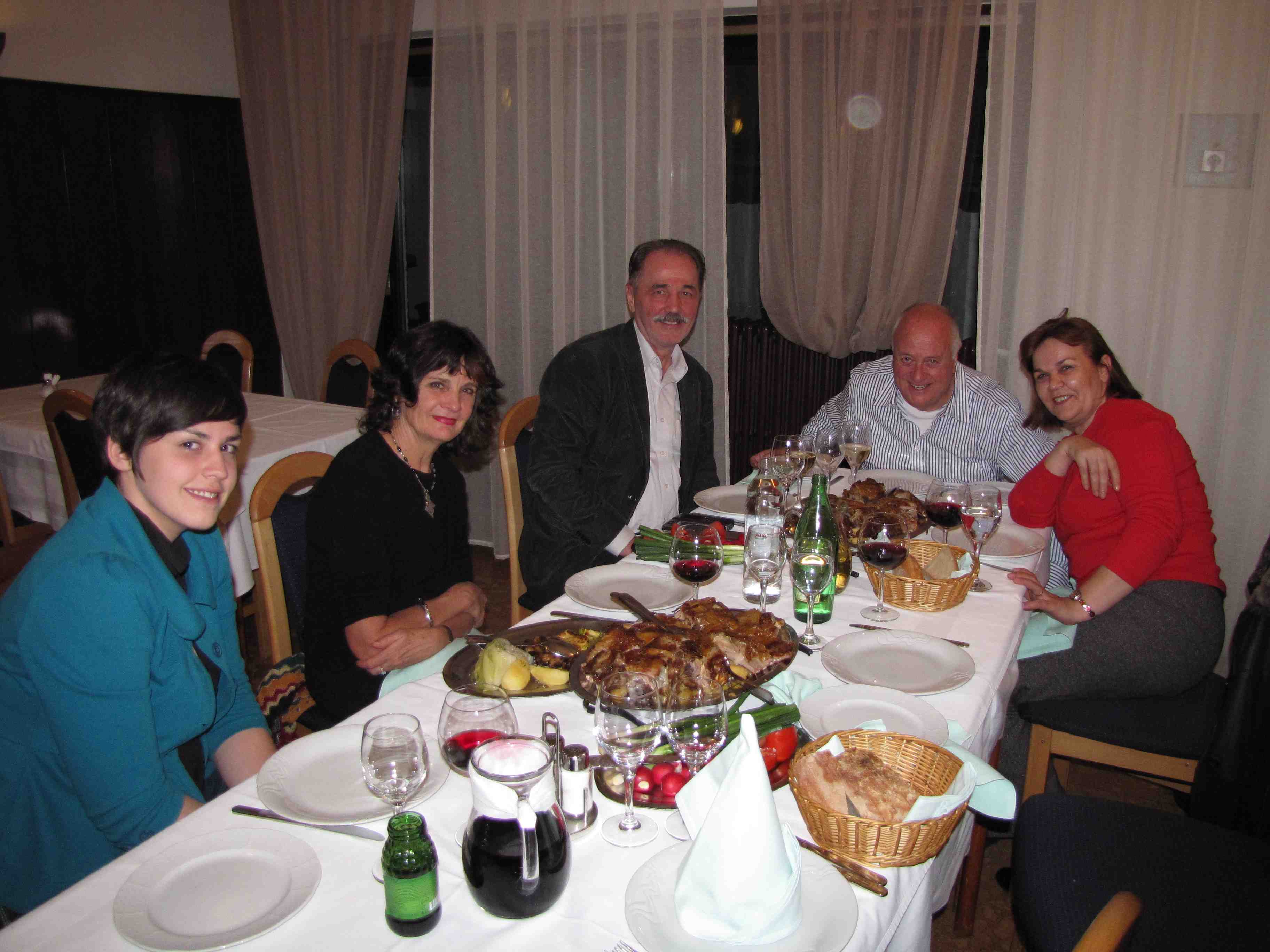
mannaIt was all capped off by a visit to a restaurant called ‘Manna’ where the meal was performance art.

Two middle-aged guys who just loved everything they did took us in hand and led us through the delights of Slovenian cuisine. The buckwheat dumplings in a mushroom sauce were the best eating. But the best moment came when one of them ‘aired’ the wine glasses by swirling imaginary substances around in them until they had reached the correct state, a condition which could be discerned only by an expert.

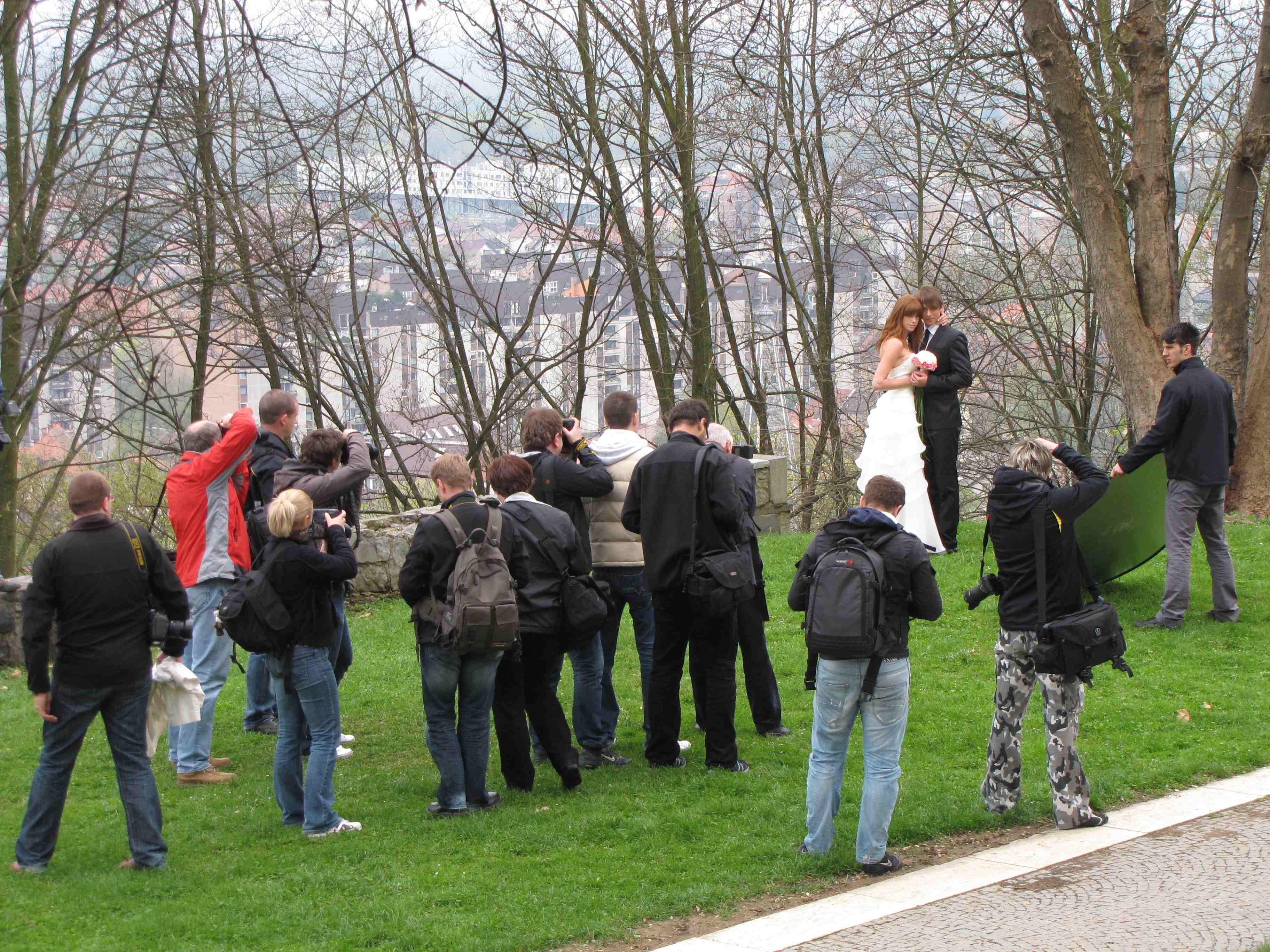
The photo of Slovenia will be of a ‘wedding’ couple surrounded by photographers near the castle. Old Ljubljana is built around a dramatic limestone pile which of course has a castle/fort on top of it, Ljubljana’s primary tourist attraction.32. Ljubljana

This ‘wedding’ is a fake. This is a prac lesson in a VET course for aspirant wedding photographers.

Ljubljana is below in the background. If you want a rest in a benign location … this goes straight onto the short list.

And eat at Manna, Eipprova Ulica 1A.

Travel to Venice for truly dizzying delights. Just click anywhere here.

ELSEWHERE 2010: Bosnia. Not Don’s Party

23. Don in the Sarajevo marketsA cup of coffee (Turkish): 1.80 Bosnian Marks ($A1.50)

That night we had food we’d bought at a Konzum; in Lord Rowland’s words, ‘some breads, some meats, some cheeses’ with a warmth of expression and gesture of which few people except Mike are capable. I woke during the night to the sound of vomiting and in the morning we discovered Mike and Dina were thoroughly sick. It was my turn later in the day. My diary for the next day says: ‘Sleeping and vomiting, one day. Karma.’

It was by great good fortune that we were staying with Pero Radovic and were on our own in the hotel.

The excursion to Montenegro went out the door. But beyond that there was no quick or easy way to get back to Zagreb from where we were.

Because of the mountains travel in the Balkans is not easy. The rented van had to go back anyway. Dina had an exam she had to return for. Mike had to get to the airport to come home. Don had to get back to work.

Then Don got sick. That was a gloomy night. What do you do? Say, okay I know you’re vomiting and feel like death etc, but buck up and drive a few hundred kilometres along a winding road? It’s easy to forget how bad nausea and vomiting are, and for we older persons how long it takes for your body to feel right again after their cessation. And it’s easy to forget how tenuous situations you take for granted might turn out to be.

Don, lying to us Captain Oates-like, said he felt better and off we went.

Entering Bosnia wasn’t pleasant for him. He can speak for himself but I would say he was still sick or at least recovering and that he was tired, it had been full on and his hand hadn’t moved from the tiller — but also he was only going to Sarajevo and through Bosnia for the sake of Australian friends.

thWe drove up the Neretva Valley beginning at the striking irrigation area around Metkovic, water lying either side of orchard and vegetable beds, and for kilometres. It almost looked like some massive hydroponic garden. The valley was beautiful, increasingly dramatic with gorges and the river running very hard through them, although we couldn’t entice Don into agreeing. I didn’t realise it at the time but we were to some degree following the course of the war.

Mostar was next stop. You’ll know the bridge, Stari Most where the city gets its name, ‘old bridge’ (now renamed the Peace Bridge), destroyed in the war and with the help of international aid now rebuilt mostly using the original stones.
IMG_1176

‘On 15 June 1992 the HVO [Croatian militia] achieved a great victory in the Bosnian war with the recapture of the eastern bank of the city of Mostar, which for two months had been under Serb control. But the victory in Mostar was the start of a real crisis. Once the Serbs had been driven out, thousands of Muslim civilians began to pour back into the town. They were followed by many Muslim refugees from other towns in Bosnia which had been overrun by the Serbs. The Croats did not like this change in the ethnic balance’. (Tanner)

The flavour of where we were had changed remarkably already.

We’d moved into somewhere very different. The shapes of things had changed, the look of the people, the street smells. We walked onto the bridge which is a thing of great beauty, but from that vantage point you couldn’t ignore how much else had been destroyed and not rebuilt.

We went back for a cup of coffee to what Don assured us was the Croatian side. I would say nonetheless we had cups of tea and Turkish coffee at a Muslim café.

Sarajevo was 80 kilometres further north. The sides of the valley walls steepened, the hills now became snow-capped[1] and the air thicker and dirtier. Sarajevo suffers from severe temperature inversions. The incidence of destroyed housing increased significantly.

Between 1 April 1992 and 30 November 1995 the Bosnian Serb forces, acting under the direction of Radovan Karadzic, led an attack against Sarajevo which placed the city and its surrounds under blockade and subjected it to consistent bombardment and sniper fire.

UnknownGeneral Ratko Mladic’s order was: ‘Fire slowly but continuously until I give you the order to stop. … I want them to go mad with the pain.’ This order was countermanded 1327 days later.

Without gas, electricity or running water, the inhabitants ventured outside at great risk to their lives. The only way out of the area was through a tunnel 800 meters long under the airport runway. Approximately 10,000 civilian deaths occurred during this time; 56,000 were wounded.

thRadovan Karadzic, the Bosnian Serb leader, who in 2010 appeared before the International Criminal Tribunal in the Hague on charges of genocide, crimes against humanity, serious breaches of the Geneva Conventions and ‘violations of the laws and customs of war’ said publicly: ‘Sarajevo will be a karakazan (a black cauldron) where 300,000 Muslims will die. Europe will be told to go and fuck itself, and not to come back till the job is finished.’

In his opening statements at the trial, Karadzic denied any plans to expel Muslims from Serbia and blamed Western and Muslim States for triggering the Bosnian war. The following day, he denied the occurrence of the crimes for which he is held responsible, including the blockade of Sarajevo and the massacre at Srebrenica which he described as ‘myths’.

War zones don’t necessarily look like they do on TV.
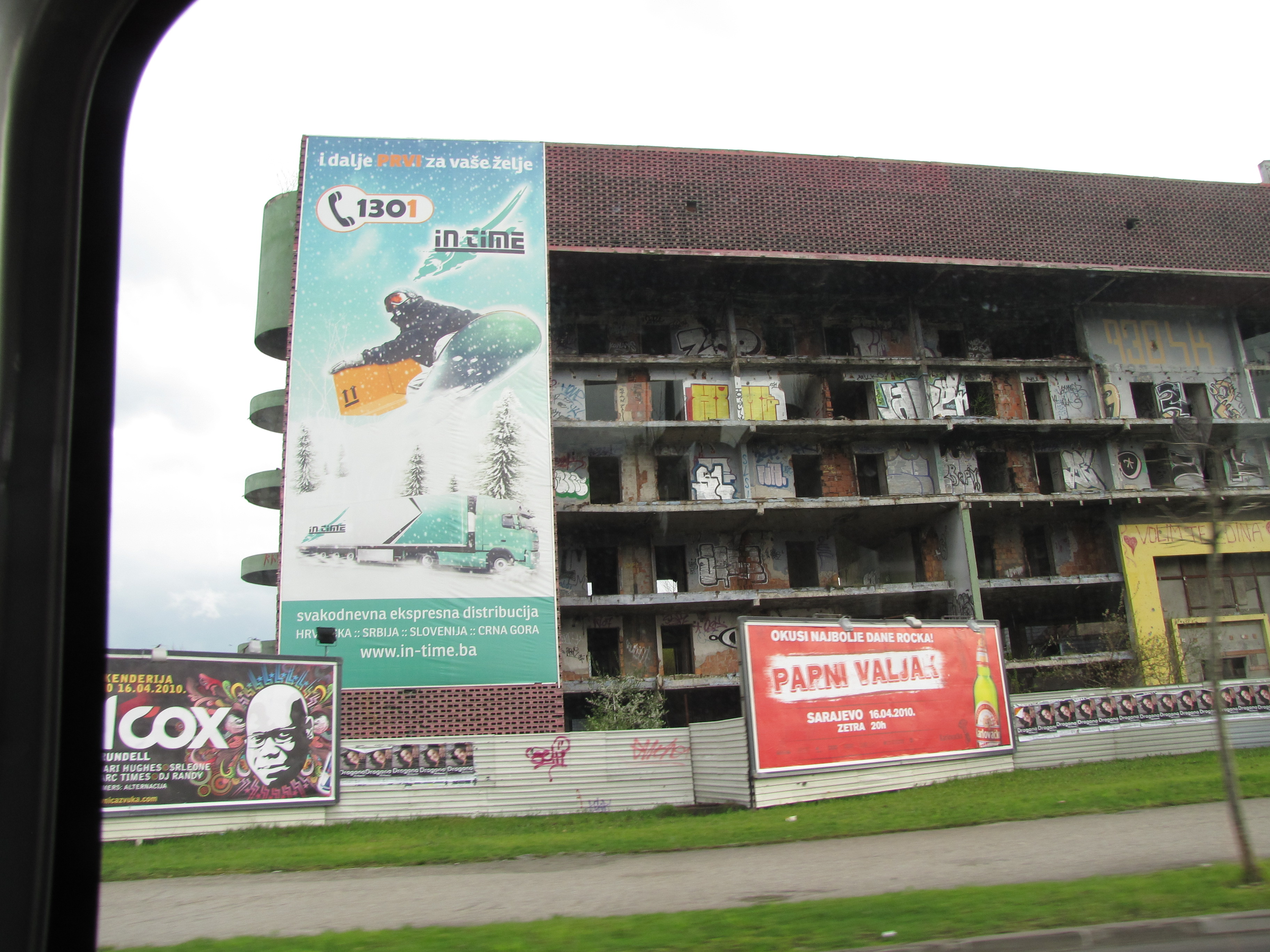
17. The giant clubSome buildings looked like a giant had clubbed them on the shoulder, and parts of Sarajevo had been thoroughly trashed.IMG_1180
That’s where you see the whole face of large building taken off, rooms with three walls, exposing every bit of intimacy within. Lord knows what Vukovar looks like.

But there wasn’t so much of that here really. And, of course, after 15 years why would there be? But to some degree this seems to have been a small arms war: automatic rifles, rocket-propelled grenades, machine guns and mortars.

It was at the market where we stopped on the very first day for a cup of tea ten days earlier that I first noticed these spatters of holes, sometimes in a line sometimes not, across the walls of buildings. There might be a black smudge and things that looked like reverse buckets of mud thrown at walls so that some of the entrails of the building were showing.

18. Shellfire with shrapnel spatterCould it ever be polite or appropriate polite to say: Hey Don. See those. Are they bullet holes? The correct answer is probably no. But another answer could be: No. Not regular enough. Mortar shrapnel. Not polite, but it started to fascinate me.

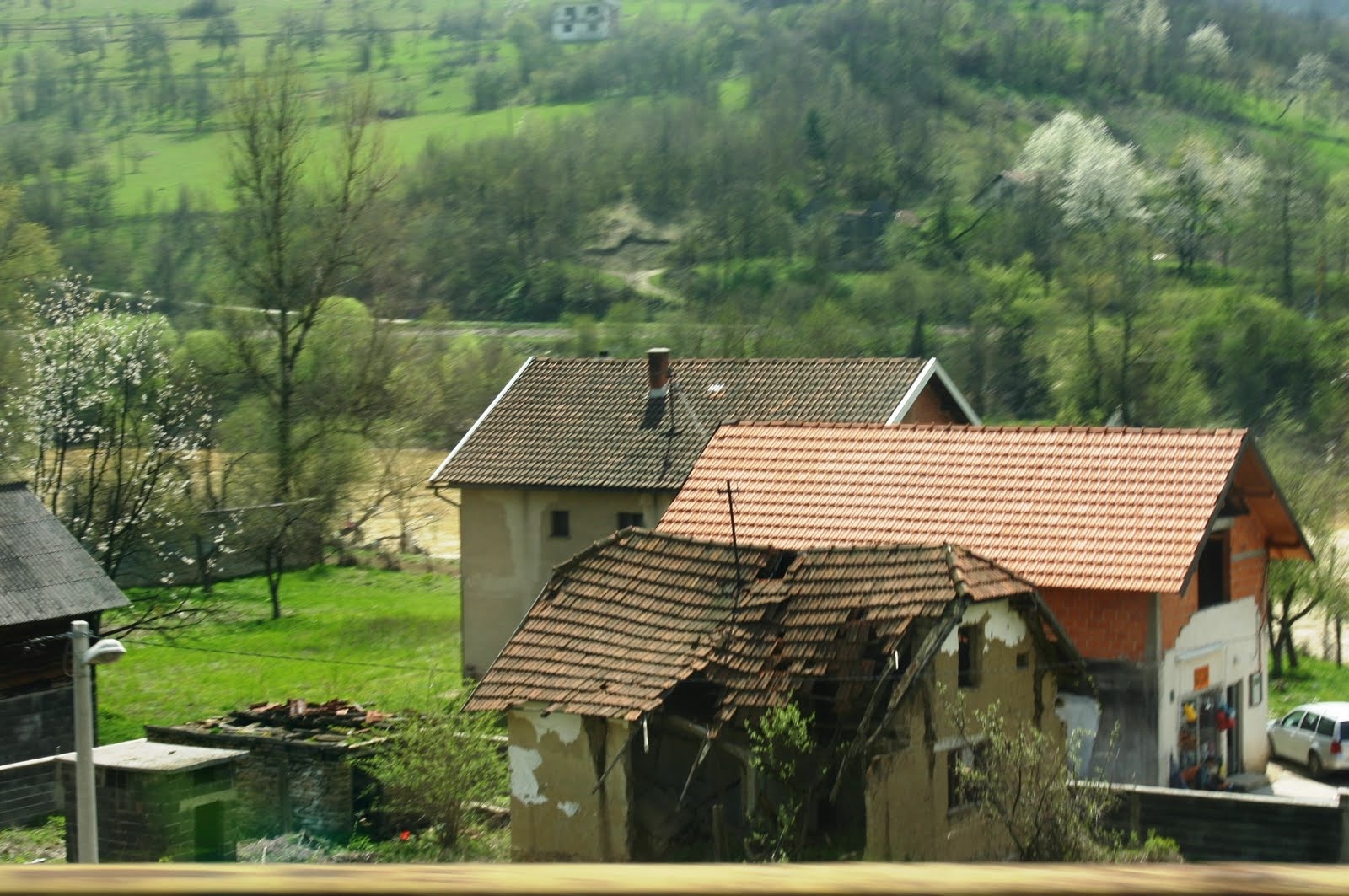
We would drive round a corner and there in the crease of a hill or the bottom of a valley would be a clutch of houses two of which didn’t look quite right and you wouldn’t be exactly sure why.

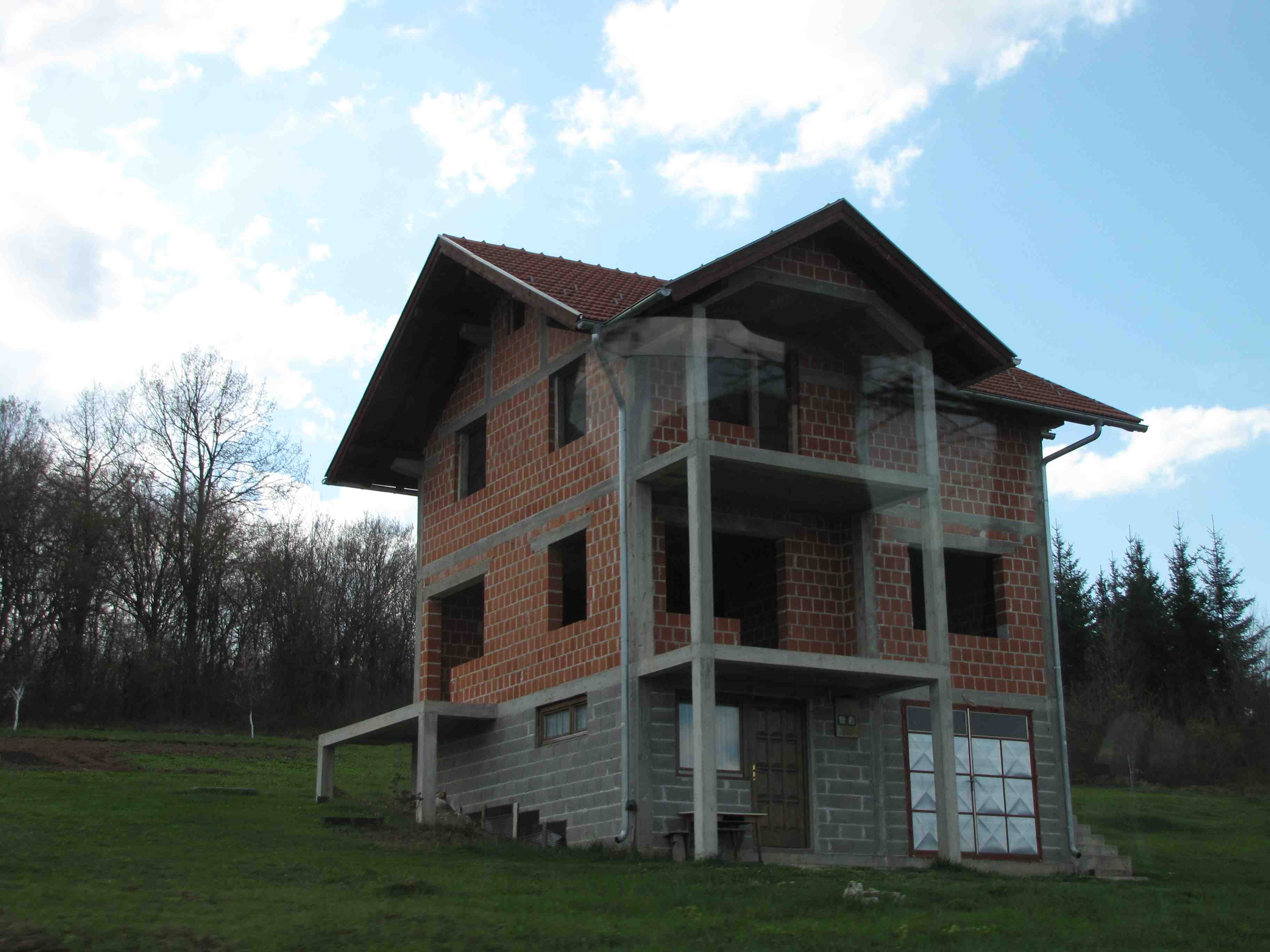
Almost all of the more contemporary houses we saw in the Balkans were built in an identical way — a concrete frame, poured on site, members in section about 250mm by 250mm, filled in with honeycombed terracotta insulating bricks. These bricks are a great material (and ubiquitous in Europe), easy to lay and to break and form, very effective insulation and an excellent base for rendering which, when painted, looks very classy.19. Croatian building

But quite often the builder, who would here very often be the owner and/or his mate/s, gets the windows and doors in and leaves it like that. It’s perfectly liveable. You don’t need the render, or the extra storey or the extra wing (which are still open frames). So the difference between an unfinished house and one that has been hit by a mortar shell is not always straightforward.

The roof often doesn’t get blown off and it is by the smudge around the window holes that you can tell that something untoward has happened. I decided that the houses were often blown out rather than up, becoming unliveable rather than destroyed. Also it was far more common to burn them which had the same physical effect.[2] But then there are these lines of holes, dints really, more than you could possibly count; and the big splashes which might or might not pierce a wall.

Agrokor had found us a hotel in Sarajevo but it wasn’t the one we tried to register at. Didn’t matter; they found us some rooms and after eating nothing all day Don was able to retire.

The Hotel Europe was quite grand, hosting an international conference on terrorism, and the people at breakfast were an extraordinary amalgam of bits and pieces from all over the world, and perhaps beyond. The residents did look just a tiny bit like those of the Inter-Galactic Cafe in Star Wars.

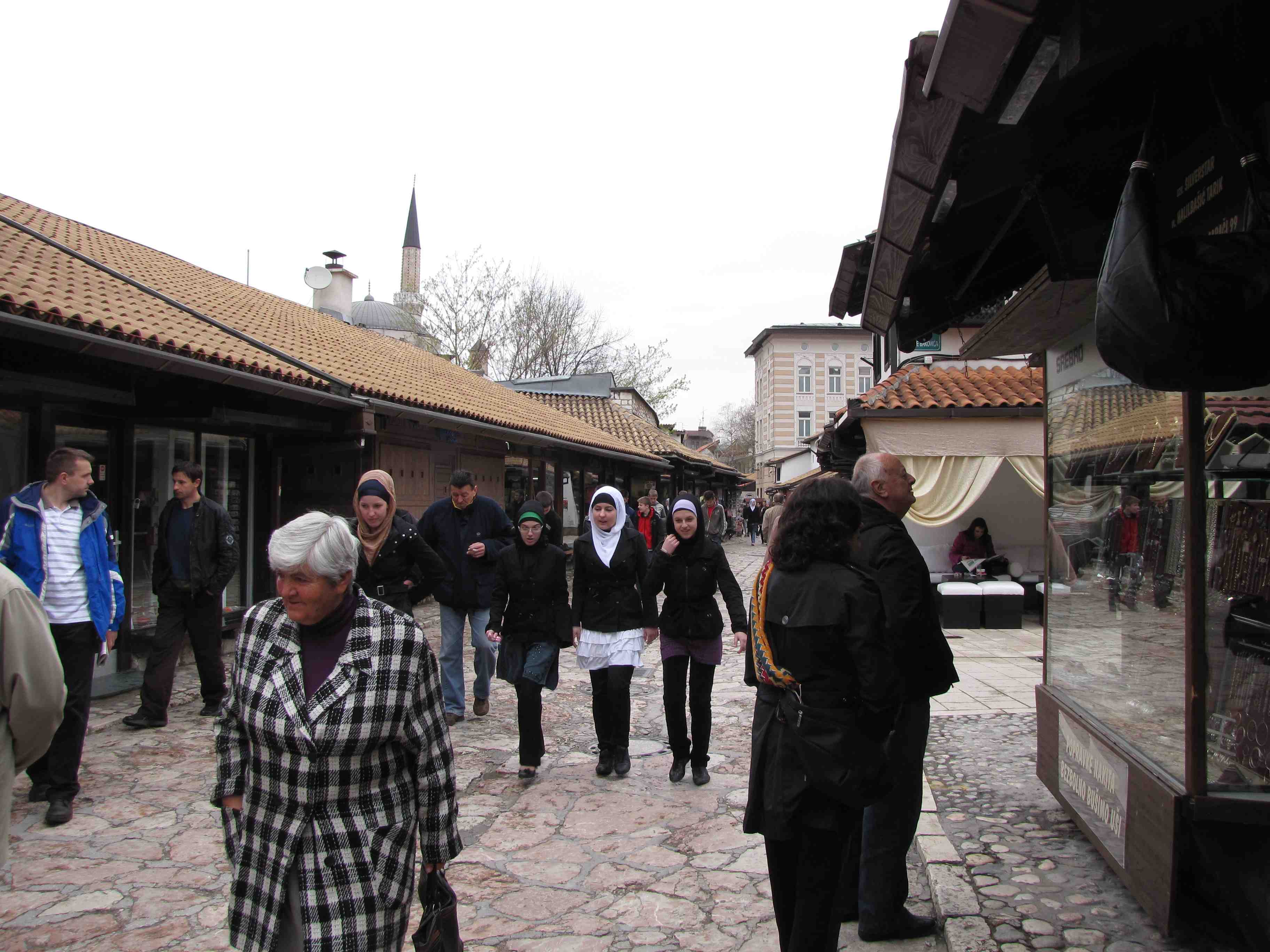
Although the older gentlemen’s stomachs were still a bit restless, with Dina leading the way, we ventured out to find something to eat. On the doorstep was the Muslim market, the old city which was not like ‘old cities’ we had seen elsewhere. It’s low for a start, tent height almost, hundreds of small red-tiled roofs, irregular paving, minarets, hemispherical domes, hijabs, beggars, families of beggars, coffee shops, blocks of jewellers and brimming with vitality.22. Mike and Myrna in the Bazaar Sarajevo

Sarajevo was an important outpost of the Ottoman empire from the 1500s until 1878, a major market town and port of call for travellers. Saray in fact means ‘rest place’ in Arabic. There are suburbs of grand art deco buildings, there are significant churches, there is a bit of everything. Sarajevo would repay far more protracted attention than we were able to give it — an amazing place.

In the market there were two dozen cevabdzinicas within a few hundred metres and in this welter Dina found Zeljo for us. Zeljo is famous, so famous she needed to take a snap and send it to her friends immediately.

Just baked flat bread straight out of the oven filled with small spicey lamb patties and pickles, presumably a cevab. Don’t ask for anything else; they don’t sell it. But, as often with specialisation, they had perfected the art.

I had spent some time and effort trying to get some Bosnian Marks out of a hole in the wall so we could eat, and I paid the guy the equivalent of ten dollars for feeding the four of us and tried to give him a bit extra we’d enjoyed it so much. But no way; he was disgusted. You don’t tip at McDonald’s either I guess.

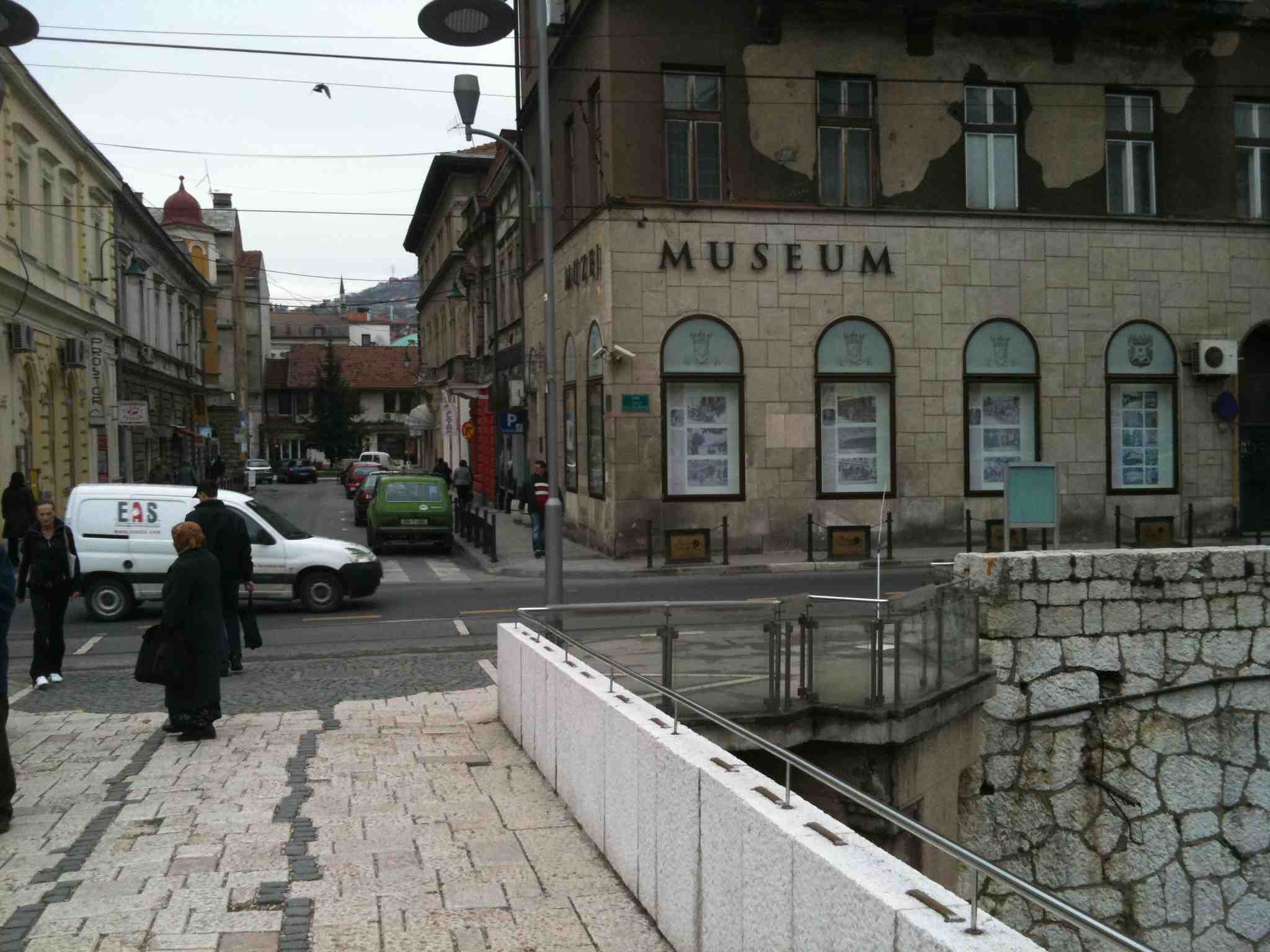
In the morning we went searching for the place where the lives of Gavrilo Princip and Archduke Franz Ferdinand intersected.

21. Princip's cornerIt didn’t take long; we were staying 50 metres away. It’s a nondescript corner to be the site for the incident which sparked the First World War, but there it was — a narrow if major street running alongside the trickle which is the Miljacka River, crossed by a narrow bridge called the Latin Bridge, then popularly the Princip Bridge and, more latterly, when Gavrilo’s status was changed from hero to terrorist, the Latin Bridge again.

Rebecca is extremely good on what did happen in Sarajevo that day — St Vitus’s Day 1914, the 525th anniversary of the battle of Kosovo and thus, of course, why didn’t you realise it, a holiday. The leader of the plot was ‘a man of undoubted talent but far too picturesque character, Dragutin Dimitriyevitch known as “Apis”, who had for some time been the Head of the Intelligence Bureau of the Serbian General Staff.’

He collected a group of disaffected lads keen to make a name for themselves and fitted them out with bombs, pistols, and prussic acid to take occasioning death if they were caught. (Chabrinovic took his and it didn’t work.)

The commander on the ground was Illic who couldn’t make up his mind whether he wanted to be involved or not and at one point fled to Brod hundreds of kilometres away. As it was he organised things so that he would take no actual part.

Six others were involved, stationed at various points along Obala Kulina Bana, the street running along the embankment of the Miljacka and the path of the procession.

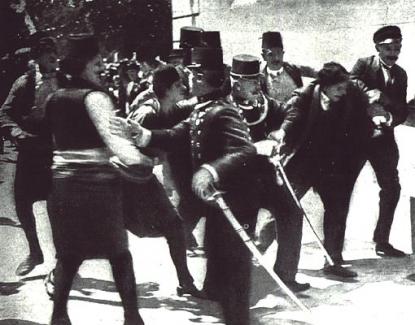
Basic (say bussitch) didn’t throw his bomb and ran for the station; Chubrilovic, who was supposed to finish things with his revolver after Basic’s bomb had exploded, froze; Popovic did nothing either because in his excitement he had chosen to stand next to a policemen; Chabrinovic threw his bomb but it went high and wide, missed everything and exploded down in the water. Princip heard Chabrinovic’s bomb explode and thought it was all over, so when the royal car went past intact he was stunned and went off to have a cup of coffee. Grabej, the last in line, also heard the explosion and fearing capture moved on.


thPrincip finished his coffee and, walking home, saw the royal car stationary where it had stopped for the driver to get out and investigate what was going on. He took the chance to throw his bomb.
IMG_1185

What can you say?1304844520T42kcc

What happened then?

The Serbs had been actively involved in kicking the Turks out of the Balkan Peninsula[3] and had gained independence as a nation allied with Russia after the Russian-Turkish war of 1878. At the same time, the Austro-Hungarian empire, with Germany as built by Bismarck waiting in the background, was actively seeking influence over the same area, annexing Bosnia and Herzogovina in 1908. So a Serb throws a bomb which kills the next in line to the Austrian throne. The Austro-Hungarians send a letter saying, abase yourself Serbs. Let us run over your justice system and your army etc etc. Reply within 24 hours (initially because of clerical error, 23 hours). 

Serbs say, hmm gosh sorry, it was bad, wasn’t it. But we can’t do all the things you want. We’re a sovereign nation. Austro-Hungarians say, right. Youse are gone.

Russia has a treaty with Serbia and is only too happy to mobilise its army because it has deep suspicions about what Germany is up to. Germany gratefully considers this an act of war against its own treaty partner. France is allied with Russia and, with the Germans invading Belgium as the shortest route to Paris, finds it difficult not to honour this treaty. Britain has a written ‘moral obligation’ to come to France’s defence and is concerned about potential threats to the scale of its empire. Where Britain goes, so go her colonies. The Turks wanted at least some of the Balkan Peninsula back. Australians were ordered by British idiots to fight the Turks at Gallipoli. We’re all connected.

Four years and 9,721,937 deaths later …

I wanted to stay longer, but we were on the move.

Bosnia-and-Herzegovina-poliDon had decided on the scenic route home. His Grade 4 teacher had brought him here on an excursion and he wanted to retrace his steps. There was also some famous cheese to be bought on the way — smoked, salty, to be rolled in bread crumbs and fried like saganaki.

We had our moment with the Bosnian police who thought that Don may have been travelling excessively fast. Don talked and smiled and explained he was driving at exactly the same speed as the driver of the truck in front. Why had we been singled out? It may have been the Croatian number plates.

It was dramatic country. We were up among alpine resorts which always look a bit the same in season or out. I missed taking photos of huge karst cliffs, deep deep valleys and new hydro electricity works. My memory in the main is rolling back and forth as the van hurtled round the curves. We stopped for a pizza and it was Myrna’s turn, finally, to be sick.

In the second stanza of this journey we had climbed up onto a high rolling plain and back two hundred years — tiny landholdings, ploughing with horses, old ladies collecting their bundles of sticks, lots of war damage to houses which had never been much to begin with.

We had entered Republika Srpska and here at least it had the look of grinding poverty.

Banja Luka surprised me with it size. It has a quarter of a million people, about the same number as before the war, but the makeup is different.

It was of Banja Luka that Michael McCurry, US State Department spokesperson, said: ‘We have said for some time that we have credible information that ethnic cleansing is taking place there.’ And from that point ‘ethnic cleansing’ entered the world’s vocabulary.

About 6,500 of the 73,000 Croats who lived in Banja Luka prior to the war remain. Nearly all of Banja Luka’s Bosniaks were expelled during the war and all of the city’s 16 mosques were destroyed.

From Banja Luka to Gradiska which figures in so many stories of the war the narrow two-lane road was jam-packed with traffic, houses on either side for much of the way.

We all just wanted to get home to Zagreb at this stage. I was wondering how far we would get before Myrna’s stomach packed up altogether. We couldn’t go any faster and anyway had to get through border control before we crossed the Sava back into Croatia.

This happened, Don regained his grin and composure, the road widened, we got to the freeway, we sizzled along through mechanised, industrialised broad acre farming on carefully graded and irrigated paddocks, and we made it back to the safety of Trnje.


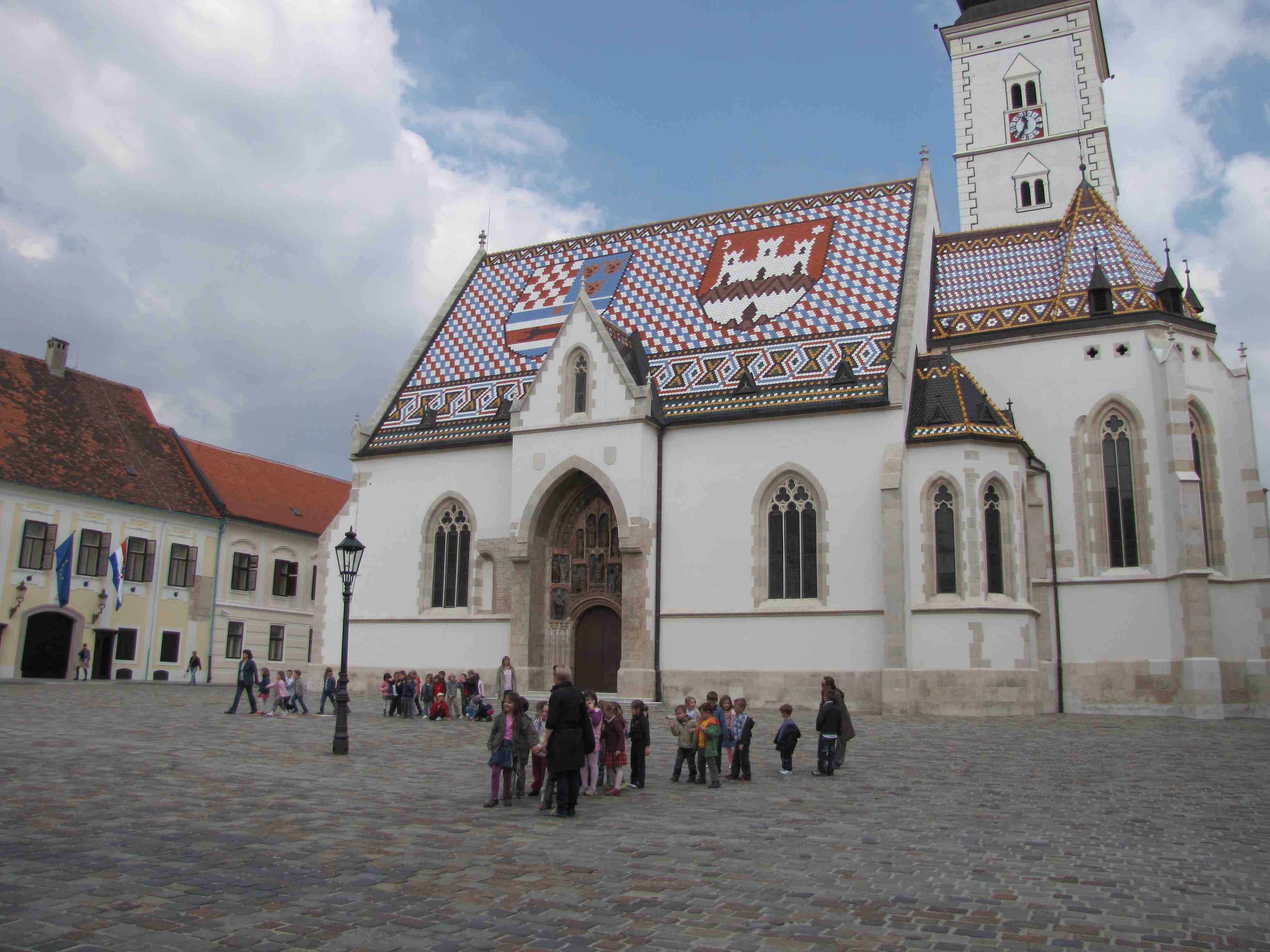
25. oral exam for juniorsZagreb[4] trails east-west along the Sava in a shallow, fertile and closely-settled valley. There is much evidence of design in its formation. A map hints at something like a shield with a north-south axis that begins at the Catholic Cathedral (and its more lowly Orthodox counterpart) in the foothills of the larger undulations to the north and is pursued through acres of squares, both cemented and garden, named after heroes of the nation — Jelacic (Dubravko demurs. No hero[5]), Strossmeyer, Tomislav, Radic, with Starcevic slightly asymmetrically placed.

A long row of shops will take you under the station and the rail lines following the contours of the valley to a series of recognisably anonymous buildings, administrative and cultural (the Lisinski Theatre). Cross a six-lane highway, the way to what’s left of Vukovar, and you’re in Trnje.

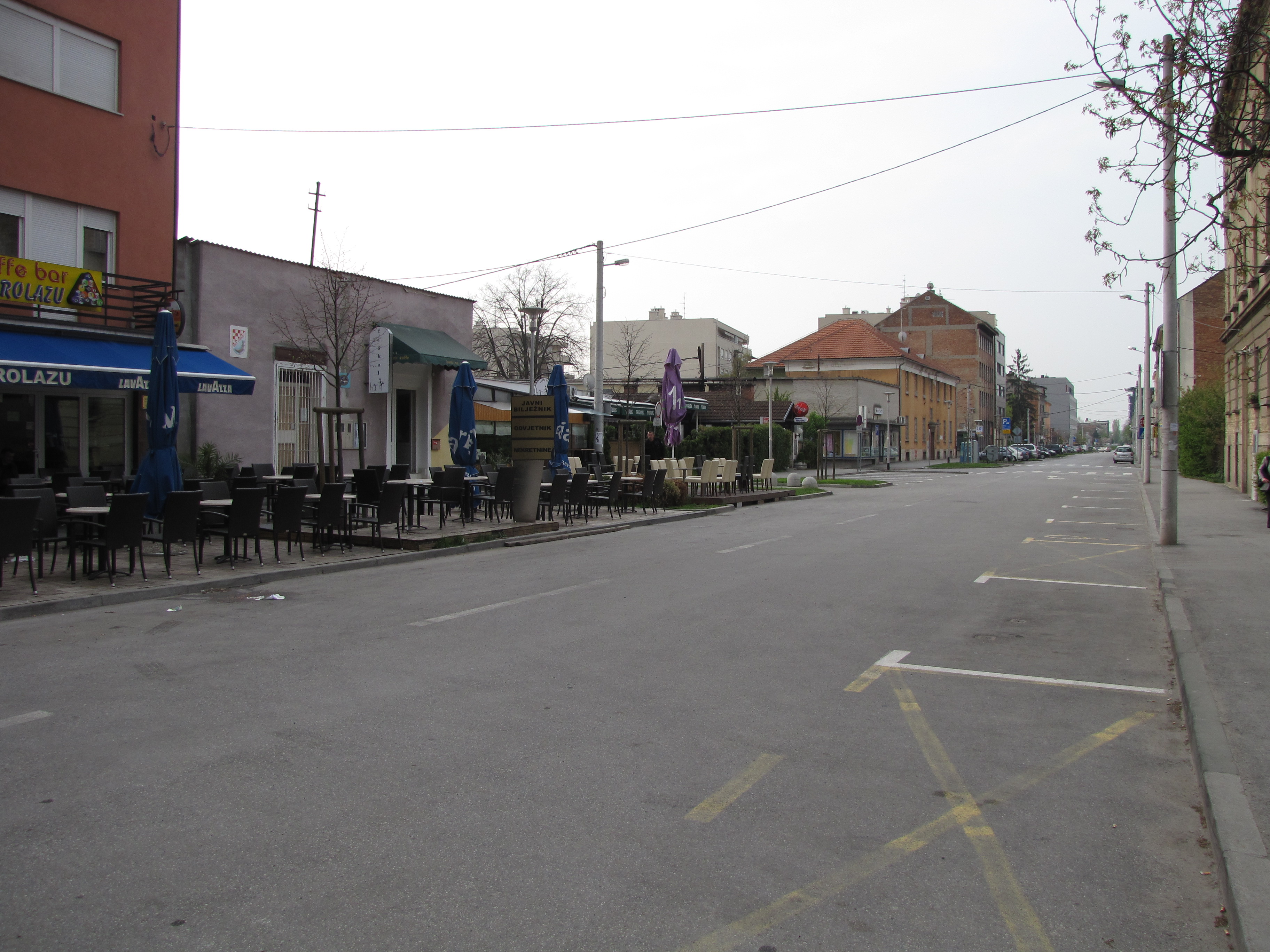
IMG_1246Trnjanska cesta (road) is a broad, open street and, one street back from a busy major road which sizzles and hums with traffic 24 hours a day, curiously quiet and still.

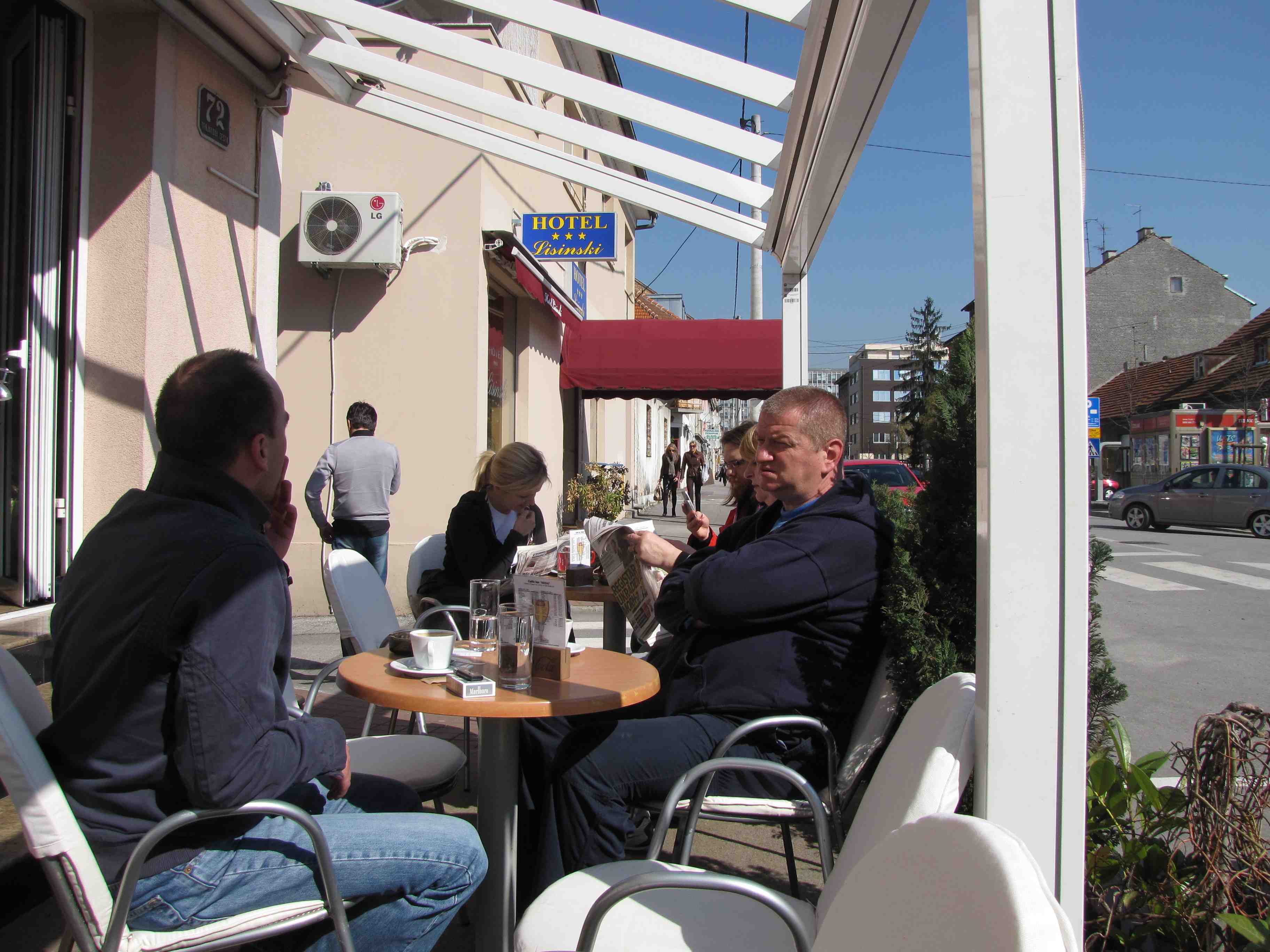
It contains the Hotel Lisinski, three star, walls of cardboard but clean. It has a blond hostess with some remnants of glamour and not much inclination to provide assistance and a host who is perky and understands his role goes beyond collecting the tariff.

24. Trnjanska cesta- first cafe barNext door is one of the four café bars in the street. Good service, nice coffee. The female custom here is inclined towards white jeans and heavy makeup, the male clients mostly have sharply-cropped hair, leather or denim jackets and big shoulders. This café bar is full in the mornings, the custom in the others seems tepid. (This may all change in summer. The mornings are sunny but the wind is fresh. I’m not sure where the custom comes from. I can’t tell.)

There is a tobacconist, a grand hole in the wall rather than an emporium, meaning that the two central Zagrebois requirements for life, coffee and smokes, are catered for. There are two tisaks, newspaper/mags kiosks which I never saw patronised, and a lottery shop. The well set up school supplies store is a surprise. I didn’t see any kids. Across the road opposite is a second world shop: cooking utensils, kid’s clothes and cheap things you don’t really need — a 10 kuna (2 dollar) shop.

There is a pizza store which feels no need to advertise itself as such and a ‘market’, a convenience store tucked down in an alley off the street. That’s where I bought the dry biscuits and lemonade required by the invalid and then lay back into one of the Hotel Lisinski’s comfortable beds and watched Croatian television.

A new day: Mike was on his way home departing late in the day. We strolled around the very pleasant inner city of Zagreb. 26. Separation of church and state, ZagrebAt night we walked up Trnjanska cesta and had another visit to the brisk matrons of the Trnjanska Restoran where we began, again with the sublime lamb.

We were just finishing the padacinka s marmaladan (pancakes with jam, how long had we waited …) when a distinguished-looking Australian gentleman walked into the restoran with a raffish-looking Croat and told us what we knew, a volcano in Iceland had erupted, but they had some additional news as well.28. Ash cloud descended- a study in yellow


That would be one place to finish, a cliff hanger. No one knows what’s going to happen, or for how long. No one. The whole shebang is closed down. You might be there for good unless you want to swim home. Tenuous. You’re a traveller. You’re on shakey ground.

But there is a better way, more of the flavour of this particular adventure.

30. The octopus- doneI could say that we all spent a day with Don and Mirjana and Katica and Darko at the cottage, and that Don’s beaming smile had returned and that he was at peace with the world, and that Darko had brought an octopus that the boys were going to cook under a bell[6], and that Katica magicked up some other remarkable dishes while Mirjana sorted out the gardening, and that Don had dug out some of his best wine for us to drink, and that the sun shone, and that we went for walk on a verdant hillside brimming with life, and that we talked about absorbing things with very interesting people who were thoroughly engaged with the world, and that there wasn’t a moment of that day I didn’t enjoy.

That would be more like it. Like some idyllic scene in a French movie. And that’s good because that’s just how it was.31. The French movie

Next morning Myrna and I left for Ljubljana on a train completely unaffected by the ash cloud. Mike remained in Zagreb and got home five days later.

Slovenia comes next in transit to Venice.

•••••••••••••••••

[1] I’d forgotten that the 1984 Winter Olympics were conducted at Sarajevo. Saporro got more votes in the first round but Sarajevo won after Gothenburg was eliminated. The torch was taken by two routes: Dubrobnik — Ljubljana — Zagreb — Sarajevo (the Slovenian, Croatian route), and Dubrobnik — Novi Sad — Belgrade — Sarajevo (the Serbian route). How did Tito manage to keep this place together for so long? I suppose with gambits like this.

[2] In the first few months of the early Serb incursion into Croatia, 140,000 homes, one-eighth of all the housing stock in Croatia, were destroyed.

[3] With Russia and satellites in 1878; and with Greece, Montenegro and Bulgaria (an unlikely but contiguous grouping) in 1908.

[4] Rebecca: Zagreb was not a strange city at all. It has the warm and comfortable appearance of a town that has been well aired. People have been living there in physical, if not political, comfort for a thousand years. … It has the endearing characteristic of remaining a small town when it is in fact quite large.

[5] Rebecca agrees with Dubravko: [in 1848, the year of revolutions] ‘Yellachitch [she spells names phonetically] and the Croats [army, 50,000 troops] had saved the Austrian empire. They got exactly nothing for this service except the statue that stands in Zagreb market square.… Instead of giving the Croats the autonomy they demanded they now made them subject to the central government. They freed them from Magyarisation [Hungarian domination] to inflict on them the equal brutality of Germanisation. And then, ultimately, they practised on them the supreme treachery. When the Dual Monarchy [‘Austro-’ and ‘Hungarian’] was framed to placate Hungary, the Croats were handed over to the Hungarians as their chattels. I do not know of a nastier act than this in history.’ But such things seem to have happened to the peoples of the western Balkans much more often than seems strictly necessary.

[6] A tip from Darko. If you want to cook octopus keep it in the fridge, take it out, put it back in etc. The changes in temperature weaken the external membrane and make it more tender.

ELSEWHERE 2010: Croatia. Don’s party

A cup of coffee (long macchiato): 6-10 kuna ($A1.20-2.00)

Fifteen degrees of latitude make a big difference. Even before we landed the striking thing about Zagreb was the advent of Spring and the swathes of green. Verdant, both figuratively and literally. Don and Mike were waiting behind the airport glass for us with big cheesy grins and if our luggage had arrived with us it would have been one of the great arrivals. Don carted us off to our hotel and then to the Restoran Trnjanska to meet the folks.

There was a lamb on the table — just look at it — a lamb which during its short but very happy life had only eaten mint and rosemary while lying under an all spice bush when not doing exactly the right sorts of exercises (squats and single leg balances). It hadn’t died (died? So harsh. Passed away) so much as expired gently from inhaling so much floral perfume. With its last expiration it was heard to say, Frleta. I must be taken to Frleta. And so it transpired. It was the black lamb, to be eaten with black wine, and there was Don, the grey falcon. It had happened already. Just as foretold. (And what a lamb! Dripping onto the tastebuds.)1. Mike, Frletas and the black lamb

It was a very merry meal as such things are (these very smart Croats were multilingual), and after the second carafe the subject turned to tradition as, indirectly, it often did.

What traditions do Australians have? The criteria were stiff: involving the whole community, clothing, food, activity, maybe a holiday but not necessarily. The church might be playing a role.

Mike manfully proposed Christmas Day and New Year’s Day, but they didn’t quite seem to work. A bit unfocused, a bit non-nation-specific, and maybe a bit too much thongs and the beach. Then, like the racing man he is, the Melbourne Cup. That caught their fancy. A horse race! Extraordinary. What an interesting country we must come from. I said Anzac Day just to try out the idea, but these were all starting to sound very constructed and of sectional interest only. Nothing like May Day in France where the only people working are muguet sellers (I hope I’ve spelt that correctly, Lily of the Valley) and everyone has a bunch; or the particular style of hens’ night that electrified St Agreve when we were there and involved every female member of the population between 16 and 30 (not a big group, but still). Coming home from Don and Mirjana’s cottage on a Saturday night we saw several big groups in regional costume off for music and dance. At Radovici, which means I suspect ‘town of Radovices’, Mr Radovic showed us his family tree (sans women possibly for reasons of space, actually predilection). This went back to 1568 from memory, and during that time this family and all their first sons called Pero had maintained a presence right there, on that ground.

What sort of wrench must it have been for all those families in similar circumstances from northern Greece (not far from here) and southern Italy (ditto) to come to Australia on the completely invisible and so so far away other side of the world? Current Pero, our host at Cavtat, had a traditional wedding and the photos show that to be no small undertaking. Serbian history has St Vitus’s Day 1389 as a major marking point. Maybe the absence of those traditions provides the new world with a freedom and cultural licence that would otherwise be unobtainable. What did those Italians and Greeks (and Indians, Chinese, Sudanese, Maltese, Hungarians etc ad inf) choose to do when they migrated? The answer is not automatic.

We climbed into the Opel van in the morning and tootled, roared really, down the highway, past very closely settled clusters of houses (more so than in France or Italy). They couldn’t have been working the land; there wasn’t enough land. Don suggested they were families still living together, commuting to the bigger cities or other places for work. Only in the most general terms did I know where I was or where we were going. We found a cup of tea on the periphery of a busy market. Somewhere. Don’s GPS was consistently overridden by help and advice from the locals and after a few false starts we found ourselves at a spring near Otocac (if you care, say ortochack. I haven’t got the right accents on my keyboard and it wouldn’t make any difference for most of us if I did.)

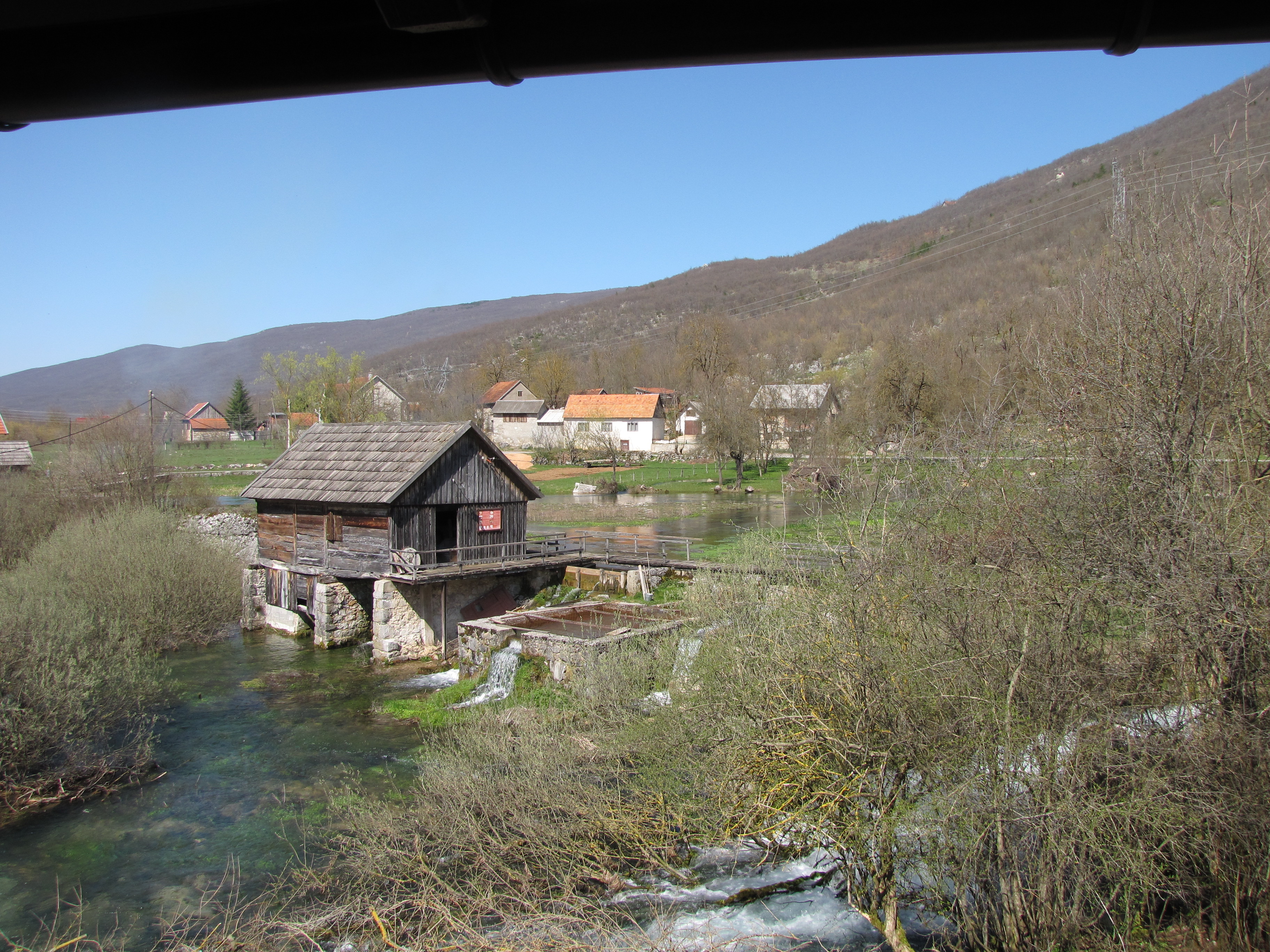
IMG_0979Its splendours were hidden for a time but the more we looked the more spurts there were out of the limestone walls and the more dramatic and complex the geography. And then! The fish. I wasn’t sure the restaurant was a restaurant. Don thought it was, so it became one. Simple.

There was no one else there but a guy appeared in a waiter’s costume. What did we want? What was good? Fish. We’ll have the fish. I don’t know where they came from, maybe out of the stream under our feet ten minutes before, but that’s what they tasted like. I haven’t tasted fish that good, and that’s what the food was like in Don’s Croatia.[1]

That night a shank from what may have been an elephant cooked under a cast iron bell, the next day soft shell oysters and fish at the ‘Captain’s House’, Mike’s enduring memory of his last trip to Croatia, the amazing food at Darko and Katica’s, the bizot night which deserves its own story. But we were going on to Plitvice (say plitvitsa). We got there on evening and already it looked pretty good, although we’d seen nothing. Ate the elephant shank[2] and, with an open window and cool air, slept well.

There were options for the next day, five ‘tours’ carefully constructed by the national park management. This is an organised country. We chose the long and rugged walk which turned out to be neither, and the others something shorter which to all intents and purposes was largely the same.

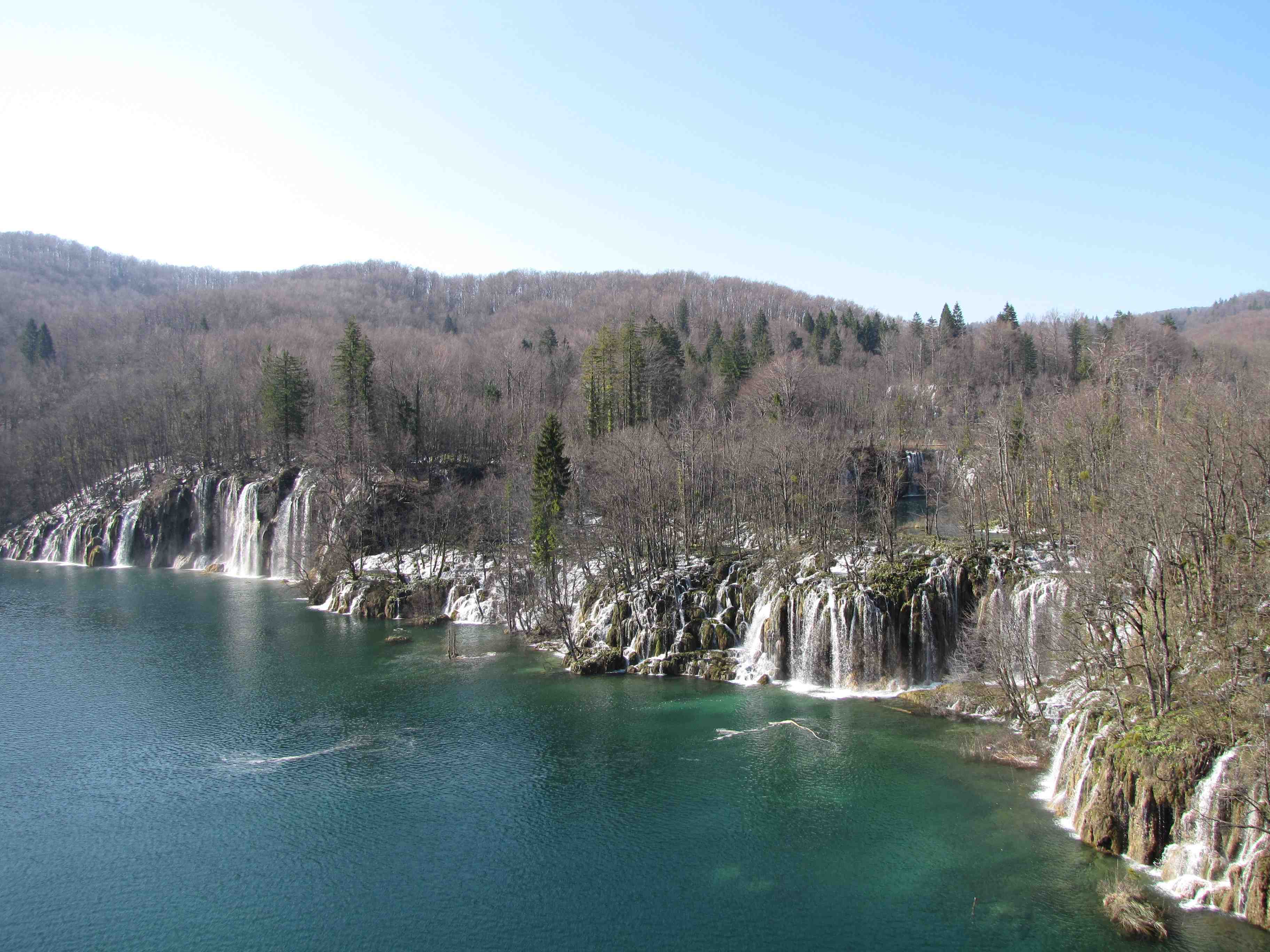
Our option started good and got better. At Plitvice there is a series of 16 lakes, two big ones and fourteen smaller, all rimmed by travertine, moss and other vegetation, spilling into each other. When we were there the water levels were about as high as they get and we started off on duckboarding through the lakes just out of reach of the water, completely still until it got to the rims where it started into these cascades of ribbons, corded veils. The water doesn’t wear the barriers away but contributes to their growth. This is very young travertine, the material used for the Trevi Fountain and much else in Rome where it is highly prized for its texture. There are hundreds of small waterfalls (slap in Croatian) and several dozen larger ones. But this is water in every imaginable pose, in every conceivable line of beauty. The lakes were Mozartian in their tinkling harmony.3. Plivice upper lakes It didn’t hurt that it was a sunny and very mellow day. We walked for several hours piling delight on delight — complex, elegant, exquisite, feminine. We had a sit down for a while with a bit of bread and cheese cozened from breakfast and I thought, well that’s it. Don’t care what else I see. That’s enough. A very pleasant boat ride took us through the long lower lake and down to some additional versions of what we’d already seen. We were following our noses, and our noses took us down a track that might or might not have been closed. It was submerged but just for two or three hundred metres with very sharp pieces of limestone under (bare) foot and our sticks were very useful to take a bit of the pressure off. I note this only because there were a number of older local women coming back the other way carrying children on their shoulders apparently unconcerned.

There were larger crowds down this end of the system. Buses had pulled in somewhere with crocs of Japanese improving their strike rate for attendance at World Heritage Areas. One lake, another lake, just variations on the gornja jezera[3] and then, just as I was thinking there was no need for a grand gesture, kazang! The big one. Veliki Slap. Big slap. Big waterfall.[4] 3. Veliki Slap- PlivitceBecause they were there, we climbed the 560 steps to the top and with a rainbow accent the spectacle looked like the background of a particularly good renaissance portrait. One for the men — massive, simple, direct.

But there was something else. Plitvice, the area, also happens to be the site of one of the first actions of the ‘90s wars. A national park? Why would you choose to promote a war in a national park? The same reason, presumably, you would choose to bombard Dubrovnik, another World Heritage Site. A more salient question is why would you want to promote a war at all?

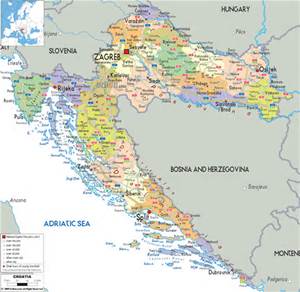
CroatiaCroatia is shaped like a bent arm. The forearm is the rocky mountainous Adriatic coast (Dalmatia, ancient home of the Illyrians and dogs of a certain type). It has a constellation of islands, extensions of the karst ridges of the mainland. Dubrovnik is almost at the point of the extended finger, the southernmost point. Croatia’s share of the Pannonian Plain (to the east called Slavonia, but not Slovenia or Slovakia), flat, and rich and lush as a matter of course, is the upper arm. Bosnia and Herzegovina with a population of 4.6 million, just a few more than Croatia, fits uncomfortably in the crook of that arm. Serbia joins at the shoulder. Physically, Serbia is half as big again as each of the other two and has a population of 7.35 million. But these are arbitrary boundaries, historical playthings.[5]

Not so long ago these three countries along with Slovenia, Montenegro, Kosovo, and whatever that bit of Macedonia is calling itself these days were for a time Yugoslavia, the nation of the Southern Slavs. The State of Slovenes, Croats and Serbs and the Kingdom of Serbia became the Kingdom of Yugoslavia on 3 October 1929. This amalgamation stumbled along until the Axis powers invaded in 1943 and the arrangement was suspended. German troops occupied Bosnia and Herzegovina as well as part of Serbia and Slovenia, while other parts of the country were occupied by Bulgaria, Hungary, and Italy.

From 1941-45, the Ustashe (say ‘youstarshi’) regime (installed with the support of the Italian Fascists as the government of Croatia) killed an uncertain but huge number of people. Two hundred and fifty thousand were expelled, and 200,000 forcible conversions to Catholicism occurred. The victims were predominantly Serbs, but included 37,000 Jews. The communist Partisans (in which Croatians, including Don’s father, played a significant role) and the Royalist, largely Serbian Cetniks (‘Chetniks’) led the fight not just against the Germans but against the Ustashe as well. The Partisans proclaimed a Federal Republic of Yugoslavia during the war adjusting the name slightly in 1946 at the war’s conclusion. The dominant Yugoslavian political figure for next 30 years was Joseph Broz, ‘Tito’, communist, Prime Minister and then President from 1943 until his death in 1980. His father was a Croat, his mother a Slovene. The capital of Yugoslavia during this period was Belgrade in the ‘Socialist Republic of Serbia’. Yugoslavia began to dismember itself in 1991 when Slovenia chose an independent path.

This can become confusing. Croats and Serbs speak languages which can be distinguished but only just. Serbs use Cyrillic script; Croats the Latin. (In southern, predominantly Croat, Bosnia the alternative Cyrillic rendering of place names on road signs was frequently blotted out by spray cans.) Serbs tend to be aligned with the Eastern Orthodox church; Croats are more likely to be Catholics. Serbs live in Serbia, B&H and Croatia, though not as many as in the past. Croats live in Croatia, B&H and Serbia, though not as many as in the past. This is the part of the world which provided the term ‘ethnic cleansing’. Some Croats also live in Slovenia with which they share a border (and a script, if not quite a language). Serbs have never been very involved with Slovenia which is one of the several reasons why Milosevic didn’t make much of a fuss when it sought its independence.

Under the ‘Dayton Accord’ with which the formal status of the 1990s wars concluded, Bosnia was divided into two, Bosnia and Herzegovina and the post war creation, Republika Srpska, which has its de facto capital in Banja Luka and which is made up of Serbs (ca. 88%), Bosniaks (ca. 8%) and Croats (ca. 4%). Muslims (‘Bosniaks’) are the largest group in B&H, although Croats are the dominant group in the south. The ‘Muslims’ reflect the strong influence of the Ottoman Empire in this region. They are at the bottom of the pecking order, the fall guys in popular jokes. In Australia their children would be going to Disadvantaged Schools Program schools, except of course in Bosnia they are going to madrassas. To be crass: Croatia, orderly, hard working, ‘Austrian’; Serbia, lively, messy, ‘Turkish’; Bosnia, a wreck.

The first blow of the ‘90s wars might have been a game of soccer in Zagreb between Zagreb Dynamo and Red Star Belgrade in May 1990. A riot erupted between the fans, a 16 year-old died after being stabbed and the Red Star players were lifted out by helicopter. But of more concern to the Zagrebois was the impression that their police were far more violent towards them than the visiting fans. Serbs were significantly over represented in the Zagreb police force at the time and the Yugoslav army was unquestionably directed from Belgrade by Serbs.

This hints at one, perhaps several, of the causes of the wars: in any relatively poor country (for example, communist Yugoslavia) the perception of favouritism in the distribution of jobs is rife. And the redistribution of income from the comparatively wealthy western areas to the less well-off east was not especially popular. The idea that officials, buildings and monuments in Belgrade were soaking up the money made from Dalmatian tourism recurs constantly in public comment recorded in the books I’ve read. But there is also something too about just who is in the police force and the army. It’s a certain ‘class’, who are not doctors and lawyers and academics and businessmen (occupational groups in which Croats were over represented), but who might want to throw their weight around especially with people whose ‘softness’ and ‘airy-fairyness’ they mightn’t respect.

Knin a town in the southern inland Krajina region of Croatia (and not so far from Plitvice) is where things initially came to a head. A large army base was located there headed by someone destined to become famous, Colonel Ratko Mladic. (His antecedent family was wiped out by the Ustashe. Round and round it goes.) Serbs living in this area of Croatia proclaimed the autonomous ‘Republic of Serbian Krajina’, a notion which spread around the crook of the arm to Slunj, Glina and Pakrak.

This all happened before the Serbian uprisings in Bosnia, a separate but related series of wars which included the Bosnian Croat shelling of Mostar to drive out the Serbs and the Bosnian Serb blockade and shelling of Sarajevo. And the destruction of Vukovar. And the slaughter at Srebrenica. And the ethnic cleansing of Krajina, where we were, by the Croats[6]. Tit for tat. Round and round.

Fifteen years or so is not much time to get over a war; and of course some places suffered vastly more than others. One thing I realised while we were there is that the actual experience of war must be very personal and local. Fifty or even 10 kilometres can mean the difference between the devastation of your life and not that much happening to affect you. I already knew that no one wins. Later, in a meditative moment over pizza at Trogir Don remembered how much he had enjoyed some of his times in Belgrade and how fun loving Serbs could be. He also said he thought the breakup of Yugoslavia was in some ways regrettable. What was left was a series of little countries which would always struggle on the wider world stage.

We weren’t in the war, but it was always somewhere in the background of the wonderful time we were having, frankly an essential part of trying to understand where we were. The war was no elephant in these rooms, but never less than a rat in the corner. I asked Don if a Croat could get work if he or she went to Serbia and vice versa. He thought for minute and then said, they’d need a very good story.

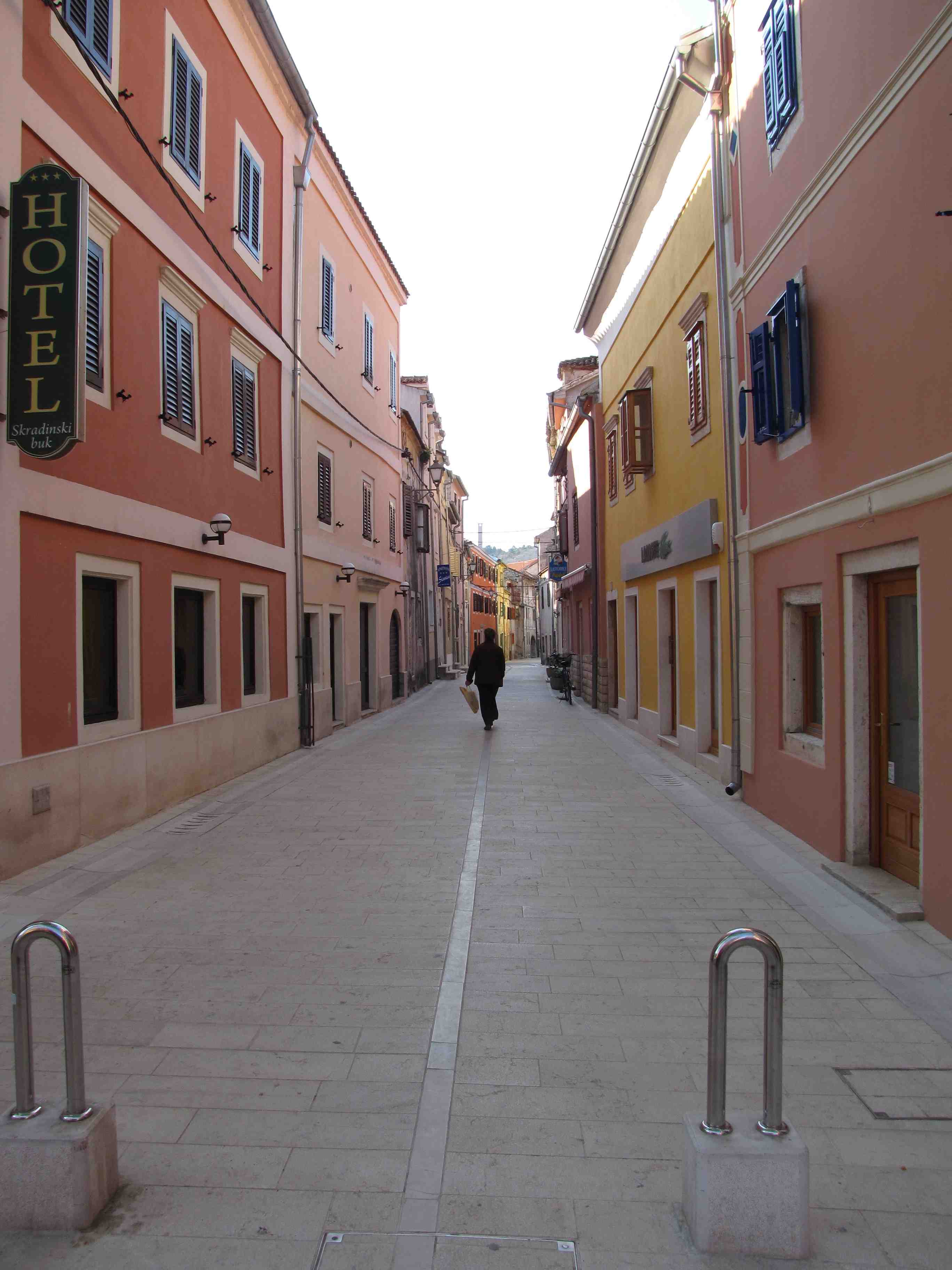
We went to the coast to Zadar to see some sea chimes, the motion of the sea driving air through things like organ pipes to produce weird songs. It also had an pleasing old city. We hadn’t seen one of those in Croatia yet, and St Donat’s, a pre-romanesque church dated from the 9th century. It could almost have been Syrian, still standing if inaccessible to the passerby, still round, still startlingly white. A version of dodgem cars was happening round its base. And then to Skradin, not on the coast but very boat-y, on the Krk[7] River and between two large inland bodies of water, the Visovac and Prokljansko lakes.

Skradin has been the seat of a Catholic diocese in the past. It might be because of its strategic importance. It is not because of its size.4. Main Street Skradin


IMG_0230It was everything that holiday-making tourists would want: small, comfortable, picturesque, so clean it almost seemed like a film set, boats, views. We went in search of the restaurant that Bill Gates ate at, as one would, and after a time discovered that Bill didn’t eat, he drank, and he drank at a cave which provided a very wide range of home-made liqueurs. Mike, Don and I reviewed fig, rose and zuzula (no translation available) and felt them to be satisfactory. But this was only the precursor to a dinner of soup, squid ink risotto, silver bream and bizot.

IMG_0227Now Don was aflame with the prospect of eating bizot. Bizot live at the junction, he explained, of the salt water and the fresh and are rarely available for consumption. His English failed him momentarily as he tried to explain what they were and their significance (huge). Only ever at this place! Very special. Long, thin … sounded a bit like eel. They arrived on the table. They looked a bit like eel. We had some. They tasted a bit like eel. Special of course. The most expensive thing I bought in Croatia.

We sat drinking in the sun in the Krka National Park where a series of karst ridges break the Krk river into yet more amazing rivulets (water-driven mills, handcrafts etc) and we talked a bit about the war. Don was working for the Ministry of the Interior at the time which would offer a particular perspective. But it wasn’t there he became conscious that something was going on. The Frleta family were on holidays at the beach and as usual on the way home they called in on some long-standing and close Serbian friends. Something was clearly up. Don was concerned about this and made efforts to investigate. They were after all old friends. After some prompting they indicated there was a story going round that what happened in 1941 (Ustashe-backed terror targeting Serbs) was going to happen again.

That’s how wars start; not clean declarations or obvious acts, but by establishing a climate where every available insecurity is quivering with vitality and sensitive to the slightest movement in the wind. Those mortal enemies the Ustashe and the Cetniks never fought each other, Don suggested. They just killed and terrorised civilians. Mirjana, Ivan and Dina went to Germany when things heated up, although Zagreb was never truly in the firing line.

IMG_1032The boatman with strong feminist leanings took us through the reeds and across the mirror surface of Lake Visovac. 5. Franciscan monastery VisovacThe first port of call was a Franciscan monastery on an island in the middle of the lake. We could visit, and did, a lapidarium, a collection of stones the centrepiece of which was a statue of a Madonna and child by the Croatian sculptor Ivan Mestrovic[8] which had been shot up by the Serbs.6. Mestrovic's Madonna- Visovac The Krk at and near Visovac seems to have been a front line for the war for a time. The church property of both sides was a particular target.

Besides a tome handwritten in Glagolitic script, the precursor to Cyrillic and a thrill to see, the monastery’s museum had a listing of the destruction and damage to Croatian church property in the area caused by the Serbs and another list with the names of all the Franciscan friars killed by the contemporary ‘Cetniks’. Next to these lists was a very carefully worded message which went along the lines of: We recognise the need for forgiveness as Christians and so on, but the bastards who did these things have not been brought to justice and this must happen.

Turning the other cheek might be the most radical and perhaps most contentious idea in the Bible.

We continued on to Roski Slap. It was okay, but we’d already and recently seen better. We got out and pottered around and as was so often the case Don had a little treat for us.7. Momma- Roski Slap We sat down al fresco and Momma (the Momma to end all Mommas; Mike with his usual keen commercial insight thought she might be valued at €1500 a day so good a Momma was she) provided us with fresh green olives, new cheese, 100 year old prosciutto, bread and local wine, and for some reason in a very competitive field this was one of funniest and happiest meals we had. No idea what we talked about. I just remember spending a lot of time roaring laughing.8. The Feed- Roski Slap

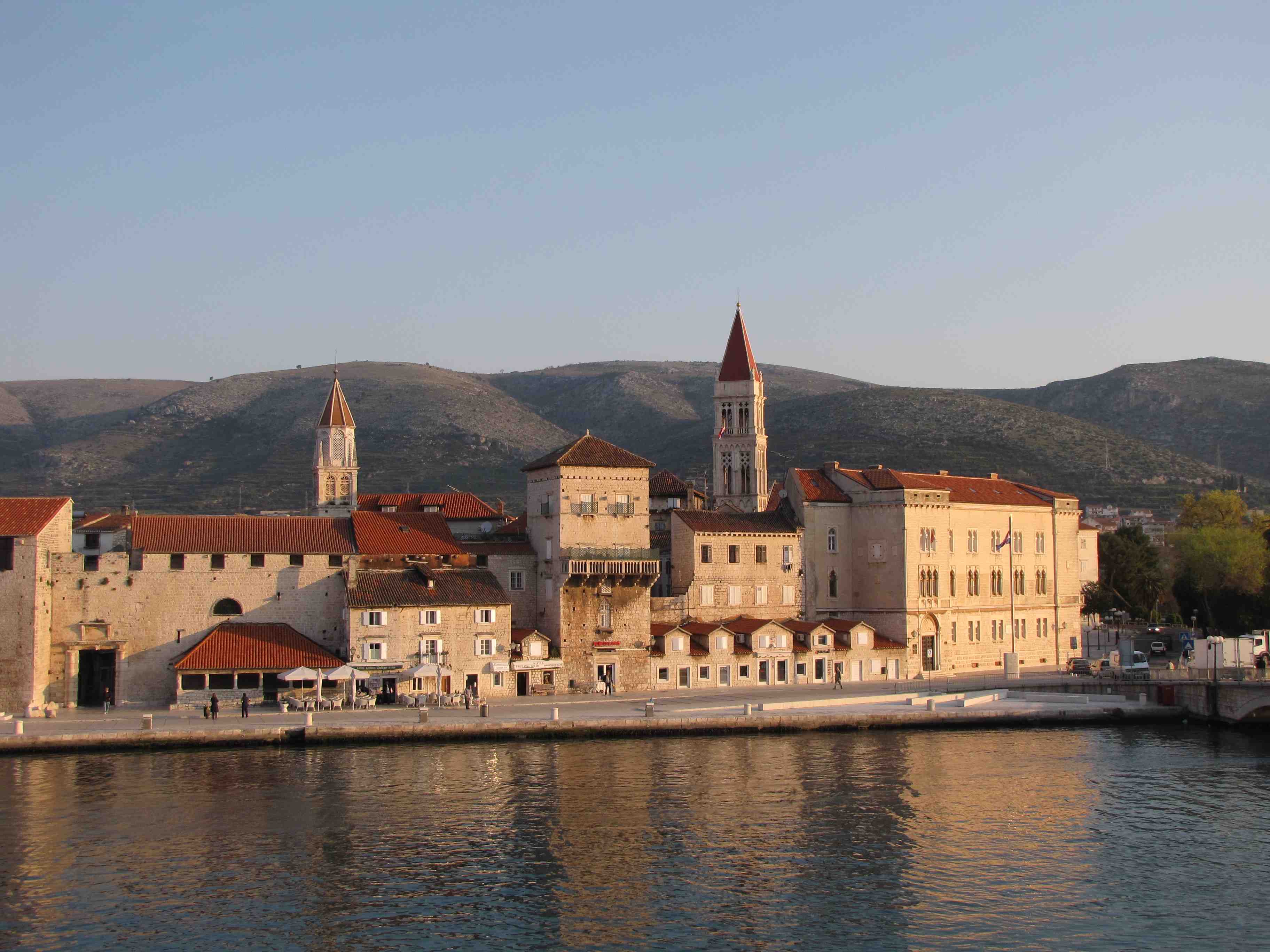
We drove along the coast to Trogir. The Tatars stopped at Trogir. The story told in most histories in the same form — there is a first hand account — is that in 1217 the Dalmatian ruler Bela IV was fleeing the Tatars[9] down the Dalmatian coast from one town to another and got to Trogir and together with the local populace climbed inside the city walls and shut the gate.

The Lord Kadan [the Tatar leader] tried several times to see if he could pass on horseback through the city walls but was repelled by the mud between the coast and the island [about 20 metres worth on the landward side]. He sent a nuncio to the town instructing him in what to say. When reaching the gate, the man cried out in Slavonic in a loud voice: ‘This tells you the Lord Kadan, leader of the invincible army has arrived. [True up to that point. They had cut a swathe through northern Europe, cleaned up Hungary and attacked Vienna.] Do not take upon yourself the crime of alien blood but deliver the enemy into our hands so that his punishment shall not fall on your heads and you shall not perish in vain.’

Thomas the Archdeacon, inside the walls at the time, wrote this. Bela had commanded there to be no response to such a challenge, not so much as a whisper. And there wasn’t.

The town slept, fitfully I’m sure, but in the morning the hordes had disappeared. It transpired that that night Kadan had received news of the death of Genghis Khan and they all returned home immediately.

I’m not sure what that means but it tickled our fancy. IMG_1078
Mike may in fact have stood at the gate, still there, delivering the message again and getting the same or similar response. I’m pretty sure that’s what happened.

9. Trogir- more like coffee in the late sunFor Rebecca, Trogir is of enormous importance. She devotes two chapters to it: its beauty, its colour (depends on the time of day but I lean towards butterscotch), but mainly the form and import of Master Radovan’s masterpiece, the portal to Trogir cathedral, and the way it explains and exemplifies the Manichaeanism of the time (only 20 years after Kadan went home).

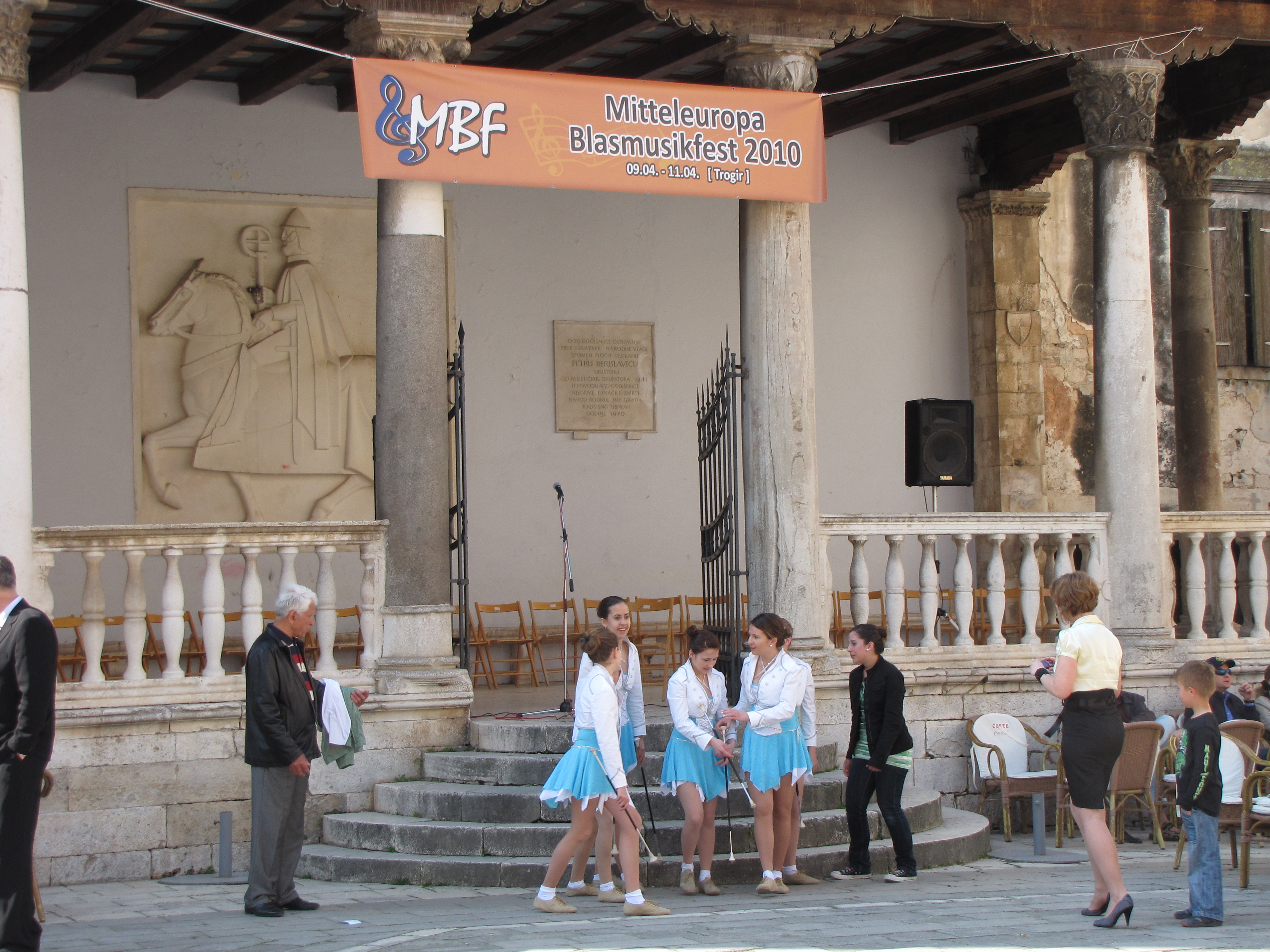
IMG_1086I looked at the portal at night and in the daytime, from afar and in close up photos and of course she’s right, but I can’t necessarily see it. There is a very strong personal style present which is most individual — folk art, we’d call it — and it’s a great piece of craft. IMG_1084But Trogir for me was sitting in the sun in the trg listening to the Mitteleuropa brass band contest with baton twirlers and a compere in spray-on jeans for good measure. An hour of amiable bliss and winner of equal first best music heard on tour. (With hindsight I note that each of the three winners was free.) Myrna points out that this is an example of the attraction of the present (active, live, sensate) over the past. And that will be right.

The coastline to Split was like holiday coasts the world over: rooms to let, fast food shops, houses piled on houses, many houses for sale where people have made the usual second house mistake, possible access to some (of very few) beaches, piers, fish shops, gear shops, ice cream shops. It was quiet, but in summer … Don showed us where he holidayed as a boy and which pier he used to jump off. Another treasure offered. We liked that. Split was riven by a major boat show which seemed to have the effect of thousands of people needing to sit drinking under umbrellas along the strip. Diocletian’s Palace remained unaffected by this and was the best example of a Roman-style agglomerative building we had seen in Croatia and would see outside Rome. But the main thing about Split was that it was the departure point for a four-hour ferry trip to Korcula (korchela).

We got off at Vela Luka on the western end of the island. Leaving Don to administer another lesson in effective shopping for seniors in the wonderfully named Konzum[10] supermarket, I caught the last ten minutes of the Korcula women’s handball final. For those who missed the final score, Vela Luka 11-10 with a goal in the last minute.

Here’s what you can find out on the internet. In the Croatian part of the Adriatic Sea, there are 698 islands and 389 islets (rocks, piles, reefs etc.; uninhabited). Of the 698 islands, only 47 are inhabited in the sense that at least one person lives there fairly permanently.[11] Some sources indicate that Croatia has 66 inhabited islands, which is the number of islands that have had a settlement on them, but 19 of these islands have lost all of their permanent population as a result of the population decline due to insufficient economic activity. Korcula has the second largest population (a bit over 16,000) after Krk (not the river); and, random fact, the US White House is built out of limestone mined on Brac, another of the larger islands.

13. Darko and Katic's house - KorculaDarko and Katica talked about this decline and the lack of care and attention to the vines and olive groves on Korcula after we arrived at their house. They had spent the day clearing blackberries and other weeds from family property. They live and work in Zagreb at present, although Katica’s job seems to make her an international person. They plan to spend more time at this property on retirement which, besides a house, has two self-contained units which can be leased. These buildings cling to a very steep hill in the middle of a wonderful productive garden which is tended by Katica’s mum when Katica and Darko aren’t there. The Adriatic is at the bottom of this garden.

IMG_1100Various miracles appeared for dinner. Darko plans to spend more time fishing in the future but for now he had bought some fish and displayed very high level competence barbecuing them, thrashing them with sprigs of rosemary dipped in oil from their own olives. The fish were accompanied by wild asparagus and hard-boiled eggs with the most vivid of yolks and baby broad beans from the garden. Possibly the best meal while we were away. Possibly. Magnificent. Katica whipped up a giant crème caramel out of invisible ingredients for dessert.

We talked about food, about growing and making it, and about how while the quality is still there in the produce of Korcula rising production costs mean that more and more of the fertile and accessible areas of the island were being abandoned. The islands provided a haven for Croats fleeing the mainland in the early ‘90s (as they have in the past), but that is the only time the population count has gone up rather than down since 1920. The islands matter for tourism but are subject to the same shift of population to urban centres as elsewhere.

It had become wet and cool. Next day we drove to the town of Korcula at the other end of the island, found a house that may once have housed Marco Polo, and got on a ferry for the short ride to Orebic on the peninsula which was almost part of the island. The peninsula was almost an island itself, a political island. Bosnia has its eight? ten? kilometres of coastline on its leeward side, meaning you must drive through Bosnia to get from the rest of Croatia to Dubrovnik and the rest of the south.

11. DubrovnikMike and I had been saying to each other for six or more months, Dubrovnik on April Fool’s Day. We’d passed April 1 but we were in Dubrovnik after a visit to Mali Ston, the experience which had stuck in Mike’s dreams. The oysters came out of the sea but from the corner of a long and highly protected estuary so the shells were soft and the creatures enormous but without the piquancy of Pacific or Ceduna oysters. Clerical readers, there is a text for a possible sermon here; historians of the Balkans, an option for an extended metaphor which should not be passed up. What do we want? Soft shells and huge size; or thick hard shells and piquancy?

IMG_1139We were staying at Cavtat (suvtut) a few k.s past Dubrovnik in the Hotel Radovic operated by the eldest son of one of Mirjana’s relations. (Mirjana’s birthplace was near here in Herzegovina.) We’d also taken a Frletian detour to a winery and got a grip on the difference between the wine grown on the leeward (lighter, a little tart and lower in alcohol) and the windward (muscular, deep, higher alcohol content) sides of the very steep karst range in front of us. Dengac from the ocean side was our choice. And then Don decided to drive through the mountain. I suppose he knew it was there, but we found a tunnel and a road approximately 2.45 metres wide, a thrill a minute, which took us through to the Dengac vineyards. The vines are pruned to 40 cms. off the ground and apparently grow very strong canes and grapes with comparatively tough skins to accommodate this. Later in Italy we found vineyards where the grapes were grown and harvested well above head height.IMG_1112.JPG

Cavtat was a delight, a 1950s resort (and there’s nothing wrong with that) still with its own working domestic life and a magic longemare[12].Promenade’ is both a noun or a verb and so was this, a lovely walk of perfect length next to the water around a headland. You got to the end wanting more. The local chaps were preparing for the season: new masonry for the food outlets which would line the walk in a month, more concrete platforms for the sunbeds, new concrete paths into the water so the rocks could be avoided. (It must be said. Australia does have very fine beaches.) As we walked I was thinking to myself how many centuries have people been enjoying this path doing exactly what we were doing, and the correct answer was a bloody long time.

The pace of the tour was telling. So much experience. So intensive. So rich. So much food. The boys and Dina went to bed early and Myrna and I had a sandwich made in the kitchen of the hotel. We were the only guests: lots of space, a relationship with the host, make your own stuff in the kitchen, windows that open, great views, cheap. You don’t want any more than that.

Next day Dubrovnik. I was trying to gear up.IMG_1144.JPG

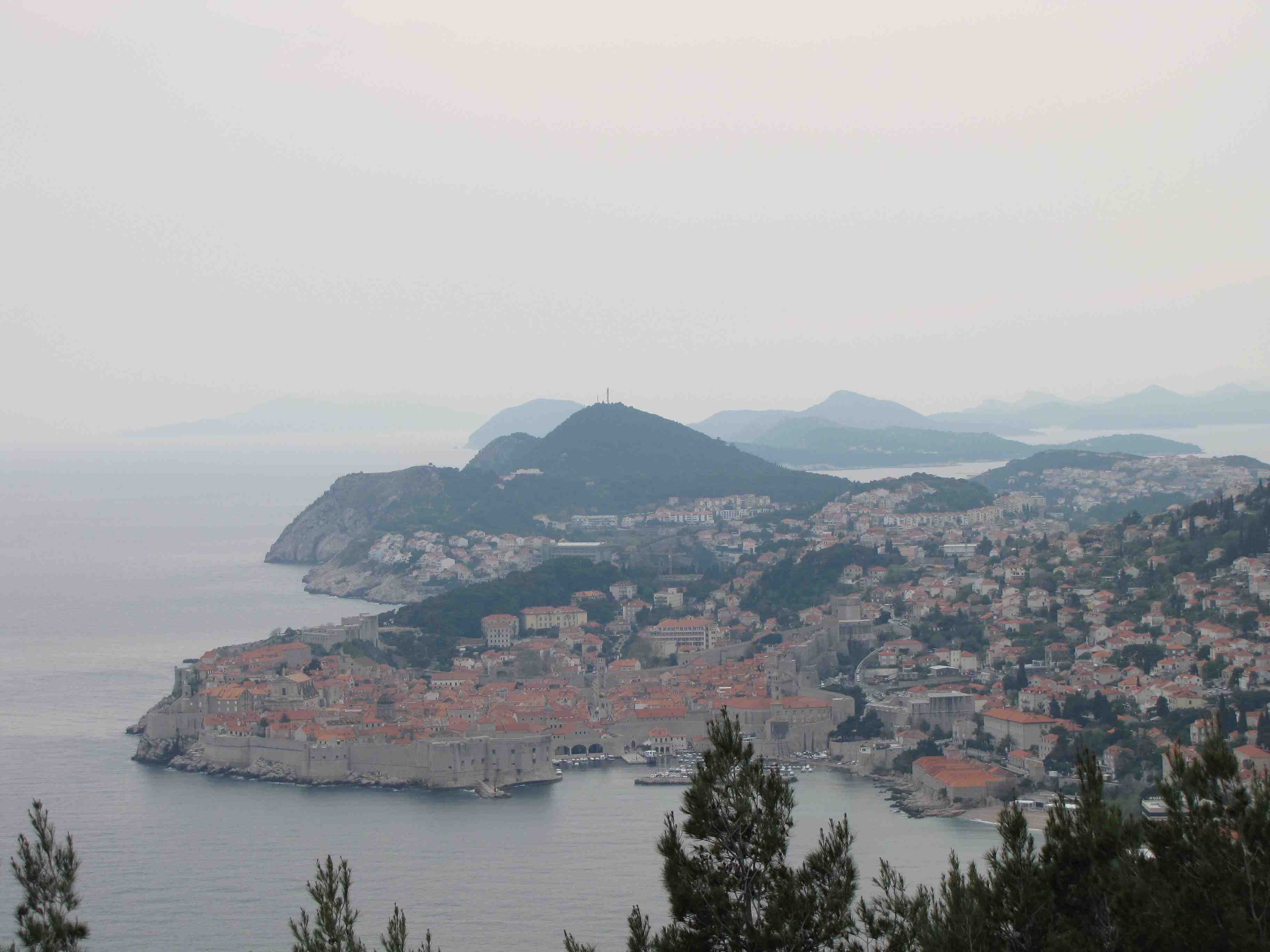
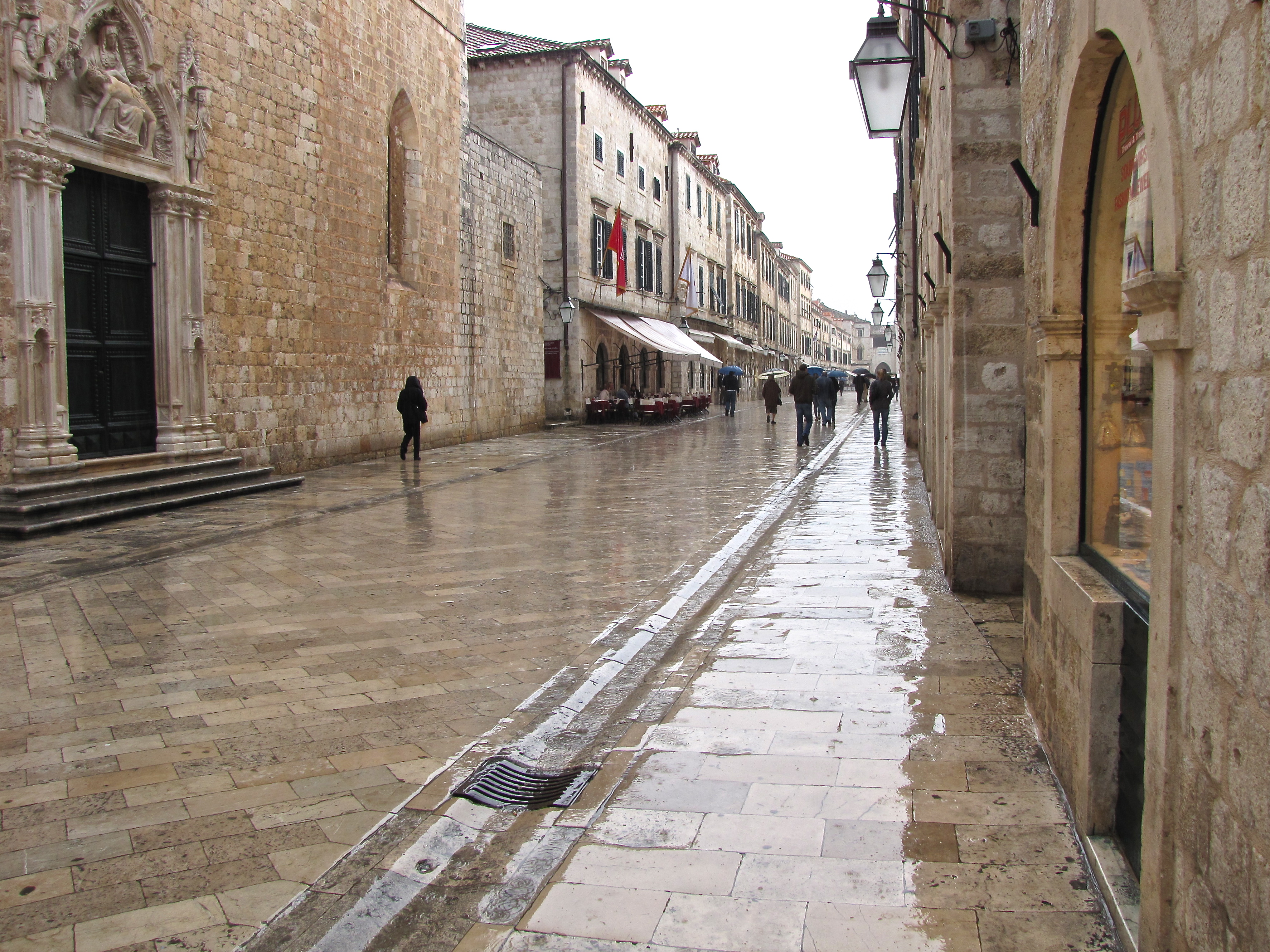
It is very beautiful from a distance. Up close it’s another old town with highly polished limestone streets, including the famous Stradun down its centre, and beautiful buildings. Ha! It rained, it hailed, it stormed. That may have influenced my judgment. Dubrovnik didn’t have as many tat shops as Venice but it had its share. We paid a lot for ordinary food. Despite its remarkable history as an independent and highly civilised state, we were at a tourist destination. In the recent war 3000[13] shells landed on Dubrovnik during the bombardment from the sea and the heights (all from about 8-10 k.s away from the city) and most seem to be remembered individually. You don’t have to go far to see photos of shell damage or a room devoted to death.

Why would you choose to smash up a World Heritage Site? For a bit of notice I guess, or because you’re dumb. To see how long you could get away with it maybe. Or because you’re so crazy you simply don’t care.[14] Tanner writes: ‘The bombardment of a UNESCO-designated historic monument generated enormous ill will among people who had never heard of, and did not care about, the humbler towns and villages of eastern Slavonia.’ He is scathing about this. ‘While foreign journalists and European diplomats complained about the damage to the tiles and red roofs of the Old Town … the Yugoslav army and Serbian paramilitaries had a free hand in Vukovar to wreak a savage revenge on the Croats who had defied them for so long. More than 2,000 people died there and the old city was destroyed absolutely.’ One city at the finger tip of the arm, coastal, touristy, well known, obvious; the other at the point of the shoulder, little known, isolated, abandoned at least from an international point of view and utterly destroyed.

12. Don explaining shellfire- DubrovnikWe talked about this. There’s a photo of Don putting me straight on a few a matters in the cloisters of the Franciscan library after we had examined a shell hole together. But we moved on. To where? Further south to Radovici, home of the Radovics, Don and Mirjana’s relations, and the parents of our host at Cavtat.

IMG_1155 There were several men of the house but the middle-aged one had a building fetish, a man after my own heart. He had built ‘two-thirds’ of the hotel we had stayed in, no small task in itself. He had also built numerous extensions onto their house which were now crawling across (above actually) a road and into their huge and meticulously kept garden. We were taken to the ‘museum’ upstairs with its photos and art works, two enormous wooden side-boards and the family tree I’ve mentioned. The massive understorey of the building housed something like a commercial kitchen, not to mention a winery, not to mention an olive pressing plant not to mention the spit roast facilities. He also had a full-time job at the airport (Dubrovnik’s airport is at Cavtat). When I asked him how he did all this, he said, despite his wrecked back, he didn’t need any more than one or two hours sleep a night. I do, with the window open.

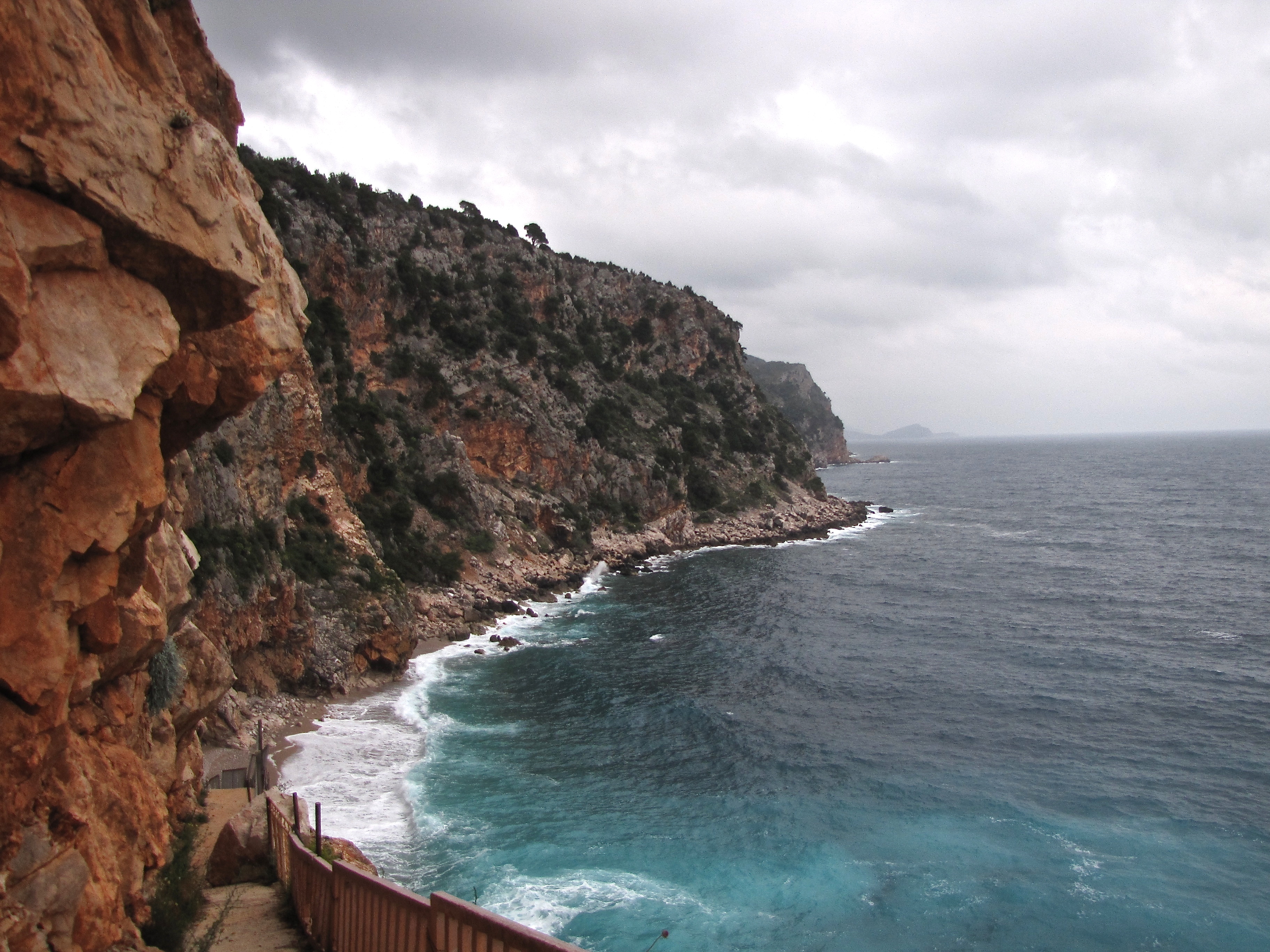
Don had one more thing he wanted us to see that day, the seacliffs. It was just on dusk, quite light still but the evening was drawing in quickly. The weather hadn’t improved much. It was spitting and the wind had turned very cold. We were wandering round lanes headed broadly in the right direction, starting to feel a bit tired and hungry. We found the lane we were looking for by asking a man who looked but probably wasn’t extremely old and who might have been alone or almost so in a very large complex of housing. This was an area where there had been heavy fighting. Some houses had lights in the windows; many didn’t.

IMG_1158.JPGWe followed the track for a few kilometres down towards the coast. There were no houses at all near the cliffs which were as dramatic as Don had intimated, two or three hundred metres straight down with waves crashing at the base. The others had a look and went back to the van where we had found two abandoned pups which were whimpering but refusing comfort. There was a track down to the water cut into the side of the cliff by gifted amateur engineers and I thought I could run down there and back quickly and not hold things up too much. But as it turned out the engineers were probably professional and the reason they’d cut the path into the cliff and smeared it with concrete to hold it together and to help you stop falling off was that it led, just above a small beach, to a tunnel cut into the bottom of the cliff. This tunnel was used to drain the land on the other side of the hill. Epic. Croatian. But also strange. At that point in time it looked like a very lonely enterprise. And this might be a feeling, a feeling without much substance necessarily, some contortion of the mind, that grips a traveller from time to time, but a feeling that I was somewhere completely alien, somehow at the end of the world.

The twilight, the weather, the cliff, the rocks, the path, the tunnel — they all contributed. I found the workings for the path which had been left behind — coils of pipe, pools of cement wash, a dented pile of screenings, sand — as desolate as the soccer pitch with grass 30 cms high half a kilometre back down the lane. Or nowhere. Even though it had benches and shelters not just for the two sets of team emergencies but for the refs as well, no one except ghosts had played on it in years at a guess. When I returned Myrna had found some apple and Dina was trying to feed it to the dogs, and they were growling at her like some misfit children. Their fate was fairly certain and bleak, and if you were sitting in your house having tea with a fire in the stove it wouldn’t matter. It was another story looking at these bewildered young creatures and listening to them make noises that said at the same time go away, and we’re desperate and need help.

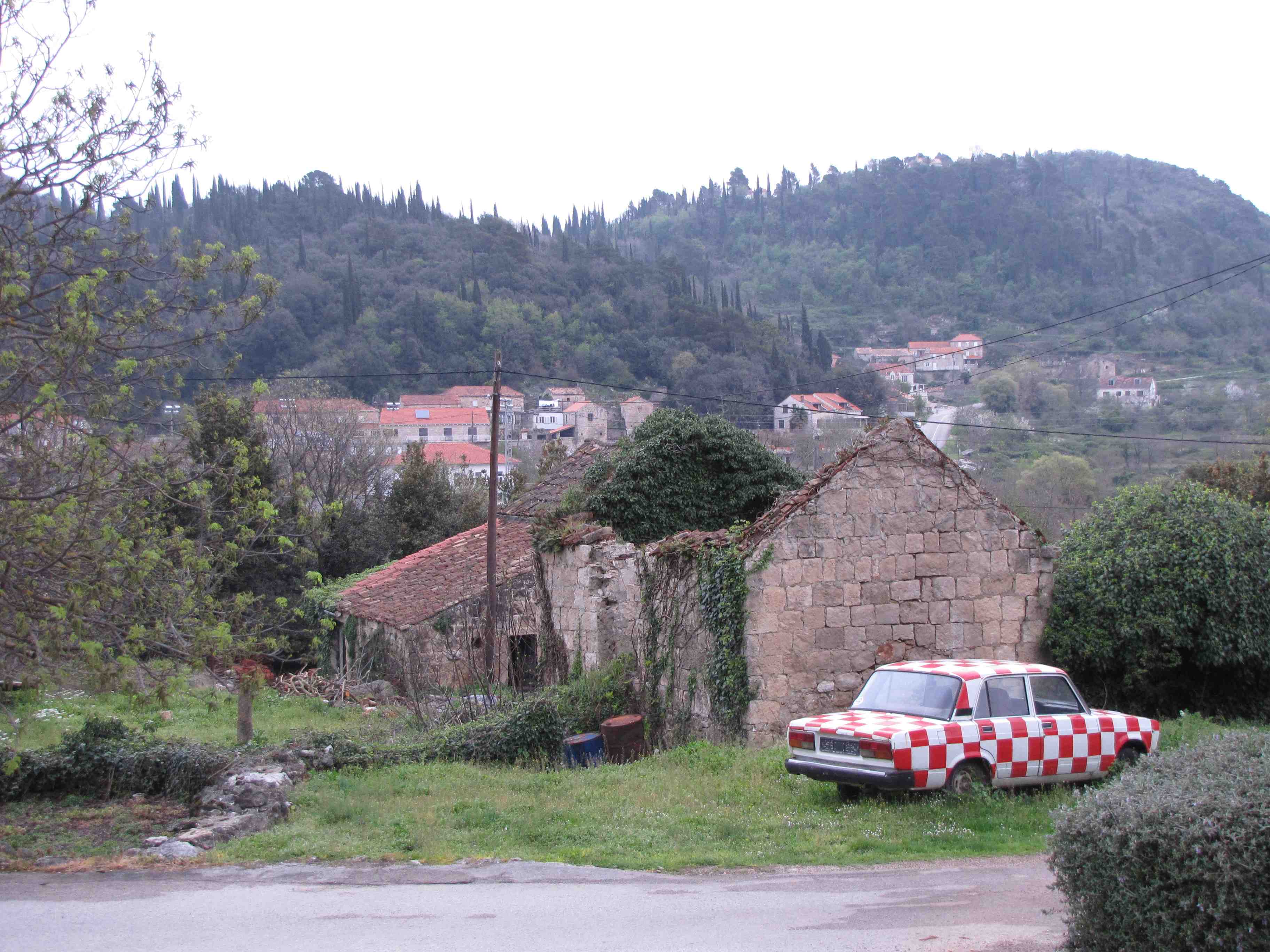
Over the lip of a hill was a car that hadn’t been used for some time either, still painted in the Croatian red-and-white chequerboard left over from the war. I wasn’t at the end of the world. I was at the southern tip of Croatia.15. The end of the world- Popovici

And now for a far greater tragedy, let’s head off to Bosnia.

•••••••••

[1] Rebecca: ‘In Croatia we ate and drank enormously, and so well.’

[2] With a dish made from polenta and sour milk, and another which was a particular sort of cheese wrapped in minced lamb. We drank Babic wine, a Croatian family which is now making wine in New Zealand.

[3] upper lakes. Gora, mountain, same in Polish. Slavic languages are close friends.

[4] Ah the inventiveness of place names. Vela Luka old city; Banja Luka baths city; Dublin Dubh Linn black pool, across the Irish Sea opposite? Blackpool

[5] At this point consult a map.

[6] From a Serb website: ‘August 4 marks the 10 year anniversary of the Croat attack on the Serbian majority region of Krajina in 1995 that resulted in the expulsion of 200,000 to 300,000 Krajina Serbs. This was the largest population displacement during the Yugoslav breakup in the 1990s. It was the largest expulsion in Europe since World War II. Was it the largest act of “ethnic cleansing” since the Holocaust?

In 1997, the names of 1,542 Krajina Serbs killed in the assault were recorded. Over 73% of the houses of Krajina Serbs were destroyed. Was the Krajina expulsion an act of genocide not seen in Europe since World War II?

The US and Western media referred to it as an “exodus” and an assault to “oust” Serbian rebels, “Croatian Serbs”, the oxymoron propaganda term coined by the US State Department. It has been covered-up and deleted from the mainstream history of the Balkan conflicts because the victims were Serbs and because a majority population was destroyed and denied self-determination.’

[7] Looks like a problem but just click your tongue, krrrk. Same with trg.

[8] Truly great. We found several pieces of his work in the Italian National Gallery of Modern Art.

[9] ‘Mongol hordes’ in some accounts.

[10] Rhymes with ‘boom’ and can be considered a directive.

[11] One of these islands has a population of one. It would be a quiet life.

[12] I’ve spelt that wrong I think. The same concept with similar spelling exists in Italian.

[13] This figure may have something numinous about it. It is also the number of cannon balls believed to have fallen on the city from a Russian/Montenegrin fleet in 1806 during the Napleonic wars.

[14] The British and French attitude during the 1990s wars was at least initially, Croatia didn’t fight with us in WWII. Let it stew. It was the Germans who were most active and thoughtful about external intervention.

ELSEWHERE 2010: The Balkans. The Mission

The initial and primary purpose of this trip was to visit the Balkans.

There were two reasons: Dame Rebecca West and Dubravko (Don) Frleta.

thRebecca’s real name was Cicely Fairfield and she was a precociously and prodigiously talented writer who became successful very early in life. She was 24 when George Bernard Shaw said: ‘Rebecca West can handle a pen as brilliantly as ever I could and much more savagely’.

In her 20s she was included (ignoring the fatuity of such a process for the moment) in the New Yorker’s list of the 10 best writers in the world at a time when Scott Fitzgerald, Evelyn Waugh, James Joyce, Ernest Hemingway and George Orwell were writing. She was an active feminist although one of her best known aphorisms is: ‘I myself have never been able to find out what feminism is. I only know that people call me a feminist whenever I express sentiments that differentiate me from a doormat or a prostitute.’

At the age of 21 she met H G Wells (via a savaging she had given one of his books) and became third wheel in a ménage a trois that was maintained for ten years. Wells at that time, however strange this might seem, was a leading public intellectual (and a very keen proponent of ‘free love’).th-1

She had a child, Anthony Panther West (‘Panther’ being Rebecca’s pet name for Wells; some things are probably best kept private), who growing up was instructed to call Rebecca ‘Auntie’ or ‘Auntie Polly’ and Wells ‘Wellsy’, adding to the uncertain nature of nomenclature in this particular environment.

Anthony was alerted to his real provenance somewhere between ages six and eight. He became a writer himself and published a fictionalised autobiography which cast the mother figure in an unfavourable light. The actual mother managed to suppress publication in England until her death. This suppression brought their relationship to an end more or less as final as her death.

She married a banker, Henry Andrews, in 1930. It seems possible that their marriage was never consummated. She died in 1984 very wealthy and laden with honours. Public life eh. What a party.

In 1936, 1937 and 1938, auspicious years in Europe, she made trips to Yugoslavia. These trips formed the basis of her masterpiece Black Lamb and Grey Falcon, all 1200 pages of it.
IMG_0973It has been referred to slightingly as a travelogue, but to quote another reviewer[1], himself borrowing: she has two subjects, Yugoslavia, and everything else.

And she certainly does: the history of the late Ottoman Empire, the nature of religious experience, the formative place of handcrafts in the life of a village, the education of girls and the wearing of school uniform, the particular colour of Trogir (toast or butterscotch?) and the musical quality of the Plitvice lakes (‘Mozartian’). She makes one of her travelling companions German, and Gerda makes a wonderful foil, blank of insight and full of unrepentant prejudice.

The real topic of the book is the intersection of western and eastern cultures and the mutual incomprehension that engenders. The west does not come off especially well.

She lets her characters talk about the mutual antipathy between Croats (the west) and Serbs (the east) — and that is its pointy end.

The book is ambulatory, awkward, contains wild and anachronistic assertions, is consistently overwritten … and is simply magnificent. I started reading about the Balkans during the 1990s wars and it kept coming up as a reference point. I read it then, and have since wanted to see for myself.

IMG_1207Dubravko Frleta (at left with his buddy Mike Rowland) has led a less public but at least as interesting a life. He signs his emails ‘Don’, and that may be his wish. But he’s one of those people who with an equal mixture of exasperation and affection get called by their surname. He’ll be whatever seems to sound right here, but that’s him.

On his own admission he had a childhood and youth littered with achievement.

He learnt Russian as well as Latin at school (the top stream school in Zagreb still teaches Latin and Ancient Greek to all), and his Russian and his cleverness with maths provided him, a long time ago, with a trip to Moscow and Leningrad (St Petersburg).

But in the ‘70s (called by some historians ‘the Croatian Spring’. Don snorts.) he came on exchange to Australia, to Latrobe University in fact, to teach in the faculty of Agriculture as an economist. In the course of this process he met Mike Rowland one of my closer friends and colleagues over the past 15 or 20 years. ‘It was January and I was in Glenn College dining room having lunch. There was no one there of course, being January. We might have nodded at each other. Anyway he came over and said hello. The next day we had a cup of coffee and that was that.’ They have kept in remarkably close touch ever since.

Friendship is one of Don’s articles of faith. (There are many others such as the correct order in which to drink wines, the length of time fish should be cooked, where bread should be stored, which cheese should be eaten with what, the correct paper for wrapping parcels etc. etc., and again etc.)

We met Darko and Katica Biljakovic on this basis. Darko is another mathematician and a very longstanding friend of Don’s. His childhood school sweetheart Katica is his wife of many years and Head of the Institute of Physics in Zagreb. We stayed with them at their ‘second’ house on Korcula and saw them later in Zagreb. Arranging for us to meet them was one of the many kind and insightful things Don did for us.

Dubravko began his career as an academic mathematician. Having been a student of his has become a requirement for being a senior figure in the current Croatian government.

After the break up of Yugoslavia he seems to have talked his way very quickly into the new opportunities for private enterprise, in his case the fledgling Croatian airlines. Since then he has worked for a number of companies and is now Direktor, Službe za vođenje projekata i brigu o korisnicima, Sektor za koordinaciju ICT for Agrokor. [In 2010. In 2014 a doting retired grandfather.] Agrokor is a conglomerate which has (from memory) 29 businesses including bottling and selling water, broad acre farming and providing ‘extreme’ experiences for tourists on trips down the Danube. Don’s job is to coordinate the systems, information and otherwise, of these disparate groups.

I got an insight into Don at work when he was trying to send us a gigabyte of photos. This didn’t work; that didn’t suit; the other was too hard for muggins (me). So he patiently probed until he found what would work. He was purposeful, single-minded, self-contained, but also wanting to do just what he wanted to do — not provide the 60 best photos, but the lot in the highest possible resolution.

I can hear him saying: If you can do that, why not? (Shrug, gesture, opening palms.) I think Don probably works very hard and that the two weeks he took off to look after us was the sacrifice of a very busy man. And that is to say as well, once he got into the swing of it, he enjoyed it as much as we did. He certainly loved seeing his friend Mike, and he was a dear companion to us all.

I haven’t mentioned that he has played tennis against John McEnroe and Henri Leconte and has the polo shirt to prove it. Corporate money can buy anything these days. But he has the lope of a tennis player, still plays twice weekly and is by all accounts, especially his own, more than handy. (You know: Croatians = sporting/ big/ good.)

There are his friends, and there is his family. Dina who was a most welcome adjunct on our trip, the official photographer, is 20 years old, a finishing secondary student (kids start and finish school two years later in Croatia), and Ivan who has a job with General Motors (and is as good? better? than his father at tennis). His wife Mirjana works as an accountant. All delightful and hospitable people.

IMG_1230And there is his cottage. Twenty minutes from his home in Zagreb on half an acre or so of land is a very stylish ’shed’. We don’t have a suitable term. He says ‘cottage’ and that is probably pretty close. The photos will illustrate. This is another of the loves of Don’s life. It is close enough to visit after work on longer spring and summer evenings, accessible enough to fool around with on weekends, undeveloped enough for there to be plenty to do for a man with tools.

Don had, in consultation with the customers, designed a two-week tour for us. Mike wanted to go back to Mostar where he’d been before and on to Kotor in Montenegro, and we both wanted to go to Sarajevo. This was accommodated.

How often have you shown other people your favourite things?

It doesn’t happen all the time. I’m sure one of the reasons is that you don’t want your perception of those things challenged. This will always be under threat if you invite an audience. I don’t know how many converts I’ve won for the big trees at Cambarville for example, but Lord knows I’ve tried often enough; shamelessly. Maybe Andy Webster, but Andy has a capacious and generous appetite and is reliable in that regard. That would be one of about 486.

Here’s a teacher’s task. How can I persuade you that, for example, European history (or physics or Latin or anything else that sounds hard, boring or remote) is a matter of personal importance and interest?

On the day we left Europe ‘The Times’ had on its front page a story about the decline of participation in second language learning in England, more or less the same report that I helped the Asia Ed Foundation prepare before I left about contemporary Australian students. Australian students are just not very interested in learning another language. They don’t have to speak one in their daily lives, probably won’t even encounter one despite the 168 languages which aren’t English that are spoken by more than one person as a matter of course in Australia.

Another reason which always turns up is the perceived quality of the teachers. Language teachers love their language but can’t teach and language classes are the ones you muck around in. I can imagine these poor creatures putting their favourites, their loved ones, their heritage, on the table and having these most precious of parcels rejected by callow brutes. And this is part of the core of a teacher’s work. It constantly entails risk. Will the students like it? Will they love it as I do? Can I communicate, and control, my ardour.

Don had his babies on the table. This is Don. At risk. With customers who claim to be happy with anything. But that in itself he might see as a weakness. They should only want the best — just incidentally what I want to give them — and know what that is both intuitively and as a matter of being properly brought up. I’ve got to say, that’s what we got. But then again, I’d be happy with anything.

One thing Don has up his sleeve, when he needs it, when he feels he needs it, when he can be bothered needing it, is a gesture owned by very good teachers, at once charming, disarming and inviting: an intent gaze, sparkling eyes but it’s no joke, face tilted slightly forward, a motion of the head which could be a nod, a slightly open mouth — saying: Come on. Respond. Think. Engage. See what I see. What a wonderful gift.

We watched him practice it with Bosnian police. We also watched him convincing Myrna that in a marriage equality is paramount, but that the man should always have two votes. Despite finding unilateral support for his views from a boatman at Visovac (with the useful additional information that Australian women are lousy lovers), the Bosnian police were pushovers by comparison.

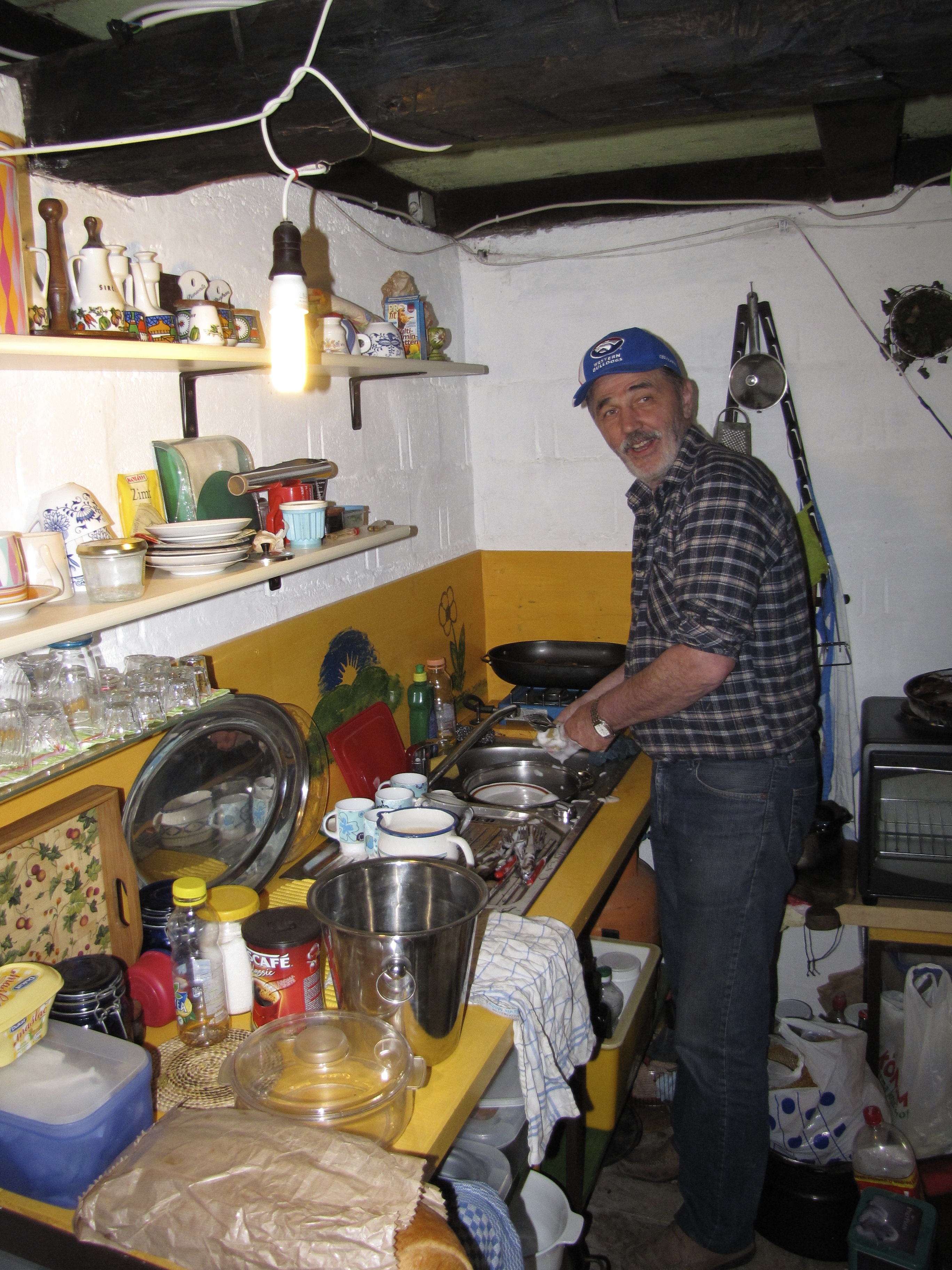
The photo of Don doing the dishes is believed to be an important historical document.IMG_1245

•••••••••••••• For the story, read on here.

[1] A good review:

http://www.guardian.co.uk/books/2006/aug/05/featuresreviews.guardianreview

ELSEWHERE, 2010: St Petersburg. Travels with Olga

IMG_0840.JPG
A cup of coffee (cappuccino): 80 roubles ($A3.10)

I achieved my goal of arriving at St Petersburg’s Finland Station (has no one read Edmund Wilson’s magnum opus?), but had difficulty attracting the attention of the hordes hungry for my direction and leadership. After a fairly dull seven-hour train journey through snowy spruce forest during which I fell asleep just in time to miss a sight of the largest lake in the world, Lake Ladoga, the mysterious Vyborg and much of the disputed Karelian isthmus, my delivery may not anyway have been pitch perfect.

The crowds were certainly present as was the platform where Lenin alighted in 1917 returning from exile in Finland. (When in Helsinki he lived close to our hotel.) I suspect the same platform, the same stones, the same grit, the same interminable length, and it was nothing like I imagined it would be. In my mind’s eye I had a steel-framed grand canopy filled with noise and smoke and scurrying people in perhaps amber light. But StP doesn’t do canopies, or verandas, or pergolas. Space is fully enclosed, in rectangles. Everything else is just outside, exposed.

It’s a big city, a touch under five million and spread out. Its ‘centre’ is about eight kilometres across. It was dusty and dirty and, even more than Helsinki, needed Spring. There was more grit than snow in the snow banks, not to mention the coke and vodka and beer bottles, the cigarette packs, the singlet bags full of last nights scraps, stray items of clothing and the other conventional detritus of city life. They’re in the snow; it freezes. It melts; they don’t. Men with twig brooms will eventually sweep them up after the thaw.

There are many things that make St Petersburg unsettling but I think the winner is its monumentalism. We are at the mouth of the Neva which works its way through all the island suburbs. StP- The glorious Neva. P&P Cathedral to left. Aurora just out of viewMature, shallow, boggy, slow, it must be six hundred metres across at the main bridges, maybe four hundred, but that’s wide enough. Nevsky Prospekt (Avenue, the main street where we were staying) must be at least 60 metres wide with six lanes of traffic and two lanes attending to other matters, runs two and half k.s dead straight, takes a five degree right and goes on for another dead straight kilometre. The main road to Moscow does not deviate from the centre of the city to Pulkovo about 50 k.s out of town.

What can one infer? a) flat; b) planned. Correct on both counts. Instigated by Peter the Great in 1703 to be a new more ‘European’ (stylish, grand, organised, comparatively peasant free and less ‘eastern’ than Moscow which, anyway, kept burning down because of its preponderance of wooden houses) capital of Russia, it was built on marshes. (Note comment below on the failing wall of the Church on Spilt Blood.) At one time it was claimed that most of the masons of Europe were engaged in its construction, and walking around its streets this is utterly conceivable.

The buildings are gigantic shoeboxes decorated with triangular pediments that have been brought in from the Grand Canyon where they have been used to span some of its narrower sections. The blocks are literally hundreds of metres long and the roads just do not turn. They are inexorable. This is the 18th century’s superhuman scale; not New York or Dubai which have superseded this scale by removing the human from superhuman, but a bigness that you can, and must, find unusual, but still can grasp and be impressed by.

StP-The towerblocksThe same can’t be said for the tower blocks where most of the inhabitants live. But we’re tourists, we’re in the centre. So it’s palaces, government buildings, churches, the huge six storey apartment buildings where plenty of people still live.

I tried to capture the scale of Gotiny Dvor, the shopping centre whose defences we tried and failed to breach, in photos and failed utterly.IMG_0940.JPG It just disappears like an exercise in perspective. Forty-six arches in a colonnade, each at least four metres wide and separated by double columns or pilasters at least three or four metres wide — and that’s one of four identical walls.

The Hermitage, Catherine the Great’s self-memorialisation, now an art gallery (so to speak; as Sydney harbour is a place to swim) has more than 3 million exhibits — in Lord knows how many rooms.

Yet the inhabitants of the palaces appear to have huddled together in small apartments. To keep warm? I guess so. The dining room in Yusupov Palace where the murder of Rasputin began must be only four or five metres square, besides being downstairs and out of the way with no window; and yet this was the customary dining room for the second richest family in Russia. That seems to be the story of St Petersburg, staggering facades with anything you can think of and much you can’t going on behind.

The story of Rasputin’s death is always worth retelling.

IMG_0911He, a peasant holy man, holy fool (starets) some would say, a reasonably honoured occupation in Russia at the time, had established considerable influence over the direction of Russian public policy.

How much in reality is contested, but not that the instrument of his control was the ladies of the court (of Nicholas II, the last Tsar) and in particular the Queen.

Nicholas seems to have been an otherworldly sort of chap, given to ensuring the good order of the pens on his desk and not really given to major sorties into the world of political ideas.

It was sex, it was class (Rasputin was from Siberia), it was religion (he had it, perhaps in surfeit); and the masculinists of the court did not like him.

Felix Yusupov (aspiring masculinist only, but ferociously wealthy) organised a dinner party to which Rasputin was invited to discuss various matters — we’re going quickly here, there are many excellent detailed accounts[1] — fed him cakes laced with arsenic which he initially rejected. With some encouragement he finally ate six to no discernible effect. Yusupov, now alone with Rasputin, panicked. He pulled out his gun and shot him twice at point blank range, went upstairs where his four fellow plotters were waiting to let them know what he’d done.

They all ventured down stairs and as Yusupov reached out to move the body, Rasputin grabbed his wrist, hauled himself up and made his way through the door to the courtyard beyond. (Great to see all this, on location as it were.)

Another of the plotters shot him twice more, once at least in the head it was thought. He fell. They wrapped him in a carpet and via carriage took the body about five kilometres away, across three major bridges and two islands and dropped the lot in a canal. The shots in the Palace had been heard and reported immediately and the body was discovered next morning.

The autopsy indicated that Rasputin was in fact dead, but that he had drowned. He had been alive when they dropped him in the canal. While his body was burnt to finalise its persistence and its continuing influence, his penis has been preserved and can be found in one of St Petersburg’s many museums. Debate continues regarding whether he was a prodigious sexual athlete or in fact impotent.

This seems to be a very St Petersburg story: full of illustrative inferences and implications.

Until volcanoes began erupting, this trip was very much about the company. Our friends Robin and Andre from Strasbourg met us in StP but the four of us were in the hands of Olga Miheyeva, guide extraordinaire.IMG_0856

I found her via the internet and we had been corresponding on all manner of subjects for five or six months. My underlying interest was to get her to understand, for us, that less would be more, that sitting with a cup of coffee talking about matters salient to our respective lives would be deemed a worthwhile way to spend time (and our money), that a walk around a local shopping centre for example would be a matter of high interest.

StP-Olga. StP from the frontI was trying to distinguish between CULTURE (historical currents), Culture (high art) and culture (how people live their lives now).

I did this in writing and also as I remember now spent an hour on this topic in the coffee shop of the Grand European Hotel (top rates: 92,000 roubles per night; divide by 26 for AU$. I know Dubravko, no one pays it. Still. I had to go and get more money from an ATM just to pay for the coffee.) and in any case may as well have been addressing myself to the marble slabs of which the National Museum of Russian Art (I think perhaps Nicholas II again) is composed.

It’s a cultural thing. The one thing about which I was insistent was that we couldn’t look at art for more than an hour or so because all perception just fails. At that point a cup of tea is required. That got through. It was reiterated with regret and the slightest hint that Australians mightn’t be up to much.

We arrived at StP in the early afternoon. Olga had organised a driver for the transfer. He was silent and exact. Our hotel was too hot and never got any cooler — this is just by the way, colour; heaven forbid I should enter the grumpy old man stakes; must take care here — and one thing we discovered was that the whole city is centrally heated by water heated by coal-fired power stations. So, firstly, the crap on all the cars was not just remnant winter sludge but included coal dust which, with the grit and the diesel fumes in the air, tended to make unaccustomed eyes very sore; and, secondly, the heat was hard to control locally. We were on the top floor. What does heat do? The temperature was about 6-12 degrees outside when we were there and most heaters still seemed geared to minus 10.

We went for a walk to reconnoitre an idea for dinner, always a strong prospect for disaster on the first night in a city. I had learnt the layout of the city from Google maps and I knew where we were going so turned right with great confidence instead of left as we left the hotel. In my defence Google maps had placed the hotel some distance and on the other side of the street from where it turned out to be. Let that be a caution.

We walked down one of these endless blocks, as it happened towards an extremely busy underground station that most of the population of greater StP was trying to reach at that very moment.And with what vigour! School girls, shop girls, shopping women, just women, girls encumbered with men, women less encumbered by men, women with relationships that could well have been resolved, lurching men, men not sticking with the rules of the footpath, men weaving precariously. All were direct in their approach to their goal. Why not? Why should you let tourists get in your way? It was a jostle, even when we were going in the same direction. And it’s a big city so there are pavement artists, portraitist and cartoonists, bag ladies, men and women with small toys that move and make noises. No Africans selling knock-off bags or sunglasses however.

Russian women are as varied as any of course, but we encountered a disproportionate number of charming, capable, gorgeous young things who made themselves enormously helpful. The look in the street: knee length boots, tight jeans, leather jacket, scarf, hair straightened, tortured and pulled back in a pony tail, lots of bronzing makeup, lots of competition. This wasn’t universal but it was in marked distinction to the men who tended not to put much work into their makeup. IMG_0859

We got a couple of k.s north and, following the mirror, turned left instead of right, but got an inkling we’d, alright, I’d done something wrong and found a street map to prove it with a big arrow on it saying ‘You are here’ in Cyrillic script. Cyril, and Methodius for that matter: why? Polish used to make me feel helpless because I couldn’t sound it out. With Cyrillic script you don’t even know what noises to attempt, and Russian is spoken of with such approbation by people who should know as a beautiful musical language of great subtlety and nuance. Who spoke English in St Petersburg? The clever young women of course. Anyway we could work out the map and we plotted our way to where the restaurant should have been.

IMG_0838I could go on at length about how I was led astray by the perfidy of Google maps. Suffice it to say we did not find the Café Ket, but we did walk 12 or so kilometres and we did see an untamed portion of StP not always offered to tourists. When we told Olga where we’d been she was a little shocked and said it wasn’t a very nice part of town and neither it was, but it was unquestionably interesting.

Did I mention the diameter of the downpipes? 25 centimetres in diameter, and they’ve all been hit by cars.

We also found the Café Singer as in the sewing machine. Literally. StP-Out the window of the Cafe Singer, earlyIt was once a factory and remains one of the finest Art Nouveau buildings I’ve ever seen. Inside is a bookshop and a cafe. I drank vodka to keep up with them outdoors and was stopped taking a photo through one of its windows. I do have a photo taken a few minutes before down a canal with the lion bridge replete with lovers in the foreground with the recently re-gilded onion domes of Spilt Blood in the distance. Look at that and I swear you’d think it was taken in Russia. (See above.)

We walked the few k.s back to the hotel and discovered the Café Ket was in the street immediately adjacent to the back of the hotel. I don’t know how that happened, but think of the value of the error. Huge.

Robin and Andre appeared looking disappointingly young and healthy, and we strolled the kilometre or two to the adjacent street with the Georgian food. (Stalin was Georgian. It has a Mediterranean climate.) Think a deconstructed souvlaki accompanied by lashings of large spring onions and radishes. These appeared also in Zagreb as the salade du jour. No, we had little rolled up things as well and Myrna may have instructed them in the art of vegetable provision. We sought Georgian wine but were disappointed. When we started we were hungry, when we finished we were not. Is anything more required?

StP-Olga. StP from the frontWe met Olga in the morning. She had our day planned. The first task was driving across town for half an hour or so, StP traffic is heavy duty, to pick up Robin and Andre. All routes are mysterious when you don’t know your town but I had noticed that Nevsky Prospekt had no left turn (across traffic) in the direction we were going. I knew we had to turn left and I was intrigued to see what he would do. But he was good Andre the driver, silent and perfect. At the last possible minute we dodged right down a side street and he created his own cloverleaf bypass.

Our first stop was a Russian Orthodox cathedral, St Nicholas’s, just near where Robin and Andre were staying. It was Easter Sunday and I had asked Olga previously if we could go to a Russian Orthodox service. I had read about them in Colin Thubron’s In Siberia and they sounded a little out of my ordinary.

IMG_0843There are several dozen Orthodox cathedrals in St Petersburg, and St Nicholas’s was not the biggest but the historical heart, headquarters. It had two complete storeys. Downstairs was startlingly ornate, formidably gilded with an icon on each of its several hundred internal pillars. But then there was upstairs as well. Olga wasn’t so keen about us going up there but, drawn by the music, we went anyway. And what a spectacle.

The decoration made downstairs look like an anteroom. There was some additional concern for line of sight, and visually the most interesting thing was a sort of trompe d’oeil that suggested the main altar was ensconced at the end of some endless passage. This passage and the door into it were fundamental parts of the clerical dance taking place, rows of gorgeously arrayed clergy passing bits and pieces — rods, orbs, sceptres, books — to each other and moving round in sinuous lines in the centre of the church.

But the point of it all was the music.

In most practical ways the choirmaster is the Minister of the service. There are cantors, and more and less senior clergy all sing, but no one speaks. There are no spoken prayers, no homily, no intimations as my father used to say; the congregation is standing, and often moving or at least swaying a little, joining in the singing from time to time.

You can come and go, or have your own private service with your own favourite icon. But here was this swelling of sound back and forth, beautifully trained Russian voices cased in incense providing this luxury for the senses. Religion via transcendence with little concern, in this version of it at least, for rational transaction. It was a thrill. Second equal first best music heard while on tour.

By chance we saw another service, this time at St Isaac’s a few days later and another, the ‘big’ Easter service from Moscow, which was broadcast live on at least four television channels. In the last Putin, Medvedev and his wife were standing just behind the Patriarch with whom they exchanged gifts during the service. This happened also at St Isaac’s with local dignitaries. This is not a case of separation of church and state. Putin is encouraging the church with vigour in order, according to Olga, to shore up his popularity.IMG_0925.JPG

Olga disapproved. She doesn’t like church, she doesn’t like religion and didn’t think it should be encouraged.

What an opening! A gap a foot wide between bat and pad.

Myrna sent down her finest yorkers and began her series of queries about the nature of god and how god might be understood. That kept us entertained until the arrival at the cathedral of Peter and Paul in the middle of the original fortress (StP’s earliest building) on its own island in the Neva.

StP-Olga. StP from the frontHere we found Olga in her element within her own religious order complete with endless saints, and smell of potential beatification in the air — the Russian royal family. Who would have thought? We worked our way from Peter to Nicholas II one by one, not so much stories as a most thorough recitation of genealogy replete with wives, children and mistresses. The vehicle for this process — initially at least, like all good teachers she had a range of reinforcement strategies — was moving from one block of marble to the next. Is it a tombstone if you aren’t buried under it?

Despite Andre’s persistence, we couldn’t quite establish whether or not there were actual bodies involved. Someone is memorialised by a massive block of red jasper and someone else by an equally large block of brilliantly green malachite. I found this interesting from a geological/semi-precious stone point of view. IMG_0861

StP- the last of the RomanovsNicholas’s (II, the last Tsar) family had a vestibule of their own, and here tones were hushed. DNA evidence has now conclusively determined that the bodies found in a mineshaft somewhere in the Urals are those of the last Romanovs, and now they have been brought here, etc etc. I asked Olga if I could take her photo at the entrance given the significance it obviously had for her, and it was as though I had exposed myself, and perhaps I had. Outrage, shock, dismay.

Then, in a long anteroom, we had to do it all again, filing past portraits one by one of the dead souls accompanied with vigorous and searching questions. (Olga is also a teacher of English.) From memory Robin did quite well with the answers. Suck. Typical. I badly needed a cup of tea, and noted only, as I had previously in the Finnish National Museum, how very swarthy a Tsarina called Maria had been, and how difficult the drape in a gentleman’s tights renders full length, life size portraiture. I had Russian salad with my cup of tea and felt smugly appropriate.

Olga had many favourite pictures in the State Museum of Russian Art — a palace of course (the Mikhailovskys, I’ve checked) with many many many rooms.

As is often the case, the history of art proposed in a chronological arrangement of works is a version, sometimes pallid, sometimes interesting with its own twist, of precisely what was happening elsewhere. And that was the case here: religious art (icons in this case and more Byzantine than you might find elsewhere), great/rich person portraiture, iconic historical moments (some very grand gestures), landscapes, impressionists, cubists, expressionists, structuralists (except all the Malevic was on holiday somewhere else) and so on.

I have an indelible memory of the Van Gogh gallery in Amsterdam which holds dozens of his works, apparently completely original, perhaps pathologically so, unique (used correctly), so much not part of a school or a movement.

But these are placed in the context of his time and his peers and what they were producing. Dozens of these paintings illustrated how much he followed at least as much as he led. And there were works better or at least as good of everything he tried. But usually only one in each case, and by different people. Like Picasso, he was very good but he stuck at it for a (truncated) lifetime. Like great artists, and great sportsmen and women this may mean you end up personally somewhat one-dimensional. It may also mean that singularity of focus, contiguity and persistence are attributes required for publicly recognised success. But it also suggests that we all live within the same tides of social behaviour and that anything you’re doing someone else will be too. That was all here. We might have been in Russia; but there was a fair bit of Russia in us as well. That said, I’d go back to have a closer look at the work of Repin.IMG_0908

No Van Goghs at the SMRA, no non-Russians in fact, and no political art of any type which was a pity, and nothing much after the 1920s; but there were paintings of Scythians and I was quite excited about that because I’ve never come across anyone else who is interested in Scythians (say sithians). The Scythians lived sometimes across a very wide area extending even into contemporary Poland but based around the north of the Black Sea, dominating this area for hundreds of years and intermingling with the Sarmatians who, on some views, provide the foundations of Polish culture.

The Scythians are a matter of historical and archaeological record having left well-endowed burial mounds indicating their wealth and sophistication. But perhaps the most interesting thing about them is that they disappear without trace around the 6th century AD, one of dozens of racial/ethnic groups who have lived around the Black Sea challenging, as must inevitably happen in most of Europe, the idea of autochthony (original inhabitants, ‘sprung from the earth’, self sewn; in Malaysian bumiputra ‘sons of the soil’). Arguments from autochthony are often used as the basis for nationalist sentiment — see, for example, Milan Milosevic and the idea of Greater Serbia, or the very notion of Bosnia.

This is a central issue for Australia’s Indigenous peoples, and because of Australia’s location and history they have a case to put. But if established, as it must be in their case, what does it mean? You have a permanent, morally unarguable lien over the land? So if a Scythian turns up today in Odessa, can they go to court to get their several hectares? What are a Scythian’s land rights and how could that idea be constructed? And I ask that because later in the day a Scythian turned up.

StP-Olga. StP from the frontWith Olga in a swoon of nationalist fervour, we looked at (walked past) every painting in the gallery. It was way past my cup of tea time. But for her final card, she played the fact that there was a special exhibition by a Scythian sculptor that we could go and see.

thNow there are a scatter of Scythian artefacts in museums of the world, the academic question being whether they were creators or collectors the material being so diverse, and they are almost always comparatively sophisticated. And lo and behold there were a number of Scythian objects there, utterly striking small statuary. But, dah dah, they appeared in the context of an exhibition by this guy and I can’t find his name anywhere which is driving me crazy[2] (Disappeared off the face of the earth? Did I dream it?), but it was sufficiently exotic and unassignable to presume that on that basis he might have been Scythian. And his work was great — fluid and imaginative, very powerful and energetic animal forms. Lots of development around a small number of themes and strategies, and very high order technique and craftsmanship. But I was clapped out, and completely unable to make what I should have out of this experience.[3]

But there was more. Just when you thought the last set of steak knives was on the table … the tour of political St Petersburg! Beginning at 6.00pm. 1800hrs. It’s late. After a big day, time for a cup of tea and a sit down, right? Yes I thought so.

However a tour of political St Petersburg, home of the revolution — unmissable. The Aurora from which the shot which started the final act was fired is still parked in the Neva. Lenin’s Palace/revolutionary office with its 30 rooms is compactly and conveniently located opposite the Winter Palace. It’s all there.

Into the van then, Andre to the wheel and we start driving round StP and receiving a short lecture on every building we pass. StP guides have to pass a range of exams and I suspect that Olga had done very well in hers and was now giving us an oral version of everything she’d ever learnt, possibly about anything.

Now at great expense to the management the four of us were going to the opera that night, to the Kirov/Mariinsky Theatre, potentially a big moment. It was after 6.00, the opera started at 7.00 and we were driving in the opposite direction with all the cars in StP between us and Puccini ‘… a statue of Lenin. You can see how his arm is raised. This is to summon the masses.’ I like to be on time for things, in fact as a rule I like to be a bit early to get my bearings and have the capacity to strategically manage things like queues, perhaps a glass of wine and certainly a good squizz at who else is there and what they’re wearing. Even more, I don’t like to rush. ‘… a number of people in this group were gathered around this house …’ Olga we really must go. ‘Yes we are going now. I will show you one more house that I think will interest you.’

IMG_0206We arrived at the Mariinsky at 6.59 on the dot (Russian Andre: silent, perfect) to see a curate’s egg of a ‘La Bohème.’ There was a very fine orchestra which nonetheless drowned the weaker voices, a couple of nice tenors without much power, a splendid Musetta whose tart-ish style mightily impressed our Andre, and a vin ordinaire sort of Mimi. The second half which should be the best was leaden and, despite one great motif, three terrific arias and one of the best duets in opera, the veil was lifted from what a ditzy and slender effort ‘La Bohème’ really is. We trooped out with the rest of the tourists looking for something to eat.

The next day I decided to make a stand. The Hermitage was first on the list, and we were all meeting first thing for coffee for some reason at the Grand European Hotel. (Who stays in these places? ‘People who don’t want to see anybody else.’ D. Frleta, 2010. StP has got plenty of posh shops. It might be poor but it has got tourists and millionaire apparatchiks.)

StP- What I remember of the HermitageStP-Olga. StP from the frontDeal: Olga picks her six favourite things in the Hermitage, shows us and tells us about them. We each pick two and do the same, then we have a cup of tea. (Incidental note: having a cup if tea is widely viewed as a medicinal process in continental Europe.) Then do something different like walk around the suburbs. Risible in retrospect, completely fall on the floor and roll about risible.

It worked for ten minutes.

IMG_0875.JPGIf short on explication she showed us an icon and a gargantuan urn she liked, but after that it was room after room of masterpieces. Titians, Rembrandts, two Leonardos, a room of Impressionists so special they had to close for lunch. ‘I show you just one more room just one more room just one more room just one more room through these halls this room is the gold room and you can see most of the decorations are of this colour it is believed that Catherine the Great liked this colour …’ I liked the colour of the outside a lot, a sort of marine green offset by  white cake decoration, and I liked a couple of the ceilings. But I’m buggered if I can remember another thing.

I won’t analyse my arenas of failure. They are too multivarious. But Olga’s failure was in the area of Maslow’s hierarchy of needs. She shot straight for transcendence neglecting the fact that the various levels are cumulative. We had shelter right, but food, physical necessities?

The 34 schools in the remote communities study just completed by self all provide their students with breakfast, most provide lunch, and a good number morning and even afternoon tea. The reason for this is so the kids can learn without focusing on how hungry they are. This was Olga’s mistake. For some reason Mernz had not had breakfast this day and was moving past simmer. ‘Let’s go Olga.’ ‘I show you just one more room.’ ‘No let’s go.’ ‘Okay. We go through these rooms.’ Enough is as good as a feast. Add your own homilies, as many as you want. They all say the same thing: moderation in all things. ‘There is something to eat in the suburbs.’ Great. Can’t wait. Let’s go.

I went to sleep in the van missing much of the lecture on the 900 day siege by the Nazis, the consequent death of 400,000 St Petersbourgeois and destruction of much of the city including some of its most precious religious buildings (which before the war were being used for a range of revolutionary purposes: storing vegetables (Spilt Blood) or film sets in one odd case, markets, or museums. Only two cathedrals were operating according to original purpose.) I just saw, ever so fleetingly, what looked like a fabulous and unusual example of public art, the very dramatic monument to the siege. But I missed all the rest. The death marches, the thousands dying of starvation, the eating of rats and grass. I was too hungry.

We did go through the suburbs. We went along the very straight road to Moscow mentioned earlier. We went through 20 kilometres of tower blocks with the usual mysterious and unattributable stains, graffiti, frozen washing (it was much colder out of town), missing patches of stucco and derelict plumbing. But at their bases they did have Did-daks, a chain of bakeries, pizza joints, kebab shops … what am I turning into here? Some sort of uncontrolled omnivore? I hasten to add Andre drove very smoothly, the heat was up and I was tired, sated with art.

IMG_0889.JPGWe arrive at Pavlovsky Palace, and this is the suburbs! A cultural misunderstanding. We’re in the mulga, if beautifully manicured gardens and a dacha of epic proportions could be said to be the mulga. A long way out of town, and its another bloody palace. ‘Pavlovsky Palace very beautiful.’ It had been destroyed by the Nazis during the siege or actually during the withdrawal. Never underestimate humanity’s capacity for turning up the screws to become complete arseholes.

Thanks to the philanthropic efforts of an English-Jewish noble person and a cabal of American Jews it had been restored. Robin called it kitsch. This may have been harsh, but seeing Pavlovsky Palace was nowhere on my list of things to do. ‘This is the dining room. I ask your full attention. You remember I tell you about Maria, wife of Pavel III, this is her favourite room.’

Olga had promised a cafeteria. This was closed. And this is not me, okay? My wife was verging on the homicidal. What time was it? 5 pm. A long time since no breakfast.

podvorye-restaurant‘I have for you a restaurant.’ And this had been her plan the whole time, a delightful surprise for us. We were off. This joint was in the guidebooks, as in: Close to the Pavlovsky Palace is Podvoyre with a fascinating take on traditional Russian folk art …’

You want kitsch? This was so fabulously kitsch I would have been happy just to sit there and watch the evening unfold. There would have been some sights as the custom arrived in their Mercedes and Audis dressed in Eastern European splendour, old men with young women, newly-minted millionaires impressing their small children, slightly uncomfortable tourists. And it’s all highly varnished wood and plaits and gathered kerchiefs and free vodka on entry. And yes, the bear is holding the drinks.podvorye

But I was to be denied. Myrna demanded food in front of her in one minute. The stunned waiters produced some very nice pies to take away and we were driven somewhere else.

That night we had Uzbeki food. Think a deconstructed souvlaki accompanied by lashings of large spring onions, radishes and vine tomatoes with some little rolled up things for starters. We walked home, about five k.s but delicious.

StP-Olga. StP from the frontNext day, Olga again, but we had a firmly negotiated late start, two places only to go, lunch!

Ed Shann recommended the Yusupov Place, and this like all his other recommendations turned out to be gold. It had a different sort of scale I think. More direct, more human, more interesting. There’s a wonderful use of light sources at the entry. IMG_0896It had countless rooms too, but we weren’t allowed to see them all. In fact it was all very strict indeed. Made Olga look like a wanton example of laissez faire.

The palace belongs to the St Petersburg Teachers’ Union, is a challenge to get into (Olga was very nervous about it), and is overseen with great definition by retired teachers who use all of their considerable group management prowess to keep visitors on the straight and narrow, isolated and quiet. This helped. Olga, slightly cowed, had no choice but to move on. And there was Rasputin of course.

Lunch was nearby — a pie shop, fabulous. The sun was out. God was clearly restored to the heavens. Outside St Saviour’s, the Church on Spilled Blood, a 20 year-old girl was providing a remarkably multi-layered version of ‘Spring’ from the ‘Four Seasons’ on her violin managing to sound like perhaps one quarter of an orchestra. Her performance went on the list of best music heard on trip.

We’d been looking at this building for some time. It stands out amongst the rectangles — onion domes, also radish domes, toffee apples, Chupa Chups even, the works. IMG_0919

From afar one can have no concept of the construction of these things; they just provide great visual impact. I wanted to see how they’d made them.

This is not an ancient marvel, but something whipped up after 1881 to commemorate the assassination of Tsar Alexander II who ‘died with a plan for freeing the serfs in his pocket’ — yeah yeah, heard that one before — but by all accounts, probably a decent chap as Tsars go. However he was killed on the edge of a canal, so one wall of the church is actually built in the canal and is sinking. Inside it is completely covered in mosaic, seven and one half thousand square metres with little bits and pieces stuck on. Try that on for size Ruth Smith! If rolled out on a fence 7.5 metres high — a kilometre long. A modern marvel.

What was there had been restored after various depredations especially the shelling during the siege; and what was there was like a cartoon printed by a five-colour printing press, five colours … okay maybe seven, and seven colours alone. With so much space to cover I think there may have been 16 Apostles and as many as 60 disciples but as they all looked pretty much the same it was hard to say. IMG_0918.JPGThe exterior onions? Riveted plates of gilded metal on a clever but not startling wooden framework with the junctions and the planes clearly visible — best seen from afar. A fine contribution to the streetscapes of StP, but tonight one and half stars. (M. McRae: four stars.)

StP-Olga. StP from the frontOlga wanted euros and I’d brought US dollars for her. No one else seemed to want US dollars either. St Petersburgers seemed very finely attuned to the vicissitudes of the money market, but money changed hands and life was good.

We wouldn’t have seen a tenth of what we had without Olga, we agreed on that — we saw like everything man. And what is a guide anyway? Not a driver, who is trying to guess what you might like. Olga would say a skilled and knowledgable person who has had to pass exams in Russian history, culture and art to become accredited … and that’s what you’re bloody well going to get.

Robin wanted a look at St Isaac’s and it was then, by chance, that we got to our second Orthodox service.

Eddie was on a 100 percent strike rate (subsequently maintained) so we took up his advice about dinner. foto-3Teplo was hidden away in a courtyard and underground down a short staircase and turned out to be room after room — ten? a dozen? — of very mixed but mainly young people enjoying food. It was run and served by equally young people.

Our capable charming etc waitress who spoke excellent English had been teaching in China for a year with her American boyfriend. The decoration was stunningly original and very bright: tartans, tapestries, wallpapers, cloth glued to surfaces. Smart, intriguing. The temperature was correct and the food delicious. Since you ask: haddock and asparagus with a pistachio sauce, a beef stroganoff (the rather grumpy-looking Stroganoff palace was nearby) without tomato or paprika, and some remarkable desserts. We walked home again through a series of small carefully lit set piece dramas, tableaux tres tres vivantes.

IMG_0937We had half a day next morning before the airport and performed our promenade to Cafe Singer. Myrna wanted to look at some shops so we made an effort to enter Gotiny Dvor, the big shopping centre. We may have entered it or we may not have. It is vast as I mentioned but only one small shop thick at its periphery. (Among other things, it has a vast subway station in its centre.)

And these shops sell things you don’t want to buy: high end cosmetics, watches, designer jeans, the same sort of stuff which envelops the global traveller. And, you can’t mooch into them and out again. There’s one door, they’re fairly small and there is a salesperson waiting to pounce. It is not a relaxing experience.

We were going that day and I may have had my fill of challenging experiences. Not visiting these shops seemed a small price to pay.

I varied the route home and we stumbled on ‘the most perfect street in the world’!
‘Precisely symmetrical’, the facades are as high as the road is wide, and although ending in a T-Intersection it is almost invisible.
IMG_0943.JPG Classical, cream, precise, Doric capitals all lined up, sharp edges dirty from the muck in the air but all present and correct. Splendid.

A moment after, we were walking past a lane, the ubiquitous lanes that actually service the populace. That’s where the real shops are. They appear as small shanty towns selling diesel, water, fast food, soft drink, soap powder, vodka and other necessities of life. People are doing things with cars, hanging out washing, chatting in small groups, having a drink, and there is often a barrier or a gate with a guard where the lane enters the street.

IMG_0923.JPGDown the lane this old Lada was coming pell mell towards us, the driver drawing on his smoke with great insouciance. Unshaven, and almost as dirty as the car there were four big blokes, Albanians Dubravko would have said, could have been Chechens or Georgians, testing every bit of give in the suspension. No exhaust, both back panels flapping in the breeze (a commonplace in StP vehicles), they smashed their way past the barrier, may have just taken flight before landing in the street and howling off at right angles pedal to the metal. Faintly menacing. Dextrous. Thrilling.

What’s behind all those monumental facades in St Petersburg? Great art, a lot of history, gorgeous capable young women, and a fair bit of the other as well.

••••••••••• Head off here for more.

[1] Not worst, and best for context Orlando Figes A People’s Tragedy: The Russian Revolution 1891-1924

[2] But I have found an Australian artist who copies Scythian designs (an act full of assumptions in itself) not especially attractively. So who knows about this other character?

[3] So, exactly as I write this I receive an email from Olga with his name, Dashi Namdakov, and you can look at what he does:

Images for Dashi Namdakov

She also indicates she ‘would be grateful if you could write your impressions of your St. Petersburg sightseeing and my guide service, which I will probably put in the Guestbook of my website.’ I’ve indicated my deep gratitude. Who knows? She may want to pay me to take her to see the penguins at Philip Island some time.

ELSEWHERE, 2010: Helsinki. Queen of the Baltic

IMG_0825.JPGWhat idiot travels?

Sight-seeing, apart from the fact that he had already seen everything, had for him — a Russian and an intelligent man — none of that inexplicable importance that the English manage to attach to it.

— Vronsky, freed by living abroad, completely at liberty, in Anna Karenina (purchased at Singer bookshop in St Petersburg and read by Myrna in the Balkans).

On March 30 on our first night away we kicked our way through the snow banks round to a Helsinki restaurant called Karl Johan tucked away in a corner of Yrjonkatu. (It’s George Street, just George Street. No excitement. Foreign that’s all.) We were there at the suggestion of a woman who ran the deli round the corner in Kalevankatu, and it was very good: great food, cosy in a formal way, friendly enough with, although it wasn’t frequented by tourists, a waiter who didn’t mind speaking English. I had the ‘menu classic’: asparagus, steak with a pepper sauce and rhubarb pie.

Seven weeks later on May 15 after a very warm day — the hottest for three years, all of 25 degrees, which had the populace in spasms of delight, a stationary queue of 100 metres or so trying to get into an outdoor pool for example, hundreds, perhaps thousands of people shedding their clothes in the city and sitting in the sun drinking beer, the sun which set after 10 that night — we went again.

(I know now that it is next door to a uimihalli, an indoor pool where men and women take daily turns to swim optionally unclothed.)

The same guy wasn’t there. Unusually for Helsinki, the people who were serving were less enthusiastic about speaking English. And we’d brought our baggage along. We were off directly to the airport, but the gesture was deemed slightly uncouth.It’s a stylish restaurant.

I worked my way through the carte. It all looked good and, without reflection, ordered the ‘menu classic’: asparagus (which I preferred to snails), steak with a pepper sauce and rhubarb pie.

All that time and money, all those arrangements and epic moments and startling experiences. I had after all eaten bizot at Skradin, inter so many alia. And nothing had changed.

What do we travel for?

That is the question that which has been dropped in the pond of these pages. See what you can make of the ripples.

••••••••••••••••••

QUEEN OF THE BALTIC

A cup of coffee (cappuccino): €3.50 ($A5.25)

IMG_0831.JPGIt was grey when we arrived, the grey of six o’clock in the morning and minus six degrees, abetted by tower blocks, airport concrete and snow banks full of road grit. Arrivals are easy targets, happy to be there but un-oriented and tuned differently.

I’m sure 90 percent of the really silly things travellers do happen within three hours of arrival.

But in this case the bus was where it ought to be, it had the right number and the right destination, it didn’t keep us waiting, it was warm, and took a generous route that let us watch a city waking up in the cold. It stopped where I thought it would and the main buildings and streets hadn’t moved. The walk to the hotel wasn’t far and they had a room free which in excellent English they were happy to offer us.

And minus six sounds a lot worse than it is. Brisk certainly, but not life threatening.

We reviewed the central station with its colossal art deco caryatids thinking how this stage of snow makes everything look like a building site, bought a three-day tram ticket, a map and ‘See Helsinki on Foot: 7 walking routes round town’ and considered ourselves settled.

IMG_1664The cafeteria had bits of fishy and other attractive substances on small roundels of rye. This made Myrna happy.

Being there was the rest I had hoped it would be — food without challenge, a comfortable bed, no language problems. The hegemony of English, I thought at the time, has taken new strides. This will be discussed further below in terms of the cultural and linguistic incompetence of the traveller and how embarrassing it is to be monolingual. But like a lot of things in Finland, Finns appear perfectly happy to be bilingual in English and that very exotic language Finnish (actually usually multilingual with Swedish and Norwegian as well and often Russian). There is no apparent fear that English will swamp and finish Finnish.

I’d like to know where that sort of cultural confidence comes from in a country that is not yet 100 years old as an independent entity.

For most of its 500 year life, Helsinki has been either a trading post for Sweden or a forward defensive post for the Russians of St Petersburg. It has been burned to the ground twice since 1730 and yet it has the look and feel of stability and permanence. Its current population is 530,000 with another 800,000 outside the municipal boundaries mainly spread along the coast line, but it plays smaller. Apart from its hugely maritime aspect its most distinctive physical feature is what you can’t see — the amount of it underground. In the central area the big shopping developments have about 1,700 shops below deck mined out of the pink and blue granite on which Helsinki is built. Often during the day you hear the phut of blasting. Finland’s population as a whole is 5.25 million; its other city of significance, Turku. It might have the same number of serious drinkers as Scotland, and that’s a lot[1]. The weather-beaten rural type is at least as common as the straight-haired ice blond with piercing blue eyes.

En passant, we will note that Absolut vodka is made in Finland; that Paavo Nurmi, the Flying Finn, won nine gold and three silver medals at three Olympics in the ‘20s; that Jan Sibelius was Finnish and that ‘Finlandia’ is self-referential; and that Finnish school students lead the world in most areas of international testing.

We were there because Isaac our travel agent has something going with Finnair, and I had been there briefly once before on a stopover and thought it seemed like somewhere worthy of further investigation. And so it proved.

IMG_0827It has a tram route that takes you to everything tourists are supposed to want to see, always an interesting set of decisions, but unreservedly I love a tram ride. We got off at the Temppeliaukio Church which is cut into granite bedrock and has classy auditory characteristics. More interestingly for me, it is adjacent to a kids’ playground where the toddlers were rolling round in the snow banks, oblivious to the climatic handicaps, happy as Larry. I am not attuned to snow; we aren’t it’s fair to say. It bleaches the colour out of everything and objects, shapes lose their definition, but it also must shift behaviour. Near the playground we walked past a dog obedience class which was operating as a dog obedience class does albeit in heavy snow. A little further away was a tennis court with about 10 centimetres of net showing above the icy surface. Had the net been there all winter? Had someone mucked up or is that just what you do? Maybe the net was made out of some sort of weather resistant high grade tungsten webbing or something. Was a big thaw anticipated the next day? Was the snow cleared daily at some stage so the court could be used? It didn’t look like it.H-the tennis net But I’m not sure about snow behaviour. Whereas, if every year six to eight months were snowy, you’d know. You’d have a plan. You’d put your shops underground for example. But what an impact seasonality must have here, and, as we discovered two months later, what tremendous excitement for a warm, clear day.

IMG_0780.JPGWe saw what we were supposed to from the tram. (Click on the photo to the left to see its significance.) But late in the day stumbled across a Marimekko store.IMG_0795 An American temporarily teaching set design for film and television in Helsinki who shared a compartment with us on the train to St Petersburg described Marimekko as ‘hideously ‘70s’, but we thought what was there looked pretty good.

I know what he means. It’s a bit freehand and dedicated to the ecstasy of the spirit, but against the grey background of the winter environment it’s a splash, many splashes, of vivid living colour. It was better than anything else in the sad and dusty design museum which was kitted out with, more than anything else, uncomfortable looking chairs. (Finland. Design. Remember? Did you ever know?)

Next day we took a No. 4 tram to the end of the line and walked home, always a good way to see a place. It carted us off north to a different bay on the surface of which people were skiing and walking their dogs. IMG_0797This bay was quite sheltered and might have taken longer to thaw than the main bay which had a foot or two of ice encrusting it.

We stumbled across Seurasaari Island on which there is a large collection of old Finnish farm buildings (for heritage maintenance purposes) which, following the theme of survival in the cold, intrigued me.

About a quarter of them were from above the Arctic circle and all of them were constructed out of wood, just wood, not a nail or a sheet of iron between them. Just a stone hearth and backing for a fire. Such clever technology. See the photo of the hexagonal base of a wooden windmill as proof: 24 shaped logs all dove-tailed in three dimensions so to speak. H-The wooden windmill.Check the baseDespite the ingenuity, I cannot see how these buildings would not have been freezing to live and work in.

That night we ate at a Finnish equivalent of a VET hospitality training centre. The importance of experience to culinary skill was confirmed.

Later again on the television (20 channels, lots in English (UK and US) and nothing to watch including the unbearably lightweight BBC World News) we ran into an Australian televangelist whose message was that Captain Cook and James Phillip had brought Sundays to Australia in 1770. He was emphatic on this point. It was central to his message which was that only one of the Ten Commandments was about time and thus was the only one which was proofed against time and context. (I think. He was going pretty fast for me.) Exodus: ‘Remember the Sabbath day and keep it holy.’ Deuteronomy: ‘Observe the Sabbath day and keep it holy, as the Lord your God commanded you.’ But he had a riff about Cook and ‘James’ Phillip that he wouldn’t let go. And presumably someone was paying him for this. [For our overseas guests, Cook and Capt. Arthur Phillip never did anything together. Cook touched on Australia in 1770 but didn’t stop. Phillip arrived in 1788.]

Life, and perhaps travel life especially, is full of post modern ephemera. It wasn’t long after that we were sitting in a café in Zagreb listening to a Croatian sing, in Croatian, ‘I come from a land down under’.

I wanted to go to Suomenlinna (‘Fort of Finland’) partly because the guidebooks referred to it as unmissable and sometimes they’re right, but mostly to see how you get a boat, a smallish boat, through a couple of kilometres of ice. I took one look at the bay and assumed it wouldn’t be happening.H-Russian Officers Club from the ferryThis is a ferry trip to Suomenlinna, an island, six islands really, the two big ones separated by a narrow channel, several kilometres from Helsinki harbour. I was assured that this ferry goes every half hour 8am to 6.30 pm every day of the year, and when we wanted to go it did. Finland. Great.

We motored past the remarkable Russian Officers Club building on its own island [in the pic above] and five or six other insular oddities, banging and crashing for 30 minutes, lifting up on floes and then cracking them. I think the cold must provide wonderful opportunities for the skills and inventiveness of engineers.

An invulnerability fantasy in concrete form, the building of Suomenlinna commenced in 1748 and like many such things was intended to be state of the art, ie first line of defence against enemy intrusion/ domination of a body of water type art. The defensive line was Sweden’s eastern boundary and wickedness could be expected from the Russians to the east and the Teutons, Poles, Estonians, Latvians, Danes and others to the south. To give the Russians the shits (note this is only 50 years after the building of St Petersburg commenced) France put a lot of money into the very substantial cost of building it. Very French one might say.

H-SuomenlinnaIt’s a great site, an island in the south of the bay with a pointy bit that sticks out in the direction from which it might be assumed the enemy might come, but like all such affairs lacks something in the way of manoeuvrability.

I remember seeing a fort at Walbrzych in Poland that had been re-fortified, before, during and even after World War II, so many times people had lost count. More layers of concrete, lashings, another three metre thickness of stone, two more wings at differing angles. Let’s do it. The overwhelming sense that edifice provided was that it was at least as much about imprisoning its inhabitants as it was about impressing and seeing off invaders.

Suomenlinna took 17 years to build as far as it has been built, never finished, and most of the contents of the Swedish Treasury. At its peak 6000 workers were engaged in the construction. It was the life work of one Augustin Ehrensvärd who began as a lowly lieutenant when work started and rose through the ranks with his passion clearing the way to the top.

I suspect over time during the building some of the edge may have gone off the actual defence considerations. Officers’ barracks in a lunar crescent augmented by a central statuary, sure. Mini cathedral with a lighthouse in its spire, a requirement. The orchard would have provided essential food, well the non-ornamentals anyway; and, even if there are fewer of those, how about keeping plant diversity alive in the advent of an extrinsic holocaust? But the series of ornamental ponds and the arboretum might just have been for the officer’s wives.

No one took it on till 1808 when it surrendered 36 hours after being attacked. From Wikipedia: ‘The Russians easily took Helsinki in early 1808 and began bombarding the fortress. Its commander, Carl Olof Cronstedt, negotiated a cease-fire, and when no Swedish reinforcements arrived, Sveaborg [Suomenlinna’s Swedish name], with almost 7,000 men, surrendered. The reasons for Cronstedt’s actions remain somewhat unclear. But the hopeless situation, psychological warfare by the Russians, some (possibly) bribed advisors, fear for the lives of a large civilian population, lack of gun-powder, combined with their physical isolation, are some likely causes for the surrender.’ And also the fact that the fortifications weren’t pointed in the right direction.
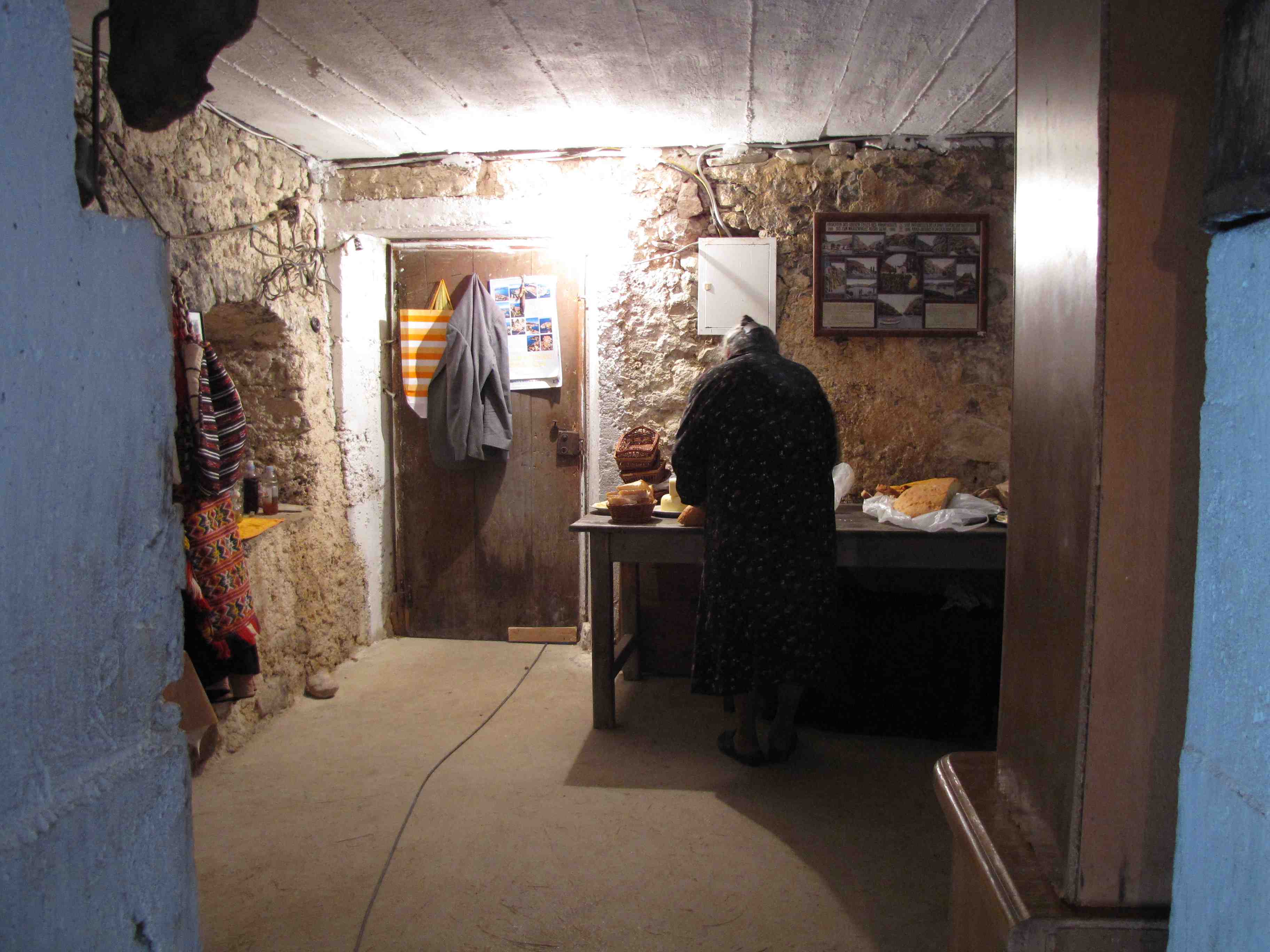
With a good smearing of irony, the Russians made it their own until Finland’s independence in 1917. The only other time it came under strenuous attack was when, as a far distant part of the Crimean War, an Anglo-French fleet bombarded the Finnish coastline for two consecutive summers. The best that can be said from that series of encounters is that all the guns on Suomenlinna weren’t knocked out. Now it’s a UNESCO World Heritage site and a playground, especially in summer, for Helsinkians.

It didn’t detain us at any length. We banged back across the ice and bought a fishy and leguminous feast at the market. Five guys — Lebanese? Algerian? Syrian? Sons of Shem anyway — were playing in the street outside Stockmann, a department store but also an institution. (It also has an enormous branch in St Petersburg.) Three saxophones and two accordions in a fabulous acoustic environment, and could they play or what! Awarded equal first place in the best music heard while on tour.
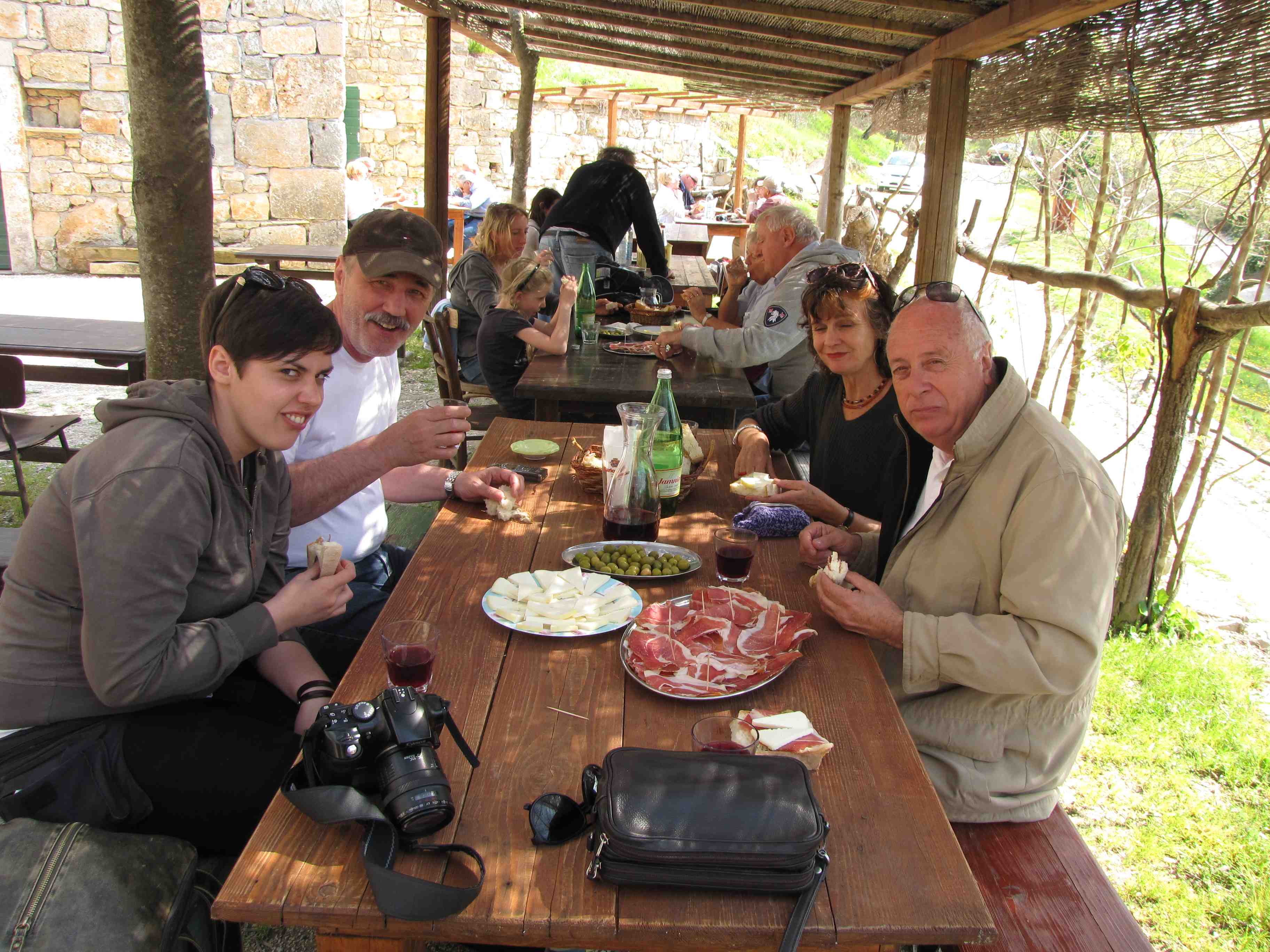
thThe strangest thing we saw in Finland was the film ‘The Blind Side’ with Sandra Bullock most sympathetically playing a rich, good-looking, suburban American lady, a stretch I know, for which she won an Oscar.

This has nothing to do with Finland but everything to do with narrative arcs. There wasn’t one. It went from 32 to 100 (if 100 is playing football in the NFL), maybe really from 62 to 67, directly, painlessly, without torment, complication or hurdle — a straight line of zero gradient. And I wonder if perhaps this is something new. True heart-warming stories consist solely of good news. Perhaps they are running alongside the one-dimensionality of video games in this regard. This might be the new world or yet another malfunction of mass education. Everyone gets it, but what are they getting? Even Mr Deeds (who came to Town rather than Washington) had some significant setbacks.
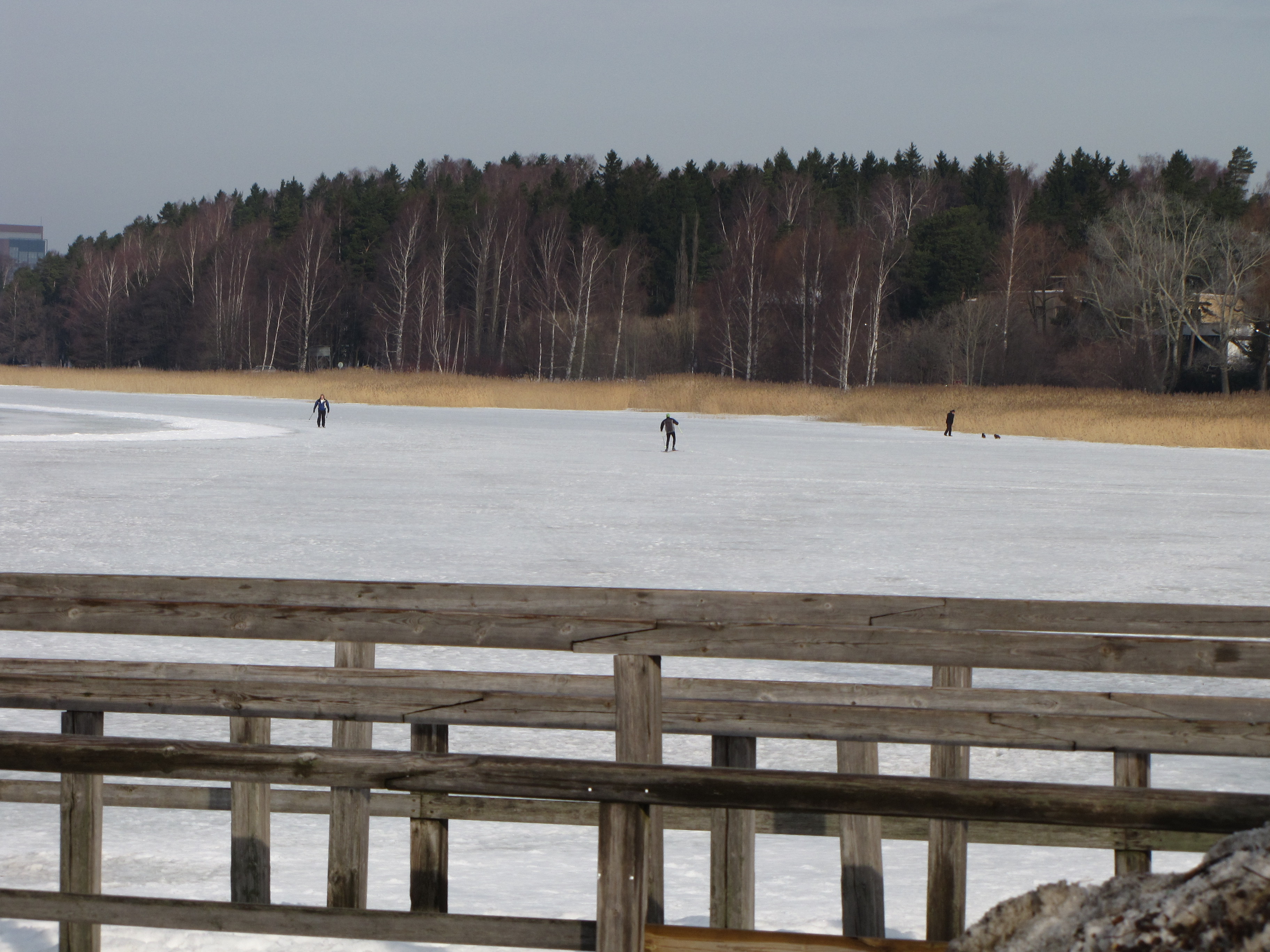
We ate cakes at Fazer and went home puzzled.

Kiasma, the modern art gallery, was sort of between exhibitions and had nothing to draw and catch the eye. That’s the polite commentary.

But there were 60 or so Eschers in the Amos Andersen Gallery. I have never seen an Escher in the flesh, and let me tell you they are small (considerably sub poster size) and tortuously perfectly formed. th-1So perfect in fact that after 15-20 minutes you start to get dizzy and they hurt to look at — one in particular, ‘Inside Out’, which I’d never seen before. Focusing on one small point made possible one perspective only, but as soon as your focal point shifted even slightly the whole thing flipped and wherever you were looking was out of whack.

Escher was lionised by associations of mathematicians who were responsible for his early, and belated, success. His wife left him at 47 and the evidence is there in the work. (The Gallery is the six storey mansion of a very successful dead businessman who left it to the Helsinki Art Society as a venue to exhibit its work. It is a magnificent example of grand, restrained, tasteful comfort.)

We left Finland not one vowel worse off. (Helsingin Kauppapakaorheakoulun Ylioppilaskunta. I think the last word has something to do with ‘university’, the first ‘Helsinkian’ ‘of Helsinki’, the rest … . Kiitoss.IMG_0814.JPG

•••••••••• To continue the trip, read on here.

[1] Helsinki – 60° 10” N., almost shares a latitude with Thurso – 58° 36” N.

IN MEMORIAM #6: THE ASHES


714598-a89cfdda-7fc3-11e3-89a5-f01a1cd39a6c[Amazing pic: Stuart McEvoy, News Ltd]

When we went back for a look in February I felt more worried about the Grampians than our house.

During the last ten years they have had three major bushfires, and when I say major I mean 600 or more square kilometres completely burnt out, in 2006 more than 50 percent of the park area.Unknown images-1 copy 2In 2011 there were most unusual floods which created a great deal of damage and generated monster land slips, unprecedented in my life time and longer. Above is a picture [thank you Thomas Parkes] of the Silverband Road, formerly an established two-lane bitumen road. To the left the road at Zumsteins, the only way over the ranges for vehicles. Below, a land slip in the Serra Range.IMG_0913

Six months later there was a localised earthquake which registered 3.8 on the Richter scale.

And then in January this year the north-west side was ablaze again. You can see the fire’s extent in this photo.

IDL TIFF fileThe grey bit is what has been burnt. You can see Lake Wartook. Our place would be half way to the west (left) between it and the limit of the burning. You can also see how dry the country is.

Many bush fires in Australia are started deliberately, including some of the ones on 7 Feb 2009 which burnt 1.1 million hectares, destroyed more than 6000 buildings, injured 414 people and took the lives of 173. The energy released by this set of fires was estimated to be the equivalent of 1,500 Hiroshima atomic bombs. Temperatures of 1200 degrees C were reached. That’s enough to melt rock. It also razed one of our favourite towns where we were heading that very day before Myrna decided that it wasn’t a good idea and we turned around. You don’t try to fight such things directly.

However this fire, like many in the Grampians, was started by a dry electrical storm. It began at several points towards the top of the photo and, driven by fierce northerlies, swept south. To see one of these fires in full pomp is to have nightmares for the rest of your life. 353wartook-300x0This is the fire cloud I would say nearly directly above the Wartook area where our house was located. This news photo was taken from Stawell, more than 40 kilometres away. Look at the comparative size of the mountains.

IMG_0542We got out of the car and the first thing that hit me was the smell.

It wasn’t like wood smoke which, at least when it’s fresh, can be quite sweet. It was acrid and sour, charred rather than burnt material. This is three weeks after January 20 when it went up.

But it had all gone up. The ground cover, the heaths and the bracken, completely gone; not much sign of the second layer either, the melaleucas, the leptospermum, the banksias, the native pine. Many of the canopy trees were also damaged beyond repair. I was especially sorry about this huge yellow box which draped over our front veranda and had a family of phascogales living in it. IMG_0548Perhaps ironically, it would have been less damaged if it hadn’t been for the heat generated by the house burning. Not enough to kill those bella donnas though.

IMG_0544

This is our gate. It may have been important for the CFA (Country Fire Authority) or SES (State Emergency Service) boys to drive over it. I don’t know. But they did. There was no fence or gate posts to bother them.

Hand made bricks without frogs from Jung.verandaIMG_0553

junction 1IMG_0557

3/8″ coach screws, favoured joining medium.

The first fire and the last. The Jetmaster was left quite intact.

first fire 1IMG_0556

IMG_0555One of the famous concrete stanchions with 150×75 Oregon from the ceiling structure of Horsham HS. The fire was hot enough to flake the concrete. And an important photo given what I had to say about the slab we built the shed on.IMG_0561

In excellent condition: no cracks or chipping, no movement. You could go and whip up another shed there tomorrow. Take that Fred Heinz. The shed didn’t burn in the fire. It had been like this for a while. Things come; things go.

And so they do.

We sold the property to a service station owner who wanted somewhere to retire. He partitioned the big room with dividing walls and put a flat ceiling in, built a connecting corridor between the bedrooms and the main room, pulled up the quarry tiles and tried to straighten the fireplace, lifted the toilet pan, put pickets around the back deck, got the power on and painted everything.afterwards

The next owner, a legend among the women of the Wimmera, undid a certain amount of this and got some of the bracken under control. As far as I know Girin Flat became a very cool out-of-town party venue. The next owner got going with bluestone and might have planted the bella donnas. But regardless, it wasn’t the house we built and there is no reason in the world why any of those things shouldn’t have happened. It wasn’t ours any more.

Woody (the legend) built a pottery and tea rooms on the road, one component of the commercialisation and development of the Wartook area and the Grampians in general. Our house hidden back in the bush was offered as holiday accommodation, now in almost endless supply. For that purpose it was probably still too exotic and ‘mucky’ to attract tourists. So the couple of times we have gone back for a look over the past 20 years it stood as forsaken but not derelict. Freddy Heinz might be pleased or perhaps he might think he did his job and that was all that was required: not the consequences of your actions, but their conformity with the appropriate conventions of behavior was what mattered in the end.

Then it got burnt down.

The Taylor’s house — all that western red cedar at $19.12 a lineal metre — went up; the Raleigh’s was saved. The Pykes would have been fair square in the fiercest of the blazing drives, but being Will he may have had a cunning plan. For all I know the Carters are still there. Maybe Bradney has taken over. John and Dan are dead. We haven’t heard anything about Diane for years. Rod Parker and John Anderson have died. But Geoffrey Ainsworth lives nearby and we still go to the football. Not everything changes.IMG_0571

‘Trees with rough bark such as Red Stringy Bark (Eucalyptus macrorhyncha) and Messmate (Eucalyptus oblique) have epicormic buds (dormant growth buds) deep beneath the bark, which are protected from fire. When the tree is burnt and the foliage removed, the epicormic buds are triggered into life and start to grow. Once these buds sprout, the tree then begins to regrow all of the lost foliage and, over time, will recover.’

The bush doesn’t acknowledge the idea of ‘damage’ of course. That’s very much an anthropocentric reading of a situation. Nature’s not tough; it’s just nature.

Do I regret our adventure in the Grampians? Not one second of it. When Myrna hears people talk about going off to live in the bush, she usually says she’s glad we did it when we were young because we got it out of our system and don’t have to do it again. When she left Girin Flat and went to live in a normal house where something happened when you flicked a switch she swooned with delight. I think that’s right. I hope it is. It would be the sensible response. I have patches of thinking I’d like to build another house in the bush, but not, never, under the conditions we had then. So much work. But do I regret it? How sad to have regrets.

Am I sad about the fate of the house? Not for a second. I had a great time building it and I did enjoy living in it — we both did. The fire going, wonderful Alladin lamplight, fantastic food with some nice wine, friends round the table delighted to be there, a game of Briscola, Linda Ronstadt singing ‘Love has no Pride’ in the background, a walk before bed down through the orchard and the shed clearing across to the pump and then back to the house listening to the noises of the night creatures. Come on … there’s not much better than that.

As for all the complaint, possibly the dominant theme, in the journals — well, there were things that were difficult. Sometimes on still white nights when you could hear wind coming up the valley from minutes away and it would hit the house like a bus … Not that the house ever moved, it was just that there were times when it felt like we were out on some sort of edge. In the case of a fire we would most certainly have been. Maybe the screech owl …

But the generative causes of the complaints were mainly human in origin. It was a relief to come back to the city to discover there were people who thought, and acted, more like we did. It was grand to be normal.

OLYMPUS DIGITAL CAMERAAm I sad about the fate of the house? That photo above of the Silverband Road … a week ago we drove down that road. It has been restored. Epicormic roadworks, the sort that rebuilt London and Dresden (the pic), the sort that will have to apply in Homs and Aleppo, the sort that allow any of us to get through any day. How we are able to recover from knocks — enforced retirement, loss of a loved one, unexpected failure, deep disappointment — is one of the great mysteries of consciousness. But from an evolutionary perspective it is all plain as day. Some people don’t recover of course — which makes the fact that so many of us do, from so many apparently appalling incidents, even more remarkable.

Am I sad about the fate of the house? Forty years ago. Lot of water under the bridge. It was a different house. Scarcely been back. Moved on mate, moved on. Pretty much when I drove out the gate for the last time.Backview#2
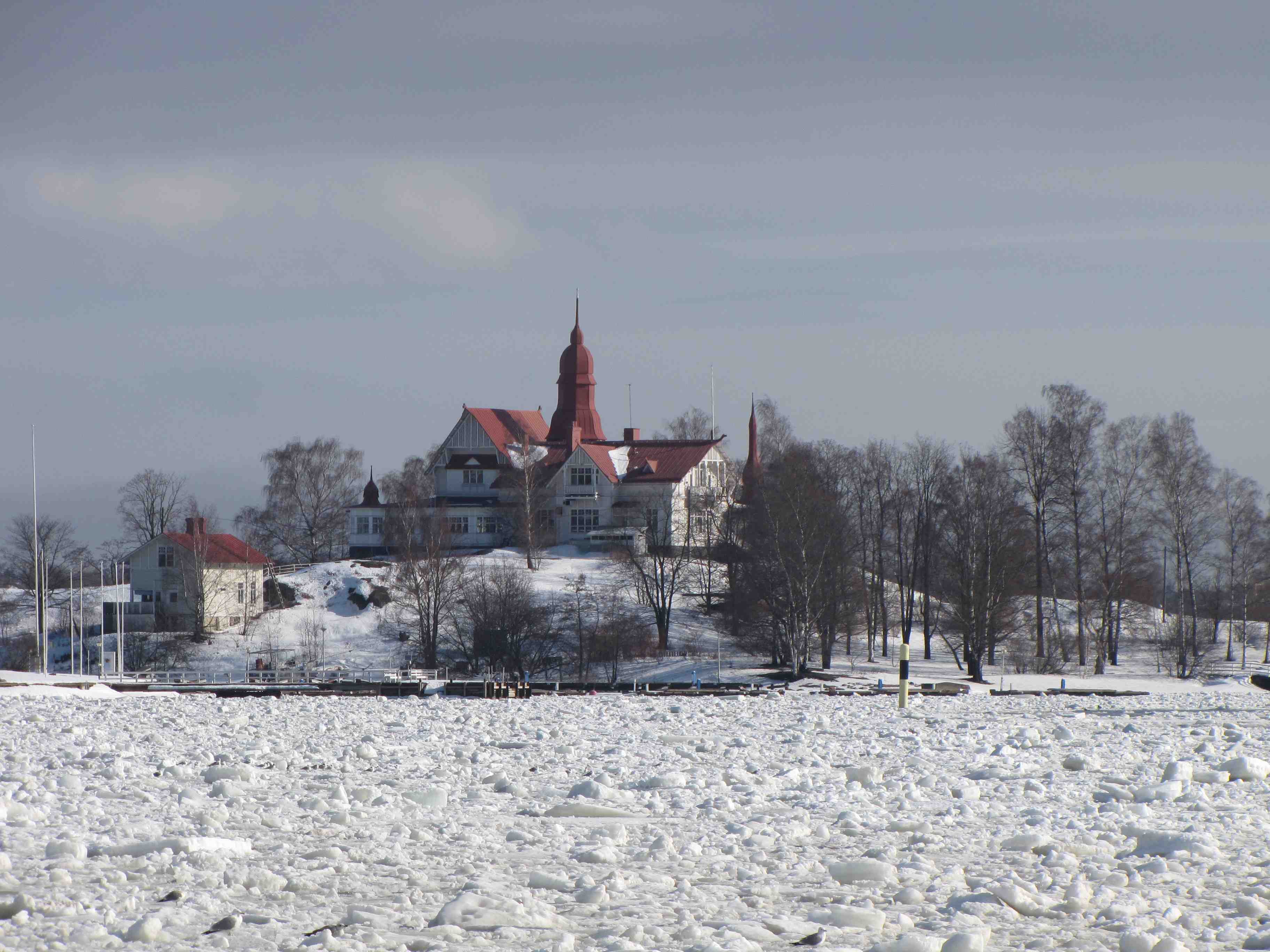
IN MEMORIAM #5: HOW DO YOU BUILD A HOUSE?

An application for subdivision of Lot 50C Parish of Wartook lodged with the Shire of Arapiles on August 4th 1974 was returned approved on April 9th 1975 just eight months after it was submitted. That meant that the process of buying the land could commence.

polesBy that time I had found, felled, skinned, transported and weathered the trunks of four big trees, two yellow box, one messmate, one stringy bark, and ended up with four big (reasonably) straight poles. On April 10th with the aid of my ute I got the poles in, and by the end of the 13th I’d finished the box for the slab. I did the preliminary feed plumbing on the 19th and the waste plumbing on the 20th. We were living in Horsham at the time and I was working on this at the weekends and sometimes coming out to the land after school. When I was doing my school work I’m not sure.

Then on the 3rd May the concrete trucks rumbled in to Girin Flat again. I had made fewer mistakes this time but 22 cubic metres of concrete are never going to be less than daunting.
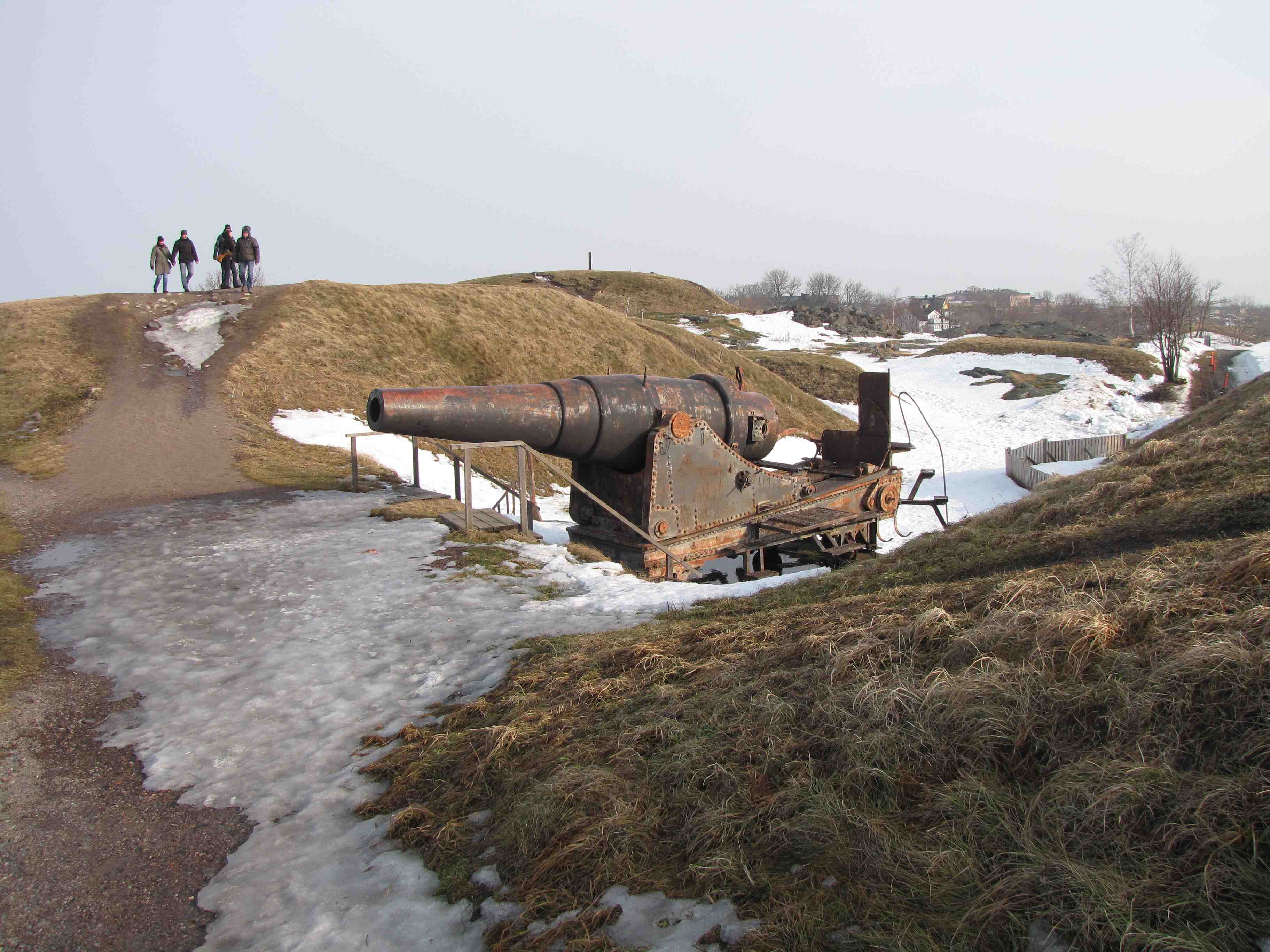
slab#1These pictures indicate the help: Robert, Myrna’s brother, in the white T-shirt, John and a very heavily pregnant Gabi who were living in Horsham, the Sproulls. During the whole enterprise we had a great deal of volunteer labour. It would be curmudgeonly to complain but, you know, a lot of time spent supervising, and as I got better at it, a certain amount of time spent pulling out work and doing it again. But on balance, you would never complain. In building there is a permanent role for at least a second person. There is so much repetitious hackwork and Mernz and Geoffrey Ainsworth did as much of that as I did and often more neatly.

By the time the fifth truck came the vertical boxes I’d built for the upright concrete stanchions were groaning and sweating unhappily and I could no longer bear to look. They ended up with rather more hour glass figures than you would like, but the straight sides were where I needed them to be, straight and reasonably vertical. Patina.

How many things did I write off as patina (lit: a film or incrustation, usually green, produced by oxidation on the surface of old bronze and often esteemed as being of ornamental value, but here: ‘a dodgy bit adding to the character of the whole’. So much patina was employed. Sloyd would have walked away, horrified.)

By the time the fifth truck came we had, as usual, plenty of concrete, always a bad moment. Concrete waits for no man and dumping four cubic metres of concrete somewhere … well, you’d notice. I rapidly improvised a verandah, a slab for ‘other use’ and asked the driver to rinse out where we couldn’t see.

slab#2I nearly did have a fit that day. So much was bound up in getting that slab in: two years of focus and thought, not to mention 18 months of struggle with lawyers, a surveyor and the Shire’s building inspector. I looked at the way I had built the stanchion boxes and how pathetically flimsy they were, scarcely supported, and knew it was all wrong. I hadn’t thought about how the concrete was going to get in them (and in the end, see at left, Barry Sproull indefatigably filled them all by hand with a bucket!), and I just wanted everyone and everything to go away. But the workers kept on working. I went off and had a walk around and a cup of tea and when I came back most of it was done. I noted at the end of this day: It now remains only to build the house.

On the 20 May I was exactly 25 and a half and celebrated by buying 15 pine poles (the veranda posts, skinned and soaked in creosote and sump oil; Myrna had to be taken to hospital with an allergic reaction to creosote) from Horsham Rotary Club for $7. My father was round at the time and noted wistfully: ‘I guess you can’t make a straight veranda out of bent poles just as you can’t make a good world out of bent people.’ My mother concurred, importantly, as she was generally the authority on the moral dimensions of trees. But, on the other hand, while you may not be able to make a straight veranda you might be able to make one which is perfectly serviceable, and that might be the difference between the good tradesman, described elsewhere in these blogs, and me. (Below: Pole wrangling: Geoffrey Ainsworth, Rod Parker and the non-owner-builder.)logswhole frame25th May. The house now has a roof framework and a veranda that it didn’t before. The weather has come and gone a bit, a couple of nice days but mostly shitty and wintry [during two weeks of flat-out building in the May holidays.] Apart from a sore wrist and some tender fingers there have been no major mishaps. It’s interesting how with the addition of the form of the veranda the external aspect has changed and internally you are suddenly aware of these heights, especially in the bathroom, which are going to be lovely. Cutting and shaping the poles I don’t want to do again immediately.

hand tools 1Cutting and shaping the four poles was a matter of balancing on top of a ladder with nothing to lean against trying to get a series of straight cuts with a bush saw through a foot of very hard wood. With power tools and a bit of scaffolding it would now take me about half an hour. But with no power tools — and no power tools were used in the building of this house; no power — it took me a lot of two days.junction 1

June 8. Nigh unto death. I don’t think I would really care at the moment if I never saw another hammer or nail. I’ve had it. Went over to Mt Gambier on Friday and fish-tailed my way back with $458 worth of exterior pine cladding in the trailer. Smells nice, will look good when it’s up. If it was just a matter of whacking that up it’d be fine, quite a nice job really — quick, good result — but there’s so much else to do.

On the 3rd July we moved from Horsham into the shed on the property (still Joan’s). We’re out here now for good or ill. The die is cast; the McKenzie/Rubicon has been crossed. Of course we still don’t own the land. Ha ho. So we were ‘on site’ every day if not necessarily working.

The shed had our bed in it, a table and four chairs and a very old wood stove that we had rescued from somewhere which actually worked a treat. Light was a pressure kerosene Tilley lantern, which had reasonably durable mantles, gave a strong light — you could read by it quite easily — but hissed mercilessly. It was always a relief to turn it off. The smart set had moved onto gas bottle lamps by then, still noisy if less so, but that move had passed us by. Cold water came from the tank and hot water from a 5 gallon ‘fountain’, a big cast iron vessel that you just left on the stove. It was never warm in the morning, so the day began with a cold splash followed by a cup of tea made with water boiled on a gas ring. Then we’d climb in the car and pray we wouldn’t get bogged before we’d got out the gate. Forty minutes later we’d be in the staff room at HHS at our desks checking what was actually in front of us for the day. After school we’d do a bit of shopping, Myrna down the street and me at the hardware store, and make our way back towards Mt Zero, down the Laharum road past Mt Stapylton (named by the Major’s trusty off-sider after himself) and the olive plantations, through Laharum, past Joan’s, up over the hill at the Roses Gap turnoff and down into our valley.myrnz #1

12 July. It’s three weeks past the shortest day and there is still no real sign of a let-up in the minimalist approach to sunlight. More or less dark at 5.30. After ’staff meetings’ and that sort of thing it means no time no time no time and we of the pioneering fraternity have things to do. There’s wood (currently getting thoroughly soaked) to cut, lamps to clean and fill, water to be pumped. … Here I am espousing the glories of noble ecological savagery to 3A1 and 3A5 with an aching shoulder and tomorrow with a sore eye having been hit ker blam by a flying bit of red gum. At night the Screech Owl is continuing its horrifying cries over in the ti-tree, and the first time always makes you jump. Or it may be someone being tortured. Hard to know. The shed fills with the smell of hot wet stringy bark and the wife sits meditating on greener pastures.

the builderIt was another very wet winter (and spring). One of the things that I was constantly alert to was how I could keep the materials up to the site and not stuck half a kilometre away on the other side of ‘the pond’. But even some of the materials that had been there a while provided a challenge. Upon checking the interior lining board — in the open now for I suppose five months [under a bit of plastic actually] — I find it has been colonized by a fungus and families of various creatures: the giant slater, the ant, the spider ENORME etc. etc. What do they think this is? The bloody bush?

roof#1But it wasn’t always like that, and things improved when I got the roof on. At last there was some shelter.

19 July. Faintly warm. We drove in from the best angle, the north-west, in the middle of one of those red, red sunsets with a huge moon rising over the ranges. The roof was a shimmering silver sea, the moonlight pouring in through its skylights. I climbed up and sat there on the roof thinking that for every hassle with the house there is a countervailing stroke of the purest and most energetic luck. It’s coming into shape and it’s ours and it’s beautiful.

Val Finch [another teacher living in an owner-built home, an A-frame] told me a story today about how two Mallards and an ibis had tried to land on their roof in the moonlight thinking that it was a lake. I was just thinking about that when a flight of some unidentifiable birds whirred past just above — you could hear the motors in their wings they were so close — and uttered one stark cry. One. Stark. Cry. It means nothing, but the whole situation was art. I’m living in an art form, an installation. The weather is good, the wood is reasonably dry, the shed is warm, the food is cooking, the sun will rise tomorrow.

stove inA couple of days later: On the credit side, to which the Great Keeper of the Balance Sheet would urge attention, we might have some hot water soon. [I’d installed the fancy and fabulous second-hand IXL slow combustion stove in the house (where it belonged on the slab really) and hooked it up to the hot water. Even though we were out in the open we could, if we wanted, cook on it, and we weren’t a long way from the first bath if en plein air.] Arthur Phillips [our lawyer] is refusing to return calls and we’re $1000 in debt. Yippee. Not sure if I’ve stayed entirely on the credit side. I have put the heads on the taps and they’ll work soon, but rain is getting in on the rather gorgeous mezzanine floor at the moment and I really don’t want that weathered. And why do the mice have to shit all over the bloody table? Tell me that. We have become an exciting new food source. Where’s their sense of gratitude? I wonder when it’s pay day and whether I’ll get $1000. Myrna might. She deserves it though. Once again I’d like a nice sunny FREE week to just get a few things done. Just a clear week or two. Hot water. That’ll be a groove.

mezzaI took two days off the next week to put in the glass panels in the mezzanine and the clerestory in the south wall running between the top plate and the roof, a fiddly job but one which would improve weather proofing substantially. As I surmised it was a bugger of a job. A while ago I wrote up some sort of phoney timetable for us to follow of things to do. After two weeks we’re three weeks behind. Anyway, what the hell. Drunk again.

One of the features of the house was two pairs of magnificent black bean and glass doors, oversize, nearly 3m high and out of a city bank via Whelan the Wreckers. (See below.) They were a striking part of each end wall. But double doors are hard to fit. Anyway …

20 July. Last week, a windy week, I had for the 103007th time tried to fit the double doors: the unfittable meets the unwidenable with intransigence the name of the game. A gust took one of the doors and smashed it down onto a pile of Hardiflex [the proprietary name of the AC sheet], the world’s most revolting building product. The thick and very expensive glass, however, did not break. So I went round to pick it up, thanking lucky stars etc etc, lifted it up and returned it to its place saying, hmmm tough no damage great etc etc, dropped it and the glass smashed.

The work was getting done at the weekends. I would do a tour of the hardware shop or the plumber’s supplies or the saw mill on Friday after school to make sure we weren’t going to be thwarted by some crucial missing item and we would get up at the crack of dawn on Saturday and get into it, often with amateur help arriving mid morning. By four o’clock the mistakes would begin. By five o’clock insuperable obstacles would have emerged. By six o’clock I would be walking around looking at what had happened to see if I could see any difference. Next morning I would correct mistakes, I would have resolved the insuperable difficulties and we’d be off again.

On Sunday nights we would make our way over to the Taylor’s for a hot shower, so we could at least begin the week fairly clean. Their house was fully air-conditioned, warm, lined with western red cedar, had lights, everything working, often a bowl of soup to go with the shower. My best recollection was that I was very grateful — it was always fun to see Gwyneth, not so much Ron — but not envious. It was a very nice house with a fabulous view of the Asses Ears and a remarkable garden of natives emerging very quickly under Gwyneth’s tender ministrations, but they’d brought the suburbs with them. I think that’s what I thought.

seppo 1toiletIn early August, the septic tank went in and a friend’s plumber father hooked it up to the pan and signed the plumbing off, the only professional contribution of labour to the whole. Here is an example of the occasional offset. It took me less than a morning to dig the hole for the tank (at left, 2.5m. deep) in slightly damp pure sand. A talking point was provided by the fact that I sunk the toilet pan so that it was half way between a squat and a pedestal. I’d read somewhere it was a good idea. My mother demurred.

first fire 1The first fire in the fireplace was on 25 August. Laurie Polec set it. He wrote, inter alia: The house, yes well one of the nicest and most splendid I’ve seen, and safe and secure thanks to my work today. And we should finish grouting those tiles tomorrow. But Mernz’s cooking is the big drawcard here. I had a bath tonight which was magnificent in a room with view. At left is the first fire occasion. The grand doors are on display along with the clerestory above the top plate.

This is followed by one of my many ‘lists of disasters’. Borer in the main poles. Moths breeding in the blankets. Vegie garden underwater again. Pump under water. Ran out of trim. Fridge goes on and off. East wall leaking somewhere. And so on.

Wet orchard 1On the 5th November we had two days off to go to a wedding in Mildura, the first downtime since 5th April.  But we had moved in. All that’s left to do on the house is a bit more trimming, two storm water drains, make and fit the fly screens. All the systems are working. The stove is brilliant. Might have another day off sometime. Life? Good.

The person who started it is the person finishing it. There have been no deaths. It seems like the shallowest of beginnings. Constant, teeming struggle against things that can’t be satisfied, like hundreds of lots of dishes to do everyday and I’m the dishpig. But then the trees [in the orchard] are in leaf and some are going very well.

This is the only photo we have of the inside of the finished house: blurred, black and white, shot into the sun coming in through the east wall. Jill and Melissa Vallence talking to Mernz. It doesn’t show the warm honey colour of the wood or the glorious variety in the quarry tiles that I bought from an Eltham potter. Or the way that the light would come through the quadrilaterals of plate glass cut for me so willingly by the chaps at Horsham Glass. Nor the bits and pieces of Italian ceramic on the wall. It was often bit neater than this. No idea what the fly screen is doing inside and we would have put the tent (in the hessian bag) away. Its usual spot was in the root cellar.inside
garage 1We finished the house to a very liveable condition before Christmas and I built this over summer. So we finally had a shed for the ute, the wood and a laundry.

But then we had some news. Myrna was pregnant and while the house was perfect for an athletic childless couple, it wasn’t ideal for a new and growing family. We were also having lots of visitors and it would be nice to be able to offer them a pleasant bedroom. So we built another wing of three bedrooms, more simply designed than the house and much more skillfully executed.

Again we were in something of a hurry. Always in a hurry. My nephew Martin has been building his own very fine house in southern Tasmania for years now. He’s a much better builder than I am, and one of the reasons is that he is patient. When he’s a bit sick of things he stops. He’s also made a friend of his building inspector, who inspects only to marvel at the quality of Marty’s work. I’m not patient.

siteThis is today, I wrote in the journal as a caption to this photo, where there are 92 tons of McKenzie Creek Quarrying Co.s finest and lots of bits of 4×2, 4×1½, 6×3 and 7/10s of a roof as the rain pours down and my terribly expensive lining board gets wet. There’s not the same big fat history to the bedrooms as there was to the house. That was a case of schizoid obsessionalism, a phase now passed. Don Carter has been shooting his scurrilous and lizard-like mouth off saying we haven’t got a building permit. Horrible Don. He had dobbed us in to Fred. I’d sent the plans in but we didn’t have a building permit.

The slab was poured on the weekend before Easter, 10 April just less than a year since we had poured the slab for the house. This slab was a pretty one. I used prime scantling for the very well secured box but experience must count for something. The last mixes were a bit runny but that wasn’t my fault. I began the frame on the 18th and finished it four working days later. I think there’s a future for me in timber framing. The roof is on now so there is somewhere to put the pristine new lining board. It seemed to go up in a flash. It wasn’t a very complex building but I was in practice, I knew what to buy and I had a clear idea about what to do.

Compounding a most inglorious set of mail, Fred sent the plans back yet again on 21 June. He noted the roof needed strutted purlins (an impossibility as he himself admitted when he knew what was going on) and that the slab was unsatisfactory! (Bust ‘er up and start again. Aaaarrrrrrrrgh …) With these and other travails in mind I thought I’d harden up and ring him with a solid line of engineering argumentation. So I gave it a burl on Friday. On Thursday night we had noted new tyre tracks into our place and Myrna had cracked an hilarious joke, ‘Probably Fred Heinz.’ (heh heh heh)

‘Hello Mr Heinz? David McRae. We’ve been corresponding recently …’

‘You’ve been doing a bit more than corresponding. I inspected your place yesterday.’

What can I say? There is no confessional for the building miscreant. This is what Freddy found.frame

And for some reason that’s where the journals end, except to note that on Christmas Day 1976 it was 106 degrees Fahrenheit, and that even though there was work to do I was sitting reading Charles Mingus’s autobiography and it was making me feel queasy.

Front#2I can’t even remember how Fred and I sorted out our differences. I wasn’t required to break up the slab. (Can happen. Happened almost over the road near here a year ago.) I didn’t have to pull any work out. The bedrooms were snug and efficient, each with a different lovely view. We had a bay window in ours. The floating wood floor made things very comfortable.

But then Jessie was born. The Wimmera Base Hospital, 16 September 1976. She had heart surgery in Melbourne a few days later, and everything changed.baby Jessie#1

Telecom put the phone on, a very difficult task, running an underground cable almost a kilometre through thick bush two days after I rang and asked them to do so. That was a help, but Myrna was expressing milk, saving it, getting up in the middle of the night, walking across to the house, lighting a lamp, lighting the gas bottle, heating milk, feeding a baby who had spent quite some time in intensive care as often as possible day and night. I was going in to work in Horsham leaving at 7.30 in the morning getting home at 6 or later. And there was still wood to cut, water to be pumped …

Other things happened, but between locking the gate for the last time eight months later and now, I have spent surprisingly little time thinking about all this. It’s been an adventure to rediscover it.

I kept building: a fair bit of another house for a friend, big renovations for others, two new rooms on our new house when we moved to Melbourne and then in Alphington whenever I got bored till every room had a view of garden and from every room you could see the birds.Backview#2

There’s still more: the final IN MEMORIAM #6: THE ASHES

IN MEMORIAM #4: HOW DO YOU BUILD A HOUSE?

My highest mark ever for Woodwork was 72. It was also my lowest, six terms in a row.

According to Bushy Shier’s distinctive but clear marking scheme, 76 was outstanding and suggested uplift to the elect. You could get 74 by intense application and copious sandpapering; 70 meant you hadn’t finished your models because you’d been mucking around with the tools although in an appropriately masculinist way; and 72 meant that you were just filling space. (Proof really that a four-point scale can accommodate the seminal issues of assessment. Who said school education wasn’t scientific?) The most complicated thing I made in six terms was a pot stand, five slats on two rails, and before we drown in snorts of derision I think this may still be in use somewhere.

That must have been about 1962. I didn’t return to woodwork for ten years when I made a base for our mattress — a bed I suppose you’d call it really — in a space approximately 2 metres x 80 centimetres x 2.5 metres, a sort of narrow corridor out the side of our Carlton terrace house. Tools: hammer, one short saw with a narrow, rusty and twisted blade, one chisel which had been used to chip out concrete, hand drill brace with two bits, screwdriver with a chipped blade. Sandpaper. I did have sandpaper, and the result stood up and stuck together, so … ever so possibly teetering on the brink of a 74?

Maybe I should say that Myrna and I had done a good deal of our endless years of courting in the half-built houses of Horsham; and maybe I shouldn’t say that this provided a lucid perspective on the nature of building processes at least as much as a romantic environment (which, before you get too excited, generally meant a good spot to sit and talk). I have always enjoyed watching how things go together in the building process.

And then there was The Australian Carpenter. In the various shifts we have made I have thrown out/ passed on/ given away probably 20 times more books than we now have, but The Australian Carpenter by C. Lloyd, Instructor at Swinburne Technical College, Melbourne has survived every one of those paroxysms. In the one bit of zippy fizz anywhere in its 225 pages, the strapline on the dust jacket says: ‘How to drive a nail How to build a house — and all the carpentry in between.’ True. That’s what’s in it. (This isn’t my copy. The dust jacket on mine disintegrated years ago.)gc5640317640751959784

First published in 1948, I have a copy from the second edition (1965) revised after 13 reprintings. My copy comes from the seventh subsequent print run. This is massive. This is enough in itself to keep a publisher solvent. So popular and ubiquitous was this book, woodwork courses across Australia were called ‘Sloyd’. In fact when I was discussing this blog and building just the other day, the woman I was talking with said without the slightest prompting, ‘Oh yes. Sloyd.’

Its tenor belongs to my boyhood rather than my 20s. It is from another happier less complicated time. There is an outline of the ‘Scheme’, Sloyd’s very practical epistemology, which precedes the Introduction.

The work set out in this book, follows in order the training of a lad who has been apprenticed to carpentry.

Part 1. The first section describes work as it should be done in a small workshop where very little machinery is used. 

Part 2. In this section the lad is supposed to be sent out to a building to help the carpenters. He works through from the start to finish of a timber house, and has further experience with brick veneer, and brick construction.

Part 3. But he needs more bench experience and is sent back to the workshop; this time to a big joinery mill, where the kinds of joinery he has been fixing on the building, are made. He works here and learns how to set out, and how to arrange his work in order. … He then goes out into the yard to select the timber for his jobs. … and so on.

The effectuality of this theory of knowledge is proposed with enormous implicit confidence. From the Introduction proper:

‘A trade cannot be learnt from a book.’ This saying is often quoted by old tradesmen, and it is quite true that the ability to turn out a workmanlike job, under all circumstances and in a reasonable time, can only be acquired by long practice under actual trade conditions. Unfortunately at the present time [three years after the end of the second World War], it very often happens that the training an apprentice receives is deficient. This can be corrected.

And my nationalistic heart pumps at this —

Most available text-books dealing with carpentry come from overseas, and of course give the subject as practiced in other countries. While with advanced work, this is much the same everywhere, for simple carpentry Australian practice differs considerably. The fundamentals remain the same, but local conditions, such as climate, class of materials available, and the price of land, tend to cause important differences in the design and construction of ordinary dwellings. Cheap land, dodgy materials, especially Australia’s green hardwood — the most common building material of the time — which has a mind very much of its own. That’s what he’s talking about.

Whipping past those issues, The Australian Carpenter is its own sober version of the hippie building manifestos. It implies that, with enough application, you really could, and perhaps if you were a responsible male you really should, do it yourself. So far, so sympathetic.IMG_0809In 102 lessons (‘the first two years of a Carpentry Course in Technical Schools’) with a paired page for each — one of drawings, many of them isometric, one of crystalline instructional text — he sorts you out. For example: ‘Order of working is most important when making joinery, as it is with many other jobs. Set outcompletely, gauge all joints, then ripall the tenons and chisel out all the mortises. … right way round with face edge in, clean up inside edges then cramp and glue up. Only the raw beginner sets out and makes and fits one mortise at a time.’ And in this context who could be thought raw beginner?

This is definitive instruction. It is a course which is not taught, but ‘given’. I loved that then and I love it now. None of this ‘facilitation of self-teaching’ nonsense; none of this ‘look for it online’. If you’ve got the wit to see it, all you need is there right in front of you, authoritatively.

Sloyd provides an articulate version of the voice of that very interesting version of masculinity, the excellent tradesman (carpenter, plumber, farmer, surgeon, accountant, cameraman or bureaucrat) — straight, honest, capable, inventive to a point but only to a point, insanely neat and concerned about clean up; absorbed and driven, within limited horizons, by the idea of ‘the good job’. (Women can and often do have all these positive qualities of course, but it seems, for whatever reason, to gel into a different final form with men.) I’m not one, I don’t want to be one, but the good order and functioning of the world is heavily dependent on such people.

Before I started building I would pour over Sloyd in bed and later, when I was actually doing something with wood, would use it as a constant source of advice. He is/ was (I can’t even find his first name) a man after my own heart. (Colin? Clive? Chris? Cecil? Cedric? I just don’t know, and perhaps shouldn’t. A man’s privacy should be respected.)

Let us begin traversing the vast distance between Sloyd as theory and Sloyd as realised practice.

ShedAs I’ve said the shed was an important tryout.

We rummaged around the wreckers’ yards and found a collection of material that I thought would work okay. I also began an addiction to hardware stores. The brand new 150 gallon rainwater tank, not yet installed here, was the shed’s single most expensive component.

On the first day of the week set aside for its construction the concrete truck eventually ambled up through the track in to dump five cubic metres of aggregate, sand and cement in the box I’d built.

What can I say? Bought too much, wasn’t sure what to with the leftovers. Couldn’t screed it off properly because there were stakes in the way and the screeder wasn’t long enough and warped anyway. (Screeding is the process of roughly levelling concrete by ‘sawing’ back and forth across it and paddling it to get rid of air pockets.) Got the bolts for the bottom plate in the wrong place, the reinforcing mesh fell off the half bricks I was using as spacers. We had no water for curing, in fact I don’t think I knew about curing because we were working on the slab next day. Didn’t cut the formwork away from the slab. In the end it just fell off I think. About 3/8 of the surface was very nicely floated, flat and subsequently pleasant to walk on in bare feet; the rest not so much. Collaboration you see. There were feelings to consider, and notions of manliness.

But I know all those things now. And I only ever did versions of them again. The rumble of the concrete truck still remains an awesome (trad. usage: awe mixed with terror) moment.

The shed, 5m x 4m, was the simplest thing we could have built. (Today you’d probably buy a prefab thing with self-supporting sheet iron walls; but that’s today, and the result would have had far less character.) But the second-hand scantling I’d bought was so hard (40 year-old yellow and grey gum timber is almost literally like steel, nearly as hard and very very strong) we had to hand drill every nail hole. I decided then that I would never use second-hand timber for framing again — the first conscious anti-ecological compromise (and still, don’t tell anyone, a good move).

The shed’s outside cladding began a long relationship with AC sheet — easy to work, excellent painting surface, very durable, and possibly deadly — where C is for cement and A is for asbestos. The A has been taken out of Hardie’s products now; it hadn’t then. However because we had no power tools and cut it by clipping rather than sawing we never raised much dust of the sort that would give you mesothelioma.

The building rose and formed. The pitch of the roof was fine in the dry but a bit shallow when the rains came. Native creatures and insects (Now, under what circumstances would you insert ‘vermin’ there? Who was there first?) strolled inside unimpeded and at will, those that wanted anyway, a select and largely friendly group.

Design was also part of this process, and in keeping with the idea of doing everything yourself that was what I did. I taught myself the required amount of technical drawing, how to write up building specs and given my skill with maths, against all imaginings, how to do the engineering calculations required by the final design. Besides the National Standard Authority’s Light Timber Framing Code, the other book that absorbed my attention was its antithesis — Lloyd Khan’s book Shelter.

One Google request and bang here it is again 40 years later in living colour with a blurb that is still right on the money.SHELTER_new_cov_352WWith over 1000 photographs, Shelter is a classic celebrating the imagination, resourcefulness, and exuberance of human habitat. First published in 1973, it is not only a record of the countercultural builders of the 60s, but also of buildings all over the world. There is a history of shelter and the evolution of building types. Tents, yurts, timber buildings, barns, small homes, domes, etc. There is a section on building materials, including heavy timber construction and stud framing, as well as stone, straw bale construction, adobe, plaster and bamboo. There are interviews with builders and tips on recycled materials and wrecking.

A cult classic from the heyday of teach-ins and VWs, this large-format book may have inspired more owner-builders to build crazy structures than any other. Organized like a big scrapbook, it seamlessly blends vernacular building traditions from all over the world with far-out American hippie shelters, including geodesic domes, gypsy wagons, tree houses, windmills, and bizarre ferrocement living sculptures.

UnknownIt was a time for exotic buildings. images copy 2Building caught fire, so to speak, with the same flame that was igniting other bundles of life.

I began with the idea that we would build a fibre glass geodesic dome. School at the time was full of rolls of fibre glass and pots of resins for a prolonged burst of canoe-making. I made a model dome and bought scads of glass and resin before realizing what an utterly terrible idea it was. And it clung on. Probably the next six series of designs had one or more domes attached to … hmmm … pentagons, galleries, irregularly shaped versions of the shed. It was like Tony Abbott and the paid parental leave scheme — madness that clung.

images-1 copyGeodesic domes may come again, but their time in the sun, full sun anyway, was short and the pictures you see these days are usually of skeletons. And fibre glass … that organic, green ecologically responsible material! It would have been like living in a maths equation wrapped in Gladwrap, IF it had ever got under way. Fred Heinz would have put a stop to it long before the first panels were made. We’ll get back to Fred.images-2 copy

(You may be able to see with this one on the right that a more conventional building has been built inside the dome as a room structure. Occam’s Razor: delete the dome.)

Given the preponderance of sand on our property, I also thought of rammed earth but the sand had been too thoroughly scoured to be sticky enough for pisé. We collected rocks, sandstone, for possible walls of masonry. But there was no stone on our property and suitable types in quantity were a long way away. As well, masonry required skills that I absolutely knew I didn’t have, whereas I thought I could probably manage wood.

It was about this time that the floods came and the site we had chosen for building was largely underwater. We looked elsewhere and found a bump a metre or two higher at the other end of the orchard. That seemed to make a difference. But the site also had a different aspect. It was more buried in the bush, suggesting that the house should be too.

We were living in the shed and most of the time I loved it. With lino on the floor and a bathroom, the shed would be just about the most comfortable place on earth to live. This has consequences for the nature of the house. It is essential that it should be kept simple. No garbage, no frivolities.

I summarised the design process like this.

Phase 1: We got rid of the domes and extended the living room. Phase 2: Squared off the bathroom and provided a nook. Phase 3: The roofing plan is disgustingly complex. The pentangular kitchen took a dive. It’s squaring up. Phase 4: The axis dispute. Should the roof ridge run east-west or north-south? East-west has got to be obvious hasn’t it? Pise looked promising (for ten minutes). Hmm poles cut off the property, 300mm diam. They’d be nice. Phase 5: The cosmic hit. On the way back to Melbourne I was passing these things through my mind and just a mile the other side of Myrniong [a tiny village en route] I saw this very good-looking barn and thought: If we’re going to be simple, let’s be simple. Once on the drawing board (as we in the trade say) it immediately fell into place.

It didn’t of course. It went through a dozen more iterations before I finally sent the finished plans off to Freddy Heinz at the Shire of Arapiles on the 25th March, 1975. The plans came back a few days later with a request for $100 and, because she still owned the land, a signature from Joan stating she agreed to the building. Five or six other small adjustments were required. Nothing of concern. I had convinced him.

It turned out to be one very large room (10m x 8m, four times the size of the shed) with a bathroom cropped out of it with a mezzanine floor where we would sleep, really a very large open space with a pine lining board ceiling following the roof line 5 metres high at the ridge. It would be heated by a large fire place offset a little from the middle — a Jetmaster hollow-back steel construction set into brick, so effective we had to let it go out mid-evening except on the coldest nights. The first budget said nice and precisely $7788. I did another budget three months later when we had chased up and bought a fair bit of stuff: $4400. It finally turned out to be, insofar as you can possibly define such things, $8319.

In keeping with the spirit of things I chased materials all over the place haunting Whelan the Wreckers in Melbourne and later Bert Van Veldhuisen’s yard in Horsham. What I found influenced what we built. Bert was wrecking the old block of Horsham High School at the time and kept pulling out this fabulous mature rough-sawn Oregon (Douglas fir, imported from the US, straight-grained, lovely to work with if not as strong as many Australian timbers) — huge pieces, 300x100mm in section (12×4 in the old money) 5 to 8 metres long was not unusual, 400×50 slabs that I got planed and used for flooring, and the very useful 150 x 75 sticks of which I bought maybe 100 lineal metres. The other thing his yard was full of was white pine lining board that he’d got out of the many Wimmera farm houses he’d pulled apart. I must have bought (and de-nailed and cleaned) more than 1000 lineal metres of that. But the availability of the Oregon in particular said build solid — build post and lintel.

I chased other stuff as well. In the absence of finalising the purchase of the land and getting on with the actual business, it provided an illusion of doing something. One of the places I went looking was a farm clearance at Hynam, about half way between nowhere and nothing across the border in South Australia.

3500 in attendance and good madcap sale had by all. A pleasant day full of high level drama. The crowd went mad. NO ONE was going to go home empty-handed: beds $600 [see the total price of our house above], 1940s steel-wheeled tractor (not going) $970, standard (very standard) lamp $140, plastic bag full of empty milk bottles $2.40, 3 sticks of rotten wood $15. I was there to buy a gas fridge that would run off bottled gas which was the second last lot auctioned, and one other couple had stayed late equally determined to claim it. I would have got it for $5 if they hadn’t been there. $95. I hope the damn thing works.

[It’s not sounding very promising is it? But we didn’t stop there. It is to be continued: In MEMORIAM #5]

IN MEMORIAM interlude: John Anderson

andersonphoto
Among our guests at Girin Flat was John Anderson, like Molly Meldrum a child of Kyabram.

I met him at university where he became a close friend. He was a poet and nothing but a poet. I have never known anyone with such a startlingly clear sense of vocation. He worked painfully slowly and revised unflaggingly. He died when he was 49 having published only three collections. I think they are all masterpieces.

Gary Catalano and others have written a fine appreciation of his work. If you’re interested, go here. In the mauve block you will find ‘Anderson biography’. Other direct links don’t seem to work.

He wrote this during one of his visits to Girin Flat (and may have rewritten it several hundred times subsequently, but this is what he left us with).

The idea that the Australian bush is drab and monotonous is well established in our literature.

It has some truth but even the greyest bush is relieved by a certain fragile glassy glittery sub theme — on the drier inland slopes the more crystalline and unsoftened by climate.

The theme is picked up on the tips of things: gum leaf glitter, red gum tips — and in crevices: quartz crystals, mica, an ant dragging its shiny abdomen over leaf litter.

It is contained too in those knobs of kino, collections of hardened red gum sap fastened like rubies to trunks.

Movement is part of the quality and its keenest edge is animate. Insects and birds are its untapped cells. Unfortunately its most unstable. Here it seems that the spectrum has poured itself in an almost pure prismatic form on a few agents, parrots and rosellas flitting through a leached backdrop distributing colours.

In the dry sclerophyll, iridescence seems almost a general principle for beetles and wasps.

It is an elusive theme, one which picks its way in a series of disconnected points and for which I think Balinese music provides a successful metaphor. It provides the same tinkling contrast to the bush as is suggested by its own metallic glints. It gives just the right amount of form without imposing too much. Its rhythms are hidden and natural and yet capable of extreme exuberance and subtle enough to lend fluency to the songs of frogs, cicadas, crickets, bellbirds … sometimes disappearing, like an invisible songbird behind an elaborate screen of notes. Gumleaf glitter in the wind is the equivalent to a torrent of gamelan.

If it is conceded that life evolved from the sea — maybe in Australia it drew something too from the stars, bushfires, mineral springs, mirages, frosts, lightning, blue distances and waterfalls.

Or was some process of refraction from the gibber plains involved?

images